
24 min read
On this page
- + What is SF-97 military vehicle registration?
- + The off-road only trap
- + State-by-state SF-97 acceptance map
- + Why hostile states reject SF-97
- + The bonded title alternative
- + Three real-world case studies
- + The Montana LLC solution
- + Is this legal?
- + Who benefits most
- + Our process and timeline
- + Frequently asked questions
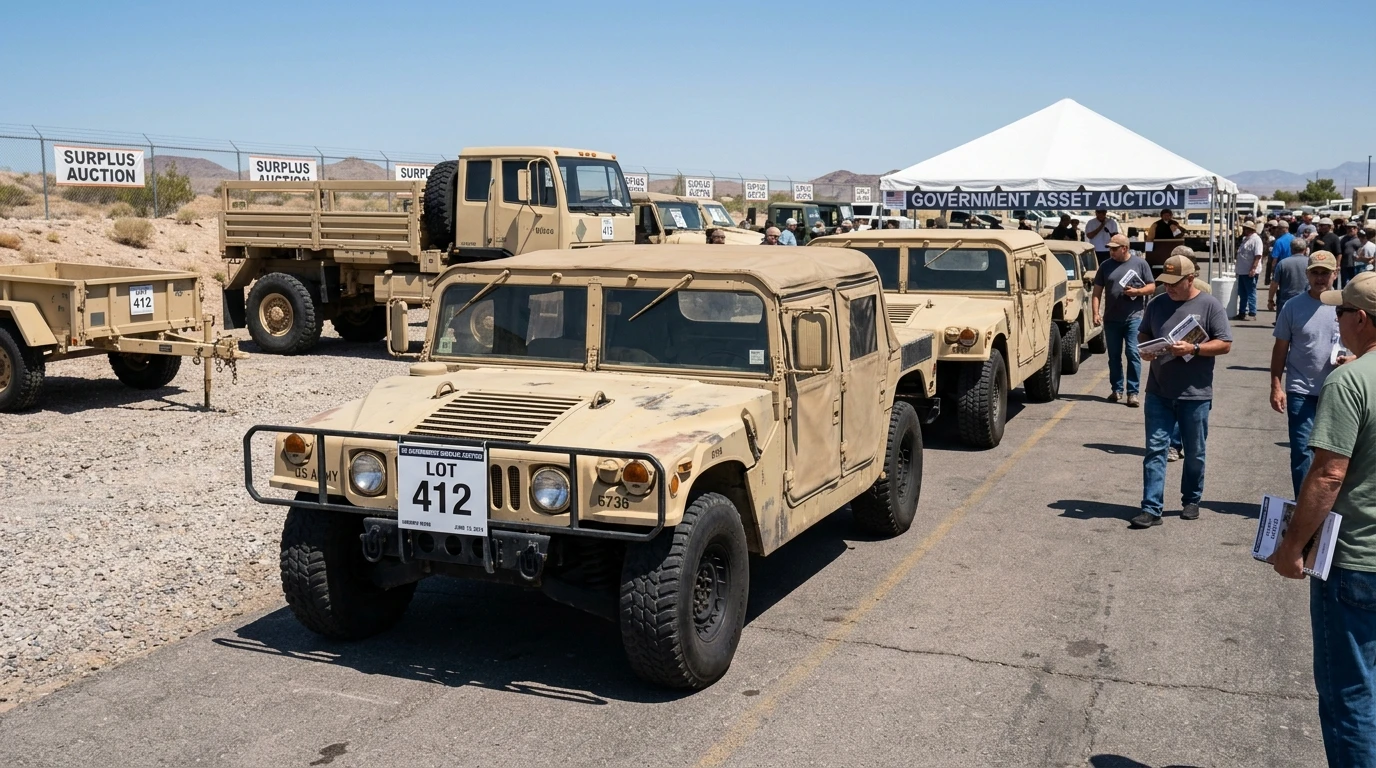
You waited five months. You stood in line at the DMV at 7:14 a.m. on a Tuesday, the morning after a thunderstorm, with a folder full of documents thick enough to choke a horse. You had your bill of sale from GovPlanet. You had your end-user certificate. You had your DD Form 1348-1A. You had your Defense Logistics Agency disposition paperwork. And finally, after 4.5 months of background checks and federal processing, you had it: your SF-97 military vehicle registration certificate, the holy grail document that the U.S. government swears will turn your surplus LMTV, HMMWV, or M35 deuce-and-a-half into a street-legal civilian vehicle.
The clerk took one look at your form. She squinted. She turned the paper over. She typed something into her terminal. Then she slid the document back across the counter and said the eight words that would haunt you for the next three months: “I’m sorry, this says off-road use only. Next in line.”
That moment, repeated thousands of times each year at DMV counters from Sacramento to Tallahassee, is the trap at the heart of the federal surplus military vehicle pipeline. The U.S. government will sell you a 9,000-pound combat truck for $14,000. It will issue you the paperwork. It will even cash your check. What it will not do is guarantee that any state in the union will allow you to actually drive the thing on a paved road. Two paths exist for owners who hit this wall: the bonded title workaround for owners in friendly states, and the Montana LLC reassignment route for everyone else. Both are covered here in full. For background on the federal disposition process, see the DLA Disposition Services public guidance.
What is SF-97 military vehicle registration?
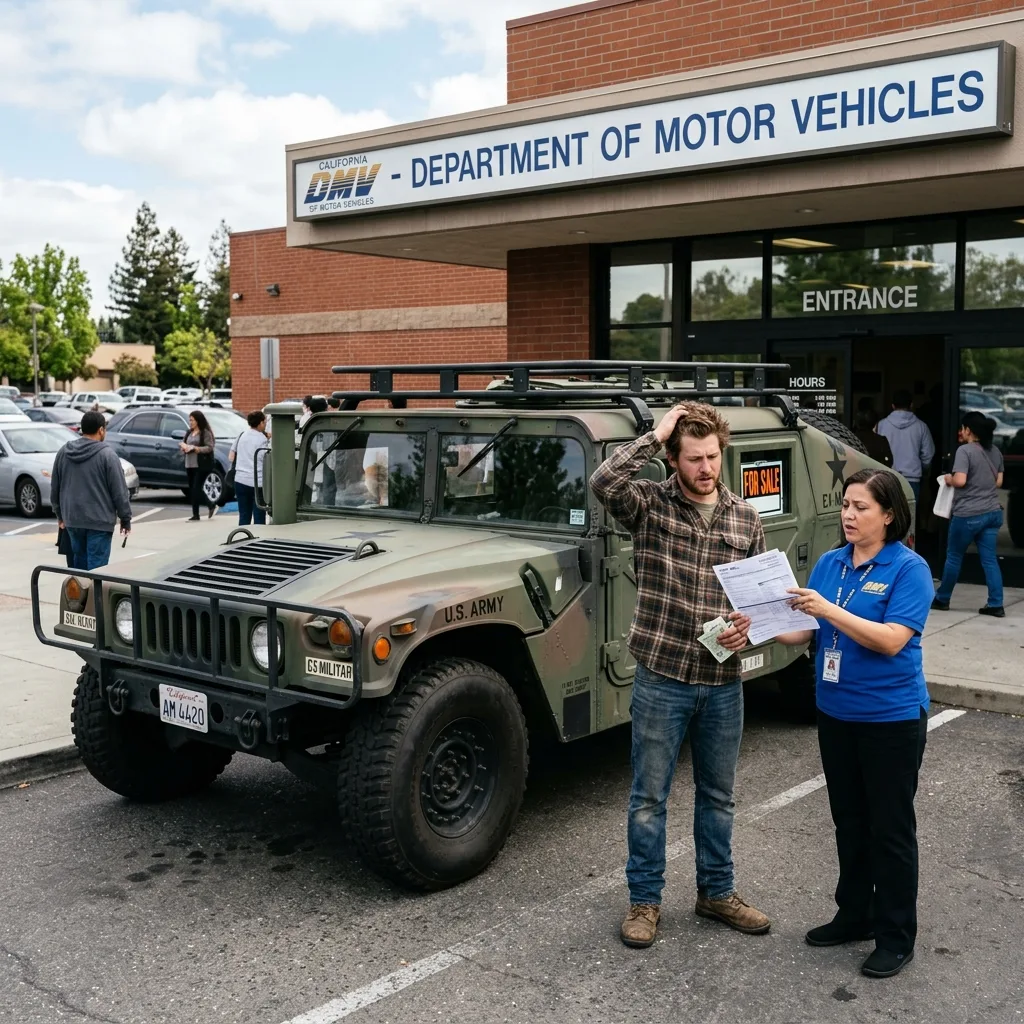
SF-97 military vehicle registration is not actually a registration at all. SF-97, officially titled “Standard Form 97 — Certificate to Obtain Title to a Vehicle,” is a federal transfer document. It is the U.S. government’s formal handoff: the moment when a piece of property the federal government previously owned, used, and tracked under a non-civilian Vehicle Identification Marking number is released to a private citizen. The form is issued by the Defense Logistics Agency for military equipment and by the General Services Administration for civilian agency surplus. It is governed by 49 CFR Section 102-34.305 and a small constellation of related federal regulations.
What the SF-97 actually does is permit a state DMV to issue a civilian title in your name. It is, in effect, a federal birth certificate for a vehicle that previously did not exist in any civilian database. Without an SF-97, no state DMV can legally process a title for a former military vehicle. With an SF-97, most can. Note the word “most.” That qualifier is where the trap lives.
SF-97 documents typically accompany the following surplus vehicle categories:
- HMMWV (the M998 series, commonly known as the Humvee)
- CUCV (Commercial Utility Cargo Vehicle, militarized Chevy K5 Blazer and pickup variants)
- M35 series (the famous “deuce-and-a-half” 2.5-ton 6×6 cargo truck)
- M151 MUTT (Military Utility Tactical Truck, the Vietnam-era jeep replacement)
- M939 series 5-ton trucks
- LMTV and FMTV (Light and Family Medium Tactical Vehicles)
- Government-owned trailers, boats, and specialty equipment
The timeline to actually receive an SF-97 in your hands is the first reality check. Once you win an auction at GovPlanet or a similar government surplus broker, you must submit an End-User Certificate, or EUC. This is a federal background check that takes 8 to 12 weeks. After EUC clearance, the DLA processes your title transfer paperwork, which takes another 30 to 60 business days. From the moment you click “buy” on a $14,000 Humvee to the moment you have an SF-97 in hand, plan on 4 to 6 months minimum. During that time, the vehicle is yours legally, but you cannot move it from the DLA disposition yard without the paperwork.
The SF-97 is the start of the journey, not the end. Think of it as a federal hall pass that lets you walk into the state DMV. What the state does with that hall pass once you arrive is an entirely separate problem, and the source of nearly every horror story in the surplus military vehicle community.
This distinction matters because the federal government and the 50 state DMVs operate as completely separate sovereigns when it comes to vehicle titling. The federal government can release the vehicle. Only a state can title and register it. And as we will see, eight states have decided that releasing a former combat vehicle into civilian traffic is something they want no part of, regardless of what the SF-97 says.
The off-road only trap — how the federal government locked your Humvee
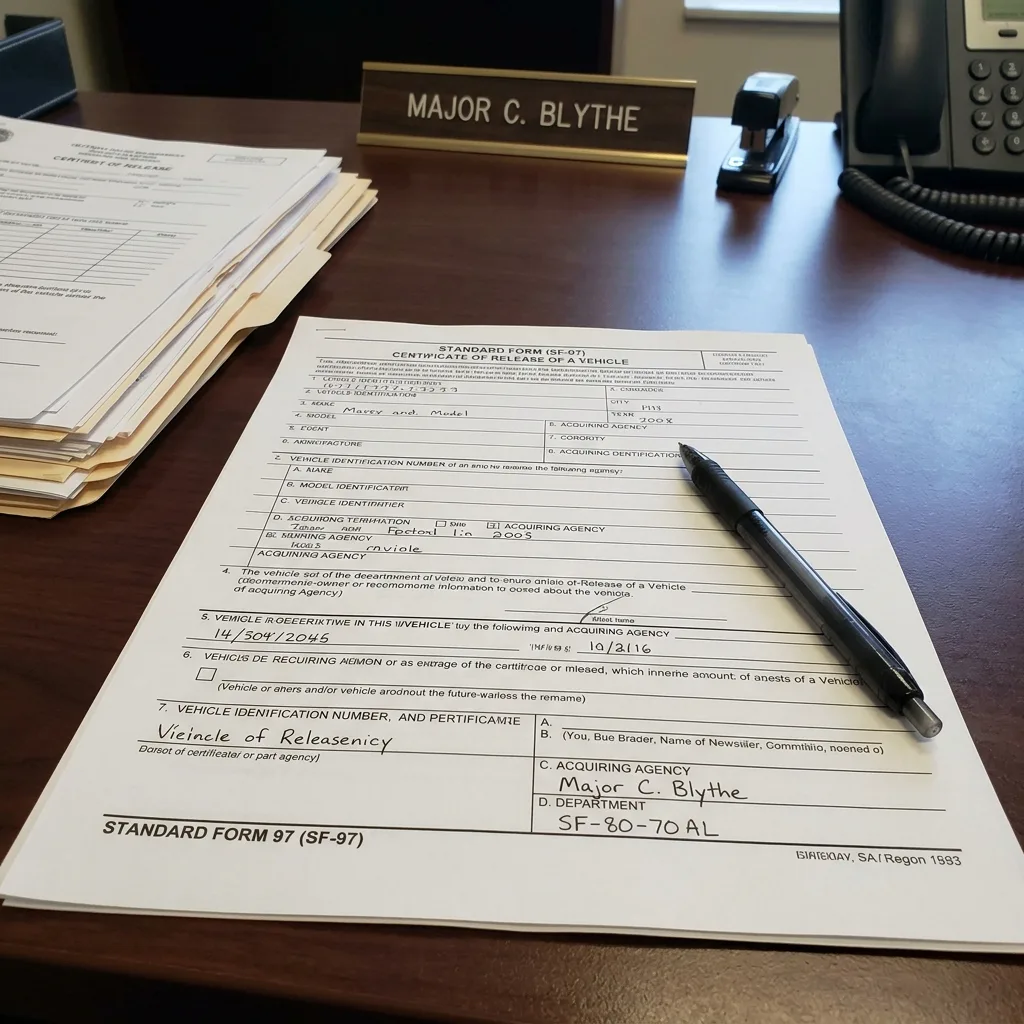
Beginning in the mid-2010s, the Defense Logistics Agency began stamping a phrase on a large percentage of HMMWV SF-97 certificates: “For Off-Road Use Only.” The most credible explanation points to liability concerns from AM General, the original HMMWV manufacturer. The Humvee is exempt from Federal Motor Vehicle Safety Standards and has no airbags, no modern side-impact protection, and no FMVSS data plate. AM General reportedly pressured the Department of Defense to mark surplus Humvees as off-road only to limit civilian liability exposure. The result: a phrase on federal paperwork that, in many states, has the force of law.
Once an SF-97 is marked “For Off-Road Use Only,” most state DMVs will refuse to issue an on-road title. Some will issue an off-road title good only for trail use. A few states ignore the designation entirely. A handful, notably Florida, California, and Colorado, will actively recall and revise a title if they discover an off-road-marked vehicle was registered for street use.
That recall is not theoretical. Florida’s DMV cross-references newly titled former military vehicles against the SF-97 database and issues 30-day title revision letters when discrepancies appear. California’s DMV is stricter: any officer who runs plates on a green-painted military-silhouette Humvee can trigger an automatic flag, leading to impoundment, citation, and in extreme cases a court order to destroy the vehicle as a non-compliant emissions device.
Driving a former military vehicle with improper registration in a hostile state can result in immediate impoundment, mandatory court appearance, and in worst-case scenarios, a court order to destroy the vehicle as a non-compliant emissions and safety device. This is not hyperbole. It has happened to dozens of owners in California and Colorado in the past decade.
The off-road only stamp is, in many ways, the cruelest part of the surplus pipeline. You did everything the government asked. You waited 4 to 6 months. You paid your money. You passed your background check. Then the government handed you a piece of paper with eight words on it that turned your $25,000 investment into a paperweight that can only legally drive on private trails.
State-by-state SF-97 acceptance — the friendly and hostile map

Roughly 32 states will accept an SF-97 and convert it to a street-legal civilian title with relatively few obstacles. Roughly 8 states have either explicit policies or de facto practices that make on-road registration of an SF-97 vehicle nearly impossible. The remaining states fall into a gray zone where outcomes depend heavily on the specific DMV branch, the specific clerk, and the specific phase of the moon.
Friendly SF-97 states, those that will accept the form and issue an on-road title with reasonable effort, include Alabama, Alaska, Arizona, Arkansas, Connecticut, Delaware, Georgia, Idaho, Indiana, Iowa, Kansas, Kentucky, Maine, Massachusetts, Minnesota, Mississippi, Missouri, Montana, Nebraska, Nevada, New Hampshire, New York, North Carolina, North Dakota, Oklahoma, South Carolina, South Dakota, Tennessee, Texas, Utah, Vermont, Virginia, and Wyoming.
Hostile states, those that reject SF-97 outright or impose conditions almost no military vehicle can meet, include California, Colorado, Florida, Illinois, Maryland, Michigan, Washington, and Hawaii. Maryland is the most explicit: state police have issued written guidance to certified inspection stations instructing them to refuse any vehicle without a Federal Motor Vehicle Safety Standards compliance label, which by definition no military vehicle has.
The unclear states, where outcomes vary, include Louisiana, New Jersey, New Mexico, Oregon, Pennsylvania, and Rhode Island. In these states, you may register an M35 with no problem at one DMV branch and be turned away at the next branch over.
The pattern is clear. Hostile states tend to be coastal, urban, emissions-strict, and politically risk-averse. Friendly states tend to be rural, agricultural, and more permissive about non-standard vehicles in general. The reason this matters is that your geography of residence determines whether your $20,000 surplus purchase becomes a road-legal toy or a glorified lawn ornament. And unlike most consumer purchases, you generally do not know which side of the line you fall on until after the SF-97 arrives in your mailbox 4 to 6 months after you bought the vehicle.
Why hostile states reject SF-97 (FMVSS, VIN, emissions)
Three structural incompatibilities explain why hostile states refuse SF-97 vehicles. These are not arbitrary policy choices. They are real engineering and legal gaps that states like Maryland and California have decided are not worth navigating.
The first is the FMVSS exemption. The Federal Motor Vehicle Safety Standards, administered by NHTSA, set minimum requirements for every civilian vehicle sold in the United States: airbags, crumple zones, side-impact bars, tire pressure monitoring, dual-circuit brake lights, tempered window glass. Military vehicles in active service are explicitly exempt because the DoD operates under separate procurement standards optimized for combat survivability. A surplus HMMWV has no FMVSS compliance plate, period.
For most states this is a curiosity, not a deal-breaker. They issue an antique or specialty title and let the owner drive at their own risk. For Maryland, the missing plate is grounds for automatic refusal. Maryland State Police instructed all certified inspection stations to refuse any vehicle without a visible FMVSS data plate. Since no military vehicle has one, no military vehicle gets a Maryland plate.
The second incompatibility is the VIN problem. Civilian vehicles in the United States have used a 17-digit Vehicle Identification Number since 1981, with a precise format defined by international standard ISO 3779. The first three digits encode the manufacturer. The middle digits encode the vehicle attributes. The last digits encode the production sequence. State DMV computer systems are built around this 17-digit assumption. Many systems will literally not accept fewer than 17 characters in the VIN field. Military vehicles, by contrast, use a 6-to-12-digit serial number assigned by the Defense Logistics Agency. An M35A2 might have a serial number like 9341862. There is no checksum. There is no manufacturer prefix in the civilian sense. It is just a number.
Friendly states have figured out workarounds for the VIN problem. Most simply pad the military serial number with zeros to reach 17 digits, or assign a state-issued VIN. Hostile states refuse to do either, citing system limitations or audit requirements.
The third incompatibility is emissions. California’s Air Resources Board, Colorado’s Air Pollution Control Division, and similar regulators in Washington, Illinois, and Maryland require all on-road vehicles to meet specific emissions standards based on model year. Military vehicles built before the early 2000s typically have no catalytic converter, no oxygen sensor, no closed-loop fuel injection, and no evaporative emissions control. They cannot pass an emissions test, period. In states that require emissions testing for registration, this is a hard wall. The vehicle could have a perfect SF-97 marked on-road and a 17-digit VIN tattooed on the hood, and it would still fail emissions on day one.
The combination of these three factors, FMVSS exemption, non-standard VIN, and emissions non-compliance, creates a regulatory thicket that hostile states have decided is not worth navigating. The friendly states have decided it is. That single decision, made at the state level decades ago and rarely revisited, is what determines whether your surplus purchase becomes a daily driver or a yard ornament.
The bonded title alternative — costs, timeline, process

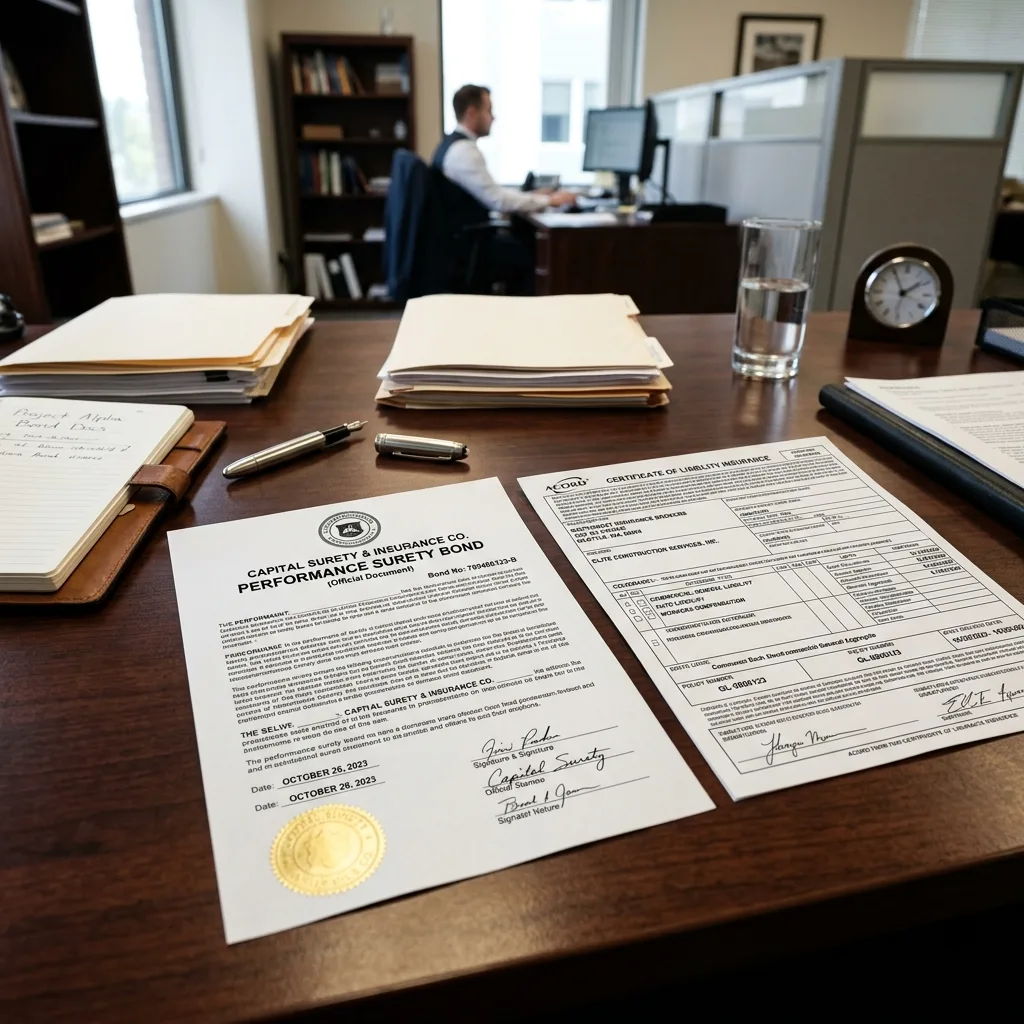
If you find yourself stuck with an SF-97 that your home state will not accept, or with no SF-97 at all because you bought the vehicle from a third party who lost the original paperwork, the bonded title is often the cleanest legal path forward. A bonded title is exactly what it sounds like: a title backed by a surety bond that protects against future ownership disputes. The bond is the state’s insurance policy in case someone later steps forward and claims the vehicle was theirs.
The bonded title process is available in all 32 friendly SF-97 states and several unclear states. For vehicles valued under $4,000, most states charge a flat $100 surety bond fee. Higher-value vehicles run 1.5 percent of appraised value. Total out-of-pocket, including DMV fees, appraisal, VIN inspection, and the bond itself, runs between $200 and $500 one-time. The bond amount is 1.5 times vehicle value in most states; California, Florida, and Georgia require 2x, roughly doubling the premium.
The timeline is the bonded title’s biggest advantage. A bonded title is typically issued in 2 to 4 weeks, 8 to 12 times faster than waiting for a fresh SF-97. The process:
- Step 1: Schedule a VIN inspection by law enforcement or a state-certified inspector
- Step 2: Obtain a written appraisal of vehicle value from a licensed dealer or certified appraiser
- Step 3: Purchase the surety bond from a licensed bond agent (most national insurance carriers offer them)
- Step 4: Submit the bond, appraisal, VIN inspection, and a completed bonded title application to the DMV
- Step 5: Receive bonded title in the mail within 2 to 4 weeks
- Step 6: After the bond’s three-year period expires with no claims filed, the bonded title automatically converts to a clean standard title
The three-year conversion is worth noting. After the bond expires, your title is functionally identical to any other state title. There is no scarlet letter. No designation that your vehicle was once military surplus. Your former M35 deuce-and-a-half becomes, in the eyes of the DMV, a 1972 utility truck with a clean title and a normal registration history.
The bonded title is the right answer for owners in friendly states who never received an SF-97, who lost it, or who received one marked off-road only and want a clean on-road title. It is generally not the right answer for owners in hostile states like Maryland or California, where the underlying refusal to register former military vehicles applies regardless of how the title was obtained.
Three real-world case studies
Case 1: The Texas collector and the off-road Humvee
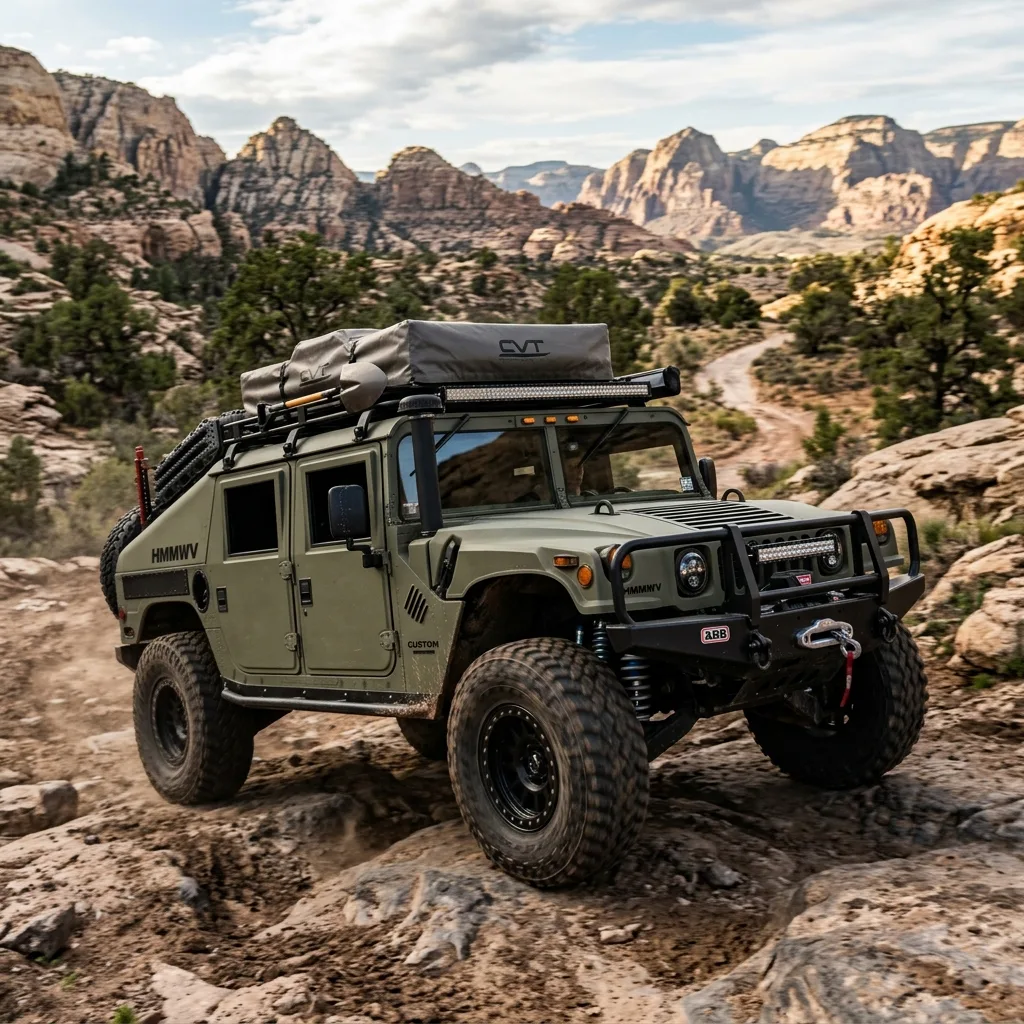
James, a 47-year-old aerospace engineer in Houston, won an M998 HMMWV at a GovPlanet auction in late 2024 for $14,200. He chose Texas specifically because Texas is one of the friendliest SF-97 states around. Texas DMV regularly issues on-road titles for surplus military vehicles with minimal friction. James had researched the process. He had budgeted for the wait. He was prepared.
What he was not prepared for was the off-road only stamp. When his SF-97 arrived 4.5 months later, the Defense Logistics Agency had marked it “For Off-Road Use Only.” This is increasingly common with HMMWVs in particular, due to AM General’s lobbying for liability protection. Texas, while friendly to SF-97 in general, will honor the off-road designation when it appears on the federal paperwork. James walked into his county tax office in Harris County and was offered an off-road title good only for trail use on private property. Not what he wanted.
James contacted Zero Tax Tags after reading about the Montana LLC reassignment route. He filled out an SF-97 reassignment form designating his newly formed Montana LLC as the new owner. The Montana DMV does not enforce the off-road only designation in the same way Texas does. Within 6 weeks, James had a Montana title, Montana plates, and a fully street-legal HMMWV that he could drive on Texas roads under Montana registration. Total cost: $899 for year one, including the LLC formation. Total time saved compared to fighting the Texas off-road stamp in court: an estimated 12 to 18 months.
Case 2: The Colorado off-roader and the M35 deuce-and-a-half
Maria, a 38-year-old wildfire mitigation contractor based in Grand Junction, Colorado, bought an M35A2 deuce-and-a-half at a regional surplus auction for $9,800. She intended to use it for hauling water tanks and equipment to remote burn sites. Colorado is a hostile SF-97 state. The Colorado Department of Revenue does not recognize SF-97 documentation as sufficient for an on-road title.
Maria’s situation was well-suited to the bonded title route. Her vehicle was relatively low-value, the Colorado bonded title program was documented and active, and her use case did not require highway speeds. She scheduled a VIN inspection through the Mesa County Sheriff’s Office, obtained an appraisal from a local dealer, purchased a surety bond for $185, and submitted her packet to the Grand Junction DMV branch. Three weeks later, she received a Colorado bonded title and standard plates.
Total cost: $275 in DMV fees, bond premium, and inspection charges. Total timeline: 21 days. After three years with no ownership claims, her bonded title will automatically convert to a standard Colorado title with no further action required.
Case 3: The Maryland buyer and the CUCV that nobody would inspect
David, a 52-year-old federal contractor living in Bethesda, Maryland, bought a 1986 CUCV K5 Blazer (the militarized variant of the civilian Chevy K5) for $11,500. The CUCV is one of the most civilian-friendly former military vehicles, sharing roughly 80 percent of its components with the civilian Chevy K5 Blazer. David assumed his CUCV would register easily.
Maryland had other plans. Maryland State Police had issued written guidance years earlier instructing certified inspection stations to refuse any vehicle without a visible FMVSS data plate. The CUCV, despite being mechanically nearly identical to a civilian Blazer, has no FMVSS plate because it was originally manufactured under military specification. Three different inspection stations turned David away. The fourth allowed him to take the inspection but failed him on the missing plate alone, with no other deficiencies cited.
The bonded title route was unavailable to David because Maryland’s underlying refusal applies regardless of how the title is obtained. The Montana LLC reassignment route was the only practical path. David worked with Zero Tax Tags to form a Montana LLC, reassign his SF-97 to the LLC, and obtain Montana title and plates. Total cost: $899 year one. The CUCV now lives in Bethesda with Montana plates and is fully legal to operate on Maryland roads under interstate vehicle reciprocity rules.
The Montana LLC solution — how it works for SF-97 vehicles
The Montana LLC route works for SF-97 vehicles for the same reasons it works for high-end exotics, RVs, and collector cars: Montana is structurally friendlier to non-standard vehicles, and Montana titles are recognized nationally under federal interstate commerce rules. For SF-97 vehicles specifically, it solves both problems at once: it clears the registration-legality wall and eliminates state sales tax on the transfer.
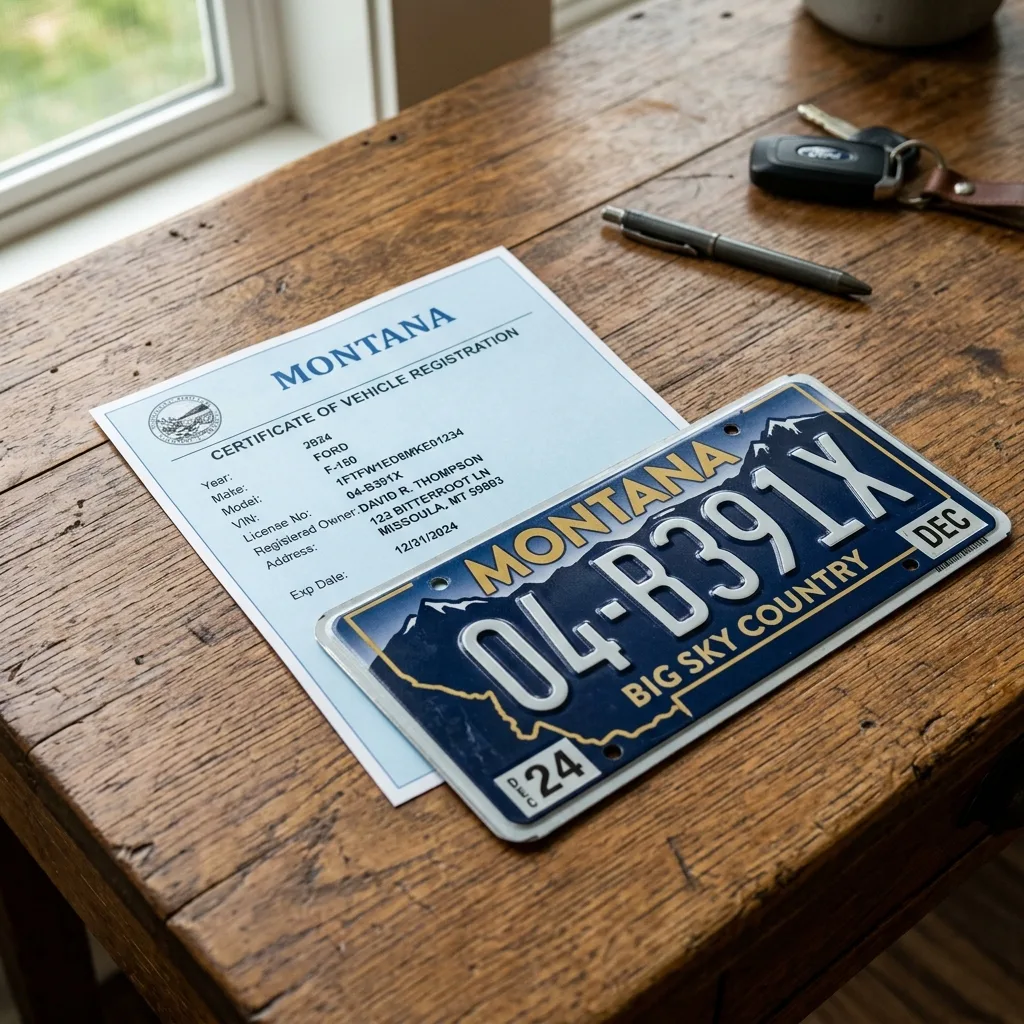
Once you have your SF-97 in hand, you file an SF-97 Reassignment Form. This is the same form used when a dealer takes possession of a surplus vehicle and reassigns title to a retail buyer. In your case, the buyer is your newly formed Montana LLC. The reassignment is filed with the Montana Motor Vehicle Division, after which you complete a Montana MV-1 title application and submit it with proof of LLC ownership.
For vehicles 11 years or older, which includes nearly every former military vehicle in civilian hands, Montana offers permanent registration. You pay one fee, one time, and never renew. There is no annual property tax, no emissions inspection, no renewal sticker. The vehicle is legally registered in Montana, regardless of where it physically resides.
| Day 1: | Submit your MCO and supporting paperwork through our secure portal. We review for completeness and file your Montana LLC the same day. |
| Days 1–2: | Montana LLC formation complete — same business day in most cases, second business day at the latest. |
| Days 2–4: | Title transferred into the LLC name at the Montana county treasurer. |
| Days 4–7: | Permanent Montana plates shipped directly to your door within 3–5 business days of title completion. |
The financial side is equally clean. Montana has no statewide sales tax. No annual property tax. No emissions inspection. Permanent registration on a vehicle 11 years or older is a flat one-time charge, typically under $300 depending on weight class.
Is this legal?
The short answer is yes. Forming an LLC in a state where you do not personally reside is a routine business activity, governed by the same rules that allow Delaware to host the headquarters of nearly half of the Fortune 500. Registering a vehicle in the state where the LLC has its principal place of business is similarly routine, governed by the federal interstate commerce framework that has been in place since the 1950s.
The Montana LLC structure for vehicle ownership has been litigated repeatedly over the past 30 years. Various states, most notably California and Massachusetts, have attempted to challenge the practice, generally unsuccessfully. The legal foundation rests on three pillars: an LLC is a legal person under state law and can own property; a vehicle owned by an LLC is registered in the state where the LLC is formed and operates; federal interstate vehicle reciprocity requires every state to honor every other state’s lawful registration.
The Montana LLC route is not a loophole. It is the application of established business law to vehicle ownership. The same legal principles that allow a delivery company in Texas to operate trucks owned by a Delaware corporation allow a private collector in Maryland to operate a Humvee owned by a Montana LLC.
That said, the Montana LLC structure has the strongest legal footing when used legitimately. An LLC formed solely to evade home-state vehicle taxes, with no other business purpose, has been challenged in some jurisdictions. An LLC that owns and operates collector vehicles, holds them as business assets, maintains proper records, and treats the vehicles as legitimately owned by the entity has a much stronger position. Working with an experienced service provider helps ensure that the structure is set up properly from day one.
Who benefits most
This route works best for specific profiles of buyers and use cases. Here is who benefits most.
- Owners in hostile states (California, Colorado, Florida, Illinois, Maryland, Michigan, Washington, Hawaii) where on-road registration is structurally blocked
- Owners with off-road only stamped SF-97s who want a clean on-road title without a multi-year court fight
- Collectors who own multiple surplus vehicles and want a single entity to manage all of them
- Operators of high-value former military vehicles ($30,000 plus) where state sales tax avoidance alone justifies the LLC cost
- Buyers who lost or never received the original SF-97 and need an alternative paper trail
- Buyers in unclear states (Louisiana, New Jersey, Pennsylvania, Rhode Island, Oregon, New Mexico) who want to skip the DMV roulette wheel entirely
- Anyone who values certainty and turnkey service over the lowest possible upfront cost
By contrast, a buyer in a friendly state with a clean on-road SF-97 and a low-value vehicle should generally just register through their home state DMV. The Montana route adds cost that would not be recovered through tax savings on a $5,000 truck.
Our process and timeline
Zero Tax Tags has handled SF-97 reassignments for HMMWVs, M35s, CUCVs, M939s, and a long list of more obscure surplus vehicles. The process is roughly the same regardless of vehicle type, with adjustments for unusually heavy or unusually rare equipment. Pricing is transparent and tiered.
Year 1 includes Montana LLC formation ($200), full service fee ($699 or $1,524 by tier), and all initial filing costs. Year 2 and beyond is $270 ($150 registration plus $120 LLC annual filing). Over 5 years, total cost runs $1,979 for vehicles under $150,000 or $2,804 for higher-value vehicles. For owners in hostile states, the alternative is an unusable vehicle or a multi-year legal battle. The Montana route is the cheapest path to a legal, drivable result.
Zero Tax Tags works exclusively with SF-97 surplus vehicles — surplus vehicles cleared for civilian ownership, not vehicles on active military or law enforcement service. All clients go through a background check on the title chain before formation. The Montana LLC route is legal precisely because it is built on genuine ownership — we do not process vehicles with clouded title chains or ITAR-restricted export designations.
Frequently asked questions
Is the Montana LLC structure legally protected for surplus military vehicles?
Yes. The Montana LLC structure is legal under federal interstate commerce rules — the Commerce Clause and Full Faith and Credit Clause protect Montana’s authority to register vehicles owned by Montana entities. The vehicle is owned by the Montana LLC, not the individual, so state-level registration requirements for individual residents do not apply. Zero Tax Tags maintains proper documentation and real LLC formation for every client, which is the foundation of the structure’s legal durability.
Can I drive my Montana-registered Humvee in California?
Yes. Federal interstate vehicle reciprocity requires California to recognize Montana registration. The vehicle must comply with California traffic laws while operating there, but it cannot be impounded or penalized solely for being Montana-registered.
What happens to my SF-97 once it is reassigned to the Montana LLC?
The original SF-97 is filed with the Montana Motor Vehicle Division as part of the title transfer record. You receive a copy. The Montana title issued in the LLC’s name becomes your primary ownership document going forward.
Can I sell the vehicle later?
Yes. You can sell the LLC itself, transferring ownership of the entity (and the vehicle inside it) to the buyer, which avoids state-level title transfer fees. Alternatively, the LLC sells the vehicle through a normal title transfer to the buyer’s home state DMV.
Does Montana actually inspect the vehicle?
No. Montana does not require physical inspection or emissions testing. The state uses a paper-based titling system relying on the SF-97 reassignment and MV-1 application. This is a structural advantage over states requiring in-person inspection.
What if my home state changes its rules?
The Montana LLC structure has held up over 30 years of use across every state. Federal Commerce Clause and Full Faith and Credit protections underpin the structure, and Montana’s statutory authority to register vehicles owned by Montana entities is constitutionally protected. We monitor regulatory developments and keep clients informed of any changes that affect their registration.
See how Montana LLC registration helps owners in other high-tax states:
- Arizona Vehicle Tax: The VLT Problem and How to Stop Paying $1,000 Every Year
- Virginia Vehicle Tax: Stop Paying the Highest Car Tax in America
- Nevada Vehicle Tax: The 8.25% Hidden Cost Nobody Tells You About
Ready to Turn Your Paperweight Back Into a Vehicle?
Surplus military vehicle owners across all 50 states have escaped the SF-97 trap with Montana LLC registration. Your Humvee deserves to drive on roads, not gather dust.