22 min read
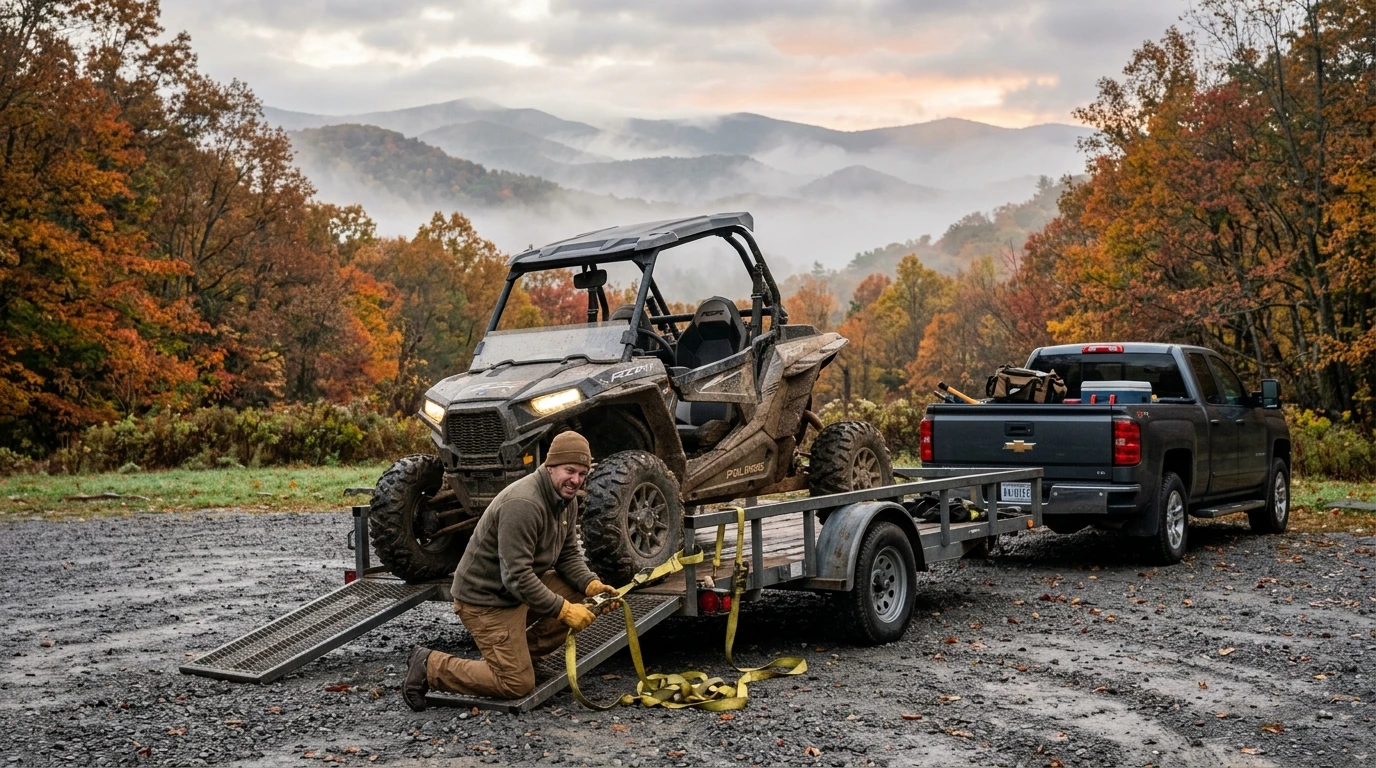
Virginia off-road restrictions are some of the most aggressive ATV and UTV road-use rules in the eastern United States, and most owners don’t learn the truth until a trooper is writing a citation. The Commonwealth maintains a near-blanket prohibition on ATV and UTV travel on public highways under Virginia Code § 46.2-915.1, with only narrow exceptions that fail most recreational riders. Virginia off-road enthusiasts pay full freight on a four-wheeler they can barely use without a trailer, pay again annually through county personal property tax, and pay a third time at every fuel pump on the way to a trailhead. This guide walks through the law, the trail systems, the trailer burden, and the Montana LLC strategy thousands of Virginia owners use to cut costs.
On this page
- + A Loudoun County Saturday That Never Happened
- + Virginia Code § 46.2-915.1: The Blanket Ban
- + The Two-County Exception: Buchanan and Tazewell
- + The Farm-Use Exemption and Its Hard Limits
- + Virginia’s Best Trail Systems and How You Get to Them
- + The Trailer Burden: The Hidden Cost of Compliance
- + Virginia Personal Property Tax on UTVs and ATVs
- + The Montana Solution for Virginia Off-Road Owners
- + Real Virginia Owners, Real Numbers
- + Military Surplus Vehicles and the SF-97 Pathway
- + Who This Is Built For
- + Our Process and Timeline
- + Frequently Asked Questions
A Loudoun County Saturday That Never Happened
Tom Garrett is forty-four, a software architect, and the owner of a brand-new Polaris Ranger XP 1000. He bought a top-of-the-line trim with a winch, premium sound, and a windshield. The total ticket, with Virginia’s 4.15 percent sales and use tax at titling, came to almost twenty-two thousand dollars.
Tom’s property in Loudoun County backs up to a small private trail network that connects, after about four hundred yards, to a much larger system. The connecting strip crosses a state-maintained secondary road — a two-lane country road where the speed limit is thirty-five and traffic averages fewer than three hundred vehicles a day. He decided this was a problem he could solve with a quick call to the Virginia DMV. He would just cross the road. Slowly. With a flag.
The DMV staffer was unequivocal. ATVs and UTVs cannot operate on public highways in Virginia, full stop, with a tiny number of exceptions that did not apply to him. Crossing a road, even briefly, even with hazard lights and a flag, is illegal. The civil penalty runs up to five hundred dollars, and officers can layer on reckless driving charges. She suggested Spearhead Trails in Southwest Virginia, about a six-hour drive from his home.
So Tom did what every Virginia off-road owner eventually does. He bought a trailer, tie-down straps, and a Class IV hitch. Every Saturday during riding season, he loads the Ranger, drives thirty-eight miles to the nearest legal trailhead, unloads, rides, reloads, and drives home — three hours of his Saturday gone before he turns a wheel. That is what virginia off-road restrictions look like for everyone outside Buchanan and Tazewell counties.
Virginia Code § 46.2-915.1: The Blanket Ban
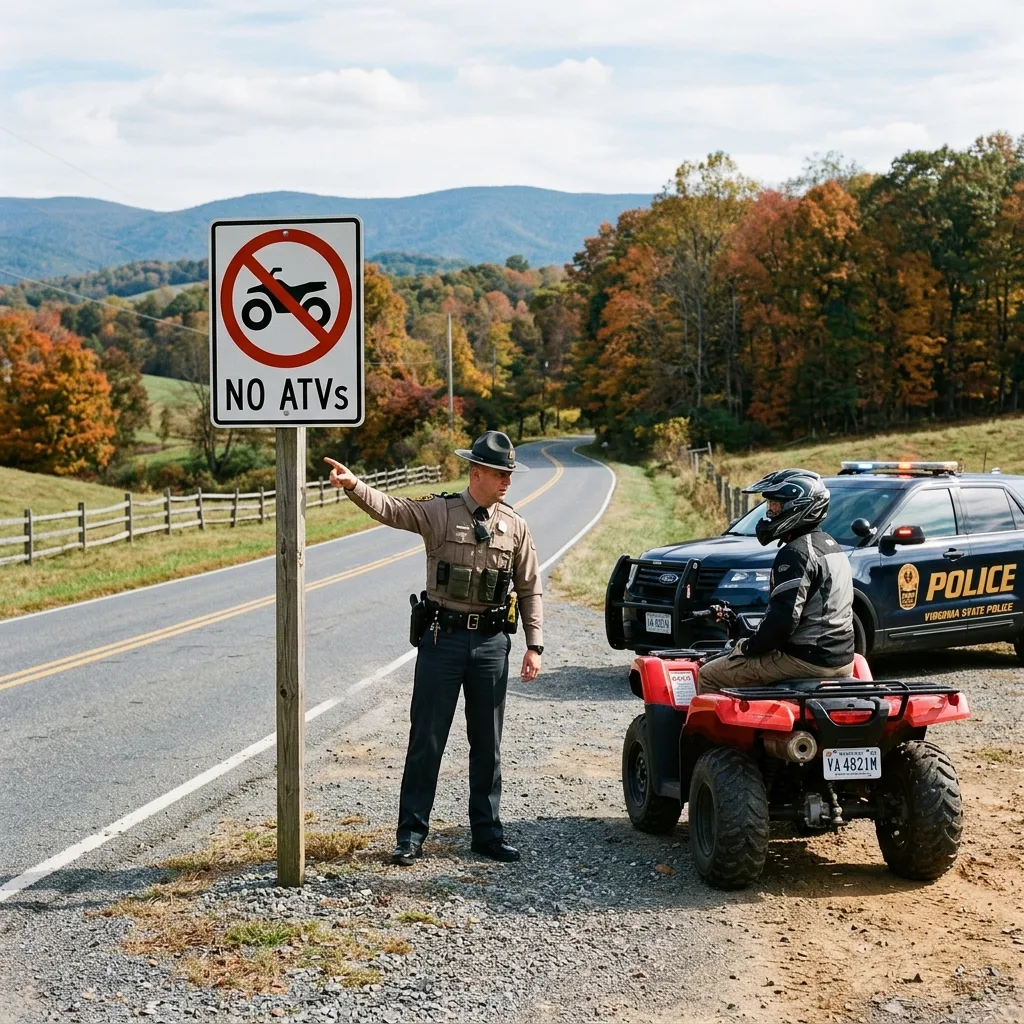
Virginia Code § 46.2-915.1 is short and sweeping. With limited exceptions, the law makes it illegal to operate an ATV or utility-type off-highway vehicle on any public highway in Virginia. The civil penalty runs up to five hundred dollars, and officers can stack reckless driving, improper equipment, no insurance, and operating an unregistered motor vehicle on top of the underlying violation.
The phrase that trips up new owners is “public highway.” In Virginia statutory speech, it encompasses essentially every road open to public vehicular travel and maintained by the Commonwealth or a locality. Secondary routes, county roads, residential streets, gravel state-maintained connectors, and the loop serving a public boat ramp are all public highways under § 46.2-915.1. If a passenger car can legally drive there, an ATV or UTV almost certainly cannot cross it.
The General Assembly tightened adjacent statutes effective July 1, 2025. Expanded seatbelt requirements and stronger careless driving language gave officers more discretion. The Commonwealth is not loosening the virginia off-road restrictions — it is reinforcing them. Multiple bills to expand street access for UTVs in 2024 and 2025 failed to pass.
The reality: An ATV or UTV with a Virginia title and current registration is still illegal on Virginia public highways. The title authorizes ownership and the vehicle’s existence on private property and approved trails. It does not authorize on-road operation. Owners who assume “registered means road legal” are the ones writing checks for civil penalties.
Enforcement spikes in spring and fall around trail-system traffic. State troopers and sheriff’s deputies in jurisdictions adjacent to popular riding areas know which back roads riders use as connectors, and weekend enforcement at known choke points is standard. Owners who “just go a half mile down the shoulder” to reach a trail are the most reliable producers of violations — they make the same trip on the same road at the same time every weekend. Enforcement is patterned, and the patterns favor the badge.
The Two-County Exception: Buchanan and Tazewell
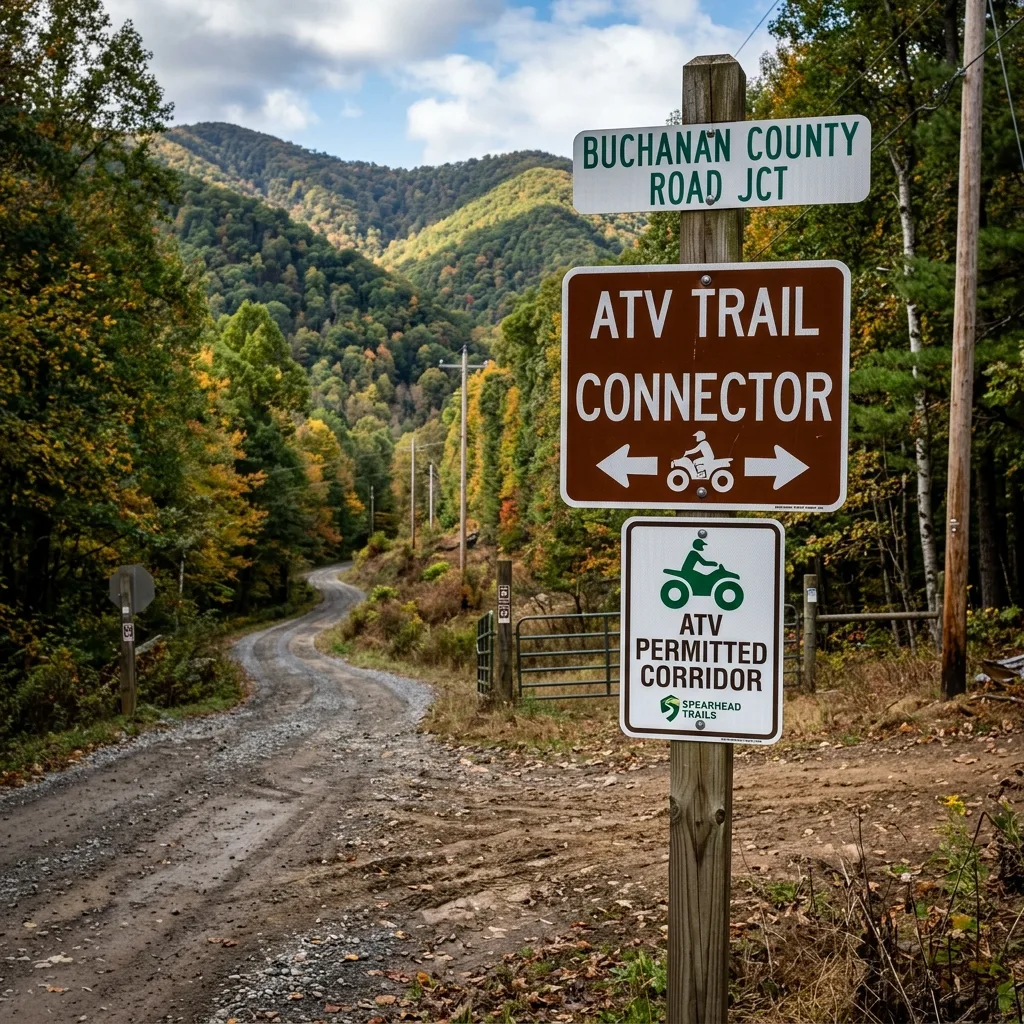
Of eighty-nine counties and thirty-eight independent cities in the Commonwealth, exactly two enjoy a corridor exception under the virginia off-road restrictions framework. Buchanan and Tazewell counties, both deep in the southwestern coalfields, are permitted to designate ATV corridors that connect trail system entrances to lodging, fuel, and services. The exception is not a general permit — it is narrow and technical.
The corridor conditions are strict: daylight only, a maximum corridor distance of one mile between trail systems, a maximum speed of 25 mph regardless of posted limit, DOT-approved helmets for operator and passenger, and the corridor must be marked with signage installed by the local governing body. Step off the corridor and the standard prohibition reapplies.
The exception exists because Buchanan and Tazewell are the heart of Spearhead Trails, the ATV network that became the economic engine of the southwestern coalfields after the decline of underground mining. The General Assembly granted it because it had to and has not extended it elsewhere.
For the roughly ninety-five percent of Virginia ATV owners who do not live in Buchanan or Tazewell, the corridor exception is geographically irrelevant. An owner in Henrico cannot ride to the corner store. An owner in Albemarle cannot connect his property to the adjacent state forest. An owner in Loudoun cannot cross a four-hundred-yard secondary road to a private trail network. For everyone else, the rule is the rule. Trailer or stay home.
The Farm-Use Exemption and Its Hard Limits
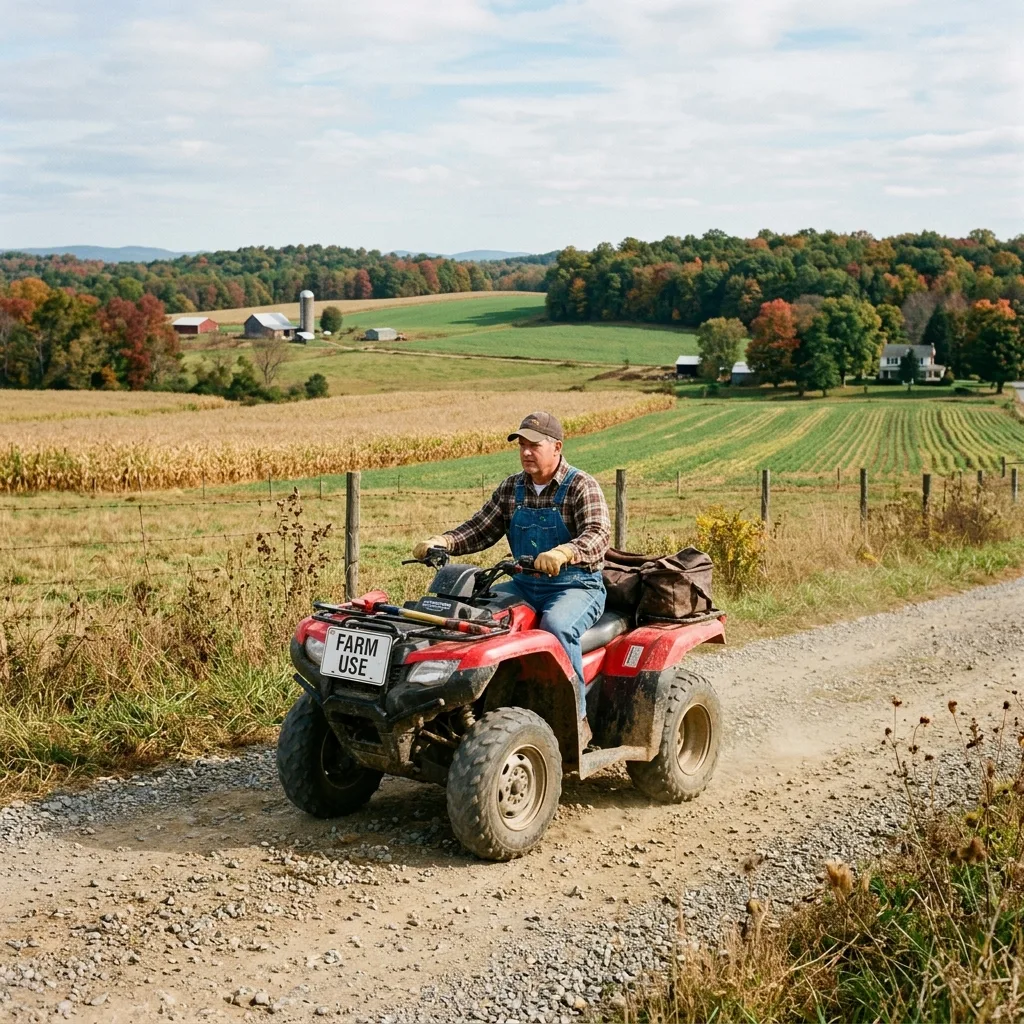
The other notable exception is the farm-use provision. Farmers and timber operators have always needed to move equipment across public road, and the farm exception preserves that ability for agricultural purposes only. It is not a recreational, personal-errand, or “I own ten acres” exception.
The basic permission allows an ATV or UTV used for bona fide agricultural purposes to cross a public highway by the most direct route between owned or leased tracts, and extends to highway travel up to seventy-five miles between the operator’s separate tracts for legitimate agricultural use.
Effective July 1, 2024, Virginia tightened the farm-use framework by requiring a DMV-issued farm-use placard for vehicles operating under the exemption. The placard requirement was a direct response to widespread abuse — owners displaying handmade “Farm Use” signs on pickups and ATVs with no genuine agricultural purpose. Without the placard, the exemption does not apply. With it, the operator must still satisfy all underlying statutory conditions.
Important: The farm-use exemption is for active agricultural operation. Riding to a friend’s house, taking the ATV to the gas station, or hauling firewood for personal use does not qualify. Improper use of the placard is itself a violation, and DMV-issued placards make abuse easy to identify and prosecute.
For recreational riders, the farm-use exemption is worthless. Even owners with substantial rural acreage cannot use it to connect their property to a trail system, because trail riding is recreational, not agricultural.
The seventy-five-mile provision is useful for legitimate large-acreage operators — cattle on non-contiguous pasture, timber crews ferrying equipment. But the journey must be between the operator’s own tracts for genuine agricultural use, and the moment it becomes recreational, the exemption evaporates.
Virginia’s Best Trail Systems and How You Get to Them
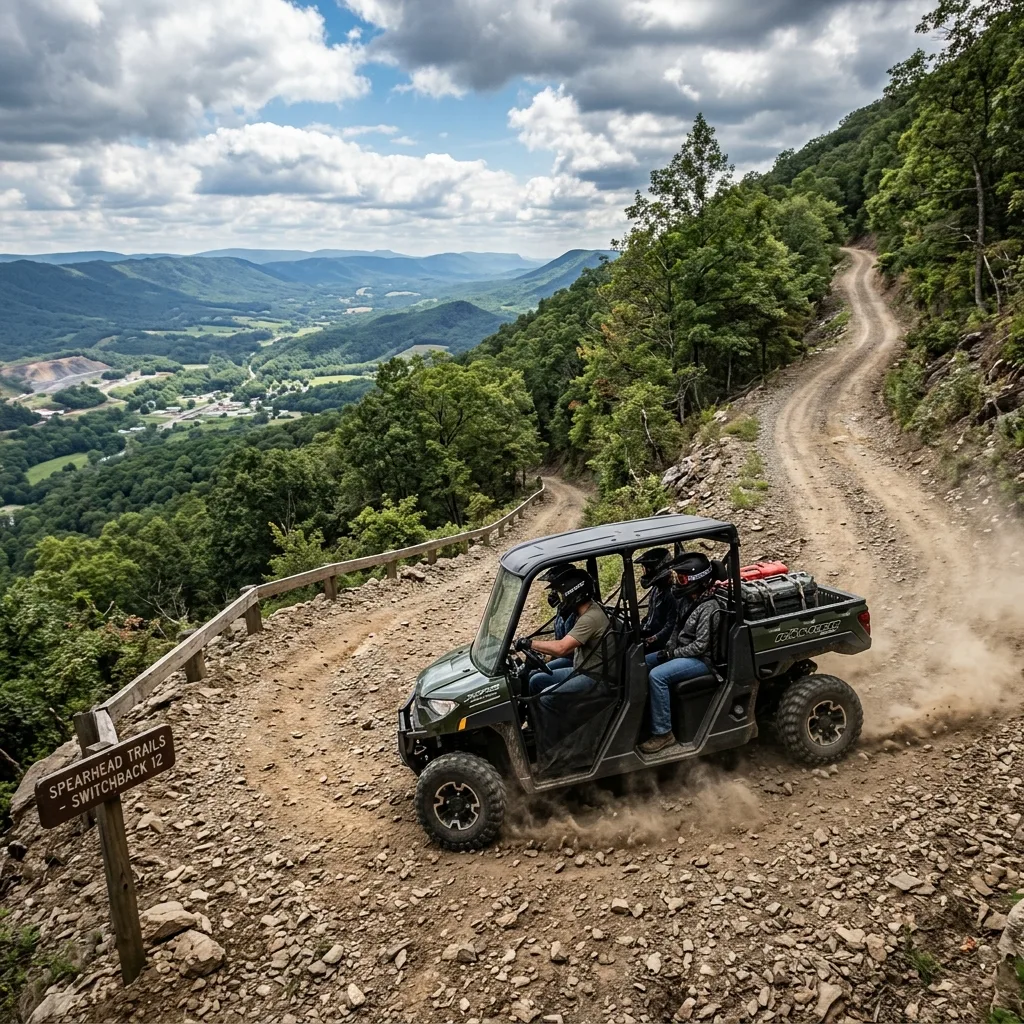
Virginia is, against expectations, an excellent trail-riding destination. Spearhead Trails has five systems in the southwestern coalfields totaling nearly 400 miles. Coal Canyon at 112 miles is one of the largest networks in the eastern U.S. Mountain View offers 100 miles of ridgeline riding. Ridgeview adds 75-plus miles, Stone Mountain delivers 32 miles, and Pocahontas Trail covers 73 miles.
Outside Spearhead, South Pedlar ATV Trails (USDA Forest Service, George Washington and Jefferson National Forests) offer 19 miles with $5 day passes, $12 three-day, $30 annual. The Shenandoah Valley has additional ATV-permitted segments, but connecting roads to lodging are public highways subject to the same prohibition.
Virginia has ambitious off-highway infrastructure on the East Coast and almost no legal way to connect any of it without a trailer. A rider in Northern Virginia who wants a long weekend at Spearhead loads up Friday evening, drives six hours, parks the trailer at the lodge, rides Saturday and Sunday, then drives six hours home. Spearhead permits run roughly $40 to $60 for a multi-day pass; South Pedlar is $5 a day. The trail systems are fine. The problem is the legal connective tissue between trailhead, lodging, and home — § 46.2-915.1, which does not bend.
The Trailer Burden: The Hidden Cost of Compliance
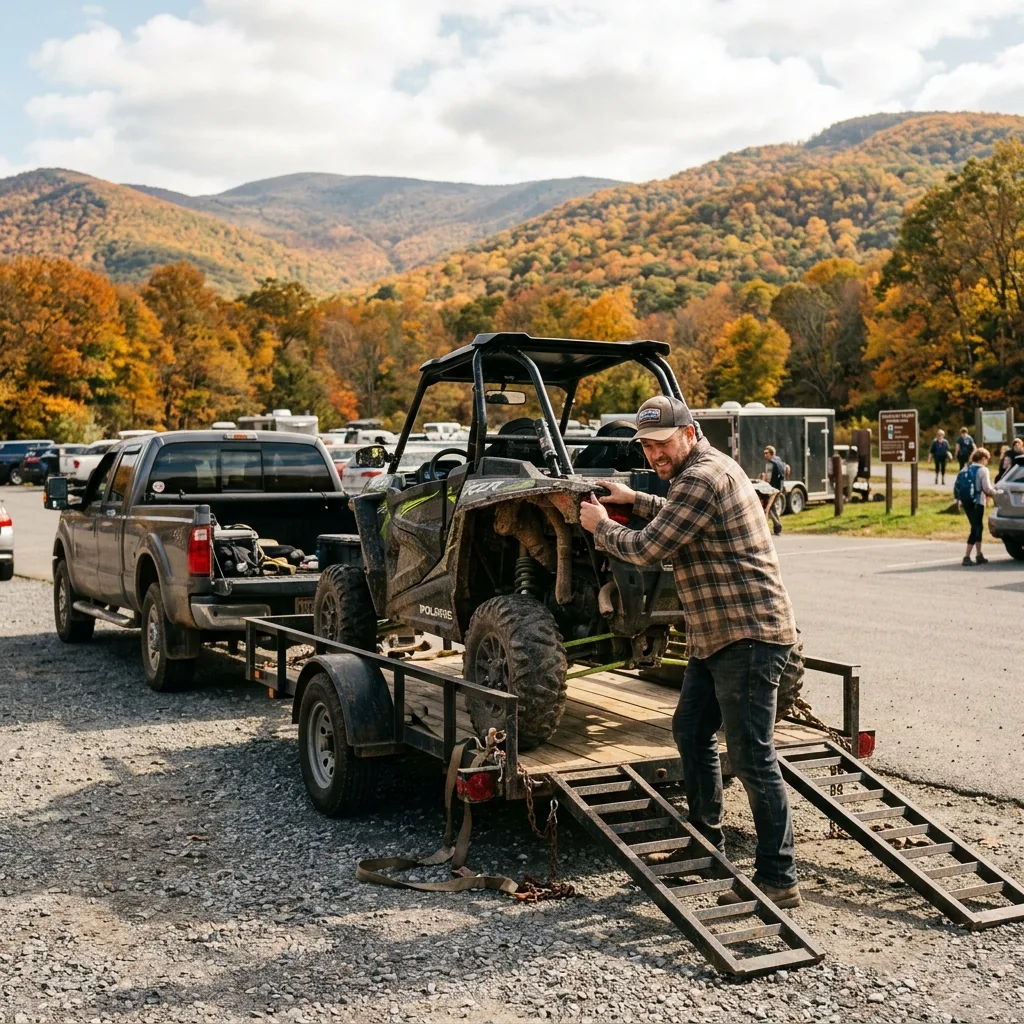
The virginia off-road restrictions regime has a cost most owners don’t calculate until they’ve been at it a season or two: the trailer burden. Dollars, time, and energy compounding every ride. Owners who have lived through three or four seasons of weekly haul logistics know it is the largest recurring cost of off-road ownership in the Commonwealth.
A quality enclosed ATV trailer for a full-size UTV runs $3,000 entry level to $15,000-plus for high-end aluminum. Open trailers are cheaper but expose the machine to weather, salt, and theft. Hitch upgrades, brake controllers, tie-downs, ramps, wheel chocks, and a spare add $500 to $1,000. The trailer also needs annual registration, bearing service, tire replacement, and lighting maintenance.
Fuel is where the burden compounds. A pickup towing a six-thousand-pound combined load returns 12-14 mpg on the interstate, dropping to 8-9 in mountain terrain. A round trip from Northern Virginia to Spearhead covers about 650 miles. At 13 mpg and Virginia fuel around $3.40 per gallon, that is roughly $170 in tow-vehicle fuel for a single weekend. A rider making the trip once a month for six months of the season is spending more than $1,000 in tow fuel alone — before lodging, food, trail permits, or fuel for the UTV itself.
Beyond dollars, there is time. The average Virginia off-road enthusiast adds 90 to 120 minutes per riding day for transport logistics — pre-trip checklist, hitching, loading, securing, the drive, unloading, reloading, the drive home, unhitching, cleaning. Across a six-trip season, that is more than ten hours of pure logistics overhead, on top of the actual driving time. By the end of a riding weekend, the owner has spent more time in his pickup than on his UTV.
Virginia Personal Property Tax on UTVs and ATVs

Owning an ATV or UTV in Virginia means paying tax three ways. The first hit is the dealership. Virginia imposes 4.15 percent sales and use tax on titled ATVs at titling, required for ATVs over 50cc purchased new since July 1, 2006. On a $22,000 Polaris Ranger, that is $913. On a $30,000 Can-Am Defender Limited, sales tax exceeds $1,200. The tax applies whether or not the buyer can legally operate on a public road — which, given § 46.2-915.1, almost nobody can.
The second hit is the annual personal property tax. Fairfax, Loudoun, Arlington, and most Northern Virginia jurisdictions assess around $4.25 per $100 of assessed value. Richmond, Henrico, and Chesterfield run similar rates. An ATV owner in Northern Virginia can easily pay $600-$800 in the first year.
The third hit is the annual Virginia DMV titling and registration renewal. Combined, an owner of a new mid-tier UTV in Northern Virginia faces roughly $1,500 in first-year tax and registration on a vehicle the law says cannot operate on a public road. Across five years, the total runs north of $3,000 in pure tax, on top of the trailer burden.
Across five years, a Virginia owner who registers a $22,000 UTV through Montana saves approximately $3,724 versus the standard Virginia pathway — the $4,473 Virginia total minus the $749 one-time Montana cost, after which there are no further fees. On a $30,000 Can-Am Defender Limited or $35,000 Polaris RZR Pro R, the savings grow larger. The Montana savings don’t depend on ever taking the machine to Montana — they are realized at purchase when sales tax is avoided, and continue every year the personal property tax doesn’t arrive.
The Montana Solution for Virginia Off-Road Owners
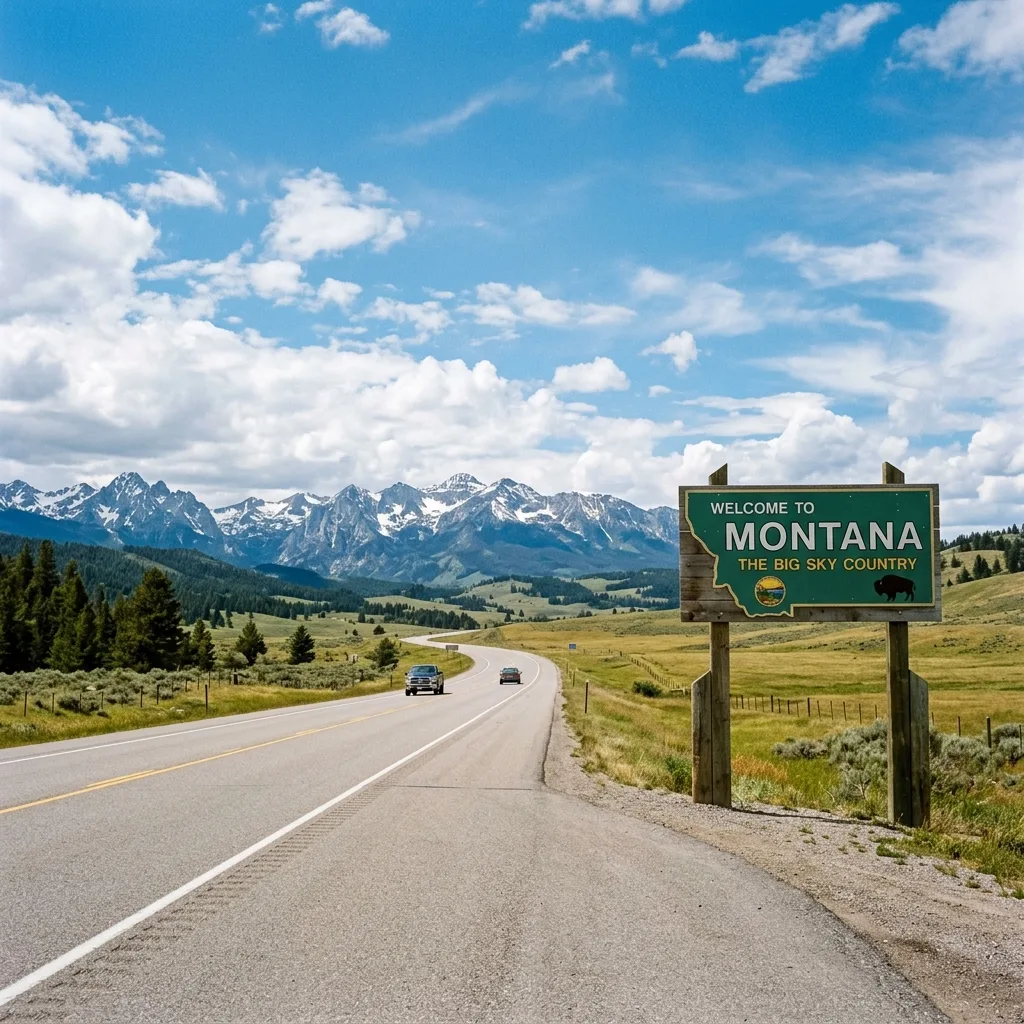
Montana operates one of the most owner-friendly vehicle registration regimes in the U.S. — including ATVs, UTVs, side-by-sides, motorhomes, classic cars, and military surplus vehicles. A Virginia resident forms a Montana LLC, the LLC takes ownership of the vehicle, and the LLC titles and registers it in Montana. Federal law — the Full Faith and Credit Clause — requires every state to recognize a vehicle registration validly issued by another state.
The financial advantages are immediate. Montana imposes no general sales tax, so the 4.15 percent Virginia sales-and-use tax at titling does not apply. On a $22,000 UTV, that is over $900 saved at purchase. Montana ATV and UTV initial registration fees run $80-$130 depending on classification, and Montana imposes no annual renewal fees on permanently registered off-highway vehicles. The annual personal property tax Virginia counties assess does not apply to a vehicle owned by a Montana LLC and titled in Montana — the taxable situs is Montana, not the Virginia county.
The road-use advantages are real but require honest framing. A Montana-registered UTV meeting Montana’s road-legal equipment standards is street legal in Montana itself. Forty-plus other states recognize Montana road registration for non-resident travelers. An owner taking the machine to Idaho, Wyoming, South Dakota, Tennessee, or dozens of other states with permissive UTV-on-road statutes can ride on the same roads as a local owner.
Virginia Code § 46.2-915.1 restricts ATV and UTV road use on Virginia public highways regardless of which state the vehicle is registered in — that is a Virginia road-use restriction, not a registration question. Montana plates apply identically to any other plate on Virginia roads. The Montana LLC strategy delivers its full value in tax elimination and out-of-state road access. Virginia owners who travel and ride in other states get the complete benefit.
Within those honest limits, the strategy makes sense for the vast majority of Virginia off-road owners. Sales tax avoidance and elimination of the annual personal property tax pay the strategy back in year one. The downside scenario for a Montana-registered vehicle in Virginia is identical to a Virginia-registered one — both must trailer. The difference is the tax bill.
For Virginia owners who travel for riding, the unlock is significant. A Northern Virginia owner planning an annual Yellowstone trip, a weekend at Hatfield-McCoy, or a winter run to the Mojave can ride on permitted public roads in those states under Montana plates.
Real Virginia Owners, Real Numbers
Jim and Patricia Kovacs, Fairfax County
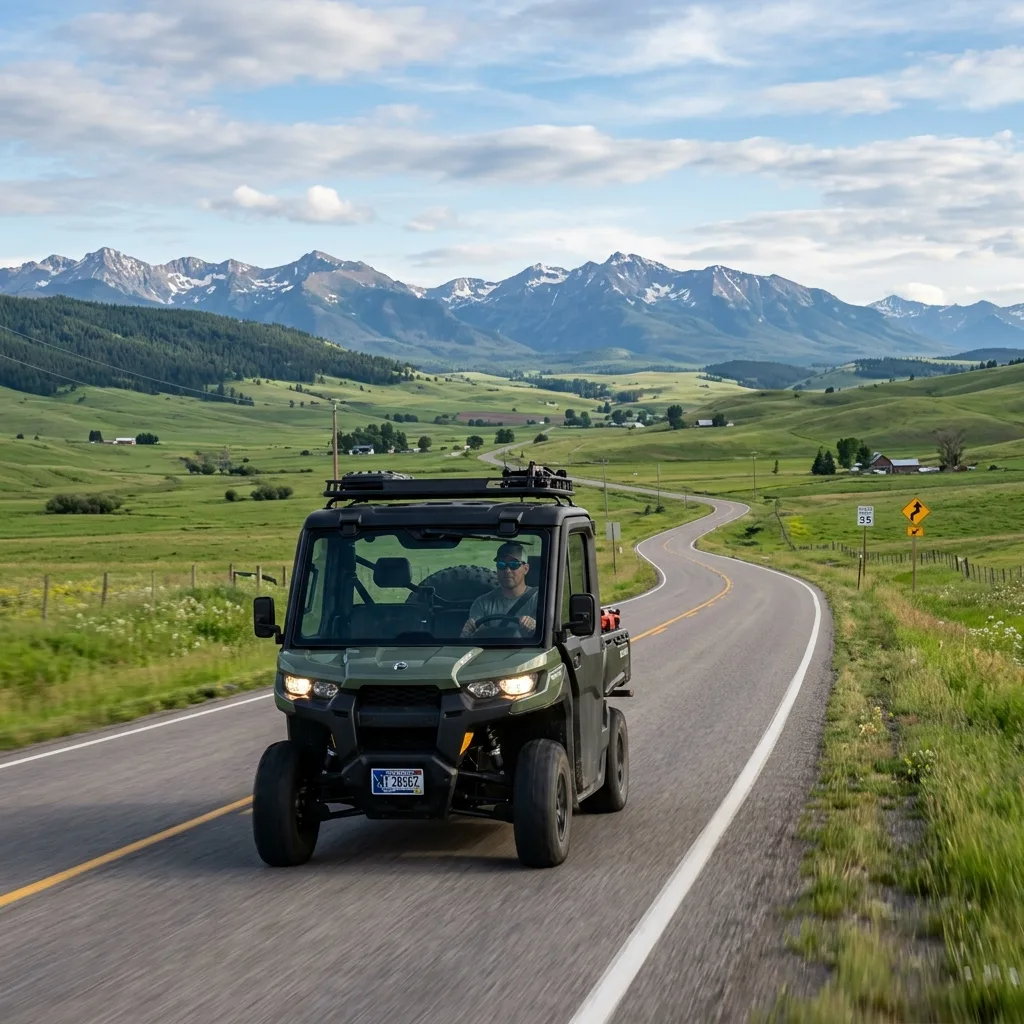
Jim is sixty-eight, a retired federal contractor, and bought a Can-Am Defender HD10 for $24,500 in spring 2024. Originally planning to title in Fairfax County, his projected first-year personal property tax was roughly $850, plus $1,016 in sales tax at purchase. Five-year projected Virginia tax burden exceeded $3,500.
The Kovacses chose Montana. The LLC was formed in three business days. They saved the $1,016 in Virginia sales tax and have not received a personal property tax notice in either year since. They make an annual August trip to a friend’s ranch outside Bozeman, where the Defender is fully road legal. In Virginia, the machine still rides on private land and at Spearhead on annual long weekends — exactly as it would have under Virginia plates, but without the tax bill.
Marcus Webb, Roanoke
Marcus is forty-two, owns a small construction company, and bought a Polaris Ranger 1000 for $19,800 to ride with his teenage son. His Botetourt County property is adjacent to Jefferson National Forest, but the connecting county road is off-limits under Virginia law. He has a farm-use placard for part of his agricultural operation, but it doesn’t cover recreational riding.
Marcus structured the Ranger through a Montana LLC at purchase. He saved $822 in Virginia sales tax and avoids the roughly $475 first-year Botetourt personal property tax. The bigger value-add is multistate access — he and his son have ridden in Tennessee, where designated UTV roads are common, and on North Carolina state forest roads where Montana plates are recognized for visiting riders.
Diane Sullivan, Richmond
Diane is fifty-five, works in defense logistics, and bought a demilitarized 1995 AM General M998 HMMWV for $18,000 from a surplus auction with SF-97 paperwork. Virginia titling for military surplus is notoriously inconsistent across DMV offices, with quoted timelines ranging from four to fifteen months.
The Montana LLC pathway streamlined the process. Montana has long experience with SF-97 conversions, and the HMMWV is now Montana-titled with full road registration. Diane brings it to Montana for her annual ranch trip and rides on county roads. In Virginia, she keeps it on her Richmond-area acreage for property maintenance and stays within the farm-crossing exception when moving it to her woodlot — Montana road legality elsewhere and disciplined Virginia private-land use, without any flirtation with § 46.2-915.1.
Military Surplus Vehicles and the SF-97 Pathway
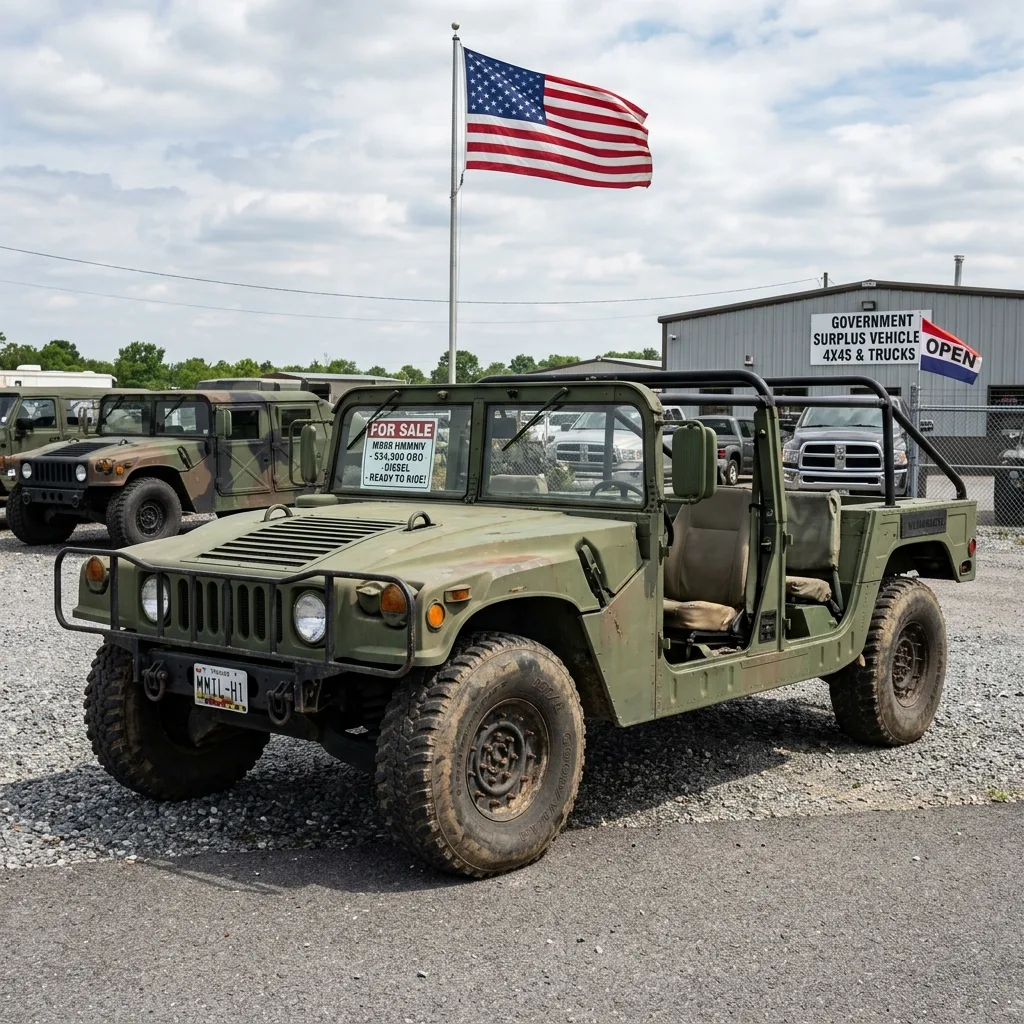
Virginia’s defense industry footprint is enormous, and a meaningful subset of off-road owners come into the hobby through demilitarized military surplus vehicles. AM General HMMWVs, M35 deuce-and-a-halfs, M923 five-tons, and Humvee variants come up regularly at Government Liquidation auctions. The vehicles are mechanically robust, parts-friendly, and cheap up front — but the titling pathway is complicated.
A Standard Form 97 (SF-97) is the federal certificate of release issued when a military vehicle enters the civilian market, sometimes accompanied by DD Form 1342. These establish identity, demilitarization status, and chain of custody, but do not by themselves generate a state title. Each state has its own conversion process.
Virginia’s SF-97 process is uneven. Different DMV offices apply different paperwork standards and quote different timelines, and some require Virginia State Police VIN verification before titling. Owners frequently wait months.
Montana’s process is shorter and more predictable, producing a clean civilian title with road registration recognized in every other state under Full Faith and Credit. For Virginia owners of military surplus vehicles who want road legality in other states, faster titling, and no Virginia personal property tax, the Montana pathway is meaningfully simpler. Virginia Code § 46.2-915.1 applies to HMMWVs on Virginia public roads regardless of registration state — the same road-use restriction applies to any plate. Montana registration delivers faster titling, no personal property tax, and full road legality in other states where the vehicle travels.
Who This Is Built For
The Montana LLC pathway is the right call for a wide range of Virginia off-road owners. The savings are most powerful for:
Owners whose riding is exclusively private-land use on a single owned parcel may not need road registration at all. A landowner who rides only on his own 300 acres in Bedford County, with no out-of-state trips, can avoid both Virginia titling and Montana registration by keeping the vehicle off public ways entirely. For pure private-land owners, Montana solves a problem they don’t have.
Owners who qualify for the farm-use exemption and whose riding is fully covered by farm crossings also don’t benefit. A working farmer with no recreational ambitions, no out-of-state trips, and no resale plans can run on a Virginia farm-use placard indefinitely.
Owners of vehicles that can’t meet any reasonable safety standard should pause. A heavily modified UTV with suspension exceeding DOT specs, no lighting, no horn, and no mirrors will be marginal even in permissive states. Montana registration is real, but not magic — the vehicle still has to look like a road vehicle to a sober traffic court.
For everyone else — the substantial majority of Virginia off-road owners — the Montana strategy reduces tax exposure, eliminates personal property tax leakage, and unlocks out-of-state road-use rights without overstating what it can do inside Virginia.
Our Process and Timeline
Zero Tax Tags handles every component of the Montana LLC and registration end-to-end. The owner provides basic information, vehicle photos, and documentation. We handle the Montana Secretary of State filing, LLC operating agreement, registered agent designation, Montana DMV title and registration paperwork, and delivery of plates to the owner’s Virginia address.
| Day 1: | Submit your MCO and supporting paperwork through our secure portal. We review for completeness and file your Montana LLC the same day. |
| Days 1–2: | Montana LLC formation complete — same business day in most cases, second business day at the latest. |
| Days 2–4: | Title transferred into the LLC name at the Montana county treasurer. |
| Days 4–7: | Permanent Montana plates shipped directly to your door within 3–5 business days of title completion. |
Pricing for ATVs and UTVs is straightforward. The total cost is $749: $549 for the Zero Tax Tags service and $200 for the Montana LLC formation. After that, nothing. Montana issues a permanent plate for off-highway vehicles — no annual renewal, no registration cycle, no ongoing fees. The entire five-year cost is $749, which compares favorably to the $4,473 Virginia total documented earlier in this guide.
Frequently Asked Questions
Can a Montana plate make my ATV street legal in Virginia?
No, and any service that tells you otherwise is not being honest. Virginia Code § 46.2-915.1 prohibits ATV and UTV operation on Virginia public highways regardless of where the vehicle is registered. Montana plates make your vehicle street legal in Montana and recognized for road use in many other states, but they do not override Virginia’s restriction inside Virginia. The strategy delivers tax savings, simpler registration, and out-of-state riding access. It does not deliver Virginia road use that the Commonwealth does not authorize.
Will Virginia law enforcement stop me for having a Montana plate?
Montana plates are common in the eastern U.S. and Virginia troopers know what they are. The plate alone won’t get you pulled over. Operating an ATV or UTV on a Virginia public highway will — and that risk is the same whether the plate says Montana or Virginia.
Do I need Virginia insurance if my vehicle is registered in Montana?
Insurance follows the vehicle, driver, and use, not just registration. We help clients arrange liability coverage that satisfies Montana’s requirements and matches the actual usage pattern.
How long does the Montana registration process take?
Most Virginia clients have plates and registration documents within two to three weeks. LLC formation takes three to four business days; title and plate issuance through the Montana county treasurer takes another seven to ten business days.
What kinds of vehicles qualify for the Montana strategy?
UTVs, ATVs, side-by-sides, motorhomes, classic cars, exotic vehicles, military surplus with valid SF-97 paperwork, trailers, and most titled motor vehicles. The strategy works for new purchases and transfers of already-owned vehicles.
Is this legal?
The Montana LLC strategy is legal under Montana law and recognized by every state under Full Faith and Credit, used by tens of thousands of owners for decades. The honest caveat: Montana registration does not override operating restrictions other states impose on actual use. Virginia’s ATV prohibition on public highways applies regardless of registration.
How much do I save versus standard Virginia registration?
On a $22,000 UTV in Northern Virginia, five-year savings are approximately $3,724 — the $4,473 Virginia total minus $749 for Montana, with zero ongoing fees. On a $30,000 UTV, savings exceed $4,500. On a $35,000 RZR Pro R, savings push past $5,000. Savings are largest in the highest-rate counties (Fairfax, Loudoun, Arlington, Alexandria).
What happens at Virginia weigh stations for my trailer?
Trailer registration rules apply to the trailer, not the cargo. A properly registered Virginia trailer hauling a Montana-registered UTV is not a problem. Virginia weigh stations focus on commercial compliance and rarely engage with recreational haulers.
Montana LLC registration also helps owners in other states dealing with aggressive vehicle taxation:
- Virginia Vehicle Tax: The Personal Property Tax Nightmare
- North Carolina Vehicle Tax: The Tag Tax Trap
Ready to Stop the Virginia Trailer Tax?
Virginia off-road owners are saving thousands with Montana LLC registration. Join them.