24 min read
The same 2018 Chevy Tahoe Pursuit — same VIN class, same fleet history, same 110,000 miles — is listed right now on five different auction platforms. On one of them, your out-the-door cost is $12,115. On another it’s $14,500. Same truck. Different platforms. Different paperwork. Different total damage to your wallet.
If you’re shopping a government surplus vehicle auction for the first time, you’re walking into a six-headed marketplace where the sticker price is the smallest number that actually matters. Buyer’s premiums range from 0% to 15%. Title documents range from a clean state title to a Standard Form 97 (SF-97) that half the country’s DMVs will fight you over. New-buyer probation periods can lock you out of bidding on the exact vehicle you wanted. And the difference between “runs and drives” and “drives home” can be a $4,000 transmission.
This is the platform-by-platform field guide. GSA Auctions, GovDeals, GovPlanet, Municibid, PublicSurplus, PropertyRoom. What each one charges. What document you’ll receive. Which trap each one sets. And the one move — Montana LLC titling — that flattens the difference between SF-97 and state title, kills sales tax in 49 of 50 states, and gets a permanent plate on the truck in seven days.
On this page
- + How Government Surplus Vehicle Auctions Work
- + GSA Auctions: Zero Premium, Federal Reach, SF-97
- + GovDeals: The Biggest Catalog (with a Price)
- + GovPlanet: IronClad Reports and Steep Removal Penalties
- + Municibid and PublicSurplus: Regional Specialists
- + The Fee Comparison: What You Actually Pay
- + The Title Document Problem: SF-97 vs State Title
- + Buyer Traps That Cost Real Money
- + The Montana LLC Play: Best Total Cost
- + Who This Is Built For
- + FAQs
How Government Surplus Vehicle Auctions Work
A government surplus vehicle auction is exactly what it sounds like — federal, state, county, and municipal agencies turn over their retired fleet vehicles to the public through online bidding platforms. What it isn’t: a single, unified marketplace. There is no “eBay of government cars.” There are at least six major platforms, each with its own seller mix, fee structure, payment rules, and (critically) the document you walk away with when the title gets mailed.

The split is roughly federal vs. everything else. Federal agencies — General Services Administration, Department of Defense, U.S. Postal Service, Forest Service, federal law enforcement — sell almost exclusively through GSA Auctions (and after the July 2024 consolidation, the combined GSA/GSAFleet platform). State and local governments — state troopers, county sheriffs, city PDs, school districts, parks departments, public works fleets — sell through GovDeals, Municibid, PublicSurplus, and a long tail of smaller platforms.
The single most important consequence of that split is the title document. Federal vehicles come with an SF-97 (Standard Form 97, Certificate of Release of a Motor Vehicle). It’s not a state title. It’s a federal release that says “the government no longer owns this vehicle — here, citizen, go title it yourself at your DMV.” Sounds simple. It is not simple in California, New York, Illinois, New Jersey, or Massachusetts, where DMV clerks have, in some cases, never seen an SF-97 and will route you through three offices before issuing a state title.
State and local government surplus, by contrast, transfers with a normal state title from the selling agency’s state. Cleaner paperwork. Standard DMV transfer. But you eat a buyer’s premium of 10–15% on every winning bid, and you still pay sales tax in your home state when you register.
That’s the universe. Now let’s price the planets.
GSA Auctions: Zero Premium, Federal Reach, SF-97
GSAAuctions.gov is the single federal channel and, in pure financial terms, the cheapest place on earth to buy a used government vehicle. Why? Zero buyer’s premium. Your winning bid is your winning bid. On a $10,000 truck that means $10,000 — not $11,250 (GovDeals) and not $11,500 (GovPlanet). On a $25,000 GSA fleet pickup, the no-premium advantage saves you $2,500 to $3,750 versus a comparable buy on a commercial-style auction platform.
Inventory volume is serious: roughly 30,000 to 40,000 federal vehicles flow through GSA Auctions every year. Sedans (Impalas, Tauruses, Fusions, Malibus), SUVs (Tahoes, Suburbans, Explorers), pickups (F-150s, F-250s, Silverados, Rams), cargo vans, box trucks, ambulances, fire apparatus, and the ever-popular ex-federal-law-enforcement Tahoe PPV. Coverage is nationwide; pickup locations span every state.
The trade-off is the title document. GSA mails you an SF-97 within roughly 1–2 business days of payment clearing. That’s federal paperwork — a Certificate of Release of a Motor Vehicle — and it must be converted to a state title at a DMV before you can register it. In friendly states (Montana, Arizona, Texas, Florida, Georgia, most of the South and Midwest) the conversion is a 30-minute window visit. In hostile states it’s a multi-week paperwork war, often requiring an inspection and an out-of-state title bond before a clerk will issue plates.
Payment mechanics matter. GSA accepts credit and debit cards (Mastercard, VISA, Discover, Amex) up to $24,999.99 per card per day. Anything over that runs through wire transfer or EFT. Payment must clear within the contract terms (typically two business days for cards, longer for wires). Miss the window and the non-payment penalty schedule is brutal.
GSA non-payment trap: Default on a winning bid and the penalty is sized to the award. Under $325? The penalty equals the bid amount. $325 to $100,000? A flat $325 fee. Over $100,000? Five percent of the award. Worse: the penalty is reported to the U.S. Treasury. It will follow you into your tax refund, your federal student loan account, and any future federal contracting eligibility you might want.
One small mechanical note that has burned more than a few buyers: GSA registration locks the buyer type — individual versus business — at the moment you create the account. If you registered as an individual and won an auction in your personal name, you cannot, after the award, ask GSA to reissue the SF-97 in the name of an LLC. The SF-97 will come in your individual name, and any title transfer to a Montana LLC happens downstream at the county treasurer level (which we handle).

GovDeals: The Biggest Catalog (with a Price)
GovDeals is the volume king. Fiscal year 2025 sales: $903 million. Active agency sellers: over 15,000. State troopers, county sheriffs, city PDs, school districts, transit authorities, public works, parks and rec — if a non-federal government unit in the United States is unloading a vehicle, the odds are about even it shows up here.
The cost of that volume is a 12.5% buyer’s premium (minimum $5) added to every winning bid. On a $10,000 vehicle that’s $1,250. On a $20,000 ex-PD Charger Pursuit it’s $2,500. The premium is non-negotiable, applies on top of any sales tax your home state may charge, and is in addition to the title fees the selling agency may bill.
The structural advantage of GovDeals over GSA is the title document. State and local agencies sell with a clean state title from the agency’s home state — a normal, transferable, DMV-recognized title. No SF-97 conversion drama. If a Texas county sheriff’s office sells you a 2019 Tahoe on GovDeals, you receive a Texas title in the agency’s name, which transfers to you (or your Montana LLC) via standard process.
The 90-day new-buyer probation: First-time GovDeals accounts are limited to $1,000 in total bids for the first 90 days. Plan to bid on a $15,000 Tahoe in October? You need to create your account in early July. The platform does this to deter shill bidders and fraudulent payment defaults, and there is no fast-track waiver. Create the account the moment you decide a surplus vehicle might be in your future.
One soft warning on GovDeals customer service: the platform’s Trustpilot score is roughly 1.8 out of 5, with the most common complaint themes being condition discrepancies (vehicle described as “running” arrives non-running) and slow dispute resolution. The remedy is preview. GovDeals listings include selling-agency contact information and posted inspection hours. If the vehicle is within driving range, see it. If it isn’t, hire a mobile mechanic for $150 to do a pre-bid walkaround. That $150 is the cheapest insurance in this entire process.
Geographic concentration: GovDeals has heaviest inventory in the South and Southeast — Florida, Georgia, Texas, North Carolina, South Carolina, Tennessee, Alabama. Northeastern and Western inventories run thinner.

GovPlanet: IronClad Reports, Military Inventory, and Steep Removal Penalties
GovPlanet is the Ritchie Bros. property — same parent company as IronPlanet, the heavy equipment auction giant now under the Volvo Group umbrella. The DNA shows. GovPlanet’s bread and butter is heavy equipment: motor graders, dump trucks, tractor trailers, mobile cranes, bucket loaders. It’s expanded over the last few years into fleet vehicles and military-surplus-grade Humvees, M998s, MTVRs, LMTVs, FMTVs, and other tactical platforms.
Buyer’s premium runs 10% to 15% on a tiered schedule (higher-value lots can hit the higher end). On a $10,000 lot that’s $1,000–$1,500 added. On the platform’s typical $25,000–$60,000 equipment lots, you can be looking at $3,500–$9,000 in pure premium before transport, title, or registration.
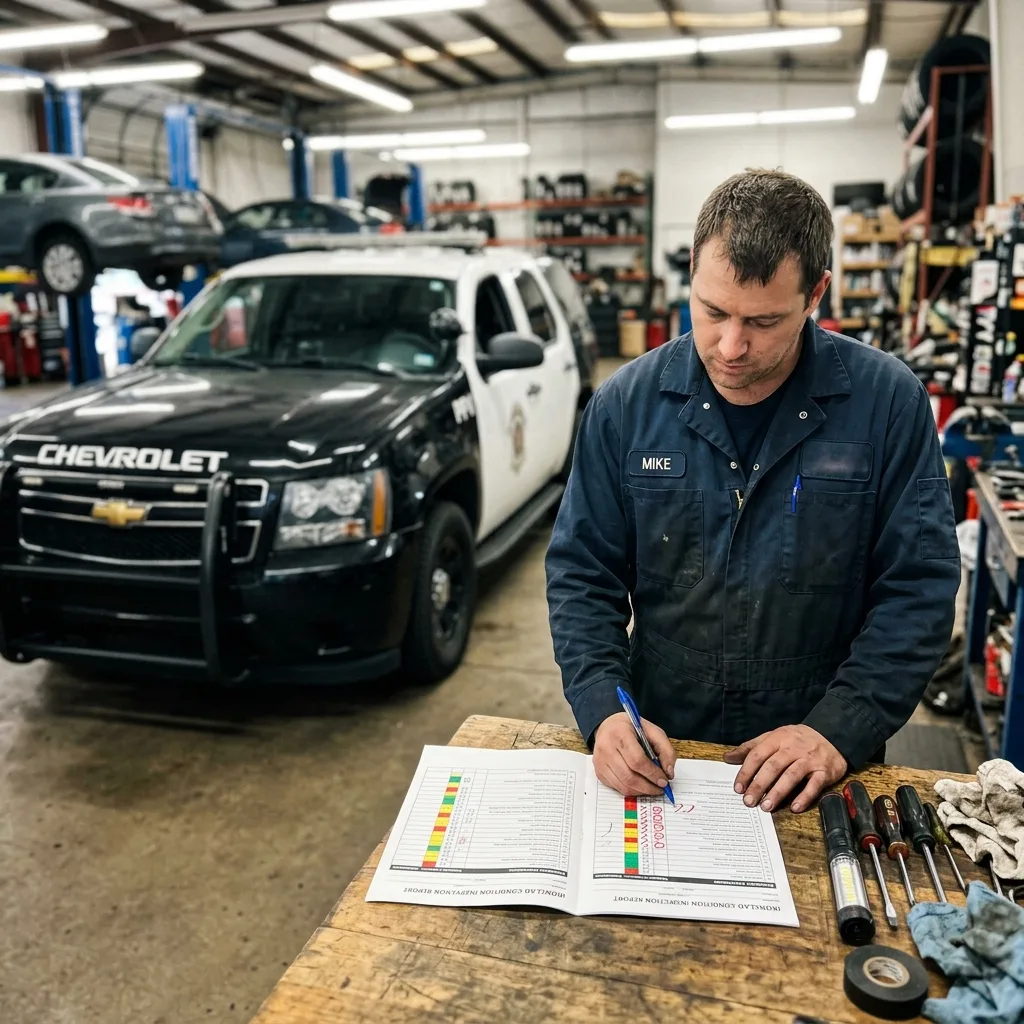
The standout feature is IronClad Assurance — a third-party, certified condition inspection report with photographs, mechanical notes, hour readings, fluid checks, and known-issue documentation. It’s the most thorough pre-purchase paperwork available on any government surplus platform. For a piece of heavy equipment you can’t physically inspect, IronClad is genuinely useful. Read it carefully, line by line — every flagged issue is one a previous mechanic spotted and documented.
Title documents on GovPlanet are mixed. Federal military surplus typically ships with an SF-97 (same federal paperwork as GSA). State and municipal surplus on GovPlanet ships with a state title from the selling agency’s state.
The EUC delay on military surplus: Tactical military vehicles (HMMWVs, MTVRs, FMTVs) require an End User Certificate before GovPlanet will release the SF-97. The EUC verifies the buyer isn’t on a federal export-restricted list and that the vehicle won’t be exported to a sanctioned country. Process time: up to 60 business days. Plan that into your cash-flow timeline.
The 8-business-day removal deadline: Win a GovPlanet lot, you have eight business days to physically remove it from the agency’s yard. Miss that and storage fees kick in at $10 to $250 per day depending on the lot. Default entirely — don’t pay or don’t pick up — and you’re looking at a non-payment penalty of $500 to $6,500 plus a lifetime ban from GovPlanet and affiliated Ritchie Bros. platforms.
One pricing wrinkle specific to GovPlanet: international shipping is enabled. Overseas bidders from the Middle East, Africa, Central Asia, and Latin America actively compete on military and heavy equipment lots and routinely push final prices above what domestic buyers would pay. If you’re bidding on an FMTV or a desirable surplus crane, expect to be outbid by a buyer in Lagos or Kuwait City who’s prepared to pay for ocean freight.
Municibid and PublicSurplus: Regional Specialists
Underneath GovDeals’ national footprint sits a layer of regional platforms that serve specific corridors of the country. Two matter: Municibid (East Coast / Northeast) and PublicSurplus (Western US). They overlap GovDeals on vehicle type but compete by geography and, sometimes, by lower buyer competition.
Municibid
Pennsylvania, New Jersey, New York, Maryland, Massachusetts, Connecticut, Delaware, and Virginia dominate Municibid’s seller list. Municipal police departments are heavily represented. If you live in the Northeast corridor and you want an ex-PD Crown Vic, Charger, Tahoe, or Explorer PPV with realistic local-pickup transport math, Municibid is the first stop.
Fees are tiered and vary by seller, typically 8% to 12% buyer’s premium. Title documents are state titles from the selling agency’s state. The interface is simpler than GovDeals — easier for first-time buyers to navigate, fewer Trustpilot horror stories.
PublicSurplus
California, Arizona, Colorado, Washington, Oregon, Nevada, and Utah dominate the PublicSurplus seller list. State universities, community college districts, and Western municipal fleets list heavily here. Buyer’s premium runs around 10%. State title transfer, standard process.
Two things to know about PublicSurplus. First, the interface and customer service are widely considered the worst of any major platform — clunky search, limited filters, and minimal support response. Second, partly because of the bad UX, bidder competition is meaningfully lower than on GovDeals. If you’re in the Western US, the same vehicle type often closes for several hundred to a few thousand dollars less than on the national platforms. The trade-off is doing more legwork to find listings.
Both regional platforms have the same fundamental Montana LLC advantage as GovDeals: they issue state titles that transfer cleanly into a Montana-domiciled LLC, eliminating your home-state sales tax exposure on the purchase entirely.

The Fee Comparison: What You Actually Pay
Sticker price lies. Total cost tells the truth. Here is what a $10,000 winning bid actually costs you across the four most-used platforms, before transport and before home-state registration:
Same vehicle. Five platforms. A $1,535 spread before you’ve put it on a tow truck. GSA wins the financial race on the federal side; PublicSurplus and Municibid edge GovDeals on the state side; GovPlanet’s premium is the most punishing on higher-value lots.
Scale that up. On a $25,000 GSA fleet truck — say a clean ex-Forest Service Ford F-250 — your math without a Montana LLC, registering in a state with 8% sales tax (like California or Tennessee in many counties):
Year 1 savings: $1,301. Year 2 and every year after: $0 vs. $100–$400 of state renewal. Over a 5-year ownership window in a 8% state, the Montana LLC route saves $1,800–$2,800 on the same truck. The permanent plate never expires.

The Title Document Problem: SF-97 vs State Title
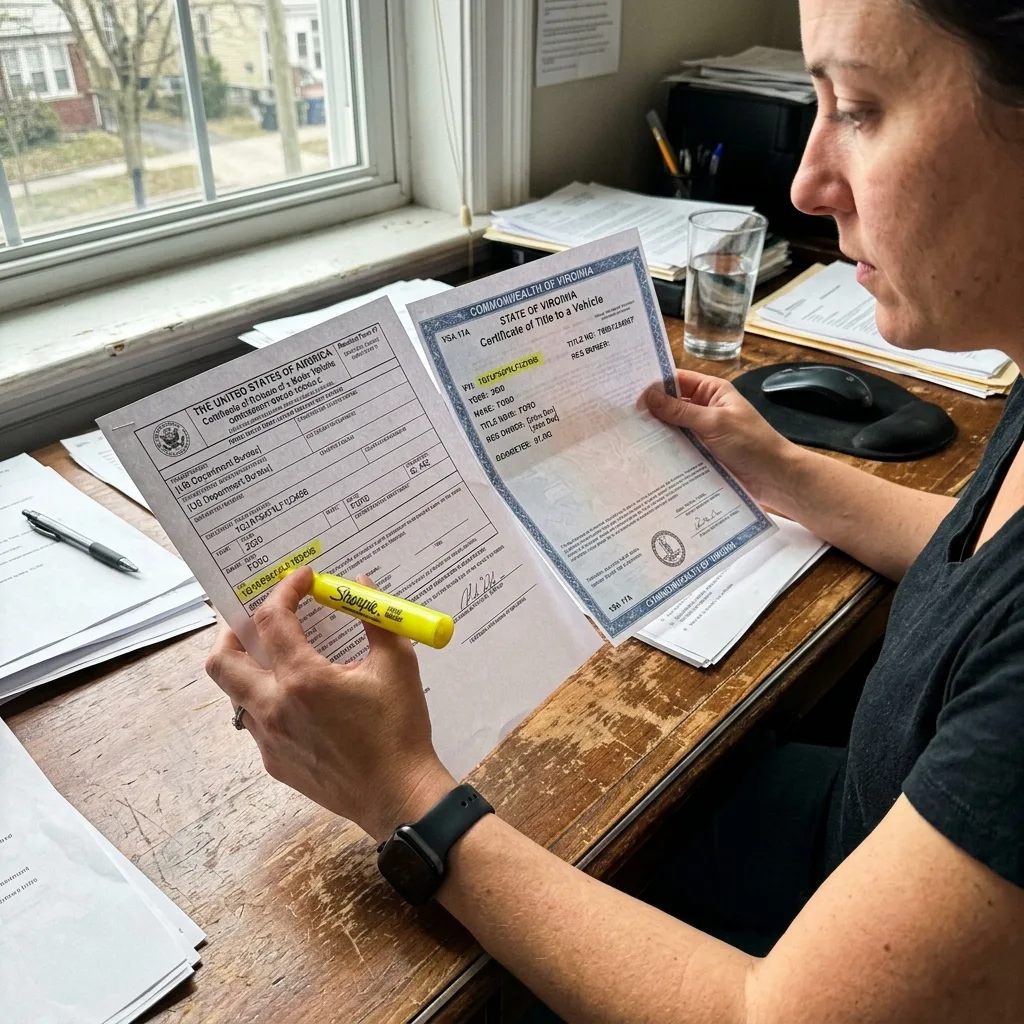
The single most misunderstood part of buying a government surplus vehicle auction winner is what comes in the mail after you pay. It is not always a title. Sometimes it is an SF-97 (federal release). Sometimes it is a state title (selling agency’s state). The document type dictates the rest of your year.
The states that fight SF-97 conversions hardest, in our experience: California, New York, Illinois, New Jersey, Massachusetts, and pockets of Hawaii and Washington D.C. The states that accept SF-97 quickly: Montana, Arizona, Texas, Florida, Georgia, Tennessee, the Carolinas, most of the Midwest and South.
Here’s why Montana flattens the entire title-document map. A Montana county treasurer is experienced with both SF-97 federal releases and out-of-state titles transferring into a Montana LLC. They process them every day. We send your paperwork to the treasurer, the title is reissued in the LLC name, and a permanent plate is mailed to your physical address — wherever you actually live. You never present an SF-97 at a California DMV counter. You never argue with a New Jersey clerk about whether a “Certificate of Release” is a real title. The Montana process bypasses the entire hostile-DMV obstacle course.
Buyer Traps That Cost Real Money
Six expensive mistakes account for the majority of regret stories in the surplus auction world. Read each one twice.
1. The 90-Day GovDeals Probation
Brand-new GovDeals accounts can bid no more than $1,000 in the first 90 days. If you find your dream truck and then create an account, you cannot bid on it. Create the account today, even if you’re months away from buying. The clock starts when the account opens, not when you start serious shopping.
2. The 8-Day GovPlanet Removal Deadline
Eight business days to physically pick up your winning lot. Miss it and storage runs $10–$250/day. Truly default — never pay, never pick up — and the platform hits you with a $500–$6,500 non-payment penalty plus a lifetime ban from all Ritchie Bros. properties. Confirm transport logistics before you bid, not after you win.
3. “Runs and Drives” Means Almost Nothing
A surplus vehicle described as “runs and drives” has demonstrated that the engine starts and the transmission engages. That’s it. It has not demonstrated that the head gasket is intact, that the rear brakes aren’t rust-welded to the rotors, that the radiator isn’t seeping at the lower hose, or that the transmission won’t fail at 30 mph on the way home. Surplus sales are as-is, no warranty, zero post-sale recourse. Inspect or hire someone to inspect. $150 to a mobile mechanic is the cheapest dollar you’ll spend.
4. The Rural-vs-Urban Bidding Gap
The same 2016 Charger Pursuit auctions for roughly $4,000 less in a rural Missouri county than in a suburban New Jersey municipal yard. Platform geographic concentration matters. PublicSurplus listings in Wyoming, Montana, and the Dakotas routinely close at meaningful discounts because fewer bidders are watching. If you’re flexible on pickup location, broaden your search and put the savings into transport.
5. Transport Underestimation
Professional vehicle transport: $500 minimum for short hauls, $1,000+ cross-country, more for heavy-duty trucks, multi-ton equipment, or anything requiring a flatbed. Buyers consistently forget this. A “deal” in Pennsylvania that costs $1,800 to ship to Arizona is not a deal compared to a slightly more expensive vehicle 200 miles from your driveway. Get a transport quote before you place a bid.
6. Sight-Unseen Bidding
Buyers who skip the in-person or hired inspection report unexpected repair costs running 50% to 100% higher than those who inspected. Walk the lot if you can. Hire a mobile mechanic if you can’t. Read the IronClad report cover-to-cover on GovPlanet lots.
The GSA non-performance reporting trap: Worth repeating because it surprises people. Default on a GSA winning bid and the unpaid balance is reported to the U.S. Treasury. It can be deducted from your federal tax refund, garnished from federal benefits, and can affect future federal contracting or loan eligibility. This is not an eBay “negative feedback” situation. It is a federal debt collection event. Pay or do not bid.
The Montana LLC Play: Which Platform Gets You the Best Total Cost
The Montana LLC route works on every platform listed in this guide — but it works for different reasons depending on which document you receive. Two real examples.
Example 1: $25,000 GSA Ford F-250 (SF-97 in hand)
You won a clean ex-Forest Service F-250 on GSA Auctions for $25,000. Zero buyer’s premium. GSA mails you the SF-97 a couple days after your card clears. Your home state is California.
Path A: California DMV. The SF-97 has to be converted to a California title. CA DMV requires VIN inspection, smog certification (which a surplus truck may or may not pass without work), and sometimes a title bond. California vehicle license fee runs roughly 0.65% of value annually. Sales tax: $2,000 (8%). DMV fees: $200+. Annual renewal in perpetuity: $200–$400. Total year 1: roughly $27,200, plus the bureaucratic war.
Path B: Zero Tax Tags Montana LLC. You forward the SF-97 to us via secure portal. We form the Montana LLC, transfer the title at the Montana county treasurer, and ship the permanent plate to your California address. Total year 1 paid to us: $899. Total cost of the truck: $25,899. Year 2 and forever: $0. Savings year 1: $1,301. Savings over 5 years of ownership: $2,200 to $3,300 depending on California renewal escalation.
Example 2: $20,000 GovDeals Charger Pursuit (Texas state title in hand)
You won an ex-PD 2020 Dodge Charger Pursuit on GovDeals for $20,000. Add the 12.5% buyer’s premium ($2,500) and you’re at $22,500. Texas selling agency mails you a Texas title in the agency’s name. Your home state is Texas (6.25% sales tax) or any other state with sales tax above 4%.
Path A: Texas registration. Sales tax: $1,406 (6.25% on $22,500). DMV title transfer fees: ~$150. Annual registration: ~$80. Total year 1: roughly $24,056.
Path B: Zero Tax Tags Montana LLC. We transfer the Texas title into the LLC at the Montana treasurer. Permanent plate. No Texas sales tax. Total year 1 paid to us: $899. Total cost: $23,399. Year 2 and forever: $0. Savings year 1: $657. Savings over 5 years: $1,000+ in avoided renewals on top of the up-front tax savings.
The Common Thread
The Montana LLC advantage is structurally different on the two platform types. On GSA (SF-97), the advantage is mostly bureaucratic — you skip the DMV title conversion battle, especially valuable in California, New York, Illinois, New Jersey, Massachusetts. On GovDeals/Municibid/PublicSurplus (state title), the advantage is mostly financial — you skip the sales tax in your home state and the recurring annual registration fee.
Either way, the timeline is the same: seven days from paperwork submission to permanent plate in your hand.
| Day 1: | Submit paperwork through our secure portal. Montana LLC filed same day. |
| Days 1–2: | Montana LLC formation complete — same business day in most cases. |
| Days 2–4: | Title transferred into the LLC name at the Montana county treasurer. |
| Days 4–7: | Permanent Montana plates shipped directly to your door. |
Legal foundation: The Montana LLC route is grounded in established LLC law and the federal commerce clause. Thomas v. Bridges and decades of state LLC jurisprudence confirm that a properly formed Montana LLC is a legal entity that can own and register vehicles in Montana. Vehicle registration follows ownership, not human residency. This is the same legal structure used by major equipment leasing companies, fleet operators, and rental fleets — applied at individual scale.
Who This Is Built For
If you’re shopping surplus vehicle auctions seriously, the Montana LLC route is built for you. The clients who get the most value from this structure:
- The GSA SF-97 buyer in a hostile state. California, New York, Illinois, New Jersey, Massachusetts residents who do not want to spend three weekends arguing with DMV clerks about whether an SF-97 is a real title document. We handle the entire title conversion in Montana. You receive a plate.
- The fleet builder. Buying two, three, five surplus vehicles a year for a small business, side hustle, off-road outfit, or family fleet. Stacking $1,300+ in savings per vehicle and skipping renewal fees on every single one adds up fast.
- The ex-PD enthusiast. You wanted a Crown Vic, a Charger Pursuit, a Tahoe PPV. You found it on GovDeals or Municibid. You don’t want to pay sales tax on a vehicle that already lived a hard life with the local sheriff’s office. Montana plate, permanent, done.
- The military surplus collector. Humvees, MTVRs, M998s, M939s coming off GovPlanet with an SF-97 and an EUC clearance. The SF-97 hits Montana’s friendly title process; the truck gets a real plate without DMV drama.
- The high-tax-state professional. You bought a $35,000 GSA-surplus diesel pickup for your contracting business and you live in a state where sales tax alone runs $2,500+. The Montana route pays for itself the day the plate arrives.
- The collector or weekend warrior. You’re adding a third or fourth vehicle that doesn’t need to be registered locally for daily-driver insurance reasons. Permanent Montana plate. No annual paperwork.
- The remote worker / digital nomad. You move a lot, work from anywhere, and don’t want to re-register a vehicle every time you cross a state line. Montana plate stays with the vehicle through the LLC, regardless of where you happen to be parked this month.
The one soft qualifier worth mentioning: if the surplus vehicle is genuinely low-value — under roughly $20,000 — the Montana LLC math may or may not pencil out depending on your home state’s specific sales tax and renewal fees. Pick up the phone. We’ll run the numbers free, against your exact state and vehicle, and tell you honestly whether it’s the right move. Sometimes the $899 service genuinely doesn’t save more than it costs on a $7,000 beater; sometimes it absolutely does. Either way, you’ll know.
FAQs

Which platform has the lowest total cost?
For federal vehicles, GSA Auctions is mathematically the cheapest — zero buyer’s premium is unbeatable. For state and municipal surplus, PublicSurplus and Municibid tend to edge GovDeals on premium percentage, though GovDeals has the largest catalog. Across all platforms, layering a Montana LLC on top eliminates state sales tax and annual registration fees, which often saves more than the platform premium itself.
Can I move an SF-97 vehicle from GSA into a Montana LLC?
Yes. The SF-97 is the standard federal release for surplus federal vehicles, and Montana county treasurers process them daily. We handle the entire conversion — your SF-97 becomes a Montana title in the LLC name, and a permanent plate ships to you in roughly seven days.
What if I bought through GovDeals — do I still need an SF-97?
No. GovDeals sales come with a state title from the selling agency’s state (Texas, Florida, Georgia, etc.). No SF-97 is involved. The Montana LLC process still works the same way — we transfer that state title into the Montana LLC at the county treasurer, you get a Montana plate.
How long does the whole Montana titling process take?
Seven days from the moment you submit paperwork to the moment a permanent plate is in your hand. Day 1: LLC filed and paperwork received. Days 1–2: LLC formation complete. Days 2–4: title transferred at the county treasurer. Days 4–7: plate ships to your physical address.
How much does Zero Tax Tags charge?
$899 total, year one. That covers the $200 Montana LLC formation fee and our $699 service fee, which includes title transfer, registration, permanent plate, and shipping. Year two and every year after: $0. The Montana LLC annual report fee has been waived four years running, and the Montana plate is permanent — no renewal cycle. There are no hidden recurring charges.
Is the Montana LLC route legal in my state?
Yes. Vehicle registration follows vehicle ownership. A properly formed Montana LLC is a legal U.S. business entity, and an entity-owned vehicle can be registered in the entity’s state of domicile. Thomas v. Bridges and a long line of LLC jurisprudence confirm the legality. The same structure is used at scale by leasing companies, fleet operators, and rental car companies. We apply it at individual and small-fleet scale.
What if my surplus vehicle has odometer or emissions issues?
Montana exempts vehicles from state-level emissions testing and has straightforward odometer disclosure rules that map cleanly onto federal SF-97 disclosures. If you bought from GSA or GovPlanet and the SF-97 lists “exempt” or “actual mileage” status, the Montana process accepts those declarations as-is.
What about military surplus from GovPlanet with the EUC delay?
The End User Certificate is a GovPlanet-side process between you and the platform — once the EUC clears and the SF-97 is released to you, our Montana titling process kicks in and runs its normal 7-day timeline. We’ve processed plenty of HMMWVs, MTVRs, and FMTVs — Montana is one of the friendliest states in the country for titling former tactical vehicles.
Related Reading
Continue the surplus-vehicle series:
- Government Surplus Vehicle Buying Guide: Ex-Police Cars, GSA Fleet Auctions, and the SF-97 Title Trap
- SF-97 Certificate of Release: The Complete Guide to Titling Your Military Surplus Vehicle
- SF-97 By State: Which States Will Title Your Military Surplus Vehicle (No Drama) and Which Ones Won’t
Won Your Auction? Title It in a Week.
SF-97 or state title — we handle both. Permanent Montana plate. No sales tax. Done in 7 days.