25 min read
There is a specific kind of car deal that lives rent-free in the head of every gearhead, every budget-conscious tradesman, and every fleet-savvy buyer who knows the secret. It is the government surplus vehicle — a Crown Vic with the spotlight bracket still drilled into the A-pillar, a Tahoe PPV with the heavy-duty alternator and brakes, an ex-GSA Ram 2500 4×4 with twenty thousand miles on the clock after ten years of life at a small federal airport. These vehicles exist. They sell for 30% to 70% below private-party Kelley Blue Book. And most of the buyers who chase them have absolutely no idea what they are about to deal with at the DMV.
The problem with a government surplus vehicle is not the vehicle itself. The mechanical questions — patrol idle hours, PIT damage, model-year reliability — are solvable with a flashlight and a service record request. The real ambush is paperwork. Federal agencies do not hand you a state title at pickup. They hand you a Standard Form 97, the SF-97 Certificate of Release of a Motor Vehicle, and they wave goodbye. In friendly states, the SF-97 walks through the DMV in an hour. In California, New York, New Jersey, Illinois, and Massachusetts, the clerk has never seen one, calls a supervisor, and the supervisor stamps it “salvage” by accident. Suddenly your $9,000 Charger Pursuit needs a $400 rebuilt-title inspection it did not earn.
This guide covers both halves of the transaction. The buying half: which auctions, which models, what to look for, what to avoid. And the titling half: how the SF-97 actually works, which states are friendly, and how a Montana LLC turns a paperwork nightmare into a one-week appointment with a permanent plate.
On this page
- + What Is a Government Surplus Vehicle?
- + The Odometer Lie: Idle Hours
- + Patrol, Detective, or Chief? Wear Profile
- + Model-by-Model: Which Ex-Police Vehicles to Buy
- + PIT Maneuver Damage: The Hidden Frame Problem
- + Auction Platforms Compared
- + The SF-97 Title Trap
- + The Montana Fix: One Week, Permanent Plate
- + Who This Is Built For
- + FAQs
What Is a Government Surplus Vehicle?
A government surplus vehicle is any vehicle a federal, state, county, or municipal agency declares excess and pushes through a public auction channel. That single category contains an astonishing range of inventory — three-year-old Charger Pursuits with 60,000 hard patrol miles, ten-year-old Ram 2500 pickups with 20,000 light-duty miles, ex-FBI Suburbans, ex-Forest Service F-250s, and motor pool sedans that have basically lived in a parking lot.
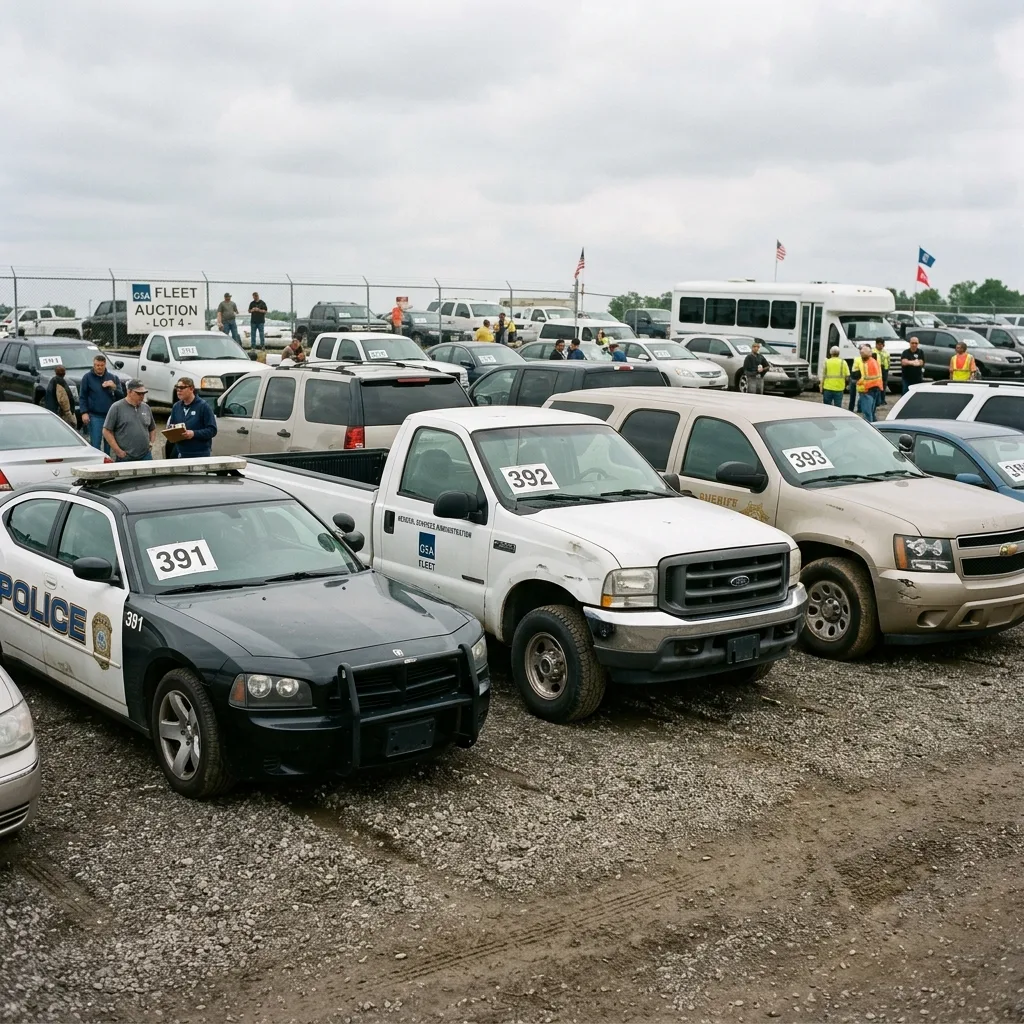
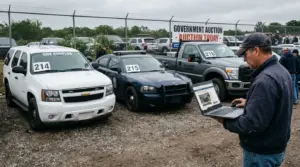
The biggest seller in the country is the General Services Administration. GSA manages over 200,000 federal fleet vehicles and cycles them on hard timelines — medium-duty trucks every ten years or 100,000 miles, whichever hits first. That timeline is the buyer’s gift. A diesel pickup assigned to a quiet airport facility or a regional wildlife refuge can roll off lease at the ten-year mark with five-figure mileage. The example we keep coming back to is a real listing: a 4×4 Ram 2500 with about 20,000 miles on the odometer because nobody at that particular federal facility actually drove it much. Try finding that truck on a private dealer lot.
Since July 2024, all federal GSA vehicle auctions have been consolidated at GSAAuctions.gov. Registration is free, bidding is online with proxy or flat-bid options, payment is due via EFT within five to ten business days, and the buyer arranges transport for pickup within roughly ten to fifteen days. The GSAFleet.gov site is a separate animal — that one is for agency leasing, not public sales — so save your tab clicks for the right URL.
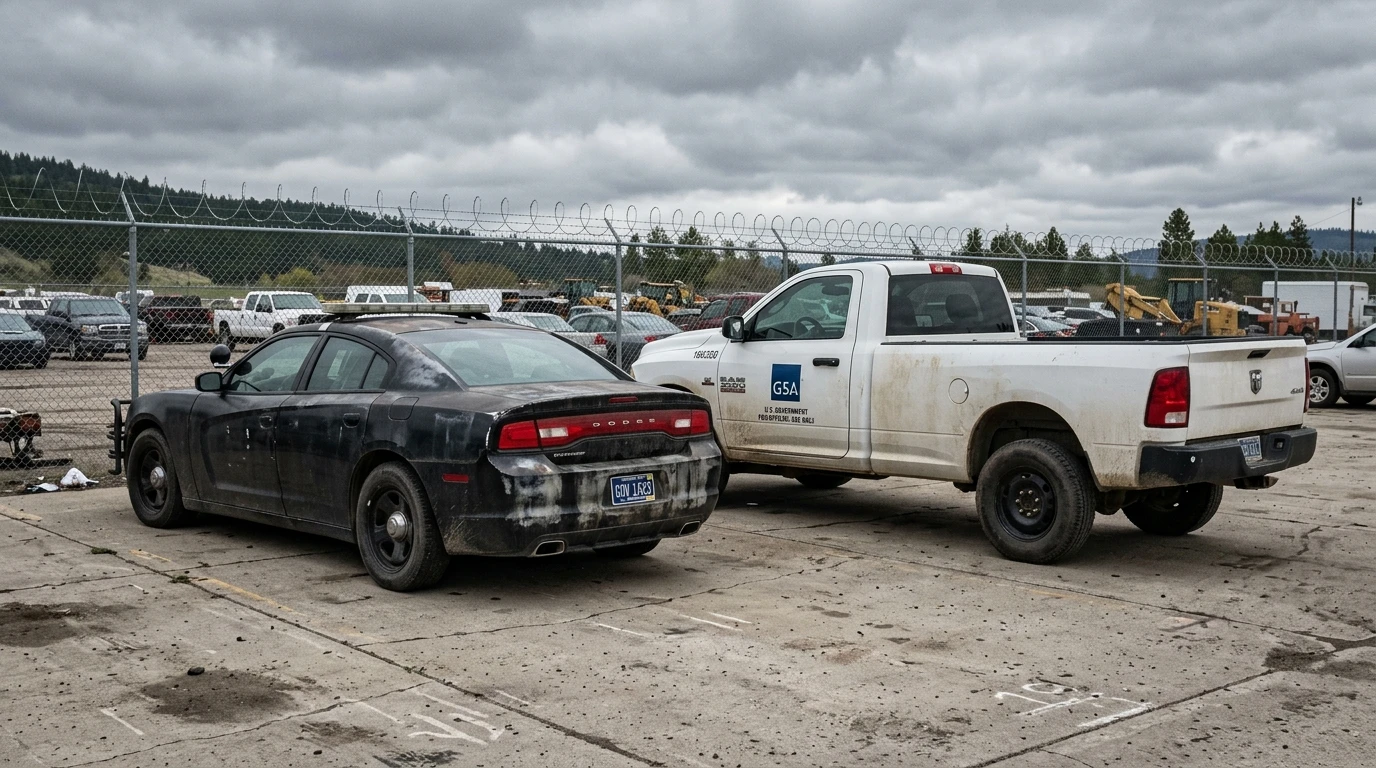
The local side is where the real volume of ex-police inventory lives. Police departments cycle vehicles every two to four years regardless of condition. Liability exposure, manufacturer maintenance contracts, and brand image push squad cars out the door long before they are mechanically tired. Those vehicles surface on Municibid, GovDeals, GovPlanet, county and city surplus pages, and sometimes through direct department sales to local businesses. School districts dump Tahoes and Suburbans. Sheriff offices dump Tahoes, Chargers, and PIUs. Water districts dump F-150s and Silverados.
The price story is consistent. Sedans and SUVs run $5,000 to $15,000 against retail of $20,000 to $40,000. Light trucks run $10,000 to $30,000. Ex-police vehicles specifically sit about 30% below comparable civilian trims because the public — wrongly — assumes “high mileage equals high wear.” We will unpack that assumption in the next section, because that is exactly where the experienced buyer makes money.
The Odometer Lie: Idle Hours and What They Don’t Tell You
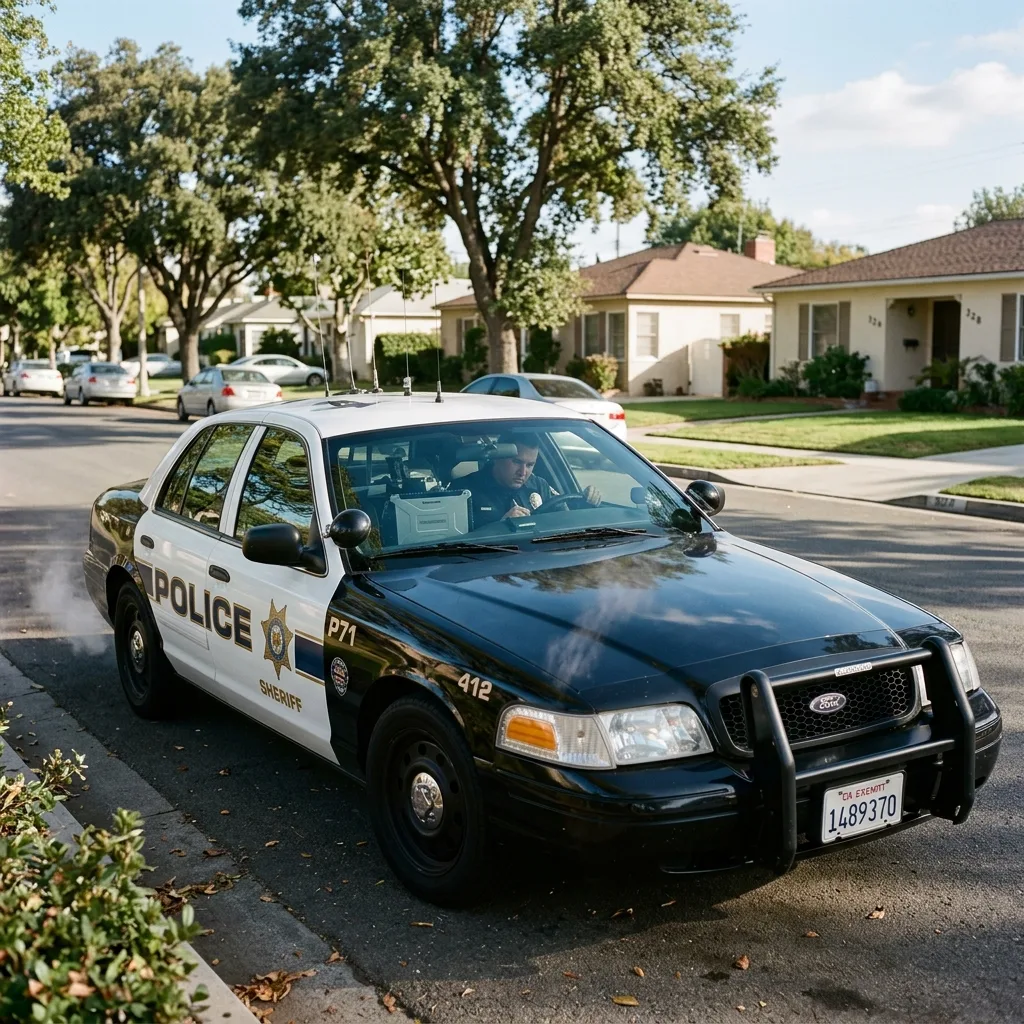
The single most important fact about a former patrol vehicle is that the odometer is lying to you. Not in a fraud sense — in a physics sense. Police vehicles idle. They idle at traffic stops, idle at crime scenes, idle in school zones, idle in parking lots while officers write reports, and idle on the side of the highway with their light bar painting the asphalt. The engine is running constantly. The transmission, cooling system, alternator, and accessories are accumulating wear that never registers on a mile counter.
Ford’s own fleet maintenance documentation uses a conversion that every used-police-car buyer should tattoo on the inside of their forearm. One hour of idle equals approximately 33 miles of engine wear. Run that math. An eight-hour patrol shift with three hours of accumulated idle adds 99 “wear miles” before the cruiser even moves. Over an 80,000-mile patrol life, that vehicle may have wear-equivalent miles of 150,000 or more.
Springfield Township, in fleet maintenance papers shared at municipal conferences, switched its patrol fleet from mileage-based service intervals to a 300-hour service interval specifically because low-mileage cruisers were arriving with worn engines. The clock disagreed with the wear pattern. The mechanics trusted the wear pattern. If you are buying a patrol-spec Crown Vic or Charger Pursuit, you must ask for both maintenance records and idle-hour logs. Modern police PCMs track idle time. Older Crown Vics may not have a direct log, but the department’s fleet maintenance file will tell the story in oil-change frequency.
A separate problem to know about: 2006–2011 Crown Victoria Police Interceptors have a documented instrument cluster defect. Deteriorated solder joints on the cluster circuit board can cause odometer-display failures — sometimes freezing the readout. The vehicle may actually have more miles than the screen shows, before you even apply the idle-hour math. Always cross-reference any cluster reading against the maintenance history and an OBD-II scan.
The flip side is the GSA non-police fleet. Those vehicles often live the opposite life. A Ram 2500 sitting at a small federal facility burns its tank a few times a month. Idle time is minimal. The 20,000-mile, ten-year-old GSA truck is genuinely a low-wear vehicle — closer to a retired grandparent’s pickup than a beat-up service truck. The same odometer that overstates wear on a cruiser may actually understate nothing on a GSA pool truck.
This is why the same number — say, “65,000 miles” — means three completely different things depending on the vehicle’s prior life. A 65,000-mile patrol Charger has the wear of a 130,000-mile Charger. A 65,000-mile detective Charger has the wear of an 80,000-mile Charger. A 65,000-mile GSA Charger from an admin pool may have less wear than your neighbor’s 65,000-mile civilian Charger that sat in traffic for an hour each commute.
Patrol Car, Detective Car, or Chief’s Car? The Wear Profile Matters
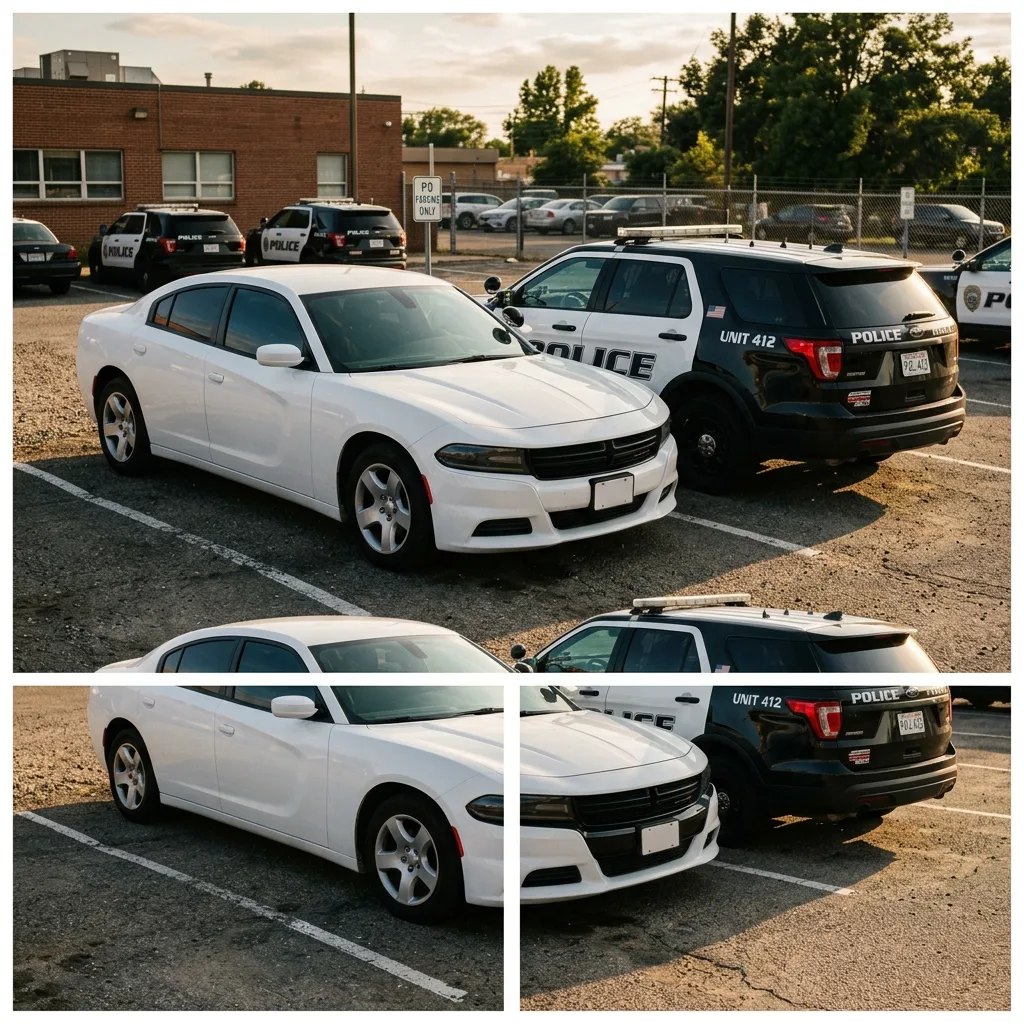
If you remember one question to ask the seller, make it this: What service type was this vehicle in? Departments classify their vehicles into roughly three buckets, and each bucket has a wildly different wear profile. Two cars with identical odometer readings and identical model years can be separated by tens of thousands of dollars in real value once you know their service category.
Patrol Cruiser
This is the worst-case wear scenario. Patrol cruisers run two or three shifts per day, often eight to twelve hours each. They idle constantly, accelerate hard, brake hard, sit at curbs in summer with the A/C blasting, and frequently see PIT-maneuver training or actual pursuit use. The engine, transmission, brakes, suspension, electrical system, and interior all take a beating. A patrol cruiser with 100,000 miles has lived the equivalent of a civilian car at 200,000 miles. That does not mean it is worthless — Ford and Dodge engineer these vehicles to absorb exactly that abuse — but you must price it accordingly.
Detective or Unmarked Vehicle
Detective work is shift-based, single-driver, and lower mileage. Idle time exists but is far less than patrol use. There is rarely any pursuit activity. The interior is cleaner because plainclothes officers are not loading and unloading gear bags through the back doors all day. Unmarked Chargers, Tauruses, and Explorers in the detective fleet are some of the best buys on the entire auction circuit. They typically sit one or two model years behind the patrol fleet and rotate out with under 80,000 miles in clean condition.
Chief, Command Staff, or Executive Vehicle
The Chief’s vehicle and command-staff cars are essentially executive sedans with police badging. Low miles, treated with respect, garaged at department headquarters, washed weekly. These vehicles sometimes appear at auction looking nearly new. They are the unicorns of the ex-police market. If you spot one and the price is right, move fast.
Federal GSA fleet vehicles, including pool sedans and admin trucks, behave most like the command-staff bucket — low miles, low idle, frequent dealer service. The patrol-versus-admin question is essentially the same question you should ask any government surplus seller, just translated into civilian-fleet language.
Model-by-Model: Which Ex-Police Vehicles Are Worth Buying
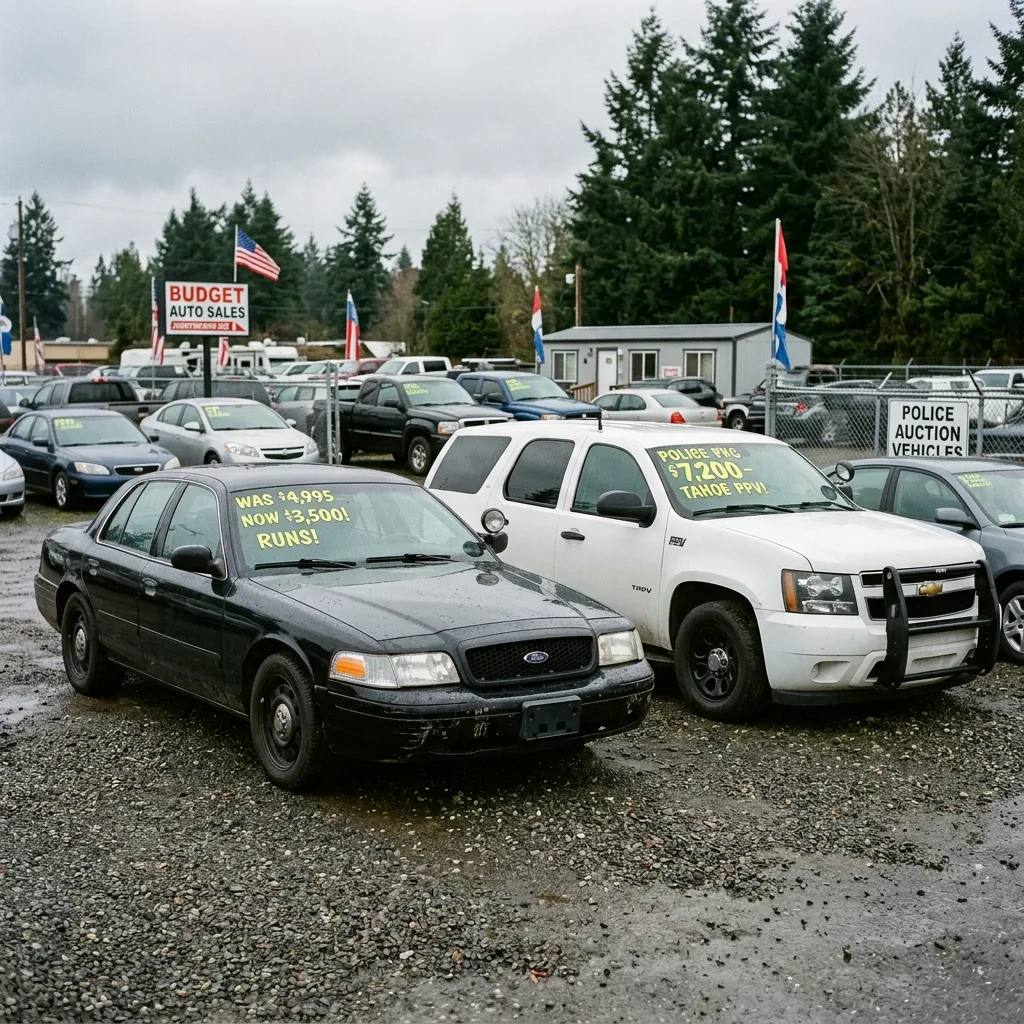
Not every government surplus vehicle is a value play. Some are gold. A few are landmines that will eat your savings on the first repair. Here is the working list every used-police buyer should keep in their pocket.
Ford Crown Victoria Police Interceptor P71 (2003–2011)
The icon. Body-on-frame construction, 4.6L 2-valve V8, simple mechanicals, near-unlimited parts availability, and a wrenching community that knows every bolt by name. The P71 is what made the ex-police market mainstream. Common issues include EGR carbon buildup that triggers ignition misfires, exhaust manifold cracking, rear axle wheel-bearing wear that occasionally extends into axle shaft damage, transmission seal leaks, head-gasket weeping on high-idle vehicles, fuel system aging, and power-steering leaks. The 2006–2011 cluster solder issue mentioned earlier applies here. The good news: a competent independent shop can address every one of these for reasonable money because parts are cheap and labor is well-documented.
Dodge Charger Pursuit (2012–present)
The modern king of the ex-police market for reliability. Maintained Pursuits have logged 500,000 to 700,000 miles in documented fleet service. The 5.7L HEMI variant adds muscle; the 3.6L V6 variant is more economical and still plenty capable. Interior comfort and electronics are a generation ahead of the Crown Vic. The wear points to watch are transmission fluid history (some departments stretched service intervals) and rear differential wear on hard-driven units. If you find a Charger Pursuit with full fleet maintenance records, you are looking at one of the best values in the entire used-vehicle market — police or civilian.
Chevy Tahoe PPV
The Pursuit-Vehicle Tahoe is the conversion favorite of the ex-police market. The LS-family V8 — 5.3L or 6.2L depending on configuration — is famously bulletproof. The PPV trim ships with upgraded suspension geometry, heavy-duty brakes, and a high-output alternator suitable for off-road lighting, winch wiring, or trailer brakes. A low-mileage Tahoe pulled from administrative or detective service is among the best family-conversion or work-truck conversion vehicles in the entire surplus universe.
Ford Police Interceptor Utility (2013–2019)
The Explorer-based Police Interceptor Utility is a strong all-rounder when the engine variant is right. The 3.5L EcoBoost twin-turbo V6 of 2013–2019 vintage is the sweet spot — strong, well-supported, and durable when serviced. The 2.0L EcoBoost version is fine for low-output use.
Avoid the 2020–2022 Ford Police Interceptor Utility with the 3.3L V6 hybrid powertrain. Documented connecting-rod bearing failures, fire-risk recalls, and NHTSA investigations make this specific year range a bad bet at any price. Skip it. The 2013–2019 3.5L EcoBoost is what you want.
Ford F-150, F-250, Ram 2500, GM Silverado/Sierra (GSA Fleet Trucks)
The crown jewels of GSA Auctions. Federal fleet trucks routinely show up with mileage figures that look like typos. Ram 2500 4×4 at ten years old with 20,000 miles. F-250 Super Duty with 35,000 miles after seven years. These trucks lived as occasional-use facility vehicles, not work-day-every-day haulers. Check for fleet upfits — trailer hitches, gooseneck balls, tool boxes, ladder racks — because they sometimes ship with the truck and sometimes get stripped at auction prep. Either way, the underlying chassis is gold.
PIT Maneuver Damage: The Hidden Frame Problem
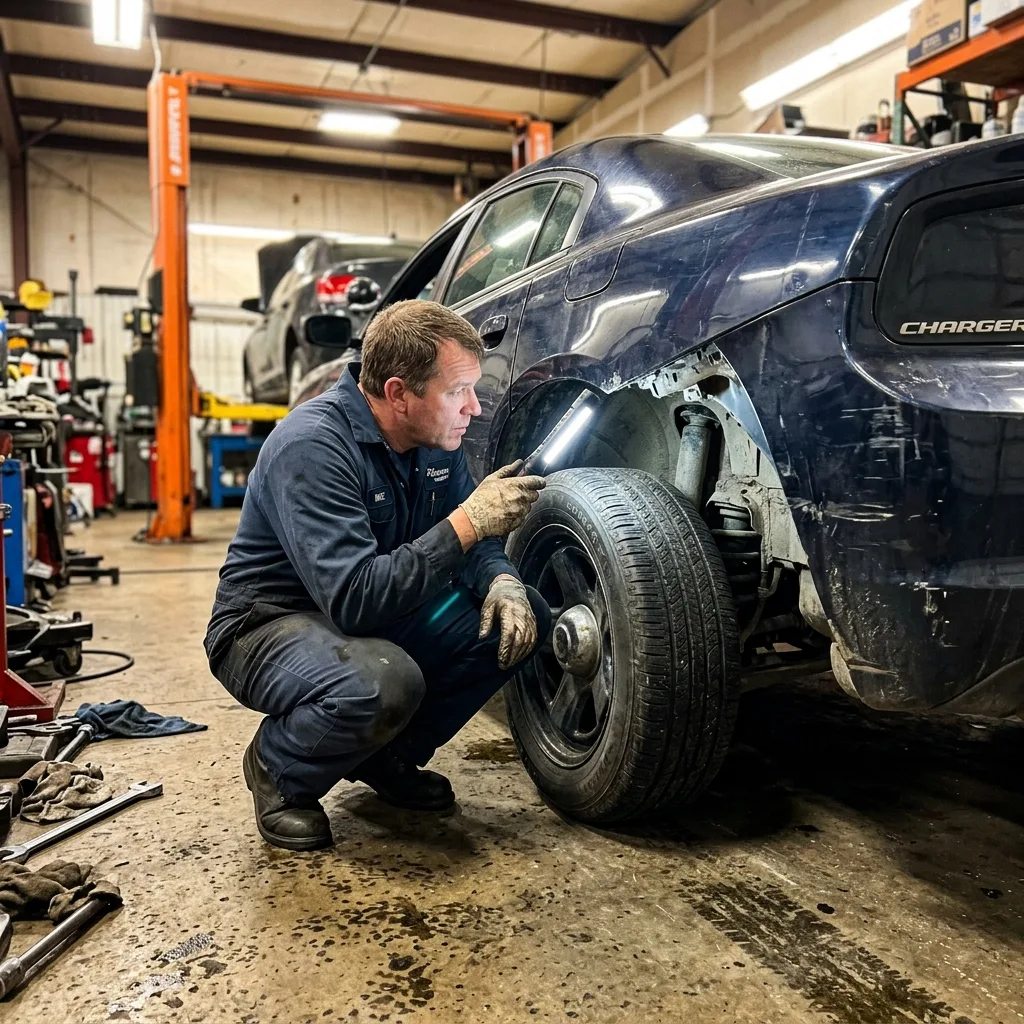
PIT stands for Pursuit Intervention Technique. It is the deliberate rear-quarter-panel contact a patrol officer uses to spin a fleeing vehicle into a controlled stop. Done by a trained driver, it works beautifully. Done at speed, repeatedly, over the course of a patrol vehicle’s career, it leaves marks that do not always show up in obvious sheet-metal damage.
Most urban patrol cruisers in mid-to-large city departments have been involved in at least one PIT-related contact event over their service life. Some have been used in formal PIT training, which involves repeated low-speed-but-real impacts with a designated target vehicle. The damage modes to look for are subtle: tweaked frame geometry on body-on-frame Crown Vics, rear-suspension mounting-point distortion on unibody Chargers, alignment irregularities that cannot be dialed out, and rear differential housing impact marks.
Carfax frequently does not capture these events because departments self-insure and self-repair. The fleet shop pulls the panel, hammers the impact area, repaints, and the car goes back on the road. The structural inspection paperwork never reaches a third-party reporting service.
How to Inspect
- Walk every panel with a flashlight at a low angle — body-line distortion shows up best in raking light.
- Look at the gap between the rear bumper and quarter panel on both sides. Uneven gaps are the easiest tell.
- Lift the trunk-floor cover and inspect the rear frame-rail welds for paint inconsistencies.
- Get a four-wheel alignment specification sheet. If the car needs camber or toe corrections beyond factory specification, walk away.
- On a Crown Vic, check the rear differential housing for impact scuffs or fresh paint.
- On a Charger Pursuit, check the rear subframe mounting bushings for tearing or replacement evidence.
Urban vs. Rural Risk
This is the most useful sorting tool. A patrol car from a small-town department in rural Iowa, Montana, or upstate New York probably never executed a PIT in its life. A patrol car from a mid-size urban department in Phoenix, Atlanta, or Houston probably did at least once. The auction listing usually identifies the originating department. Spend an extra five minutes Googling “[department name] pursuit policy” and you will learn whether PIT was part of their tactics. Small departments are often “no-PIT” by policy, which means the cruiser was never exposed to that specific impact pattern.
Auction Platforms Compared

The auction platform you choose changes the type of government surplus vehicle inventory you see, the bidding rules, and the paperwork you receive at pickup. Here is the working map.
GSAAuctions.gov
The big one. Post-July 2024 consolidation made this the exclusive home of federal surplus vehicles. The interface is functional but dated; the inventory is unparalleled. Registration is free. Bid types include online proxy bidding (set your max and the system auto-bids on your behalf) and flat bidding. Winning bidders pay via EFT within five to ten business days. Buyer arranges transport, pickup window is roughly ten to fifteen days. SF-97 is issued one to two days after payment clears.
GovDeals.com
The largest auction platform for state, county, municipal, and school-district vehicles. Police cruisers, sheriff SUVs, public works pickups, school activity vans, and the occasional unmarked Charger all surface here. Title is whatever the originating jurisdiction held — typically a regular state title, which means you avoid the SF-97 ambush entirely if you stay on this platform. Strong inventory in Texas, Florida, the Carolinas, and Georgia.
Municibid.com
Smaller catalog, heavily concentrated in the Northeast and mid-Atlantic. Pennsylvania, New Jersey, New York, Maryland, and Massachusetts municipalities use this platform heavily. Good for ex-PD vehicles when you live in or near the seller’s region — local pickup makes the transport math work.
GovPlanet.com
Historically a heavy-equipment platform — graders, dump trucks, construction iron — but expanding into civilian fleet vehicles. Worth checking if your interest leans toward larger trucks or specialty vehicles. Some inventory crosses over with GSA channels and ships with SF-97 paperwork.
Direct Department Sales
Worth knowing about. Some sheriff offices, smaller municipal PDs, and fire departments sell vehicles directly to business buyers or through local auction houses that do not post nationally. Check your city’s surplus property page, your county clerk’s website, and the local newspaper’s classified section. A relationship with a local fleet manager can put you first in line on the best trucks.
The SF-97 Title Trap: Why Government Fleet Vehicles Hit DMV Walls
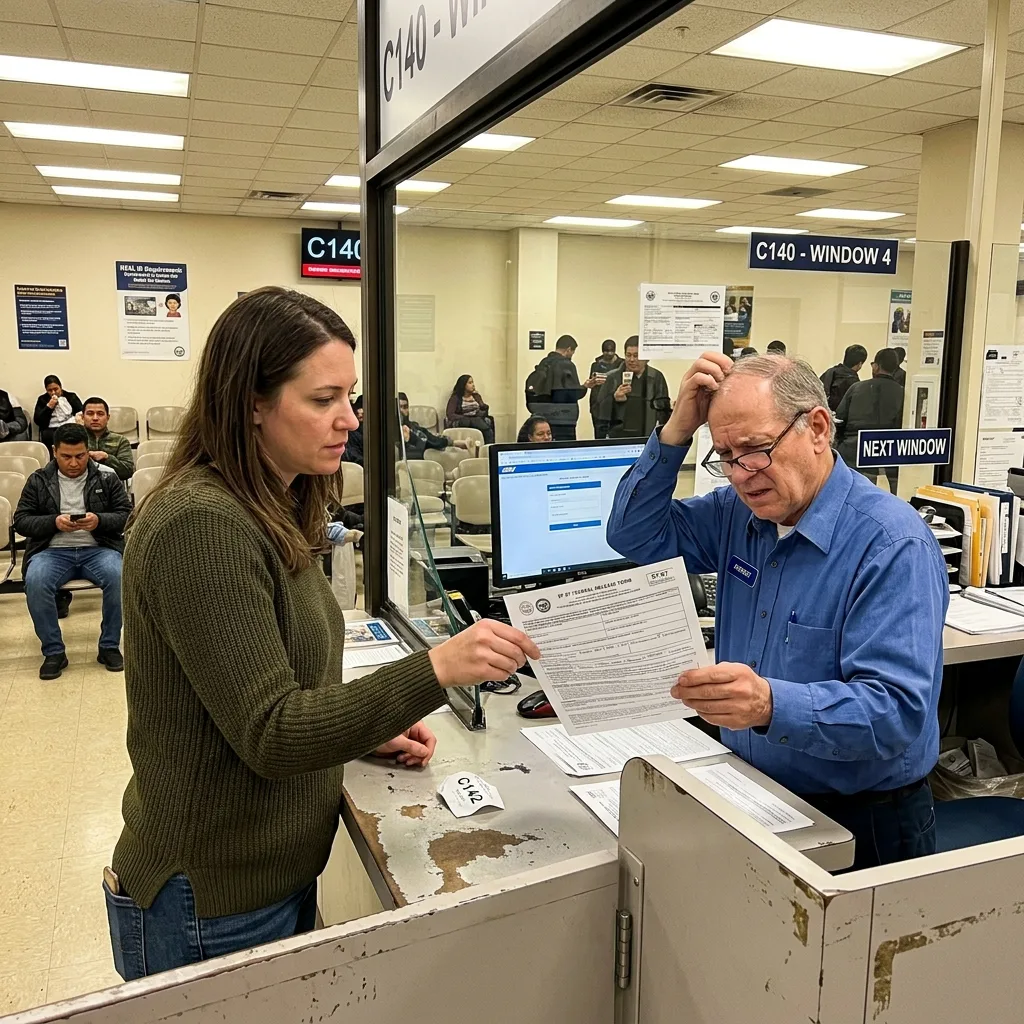
Here is where a great deal turns into a paperwork problem. The federal government does not issue state titles. When you buy a vehicle through GSA Auctions, the document you receive is the SF-97, the Standard Form 97 Certificate of Release of a Motor Vehicle. It is the official federal release-of-ownership document, recognized under federal property regulations, and it has been the standard since long before most current DMV clerks were hired.
The fee is small — $115 for the federal transfer — and the document arrives one to two business days after your payment clears. You then take the SF-97 to your home state DMV to convert it into a state title. In a friendly state, that conversion is a one-window, one-hour appointment. In a hostile state, the SF-97 starts a small bureaucratic war.
Why Some States Are Hostile
Several states have layered their own VIN-verification, branded-title, or inspection requirements on top of federal title transfers. The SF-97 trips those triggers because it is not a standard state-to-state transfer. A clerk who has never seen one — and that is most clerks — confuses the SF-97 with the SF-97 variant used for military demilitarized vehicles, or worse, assumes the vehicle is “salvage” because it came from a non-standard source. The result: a kicked-back application, a request for additional inspection, a “rebuilt” or “junk” title brand applied in error, or a multi-month appeals process to get the brand removed.
The states with the worst track record for SF-97 conversions are California, New York, New Jersey, Illinois, and Massachusetts. Each of these states layers additional inspection or VIN-verification steps on out-of-state and non-standard title transfers. Buyers in these states routinely report multi-month delays, “salvage” misclassifications, and demands for documentation the federal government simply does not issue. This is not a hypothetical — it is the most common complaint we hear.
Why This Is Identical to the Military Surplus Problem
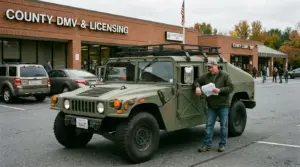
The SF-97 is the same document used by military surplus buyers. Anyone who has tried to title a demilitarized HMMWV, an M35 deuce-and-a-half, or an M998 in a strict state has lived this exact paperwork ambush. The state DMV does not have a workflow for a federal release document, and the default reaction at the front counter is to refuse the document or send the buyer down a long inspection chain. Our SF-97 Complete Guide walks through the document mechanics in detail, and our SF-97 by State map shows exactly which DMVs are friendly and which are nightmares.
Why Montana Is Different
Montana county treasurers see SF-97 paperwork regularly because Montana is the registration home for a huge chunk of the country’s surplus-vehicle buyers. The form is recognized, the workflow is established, and the conversion to a Montana title happens without drama. No additional inspection beyond a basic VIN verification. No re-branding of the title. No “salvage” misclassification.
The Montana Fix: One Week, Permanent Plate, No Sales Tax
If you bought a government surplus vehicle with an SF-97 in hand and you live in a state with a hostile DMV, the Montana LLC route is the cleanest exit. The LLC takes title to the vehicle. The LLC registers it in Montana. You drive on a permanent Montana plate. The home-state DMV ambush does not happen because you never present the SF-97 there.
How the Mechanics Work
- We form a Montana LLC in your chosen entity name, typically the same business day you submit paperwork.
- The SF-97 is endorsed into the LLC’s name and submitted to a Montana county treasurer.
- The county treasurer issues a Montana title in the LLC’s name.
- The treasurer registers the vehicle with a permanent Montana plate — one-time fee, no annual renewal.
- Montana imposes no state sales tax on the vehicle. On a $30,000 Charger Pursuit purchase, that alone saves $1,200 to $3,000 depending on your home state’s rate.
- Montana imposes no emissions or safety inspection requirement for LLC-registered vehicles.
The 7-Day Timeline
| Day 1: | Submit paperwork through our secure portal. Montana LLC filed same day. |
| Days 1–2: | Montana LLC formation complete — same business day in most cases, second business day at the latest. |
| Days 2–4: | Title transferred into the LLC name at the Montana county treasurer. |
| Days 4–7: | Permanent Montana plates shipped directly to your door within 3–5 business days of title completion. |
The Cost Comparison on a Real Vehicle
The math on a specific purchase makes the comparison concrete: a 2018 Charger Pursuit, sold by GSA Auctions for $14,500, going home to a buyer in California.
The numbers swing harder in higher-tax states. New York at 8.875% combined, Tennessee at 9.55% combined, Louisiana at 11%+ combined. On a $25,000 Tahoe PPV in Louisiana, the sales tax line alone is $2,750. Montana LLC eliminates it entirely.
Year 1 with Zero Tax Tags: $899 (covers LLC formation, Montana title, and the permanent plate). Year 2 and beyond: $0. Montana’s LLC annual filing fee is currently waived — that’s four years running now. The plate never expires. The LLC keeps running. You are done.
Who This Is Built For
The Montana LLC route is built for buyers who already know they want the vehicle and need the paperwork to match the deal they just closed. Specifically:
- GSA fleet truck buyers who scored a low-mileage Ram, F-250, or Silverado and want to skip the home-state sales tax bill.
- Ex-police vehicle collectors building a Crown Vic, Charger Pursuit, or Tahoe PPV stable — Montana titling keeps each vehicle on a single permanent plate with no annual renewal churn.
- Fleet conversion specialists turning ex-PD Tahoes into family rigs, work trucks, or overland builds. The permanent plate makes the conversion math much cleaner.
- RV and tow-rig buyers who picked up a GSA heavy-duty pickup as their next tow vehicle. Sales tax on a $25,000 diesel pickup is real money.
- Contractors and tradesmen stocking up on ex-municipal pickups for crews. Montana plates and LLC titling simplify business-fleet bookkeeping.
- Buyers in California, New York, New Jersey, Illinois, and Massachusetts who are looking at an SF-97 and a hostile DMV. Montana takes the SF-97 conversion off your hands entirely.
- Movie and TV production companies assembling period-correct ex-police vehicles for set use. Montana plates are paperwork-friendly and the LLC structure is recognized industry-wide.
- Anyone tired of annual registration renewals on a fleet of toys or work vehicles. The permanent plate is the part of the Montana setup that converts the most skeptics.
The one quick sanity check we always run before you commit: if the vehicle you bought is under $20,000 and you live in a low-tax state, the math may still favor the Montana LLC because of the permanent-plate convenience and the SF-97 friction — but on very low-value vehicles in low-tax states, the savings can be modest. Call us, share the vehicle value and your zip code, and we will run the numbers for free in five minutes.
Is This Legal? Yes.
The Montana LLC vehicle registration structure is grounded in straightforward state LLC law and the federal commerce clause. Montana statutes permit LLCs to own and register vehicles. The federal commerce clause permits LLCs to operate vehicles across state lines. Case law including Thomas v. Bridges has affirmed the legitimacy of out-of-state LLC vehicle ownership when the LLC is properly formed and the title is properly held. Hundreds of thousands of vehicles are registered to Montana LLCs nationally. Insurance companies underwrite them. Banks lend against them. Manufacturers honor warranties on them. This is a mature, well-understood structure used by individuals and businesses across the country.
FAQs

How long does the Montana title and plate process take from when I send paperwork?
About seven days end to end. Day 1 we file the LLC. Days 1 to 2 the LLC is fully formed. Days 2 to 4 the title transfers at the Montana county treasurer. Days 4 to 7 your permanent Montana plate ships to your address. No waiting in line, no DMV appointments on your end.
What does it cost in Year 1 and what does it cost after that?
Year 1 is $899 total — $699 for our service (LLC formation, title transfer, registration, plate, and SF-97 paperwork handling) plus $200 for the Montana state LLC formation fee. Year 2 and beyond is $0. The plate is permanent — no renewal. Montana’s annual LLC filing fee is currently $0, and it has been waived four years running.
Do I have to drive my government surplus vehicle to Montana?
No. We handle all paperwork remotely. The vehicle stays wherever it is. We process the title transfer at a Montana county treasurer on your behalf. You receive the title documents and the permanent plate by mail.
Will my Montana plate work in my home state?
Yes. Vehicles registered in Montana to a Montana LLC are recognized in all 50 states under the federal commerce clause. The plate is a Montana plate and you drive on it like any other state plate.
What if my SF-97 says the vehicle came from a federal agency I have never heard of?
That is normal. SF-97 documents commonly list issuing agencies like GSA, U.S. Forest Service, Department of the Interior, FAA, and dozens more. The form is what matters, not the issuing agency. Montana accepts SF-97 from any federal source.
Can I title a 2007 or older government surplus vehicle through Montana?
The Montana LLC permanent-plate route works for vehicles 2008 model year or newer. For older vehicles, Montana has different registration paths — call us and we will explain the options for the specific year and vehicle.
What if I want to sell the vehicle later?
Selling a vehicle held by a Montana LLC is straightforward. The LLC transfers the title to the buyer, the same way an individual would. You can also sell the LLC itself with the vehicle inside — sometimes a useful structure for collectors moving an entire vehicle and its registration in one transaction.
Do you handle the SF-97 paperwork directly with GSA?
The SF-97 is issued by GSA to you, the buyer, after your auction payment clears. Once you have the SF-97 in hand, we take over from there — title endorsement to the LLC, submission to the Montana county treasurer, plate issuance, and shipment to your address. All you do is send us a clean copy of the SF-97 and the rest of your buyer documentation.
More from the SF-97 Series
If you are working through a federal surplus vehicle title for the first time, read the rest of the series:
- SF-97 Certificate of Release: The Complete Guide
- HMMWV Titling Guide: Getting Your Surplus Humvee Plated
- SF-97 by State: Which DMVs Are Friendly and Which Are Not
Ready to Title Your Government Surplus Vehicle?
SF-97 in hand. Montana LLC handles the rest. Permanent plate. Done in a week.