
22 min read
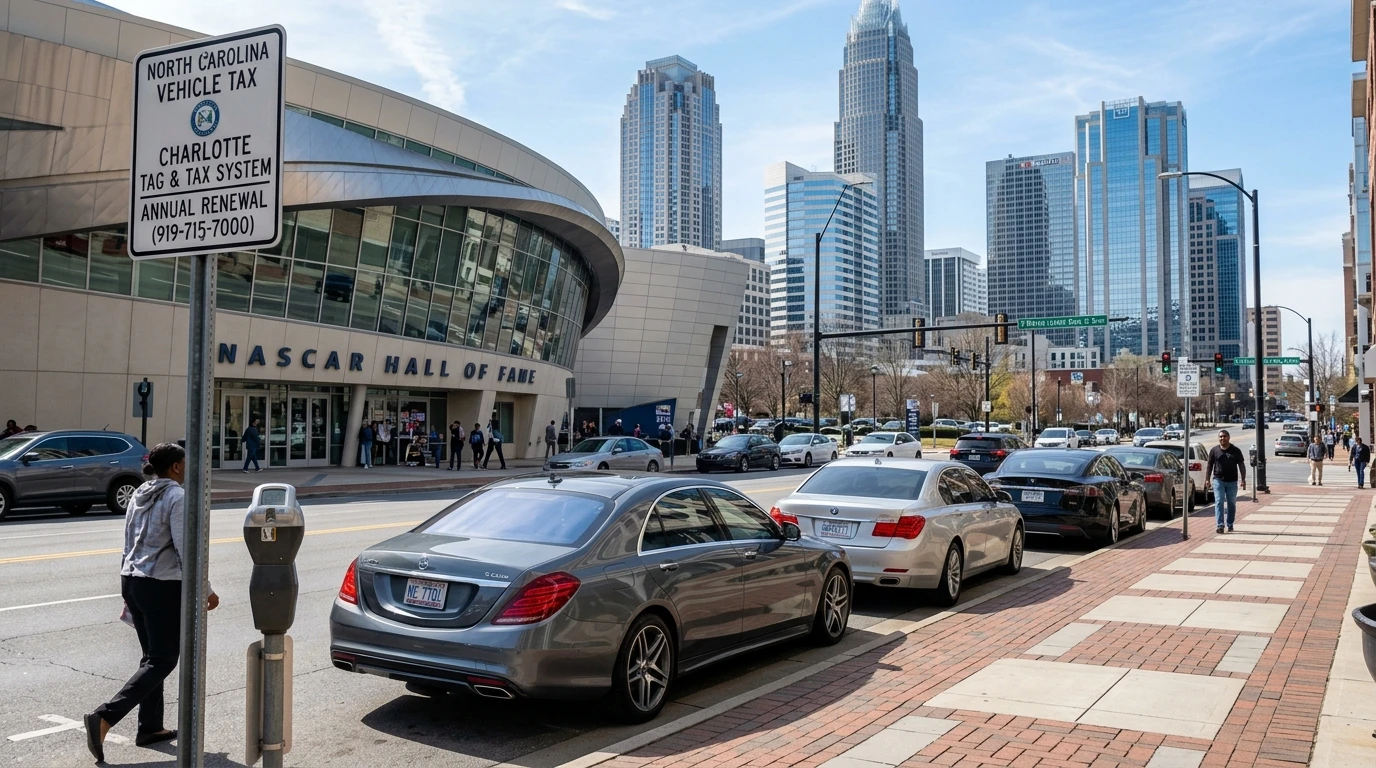
North Carolina vehicle tax is the financial sucker punch that catches new residents and longtime Tar Heels off guard every year. Ask David Reyes, a 45-year-old corporate attorney in Charlotte who walked into a BMW dealership last spring and drove out with a brand-new $142,000 BMW M8 Gran Coupe. He had budgeted carefully. He knew about the North Carolina DMV Highway Use Tax of 3 percent. He cut a check for $4,260 at the dealership, signed the title application, and figured the worst was over.
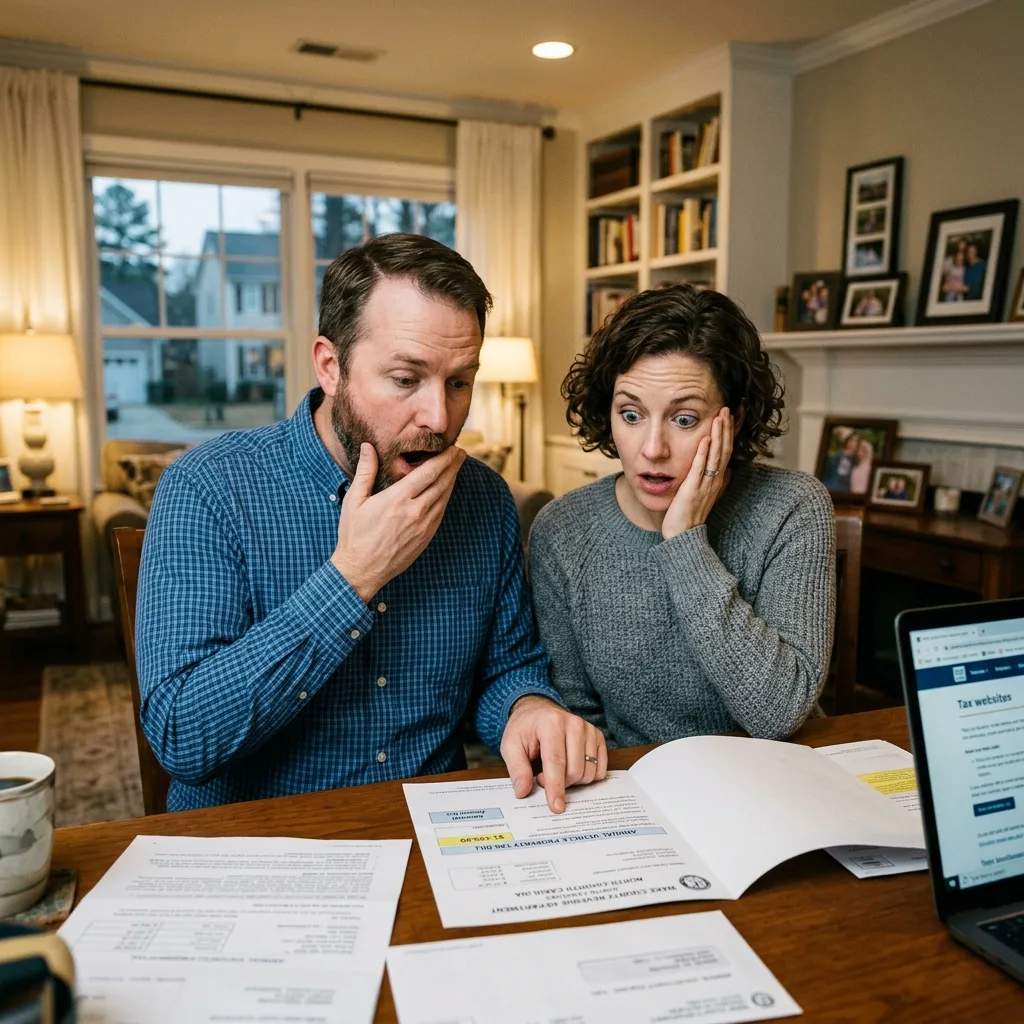
Eleven months later, an envelope from the Mecklenburg County Tax Collector arrived. Inside was his Tag and Tax Together notice. The line item that hollowed out his stomach: $1,101 in annual vehicle property tax, due before he could renew his registration. He had to pay it or lose the right to drive his own car. His Year One total: $5,361. And that property tax bill would keep coming, year after year, for as long as he owned the BMW.
This is the north carolina vehicle tax trap in two acts: a 3 percent Highway Use Tax up front, then a county property tax that follows you forever. This guide breaks down exactly how the system works, who it punishes hardest, what five years really costs, and how a Montana LLC ends the bleeding completely and legally.
On this page
- + What Is North Carolina Vehicle Tax
- + The Tag and Tax Together Trap
- + County Property Tax Breakdown
- + The Real Five-Year Cost
- + The Inspection Trap
- + Who Gets Hit Hardest
- + Three Real Case Studies
- + The Montana Solution
- + Is This Legal?
- + Who Benefits Most
- + Our Process
- + Who This Is Built For
- + Frequently Asked Questions
Understanding North Carolina vehicle tax: the two-part system
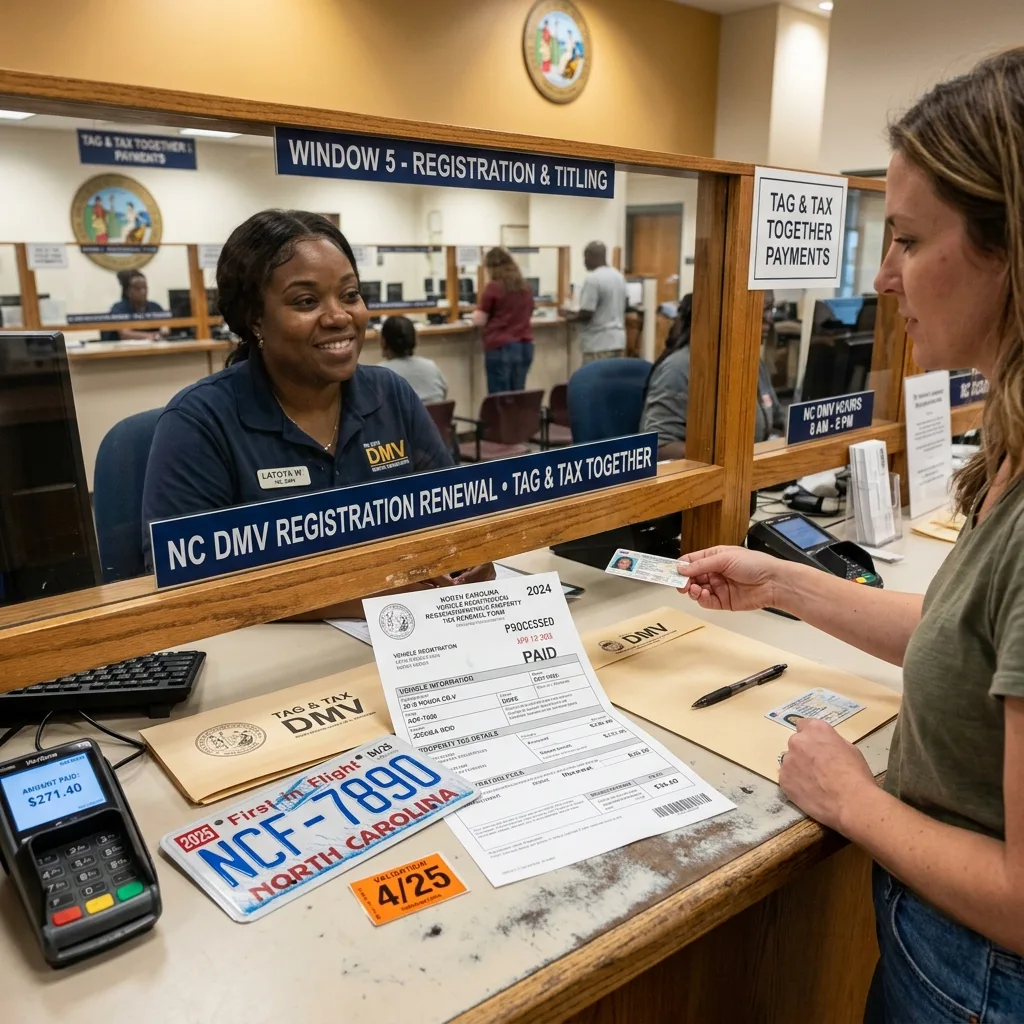
Most states keep vehicle tax simple: pay sales tax once, register your car, move on. North Carolina built a different system. The north carolina vehicle tax apparatus bills you at the moment of purchase and every year you own the vehicle.
The first hit is the Highway Use Tax (HUT). When you buy a vehicle in North Carolina, whether from a franchised dealer, a private seller, or a cousin in Cary, you pay 3 percent of the full sale price as a one-time HUT. That tax replaces the standard state sales tax that would otherwise apply to a tangible good. A $40,000 SUV: $1,200 in HUT before the title is issued. A $200,000 exotic: $6,000.
The HUT applies to the full purchase price with very limited exceptions. Trade-in credit reduces the taxable amount only when both vehicles are titled to the same buyer and the trade is part of the same transaction with a licensed dealer. Private-party sales receive no trade credit. There is one escape hatch: new residents moving into North Carolina from another state pay a flat $250 HUT cap regardless of vehicle value. A retiree relocating from Florida with a $300,000 Bentley Bentayga pays $250. A new resident from Ohio with a $25,000 used Camry pays $250. The cap benefits exactly one demographic: the move-in.
The second hit is what truly defines the north carolina vehicle tax burden, and it is the part most buyers do not understand until the first renewal cycle. North Carolina counties levy an annual property tax on every registered motor vehicle, billed jointly with your registration renewal through the Tag and Tax Together system. The bill arrives roughly 60 days before your registration expires. You cannot renew the tag without paying both. No payment plan. No monthly schedule. One annual lump sum, and the county sets the rate.
The Tag and Tax Together trap: how annual property tax compounds

Before 2013, North Carolina vehicle owners received their annual vehicle property tax bill separately from registration renewal. Compliance was terrible. Counties were leaving hundreds of millions uncollected. Drivers would ignore the property tax bill, renew their registration anyway, and roll the dice on enforcement. The legislature fixed it permanently.
The Tag and Tax Together system rolled out statewide between 2013 and 2014. The mechanism works like this: your county assessor uses NADA Clean Trade-in values to set your vehicle’s appraised value each year. County commissioners set the property tax rate in dollars per $100 of appraised value. The DMV computer multiplies the two, adds your registration fee, and sends one combined bill. If you do not pay the property tax portion, the registration cannot be renewed. If you drive on an expired registration, you face citations, towing, and insurance complications. Compliance went from optional to mandatory overnight.
North Carolina counties now collect over $1 billion annually through this system. That is not a typo. On top of the HUT already paid at purchase. And because the bill is tied to NADA depreciation, the property tax does decline as your car ages, but the early years hit hardest.
The depreciation reality on a $100,000 vehicle at a typical Triangle-area county rate of 0.70 percent:
Five-year property tax on that single vehicle: $2,353. Add the original $3,000 HUT and you have handed over $5,353 to North Carolina before paying for fuel, insurance, or a single oil change. That is the math the dealership never shows you on the window sticker.
The compounding problem: Most North Carolina vehicle owners have multiple vehicles. A two-car household with a $50,000 SUV and a $35,000 sedan in Mecklenburg County pays roughly $658 in property tax in Year 1 on the vehicles alone. Add a teenager’s $20,000 used car and the family approaches $800 annually before HUT and inspection costs.
County property tax breakdown
Unlike the Highway Use Tax, which is 3 percent statewide, the annual property tax portion of north carolina vehicle tax is set by each individual county. Two neighbors in adjacent counties can pay dramatically different amounts on identical vehicles. Charlotte residents pay nearly four times what their counterparts in Carteret County pay on the same car, while driving the same federally funded interstates.
Below are the rates per $100 of appraised value across the most populous North Carolina counties, plus the actual annual property tax burden on a $100,000 vehicle:
The Mecklenburg vs Carteret divide: A Charlotte attorney with a $150,000 Porsche Cayenne pays roughly $1,162 per year in vehicle property tax. The same vehicle owned by a retiree in Beaufort, Carteret County, pays $338 per year. Same car. Same roads. The difference is $824 every single year, $4,120 over five years, purely because of which county you live in.
And even residents of low-rate counties cannot escape the annual property tax. Carteret County’s 0.225 percent is still recurring. It still tracks NADA depreciation each year. It still requires payment before registration renewal. The lowest county rate in North Carolina is still higher than the vehicle property tax rate in roughly 25 other states, where vehicle property tax does not exist at all.
The real five-year cost: NC taxes vs Montana LLC
The following table shows realistic five-year ownership costs for five North Carolina vehicle profiles, comparing what you would pay registering in your home county versus through a Montana LLC. These numbers include HUT, county property tax (with NADA depreciation), registration fees, BEV/PHEV fees where applicable, and inspection costs across five years.
The more expensive the vehicle, the larger the savings. The longer you own it, the more you pull ahead. These calculations are conservative: they do not include the soft costs of inspection appointments, DMV wait times, and the constant administrative friction of North Carolina vehicle ownership.
The inspection trap: annual fees, emissions, and EV penalties

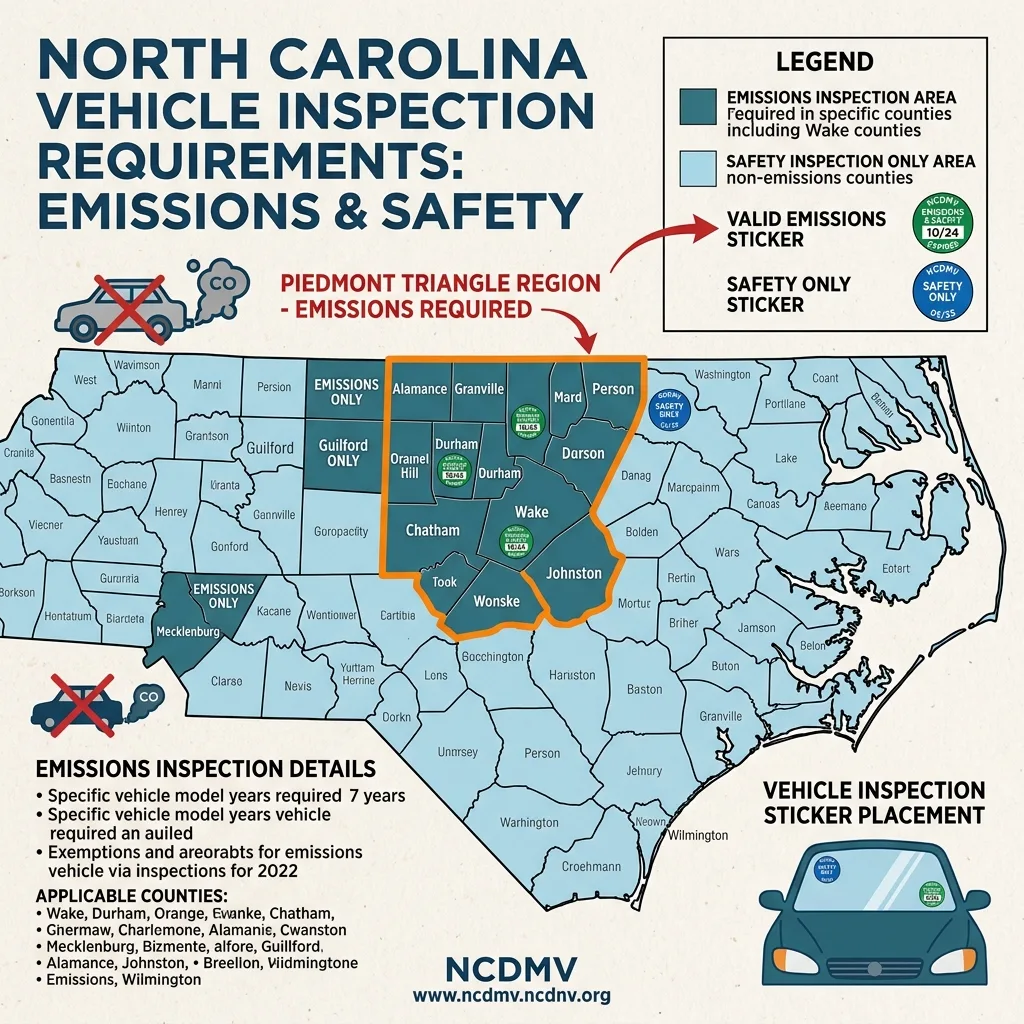
Beyond HUT and property tax, North Carolina layers on a third cost: mandatory annual inspections. Every vehicle registered in the state must pass an annual safety inspection in all 100 counties. On top of that, 19 of the most populous counties also require an annual emissions inspection: Alamance, Buncombe, Cabarrus, Cumberland, Davidson, Durham, Forsyth, Franklin, Gaston, Guilford, Iredell, Johnston, Lincoln, Mecklenburg, New Hanover, Randolph, Rowan, Wake, and Union.
If you live in one of those 19 counties (which covers essentially every major NC city), you cannot renew registration without passing both inspections. The current safety-only fee is $12.75 and the combined safety-plus-emissions fee is $23.75. These numbers look small until you understand what is coming: the North Carolina General Assembly has proposed raising the safety inspection fee to $29.15 and the combined fee to $40.15, citing inflation and reduced emissions station volumes.
Even more revealing: the NC Department of Environmental Quality has proposed eliminating emissions testing in 18 additional counties, pending EPA approval. Modern vehicles are simply too clean. The emissions program increasingly functions as a tax on time more than an environmental safeguard. The safety inspection requirement is not going away. And in December 2025, lawmakers quietly removed window tint enforcement from the inspection checklist, a concession that the inspection regime is more about compliance theater than road safety.
The EV penalty: Tesla and other battery electric vehicle owners in North Carolina pay a $140 annual BEV fee on top of all other taxes and inspections. Plug-in hybrid owners pay $70 annually. The state’s reasoning: EVs do not pay gas tax, so the highway fund recovers that revenue another way. The result: a Raleigh Tesla owner pays HUT plus property tax plus safety inspection plus $140 in BEV fees every year. There is no NC-level escape.
The inspection trap also creates a hidden time cost. A typical safety inspection appointment, including drive time and waiting, runs 60 to 90 minutes. Multiply that across multiple vehicles and a household loses half a workday every year just to comply with the law. None of that is on the receipt, but it is a real cost.
Who gets hit hardest by north carolina vehicle tax

The north carolina vehicle tax system does not punish everyone equally. The 3 percent HUT and county property tax apply across the board, but four specific demographics absorb a disproportionate share of the pain.
The Charlotte luxury buyer
Mecklenburg County combines the second-highest county property tax rate in major NC metros with a population of high-income earners buying expensive vehicles. A Charlotte executive with a $150,000 daily driver pays approximately $1,162 in Year 1 property tax, $930 in Year 2, $744 in Year 3, and so on. Add the $4,500 HUT at purchase and you have a Charlotte luxury buyer paying over $9,000 in vehicle taxes over five years on a single car. Households with multiple luxury vehicles can easily exceed $20,000 in five-year tax exposure.
The Research Triangle tech worker
Wake and Durham counties are home to thousands of high-earning software engineers, biotech researchers, and executives at Cisco, IBM, Lenovo, GSK, and countless RTP startups. This demographic disproportionately drives Tesla, Rivian, Lucid, and other expensive EVs. They get hit twice: high vehicle values create high property tax bills, and the BEV/PHEV fees stack on top. A Cary household with two Teslas pays $280 in BEV fees alone every year, plus thousands in property tax, plus annual safety inspections.
The Asheville collector
Western North Carolina has become a destination for car collectors and weekend enthusiasts. Buncombe County’s property tax rate is moderate, but owning three or four collector cars means paying annual property tax on each one separately. NADA values for collector vehicles often hold steady or appreciate, so the property tax does not depreciate the way an ordinary commuter car does. A collector with $500,000 in garage inventory can owe $2,800 or more in annual property tax on cars that sit under covers most weekends.
The coastal RV retiree
Retirees who relocate to North Carolina’s coast for the climate often arrive with high-value Class A motorhomes. The $250 HUT cap protects them at move-in, but every year after, the RV sits in a county that bills annual property tax on its appraised value. A $300,000 motorhome in Buncombe County costs the owner roughly $1,710 in Year 1 property tax. The retiree thought they escaped their previous state’s vehicle tax burden by moving south. Instead, they swapped one bill for another.
Three real case studies

Case study 1: David Reyes, Charlotte corporate attorney
David Reyes is the 45-year-old Charlotte attorney from our opening. After closing a major case bonus, he ordered a 2026 BMW M8 Gran Coupe in Frozen Pure Grey Metallic for $142,000. At signing: $4,260 in Highway Use Tax plus title fees of roughly $64 and initial registration of $52.
Eleven months later, Mecklenburg County billed him $1,100 in annual vehicle property tax (0.7745 percent of the NADA-appraised value). Year 2: $880. Year 3: $704. Year 4: $564. Year 5: $451. Five-year property tax total: $3,699.
Add five annual combined safety-plus-emissions inspections at $23.75 ($118.75 total) plus four annual registration renewals at roughly $40 each ($160 total). His five-year total in North Carolina vehicle taxes and fees: $8,213.
Through Zero Tax Tags, David’s BMW M8 was registered to a Montana LLC. At $142,000 it falls under the $150,000 threshold: Year 1 is $899, Years 2 through 5 at $368 each. Five-year total: $2,371. Total savings: $5,842.
Case study 2: Jennifer Kim, Raleigh software engineer
Jennifer Kim is a 37-year-old senior software engineer at an RTP-area tech firm. She bought an $85,000 Tesla Model S Plaid in early 2025. At delivery: $2,550 in HUT (3 percent of $85,000) plus title and initial registration fees totaling roughly $116.
Wake County’s property tax rate of 0.615 percent applied to her $85,000 Tesla generated a Year 1 bill of $523. NADA depreciation brought the next four years to approximately $418, $335, $268, and $214. Five-year property tax total: $1,758.
Then came the BEV-specific fees: $140 every year, $700 over five years. Tesla owners are exempt from emissions inspection in NC (no emissions to test), but Jennifer still owed the safety-only inspection at $12.75 per year ($63.75 total). Registration renewals and additional fees pushed her five-year North Carolina total to $6,350.
Through Zero Tax Tags, Jennifer’s Tesla was registered to a Montana LLC. Five-year total: $899 plus ($368 times 4) = $2,371. Total savings: $3,979. No BEV penalty. No annual inspection. No property tax. No depreciation tracking.
Case study 3: Rick and Sandra Barker, Asheville retired couple
Rick (64) and Sandra (62) Barker retired three years ago and bought a $285,000 Newmar Mountain Aire 4569 Class A diesel pusher. They purchased in NC, so the 3 percent HUT of $8,550 hit at delivery.
Buncombe County’s 0.57 percent property tax rate generated a Year 1 bill of $1,625 on the RV’s appraised value. Class A motorhomes depreciate more slowly than passenger cars. Five-year property tax total: approximately $7,500. Five annual safety inspections at $12.75: $63.75. Five annual registration fees averaging $162: $810. Their five-year North Carolina total: $17,160.
Through Zero Tax Tags, the Barkers’ RV was registered to a Montana LLC at the over-$150K RV rate. Year 1: $1,699. Years 2 through 5: $368 each. Five-year total: $3,171. Total savings: $13,989. Rick and Sandra now spend that money on actually using their RV.
The Montana solution
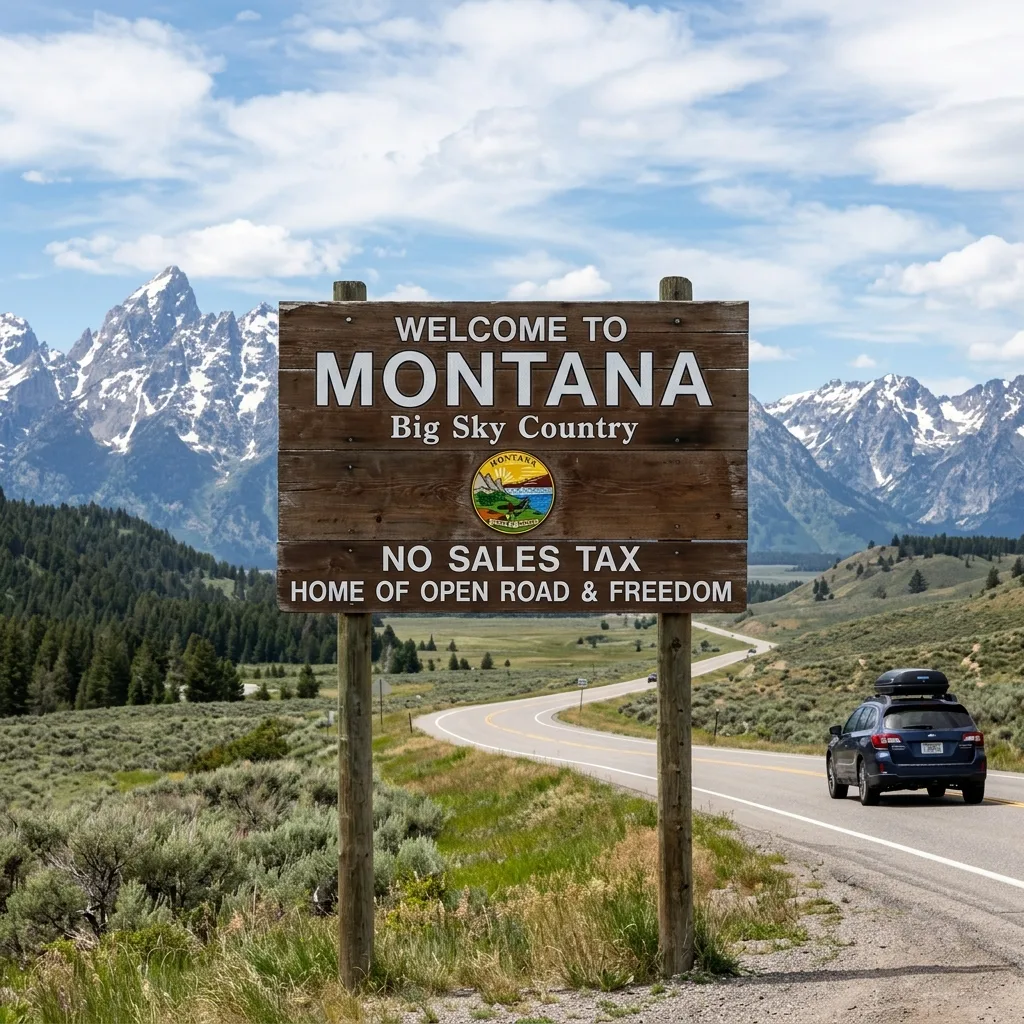
Montana is the only state that combines four specific advantages into a structure that legally bypasses the entire north carolina vehicle tax apparatus. First, Montana has no state sales tax on vehicle purchases. Zero. Not 3 percent, not 0.1 percent. Buy a $500,000 Lamborghini through a Montana LLC and the sales tax is $0. Second, Montana has no annual vehicle property tax. Counties in Montana do not bill ad valorem property tax on cars. Third, Montana has no safety or emissions inspection requirements for personally owned passenger vehicles. And fourth, Montana law explicitly permits limited liability companies to own and register vehicles, which is the legal mechanism that makes everything work.
Zero Tax Tags forms a Montana LLC for you, with you as the sole member and manager. The LLC is a real Montana legal entity registered with the Montana Secretary of State. Your vehicle is titled and registered in Montana, with the LLC as the registered owner. Montana issues plates that ship directly to you in North Carolina. The vehicle is now legally a Montana-registered vehicle owned by a Montana entity. The NC HUT does not apply (no NC sale occurred). NC property tax does not apply (the vehicle is not registered in NC). NC inspections do not apply (the vehicle is not under NC DMV jurisdiction).
What gets eliminated, concretely:
- The 3 percent Highway Use Tax: gone
- Annual county property tax (Mecklenburg, Wake, Forsyth, Buncombe, etc.): gone
- Annual safety inspection: gone
- Annual emissions inspection (if applicable): gone
- BEV $140 annual fee: gone
- PHEV $70 annual fee: gone
- NADA depreciation tracking: gone
- Tag and Tax Together combined billing: gone
What remains: a flat Montana annual filing fee for the LLC and a one-time registration that, on most passenger vehicles, results in permanent or long-duration plates. No depreciation calculations. No 100-county rate map. No inspection lines. No surprise mailers from the county tax collector.
Is this legal?

Yes, when structured correctly. North Carolina requires registration when a vehicle is owned by an NC resident and used primarily on NC roads. The Montana LLC structure works because the legal owner of the vehicle is the LLC, not the individual. The LLC is a Montana resident. The vehicle is legitimately a Montana-titled, Montana-registered vehicle.
The structure is legal under the same principles that make corporate fleet vehicles legal. UPS, FedEx, Amazon, and Hertz all operate vehicles registered in states different from where their drivers live. Limited liability companies are a recognized legal form for vehicle ownership in all 50 states under the Full Faith and Credit Clause of the U.S. Constitution. North Carolina has no statute prohibiting an out-of-state LLC from owning a vehicle.
The structure works only when done correctly. The Montana LLC must be a real entity with a real Montana address and a real registered agent. The vehicle title must legitimately list the LLC as the owner. Insurance must be obtained in the LLC’s name. Annual Montana filings must be kept current. This is not a paper trick or a mailbox scheme. It is a legitimate business structure domiciled in a tax-favorable state, the same way Delaware corporations and Nevada holding companies operate at much higher levels of wealth.
North Carolina has not, to date, mounted a sustained legal challenge to properly structured Montana LLC vehicle registrations. When the structure is legitimate, the LLC is a real Montana entity and the vehicle is genuinely owned by a Montana resident. NC has no jurisdiction to demand HUT or property tax from a Montana resident.
The compliance bottom line: Insurance must be in the LLC’s name. The LLC must remain in good standing with Montana annually. The vehicle title and registration must accurately reflect LLC ownership. Zero Tax Tags handles all three for you, every year, automatically.
Who benefits most
The Montana LLC structure is not for every vehicle owner. The math has to work and the lifestyle has to fit. These seven profiles are where we see the most consistent, dramatic savings.
- Charlotte luxury car buyers: Anyone purchasing a vehicle over $80,000 in Mecklenburg County will see five-figure savings within five years.
- RTP tech professionals with Teslas, Rivians, or Lucids: The combination of high vehicle value and BEV fees makes the Montana structure especially powerful.
- Class A motorhome and Super C RV owners: RVs are the highest-value vehicle category, and the savings on a $250K+ motorhome are dramatic.
- Sports car and exotic collectors: Multiple high-value vehicles compound the property tax burden in NC. Each one in a Montana LLC eliminates that yearly hit.
- Boat trailer and travel trailer owners: Trailers, ATVs, and UTVs qualify for the $749 one-time, permanent-plate Montana option.
- New-to-NC residents bringing in expensive vehicles: The $250 HUT cap helps at move-in, but property tax kicks in immediately and recurs every year after.
- High-income professionals in any NC metro: Doctors, attorneys, executives, and business owners with multiple vehicles all benefit from removing the recurring annual property tax bill.
Our process
Zero Tax Tags handles the entire Montana LLC and registration process so you never need to step into a Montana DMV. Here is what you pay and what we deliver.
| Day 1: | Submit your MCO and supporting paperwork through our secure portal. We review for completeness and file your Montana LLC the same day. |
| Days 1–2: | Montana LLC formation complete — same business day in most cases, second business day at the latest. |
| Days 2–4: | Title transferred into the LLC name at the Montana county treasurer. |
| Days 4–7: | Permanent Montana plates shipped directly to your door within 3–5 business days of title completion. |
Who This Is Built For
The Montana LLC is built for North Carolina vehicle owners who are tired of paying the Highway Use Tax at every purchase and watching it stack with county fees and mandatory inspections. The savings are most powerful for the following profiles.
Anyone purchasing a vehicle worth $25,000 or more. North Carolina’s 3% HUT on a $45,000 vehicle is $1,350. On a $100,000 vehicle it is $3,000. On a $200,000 motorhome it is $6,000. Montana eliminates all of it, and the ZTT setup cost pays for itself in Year 1 for any vehicle above $30,000.
Charlotte, Raleigh, and Research Triangle professionals. Banking executives, tech professionals, and healthcare leaders who purchase $65,000 to $150,000 vehicles are paying between $1,950 and $4,500 in HUT at closing. That savings, invested or reinvested in the vehicle budget, is real money.
RV owners and retirees traveling the Southeast. The mountains and coast attract significant RV traffic in North Carolina. A $200,000 motorhome generates $6,000 in HUT. Montana registration for RVs over $150,000 is $1,699 in Year 1 — a net saving of over $4,300 on a single purchase.
Business owners with multiple vehicles. One LLC holds your entire fleet. A contractor running three $72,000 trucks saves over $6,480 in North Carolina HUT across the fleet. Additional vehicles on the same LLC pay only the service portion of the setup fee.
Collectors and enthusiasts. North Carolina has a growing base of exotic and classic vehicle collectors. Every purchase generates avoidable HUT, and multi-vehicle owners compound those savings across every acquisition.
For vehicles under $20,000, call us before assuming the numbers don’t work. We run the calculation free. For anyone buying above that threshold, they almost always do.
Frequently asked questions
1. What is the difference between Highway Use Tax and Tag and Tax Together?
HUT is a one-time 3 percent tax paid at the moment of purchase. Tag and Tax Together is the system that combines your annual property tax with your registration renewal into a single bill. HUT is paid once. Tag and Tax Together is paid every year until the vehicle is sold or scrapped.
2. Can I avoid the Tag and Tax Together bill if I move my registration to Montana mid-year?
Yes. Once your vehicle is titled and registered in Montana through the LLC, North Carolina no longer issues you a Tag and Tax Together bill for that vehicle. The county tax collector removes you from the rolls when the vehicle’s NC registration is canceled or expires.
3. Does the $250 HUT cap save me money long-term?
It saves you upfront at move-in. But recurring property tax means a new resident with a $200,000 vehicle in Mecklenburg County still pays roughly $1,549 in Year 1 property tax, continuing every year after. The cap is a one-time benefit, not a long-term solution.
4. What happens if NC eliminates emissions inspections in my county?
You still owe the safety inspection annually, the BEV/PHEV fees if applicable, and the full Tag and Tax Together property tax bill. Eliminating emissions saves $11 per year. Eliminating North Carolina registration through a Montana LLC saves thousands.
5. Will my insurance company write a policy for an LLC-owned vehicle?
Yes. Major insurers including Progressive, Geico, Liberty Mutual, State Farm, and USAA all write policies for vehicles owned by single-member LLCs. We provide the LLC formation documents your agent will need.
6. What if I get pulled over in North Carolina with Montana plates?
You hand the officer your Montana registration and your driver’s license. The plates are valid. The vehicle is legally registered to a Montana entity (your LLC). Officers across the country see Montana plates daily, particularly on RVs, exotic cars, and trailers, and they understand the structure.
7. Do I need to fly to Montana for any of this?
No. Zero Tax Tags handles the entire process by mail and through our partner registered agent in Montana. You sign documents electronically. Your plates arrive at your NC address.
8. How does this affect my federal taxes?
A single-member LLC is a disregarded entity by default for federal income tax purposes. There is no separate federal tax filing required for the LLC. You continue to file your personal taxes exactly as before. The structure has no effect on your federal income tax return.
9. How much does Zero Tax Tags charge, and what does it include?
For standard vehicles under $150,000, Year 1 is $899 — that covers LLC formation, Montana registered agent, titling, and your plates. Year 2 and beyond runs $368 per year for registration renewal and the annual LLC filing fee. Vehicles over $150,000 pay $1,724 in Year 1 due to Montana’s higher titling fee on luxury vehicles. Motorcycles, ATVs, UTVs, trailers, and boats qualify for a one-time permanent plate at $749 with no annual renewal. Everything is handled by mail. You receive your plates at your North Carolina address.
See how Montana LLC registration helps owners in other high-tax states:
- Virginia Car Tax: Stop Paying the Highest Vehicle Tax in America
- Arizona VLT Problem: How to Stop Paying $1,000+ Every Single Year
- South Carolina Vehicle Tax: The No-Inspection Lie and Property Tax Wealth Trap
- Arkansas Vehicle Tax: The Natural State’s Hidden Wealth Extraction System
Ready to stop overpaying north carolina vehicle tax?
North Carolina vehicle owners have saved millions with Montana LLC registration. From Charlotte attorneys to Raleigh tech workers to Asheville retirees, the math works. You’re next.