25 min read
On this page
- + The $9,062 Surprise: Meet James Whitfield
- + Understanding Texas vehicle tax: how the 6.25% really works
- + The Standard Presumptive Value trap
- + County-by-county registration fees
- + Heavy trucks, diesels and RVs: special rules
- + 5-year cost comparisons
- + Who gets hit hardest by Texas vehicle tax
- + The Montana LLC solution
- + Is this actually legal in Texas?
- + Three real Texas case studies
- + Our process: Day 1, Day 2, Day 3, Year 2+
- + Frequently asked questions
- + Stop overpaying Texas vehicle tax
The $9,062 Surprise: Meet James Whitfield
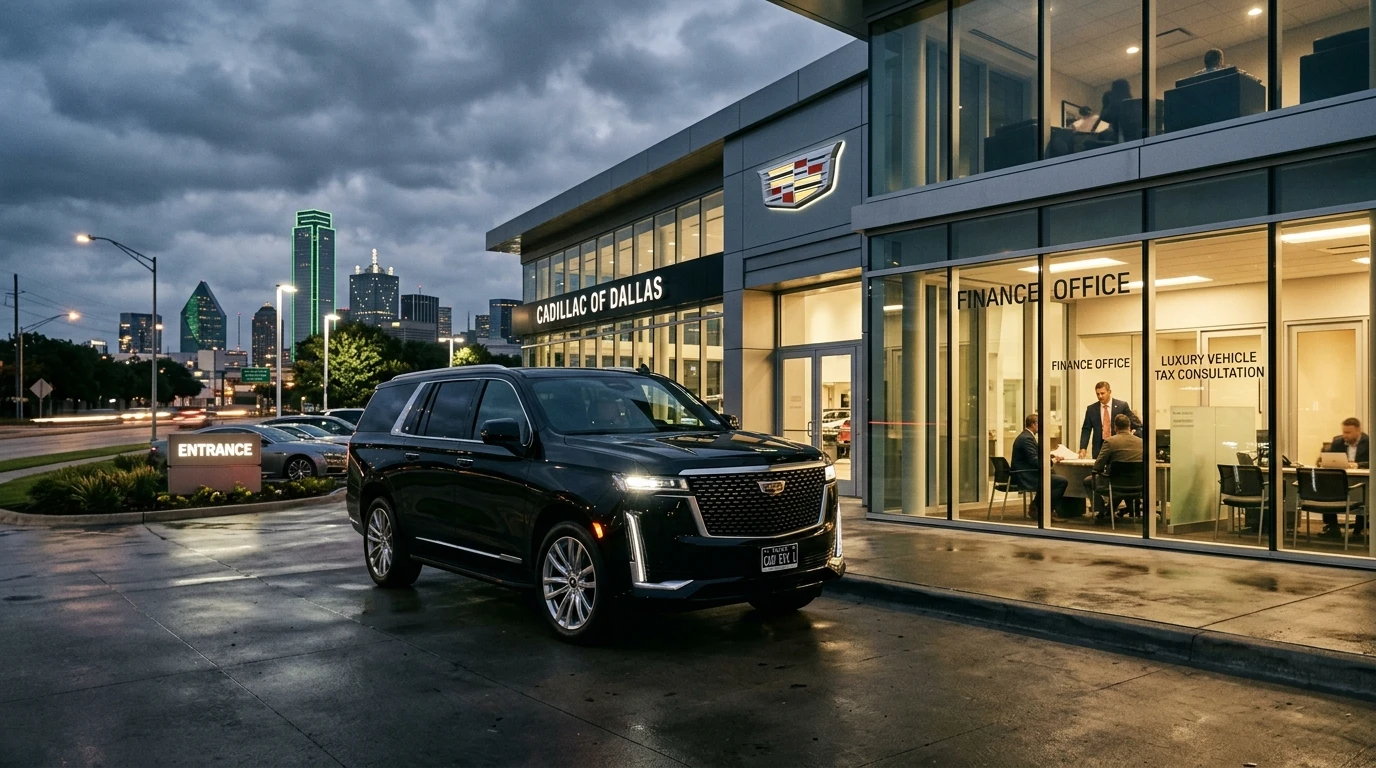
Texas vehicle tax is a beast that wears two faces. To outsiders, Texas looks like a tax paradise. No state income tax. Friendly business climate. License plates that say “Don’t Mess With Texas.” The general consensus among out-of-staters is that Texans get to keep their money. Then James Whitfield walked into a Dallas Cadillac dealership in March of 2026 and got an education.
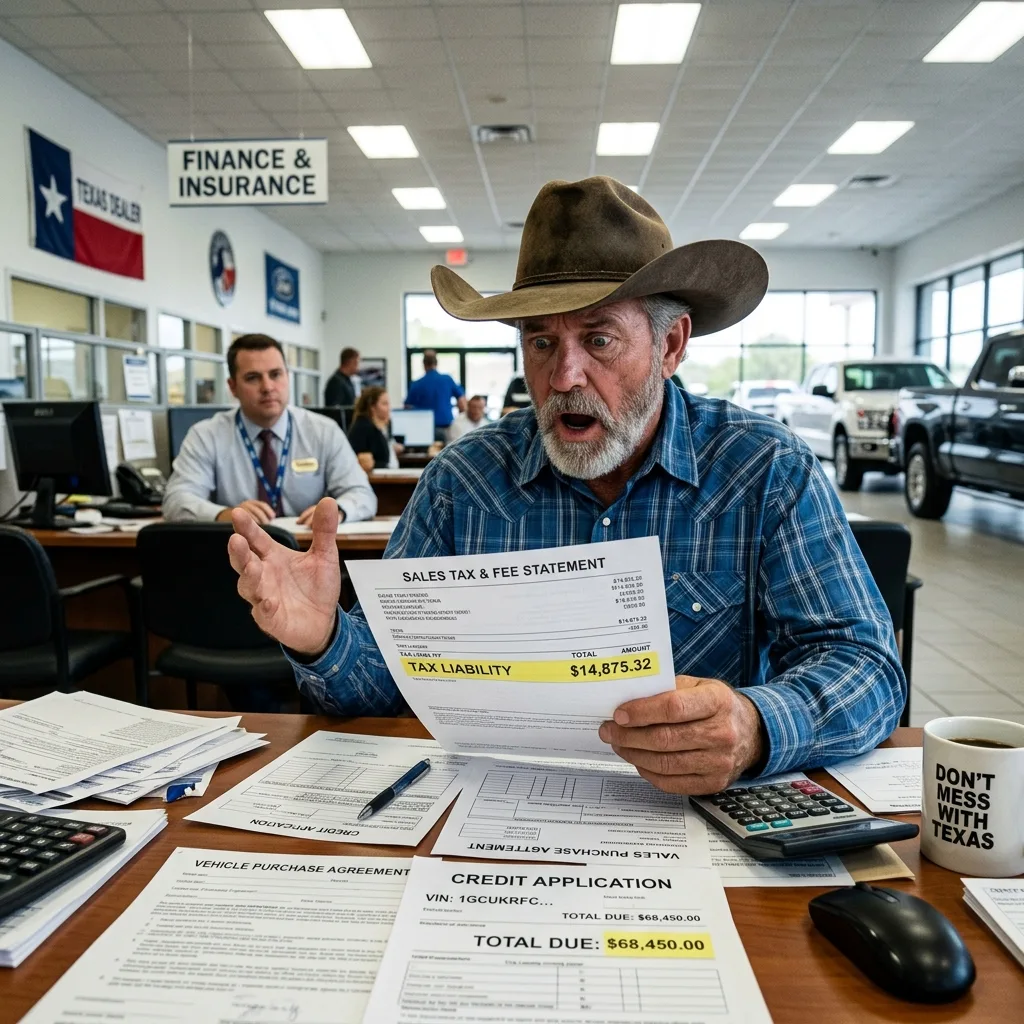
James, a 47-year-old commercial real estate developer in Highland Park, had been negotiating for a 2026 Cadillac Escalade ESV V-Series for three weeks. The window sticker said $145,000. After haggling, he got the dealer down to a flat $145,000 out the door, or so he thought. Then the finance manager slid a clipboard across the polished desk and pointed to a number near the bottom that James had not been thinking about: $9,062.50 in Motor Vehicle Sales Tax. Plus title, plus registration, plus the $4.75 processing fee.
James paid it. He could afford it. But the question that followed him out of the dealership was simple: why does a state with no income tax charge nine thousand dollars to register a vehicle a guy already paid for? Texas does not have an annual property tax on vehicles like Virginia or South Carolina. But the one-time hit, the way the state calculates value on private-party sales, and the county-level fees create a system that quietly extracts tens of thousands of dollars from Texans who buy expensive vehicles, especially trucks, RVs and luxury SUVs.
According to the Texas Department of Motor Vehicles, the state collects more than $5.6 billion in motor vehicle sales tax every year. It pays for highways, schools, and the general fund, but also for the steady, ongoing transfer of wealth from vehicle owners to a tax structure that grows every time a vehicle changes hands.
Understanding Texas vehicle tax: how the 6.25% really works

The headline number is 6.25 percent. That is the Motor Vehicle Sales Tax, or MVST, that Texas applies to every titled motor vehicle sold or brought into the state. Unlike Illinois, California, or Tennessee, Texas does not allow counties or cities to stack their own local sales tax on top of vehicle purchases. The 6.25 percent is the entire bite. There is no Bexar County 1.75 percent surcharge. No City of Houston add-on. No Travis County extension. Whether you buy a Ford F-250 in Lubbock or a Porsche 911 GT3 in River Oaks, the math is the same: purchase price multiplied by 0.0625 equals what you owe Austin.
That sounds simple, and at the dealership it usually is. The dealer collects the tax, hands the paperwork to the county tax assessor-collector, and you drive away. What people miss is what happens when you buy from a private citizen, bring a vehicle in from another state, or when the vehicle is heavy enough to trigger the diesel surcharge.
The other thing people miss, and this is where confusion sets in, is what Texas vehicle tax is not. It is not an annual property tax. Texas residents do not get a bill in the mail every year for the privilege of owning their car the way Virginians and South Carolinians do. The 6.25 percent MVST is a one-time, point-of-sale tax. After that, the only ongoing cost is the annual registration renewal, in the $50 to $100 range for most passenger vehicles plus a small county fee.
This is meaningful. A Texan with a $100,000 truck pays roughly $6,250 in MVST once and about $90 per year for registration. A Virginian with the same truck pays roughly $4,130 every single year forever. Over ten years, the Virginian writes $41,300 in checks. The Texan writes $7,150. The trouble starts when you change the assumption from “owns the truck for ten years” to “buys a truck, sells it, buys another, trades it, buys a third.” Every transaction triggers the 6.25 percent again. For households that swap vehicles every three years, or for fleet operators, or for collectors, the Texas vehicle tax compounds in a way that the headline rate hides.
And then there is the Standard Presumptive Value trap.
The Standard Presumptive Value trap
The Standard Presumptive Value, or SPV, is the part of Texas vehicle tax that nobody warns you about until you are standing at the county tax window holding a bill of sale for a used Land Cruiser and the clerk tells you that you owe more tax than you expected. The system was created to stop people from underreporting private-party sale prices to dodge the 6.25 percent. The state’s solution was to publish a presumed market value for every vehicle by year, make and model. If you buy a vehicle from another private party and the price you paid is less than 80 percent of that presumed value, Texas calculates your tax on the 80 percent figure rather than the price you actually paid.
Here is the math. Imagine you find a 2023 Toyota Land Cruiser on a Dallas Craigslist listing. The seller wants $50,000. You meet, inspect, agree, and write a bill of sale for $50,000. Cash changes hands. You drive to the Dallas County tax office to title and register. The clerk looks up the SPV. The state’s database says the Standard Presumptive Value is $70,000. Eighty percent of $70,000 is $56,000. Because your actual purchase price ($50,000) is below that 80 percent floor, Texas calculates your sales tax on the $56,000 figure. You owe 6.25 percent of $56,000, which is $3,500, instead of 6.25 percent of $50,000, which would have been $3,125. The state pockets an extra $375 you never agreed to pay anyone.
That is a small example. The numbers get worse. A buyer who finds a deal on a $90,000 vehicle that has an SPV of $135,000 ends up paying tax on $108,000 (80 percent of SPV), which is $6,750 in tax instead of $5,625, a difference of $1,125. For collector cars, depreciated luxury sedans, or genuinely good private deals, the gap can run into the thousands.
The escape hatch: Texas allows buyers to override the SPV by submitting Form 14-128, a Motor Vehicle Tax Certified Appraisal, completed by a licensed Texas dealer or insurance adjuster within 30 calendar days of the sale. The certified appraisal must show the actual market value, and the buyer pays tax on whichever is higher: the certified appraisal or the actual purchase price. In practice, getting a dealer to write a certified low appraisal on a vehicle they did not sell is harder than it sounds, and most buyers either pay the SPV bump or never knew they could fight it.
Several categories of vehicles are exempt from SPV altogether. Salvage-titled vehicles do not face SPV because their condition is presumed to be impaired. Gifts between qualified family members are exempt. Even-trade transactions, where two parties swap vehicles with no cash exchanged, are not subject to SPV. Classic vehicles 25 years or older are excluded. Government auctions and certain insurance transactions are also exempt.
SPV does not apply to dealer sales. Whatever the dealer charges, that is the taxable amount. The presumption is that arms-length dealer transactions reflect true market value. Private-party deals, on the other hand, are presumed suspect by default. The state has decided that a stranger handing you cash for a Land Cruiser is more likely to be lying than a dealership is.
County-by-county registration fees
The 6.25 percent MVST is a one-time tax. The annual registration is the recurring side of the Texas vehicle tax bill. The base state registration fee for a passenger car or light truck is $50.75 per year, but every county adds a road and bridge fee on top. These vary by county and depend on whether the county has an authorized child safety program, a transportation reinvestment fee, or a special metropolitan transit district contribution.
The pattern is predictable. Big metro counties charge more. Rural counties charge less. The very smallest counties charge zero. Below is a representative snapshot of how the county portion shakes out for a typical passenger vehicle in 2026.
Layered on top are smaller charges: a $1.00 automation fee, a $1.00 Department of Public Safety fee, a $4.75 processing fee, an insurance verification fee, and any optional specialty plate fees. Stacked across millions of vehicles, they fund a sizable portion of state and county roadway operations.
Title transfer is its own line item. When a vehicle changes ownership, Texas charges $28 to $33 for the title application. Add the $4.75 processing fee, and the simple act of putting a vehicle in your name costs about $40 before the 6.25 percent tax even kicks in.
Heavy trucks, diesels and RVs: special rules
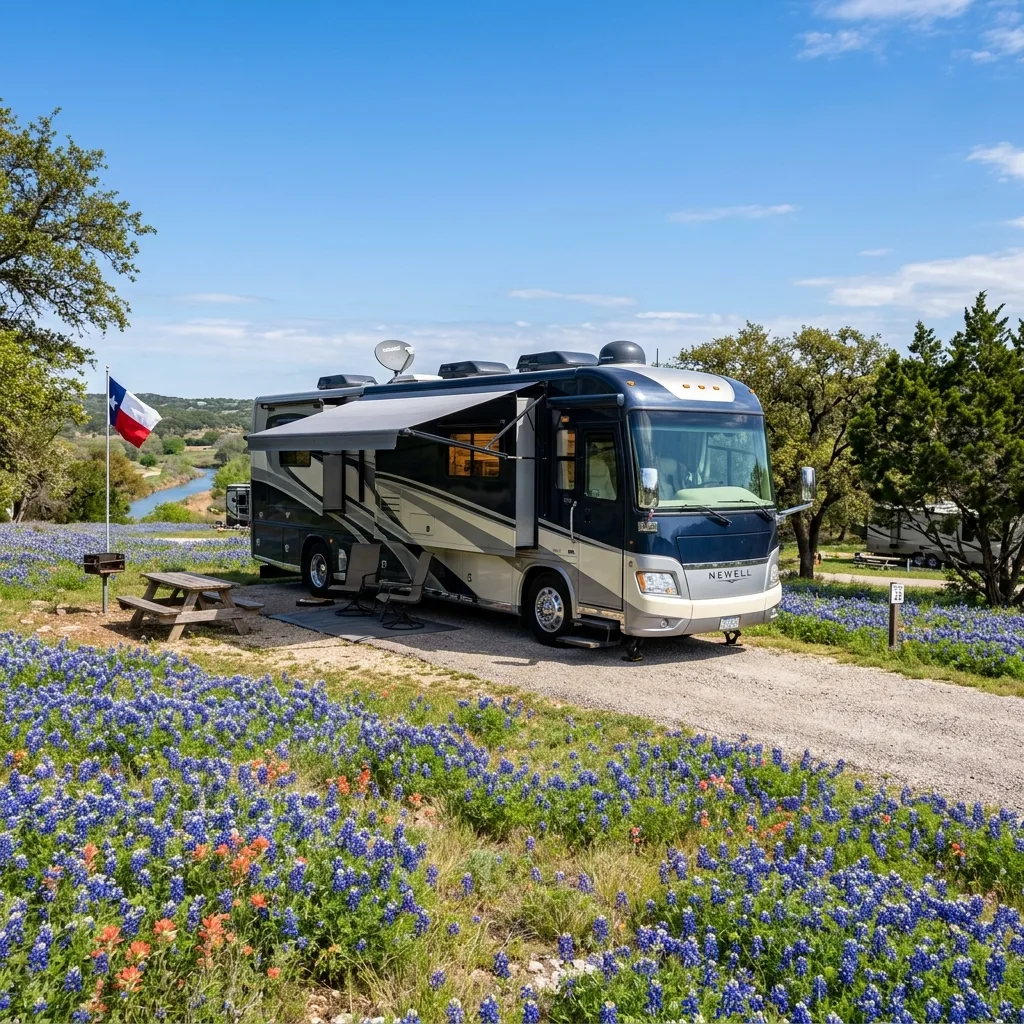
Texas tilts toward heavier vehicles being more expensive to register, and toward diesel-powered heavies being the most expensive of all. The state’s logic is that heavier vehicles damage roads more and that diesel engines historically generated more emissions.
For commercial trucks, registration cost depends on gross vehicle weight rating. A truck up to 6,000 pounds GVWR pays the standard passenger fee. Step up to 10,000 pounds, and registration scales upward. Once GVWR crosses 26,000 pounds into commercial classification, annual registration runs $535 to $840, depending on weight class. These are the rates that hit owner-operators, fleet operators, and oil-services contractors hardest.
The diesel surcharge is the kicker. Texas charges an additional 1 percent motor vehicle sales tax on diesel-powered vehicles with a GVWR over 14,000 pounds. The total tax becomes 7.25 percent (6.25 percent base plus 1 percent surcharge). For pre-1997 model year diesels in the same weight class, the surcharge is 2.5 percent for a total of 8.75 percent. On a $90,000 commercial diesel truck, that 1 percent surcharge alone is $900 more than a gas-powered equivalent would have paid.
RVs occupy a separate but related corner. Class A motorhomes, fifth-wheels, and travel trailers pay the standard 6.25 percent MVST on purchase. Annual registration depends on the RV’s classification. A motorhome under 6,000 pounds pays passenger rates. A motorhome between 6,001 and 10,000 pounds pays slightly more. Above 10,000 pounds, the registration follows the heavy passenger schedule. Some counties impose additional fees for very large RVs that require oversized plates.
For the buyer of a $300,000 Newmar Dutch Star or a $400,000 Tiffin Allegro Bus, the math is brutal. At 6.25 percent, the MVST alone is $18,750 to $25,000. RV buyers who finance the unit often roll the tax into the loan, which means they end up paying interest on the tax for fifteen or twenty years.
5-year cost comparisons
The single best way to understand what Texas vehicle tax really costs is to put the numbers next to a Montana LLC alternative. The Texas side is dominated by the one-time 6.25 percent hit at purchase, plus annual registration. The Montana LLC side is a flat year-one setup fee and a smaller flat annual maintenance fee, with no sales tax at purchase.
$50,000 vehicle (mid-size SUV or pickup)
$85,000 vehicle (luxury SUV or heavy duty truck)
$120,000 vehicle (premium SUV, high-end pickup, mid-tier RV)
The pattern is plain. The more expensive the vehicle, the more dramatic the gap. The Montana LLC’s flat structure does not care whether the vehicle costs $50,000 or $500,000. Texas vehicle tax does, in a linear and unforgiving way.
Who gets hit hardest by Texas vehicle tax
Some Texans never feel the bite of the 6.25 percent because they buy modestly priced vehicles and hold them for a decade. Other Texans get crushed. Four profiles repeatedly appear in our consultation queue.
Profile 1: The high-value truck buyer
This is the Texan who buys a $90,000 to $150,000 luxury pickup or heavy SUV every three to four years. RAM 2500 Limited Longhorn. Ford F-250 King Ranch. Chevy 2500HD High Country. GMC Yukon Denali Ultimate. Cadillac Escalade ESV. The truck or SUV is part work vehicle, part status symbol, part family hauler. Each cycle generates a fresh $5,000 to $9,000 tax bill at the dealership. Over a 20-year ownership pattern of five vehicles, these buyers generate $25,000 to $45,000 in MVST payments. They earn this money by working hard, get taxed on it as income, and then pay it again to register the work truck they need.
Profile 2: The private-party used car buyer
This buyer is shopping smart. They search Bring a Trailer, Cars and Bids, Facebook Marketplace, AutoTrader’s private listings, and the classic car forums. They negotiate hard. They find a 2020 Porsche Cayenne Turbo for $68,000 against an $85,000 SPV. They write a clean bill of sale. They drive to the Travis County tax office in Austin and discover that the state taxes them on $68,000 (their actual price, since 80 percent of $85,000 is $68,000 exactly at the floor). On a slightly different deal where the SPV is higher relative to price, the SPV bumps the taxable basis above the actual price. The net effect of SPV on private-party buyers is to claw back tax revenue that the state thinks should have been there.
Profile 3: The fleet owner with multiple vehicles
This is the small business owner running a roofing company, an HVAC operation, or a landscaping crew. They have five F-150s, three F-250s, and a sprinter van. They replace one or two units per year. Each replacement generates fresh MVST. They are paying 6.25 percent on $300,000 to $500,000 worth of vehicles every few years just to keep the fleet running. The cumulative tax bill across a decade can easily clear $150,000.
Profile 4: The snowbird and RV owner
This is the retired or semi-retired Texan, often in the Hill Country, the Gulf Coast, or the Dallas suburbs, who bought a $250,000 to $500,000 motorhome to spend half the year on the road. They pay 6.25 percent at purchase. They spend three months a year in Texas, three in Colorado, three in Arizona, and three on national parks tours. They are paying Texas vehicle tax on a vehicle that spends most of its life outside Texas borders. The economic logic of state vehicle tax breaks down completely when the asset is mobile by definition.
The Montana LLC solution
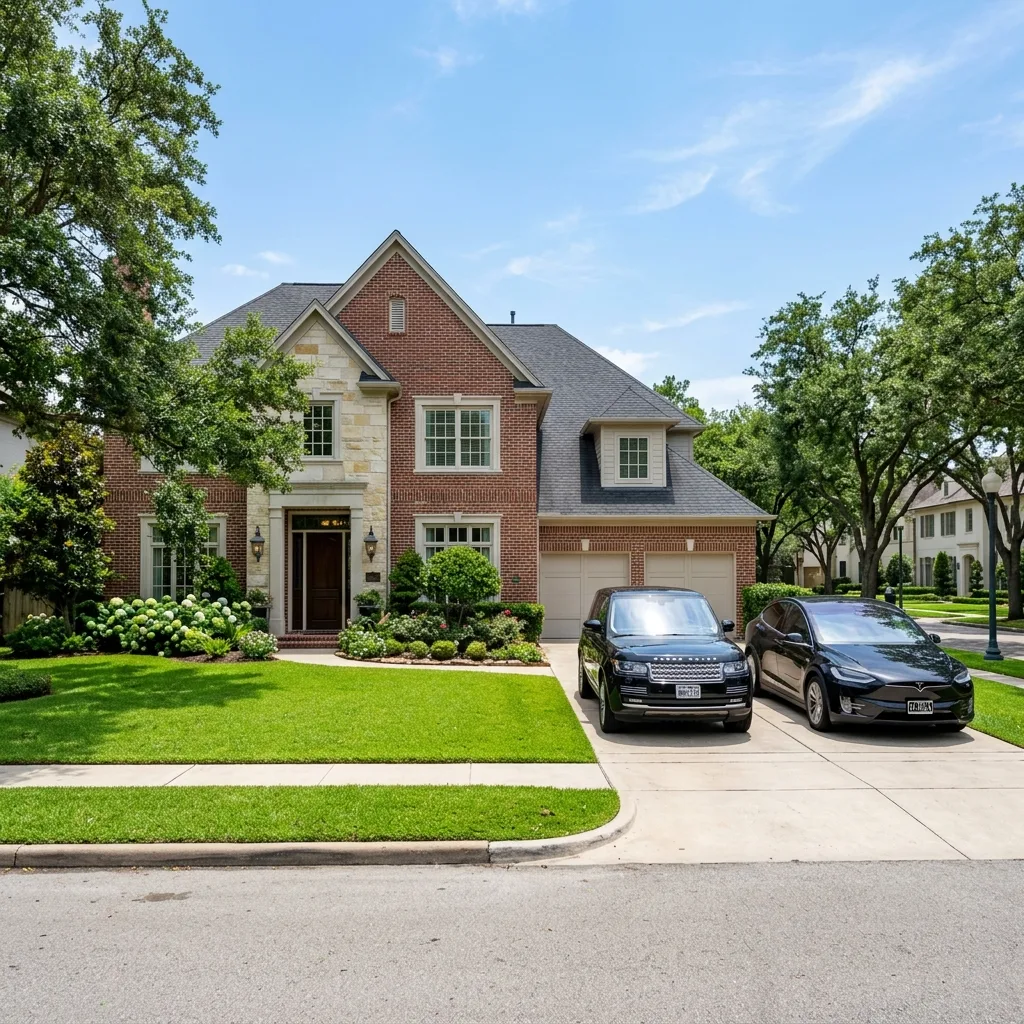
Montana has no general sales tax. No statewide sales tax. No motor vehicle sales tax. None. When a Montana-domiciled LLC purchases a vehicle, the only taxes that apply are a small county registration fee and a one-time titling fee. Montanans buying a $145,000 Cadillac Escalade ESV pay zero state sales tax. The Texan paying $9,062.50 in MVST on the same vehicle is paying that money because of where the vehicle is registered, not because of where it lives.
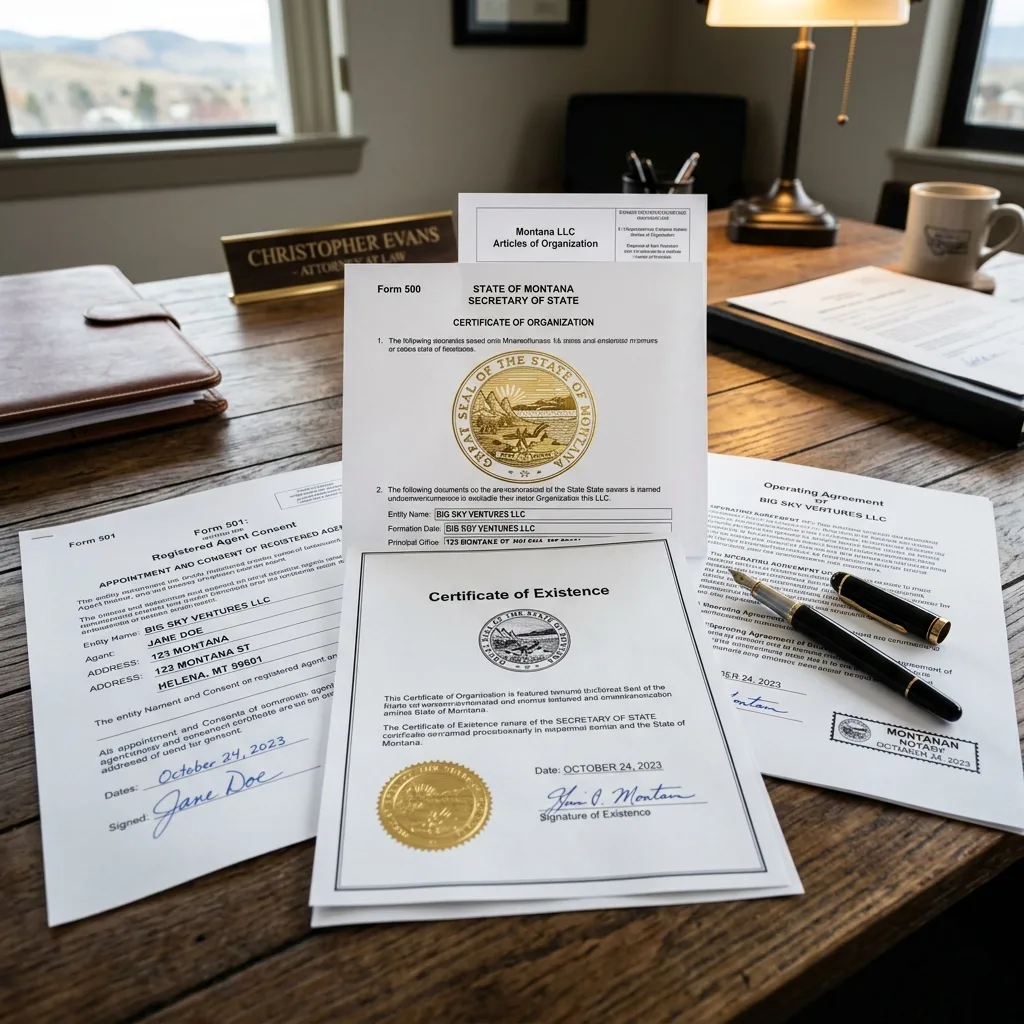
The Montana LLC structure exploits this fact legally and durably. The mechanism is simple. A Montana limited liability company is formed in Montana, with a Montana registered agent and a Montana mailing address provided by the agent. The LLC buys the vehicle, takes title, and registers the vehicle at the county tax office in Montana. The vehicle receives Montana plates. From that point forward, the vehicle is a Montana asset, owned by a Montana entity, registered under Montana law. The owner-operator drives it freely.
The structure has been used for decades by RV owners, exotic car collectors, contractors, and high-net-worth individuals across all 50 states. Multiple courts have addressed challenges to the structure over the years, and the durable conclusion is that legitimate Montana LLCs that own and register vehicles are valid legal entities under Montana law.
Costs are predictable. Year one is $899, broken down as $699 for our complete service (LLC formation, registered agent, Montana title and registration, plate delivery to your door, and all paperwork) plus $200 paid to the State of Montana for filing the LLC. Year two and every year thereafter is $270, broken down as $150 for the registered agent service and $120 for the annual report filing. The five-year total under the standard plan is $1,979. Compare that to the Texas vehicle tax math from the previous section.
Is this actually legal in Texas?

This question deserves a direct answer. The short answer is yes — a properly structured Montana LLC is fully legal under federal law.
Under the U.S. Constitution’s Commerce Clause and Full Faith and Credit Clause, states cannot block legitimate out-of-state entity registrations. The vehicle is owned by the Montana LLC — a Montana entity — not the Texas resident personally. Texas registration requirements apply to vehicles owned by Texas residents; the LLC is a Montana entity. A properly formed Montana LLC — with a real registered agent, timely annual reports, correct title work, and documented purpose — stands on solid legal ground under both Montana law and federal constitutional protections.
The structure has been used successfully for decades by RV owners, exotic car collectors, contractors, and high-net-worth individuals across all 50 states. Montana law explicitly permits LLCs to own and register vehicles. When the LLC is real and properly maintained, the legal foundation is durable. Every Montana LLC we form is a genuine, active legal entity — with a real registered agent, a real Montana filing, and real title work.
Our position: We only set up Montana LLCs for clients who genuinely intend to maintain them as active legal entities, who use their vehicles for travel, business, or asset-protection purposes, and who understand that the LLC is a real entity with real obligations. We do not create paper structures designed to fail. The fact that millions of vehicles are legitimately registered to Montana LLCs by people in all 50 states is not an accident. The structure works when the structure is real.
The bottom line on legality: Montana law explicitly permits LLCs to own and register vehicles. Texas law does not have a general anti-Montana-LLC statute. Federal interstate commerce protections prevent any state from refusing to recognize lawfully registered vehicles from other states for transit purposes. The structure is fully legal, has been in common use for decades across all 50 states, and rests on solid constitutional footing. A properly formed, properly maintained Montana LLC is exactly the kind of legitimate out-of-state entity structure the Commerce Clause and Full Faith and Credit Clause were designed to protect.
Three real Texas case studies
Case Study 1: The Houston oil executive
Robert Sandoval is a 52-year-old vice president at a midstream energy company headquartered in Houston. In early 2026, he ordered a 2026 Cadillac Escalade ESV V-Series with the high-output supercharged V8, fully optioned, sticker price $145,000. Texas would have hit him with $9,062.50 in MVST plus about $90 in Harris County registration in year one. Over five years, between MVST, registration, and title, Robert was looking at $9,512.50.
Through a Montana LLC structured for his family’s oil-services consulting business, Robert took title to the Escalade in Montana. Year-one cost: $899. Years two through five: $270 each. Five-year total: $1,979. Net savings against the Texas alternative: $7,533.50. The Escalade still drives the same Houston roads. It still parks in the same garage. The difference is whose plates are on the back and which state collected the registration fee. Robert’s LLC has documented business purpose, files its annual report on time, and the Escalade’s primary use is travel between Houston, the Permian Basin, and out-of-state energy conferences — a textbook example of the Montana structure working exactly as intended.
Case Study 2: The Plano tech founder
Anita Krishnamurthy is the 38-year-old founder of a B2B software company in Plano. In late 2025, she found a meticulously maintained 2022 Toyota Land Cruiser 300-Series on Bring a Trailer, sold by a private collector in Connecticut for $78,000. The vehicle’s Texas SPV was $92,000. If Anita had taken delivery, brought the Land Cruiser to Texas, and registered it at the Collin County tax office, the state would have calculated her tax on the actual $78,000 purchase price (since 80 percent of $92,000 is $73,600, which is below her actual price). She would have paid $4,875 in MVST. Add title, registration, and processing, and her year-one cost was $4,960.
Instead, Anita formed a Montana LLC, took title in Montana, registered the Land Cruiser there, and had Montana plates shipped to her Plano address. Year-one cost: $899. Five-year total: $1,979. Savings against the Texas path: $4,061 in year one alone. Across the five years she expected to keep the vehicle, the cumulative net savings reached $3,406 after factoring in the higher annual maintenance fees.
Case Study 3: The San Antonio RV couple
Tom and Patricia Reyes are recently retired in their early sixties. Tom spent 35 years as an electrical contractor in Bexar County. In 2025, they purchased a 2026 Newmar Dutch Star 4081 diesel pusher with a list price of $475,000. After negotiations, they got it for $445,000.
The Texas math was severe. MVST at 6.25 percent on $445,000 came to $27,812.50. Plus the heavy-vehicle registration of approximately $200 per year, plus title and processing. Year one was about $28,090 in tax-related costs. Five years totaled around $28,890.
Through a Montana LLC formed specifically to hold and operate the motorhome, the Reyeses paid $899 in year one and $270 annually thereafter. Five-year total: $1,979. Net savings: $26,911. The Reyeses spend roughly five months per year on the road, traveling from Texas to Colorado, New Mexico, and the Dakotas. The motorhome’s Montana registration is consistent with its travel-heavy use pattern. They still have a home in Bexar County. They still pay Bexar County property taxes on that home. The motorhome’s tax obligation is the only piece that runs through Montana.
Our process: Day 1, Day 2, Day 3, Year 2+
The mechanics of getting a Texas-resident’s vehicle onto Montana plates with a clean Montana LLC look daunting from the outside. From the inside, the process is short, mostly paperwork, and we handle nearly all of it.
| Day 1: | Initial consultation. We confirm your vehicle situation, your plan for the LLC, and your timeline. You provide vehicle details, your driver’s license, and a contact address for plate delivery. We collect the year-one fee of $899. |
| Day 2: | We file your Montana LLC formation paperwork with the Montana Secretary of State, set up your registered agent, and prepare the title transfer documents. We give you wiring instructions for the vehicle purchase if it has not yet closed, or transfer paperwork if you already own the vehicle. |
| Day 3-7: | Montana approves the LLC formation (typically 1-3 business days). We submit title and registration paperwork to the Montana county where the LLC is domiciled. We pay Montana’s small county fees on your behalf. Montana mails plates and registration documents to our office. |
| Day 7-14: | We forward Montana plates and the registration certificate to your specified address. You install the plates. The vehicle is now legally registered to your Montana LLC. |
| Year 2+: | Each year we file your Montana annual report, renew the registered agent, and renew the vehicle registration. You pay $270 per year. We send reminders before deadlines. Your Montana LLC stays in good standing, your vehicle stays current, and your Texas vehicle tax obligation stays at zero on the LLC-owned vehicles. |
Frequently asked questions
Does Texas have an annual property tax on vehicles like Virginia or South Carolina?
No. Texas vehicle tax is a one-time 6.25 percent Motor Vehicle Sales Tax at the point of purchase or when bringing a vehicle into the state. There is no annual personal property tax assessed on vehicles in Texas. The recurring cost is only the annual registration fee, which runs about $80 to $90 per year for a typical passenger vehicle in metro counties.
What is the Standard Presumptive Value and when does it apply?
The Standard Presumptive Value is a state-published market value for used vehicles that applies only to private-party sales. If a private-party buyer pays less than 80 percent of the SPV, Texas calculates sales tax on the 80 percent figure rather than the actual price. SPV does not apply to dealer sales, gifts, even-trades, salvage vehicles, or classic cars. Buyers can override SPV with a certified appraisal on Form 14-128 within 30 days of sale.
How much does Texas charge for vehicle registration each year?
The base state fee is $50.75 for passenger cars and light trucks, plus a county road and bridge fee that ranges from $0 in the smallest counties to $11.50 in Harris, Dallas, Tarrant, and Travis counties, up to $21.50 in Bexar and Cameron. Add small administrative fees, and most Texans pay $80 to $100 per year per vehicle.
I bought a vehicle in another state. Do I owe Texas vehicle tax when I move?
If you bring a vehicle in as a new Texas resident, you owe a $90 New Resident Tax instead of the full 6.25 percent MVST. If you purchased the vehicle out-of-state for use in Texas before establishing residency, the 6.25 percent Motor Vehicle Use Tax applies, with credit given for sales tax already paid to the other state. The credit prevents most double-taxation but does not eliminate the difference if Texas’s rate is higher.
What is the diesel surcharge and who pays it?
Texas charges an additional 1 percent on the sales tax for diesel-powered vehicles with a gross vehicle weight rating above 14,000 pounds, raising the total tax to 7.25 percent. For pre-1997 diesels in the same weight class, the surcharge is 2.5 percent for a total of 8.75 percent. This affects commercial trucks, large diesel motorhomes, and heavy work trucks.
Is using a Montana LLC for my vehicle legal in Texas?
Yes. Under the U.S. Constitution’s Commerce Clause and Full Faith and Credit Clause, states cannot block legitimate out-of-state entity registrations. The vehicle is titled to your Montana LLC — a Montana entity — not to you as a Texas resident. Montana law explicitly permits LLCs to own and register vehicles, and federal interstate commerce protections ensure that lawfully registered vehicles can travel freely across all 50 states. We form real LLCs with real registered agents, real Montana filings, and proper title work. That is the structure that works and has worked for decades.
Can I drive my Montana-plated vehicle freely in Texas?
Yes. The U.S. Constitution’s Commerce Clause protects interstate vehicle travel. Vehicles lawfully registered in any state can be driven in any other state. Texas does not have a residency-trigger statute that would force re-registration after a certain number of days. The vehicle remains a Montana-registered asset of your Montana LLC.
What does the $899 first-year fee actually cover?
The $899 covers $699 for our complete formation and registration service (LLC formation paperwork, registered agent for year one, title transfer, Montana registration filing, plate delivery to your address, and all administrative work) plus the $200 LLC formation fee paid to the State of Montana. There are no surprise add-ons or hidden charges.
What about year two and beyond?
Year two and every subsequent year is $270, broken down as $150 for the annual registered agent service and $120 for the Montana annual report filing fee. The five-year total under the standard plan is $1,979. Compared to the Texas vehicle tax cost on most vehicles above $50,000, the savings start in year one and compound from there.
Does the Montana LLC work for RVs, boats, and trailers?
Yes. Motorhomes (Class A, B, and C), fifth-wheel and travel trailers, boats, and other titled vehicles can all be owned and registered through a Montana LLC. The structure is particularly attractive for high-value RVs because the Texas MVST on a $400,000 motorhome is $25,000.
Stop overpaying Texas vehicle tax
Texas vehicle tax is not the worst in the country. Virginians, South Carolinians, and Connecticut residents pay annual property taxes that dwarf the one-time Texas hit on most vehicles. But the 6.25 percent MVST on luxury trucks, premium SUVs, RVs, and high-value private-party purchases is a real and recurring expense that compounds every time a Texan changes vehicles. The Standard Presumptive Value trap quietly extracts additional dollars from buyers who thought they had negotiated a good private deal. Heavy diesel surcharges hit commercial truck owners and large RV buyers. Fleet operators write checks year after year as units cycle through the operation.
For vehicles under $20,000, call us before assuming the numbers don’t work — we’ll run the calculation free. If you are buying a $90,000 truck, a $145,000 luxury SUV, a $200,000 exotic, a $300,000 motorhome, or running a five-vehicle business fleet, the math is different. The math is dramatically different. The savings start in year one and compound for as long as you own the vehicles.
See how Montana LLC registration helps owners in other high-tax states:
- Arizona VLT Problem: How to Stop Paying $1,000 Every Single Year
- Virginia Car Tax: Stop Paying the Highest Vehicle Tax in America
- Nevada’s 8.25% Car Tax: The Hidden Cost Nobody Tells You About
- Arkansas Vehicle Tax: The Natural State’s Hidden Wealth Extraction System
Ready to Stop Overpaying Texas Vehicle Tax?
Texas vehicle owners have saved thousands with Montana LLC registration. Year one is $899. Year two and beyond is $270.