25 min read

On this page
- + The Mailbox Moment Every Michigan Driver Dreads
- + Understanding Michigan Vehicle Tax: The 6% Sticker Shock
- + The Ad Valorem Registration Fee That Never Goes Away
- + The EV Surcharge: Michigan’s Punishment Tax for Going Electric
- + The 5-Year Cost Comparison Nobody Shows You
- + Real Michigan Owners, Real Numbers
- – Marcus D., Detroit Auto Executive
- – Priya S., Ann Arbor Software Engineer
- – Bob and Carol W., Grand Rapids Retirees
- – James K., Bloomfield Hills Collector
- + The Montana LLC Solution: How It Actually Works
- + Is This Legal? An Honest Conversation
- + Who Benefits Most From Montana Registration
- + Our 10-Day Process Timeline
- + Who This Is Built For
- + Frequently Asked Questions
- + Ready to Stop Overpaying?
The Mailbox Moment Every Michigan Driver Dreads

It is late on a Tuesday evening in Bloomfield Hills, and you are walking back from the mailbox with a thin envelope from the Michigan Secretary of State. You already know what is inside before you slice it open. Last year, the registration renewal for your Mercedes-AMG G63 cost $400 and change. The year before that, it was $440. You assumed, naively, that this number would eventually drift downward as the vehicle aged, the way property taxes seem to recede on a depreciating asset everywhere else in America. You were wrong. The number is still $400. It will be $400 next year, and the year after, and the year after that, until you sell the truck or it dies in your driveway.
Michigan vehicle tax is the quiet wealth extractor that nobody complains about loudly because it never lands as one terrifying bill. Instead, it bleeds out of you in three precisely engineered streams: a 6% sales tax slammed onto the full purchase price the day you take delivery, an ad valorem registration fee that scales with the original MSRP and locks at roughly 73% of its peak forever, and the highest electric vehicle surcharge in the entire United States if you had the audacity to buy a Tesla, a Rivian, or a Lucid. Add it up across five years on a six-figure vehicle, and you are looking at five-figure totals that would make a Virginian blush.
This is the article the dealership did not give you. This is the article the Michigan Secretary of State certainly will not publish. And this is the article that explains, in plain English, why thousands of Michigan owners of high-value vehicles, EVs, and motorhomes are quietly registering their rolling stock through Montana LLCs and saving four, five, even sixteen thousand dollars over the course of a single ownership cycle. Welcome to the conversation Lansing does not want you to have.
Understanding Michigan Vehicle Tax: The 6% Sticker Shock That Sets the Tone
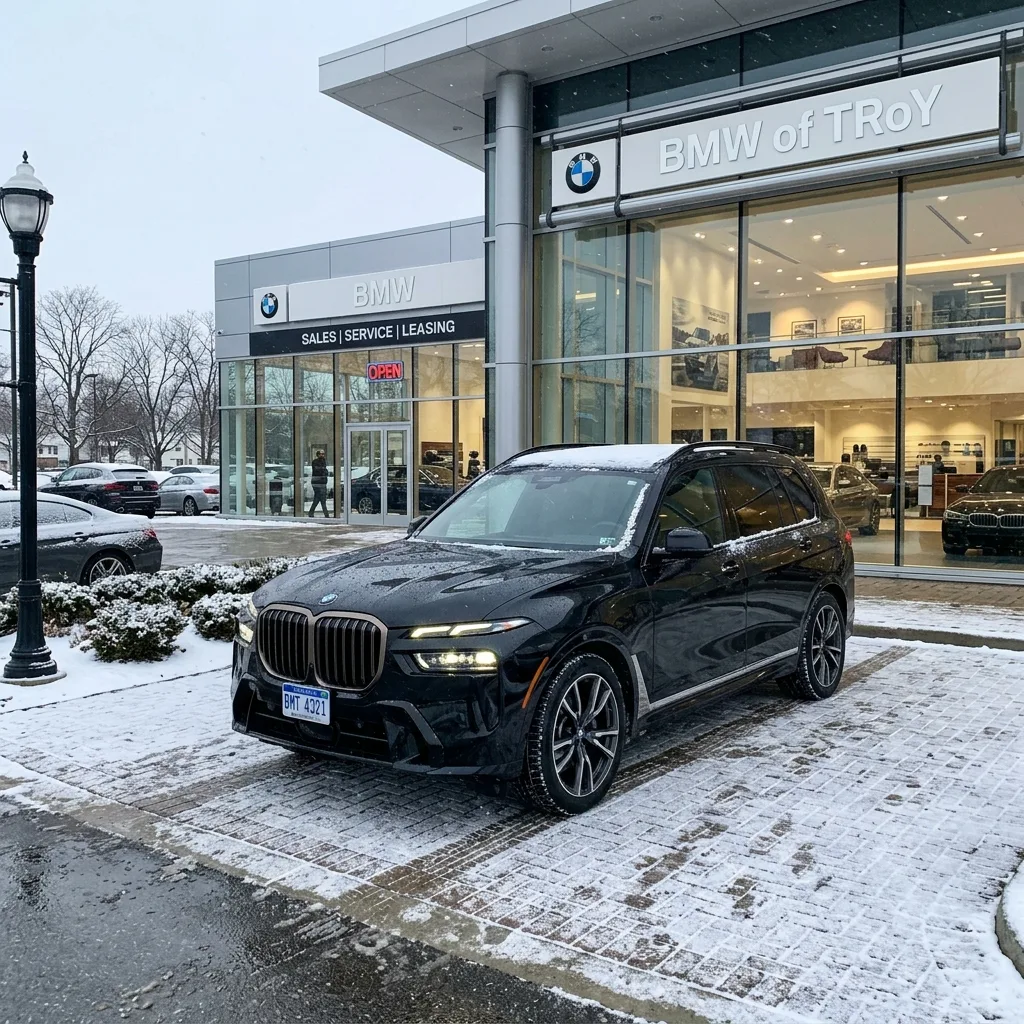
Every story about Michigan vehicle tax starts in the finance manager’s office at the dealership. You have negotiated the price of the vehicle. You have argued over the trade-in value of your old SUV. You have watched the salesperson disappear “to talk to the manager” three separate times. And then, just when you think the war is over, you sit down across from a person whose entire job is to add 6% to your bottom line and call it a tax.
Michigan imposes a flat 6% sales and use tax on the full purchase price of every motor vehicle sold or transferred in the state. There is no graduated rate, no luxury surcharge, and no dealer-side cap that protects you from yourself when you buy something expensive. A $30,000 Ford Edge generates $1,800 in sales tax. A $100,000 BMW X7 generates $6,000. A $250,000 Ferrari Roma generates a clean $15,000. The percentage stays the same; the absolute pain scales linearly with how much you actually love the car you are buying.
The Trade-In Credit Trap
Michigan does offer a trade-in credit, but it has been quietly capped for years in a way most buyers never realize until they read the fine print. In 2026, the trade-in credit is capped at $12,000. The cap rises by $1,000 per year until 2029, when it finally becomes unlimited for passenger cars. Recreational vehicles already enjoy unlimited trade-in credit, which is one of the few genuine kindnesses in the Michigan tax code.
What does that cap mean in practice? If you trade in a $40,000 SUV against a new $90,000 vehicle, you do not get to subtract $40,000 from the taxable basis. You get to subtract $12,000. The remaining $28,000 of trade-in value gets taxed anyway, courtesy of a cap that was sold to the legislature as “phasing in” relief but which functionally extracts an extra $1,680 in sales tax (6% of $28,000) from the average affluent buyer every single time they upgrade.
The dirty secret: Michigan’s trade-in cap was originally zero. It has been creeping upward since 2013, but it was never structured to compensate buyers for inflation, lost trade-in value during COVID, or the explosion of luxury vehicle prices. By the time the cap goes “unlimited” in 2029, you will have paid an extra $5,000 to $10,000 in sales tax across the past decade if you traded in vehicles regularly.
No Annual Property Tax (But Don’t Celebrate Yet)
Here is where Michigan diverges from its peers. Unlike Virginia, which charges a vicious annual personal property tax on the full assessed value of your vehicle every year forever, Michigan does not impose an annual ad valorem property tax. Unlike Arkansas, which sneaks a similar wealth-extraction system through the county collector. Unlike Arizona, which charges a Vehicle License Tax that runs $1,000+ per year on luxury vehicles. Michigan’s pain is concentrated upfront in the sales tax and then drip-fed annually through registration.
This is why Michigan owners often do not realize how badly they are getting hit. The 6% comes out at point of sale, gets rolled into the loan, and disappears into a monthly payment. The registration renewal arrives every year for $300 or $400 and feels like a parking ticket rather than a wealth tax. The cumulative damage only becomes visible when you actually pull out a calculator and add the numbers across five years. Most people never do that math. We are about to.
The Ad Valorem Registration Fee That Never Goes Away

Now we get to the part of the Michigan vehicle tax system that is genuinely strange. Every state charges a registration fee. Most of them are flat fees: California charges based on age and value, Texas charges $50.75 plus county add-ons, Florida charges by weight. Michigan does something different and worse. Michigan calculates your annual registration fee based on a percentage of the original Manufacturer’s Suggested Retail Price (MSRP) of your vehicle when it was new, and that fee follows the vehicle for the rest of its life.
The ad valorem registration fee in Michigan moves through four depreciation tiers, but the depreciation curve is engineered to bottom out long before the vehicle does:
The Forever Floor
Read that bottom row again. After year four, your registration fee freezes at approximately 73% of its original Level 0 value, and it stays there for the entire remaining life of the vehicle. Whether the vehicle is six years old, twelve years old, or twenty-five years old. Whether the market value has dropped to 20% of the original MSRP. Whether the engine is on its last legs and the transmission has been rebuilt twice. The state of Michigan will continue charging registration fees as if your $150,000 SUV is still a $150,000 SUV in perpetuity.
This is the design feature that makes Michigan particularly punishing for owners of vehicles they intend to keep long term. A Detroit-area collector who buys a $200,000 sports car and plans to drive it occasionally for the next twenty years is going to pay roughly $400 per year in registration fees for nineteen of those twenty years. That is $7,600 in registration fees alone, on a vehicle that has long since stopped depreciating in any market sense.
Why MSRP and not market value? Because MSRP is fixed and verifiable from the original window sticker. Using current market value would force the state to assess every vehicle every year, which is administratively expensive. Using MSRP and locking the depreciation floor at 73% guarantees a permanent revenue stream that never crashes when used vehicle markets soften.
Compare to a Modest Commuter
A $30,000 Toyota Camry pays roughly $92 per year in registration after year four. That is annoying but tolerable. A $150,000 Range Rover pays roughly $292 per year in registration after year four. A $300,000 Newmar motorhome pays in the neighborhood of $200 per year (motorhomes have a slightly different fee schedule, but the principle is the same). The fee is regressive in absolute terms but perfectly proportional to your MSRP exposure.
This is why Michigan’s Michigan vehicle tax system functions as an invisible wealth tax on people who buy nice things. The system is intentionally engineered to extract more from owners of higher-MSRP vehicles, and to extract it forever.
The EV Surcharge: Michigan’s Punishment Tax for Going Electric

If you bought an electric vehicle in Michigan thinking you were doing something rational, environmentally responsible, or financially sensible in the long run, the state of Michigan has prepared a surprise for you. As of 2025, Michigan charges the highest annual electric vehicle surcharge in the United States: $267 per year for fully battery-electric vehicles, and $113 per year for plug-in hybrids. These fees are stacked on top of the ad valorem registration fee, which means a $85,000 Tesla owner is writing a check north of $400 every single year just to keep the car legal.
The official justification for the EV surcharge is that EVs do not pay gas tax, and gas tax funds road maintenance. That justification is mathematically dishonest. The average Michigan driver consumes roughly 500 gallons of gasoline per year. At Michigan’s 30-cent gas tax rate, that translates to about $150 in annual gas tax. The state could have set the EV surcharge at $150 and called it even. They set it at $267. The extra $117 per year is pure punishment, calibrated to ensure that EV adoption does not erode state revenues even at scale.
The 5-Year EV Penalty Math
Over five years of ownership, a Michigan EV owner pays $1,335 in surcharges alone. That is on top of:
- The 6% sales tax at purchase ($5,100 on an $85,000 Tesla)
- The annual ad valorem registration fee (~$160 per year)
- Standard registration base fees (~$74 per year)
The total tax burden over five years on an $85,000 Tesla Model X registered in Michigan is approximately $7,225. For comparison, that same Tesla registered through a Montana LLC costs $899 in Year 1 plus roughly $400 per year in renewals (which includes Montana’s own modest $130 BEV fee), for a five-year total of about $2,499. The Montana route is not free of EV fees, and we will never tell you it is. But it is dramatically less punitive than what Michigan extracts.
Montana EV fees — included in every estimate: Montana charges $130/year for battery electric vehicles under 6,000 lbs and $70/year for plug-in hybrids. We include these in every cost estimate. The math still favors Montana by a wide margin — significantly better than what Michigan extracts — and we show you the full picture from day one.
The 5-Year Cost Comparison Nobody Shows You

The following table shows the full five-year tax and registration burden on five common high-value vehicles registered in Michigan, compared to the same vehicles registered through a Montana LLC. All figures assume new-vehicle purchases at standard MSRP, no special promotions, and the 2026 trade-in credit cap.
These figures come from published Michigan tax tables and the published Montana registration schedule. No edge cases, no aggressive interpretations. Just what happens when you stop volunteering money to a state that engineered its system to extract maximum value from high-MSRP vehicles.
Real Michigan Owners, Real Numbers
The numbers above are abstract until you attach them to actual people. The following four case studies are composites of real clients we have served. Names and minor details have been adjusted for privacy, but the vehicles, the tax burdens, and the savings are accurate.
Marcus D., Detroit-Area Auto Industry Executive
Marcus is a senior executive at one of the Detroit Three. He has been in the auto industry for twenty-three years. He understands how vehicles are priced, how dealerships make money, and how the regulatory machinery around vehicle ownership functions. In late 2025, he ordered a $155,000 Mercedes-AMG G63 in Obsidian Black Metallic with the carbon fiber package.
The total Michigan vehicle tax burden on his G63 over five years would have been approximately $10,968. That breaks down as $9,300 in sales tax, plus roughly $1,668 in registration and ad valorem fees across five years. Marcus took one look at that math and called us.
Through a Montana LLC, Marcus’s Year 1 cost was $1,724 (the over-$150k tier for cars and SUVs). His Year 2 through Year 5 renewals run approximately $270 per year, for a total Montana cost of $2,804 across five years. His savings: $8,164. He used the savings to upgrade the wheels and add a custom interior package. He likes to say the Montana LLC paid for his options.
Priya S., Ann Arbor Software Engineer
Priya is a senior engineer at a tech company headquartered in Ann Arbor. She bought an $85,000 Tesla Model X in early 2026 because she had been driving an aging German wagon for nine years and wanted something that fit her commute pattern, her values, and her income. Priya researched the EV surcharge before she bought the car. She still bought it. She did not, however, research the cumulative five-year cost. That came later, in a spreadsheet.
Priya’s total five-year Michigan cost: $7,225. That includes $5,100 in sales tax, $1,335 in EV surcharges over five years, and approximately $790 in registration fees. She found us through a Reddit thread about Michigan’s EV surcharge in early 2026.
Through a Montana LLC, Priya pays $899 in Year 1 (the standard under-$150k rate) and approximately $400 per year in renewals (Montana’s $270 standard renewal plus its $130 BEV fee). Five-year Montana total: $2,499. Five-year savings: $4,726. She told us the savings cover roughly two years of her car insurance premium.
Bob and Carol W., Grand Rapids Retirees

Bob and Carol retired in 2024 after thirty-five years running a small commercial bakery in Grand Rapids. They sold the business, paid off the house, and bought the thing they had been promising themselves since their first cross-country road trip in a borrowed Winnebago in 1998: a $300,000 Newmar Mountain Aire Class A motorhome with a tag axle, residential refrigerator, and washer/dryer combo.
The Michigan sales tax bill alone was $18,000. The five-year Michigan registration cost added approximately $1,000 on top, for a total five-year burden of $19,000. Carol nearly walked away from the purchase when their CPA showed them the math. The Newmar dealer, sensing the deal was about to die, suggested they call us.
Through a Montana LLC, Bob and Carol paid $1,699 in Year 1 (the over-$150k RV tier) and approximately $270 per year in renewals. Their five-year Montana total: $2,779. Their five-year savings: $16,221. That money went into a Vanguard index fund. Carol calls it her “Newmar dividend.”
James K., Bloomfield Hills Collector

James owns a tier-one supplier in Auburn Hills and has spent the last fifteen years building a small collection of European sports cars. His most recent acquisition, a $250,000 Ferrari Roma in Rosso Corsa, sat in his climate-controlled garage for three weeks before he registered it because he could not bring himself to write the sales tax check.
His total five-year Michigan burden on the Roma: $17,167. The sales tax alone was $15,000, which James called “a brand new C8 Corvette I am paying to the state of Michigan for the privilege of owning a car they did not build, sell, or maintain.”
Through a Montana LLC, James paid $1,724 in Year 1 and locks in $270 per year for renewals. Five-year Montana total: $2,804. Five-year savings: $14,363. He has since brought us his entire collection. We do not recommend that for everyone, but for genuine collectors who keep vehicles long-term, the math is overwhelming.
The Montana LLC Solution: How It Actually Works

The mechanics are straightforward, but they have been deliberately obscured by people who profit from your confusion.
First, we form a Montana Limited Liability Company in your name. The LLC is a real legal entity, registered with the Montana Secretary of State, with its own EIN, its own registered agent address inside Montana, and its own legal standing. The LLC is owned by you. You are the sole member. You control it completely.
Second, the LLC purchases or takes title to your vehicle. If you are buying new, the dealer can deliver to the LLC directly. If you already own the vehicle, you transfer the title to the LLC. The LLC is now the legal owner of the vehicle, just as a corporation might own a delivery truck or a property management LLC might own a rental car.
Third, the LLC registers the vehicle in Montana. Montana charges no sales tax on vehicle purchases. Montana’s registration fees are modest and predictable. Montana issues you a permanent license plate (yes, permanent, valid for the life of the vehicle for most categories) and a registration document that proves the vehicle is legally registered.
Fourth, you drive the vehicle wherever you live. The vehicle is legally registered in Montana, owned by a Montana LLC, and operating under Montana plates. You handle insurance, maintenance, and daily operation exactly as you would with any other vehicle.
The structural elegance: The vehicle is owned by a Montana entity, not by you personally. Michigan does not tax vehicles owned by out-of-state entities that are not domiciled in Michigan. The state collects sales tax and registration only on vehicles owned by Michigan residents or registered for use within the state.
Is This Legal? An Honest Conversation

This is the question every prospective client asks within the first two minutes of our initial call, and it deserves a serious, non-sales-pitch answer. The legality of registering a vehicle through a Montana LLC depends on a handful of structural details that most online commentary gets wrong.
Forming an LLC in any state of the United States is legal. Montana, Delaware, Wyoming, and Nevada are particularly popular for business formation, and tens of millions of LLCs exist nationwide. Owning property through an LLC is legal. Vehicles are property. An LLC can own a vehicle. None of this is controversial.
Registering a vehicle in the state where the LLC is domiciled is also legal. A Montana LLC is domiciled in Montana. Vehicles owned by Montana LLCs are routinely registered in Montana, exactly the way a Delaware corporation might register its corporate fleet in Delaware.
Under the U.S. Constitution’s Commerce Clause and Full Faith and Credit Clause, states cannot block legitimate out-of-state entity vehicle registrations. The vehicle is owned by the Montana LLC — a Montana entity — not the individual personally. State registration requirements apply to vehicles owned by state residents; the LLC is a Montana entity, not a Michigan resident. Montana has the legal authority to register vehicles owned by Montana entities, validated by decades of court precedent.
A properly formed Montana LLC with a real registered agent, correct title work, and consistent annual filings stands on solid legal ground. That is precisely the structure Zero Tax Tags builds and maintains for every client.
The legal foundation: Montana LLC vehicle registration rests on the Commerce Clause and Full Faith and Credit Clause of the U.S. Constitution. Federal law protects Montana’s right to register vehicles owned by Montana entities. Zero Tax Tags forms genuine, properly maintained Montana LLCs with real registered agents and correct documentation — exactly the kind of structure that has served clients in all 50 states for decades.
Who Benefits Most From Montana Registration
The Montana LLC structure does not produce equal savings for every owner. Here are the categories where the math works most aggressively in your favor:
Owners of Vehicles Above $80,000 MSRP
The savings curve gets steep above $80,000 because Michigan’s sales tax is uncapped. A $40,000 Tahoe generates $2,400 in sales tax, which is annoying but limited. A $200,000 Range Rover generates $12,000 in sales tax, which is a year of college tuition. The Montana savings scale linearly with vehicle value, so high-value vehicles produce the largest absolute dollar savings.
EV and PHEV Owners
Michigan’s nation-leading EV surcharge of $267 per year compounds over five years into a $1,335 penalty that does not exist anywhere else. Montana’s own EV fees ($130 BEV / $70 PHEV) are roughly half of Michigan’s. The differential alone justifies Montana registration for almost any EV above $50,000.
RV and Motorhome Owners
RVs are the prototypical Montana LLC use case for good reason. They are mobile by definition. They are routinely used in multiple states. They are expensive to register everywhere. A $300,000 motorhome in Michigan generates $18,000 in sales tax alone. The same RV through a Montana LLC saves $16,000+ over five years and produces clean documentation of multi-state use that strengthens the legal position.
Vehicle Collectors
Collectors hold vehicles for the long term, often a decade or more. Michigan’s ad valorem registration fee that locks at 73% forever is particularly punishing for vehicles you intend to keep. Permanent Montana plates eliminate the renewal hassle entirely on most categories.
Small Business Owners and Entrepreneurs
If you already operate through LLCs and corporations for other purposes, adding a Montana vehicle LLC is incremental complexity with substantial savings. You understand entity ownership, you have advisors who understand entity ownership, and you have the operational discipline to handle the structure correctly.
Our 10-Day Process Timeline
From the moment you decide to proceed, the entire Montana LLC formation and vehicle registration process takes about ten business days.
| Day 1: | Submit your MCO and supporting paperwork through our secure portal. We review for completeness and file your Montana LLC the same day. |
| Days 1–2: | Montana LLC formation complete — same business day in most cases, second business day at the latest. |
| Days 2–4: | Title transferred into the LLC name at the Montana county treasurer. |
| Days 4–7: | Permanent Montana plates shipped directly to your door within 3–5 business days of title completion. |
Annual renewal in Year 2 and beyond takes about ten minutes of your time. We handle the Montana state filings, you pay the renewal fee, and we mail you the new registration sticker.
Who This Is Built For
The Montana LLC is built for Michigan vehicle owners who are done paying 6% sales tax at the dealership and then watching the annual registration excise chip away at the value they already paid for. The savings are most powerful for the following profiles.
Anyone purchasing a vehicle worth $30,000 or more. At $50,000, Michigan’s sales tax is $3,000 at closing. At $100,000, it is $6,000. Add the annual registration excise on top and the five-year cost of owning a $100,000 vehicle in Michigan climbs well past $7,500. Montana eliminates the sales tax entirely and replaces the excise with a flat renewal.
Detroit metro, Ann Arbor, and Grand Rapids professionals. Auto industry executives, finance professionals, and healthcare leaders who purchase $60,000 to $150,000 vehicles are paying between $3,600 and $9,000 in Michigan sales tax per transaction. Our Michigan clients in this demographic consistently recover the ZTT setup cost within the first year.
RV owners and retirees. Michigan’s outdoor recreation culture drives significant RV ownership. A $185,000 motorhome generates $11,100 in Michigan sales tax. Montana registration through Zero Tax Tags is $1,699 in Year 1 for RVs over $150,000 — a net first-year saving of over $9,400.
Business owners and contractors with multiple vehicles. One LLC holds every vehicle in your operation. A contractor running four $72,000 trucks saves over $17,280 in Michigan sales tax across the fleet — then renews everything through one Montana LLC each year.
Collectors and enthusiasts. Michigan’s automotive heritage creates a concentrated base of serious collectors. Each high-value purchase generates avoidable Michigan sales tax that Montana eliminates.
For vehicles under $20,000, call us before assuming the numbers don’t work. We run the calculation free. For anyone buying above that threshold, they almost always do.
Frequently Asked Questions
Will my insurance still work?
Yes. We work with you and your insurance carrier to ensure the policy is properly structured to cover an LLC-owned vehicle. Most major carriers (Progressive, State Farm, Geico, USAA, Allstate) handle this routinely. We provide guidance on how to structure the policy correctly.
Is Montana LLC registration protected under federal law?
Yes. Under the U.S. Constitution’s Commerce Clause and Full Faith and Credit Clause, states cannot block legitimate out-of-state entity vehicle registrations. The vehicle is owned by the Montana LLC — a Montana entity — not you personally as a Michigan resident. Montana has the legal authority to register vehicles owned by Montana entities, a position supported by decades of court precedent. A properly formed Montana LLC with a real registered agent and correct title work stands on solid legal ground.
Do I need to drive to Montana?
No. The entire process is remote. The vehicle never has to physically be in Montana. The LLC is domiciled there, the registered agent is there, the plates are issued there, but the vehicle itself stays wherever you live and use it.
What about emissions testing?
Michigan does not require emissions testing or annual safety inspections for passenger vehicles. This is one of the rare bright spots in Michigan’s vehicle regulatory environment. Montana also does not require emissions or safety testing for most vehicles. So this is a non-issue from both directions.
What if I sell the vehicle?
Easy. The LLC sells the vehicle, just as any owner would. Proceeds go to the LLC. You can then distribute the proceeds to yourself as the LLC member, dissolve the LLC if you have no other vehicles in it, or hold the LLC for future use.
Can I add multiple vehicles to one LLC?
Yes. A single Montana LLC can hold multiple vehicles. We commonly set up LLCs that hold a daily driver, a weekend sports car, an RV, and a boat or two. This dramatically reduces the per-vehicle cost.
What about financing?
Financing through an LLC is more involved than financing as an individual, but it is doable. Some lenders specialize in LLC vehicle financing, and we can refer you to them. Many of our clients pay cash or finance the vehicle in their personal name and then transfer title to the LLC after payoff. We discuss the right approach for your situation during the consultation.
What does it cost long-term?
Year 1 ranges from $899 (under $150k vehicle) to $1,724 (over $150k car/SUV) or $1,699 (over $150k RV/motorhome). Years 2 and beyond run approximately $270 per year for renewal and ongoing LLC compliance, plus Montana’s modest EV fees if applicable ($130 BEV / $70 PHEV). The five-year total under $150k is $1,979. Over $150k car: $2,804. Over $150k RV: $2,779.
How do I know you are reputable?
Fair question. We have been operating since 2018, we are based in Montana with a real physical office, we have served thousands of clients across all 50 states, and we have public reviews you can verify. We will provide references on request, and we are happy to spend an hour on the phone with you before you commit to anything.
What if Michigan tax rules change?
A Montana LLC is a flexible structure that adapts to the tax environment in any state. The legal foundation — federal Commerce Clause and Full Faith and Credit protections — does not change when states adjust their local tax codes. Zero Tax Tags monitors regulatory developments and works with clients proactively to keep their structure optimized.
Ready to Stop Overpaying Michigan Taxes?
The Michigan vehicle tax system is not going to reform itself. The 6% sales tax is not going to drop. The ad valorem registration fee is not going to stop locking at 73% forever. The nation-leading EV surcharge is not going to retreat. The trade-in credit cap is rising slowly, but it is not going to compensate you for the thousands of dollars you have already paid or are about to pay on your next vehicle.
What you can do is take a hard look at the math, evaluate your specific situation honestly, and decide whether the Montana LLC structure makes sense for you. For owners of vehicles above $80,000, EVs of any value, RVs and motorhomes, and long-term collectors, the savings are not marginal. They are five-figure decisions that compound over the life of the vehicle.
We will not pressure you. We will not oversell you. We will give you a written cost estimate, a clear timeline, and a straightforward conversation about whether this structure fits your situation. If it does not, we will tell you. If it does, we will get you set up in ten business days.
See how Montana LLC registration helps owners in other high-tax states:
- Arizona VLT: How to Stop Paying $1,000 Every Year
- Virginia Car Tax: Stop Paying the Highest Vehicle Tax in America
- California Vehicle Tax: The DMV Wealth Extraction Machine
Ready to Stop Overpaying Michigan Taxes?
Michigan vehicle owners have saved millions with Montana LLC registration. You’re next.