24 min read
On this page
- + What is a certificate of origin and can you get plates with one?
- + Title-first states: purgatory for new vehicle owners
- + Registration-first states: the better path
- + State-by-state comparison table
- + Temporary tags: your lifeline and its limits
- + Financed vehicles: when the bank holds your MCO
- + The real costs of title delays
- + Insurance complications without a title
- + Three case studies from the title-first trap
- + The Montana LLC advantage: certificate of origin plates in 10 days
- + Is registering through Montana legal?
- + Who benefits most
- + Our process
- + Who benefits most
- + Frequently asked questions
Certificate of origin plates sound like the simplest thing in the world. You buy a new vehicle, the dealer hands you a Manufacturer’s Certificate of Origin, and you walk out ready to register it. Reality often delivers something different. In roughly half of the United States, you cannot get permanent plates until your state issues an actual Certificate of Title, and that title cannot be issued until the state processes the MCO. The gap between those two events is where buyers lose money, lose driving privileges, and sometimes lose the ability to insure the vehicle they just bought.
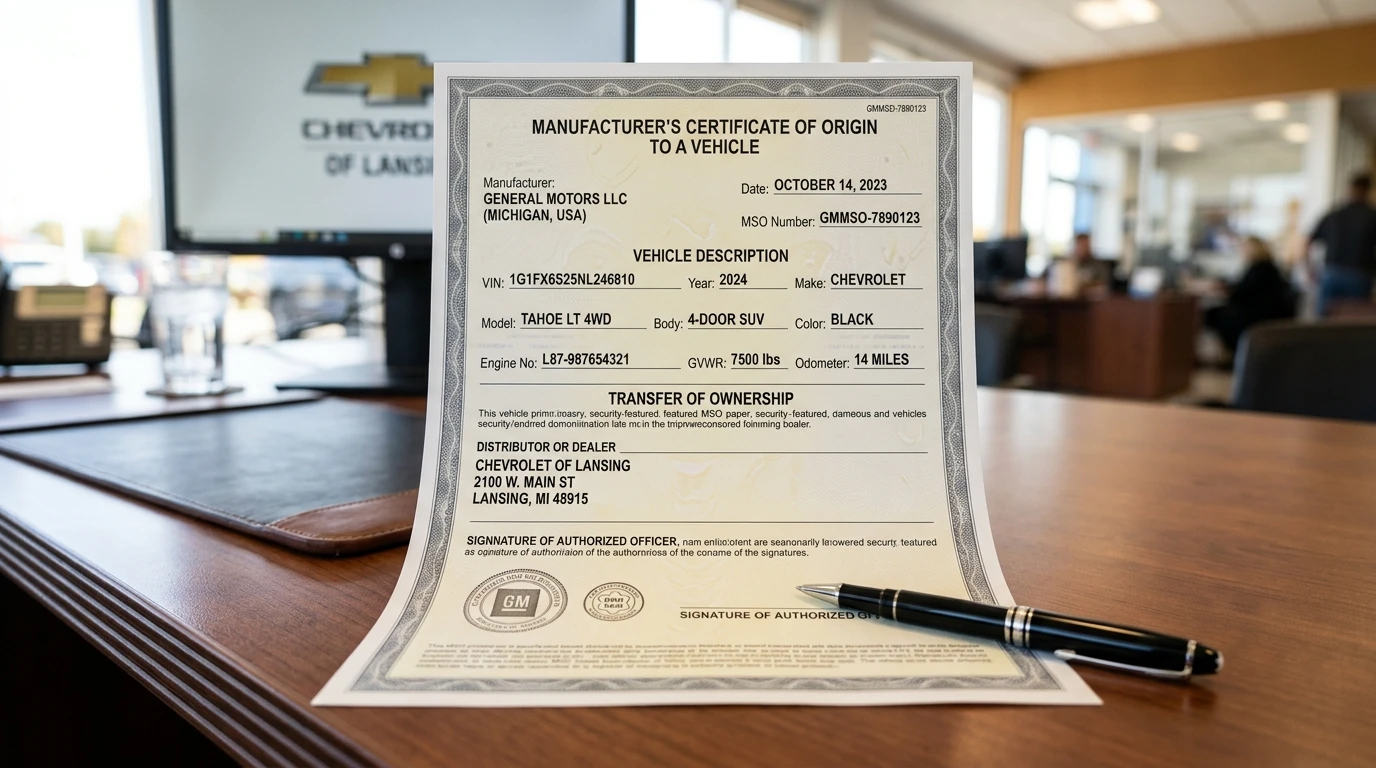
The MCO is not a title. It is the vehicle’s birth certificate, signed by the factory and transferred from manufacturer to dealer to you. It must be surrendered to a state agency before it can be converted into a state-issued title. Whether you can get plates during that conversion depends entirely on which state you live in. One buyer drives off with permanent plates in a week. The other waits four to six weeks while paying storage fees and insurance premiums on a vehicle they cannot drive.
Montana processes certificate of origin plates in seven to ten business days with no title required first. That gap, versus four to six weeks in a title-first state, is the whole story.
What is a certificate of origin and can you get plates with one?

The Manufacturer’s Certificate of Origin, abbreviated MCO or MSO (Manufacturer’s Statement of Origin), proves a vehicle has never been titled before. The factory issues one MCO per vehicle. The manufacturer signs it over to the dealer, and the dealer signs it over to the buyer. The buyer then surrenders it to a state motor vehicle agency to convert it into a state-issued Certificate of Title.
An MCO contains the seventeen-character VIN, year, make, model, body type, engine number when applicable, the manufacturer’s signature, the dealer’s signature, and the buyer’s name on the assignment line. Federal regulations require it to include language referencing the National Highway Traffic Safety Administration and a statement that the vehicle conforms to all applicable federal motor vehicle safety standards.
The document is printed on security paper with anti-counterfeiting features. Genuine MCOs include a watermark that displays “VOID” when photocopied, a continuous security thread, an embossed manufacturer logo, and microprinting. If you receive an MCO lacking these features, or one containing the phrase “Sold To:” followed by a dealership name, you may be looking at a forgery. Genuine MCOs do not use “Sold To:” because the document tracks ownership through assignments. Another red flag is tense errors like “is manufactured” instead of “was manufactured.”
Whether you can get certificate of origin plates directly depends on your state. Some states allow plate issuance from the MCO alone, with the title processing in the background. Others require the title to be issued first. The first group, registration-first states, includes Texas, Florida, Montana, and Arizona. The second group, title-first states, includes California, New York, New Jersey, and Massachusetts.
Title-first states: purgatory for new vehicle owners

Title-first states refuse to issue permanent plates until the title conversion is complete. The buyer drops off the MCO, pays the fees, and the state begins title issuance. Only after the workflow finishes, sometimes weeks later, does the state release the title. Permanent plates follow the title, not the other way around.
California is the canonical example. The DMV issues permanent plates only after the title is processed, with a standard window of about four weeks. An expedited rush title service can produce the title in seventy-two hours for an additional fee, but it is not advertised at most dealerships. New Jersey operates similarly with a three to five week window that stretches longer during peak motorcycle and RV season. New York runs several weeks and gives the state up to ninety days before escalation. Massachusetts also delays plate issuance until the title is issued.
The wait looks like this. You sign paperwork, pay the down payment, and the dealer hands you a thirty-day temp tag. The dealer submits your MCO to the state with the title application. The state queues your application behind every other one received that week. A clerk reviews the file, verifies the VIN, runs lien checks, and prints the title. The title mails to the dealer or lender, and only then are your permanent plates released. If the temp tag expires before that happens, you are driving an unregistered vehicle.
Warning: If your temporary tag expires before your title arrives in a title-first state, you are technically operating an unregistered vehicle. Citations can run from $200 to over $1,000 depending on jurisdiction, and some cities will impound the vehicle on a second offense. Park it in your driveway until the title is issued.
Title-first rules made sense when title fraud was rampant and verification required completing the transfer before plates issued. Modern electronic systems have largely eliminated that justification, but the rules remain on the books in the largest states. The result is millions of buyers each year stuck in a forced waiting period they did not anticipate.
Registration-first states: the better path
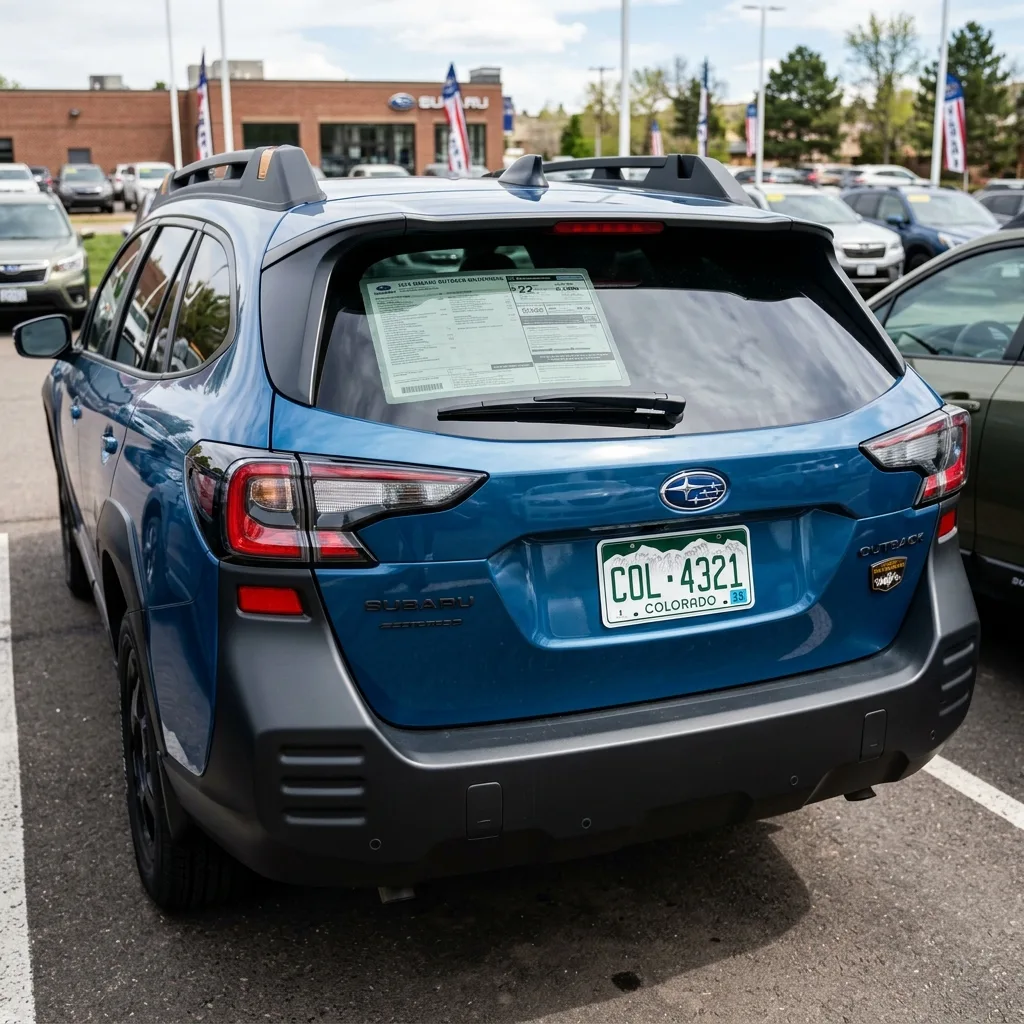
Registration-first states take the opposite approach. They treat plate issuance as a separate transaction from title processing, allowing the buyer to drive away with permanent plates while the title moves through the state’s system in the background.
Texas is the largest registration-first state. A buyer at a Texas dealer typically receives metal plates and a registration sticker the same day, even though the title window has been twenty business days since July 1, 2025. Florida operates a similar concurrent system and offers an expedited “fast title” service producing a title same-day for an additional ten dollar fee. Arizona allows registration from the MCO with title processed in parallel. Washington and several other western states follow the same pattern.
Montana is the gold standard. The Montana motor vehicle division registers vehicles directly from the MCO in seven to ten business days, with no requirement for a state title first. The buyer’s representative submits the MCO, bill of sale, and registration application, and Montana issues plates valid in all fifty states under federal interstate reciprocity. This is the foundation of the Montana LLC strategy.
The Montana edge: Montana issues plates from an MCO in 7 to 10 business days. California’s standard timeline is approximately 4 weeks. For a buyer in California, that gap can mean three weeks of dealer storage fees, expired temporary tags, and a vehicle that legally cannot leave the lot.
The difference between these two systems has direct consequences for buyers who want to use the vehicle they just bought. Registration-first states recognize that a buyer who has paid and submitted documents has met the legal threshold for road use. Title-first states impose an extra bureaucratic step that benefits the state’s workflow more than the buyer.
State-by-state comparison table
The table below shows how the ten most relevant states handle registration after a new vehicle purchase. Title timeline is the typical window between MCO submission and the issuance of a state title. Temporary tag duration is the standard validity period before any extensions. The system column identifies whether the state requires the title to be issued before permanent plates are released, or whether registration can run independently.
Two takeaways jump off the page. First, the largest population states with the highest vehicle prices generally have the slowest title timelines. California, New York, and Massachusetts are the worst combination of high values and slow processing. Second, Montana stands alone with both a registration-first system and a timeline that finishes before most states have even reviewed the application. That asymmetry is why the Montana LLC strategy exists.
Temporary tags: your lifeline and its limits
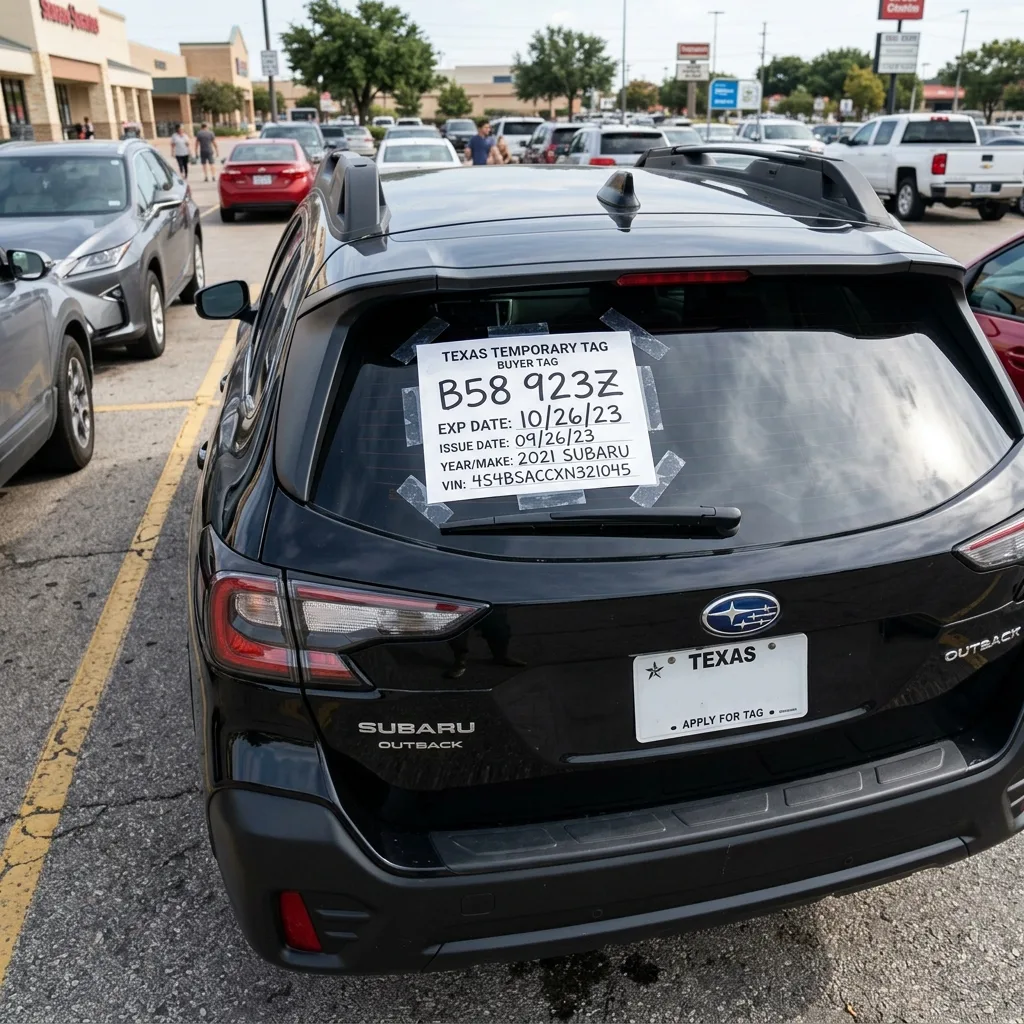
Temp tags bridge the gap between purchase and permanent plate issuance. Most states issue them for thirty days. Colorado runs sixty days. A few states allow one extension. Texas allows a single thirty-day extension. Arizona offers a thirty-day permit extension. Most other states do not, which means a missed deadline puts the buyer in immediate violation.
The dealer is supposed to issue the temp tag at sale, but this is where things get messy. Some dealers refuse to issue temp tags at all, citing liability concerns. Others charge fees ranging from twenty to seventy-five dollars. Private-party sales often include no temp tag because the seller is not a licensed dealer, leaving the buyer to obtain a transit permit or have the vehicle towed.
The most dangerous scenario is the temp tag that expires before the title arrives. In a title-first state with a four-week window and a thirty-day temp, the math is brutal. The dealer submits paperwork Monday. Processing begins five to seven business days later. Title prints in week three. Mailing adds another two to four business days. By the time the title arrives, the buyer may already be operating on an expired temp tag.
Hidden trap: The state will not extend a temporary tag retroactively. If your temp expires on a Saturday and your title arrives on Monday, you have two days where you cannot legally drive the vehicle. Plan around the expiration date, not the title delivery date.
What happens after expiration varies by state. California vehicles without valid registration can be cited and towed if parked on a public street. Illinois citations for expired plates run around ninety dollars plus court fees. Florida fines for missing the thirty-day title submission deadline reach one thousand dollars with possible license suspension. The risk is not theoretical. Police officers run plates routinely, and an expired temp tag is one of the easiest violations to spot.
Financed vehicles: when the bank holds your MCO
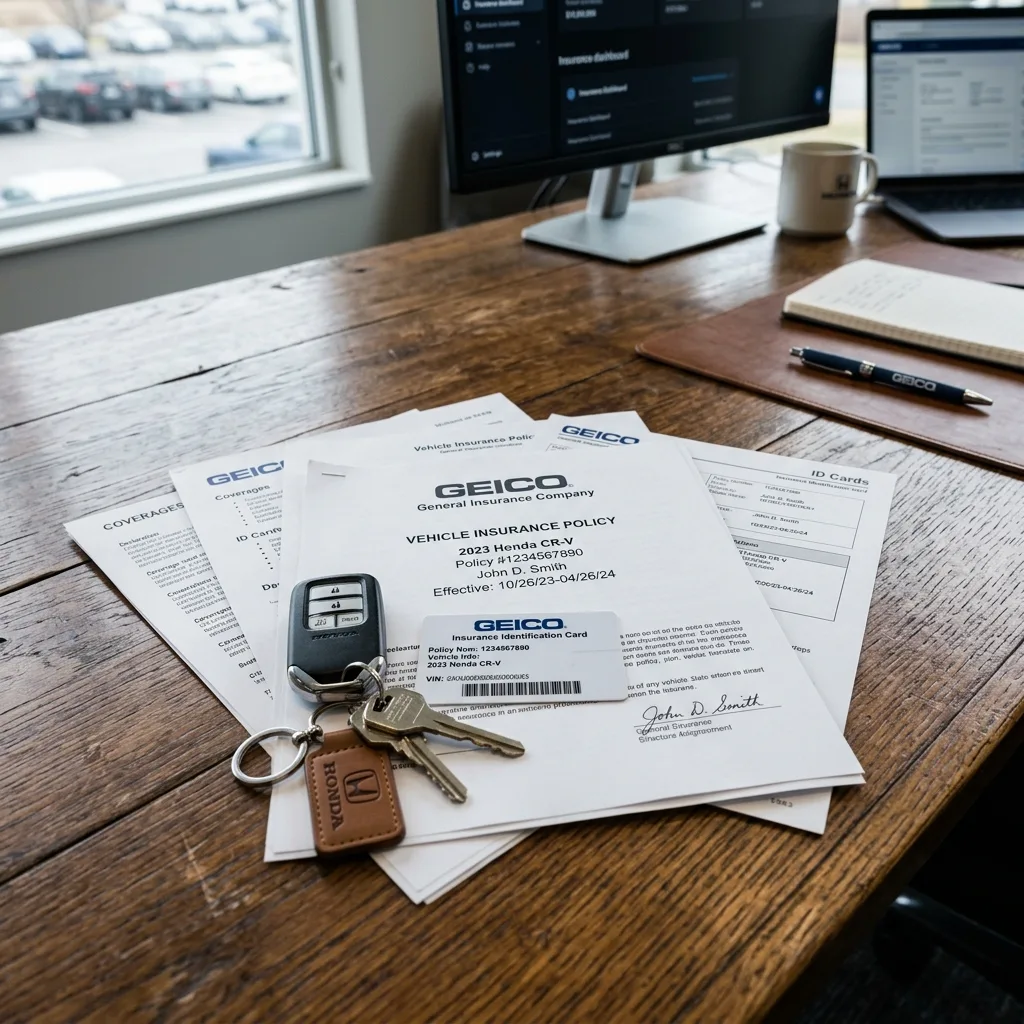
Financing adds another layer to the certificate of origin process. When a buyer finances a new vehicle, the lender becomes a co-owner whose interest must be recorded on the title. The dealer submits the MCO with a lien notification, and the resulting title lists the lender as lienholder. The physical title mails to the lender, who keeps it until the loan is paid off. The buyer receives plates and registration but does not see the title for years.
This is normal. Where it goes wrong is when the lender is slow to authorize MCO submission, or when the dealer’s F&I office holds documents waiting for funding. The buyer signs Saturday. The F&I office sends the loan packet to the lender Monday. The lender funds by Wednesday or Thursday. Only then can the dealer submit the MCO. That is already a four-to-five-day delay. Credit unions and smaller institutions can stretch the cycle to a full week or longer.
The Electronic Lien and Title system, ELT, has sped up part of this process. Twenty-eight states now handle lien recording electronically, eliminating the paper title that bounced between state and lender. ELT is mandatory in Arizona, California, Florida, Louisiana, North Carolina, Nevada, South Carolina, Michigan, Massachusetts, Maryland, Kansas, New York, Idaho, and Iowa. When the loan is paid off, the lender releases the lien electronically and the title mails to the owner within two to six weeks.
What ELT does not solve is upstream timing. The dealer still waits for funding before submitting the MCO. Title-first states still require the title before plates release. Layering financing on top of a title-first state is the worst combination, because every day the lender delays adds to the temp tag clock.
The real costs of title delays

Title delays cost real money. The amounts depend on the state, vehicle value, and storage situation, but they add up faster than most buyers expect.
Dealer storage fees come first. When a temp tag expires before the title arrives, the buyer often has no legal way to keep the vehicle on a public street. The vehicle sits at the dealership, and storage charges begin. Rates run thirty-seven to one hundred dollars per day for outdoor storage, higher for covered. Texas commercial storage runs twenty-two to forty dollars per day. Twenty days at fifty dollars per day is one thousand dollars in storage alone.
Late registration penalties come next. California scales late fees from ten to one hundred sixty percent of the license fee depending on how overdue. Colorado charges twenty-five dollars per month up to one hundred dollars. Illinois adds a twenty dollar penalty plus a ninety dollar traffic ticket if caught. Florida fines missed thirty-day title submission deadlines up to one thousand dollars with possible license suspension.
Insurance premiums accrue during the wait whether the vehicle is driven or not. A six-figure luxury vehicle can carry three hundred dollars or more in monthly full coverage. Three weeks of premiums on an undriveable vehicle is two hundred dollars of pure waste, and most policies cannot be paused or partially refunded.
The opportunity cost of a vehicle stuck on a lot is harder to quantify but real. A spring sports car buyer loses prime driving weeks. A contractor with a new work truck loses billable days. A family with an RV may cancel a planned trip. None of these show up on a receipt, but they are real losses caused by the title-first system.
Insurance complications without a title
The good news on insurance is that you can get coverage on a vehicle while only holding the MCO. The legal principle is insurable interest. Insurers care that you own the vehicle and have a financial stake in protecting it, not that the state has issued you a title. Most carriers bind a policy with the bill of sale, MCO copy, and a registration application showing submission to the state.
Required documents typically include a signed bill of sale, the MCO with the buyer’s name on the assignment line, the buyer’s driver’s license, a registration receipt or temp tag number, and lienholder information if financed. Some carriers accept just the bill of sale and verbal confirmation. Calling ahead saves time, because most buyers do not realize they can have full coverage in place before driving off the lot.
Insurance gets complicated in gap periods. If coverage lapses during the title window, several states impose lapse penalties even on undriven vehicles. Georgia charges twenty-five dollars per ten-day lapse up to one hundred sixty dollars. Florida will suspend a license for a lapse even on a vehicle still waiting for its title.
The other complication is total loss coverage during the wait. If the vehicle is destroyed before the title issues, the insurance settlement can be delayed because the insurer must verify clear ownership. With only an MCO and a pending application, verification can take weeks longer than usual.
Pro tip: Photograph your MCO and bill of sale on the day of purchase. Store the images in cloud storage. If the originals are lost in transit between dealer and DMV, having a clean digital copy can save weeks during a claim or replacement title process.
Three case studies from the title-first trap

Names and exact details below are fictional, but the underlying processes match what buyers in these states routinely experience.
The California luxury car buyer
A buyer in Newport Beach purchases a Mercedes-Benz AMG GT for one hundred eighty thousand dollars. The dealer hands over a thirty-day temp tag and submits the MCO to California DMV the following Tuesday. Standard processing is four weeks. By day twenty-five, the temp is days from expiring with no title in sight. The buyer parks the AMG GT in covered storage at sixty-five dollars per day. The title finally arrives day thirty-three, eight days after the temp expired. Storage cost: five hundred twenty dollars. Lost driving time during peak spring weather: eight days. A Montana LLC registration would have produced plates in ten business days, putting the AMG GT on the road in week two.
The Texas couple buying a fifth-wheel RV
A retired couple in Houston buys a forty-foot fifth-wheel RV for one hundred ten thousand dollars, financing through a regional credit union. Texas is registration-first, so they expected same-day plates. What they did not expect was the credit union’s six-week delay releasing funding documents. The credit union held the loan packet for compliance review, then held the MCO assignment for further review, finally authorizing submission to Texas DMV forty-two days after closing. During those six weeks the RV sat at the dealer’s lot. The couple missed two scheduled trips and lost a non-refundable campground reservation. A Montana LLC registration would have bypassed the compliance loop because the LLC owns the RV, and the timeline runs from MCO submission rather than loan funding.
The New Jersey motorcycle buyer
A buyer in Princeton purchases a new Indian Chieftain motorcycle for thirty-eight thousand dollars in late March, planning to ride the spring season. New Jersey is title-first with a three-to-five week window. The dealer issues a thirty-day temp tag and submits the MCO. Spring is peak motorcycle season, and the application sits in queue behind thousands. The title arrives at week five. By then the temp has been expired one week, the bike has sat in the garage unable to be ridden, and four weekends of prime riding weather have passed. A Montana LLC registration would have plated the bike in ten business days, allowing riding from week two onward.
The Montana LLC advantage: certificate of origin plates in 10 days

Montana built one of the fastest and most permissive registration systems in the country. Three features make it optimal for buyers who cannot afford to wait. Montana is registration-first, so plates issue before a state title prints. Montana processes MCO-based registrations in seven to ten business days. And Montana has no general sales tax, so registering there avoids the four to ten percent sales tax most states impose.
The mechanics of getting certificate of origin plates through Montana are simple. The buyer forms a Montana LLC, a one-time process creating a separate legal entity with a Montana address. The LLC takes ownership of the vehicle and registers it with the Montana motor vehicle division by submitting the MCO and supporting paperwork. Montana issues plates within seven to ten business days. The buyer drives the vehicle in their home state under federal interstate reciprocity.
The savings stack on top of the timing advantage. A California buyer registering a one hundred eighty thousand dollar Mercedes through California pays roughly fourteen thousand dollars in sales tax up front, plus annual registration fees that scale with value. The same buyer registering through Montana pays zero sales tax, lower annual fees, and gets plates in ten days. Over five years the savings can exceed twenty thousand dollars per vehicle.
The compound benefit: Montana LLC registration solves the timing problem and the tax problem at the same time. You get plates in 10 business days, you skip your home state’s sales tax, and you avoid years of recurring property tax or excise tax that high-tax states impose on vehicle owners.
Permanent registration sweetens the deal further for older vehicles. Vehicles eleven years and older can be registered permanently in Montana, eliminating renewal fees for the rest of the vehicle’s life. For collector vehicles, classic cars, and older RVs, this single benefit can save hundreds of dollars per year in renewal costs alone.
Is registering through Montana legal?
The Montana LLC strategy is legal because it operates on principles that have been part of American business law for over a century. A limited liability company is a recognized entity that can own property, including vehicles. Montana law explicitly permits LLCs to register vehicles, and federal interstate reciprocity rules require all states to recognize valid out-of-state registrations.
Gray areas do exist and deserve a straight answer. Some states have prosecuted vehicle owners under tax evasion theories when the owner used the vehicle primarily in the home state and could not show genuine business use. Cases that fail for the owner generally involve clear deception: falsified addresses, lies to insurers, or failure to maintain the LLC. Cases that succeed involve buyers who properly formed the LLC, registered the vehicle to the LLC, and maintained insurance in the LLC’s name.
Insurance is the area requiring the most attention. The vehicle must be insured in the LLC’s name. Personal auto policies generally do not cover LLC-owned vehicles, so a commercial or specialized LLC policy is required. Buyers who try to keep the vehicle on a personal policy create exactly the red flag that draws state attention. The strategy works when executed correctly and creates legal exposure when executed sloppily.
Who benefits most
The Montana LLC strategy is not for every vehicle buyer. It works best where the time savings, tax savings, and registration simplicity all stack together.
- Luxury and exotic vehicle buyers in title-first states. The combination of high sales tax, high annual registration fees, and a long title processing window makes the Montana option dramatically better on every dimension.
- RV and motorhome buyers who travel frequently and rarely keep the vehicle in any single state for long. The mobile use case is a textbook fit for out-of-state registration.
- Collector and classic car owners who can take advantage of Montana’s permanent registration option for vehicles eleven years and older.
- Buyers in California, New Jersey, New York, and Massachusetts, where the title-first system creates the worst delay-and-tax combination in the country.
- Snowbirds and dual-residence owners who split time between two or more states and want a single registration that travels with them.
- Spring buyers of seasonal vehicles like motorcycles, sports cars, and convertibles who lose value every week the vehicle sits idle waiting for plates.
- Buyers financing through slow lenders who can use the Montana process to bypass home-state title delays caused by lender funding cycles.
Our process
Zero Tax Tags handles the full Montana LLC registration workflow from start to finish. The buyer never has to set foot in Montana, never has to deal with the Montana motor vehicle division directly, and never has to figure out the paperwork on their own.
| Day 1: | Submit your MCO and supporting paperwork through our secure portal. We review for completeness and file your Montana LLC the same day. |
| Days 1–2: | Montana LLC formation complete — same business day in most cases, second business day at the latest. |
| Days 2–4: | Title transferred into the LLC name at the Montana county treasurer. |
| Days 4–7: | Permanent Montana plates shipped directly to your door within 3–5 business days of title completion. |
Pricing is straightforward. Year one totals eight hundred ninety-nine dollars, which covers the six hundred ninety-nine dollar service fee plus the two hundred dollar Montana LLC formation fee. Year two and forward run two hundred seventy dollars per year, broken down as one hundred fifty dollars for the state registration renewal and one hundred twenty dollars for the annual filing and compliance work. The five-year total comes in at one thousand nine hundred seventy-nine dollars, which is dramatically less than the sales tax savings on a single mid-priced new vehicle in most states.
Who benefits most
The Montana LLC registration strategy delivers the strongest value for owners of vehicles worth $30,000 or more in high-tax states. Collectors with multiple vehicles, RV owners, luxury vehicle buyers, and anyone facing a five-figure state tax bill on a purchase see the clearest immediate savings. Owners who hold vehicles for three or more years compound those savings year after year through eliminated registration fees and annual property taxes.
Frequently asked questions
Can I get plates with only the certificate of origin in any state?
No. Certificate of origin plates are available in registration-first states like Texas, Florida, Arizona, and Montana, but not in title-first states like California, New York, New Jersey, and Massachusetts. In title-first states the title must be issued before plates are released, even though the MCO has been submitted.
How long does it take Montana to issue plates from an MCO?
Montana issues plates and registration documents in seven to ten business days from the time the MCO is submitted to the motor vehicle division. This is faster than nearly every other state, and is the operational reason the Montana LLC strategy works so well for buyers who cannot afford to wait.
What happens if my temporary tag expires before my title arrives?
You are legally driving an unregistered vehicle, which is a citation-level offense in every state. Most states will not retroactively extend a temporary tag once it has expired. Park the vehicle until the title arrives, or use a Montana LLC registration to bypass the title-first wait entirely.
Does insurance work without a state title?
Yes. The legal principle of insurable interest allows you to bind a policy with the bill of sale and MCO copy. Most carriers will accept the documents you receive at the dealership. Confirm with your carrier before you sign the purchase agreement so you can have coverage in place from day one.
What if my vehicle is financed and the lender holds the MCO?
The lender will eventually authorize MCO submission to the state, but the timing depends on the lender’s funding cycle. A Montana LLC structure can simplify this because the LLC owns the vehicle and the financing arrangement runs through the LLC, allowing the registration to proceed on the Montana timeline rather than the home-state lender’s timeline.
Is the Montana LLC vehicle registration strategy legal?
Yes, when executed correctly. Montana law permits LLCs to register vehicles, and federal interstate reciprocity rules require all states to recognize valid out-of-state registrations. The legal exposure comes from sloppy execution, such as fake addresses, personal insurance on LLC-owned vehicles, or failure to maintain the LLC. A reputable service handles the formation and ongoing compliance to keep the strategy in the safe lane.
Ready to skip the title-first trap?
Stop waiting weeks for your home state DMV. Get Montana plates in 7 to 10 business days from your certificate of origin and skip the sales tax while you are at it. Buyers across the country have already saved thousands. You are next.