27 min read

On this page
- + What is an MCO, and why does that blank signature line matter so much?
- + How you ended up with an unsigned MCO
- + What not to do with an unsigned MCO
- + The step-by-step recovery plan
- + When the dealer won’t sign: escalation options
- + State-by-state MCO rules
- + The bonded title: your last resort
- + Court-ordered title: the absolute last resort
- + How Zero Tax Tags handles incomplete MCOs
- + MCO fraud: red flags to spot before you buy
- + Frequently asked questions
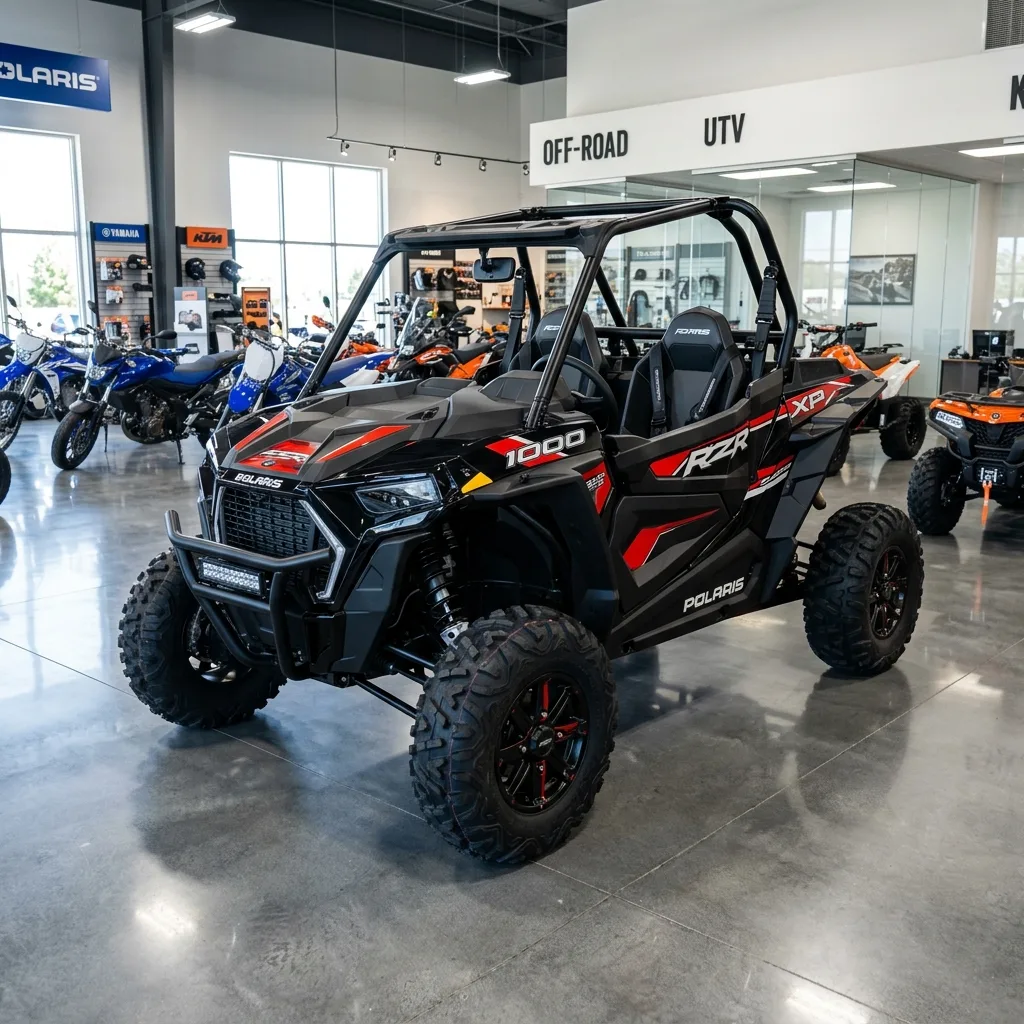
You wrote the check. You signed the financing papers. You shook the salesman’s hand. You watched them slap the temporary tag on the back of your shiny new side-by-side and roll it onto your trailer. You drove home grinning like a kid on Christmas morning. The dealer told you the title paperwork would arrive in the mail in a couple of weeks. No problem. You waited.
The envelope finally shows up about three weeks later. You tear it open, expecting the smooth, satisfying paperwork that turns a piece of expensive machinery into officially yours. Instead you pull out a thick certificate on watermarked paper that looks vaguely official, flip it over to the assignment side, and stare at a blank space where the dealer’s signature is supposed to be. No signature. No printed name. No date. No odometer reading box checked.
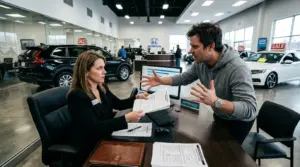
You drive to your county DMV. The clerk looks at your paperwork for about four seconds before sliding it back across the counter. “We can’t process this. The MCO isn’t signed. As far as the state is concerned, this vehicle still belongs to the dealer.” You explain that you paid in full. She shrugs sympathetically. You leave with no plates, no registration, and a $30,000 vehicle you can’t legally operate on a public road.
This exact scenario plays out thousands of times a year across America. Dealers rush, paperwork gets sloppy, signatures get skipped, and the buyer is left holding a worthless piece of paper attached to a very expensive vehicle. The good news is that the situation is fixable. The better news is that you have leverage you don’t know about. Here’s exactly what you do next.
What is an MCO, and why does that blank signature line matter so much?
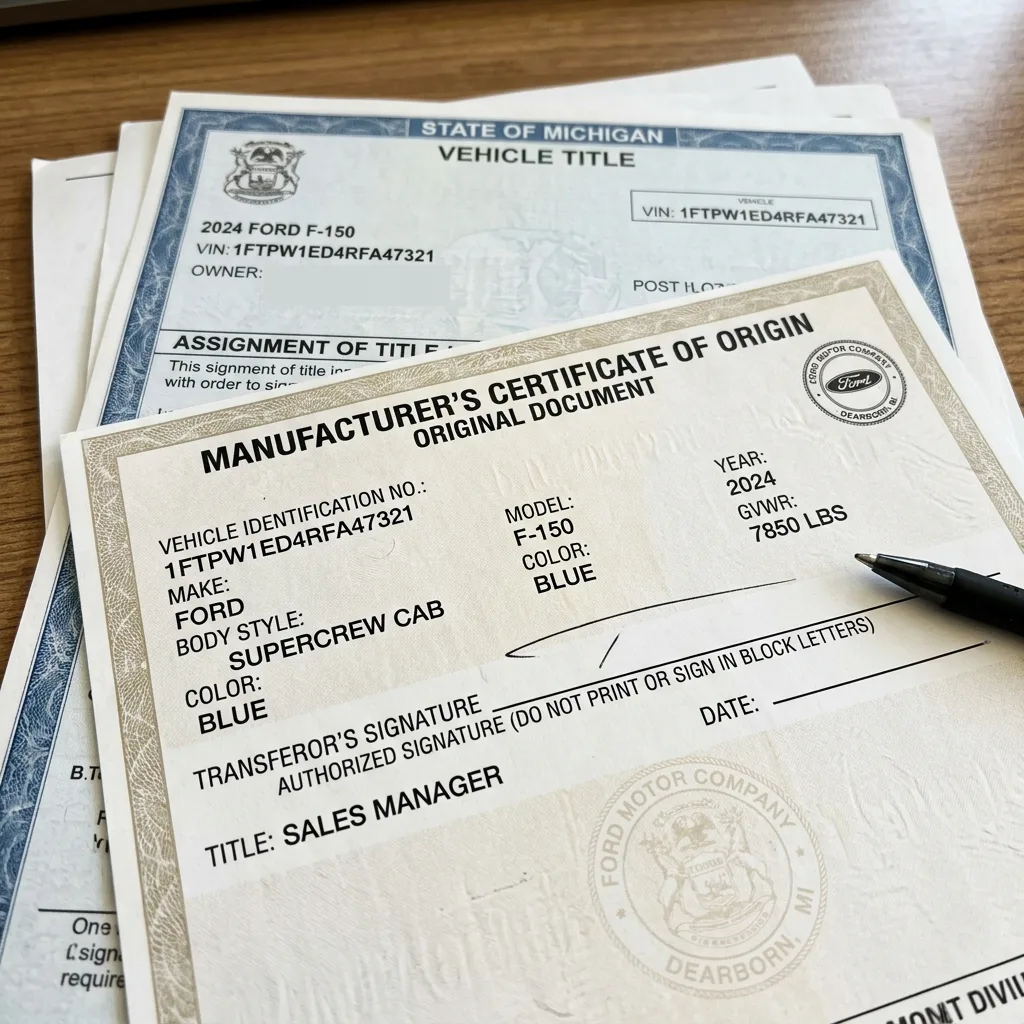
An MCO, formally known as a Manufacturer’s Certificate of Origin (and sometimes called an MSO, or Manufacturer’s Statement of Origin, depending on the manufacturer), is the birth certificate of a brand new vehicle. Before any state title exists, the MCO is the only document that proves a vehicle exists, who built it, when it was built, and who the first legal owner is. Every car, truck, motorcycle, ATV, UTV, RV, and trailer that rolls off an assembly line in the United States starts its legal life with an MCO.
The document is not just a courtesy form. It’s a federally recognized instrument of ownership. Until you transfer that MCO to a state title, the vehicle is technically still in commerce. The manufacturer issues the MCO to its authorized dealer when the unit ships from the factory. The dealer then assigns the MCO to you, the buyer, by signing the back. You then take the assigned MCO to your DMV, which uses it to issue your first state title.
What that signature line does legally: when the dealer signs and dates the assignment section, three things happen simultaneously. First, ownership of the vehicle transfers from the dealer to you. Second, the dealer certifies under federal odometer disclosure law that the mileage shown is accurate (yes, federal law applies even to brand new vehicles with eight miles on the clock from the test track). Third, the dealer creates an unbroken legal chain of title that the DMV can record and that NMVTIS can track.
If any of those three things is missing or wrong, the document is legally worthless. A blank signature line means ownership never transferred. A blank odometer box means a federal odometer disclosure violation. A missing date means the chain of title has no anchor point. Federal odometer law in particular is unforgiving. The Truth in Mileage Act requires specific disclosures, and DMVs are required to reject documents that don’t comply.
An unsigned MCO does not transfer ownership to you. As far as the DMV is concerned, that vehicle still belongs to the dealer. You paid for a piece of machinery, but on paper, you don’t own it yet.
How you ended up with an unsigned MCO
The first and most common scenario is plain dealer error. Saturday afternoon, the dealership is slammed, the F&I manager is juggling four deals, the title clerk is on lunch break, and your paperwork gets handed off to whoever is closest to the printer. The MCO comes out, gets stuffed in your envelope, and never gets routed back through the title clerk for the assignment signature. Nobody catches it. You drive away thinking everything is fine. Two weeks later, you find out it isn’t.
The second scenario is the dealer who closed up shop. You bought the vehicle six months ago, the dealer told you the title was being processed, and one day you drive past the lot to find it empty with a “for lease” sign in the window. The dealership is gone. The owner is unreachable. The MCO is sitting in a filing cabinet in a storage unit somewhere, never assigned, never signed. This happens more often than you’d think, especially with smaller specialty dealers in powersports, RV, and luxury brands.
The third scenario catches people who think they’re getting a deal. You bought a “brand new” UTV from a guy on Marketplace. He bought it from a dealer six months ago, never registered it, never used it, and now needs the cash. He hands you a stack of paperwork including the MCO. The dealer assigned the MCO to him, but he never assigned it to you because individuals don’t have an “assignment” section on most MCO forms. The chain of title is now broken in a way that requires legal documentation to repair.
The fourth scenario hits the powersports world hard. You bought your UTV or ATV from a wholesale dealer or auction, who bought it from another dealer, who bought it from the original franchised dealer. Each handoff was supposed to include an MCO assignment. One of them got skipped. Now the chain has a gap, and your local DMV can see that gap clearly. Without the missing assignment, the previous wholesaler still legally owns the vehicle in the eyes of the state.
The fifth scenario involves imports. You bought a vehicle that was originally manufactured overseas and brought into the US through a parallel import or grey market channel. The manufacturer MCO might exist in the original country’s format, but it was never properly assigned to a US-licensed dealer. American DMVs require an MCO that conforms to US standards or specific import documentation. Without that, you’re stuck with a vehicle and a paperwork puzzle that takes months to untangle.
What not to do with an unsigned MCO
First, the mistakes. A lot of people, in their frustration, make decisions in the first 48 hours that turn a fixable paperwork problem into a felony case or a permanent title cloud.
Do not forge the signature. This sounds obvious, but you’d be surprised. Forging an MCO signature is a felony in all 50 states. It’s prosecuted under federal odometer fraud statutes plus state forgery laws. DMVs train their clerks specifically to spot mismatched signatures and inconsistent ink. NMVTIS cross-references signatures across thousands of records. When you get caught (and you will get caught), the application gets rejected, the vehicle gets flagged, and a criminal referral gets sent to the state attorney general. People go to prison for this.
Do not try to register the vehicle anyway by hoping the clerk doesn’t notice. The clerk will notice. Modern DMVs use pre-submission validation software that flags incomplete MCOs before they even reach a human. If you slip past the first clerk, the title bureau auditor will catch it on review. Your application gets rejected, but worse, the rejection gets logged in NMVTIS, creating a permanent black mark on the vehicle that follows it through every future title transaction.
Do not just wait and hope it fixes itself. The problem actively gets worse over time. Dealer staff turn over. Records get archived. The salesman who knows your file gets fired or moves to another state. The dealership gets sold to new ownership that has no obligation to fix problems from the prior owner. Your window to demand fixes shrinks every month you wait. Most state correction procedures require action within one year of original sale.
Do not pay one of those internet “title fixing services” that promises to get you a clean title in 30 days for $1,500 with no documentation required. The legitimate ones cost more and require actual evidence of ownership. The ones that don’t require evidence are running scams or producing fraudulent documents that will trigger criminal investigations when you try to use them.
Forging an MCO signature is a felony. People go to prison for this. The vehicle isn’t worth it. There’s a legal path to fix every one of these problems, and it doesn’t involve a forged signature.
The step-by-step recovery plan

Step one is to contact the dealer immediately, in writing, and bring receipts. Email is fine because it creates a timestamp. Send a message to the F&I manager, the general manager, and the title clerk if you can find them. Attach your bill of sale, your proof of payment (canceled check, financing documents, wire confirmation), and a clear photograph of the unsigned MCO. State that the document is incomplete and ask for one of three remedies: the dealer mails you the signed original within seven business days, the dealer issues a duplicate MCO from the manufacturer, or the dealer provides written authorization for you to use a Power of Attorney to complete the signing. Most legitimate dealers will pick option one immediately. They know they made a mistake and they want it fixed before it becomes a state complaint.
Step two kicks in if the dealer doesn’t respond within seven days, or stalls, or starts making excuses. You escalate to the state Dealer Licensing Board. Every state has one (sometimes called the Motor Vehicle Industry Board, the Dealer Services Bureau, or the Dealer Licensing Section depending on your state). You file a written complaint with copies of your purchase documents and the unsigned MCO. The state board contacts the dealer directly. The dealer suddenly has a much stronger reason to respond, because the state holds the dealer’s license and can suspend it for unresolved consumer complaints.
Step three handles the defunct dealer scenario. If the dealership has closed, do not waste time trying to reach the owner. Go straight to the state Dealer Licensing Board with documentation of the closure. The board maintains records of the dealer’s surety bond, which is specifically required by state law to cover situations like yours. You file a bond claim. The state pays out from the bond to either issue you a duplicate MCO directly, sign on behalf of the defunct dealer under state authority, or provide documentation that allows you to obtain a bonded title.
Step four runs in parallel with steps one through three. Contact the manufacturer directly. Most major manufacturers (Polaris, Honda, Yamaha, Can-Am, Kawasaki, Ford, GM, Stellantis, Toyota, BMW, etc.) maintain customer service departments specifically for documentation issues. They will often issue a duplicate MCO marked “Duplicate” if you can prove you’re the legitimate purchaser. The proof requirements vary by manufacturer but typically include the bill of sale, proof of payment, the dealer’s name and date of purchase, and the VIN.
Step five is the Power of Attorney path. If the dealer acknowledges the error but is in a different state, or simply can’t physically meet to sign, the dealer can execute a notarized Limited Power of Attorney authorizing you to sign the MCO assignment as Attorney in Fact for the dealer. You then sign the document with your name followed by the phrase “as Attorney in Fact for [Dealer Name].” The notarized POA must accompany the signed MCO when you submit it to the DMV. This is a completely legitimate path and is recognized in all 50 states.
Most dealers will sign when they realize you’ll report them to the state licensing board. The threat of losing their dealer license, even temporarily, is a powerful motivator. Make sure they know you know about that bond.
When the dealer won’t sign: escalation options
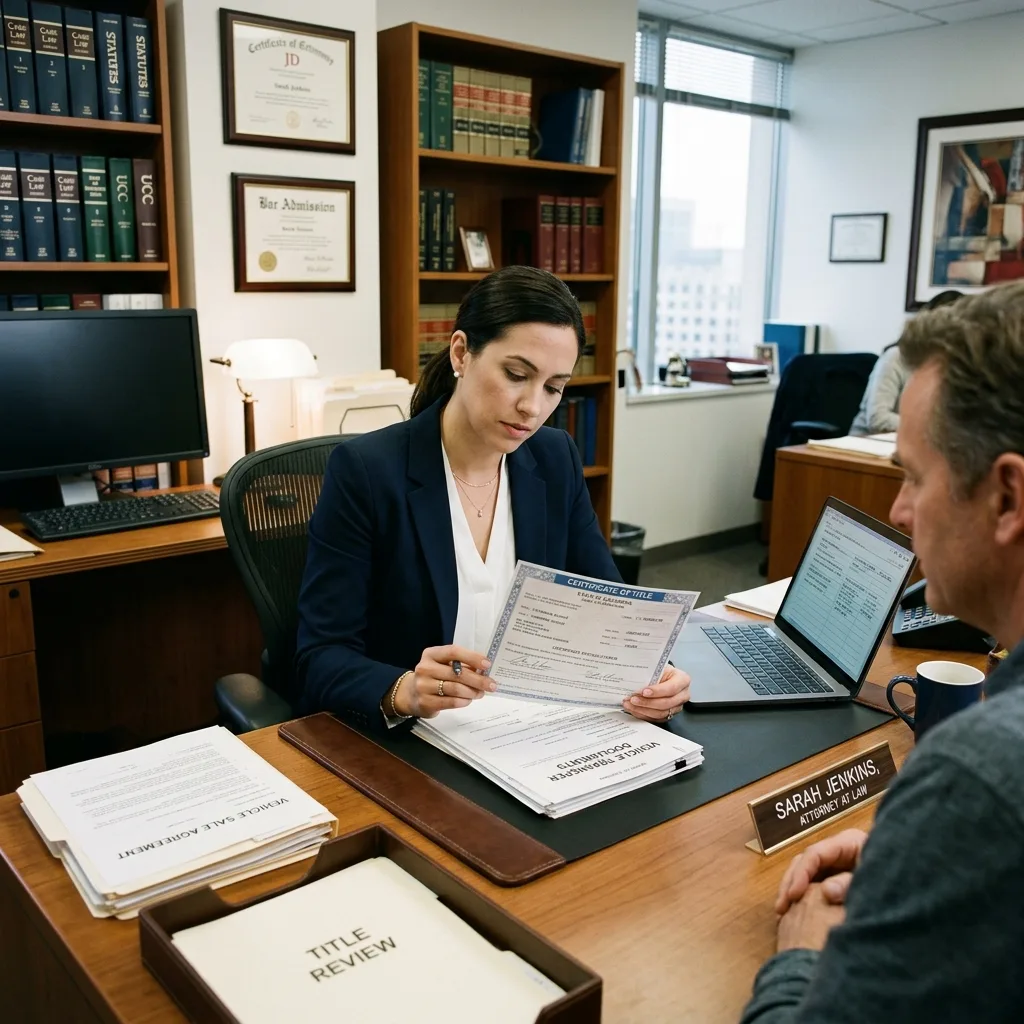
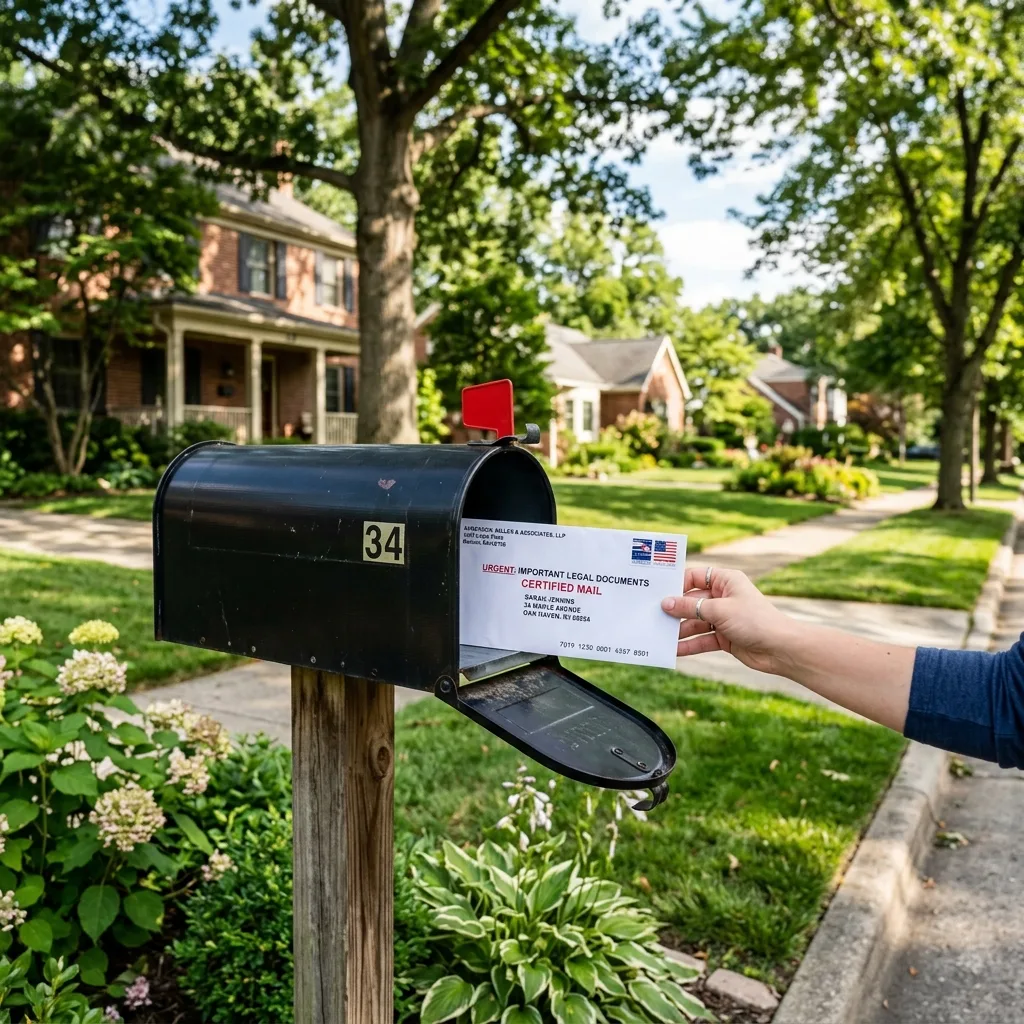
Your first escalation step is a formal written demand letter, sent certified mail with return receipt. Cite the specific state statute that requires dealers to deliver complete title documentation. In most states this is a section of the Motor Vehicle Code, and a quick search of “[your state] dealer title delivery statute” will find it. Reference the federal odometer disclosure law (49 USC 32705). State that you’ll be filing a complaint with the state Dealer Licensing Board if the issue is not cured within ten business days. This letter alone resolves a surprising number of cases, because dealers know that certified-mail demand letters often precede regulatory action or litigation.
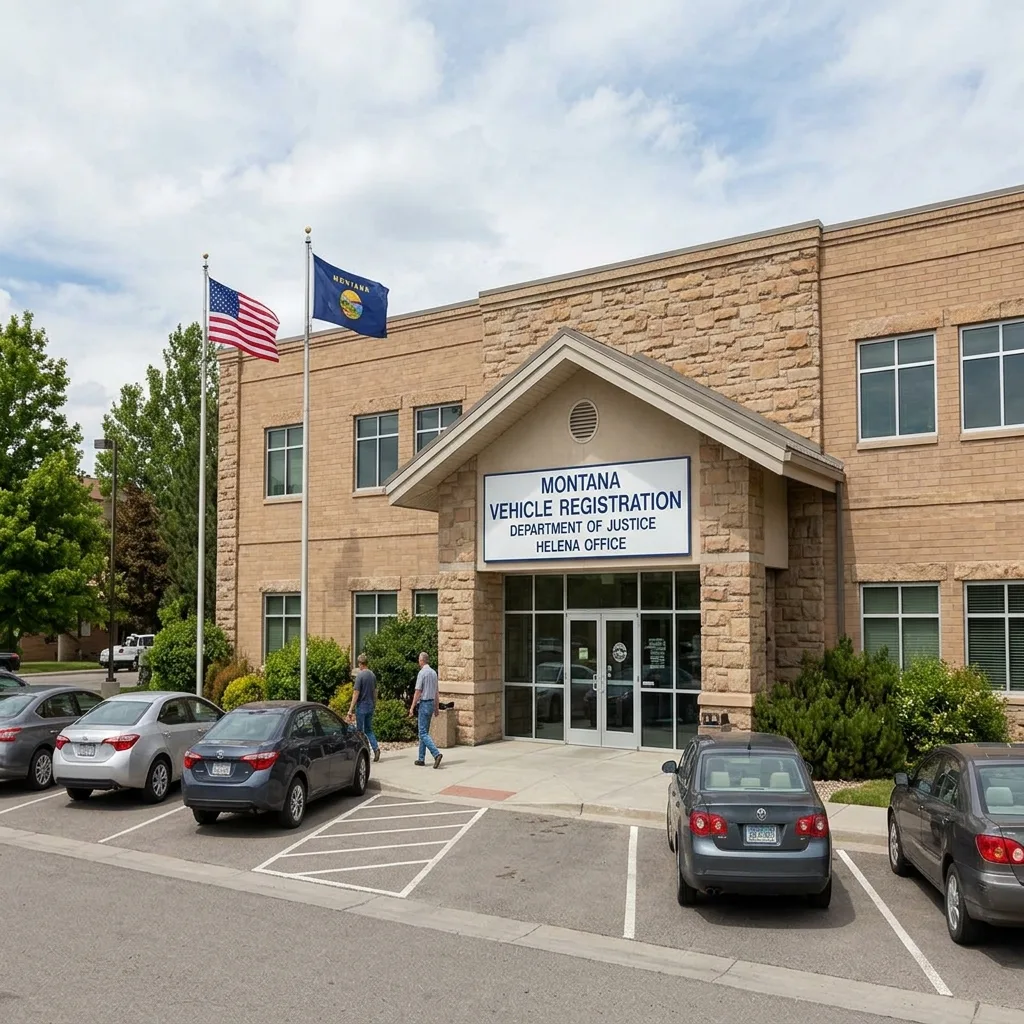
Your second escalation step is the formal complaint to the state Dealer Licensing Board. The exact name varies by state. In Florida it’s the Department of Highway Safety and Motor Vehicles, Division of Motorist Services. In California it’s the DMV Occupational Licensing Branch. In Texas it’s the Texas Department of Motor Vehicles, Enforcement Division. In Montana it’s the Department of Justice, Motor Vehicle Division. Find the right office, file the complaint with all your documentation, and wait. The board will reach out to the dealer. Most dealers cure the problem within two weeks of receiving a board inquiry, because the alternative is a license suspension hearing.
Your third escalation step is the state Attorney General’s consumer protection division. This is appropriate when the dealer is being deliberately evasive or you suspect fraud. The AG has subpoena power and can compel document production from the dealer. AG involvement also creates leverage for refunds and damages, not just paperwork corrections.
Your fourth escalation step is small claims court for direct costs. You can recover the cost of the bond, the cost of legal fees, and any consequential damages such as lost use of the vehicle. Small claims is fast (usually 60-90 days from filing to judgment), cheap (filing fees under $100 in most states), and doesn’t require a lawyer. A court judgment also creates additional pressure on the dealer, especially if you serve it at their place of business while customers are watching.
Your fifth and nuclear option is the bonded title, which we cover in detail below. This is the path that doesn’t require dealer cooperation at all.
If the dealer has closed, do not try to track down the former owner. Go straight to the state Dealer Licensing Board. They hold the dealer’s surety bond specifically for situations like yours, and the claim process is usually faster than chasing a defunct business owner who’s already moved on.
State-by-state MCO rules: what your DMV will accept
Every state has its own rules for handling incomplete MCOs, and the differences matter. What gets accepted in one state without question gets rejected outright in another.
California takes a relatively pragmatic approach. The DMV accepts duplicate MCOs as long as they are clearly marked “Duplicate” by the issuing manufacturer. California also accepts notarized Powers of Attorney for dealer signatures. The state follows strict chain-of-title rules, so any gap in the dealer-to-dealer assignment chain must be cured with documentation from each missing link. California’s bonded title process is well-developed and routinely used.
Florida requires that all dealer signature corrections happen through tag agencies (Florida’s contracted private DMV branches). If your dealer is in another state, you’ll need to either physically obtain the dealer’s signature or use a notarized POA. Florida is strict about out-of-state dealer scenarios and frequently requires additional documentation that other states don’t.
Texas follows the Texas Department of Motor Vehicles Dealer Manual exactly. There are essentially no informal exceptions. Duplicate MCOs must be issued directly by the manufacturer with the “Duplicate” designation. POA signatures are accepted but the POA must be notarized and filed with the title application. Texas does have a robust bonded title process for vehicles with unresolvable chain issues.
Montana is among the strictest states in the country on MCO completeness. Montana rejects unsigned MCOs immediately, with no informal exceptions and no clerical workarounds. The state’s Department of Justice Motor Vehicle Division has clear written policy: an MCO with a missing signature, missing odometer disclosure, or missing date is rejected at intake. This matters because Montana is a popular registration state for buyers seeking to legally avoid sales tax in their home state, and many of those buyers have their MCO submitted by a registered agent rather than physically present.
Tennessee has one of the most consumer-friendly correction processes. The state issues “Incorrect MSO” letters that formally document the original error and authorize a replacement. Tennessee also actively removes flawed records from its VTRS system and from NMVTIS, which prevents the title cloud problem that plagues vehicles in other states.
The general principle across all 50 states is that if the error is identified within one year of original sale, most states will accept a duplicate MCO, an affidavit of correction, or a notarized POA. After that one-year window, the bonded title route becomes the most likely path forward, and in some cases a court order is the only option.
Montana rejects unsigned MCOs without exception. If you’re planning Montana LLC registration, your MCO must be clean before submission. Or have someone like Zero Tax Tags catch the issue first and walk you through the fix before you waste a filing fee.
The bonded title: your last resort (and how it works)
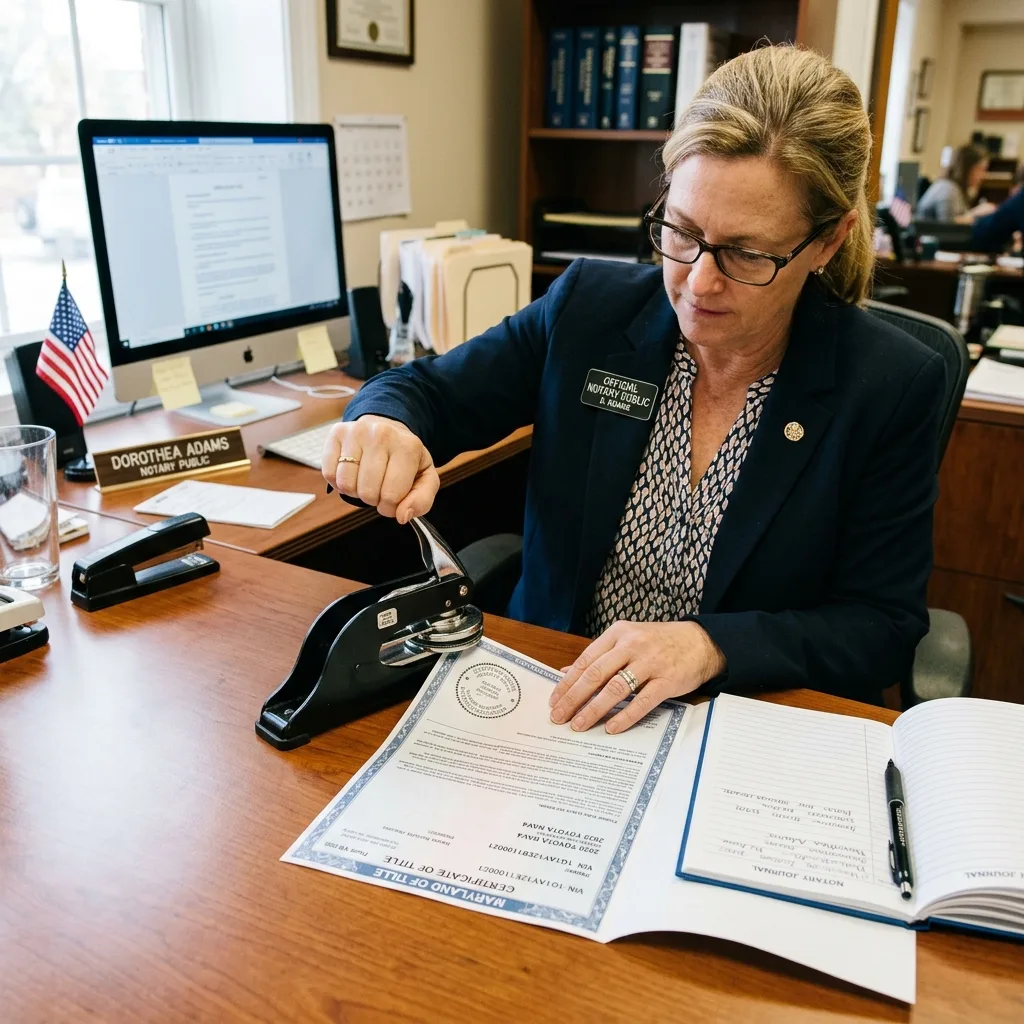
If the dealer can’t be found, the manufacturer won’t issue a duplicate, the POA path is exhausted, and you’ve reached the end of the standard escalation ladder, the bonded title becomes your path. This is a real legal mechanism that exists specifically for situations where the chain of title is broken in a way that can’t be repaired with normal documentation.
You purchase a surety bond from an insurance company that specializes in title bonds. The bond amount is typically 1.5x the appraised value of the vehicle, which is set by either an independent appraisal or a state-approved valuation service. You submit the bond, along with an affidavit of ownership detailing your purchase, your bill of sale, photographs of the vehicle and its VIN plates, and any correspondence you have with the dealer or manufacturer. The DMV reviews the package and, if everything checks out, issues a state title with a “bonded” notation.
The bond’s purpose is to protect a legitimate prior owner who might emerge during a holding period (typically 3 years, though it varies by state). If someone shows up during the bond period claiming legitimate ownership, they file a claim against the bond and receive financial compensation up to the bond limit. After the holding period expires without claims, the bonded notation can be removed and you have a clean title.
Costs are reasonable in most cases. The bond premium runs $100-500 for vehicles up to about $50,000 in value. Higher-value vehicles cost more, but the structure scales linearly. State filing fees add another $50-150 depending on jurisdiction. Total out-of-pocket for most bonded title cases is under $750.
The downside is real but limited. During the 3-year bond period, no lender will finance against the title. If you own the vehicle outright, this doesn’t matter. If you’re trying to get a loan against it, you’ll need to wait. The bonded notation also has to be disclosed in any future sale, which can slightly reduce resale value. After the bond period clears, those issues go away.
Most major states support bonded titles, including Montana, California, Texas, Florida, and Tennessee. A few states have additional restrictions or don’t allow bonded titles for certain vehicle classes. Your title agent can confirm whether bonding is the right path for your specific vehicle and state.
A bonded title isn’t pretty, but it’s legal, it’s recognized in most states, and it gets you plates. After three years with no claims, you can remove the bonded notation and have a clean title. Many vehicle owners never think twice about it after year three.
Court-ordered title: the absolute last resort
Below the bonded title sits one final option: court-ordered title issuance. This is the rarest path, used only when bonding fails, ownership is genuinely disputed by another party, or the dealer is deceased with no bond available.
You file a petition in your state’s circuit or superior court demonstrating clear ownership through bills of sale, payment records, photographs of you in possession of the vehicle, correspondence with the dealer, and any other evidence available. You serve notice on any potentially interested parties (the manufacturer, the dealer’s estate, prior owners in the chain). After a hearing, if the court is satisfied with your evidence, it issues an order directing the DMV to issue title in your name.
The process is expensive (filing fees, attorney fees if you don’t go pro se, service of process costs) and slow (typically 3-6 months from filing to order). But it works. A court order is a legal trump card the DMV cannot refuse. Most cases never reach this stage. The vast majority of unsigned MCO situations resolve at the dealer escalation, POA, or bonded title steps. Court orders are reserved for the rarest, most contested situations.
How Zero Tax Tags handles incomplete MCOs
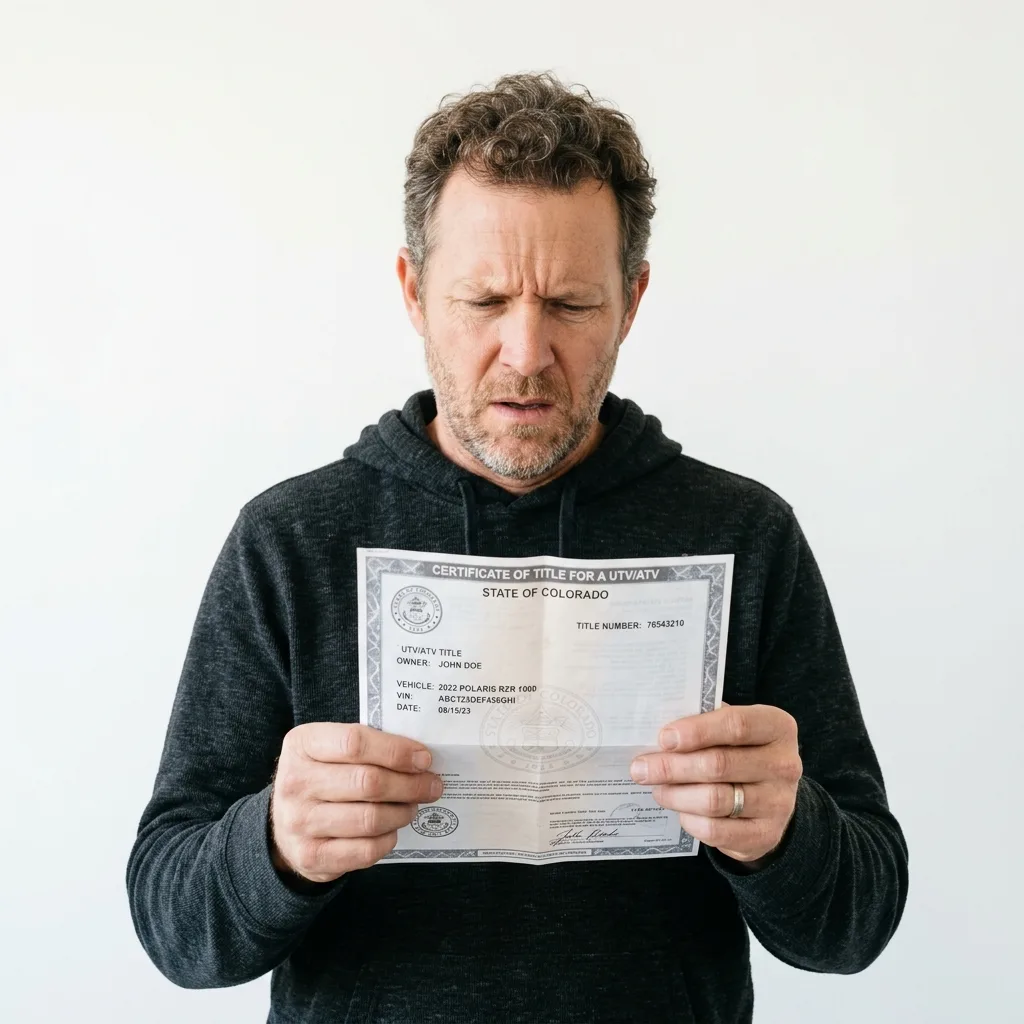
Zero Tax Tags processes Montana LLC vehicle registrations every single business day. We see hundreds of MCOs per month, from every major manufacturer, for every kind of vehicle: cars, trucks, SUVs, UTVs, ATVs, trailers, RVs, motorcycles, and boats. We see MCO problems before our clients do, because we review every document before it goes to the Montana DMV.
Montana rejects unsigned MCOs without exception, as we covered above. That means an unprepared registration agent who submits an incomplete MCO costs their client weeks of delay and a filing fee that may need to be repaid. Our review process catches incomplete signatures, missing odometer disclosures, broken assignment chains, VIN mismatches, and notarization defects before any document reaches the Montana DMV. If we spot a problem, we tell you immediately and walk you through the fix.
Our process for clients with MCO concerns goes like this: you upload your purchase documents and MCO photos to our secure portal. Within 24 hours, our title team reviews everything and either greenlights the filing or flags issues with specific corrective steps. If the dealer needs to sign a POA, we provide the template. If the manufacturer needs to issue a duplicate, we provide contact information and a sample request letter. If a bonded title becomes necessary, we connect you with a bond specialist who handles Montana-specific bond filings.
Zero Tax Tags can register every vehicle type Montana recognizes. Pricing is straightforward: cars, trucks, and SUVs valued under $150,000 cost $899 in year one, which includes $699 for our service plus $200 for LLC formation. Annual renewal is $368 per year for vehicles 0-4 years old, and $237 per year for vehicles 5-10 years old. Vehicles 11 years or older receive permanent Montana registration with no recurring fee. ATVs, UTVs, trailers, motorcycles, and boats are PERMANENT one-time registrations with no annual renewal at all. That single fact alone often pays for the entire setup within two years for off-road and recreational owners.
| Day 1: | Submit your MCO and supporting paperwork through our secure portal. We review for completeness and file your Montana LLC the same day. |
| Days 1–2: | Montana LLC formation complete — same business day in most cases, second business day at the latest. |
| Days 2–4: | Title transferred into the LLC name at the Montana county treasurer. |
| Days 4–7: | Permanent Montana plates shipped directly to your door within 3–5 business days of title completion. |
MCO fraud: red flags to spot before you buy
Counterfeit MCOs are an actual growing problem, especially for higher-end vehicles. Federal investigators report increasing volumes of fraudulent MCOs presented to DMVs nationwide. The targeted vehicles tend to be luxury and performance models: Bentley sedans, Land Rover and Range Rover SUVs, Mercedes-Benz SUVs (especially G-Wagons), Lexus SUVs, Infiniti SUVs, Lincoln Navigators, and Dodge Hellcats. The fraud usually involves either altering a genuine MCO from a totaled or stolen vehicle, or producing a fictitious MCO from scratch using high-end commercial printers.
Red flag number one: the MCO is presented to you by a private individual, but the listed dealer is in another state and you’ve never heard of them. Legitimate dealer-to-individual transactions almost never have this geographic mismatch. If a friend of a friend in Tennessee has a “brand new” Bentley with an MCO from a dealer in Nevada, the math doesn’t work.
Red flag number two: visibly different fonts, ink colors, or printing quality between sections of the MCO. Genuine MCOs are printed by the manufacturer on professional-grade security paper with consistent typography. If the VIN block looks like it was printed on a different machine than the rest of the document, that’s because it probably was.
Red flag number three: the VIN on the MCO doesn’t match the VIN plate visible through the windshield AND the federal certification sticker on the door jamb. Both VINs must match exactly. A serious counterfeiter will alter the door jamb sticker too, but the windshield VIN plate is harder to fake convincingly.
Red flag number four: the seller is unusually urgent about closing, resists any independent VIN check through NMVTIS or Carfax, and pushes back on letting you take the document to a notary or DMV for verification before payment. Legitimate sellers welcome verification because it protects them too.
Red flag number five: the asking price is significantly below market value for the vehicle. A “deal too good to be true” is the classic fraud pattern. Brand new luxury vehicles with $30,000 below-market pricing are virtually always either stolen, salvage rebuilds, or wrapped in fraudulent paperwork.
If the MCO is presented by a private party but shows a dealer you’ve never heard of, in a state you didn’t buy from, stop. Do not give money. Do not complete the sale. Walk away and contact your state DMV’s fraud unit. You may have just spotted a counterfeit operation.
Frequently asked questions about unsigned MCOs
1. Can I get Montana plates with an unsigned MCO?
No. Montana rejects unsigned MCOs without exception. The MCO must be fully signed by the dealer with all required odometer disclosures, dates, and VIN information complete before Montana will issue title. Zero Tax Tags will identify any defect in your MCO before submission and help you remedy it through the appropriate channel (dealer signature, POA, manufacturer duplicate, or bonded title).
2. How long do I have to get the dealer to sign?
Practically speaking, your strongest leverage exists in the first 90 days after purchase, while the dealer’s records are fresh and the transaction is recent. State Dealer Licensing Board complaints carry weight up to one year after sale in most states. After one year, your options narrow significantly and the bonded title path becomes more likely.
3. What if the dealer went out of business?
Contact your state Dealer Licensing Board immediately. The board holds the dealer’s surety bond specifically for situations like yours. You file a bond claim with documentation of the closure and your purchase, and the board pays out from the bond to either provide replacement documentation or authorize a bonded title. This process typically takes 60-120 days but resolves the issue without dealer cooperation.
4. What if the manufacturer says they can’t issue a duplicate?
Most manufacturers will issue duplicates if you provide adequate proof of purchase. If the manufacturer refuses, escalate within their corporate consumer affairs department. If that fails, the bonded title path becomes your route. Keep all manufacturer correspondence as part of your bonded title application package, since it documents that you exhausted normal channels.
5. Can I sell the vehicle with an unsigned MCO?
Technically, no, because you don’t legally own it yet. Anyone you sell it to will have the same registration problem, plus they’ll have an even longer chain to repair. Selling an unregistered vehicle with an incomplete MCO can also expose you to fraud claims if the buyer can’t register it. Fix the MCO first, get titled, then sell.
6. Does a bonded title affect my insurance?
Most insurance companies treat bonded titles the same as standard titles for liability and comprehensive coverage purposes. Some lenders restrict financing during the 3-year bond period, but insurance carriers generally do not discriminate. Your insurance broker can confirm coverage details for your specific carrier before you proceed.
7. Can Zero Tax Tags register my vehicle before the MCO issue is resolved?
No, and we wouldn’t try to. Submitting an incomplete MCO to Montana would result in immediate rejection and would waste your filing fee. Our value is exactly the opposite: we identify the problem before submission, walk you through the fix, and only file once the documentation is clean. That saves you weeks of delay and potential resubmission fees.
8. What if I bought the vehicle at an auction and the MCO is incomplete?
Auction purchases create some of the trickiest MCO scenarios because the chain of title may run through multiple wholesalers. Contact the auction house first; they often have document recovery procedures for exactly these situations. If the auction can’t resolve it, follow the standard escalation path with each wholesale party in the chain. Auction-purchased vehicles are common candidates for the bonded title route when intermediate documentation is missing.
See other Zero Tax Tags guides on vehicle titling and registration:
- Manufacturer Certificate of Origin (MCO/MSO): The Complete Guide
- Certificate of Origin vs Title: The Definitive Legal Guide
- Out of State MCO 2026: What the DMV Demands
- Dealer Won’t Release Your MCO: How to Recover a Stuck Certificate of Origin
Don’t let an unsigned MCO strand your vehicle
Zero Tax Tags reviews every MCO before submission. We catch problems before they cost you months and thousands. Ready to get properly registered?