38 min read

You just bought a new ride. It’s sitting in your driveway, gleaming, smelling like fresh adhesive and victory. But there’s a problem. A big one. You can’t drive it legally because you don’t have the title, and the dealer is playing games with the stuck MCO (Manufacturer’s Certificate of Origin).
Maybe they’re ghosting you. Maybe they went belly-up. Maybe they’re holding it hostage because they heard you have a Montana LLC and they’re terrified of an audit. Whatever the reason, you own a very expensive paperweight until you get that document. The keys are in your pocket, the temporary tag is about to expire, and the only thing standing between your six-figure vehicle and a legal road trip is a single sheet of paper that someone else is sitting on.
At Zero Tax Tags, we see this every day. The MCO (or Manufacturer’s Statement of Origin – MSO) is the birth certificate of your vehicle. Without it, the DMV treats your car like it doesn’t exist. We have spent the last several years untangling these messes for clients across all 50 states. We have pried MCOs out of dealerships that swore the document was lost, recovered title work from receivers handling dealer bankruptcies, and negotiated with manufacturer compliance offices on behalf of legitimate buyers who got caught in the crossfire of dealer paranoia. Here is the no-nonsense guide to unsticking a stuck MCO, dealing with stubborn dealers, and getting your rubber on the road legally.
On this page
- + MCO vs. Title: What’s the Hold Up?
- + Scenario 1: The Dealer Refuses to Hand Over the MCO
- + Scenario 2: The Dealer Went Out of Business
- + Scenario 3: The Dealer Lost or Misplaced Your MCO
- + Scenario 4: The Montana LLC Complication
- + Real World Scenarios
- + How to Get a Duplicate MCO
- + How to Write a Formal Demand Letter
- + Filing a Dealer Complaint by State
- + The Surety Bond Process for Stuck MCOs
- + Manufacturer Direct Contact Guide
- + 3 Detailed Case Studies
- + Your Legal Rights
- + Steps to Recover a Stuck MCO
- + When to Lawyer Up
MCO vs. Title: What’s the Hold Up?
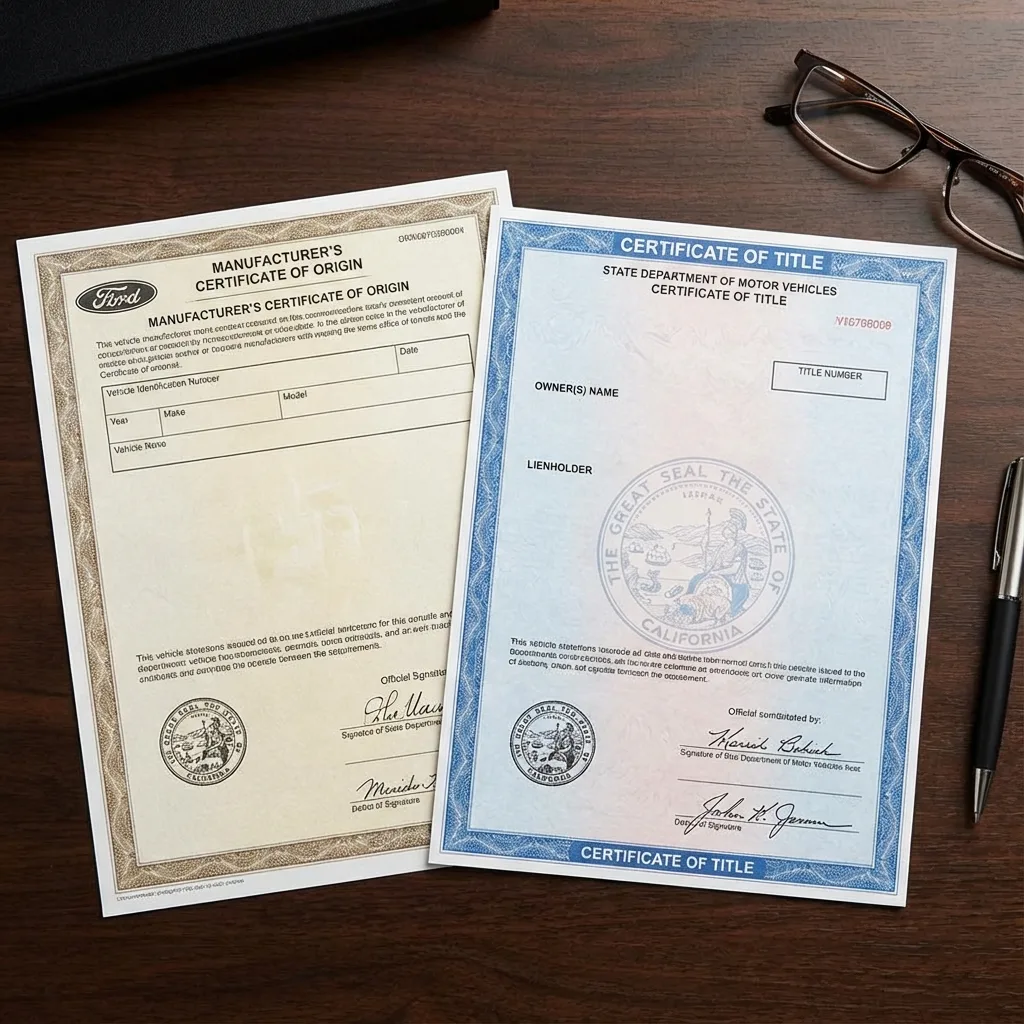
First, let’s clear up the jargon. The Manufacturer’s Certificate of Origin (MCO) is the document the factory issues to the dealership. It transfers ownership from the manufacturer to the dealer. When the dealer sells the car to you, they are supposed to sign that MCO over to you (or your bank) so you can exchange it for a state Certificate of Title at the DMV.
Usually, you never see the MCO. The dealer handles the paperwork, and a few weeks later, a title shows up in your mailbox. But when that process breaks down, you are left in limbo. The MCO physically arrives at the dealership inside a sealed manufacturer envelope, often with security features like watermarks, intaglio printing, and microprinting that make duplication extremely difficult. That document represents the only legally recognized chain of custody from the factory floor to your driveway. Until that chain is completed by transferring the MCO into a state-issued title, your vehicle is in a paperwork purgatory.
Why Dealers Don’t Give MCOs to Buyers
Dealers aren’t just hoarding paper for fun. They have specific fears and incentives to keep that stuck MCO out of your hands:
- Fear of Export (The “Gray Market” Panic): Manufacturers punish dealers who sell cars that immediately get exported to other countries (where they sell for double the price). If a dealer hands you an MCO, and you ship that Land Rover to China, the manufacturer might fine the dealer or cut their allocation of profitable models. We have seen export charge-back fines reach $25,000 per vehicle for high-allocation models like the Ford Raptor R, Cadillac Escalade-V, and Toyota Land Cruiser.
- Loan Requirements: If you financed the vehicle, the bank requires the dealer to perfect the lien. The dealer must send the MCO to the DMV to ensure the bank is listed as the lienholder. They won’t give it to you because they don’t trust you to record the loan. This is reasonable when financing is involved; it is unreasonable when you paid cash.
- Manufacturer Penalties: Beyond exports, manufacturers audit dealers to ensure end-users are legitimate. Stellantis, Ford, GM, and the German brands have entire compliance departments whose job is to comb registration records looking for vehicles that ended up overseas within 6-12 months of sale.
- Ignorance or Laziness: Sometimes, the back-office clerk just put it in the wrong file folder. The title clerk got fired, the new clerk does not know where the binder is, and the document sits buried for months.
- Sales Tax Compliance: Some dealers refuse to release the MCO unless they collect sales tax up front. They are conflating their duty to collect sales tax (which only applies if the vehicle is being titled in their state) with the buyer’s right to take possession of the title document.
- Floor Plan Lender Hold: If the dealer hasn’t paid off the floor plan loan on the vehicle, the floor plan lender (a bank that finances the dealer’s inventory) physically holds the MCO. Until the dealer wires payment, the document does not move.
Scenario 1: The Dealer Refuses to Hand Over the MCO
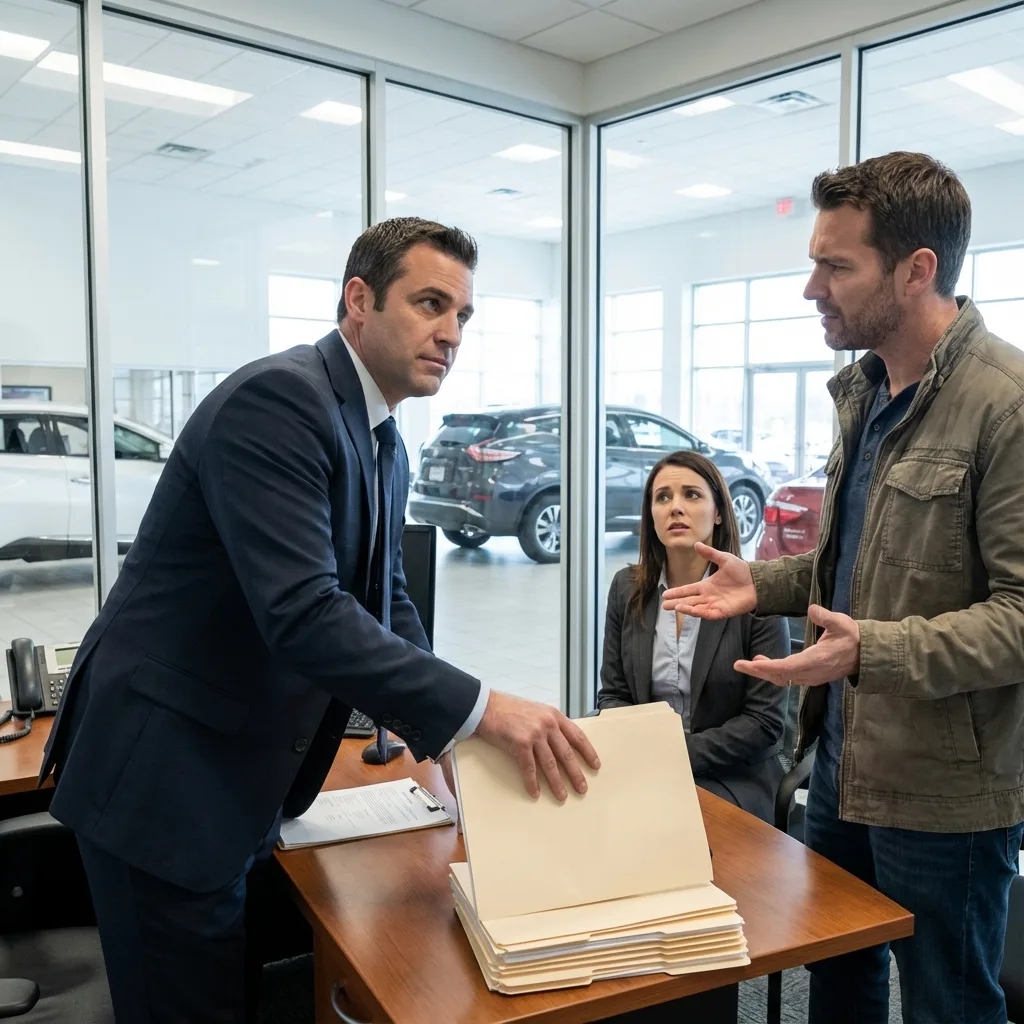
This is common with cash buyers, especially those using a Montana LLC to save on sales tax. You walk in, pay cash, and ask for the MCO so you can register it yourself (or hire us to do it). The dealer freezes. The General Manager gets called over. The Finance Director starts asking pointed questions about your residency. Suddenly the friendly transaction has turned into an interrogation.
They are afraid you are an exporter or that the state will come after them for sales tax evasion (which is not your problem, but they make it your problem). What dealers often do not understand is that under the Streamlined Sales and Use Tax Agreement and most state revenue codes, sales tax is owed in the state where the vehicle is registered, not the state where it is purchased. If you are titling the vehicle in Montana, the dealer has no legal obligation to collect sales tax for any other state.
The Fix:
You need to prove you are a domestic end-user and a legitimate buyer.
- Sign a Non-Export Agreement: Offer to sign a document stating the vehicle will remain in the US for 12 months. Most manufacturers provide a standard template their dealers can use. This single piece of paper resolves about 60 percent of MCO holdback situations involving high-allocation vehicles.
- Show Proof of Registration Intent: If you are using our service, we can provide documentation showing the vehicle is being registered to a US-based LLC. We send a dealer packet that includes the LLC Articles of Organization, the Montana physical address, the registered agent confirmation, and a written statement of registration intent.
- State Law: In many states, like Colorado, dealers are required to assign the Statement of Origin to the purchaser upon delivery. If they refuse, they are often violating the terms of their dealer license. California Vehicle Code section 5753 requires the dealer to deliver the certificate of ownership to the buyer or applicable lienholder within 30 days. Failure to do so is a misdemeanor.
- Request Written Refusal: Ask the General Manager to put the refusal in writing on dealership letterhead. Watch how quickly the position softens. Nobody wants to create a paper trail of a license violation.
- Escalate Internally: If the title clerk and General Manager are stonewalling, ask for the dealer principal (the actual owner). Dealer principals know which battles are worth fighting; a clean cash sale to a documented LLC owner is not one of them.
Scenario 2: The Dealer Went Out of Business (DOB)
This is the nightmare scenario. You bought the car, the dealer promised to mail the title work, and a week later, the lot is empty and the phone is disconnected. Your stuck MCO is locked in a filing cabinet somewhere, or worse, in a trash heap. Independent and small franchise dealers go out of business at a higher rate than people realize, especially during economic downturns. When they collapse, paperwork goes with them.
The Fix:
- Check with the DMV: States like California have specific “Dealer Out of Business” procedures. You may need to send a certified letter to the last known address of the dealer owner. The California DMV Occupational Licensing branch maintains records of every licensed dealer including their bond company, owner contact information, and last known address.
- Surety Bond Claim: Licensed dealers are required to carry a surety bond to protect consumers. If a dealer fails to title your car, you can file a claim against their bond to cover the cost of getting a title (including bonded title fees). Georgia, for example, suggests filing a claim against the dealer’s surety bond if they go under. The bond amounts vary by state, ranging from $10,000 in some states up to $100,000 in others.
- Bonded Title: If the MCO is truly gone, you will likely need to apply for a Bonded Title. This involves buying a lost title bond that guarantees your ownership. The bond cost is typically 1-3 percent of the vehicle value, with a minimum premium of around $100. The bonded title is valid for 3-5 years, after which most states convert it to a clean title automatically.
- Bankruptcy Trustee Contact: If the dealer filed Chapter 7 or Chapter 11, contact the bankruptcy trustee. Title documents are considered assets of the estate but trustees generally release them to legitimate buyers with proof of purchase. The bankruptcy court docket is searchable on PACER for $0.10 per page.
- State Recovery Fund: Several states maintain consumer recovery funds funded by dealer license fees. Texas, Florida, and California all have versions. These funds reimburse buyers who get stiffed by dealers who lack adequate bond coverage. Maximum recoveries range from $25,000 to $50,000.
Scenario 3: The Dealer Lost or Misplaced Your MCO

Incompetence is more common than malice. If the dealer admits they lost it, the ball is in their court to fix it, but they might drag their feet. The dealer is on the hook for the cost of replacement, and a duplicate MCO is treated as a serious matter by the manufacturer. Some manufacturers limit the number of duplicates a dealership can request per year before triggering an automatic compliance review.
The Fix:
The dealer must request a Duplicate MCO from the manufacturer.
- Domestic Cars (Ford, GM, etc.): The dealer has a direct line to the factory compliance office. It takes about 2 weeks. The dealer typically uses an internal portal to submit a Lost MCO Affidavit signed by the dealer principal under penalty of perjury.
- Imports: This can take longer as the request may need to go to the port authority or the importer’s headquarters. BMW, Mercedes, Porsche, and other German marques route duplicate MCO requests through a single processing center per region; turnaround can be 4-6 weeks.
- Powersports and RVs: Polaris, Yamaha, BRP, Forest River, Thor, and other powersports/RV makers handle MCO replacements through their dealer service portals. Powersports duplicates often arrive within 7-10 days; RV duplicates can take 30-45 days due to the complexity of class A and class C builds.
- Your Move: Do not wait. Send a formal demand letter giving them 10 days to produce the duplicate MCO or you will file a complaint with the state dealer licensing board. Dealers hate state investigators sniffing around their paperwork.
- Document the Loss: Get a written statement from the dealer acknowledging the MCO is lost or misplaced. This document is critical if you later need to apply for a bonded title or sue.
- Track the Request: If the dealer has submitted a duplicate request, demand the tracking number, request ID, and estimated processing time from the manufacturer’s compliance office. Vague answers like “soon” should be unacceptable; you want concrete dates.
Pro Tip: Document everything. Keep copies of your purchase agreement, wire transfer confirmations, dealer invoice, odometer disclosure, any text messages, and every email exchange. Save voicemails. This paperwork is critical if you need to file a complaint or lawsuit, and prosecutors love a well-organized timeline.
Scenario 4: The Montana LLC Complication

You bought a high-end truck or supercar, and you want to register it to a Montana LLC to legally avoid sales tax. The dealer sees “Montana” and “LLC” and thinks “Fraud” or “Export.” The salesperson who quoted you the deal had no problem with the structure; the moment the title clerk sees the LLC documents, the entire deal stalls. We see this play out at least once a week.
Dealers have been spooked by stories of “Instagram Bros” getting heat for flashy cars in states like Georgia. They might refuse to release the MCO to you directly, insisting they must collect tax and register it in your home state. Some dealers have a flat policy of refusing all out-of-state LLC titling. Others will do it but only if you sign their internal hold-harmless agreement and pay an inflated documentation fee.
The Zero Tax Tags Solution:
We act as the intermediary.
- We can communicate directly with the dealership’s title clerk. We have spoken to title clerks at virtually every major franchise group in the country and many have a working relationship with us.
- We explain that the LLC is a legitimate legal entity and the owner (you) has the right to register the vehicle to that entity. The Montana Secretary of State maintains a public business search portal; the dealer can verify the LLC in 60 seconds.
- We provide the necessary dealership packets to reassure them that the registration is being handled professionally, so their compliance metrics aren’t dinged. Our packet includes a notarized non-export affidavit, proof of Montana physical address, and a copy of the registered agent agreement.
- We coordinate the delivery logistics. The MCO can be sent directly to our Montana office, eliminating any risk that the document gets lost in transit between the dealer, you, and the Montana DMV.
- For Year 1, our complete service is $899 ($699 service fee + $200 LLC formation). Year 2 onward is $270 per year ($150 registration + $120 filing). Compared to paying 6-9 percent sales tax on a $150,000 vehicle, the math is straightforward.
Real World Scenarios
The Tesla Limbo
Tesla operates differently than traditional dealers. There have been documented cases where Tesla buyers, specifically those in states where Tesla cannot directly sell, paid for the car but waited months for the MCO to arrive in the mail. Without a local dealer to yell at, you are stuck emailing a generic support inbox. Tesla’s title processing center has been known to sit on out-of-state MCO requests for 60-90 days, especially when the buyer is using an LLC structure.
Solution: Persistence and escalation to regional sales managers. If that fails, a consumer protection complaint with your state Attorney General usually wakes them up. Tesla also has an executive escalation address that responds within 48 hours when properly worded.
The RV Hostage Crisis
We’ve seen RV dealers refuse to release MCOs until they receive “proof of full payment” from a third-party lender, even after the wire has hit. They hold the MCO as use. The most egregious case involved a $625,000 Newmar King Aire where the dealer demanded an additional $4,500 documentation fee that was never disclosed at signing, threatening to keep the MCO in their safe until the buyer paid up.
Solution: This is often a contract dispute. If the contract says title passes upon funding, they are in breach. A lawyer’s letter usually frees the MCO within 48 hours. RV transactions of this size also fall under conversion law in most states; conversion is the civil equivalent of theft and triggers punitive damages.
The “Bankrupt” Dealer
A client bought a used car from a small lot. The dealer took the cash, promised to mail the title, and closed shop the next day. The dealer never actually paid off the trade-in lien from the previous owner, meaning the bank still had a claim on the vehicle even though the buyer paid in full.
Solution: This is fraud. The buyer had to file a police report and a claim against the state’s dealer recovery fund to clear the prior lien and get a clean title. Total recovery time was 4 months but the buyer recovered every dollar plus attorney fees.
See how others have recovered from MCO problems:
- Unsigned MCO: What to Do (and What NOT to Do)
- Who Holds the Certificate of Origin and How to Get It Back
How to Get a Duplicate MCO (When the Dealer Can’t or Won’t)
If the dealer is gone and you have a new vehicle with no history, can you call Ford or Toyota directly?
Rarely. Manufacturers almost exclusively deal with licensed franchises. Their compliance processes are designed around the dealer-as-customer model. A retail buyer calling the corporate switchboard will be politely redirected back to the selling dealer, even if that dealer no longer exists.
However, if you have a custom vehicle, trailer, or motorcycle from a smaller manufacturer, you can often contact the factory directly with your Bill of Sale and VIN to request a duplicate MCO. They will likely charge a fee (typically $50-$150) and require notarized proof of ownership. Trailer manufacturers like Big Tex, Pequea, and Sundowner have streamlined direct-to-consumer duplicate MCO programs because their dealer network is smaller and the demand for replacements is more common.
For major brands, if the selling dealer is DOB (Dead or Broke), you may need to find another local franchise of the same brand. They can request a duplicate MCO for a vehicle they didn’t sell, but they have no incentive to help you. You will likely have to pay them an administrative fee for their trouble. Expect to pay $200-$500 plus the cost of any title work and notary fees.
Some manufacturers maintain dedicated consumer assistance hotlines that will at least confirm that an MCO was issued and assigned to a specific dealer. This information alone can be valuable if you need to demonstrate to a court or to a state regulatory body that the document was, in fact, generated and shipped.
How to Write a Formal Demand Letter
The demand letter is the single most important escalation tool you have before involving regulators or attorneys. A properly drafted demand letter accomplishes several things at once: it creates a written record, establishes the date you formally requested action, sets a defined deadline, identifies the legal consequences of inaction, and signals to the dealer that you are not going away.
Certified Mail Is Mandatory
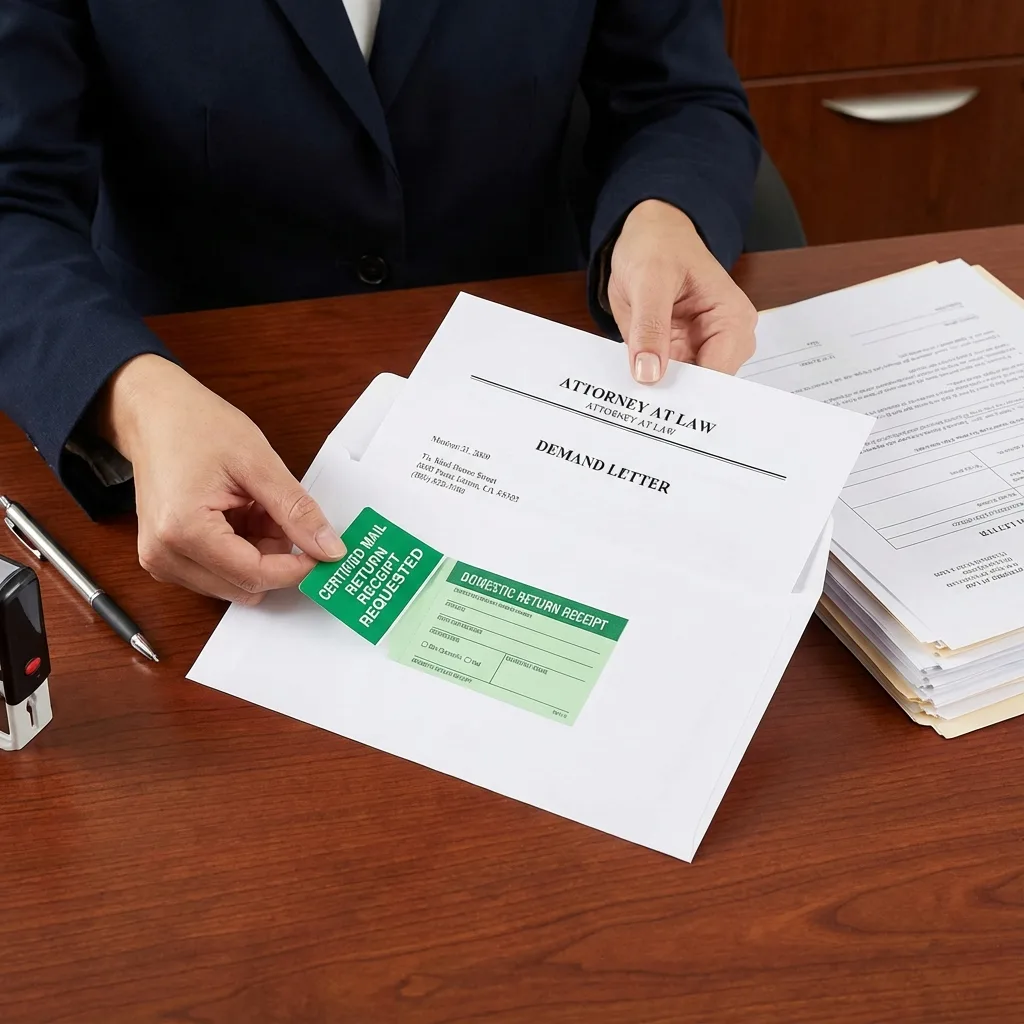
Send the demand letter via USPS Certified Mail with Return Receipt Requested. The cost is approximately $9-$10 and you receive a green card showing the signature of the recipient. This becomes your proof of legal notice. Email is not enough; text messages are not enough. Courts and regulators give significant weight to certified mail because it cannot be plausibly denied.
Send the letter to two addresses simultaneously: the dealership’s physical business location and the registered agent for service of process listed with the state Secretary of State. The registered agent address is publicly searchable and ensures the letter reaches the legal entity itself, not just the front desk receptionist.
10-Day vs 30-Day Demand
The deadline you choose depends on the underlying state statute and the urgency of your situation:
- 10-Day Demand: Used when the dealer has clearly missed a statutory deadline (such as the 30-day title delivery requirement in most states) and you are preparing to file a complaint or lawsuit. The 10-day window demonstrates good faith while signaling imminent action.
- 30-Day Demand: Used when the dealer is still within the statutory window but is clearly not progressing. This gives them a final reasonable opportunity to comply before you escalate.
- 5-Day Demand: Used in cases of suspected fraud, bankruptcy, or when temporary tags are about to expire. A 5-day demand should reference specific civil and criminal statutes the dealer is violating.
Demand Letter Template
[Your Name]
[Your Address]
[City, State, ZIP]
[Date]VIA CERTIFIED MAIL, RETURN RECEIPT REQUESTED
Tracking #: [USPS Tracking Number][Dealer Principal Name]
[Dealership Legal Name, e.g., XYZ Auto Group, LLC]
[Physical Address]
[City, State, ZIP]Re: Demand for Delivery of Manufacturer’s Certificate of Origin
Vehicle: [Year, Make, Model]
VIN: [17-character VIN]
Purchase Date: [Date]
Deal #: [Deal Number from Buyers Order]Dear [Dealer Principal]:
On [Purchase Date], I purchased the above-referenced vehicle from your dealership for $[Purchase Price]. Payment was made in full on [Payment Date] via [wire transfer / certified check / cash]. A copy of the executed Buyers Order, payment confirmation, and Odometer Disclosure Statement is enclosed.
To date, your dealership has failed to deliver the Manufacturer’s Certificate of Origin (MCO) or any equivalent title document required to register the vehicle with the appropriate state authority. Under [State] [Statute Citation, e.g., California Vehicle Code section 5753], a licensed dealer must deliver title documentation to the buyer within 30 days of sale. That deadline expired on [Date].
This letter constitutes formal legal notice and demand. You have ten (10) calendar days from receipt of this letter to deliver the MCO to me at the address above, or to provide written confirmation of the date the MCO will be delivered, supported by a tracking number from the manufacturer.
Failure to comply will result in the following actions, without further notice:
- A formal complaint to the [State] Department of Motor Vehicles Dealer Licensing Section.
- A complaint to the [State] Attorney General Consumer Protection Division.
- A claim against your surety bond filed with [Bond Company].
- A civil action for specific performance, conversion, breach of contract, and damages, including attorney fees and costs as permitted under [State] law.
Please govern yourself accordingly.
Sincerely,
[Your Signature]
[Printed Name]Enclosures: Buyers Order, Wire Confirmation, Odometer Disclosure
What Constitutes Legal Notice
Legal notice has three elements: a clear identification of the issue, a specific demand for action, and proof of delivery. The demand letter above checks all three boxes. Save the green card returned by USPS, scan it, and store it with the certified mail receipt and a PDF copy of the letter itself. Courts uniformly accept this combination as conclusive proof of legal notice, even if the dealer claims they never read the letter.
Filing a Dealer Complaint by State
Once your demand letter deadline has passed, the next step is to file a formal complaint with your state’s dealer regulatory body. Dealers fear nothing more than a regulator visit. Their license is their lifeline; a single dealer license suspension can shut down operations entirely.
California: DMV Occupational Licensing
California is one of the most aggressive states in pursuing dealer compliance violations. File a complaint with the California DMV Occupational Licensing Branch using Form OL 215 or online via the DMV consumer complaint portal. Include:
- Copy of your Buyers Order, contract, and any addendums
- Wire transfer or payment confirmation
- Copy of your demand letter and certified mail receipt
- Timeline of communications with the dealer
- Specific statutes violated (Vehicle Code section 5753 for delayed title delivery)
California DMV typically responds within 30 days. Investigators have authority to issue cease-and-desist orders, suspend licenses, and assess civil penalties up to $5,000 per violation.
Texas: TDMV (Texas Department of Motor Vehicles)
Texas dealer complaints are filed with the TxDMV Enforcement Division. File online at the TxDMV website or by mailing Form ENF-LIC-9 with supporting documentation. Texas has a 30-day title delivery requirement under Transportation Code section 501.0234. Failure to title is a Class C misdemeanor on first offense and Class B on subsequent offenses. TxDMV enforcement timelines are typically 45-60 days.
Florida: DHSMV Bureau of Dealer Services
Florida’s Department of Highway Safety and Motor Vehicles maintains a dedicated Bureau of Dealer Services. File complaints using Form HSMV 84901 or through the DHSMV consumer complaint portal. Florida requires title transfer within 30 days under Statute 319.23(6), with civil penalties up to $1,000 per violation. The Bureau of Dealer Services has authority to revoke dealer licenses, and they investigate every consumer complaint received.
Georgia: Department of Revenue, Motor Vehicle Division
Georgia’s complaint process runs through the Department of Revenue rather than the DMV. File using the Motor Vehicle Division dealer complaint form, available on the Georgia DOR website. Georgia OCGA 40-3-32 requires title application within 30 days of sale. Failure to comply triggers automatic license review and potential suspension. Georgia is also one of the most consumer-friendly states for surety bond claims; the Department of Revenue will assist consumers in pursuing bond claims directly.
New York: DMV Consumer and Facilities Services Bureau
New York’s complaint process runs through Form VS-35 (Statement of Complaint). The state requires dealers to provide title documents within 30 days of sale. Penalties include license suspension, civil fines up to $1,000, and consumer restitution. NY DMV typically issues investigator response within 21 days of filing.
Other States At-A-Glance
Always include the dealer’s full legal name, license number, dealer code, and physical address in your complaint. Attach the demand letter, certified mail receipt, and your purchase contract as supporting documentation. Most states allow electronic filing with PDF attachments.
The Surety Bond Process for Stuck MCOs
The surety bond is one of the least-used tools available to buyers stuck with a missing or unrecoverable MCO. Most consumers do not even know that licensed dealers are required to maintain a surety bond as a condition of licensure, or that buyers have a direct right to file claims against that bond when the dealer fails to perform.
How Dealer Surety Bonds Work
A surety bond is a three-party agreement between the dealer (principal), the bond company (surety), and the state (obligee). The dealer pays an annual premium for the bond, and the surety company guarantees that the dealer will comply with state laws and dealer regulations. If the dealer fails to deliver title documents, commits fraud, or otherwise harms a consumer, the consumer can file a claim against the bond.
Bond amounts vary by state and dealer type:
- Texas: $25,000 for franchise and independent dealers
- California: $50,000 for retail dealers, $10,000 for wholesale
- Florida: $25,000 for independent dealers, $10,000 for wholesale
- Georgia: $35,000 for franchise dealers
- Arizona: $100,000 for franchise dealers
- Washington: $30,000 for vehicle dealers
Bonded Title vs Waiting for Dealer
The decision to pursue a bonded title rather than continuing to wait on the dealer is a function of three variables: time, money, and likelihood of recovery. If the dealer is responsive and the MCO is verifiably in transit from the manufacturer, waiting is usually the right call. If the dealer is unresponsive, ghosting calls, or has gone out of business, the bonded title route is faster.
Bonded titles work like this: you purchase a surety bond (called a Lost Title Bond or Title Bond) for typically 1.5 to 2 times the appraised value of the vehicle. The bond costs you about 1-3 percent of the bond amount as a premium. For a $50,000 vehicle, expect a bond amount of $75,000-$100,000 and a premium of $100-$300. The bond protects against any subsequent claim from a prior owner; if no one steps forward to claim the vehicle within 3-5 years (depending on state), the bonded title automatically converts to a clean title.
Typical Bonded Title Costs
Which States Accept Bonded Titles
Most states accept bonded titles, including Texas, Florida, Georgia, Arizona, North Carolina, South Carolina, Tennessee, Virginia, Washington, Oregon, Colorado, and Pennsylvania. A handful of states do not have a formal bonded title process, including Hawaii, Mississippi, Vermont, and Wyoming. In those states, you may need to obtain a court-ordered title through a quiet title action.
Montana itself accepts bonded titles for vehicles where the original MCO is unrecoverable, which makes it easier to bring a problem vehicle into a Montana LLC structure even when traditional documentation has failed. The Montana Motor Vehicle Division processes bonded title applications within 4-6 weeks once all documentation is properly assembled.
Manufacturer Direct Contact Guide
While manufacturers traditionally route all MCO matters through dealers, escalating directly to manufacturer compliance and customer experience departments can produce results when conventional channels fail. The key is knowing who to call, what to say, and what documentation to provide.
General Motors (Chevrolet, Buick, Cadillac, GMC)
GM Customer Assistance is the entry point. Request to be escalated to the Title and Registration team within Owner Services. GM maintains an internal Vehicle History database that can confirm the date the MCO was generated, the dealer it was assigned to, and the manufacturer envelope tracking number. Domestic duplicate MCO requests routed through a current GM franchise typically arrive within 10-14 business days. The GM Executive Customer Engagement office can be reached if a regional escalation fails to produce results.
Ford Motor Company (Ford, Lincoln)
Ford’s Customer Relationship Center handles initial title and MCO inquiries. Escalation goes through the Owner Loyalty Department, then to the Sales Operations team. Ford’s compliance team requires a notarized Affidavit of Lost Title from the dealer of record before processing a duplicate MCO. Domestic turnaround is 2 weeks; Lincoln models from the Mexico plants can take 3 weeks. Ford does not generally process duplicate requests directly from consumers but will redirect to a designated franchise that can assist.
FCA / Stellantis (Chrysler, Dodge, Jeep, Ram, Fiat, Alfa Romeo)
Stellantis Customer Care manages the entire FCA portfolio under one operations group. The Title Resolution team handles MCO matters and can be reached through the Customer Care escalation process. Ram TRX, Hellcat models, and Jeep Wrangler 392 vehicles often have additional compliance reviews due to high export demand. Expect 2-3 weeks for domestic duplicates; allow 4-6 weeks for Alfa Romeo and Fiat models due to overseas manufacturing.
BMW of North America
BMW operates a dedicated Vehicle Documentation department in Woodcliff Lake, New Jersey. Customer Relations is the entry point and will escalate to Documentation. BMW vehicles often have a longer duplicate timeline (4-6 weeks) because the documentation source may be the German manufacturing plant for vehicles built outside the Spartanburg, SC plant. M models and i Series vehicles add additional compliance review time.
Mercedes-Benz USA
Mercedes-Benz Customer Assistance Center handles initial inquiries. The Title and Documentation team is the relevant escalation point. AMG models and Maybach vehicles often require additional verification. Mercedes processes duplicates in 3-4 weeks for vehicles assembled in Vance, Alabama; 5-7 weeks for German-built models. Expect to provide a notarized affidavit, copy of dealer Buyers Order, and proof of payment.
Toyota Motor Sales USA (Toyota, Lexus)
Toyota’s Customer Experience Center is the first point of contact. The Title Services team is the escalation. Toyota maintains tight control over export-prone models including Land Cruiser, GR Corolla, and Lexus LX 600. Domestic duplicates take 2-3 weeks; Lexus models can take an additional week due to the separate dealer compliance process.
American Honda Motor Co. (Honda, Acura)
Honda’s Automobile Customer Service handles initial MCO escalations. The Dealer Operations team within Auto Sales handles the actual duplicate request processing. Honda’s process is one of the more streamlined in the industry; domestic duplicates typically arrive within 10 business days. Acura NSX and Type S models receive additional compliance review.
What to Say When You Call
Open with a clear, factual statement: “I purchased a [Year, Make, Model] with VIN [number] from [dealer name] on [date]. The dealer has failed to deliver the Manufacturer’s Certificate of Origin. I am requesting confirmation that the original MCO was generated and assigned to that dealer, and assistance in obtaining a duplicate.” Provide your phone, email, and address. Ask for a case number or escalation reference number. Always follow up the call with an email summarizing the conversation.
Typical Timelines Summary
3 Detailed Case Studies
Case Study 1: The Phoenix Ram TRX Buyer
A Phoenix-based real estate developer purchased a 2025 Ram TRX from a Stellantis franchise in Mesa, Arizona for $108,400. The deal was structured around a Montana LLC formed through Zero Tax Tags. Payment was wired in full on the day of delivery. The Buyers Order specified that the MCO would be released to the buyer for direct registration in Montana.
Three weeks after the sale, the dealer’s title clerk called and informed the buyer that the General Sales Manager had instructed her to hold the MCO. The dealer’s stated concern was that the TRX is on Stellantis’s restricted export list, and they suspected the Montana LLC was a precursor to international export. The dealer demanded a $35,000 sales tax payment to release the MCO, claiming Arizona Transaction Privilege Tax was due regardless of the buyer’s titling state.
Our team intervened. We provided the dealer with: (1) a notarized non-export affidavit signed by the LLC member, (2) a copy of the Montana LLC Articles of Organization showing the Montana physical address, (3) a written statement from our office confirming that the vehicle would be physically registered, plated, and insured in Montana within 30 days, and (4) a citation to the Arizona Department of Revenue ruling confirming that TPT does not apply when title and registration occur out of state.
The MCO was released within 5 business days. The vehicle was registered in Montana 12 days after that. Total tax savings to the buyer compared to Arizona TPT: approximately $9,140. Net cost of our service in Year 1: $899. Savings, year one: $8,241.
Case Study 2: The Miami Powersports Bankruptcy
A Miami-based offshore boat captain purchased a 2024 Can-Am Maverick X3 Max RR from an independent powersports dealer in Hialeah for $42,500 cash. The sale included a Sea-Doo trailer and full accessory package. The dealer signed the Buyers Order, processed the temporary tag, and promised the MCO would arrive within 14 days.
Twenty-one days later, the dealer’s storefront was empty. The phones were disconnected. The Florida DHSMV records showed the dealer had surrendered their license five days after the buyer’s purchase. The MCO and trailer Manufacturer Statement of Origin were both unaccounted for.
The buyer contacted Zero Tax Tags. Our team executed a multi-track recovery:
- Filed a complaint with the Florida DHSMV Bureau of Dealer Services documenting the bankrupt dealer and the missing MCO.
- Filed a claim against the dealer’s $25,000 surety bond with documentation of the purchase price and missing title work.
- Contacted BRP (Bombardier Recreational Products) directly. BRP confirmed the MCO had been issued to the bankrupt dealer and agreed to issue a duplicate to a different BRP franchise that agreed to assist for a $400 administrative fee.
- Initiated a Florida bonded title application as a parallel backup track.
The duplicate MCO arrived from BRP within 18 days. The Sea-Doo trailer MCO required a separate request and arrived 11 days later. Total recovery time: 6 weeks. The buyer chose to register the Maverick X3 in Florida rather than Montana given the relatively low FL fees on powersports vehicles. Our service fee for the recovery work was $475.
Case Study 3: The Colorado Misfiled MCO
A Denver-area construction company owner purchased a 2025 Ford F-450 Super Duty Limited for $124,000 from a large Ford franchise outside Colorado Springs. The Buyers Order indicated direct titling to a Montana LLC. Payment was wired in full at signing.
Four weeks later, with the temporary tag set to expire, the dealer’s title clerk reported the MCO was “in process” but could not provide a tracking number or estimated delivery. Six weeks in, the same answer. Eight weeks in, the title clerk admitted she could not locate the MCO in the dealer’s records and suspected it had been misfiled with another deal jacket.
Our team escalated immediately. We sent a 10-day demand letter via certified mail to the dealer principal, with copies to: (1) the Colorado Auto Industry Division, (2) the Ford Owner Loyalty Department, and (3) the dealer’s surety bond company. We attached the original Buyers Order, wire confirmation, and a written timeline of the dealer’s communications.
The dealer principal called within 48 hours of receiving the demand letter. The MCO was located in another deal jacket within 24 hours of his investigation. The MCO was overnight-shipped to our Montana office. The vehicle was registered, plated, and insured in Montana within 8 business days. Total elapsed time from sale to plates: 11 weeks. Total Colorado sales tax avoided: approximately $9,920. Year 1 cost with Zero Tax Tags: $899. Net savings: $9,021. Plus future annual savings on registration fees compared to Colorado specific ownership tax.
Your Legal Rights
You have paid for the vehicle. You own it. The MCO is merely the administrative proof of that ownership. The legal framework that governs your rights operates at three levels: federal, state statutory, and state common law.
- Federal Law: Does not explicitly require MCOs to be handed to customers, leaving it to state laws. The federal odometer disclosure requirements under 49 USC 32705 do require dealers to provide an executed odometer statement, which serves as secondary documentation if the MCO is missing.
- State Law: Most states require dealers to process title work within 30-45 days. If they fail, they are violating administrative codes.
- Georgia: If a dealer fails to title, you can apply for a bonded title or sue. OCGA 40-3-32 sets a 30-day requirement.
- Colorado: Dealers must have the Statement of Origin in possession for every new vehicle and transfer it upon sale. CRS 42-6-113 controls.
- California: Vehicle Code section 5753 requires title delivery within 30 days; non-compliance is a misdemeanor.
- Texas: Transportation Code 501.0234 requires title application within 30 days of sale.
- Florida: Statute 319.23(6) requires titling within 30 days.
- Common Law Conversion: When a dealer holds your title document beyond the statutory deadline, they have committed conversion: the civil equivalent of theft. Conversion claims can support compensatory damages, consequential damages (rental cars, lost income, depreciation), and in some states punitive damages.
- Breach of Contract: The Buyers Order is a contract. Failure to deliver title is a material breach. You can sue for specific performance (a court order forcing the dealer to deliver the MCO) or for damages including the cost of obtaining a bonded title and attorney fees.
- Consumer Protection Statutes: Most states have Unfair and Deceptive Acts and Practices statutes (UDAP) that apply to dealer misconduct. UDAP claims often allow for treble damages and mandatory attorney fees, making them especially powerful.
Steps to Recover a Stuck MCO
- The Friendly Nudge: Call the title clerk (not the salesperson). Salespeople care about commissions; title clerks care about paperwork. Ask specifically for the tracking number of the MCO. Take detailed notes of every call, including time, duration, and the name of the employee you spoke with.
- The Demand Letter: Send a certified letter citing your state’s statute regarding title delivery timeframes (usually 30 days). State clearly: “If the MCO is not received by [Date], I will file a complaint with the [State] Department of Revenue/DMV Dealer Board.” Send copies to the dealer principal, the registered agent, and any known floor plan lender.
- The State Complaint: File the complaint. Dealers fear losing their license more than they fear your bad Yelp review. Most state agencies will open an investigation within 14-30 days and assign an investigator who will contact the dealer directly.
- The Bond Claim: If they are unresponsive or bankrupt, contact the surety bond company held on file with the state DMV. The bond company will typically request the same documentation as the state regulator and will conduct its own investigation before paying a claim.
- The Manufacturer Escalation: Call the manufacturer compliance department. Even if they cannot directly process a duplicate MCO for you, they will often pressure the dealer or assign a different franchise to assist.
- The AG Complaint: File with your state Attorney General Consumer Protection Division. AG offices have subpoena power and can pursue criminal charges in egregious cases.
- The Bonded Title Application: If MCO recovery is not feasible, file for a bonded title in your state of residence (or in Montana if registering through an LLC). This bypasses the original MCO entirely.
- The Nuclear Option: Hire an attorney for a “Specific Performance” lawsuit. This forces them to give you the document. Consumer protection counsel often takes these cases on contingency due to attorney fee provisions in UDAP statutes.
When to Lawyer Up
You generally don’t need a lawyer for a lost MCO. A bonded title service (like ours) is cheaper and faster. However, you should call a lawyer if:
- The dealer took your money and never paid off the previous lien (fraud).
- The value of the vehicle exceeds the maximum limit for a bonded title in your state.
- The dealer is actively accusing you of fraud or export violations to justify holding the title.
- The dealer has gone into bankruptcy and a trustee has been appointed.
- You suspect the vehicle was stolen, misrepresented, or has a hidden lien.
- The state regulator has investigated and found a violation but the dealer still refuses to comply.
Small Claims Court
For lower-value vehicles or specific damages claims, small claims court is often the most efficient remedy. Limits vary by state: Texas allows up to $20,000, California $12,500 for individuals, Florida $8,000, Georgia $15,000. You do not need an attorney; filing fees are typically $50-$150. The judgment is enforceable through the same procedures as any other civil judgment.
State Attorney General Consumer Protection
Filing with the AG creates an additional layer of pressure. AG offices investigate dealer misconduct and can seek civil penalties, restitution, and injunctive relief. AG involvement also signals to surety bond companies that the dealer’s bond is at active risk, which often accelerates payment of consumer claims.
Manufacturer Complaints
Filing a complaint with the manufacturer’s regional office can lead to internal sanctions against the dealer including allocation reductions, mystery shopper visits, and franchise compliance audits. Manufacturers do not want their brand associated with title fraud or consumer protection violations. A well-documented complaint to a manufacturer’s customer experience executive office can produce action where state regulators move slowly.
How Zero Tax Tags Can Help
We aren’t just a paperwork service; we are problem solvers. We know the difference between a lazy title clerk and a compliance issue.
Our Process:
- Dealer Coordination: We speak the dealership’s language. We provide them with our dealer packet, proving that your Montana LLC is a valid entity and that releasing the MCO to us is safe and legal. Our staff has working relationships with title clerks at major franchise groups across the country.
- Bonded Titles: If the MCO is gone forever, we can help you navigate the bonded title process to get you a legal title and registration, bypassing the need for the original MCO entirely. Montana has one of the more efficient bonded title processes in the country.
- Import/Export Knowledge: If you bought a car that was imported and the MCO is stuck in customs or with a registered importer, we have the expertise to track it down. We work with customs brokers, port authority offices, and the EPA when grey-market vehicles need additional compliance documentation.
- Manufacturer Liaison: Our team has direct contacts at the major manufacturer compliance departments and can escalate stalled duplicate MCO requests to the appropriate regional managers.
- Demand Letter Drafting: We draft customized demand letters citing the specific state statutes that apply to your transaction, increasing the likelihood of fast dealer compliance without requiring you to hire an attorney.
- Surety Bond Claims: We assist clients in filing claims against dealer surety bonds, including documentation preparation, bond company communications, and follow-through.
Don’t let a dealer’s incompetence or fear keep your asset off the road. Whether it’s a Tesla, a custom RV, or a fleet of trucks, we can untangle the red tape. Year 1 service is $899 ($699 service fee + $200 LLC formation). Year 2 onward is $270 per year ($150 registration + $120 filing). For most clients buying vehicles over $50,000, the first-year sales tax savings alone exceeds the entire 5-year service cost of $1,979.
Stuck with a Dealer Who Won’t Release Your MCO?
We’ve helped thousands of vehicle owners recover stuck MCOs and get their vehicles legally registered. Let our experts handle the dealer, the DMV, and the paperwork.