27 min read
The SF-97 VIN mismatch problem is the single most frustrating wall a military surplus vehicle buyer can hit. You spent months hunting for the right HMMWV. You won the auction, paid the transport bill, watched it roll off the trailer in your driveway, and slid the federal SF-97 across the DMV counter like it was a winning lottery ticket. Then the clerk typed your serial number into the state computer and got “invalid VIN.” Suddenly the title clerk has never heard of an SF-97, the supervisor disappears to check with someone, and you are driving home with a vehicle you legally own but cannot legally tag. The SF-97 VIN mismatch problem destroys weekends, vacations, and registration deadlines across every state where the DMV’s title software was never designed to accept a six-digit military serial.
This guide explains exactly why the mismatch happens, why the typical fixes can stretch from two months to a year, and why thousands of HMMWV, M35, M151, and M1097 owners route their titles through a Montana LLC instead. The SF-97 VIN mismatch is not a paperwork error you can sweet-talk a clerk past. It is a structural conflict between a 1948-era federal disposal document and a 1981 VIN database. There is one path that bypasses that conflict entirely, and we built our business around it.
On this page
The VIN That Never Existed

The 17-character Vehicle Identification Number you take for granted on every civilian car came from a 1981 National Highway Traffic Safety Administration rule. NHTSA imposed it on manufacturers selling vehicles into the civilian U.S. market. The Department of Defense was not a civilian manufacturer, did not sell into the civilian market, and was never bound by the standard. So when AM General built your HMMWV at the South Bend plant under a federal procurement contract, they stamped a serial number that meets military specification MIL-STD-130, not a NHTSA-compliant VIN. The same is true for every M35 deuce-and-a-half rolling off the Reo and Kaiser lines decades earlier, every M151 MUTT, every M1009 Blazer, and every M998 cargo carrier ever delivered to a Department of Defense motor pool.
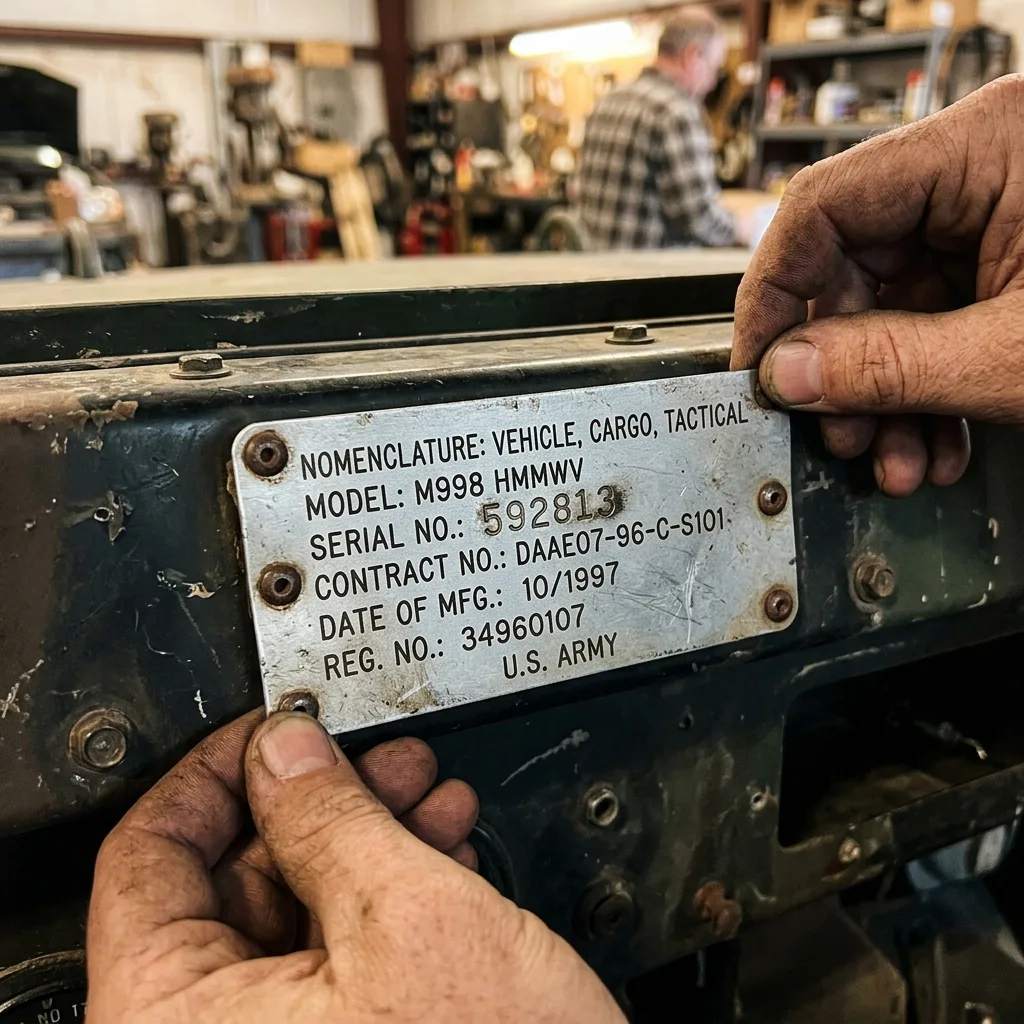
That serial is typically six to twelve characters. On a HMMWV you find it stamped into the B-pillar inside the driver door frame and printed on the metal data plate riveted to the dashboard or center console. The data plate also lists the contract number, the delivery date, the gross vehicle weight rating, and the model code. None of that information helps a state DMV computer that wants a 17-character string starting with a manufacturer identifier and ending with a check digit. The state’s title software was built around the civilian VIN standard, and the military serial does not fit the field.
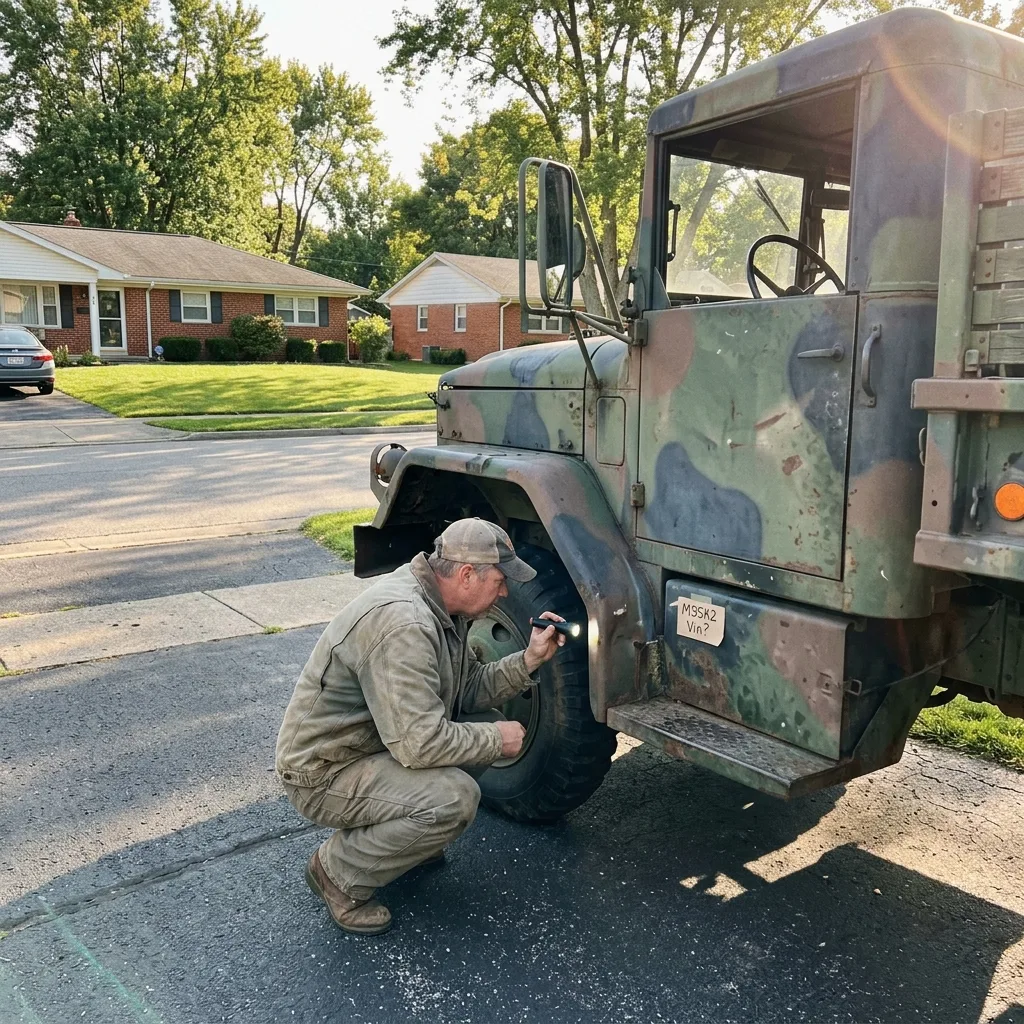
Then there is the tub problem. On a HMMWV the “tub” is the bonded aluminum body assembly that sits on the chassis. Tubs are manufactured separately, stored, and grabbed in random order during final assembly. The tub carries its own stamped identifier that has nothing to do with the chassis serial. Buyers who find a number on the tub and assume it matches the data plate are starting their DMV adventure with two mismatched numbers instead of one. The federal SF-97 document only references the chassis serial, so any title attempt built on the tub number is dead on arrival. To make matters worse, decades of CARC chemical-agent-resistant paint can completely cover the stamped serial on the B-pillar. Buyers regularly have to scrape paint with a plastic tool just to confirm what their own vehicle is supposed to be. You can buy your HMMWV through the official DLA Disposition Services auction or its commercial partner platforms and still have no idea what your real serial is until you get hands-on with the metal.
The SF-97 itself, formally called the Certificate of Release of a Motor Vehicle, is the federal government’s official transfer document. It is signed by a DLA officer when a vehicle leaves DoD inventory and enters the civilian world. It is your title equivalent. It is not your VIN.
The GovPlanet VIN Problem and the SF-97 VIN Mismatch
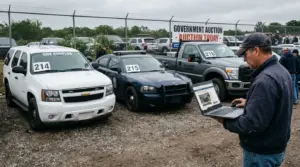
GovPlanet, IronPlanet, and the surrounding ecosystem of federal surplus auction platforms have a database schema that demands a “VIN” field for every listing. The auction staff is not a team of military historians inspecting each B-pillar. They populate the VIN field by reading whatever stamped numbers are visible, sometimes including the tub number, sometimes the data plate serial, sometimes a transposed digit, sometimes a contract number that looks like a serial. The result is a listing VIN that may or may not match the actual chassis serial recorded on your SF-97 when it is finally issued by DLA Disposition Services.
An Expedition Portal community poll in 2023 surveyed 150 HMMWV buyers and found that 22 percent reported a VIN mismatch between the auction listing and the federal SF-97 they received. That is not an outlier. That is roughly one in five buyers walking into the post-auction process with a paperwork conflict already baked in. The SF-97 VIN mismatch is not a rare edge case. It is a structural feature of how the auction platform records data versus how DLA records data versus how state DMVs expect data.
The fix on the auction side is slow and expensive. GovPlanet will reissue a corrected listing record, but the process costs roughly $50 per attempt and takes two to three months. In a meaningful number of cases the auction yard requires the vehicle to be returned to their lot for physical re-inspection. Shipping a HMMWV from your home in Idaho or Florida back to a yard in Arizona or Texas runs $500 to $1,000 each way. You end up paying more in transport than you paid the auction fee, and you still do not have a tagged vehicle at the end. M35 deuce-and-a-half buyers report the same pattern, as do M151 MUTT and M1097 ambulance buyers. The vehicle changes, the mismatch story stays the same.
And here is the punchline that buyers do not learn until it is too late: even a perfectly corrected GovPlanet listing does not solve your state DMV problem. Your state’s title software is not querying GovPlanet. It is querying a federal VIN database that the auction platform does not feed. Fixing the GovPlanet listing makes the paperwork internally consistent. It does not put your military serial into the database that controls whether your home state issues a title.
What Happens at Your State DMV
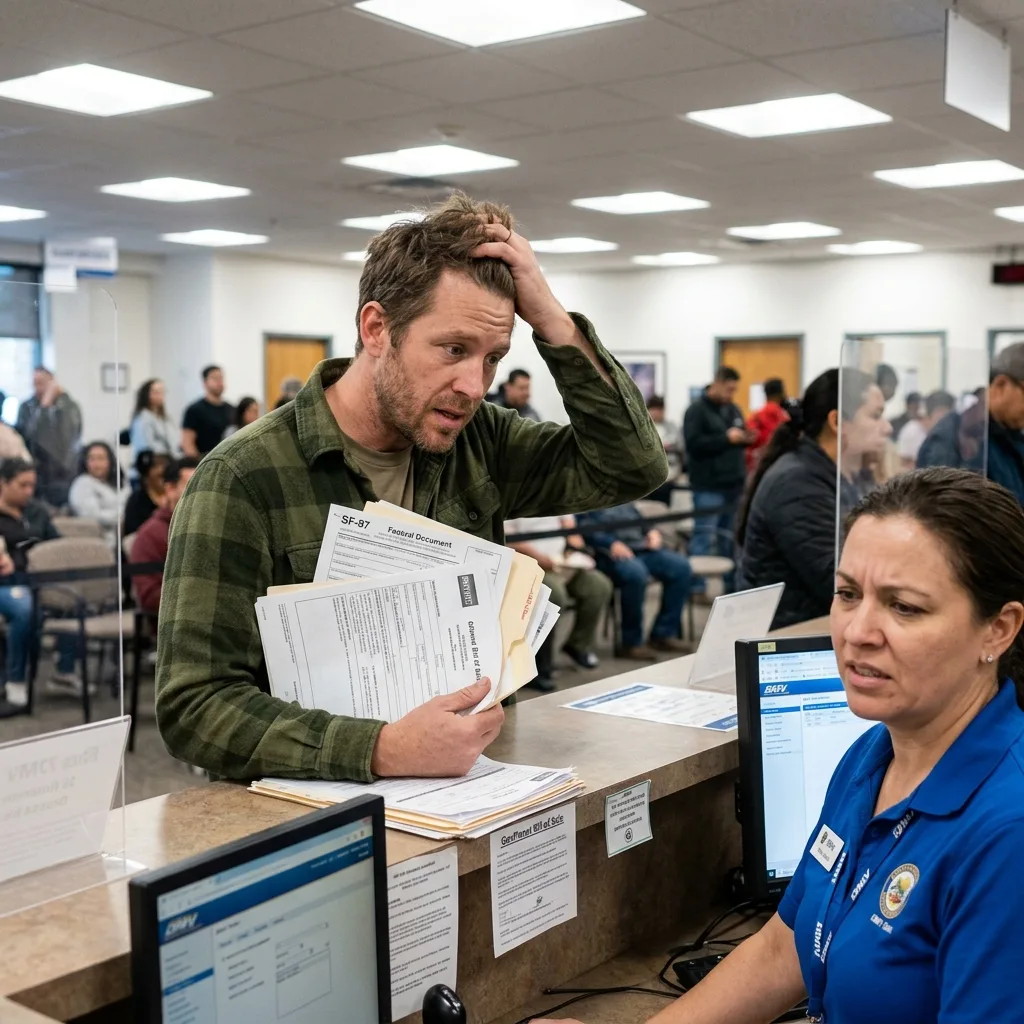
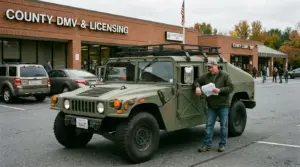
The moment of truth is when a state DMV clerk types your military serial number into the title workstation. The software hits the National Motor Vehicle Title Information System and the state’s local VIN registry. Both return “not found.” The clerk has three options: deny, escalate, or send you home with paperwork to come back later. You will get one of those three answers, and which one depends almost entirely on which state you happen to live in.
California is the worst state in the country for SF-97 vehicles. California DMV regulations distinguish three categories of Government Surplus Vehicle. General GSVs are vehicles like surplus civilian sedans or light trucks that already carry standard 17-digit VINs and process normally. Military GSVs, including HMMWVs, are explicitly defined as vehicles without a VIN that carry only a serial number, and California regulations state they cannot be operated on public highways unless an SF-97 is present and properly processed. Tactical vehicles are a third category limited to defense exercises and demilitarized scenarios under a DLA 1928 certificate. Every military GSV in California gets suspended out of the local DMV and sent to the Technical Compliance Section at headquarters in Sacramento.
The TCS process requires SF 97-1, REG 343 verification of vehicle, multiple bills of sale tracing chain of custody, a weight certificate, smog documentation if applicable, and frequently a California Highway Patrol referral. The CHP referral is only legally triggered when the serial is disfigured, missing, or altered, but in practice the TCS regularly punts files to CHP just because the file is unusual. From start to finish, a California SF-97 title runs six to ten months. Community data suggests roughly half of California HMMWV title attempts fail on the first pass and require resubmission, additional documentation, or appeal. The buyer is paying insurance and storage on an undriveable vehicle the entire time.
New York, Pennsylvania, and Illinois are not as bad as California but operate similar suspension processes that routinely add three to six months. Texas, Arizona, Florida, and Montana are the friendliest states for SF-97 acceptance, with title staff who recognize the federal document and process it without sending the file to a special compliance unit. Even in those friendlier states, a GovPlanet VIN error can still trigger a flag that requires correspondence with DLA to resolve.
California’s official position: Military Government Surplus Vehicles, including HMMWVs and Humvees, do not carry VINs. They carry serial numbers only. They cannot be operated on public highways unless an SF-97 is on file and the Technical Compliance Section has reviewed and approved the title package. The TCS workload backlog and the documentation chain of custody requirement push average processing time into the six-to-ten-month range. California will not shortcut this for you. The state simply does not have a fast-track lane for SF-97 vehicles.
The Four Paths Forward When You Hit the SF-97 VIN Mismatch
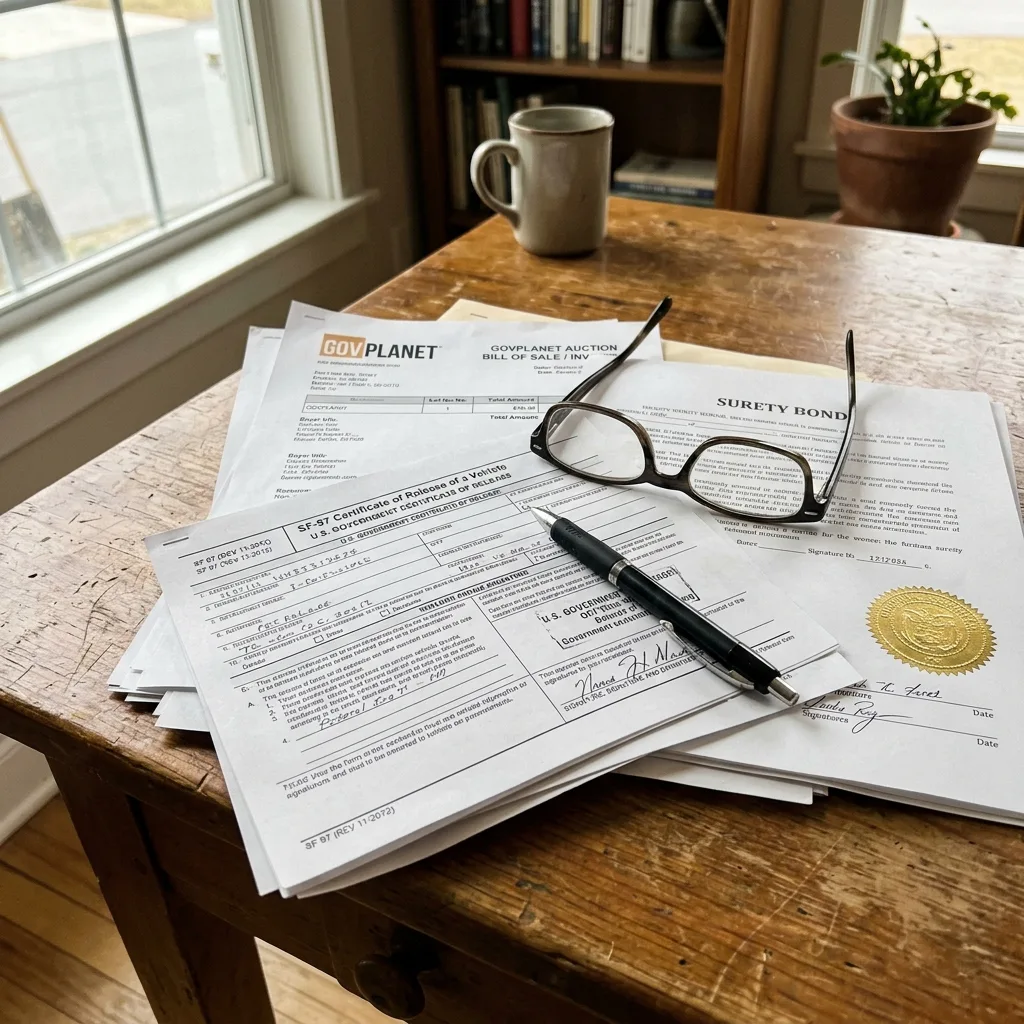
Every buyer who hits the SF-97 VIN mismatch wall has exactly four realistic routes. They are not equal in time, cost, certainty, or stability — and picking the wrong one can cost you six months and thousands of dollars before you figure that out.
Path 1: Fix the GovPlanet VIN
This is the path most buyers try first because it feels logical. The auction listing has the wrong number, so you correct the listing. GovPlanet’s reissue process costs $50 per attempt and takes two to three months. Some yards require physical return of the vehicle for re-inspection, which adds $500 to $1,000 in transport each way. At the end of the process you have an internally consistent paperwork trail between the auction listing and your SF-97. What you still do not have is a state DMV that recognizes the corrected serial as a registered VIN in their title system. The original DMV problem is still waiting for you.
Path 2: Bonded Title
A surety bond title is a provisional title issued by your state in exchange for posting a bond equal to one and a half to twice the vehicle’s value. The bond protects the state in case someone shows up later claiming ownership. Costs run $300 to $1,000 or more depending on vehicle value and bond rates. The provisional period typically lasts three to five years. During that window, any third party can challenge your title. For a military vehicle that came through a federal disposal channel, the chance of a third-party challenge is low, but the title remains marked “bonded” or “provisional” in the state record for the full window. Some insurance companies treat bonded titles differently and some private buyers will not pay full value for a bonded-titled vehicle when you eventually resell.
Path 3: Court Order Quiet Title
This is the last-resort path when everything else has failed. You file a civil action in your local court asking a judge to issue an order declaring you the legal owner. Costs run $500 to $5,000 depending on whether you hire an attorney and how contested the matter becomes. Timelines depend entirely on your local court calendar and can stretch six to twelve months or longer. Judges who do not regularly handle military surplus matters may require expert testimony or DLA records, adding cost and time. This path works, but it is the slowest and the most expensive way to solve the SF-97 VIN mismatch.
Path 4: Montana LLC
The Montana LLC route solves the SF-97 VIN mismatch by routing around the state DMV that has the database problem in the first place. You form a Montana LLC. The LLC takes ownership of the vehicle via the SF-97. The LLC registers the vehicle in Montana, where the county treasurer accepts the SF-97 serial number directly without running it against a 17-digit VIN database. Montana issues a permanent license plate to the LLC. You drive the vehicle in all 50 states under that registration. Total elapsed time: seven days. Total Year 1 cost: $899. No bond. No court order. No GovPlanet reissue. No California TCS queue.
Why Montana Skips the Whole Fight
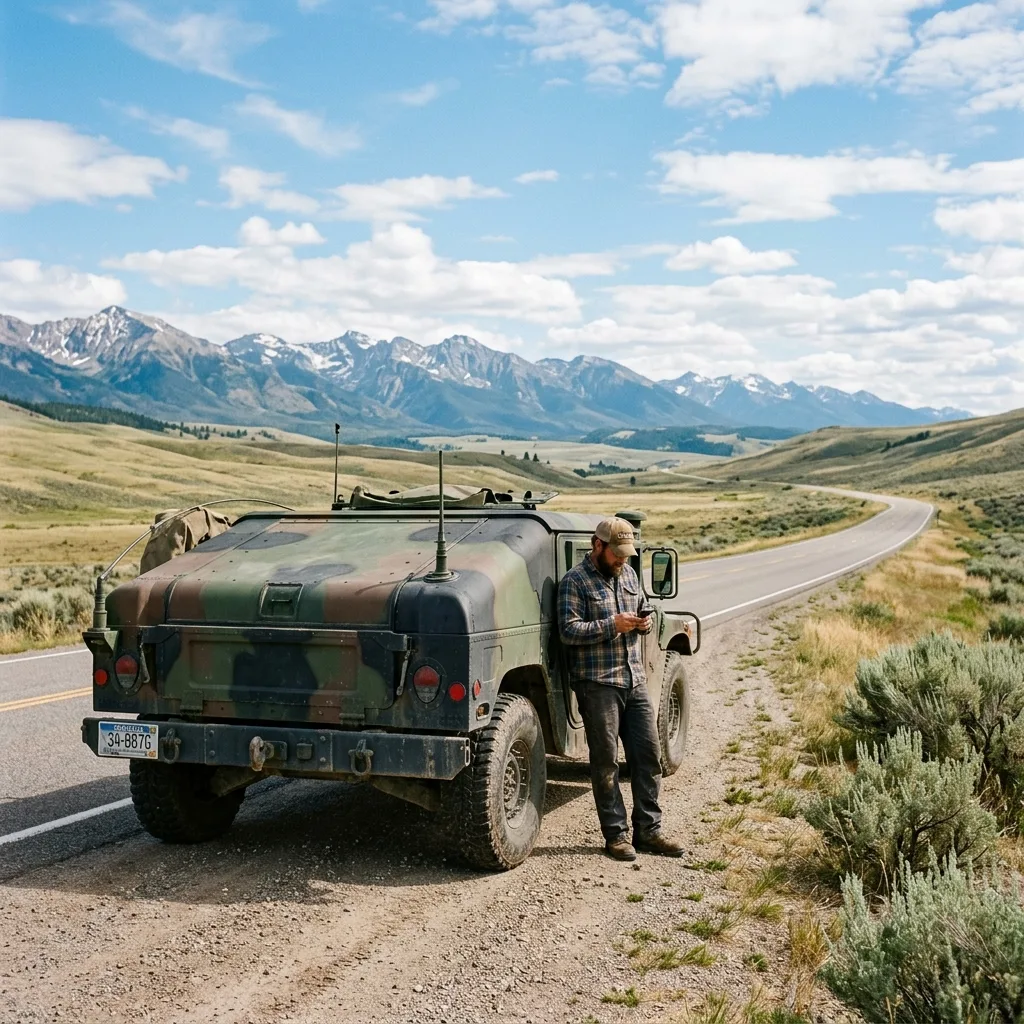
Montana counties do not run your military serial against a VIN database, because Montana law was written to accept federal title documents as valid evidence of ownership. The SF-97 is a federal disposal record signed by an authorized DLA officer. Montana treats it the way it treats a manufacturer’s certificate of origin from a civilian factory: as the source-of-truth document that establishes who owns the vehicle and what its identifying number is. The county treasurer transcribes the serial from the SF-97 into the Montana title record as written. There is no software validation step that compares the serial against a NHTSA standard. The mismatch problem that destroys your home state DMV simply does not exist in Montana’s process.
The legal foundation is the same Montana LLC structure that thousands of collector car owners, RV owners, and exotic vehicle owners already use. You form a Montana limited liability company. The LLC is a legal person under Montana law. The LLC takes ownership of the military vehicle from you via assignment of the SF-97. The LLC then applies for Montana title and registration in its own name. Montana issues a permanent license plate to the LLC. The LLC is registered to a Montana physical address, which makes Montana the legal jurisdiction of the vehicle for registration purposes. You, the human, are the manager and sole owner of the LLC. The LLC owns the vehicle. Montana owns the registration.
The supporting benefits are substantial. Montana imposes no state sales tax on vehicle purchases, which matters when your HMMWV cost $15,000 to $40,000 at auction and your home state would impose six to ten percent sales tax on top of that. Montana requires no annual safety inspection. Montana requires no emissions testing, which would be a death sentence for many older military vehicles in states like California, Colorado, and parts of New York. Montana plates are permanent on most vehicle classes after the initial registration, meaning you renew the LLC annually but do not have to pay for and reattach new plates every year.
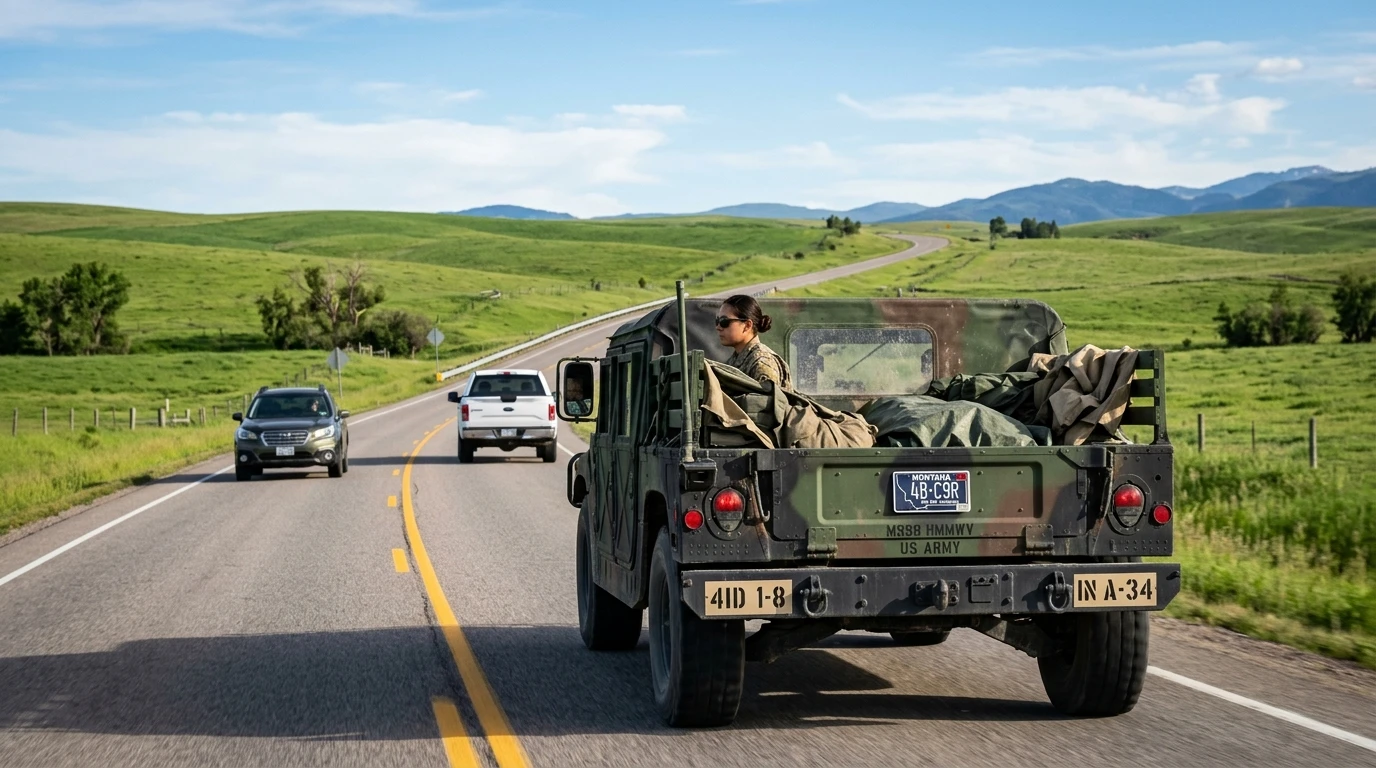
And critically, the registration is portable. A vehicle registered through a Montana LLC is legally on the road in all fifty states because vehicle registrations follow the jurisdiction of registration, not the jurisdiction of the driver. Your daily driver could be in Florida, your second vehicle in California, and your HMMWV legally tagged through Montana, and all three are road-legal in any state you happen to be in.
What Montana registration actually involves for SF-97 vehicles: The Montana LLC takes ownership via the federal SF-97. The county treasurer reviews the SF-97, the bill of sale, and the LLC formation documents. The serial number from the SF-97 is transcribed directly into the Montana title without VIN database validation. The state issues a Montana title in the name of the LLC and ships a permanent license plate to the LLC’s Montana address. We forward the plate to you. The entire elapsed time from document submission to plate in your hand is approximately seven days.
Real-World Scenarios
Three recent client situations show how the SF-97 VIN mismatch plays out across different states and different vehicles. Names changed, facts are exact.
Texas Buyer, HMMWV M998, GovPlanet VIN Mismatch
A buyer in suburban Houston won an M998 cargo HMMWV at auction for $22,400. Texas is one of the friendlier SF-97 states, and he assumed his county tax office would accept the federal document. He was right about the office’s willingness and wrong about the paperwork. The GovPlanet listing VIN did not match the chassis serial on the SF-97 that DLA mailed him two weeks later. The Texas clerk pulled both numbers, returned both as “not found,” and asked him to come back with reconciled paperwork. He spent six weeks trying to get GovPlanet to reissue, paid $50 twice, and was told the auction yard would need to re-inspect. At that point he reached out to Zero Tax Tags. We formed his Montana LLC the next business day, transferred the SF-97 into the LLC, and had permanent Montana plates on his doorstep seven days later. The Texas attempt is closed and the vehicle is on the road.
California Buyer, M35 Deuce-and-a-Half, TCS Suspension
A buyer in San Bernardino County picked up an M35A2 deuce-and-a-half from a regional auction yard for $9,800. The serial was partially obscured by CARC paint on the frame rail, and the data plate listed a serial that did not perfectly match the SF-97 letters and digits. California DMV immediately suspended the title attempt to the Technical Compliance Section in Sacramento. Eight months in, he had submitted REG 343 three times, paid for two weight certifications, and was waiting on a CHP referral that the local CHP office had no idea what to do with. He found Zero Tax Tags through a Facebook group of HMMWV owners. We formed his Montana LLC while California TCS was still on the file. Within seven days he had a Montana plate. He let the California TCS file lapse and now drives the M35 on Montana registration. The California TCS office eventually closed his file as inactive.
Pennsylvania Buyer, M1097A2, Invalid Serial Flagged as Stolen
A buyer in central Pennsylvania bought an M1097A2 heavy HMMWV for $31,000. When the PennDOT clerk ran the serial, the system returned a “possible stolen vehicle” alert. The vehicle was not stolen. Military serial numbers occasionally overlap numerically with civilian VIN sequences, and the Pennsylvania state title database flagged the match as a potential stolen-vehicle hit. He spent four months trying to clear the flag, including filing for a bonded title to bypass the issue. The bond cost $720 and the application stalled when the underwriter asked for more documentation. He called Zero Tax Tags after seeing our work referenced on a military vehicle forum. We formed his Montana LLC the same day. Montana does not query the Pennsylvania title database, does not run the federal “potentially stolen” check that triggered the PennDOT flag, and accepts the SF-97 serial as written. Seven days later, permanent Montana plates.
Who This Is Built For
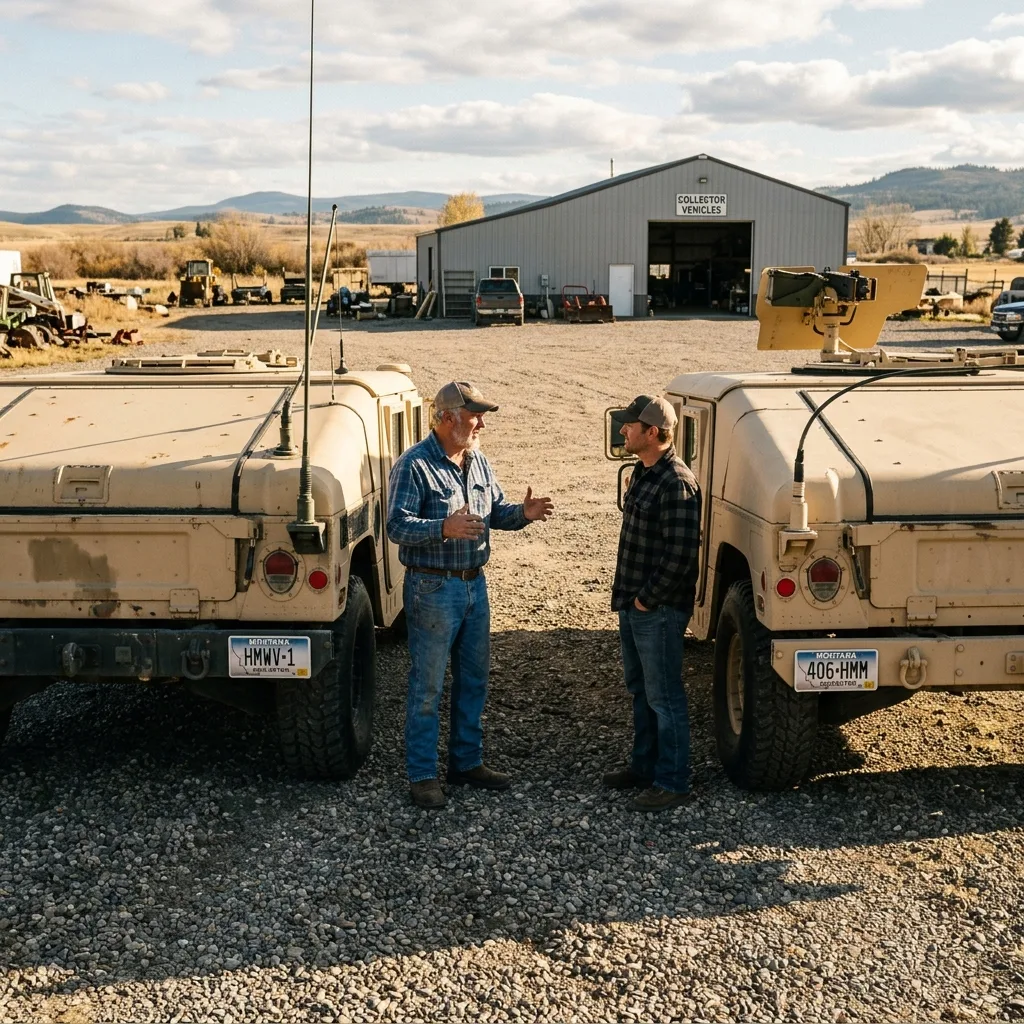
We built the Zero Tax Tags SF-97 process for specific kinds of military surplus vehicle owners.
- GovPlanet buyers with a mismatched or invalid VIN. If your auction listing VIN does not match the SF-97 your federal disposal officer issued, you are already on the slow track in your home state. Montana solves it without waiting for the auction yard to reissue anything.
- Multi-state residents. Snowbirds, RV travelers, military families on permanent change of station, and remote workers who genuinely live in two or more states benefit enormously from a permanent Montana plate that travels with the vehicle regardless of where the human happens to be that month.
- Collectors with two or more military vehicles. If you have a HMMWV and an M35, or an M151 MUTT and an M998, or an M1009 and an M1097, fleet pricing is available. Call us. The structure scales beautifully across multiple vehicles under one Montana LLC, and the cost per vehicle drops with each additional unit.
- Buyers in states with no working process. California, New York, Pennsylvania, Illinois, and a handful of others have effectively no fast-track lane for SF-97 vehicles. If you live there and your home state cannot issue a title in under six months, Montana is the answer.
- Buyers on a deadline. Deployment dates, PCS orders, expiring temporary tags, lease-end on a storage facility, an upcoming convoy event you bought the vehicle to attend. When the calendar is closing, the seven-day Montana timeline is the only path that hits a fixed deadline reliably.
- Buyers tired of fighting bureaucracy. If you have already submitted to your home state once and been told to come back with more paperwork, you have learned the lesson the rest of these buyers have learned. The state DMV is not your ally on this. Montana through Zero Tax Tags is.
The one situation where we ask buyers to call us first is when the vehicle is genuinely low-value, roughly under $8,000. The fixed-cost structure still works on lower-value vehicles for many buyers, but the math depends on your specific situation. Pick up the phone and we will run the numbers with you in five minutes.
The Zero Tax Tags Process for SF-97 Vehicles
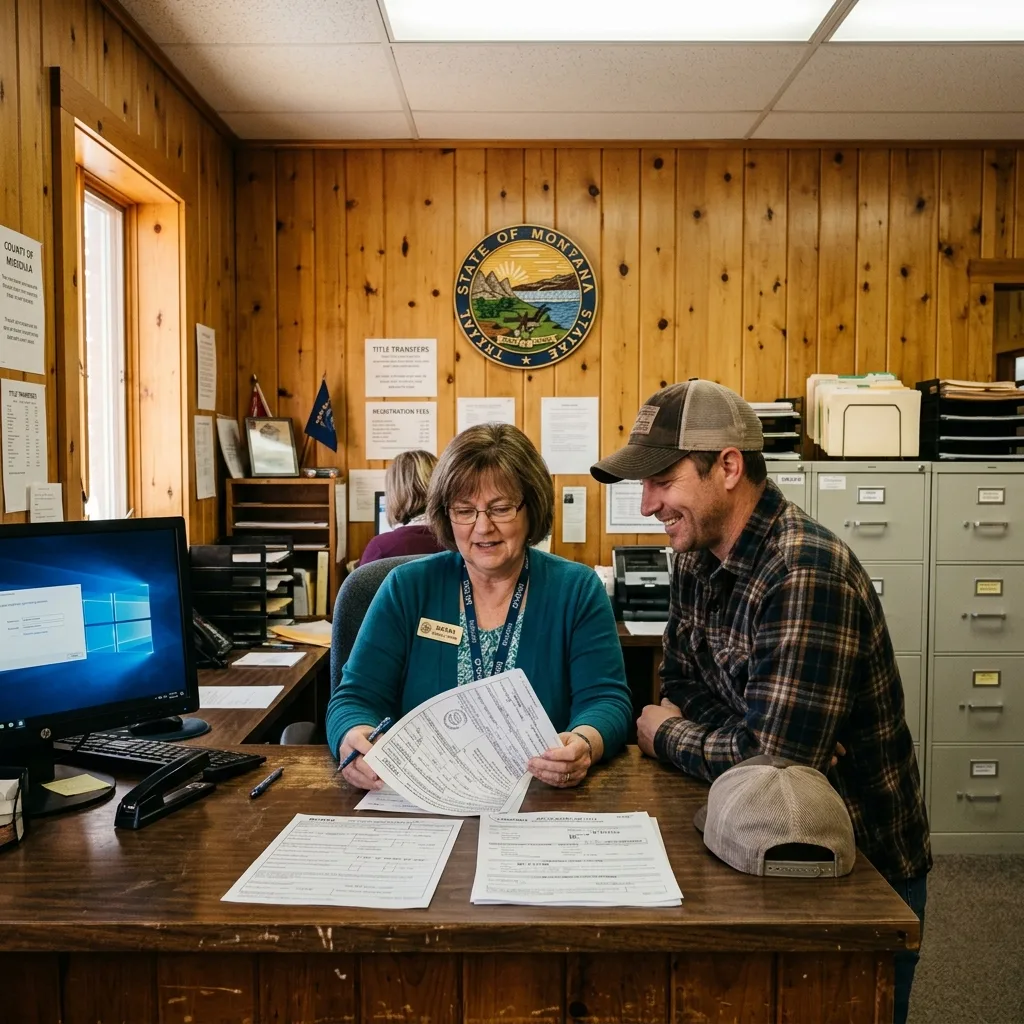
We handle SF-97 military vehicles every week. We engineered this workflow specifically around the documentation chain that DLA Disposition Services uses and the Montana county treasurer offices we work with directly — HMMWV, M35, M151, M1009, M1097, and most other DoD surplus classes. Nothing improvised, nothing guessed.
Documents we need from you:
- The federal SF-97 issued by DLA Disposition Services (the official certificate of release)
- The bill of sale from GovPlanet, IronPlanet, or the auction platform of record
- DD Form 1348-1A if applicable to your vehicle and transfer chain
- Photo of the data plate showing the chassis serial
- Photo of the stamped serial on the B-pillar or chassis (HMMWVs) or frame rail (M35, M151)
- Government-issued photo identification for the LLC manager (you)
If your CARC paint is hiding the stamped serial, we will walk you through the safe scraping process to confirm the number before we file. We have done this enough times that we can usually predict where to look on your specific model year.
| Day 1: | Submit paperwork through our secure portal. We review for completeness and file your Montana LLC the same day. |
| Days 1-2: | Montana LLC formation complete — same business day in most cases, second business day at the latest. |
| Days 2-4: | Title transferred into the LLC name at the Montana county treasurer. |
| Days 4-7: | Permanent Montana plates shipped directly to your door within 3-5 business days of title completion. |
Seven days from submission to plate in your hand. No TCS queue. No CHP referral. No GovPlanet reissue. No bonded title underwriter asking for more documentation. We handle every county filing personally, which is why our timeline is consistent week over week.
Pricing
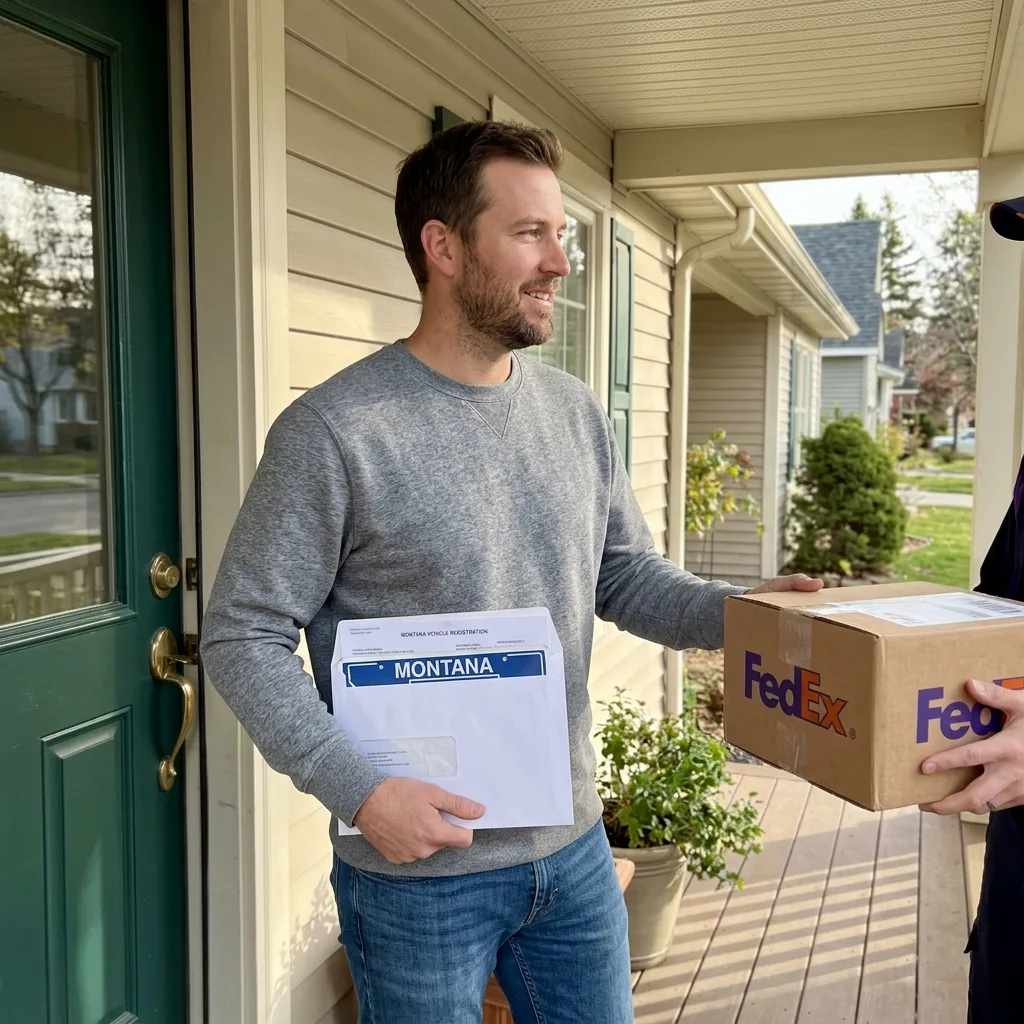
Our pricing is fixed and transparent. There are no surprise fees, no per-document upcharges, and no escalation when your vehicle turns out to be a military surplus model. We charge the same for an SF-97 HMMWV as we do for a civilian collector car.
Total cost of ownership: $899, one time. The plate is permanent — you do not reorder plates or pay annual registration renewal fees. Montana LLC annual filings are currently $0. That is the complete number, year one through year ten and beyond.
Compare that to the alternatives. California’s eight-to-ten-month TCS process can easily consume $1,500 to $3,000 in attorney consultations, document preparation, weight certifications, smog inspections (if the vehicle requires one), and missed-deadline penalties. A bonded title can run $300 to $1,000 just for the bond premium, and the title remains marked provisional for three to five years after. A court-order quiet title with attorney representation routinely runs $2,500 to $5,000 and takes six to twelve months. Montana is faster than all three, and at $899 flat it costs less than any of them before you even count storage and insurance on an undriveable vehicle while you wait.
What you save versus the California path alone: If you live in California and would otherwise spend 6-10 months in the TCS queue, you save approximately $4,000 to $8,000 in storage, insurance on an undriveable vehicle, missed-event opportunity cost, and direct fees over the same five-year window. The Montana route is the cheaper option even before you account for the absence of California sales tax on the original purchase.
Is This Legal?
Montana LLC vehicle registration is legal. It rests on two settled bodies of law: the commerce clause of the United States Constitution, which allows businesses to conduct interstate commerce without being required to relocate the business to each state where commerce occurs, and Montana’s limited liability company statutes, which allow Montana LLCs to own assets including motor vehicles and to register those vehicles in Montana regardless of where the LLC’s members happen to reside.
Courts have consistently affirmed the principle that taxpayers and businesses may structure their affairs to minimize tax exposure as long as the structure is real. The principle traces back through generations of federal tax law. Thomas v. Bridges and the broader line of cases on legal tax planning confirm that a properly formed Montana LLC owning a vehicle and registering it in Montana is a valid legal structure, not a sham. The LLC must be real, which is why we form a genuine Montana LLC with a Montana physical address and annual filings, not a paper shell.
For SF-97 vehicles specifically, Montana law is uniquely accommodating. Montana counties accept federal title documents including the SF-97 as primary evidence of ownership without requiring 17-digit VIN database validation. Montana’s title process was not built around the post-1981 NHTSA VIN standard the way many other states’ processes were, which is why Montana works for these vehicles when other states do not. This is not a workaround. It is Montana exercising its statutory authority over vehicle titling in a way that happens to accommodate the federal disposal document format.
You own a Montana LLC. The LLC owns the vehicle. Montana issues the title and the plate. The structure is durable, legal, and used by thousands of vehicle owners across all fifty states for collector cars, RVs, exotic vehicles, and military surplus vehicles every year.
Frequently Asked Questions
My GovPlanet listing showed a VIN. Why is it wrong?
GovPlanet’s database requires a VIN field on every listing. Auction staff populate that field with whatever stamped number is most visible at intake, which is often the tub number, a contract number, or a transposed version of the actual chassis serial. The number on your listing is not authoritative. The number on the federal SF-97 issued by DLA Disposition Services is authoritative. When those two numbers disagree, you have an SF-97 VIN mismatch, and most state DMVs cannot resolve it without a months-long correction process.
Can I just send the serial number directly to my state DMV?
You can, and most states will accept the submission, but the title software still has to validate the serial against a federal database that does not contain pre-1981 military serial numbers. In friendlier states (Texas, Arizona, Florida, Montana) the clerk can manually override the validation step. In hostile states (California, New York, Pennsylvania, Illinois) the file gets suspended to a technical compliance unit and sits for months. Sending the serial directly works if you happen to live in one of the four friendly states. Otherwise it does not.
What if my state flags the serial as stolen?
Military serial number formats occasionally overlap numerically with civilian VIN sequences in older state databases. When the overlap matches a vehicle that was flagged stolen years or decades ago, your title attempt triggers a false-positive stolen alert. Clearing the flag takes months of correspondence between your state DMV, the agency that originally flagged the civilian vehicle, and DLA Disposition Services. The Montana route bypasses the entire database query by not running your serial against the civilian VIN database in the first place.
Is the Montana LLC process different for military vehicles versus regular cars?
Substantively, no. The LLC formation is identical, the county filing is identical, and the plate issuance is identical. The difference is in the source document. A civilian vehicle comes in on a manufacturer’s certificate of origin or an existing state title. A military surplus vehicle comes in on a federal SF-97. Montana counties accept both. We have refined our SF-97 workflow to ensure the chain-of-custody documents match what county treasurers expect, which is why our timeline stays at seven days even for military vehicles that take other states six to ten months.
Do I need to convert the vehicle to civilian specs first?
For Montana registration purposes, no conversion is required. Montana does not impose emissions testing, does not require safety inspections on most vehicle classes, and does not require civilian conversion of military lighting, blackout drive lamps, or military-specification tires. Some buyers choose to convert components for their own preferences or to satisfy insurance underwriters. Montana itself does not require it.
How long does the process take?
Seven days from submission of complete documentation to permanent Montana plates delivered to your door. Day 1 we form the LLC. Days 2-4 we complete the title transfer at the county treasurer. Days 4-7 the plates ship and arrive at your address. We have run this timeline hundreds of times for SF-97 vehicles and it holds consistently.
What if I already tried and got rejected at my home state DMV?
That is a frequent client situation. A failed home-state attempt does not affect the Montana process. Montana is a separate jurisdiction with its own title system. Your home state rejection does not appear in Montana’s database and does not block Montana registration. Many of our clients come to us after months of fighting their home state. We simply pick up the file and route it through Montana instead. The home-state file can be allowed to lapse.
Can I insure a military vehicle registered through a Montana LLC?
Yes. The vehicle is insured under the LLC’s name with you as the named driver. Several major collector vehicle insurers and a number of standard-line carriers insure HMMWVs and similar military vehicles registered through Montana LLCs. We can recommend insurers who are familiar with the structure if you would like a referral. Insurance premiums are generally comparable to other specialty vehicle classes.
See how Montana LLC registration helps owners with similar military vehicle challenges:
- HMMWV Titling Guide: How to Register Your Surplus Humvee with an SF-97
- SF-97 Vehicle Titling: The Complete Guide to Registering Your Government Surplus Vehicle
Ready to End the SF-97 VIN Mismatch Nightmare?
Military vehicle owners across all fifty states have used Montana LLC registration to bypass the VIN database wall and get their HMMWVs, M35s, and M151s legally tagged in seven days. You are next.