
27 min read
On this page
- + Vermont Vehicle Tax: The Purchase and Use Tax Explained
- + Vermont’s 7% Secret: Six Counties Charge More Than You Think
- + The Real Cost of Vermont Vehicle Tax: 5-Year Numbers
- + Vermont’s Annual Inspection: The Tax You Didn’t Know Was a Tax
- + Vermont’s EV Surcharge: Going Electric Is About to Get More Expensive
- + The New Hampshire Border Trap
- + Who Vermont Vehicle Tax Hits Hardest
- + The Montana Solution
- + Is Montana LLC Vehicle Registration Actually Legal?
- + Four Vermont Vehicle Owners Who Made the Switch
- + Who Benefits Most from Montana LLC Registration
- + How Zero Tax Tags Gets You Registered
- + Frequently Asked Questions
You moved to Vermont for the things Vermont actually has. The mountains. The covered bridges. The maple syrup that comes out of trees on your own property. Town meeting day. The quiet that settles over the Mad River Valley after the last skier loads up. Independence, in the way the state still markets itself, with a straight face, on its own license plates.
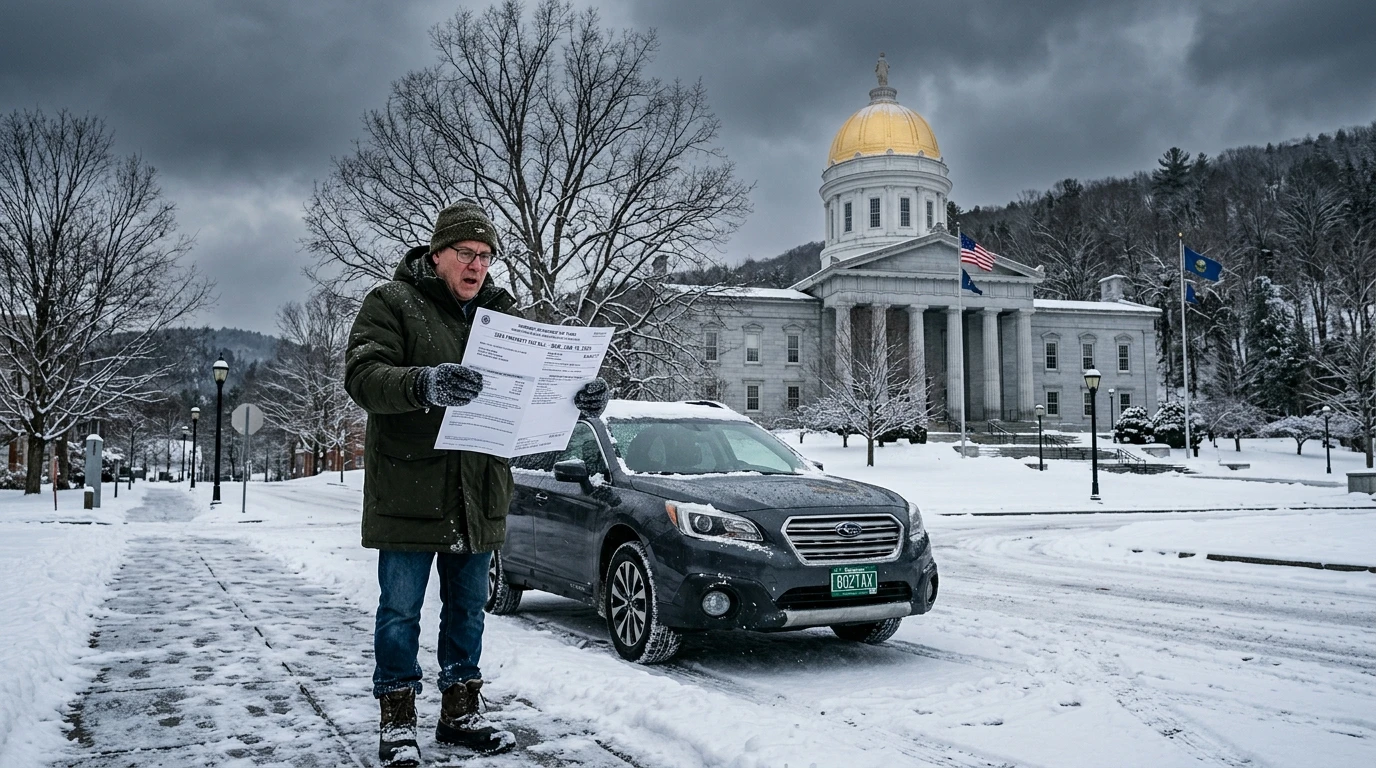
You did not move to Vermont to write a check for $6,650 to the Department of Motor Vehicles on the same afternoon a Burlington dealer handed you the keys to a $95,000 Porsche Cayenne. But that is exactly what happened, because you live in Chittenden County, and Chittenden County tacks an extra one percent onto Vermont’s already-six-percent Purchase and Use Tax. So your “6% state” turned out to be a 7% state, and a brand new luxury SUV came with a four-figure surprise stapled to the registration paperwork.
It gets worse. Vermont is also going to require you to bring that Cayenne in for a state inspection every single year for the rest of your life, or for the rest of the time you own it, whichever comes first. If you bought an electric vehicle instead, you are paying an additional $89 a year for the privilege of not burning gas. And the legislature is currently debating a bill that would charge you per mile, measured at that mandatory inspection.
What if you didn’t have to pay any of this?
Vermont Vehicle Tax: The Purchase and Use Tax Explained
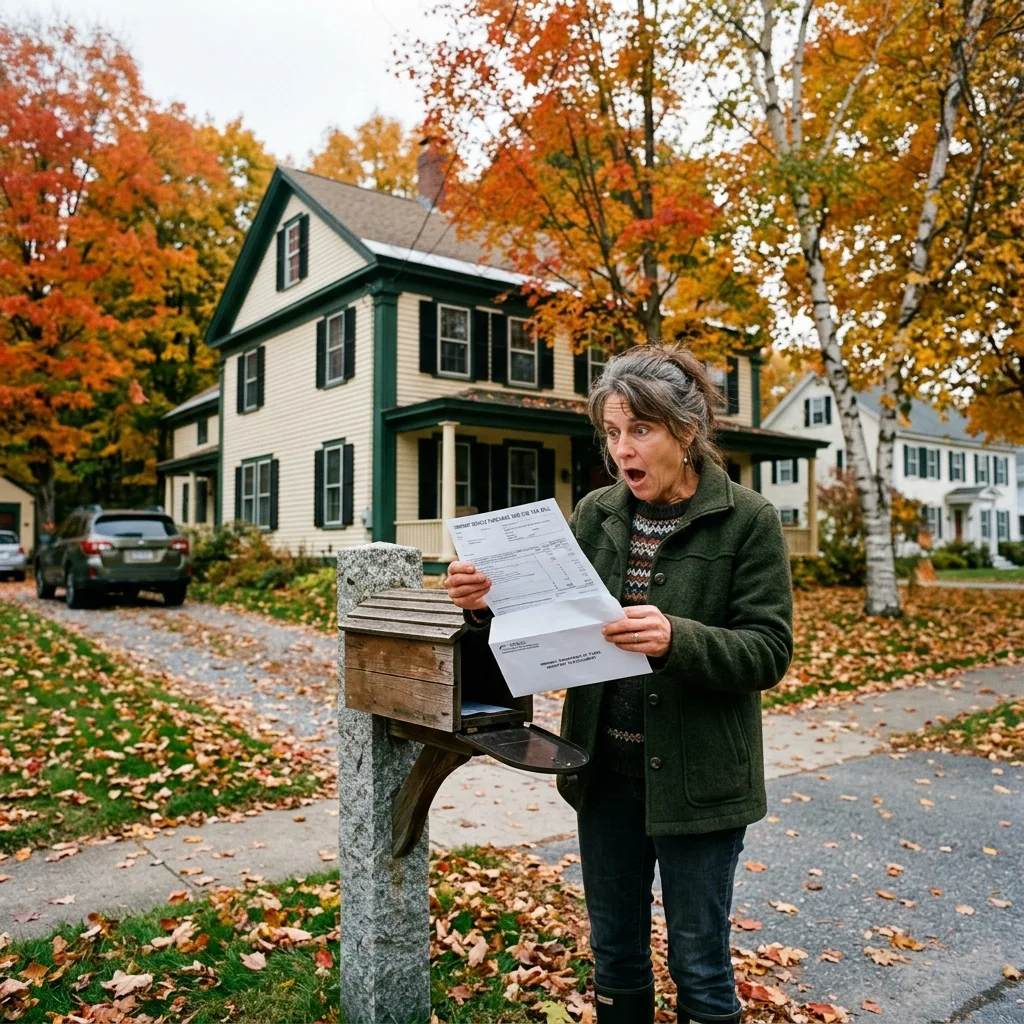
Vermont calls it the Purchase and Use Tax. The rest of the country would call it a sales tax with extra steps. The legal mechanism is slightly different (it is technically a use tax assessed at registration rather than a sales tax assessed at the point of sale), but the practical result is identical. You pay it. The state keeps it. Your bank account is six or seven percent lighter.
Here is how it actually works at the Vermont DMV. When you walk in to register a vehicle (whether you bought it from a dealer in Vermont, a dealer across state lines, a private seller in Quebec, or your cousin in Manchester), the clerk calculates 6% of the purchase price. Then they look at the county where the vehicle will be garaged. If that county is one of six specific ones, they add another 1% on top. You write the check. The car is yours, sort of, until next year when it is time to inspect it again.
The one merciful provision in Vermont’s structure is the trade-in deduction. If you trade in your old car as part of the purchase, the trade-in value is subtracted from the taxable base before the percentage is applied. Trade in a $20,000 vehicle on a $50,000 vehicle and you pay tax on $30,000, not $50,000. This is genuinely helpful. It is also the only thing about the P&U tax that is genuinely helpful.
Annual registration, mercifully, is flat rather than value-based. A standard passenger car costs $91 a year regardless of whether it is a Honda Civic or a Bentley Bentayga. Heavier vehicles in the 6,100 to 7,099 pound range pay $130 a year, with alternative-fuel versions paying $227.50. Title fees are $27 one-time. Transfer fee is $30. Dealer documentation fees average $148.
The Vermont vehicle tax formula: (Purchase Price minus Trade-in Value) multiplied by either 6% or 7% depending on county. Paid once at registration. Plus $91 annual registration. Plus mandatory annual inspection. Plus EV surcharge if applicable. Plus title and doc fees.
Vermont’s 7% Secret: Six Counties Charge More Than You Think
Vermont markets itself as a six-percent state. The DMV’s own materials lead with the six-percent figure. National tax-rate comparison sites list Vermont at 6%. Then you actually buy a car in Burlington and discover that you owe seven.
The county surcharge is small in percentage terms and enormous in dollar terms. One additional point of tax sounds like rounding error until you apply it to a car. On a $50,000 vehicle, that one point is $500. On a $95,000 luxury SUV, it is $950. On a $180,000 motorhome, it is $1,800. The surcharge does not come with better roads or better DMV service. It just comes.
The six counties that levy the additional 1% surcharge, raising the effective vehicle tax rate to 7%, are:
- Addison County (Middlebury and the western flank of the Green Mountains)
- Bennington County (Bennington, Manchester, and the southwestern corner)
- Chittenden County (Burlington, Winooski, South Burlington, Essex, Williston)
- Franklin County (St. Albans and the Canadian border region)
- Rutland County (Rutland City and the Killington corridor)
- Windham County (Brattleboro and the southeastern corner)
The math here is not subtle. Chittenden County alone contains roughly a quarter of Vermont’s entire population. Add Rutland, Bennington, Franklin, Addison, and Windham, and you are looking at a clear majority of Vermont residents who pay the higher rate. Vermont advertises a 6% vehicle tax. More than half the state’s population lives in counties that charge 7%.
For a $65,000 SUV registered in Chittenden County, the tax bill is $4,550. The same SUV registered to an address forty miles away in Windsor County (Woodstock, Springfield) costs $3,900. That extra $650 buys nothing additional. It just disappears into county coffers because of where the buyer happens to sleep at night.
The Vermont 7% reality: Vermont advertises a 6% vehicle tax. More than half the state’s population lives in counties that charge 7%. The “6% rate” is functionally a marketing line for tourists.
The Real Cost of Vermont Vehicle Tax: 5-Year Numbers
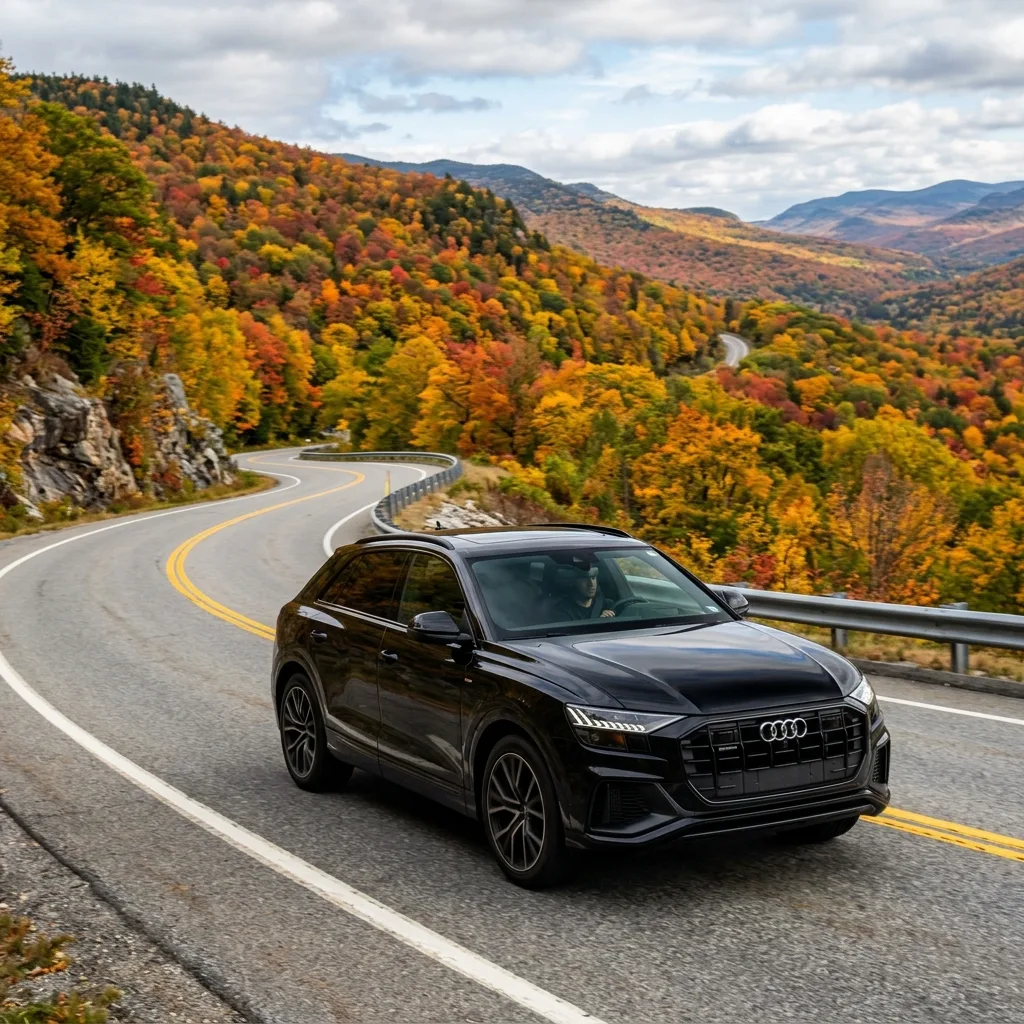
Sticker shock at the dealership is one thing. The real damage shows up over five years of ownership, after you have paid the P&U tax once, the registration five times, and the inspection five times. By then, you have funded a small but meaningful chunk of state government using nothing but your transportation budget.
The table below assumes you keep your vehicle for five years (which is roughly average for new-car ownership in the United States) and lays out the total Vermont cost against the equivalent Montana LLC registration cost. The Vermont annual fees include both the flat $91 registration and an averaged $56 annual inspection cost (the actual range is $50 to $200 depending on what your mechanic finds). The Montana column reflects the Zero Tax Tags pricing structure: $899 in year one ($699 service plus $200 LLC formation), then $368 annually for renewal. For RVs over $150,000, the Montana figure includes an additional $800 luxury fee in year one.
Read the right column twice. On the $95,000 luxury SUV, you save more than $5,000 over five years. On the $180,000 motorhome, you save more than $10,000. The Montana figure for RVs over $150,000 includes the one-time $800 luxury fee that Zero Tax Tags charges for high-value recreational vehicles, and the savings still cross five figures.
Notice also what is missing from the Montana column: any line item for inspections, any line item for EV surcharges, any line item for county surcharges. These do not exist in Montana. Not because of a clever loophole. Because Montana never created them.
The five-year reality: On the $95k luxury SUV in Chittenden County, you save over $5,000. On the $180k motorhome, you save more than $10,000. These numbers are not theoretical. They are what current Zero Tax Tags clients are not paying.
Vermont’s Annual Inspection: The Tax You Didn’t Know Was a Tax
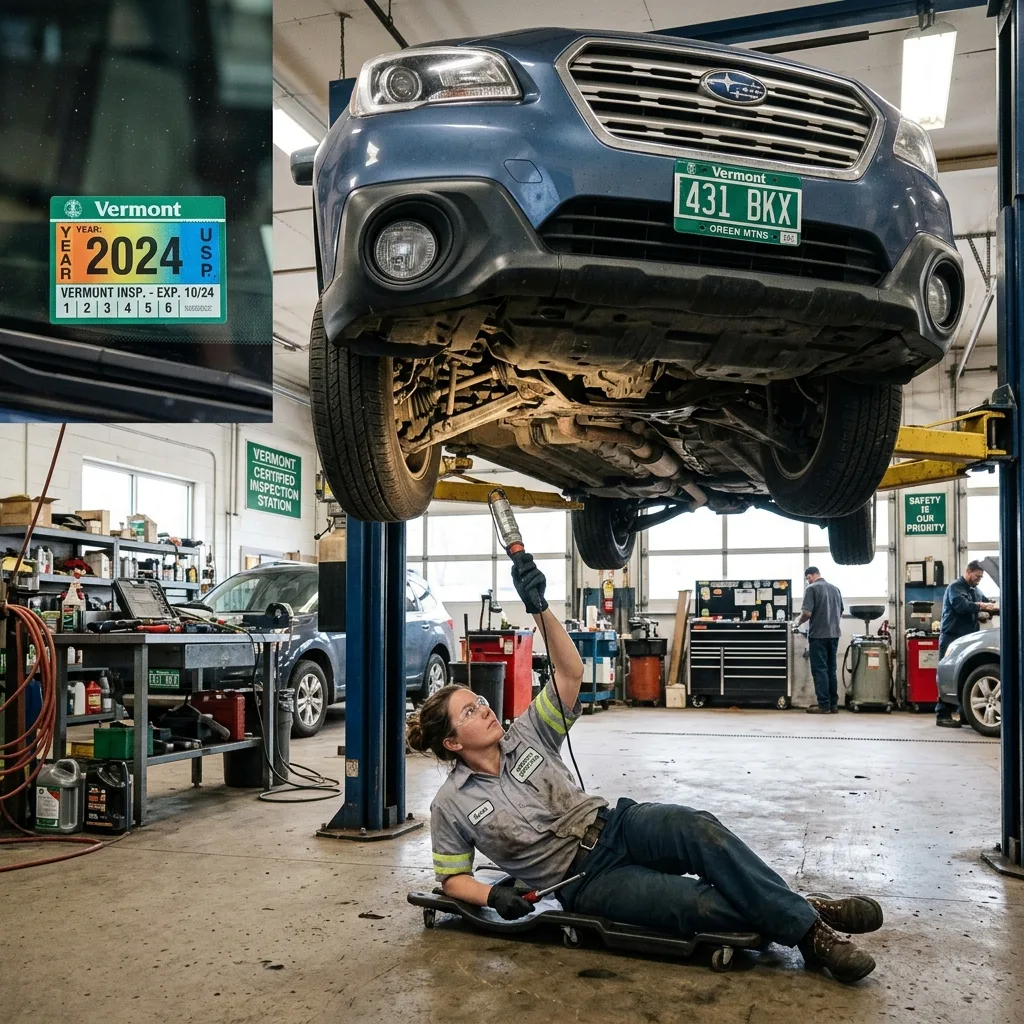
Most states that require vehicle inspections require them on a long cycle. Texas just abolished its annual inspection program. New Hampshire, your immediate neighbor, charges around $20 once a year and finishes the job in fifteen minutes. California has no general safety inspection at all. Most of the country has decided that mandatory annual mechanical examinations are a 1970s solution to a problem modern cars no longer have.
Vermont disagrees. Every registered vehicle in Vermont must pass an annual safety inspection at a state-licensed inspection station. The check covers brakes, lights, steering, suspension, tires, exhaust system, windshield condition, mirrors, horn, and a long list of supporting components. Vehicles less than ten model years old also undergo OBD emissions testing. The inspection sticker itself is $8. The labor charge varies by station.
That labor charge is where the inspection becomes a tax. A clean vehicle with no issues might cost $50 to inspect. The moment your inspector finds something (and they will find something, especially after a Vermont winter), the inspection becomes a repair invoice. Brake pads with too little life left. A tire below tread depth. A headlight assembly with condensation. Frame corrosion. A torn boot. Each of these triggers a fail, which triggers a repair, which triggers a re-inspection. The “inspection” routinely turns into a $500 to $1,500 maintenance event with a government deadline attached.
Vermont winters are uniquely brutal on automobiles. Road salt eats undercarriage components at a rate that residents of Arizona genuinely cannot fathom. Repeated freeze-thaw cycles open cracks in welds and rubber. By the second or third Vermont winter, an inspection that would have been routine in Tennessee becomes a guaranteed encounter with a frame inspection failure. Your right to drive your own car is then conditional on you fixing it on the inspector’s timeline, not yours.
A bill currently in committee, S.211, would shift Vermont to a biennial (every two years) inspection cycle. As of 2026, the bill is not law. The current annual requirement remains in force.
Montana requires no annual safety inspection. Zero. You service your vehicle when you decide it needs service, on a schedule you set, with a mechanic you choose. The state of Montana has no opinion on the matter.
The hidden tax: Vermont doesn’t just tax your purchase. It taxes your continued ownership, every single year, through a mandatory inspection tied to your right to drive.
Vermont’s EV Surcharge: Going Electric Is About to Get More Expensive
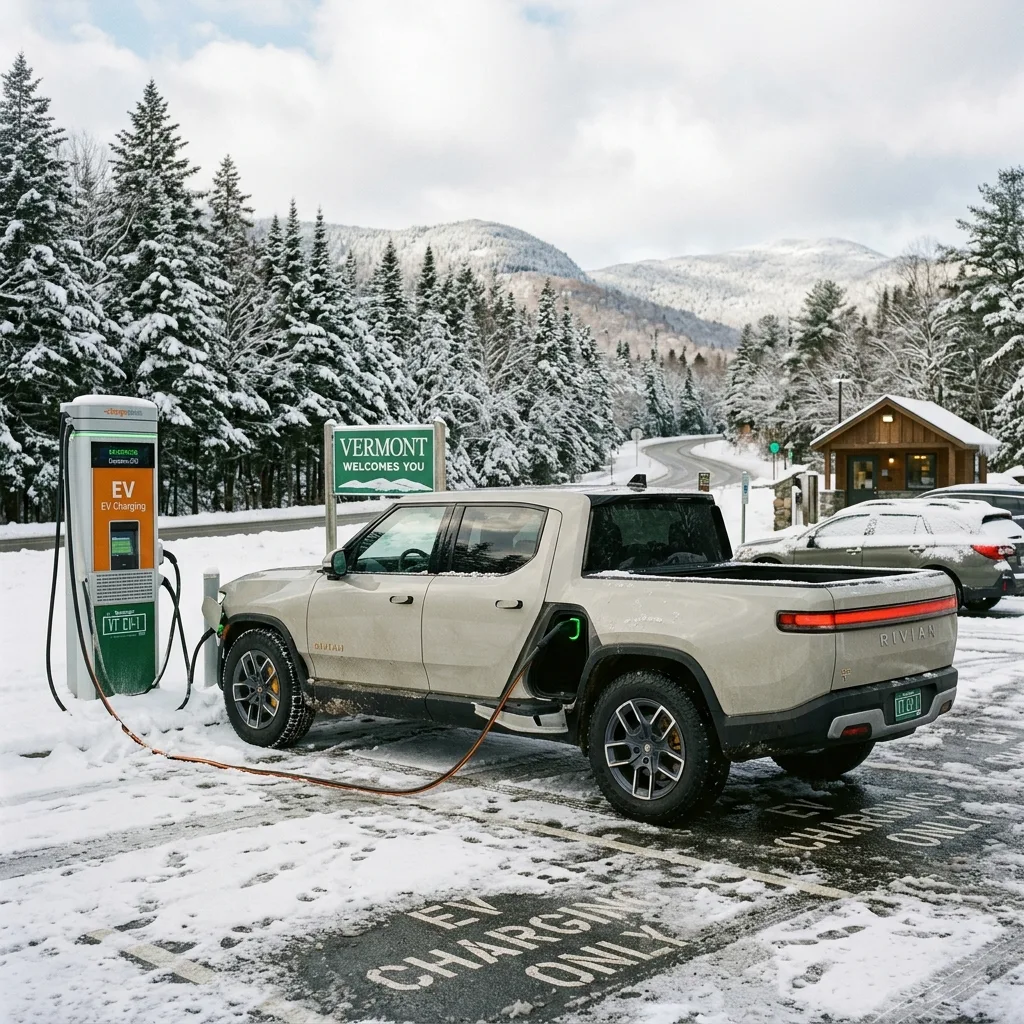
Vermont, like most New England states, talks frequently about climate leadership. Vermont, like most New England states, has decided that electric vehicle owners should pay extra for the privilege of not burning gasoline. The two positions coexist comfortably in the legislature.
The current structure is a flat annual surcharge stacked on top of standard registration. A battery electric vehicle (BEV) pays $89 per year in addition to the $91 base registration, bringing the annual government bill to $180. A plug-in hybrid (PHEV) pays $44.50 per year on top of registration, totaling $135.50. The official rationale is that electric vehicles do not pay the gas tax that funds road maintenance, and the surcharge is meant to recapture that lost revenue. The actual numbers do not match: $89 a year is roughly equivalent to the gas tax someone would pay on a high-MPG hybrid, not an EV with zero direct fuel consumption.
It is about to get worse. House bill H.944, currently moving through the Vermont legislature, would replace the flat $89 surcharge with a mileage-based fee starting in 2028. The proposed rate is $0.014 per mile. For an average driver covering 11,000 miles a year, that calculates to roughly $154 annually, a 73% increase over the current flat fee.
The mileage measurement mechanism is what should give you pause. The bill proposes capturing your odometer reading at each annual safety inspection. The state already requires you to bring your vehicle to an inspection station every year. Under H.944, the same visit becomes a tax-assessment event. Your mileage gets recorded, your fee gets calculated, and you pay before you can renew your registration.
The privacy implications are not subtle. The state would be tracking your annual driving distance through a mandatory event tied to your vehicle’s continued legal operation. Some EV owners describe this as an early step toward broader vehicle-mile telematics fees, the kind of system Oregon and California have been piloting for years.
Montana charges $130/yr for battery electric vehicles — but no mileage-based fee exists and no legislation creating one is on the table. No legislation creating one is on the table. Your electric vehicle is registered for the same flat fee as a gasoline vehicle, and the state has no opinion on how far you drove.
The proposed reality: Vermont is about to charge you per mile for driving an electric vehicle, measured at the same mandatory inspection you’re already paying for.
Vermont has also adopted California’s Advanced Clean Cars II rule. Beginning in model year 2027, Vermont dealers face increasing percentage requirements for zero-emission vehicle sales, ramping toward 100% ZEV by 2035. This affects pricing, inventory mix, and availability for new vehicles purchased in-state. It also means the EV surcharge, currently a niche issue, is going to apply to a steadily larger share of Vermont vehicle owners. Plan accordingly.
The New Hampshire Border Trap: No Escape from Vermont’s P&U Tax

The single most common Vermont vehicle-tax-avoidance strategy involves driving across the Connecticut River to New Hampshire. New Hampshire has no sales tax. None. Not on cars, not on appliances, not on anything. The savings, in theory, are obvious.
The savings, in practice, are zero. Here is what actually happens.
You drive 30 minutes across the river. You walk into a dealership in Lebanon or West Lebanon or Hanover. You negotiate a price on a $50,000 SUV. The salesman, who has done this dance before, smiles politely when you mention your Vermont address. He knows what comes next, even if you do not. You sign the paperwork. You write a check for $50,000 plus title and registration fees. You drive home.
Then you walk into the Vermont DMV to register the vehicle. The clerk asks where you bought it. You tell her New Hampshire. She nods, types into her terminal, and informs you that you owe Vermont’s full Purchase and Use Tax: 6% if you live in Windsor or Caledonia, 7% if you live in Chittenden or one of the other five surcharge counties. On a $50,000 vehicle, that is $3,000 to $3,500.
You explain that you already paid the New Hampshire dealer. The clerk explains that New Hampshire charges 0%, so the credit you would normally get for taxes paid to another state amounts to a credit of $0. Vermont’s tax applies in full. You write the check. You drive home, slightly poorer than you expected to be.
Vermont closed the cross-border loophole decades ago. The use-tax structure exists specifically to defeat the New Hampshire end-run. Every Vermont resident who registers a vehicle pays the full Vermont rate regardless of where they bought it, with credit only for taxes actually collected at the point of sale.
The border math: Buying in New Hampshire to dodge Vermont tax doesn’t work. Registering through a Montana LLC does.
The Montana LLC structure is the only legal mechanism that legitimately bypasses Vermont’s P&U tax for a Vermont-resident vehicle owner. The vehicle is owned by the Montana LLC, registered in Montana, and titled in Montana. Vermont’s P&U tax applies to vehicles registered to Vermont residents. A vehicle registered to a Montana entity is, legally, a Montana-registered vehicle.
Who Vermont Vehicle Tax Hits Hardest

Vermont vehicle tax is regressive in form (a flat percentage applied to a vehicle’s purchase price) but the actual financial pain falls disproportionately on a few specific groups, who tend to own the more expensive vehicles. If you recognize yourself in any of these descriptions, you are part of the population for whom the math on Montana registration becomes uncomfortably persuasive.
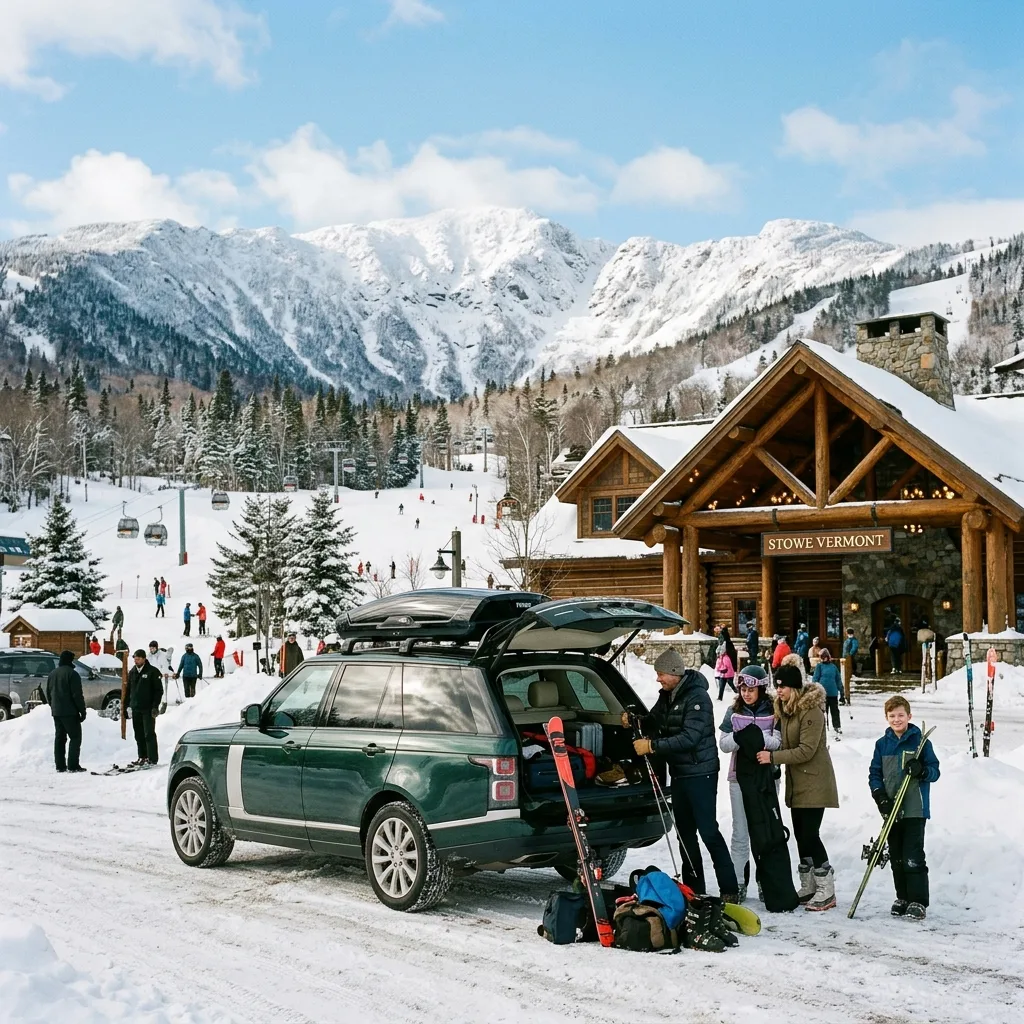
Stowe and Killington vacation homeowners are at the top of the list. You bought a chalet in Stowe Hollow or a mountain place near Killington Peak because you wanted clean air and good skiing, and the second vehicle for the property was a Range Rover or a high-trim Suburban or, increasingly, an electric pickup. That vehicle spends six months at the Vermont property and six months in Connecticut or Massachusetts or wherever your primary residence sits. Vermont taxed it at 7% the day you registered it. Vermont inspects it every year regardless of how little you drove it. The county surcharge applies because Lamoille and Rutland sit in the surcharge band. You are paying full Vermont vehicle costs for a part-time Vermont vehicle.
Full-time RV owners are next. The Class A motorhome at $180,000 or the diesel pusher at $250,000 generates a P&U tax bill in the five figures, all due at the moment you transition from “test drive” to “owner.” If you garage the rig at a property in Chittenden County, the 7% rate applies. The rig spends most of the year on the road, which means it accumulates highway miles in 30 other states while paying full Vermont registration and inspection costs. The disconnect between where the vehicle actually operates and where it is taxed is the cleanest case for Montana registration anywhere in the country.
EV early adopters are the third group. You bought a Rivian or a Lucid or a Tesla Model X in 2022 because you believed in the technology and the climate argument. You now pay $89 a year for the privilege, and the legislature is openly discussing a per-mile fee that would push that figure past $150. The tax structure punishes the exact behavior the state’s climate plan is supposed to encourage, a contradiction that ought to embarrass someone in Montpelier.
Modified vehicle owners (lift kits, exhaust changes, suspension work) face a different problem entirely. Annual inspection becomes an annual high-stakes negotiation with the state-licensed inspector about what counts as legal and what counts as a fail. A vehicle that passes one year may fail the next under a different inspector. The cost of complying with Vermont’s idea of stock configuration can run into thousands per year.
Small fleets (contractor trucks, delivery vans, small landscaping operations) get hammered every year on registration, inspection, and any P&U tax associated with adding a vehicle to the fleet. The cumulative tax cost on a five-truck operation in Burlington easily clears $10,000 over the first three years.
The Montana Solution: Legal Vehicle Tax Elimination
Montana’s vehicle tax structure is, from a Vermont resident’s perspective, missing several entire concepts. There is no sales tax on vehicles. There is no Purchase and Use Tax. There is no county surcharge above the base rate, because the base rate is zero. There is no annual safety inspection. There is no proposed mileage-based fee. Montana does charge $130/yr for battery electric vehicles, but no mileage tracking and no inspection requirement.
This is not because Montana found a creative way around tax law. It is because Montana never enacted these taxes in the first place. The state funds itself through other mechanisms (property tax, severance tax on natural resources, income tax) and made a deliberate decision decades ago not to apply broad sales or use taxes to vehicle purchases. The result, intended or not, is that Montana became the most vehicle-friendly tax jurisdiction in the United States.
The Montana reality: Montana has no vehicle sales tax, no annual inspection requirement, and no surcharge for electric vehicles. These are state laws, not loopholes.
The mechanism for a Vermont resident to access Montana’s structure is the Montana LLC. You form a single-member limited liability company in Montana. The LLC purchases (or takes title to) your vehicle. The vehicle is registered in Montana under the LLC’s name. The license plates are issued in Montana. Insurance is structured to match. Your vehicle is, in every legal sense that matters, a Montana vehicle owned by a Montana entity.
Here is the year-by-year financial picture for a $95,000 luxury SUV that would otherwise be registered in Chittenden County:
The pattern is unusual. Vermont costs you a lot in year one and a little every year after. Montana costs you a moderate amount in year one and slightly more every year after. Vermont front-loads the pain because the P&U tax is a one-time hit. Montana spreads the cost evenly through annual renewals. Over five years, the Montana approach lands roughly $5,000 cheaper on a $95,000 vehicle, with the gap widening as vehicle value increases.
Is Montana LLC Vehicle Registration Actually Legal?
Yes. Montana has permitted out-of-state residents to form Montana LLCs and register vehicles to those LLCs for decades. The legal foundation is straightforward: an LLC is a legal entity capable of owning property, including vehicles. Montana law does not require LLC owners to be Montana residents. Vermont law applies its Purchase and Use Tax to vehicles registered to Vermont residents. A vehicle registered to a Montana LLC is registered to a Montana entity, regardless of who owns the LLC.
This structure is not a tax loophole in the conventional sense. It is a documented application of basic corporate law. Tens of thousands of high-value vehicles (RVs, exotics, collectibles, luxury SUVs) are registered through this exact mechanism every year. The Montana Secretary of State maintains a public registry. The Montana DMV processes the registrations as standard commercial transactions. Insurance carriers underwrite Montana-registered vehicles for out-of-state owners as a normal product line.
What matters for Vermont residents is that the LLC is legitimate. That means it must actually exist (registered with the Montana Secretary of State, with current annual filings), it must have a real registered agent in Montana, and the vehicle must actually be owned by the LLC (not by you personally). Zero Tax Tags handles all of this. The work is straightforward but it has to be done correctly.
Four Vermont Vehicle Owners Who Made the Switch
The following are composite case studies based on actual client situations. Names and identifying details are changed; the financial structures and outcomes are real.
The Burlington Attorney
A litigation partner at a Burlington law firm (Chittenden County, 7% rate) bought a Porsche Cayenne GTS for $95,000 to handle her commute from her South Burlington home to the firm’s Church Street office. She walked into the DMV expecting a 6% tax bill of $5,700 and walked out having written a check for $6,650. The county surcharge was the surprise. “I knew the rate was 6%,” she said later. “I did not know the rate was 6% somewhere else, and 7% where I actually live.” She moved to a Montana LLC structure within ninety days. Five-year savings: $5,014. Her stated reason for finally pulling the trigger was not the absolute dollar figure but the principle of paying an extra $950 in surcharge nobody had ever mentioned to her.
The Stowe Ski Lodge Owner
A Stowe-based hospitality entrepreneur bought a $180,000 Class A motorhome to travel between his three small inn properties (Vermont, New Hampshire, Maine) during the off-season. The Vermont DMV assessed P&U tax at 7% because his Stowe address put the vehicle in Lamoille County, which is not a surcharge county. He had assumed the rate would be 6%. He was wrong; 2026 rate verification confirmed Lamoille at 6%, but his RV’s prior registration in Chittenden during construction of his new garage put him in the surcharge bracket. The full P&U bill landed at $12,600. “Nobody told me a motorhome got the same tax structure as a car,” he said. “I thought it was registered as something different. It is not.” He restructured the RV under a Montana LLC for a five-year savings of $10,164.

The Woodstock Brewery Founder
A craft brewer in Woodstock (Windsor County, 6%, no surcharge) bought a $72,000 diesel Ford F-250 to pull his hop trailer and handle deliveries within a 200-mile radius. The truck spent its first two winters working hard on Vermont back roads. At its third annual inspection, the inspector failed it for frame corrosion. The repair quote was $2,100. “I bought a heavy-duty work truck designed to work in winter,” he said. “I am now being told the state can take my registration away because the work truck did the work.” He moved the truck to a Montana LLC. Five-year savings: $3,179, plus the elimination of the annual inspection vulnerability. He now schedules maintenance on his timeline, not the state’s.

The Montpelier EV Early Adopter
A state-government employee in Montpelier bought a $52,000 Rivian R1T as the first electric pickup in his town. He believed in the technology. He believed in the climate argument. He paid the $89 EV surcharge in year one without complaint. Then H.944 hit the legislative calendar. “The mileage-based fee is one thing,” he said. “The fact that they want to measure it at the inspection station bothers me more. I bought an electric vehicle. I do not want my driving distance reported to the state every year.” He moved the truck to a Montana LLC, eliminating both the surcharge and the prospective mileage tracking. The privacy angle, more than the dollar amount, was what convinced him.
Who Benefits Most from Montana LLC Registration
The Montana structure works for almost any Vermont vehicle owner whose vehicle has both meaningful value and some connection to interstate use. The math gets more compelling as both factors increase. The following profiles see the largest absolute savings:
- Luxury SUV owners ($75k+): Save $4,000 to $7,000 over five years. Chittenden, Bennington, Rutland, Addison, Franklin, and Windham county residents see the largest savings due to the 7% rate.
- Class A and Class C RV owners: Save $7,000 to $15,000 over five years. The largest single category by absolute dollars. RV value typically lands between $100k and $300k, and the P&U tax scales linearly.
- Sports car and exotic owners: Save $5,000 to $20,000 over five years. Single-car collectors with one $200,000 vehicle see roughly $14,000 in five-year savings on Vermont registration.
- EV owners (any value): Save the EV surcharge ($89/yr currently, $154/yr proposed) plus the inspection cost and any P&U tax. Particularly valuable for higher-value EVs like Rivian, Lucid, Cybertruck.
- Heavy-duty pickup owners ($60k+): Save $2,500 to $4,500 over five years, plus avoidance of the annual inspection that disproportionately fails working trucks.
- Small fleet operators (3+ vehicles): Save tens of thousands cumulatively. One LLC covers all vehicles, and the per-vehicle Montana annual cost is dramatically lower than per-vehicle Vermont registration plus inspection.
- Vacation property owners: Save $4,000 to $10,000 over five years on the second vehicle that lives at the Vermont property part-time but pays full Vermont annual costs.
- Modified vehicle owners: Save the annual inspection compliance cost (often $500-2,000/yr in Vermont) entirely.
How Zero Tax Tags Gets You Registered
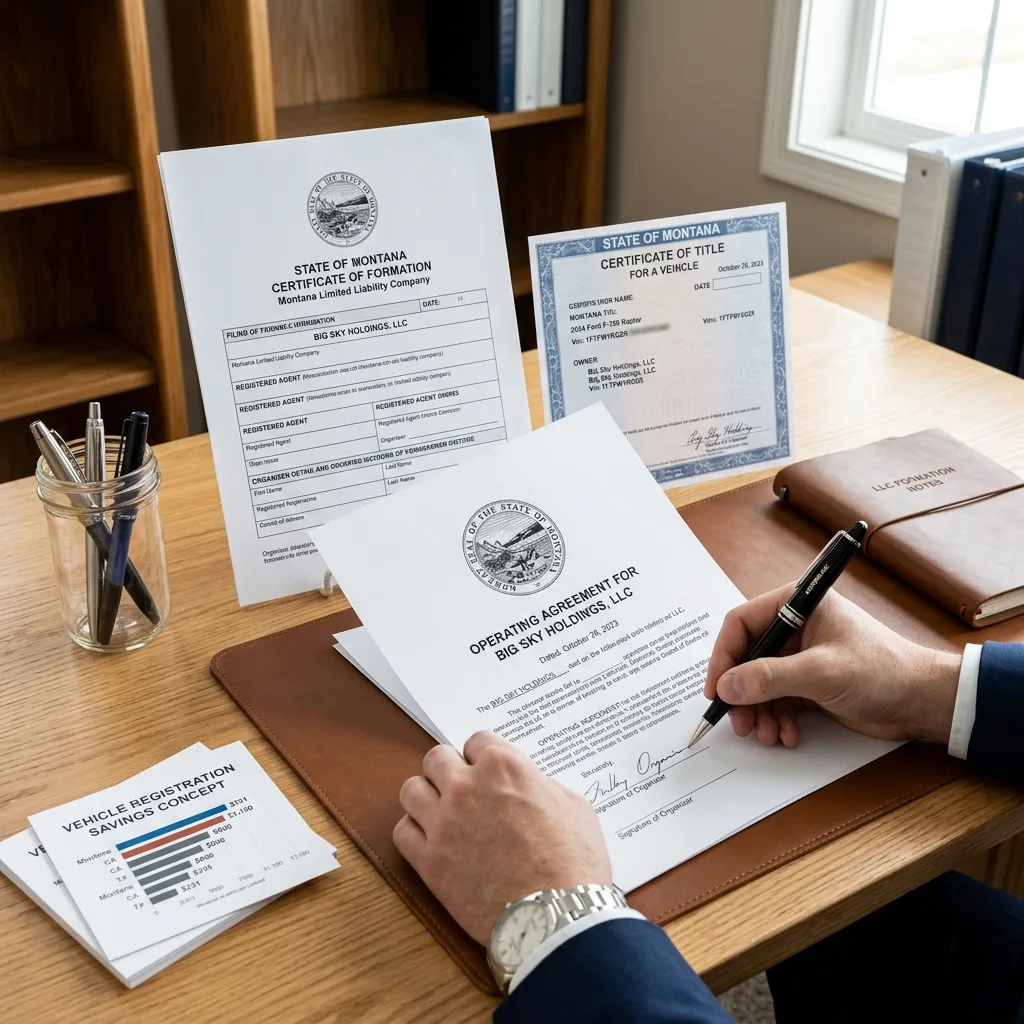
The Zero Tax Tags process is full-service. You never set foot in Montana. You never visit the Montana DMV. You never walk into a state office anywhere. The entire structure (LLC formation, registered agent service, Montana DMV registration, title transfer, plate issuance) is handled remotely by our team.
The pricing is transparent and structured per vehicle category:
- Cars, trucks, SUVs, RVs under $150,000: Year 1 = $899 ($699 service fee + $200 LLC formation, paid once)
- Cars, trucks, SUVs over $150,000: Year 1 = $1,724 ($899 standard + $825 luxury fee)
- RVs over $150,000: Year 1 = $1,699 ($899 standard + $800 luxury fee)
- Annual renewal years 1-4: $368 per year (registration + filing fees)
- Annual renewal years 5-10: $237 per year
- Year 11+: Permanent registration, no further renewal fees
- Motorcycles, ATVs, UTVs, trailers, boats: All permanent registration, one-time fee
- One LLC covers all your vehicles. The $200 LLC formation is paid once, regardless of how many vehicles you register.
Five-year total cost for a new car under $150,000 works out to $899 (year 1) + $368 × 4 (years 2-5) = $2,371. Compared to Vermont’s typical $5,000 to $7,000 for a luxury SUV in a surcharge county, the structure pays for itself in year one and accumulates savings indefinitely.
Here is the timeline from your initial conversation to license plates in your hand:
| Day 1: | Submit your MCO and supporting paperwork through our secure portal. We review for completeness and file your Montana LLC the same day. |
| Days 1–2: | Montana LLC formation complete — same business day in most cases, second business day at the latest. |
| Days 2–4: | Title transferred into the LLC name at the Montana county treasurer. |
| Days 4–7: | Permanent Montana plates shipped directly to your door within 3–5 business days of title completion. |
Frequently Asked Questions
1. Do I need to visit Montana?
No. Zero Tax Tags handles every step remotely. You never need to set foot in Montana. The LLC is formed by filing with the Montana Secretary of State, the registered agent receives mail on your behalf, and the DMV registration is processed by mail. Your Montana plates are shipped to your Vermont address.
2. What about Vermont’s annual inspection? Does Montana solve that too?
Yes. Vehicles registered in Montana are not subject to Vermont’s annual inspection requirement. Montana itself has no annual safety inspection requirement. You service your vehicle when you decide it needs servicing. The state has no mandatory inspection cycle for personal vehicles.
3. Can I insure a Montana-plated vehicle in Vermont?
Yes, with the right carrier. Some standard insurance carriers will not write a policy for a Montana-registered vehicle owned by a Montana LLC where the operator lives in Vermont. Several specialist carriers (Hagerty, Grundy, Roamly for RVs, several others) write this exact product as a normal commercial line. Zero Tax Tags will refer you to carriers who handle this structure routinely. The premiums are competitive and sometimes lower than your current Vermont premium.
4. How much does Zero Tax Tags charge?
Year 1 = $899 ($699 service fee + $200 LLC formation) for vehicles under $150,000. Vehicles over $150,000 add an $825 luxury fee (cars/trucks/SUVs) or $800 luxury fee (RVs). Annual renewal is $368 per year for years 1-4, then $237 per year for years 5-10, then permanent. One LLC covers all your vehicles. The $200 LLC formation fee is paid once, regardless of how many vehicles you register through it.
5. Can I register multiple vehicles under one LLC?
Yes, and most multi-vehicle clients do exactly this. One LLC, multiple vehicles, single annual filing. The savings compound dramatically across a fleet. A household with two luxury SUVs and an RV in Chittenden County would save roughly $20,000 over five years compared to Vermont registration of the same three vehicles.
6. What about Vermont’s new EV mileage fee? Does Montana avoid that?
Yes. Vermont’s proposed mileage-based EV fee under H.944 applies to vehicles registered to Vermont residents and would be measured at Vermont’s mandatory annual inspection. A vehicle registered to a Montana LLC has neither Vermont registration nor Vermont mandatory inspection. The mileage-based fee, the current $89 flat surcharge, and the inspection fee are all eliminated.
See how Montana LLC registration helps owners in other high-tax states:
- Minnesota Vehicle Tax: MVST, Tab Fees and the Double Tax Trap
- Ohio Vehicle Tax: The Rust Belt Shakedown
- Arizona VLT: How to Stop Paying $1,000 Every Single Year
- Virginia Car Tax: Stop Paying the Highest Vehicle Tax in America
- Arkansas Vehicle Tax: The Hidden Wealth Extraction System
Ready to Stop Overpaying Vermont Vehicle Tax?
Vermont vehicle owners have saved thousands with Montana LLC registration. No inspections. No P&U tax.