25 min read
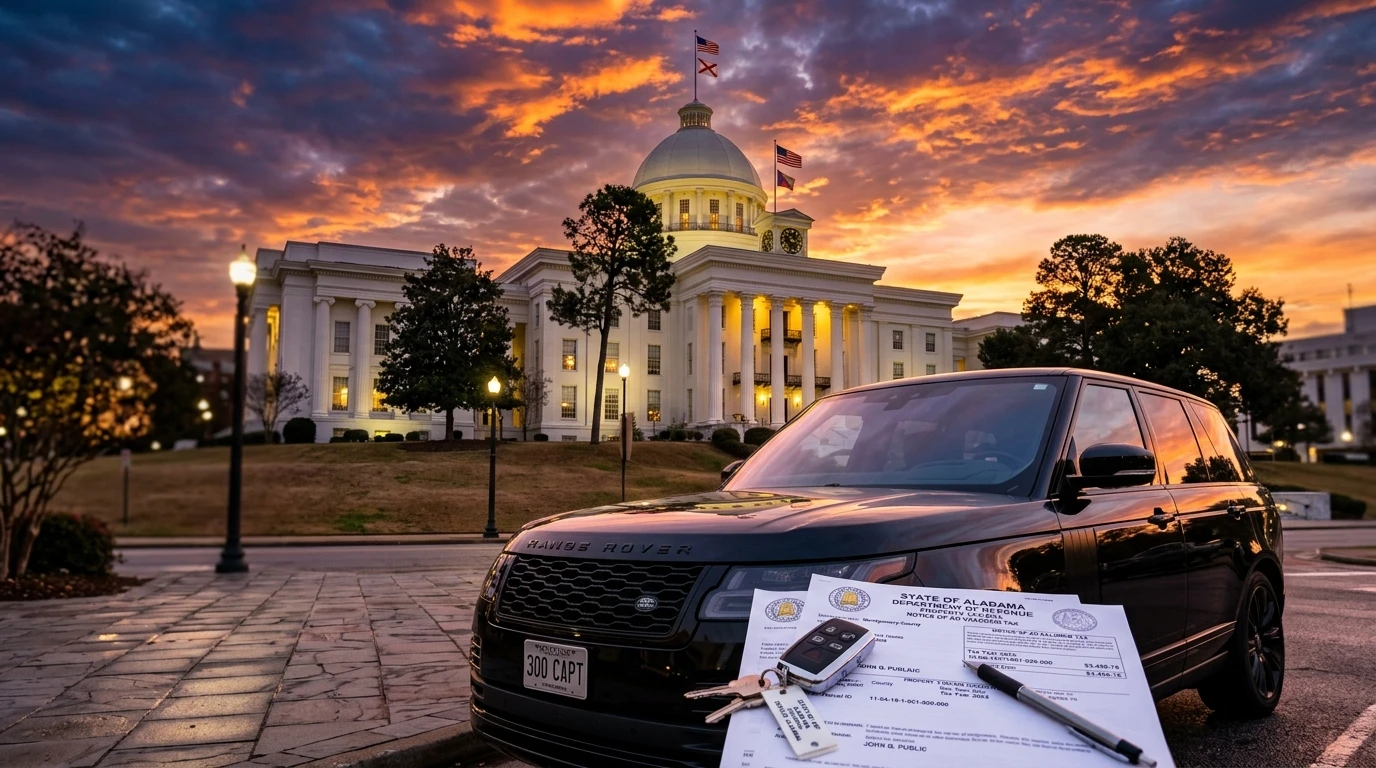
On this page
- + The Tag Renewal Notice That Ruins Your Week
- + Understanding Alabama Vehicle Tax: How the Ad Valorem System Works
- + The Real Numbers: County-by-County Breakdown
- + The Weight Class Cliff: Heavy Truck Owners Beware
- + What About Sales Tax?
- + The Five-Year Trap
- + RV Owners and Retirees: The Worst Victims
- + Three Real Scenarios
- + The Montana LLC Solution
- + Is This Legal?
- + Who Benefits Most
- + Our Process and Timeline
- + Who This Is Built For
- + FAQs
- + Stop Overpaying Today
The tag renewal notice that ruins your week
Alabama vehicle tax is the silent wealth drain that ambushes car owners every single year. You drive to the Jefferson County courthouse expecting to pay a $25 registration fee, and instead you walk out $1,200 lighter. The clerk slides the paper across the counter, taps the line marked “ad valorem,” and watches your face fall. You ask if there’s a mistake. There isn’t. That four-digit number is the price of owning your own vehicle in your own state for one more year, and it will appear again next year, and the year after that, until you sell the car or move away.
This is not registration. It is not a fee. It is a property tax on your vehicle, and Alabama is one of only a handful of states that still levies it on personal cars and trucks. The pain is concentrated in places like Birmingham and Montgomery, where county and municipal millage rates push the effective burden well past one percent of your vehicle’s full retail value every year. On a $100,000 SUV, that is more than $1,000 going to the county before you have driven a single mile in the new license year. On a luxury motorhome, it can exceed $4,000 annually. And the worst part is that almost nobody warns you before you buy.
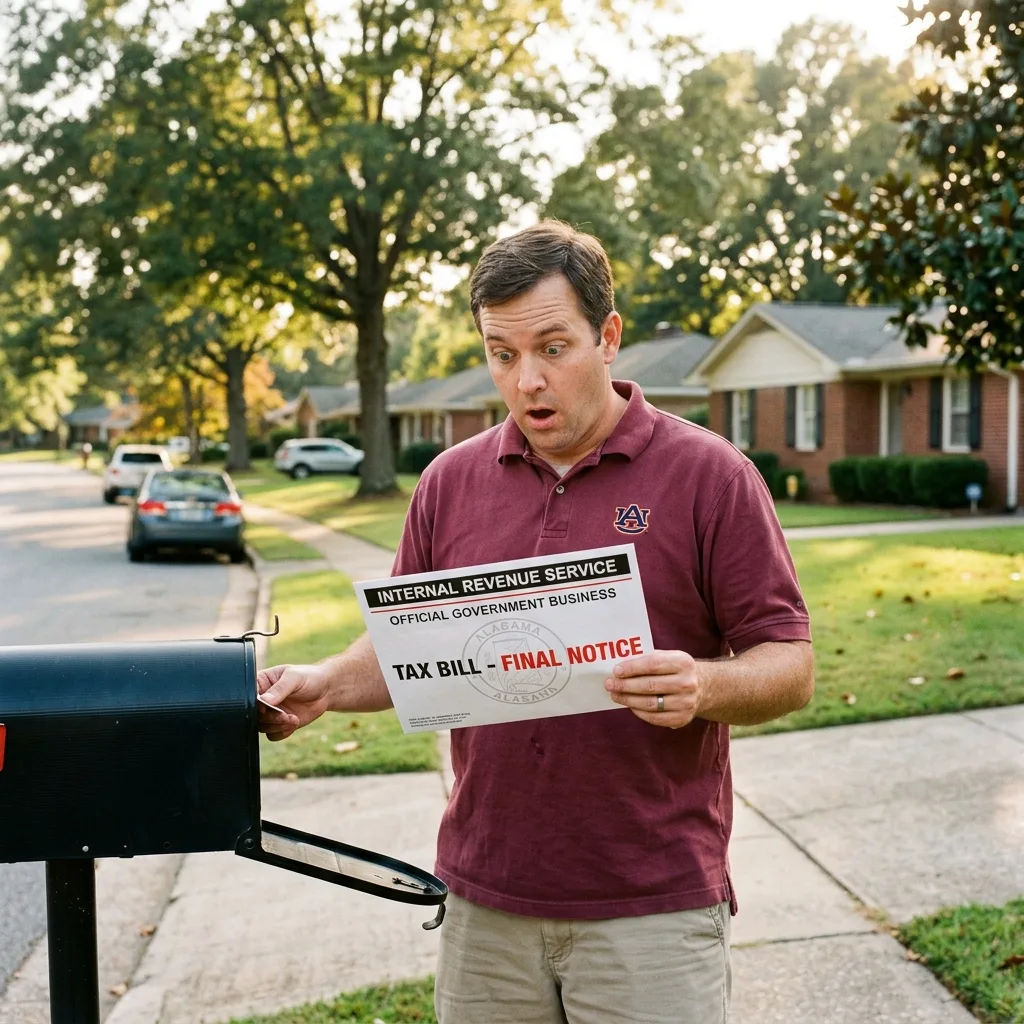
If you are reading this, you have probably already opened that envelope. The math on a luxury vehicle in Birmingham or Montgomery over five years comes out somewhere between $7,000 and $10,000 in combined alabama vehicle tax. You have also probably heard whispers from your neighbor or your accountant about Montana.
Understanding Alabama vehicle tax: how the ad valorem system works
Alabama operates a dual system that confuses almost every new resident. When you register a vehicle, you pay two separate things at the courthouse. The first is a small registration fee, generally $25 to $105 depending on plate type and weight. The second is the ad valorem property tax, calculated as a percentage of your vehicle’s NADA assessed value. The first number is the one the state advertises. The second number is the one that actually empties your wallet.
The formula is mechanical and unforgiving. For Class IV vehicles, which covers personal-use cars and light trucks under 8,000 pounds gross vehicle weight, the state assesses your car at 15 percent of its NADA value. That assessed value is then multiplied by the local millage rate, which is set by your county and city. A mill is one-tenth of one percent, so 72.5 mills equals 7.25 percent of the assessed value. Stack those numbers together and you get the effective annual rate on the full retail value of your car.
Take a $50,000 sedan in Birmingham. Assess it at 15 percent of value, which gives $7,500. Apply Jefferson County’s roughly 72.5 mill rate, which is 7.25 percent. The result is $544 owed to the county every year, on top of registration. On an $80,000 vehicle, the same formula produces $870 annually. On a $120,000 SUV, you are looking at $1,305 every year, recurring forever, even though the state already collected sales tax when you bought the car.
Renewals are staggered by the first letter of your last name. If your name starts with A or B, you renew in January. C or D, February. The system spreads workload across the courthouse calendar but does nothing to spread your financial pain. Miss your assigned month and you owe a $15 flat penalty plus 5 percent of the ad valorem tax per month, capped at 25 percent, plus interest. The longer you wait, the worse it gets.
Alabama uses NADA Clean Retail values pulled from state-published assessment tables. There is no negotiation, no appeal based on your vehicle’s actual condition, and no discount because you bought used. The state assigns your car a number, multiplies it, and bills you. Every year. For as long as you own it.
The real numbers: county-by-county breakdown
Where you park your car in Alabama matters enormously. The state sets a baseline, but counties and municipalities pile on additional millage that can nearly triple your annual obligation between, say, Baldwin County and Jefferson County. The table below shows the major counties, their approximate millage rates, the effective rate on full NADA value, and what that means in real dollars on an $80,000 vehicle.
Birmingham and Montgomery are the worst-hit jurisdictions. A Birmingham resident with a $120,000 vehicle pays roughly $1,305 every year, while a Baldwin County resident with the same vehicle might pay closer to $630 to $774. That is not a small variation. Over five years of ownership, the Birmingham car owner sends an extra $3,000 to $3,500 to the county purely because of geography. Move the same vehicle to Mobile or out to the coast and the bill drops by hundreds of dollars annually, but it never disappears.
Tip: Some Alabama buyers think they can dodge the tax by registering at a relative’s address in a low-millage county. This is illegal and counties cross-check residency through driver’s license, voter registration, and homestead records. Don’t try it.
The staggered renewal system has a quiet cruelty to it. Counties send no advance notice. No warning postcard, no email reminder, no text. The renewal sneaks up on owners who blink and suddenly owe a four-figure bill within thirty days, plus penalties if they miss the window. Every January, clerks watch a parade of A and B last names walk in pale and confused. February belongs to the C and D crowd. The cycle repeats all year long.
The other shock is how the value itself is calculated. Alabama uses the NADA “Clean Retail” figure, which is the highest of the three NADA value tiers, well above trade-in value and above private party value too. Many owners assume they can argue that their vehicle has 140,000 miles, hail damage from a Tuscaloosa storm, or a salvage history that should reduce the assessment. The county clerk listens politely and then tells you the state table is final. There is no condition adjustment, no mileage discount, no body-damage allowance. If your truck is the listed make, model, year, and trim, you owe the Clean Retail number times your county’s effective rate. The only legal way to lower your bill is to sell the vehicle or move it out of Alabama’s titling system entirely.
The weight class cliff: heavy truck owners beware
If you drive an F-250, RAM 2500, or Silverado 2500HD, Alabama has an extra surprise waiting for you. The state separates personal vehicles into Class IV and Class II, and the dividing line is 8,000 pounds gross vehicle weight rating. Cross that threshold and your assessment percentage jumps from 15 percent to 20 percent, a 33 percent increase in your annual property tax burden, even though the truck is still your personal commuter.
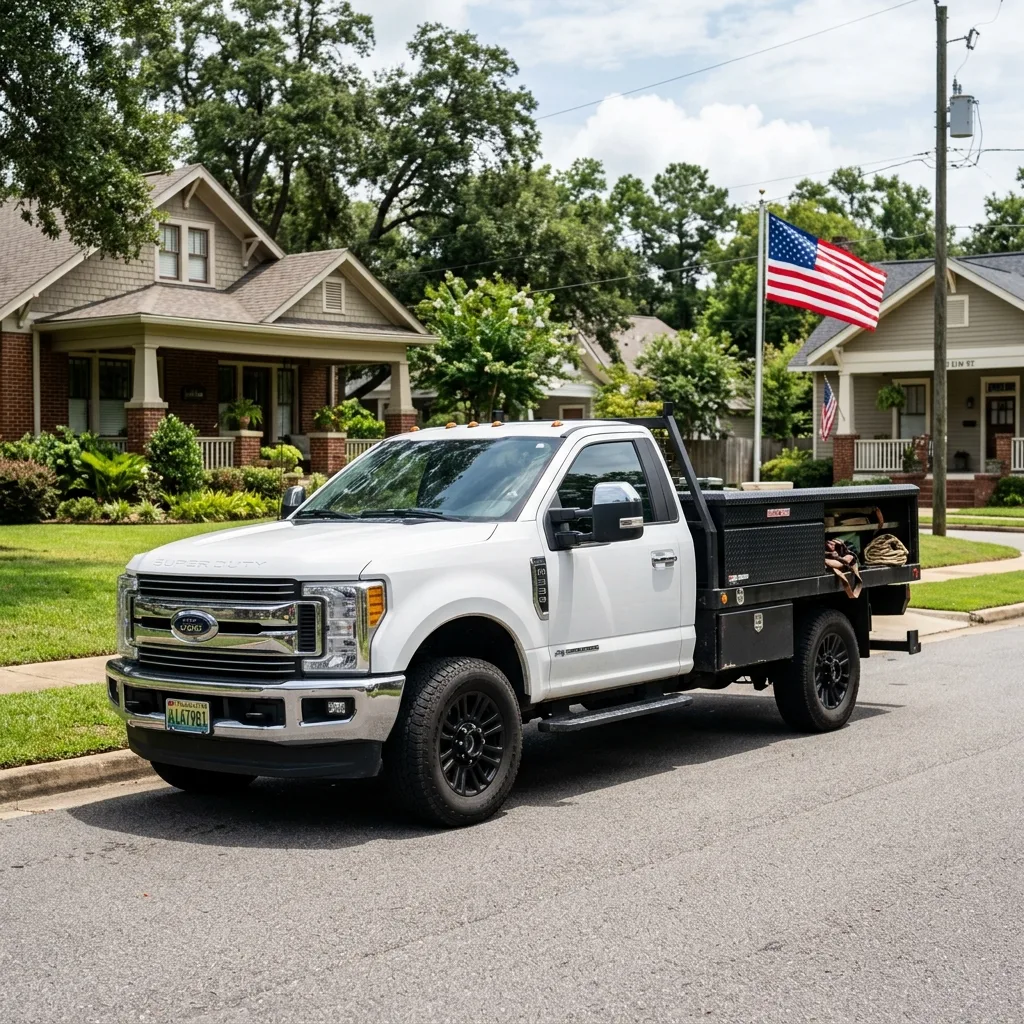
Take a $65,000 RAM 2500 Laramie registered in Jefferson County. At Class IV rates, the math would produce $65,000 times 15 percent times 7.25 percent, which equals $709 per year. But because the RAM 2500 has a GVWR over 8,000 pounds, it falls into Class II. The new math becomes $65,000 times 20 percent times 7.25 percent, which equals $942 per year. That extra $233 every year, recurring for the life of ownership, is purely a weight class penalty for buying a heavier truck. Over five years, you have paid an additional $1,000 in tax simply because your truck has heavier-duty axles than the half-ton next to it.
The trap catches contractors, ranch owners, RV haulers, and anyone who tows for recreation. A Ford F-150 stays in Class IV. The very next model up, the F-250, jumps to Class II. The same dynamic plays out for the Chevy Silverado 1500 versus the 2500HD, and the RAM 1500 versus the 2500. Most buyers have no idea this cliff exists until they see their first ad valorem bill, and by then the truck is already in the driveway.
Warning: The 8,000-pound GVWR threshold applies to the manufacturer’s rating on the door jamb sticker, not actual weight. You cannot remove equipment to drop into Class IV. The rating is fixed at the factory.
What about sales tax?
Sales tax is the one-time hit at the moment of purchase, and in Alabama it stings. Birmingham, Huntsville, Mobile, and Montgomery all run combined rates around 10 percent, blending 4 percent state, county add-ons, and city add-ons. Buy an $80,000 vehicle in Birmingham and the dealer collects $8,000 in sales tax before you take delivery. The trade-in credit helps a little: if you trade a $30,000 vehicle on an $80,000 purchase, you only owe sales tax on the $50,000 difference, saving you about $3,000.
But sales tax, painful as it is, is a one-time event. The real damage is the annual ad valorem grind that follows. A buyer who pays $8,000 in sales tax and another $870 every year for the next decade is looking at $16,700 in lifetime taxes on a single vehicle. By year ten, the recurring property tax has overtaken the one-time sales tax. By year fifteen, it has nearly doubled it. This is why the conversation about Alabama vehicle taxes always comes back to the ad valorem, not the sales tax.
It is worth pausing to see how Birmingham’s 10 percent rate compares regionally. Drive ninety minutes north to Nashville and Tennessee imposes no annual property tax on personal vehicles, with effectively 0 percent state-level sales tax for residents who already paid elsewhere. Houston, Texas, runs 6.25 percent state sales tax capped at $25,000 in taxable value on certain out-of-state transfers, meaning a wealthy buyer relocating with a $200,000 vehicle pays a fraction of what an Alabama buyer pays. Atlanta, Georgia, replaced its old ad valorem with TAVT, a one-time 7 percent flat title tax with no recurring property tax. Alabama’s 10 percent combined rate is among the highest in the southeast and runs with no cap, no exemption, and no relief at the upper end. The buyer of a $250,000 SUV in Birmingham hands the dealer $25,000 in sales tax on day one before the ad valorem clock even starts.
One more wrinkle that surprises people: private party purchases in Alabama carry the same sales tax rate as dealer transactions. In states like Georgia and Florida, private sales between individuals receive different treatment, and some jurisdictions make casual sales tax-exempt or taxed at a lower rate. Alabama treats a Craigslist transaction the same as a Mercedes-Benz dealership purchase. Buy a $40,000 used truck from a guy in Decatur, and you owe $4,000 in sales tax when you go to title it. There is no “private party” loophole.
The five-year trap
Five years is how long most luxury and truck buyers hold a vehicle. Add sales tax at purchase to four subsequent years of ad valorem, using roughly 15 percent annual NADA depreciation, and you get a number that tends to shock people. The ad valorem shrinks each year as the car depreciates, but it never hits zero.
Even the most modest case, a $60,000 vehicle in Birmingham, costs over $8,000 in five years of state and county tax. A $100,000 SUV climbs past $13,000. A $200,000 sports car or executive SUV in Montgomery hits $27,000. And a $300,000 motorhome in Jefferson County, taxed at the heavier Class II rate, can break $43,000 in combined sales and ad valorem tax over the same five-year span. These are not hypothetical numbers. These are what your neighbors are paying right now.
RV owners and retirees: the worst victims
Recreational vehicles fall into Class II, the same heavier-assessment bucket as commercial trucks. That 20 percent assessment, applied to a vehicle that often costs more than a starter home, is genuinely punishing. A $300,000 Tiffin or Newmar registered in Jefferson County faces $300,000 times 20 percent times 7.25 percent, which equals $4,350 per year. Every year. While the rig sits in storage half the year. While you are touring through Wyoming and Idaho. While the motorhome sits on blocks.

Gulf Coast retirees feel this most acutely. They buy a Class A motorcoach planning to spend half the year on the road. They register in Baldwin County hoping the lower millage will help, and it does, but a $400,000 motorhome at 4 percent effective rate is still $3,200 in annual property tax. Meanwhile, their friends from Florida and Texas, who have no annual vehicle property tax at all, drive the same campgrounds laughing at the bill. Snowbirds who split time between Alabama and somewhere south of the line often discover that their primary residency in Alabama is costing them $20,000 to $25,000 over a typical RV ownership cycle, purely in tax that delivers nothing in return.
Many full-time RVers in Alabama have already figured out the Montana solution. The motorhome forums are full of threads about it, and the math is so lopsided that hesitating costs real money every month you delay.
New residents are the other group that gets blindsided. An aerospace engineer relocates from Tampa to Huntsville for a Boeing or Lockheed Martin job at Redstone Arsenal. He sells his Florida house and buys a $75,000 Ford F-150 to celebrate. Florida had no annual vehicle property tax. Tennessee has none. Texas has none. Georgia replaced its annual tax with a one-time TAVT years ago. Every reference point suggests Alabama is a “low tax state” because he heard about no income tax in Florida and assumed the South was uniformly easy on cars. Then his first October arrives. He opens an envelope from the Madison County Revenue Commissioner showing $652 owed. He calls the office and learns yes, this is real, and the 10 percent sales tax he paid the dealer in March was a separate event entirely. The relocation package never mentioned it. The recruiter never mentioned it. Every spring and fall, engineers, doctors, military officers, and corporate transferees arriving in Huntsville, Birmingham, and Mobile have the same conversation, and now they own the bill for as long as they own the truck.
Three real scenarios
The Birmingham cardiologist
Dr. Patel finished her cardiology fellowship and bought a $120,000 Mercedes GLS to celebrate. She knew about the 10 percent sales tax going in, painful but expected. What she did not know was that her Jefferson County tag office would send her an annual ad valorem bill of $1,305 the following October. Her last name puts her renewal in October, the same month her board recertification fees are due, the same month she pays her property tax. Stacked together, October became the worst financial month of her year. Over five years, even with depreciation, her Mercedes will cost her about $16,000 in combined Alabama vehicle tax.

The Huntsville aerospace engineer
Mike works at a Redstone Arsenal contractor and bought a $65,000 RAM 2500 Laramie to tow his bass boat. He chose the 2500 over the 1500 because he wanted the diesel for fuel economy on long hauls. Nobody at the dealership mentioned the weight class cliff. His first ad valorem bill in Madison County came in at roughly $565, almost $130 more than his neighbor’s similar-priced F-150 because the RAM 2500’s GVWR pushed him into Class II. Over five years, the weight class penalty alone will cost Mike about $600 in extra tax. The fix is straightforward, but he had to be told it existed.

The Gulf Shores retiree
Jim and Linda retired to Gulf Shores and bought a $350,000 Tiffin Phaeton motorhome to chase warm weather year-round. Baldwin County’s lower millage softened the blow, but at roughly 4 percent effective rate on a Class II vehicle, their annual ad valorem tax came to about $2,800. They spend six months a year out of the state, often in Texas and Arizona, and resented paying property tax on a vehicle that was rarely on Alabama roads. After two years and roughly $5,500 in ad valorem tax, they switched to a Montana LLC and now pay nothing annually beyond a small permanent registration fee.
The Montana LLC solution
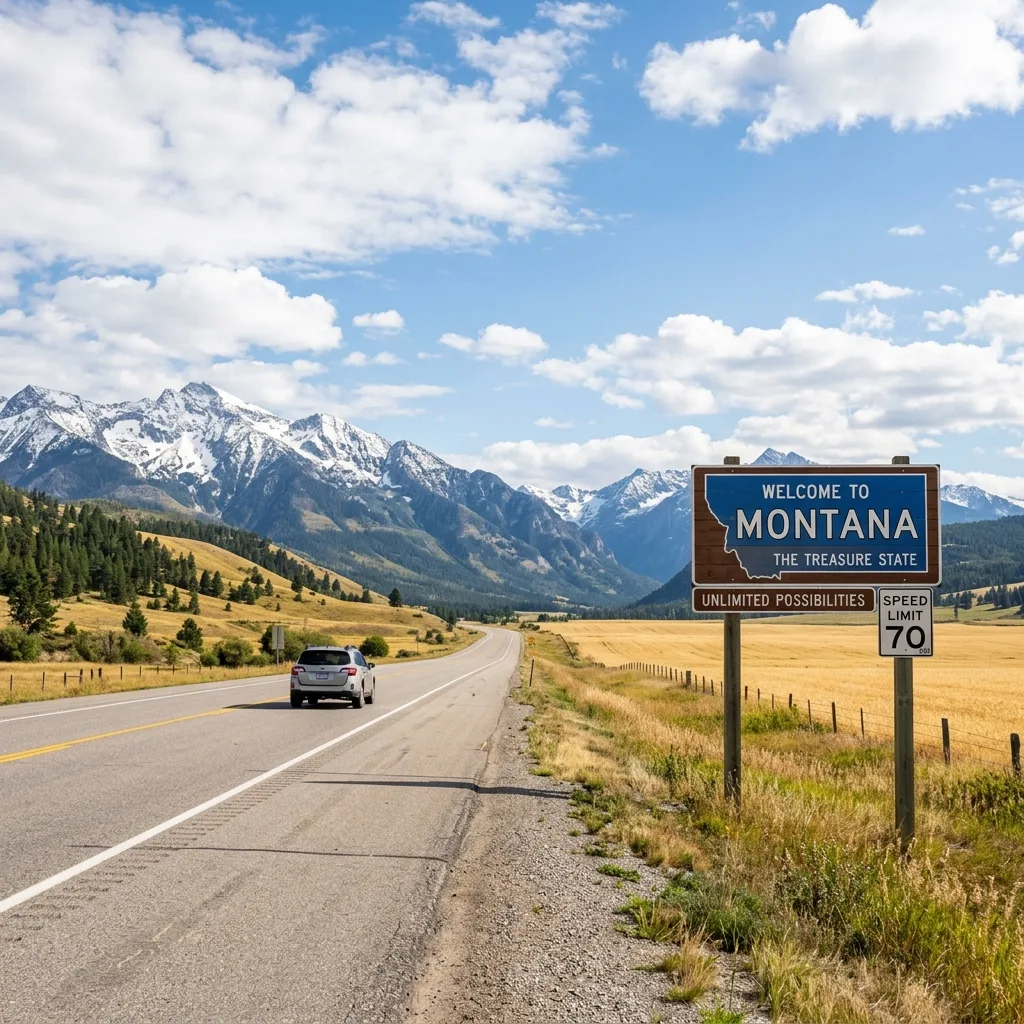
Montana is structurally the opposite of Alabama on vehicle taxation. There is no statewide sales tax of any kind. There is no annual property tax on licensed personal vehicles. Vehicles eleven years old or older qualify for permanent registration, meaning you pay one fee and never renew again. The state has built its entire registration framework around making vehicle ownership simple and inexpensive, and out-of-state owners have used the system legally for decades.

You form a Montana LLC, a legal entity domiciled in Montana. The LLC purchases or takes title to your vehicle. The vehicle is then registered in Montana under the LLC. Because the vehicle is owned by a Montana entity and registered in Montana, Alabama has no claim to ad valorem property tax on it, and there is no Alabama sales tax due on the original purchase if structured properly from the start.
For service pricing, vehicles under $150,000 in value cost $899 in Year 1, which includes the $699 service fee plus $200 LLC formation, and then $270 per year in maintenance ($150 registration plus $120 LLC filing). Over five years that totals $1,979. For luxury cars over $150,000, Year 1 is $1,724 with the same $270 annual renewal, totaling $2,804 over five years. For RVs over $150,000, Year 1 is $1,699 with a five-year total of $2,779.
One question we field constantly is what happens to the existing Alabama title when you make the switch. The mechanics are clean. You surrender the Alabama title as part of the transfer, the Montana LLC takes title in its name, and the vehicle is issued a new Montana title and Montana plates. Once that transfer is complete, your VIN no longer appears in Alabama’s registration database under your name. The Madison County Revenue Commissioner, the Jefferson County tag office, the Montgomery probate court, none of them have a record of you owning that vehicle anymore, because legally you do not. The LLC owns it. The county has no mechanism to continue billing for a vehicle that is not titled in Alabama, and no automated process pulls Montana data into Alabama’s ad valorem rolls. The annual bill simply stops arriving. People sometimes wait for the other shoe to drop and it never does, because there is no shoe. The vehicle is gone from Alabama’s books.
EV note: Montana does charge modest EV fees of $130/year for battery electrics under 6,000 lbs and $70/year for plug-in hybrids. These are far below Alabama’s $203/$103 EV surcharges, and Montana still imposes no ad valorem tax on top.
Compare those numbers to the $13,000 to $43,000 five-year burden documented above, and the math becomes uncomfortable for anyone still paying Alabama ad valorem on a high-value vehicle. The savings on a single $200,000 vehicle exceed $24,000 over five years, and the savings on a $300,000 RV exceed $40,000.
Is this legal?
Montana LLC vehicle registration has been used by out-of-state owners for decades, and the structure rests on established federal law. Under the U.S. Constitution’s Commerce Clause and Full Faith and Credit Clause, states cannot block legitimate out-of-state entity vehicle registrations. When a Montana LLC — a real legal entity formed under Montana law — takes title to a vehicle and registers it in Montana, the vehicle is legally owned by a Montana entity. Alabama’s vehicle titling and ad valorem tax requirements apply to vehicles owned by Alabama residents; the Montana LLC is not an Alabama resident.
Montana has the authority to register vehicles owned by Montana entities, a right backed by decades of federal court precedent. Tens of thousands of vehicle owners across all 50 states use this structure openly and successfully. Zero Tax Tags handles all compliance — LLC formation, registered agent service, annual state filings, and Montana DMV renewals — so the structure remains solid year after year.
Who benefits most
For specific Alabama buyers the math is so lopsided it’s hard to argue against it.

- Luxury car buyers ($60,000 and up): Once your vehicle crosses $60,000 in value, the annual alabama vehicle tax alone in a high-millage county exceeds the entire annual cost of a Montana renewal. The math just keeps getting better as values climb.
- Heavy truck owners: F-250, F-350, RAM 2500, RAM 3500, Silverado 2500HD, Silverado 3500HD, GMC Sierra HD owners face the Class II penalty. Montana eliminates the weight cliff entirely.
- RV and motorhome owners: The 20 percent Class II assessment on $200,000+ rigs is the single most painful tax exposure in Alabama. Montana savings on RVs are typically the largest of any vehicle category.
- Collector car owners: Vehicles eleven years old or older qualify for Montana permanent registration, meaning one payment and no annual fees ever again. For a garage of classics, this is a one-time fix.
- High-frequency upgraders: Buyers who cycle a new vehicle every two or three years pay the brutal sales tax over and over. Montana eliminates that recurring drain.
- Snowbirds and dual-residents: Owners who split time between Alabama and another state get little benefit from paying full Alabama ad valorem on a vehicle that is rarely there.
Our process and timeline
Zero Tax Tags handles every step. You provide vehicle and contact information, sign the formation documents we send, and we do the rest. There is no Alabama courthouse visit, no Montana trip, no notary chase, no paperwork hunt.
| Day 1-2: | LLC formation filed with Montana Secretary of State; EIN obtained. |
| Day 3-5: | Title and registration paperwork prepared and filed with the Montana DMV. |
| Day 7-10: | Permanent Montana plates and registration documents shipped directly to you. |
| Year 2+: | We handle annual LLC filings and renewals automatically. Nothing for you to remember. |
Who This Is Built For
The Montana LLC is built for Alabama vehicle owners who are done paying sales tax at the dealership and then paying annual ad valorem property tax on vehicles they already own. The savings are most powerful for the following profiles.
Anyone purchasing a vehicle worth $25,000 or more. At $45,000, Alabama’s combined sales tax runs between $1,800 and $2,475 depending on county. Add the annual ad valorem property tax that follows for the life of ownership and the multi-year cost climbs considerably. Montana eliminates both.
Birmingham, Huntsville, and Mobile professionals. The growth in aerospace, automotive manufacturing, and tech in Alabama has created a large cohort of high-income vehicle buyers who purchase $60,000 to $130,000 vehicles and pay the associated sales tax and property tax year after year. Montana eliminates both line items.
RV owners and retirees. Alabama’s Gulf Coast and lake communities attract significant RV ownership. A $185,000 motorhome generates meaningful Alabama sales tax at purchase plus annual property tax assessment. Montana registration through Zero Tax Tags is $1,699 in Year 1 for RVs over $150,000, with permanent plates available for older vehicles.
Business owners and contractors with fleets. One LLC holds every vehicle in your operation. Additional vehicles on the same LLC pay only the service portion of the setup fee. A three-truck fleet saves across both the purchase taxes and the annual property tax assessments.
Collectors and enthusiasts. Multi-vehicle households see annual property tax savings compound across every vehicle in the collection. A five-car garage of $70,000 vehicles generates thousands in annual Alabama ad valorem taxes that Montana eliminates permanently.
For vehicles under $20,000, call us before assuming the numbers don’t work. We run the calculation free. For anyone buying above that threshold, they almost always do.
Frequently asked questions
How is my Alabama ad valorem tax calculated?
For Class IV personal vehicles under 8,000 pounds GVWR, the formula is NADA value times 15 percent times your county’s millage rate. For Class II vehicles including RVs and trucks over 8,000 pounds GVWR, the assessment is 20 percent instead of 15 percent. Millage rates vary widely, from about 28 mills in Baldwin County to 75 mills in Montgomery.
Why is my F-250 taxed more than my neighbor’s F-150?
The F-250 has a gross vehicle weight rating above 8,000 pounds, which puts it in Class II at a 20 percent assessment. The F-150 stays under 8,000 pounds GVWR and remains in Class IV at 15 percent. The difference is purely the manufacturer’s weight rating sticker on the door jamb, not actual loaded weight.
Do I still pay Alabama ad valorem tax if I buy through a Montana LLC?
No. When the vehicle is titled and registered to a Montana LLC, it is not an Alabama-titled vehicle and is not subject to Alabama ad valorem property tax. Alabama also does not collect sales tax on the original purchase if the transaction is structured through Montana from the beginning.
Does Montana charge any ongoing fees?
Yes, but they are small. Montana charges an annual LLC filing fee plus a registration renewal, which together come to about $270 per year through our service. For vehicles eleven years and older, permanent registration eliminates the renewal entirely. Montana also charges modest EV fees ($130/year BEV, $70/year PHEV).
Is this the same loophole dealers use?
Dealers and individual owners use the same underlying Montana LLC structure. The mechanism is identical. The difference is that we handle the entire process for you including LLC formation, registration, plate delivery, and annual maintenance, so you never have to navigate Montana paperwork yourself.
How long does the Montana LLC process take?
Most clients have plates in hand within seven to ten business days from the time we file. LLC formation takes one to two business days, the registration filing takes another two to three days, and shipping the plates takes a few more days depending on your address.
My car is 12 years old and still being taxed. Does that ever stop?
In Alabama, no. Unlike states that grant age exemptions to older vehicles, Alabama continues charging ad valorem on personal cars and light trucks regardless of age. The NADA Clean Retail value drops each year, so the bill shrinks, but it never reaches zero. Vehicles fifteen years and older fall to a minimum assessed value floor of about $500 for cars and light trucks, which still produces a small annual ad valorem charge on top of registration. A 1998 pickup with 230,000 miles still owes Alabama property tax every year for as long as it carries a plate. Montana eliminates this entirely. Vehicles eleven years and older qualify for permanent registration, meaning one fee at transfer and no annual renewal ever again.
Can I register my vehicle in a relative’s name in a lower-millage county?
No. Alabama counties cross-check registration addresses against driver’s license records, voter registration rolls, and homestead exemption filings. If your vehicle shows a Baldwin County address but your driver’s license is in Jefferson County and your homestead is in Birmingham, the system flags the mismatch. The county can reassess the vehicle at your actual county’s millage rate, charge back-taxes for prior years, and add penalties on top. The only legitimate path to lower millage is to actually live in that county, with driver’s license, voter registration, and homestead all aligned. The realistic path to dropping the recurring burden is a Montana LLC that removes the vehicle from the Alabama tax base altogether.
Stop overpaying today
The alabama vehicle tax is not going away. Counties depend on the revenue, the legislature has shown no appetite to repeal ad valorem on personal vehicles, and millage rates have generally trended up rather than down over the past decade. If you own a high-value vehicle in Birmingham, Montgomery, Huntsville, or anywhere along the Gulf Coast, you are funding county budgets at a rate of roughly one percent of your vehicle’s value every single year, with no end and no offset.
Montana provides a legal, decades-tested alternative that costs less than a single year of Alabama ad valorem on most luxury vehicles. The first year pays for itself, and every subsequent year is pure savings.
See how Montana LLC registration helps owners in other high-tax states:
- Virginia Car Tax: Stop Paying the Highest Vehicle Tax in America
- North Carolina Vehicle Tax: The Tag Tax Trap and Mandatory Inspection Dragnet
Ready to Stop Overpaying Alabama Vehicle Taxes?
Alabama car owners have saved thousands with Montana LLC registration. You could be next.