
25 min read

On this page
- + The Juneau Truck Buyer Who Got Ambushed
- + Alaska’s Split Personality on Vehicle Tax
- + Municipality-by-Municipality Breakdown
- + The 10-Day Registration Deadline Bomb
- + MVRT: Alaska’s Biennial Property Tax on Wheels
- + Annual Costs Table by City
- + SB 227: The Statewide Tax Time Bomb
- + Who Gets Hit Hardest
- + The Montana LLC Solution
- + Is This Actually Legal?
- + Three Alaska Case Studies
- + Our Process: Day 1, Day 2, Day 3, Year 2+
- + Frequently Asked Questions
The Juneau Truck Buyer Who Got Ambushed at the Dealer
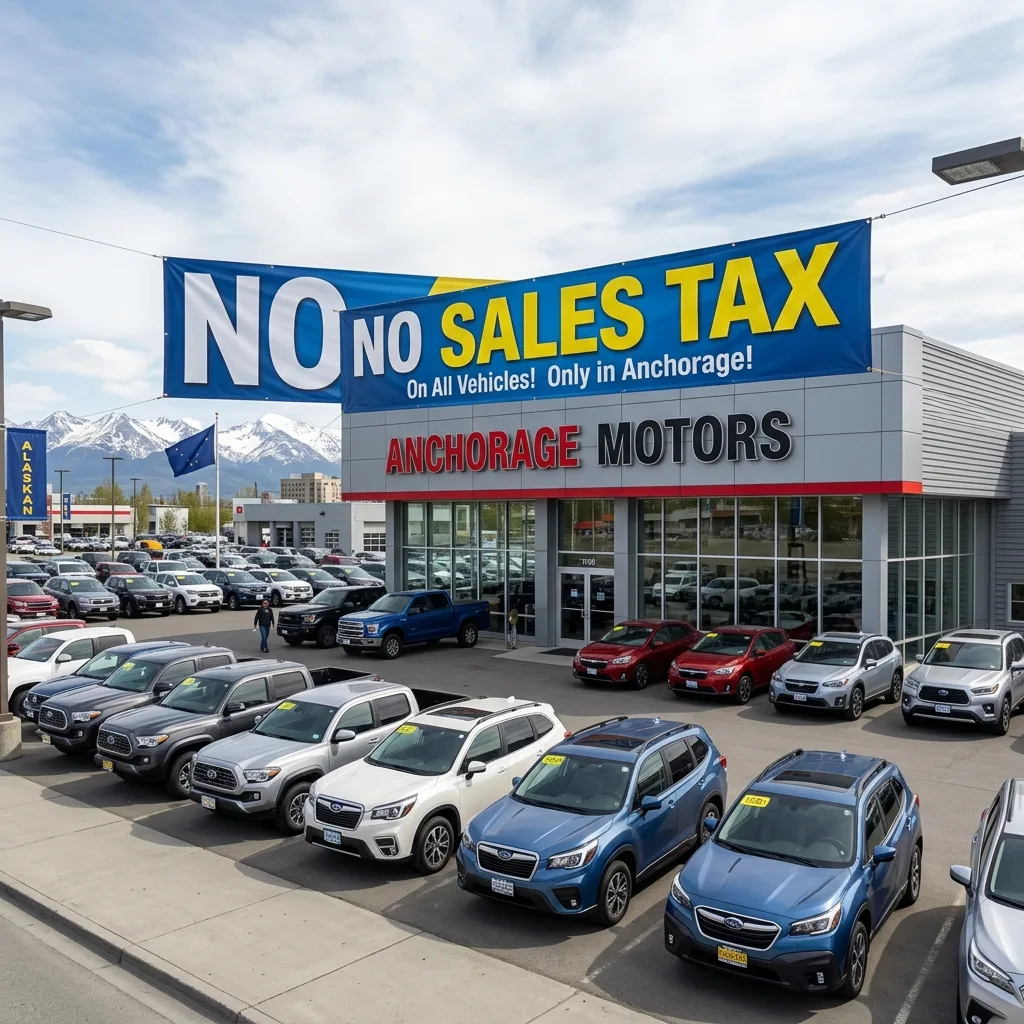
Alaska vehicle tax is the cruelest kind of con because it pretends not to exist. A commercial fisherman in Juneau named Ron walked into a dealership in late 2025 looking at a brand-new Ford F-250 Tremor stickered at $74,500. He had moved up from Washington two years earlier specifically because Alaska “has no sales tax.” That phrase, repeated by every relocation guide and every realtor in the Inside Passage, is technically true at the state level and catastrophically false at the municipal level. Ron found this out at the finance desk when the sales manager slid a contract across the table that included an extra $3,725 line item labeled “City and Borough of Juneau Sales Tax.” Ron stared at the number for a full thirty seconds before he asked the question every newcomer eventually asks. I thought Alaska didn’t have sales tax. The finance manager gave him the answer every Alaskan in a tax municipality already knows by heart. The state doesn’t. Juneau does. So does Sitka. So does Ketchikan. And the bill is due today before you drive that truck off the lot.
This is the hidden truth about alaska vehicle tax that nobody mentions until your money is already on the table. Alaska has no statewide sales tax, no statewide income tax, and a Permanent Fund Dividend that pays residents to live there. But somewhere between the welcome sign at the airport and the title office downtown, the math changes. Roughly one hundred and seven Alaskan municipalities collect their own local sales tax, and the rates run from a humane 1 percent in some bush villages all the way up to 8 percent during peak tourist season in parts of Ketchikan. If you are a vehicle buyer in any of these jurisdictions, you are paying a tax that residents of Anchorage, Fairbanks, Wasilla, and the Mat-Su Valley do not pay. Two Alaskans buying the same truck on the same day pay different prices based entirely on which side of a municipal boundary they happen to live on.
What follows covers every municipality that taxes vehicles, the precise dollar damage at each rate, the ten-day registration deadline that traps new residents, the biennial MVRT that sneaks up every other year, SB 227 and what it means for 2027, and the legal Montana LLC structure thousands of Alaskans already use to title vehicles outside any borough’s reach. If you live in Juneau, Sitka, Ketchikan, or any of the other tax-collecting municipalities and you are about to spend $40,000 or more on a vehicle, the next twenty minutes could save you between two thousand and six thousand dollars on day one. For the official rules on registration, verify against the Alaska DMV.
Alaska’s Split Personality on Vehicle Tax
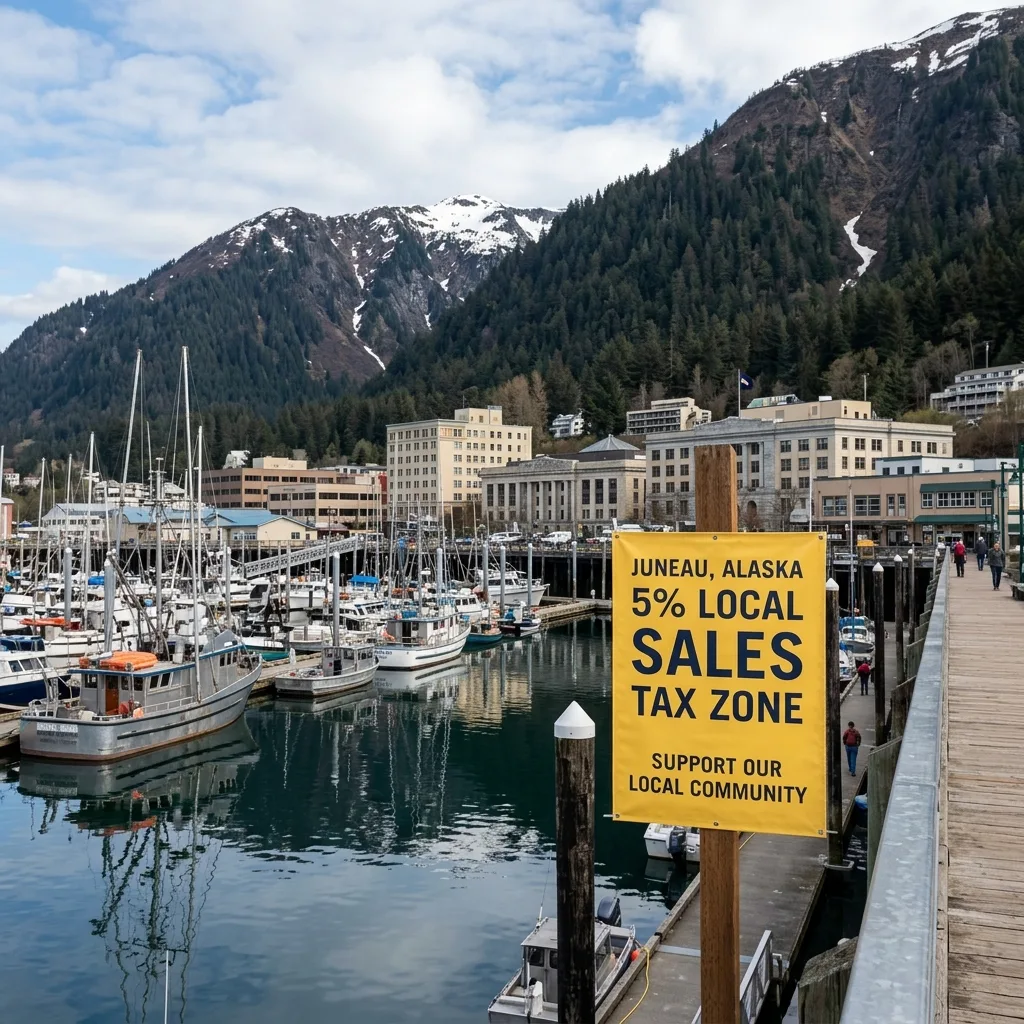
To understand the alaska vehicle tax system, you have to understand that Alaska is functionally two states glued together by a single license plate. The first Alaska is the road system Alaska of Anchorage, Fairbanks, the Mat-Su Valley, the Kenai Peninsula, and the highway corridors. This Alaska is mostly tax-free at the point of vehicle purchase. You buy a $50,000 Ram 1500 in Anchorage and you write a check for $50,000 plus title and registration fees that total under $200. Done. The second Alaska is the maritime Alaska of Southeast: Juneau, Sitka, Ketchikan, Petersburg, Wrangell, Haines, Skagway, and the smaller communities of the Panhandle. This Alaska runs on local sales tax because most of these communities are not connected to the road network and their economies depend on collecting from cruise ship passengers, fishermen, and whoever else passes through. Vehicles get caught in this same tax dragnet.
The split is also philosophical. Anchorage and Fairbanks have rejected sales tax repeatedly at the ballot box because they have property tax, oil revenue, and large enough populations to fund services without consumption taxes. Juneau, Sitka, and Ketchikan have no choice. Their populations are tiny and their seasonal tourist economies make sales tax the most efficient revenue tool available. Unfortunately, you do not have to be a tourist to pay it. If you are a year-round resident of Juneau buying a personal vehicle, the borough collects 5 percent of the purchase price. On a $40,000 truck, that is $2,000. On a $90,000 fully-loaded diesel pickup, it is $4,500.
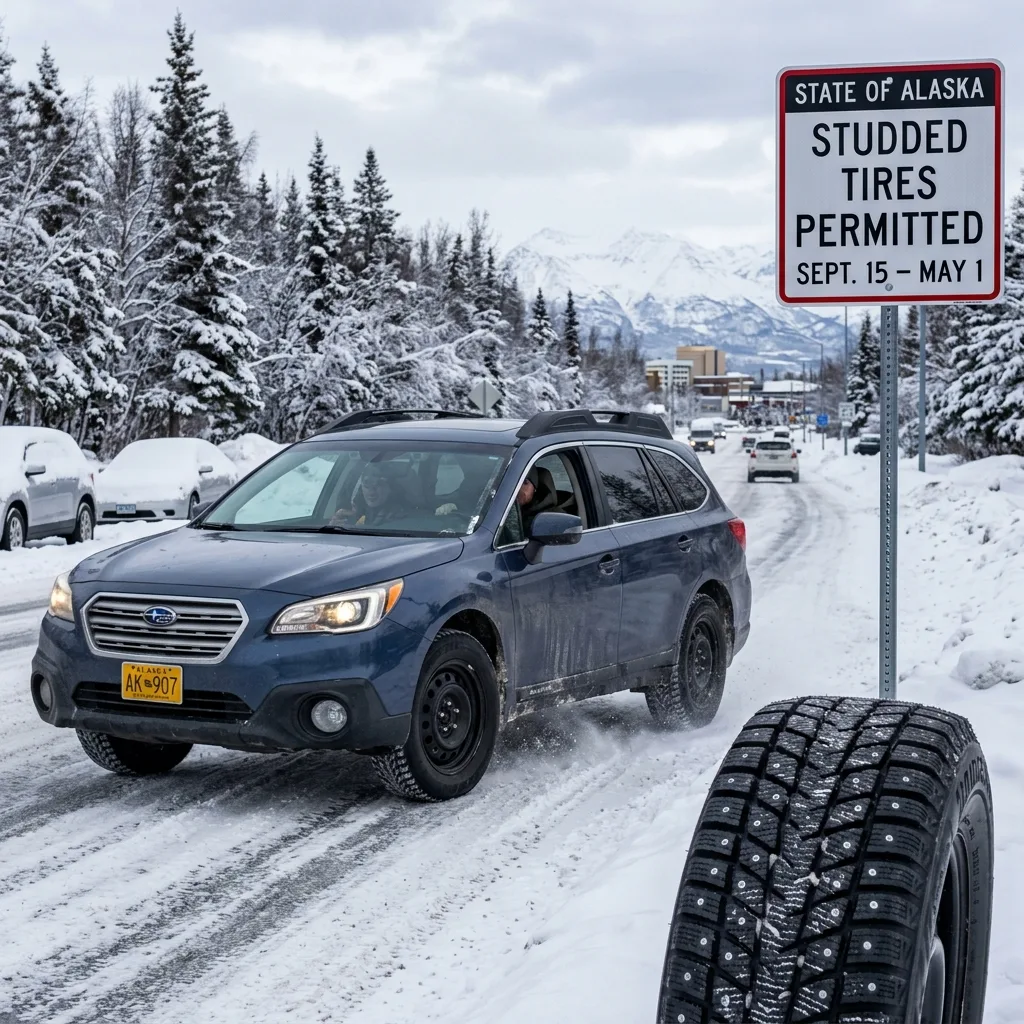
The cruelty is that this tax is layered on top of every other tax Alaska collects. The biennial MVRT. The annual state registration fee. The studded tire fee. None of these are eliminated because you live in a sales-tax municipality. They are added on top. By contrast, an Anchorage resident pays only the state and biennial fees. Same vehicle, vastly different lifetime cost. Ketchikan changes its rate seasonally to capture more revenue during cruise season. Sitka runs a flat 6 percent year-round. Juneau is at 5 percent. Some smaller communities like Hoonah, Kake, and Yakutat impose their own rates ranging from 4 to 6.5 percent.
Municipality-by-Municipality Breakdown
The following table shows the exact tax bill on a $30,000 vehicle, a $50,000 vehicle, and an $80,000 vehicle in each of the major Alaskan municipalities. Notice that Anchorage and Fairbanks both register zero. This is not a typo. Those two cities have no general sales tax at all. Now look at Juneau, Sitka, and Ketchikan. The numbers are not subtle. A Juneau resident buying a fully-loaded $80,000 truck pays $4,000 in sales tax that an Anchorage resident does not pay. Same truck, same dealer, same finance terms. Different zip code, different bill.
The disparity creates a strange black market in vehicle purchasing. Juneau residents fly to Anchorage for a long weekend and come back with a purchased vehicle on the barge, saving more than the cost of the round-trip flight. The problem is that this only delays the bill. The instant you register that vehicle in Juneau, the Sales Tax Office invoices you for the use tax owed. Borough auditors actively cross-reference DMV records to find these transactions.
Use Tax Warning: Buying a vehicle in Anchorage and registering it in Juneau does NOT escape the 5% Juneau sales tax. The City and Borough of Juneau imposes a use tax equal to the sales tax that would have been owed on a local purchase. The borough actively cross-references DMV registration data with sales tax filings.
The 10-Day Registration Deadline Bomb
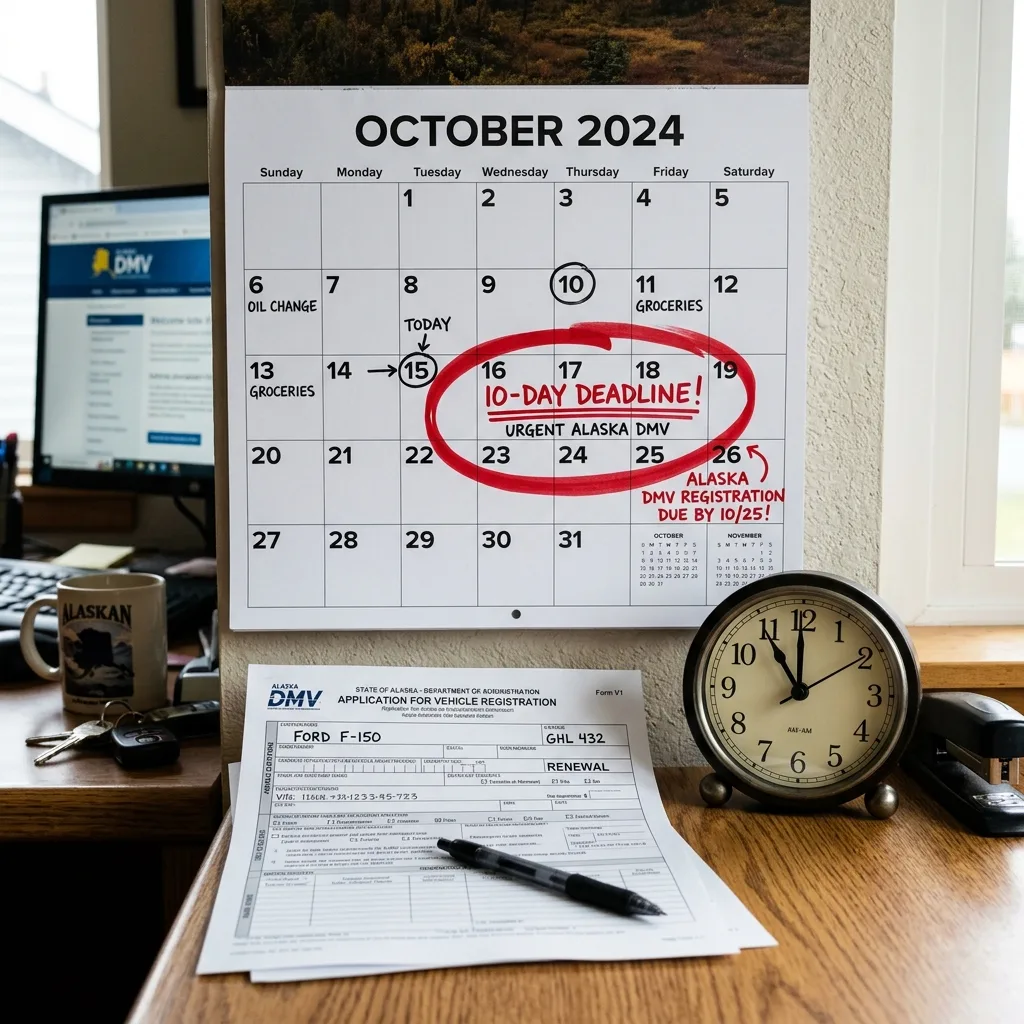
Of all the rules buried in Alaska Statute Title 28, the cruelest one for newcomers is the ten-day window. Once you establish residency in Alaska, you have exactly ten days to register every vehicle you brought with you. Not thirty. Not sixty. Ten. The state defines residency aggressively. If you accept employment, register to vote, enroll a child in public school, apply for a Permanent Fund Dividend, or open a checking account at an Alaska credit union, the clock starts.
Failure to comply triggers cascading penalties. The standard late registration fee is $10, which sounds reasonable until you realize municipal personal property tax assessors are also using the registration date to determine when you owe MVRT. In a Juneau case from 2024, a relocating dentist ended up owing nearly $9,000 in back taxes and fees on three vehicles he had brought up from Oregon because he had not registered them within the ten-day window and the borough applied use tax retroactively.
The ten-day deadline also interacts badly with the seasonal nature of Alaskan life. People move to Alaska in summer when the road system is open. They drive up the Alaska Highway from the Lower 48 over seven to ten days, arrive exhausted, spend a week looking for housing, and somewhere in there they hit the ten-day registration mark without realizing it. The deadline is calculated from the moment you become a resident, not from the moment you finally have time to deal with paperwork.
The Catch: If you title and register your vehicles to a Montana LLC before you move to Alaska, the ten-day deadline does not apply because you (the Alaskan resident) do not personally own the vehicle. The LLC owns the vehicle. The LLC is registered in Montana. No Alaska registration is required.
MVRT: Alaska’s Biennial Property Tax on Wheels
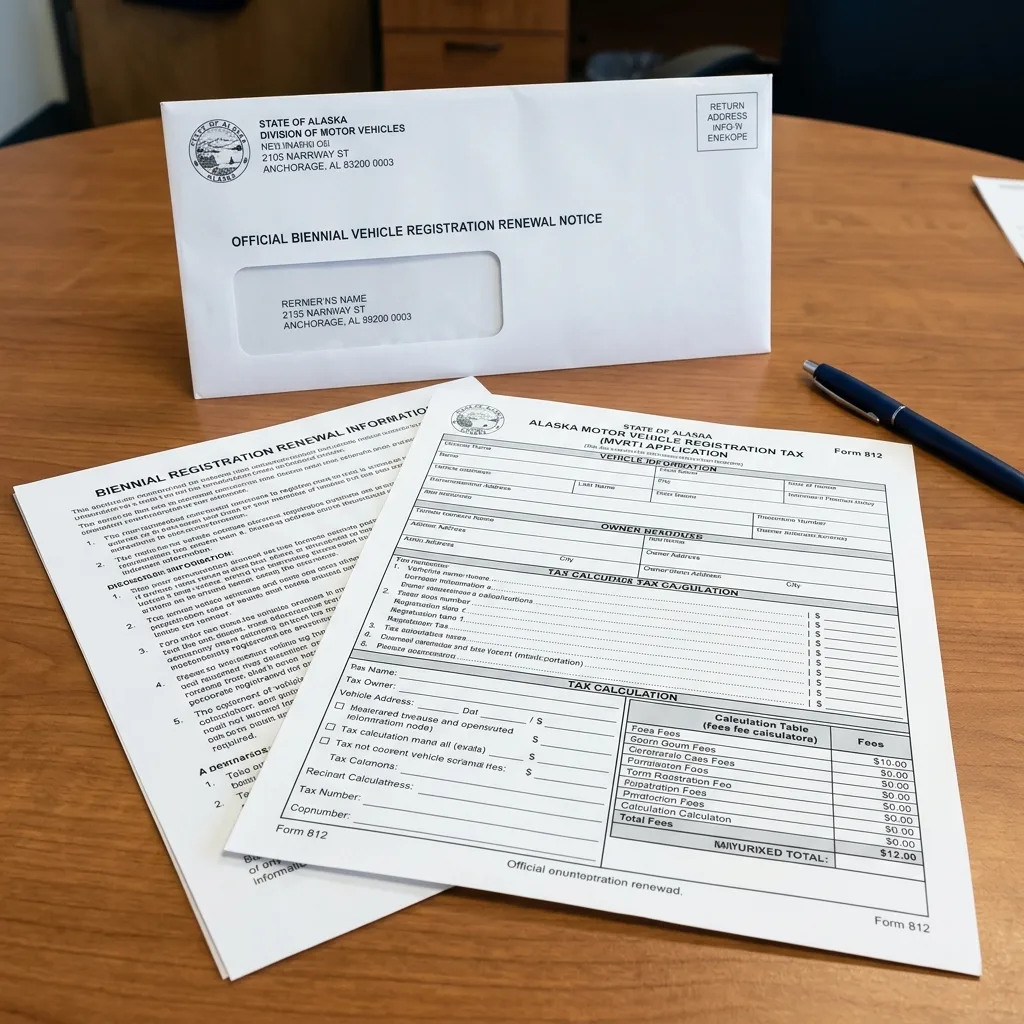
The Motor Vehicle Registration Tax, universally called MVRT in Alaska, is the state’s substitute for the personal property tax that other states levy. It is biennial, meaning you pay it every two years, and the amount is based on vehicle age. New vehicles pay the most. Older vehicles pay less. By the time a vehicle is more than eight years old, the MVRT drops to $70 or less in most municipalities. It is a depreciating tax, which makes it less obnoxious than the Virginia or South Carolina personal property tax that recalculates assessed value every single year.
That does not mean MVRT is cheap when you start out. A 2026 model-year vehicle pays $150 in Anchorage and Fairbanks and $145 in Juneau. The schedule descends from there. A 2024 model pays around $135. A 2020 model pays around $80. A 2018 or older pays $70 or less. The fee is collected at the time of biennial registration renewal, which means you write a single check every two years that includes the state registration fee, the MVRT, and any optional surcharges. For most working-age vehicles, the MVRT alone runs $80 to $150 every two years on top of all other costs.
What makes MVRT relevant to Montana LLC analysis is that an Alaska-titled vehicle is subject to MVRT and a Montana-titled vehicle is not. Montana has no equivalent. If your truck is titled to a Montana LLC, the biennial Alaska MVRT disappears entirely. Over a ten-year ownership period, the MVRT savings alone runs to several hundred dollars on top of avoided municipal sales tax.
Annual Costs Table by City
To understand the true annual cost difference between an Alaska-registered vehicle and a Montana-registered one, you have to combine all the moving parts. The state registration fee ($100 plus $10 in-person surcharge), the biennial MVRT averaged across two years, the studded tire fees if applicable ($5 per tire installed), and any local surcharges. The table below shows what a single late-model vehicle costs to maintain across each municipality assuming a $50,000 purchase price and a 5-year ownership window.
For Anchorage and Fairbanks residents who already pay no sales tax, Montana LLC registration costs slightly more than staying with the existing Alaska system on a single $50,000 vehicle. The break-even shifts the moment you have a more expensive vehicle, multiple vehicles, or you live in a tax municipality. For Juneau and Sitka residents, the Montana LLC pays for itself on the first vehicle and saves between $1,400 and $1,900 over a five-year window. The savings scale linearly with vehicle value, so an $80,000 truck triples the differential.
SB 227: The Statewide Tax Time Bomb
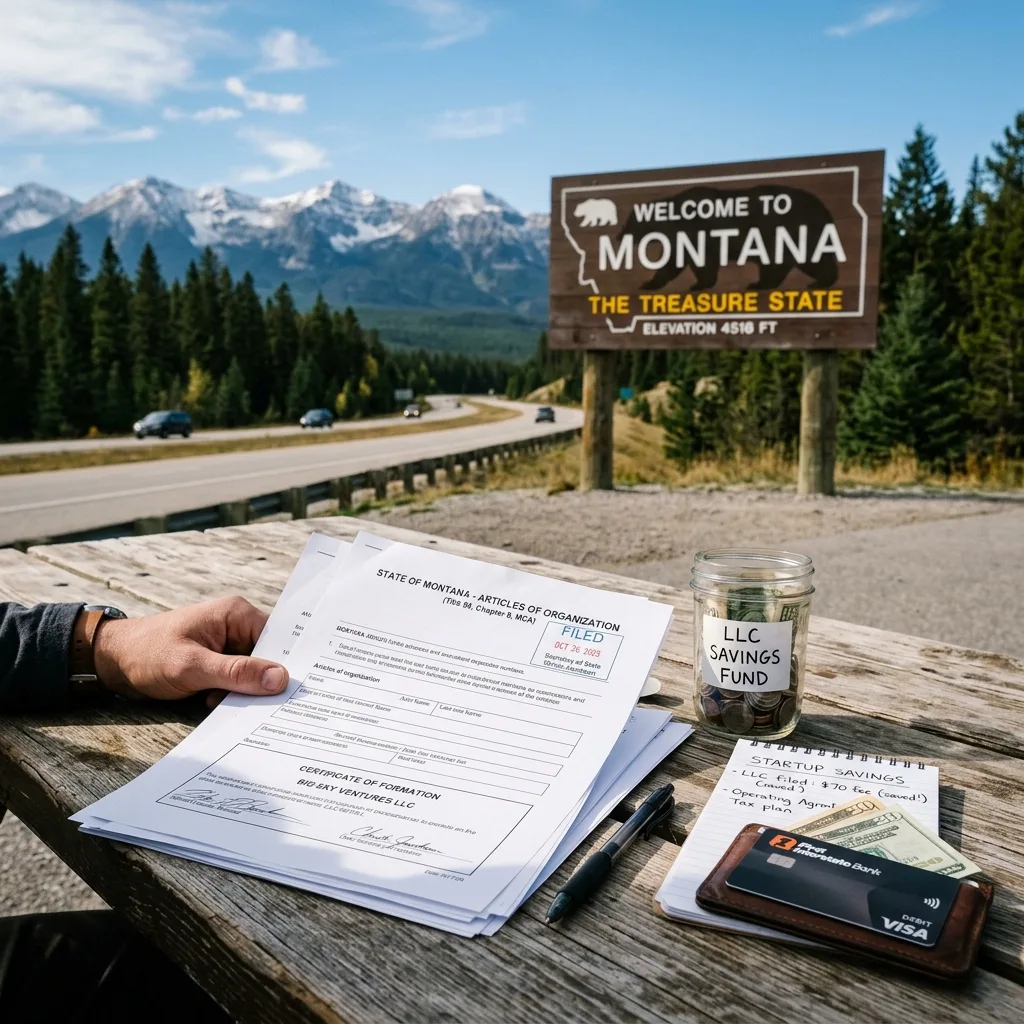
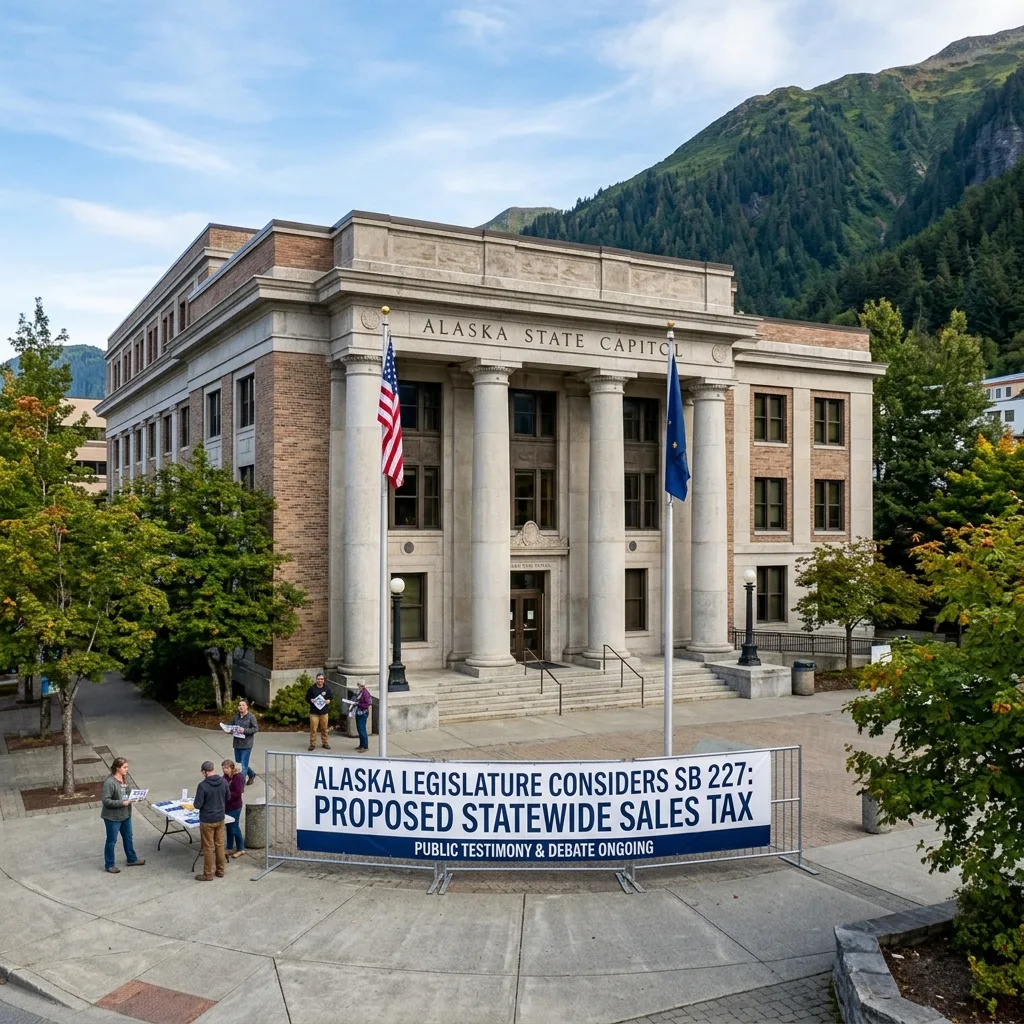
If you read no other section in this article, read this one. Senate Bill 227 is currently working its way through the Alaska legislature and represents the single biggest threat to the “no sales tax” reputation that the state has cultivated for decades. The bill, sponsored by senators concerned about chronic budget deficits caused by oil price volatility, would impose a temporary statewide sales tax of 4 percent from April through September and 2 percent from October through March, with an effective date of January 1, 2027 and a sunset date of January 1, 2034. Yes, sunset dates have a way of becoming permanent. And yes, the bill explicitly includes vehicle purchases.
If SB 227 passes in its current form, the impact on the alaska vehicle tax landscape would be brutal. An Anchorage resident who currently pays zero in sales tax would suddenly owe 4 percent on a vehicle purchased in summer or 2 percent on one purchased in winter. A Juneau resident who currently pays the 5 percent municipal rate would owe that PLUS the 4 percent state rate during summer, for a combined 9 percent. On a $60,000 truck purchased in July in Juneau, that is $5,400 in combined tax versus the current $3,000. A 2.4x increase in cash out of pocket.
The bill faces opposition, of course. The Permanent Fund Dividend lobby, the rural caucus, the small business community, and most of the Anchorage delegation have all expressed concerns. But the underlying budget pressure is real. Oil revenue is down. Federal transfers are flat. The state has been drawing from the Constitutional Budget Reserve for years to plug deficits, and that fund is not infinite. Some form of broad-based revenue is coming. SB 227 is the current vehicle, but if it fails, another version will follow within two or three legislative sessions.
What makes the Montana LLC structure particularly attractive in this moment is that vehicles titled to a Montana LLC and registered in Montana are not subject to Alaska sales tax even if SB 227 passes. The federal full faith and credit clause requires Alaska to recognize Montana’s title and registration. The vehicle is not owned by an Alaska resident. It is owned by a Montana legal entity. That entity pays Montana’s vehicle taxes (effectively zero on registration, no sales tax) and is therefore outside the reach of any future Alaska statewide sales tax. Acting now, before SB 227 takes effect on January 1, 2027, locks in the structure and protects against the rate hike to come.
SB 227 Worst Case: Juneau resident buying a $90,000 truck in July 2027 pays 5% Juneau tax + 4% statewide tax = 9% combined = $8,100 in cash sales tax. The same truck titled to a Montana LLC pays $0 sales tax.
Who Gets Hit Hardest by Alaska Vehicle Tax
The current Alaska vehicle tax structure does not affect everyone equally. Some demographics absorb almost no impact from municipal sales taxes because they live in Anchorage, Fairbanks, or Mat-Su and they buy moderate vehicles. Other demographics are getting destroyed. If you fall into any of these four profiles, the Montana LLC math probably works for you on the first vehicle.
Profile 1: The Southeast Alaska truck buyer
You live in Juneau, Sitka, Ketchikan, or Petersburg. You need a real truck for hauling, towing, or commercial fishing support. You are looking at a Ford F-250, Ram 2500, or Chevy Silverado 2500HD in the $70,000 to $90,000 range. Your municipal sales tax bill ranges from $3,500 to $7,200 depending on your specific borough and the timing of your purchase. This is the single largest category of Alaskans who benefit from Montana LLC structure, and it is the one we see most often in client intake from Alaska.
Profile 2: The snowbird splitting time
You live in Anchorage or Fairbanks for the summer and Arizona, Nevada, or Florida for the winter. You own an RV, a fifth-wheel toy hauler, or both. You currently register the RV in Alaska because that is where you officially reside, but you spend more time outside the state than inside it. The Alaska MVRT and registration fees apply to your RV every cycle. Worse, if you bought the RV from a dealer in your winter state, you may have paid sales tax there even though you do not consume any roads in that state for half the year. Montana LLC registration eliminates both problems and aligns the registration with the actual use pattern.
Profile 3: The new resident with the 10-day clock ticking
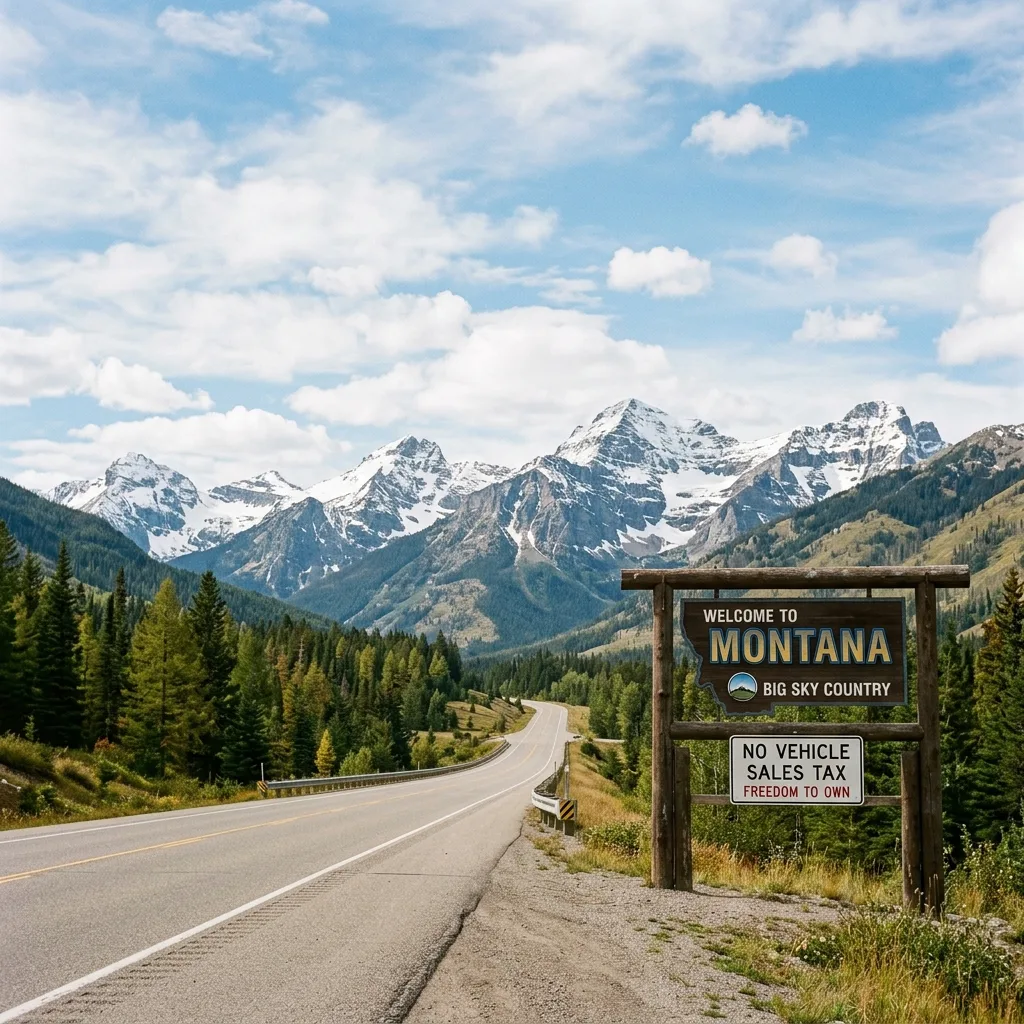
You just took a job in Juneau, Sitka, or one of the other tax municipalities. You drove up the Alcan Highway with two vehicles, or you brought one and shipped another on the AMHS ferry. The ten-day clock is ticking. You also own a vehicle outright that you bought in your previous state, and you are now learning that Juneau wants to apply use tax retroactively to the purchase price even though you paid sales tax in Washington or Oregon when you bought it. The Montana LLC structure, established before the move, would have eliminated this entire mess. Established after the move, it can still help going forward but does not cure the past.
Profile 4: The high-value truck or RV owner
You own a $120,000 motorhome, a $90,000 fully-loaded crew cab diesel pickup, a $60,000 Toyota Land Cruiser, or a $45,000 Polaris RZR side-by-side. The dollar value of avoided municipal sales tax on a single high-end vehicle exceeds the lifetime cost of the Montana LLC structure. For owners of multiple high-value vehicles, the math is overwhelming. We see Alaska clients with five and six-figure annual vehicle inventories who consolidate everything under a single Montana LLC and write the entire tax bill down to zero.
The Montana LLC Solution Explained
The Montana LLC structure works because of how the United States allocates jurisdiction over corporate persons. When you form a limited liability company in Montana, that LLC is a Montana legal resident for purposes of property ownership, taxation, and registration. The LLC can buy assets, hold title, register vehicles, sign contracts, and pay taxes in Montana. It does not become an Alaska resident just because its sole member happens to live in Anchorage or Juneau. The LLC stays Montana-based as long as its registered agent is in Montana, its filings are with Montana, and its principal office of record is Montana.
Once your vehicle is titled in the name of “Acme Holdings LLC” and registered in Montana, the vehicle is a Montana vehicle. It carries Montana plates. Its title sits in a Montana DMV file. It pays Montana’s flat registration fees once at acquisition and then renewable on Montana’s schedule. There is no Montana sales tax because Montana does not have one. There is no Alaska sales tax because the vehicle was not purchased by an Alaska resident, it was purchased by a Montana LLC. There is no Juneau or Sitka or Ketchikan municipal sales tax because those tax jurisdictions only reach Alaska residents and Alaska businesses, not out-of-state legal entities.
You as the LLC member operate the vehicle in Alaska or anywhere else under standard non-resident vehicle rules. The federal full faith and credit clause of the U.S. Constitution and the federal interstate commerce clause both protect your right to operate a properly-registered out-of-state vehicle on Alaska roads. Alaska is required to recognize the Montana title and the Montana plates. The state cannot demand that you re-title in Alaska because the vehicle is not owned by an Alaska resident. The borough sales tax cannot apply because no Alaska sale or use occurred. The MVRT cannot apply because Alaska only collects MVRT on Alaska-registered vehicles.
Is This Actually Legal?
Yes, when done correctly. Montana LLC vehicle registration has been tested in courts for decades and it holds. The U.S. Constitution’s full faith and credit clause requires every state to recognize the legal documents and corporate registrations of every other state — a Montana LLC formed in compliance with Montana law is a real legal entity that Alaska must recognize. The federal interstate commerce clause prevents any state from discriminating against out-of-state legal entities engaged in lawful interstate activity, and an LLC owning a vehicle and operating it across state lines is core interstate commerce. Every state, including Alaska, has explicit non-resident vehicle operation rules that allow out-of-state vehicles to operate on local roads as long as they are properly registered in their home state.
The vehicle is owned 100% by the Montana LLC — a Montana entity formed under Montana law. Federal law’s Commerce Clause and Full Faith and Credit Clause prevent states from blocking legitimate out-of-state entity registrations. Montana has the right to register vehicles owned by Montana entities, and that right has decades of legal precedent behind it. The structure works because the ownership is genuine: a real LLC, a real registered agent, real filings with the Montana Secretary of State.
Done correctly, the structure has decades of court precedent behind it. Montana actively welcomes the LLC formation industry as part of its corporate revenue base. Alaska has never successfully prosecuted a properly-formed Montana LLC vehicle registration. The IRS does not consider it tax fraud because no federal tax is being avoided. Insurance companies underwrite Montana LLC vehicles every day in all fifty states. The structure is mainstream, legal, and properly used by hundreds of thousands of Americans. Our job at Zero Tax Tags is to make sure your structure is set up correctly, your filings are real, your registered agent is genuine, and your formalities are maintained year after year.
Three Alaska Case Studies
Case Study 1: The Sitka charter captain
Mike runs a halibut and salmon charter operation out of Sitka. In spring 2025 he replaced his aging support truck with a new $78,000 Ford F-250 Tremor. As a Sitka resident, he was looking at $4,680 in municipal sales tax (6 percent), $145 in MVRT for the first cycle, and $500 in state registration fees over five years. Total Alaska five-year cost: $5,325. After consultation with our team, he formed a Montana LLC, titled the truck to the LLC, and registered it in Montana. His total five-year Montana cost: $1,979. Savings: $3,346 over five years. The truck is currently being used in commercial fishing support across Southeast Alaska with Montana plates.
Case Study 2: The Anchorage snowbird with the RV
Linda and her husband live in Anchorage during summer and Tucson, Arizona during winter. They own a $145,000 Newmar Dutch Star Class A motorhome and a $55,000 Jeep Wrangler Rubicon they tow behind it. Anchorage charges no sales tax, so the original purchase was clean, but Arizona has a brutal Vehicle License Tax (VLT) that hit them every time they tried to register the RV in their winter state. They eventually settled on registering everything in Alaska, but the constant back-and-forth between Alaska MVRT cycles and Arizona VLT enforcement was a paperwork nightmare. The Montana LLC consolidated both vehicles under a single registration, eliminated the Arizona VLT entirely, and reduced annual paperwork to one Montana renewal.
Case Study 3: The Juneau surgeon who bought three vehicles

Dr. Patel is an orthopedic surgeon at Bartlett Regional Hospital in Juneau. Over an 18-month period in 2024 and 2025, he purchased a $92,000 Land Rover Defender 130 for his wife, a $68,000 Toyota Tacoma TRD Pro for his weekend hunting trips, and a $145,000 Lexus LX 600 for daily commuting. At Juneau’s 5 percent rate, his combined municipal sales tax exposure was $15,250. He came to Zero Tax Tags after the first vehicle, established a Montana LLC, and titled all three vehicles under it. Total municipal sales tax paid: zero. Total Montana LLC five-year cost: $1,979 covering all three vehicles. Net first-year savings versus the alternative: more than $13,000. Year-two savings continue to compound because the MVRT and registration fees on three vehicles in Juneau would have totaled around $1,500 every two years.
Our Process: Day 1, Day 2, Day 3, Year 2+
| Day 1: | You complete a 15-minute online intake form covering your vehicle details, purchase plans, and member information. We file your Montana LLC formation paperwork with the Montana Secretary of State the same business day. Filing fee and registered agent setup are included in your $899 first-year package. |
| Day 2: | Your LLC is officially formed and registered with Montana. We obtain the EIN from the IRS, set up your Montana registered agent address of record, and prepare title transfer documents. If you are buying a new vehicle, we coordinate directly with the dealership to title the vehicle in the LLC name from the moment of sale. |
| Day 3: | Your Montana title is filed and the registration is processed. Montana plates are mailed to your registered agent address and forwarded to you in Alaska. The total turnaround from intake to plates in your hand is typically two to three weeks for new vehicles, four to six weeks for transfers from existing titles. |
| Year 2+: | Annual cost drops to $270 per year, which covers your registered agent renewal ($150) and your Montana LLC annual report filing ($120). We handle every renewal, every filing, every plate cycle. You get an email reminder, you confirm details, you do nothing else. Year two and forward, your vehicle costs you less than $25 per month to keep on the road tax-free. |
Frequently Asked Questions
Do I have to live in Montana to form a Montana LLC?
No. Montana law explicitly allows non-residents to form LLCs. You provide a registered agent with a Montana address (we provide one as part of our service) and you can be a member of the LLC from anywhere in the United States, including Alaska.
What happens if a Juneau police officer pulls me over with Montana plates?
Nothing. Out-of-state plates are common in Alaska, especially on vehicles owned by businesses, trusts, or estates. As long as your registration is current and the LLC is properly maintained, the traffic stop ends with the standard ticket or warning for whatever you were stopped for. There is no separate offense for “driving an LLC-owned vehicle.” Officers verify registration through standard NCIC channels and Montana shows up exactly the same as any other valid state registration.
Can I drive the Montana-registered vehicle as much as I want in Alaska?
Yes. Federal law allows out-of-state vehicles unlimited operation on local roads as long as they are properly registered in their home state. Alaska does not have a “duration of stay” rule that converts out-of-state vehicles to in-state registration. Your Montana LLC vehicle can be driven 365 days a year in Anchorage or Juneau without triggering any Alaska registration requirement.
What about insurance?
You insure the vehicle the same way you would insure any vehicle, through any major carrier. Insurance companies underwrite Montana LLC vehicles every day. You list the LLC as the named insured and yourself as the primary driver. Premiums are based on the garaging address (where the vehicle is actually kept) and your driving record. Coverage is identical to any other insured vehicle.
Will Alaska try to audit me for use tax?
Alaska has no statewide use tax to audit. Municipalities like Juneau do have local use taxes, but those apply to Alaska residents and Alaska businesses purchasing taxable items for use within the borough. A Montana LLC purchasing a vehicle is neither an Alaska resident nor an Alaska business. Borough auditors who review DMV records will not find your vehicle in the Alaska registration database because it is registered in Montana.
What if SB 227 passes? Do I need to do anything different?
No. The Montana LLC structure already protects you against any future Alaska statewide sales tax. SB 227 would apply to “sales and use within the state of Alaska.” A Montana LLC purchase from a Montana dealer (or any out-of-state dealer titling to a Montana entity) is not an Alaska sale. The structure was designed precisely to handle the kind of sales tax exposure SB 227 would create.
How does this work with the Permanent Fund Dividend?
Your PFD eligibility is based on your personal residency in Alaska, not on your vehicle registration. Owning a vehicle through a Montana LLC has no impact on your individual residency status, your PFD application, your eligibility for residency-based discounts on hunting and fishing licenses, or any other resident benefit. You remain an Alaska resident for every other purpose. Only the vehicle is owned by the Montana entity.
Can I move existing vehicles into the LLC, or only new purchases?
Both. New vehicle purchases are the cleanest because the dealer titles the vehicle directly to the LLC and never collects any state-level tax. Existing vehicles can be transferred from your personal name into the LLC, but if you previously paid municipal sales tax in Alaska, that tax is not refundable. The transfer protects you against future taxes (MVRT, registration fees, potential SB 227) but does not unwind past payments. For new buyers, the savings are immediate and dramatic. For existing owners, the savings begin at the next registration cycle.
See how Montana LLC registration helps owners in other high-tax states:
- Arizona VLT Problem: How to Stop Paying $1,000 Every Single Year
- Nevada’s 8.25% Car Tax: The Hidden Cost Nobody Tells You About
Ready to Dodge Alaska’s Municipal Vehicle Tax?
Alaska vehicle owners in tax municipalities have saved thousands with Montana LLC registration. Year one is $899. Year two and beyond is $270. Before SB 227 changes everything.