
26 min read
On this page
- + Maryland Vehicle Tax: The Titling Tax Explained
- + Maryland Keeps Raising the Rate
- + What Maryland Vehicle Tax Actually Costs Over 5 Years
- + The Hidden $40 EMS Surcharge
- + The $125 EV Surcharge
- + The Inspection Trap
- + The Delaware Border Trap
- + The Historic Vehicle Reclassification
- + Who Maryland Vehicle Tax Hits Hardest
- + The Montana Solution
- + Is Montana LLC Registration Legal?
- + Four Maryland Case Studies
- + Who Benefits Most
- + Our Process
- + Frequently Asked Questions
You’re sitting in a glass-walled finance office at a Bethesda BMW dealer. The X7 you just bought is parked outside, freshly detailed, its key fob warm in your hand. The finance manager smiles, slides a single sheet across the desk, and points to the bottom line. The number reads $6,413. That is the Maryland excise tax on your $95,000 BMW X7. It is due before the dealer can issue plates, before you can drive the vehicle off the lot legally, and before you have made a single payment on the loan.
Then comes the part nobody warned you about. That 6.75% rate? It was lower last year. And the year before that. Maryland raised the excise tax twice in rapid succession, doubled the title fee on the same day, and tacked on a 114% increase to the emissions inspection fee for good measure. Effective July 1, 2025, every line item connected to vehicle ownership in Maryland got more expensive.
If you are a Maryland resident with a luxury vehicle, an RV, an EV, or a classic car, the math has changed against you. This article walks you through every fee Maryland charges, the legal framework behind each one, and the legitimate path thousands of high-net-worth vehicle owners use to opt out: registering through a Montana LLC. By the end, you will know exactly what your five-year tax exposure is and exactly how much of it you can legally eliminate.
Maryland Vehicle Tax: The Titling Tax Explained
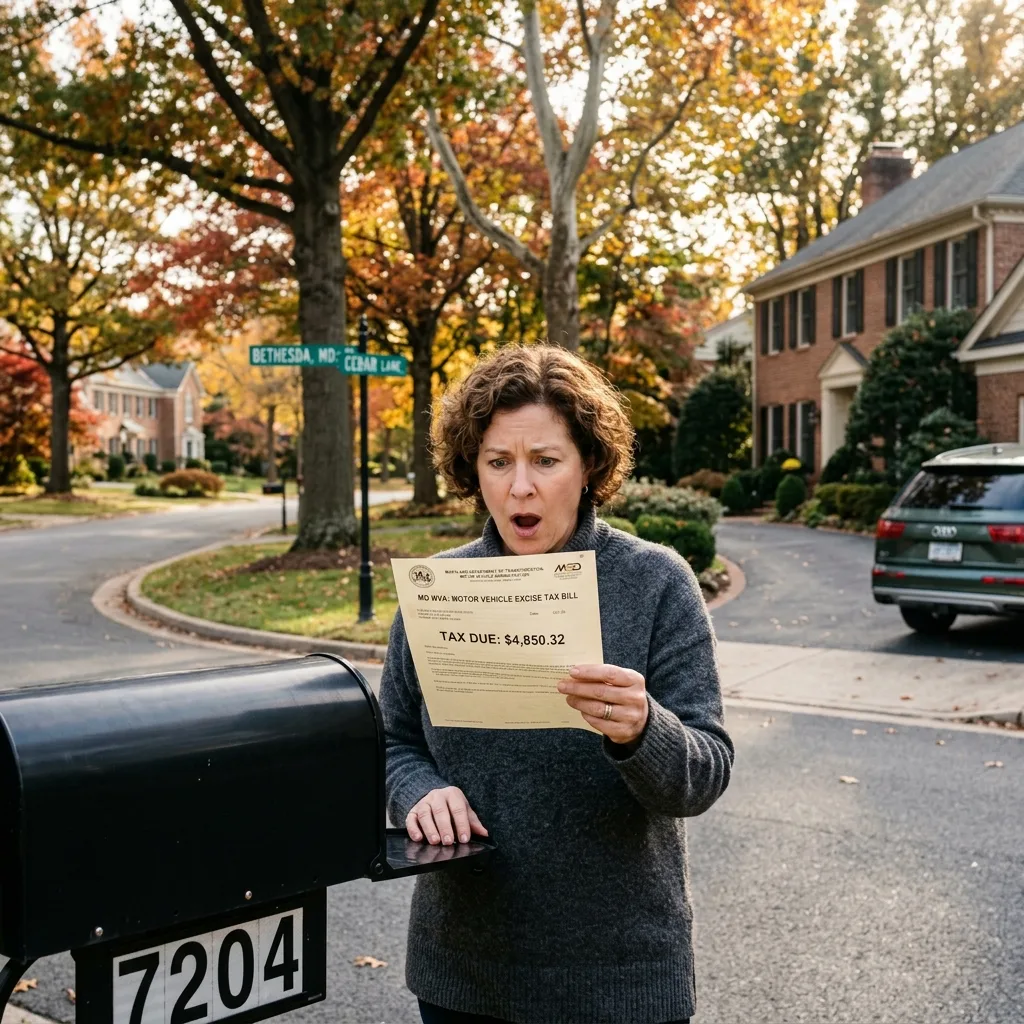
Maryland vehicle tax is a one-time excise tax officially called the titling tax, administered by the Maryland Motor Vehicle Administration. It is collected at the moment you transfer title, which means at the point of purchase for a new vehicle, at the closing of a private-party sale, or the day you walk into the MVA after moving to Maryland with a vehicle from another state.
The rate is 6.75% as of July 1, 2025. The taxable base is whichever is higher: the actual purchase price you paid, or the fair market value the MVA assigns to the vehicle. If you bought a $95,000 SUV but the MVA’s value tables say it’s worth $98,000, you pay tax on $98,000. The state will not let you under-report a sale to dodge tax, and the MVA reviews bills of sale that look unusually low.
One small piece of relief exists: Maryland allows a full trade-in deduction. If you trade a $30,000 sedan toward a $60,000 SUV, you only pay excise tax on the $30,000 difference. That is a meaningful break compared to states that tax the full purchase price regardless of trade-in.
The Maryland excise tax formula:
(Purchase Price OR Fair Market Value, whichever is higher) − (Trade-in Value) × 6.75% = Maryland Excise TaxExample: $95,000 BMW X7 with no trade-in = $95,000 × 0.0675 = $6,412.50 due at title issuance.
You also pay a $200 title fee, which doubled from $100 on July 1, 2025. The title fee is separate from registration, separate from the excise tax, and separate from the various surcharges that follow. Then comes annual registration, which is weight-based, plus the EMS surcharge, plus inspection fees, plus EV surcharges if applicable. We will get to all of those.
For now, understand the foundational extraction: 6.75% of your vehicle’s value, paid in full, before you receive a license plate. On a luxury SUV, that is more than the sticker price of a used compact car. On an RV, it can exceed $12,000 in a single transaction.
Maryland Keeps Raising the Rate: From 6% to 6.75% in Two Steps
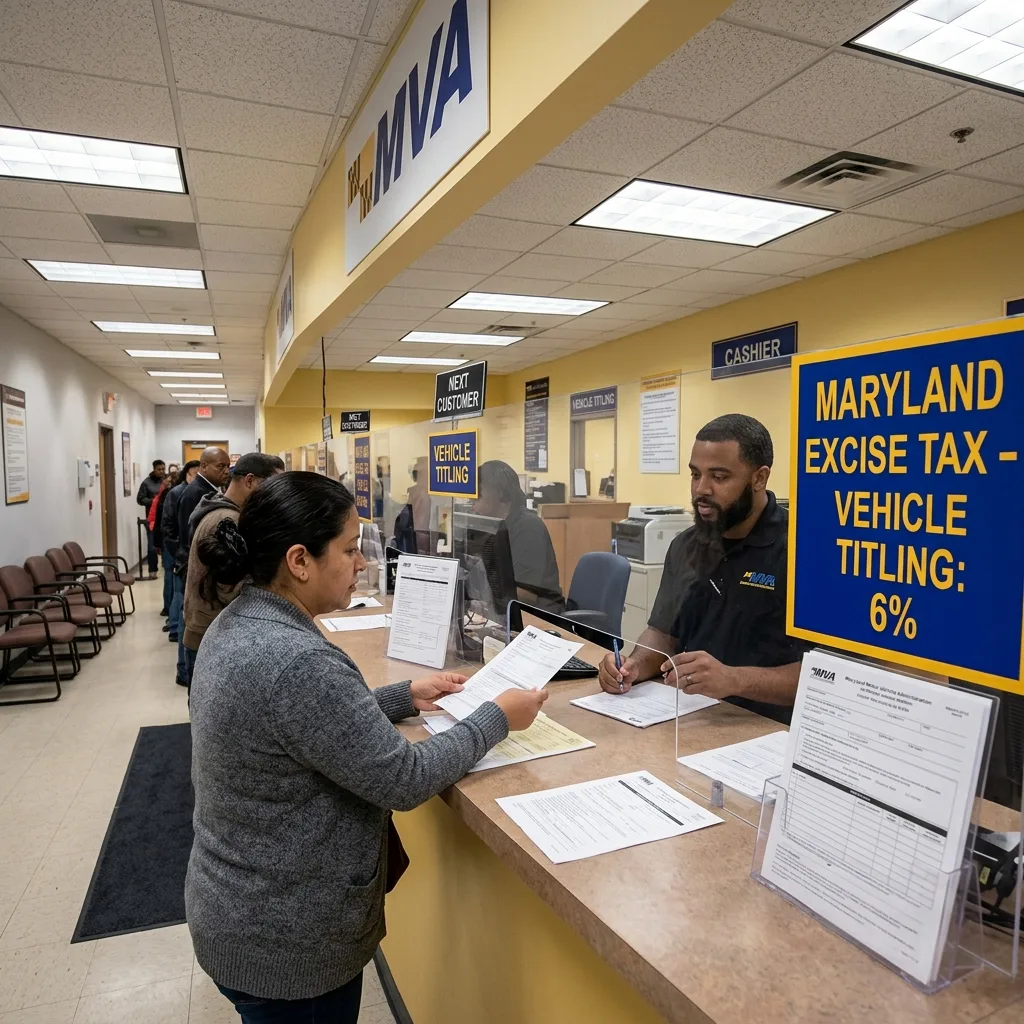
Pay attention to the timeline. For decades, Maryland’s excise tax sat at 6.0%. Then, within a compressed window, the legislature pushed it to 6.5%. And then, on July 1, 2025, it climbed again to 6.75%. Two hikes, both upward, neither rolled back. That same day, the title fee doubled from $100 to $200, the VEIP emissions inspection fee jumped from $14 to $30 (a 114% increase), and a brand-new $5-per-tire fee was layered onto retail tire purchases.
July 1, 2025 was not a coincidence of administrative housekeeping. It was a coordinated revenue grab. If you were shopping for a vehicle in June 2025 and procrastinated past the deadline, you walked into July paying meaningfully more on every line of the registration ledger.
The pattern matters because it tells you what comes next. Maryland legislators have demonstrated, through three separate rate-related actions in a short timeframe, that vehicle ownership is treated as a renewable revenue stream. The state has not signaled any intent to roll any of this back. If anything, the trajectory is up. There are EV-specific surcharges to administer, road maintenance shortfalls to fund, and an emissions inspection program that just got more expensive to operate.
The honest reading: every year you remain registered in Maryland, you are betting that the legislature does not raise the rate again. That bet has lost twice in recent memory.
July 1, 2025 — The Day Everything Got More Expensive
Maryland raised its excise tax rate from 6.5% to 6.75%. It doubled its title fee from $100 to $200. It increased its emissions inspection fee from $14 to $30. It added a new $5-per-tire fee at point of sale. All on the same day.
What Maryland Vehicle Tax Actually Costs Over 5 Years
Sticker shock at the dealership is one thing. The full five-year cost is another. The table below shows what Maryland vehicle tax extracts across five years of ownership for vehicles ranging from a $28,000 family sedan to a $180,000 Class A motorhome. Each row reflects the 6.75% excise tax, the $200 title fee, weight-based annual registration, the $40/year EMS surcharge, and $30/year VEIP emissions inspection.
The right column shows what a Montana LLC alternative costs over the same five years. The savings column is what you keep.
Read the bottom row again. On a $180,000 motorhome, you save more than ten thousand dollars over five years by not registering it in Maryland. On a $95,000 luxury SUV, you save over $5,500. On a midsize SUV, the savings cover three years of premium auto insurance.
The math gets sharper when you consider that Maryland’s annual costs include a VEIP inspection ($30/year), the EMS surcharge ($40/year), and weight-based registration that climbs as your vehicle gets heavier. Montana has none of those. There is no annual property tax, no emissions inspection, no safety inspection, no EMS surcharge. The Montana LLC structure replaces them with a flat annual filing fee that does not change based on what you drive.
On the $180,000 motorhome, you save more than $10,000 over five years. On the luxury SUV, you save over $5,500. On the diesel truck, almost $4,000. The savings are not theoretical. They are line items on the MVA’s own fee schedule.
Maryland’s Hidden $40 Tax: The EMS Surcharge on Every Vehicle
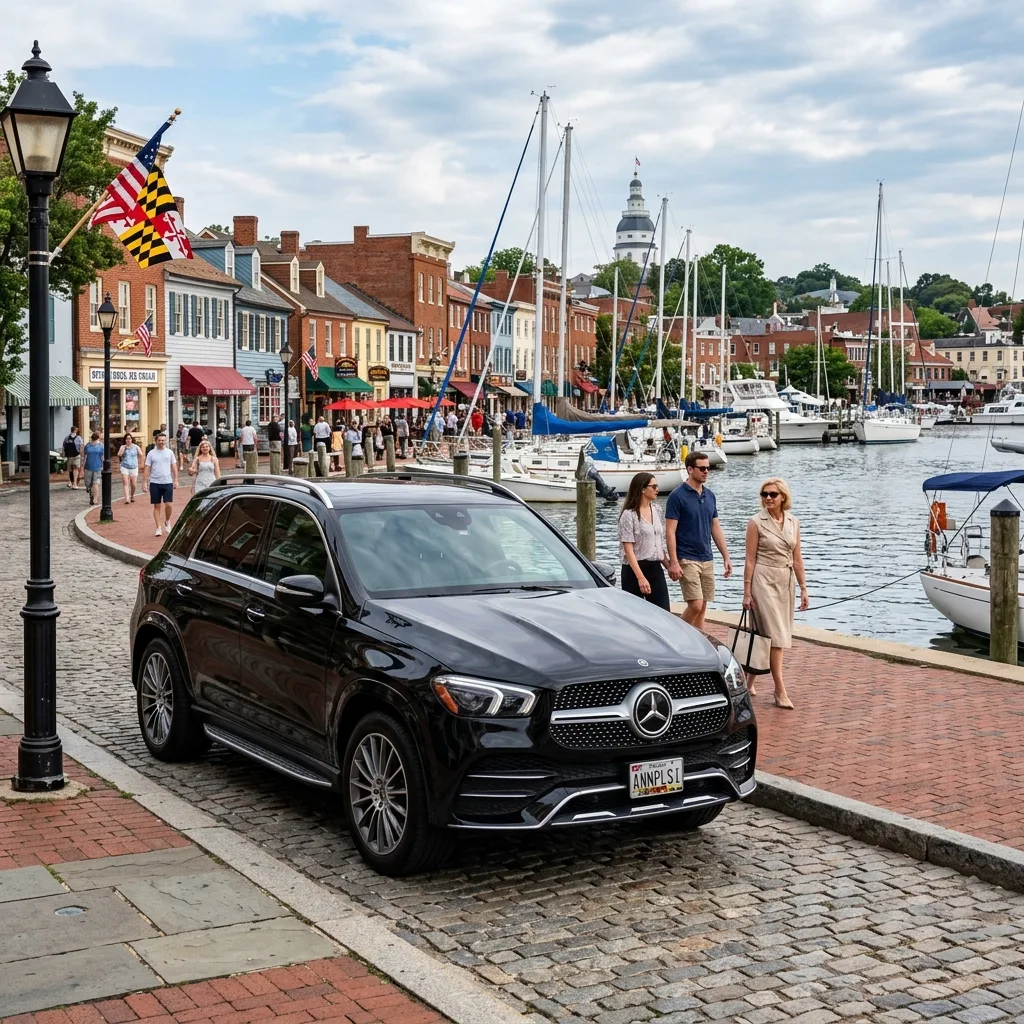
Look at your Maryland registration renewal notice. Past the registration line, past the standard fees, you will find a $40 charge labeled EMS Operations Fund. This is the Emergency Medical System surcharge. Every registered vehicle in Maryland pays it, every year, without exception. Passenger cars, pickup trucks, SUVs, RVs, motorcycles, trailers — all of them, $40 a year.
It is not income-based. It is not value-based. It is not optional. It is a flat $40 per registration, per year, applied universally. The official justification is that the fund supports emergency medical services across the state. The practical reality is that vehicle owners subsidize a public service via a fee unrelated to vehicle use.
On its own, $40 sounds trivial. Multiply it across a household. A Maryland family with three vehicles pays $120 a year in EMS surcharges alone. Across a decade of ownership, that’s $1,200. Across a 20-year stretch, $2,400. Add a fourth vehicle for a teenage driver and the math gets meaningfully worse.
Now stack it across a household with collector cars or RVs. Five vehicles registered in Maryland: $200 a year, every year, just for the EMS surcharge. It never goes down. It never gets credited back. And if you forget to renew on time, that $40 is part of the base from which Maryland calculates a 17% delinquency penalty if you slip past 120 days.
EMS surcharge math, by household size:
1 vehicle: $40/year = $400 over 10 years
3 vehicles: $120/year = $1,200 over 10 years
5 vehicles: $200/year = $2,000 over 10 years
Montana equivalent surcharge: $0
Maryland Charges Extra for Electric Vehicles: $125 a Year
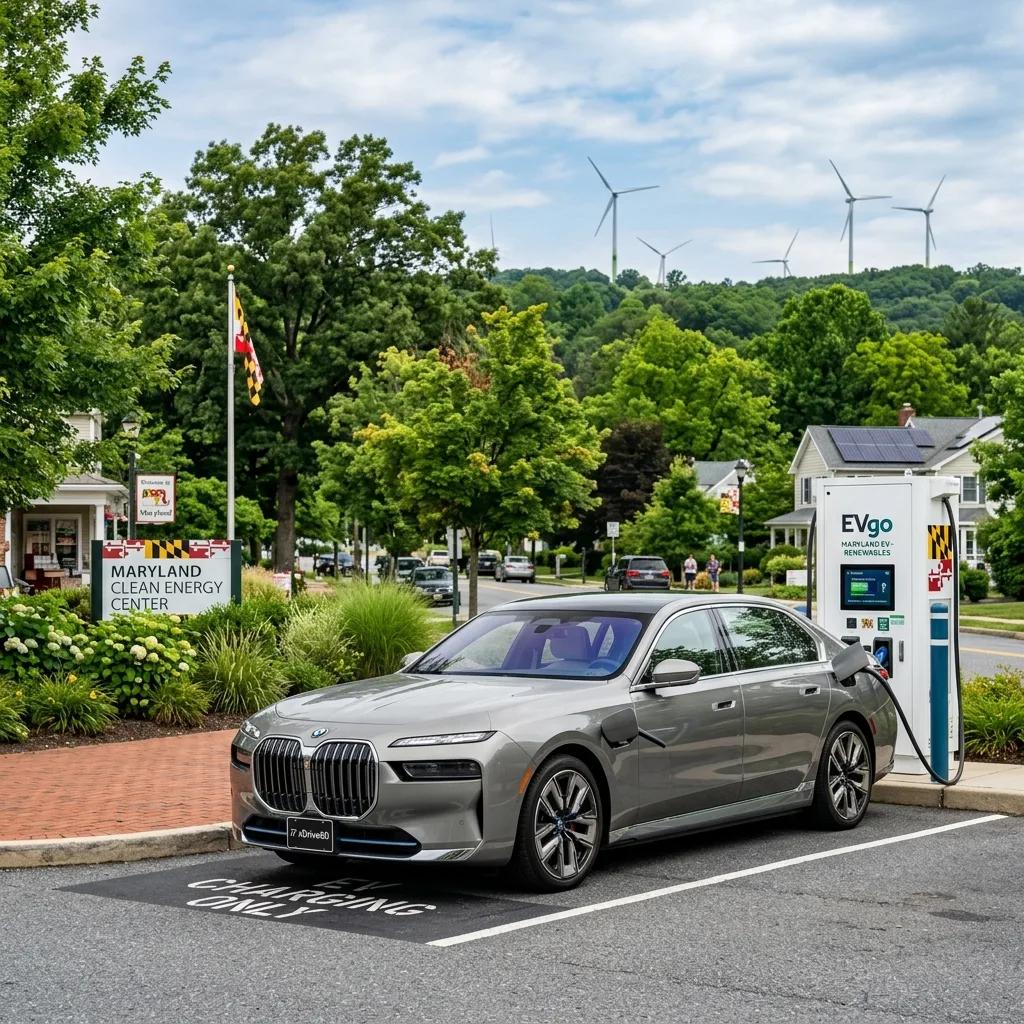
If you bought an electric vehicle in Maryland after January 2025, you are paying a surcharge that did not exist before. Battery-electric vehicles (BEVs) now incur a $125 annual surcharge on top of standard registration. Plug-in hybrids (PHEVs) pay a $100 annual surcharge. Both fees stack on top of weight-based registration, the EMS fee, and the VEIP inspection fee.
The legislature’s stated rationale is that EV drivers don’t pay state gas tax, so the surcharge captures lost road-funding revenue. Whether that math holds up is a separate debate. What matters here is the cumulative extraction. You bought a $95,000 BEV luxury SUV. At purchase, Maryland collected $6,413 in excise tax — the largest one-time tax bill of any vehicle category, because EVs typically sit in higher price brackets. Then, every year after, Maryland collects an additional $125 from you specifically because the vehicle is electric.
Consider a two-EV household: a Tesla Model Y at $52,000 and a Hyundai Ioniq 6 at $72,000. Combined excise tax at purchase: roughly $8,370. Then $250 a year (two BEVs at $125 each) in surcharges. Across five years, that’s an extra $1,250 just for choosing electric. And if Maryland raises the surcharge — which is exactly what the legislature did with the excise tax and title fee — that figure rises further.
Montana’s EV surcharge is zero dollars. Same vehicle, same household, same charging habits — registered through a Montana LLC, the surcharge does not exist. Montana does not penalize the powertrain choice.
Maryland extracted a record excise tax when you bought the EV. Now it extracts $125 every year for the privilege of keeping it. Montana extracts $0 for the same vehicle.
Maryland’s Inspection Requirements: Two Different Ways to Cost You Money
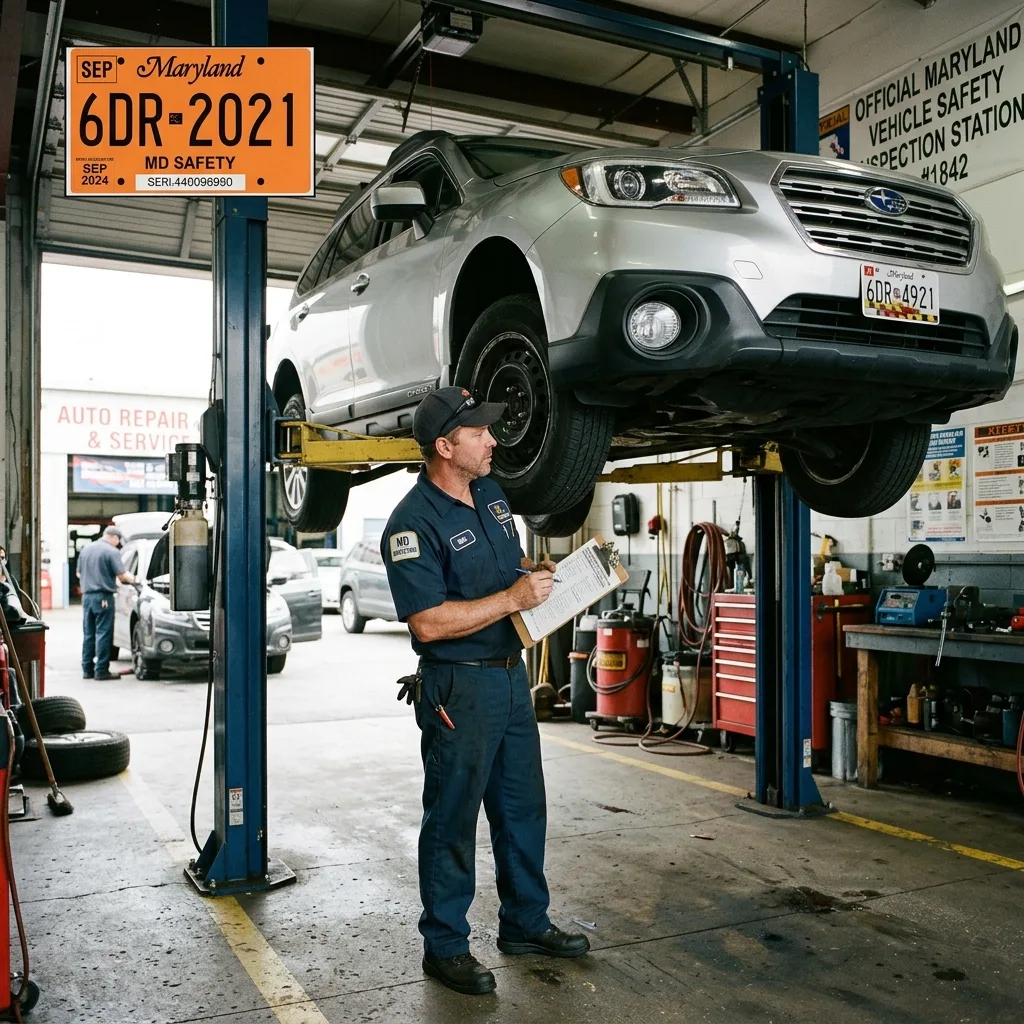
Maryland imposes two separate inspections, each one a different tollbooth on the road to legal vehicle ownership. The first is the Maryland Safety Inspection. It is required at every title transfer — meaning every time you buy a used vehicle, every time you move into Maryland with a vehicle from another state, and every time you re-title for any other reason. The cost ranges from $85 to $125 depending on the inspection station. If your vehicle fails (and many do, on items as minor as worn wiper blades or a slightly leaky valve cover), you pay for repairs and bring it back for a re-inspection within 30 days. Miss that window, you start over and pay again.
The second is the Vehicle Emissions Inspection Program (VEIP). This is required before every registration renewal, which in Maryland generally means every two years for most passenger vehicles. The fee was $14 for years. On July 1, 2025, it jumped to $30. That’s a 114% increase in a single legislative cycle. If your vehicle fails the emissions test, you pay for repairs (often catalytic converter or O2 sensor work running into hundreds or thousands of dollars), then come back to retest.
Stack the math. A typical Maryland resident keeping a vehicle for ten years pays for at least one safety inspection at title transfer ($85-$125), plus five VEIP inspections ($150 in fees alone, more if any repairs were triggered). Total inspection-related extraction over a decade: $235 minimum, often $500 or more. That assumes you never fail.
Montana requires zero of this. No state-mandated safety inspection at title transfer. No annual or biennial emissions inspection. No re-inspection fees. No repair-to-pass scenarios. Once you register a vehicle in Montana, the inspection regime is over.
Maryland requires two separate inspections: one when you buy a used car, and one before every registration renewal. Montana requires zero. Not at title transfer. Not at renewal. Not ever.
The Delaware Border Trap: No Sales Tax Doesn’t Mean No Maryland Tax
Delaware advertises itself as a tax-free vehicle paradise. There is no state sales tax on vehicles in Delaware. So Maryland residents do the obvious thing: they cross the bridge to Wilmington or Dover, find the car they want, sign paperwork at a Delaware dealer, and drive home thinking they outmaneuvered the system.
They didn’t. Maryland’s excise tax follows the resident, not the purchase location. When you walk into the MVA to register that Delaware-purchased vehicle, the clerk applies the full 6.75% Maryland excise tax to the purchase price. The fact that you paid no Delaware sales tax is irrelevant. Maryland claims its full extraction at registration.
The same logic applies to purchases in any other state. Bought a vehicle in Oregon (no sales tax)? Maryland still wants 6.75% at registration. Bought one in New Hampshire (no sales tax)? Maryland still wants 6.75%. The only credit Maryland gives is for sales or excise tax actually paid in another state — and it’s a partial credit at that. If you paid 4% in another state, Maryland collects the difference up to its 6.75%.
If you relocated from Montana, where the rate is 0%, Maryland collects the full 6.75% on every vehicle you bring with you. There is no credit because you paid nothing in Montana. The state treats Montana relocations as if you bought the vehicle on the day you crossed the Mason-Dixon Line.
The only legitimate way to permanently avoid Maryland excise tax is to not register in Maryland at all. That is what Montana LLC registration accomplishes — the vehicle is titled and registered in Montana through a Montana-domiciled LLC, and Maryland’s excise tax never attaches.
Buying a vehicle in Delaware to skip sales tax doesn’t help if you register it in Maryland. The excise tax follows the resident, not the purchase. Registering through a Montana LLC is the only legitimate exit.
Maryland’s Historic Vehicle Reclassification: Collectors Just Got Hit

If you own a classic or collector vehicle in Maryland, July 1, 2025 may have been the worst registration day of your life. The legislature redefined the term historic vehicle. The old definition was simple: a vehicle 20 years old or older. The new definition is harsher: a vehicle model year 1999 or older. That single change knocked roughly 72,000 vehicles out of the historic registration tier.
The financial difference is brutal. Historic plates in Maryland cost $55.50 a year. Standard passenger registration costs $120.50 to $195.50 a year depending on weight. A 2003 Porsche 911 Turbo that previously qualified as historic at $55.50/year was reclassified as a standard passenger vehicle. Owner’s new annual bill: $191.50. That’s a 252% increase, applied retroactively to vehicles owners had been registering as historic for years.
The reclassification was framed as administrative cleanup. The effect was a targeted tax increase on collectors. A 2002 BMW M3, a 2004 Cadillac CTS-V, a 1999 Lexus LX 470 (still qualifies, barely) — the line was drawn on a specific model year, and the seven model years on the wrong side of it suddenly cost three to four times more to keep registered.
Montana treats classic vehicles entirely differently. Any vehicle 11 years old or older qualifies for permanent registration through Montana. You pay once, at the initial registration, and the registration never expires. There is no annual renewal. No fee escalation based on legislative whim. No reclassification ten years later. The 2003 Porsche that just lost its Maryland historic status would qualify for Montana’s permanent registration immediately, at a one-time cost similar to a single year of Maryland’s reclassified registration fee.
Maryland just repriced 72,000 vehicles out of the collectors’ tax break. Montana offers the same vehicles permanent registration for life. One payment. No renewals. Ever.
Who Maryland Vehicle Tax Hits Hardest
The 6.75% excise tax is a percentage, which means it scales with vehicle value. The more your vehicle costs, the more Maryland extracts. That math creates a few clear demographics where the pain is most severe.
The first profile is the suburban DC professional. A federal contractor or attorney in Bethesda, Chevy Chase, Potomac, or Rockville buying a $90,000-plus luxury SUV pays north of $6,000 in excise tax at the closing table. Many of these households have two such vehicles. The combined excise hit on a household pair of luxury vehicles routinely exceeds $12,000 across both purchases. That’s two years of mortgage payments diverted to one government fee at one moment.
The second profile is the EV-adopting Montgomery County or Howard County household. They bought into electric vehicles for environmental and economic reasons, often spending $60,000 to $100,000 per vehicle. Now they pay a record-high excise tax at purchase plus $125 a year per BEV in surcharges. Two-BEV households are paying $250 a year in EV surcharges that did not exist before January 2025.
The third profile is the classic car collector in Frederick, Carroll, or Howard County. Collectors typically own three to seven vehicles, mixing pre-1999 historic-eligible cars with 2000s-era enthusiast vehicles. The July 2025 reclassification hit the latter group hardest. Owners who organized their fleet around the historic designation suddenly faced 250%+ registration increases on vehicles they had been preserving for decades.
The fourth profile is the RV owner. A Class A motorhome at $180,000 incurs $12,150 in excise tax alone — a single-line tax bill that exceeds the annual income of many U.S. households. Add the title fee, registration, EMS surcharge, and inspection costs, and the year-one extraction approaches $13,000. RV owners frequently winter in Florida or Arizona and only summer in Maryland, paying full Maryland extraction for partial Maryland residency.
The fifth profile is the cross-border worker. Maryland residents who commute to Delaware, Virginia, or DC for work often try to buy vehicles “out of state” to escape the excise tax. As covered, that doesn’t work. They get hit with the full 6.75% at Maryland registration regardless.
The Montana Solution: Legal Vehicle Tax Elimination
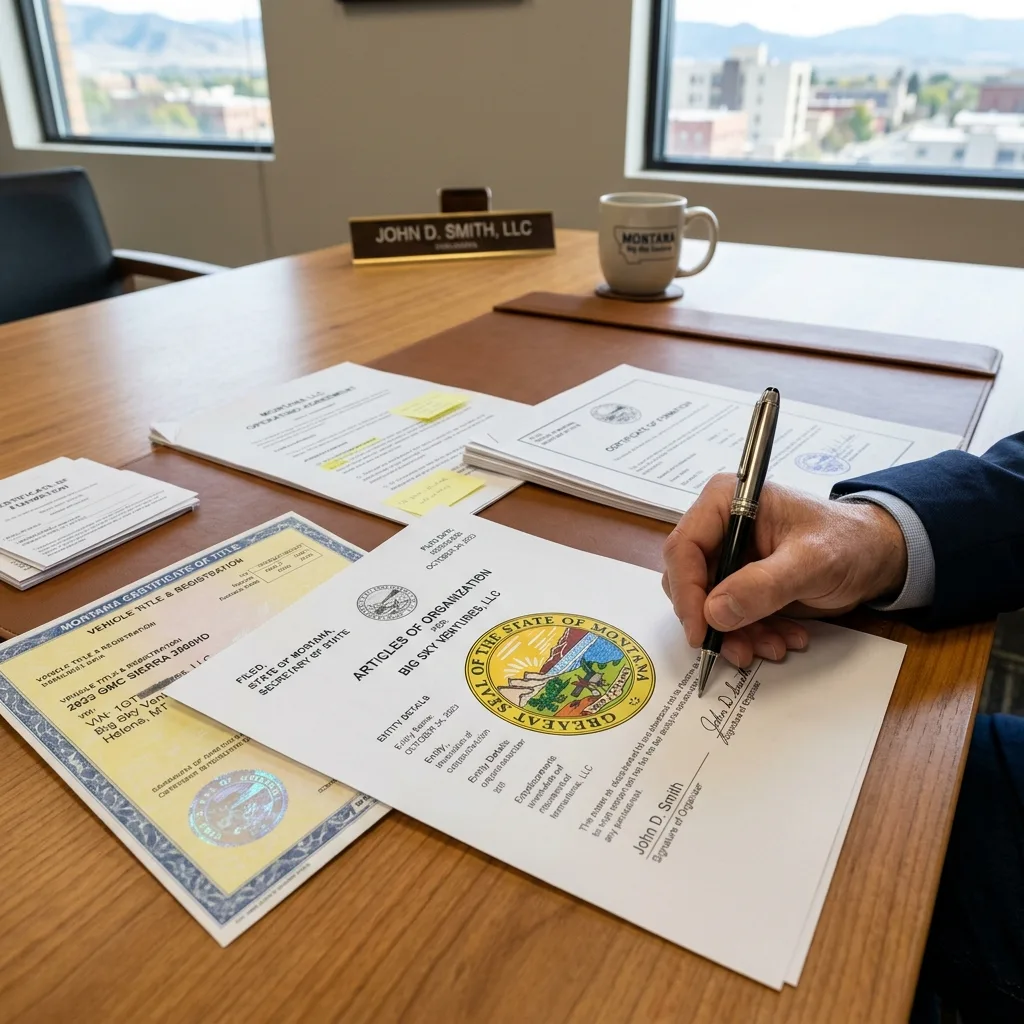
Here is what Montana doesn’t have: an excise tax on vehicles, a sales tax on vehicles, an annual personal property tax on vehicles, an EMS surcharge, a state safety inspection requirement, an emissions testing program, a title transfer tax beyond a nominal title fee, or a luxury vehicle penalty. Montana law deliberately positions the state as a low-tax registration jurisdiction, and the legislature has held that position for decades.
The mechanism is straightforward. You form a Montana limited liability company. The LLC is the legal owner of the vehicle. The vehicle is titled and registered in Montana, with the LLC as the registered owner. License plates are issued from Montana. The vehicle is taxed under Montana law, which means it isn’t taxed in any meaningful sense — there is no excise tax, no annual property tax, and no inspection regime.
Montana has no vehicle sales tax. No annual personal property tax on vehicles. No emissions testing. No safety inspection. No EMS fee. These are Montana state laws, codified in statute, and they have been on the books for decades.
The five-year math, played out year by year on a $95,000 luxury SUV, looks like this:
The Year 1 differential is where most of the savings live, because that’s when Maryland collects the 6.75% excise tax. After Year 1, Montana’s annual filing fee is slightly higher than Maryland’s annual registration plus EMS plus VEIP. But the deficit is small (around $100/year) and never catches up to the Year 1 savings. After five years, you keep $5,539 you would have given Maryland.
If the vehicle is a BEV, Maryland’s annual cost rises by $125, which means Montana’s annual cost is actually lower, and the cumulative savings grow further over time. If the vehicle is an RV over $150,000, the Year 1 savings are even more dramatic — over $10,000 in our $180,000 RV example.
Is Montana LLC Vehicle Registration Actually Legal?
Yes. Montana statute permits any LLC formed in Montana to own, title, and register vehicles in the state. The Montana legislature has not just allowed this practice — it has refused, repeatedly, to close the structure despite occasional legislative challenges. The state recognizes that vehicle registration revenue and LLC formation fees from out-of-state owners are a meaningful and stable revenue stream, and Montana courts have consistently upheld the practice.
The legal framework rests on a basic principle of LLC law. A Montana LLC is a Montana-domiciled legal entity. The entity can own assets, including vehicles. Those vehicles are registered where the entity is domiciled, which is Montana. There is nothing fictitious about the entity if it is properly formed, properly maintained, and the vehicle is properly titled in the LLC’s name. Tens of thousands of vehicles are legally registered in Montana through this exact mechanism right now.
Four Maryland Vehicle Owners Who Made the Switch
1. The Bethesda federal attorney. A senior partner at a DC-based firm, residing in Bethesda, walked into a BMW dealer in late June 2025 to finalize the purchase of a $95,000 BMW X7. By the time he sat down at the finance desk, the rate had ticked from 6.5% to 6.75%, and the title fee had doubled from $100 to $200. His Year 1 cost in Maryland: $6,413 in excise tax, $200 title fee, $195.50 in registration, $40 EMS surcharge — $6,848 before the X7 even left the lot. Then $30 a year in VEIP, plus annual registration. After five years, he would have paid $7,910 in total Maryland fees on a single vehicle. He moved the X7 to a Montana LLC and saved $5,539 over five years. His comment: “Between my first dealer visit and the day I signed, the state raised the rate. They didn’t even hide it. The dealer just updated the math sheet.”

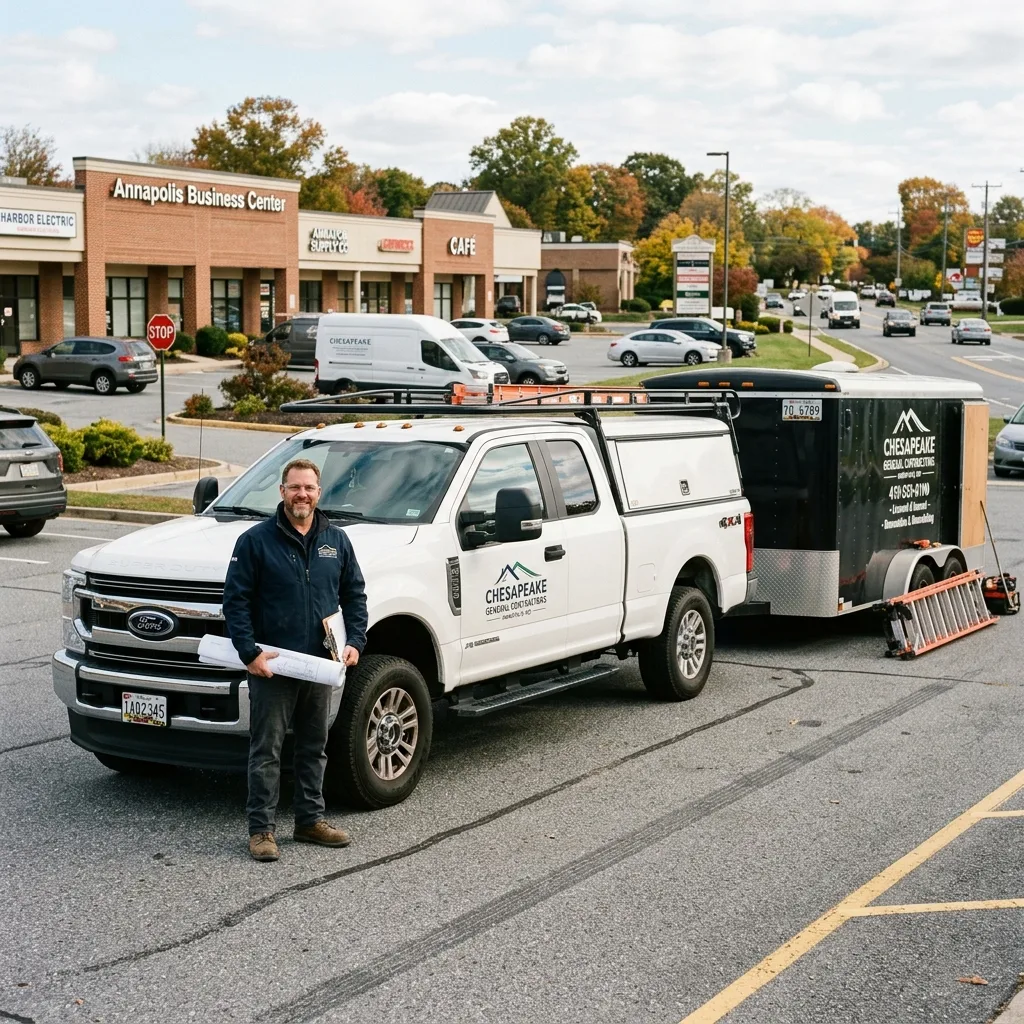
2. The Annapolis RV snowbird. A retired couple in Annapolis purchased a $180,000 Class A motorhome to use for winters in Florida and summers exploring the Chesapeake. The Maryland excise tax at registration: $12,150. Title fee: $200. First-year registration plus EMS: $235.50. The RV would be in Maryland for fewer than four months a year. Five-year Maryland cost: $13,648. They formed a Montana LLC, registered the motorhome through the LLC, and capped their five-year cost at $3,171. Net savings: $10,477. The wife’s quote: “The title fee was $100 the week before our scheduled MVA appointment. We arrived the week it doubled. That’s when my husband called Zero Tax Tags.”
3. The Montgomery County EV household. A two-EV family in Potomac owned a 2024 Tesla Model Y ($52,000) and a 2025 Hyundai Ioniq 6 ($72,000). Combined excise tax at purchase: roughly $8,370. Then January 2025 introduced the new BEV surcharge: $125 per vehicle, $250 a year combined, on top of registration, EMS, and VEIP. They moved both vehicles onto a single Montana LLC. The $200 LLC formation fee covered both vehicles. Combined five-year savings: more than $9,000, with the EV surcharge driving a meaningful portion of that. The wife’s quote: “When the state added a $125 fee specifically because we drove electric, that was the last straw. We bought the cars to be efficient, not to subsidize a road fund.”
4. The Frederick County classic car collector. A semi-retired engineer in Frederick County maintains a small fleet: a 1967 Ford Mustang and a 2003 Porsche 911 Turbo. Pre-July 2025, both vehicles qualified for Maryland’s historic registration at $55.50 a year. The July 2025 reclassification redefined “historic” as model year 1999 or older. The 1967 Mustang remained historic. The 2003 Porsche, at 22 years old, did not. Its annual registration jumped from $55.50 to $191.50 — a 252% increase, applied to a vehicle that had been registered as historic for years. He moved both vehicles to a Montana LLC. Montana’s permanent registration rule (vehicles 11+ years old register once, never renew) applied to both. He pays once and never sees another renewal notice. His comment: “The reclassification felt like a betrayal. The state moved the goalposts on people who had been doing things the right way for years. Montana doesn’t move goalposts.”
Who Benefits Most from Montana LLC Registration
The structure isn’t for everyone, but for the right profile, the savings are substantial and the process is straightforward. Here are the Maryland vehicle owners who consistently see the largest dollar benefit:
- Luxury vehicle owners ($65,000+): The 6.75% excise tax scales with price. At $65k, you save $3,514 over five years. At $95k, $5,539. At $150k+, the savings exceed $10,000 in Year 1 alone.
- RV and motorhome owners: Class A diesel pushers, fifth-wheel trailers, and high-end Class B vans are all hit hard by Maryland’s percentage-based excise tax. A $180,000 RV saves over $10,000 in five years.
- EV households: Stack the high purchase price against the new $125/year BEV surcharge. Two-EV households save the most because the LLC fee is paid once but covers both vehicles.
- Classic car collectors: Especially the model years 2000-1999 cohort that just lost Maryland historic status. Montana’s permanent registration for 11+ year-old vehicles is purpose-built for collectors.
- Multi-vehicle households: Three or more vehicles. One Montana LLC covers all of them. The $200 LLC formation fee is paid once.
- Snowbirds with second residences: Florida winter, Maryland summer. The vehicle isn’t garaged in Maryland year-round, which strengthens the structure.
- Business owners with company vehicles: Federal contractors, consultants, and entrepreneurs who travel for work and use the vehicle across state lines.
- Owners of out-of-state-purchased vehicles: If you bought in Delaware, Oregon, or Montana and would otherwise face the full 6.75% Maryland excise tax at registration.
How Zero Tax Tags Gets You Registered
The process is fully managed. You never visit Montana. You don’t talk to the Montana Secretary of State, the Montana DMV, or any government office. We handle the LLC formation, the title transfer, the registration filing, and the plate delivery. You receive Montana plates and registration documents at your Maryland address (or wherever you specify). The whole process typically completes in two to three weeks.
Pricing is structured for transparency. Year-one cost depends on vehicle type and value:
- Cars, trucks, and SUVs under $150,000: Year 1 = $899 ($699 service fee + $200 LLC formation)
- Cars, trucks, and SUVs over $150,000: Year 1 = $1,724 (additional $825 for higher-value handling)
- RVs over $150,000: Year 1 = $1,699 (additional $800 for RV-specific filings)
- Annual renewal years 0-4: $368/year
- Annual renewal years 5-10: $237/year (the rate decreases as the vehicle ages)
- 11+ year-old vehicles: PERMANENT registration — no annual renewal, ever
- Motorcycles, ATVs, UTVs, trailers, boats: All permanent at first registration
- Multiple vehicles: One LLC covers all of them. The $200 LLC fee is paid once.
Total five-year cost for a new car under $150,000: $899 + ($368 × 4) = $2,371. That’s the number you compare against Maryland’s $3,012 to $7,910 range from the table above.
| Day 1: | Submit your MCO and supporting paperwork through our secure portal. We review for completeness and file your Montana LLC the same day. |
| Days 1–2: | Montana LLC formation complete — same business day in most cases, second business day at the latest. |
| Days 2–4: | Title transferred into the LLC name at the Montana county treasurer. |
| Days 4–7: | Permanent Montana plates shipped directly to your door within 3–5 business days of title completion. |
Frequently Asked Questions
2. Do I need to visit Montana to register the vehicle?
No. The entire process is handled remotely. We act as your registered agent in Montana, file all the LLC paperwork, and process the title transfer and registration with the Montana DMV. Plates and documents are mailed to whatever address you specify. Most clients never set foot in Montana.
2. What about Maryland’s emissions inspection (VEIP)? Does Montana eliminate that too?
Yes. The vehicle is registered in Montana, and Montana has no emissions testing program. The VEIP requirement applies only to vehicles registered in Maryland. Once your vehicle is registered through a Montana LLC, you receive no VEIP notices, owe no inspection fees, and never visit a Maryland inspection station for that vehicle.
3. Can I insure a Montana-plated vehicle while living in Maryland?
Yes. Most major insurance carriers (Progressive, Geico, State Farm, USAA, Liberty Mutual) write policies for Montana-LLC-registered vehicles. The LLC is the named insured. The garaging address is typically wherever the vehicle is most often kept. Premiums are based on use, not just plate jurisdiction. We can recommend brokers who routinely work with this structure.
4. How much does Zero Tax Tags charge?
Year 1 is $899 for cars, trucks, and SUVs under $150,000 (which includes the $699 service fee plus the $200 Montana LLC formation fee). Vehicles over $150k add $825 (cars/trucks/SUVs) or $800 (RVs). Annual renewal is $368/year for the first four years, $237/year for years 5-10, and PERMANENT for vehicles 11 years and older. One LLC covers all your vehicles.
5. Can I register multiple vehicles under one LLC?
Yes. One Montana LLC can hold and register an unlimited number of vehicles. The $200 LLC formation fee is paid once. Each additional vehicle pays only the per-vehicle service and registration costs. For multi-vehicle households, this is the largest single source of efficiency in the structure — the cost of the LLC itself is amortized across every vehicle you own.
6. I have a classic car that just lost its Maryland historic status. Does Montana help?
Yes — and significantly. Montana grants permanent registration to any vehicle 11 years old or older. You pay once at initial Montana registration, and the registration never expires. There is no annual renewal, no fee escalation, no reclassification risk. For a 2003 Porsche 911 Turbo that just lost Maryland historic status and went from $55.50/year to $191.50/year, Montana’s permanent registration is dramatically cheaper over any reasonable holding period.
See how Montana LLC registration helps owners in other high-tax states:
- Vermont Vehicle Tax: The P&U Tax Trap and Annual Inspections
- Minnesota Vehicle Tax: MVST, Tab Fees and the Double Tax Trap
- Ohio Vehicle Tax: The Rust Belt Shakedown
- Virginia Car Tax: Stop Paying the Highest Vehicle Tax in America
- North Carolina Vehicle Tax: The Tag Tax Trap
Ready to Stop Overpaying Maryland Vehicle Tax?
Maryland just raised its excise tax, doubled its title fee, and added EV surcharges. Montana LLC owners pay none of it. Maryland vehicle owners have saved millions through legitimate Montana LLC registration. You’re next.