26 min read

On this page
- + The SF-97 Title Problem Nobody Warned You About
- + The Vermont Loophole: What It Was, Why It Died
- + The SF-97 Title Landscape: A Four-Tier State System
- + Option 1: The Bonded Title Path
- + Option 2: The Court-Ordered Title Path
- + Equipment Checklist: Making Your SF-97 Vehicle Street-Legal
- + The Montana LLC Fast Path
- + Is the Montana LLC SF-97 Title Strategy Legal?
- + Who This Path Is Built For
- + Our Process: From SF-97 to Plates in Hand
- + The Side-by-Side Comparison
- + SF-97 Title FAQs
- + Ready to Title Your SF-97 Vehicle?
The SF-97 Title Problem Nobody Warned You About
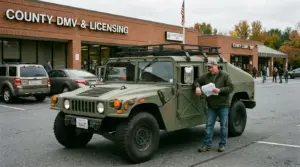
You won the auction. You wired the money. You picked up your HMMWV, your Charger Pursuit, your Tahoe PPV, or your GSA fleet truck off a government lot or a GovPlanet shipping yard. You drove it home on a transport and parked it in your driveway. And then a manila envelope arrived in the mail with a single, oddly thin document inside: a Standard Form 97, the federal government’s release of vehicle ownership.
That SF-97 title is not actually a title. It is a release. It says the federal government no longer owns this vehicle. What it does not say is that any state DMV is going to accept it the next day, walk you through a transfer, and hand you a license plate. That part is on you. And depending on which state you live in, that part is either a four-day errand, a four-month ordeal, or a flat rejection at the counter.
Most SF-97 buyers spend two or three months researching their purchase before they ever bid. They read forum threads. They watch YouTube walk-arounds. They lurk in HMMWV groups and ex-police-cruiser communities. And somewhere in that research, almost every one of them stumbles across the same magic phrase: the Vermont loophole. It was the universal answer for a decade. Mail in a bill of sale, get a Vermont registration, transfer it to your home state, done.
That door closed on January 1, 2024. And in the eighteen months since, an entire community of buyers has been left holding SF-97s and asking the same question at kitchen tables across the country: now what?

This guide walks through every realistic path to a legal, plated, road-ready SF-97 vehicle. We cover the bonded title route (works in 44 states, comes with a three-year shadow). We cover the court-ordered title path (works in all 50, takes 45 to 90 days). We cover the Vermont loophole in full so you understand exactly why it is gone and why grandfathered claims do not help new buyers. And we cover the path most of our clients end up choosing once they have run the math: the Montana LLC fast path, which delivers a clean title and a permanent plate in four to seven days for $899 one time, ever.
Pour a coffee. This is the only article you should need on the topic.
The Vermont Loophole: What It Was, Why It Died
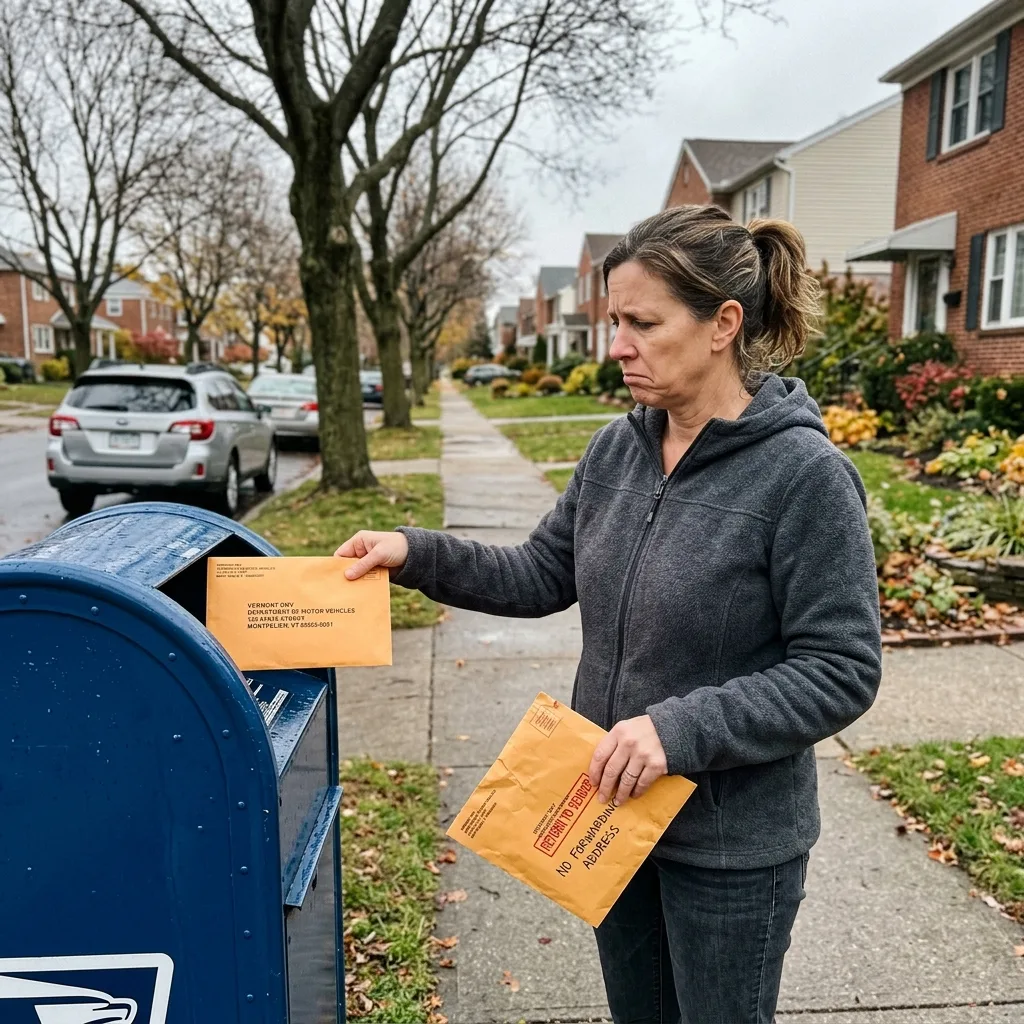
For roughly a decade, Vermont was the unofficial title clearinghouse of the surplus vehicle world. The mechanism was simple and elegant, and it had a quiet, almost folkloric place in the HMMWV community. If you owned a vehicle that was at least fifteen model years old, Vermont did not require a previous title to register it. A bill of sale was enough. You filled out Form VD-119, attached your bill of sale, paid 6 percent of the NADA low-book value as the use tax, and mailed the packet to Montpelier.
Several weeks later you received a Vermont registration in your name. Not a title, but a registration, which any other state would accept as proof of ownership during a routine title transfer. Hagerty wrote about it. Rob Siegel, the famous Hack Mechanic columnist, walked readers through the process. Sites like hmmwvregistration.com taught buyers how to fill in the form correctly. It was the universal hack for SF-97 vehicles, abandoned project cars, barn finds, and import oddballs that arrived without paperwork.
And then Vermont killed it.
Vermont Act 165, signed into law in 2023 and effective January 1, 2024, ended registration without a prior title. The state’s Department of Motor Vehicles had been overwhelmed by what it described as a flood of out-of-state applications. Professional title runners had built businesses around the workflow, charging buyers a few hundred dollars to act as Vermont mail-drop addresses. Some of those runners, the state alleged, were processing stolen vehicles with forged bills of sale. The fraud volume reached a level the small Vermont DMV could not sustainably police.
The Vermont registration-without-title pathway closed on January 1, 2024. Vermont Act 165 ended the mail-in bill-of-sale program. Any pre-2024 Vermont registration remains valid if there has been no change of ownership since the cutoff, but new applications are no longer accepted under the old rules.
This matters because thousands of recent SF-97 buyers are still finding forum posts and articles dated 2018, 2020, even 2022, that describe the Vermont method as if it still works. It does not. Mailing a bill of sale to Vermont today gets your packet returned with a polite letter. The grandfather clause, which preserves the validity of registrations issued before the cutoff, does not help any buyer who is starting the titling process now. There is no Vermont path for a 2026 SF-97 vehicle.
The honest news is that the Vermont route was never the cleanest option even when it worked. It left a quirky out-of-state registration on your record. It required tax payment on a low-book valuation. And it depended on a small DMV that could change its mind, which it eventually did. The methods we cover below are stronger answers, with the Montana LLC path being the strongest of all.
The SF-97 Title Landscape: A Four-Tier State System
Most buyers do not realize how much their home state determines their SF-97 experience. Two neighbors in two adjacent states can buy identical HMMWVs out of the same auction, drive them home on the same day, and have wildly different titling experiences over the next six months. One drives away with plates in two weeks. The other is still on the phone with a DMV supervisor four months later.
The community has loosely organized the fifty states into four tiers based on how SF-97 documents are treated. The breakdown below reflects current practice as documented by hmmwvregistration.com and confirmed across enthusiast forums.

Tier 1 is friendly territory. You walk into the county office, hand over your SF-97, pay the transfer fee, get plates the same day or within a couple of weeks. Tier 2 is the broad middle. You may need a VIN verification or a supervisor’s approval, but you will eventually get a title. Tier 3 is where the story gets longer. Colorado, Michigan, North Carolina, and Pennsylvania can take months and may require a vehicle inspection that an unmodified HMMWV often fails on equipment grounds. Tier 4 is where many SF-97 buyers run aground entirely. California, New York, Illinois, and New Jersey have functionally closed their doors on SF-97 documents, citing safety standards, missing prior titles, or salvage-vehicle rules.
Here is the part the tier system does not show you: Tier 1 buyers also use the Montana LLC path. Not because they have to, but because Montana issues a permanent plate for vehicles of certain ages, meaning no annual renewals, no inspections, no future paperwork. A Wyoming or South Dakota buyer can absolutely title an SF-97 vehicle in their home state. They use the Montana LLC anyway because once is cheaper than forever.
Option 1: The Bonded Title Path

The bonded title is the second-best widely available option for SF-97 buyers, and in 44 of the 50 states it is a real, working path. The mechanism is straightforward in concept but slightly counterintuitive on first read. Instead of providing a prior title to your state DMV, you provide a surety bond, which is a financial guarantee issued by a licensed bonding company. The bond promises that if a legitimate prior owner later surfaces and claims the vehicle, the bonding company will compensate them, and you in turn will reimburse the bonding company.
The bond amount is typically set at 1.5 times the National Automobile Dealers Association (NADA) trade-in value of the vehicle. The buyer does not pay the full bond amount. The buyer pays a premium for the bond, which is a small percentage of the face value. Premiums generally run between $15 and $20 per $1,000 of coverage.
The numbers work like this. If you have a $15,000 HMMWV, the bond face value is $22,500 and your premium is roughly $225 to $300. If you have a $30,000 ex-police Charger Pursuit modified into a daily driver, your bond face value is $45,000 and your premium is roughly $450 to $650. The bonding company pulls a soft credit check, asks for your VIN and ownership documentation, and issues the bond, usually within a few business days.
You then take the bond paperwork, your SF-97, and your standard DMV application package to your state titling office. The state issues a bonded title, which is functionally a regular title with a notation on it identifying the bond. You can drive the vehicle, insure it, sell it, and register it normally during the bond period. The bond stays in place for three years from the date of issuance.
If no one claims the vehicle during those three years, which is the overwhelming reality for government surplus vehicles since the federal government was the legitimate prior owner and has released the vehicle through its official channel, the state automatically removes the bond notation and you receive a clean title at the three-year anniversary. The 95 percent-plus success rate for SF-97 vehicles reflects how rarely there is a competing claim. The U.S. government does not show up six months later asking for its HMMWV back.
Bonded titles are not available in six states: California, Kentucky, Maine, Minnesota, Ohio, and previously a handful of others depending on the year. If you are in one of these states, the bonded title path is closed and you are looking at either the court-ordered title or the Montana LLC path.
The downsides of the bonded title route are timeline and the three-year shadow. Processing usually takes one to two weeks for the bond itself, plus the normal state DMV processing on top. And during the three-year hold, you carry a small theoretical exposure. The exposure is theoretical because federal government surplus vehicles essentially never generate ownership claims, but on paper it exists.
For buyers in Tier 1 or Tier 2 states with no time pressure, the bonded title is a reasonable choice. For buyers in Tier 3 or Tier 4 states, where the state DMV itself is the obstacle and a bonded title application can still be rejected on procedural grounds, this path stalls.
Option 2: The Court-Ordered Title Path

When the bonded title route is closed or has been rejected, and when the direct state SF-97 route has failed, the court-ordered title is the last resort. It works in all 50 states. It is also the slowest, most paperwork-heavy, and most uneven path of any option on this page.
The mechanism is exactly what it sounds like. A judge in your county civil court reviews your evidence of ownership and issues a court order directing the state DMV to title the vehicle in your name. The DMV is legally obligated to comply. The order overrides any prior procedural rejection.
The process generally involves nine steps. You begin by formally attempting to title the vehicle through normal DMV channels and obtaining a written denial. You conduct a lienholder search to confirm no outstanding loans exist on the vehicle. You send certified mail notice to any potentially interested parties. You arrange a VIN inspection through a state-licensed inspector. You file a petition in your county civil court. You attend a hearing in front of a judge. Assuming the judge is satisfied with your documentation, the order is issued, and the DMV processes the title.
Costs vary widely. A do-it-yourself filing in a straightforward county can run $150 to $400 for filing fees, certified mail, and inspections. Hiring a service like CarTitles.com runs around $329 plus state fees. Adding an attorney, which several states effectively require to file a civil petition, can push the total to $800 or more.
The average timeline runs 45 to 90 days. Some states, notably Oklahoma under Title 42 of its statutes, have a streamlined process that can deliver a court order within a week of filing. Oklahoma residents who choose this path often get a clean title faster than residents of any other state. For everyone else, the calendar is the enemy. Court schedules are unpredictable, hearings are postponed, judges have discretion, and no two counties handle the petition identically.
Court-ordered titles produce a fully clean title immediately upon issuance, with no bond notation and no three-year wait. They are the cleanest paper outcome of any alternative on this page, but the timeline and cost make them a last resort rather than a first choice.
The court-ordered title is the right answer for two specific buyers. First, the buyer in a bonded-title-unavailable state who wants a domestic title and is willing to wait. Second, the buyer with a complex ownership history, where there may have been intermediate sales between the SF-97 release and the current owner, and a judge’s review is the only way to clarify the chain.
For most SF-97 buyers, neither of those describes the situation. Most SF-97 buyers want a plate, a clean title, and a way to drive their vehicle within a month. The court path does not deliver on the month.
Equipment Checklist: Making Your SF-97 Vehicle Street-Legal

Independent of which titling path you choose, an SF-97 vehicle almost always needs equipment work before it can pass any inspection or be insured for public road use. This is especially true for ex-military vehicles like the HMMWV, which were never built to Federal Motor Vehicle Safety Standards (FMVSS) because military procurement exempts them. Ex-police vehicles and GSA fleet vehicles are usually closer to road-ready out of the box, but they still benefit from a checklist pass before titling.
The good news is that the entire equipment upgrade typically lands in the $1,500 to $2,500 range, which is small money relative to the vehicle’s value and is the same investment your bonded-title or court-order path would require anyway. You make this investment once, and the resulting vehicle is fully compliant for the rest of its life.
The universal HMMWV street-legal checklist covers five items:
Vehicles with a Gross Vehicle Weight Rating (GVWR) over 8,500 pounds are exempt from emissions testing in Arizona, Georgia, Nevada, New Mexico, Wisconsin, and Oregon. Most HMMWVs come in at 10,000 pounds GVWR, putting them comfortably above the exemption threshold. This is a quiet, large advantage of titling an SF-97 HMMWV.
Ex-police vehicles like the Charger Pursuit and Tahoe PPV usually only need decals removed, spotlights replaced or capped, and the police interceptor harness adjustments. These are evenings-in-the-garage jobs, not full restoration projects. GSA fleet trucks generally pass equipment inspection out of the gate.
One quiet benefit of the Montana LLC path that does not exist for bonded or court-ordered titles is that Montana’s title and registration process does not impose state safety inspections. Once the title transfers and the plate is issued, you handle equipment work on your own timeline based on where you actually drive the vehicle.
The Montana LLC Fast Path

The Montana LLC path is, in plain terms, the cleanest answer to the SF-97 titling problem available anywhere in the United States today. It sidesteps the four-tier state system entirely. It does not depend on a bonding company. It does not require a court appearance. It does not have a three-year shadow. And it produces a permanent license plate, meaning no annual renewals for the life of the vehicle.
The mechanism is straightforward. We form a Montana limited liability company in your name (or in a name you choose for the LLC). That LLC is the entity that owns the vehicle. The SF-97 release transfers to the LLC at a Montana county treasurer’s office. Montana issues a clean title to the LLC. Montana then issues a license plate to the vehicle. Because Montana is a Tier 1 state, the SF-97 is accepted as-is, with no inspection requirements, no bond, and no waiting period. The vehicle is yours, plated, titled, and ready to drive.
Montana law allows vehicles eleven years old or older to be issued a permanent license plate. The plate has no expiration date. There is no annual renewal. There is no second-year fee. Once we hand you your plates, that paperwork conversation is closed forever. This is a structural advantage of Montana law that no other state in the country matches.
Cost is $899 one time. That includes the $200 Montana LLC formation and the $699 SF-97 titling and registration service. There is no Year 2 fee, no Year 3 fee, no recurring obligation. The five-year cost of using our service is $899. The five-year cost of titling, registering, and renewing annually in most states for an SF-97 vehicle runs well into four figures once you add bond premiums, court costs, inspections, equipment work, and recurring registration.
Compare the timelines directly:
The Montana LLC path also solves a problem the other routes do not even address: the SF-97 vehicle is now owned by an entity, not an individual. For collectors with multiple SF-97 vehicles, the LLC simplifies insurance, paperwork, and any future sale. For HMMWV owners who travel between properties or attend rallies in multiple states, the Montana plate travels with the vehicle and is recognized everywhere. For the buyer who simply wants to be done with the titling conversation forever, the LLC ends the topic with one filing.
Is the Montana LLC SF-97 Title Strategy Legal?
Yes. The Montana LLC titling strategy rests on three pillars of American business and tax law that are about as well-established as any rule in our legal system.
First, the LLC is a recognized legal entity in every state. Montana’s Limited Liability Company Act, like the equivalent acts in all 50 states, authorizes private parties to form a domestic LLC and own property through that entity. When the LLC owns a vehicle, the vehicle is registered to the LLC, and the LLC registers in its state of formation. Montana is the registration state for a Montana LLC, the same way Delaware is the registration state for a Delaware corporation. The structure is not novel. It is the foundation of how Fortune 500 fleets, leasing companies, and private equity vehicle portfolios have operated for decades.

Second, the federal commerce clause guarantees the right of vehicles registered in one state to operate on the public roads of all other states. A Montana-plated vehicle is a Montana vehicle. That recognition is constitutional, not discretionary.
Third, U.S. courts have repeatedly affirmed that taxpayers are entitled to organize their affairs to legally minimize tax exposure. The Louisiana Supreme Court in Thomas v. Bridges, decided in 2013, addressed a Montana LLC vehicle structure directly. The court ruled that organizing personal property ownership through an out-of-state LLC for tax efficiency purposes is a lawful exercise of business judgment, not a fraudulent transfer. That precedent continues to be cited in vehicle registration disputes nationwide and has not been overturned.
The typical Zero Tax Tags client is a buyer with multi-state activity. A collector who travels between properties in two or three states. A retiree who summers in one region and winters in another. A consultant or contractor whose work pattern carries them across state lines. A buyer with a vacation property where the vehicle lives part of the year. The Montana LLC structure fits these patterns naturally. The LLC is a Montana entity, it owns the vehicle, the vehicle travels with the LLC’s plate, and the structure aligns with the multi-state nature of how the vehicle is actually used.
Thomas v. Bridges (Louisiana Supreme Court, 2013): courts affirmed that legal tax minimization through an out-of-state LLC is a lawful exercise of business judgment. The Montana LLC vehicle registration strategy rests on long-settled commerce clause and tax minimization precedent. It is a clean, recognized, legitimate path.
The strategy is the same one used by Fortune 500 fleet operators, exotic car dealers, rental fleets, and motorsports teams. We are simply making it available to individual SF-97 buyers and small collectors at a flat price.
Who This Path Is Built For
The Montana LLC SF-97 fast path is built for buyers who value time, simplicity, and a clean paper trail more than the novelty of a domestic-state title. That description fits most SF-97 buyers we work with, but it does not fit every buyer in the world, and it is worth being clear about who we serve.
Our typical client looks like one of these profiles:
The thread running through all of these is that the buyer is making a choice. They have looked at the bonded route and the court route and decided that paying $899 once for a clean title and a permanent plate in seven days is the better deal. They did the math. They have the math right.
Our Process: From SF-97 to Plates in Hand
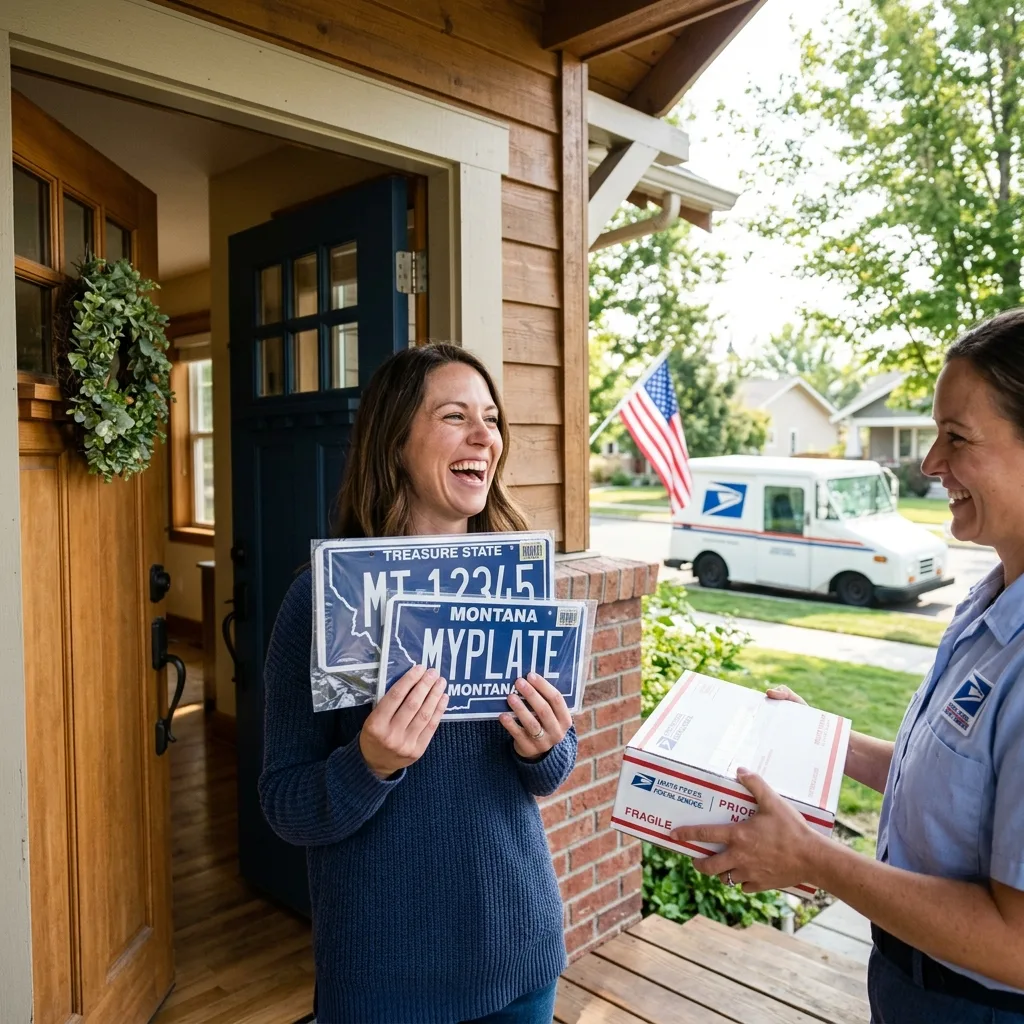
The full window from your first paperwork submission to plates in your hand is four to seven days. Most clients land at five. The sequence is the same every time.
| Day 1: | Submit paperwork through our secure portal. We review and file your Montana LLC the same day. |
| Days 1–2: | Montana LLC formation complete — same business day in most cases, second at the latest. |
| Days 2–4: | SF-97 title transferred into the LLC name at the Montana county treasurer. |
| Days 4–7: | Permanent Montana plates shipped directly to your door within 3–5 business days of title completion. |
The submission itself is straightforward. You provide a copy of your SF-97, basic identification, and the vehicle details (VIN, make, model, year, mileage). You sign the LLC formation documents electronically. We handle filing with the Montana Secretary of State, the title transfer with the Montana county treasurer, and the plate issuance. The plate arrives at the address you specify.
From your perspective, this is one submission and one delivery. From our perspective, it is several layers of state filings and the careful documentation that has kept our process clean for thousands of vehicles. We do this every day. We know the Montana counties, the treasurers, the procedural quirks, and the documentation that satisfies a smooth filing.
The Side-by-Side Comparison
Here is the full method-by-method comparison, all in one table for the readers who skipped ahead. The honest assessment is in the bottom rows, where annual recurring cost and total five-year cost separate the methods cleanly.
One row of this table is unique. The Montana LLC row is the only one where the column “All 50 States?” is yes, the column “Clean Title?” is “Yes, immediately,” and the timeline is under one week. Every other method gives up something. The Montana LLC path is the row that does not.
SF-97 Title FAQs
What is an SF-97 title?
The SF-97 is Standard Form 97, the federal government’s release of vehicle ownership. It is issued when a vehicle is sold out of federal service through the General Services Administration, Department of Defense disposal channels, GovPlanet, or similar government surplus programs. The SF-97 is a release document, not a state title. The buyer must convert that release into a state title in order to register and plate the vehicle.
Does the Vermont loophole still work in 2026?
No. Vermont Act 165 ended the registration-without-title program on January 1, 2024. Any application mailed to Vermont under the old rules today will be returned. Pre-2024 Vermont registrations remain valid only if there has been no change in ownership since the cutoff. There is no Vermont path for a current-year SF-97 vehicle.
How long does the Montana LLC path take?
About a week from start to plates in hand. The full timeline runs four to seven days. Most clients receive plates within five business days of submitting paperwork.
What does it cost?
$899 total. That covers the $200 Montana LLC formation fee and the $699 service and registration fee. There is no Year 2 fee, no Year 3 fee, and no recurring obligation. The five-year cost of using our service is $899.
Is a bonded title better than a Montana LLC?
For most SF-97 buyers, no. The bonded title route works in 44 states (not California, Kentucky, Maine, Minnesota, or Ohio), costs $200 to $650 in bond premium up front, takes one to two weeks to process, and carries a three-year hold during which the title is bonded rather than clean. The Montana LLC delivers a clean title in four to seven days with no hold period.
Is the court-ordered title path worth considering?
It is worth considering only as a last resort. The 45-to-90-day timeline, the variable cost of $150 to $800, and the dependence on judicial discretion make it impractical for the vast majority of SF-97 buyers. Oklahoma residents have a faster version of the process available under Title 42 of state statutes, but elsewhere the calendar is long.
Can I drive my Montana-plated SF-97 vehicle in my home state?
Yes. The federal commerce clause guarantees that vehicles legally registered in one state can operate on the public roads of all others. Montana-plated vehicles travel everywhere a registered vehicle can go.
What if my SF-97 is for an HMMWV or other military surplus vehicle?
HMMWVs are the most common SF-97 vehicle our clients title with us. The Montana LLC path handles them routinely. The street-legal equipment work (turn signals, third brake light, mirrors, DOT tires) is separate from the titling process and is something you handle on your own timeline.
Ready to Title Your SF-97 Vehicle?
The Vermont loophole is gone. The bonded title is slow and partial. The court route is long and uneven. Direct state titling is impossible or impractical in eight of the largest states in the country. The Montana LLC fast path is the option that does not require you to give anything up. It works in all fifty states. It produces a clean title immediately. It comes with a permanent plate. It is finished in four to seven days. It costs $899 one time, ever.
If you have an SF-97 in your hand right now, you are exactly the buyer this service was built for.
Ready to Title Your SF-97 Vehicle the Easy Way?
Thousands of SF-97 buyers have used the Montana LLC fast path to skip the tier system, the bonded title shadow, and the court calendar. You’re next.