25 min read
On this page
- + The Six-Month Build That Failed at the Counter
- + Vehicle Profiles: M998, M35, LMTV, M151
- + The Universal Modifications Checklist
- + State Difficulty: What the Community Has Learned
- + GVWR Emissions Exemptions
- + Insurance: Who Covers Surplus Military Vehicles
- + The Montana LLC Path for Military Vehicles
- + Is This Legal?
- + Who This Is Built For
- + Our Process: The 7-Day Timeline
- + FAQs
- + Get Your Military Vehicle on the Road
The Six-Month Build That Failed at the Counter
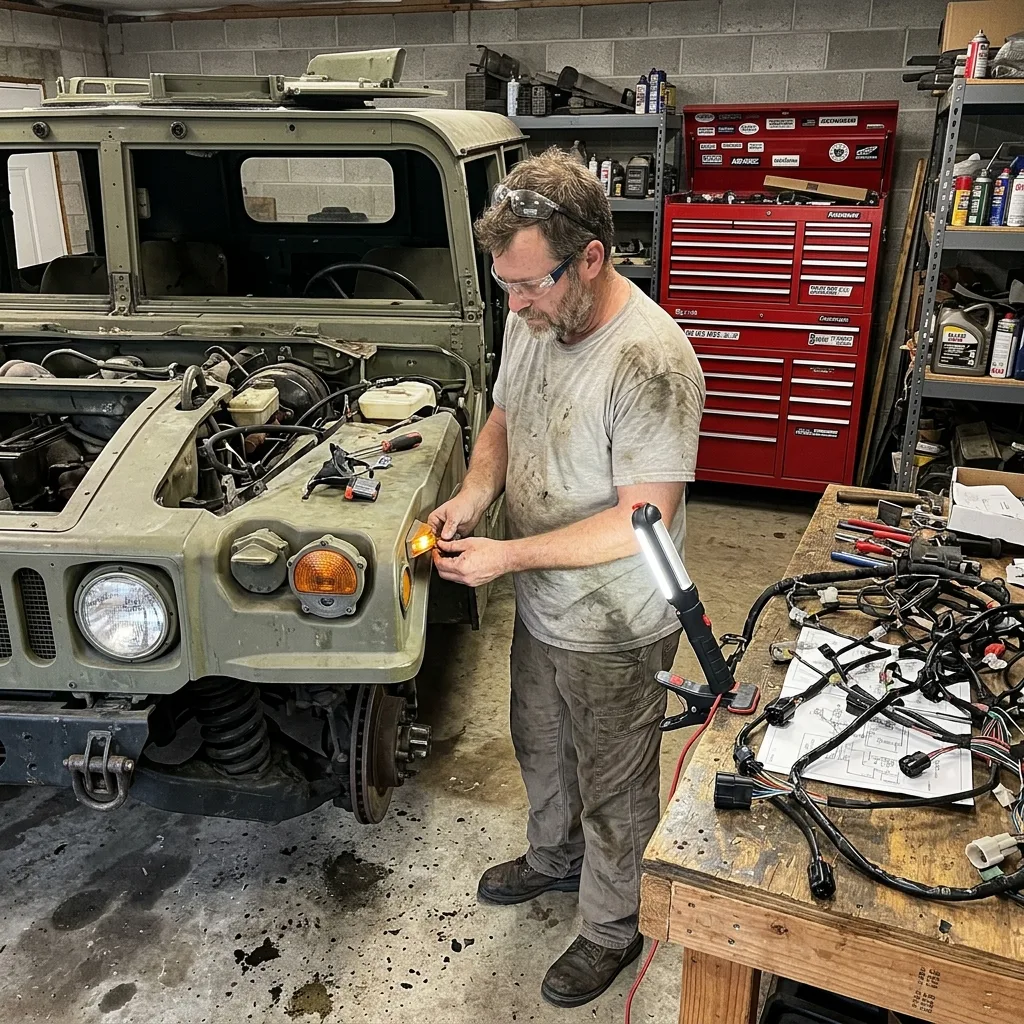
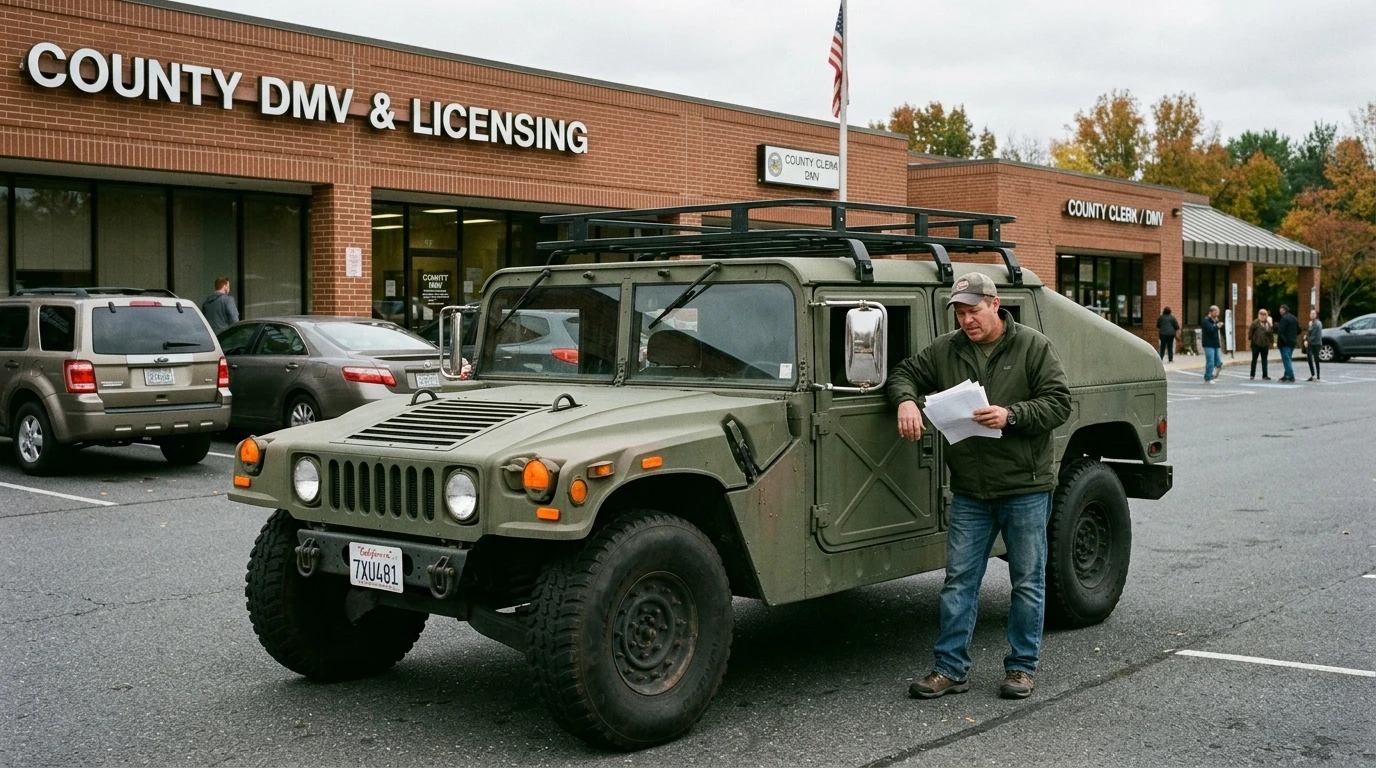
A buyer in the Midwest spent six months turning his GovPlanet-purchased M998 into a street-legal showpiece. He swapped the blackout drive lights for sealed civilian beams. He installed a Novita EG-22 flasher relay to drive amber LED turn signals off the 24-volt system. He added a center high-mount stop lamp, three-point belts, a DOT-stamped tire package that cost just under $1,800, and a pair of West Coast convex mirrors. The truck was beautiful. The paperwork was an SF-97 from a legitimate Defense Logistics Agency disposition, exactly the document every state guide tells you that you need.
He walked into his local DMV in a state we will not name, slid the folder across the counter, and used the word “Humvee” twice in the first sentence. The clerk closed the folder, slid it back, and told him the office had a policy against retitling former military tactical vehicles. There was no appeal. There was no supervisor. There was a sign on the wall referencing a 2016 memo. He drove the truck home on a trailer.
The truck was ready. The paperwork was clean. The state was the problem.
This guide is the one we wish every military surplus vehicle street legal buyer read before they ever pulled a wrench. The conversion itself is the easy part, a few thousand dollars in lights, mirrors, tires, and seat belts. The hard part is the office your title ends up sitting in. And the cleanest, fastest answer for HMMWV, M35 Deuce, LMTV, and M151 MUTT owners is the same answer we give every off-road, RV, and collector buyer: a Montana LLC and a permanent plate, mailed to your door in seven days, with zero inspection and zero sales tax.
Vehicle Profiles: M998, M35, LMTV, M151
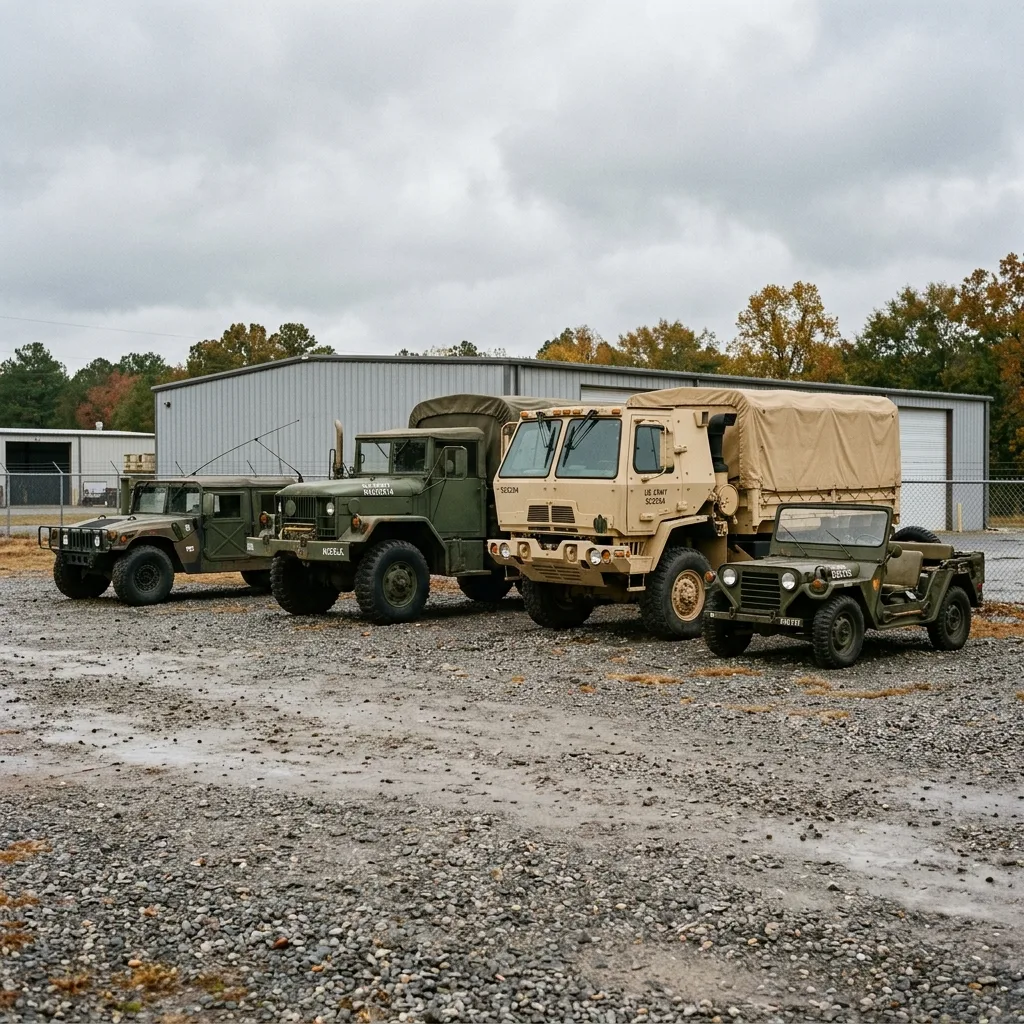
Four vehicles dominate the civilian military surplus market, and each one has its own personality at the DMV. Knowing what you actually bought, and what the GVWR plate on the door says, is the first piece of street legal work you do.
M998 HMMWV: The Default Choice
The M998 is the original High Mobility Multipurpose Wheeled Vehicle, the truck most people picture when they hear “Humvee.” Base curb weight runs around 5,200 pounds and base GVWR sits at roughly 10,000 pounds, although armored and up-armored variants push well past that. AM General built them with a 24-volt electrical system, which is the single biggest source of friction during a civilian conversion because every aftermarket flasher relay and LED kit on the auto parts shelf is built for 12 volts. The M998 lacks all civilian safety equipment by design: no DOT lights, no DOT mirrors, no CHMSL, no DOT tire stamps, no civilian flasher. It is the most common surplus military vehicle sold through GovPlanet, and it almost always comes with an SF-97 disposition rather than a state title.
M35 2.5-Ton “Deuce and a Half”
The M35 is the classic six-by-six workhorse, with a GVWR ranging from 13,500 to 16,000 pounds depending on the variant and bed configuration. It runs a multi-fuel engine that famously sips anything that pours, and its cab and frame layout is generally easier to modify for civilian use than the HMMWV. The Deuce is the friendliest of the four for emissions purposes because it clears every common GVWR exemption threshold, and its sheer size makes it almost impossible for a DMV clerk to mistake for anything other than what it is. That can cut both ways. Some states love it for off-road and farm use. Others want nothing to do with anything that came off a military pallet.
Light Medium Tactical Vehicle (LMTV)
The LMTV is the modern successor to the Deuce, a 2.5-ton cab-over with a GVWR of roughly 24,000 pounds and four enormous tires on two axles. Production runs from the early 1990s through the 2000s, which means many surviving units are newer than the consumer pickup trucks parked next to them in the DMV lot. Like the M998, they are sold through GovPlanet with SF-97 paperwork. Their weight clears every state emissions threshold in the country, and their commercial-truck dimensions force them into commercial inspection lanes in Texas, which is sometimes easier than the passenger car lane.
M151 MUTT: The One With a Story
The M151 Military Utility Tactical Truck is the jeep-style quarter-ton that replaced the World War II Willys. GVWR sits at roughly 5,000 pounds, which puts it below every emissions exemption threshold on the books. That alone makes it the hardest of the four to register cleanly in emissions-testing states.
But the M151 has a stranger problem. In the 1970s and into the 1980s, the U.S. military issued a destruction order for the M151 because its independent rear suspension caused rollovers when the truck was braked hard during a turn. Most surviving units were cut into thirds and sold as parts-only kits. A small number escaped through various surplus channels, civilian collector exemptions, and museum donations as complete vehicles. If you own a real, intact, never-destroyed M151, you own a rare and complicated thing, and the paperwork journey is going to be unlike anything else on this list. We handle them, but the title chain is the kind of work that benefits enormously from being filed in a state, Montana, that simply does not care about FMVSS, destruction orders, or any of the rest of it.
The Universal Modifications Checklist
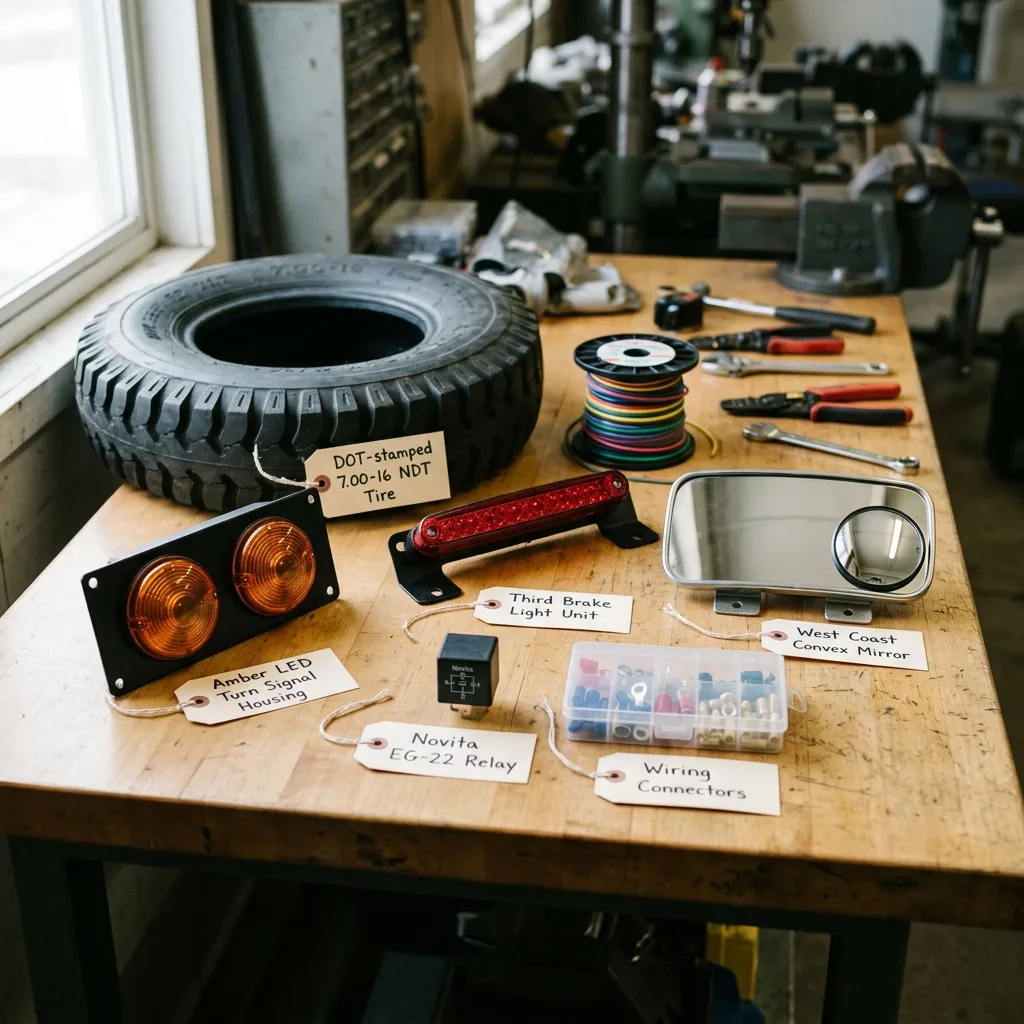
Every military surplus vehicle headed for public roads needs the same set of modifications, regardless of which state issues the plate. Montana does not require a safety inspection, but most owners still want their truck to be genuinely safe and legally equipped before they drive it. The full universal list covers eleven items, with realistic cost ranges and the parts suppliers the community actually uses.
Total realistic conversion cost runs from about $3,500 on the deep DIY end to $10,000 or more if you hand the keys to a qualified shop and walk away. The community has settled on a small group of trusted suppliers. SECOparts.net sells a complete LED light kit for the HMMWV that handles front, rear, marker, and brake in one box for roughly $400. Midwest Military Equipment is the standard source for DOT-rated mirrors that bolt to the existing military mounts. USCIndustry.com sells a complete 24-volt turn signal kit, including the harness, for owners who do not want to source the Novita EG-22 relay separately. None of this is exotic work. It is checklist work.
The single most common rookie mistake on a HMMWV build is dropping in a 12-volt LED light kit and wondering why the turn signals will not flash. The truck is 24 volts. You need either a 24V-rated flasher relay like the Novita EG-22 or a complete 24V conversion kit. Wire it once, wire it right, and the rest of the build moves fast.
State Difficulty: What the Community Has Learned
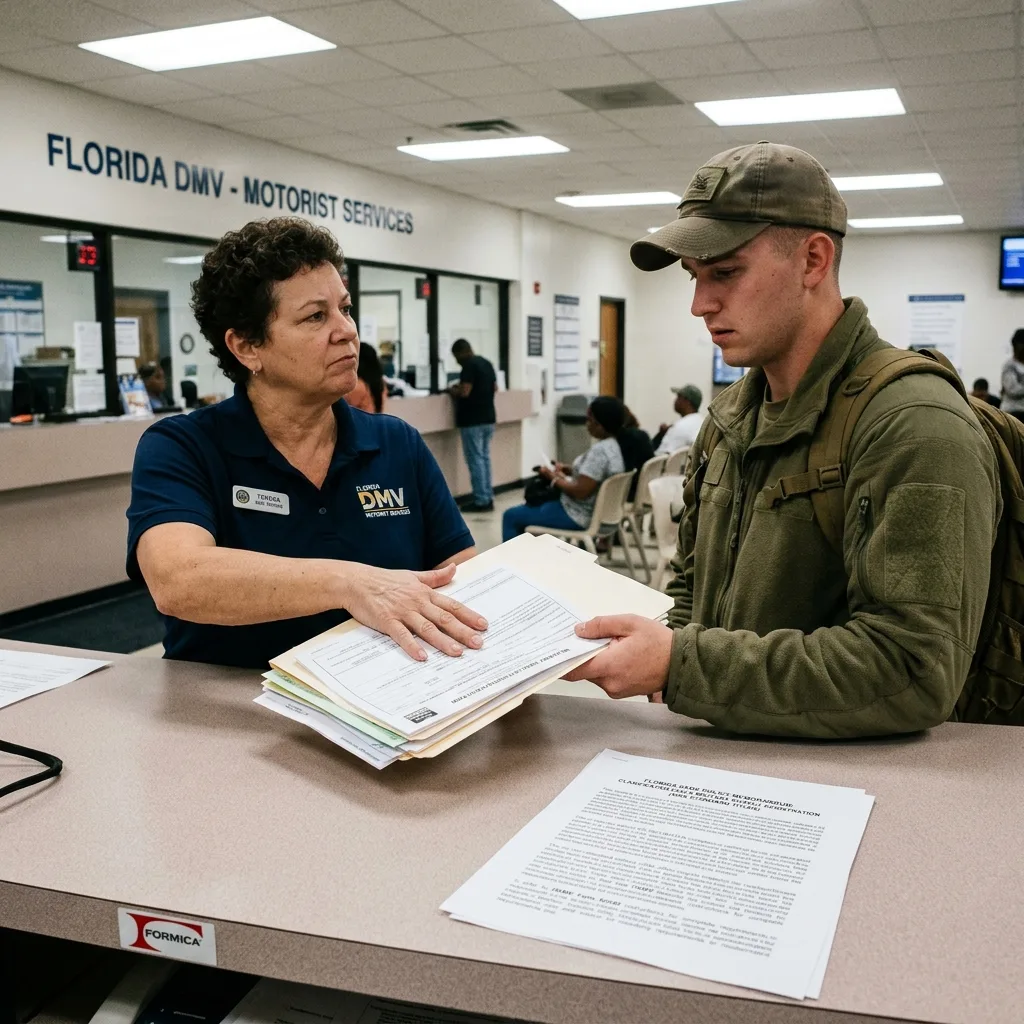
The general SF-97 tier system, the one we publish for civilian government surplus buyers, does not translate cleanly to military vehicles. Plenty of states that will happily title a surplus pickup truck or a forklift on an SF-97 will refuse outright on a HMMWV. The reasons range from blanket DMV memos to single clerks at single offices who have a personal opinion about anything painted CARC green. This is the actual ground truth from years of community reports on SteelSoldiers, M715 Zone, and the various HMMWV owner forums.
The Friendly States (Where People Actually Get Plated)
Montana sits at the top because there is no inspection, zero percent sales tax, and a permanent plate that never needs renewal. The Montana LLC pathway is the reason most national buyers register here regardless of where they live. Utah is also friendly, will accept an SF-97, and issues a regular Utah title, but the state charges seven percent sales tax and the plate process takes three to five weeks. Maine, Vermont, Indiana, Wisconsin, Wyoming, Georgia, and South Carolina have confirmed registrations of all four vehicle types in this guide, though each one has its own quirks and timelines.
The Hostile States and Their Specific Problems
Florida is the hardest of all. The state has refused to title military HMMWVs under any circumstances for years. The position is consistent across every county. If you live in Florida and you want a road-legal HMMWV, you are not getting a Florida plate, period. Montana is the answer.
Texas issued a December 2016 blanket DMV memo to every Texas DMV office instructing them to reject vehicles purchased from IronPlanet and GovPlanet. The memo is still in effect at most offices. Some county tax offices ignore it. Most do not. Texas buyers who try to register at home almost always end up filing in Montana after the second or third counter rejection.
California is, in the unanimous words of SteelSoldiers, “definitely not HMMWV friendly.” SF-97 paperwork for military vehicles stalls at the BAR or DMV referee step. Even when the paperwork is technically perfect, the process drags for months and frequently ends with no plate.
Michigan is hostile, but with a specific tactic. Multiple Michigan owners have reported that the word “Humvee” or “HMMWV” triggers an instant rejection at certain Secretary of State offices. The same paperwork submitted using “M998” or “AM General Utility Truck” has gone through at the same office on a different day. This is not legal advice. It is what the community has learned. The trick works because clerks are pattern-matching on the brand name, not the engineering.
Washington State is a coin flip. The Washington DMV sent letters to licensing offices discouraging registration of military vehicles unless FMVSS decals are present on the door jamb. Here is the catch: military vehicles are legally exempt from FMVSS, the decal is not required, and the state cannot lawfully demand one. But individual clerks do not always know that. Whether you get plated depends entirely on which employee you draw at the window.
Minnesota has a counterpart rule. The state requires that a civilian vehicle exist with the same dimensions and weight as the military one being registered. For pure military designs like the M998, there is no civilian counterpart, and the title application fails.
Hawaii and South Dakota issue off-road-only titles for military vehicles. You can own and drive on private land, but no road registration.
The single most useful tactic in the entire surplus military world: never use the word “Humvee,” “HMMWV,” or “Hummer” at a DMV counter. Use the model designation “M998” or describe the truck as an “AM General Utility Truck.” Brand-name triggers in DMV software and in clerks’ heads cause more rejections than any actual policy. This is doubly moot once you file through Montana, because Montana does not flinch at any of it.
GVWR Emissions Exemptions
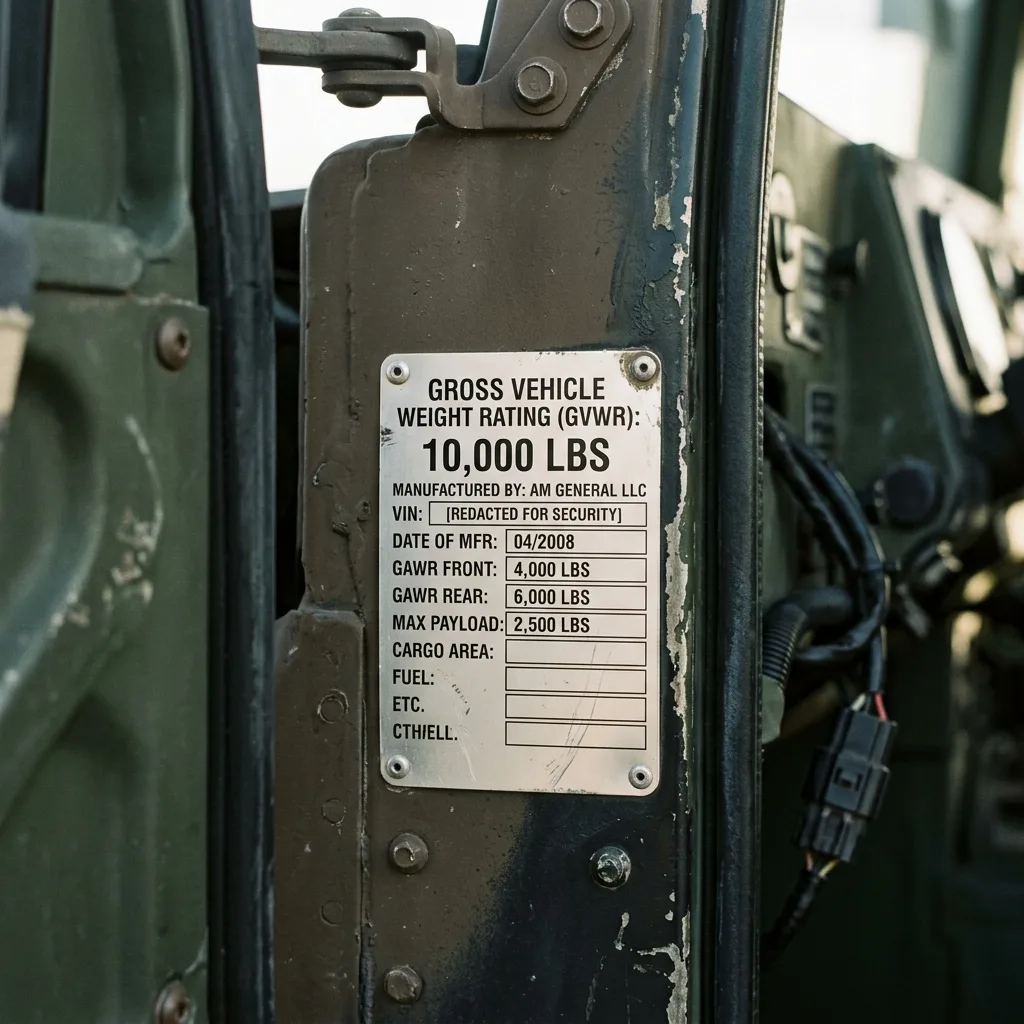
Emissions testing is one of the most common DMV traps for military vehicle buyers, but the GVWR plate on the door of most surplus vehicles solves the problem before it starts. Most states draft their emissions rules around passenger vehicles, and they exempt anything over a certain Gross Vehicle Weight Rating. For HMMWV, M35, and LMTV owners, the door plate is often the most valuable piece of paper on the truck.
Arizona, Georgia, Nevada, New Mexico, Wisconsin, and Oregon all exempt vehicles over 8,500 pounds GVWR from emissions testing. That puts the M998, M35, and LMTV in the clear at the door plate. Texas exempts vehicles over 14,000 pounds from passenger-vehicle smog testing, dropping the LMTV and most M35 variants into commercial inspection only, which is generally a simpler annual visit. The M151 MUTT, at roughly 5,000 pounds, clears nothing and remains subject to whatever the state’s standard emissions rules are.
And then there is Montana. Montana does not test emissions on LLC-registered vehicles regardless of weight, age, or fuel type. The conversation never starts. There is no tier, no inspection lane, no decal, no waiver process. The plate arrives and the truck is legal to drive.
Insurance: Who Covers Surplus Military Vehicles

Standard personal auto insurance carriers will not write a policy on a HMMWV, an M35, an LMTV, or an M151. State Farm will decline. Geico will decline. Progressive will decline at the underwriting stage. The reason is straightforward: these vehicles are outside their actuarial tables, they often lack VIN structures their software recognizes, and the parts and salvage markets are too thin for a standard adjuster to value a loss. The solution is a specialty carrier that knows the segment.
Hagerty is the most commonly named carrier in the community, and they confirm military vehicle coverage under their classic and collector program. Nationwide writes military vehicle policies through its Armed Forces Insurance division. Ground Force Insurance is a smaller specialty shop that focuses specifically on tactical and surplus military vehicles. Grange Insurance covers many surplus military vehicles through an RV-style endorsement, which is a common pathway for M35 Deuces converted to expedition or overland use.
Annual premiums on a daily-driver-rated policy run from roughly $500 to $2,000, depending on declared value, garage location, intended use, and driver record. The typical specialty policy requires the vehicle to be at least 20 years old to qualify for classic or collector status, which every M998, M35, M151, and most LMTVs already clear by a wide margin. The vehicle must be fully demilitarized, meaning weapons mounts, classified military communications gear, and any restricted equipment must have been removed before the title transferred. Coverage is written for private ownership only, not commercial use. And almost every specialty carrier in this space writes agreed-value or guaranteed-value policies rather than actual cash value, which is exactly what you want on a vehicle that the average claims adjuster has never touched.
Get your insurance quote in hand before you finalize titling. Specialty carriers will quote off the SF-97 and a build sheet, and having a binder ready means you can drive the truck home the day the plates arrive. Owners who wait until after the title is in hand often spend another two weeks waiting on coverage.
The Montana LLC Path for Military Vehicles
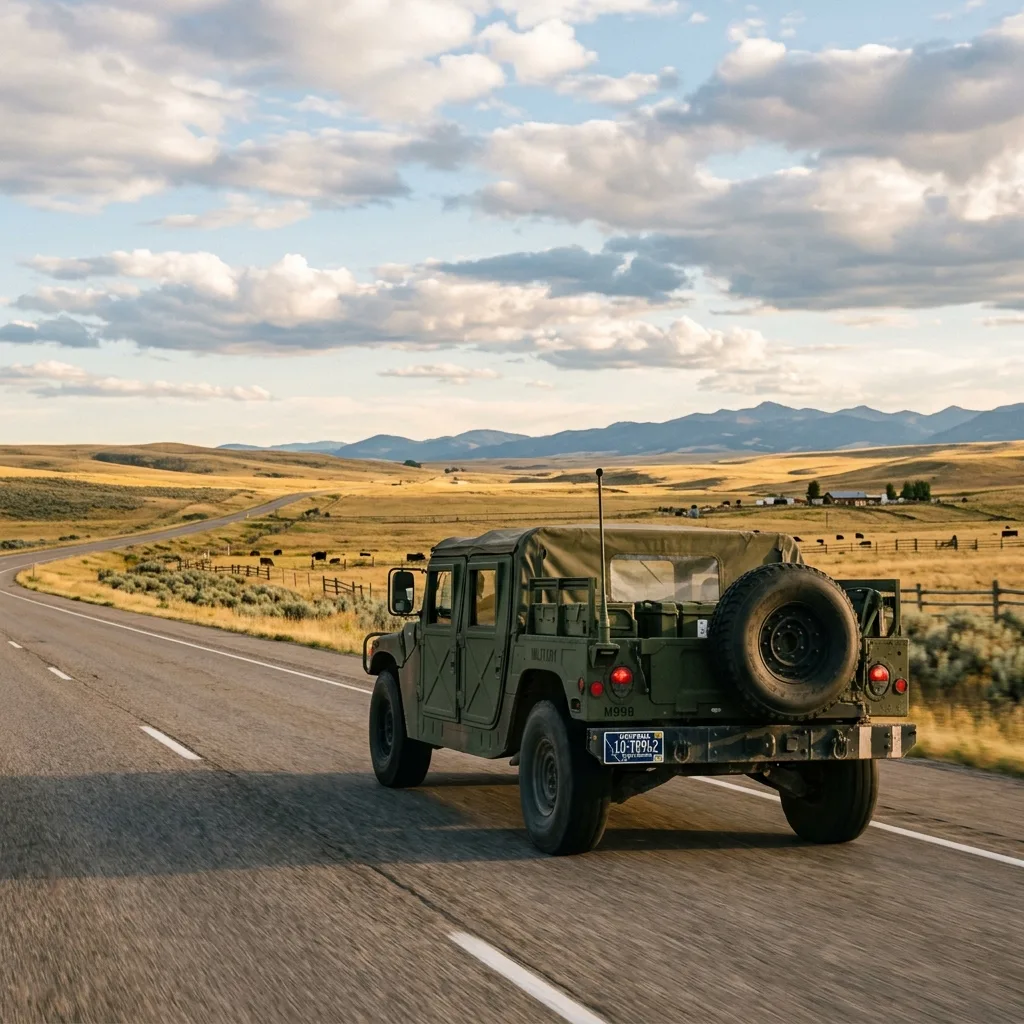
Montana is the cleanest answer in the country for surplus military vehicles, and it is not even close. Every advantage Montana offers to RV owners, collector car buyers, and off-road enthusiasts is amplified when the vehicle in question is an M998, an M35, an LMTV, or an M151 MUTT. Here is exactly why.
First, Montana does not require a safety inspection. Vehicles that fail strict state inspections elsewhere, whether for headlight pattern, mirror placement, brake line routing, exhaust noise, or any other reason, register without ever seeing an inspector. The truck gets a plate based on the paperwork, not based on whether a third-party shop is willing to put a sticker on the windshield.
Second, Montana does not check FMVSS compliance. Military vehicles are exempt from Federal Motor Vehicle Safety Standards by their original manufacture, but DMV clerks in hostile states routinely demand FMVSS decals or compliance letters that the truck legally does not need. Montana does not engage in that conversation. The SF-97 establishes ownership, the LLC receives the title, the plate is issued, and the FMVSS question is never asked.
Third, Montana charges zero percent sales tax. On a $25,000 LMTV, that alone saves $1,750 compared to Utah’s seven percent. On a $40,000 fully restored Deuce, it saves $2,800. On a $60,000 turnkey HMMWV with armor plating and a full overland build, it saves $4,200. These are real dollars that stay in your account.
Fourth, and most importantly for hostile-state residents, the Montana LLC works from anywhere. Florida residents who cannot get a HMMWV titled at home, Texas residents whose county tax office is sitting on a 2016 memo, California residents stuck in BAR limbo, Michigan residents who got pattern-matched on the word “Humvee,” all of them register through Montana and drive at home on Montana plates. There is no requirement to be a Montana resident. The LLC is the registered owner. The plate is permanent.
Fifth, the timeline. A typical Montana LLC formation plus title transfer plus plate issuance through a do-it-yourself filing runs two to three weeks. Our process delivers it in seven days. Permanent plates ship directly to your door within three to five business days of title completion at the county treasurer.
Sixth, the permanent plate. Montana issues permanent plates on LLC-registered vehicles, meaning there is no annual renewal, no annual fee, no annual emissions check, no annual anything. Year two costs you zero dollars. Year five costs you zero dollars. Year ten costs you zero dollars.
Is This Legal?

Yes. Registering a vehicle through a Montana LLC is a well-established, transparent legal structure used by hundreds of thousands of owners across the country. Montana law allows a Montana-domiciled LLC to own and register vehicles, and federal interstate commerce law protects the LLC’s right to operate those vehicles across state lines. There is nothing hidden, nothing aggressive, and nothing experimental about this pathway. The LLC owns the vehicle, the LLC is the registered owner on the title, and the LLC pays the registration fee. That is the entire transaction.
The leading legal precedent in this area is Thomas v. Bridges, in which the courts affirmed that taxpayers are entitled to structure their affairs to minimize their tax and registration obligations as long as the structure is real and the paperwork accurately reflects the arrangement. There is a long and well-developed body of law supporting the principle that arranging your business in a tax-favorable jurisdiction is not only legal but is the entire point of having different jurisdictions with different rules. Delaware has used this principle to attract corporate filings for over a century. Montana has used it to attract vehicle registrations for decades.
For military surplus vehicles specifically, the legal picture is straightforward. The SF-97 is a federal disposition document issued by the Defense Logistics Agency. It is a valid bill of sale recognized in every state. The Montana LLC accepts the SF-97, the Montana county treasurer accepts the LLC as the new owner, and the title issues in the LLC’s name. This is the same paperwork chain used for every other type of surplus government vehicle, and it is the same chain Montana uses for every privately-owned vehicle in the state.
Owners who drive their military vehicles at home on Montana plates do so under the protection of federal interstate commerce law, which has been settled for more than a century. The LLC is a separate legal entity, the vehicle is the LLC’s asset, and the LLC’s vehicle is entitled to operate on public roads under the plate issued by its state of domicile. None of this is novel. None of this is uncertain. The structure works because it is built on top of black-letter law that has been tested in court repeatedly and confirmed every time.
Who This Is Built For
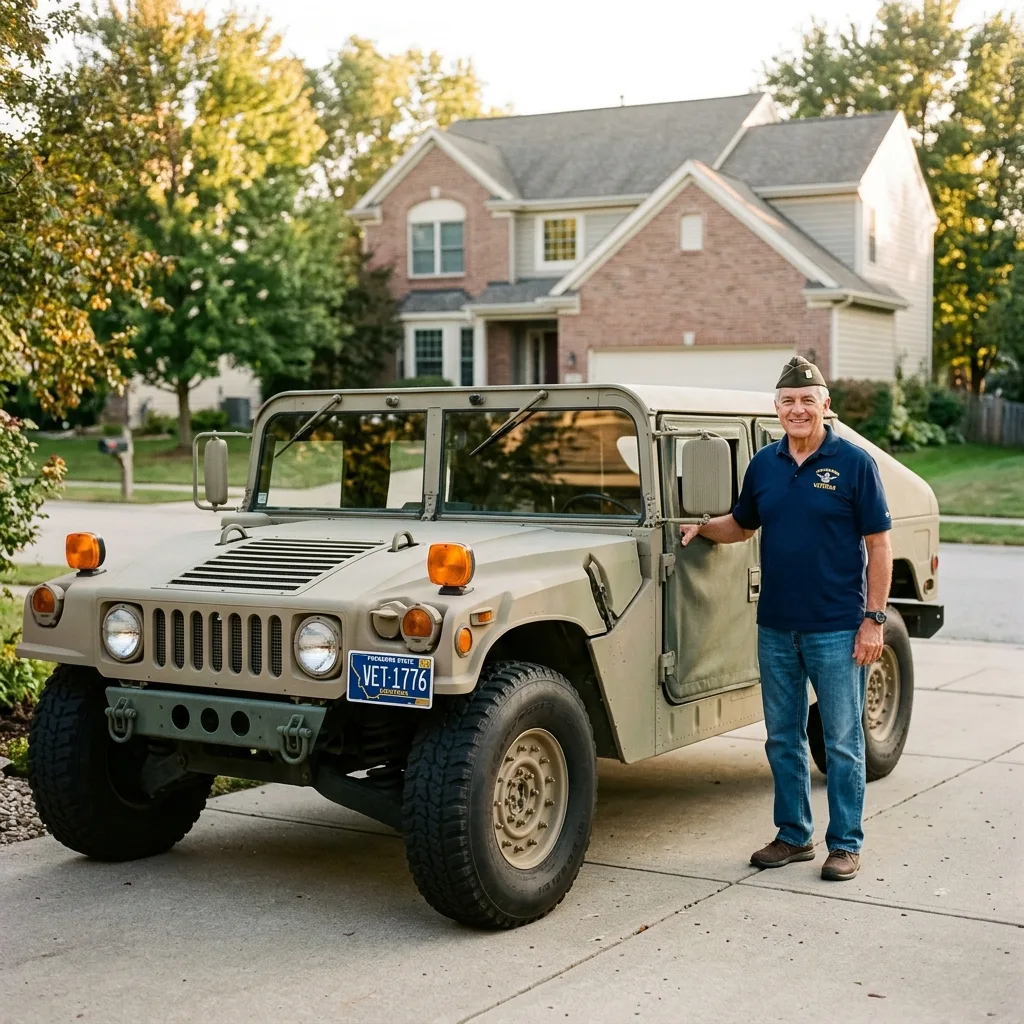
The Montana LLC pathway for military surplus vehicles is built for a specific set of buyers, and if you see yourself in any of these descriptions, this is the cleanest answer available.
Collectors who restore military vehicles for show, parade, and convoy use are the largest single group. A pristine M35 Deuce with a fresh CARC paint job and an SF-97 in the folder is exactly the kind of vehicle Montana was designed for. The permanent plate means the truck can sit in the barn for two years between events and still be road-legal the day you pull it out.
Overlanders building HMMWVs and LMTVs into expedition rigs are the fastest-growing group. The HMMWV has become the platform of choice for serious overland builds because of its width, articulation, and torque, and overlanders cross state lines constantly. A Montana plate that works in every state is a structural advantage on a vehicle that is going to be driven through forty of them.
Preppers and rural property owners buy M35s and LMTVs as utility platforms for off-grid hauling, firefighting tanks, water transport, and heavy-duty work that no civilian pickup can match. These buyers want the truck registered, plated, and ready to drive on public roads between properties without ever explaining the SF-97 to a hostile DMV clerk.
Farm and ranch operators in the western states use M35 Deuces for everything from feed runs to fence repair. A Montana plate means the truck moves freely between county roads, federal land access points, and small-town main streets without any inspection drama.
History enthusiasts and museum-grade restorers, especially anyone who has invested years and tens of thousands of dollars into an M151 MUTT or an early HMMWV variant, want a clean title chain that protects the vehicle’s value and provenance. Montana’s permanent plate and LLC-owned title structure does exactly that.
Veterans and active-duty service members who served on the same vehicles they now own as civilians make up another meaningful slice of the community. Many of them come to us because they spent twenty years driving M998s in deserts, motor pools, and forward operating bases, and they understand the machine in a way no DMV clerk ever will. They do not want to argue with a civilian inspector about whether a vehicle they personally drove through three deployments meets FMVSS. Montana skips that conversation entirely. The truck is titled, the plate is permanent, and the veteran owner can put it to work or display it without ever explaining the SF-97 chain to anyone in a uniform shirt behind a counter.
Finally, expedition outfitters and small-business operators in the adventure travel space have been buying LMTVs in increasing numbers for guided overland trips, mobile workshop platforms, and remote-area logistics work. For these buyers, the permanent Montana plate is a fleet-management win: no annual renewals to track across multiple vehicles, no surprise inspection deadlines mid-season, no state-by-state title chain to manage when the truck moves between operating regions. One plate, one filing, done.
Our Process: The 7-Day Timeline
From the day you send us your paperwork to the day the Montana plate arrives at your door, the window is about a week. The sequence never changes.
| Day 1: | Submit paperwork through our secure portal. We review and file your Montana LLC the same day. |
| Days 1–2: | Montana LLC formation complete — same business day in most cases, second at the latest. |
| Days 2–4: | SF-97 title transferred into the LLC name at the Montana county treasurer. |
| Days 4–7: | Permanent Montana plates shipped directly to your door within 3–5 business days of title completion. |
That is the entire process. No DMV visit, no inspection appointment, no FMVSS argument, no clerk who has a personal opinion about your truck, no 2016 county memo, no waiting on a Washington State referee, no Texas tax office rejection, no California BAR step. One submission, one fee, one week, one permanent plate.
FAQs
Do I have to be a Montana resident to register my HMMWV in Montana?
No. The Montana LLC is the registered owner of the vehicle, and Montana law allows LLCs to be formed by non-residents. You can live in Florida, Texas, California, Michigan, or any other state and still register your military vehicle through a Montana LLC. The plate is permanent and federally protected for interstate use.
Will the Montana plate work when I drive my M35 at home?
Yes. Federal interstate commerce law protects vehicles registered in their state of domicile from being forced to register elsewhere. The LLC is domiciled in Montana, the LLC owns the truck, and the truck operates under the Montana plate everywhere it goes.
Does Montana inspect surplus military vehicles before issuing a plate?
No. Montana does not require a safety inspection on LLC-registered vehicles. The plate issues based on the SF-97 chain of title and the LLC ownership. There is no inspection step, no FMVSS verification, and no clerk asking about brake lines or mirror angles.
Can I title an M151 MUTT through Montana even though most were destroyed?
Yes, if you have a valid SF-97 or chain of title showing the vehicle escaped the destruction order legally, Montana will title it. The M151 cases we handle most often involve civilian collector exemptions or vehicles that were sold complete through specific surplus channels in the 1970s and 1980s. The paperwork is more involved than a HMMWV but the Montana path still works.
How much sales tax will I pay on a $30,000 LMTV through Montana?
Zero. Montana charges no sales tax on LLC vehicle purchases regardless of price. Compared to Utah at seven percent, that is $2,100 saved on a $30,000 truck. Compared to a Tennessee or California rate, the savings climb further.
What if my home state asks why my HMMWV has a Montana plate?
The plate is issued to the LLC. The LLC owns the vehicle. The LLC is domiciled in Montana. That is the answer, and it is the same answer hundreds of thousands of other owners give for their RVs, exotics, collector cars, and off-road vehicles. The structure is well-established, transparent, and protected by interstate commerce law.
Do I still need to do the universal modifications if I plate in Montana?
Montana does not inspect, so the state will not stop you from registering an unmodified truck. But you should still complete the modifications for your own safety, for insurance compliance, and for any state you drive into. The Montana plate handles the title side. The modifications handle the road side. You want both.
What about the M998 versus “Humvee” tactic — does that still matter once I plate in Montana?
No. Once your title is filed in Montana, the language tactic at hostile-state DMV counters becomes irrelevant. You never have to file paperwork at that counter again. The Montana title and plate are permanent. The naming-trick advice is useful only for owners who try to register at home in a hostile state, and most of them eventually call us instead.
Get Your Military Vehicle on the Road
Your M998, M35, LMTV, or M151 is too valuable, too rare, and took too long to build to leave it on a trailer because a clerk in your home county does not like the word “Humvee.” The Montana LLC path solves every titling problem military surplus owners face: no inspection, no FMVSS argument, no emissions test, no sales tax, no state-specific hostility, no annual renewal, ever. One week from your paperwork to your plate.
Ready to Get Your Military Surplus Vehicle Street Legal?
HMMWV, M35, LMTV, and M151 MUTT owners are skipping the hostile DMV counters and going straight to a permanent Montana plate. $899 once. $0 per year after. Seven days from start to mailbox.