
26 min read

Table of Contents
- 1. The Illusion of Cheap Registration
- 2. The Sales Tax Shock: How Arkansas Extracts Wealth at Purchase
- 3. The Annual Property Tax: The Ongoing Bleed
- 4. The May 31 Deadline Minefield
- 5. The Weight Classification Trap
- 6. The “Zombie Debt” Problem
- 7. Real-World Stories: Who Gets Hit Hardest
- 8. The Montana LLC Solution
- 9. Is This Legal?
- 10. Who Benefits Most
- 11. Our Process
- 12. Timeline
- 14. Frequently Asked Questions
The Illusion of Cheap Registration
When you first research the arkansas vehicle tax system, the state presents a highly curated, deceptively affordable picture. If you visit the official Arkansas Department of Finance and Administration (DFA) website, you will see passenger vehicle registration fees listed at a seemingly harmless $17 to $30 per year. For an unwary buyer, or a high-net-worth individual relocating to the Natural State from places like California or New York, this looks like a massive financial win. It looks like freedom. It looks like a state that respects your capital.

But that $25 registration fee is nothing more than bait. It is the cheese in the mousetrap. The reality of owning a luxury vehicle, a heavy-duty truck, an RV, or a fleet of business vehicles in Arkansas is drastically different. Behind the facade of cheap license plates lies a brutal, multi-tiered wealth extraction system designed to penalize you for driving anything of value.
The true cost of putting a vehicle on the road in Arkansas is hidden in two massive financial blows: an uncapped sales tax on the full purchase price of the vehicle, and a relentless, recurring annual personal property tax based on the market value of your asset. If you purchase a high-end luxury vehicle, you are looking at an immediate tax bill of $10,000 or more before the tires ever touch the pavement. And that is just year one. By the time you factor in the annual property taxes, you are bleeding thousands of dollars every single year just for the privilege of keeping your own property parked in your own garage.
For high-net-worth individuals, business owners, and automotive enthusiasts, this system is unacceptable. It is a drain on capital that could be deployed elsewhere. Fortunately, this is not a mandatory surrender. Strategic vehicle owners are legally bypassing this entire apparatus through the use of Montana LLCs, entirely eliminating both the sales tax and the ongoing property tax. In this comprehensive guide, we will break down exactly how the Arkansas vehicle tax system operates, how much it is truly costing you, and the precise, legal steps you can take to stop the financial bleeding.
The Sales Tax Shock: How the Arkansas Vehicle Tax Extracts Wealth at Purchase
The first point of impact in the arkansas vehicle tax system occurs the moment you purchase a vehicle. Unlike states that cap the maximum amount of sales tax you can pay on a vehicle (such as South Carolina, which caps vehicle sales tax at $500), Arkansas has absolutely no cap. You are required to pay a percentage of the full purchase price on any vehicle over $4,000.
The state base rate is 6.5%. However, this is just the beginning. Local counties and cities aggressively stack their own sales taxes on top of the state rate. These local add-ons typically range from 1.5% to 3% extra. This means that in the major economic hubs of Arkansas—where most luxury and high-value vehicles are purchased and registered—the combined sales tax rate hovers between 8% and 9.5%.
Consider the effective rates in the state’s most prominent areas:
- Pulaski County (Little Rock): Combined rate of approximately 9%.
- Washington County (Fayetteville): Combined rate of approximately 8.625%.
- Benton County (Bentonville): Combined rate of approximately 8.5%.
When you are buying a $20,000 economy car, a 9% tax rate is an annoyance. When you are buying a $155,000 Cadillac Escalade V-Series, a 9% tax rate is a massive financial penalty. At 6.5% base state tax, that Escalade costs you $10,075 in taxes. If you live in Little Rock and pay the combined 9% rate, you are handing over $13,950 to the government. This is capital that vanishes instantly. It does not add to the equity of the vehicle. It cannot be recovered when you sell the vehicle. It is simply gone.
The state justifies this by claiming the funds go toward infrastructure and local services. But for a high-net-worth individual who replaces their vehicles every two to three years, this uncapped percentage model results in hundreds of thousands of dollars in lost capital over a lifetime. It is an inefficient, punitive system that aggressively targets those who choose to invest in premium automotive assets.
The Annual Property Tax: The Ongoing Bleed
If the sales tax is the initial shock, the personal property tax is the chronic illness. Arkansas is one of the states that treats your vehicle exactly like real estate. Every single year, you must pay an ad valorem (value-based) tax simply for owning the vehicle. You already paid income tax on the money you used to buy the car. You already paid sales tax when you bought the car. And now, Arkansas demands a yearly ransom based on what they decide the car is worth.
The calculation is convoluted by design. The county assessor determines the “usual selling price” of your vehicle. Note the terminology: this is not what you paid for it, and it is not necessarily what you could get for it at a wholesale auction. It is a value determined by the assessor’s office, usually referencing NADA or Black Book retail values. Once they determine this market value, they assess it at 20%. They then apply the local millage rate to that 20% assessed value.
In Pulaski County, for example, the millage rate averages around 70 mills. When you run the math (Market Value × 20% × 0.070), the effective annual tax rate comes out to approximately 1.4% of the vehicle’s total market value. Every. Single. Year.
Let’s look at the compounding devastation of this tax over a 5-year ownership period for various high-value assets, assuming a Pulaski County effective rate of ~1.4% and a standard 10% annual depreciation curve (though for many exotic and heavy-duty vehicles, depreciation is much slower, meaning the taxes stay higher for longer):
This is where the true cost of Arkansas vehicle registration becomes glaringly apparent. That $25 license plate fee is a smokescreen hiding a tax bill that can easily exceed $2,000 or $3,000 annually for a single luxury vehicle. If you own an RV, the numbers become astronomical. And what happens if you own a classic car or an exotic that actually appreciates in value? The county assessor will adjust your vehicle’s value upward, meaning your taxes will increase year over year for a vehicle you already own.
The May 31 Deadline Minefield
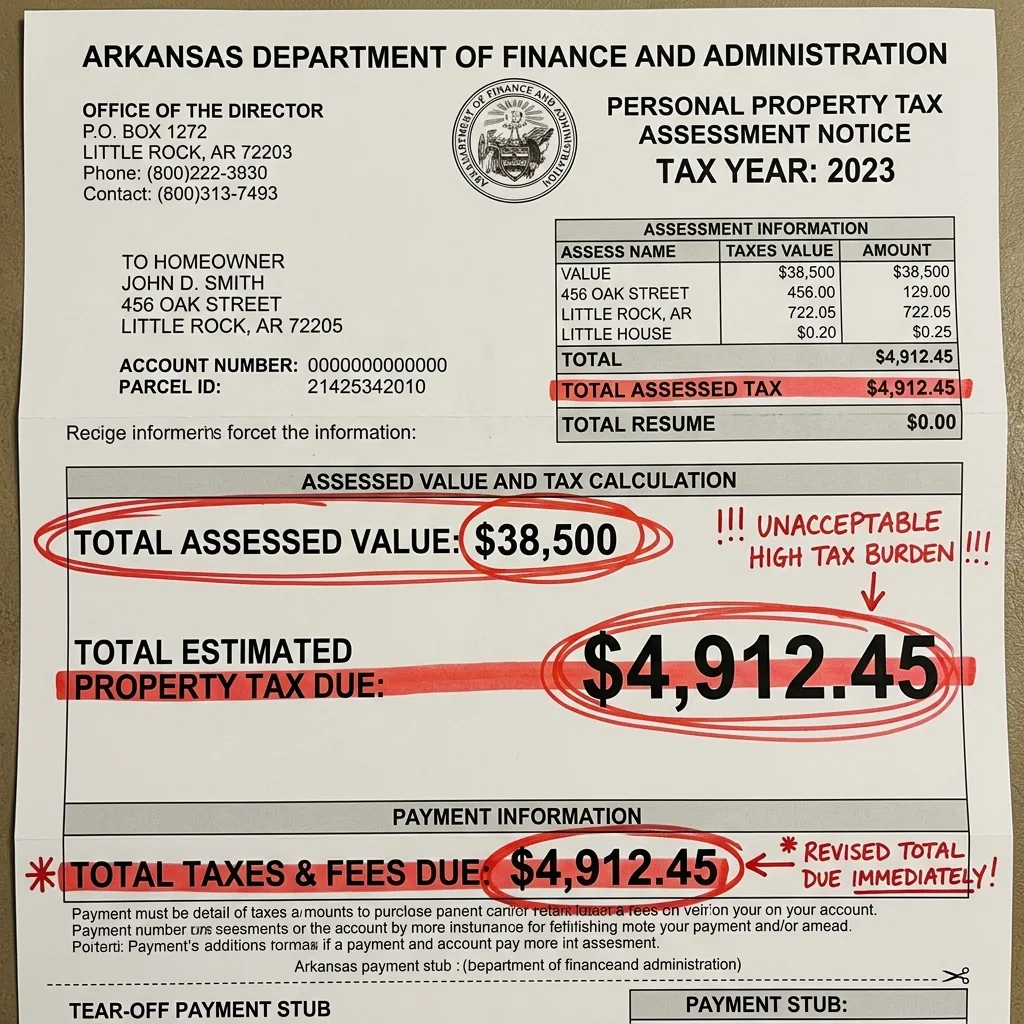
As if the financial burden wasn’t enough, the state of Arkansas wraps its tax extraction in a layer of bureaucratic red tape designed to trip up busy professionals. To maintain your vehicle in Arkansas, you are legally required to file a personal property assessment with your county assessor every single year between January 1 and May 31.
This is not an automatic process. You must proactively declare to the government what vehicles you own so they can tax you on them. If you are a busy executive, a traveling contractor, or simply someone who forgets to file paperwork by an arbitrary spring deadline, the state punishes you severely. Missing the May 31 deadline results in an automatic 10% penalty applied to your total tax bill.
For new residents moving to Arkansas, the trap is even tighter. You have a mere 30-day window to assess your vehicles without facing penalties. The state offers no grace period. They do not care if you are in the middle of unpacking boxes, closing on a house, or starting a new job. The assessment bureaucracy is treated as a strict liability system, and the state counts on this confusion as a reliable revenue stream from non-compliance.
Furthermore, Arkansas utilizes an “assessment before renewal” trap. You absolutely cannot renew your vehicle’s license plate without providing proof that you have assessed your property for the current year and paid your property taxes for the previous year. The DFA and the county assessor’s office operate in tandem to ensure you cannot legally drive your vehicle unless they have extracted their pound of flesh.
The Weight Classification Trap
While the annual property tax is the main engine of wealth extraction, the state also utilizes a tiered registration fee system based on vehicle weight. This system disproportionately impacts contractors, business owners, and those who tow RVs or horse trailers.
The Arkansas weight-based registration classes are structured as follows:
- Class 1 (under 3,001 lbs): ~$17/year
- Class 2 (3,001–4,500 lbs): ~$25/year
- Class 3 (4,501–6,000 lbs): ~$30/year
- Class 4/Heavy (6,001+ lbs): $35–$60+/year
Every vehicle also faces a mandatory $2.50 decal fee. But the real trap here is not the $60 registration fee for a Class 4 vehicle. The true danger lies in how the property tax system interacts with heavy-duty vehicles.

Heavy-duty trucks—such as the Ford F-250, Ford F-450, Ram 2500, and Chevrolet Silverado 2500HD—are highly sought-after assets that hold their value exceptionally well. Unlike a standard passenger sedan that depreciates rapidly, a diesel work truck maintains a high market value for years. Because the Arkansas property tax is based on that retained market value, heavy truck owners find themselves paying massive property tax bills year after year. A 5-year-old diesel truck might still be assessed at near its original value, forcing the owner to pay premium taxes on an aging asset that is essential for their livelihood or lifestyle.
The “Zombie Debt” Problem
Perhaps the most infuriating aspect of the Arkansas vehicle tax system is the fact that property taxes are collected one year in arrears. This means that the tax bill you receive in 2025 is actually paying for the property you owned in 2024.
This creates a massive “zombie debt” problem that catches thousands of vehicle owners off guard every year. When you sell a vehicle, you naturally assume your financial obligations to that piece of metal are over. In Arkansas, they are not. If you own a vehicle on January 1st, or if you purchase one during the year, you are accruing tax liability that will haunt you the following year.
WARNING: The Arrears Trap
If you buy a $100,000 sports car in January 2024, and sell it in June 2024, you do not own the car anymore. But in March of 2025, you will receive a property tax bill from your county assessor for the months you owned it in 2024. If you move completely out of the state of Arkansas in December 2024, the state will still hunt you down in 2025 to collect the property taxes you accrued the previous year.
This arrears system creates an ongoing liability that makes it incredibly difficult to cleanly break ties with a vehicle. It forces you to keep track of tax bills for assets you no longer possess. And if you refuse to pay this zombie debt, Arkansas counties are notorious for sending these bills to collections, damaging your credit score over a vehicle you haven’t driven in months or years.
Real-World Stories: Who Gets Hit Hardest
To truly understand the devastating financial impact of the Arkansas system, we must look at the real-world math. The following case studies illustrate exactly how much capital high-net-worth individuals are losing to the state, and how a Montana LLC completely changes the equation.
1. The Little Rock Surgeon

Dr. Marcus Wells is a 49-year-old surgeon living in the affluent Chenal Valley neighborhood of Little Rock. Like many successful professionals, Marcus enjoys driving a premium vehicle and prefers to buy a new one every three years. His latest purchase is a 2025 Range Rover Autobiography, priced at $168,000.
Because he lives in Pulaski County, his combined sales tax rate is approximately 8.75%. At the dealership, before he even takes the keys, Marcus is hit with a $14,700 sales tax bill. Then comes the annual property tax. The county assessor values the vehicle at $168,000, assesses it at 20% ($33,600), and applies the ~70 mill rate. Marcus’s annual property tax bill is $2,352 per year.
Over his 3-year ownership cycle, Marcus pays $14,700 in sales tax plus $7,056 in property taxes. Total cost to the state of Arkansas: $21,756. If Marcus had utilized a Montana LLC, he would have paid zero sales tax and zero property tax. The $21,756 he lost could have been invested in the market, put toward real estate, or used to fund a family vacation. Instead, it vanished into the Pulaski County treasury.
2. The Jonesboro Contractor
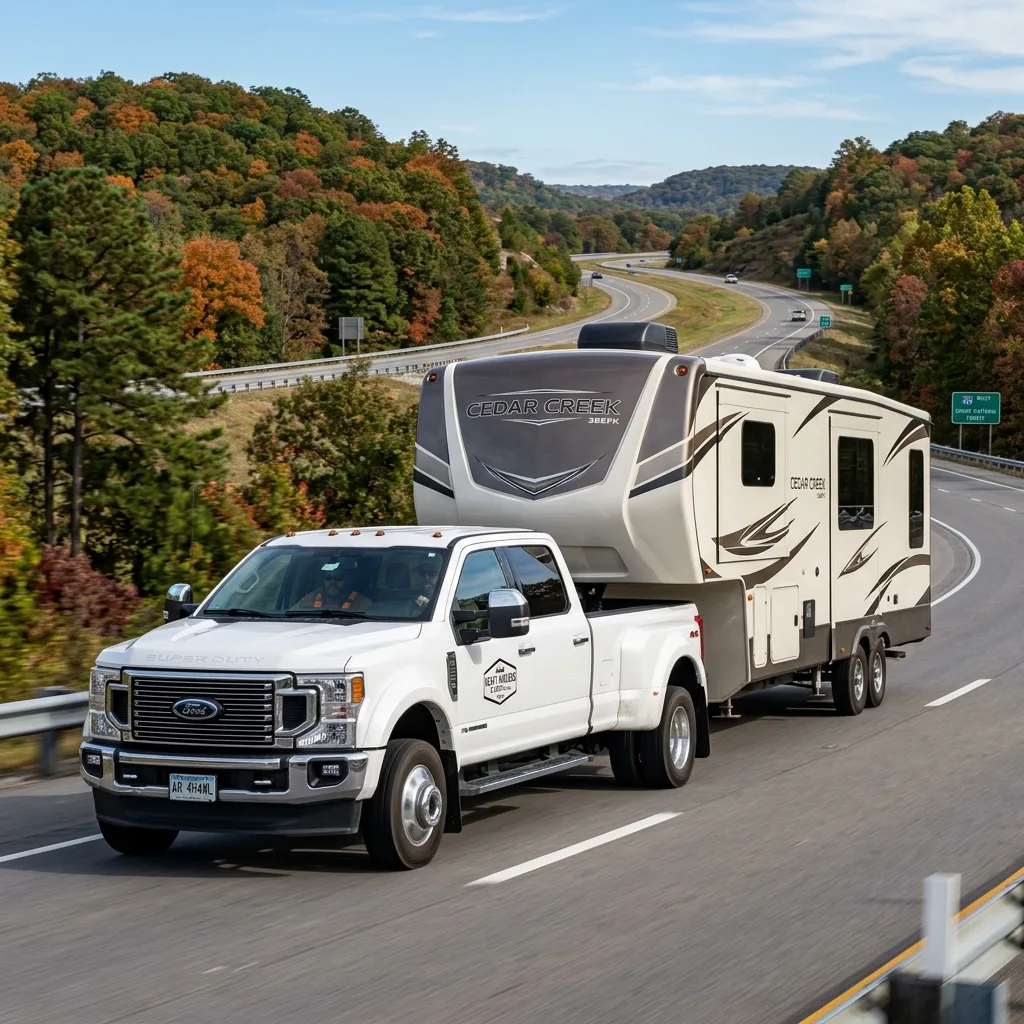
Travis Holloway is a 41-year-old commercial contractor based in Craighead County. He relies on heavy machinery to make his living. He recently purchased a 2024 Ford F-450 Super Duty for $98,000. On weekends, he uses that truck to tow his 2022 Keystone Montana 5th wheel RV, valued at $85,000.
Travis is penalized heavily for owning durable assets. The sales tax on his F-450 cost him roughly $8,330. Because heavy trucks hold their value, his annual property tax on the truck is approximately $1,372 per year. The 5th wheel RV, considered a luxury recreational asset by the state, generates its own separate property tax bill of approximately $1,190 per year.
Between the truck and the RV, Travis is paying $2,562 annually just in property taxes. Over a 5-year period, his combined tax burden (initial sales tax + 5 years of property taxes) exceeds $21,100. By registering both assets under a Montana LLC, Travis eliminates these costs entirely. Furthermore, because his 2022 RV will turn 11 years old in 2033, it will become eligible for Montana’s permanent registration—meaning he will pay a one-time fee and never have to renew the plates again.
3. The Bentonville Collector

James Caldwell is a 56-year-old tech executive working near the corporate headquarters in Bentonville. He is a passionate automotive enthusiast who has spent years building a collection of six air-cooled Porsches and two vintage Toyota Land Cruisers. The total market value of his 8-vehicle collection is $840,000.
For James, the Arkansas system is a nightmare. Classic cars often appreciate in value. As the market for air-cooled Porsches skyrockets, the Benton County assessor adjusts James’s property values upward. At an effective tax rate of ~1.4%, James is forced to pay $11,760 per year in property taxes simply for keeping his collection parked in his climate-controlled garage.
Worse, James has to deal with the May 31 assessment deadline across all 8 vehicles annually. It is a logistical headache that carries severe financial penalties if he makes a mistake. By transferring his entire collection into a Montana LLC, James solves both problems. Because all of his vehicles are over 11 years old, they all qualify for permanent Montana registration. He pays zero annual property tax, never has to assess them again, and saves $58,800 over 5 years.
4. The Fayetteville Real Estate Developer

Sarah Chen is a 44-year-old real estate developer in Washington County. She maintains a small fleet of vehicles for herself and her business partners: a 2024 Tesla Model X Plaid ($109,000), a 2024 GMC Sierra Denali Ultimate ($74,000), and a 2024 Mercedes GLS 580 ($99,000). The total value of her fleet is $282,000.
Purchasing these vehicles in Fayetteville triggered a massive combined sales tax rate of approximately 9.75%. Her initial sales tax hit across the three vehicles was a staggering $27,495. Furthermore, her annual property tax burden at an effective rate of 1.4% comes to roughly $3,948 per year.
Sarah is a savvy investor who understands the time value of money. Handing over nearly $30,000 in liquid capital at purchase, followed by $4,000 annually, is an unacceptable loss of leverage. By utilizing a Montana LLC, Sarah eliminates the sales tax on all three vehicles and erases the annual property tax. Her total 5-year savings amount to $47,235—capital she can directly reinvest into her real estate projects.
The Montana LLC Solution

The financial damage inflicted by Arkansas is severe, but it is entirely avoidable. For decades, high-net-worth individuals, exotic car owners, and RV enthusiasts have utilized a highly effective, perfectly legal strategy to protect their capital: registering their vehicles through a Montana Limited Liability Company (LLC).
Montana is a unique jurisdiction in the United States. It is a state that respects capital and understands that taxing property year after year is a deterrent to commerce. The benefits of the Montana system stand in stark contrast to the wealth extraction of Arkansas:
- 0% State Sales Tax: Montana has no general state sales tax. When your Montana LLC purchases a vehicle, the sales tax is zero. A $200,000 supercar incurs $0 in sales tax, saving you up to $18,000 instantly compared to Arkansas.
- 0% Personal Property Tax: Montana does not charge an ad valorem personal property tax on vehicles. You pay a flat registration fee. The value of your vehicle is irrelevant to the state of Montana.
- No Assessment Deadlines: The May 31 deadline vanishes. You never have to file a personal property assessment with a county assessor again.
- Permanent Registration: If your vehicle is 11 years old or older, Montana allows you to register it permanently. You pay a one-time fee, and you never have to renew the registration or pay another dime to the state for as long as the LLC owns the vehicle.
- Enhanced Privacy: When you register via a Montana LLC, the vehicle is titled in the name of the business entity, not your personal name. This provides a layer of privacy, keeping your high-value assets off local public tax rolls.
By forming a Montana LLC, you are creating a legal entity in a tax-friendly jurisdiction. This entity then purchases and owns the vehicle. Because the entity is a resident of Montana, it is subject to Montana’s laws and tax codes, completely bypassing the punitive Arkansas system.
Is This Legal?
This is the most common question asked by cautious investors, and the answer is an unequivocal yes. Registering a vehicle through a Montana LLC is a completely legal, established corporate structuring strategy. It is not a “loophole” or a shady workaround; it is the fundamental application of interstate commerce and corporate law.
Montana is a sovereign state with its own legislative authority to set its tax codes. The United States Constitution guarantees the right to form businesses in any state, regardless of where you physically reside. Many major corporations incorporate in Delaware or Nevada for favorable corporate laws; forming an LLC in Montana for favorable vehicle ownership laws is exactly the same principle.
When you utilize this strategy, you are not personally registering a car in Montana while living in Arkansas. You are driving a vehicle that is legally owned by a validly formed Montana business entity. The LLC holds the title. The LLC pays the registration. The LLC is the legal owner.
There are, however, two important realities to maintain full compliance:
1. Insurance Honesty: You must insure the vehicle correctly. Your insurance policy must be written in the name of the LLC (the owner) and must explicitly state the physical address where the vehicle is garaged (your home in Arkansas). Insurance companies are entirely familiar with this setup and write these policies daily. Never lie to your insurance company about where the car sleeps at night.
2. The Arrears Transition: Because Arkansas collects taxes in arrears, transferring an existing vehicle to a Montana LLC does not erase the taxes you have already accrued. If you transfer your car to an LLC in 2024, you will still owe the 2024 Arkansas property taxes payable in 2025. The LLC stops the bleeding moving forward, but you must settle the “zombie debt” you have already incurred.
Who Benefits Most
While the Montana LLC strategy is accessible to anyone, the financial mechanics make it particularly advantageous for specific groups of vehicle owners. The higher the value of the asset, the more devastating the Arkansas tax, and the more lucrative the Montana solution becomes.
- Luxury Vehicle Owners ($75K+): If you are purchasing a Mercedes, Porsche, Range Rover, or high-end SUV, the immediate 8-9.5% sales tax hit is massive. The LLC eliminates this instantly, making the math an absolute no-brainer.
- RV and Motorhome Owners: Class A motorhomes and luxury 5th wheels carry price tags rivaling real estate. Paying 1.4% annually on a $500,000 RV is financial suicide. The LLC stops this devastating annual drain.
- Business Fleet Owners: Escaping the May 31 annual assessment circus across multiple vehicles is a massive administrative and financial relief. When you own a commercial fleet, Arkansas hits you with high assessed values on every single truck, van, or company car. Moving your fleet to a Montana LLC instantly removes this massive overhead cost, dramatically improving your bottom line.
- New Arkansas Residents: You are facing a strict 30-day window under immense pressure to register your out-of-state vehicle and step directly into the Arkansas tax trap. Make the decision to form a Montana LLC before you’re locked into the local property tax system. Once you register locally, the assessment clock starts ticking.
- Multi-vehicle Households: The savings multiply exponentially per vehicle registered. If you have two daily drivers, an RV, a motorcycle, and a weekend sports car, your annual Arkansas property tax bill is likely astronomical. A single Montana LLC can hold all of them, eliminating the tax burden across your entire garage.
- Anyone Facing 10% Late Assessment Penalties Right Now: If you missed the May 31 deadline, Arkansas is already penalizing you. Stop the bleeding, bypass the penalty system entirely for future years, and pivot to a completely tax-free solution.
register your classic vehicle with a permanent plate, meaning you pay once and never worry about property tax assessments or renewals again.
Get Your Custom Arkansas Savings Quote →
Our Process: Zero Tax Tags
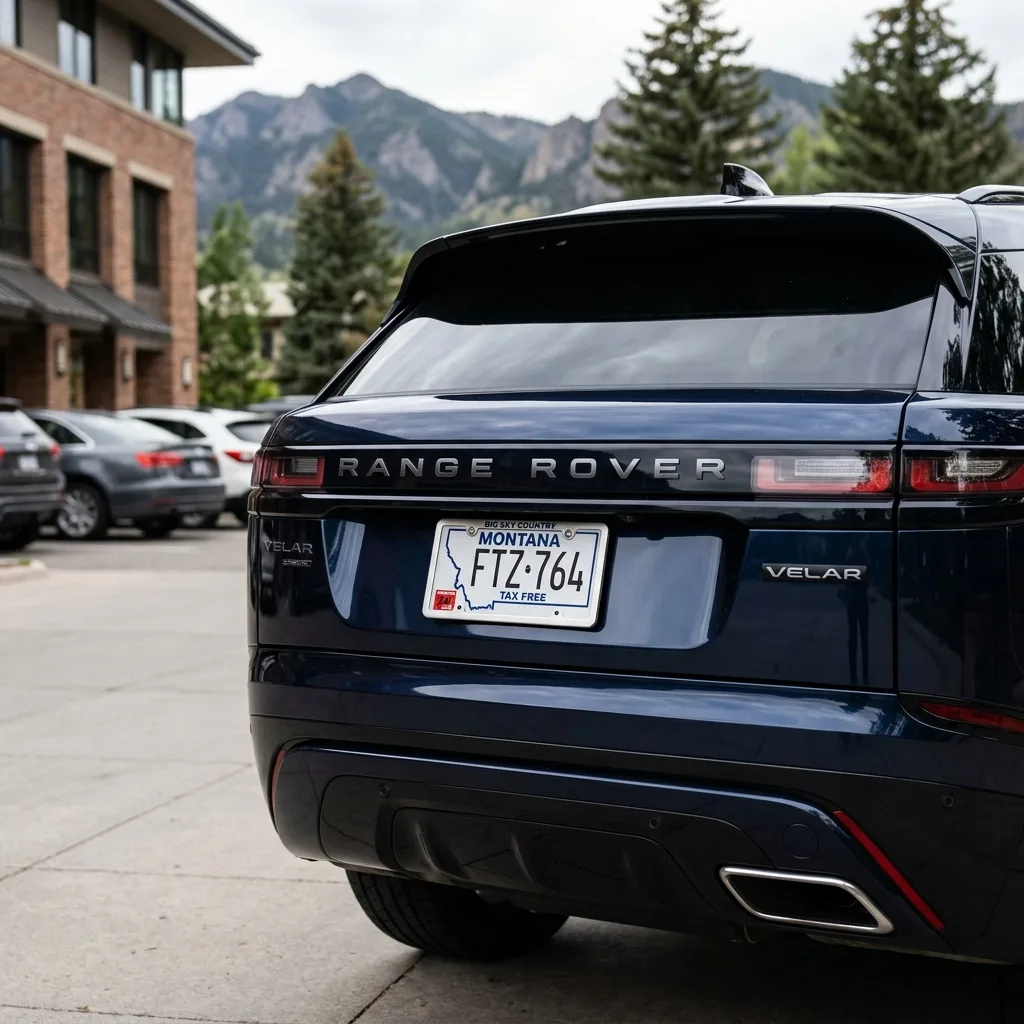
Escaping the Arkansas vehicle property tax system might sound complicated, but our team has streamlined it into a completely hands-off, turnkey process. You don’t need to travel to Montana, you don’t need a Montana driver’s license, and you don’t need to navigate complex legal paperwork. We handle everything from the initial filing to mailing your new physical plates directly to your doorstep.
Here is exactly how our proven system works:
- Step 1: Consultation & Strategy: We start by reviewing your specific vehicle portfolio. Whether you’re buying a new luxury SUV from a dealership, transferring a heavy-duty truck you already own, or moving a multi-vehicle fleet, we determine your exact tax savings and the best path forward.
- Step 2: LLC Formation: We legally establish your new Limited Liability Company in the state of Montana. As your registered agent, we draft the articles of organization, file the paperwork with the Montana Secretary of State, and secure your federal EIN. Your LLC is a distinct legal entity that will act as the rightful owner of your vehicles.
- Step 3: Vehicle Titling: We prepare all the necessary transfer documents to assign your vehicle’s title to your newly minted Montana LLC. If you are purchasing a vehicle from a dealer, we provide the exact instructions and documents the finance and title clerks need to bypass Arkansas sales tax at the point of sale.
- Step 4: Registration & Plates: Once the title work is processed by the Montana Motor Vehicle Division, your vehicle is officially registered in a state with zero sales tax and zero annual vehicle property tax.
- Step 5: Done: We receive your official Montana title, registration card, and physical license plates at our office, and we securely overnight them directly to your home in Arkansas. You bolt on your new plates and permanently exit the May 31 assessment circus.
Your Timeline to Tax Freedom
We know that timing is often critical, especially if you are nearing the end of your 30-day new resident window, trying to close a deal at a dealership, or desperately trying to avoid another massive Arkansas tax bill. Our process is optimized for speed and accuracy.
| Day 1: | Submit your MCO and supporting paperwork through our secure portal. We review for completeness and file your Montana LLC the same day. |
| Days 1–2: | Montana LLC formation complete — same business day in most cases, second business day at the latest. |
| Days 2–4: | Title transferred into the LLC name at the Montana county treasurer. |
| Days 4–7: | Permanent Montana plates shipped directly to your door within 3–5 business days of title completion. |
See Our Full-Service Process →
Frequently Asked Questions
What is the Arkansas vehicle personal property tax and who has to pay it?
The Arkansas vehicle personal property tax is an annual ad valorem tax levied by your local county. Anyone who resides in Arkansas and owns a vehicle (cars, trucks, motorcycles, RVs, boats, and trailers) must assess their vehicles with their county assessor between January 1 and May 31 every single year. The tax collected funds local county services, school districts, and municipal projects. If you own the vehicle in your personal name and live in the state, you are legally obligated to pay this recurring wealth tax.
How is Arkansas vehicle property tax actually calculated?
Arkansas calculates your vehicle property tax using a specific formula based on the vehicle’s true market value. First, the county assessor determines the value of your vehicle using standard industry guides (like NADA or Kelley Blue Book). Then, Arkansas applies an assessment ratio of 20%. This means you are taxed on 20% of the vehicle’s total value. Finally, your local “millage rate” is applied to that assessed value. Because millage rates vary wildly by county and school district, two people owning the exact same $60,000 truck can pay vastly different amounts just by living one town over. On average, you can expect to pay anywhere from $15 to $25 per $1,000 of your vehicle’s total value every year.
What happens if I miss the May 31 assessment deadline?
Missing the May 31 deadline triggers immediate consequences. First, the county will slap a mandatory 10% penalty on your total tax bill. Second, and more frustratingly, a “block” is placed on your account with the Department of Finance and Administration. This block absolutely prevents you from renewing your vehicle registration, getting new tags, or handling any other vehicle-related business until you pay the overdue assessment, the late penalties, and provide a clear tax receipt.
What is the “arrears” collection system and why does it create zombie debt?
Arkansas collects property taxes in arrears, meaning you pay this year for what you owned last year. If you assess a vehicle in 2025, you will receive the tax bill for it in March 2026, and it will be due by October 15, 2026. This creates a confusing overlap—often referred to as “zombie debt.” Many Arkansas residents sell a car, assume they are done with it, and are shocked to receive a massive property tax bill for it the following year. You are responsible for the taxes accrued during the time you owned it, even if it’s no longer in your driveway.
Why do heavy-duty truck owners keep paying high property taxes even as the vehicle ages?
Heavy-duty trucks (like Ford F-250s/350s, Chevy Silverado 2500s, and Ram 2500s) notoriously hold their resale value. Because Arkansas taxes are based on the current market value rather than a flat depreciation schedule, the fact that your diesel truck maintains a high true market value means your property tax bill barely drops. While a cheap sedan might see its tax bill shrink to nothing over a decade, heavy-duty truck owners are punished year after year simply because their chosen vehicle is durable and sought-after in the used market.
How does a Montana LLC eliminate my Arkansas vehicle taxes?
By forming a Montana LLC, you create a distinct legal entity recognized by the government. This LLC becomes the legal owner of your vehicle. Because the LLC is domiciled in Montana—a state with zero sales tax and zero annual vehicle property tax—the vehicle is registered under Montana jurisdiction. You, as the manager of the LLC, simply operate the company’s vehicle. Since you do not personally own the vehicle, and the vehicle’s legal owner is not an Arkansas resident, it falls completely outside the Arkansas county assessment system.
Is registering my vehicle through a Montana LLC completely legal in 2026?
Yes. Forming a business entity in another state to hold assets is a standard, fully legal corporate strategy that has been utilized by businesses and wealthy individuals for decades. You are not registering the vehicle in your personal name using a fake address; you are registering the vehicle in the name of a legitimate, active Montana business entity. As long as the LLC is properly maintained and the vehicle is strictly legally owned by the LLC, you are operating within the bounds of corporate law.
What happens to the Arkansas property taxes I’ve already accrued when I switch to a Montana LLC?
Because Arkansas bills in arrears, you are still legally responsible for the property taxes you accrued during the time the vehicle was registered in your personal name in Arkansas. Switching to a Montana LLC does not erase past debt owed to your county. However, transferring the title to your LLC immediately stops the clock. You will pay your final trailing bill, but you will never have to assess that vehicle in Arkansas again, stopping the bleeding permanently for all future years.
Still Have Questions? Talk to Our Team →

The Arkansas vehicle property tax system is designed to continuously drain your wallet year after year, penalizing you simply for owning nice things. By leveraging a Montana LLC, you can legally opt out of the May 31 assessment circus, bypass the county tax collector, and keep thousands of dollars where they belong—in your own bank account. Stop renting your vehicles from the state of Arkansas and take permanent control of your assets today.
See how Montana LLC registration helps owners in other high-tax states:
- North Carolina Vehicle Tax: The Tag Tax Trap Exposed
- South Carolina Vehicle Tax: The No-Inspection Lie Exposed
- Virginia Car Tax: Stop Paying the Highest Vehicle Tax in America
Ready to Stop Overpaying Arkansas Vehicle Taxes?
Arkansas vehicle owners have saved millions with Montana LLC registration. You’re next.