24 min read
On this page
- + What is the certificate of origin to title process?
- + The five stages of title conversion
- + State processing timelines compared
- + The five biggest delays and how they compound
- + Lienholder complications
- + ELT states vs paper title states
- + When your temp tag expires first
- + The title washing trap
- + Three real case studies
- + Montana LLC: certificate of origin to title in 10 days
- + Is this legal?
- + Who benefits most
- + Our process
- + Who benefits most
- + FAQs
You drove the new Porsche home on a paper temp tag, parked it in the garage, and started checking the mailbox. Day three, nothing. Day ten, nothing. Day twenty, the dealer says “the state is just slow right now.” Day thirty, the temp tag expires and a $95,000 sports car sits in your garage that you legally cannot drive. The certificate of origin to title conversion is supposed to be a routine bureaucratic formality. Instead, for hundreds of thousands of buyers every year, it becomes a six to ten week ordeal.
The certificate of origin to title process is the single most under-explained part of buying a new vehicle. The dealer hands you keys and a temporary registration, waves toward “the DMV,” and weeks pass while a manufacturer’s certificate sits in a stack of paperwork waiting for a courier, a lender, or a clerk who must type a string of digits correctly on the first try. Montana processes the same conversion in seven to ten business days.
What is the certificate of origin to title process?

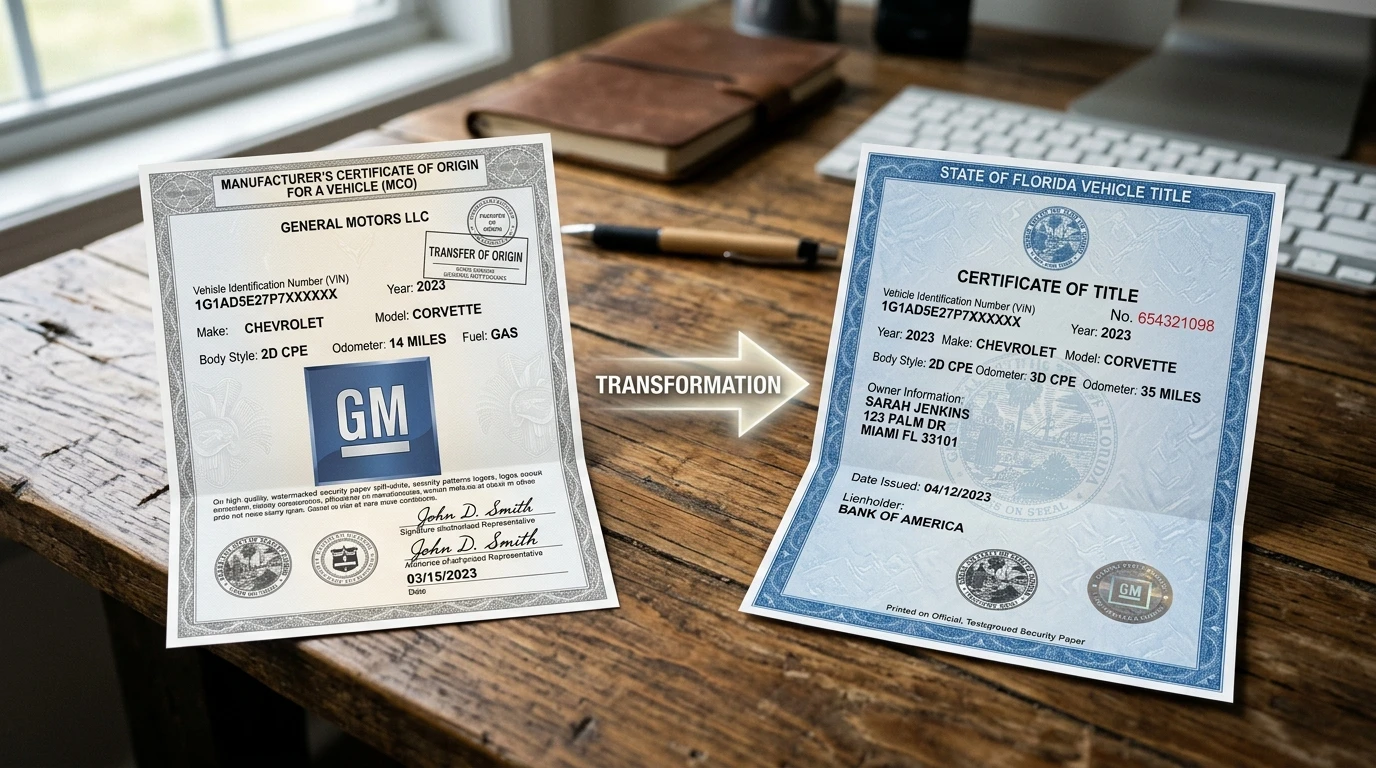
The Manufacturer’s Certificate of Origin and a state-issued title are not the same thing, and most buyers do not realize that until something goes wrong. The certificate of origin to title conversion is what bridges them.
The Manufacturer’s Certificate of Origin (MCO, sometimes MSO for Manufacturer’s Statement of Origin) is the factory birth certificate of every new vehicle. The manufacturer issues it when the car rolls off the assembly line. The MCO travels with the vehicle from factory to carrier to dealer to first retail buyer. It contains the VIN, year, make, model, engine and body specifications, the date of manufacture, and a chain of endorsements showing every transfer of ownership.
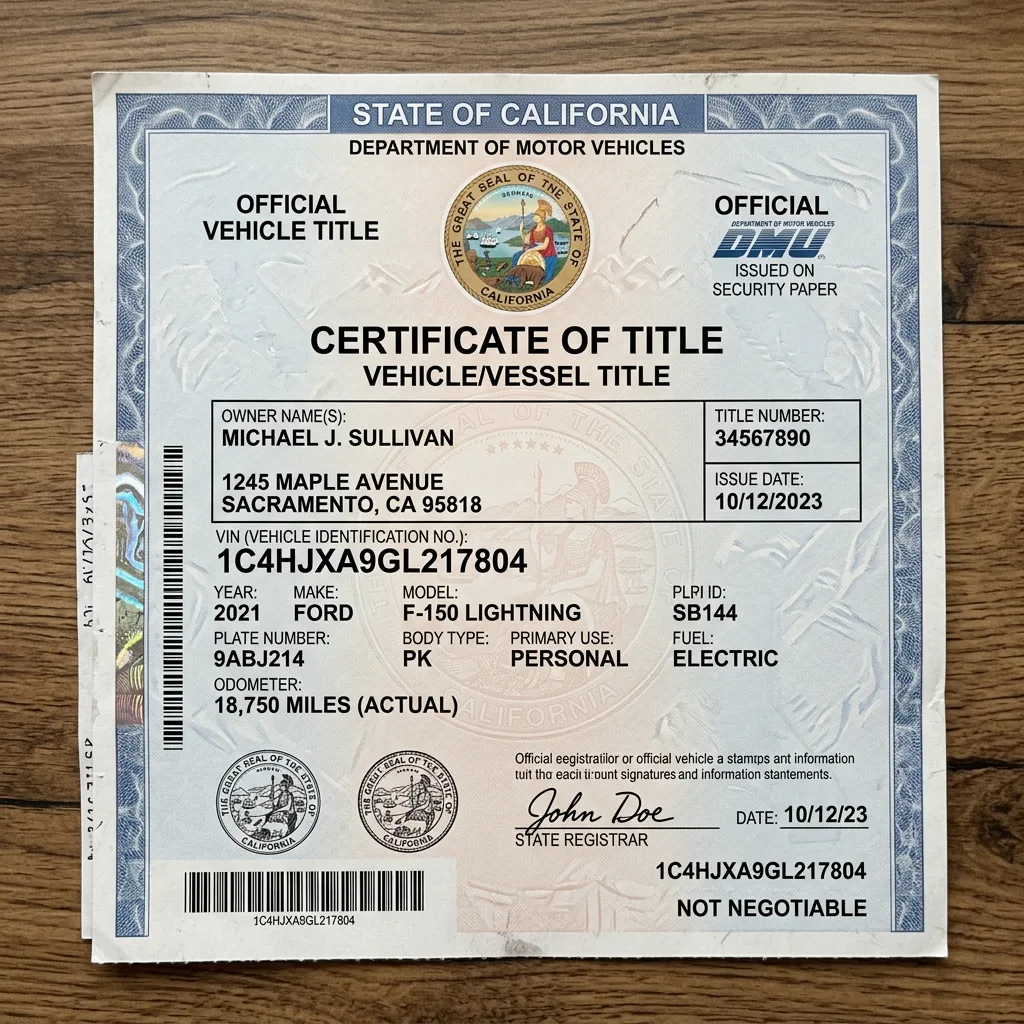
A title, by contrast, is issued by a state government. It is the legal proof of ownership recognized for registration, insurance, resale, and liens. A title contains the registered owner’s name, the VIN, the lienholder if any, an odometer disclosure, the issue date, and a state seal. Unlike the MCO, a title can be replaced if lost and updated when liens are paid off.
The conversion from MCO to state title is a one-way physical transaction. The dealer or buyer surrenders the original MCO to the state. The state files it permanently and issues a state title in its place. Once submitted, the MCO is gone forever. This is why a single typo can reset the clock by weeks.
The MCO is destroyed at the moment the title is issued. There is no parallel record. If the DMV makes a clerical error, the only correction path is to amend the title that was issued, not to reissue an MCO. This is why dealers and lenders are so cautious about timing.
Federal law (49 CFR Part 580) requires an odometer disclosure on every MCO at transfer. The dealer must record actual mileage at delivery. Most states do not systematically verify these disclosures, but the federal record creates a paper trail that can trigger a title recall years later.
Every step of the certificate of origin to title chain depends on the previous step. The dealer cannot submit until the lender funds. The state cannot process until the MCO arrives. The buyer cannot register until the title is issued. Any disruption at any link adds days or weeks to the wait.
The five stages of title conversion

Behind the phrase “the dealer is processing your title” sits a five-stage chain of physical and administrative steps. Most buyers never see any of it.
Stage one: factory to dealer. The MCO is created when the vehicle is finished at the factory. It travels with the carrier to the dealer, where the title clerk inventories it into a secure file. Most dealers store unsold MCOs in a safe because the document is essentially a bearer instrument.
Stage two: dealer to buyer paperwork. When the sale closes, the dealer prepares the MCO transfer endorsement. The federal odometer disclosure is filled out, the buyer’s name recorded, the lender listed if there is financing. The dealer signs as transferor and the buyer signs as transferee.
Stage three: MCO transfer. If the vehicle is financed, the MCO does not go directly to the state. It sits with the dealer’s title department until the retail loan is fully funded. Once funding clears, the dealer prepares the submission package: endorsed MCO, title application, lien notice, bill of sale, odometer disclosure, and state tax forms.
Stage four: DMV submission. The package is mailed, hand-delivered, or electronically transmitted to the state DMV’s title division. Most states use a hybrid system where data is uploaded electronically but the physical MCO is still required by mail or courier.
Stage five: state processing and title issuance. The state title clerk verifies the VIN, verifies the odometer disclosure, calculates fees and sales tax, records the lien, and issues a new state title. In paper title states, the title is mailed to the lender or owner. In ELT states, the title is recorded digitally.
| Day 0: | Sale closes. Buyer signs MCO endorsement. Dealer issues 30-day temp tag. |
| Day 1-7: | Dealer waits for lender funding. MCO held in title office. |
| Day 7-14: | Dealer’s weekly title batch processed. Submission mailed to state DMV. |
| Day 14-30: | State DMV title clerk reviews submission, verifies VIN, calculates fees. |
| Day 30-45: | Title printed and mailed to lienholder or owner. Temp tag often expired by this point. |
State processing timelines compared
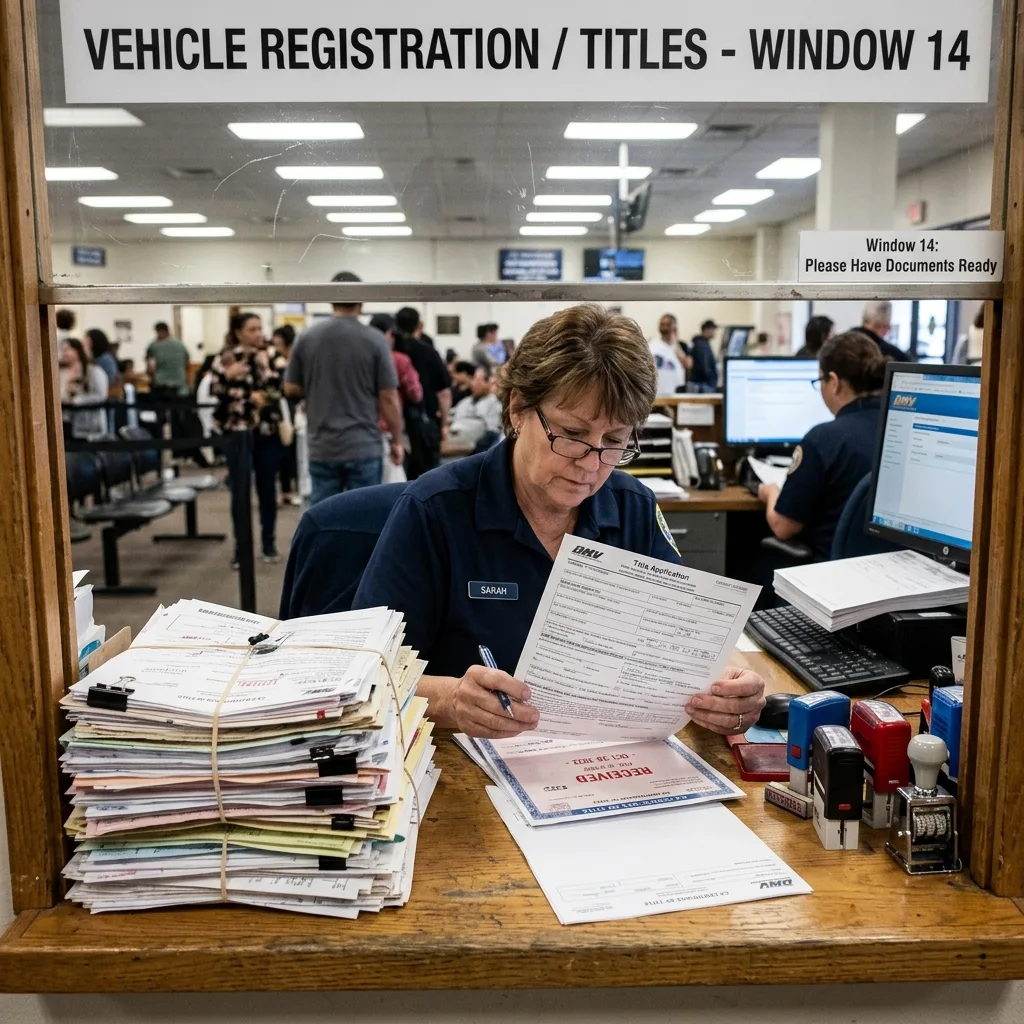
Title processing times vary by an order of magnitude across the country. A buyer in Florida who pays the $10 fast title fee can drive away with a state title the same day. A buyer in Colorado with a financed luxury vehicle can wait six weeks. The table below compares published processing times against the Montana LLC alternative.
Texas tightened its title rules effective July 1, 2025, lengthening minimum processing for new vehicles to 20 business days and extending it further for liens. California’s headline 4-week figure is a best case; once lender funding and DMV mail intake are factored in, the realistic timeline is six to ten weeks. New York published “several weeks” without committing to a number.
Florida’s $10 fast title is genuinely fast, but it requires walking paperwork into a Florida tax collector’s office. The program does not apply when an out-of-state dealer sells to a Florida resident, which is exactly the scenario where buyers most need speed.
The Montana LLC alternative does not work the same way. Instead of submitting an MCO into a slow state title pipeline, Montana registers the vehicle directly to a Montana-domiciled LLC. The MCO and registration cycle through Montana’s system in seven to ten business days. License plates are mailed within that window.
The five biggest delays and how they compound

The published timelines for state title processing assume a clean transaction with no errors and no backlog. The realistic timeline is always longer. Five categories of delay account for almost every late title, and they compound rather than add.
Delay one: lienholder payoff hold. The dealer cannot submit the MCO until the retail loan is fully funded. Lenders typically take seven to fourteen business days. Captive finance arms of manufacturers are usually quick. Independent banks and credit unions are slower. A loan that hits a verification flag (income mismatch, address discrepancy) can sit for weeks while a loan officer chases the buyer for documents.
Delay two: dealer batching. Most dealers do not submit MCOs the day a sale closes. They batch submissions weekly, sometimes biweekly. Title clerks at large dealers handle hundreds of MCOs per month and gain efficiency from sending a full courier load. A sale that closed Monday might have its MCO mailed twelve days later if the next batch goes out Friday. Batching alone adds seven to fourteen days.
Delay three: DMV backlogs. State title divisions are staffed for average volume, not peaks. Predictable surges happen every January, every spring tax refund season, and every fall model-year transition. During those surges, the queue can grow from three days to fifteen. Buyers who close a deal in late December often find their titles arriving in mid-February.
Delay four: errors and corrections. A single wrong character, missing notary stamp, smudged odometer disclosure, or misaligned VIN digit will cause a state clerk to reject the submission and return it to the dealer. Errors reset the clock. The minimum penalty is seven to fourteen additional days.
Delay five: out-of-state complications. Buying in one state for registration in another adds two to four weeks. Two state systems must coordinate. The MCO has to travel between them. Sales tax must be calculated for the destination state. Florida’s fast title does not apply when the dealer is out of state.
A financed out-of-state luxury purchase that closes in late December can hit four of these five delays at once: lender funding hold, dealer batching, holiday DMV backlog, and out-of-state interstate transfer. Add a single typo on the buyer’s address line and the timeline pushes to ten weeks before plates arrive.
Lienholder complications: when your bank holds the MCO
Financing changes the entire dynamic of the certificate of origin to title conversion. When you pay cash, the dealer holds the MCO until they submit it. When you finance, the lender holds an interest in the vehicle from the moment funds are disbursed, and that interest has to be recorded on the title before it is released.
The dealer prepares the title application listing the lender as lienholder. The dealer cannot mail the MCO until the lender has funded the retail loan. Once funding clears, the package goes to the state. The state DMV records the lien and issues the title. In paper title states, the physical title is mailed to the lender, who holds it for the life of the loan. When the loan is paid off, the lender prepares a lien release and the title returns to the owner. Full cycle from payoff to a clean title in hand typically takes two to six weeks.
For a new vehicle purchase, the lienholder process adds seven days to four weeks to the front end of the timeline. Captive finance lenders (Ford Credit, Toyota Financial, BMW Financial) are typically fastest because their workflows are integrated with dealer title offices. Major banks are middle of the pack. Credit unions and independent specialty lenders can be slowest, especially on high-value transactions where the underwriter wants extra documentation.
Some buyers pay cash and refinance later. A cash purchase clears MCO submission within days, the title is issued with no lien, and the buyer can refinance afterward. The downside is needing liquid capital up front, the refinanced rate may be higher than the captive promotional rate, and dealer financing incentives are forfeited.
ELT states vs paper title states

Twenty-eight states have moved to Electronic Lien and Title (ELT). The other twenty-two still operate paper title systems for some or all transactions. ELT removes postal delays from the lien release process and accelerates every transaction involving a financed vehicle.
In a paper title state, the physical title is the legal record. When a lender records a lien, the state mails the title to the lender. When the loan is paid off, the lender mails it back. Every step requires paper, postage, and physical custody. Lost titles are common, and replacement requires notarized affidavits and additional fees.
In an ELT state, the lien is recorded electronically. The lender receives notification rather than a paper title. When the loan is paid off, the lender sends an electronic release. This eliminates four to seven days of postal time on each end and reduces the risk of lost paperwork.
ELT is mandatory for licensed lienholders in California, Florida, Arizona, Nevada, Louisiana, North and South Carolina, Michigan, Massachusetts, Maryland, Kansas, New York, Idaho, and Iowa. Other states allow voluntary ELT participation. Non-ELT states still rely on paper titles, which is why financed transactions there take longer end to end.
Even in ELT states, the front-end certificate of origin to title conversion still requires the physical MCO to reach the state. ELT speeds the lien release at the back end, not the title issuance at the front. A buyer in California or Florida or New York still waits the full state processing time before plates can be ordered.
When your temp tag expires first

The temporary tag is supposed to bridge sale to title issuance. In practice, it is often shorter than the bridge it spans. Most states issue 30-day temp tags. Colorado is generous at 60 days. Texas and Arizona allow one 30-day extension. Almost every other state caps the tag at 30 days with no extension.
If the title is not issued before the temp tag expires, the vehicle is unregistered. Driving unregistered is a moving violation in every state. Penalties range from a fix-it citation to misdemeanor charges and impoundment. Insurance carriers can deny claims. A traffic stop on an expired temp tag in California can result in towing to a storage yard, where fees of $46 to $100 per day outdoor or $125 to $200 indoor accumulate until the registration is sorted out.
The cost is not just the citation. It is storage while the vehicle sits, late registration penalties when the title finally arrives, and in extreme cases tow and impound fees. California’s late registration penalty is 10 to 160 percent of the license fee. Colorado adds $25 per month up to $100. Florida charges up to $1,000 plus license suspension for failing to title within 30 days of purchase, even if the delay is the dealer’s fault.
A six-week California title delay on a vehicle stored at $150 per month costs $210 in storage alone, plus a late registration penalty of up to 160 percent of the license fee. Total avoidable cost can exceed $500 before the title arrives.
Buyers facing temp tag expiration have few options. Some states issue a second temp tag if the dealer applies. Most will not. The buyer either parks the vehicle or drives on an expired tag. Most drive and hope they do not get pulled over.
Montana LLC avoids this entirely. Permanent Montana plates are issued in the same seven to ten business day window as the title. Buyers drive on a Montana temporary permit and have permanent plates before any home-state temp tag would have expired.
The title washing trap and how to protect yourself

Title washing is the practice of moving a damaged or salvage vehicle across state lines to obtain a clean title in a state with looser disclosure rules. The original title may have carried a salvage, flood, or rebuilt brand. After retitling in a permissive state, those brands disappear and the vehicle re-enters the market with a clean title.
The mechanics rely on inconsistent state-to-state communication. The federal National Motor Vehicle Title Information System (NMVTIS) was created to centralize title brand data, but participation has been gradual and verification is not universally enforced.
Mississippi has the worst documented rate, with one in 44.6 vehicles carrying some form of washed title. A widely publicized case involved a 2015 Toyota 4-Runner sold seven times across five states, each transaction stripping further notation until the final buyer received what appeared to be a clean ownership history. The vehicle had been totaled and rebuilt with junkyard parts.
For new car buyers, title washing is rarely a direct concern because the MCO chain documents the vehicle from the factory forward. The risk emerges when the vehicle is later sold used. Three defenses protect buyers.
- NMVTIS check. A federal report costs $2 to $7 and reveals known brands, junk records, and salvage history. Every used-vehicle purchase should include one.
- Pre-purchase inspection. A qualified mechanic can identify rebuilt panels, mismatched paint, frame straightening, airbag replacements, and flood damage. Cost is $150 to $400 and is the single best protection.
- VIN history report. Carfax and AutoCheck pull from insurance, dealers, auctions, and law enforcement. Not perfect, but a useful second source.
The certificate of origin to title chain protects new buyers because the MCO is the original factory document. Used buyers do not have that protection. Treat the title as a starting point, not a guarantee.
Three real case studies
The dollars and weeks are abstract until they happen to a real buyer. Three composite case studies based on common patterns we see.
Case study one: the Colorado Porsche
A Denver software engineer bought a $95,000 Porsche 911. Colorado’s standard processing window is four to six weeks. The dealer submitted the MCO in their next weekly batch (seven-day delay). The Colorado DMV was running a January backlog (ten more business days). Then the title application came back with a corrected lienholder name (the lender had updated its DBA), resetting the clock by another ten days. The Porsche sat in the garage almost eight weeks before plates arrived.
If the buyer had used Montana LLC registration, the MCO would have moved through Montana in seven to ten business days. Plates would have arrived before the first scheduled track day. The cost would have been $899 in year one, replacing roughly $7,500 in Colorado specific ownership tax over five years.
Case study two: the New York RV
A retired couple in upstate New York purchased a $280,000 Class A motor coach financed through a specialty RV lender. The lender held the MCO for fourteen days while funding cleared. New York DMV took just over four weeks to issue the title. Total elapsed time was approximately six weeks. The temp tag had ten days left when plates arrived.
Montana LLC registration would have eliminated both the lender hold and the New York queue. Plates would have arrived in ten business days, and because Montana offers permanent registration on RVs, the couple would have paid once and never again.
Case study three: the Florida out-of-state purchase
A Florida buyer found a $140,000 Mercedes from a Georgia dealer. Florida’s $10 fast title does not apply to out-of-state sales. The Georgia dealer prepared Florida-specific tax forms, mailed the package to Florida’s tax collector network, and waited. Interstate routing added three weeks on top of Florida’s standard three to four week timeline. Total elapsed time was nearly eight weeks. The Florida temp tag expired with three weeks left to go.
Out-of-state purchases are the longest variant of the certificate of origin to title process. Montana LLC removes the interstate complication entirely. The same Mercedes purchase through Montana would have been on the road in ten business days.
Montana LLC: certificate of origin to title in 10 days
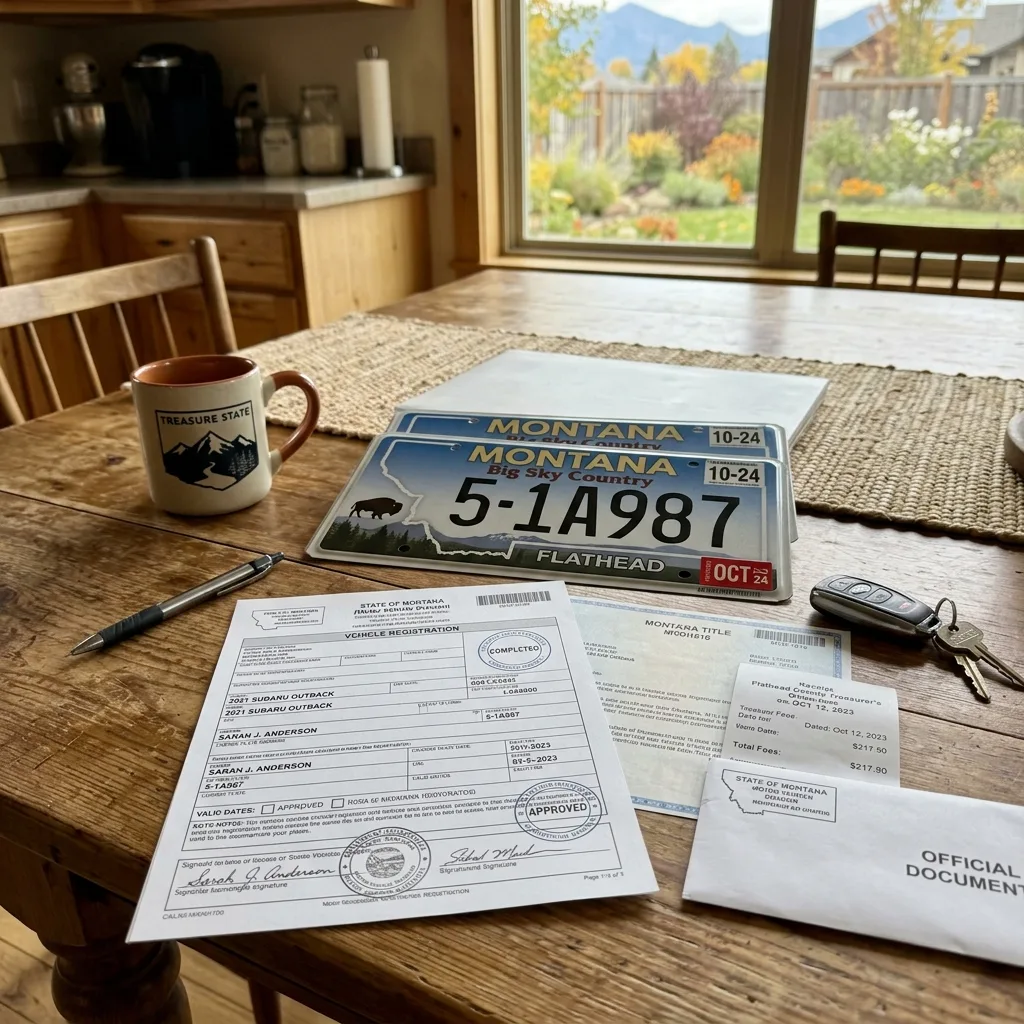
Montana operates the fastest certificate of origin to title conversion in the United States. The state has no sales tax on vehicle purchases. The county treasurer system handling title and registration is decentralized and well-staffed. Permanent registration is available for vehicles eleven years and older. Montana law permits non-residents to register vehicles to a Montana-domiciled LLC.
The buyer forms a Montana LLC with a registered agent in Montana. The vehicle purchase is structured so the MCO is endorsed to the LLC rather than the individual buyer. The MCO and registration application are submitted to the Montana county treasurer, where title is issued and license plates are mailed within seven to ten business days.
The buyer receives Montana plates and a Montana title. The vehicle can be driven in any state. The registration is valid for as long as the LLC owns the vehicle. No sales tax. No annual personal property tax. For vehicles eleven years and older, registration is permanent.
The program works by being legal, not clever. Montana law permits non-resident LLC formation, LLC vehicle ownership, and LLC vehicle registration. The federal system of state sovereignty allows each state to set its own rules, and Montana has chosen rules favorable to vehicle owners.
Is this legal?
Yes. The Montana LLC model is legal under Montana law and under the federal system of interstate commerce. Montana permits non-residents to form LLCs, LLCs to own vehicles, and LLCs to register and title vehicles in Montana. These are explicit state policy, not loopholes.
Three considerations deserve a straight answer. First, your home state may have rules about how long a vehicle can be present before it must be registered locally. Rules vary widely. Some states allow indefinite presence of an out-of-state-entity-owned vehicle. Others have stricter durational tests.
Second, your home state may have its own use tax rules. A use tax applies to vehicle use within the state when no equivalent sales tax was paid. Whether use tax provisions apply depends on state law and the specifics of your situation.
Third, the IRS treats Montana LLCs as pass-through entities. There are no federal tax consequences from forming one for vehicle ownership. Most buyers see no state-level income tax effect, but consultation with a tax advisor is appropriate for unusual situations.
The Montana LLC program is openly advertised, openly serviced by Montana attorneys, and openly recognized by Montana agencies. It is not hidden. It is the state’s explicit business policy.
Who benefits most
The Montana LLC route is most valuable when your home state has long title processing times, high sales tax, or annual personal property tax on vehicles — or when you own an RV or vehicle that crosses multiple states regularly.
- Buyers in California, Texas, Florida, New York, and other states with multi-week title processing
- Buyers of RVs, motor coaches, and travel trailers used across state lines
- Snowbirds with residences in multiple states
- Collectors with multiple vehicles where each registration adds up
- Buyers of high-value sports cars, exotic cars, and luxury SUVs
- Full-time RVers without a fixed home state
- Owners of vehicles eleven years old or older who can use Montana’s permanent registration
- Buyers facing a temp tag expiration with no home-state title yet issued
Our process
Zero Tax Tags handles the entire certificate of origin to title conversion through Montana on behalf of buyers in all fifty states.
| Day 1: | Submit your MCO and supporting paperwork through our secure portal. We review for completeness and file your Montana LLC the same day. |
| Days 1–2: | Montana LLC formation complete — same business day in most cases, second business day at the latest. |
| Days 2–4: | Title transferred into the LLC name at the Montana county treasurer. |
| Days 4–7: | Permanent Montana plates shipped directly to your door within 3–5 business days of title completion. |
The whole process is paperwork-light from the buyer’s perspective. We handle the LLC filings, the MCO endorsement coordination, the registration submission, and the lien recording if the vehicle is financed. The buyer signs a few documents, provides identification, and waits for plates.
Who benefits most
The Montana LLC structure delivers the strongest savings on vehicles valued above $35,000, where the one-time LLC and service cost is recovered quickly against state sales tax, annual property tax, or registration fee exposure. Owners in high-tax states — California, Texas, Virginia, Arizona, North Carolina — see the clearest math. Owners with multiple high-value vehicles, RVs, collector cars, or UTVs compound the savings with each additional vehicle added to the same LLC.
FAQs
How long does the certificate of origin to title process take?
In most states, the standard certificate of origin to title conversion takes three to six weeks. Realistic timelines including lender holds and DMV backlogs can stretch to ten weeks. Montana processes the same conversion in seven to ten business days.
What happens if my temp tag expires before my title arrives?
Driving an expired temp tag is a moving violation in every state. Most states will not extend the temp tag. The buyer’s options are to park the vehicle, drive at risk of citation, or in some states pay for a second temp tag if the dealer applies on the buyer’s behalf.
Can I expedite the title process in my home state?
A handful of states offer expedited title services. California has a 72-hour rush title program. Florida offers $10 same-day fast title for in-state transactions. Most other states have no expedited option, and the expedited services that do exist often do not apply to financed or out-of-state purchases.
Why does the dealer hold the MCO so long?
Two reasons. First, lender funding holds prevent the dealer from submitting the MCO until the retail loan is fully funded. Second, dealers batch MCO submissions in weekly cycles to streamline operations. Both factors together account for the seven to fourteen day delay between sale and DMV submission.
Is Montana LLC registration legal in my state?
Montana LLCs are legal entities recognized in all fifty states under federal interstate commerce principles. Vehicle ownership by a Montana LLC is legal. Whether and how a Montana-titled vehicle interacts with your home state’s registration rules depends on your residency, where you drive, and your state’s specific use tax provisions. Most buyers have no issues. Edge cases warrant a conversation with our team.
What does the certificate of origin actually look like?
The MCO is a single sheet of security paper, typically letter-sized, with watermarks, microprint, and a state-by-state acceptance design. It carries the manufacturer’s name and emblem, the VIN, the year and make and model, the engine and body specifications, the date of manufacture, and a series of endorsement blocks where each transfer of ownership is recorded. It looks somewhat like a stock certificate or a high-end university diploma.
Ready to skip the title backlog?
The certificate of origin to title conversion does not have to take six weeks. Montana processes the same paperwork in seven to ten business days, with no sales tax and no annual personal property tax. Thousands of buyers have chosen the faster path. You are next.