12 min read
On this page
- + Part I: The Emissions Testing Mandate
- • Who Must Test (2025 Requirements)
- • The Cost Structure
- • When You Fail
- + Part II: Vehicle Modification Laws
- • Diesel Trucks: The Problem Child
- + Part III: The Cumulative Burden
- + Part IV: The Snowbird Problem
- + Part V: Exemptions Nobody Qualifies For
- + Part VI: How Montana Registration Helps
- + Part VII: Real-World Consequences
- + Part IX: FAQ
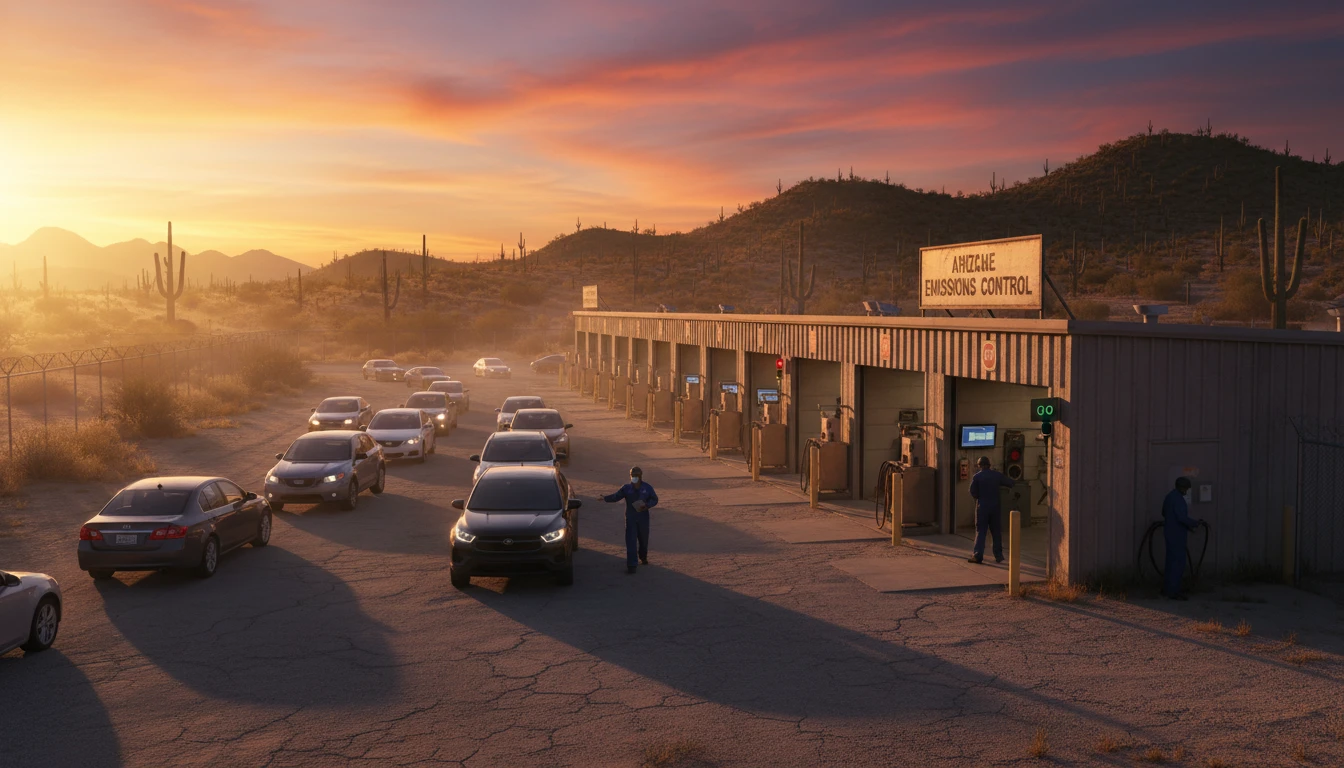
Arizona emissions testing is the hidden nightmare beyond the VLT. You read our first Arizona post and learned about the Vehicle License Tax—the annual recurring tax that drains thousands of dollars from vehicle owners’ bank accounts. You thought that was the biggest regulatory burden in Arizona.
You were wrong.
The VLT is just the first punch. Arizona’s regulatory regime extends far beyond that annual tax bill. There’s an entire ecosystem of mandatory testing, modification restrictions, and enforcement crackdowns that most Arizona residents don’t understand until they’re already trapped in the system.
Welcome to the Arizona Regulatory Gauntlet—and it’s more expensive than you realize.
Part I: The Arizona Emissions Testing Mandate (Phoenix & Tucson)
The Requirement
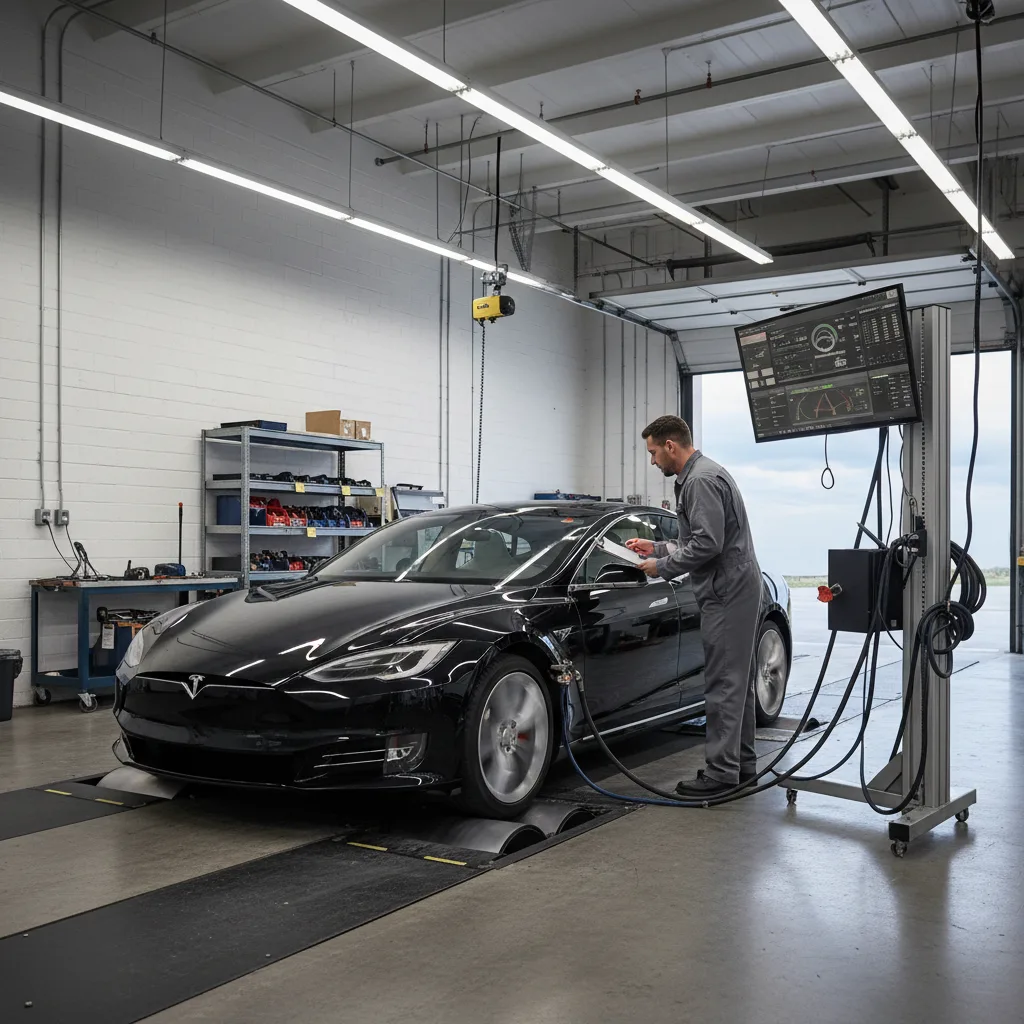
If you live in or commute to the Phoenix or Tucson metropolitan areas, you are subject to mandatory vehicle emissions testing through the Vehicle Emissions Inspection Program (VEIP).
The critical detail: You don’t have to drive regularly in these areas to be subject to testing. If you work in Phoenix but live in Peoria, you’re covered. If you commute to Tucson for your job but garage your car in Oro Valley, you’re covered. If you have a seasonal business that operates in the Phoenix area even part of the year, you’re covered.
The Arizona Department of Environmental Quality (ADEQ) interprets the requirement broadly—and they enforce it.
Who Must Test (2025 Requirements)
The Cost Structure
This is where it gets expensive—not because a single test costs much, but because the fees compound quickly.
Here’s the real math: If you own a diesel pickup truck and live in the Phoenix area:
- Annual emissions test: $25
- 10 years: $250
- 20 years: $500
But this assumes you pass on the first try. If you fail…
When You Fail (And You Might)

This is where the costs explode.
First Failure: Free retest within 60 days at the same station.
Second Failure Within a Test Cycle: Now you’re in the Waiver Program.
The waiver program requires:
- Diagnostic inspection: $75 fee (just for the diagnosis)
- Emissions repair estimate: Must be prepared and reviewed
- Waiver facility fee: $15 if you qualify for a waiver
The trap: If you fail a test and the repair cost exceeds the state’s maximum allowable repair limit, you can get a waiver. However, you CANNOT get a waiver if:
- Your vehicle is emitting at 2x the acceptable standard
- Your catalytic converter is faulty
- Your emissions control equipment has been removed, altered, or defeated
The Hidden Cost: Time & Inconvenience
You also have to factor in the non-financial cost:
- Time to schedule: Finding a testing station with availability
- Waiting time: Average wait is 30-60 minutes
- Driving to the station: Round-trip to test center
- Scheduling conflicts: Tests can only be done 90 days before expiration
If you work during normal testing hours (most stations are 8 AM – 5 PM), you’re burning work time. For hourly workers, this is lost wages. For retirees or those with fixed schedules, this is a massive inconvenience.
Part II: Vehicle Modification Laws & Enforcement
Arizona may not charge an annual wealth tax on vehicle modifications like California does, but it has equally strict rules—and increasingly aggressive enforcement.
What Arizona Allows (With Restrictions)
Lifted Trucks:
- Suspension lifts: No specific limit
- Body lifts: Allowed
- Total vehicle height: Cannot exceed 13 feet 6 inches
- Mud flaps/Fenders required for pickup trucks with modified suspension (must extend down to 8 inches above roadway)
Window Tinting:
- Front windshield: Non-reflective tint only, 29+ inches above driver’s seat
- Side windows: Up to 35% reflective material allowed
- Rear window: Some leniency, but no complete blackout
Lighting:
- Headlights: Cannot exceed 300 candlepower per light; must not illuminate more than 75 feet ahead
- No red, blue, or flashing red-blue lights on front of passenger vehicles
- All lights must be white or amber from front; red or amber from rear
Exhaust & Mufflers:
- Mufflers must be functional; no bypass systems
- No excessive smoke (particularly problematic for diesel trucks)
- “Quiet hours” enforcement between 11 PM and 7 AM (no excessive noise)
The Enforcement Reality
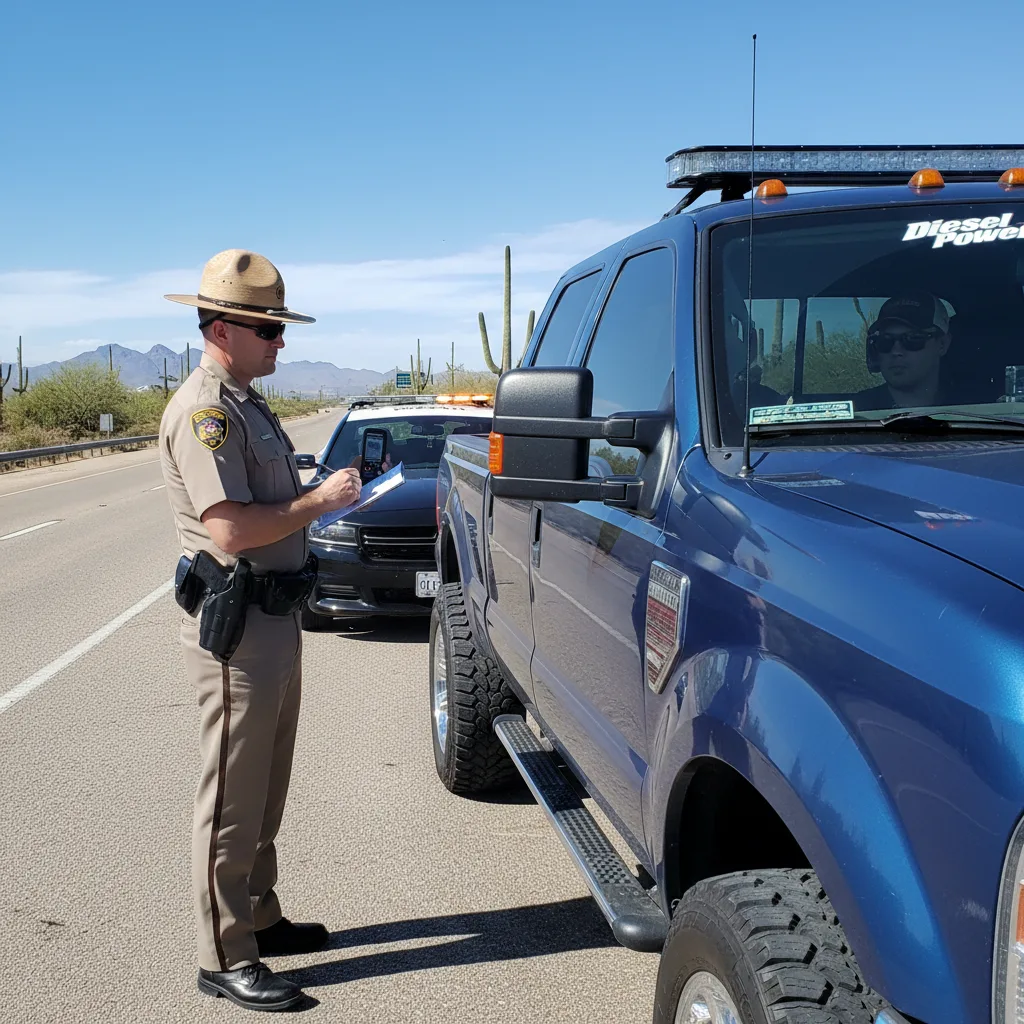
Arizona law enforcement has dramatically increased enforcement of vehicle modification violations. Two landmark cases—State v. Marrero and State v. Fierro—set precedent for aggressive window tint enforcement.
What this means in practice: If you drive a lifted truck without compliant mud flaps, you can be cited. If your window tint appears to the officer to be darker than legal, you can be cited. If your aftermarket lighting appears to exceed specifications, you can be cited.
The charges aren’t minor fines. Illegal vehicle modification violations can include:
- $250-$500 fines
- Points on your driving record
- Vehicle impoundment (in extreme cases)
- Mandatory repair verification to DMV
- Court appearance (in some jurisdictions)
Diesel Trucks: The Arizona Problem Child
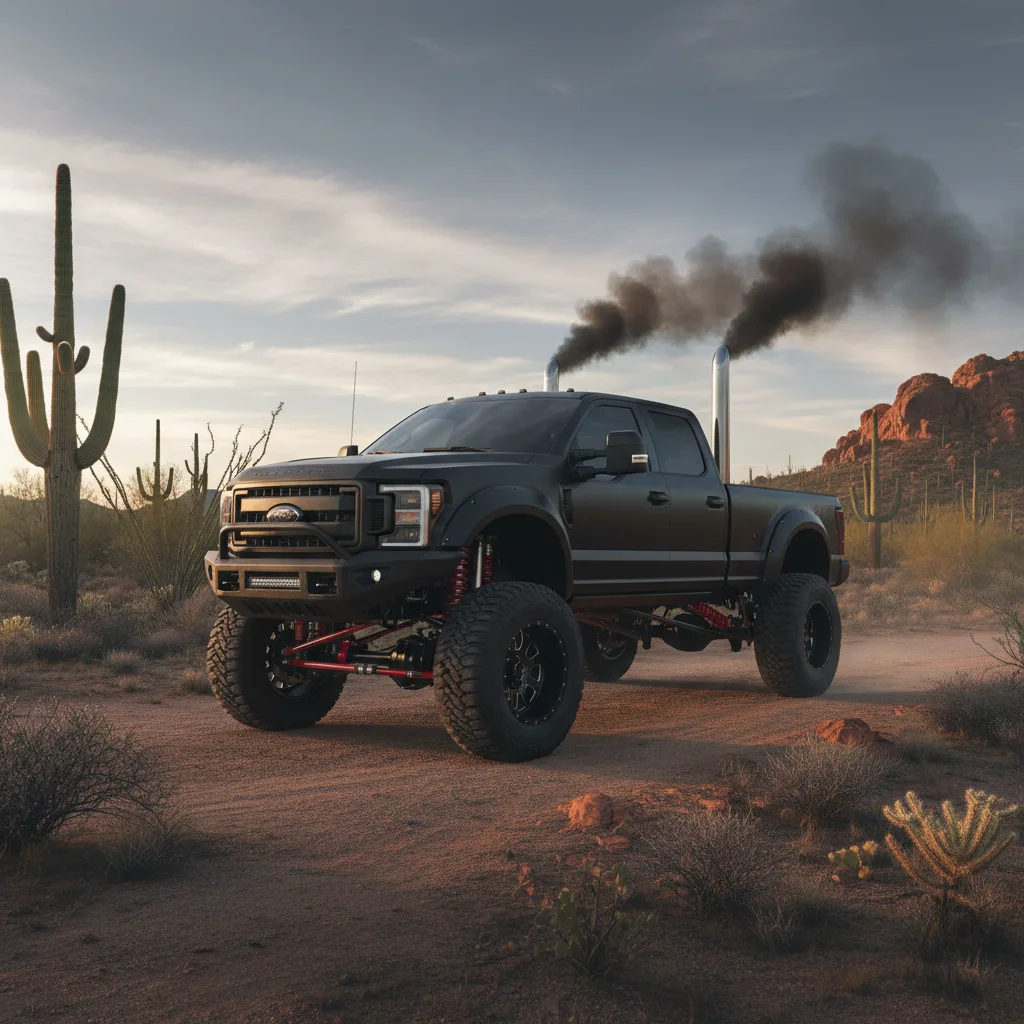
Arizona has a serious problem with diesel truck “rolling coal”—the visible black smoke from heavily modified diesel engines.
The state has doubled down on enforcement. A diesel truck with modifications that cause excessive smoke can be cited for:
- Air quality violations (Arizona Department of Environmental Quality)
- Emissions test failure (automatic)
- Excessive noise violation (if the engine is loud)
The cumulative effect: Many diesel truck owners in Arizona face $500-$2,000 in cumulative fines, emissions repair costs, and modification verification costs.
Part III: The Cumulative Burden
Let’s add this up realistically.
Scenario: Phoenix Area Owner with a Newer Vehicle
| Year 1: | VLT (new $50K vehicle): $840 + Emissions test: $16 = $856 |
| Year 5: | VLT: ~$600 + Emissions tests (5 total): $80 = Running Total: $4,280 |
| Year 10: | VLT: ~$400 + Emissions tests (10 total): $160 = Running Total: $8,000+ |
Scenario: Phoenix Diesel Truck Owner (Modified)
Now multiply that across a 10-year ownership period with sporadic failures, and you’re easily north of $15,000 in combined VLT and emissions costs, not including any actual vehicle maintenance.
Part IV: The “Snowbird Problem” Intensifies
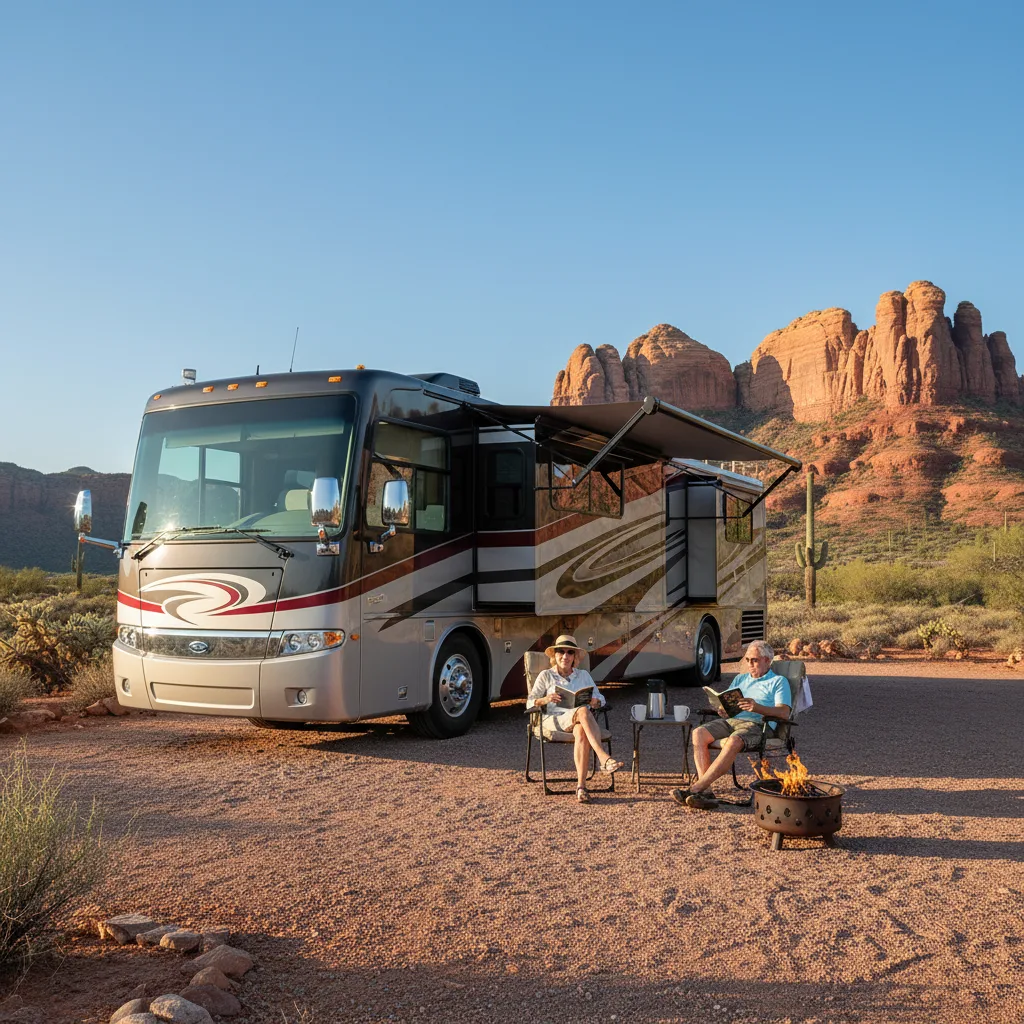
Remember our first post about snowbirds and the VLT? The problem compounds with emissions testing.
A snowbird who brings a diesel RV to Arizona for the winter:
- Subject to VLT (annual, based on vehicle value)
- Subject to emissions testing (if spending 90+ days in Phoenix area)
- May face emissions failure if RV engine is older or modified
- Waiver program costs apply
- Cannot claim “I’m only here part-time” as an exemption
The Arizona MVD interprets the rules harshly: If you’re in the Phoenix area for even a substantial part of the year, you’re subject to full emissions testing requirements.
Part V: What Arizona DOESN’T Tell You
Exemptions (That Almost Nobody Qualifies For)
Who IS Exempt from Emissions Testing:
- Electric vehicles (full battery electric, no engine)
- Vehicles model year 1966 or older (classic cars)
- Vehicles registered with collector/classic plates
- Vehicles less than 5 model years old
- Out-of-state military with current deployment orders
- Vehicles out of state 90+ days before registration expiration (you can get an exemption certificate)
The catch: That “out-of-state exemption” requires proof that the vehicle is genuinely out of state. For snowbirds or part-time residents, this is hard to prove if you’re in Arizona seasonally.
The Out-of-State Exemption Workaround
If your vehicle will be located outside of Arizona for 90 days before your registration expires, you can apply for an Out-of-State Exemption Certificate.
Cost: $9.50
Process:
- Vehicle must be tested in the out-of-state location where it’s garaged
- Pass the other state’s emissions test (if they have one)
- Submit that test result along with the exemption application to ADEQ
- ADEQ issues certificate valid for 1-2 years
The problem: Most snowbirds don’t bother with this. They simply register in Arizona and bite the bullet on emissions testing.
Part VI: Escape Arizona Emissions Testing with Montana Registration
Here’s where the Montana LLC strategy becomes partially relevant—but with important limitations.
The Montana Advantage (Partial)
A vehicle registered in Montana:
- Eliminates the Arizona VLT: No annual vehicle wealth tax
- Avoids emissions testing requirement: Montana has no VEIP program; if your vehicle is registered in Montana, Arizona cannot force emissions testing
This is a significant advantage for Arizona vehicle owners who want to escape both the VLT and the emissions testing burden.
The Catch
Montana registration DOES NOT help with:
- Vehicle modification laws: Arizona’s modification restrictions apply to all vehicles operating in Arizona, regardless of registration
- Speeding/traffic laws: Enforced against all vehicles, regardless of home state registration
- Insurance requirements: Must comply with Arizona minimums if driving in Arizona
For emissions testing specifically: If your vehicle is registered in Montana, you don’t need Arizona emissions testing. However:
- You still need valid registration and insurance
- You risk traffic stops for vehicle inspection (officers may question Montana plates in Arizona)
- If stopped, officers can check if the vehicle meets Arizona modification standards
- Some jurisdictions are hostile to out-of-state registrations
Who Benefits Most
The Montana strategy is most effective for:
- Snowbirds with RVs: Montana registration eliminates both VLT and emissions testing, making it ideal for seasonal Arizona residents
- Part-time Arizona residents: If you split time between states, Montana registration simplifies the regulatory burden
- Collector vehicles: Classic cars that don’t spend 90+ consecutive days in Arizona can escape both taxes
It’s less effective for:
- Daily commuters in Phoenix/Tucson (higher risk of enforcement challenges)
- Primary Arizona residents with primary employment in-state
- Commercial fleet vehicles (more scrutiny)
Part VII: Real-World Consequences
Scenario 1: The Diesel Enthusiast (Phoenix)
Marcus bought a lifted diesel pickup truck ($85K) in Phoenix. He loves off-roading but keeps the truck mostly street-legal.
Scenario 2: The RV Snowbird (Tucson/Phoenix)
Jane owns a $200K Class A motorhome. She spends December-March in Arizona, the rest of the year traveling.
Part VIII: The Enforcement Trend
Arizona is increasing enforcement of both emissions testing and vehicle modification violations.
Recent trends (2024-2025):
- Arizona Highway Patrol: Increased window tint enforcement, especially in Maricopa County
- ADEQ: Mobile emissions testing units now operating at high-traffic locations
- Local police departments: Coordinated enforcement campaigns targeting modified vehicles
- Social media: Officers posting photos of illegal modifications as warnings
What this means: Ignoring Arizona’s regulations is increasingly risky. The state has made it clear that compliance is not optional.
Part IX: FAQ – Arizona Emissions & Modifications
Q: I passed my emissions test last year. Do I need to test again?
A: Yes, unless you qualify for a multi-year exemption. Phoenix area = annual or biennial depending on vehicle year. Tucson area = biennial for newer vehicles, annual for older ones. Check your registration renewal notice.
Q: Can I get an emissions test waiver if I live out of state most of the year?
A: Yes, if you can prove the vehicle is out of Arizona for 90+ days before your registration expires. You’ll need to get it tested in that other state and submit the results. Fee: $9.50.
Q: If I register my car in Montana, do I still need to pass Arizona emissions?
A: No. A Montana-registered vehicle is not subject to Arizona’s VEIP program. This is one of the major advantages of Montana registration for Arizona residents.
Q: What happens if I fail an emissions test twice?
A: You enter the waiver program. ADEQ will provide a diagnostic, estimate repair costs, and may issue a waiver if repairs exceed the maximum allowable cost. Waiver fee: $15. However, certain conditions (extreme emissions, catalytic converter failure, removed emissions equipment) cannot be waivered.
Q: Are lifted trucks illegal in Arizona?
A: Lifted trucks are legal as long as: (1) Total height doesn’t exceed 13’6″, (2) Mud flaps are properly installed on pickup trucks with modified suspension, (3) The truck passes emissions testing if in the Phoenix/Tucson area.
Q: What’s the penalty for illegal window tint in Arizona?
A: Violation of A.R.S. § 28-959.01. Typically a traffic citation with potential fines. Aggravated violations can result in misdemeanor charges in some jurisdictions.
Conclusion
Arizona’s regulatory environment extends far beyond the infamous Vehicle License Tax. Between mandatory emissions testing in the Phoenix and Tucson areas, increasingly aggressive enforcement of vehicle modification laws, and the cumulative costs of compliance, Arizona vehicle owners face a regulatory burden few states can match.
The cost compounds:
- VLT: $500-$3,500+ annually depending on vehicle value
- Emissions testing: $12-$28 per test, plus potential diagnostic and repair costs
- Modification compliance: Fines and repair costs if regulations are violated
- Time/inconvenience: Hours spent at testing stations, repair shops, and motor vehicle offices
For snowbirds, RV owners, and part-time Arizona residents, the Montana LLC strategy can eliminate both the VLT and emissions testing burdens, saving thousands of dollars over a 10-20 year vehicle ownership period.
For primary Arizona residents, the Montana strategy is riskier due to enforcement scrutiny, but it remains an option for non-daily-driver vehicles.
The bottom line: If you’re buying a vehicle in Arizona—especially a diesel truck, RV, or luxury vehicle—understand the full regulatory cost before you commit. Arizona’s vehicle ownership burden is real, and it’s expensive.
Ready to explore your options?
Contact Zero Tax Tags to discuss whether Montana vehicle registration makes sense for your situation. We can help you evaluate the risk-benefit profile based on your specific vehicle use, residency status, and ownership timeline.
Disclaimer: This blog is for informational purposes. Vehicle registration, emissions compliance, and modification legality vary by jurisdiction. For specific guidance on your situation, consult with a traffic attorney in your county.