
23 min read
On this page
- + Understanding New York vehicle tax: a layered extraction system
- + County-by-county rate breakdown: where you live decides how much you bleed
- + The real five-year cost: what New York actually takes from you
- + The New York vehicle tax traps nobody warns you about
- + Who gets hit hardest: the profiles New York punishes most
- + Three real-world case studies from across the Empire State
- + The Montana solution: how New Yorkers are legally escaping
- + Is this legal? The honest, lawyer-approved answer
- + Who benefits most from a Montana LLC
- + Our process: how Zero Tax Tags handles everything for you
- + Who This Is Built For
- + Frequently asked questions from New York vehicle owners
The day David Chen wrote a $14,644 check he didn’t know he was signing up for
David Chen, 52, walked into Manhattan Motorcars Porsche on West 11th Street on a Tuesday morning in February. He had spent two years thinking about it, three months configuring it, and four weeks waiting for it. His new 2026 Porsche Panamera Turbo S, in GT Silver Metallic with the Burmester sound system and the Sport Chrono package, sat in the showroom under the gallery lights. Sticker price, with options: $164,950. He had wired the funds the night before.
The finance manager slid the paperwork across the polished walnut desk. David was prepared for the title fee, the registration, maybe a documentation charge. What he was not prepared for, despite being a Manhattan resident for 22 years and a Wall Street veteran who handles eight-figure trades before lunch, was the line that read: NY State and Local Sales Tax: $14,644.06.
New York vehicle tax is the kind of bill that hits you sideways. It is not on the sticker. It is not in the brochure. It is not in any of the price calculators on Porsche’s website. It shows up in the fine print of a closing where the finance manager has done it ten thousand times and you have done it twice. David did the only thing a rational person does at that moment. He pulled out his pen and wrote the check, because by then he had already promised the Panamera to himself, and walking away over a tax bill he should have anticipated felt humiliating in a way the $14,644 did not.
That number is exactly 8.875% of $164,950. Four percent for New York State. Four and a half percent for New York City. Three-eighths of a percent for the Metropolitan Commuter Transportation District (MCTD), which exists to subsidize a subway he does not ride. There is no cap. There is no luxury threshold above which the rate drops. Just a flat percentage, applied to the full purchase price.
What David did not know is that this entire bill was optional. Not in any gray-market sense. Optional in the legal, IRS-respected, attorney-defended sense that tens of thousands of Americans are already using. Buyers in New York, New Jersey, and Connecticut register their luxury vehicles, RVs, motorcycles, and exotic collections through a Montana LLC. They pay zero sales tax. Zero local surcharge. Zero MCTD fee. Zero annual property tax on the vehicle. Same car, same streets, same insurance, and they keep the $14,644.

Understanding New York vehicle tax: a layered extraction system
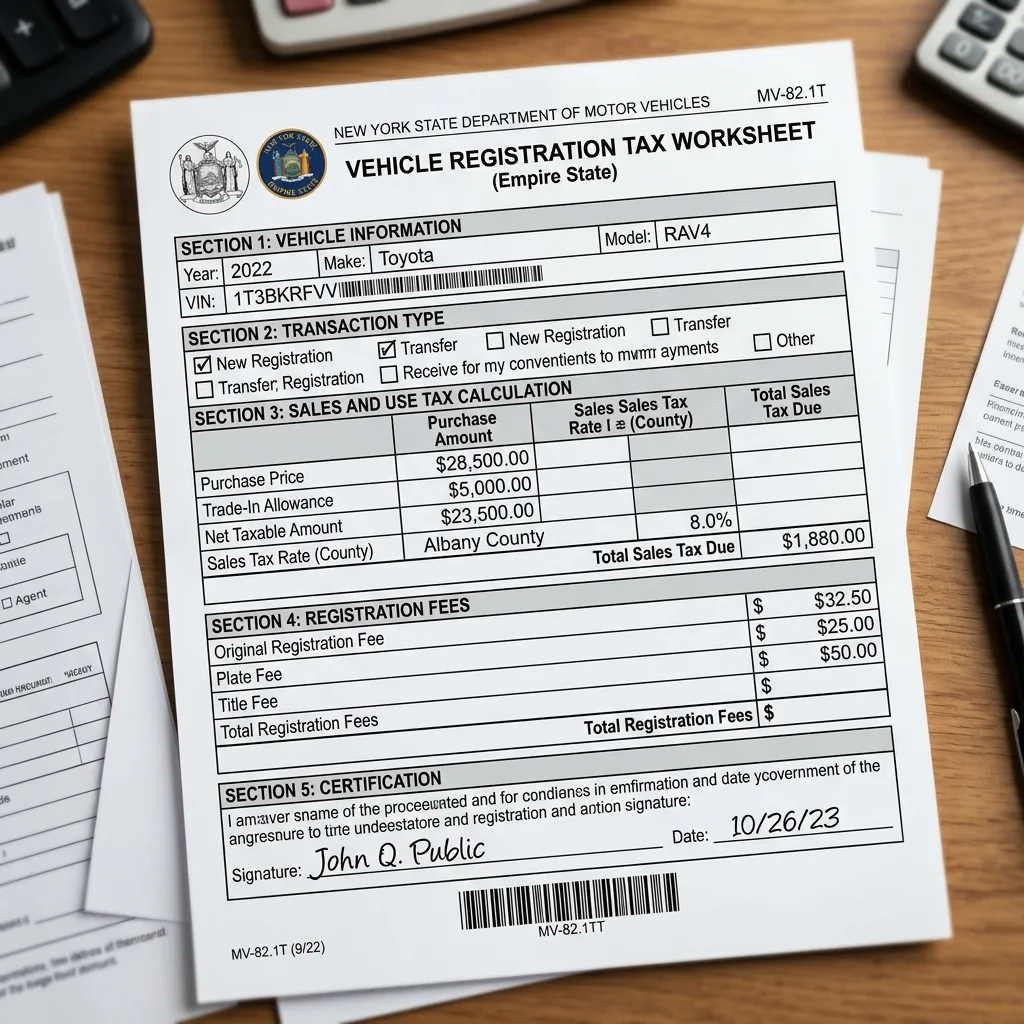
New York vehicle tax is not a single charge. It is a four-layer system split across state, county, city, and transportation district rates. By the time it settles, buyers in Manhattan or any of the five boroughs are paying 8.875% of the full purchase price, with no cap and no carve-out for high-value vehicles.
Here is how the layers stack, per the New York DMV and the New York State Department of Taxation and Finance:
Outside the five boroughs, the rate drops, though never into comfortable territory. Westchester and Nassau counties hit 8.375%. Suffolk County drifts up to 8.625% in pockets. Albany sits at 8%. Buffalo (Erie County), Rochester (Monroe County), and Syracuse (Onondaga County) all stack to 8%. There is no county in New York State where the vehicle sales tax rate is competitive with the zero-tax states.
Three features of New York vehicle tax make it especially punishing:
- No cap. Unlike states that cap sales tax at the first $5,000 or $20,000 of vehicle price, New York applies the full rate to 100% of the purchase price. A $300,000 Lamborghini Urus in Manhattan generates a $26,625 tax bill. The state does not blink.
- No luxury exemption. A landscaping company’s $80,000 work truck pays the same percentage as a hedge fund manager’s weekend Ferrari.
- Trade-in credit only. You can reduce the taxable price by the dealer trade-in value, but trading in at a dealership typically costs you 10-15% compared to a private sale. The “savings” usually evaporate.
And that is just the upfront sales tax. New York layers on a $50 title fee, a $25 new plate fee, weight-based registration of $26 to $140 every two years, an annual safety and emissions inspection ($10-$37), and for NYC residents, an $80 vehicle use tax plus a $50 MCTD supplemental fee every two-year cycle.
County-by-county rate breakdown: where you live decides how much you bleed
The most expensive mistake a New York vehicle buyer makes is assuming the rate is uniform. It is not. New York has 62 counties, and the combined state-plus-local-plus-district rate varies from roughly 7% to 8.875%. On a $65,000 SUV, that spread is the difference between a $4,550 tax bill and a $5,769 tax bill, a $1,219 gap based purely on geography.
Here is what New York vehicle tax looks like in the metropolitan and suburban counties where most readers of this article live:
And here is how the broader upstate map breaks down for buyers in the Hudson Valley, Capital Region, Finger Lakes, North Country, and Western New York:
The geography trap: A buyer in Saratoga County pays 7%; a buyer in Manhattan pays 8.875%. On a $100,000 vehicle, that is $1,875 of additional tax for having a Manhattan zip code. You cannot legally register your Manhattan-garaged vehicle in Saratoga unless you actually live there. The state cross-references registrations against your driver’s license address, your insurance policy, and your E-ZPass billing address.
The real five-year cost: what New York actually takes from you
Sticker shock at the dealership is one thing. The five-year cumulative cost is what really stings. New York vehicle tax is not a one-time hit. Once you swallow the upfront sales tax, the state continues to charge you every two years for registration, every year for inspection, and for NYC residents, every weekday for the privilege of driving the car you already paid tax on.
Here is what the full five-year cost looks like for five typical New York vehicles, compared head-to-head with a Montana LLC registration through Zero Tax Tags. We are using NYC’s 8.875% rate to show the worst-case impact, but every county above 7% follows the same pattern.
Read those right-hand numbers slowly. On a Class A motorcoach, the difference is $14,004, enough to fund an entire travel season of campground fees and fuel. On a luxury SUV, you are walking away with nearly $7,000 that would otherwise have funded the New York State general fund and the MTA. Those NY totals also exclude congestion pricing, the NYC vehicle use tax, and inspection penalties, so the real New York number runs higher.
The New York vehicle tax traps nobody warns you about
The 8.875% headline rate is the bait. The traps are what catch you after you have driven off the lot. New York has built a registration regime with at least five fully loaded mousetraps, each capable of costing you thousands per year on top of the upfront bill.
Trap #1: The snowbird 184-day domicile trap
New York taxes residents on worldwide income, using a 184-day rule to determine domicile. Spend more than half the year in New York and maintain a “permanent place of abode” in the state, and the New York State Department of Taxation and Finance treats you as a full-year resident.
What does this have to do with vehicles? Everything. New York auditors use vehicle registrations as primary evidence of domicile. If you claim Florida residency but your Range Rover is registered to a Bedford address, that registration is documented contradictory evidence, sitting in a public DMV database. Snowbirds who keep their vehicles registered in New York while claiming residency elsewhere are handing the state a confession.
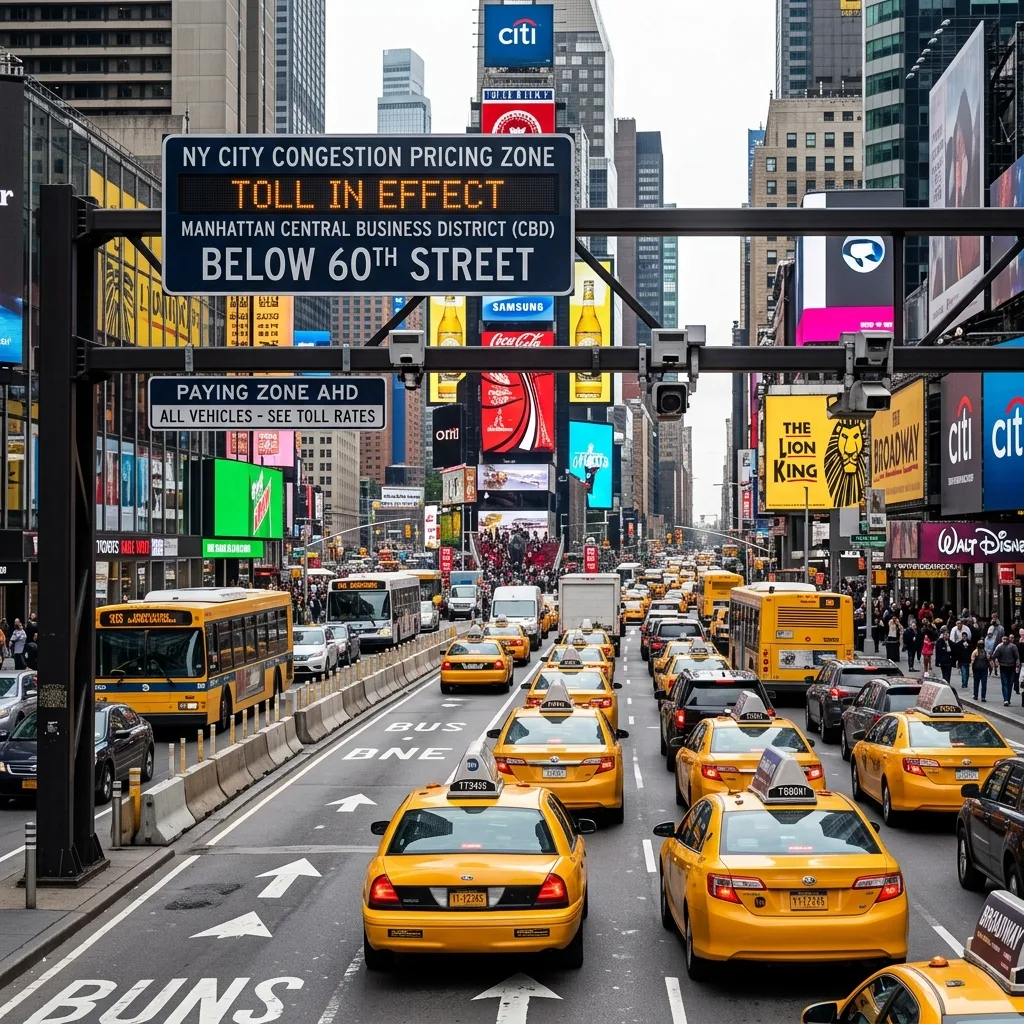
Trap #2: Congestion pricing, $9 per weekday, $2,340 per year
Effective in 2025, New York launched congestion pricing for the Manhattan Central Business District (south of 60th Street). The fee is $9 per day during peak hours (5 a.m. to 9 p.m. weekdays). For a Brooklyn or Queens commuter making five weekday trips into Manhattan, that is roughly $2,340 per year on top of the sales tax, registration, and insurance you are already paying.
Trap #3: Annual inspection with per-day late penalty
New York requires every registered vehicle to pass an annual safety and emissions inspection. The inspection itself costs $10-$37 depending on county and vehicle type. Miss the deadline and you cannot legally drive. Get pulled over with an expired sticker and you face a fine plus a mandatory court appearance in some boroughs. Small compared to the sales tax, but it never ends.
Trap #4: Insurance lapse penalties, $8 to $12 per day
New York fines you per day for any insurance lapse on a registered vehicle. The schedule: $8/day for days 1-30, $10/day for days 31-60, $12/day for days 61-90, capped at $900 for a 90-day lapse. Forget to update a credit card on auto-pay during a vacation, and you can come home to a $250 fine.
Trap #5: The 30-day new resident rule
Move to New York from another state and you have 30 days from establishing residency to register your vehicle. That registration triggers the full sales tax, even if you already paid sales tax in your previous state. New York credits tax paid elsewhere, but only up to New York’s rate. If you paid 6% in Florida and you move to NYC, you owe the 2.875% difference on the vehicle’s current value. On a $100,000 vehicle, that is a surprise $2,875 bill the day you change your driver’s license.
The cumulative trap math: A Manhattan resident with one $80,000 SUV pays roughly $7,100 in upfront sales tax, plus $2,340/year in congestion pricing, plus $880 in five-year fees and inspections. That is $21,680 over five years on a single vehicle, before insurance, parking, and the inevitable camera ticket from a school zone you did not see.

Who gets hit hardest: the profiles New York punishes most
New York vehicle tax is a flat percentage, so the dollar pain concentrates at the top end. Five buyer profiles feel it most.
Profile 1: The luxury and exotic buyer
The Manhattan attorney buying a $200,000 Bentley Continental GT pays $17,750 in NYC sales tax. The Brooklyn Heights tech founder buying a $145,000 Tesla Model S Plaid pays $12,869. None of these vehicles get a luxury cap, and the state does not distinguish between a Bentley and a work truck. The percentage is the percentage.
Profile 2: The Manhattan and outer-borough commuter
The driver who lives in Park Slope or Forest Hills and commutes to Midtown is paying 8.875% up front, $130 every two years in NYC-specific use tax and MCTD supplemental fees, and $2,340 per year in congestion pricing. Driving into Manhattan is now a compounding expense that never stops.
Profile 3: The snowbird
The Westchester or Long Island retiree who spends six months in Florida faces an impossible choice: keep the New York registration and hand auditors contradictory evidence, or re-register in a second-home state with its own titling complications. A Montana LLC sidesteps both problems, decoupling vehicle registration from the domicile question entirely.
Profile 4: The RV and motorcoach owner
The tristate-area RV owner who parks a $200,000 Newmar Dutch Star in a Hudson Valley storage facility pays $17,750 in sales tax for a vehicle on the road maybe 60 days a year. RVs are the worst-case New York scenario: enormous purchase price, low utilization, and a state that does not care how rarely you drive it.
Profile 5: The frequent upgrader
The collector or enthusiast who trades cars every two to three years pays New York sales tax over and over. Even with full trade-in credit, cumulative New York vehicle tax across three vehicle swaps in six years easily tops $20,000. A Montana LLC lets you rotate vehicles through the LLC without triggering New York’s tax each time.
Three real-world case studies from across the Empire State
Case study 1: David Chen, the Manhattan Porsche buyer
Here is what the Montana path saves David. His $164,950 Panamera Turbo S triggered a $14,644.06 NYC sales tax bill. Add $880 in five-year registration and inspection fees, plus a conservative $2,000 in occasional congestion pricing for weekend CBD drives, and David’s five-year “vehicle infrastructure” cost in New York is roughly $17,524.
Through a Montana LLC: $0 sales tax, $1,724 Year-1 service-and-LLC fee (the over-$150,000 luxury tier), and $368 per year for four more years. Total five-year cost: $3,196. Net savings: $14,328. Same Panamera, same FDR Drive, same insurance carrier. Just different plates.
Case study 2: Margaret O’Sullivan, the Westchester snowbird caught by 184 days
Margaret, 67, retired from a Bedford-based marketing firm in 2022. She bought a townhome in Naples, Florida in 2023, intending to spend winters south and summers in Westchester. She filed Florida residency paperwork, got a Florida driver’s license, and started filing as a Florida resident on her federal taxes.
What she did not do: change the registration on her 2022 Lexus RX or her husband’s 2023 Toyota Tundra. Both stayed registered to the Bedford address “for the insurance discount” and “because we drive them in the summer.”
In 2025, New York opened a residency audit. The auditor’s clearest evidence: two New York-registered vehicles at the Bedford address, plus 187 documented nights at the home. The state assessed her as a New York resident and demanded $43,000 in back taxes and penalties on retirement income she had thought was safely Florida-sourced. Montana-plated vehicles would not have solved the day-count problem, but they would have removed one of the auditor’s cleanest anchors.
Case study 3: Tony Marchetti, the Long Island car collector
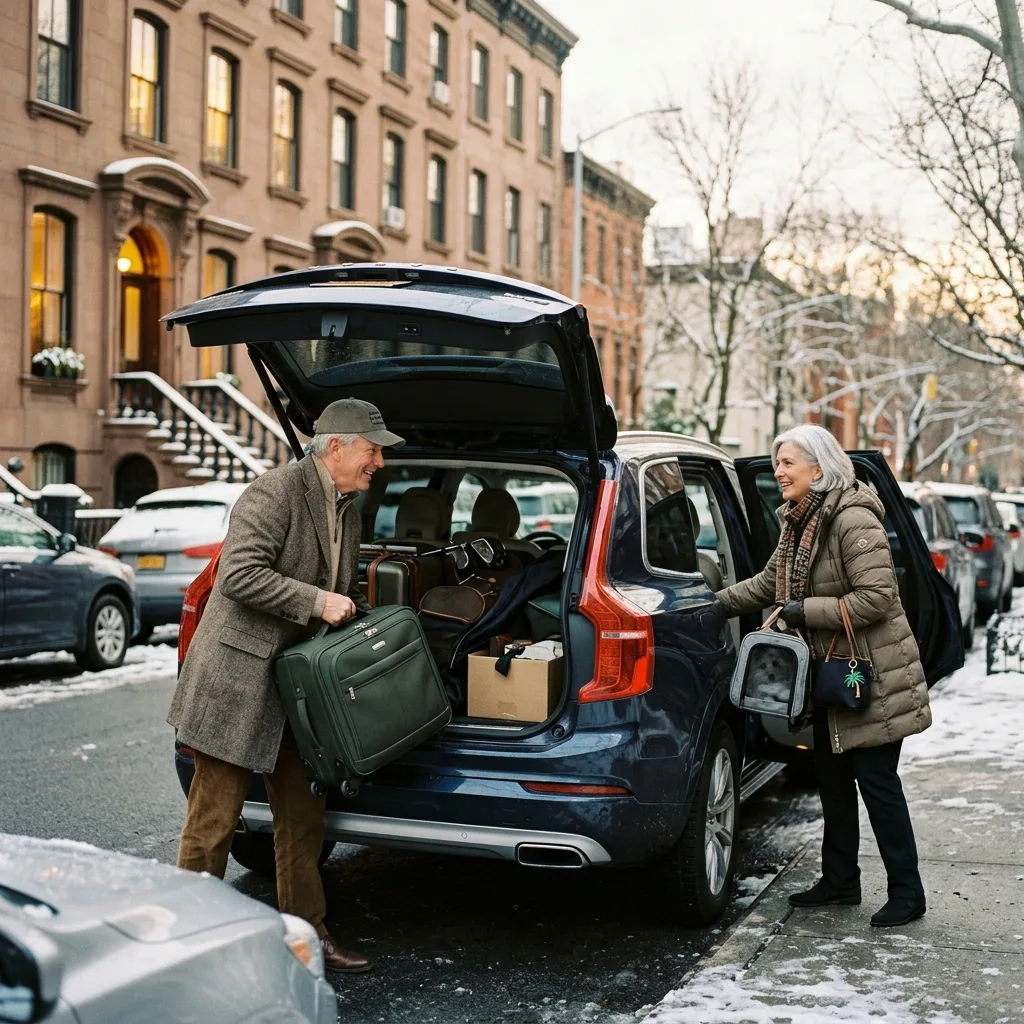
Tony, 58, runs a successful HVAC business out of Westbury. Over fifteen years he assembled a small collection: a 1988 Porsche 911 Carrera ($95,000 at purchase), a 2018 Mercedes-AMG GT C ($165,000 at purchase), and a 2024 Ford F-150 Raptor R ($110,000) for daily duty. All three are registered in Nassau County at 8.625%.
His total upfront New York vehicle sales tax across the three: $30,288. Add five-year registration and inspection, and Tony has paid roughly $33,000 in New York vehicle costs before pouring a gallon of gas. Every time he sells one and rotates in another, he triggers another full sales tax hit.
Tony came to Zero Tax Tags in early 2026. We formed a single Montana LLC, transferred all three vehicles into it, and registered them in Montana. His annual ongoing cost across all three vehicles dropped to roughly $1,104 per year, and his next vehicle rotation generates zero New York sales tax. Projected ten-year savings, accounting for two anticipated swaps: $48,000 to $56,000.
The Montana solution: how New Yorkers are legally escaping
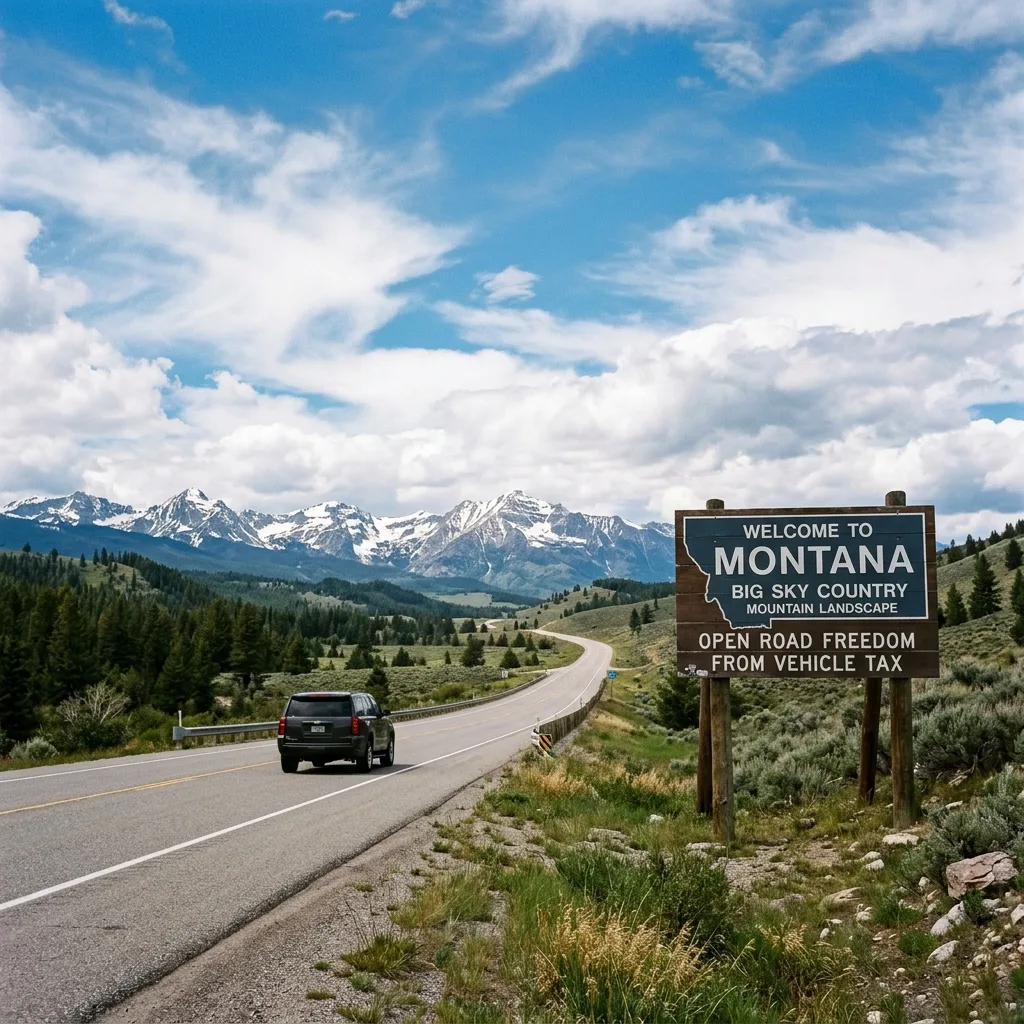
The Montana LLC is not a loophole. It sits at the intersection of three settled legal principles: Montana has no sales tax of any kind; a Montana LLC is a Montana-domiciled legal entity under Montana law; and all 50 states recognize vehicle registrations owned by out-of-state corporate entities under longstanding interstate-commerce reciprocity.
You engage a Montana registered agent (Zero Tax Tags) to form an LLC in your name as sole member. The LLC buys or receives title to your vehicle and registers it with the Montana Motor Vehicle Division. Montana issues plates and title. Because the LLC is the registered owner, your personal New York domicile does not trigger New York sales tax on the purchase. Montana has no sales tax to owe.
What Montana offers that New York does not:
• 0% state sales tax on vehicle purchases
• 0% local sales tax (no county or city add-ons)
• 0% MCTD or any equivalent surcharge
• 0% annual personal property tax on LLC-owned vehicles
• 0% emissions inspection requirement
• 0% safety inspection requirement
• Permanent plates available for many vehicle classes (motorcycles, ATVs, trailers, boats)
• Anonymous LLC registration available — your name is not in the public record
You drive the vehicle wherever you want, including back to New York, including to your Brooklyn brownstone, including across the GW Bridge every weekday. Major carriers (Chubb, Progressive, Geico, State Farm, USAA) routinely write policies on Montana-LLC-titled vehicles for tristate-area clients. You pay no New York sales tax, no property tax, no inspection fee, and no annual New York registration renewal.
Ongoing compliance: an annual Montana LLC filing ($20, Zero Tax Tags handles it), annual registration renewal (we handle that too), and standard liability coverage. That is the entire picture.

Is this legal? The honest, lawyer-approved answer
Yes, when it is structured correctly. Here is the no-spin breakdown, including the parts other Montana-LLC promoters tend to skip.
Montana law expressly permits non-resident LLC ownership. The U.S. Constitution’s Commerce Clause, as interpreted in cases including Quill Corp. v. North Dakota, prevents states from forbidding out-of-state corporate vehicle ownership. Every state, including New York, recognizes vehicles registered to out-of-state LLCs for insurance, traffic enforcement, and ordinary use.
California has tried to argue that vehicles primarily garaged in-state trigger local use tax. Those cases almost always fail unless the buyer ignored LLC formalities, commingled personal and LLC funds, or listed a personal address on insurance. New York has not mounted a sustained challenge to properly structured Montana LLC ownership for individual residents.
The structure requires respecting LLC formalities. The LLC is the named buyer on the bill of sale and the named insured on the policy. Funds for the purchase flow through the LLC, or are documented as a member capital contribution. Zero Tax Tags handles all of it.
What this is not: This is not tax fraud. This is not “evasion.” This is the legitimate use of a Montana-domiciled corporate entity to own a depreciating asset. Tens of thousands of Americans do this. Major insurance carriers underwrite it routinely. Major dealerships close on it routinely. Federal courts have upheld it. The content in this article is general informational content, not legal counsel, but the structure is among the most well-documented, longest-running, and most defensible asset-titling arrangements in American consumer finance.
Who benefits most from a Montana LLC
For these seven New York vehicle owner profiles, the Montana LLC is one of the highest-ROI tax moves available:
- The luxury vehicle buyer ($75,000 and up). Anyone buying above $75,000 saves more on sales tax alone than the entire Year-1 Zero Tax Tags fee. Above $150,000, savings frequently run $10,000 to $30,000+ on a single vehicle.
- The exotic and supercar collector. When your daily question is “which one do I drive today,” your sales-tax exposure compounds with every addition. The LLC structure scales across a portfolio without triggering tax on each rotation.
- The RV, motorcoach, and Class A diesel pusher owner. Six-figure RVs with low annual utilization are the textbook use case. The savings regularly fund an entire travel season.
- The boat, yacht, and personal watercraft owner. Montana applies the same zero-sales-tax rule to boats, and tristate-area marinas regularly host Montana-LLC-titled vessels.
- The motorcycle, ATV, UTV, and trailer owner. Montana issues permanent plates for many of these classes, meaning your one-time $749 fee ends the registration cycle forever.
- The bicoastal or part-time New York resident. If you split time between New York and anywhere else, Montana LLC ownership decouples your vehicle registration from your domicile question entirely.
- The frequent upgrader. Buyers who rotate vehicles every 24-36 months benefit dramatically from never paying sales tax on the rotation itself.

Our process: how Zero Tax Tags handles everything for you
Zero Tax Tags is a full-service Montana LLC formation and registration service. We handle paperwork, plates, titles, renewals, mail forwarding, and the inevitable questions from your insurance carrier. You do not need to fly to Helena or learn the Montana Motor Vehicle Division’s intake forms.
Here is what you pay:
Your timeline, day by day:
| Day 1: | Submit your MCO and supporting paperwork through our secure portal. We review for completeness and file your Montana LLC the same day. |
| Days 1–2: | Montana LLC formation complete — same business day in most cases, second business day at the latest. |
| Days 2–4: | Title transferred into the LLC name at the Montana county treasurer. |
| Days 4–7: | Permanent Montana plates shipped directly to your door within 3–5 business days of title completion. |
Who This Is Built For
The Montana LLC is built for New York vehicle owners who are done paying some of the highest combined vehicle taxes in the country. Sales tax rates topping 8.875% in New York City, mandatory inspections, and MTA surcharges make New York one of the most expensive states in the country to own a vehicle. The savings are most powerful for the following profiles.
Anyone purchasing a vehicle worth $25,000 or more. At $50,000, New York City buyers pay $4,437 in combined sales tax at closing. At $100,000, that becomes $8,875. Montana eliminates it entirely.
Manhattan, Brooklyn, and Westchester professionals. Finance executives, attorneys, surgeons, and tech professionals who buy $80,000 to $200,000 vehicles are handing New York City between $7,100 and $17,750 in sales tax per purchase. Our clients in these demographics often recover the entire ZTT setup cost within the first year.
RV owners who travel the Northeast. A $200,000 motorhome generates over $17,000 in New York sales tax. Many RV owners travel through New York only seasonally, making Montana registration especially well-suited.
Business owners and fleet operators. One LLC holds every vehicle in your operation. Additional vehicles on the same LLC pay only the service portion of the setup fee — not a new LLC cost each time.
Collectors and high-net-worth households with multiple vehicles. New York charges full sales tax on every vehicle purchase with no household cap. A six-car collection at $90,000 per vehicle generates $48,000 in New York sales tax across those purchases. Montana eliminates every one of those bills.
For vehicles under $20,000, call us before assuming the numbers don’t work. We run the calculation free. For anyone buying above that threshold, they almost always do.
Frequently asked questions from New York vehicle owners
1. Will New York audit my Montana plates?
Not for the registration itself. New York DMV does not audit Montana-LLC-titled vehicles, because Montana registration is fully reciprocal under interstate commerce law. The thing New York might audit is your personal income tax residency (see Trap #1 above). The Montana LLC actually helps here, because it removes one piece of contradictory evidence from that picture.
2. Do I need to visit Montana?
No. We handle everything from our Montana offices. The plates and title arrive at your home. You never need to visit the state.
3. What about congestion pricing? Does a Montana plate exempt me?
No. Congestion pricing applies to any vehicle entering the Manhattan CBD during charged hours, regardless of where it is registered. The Montana LLC does not exempt you from $9/day. What it does: keep the LLC on the billing record, and eliminate the New York sales tax, MCTD use tax, and NYC supplemental fee on the vehicle.
4. Can I insure a Montana-plated vehicle while living in New York?
Yes, and almost every major carrier writes these policies. Chubb, Progressive, Geico, State Farm, USAA, and Liberty Mutual all underwrite Montana-LLC-titled vehicles garaged in New York. The premium reflects your actual garaging address, but the policy names the LLC as insured with you as a permitted driver.
5. What if I sell the vehicle later?
The LLC executes the bill of sale to the new buyer, who titles the vehicle in their own name and state. The LLC retains any sale proceeds, which you can then distribute to yourself as a member. Selling does not claw back the original savings; that money is permanently kept.
6. What happens if I get pulled over in New York with Montana plates?
Nothing unusual. New York police pull over Montana-plated vehicles every day. As long as your registration is current, your insurance is active, and your driver’s license is valid, the stop proceeds exactly as it would for a New York-plated vehicle. Officers occasionally ask why you have out-of-state plates; “the vehicle is owned by a Montana LLC” is a complete and sufficient answer.
7. Does this work if I lease the vehicle?
Generally not. Most leasing companies will not lease a vehicle to an out-of-state LLC for personal use. The Montana LLC structure works for vehicles you purchase outright, whether cash or financed.
8. How long does the whole thing take from start to plates in hand?
Two to three weeks from intake to plates in your mailbox is typical. LLC formation takes 3-5 business days in Montana. EIN issuance is same-day. Title transfer or new purchase paperwork takes 5-10 business days depending on whether you are dealing with a dealership or a private seller. Montana MVD registration takes another 5-10 business days after that.
See how Montana LLC registration helps owners in other high-tax states:
- Arizona VLT: How to Stop Paying $1,000 Every Single Year
- Virginia Car Tax: Stop Paying the Highest Vehicle Tax in America
- Florida Vehicle Tax: The 6% Tax With No Cap
Ready to stop overpaying New York vehicle tax?
New York vehicle owners have saved millions with Montana LLC registration. The 8.875% rate is a choice, not a requirement. You’re next.