25 min read
On this page
- + The Inspection Bay Nightmare
- + What “Dirt Legal” Actually Means
- + Why Montana Is the Builder’s State
- + The Inspection Wall: State by State
- + Tube Chassis, Kit Cars, and Assigned VINs
- + Diesel Deletes & Engine Swap Freedom
- + Real-World Case Studies
- + The Montana LLC Structure
- + The Economics: What It Actually Costs
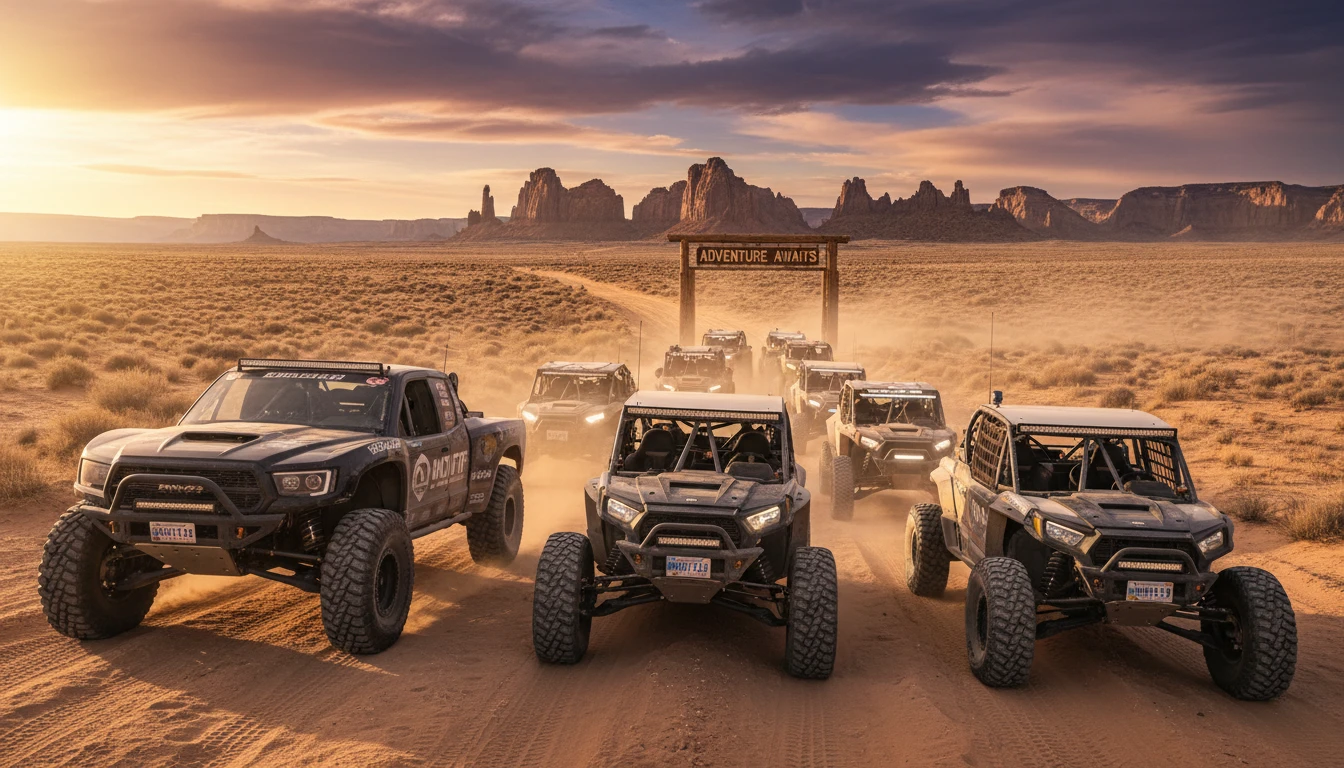
- + The UTV and Side-by-Side Revolution
- + The Race Team Advantage
- + The ZeroTaxTags Process
- + FAQs
- + Get Your Build Legal
The Inspection Bay Nightmare
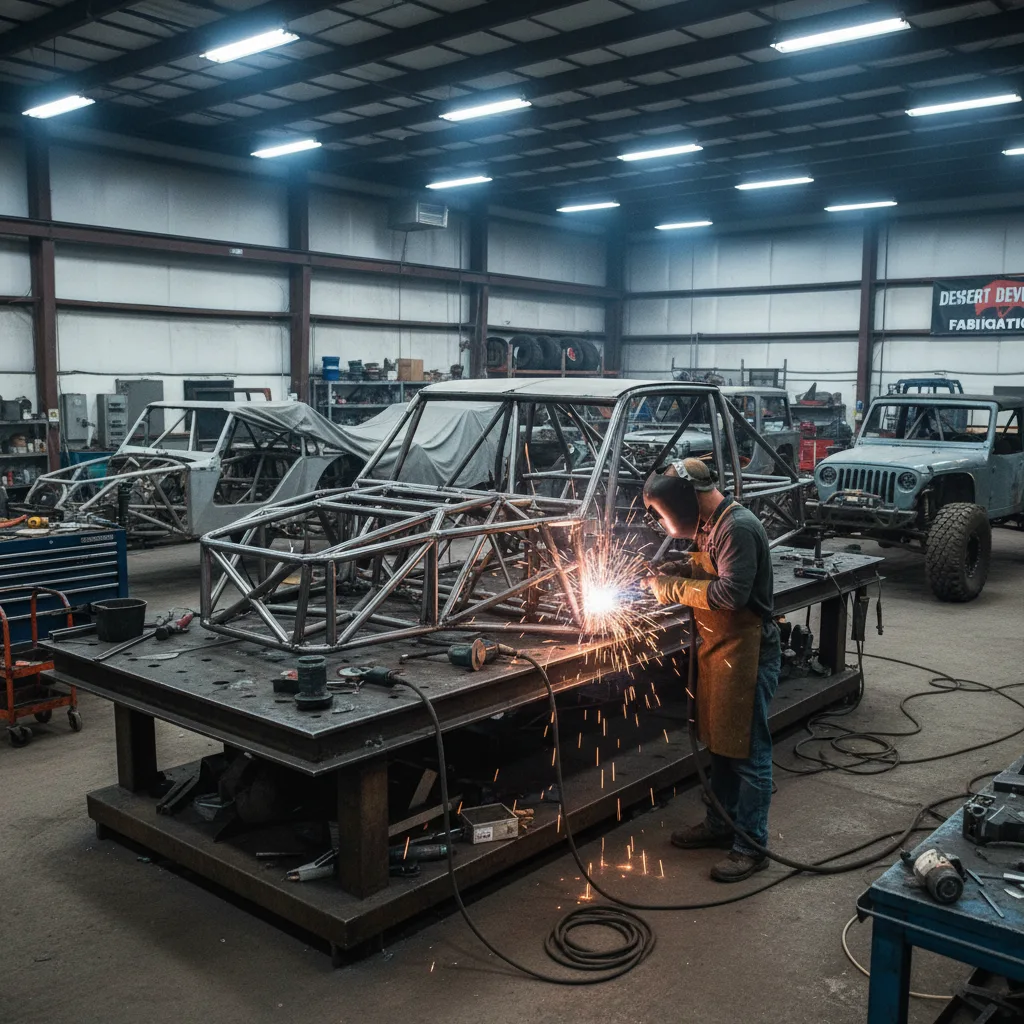
You spent eighteen months on this build. Dana 60s front and rear. Atlas transfer case. 40-inch Toyo Open Country MTs on beadlock wheels. 6-inch long arm. ARB lockers. LS swap. 510 rear-wheel horsepower. Then you pull into the state inspection bay.
The guy in the polo shirt with the clipboard hasn’t turned a wrench since 1994. He measures your bumper at 28 inches off the ground. Your state caps it at 26. Fail. Your tires stick out half an inch past the fenders. Fail. The OBDII scanner can’t pull continuous data because your tune cleared the readiness monitors. Fail. The check engine light flickers on cold starts. Fail. He looks at the harness bar where the rear seat used to be and asks where the airbags went. Fail.
You drove a six-figure build to that bay. You’re driving home with a yellow rejection sticker and a list of things to undo. Every modification that made the truck capable just made it illegal.
This is the inspection wall. It’s the wall every serious builder hits in 30+ states. And it’s the wall Montana doesn’t have.
Montana has no annual inspections. No emissions testing. No equipment audits. No bumper-height measurement. No “is the airbag light on” checklist. The state runs a one-time VIN verification when the vehicle enters its system, and that’s it. Title, plate, registration, done. Welcome to dirt legal.
This guide is for builders who are tired of taking off the bumper to pass inspection and bolting it back on the next day — the trophy truck guys, rock crawlers, overlanders, diesel performance crowd, kit-car builders, UTV owners, and racers who need transit registration to get from the trailer to the start line. Montana solves all of it through one structure: the Montana LLC.
What “Dirt Legal” Actually Means
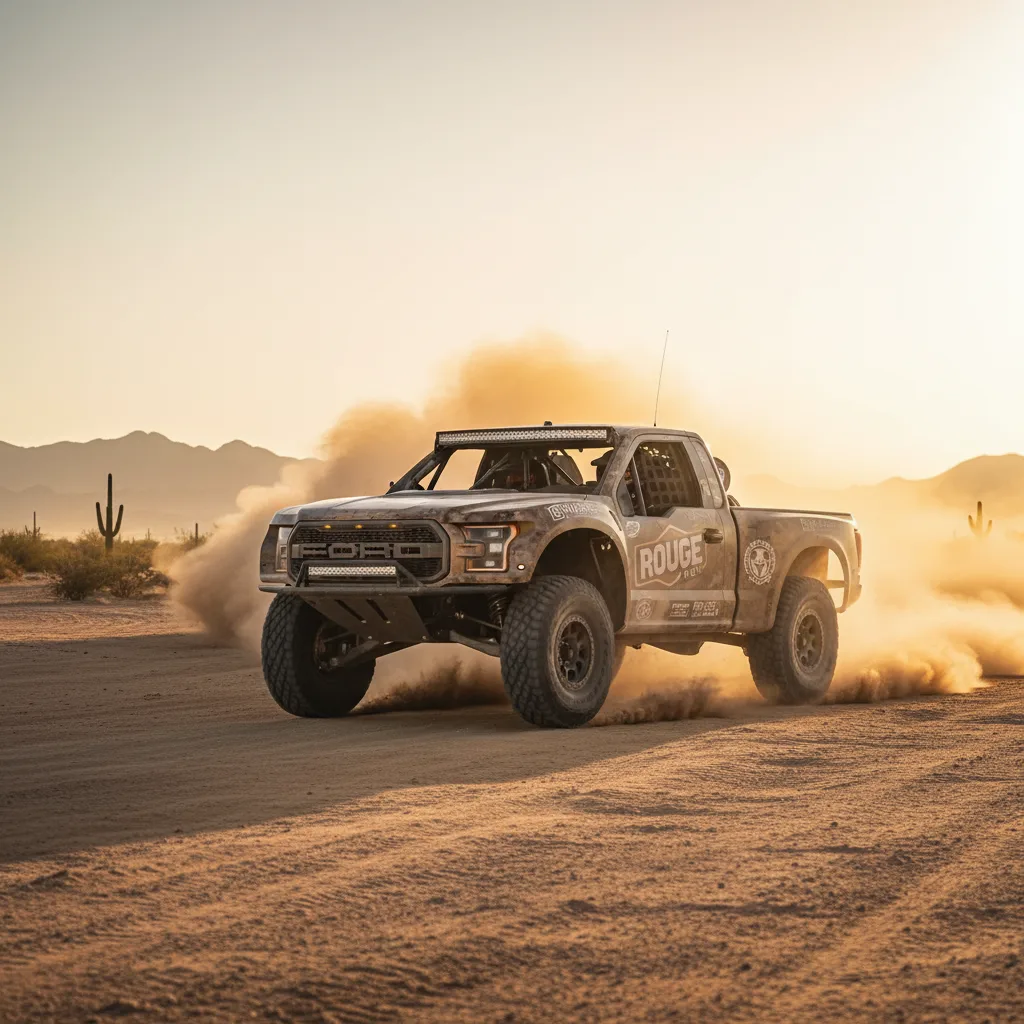
“Dirt legal” is shop slang for a build that wears a real license plate, holds a real registration, and is recognized as a street-legal motor vehicle by every state. Not an OHV permit. Not a green sticker. Not a temporary tag. A plate.
It matters more than people think until they need it. A green sticker UTV in California is OHV land only — paved county roads on the way to the trailhead are a moving violation. A trophy truck without registration cannot transit between Baja support stages on public roads. A modified Wrangler in Pennsylvania becomes contraband the day the inspection sticker expires.
Dirt legal means your build is treated like any other car: drive it, park it, sell it, take it to the trailhead under its own power. Without a plate, BLM connectors and forest service road transitions are off-limits. With one, you run from your driveway to the dirt without a trailer. The route to a real plate that works on a real build is Montana.
Why Montana Is the Builder’s State
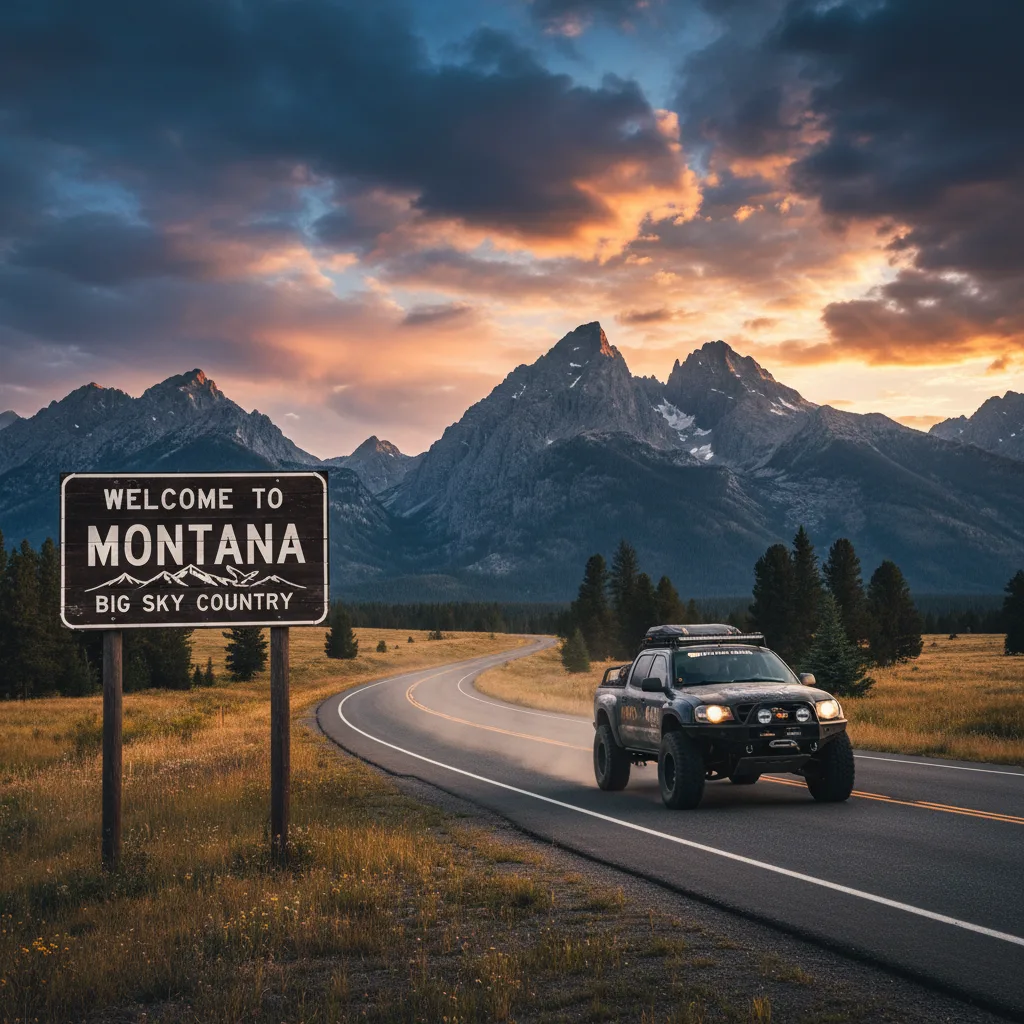
Montana built its motor vehicle laws around a population that drives a 1979 Ford F-250 with 200,000 miles to the hardware store. The state never adopted the inspection-and-emissions framework that California pioneered in the 1970s and that the EPA ratified in dozens of metropolitan non-attainment zones. Montana has no county-level emissions tests. No rolling road dynos. No tailpipe sniffers. No safety inspections. No equipment checks.
What Montana has instead is a one-time VIN verification for a vehicle entering the state’s title system. A law enforcement officer or authorized inspector physically reads the VIN off the dash and the door jamb, confirms it matches the title paperwork, and signs the form. That’s the inspection. That’s the entire thing. There is no second visit, no follow-up, no annual renewal of any inspection process.
Then there’s the sales tax: 0%. On a $100,000 build, that’s $6,000 to $10,000 saved on the front end depending on what your home state would have charged. On a $250,000 trophy truck, it’s $15,000 to $25,000 in sales tax that simply doesn’t get paid. Most high-tax states sit between 6% and 10.25% combined state and local. Montana is zero.
Then there’s permanent registration. Montana law allows passenger cars and light trucks 11 years and older to receive permanent plates: one fee, one filing, plates that never expire. ATVs, UTVs, motorcycles, trailers, boats, and fifth-wheels get permanent registration at any age, including new units. No annual renewal. No yearly registration fee. No state cashing your check every January.
And then there’s the part most builders care about most: Montana will assign a VIN to your custom build. If you welded a tube chassis from scratch and there is no factory VIN to read, Montana issues one through Form MV10B. Try that in California. You’ll spend three years and ten thousand dollars and still get denied.
Compare that to California, where every aftermarket intake, every cam, every header, every chip, and every supercharger requires an Executive Order (EO) number from CARB before it’s legal on a registered vehicle. An LS swap into a 1972 Bronco requires a BAR referee inspection, a smog certification matched to the donor engine year, and a CARB-approved harness configuration. Most builders in California fail on a single bracket. Montana doesn’t ask. Montana doesn’t care. Montana mails you plates.
The Inspection Wall: State by State
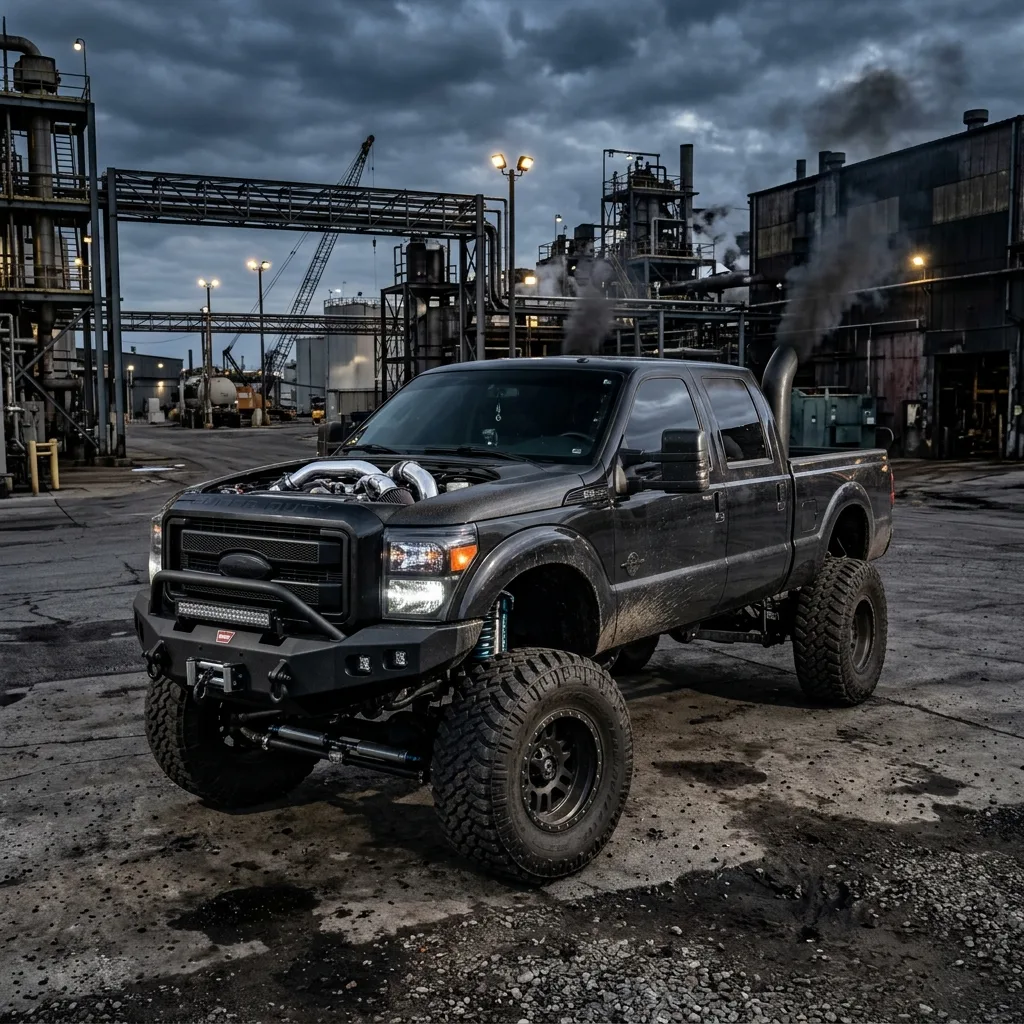
Every state writes its own inspection rules, and most of them were written by legislators who think a Tundra is a “lifted truck.” Here’s what your build is actually up against.
California
The strictest jurisdiction in the country for modified vehicles. CARB (California Air Resources Board) requires an Executive Order (EO) certificate for every aftermarket part touching the engine, exhaust, or fuel system. No EO, no legal install. An engine swap requires a BAR (Bureau of Automotive Repair) referee inspection. The donor engine has to come from the same model year or newer, must retain all factory emissions equipment, and the entire harness has to match. A diesel delete is a felony-level violation under California law.
Texas
Texas eliminated periodic safety inspections statewide on January 1, 2025 (HB 3297), which sounds like good news for builders. It isn’t. Emissions testing is still required in 17 counties spanning the Houston, Dallas–Fort Worth, Austin, and El Paso metro areas. If you live in Harris County, Tarrant County, or Travis County, your modified diesel still needs to pull a clean OBDII reading every two years. A deleted DPF on an LMM Duramax in Houston is a registration denial.
Pennsylvania
Annual safety inspection plus emissions in 25 counties. The state caps front bumper height at 26 inches off the ground for vehicles under 4,500 pounds GVWR, and 28 inches for the 4,500-7,500 pound class. The fender coverage rule requires that no part of the tire’s tread extends beyond the body width. A 6-inch lift on a Wrangler with 37s pushes 27-28 inches at the bumper minimum. Fail.
Virginia
Virginia Code Title 46.2, Chapter 10 governs vehicle equipment. The state limits how much suspension lift is allowed based on GVWR, restricts tire size, regulates frame height changes, and enforces it through annual safety inspections at certified stations. Inspectors carry tape measures. They use them.
New York, New Jersey, Massachusetts, Maryland
Annual safety and emissions, strict equipment standards. Lifted and modified vehicles get extra attention from inspectors.
Montana
None of the above. One VIN check. Plates mailed to your door. Annual renewal is optional through the permanent registration program, which means your plates can outlast the vehicle.
The Custom Build Problem: Tube Chassis, Kit Cars, and Assigned VINs
Most states’ DMV systems break the moment they encounter a vehicle without a factory VIN. Their software has a 17-character VIN field and a database keyed to NHTSA-issued manufacturer codes. A scratch-built tube-chassis crawler with a custom dash and a hand-fabricated firewall has neither. The DMV agent looks at the build sheet, can’t find a manufacturer code, and tells you to come back when the vehicle has been “manufactured.” It never has been. There is no path forward.
Montana solves this through Form MV10B, the Application for Assigned VIN. The state inspects the vehicle, verifies it’s a complete and roadworthy motor vehicle, and issues a Montana-specific VIN starting with the prefix indicating an assigned/custom designation. That VIN attaches to the title forever. The vehicle is now a real vehicle in every state’s eyes.
Kit Cars: Factory Five, Superformance, Backdraft
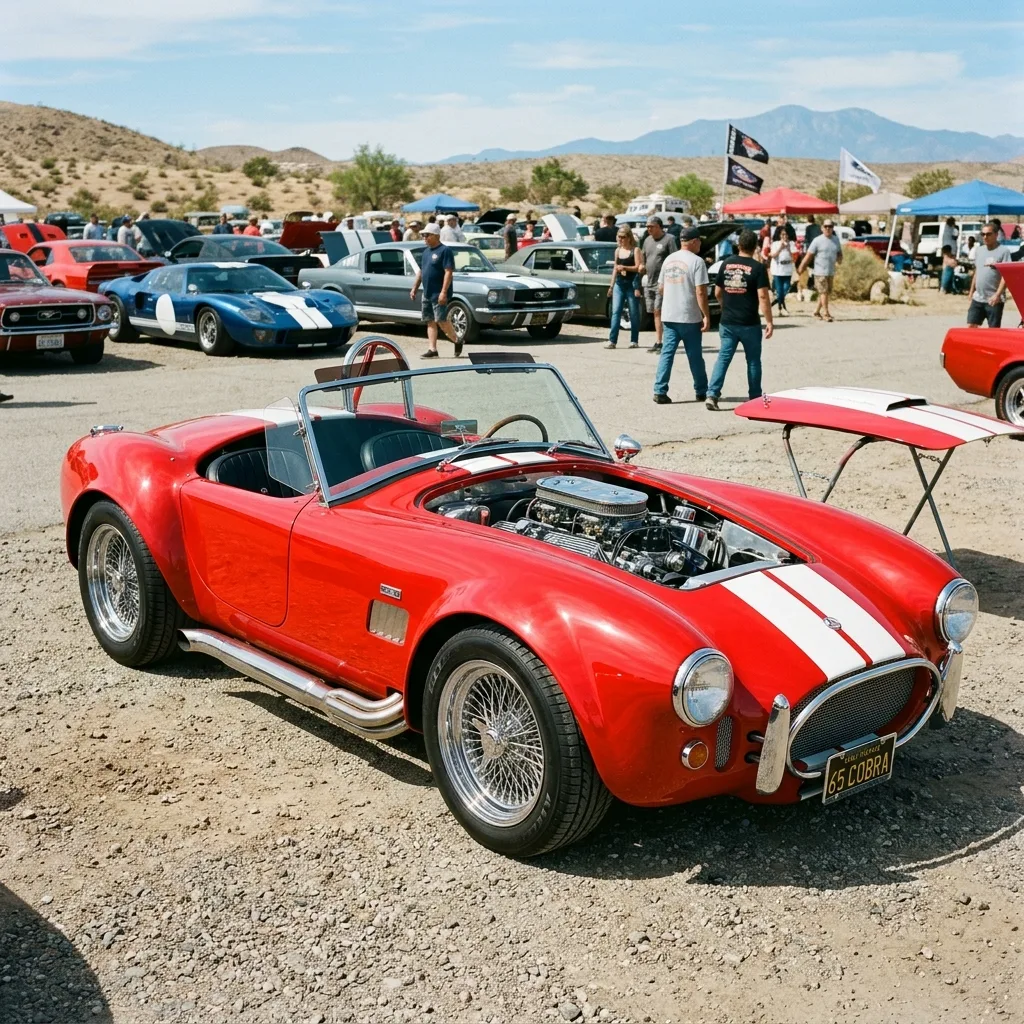
Cobra replicas are the classic case. Factory Five Mark IV, Superformance MK III, Backdraft Racing RT4 — these are sold as rolling chassis or component kits with no VIN until you finish the build. In a strict-inspection state, registering a finished kit car is a multi-year ordeal of referee inspections, smog matching to the donor engine year, and frame stamping protocols. In Montana, the path is straightforward:
- Form MV1 — Application for Title
- Form MV20 — Application for Title for Specially Constructed, Reconstructed, or Replica Vehicle
- Form MV121 — Statement of Fact for Specially Constructed Vehicle
- Level 1 Inspection — VIN verification only, no mechanical inspection
The kit comes with an MSO (Manufacturer’s Statement of Origin) for the chassis. The donor drivetrain documentation gets attached. The build receipts confirm the rest. Montana issues a title classifying it as “Specially Constructed” and plates it. A 1965 Cobra replica with an LS3 crate engine and a Tremec T56 — plated in 4 weeks. Try that in Massachusetts.
Military Vehicle Civilian Titling: HMMWV / Humvee
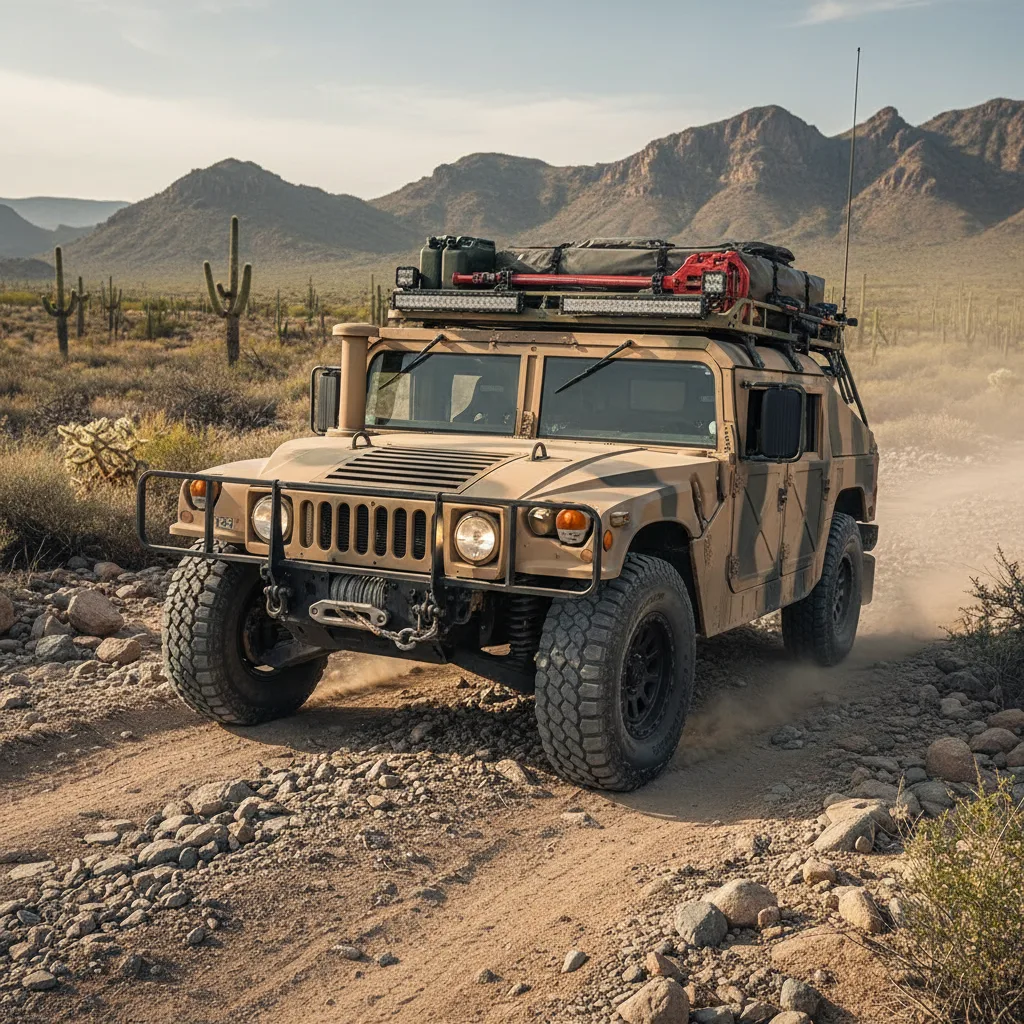
The Humvee story is the one that surprises people. The Department of Defense releases tens of thousands of demilitarized M998-series HMMWVs through GovPlanet, IronPlanet, and direct GSA auctions. They come with a SF-97 form (Certificate of Release of a Motor Vehicle from US Government). They do not come with a civilian VIN.
Several states refuse to title them at all. California, New York, Massachusetts, and a handful of others read “former military” and “no DOT compliance certificate” and stop reading. Owners end up with $20,000 trucks they can drive on their own farm and nowhere else.
Montana respects the federal demilitarization process. The SF-97 plus the MV10B assigned-VIN process plus a VIN verification produces a Montana title and a real plate. Suddenly the Humvee is a registered motor vehicle, recognized in every state under the Full Faith and Credit Clause of the U.S. Constitution. You can drive it across the country.
Sand Rails, Rock Buggies, and Tube Chassis Crawlers
If you welded the chassis yourself or had a fabricator build it, the same MV10B path applies. Sand rails, Bobcat-style rock buggies, custom long-travel pre-runners — Montana issues an assigned VIN and processes the title. The build doesn’t need to look like anything in particular. It needs to roll, steer, and stop. The state cares about the VIN inspection, not whether your dash matches a 2018 Ford F-150.
The Diesel Delete and Engine Swap Freedom
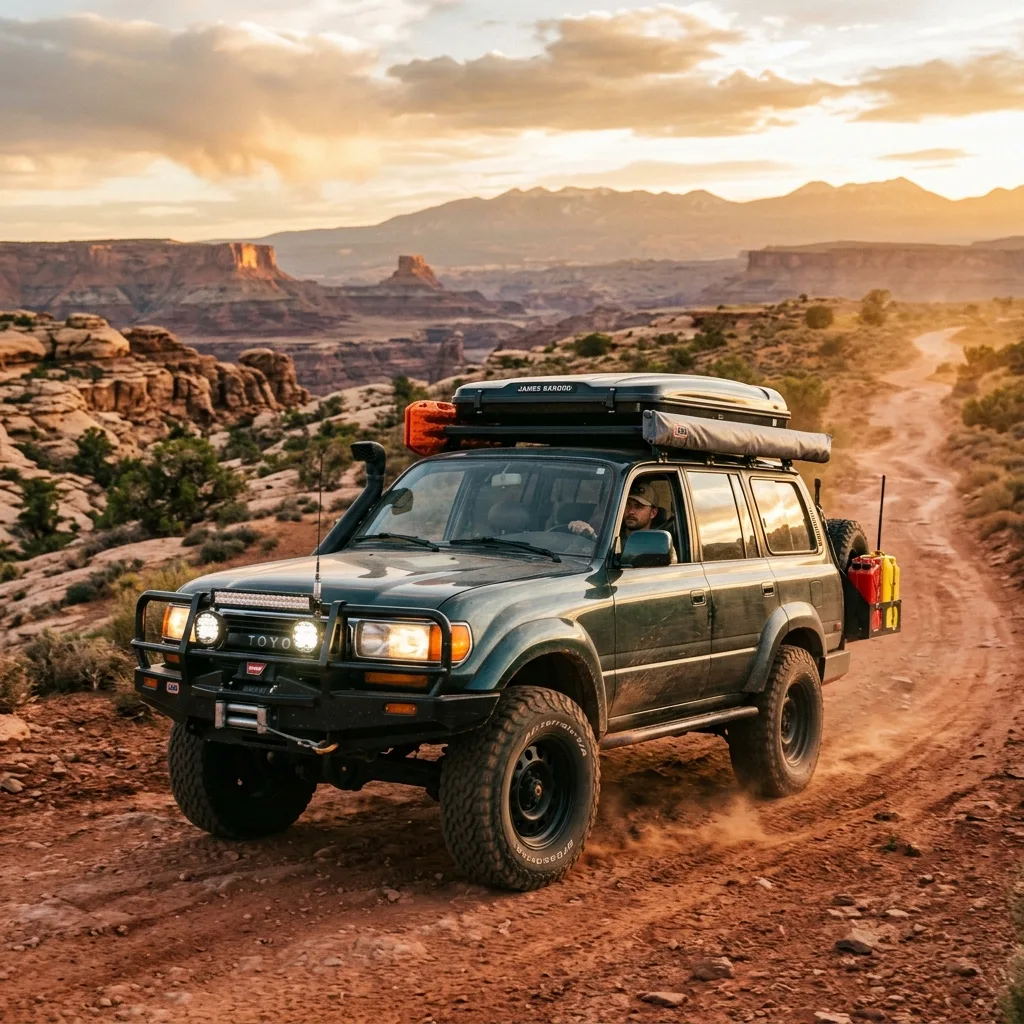
Diesel performance is its own world. Cummins-swapped Dodges. Duramax-swapped Suburbans. 7.3 Power Stroke restorations. 6.7 Power Strokes that pull 800 horsepower with a tuner and a 64.5mm turbo. The aftermarket diesel scene runs on EGR deletes, DPF deletes, DEF deletes, hot tunes, and big single turbos. None of that survives a strict-state inspection.
Montana doesn’t smog test. Montana doesn’t pull OBDII data. Montana doesn’t care what’s under the hood as long as the VIN matches the title. Your engine is your business. A Cummins swap into a 1995 Bronco gets registered as a Bronco. An LS swap into an FJ40 gets registered as an FJ40. A 12-valve into a 24-valve Ram is invisible to the registration process.
This isn’t a workaround. It’s the actual law in Montana, written into state code by a legislature that recognized the state’s population includes farmers, ranchers, contractors, hunters, and people who keep vehicles running for 30 years. The inspection-and-emissions framework that the EPA leans on most heavily simply isn’t part of Montana’s vehicle code. The Commerce Clause and Full Faith and Credit Clause of the U.S. Constitution then require every other state to recognize that Montana title and that Montana plate. The vehicle is registered. It belongs to a Montana business entity. The plate is correct.
Real-World Case Studies
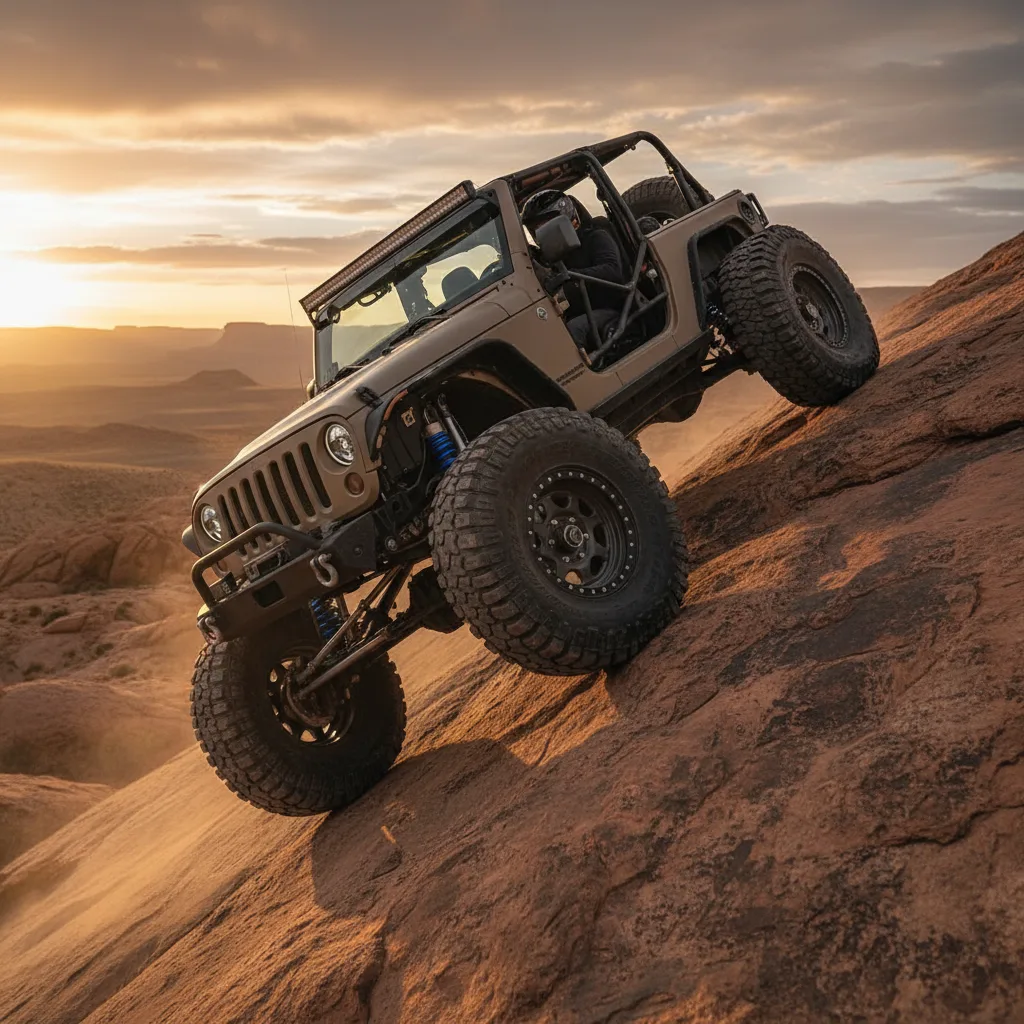
Jake — Trophy Truck Builder, San Diego, California
Jake builds Baja pre-runners. His latest is a tube-frame 2-seat trophy truck on a Mason chassis with a 6.2L LS3, 700 horsepower, 37-inch BFG KR3s, and 26 inches of rear travel. Total build cost: $185,000.
California sales tax in San Diego County is 7.75%. On $185,000, that’s $14,338 in sales tax. Then comes the registration fight: California won’t register a tube-chassis pre-runner as a passenger vehicle without a referee inspection that the truck cannot pass. The aftermarket harness, the no-airbag interior, the modified fuel cell, the engine without a CARB EO — every single element is a no-go.
Jake formed a Montana LLC, transferred the truck, and registered it in Montana. Plates arrived in 22 days. He runs it across the border to Mexico for the 1000 every November. He drives it from his shop to the trailer through public San Diego streets. The plate is real, the registration is real, and the $14,338 in sales tax stayed in his pocket. Five-year savings including registration deltas: over $25,000.
Marcus — Modified Wrangler JLU, Pittsburgh, Pennsylvania
Marcus runs a 2021 Wrangler Rubicon JLU — 4-inch lift, Method 305 wheels, 37-inch Toyo M/T-Rs, and a winch bumper at 27.5 inches. Pennsylvania caps front bumper height at 26 inches. The first year he removed the bumper to pass inspection, bolted it back on the next day. The second year the inspector rejected him anyway for frame height.
Montana LLC, Montana plate, done. He never sees an inspection bay again. Five-year cost: $899 Year 1, $120/year after that.
Sarah — Guide Service Fleet, Moab, Utah
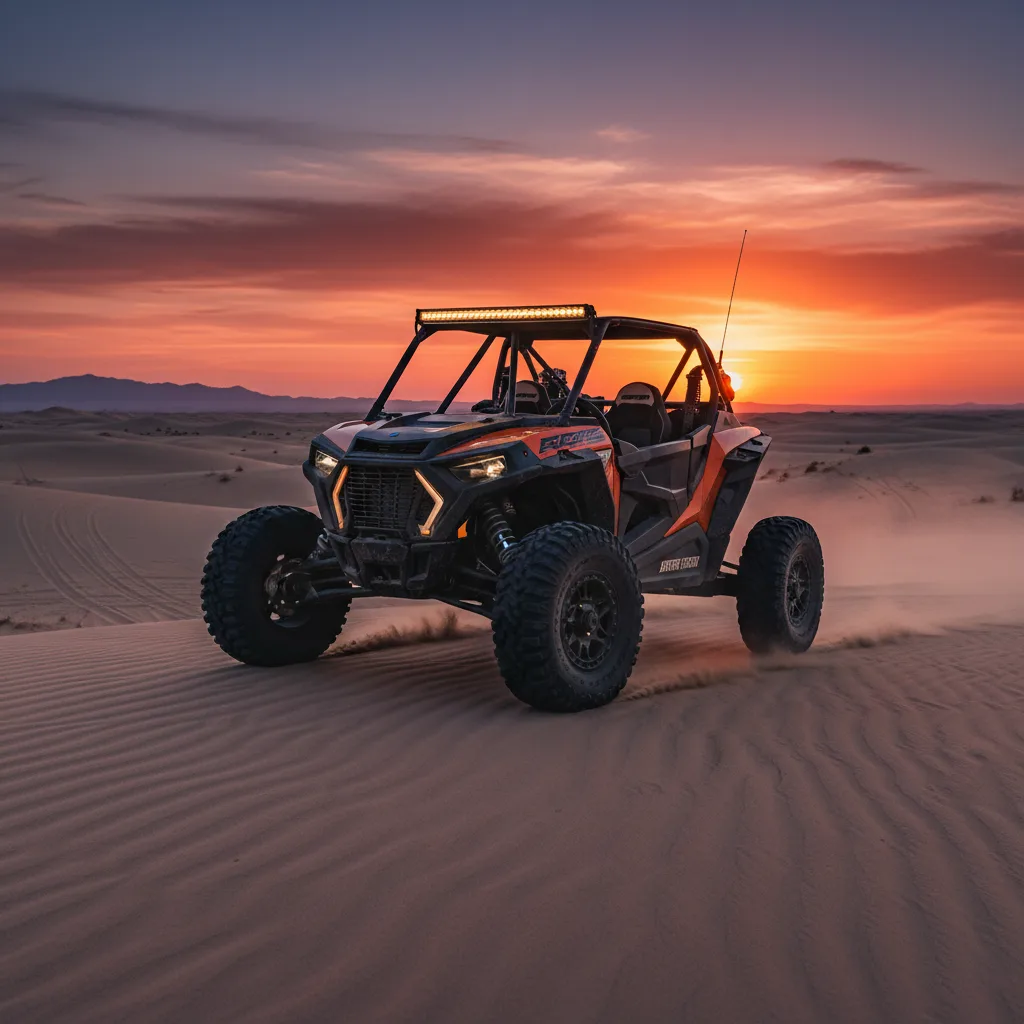
Sarah runs a guide service in Moab. Six Polaris RZR Pro XP 4 units, three Can-Am Maverick X3 Max units, two trail-prepped Tacomas, and a fleet trailer. Utah classifies street-legal UTV registration on a county basis with insurance, lights, and OHV-class restrictions. Most of her customer rides cross between BLM, county roads, and forest service roads, so the UTVs need to transit on pavement legally.
She formed one Montana LLC and registered all 12 vehicles under it. Total LLC cost: $200, one time. The UTVs all received permanent Montana plates (Montana allows permanent UTV registration on day one for any age). Her Tacomas got Montana plates too. No annual inspection downtime. No fleet emissions runs. Drivers don’t have to drop a unit at the shop because of an inspection sticker. The fleet stays on the trail.
Total Year 1 cost for 12 vehicles: $200 LLC + 12 × $549 service = $6,788. Year 2 onward: $120/year LLC maintenance, $0 per vehicle. She saves roughly $4,000 per year versus Utah county registration and inspection costs.
The Overlanding Rig — Mike, San Francisco Bay Area
Mike’s expedition build is a 1996 Toyota Land Cruiser 80-Series. 1HD-FT 4.2L turbodiesel swap (factory option in Australia, never offered in the U.S.), 4-inch OME lift, 35-inch BFG KO2s, ARB front bumper with a Warn 9.5XP winch, dual rear swing-outs, a 65-gallon long-range fuel tank, a Eezi-Awn rooftop tent, and an internal water and electrical system that runs a 50-quart fridge.
California refuses to register the truck. The 1HD-FT was never federalized for U.S. sale. There’s no CARB EO covering the engine swap. The Bureau of Automotive Repair referee program won’t sign off because the engine year doesn’t match the chassis year on a CARB-approved swap matrix. Mike’s only option in California was to keep the original gas 1FZ-FE engine sitting on a stand in the corner of his garage and drive a different vehicle.
Montana LLC, Montana plate, zero questions about CARB. He now drives the Land Cruiser to Death Valley, the Mojave Road, the White Rim Trail, and back home to the Bay Area. Federal law requires every state to recognize it.
The Kit Car Builder — Daniel, Boston, Massachusetts
Daniel built a Factory Five Mark IV Roadster (Cobra replica) over two years in his garage. 427 cubic inch Ford small-block stroker, Tremec TKO 600, 18-inch Halibrand-style wheels, side pipes, the works. Total build investment: $78,000.
Massachusetts refused to title it. The state requires a Specially Constructed Vehicle inspection that the build cannot pass. Daniel had a $78,000 garage ornament until a Cobra club member pointed him toward Montana.
Daniel followed the same path. ZeroTaxTags formed his Montana LLC, transferred the kit car, processed Form MV20 + MV1 + MV121 with the Massachusetts MSO, and Montana issued a “Specially Constructed” title and plate in 4 weeks. The Cobra now drives on Massachusetts roads under a Montana plate. The Commerce Clause settles it: the vehicle belongs to a Montana LLC, holds a Montana title, and is recognized as registered.
The Diesel Performance Truck — Tyler, Houston, Texas
Tyler runs a 2017 Ram 2500 with a 6.7 Cummins. EGR delete, DPF delete, DEF delete, S&B intake, 5-inch turbo-back exhaust, EFI Live custom tune, and a 64.5mm Borg Warner S464. The truck makes 720 rear-wheel horsepower and pulls his Lance fifth-wheel and his diesel race truck on the same trip. Texas eliminated state safety inspections in January 2025, but Harris County (Houston) is one of the 17 counties that still mandates emissions testing.
The OBDII test pulled tampering codes the first time the truck went in for renewal post-delete. Registration denied. Tyler had three options: undelete the truck (about $9,000 in parts and labor), move out of Harris County, or solve the registration problem differently.
He formed a Montana LLC and moved the Ram to Montana plates. The truck stays in his Houston driveway, never sees the Harris County emissions station again. Five-year cost through ZeroTaxTags: $1,379. Cost of unbuilding the truck: $9,000+. The math is obvious.
The Montana LLC Structure: How and Why It Works
You form a Montana Limited Liability Company. It’s a Montana business entity, registered with the Montana Secretary of State, with a real EIN from the IRS, a real registered agent in Montana, and a real Operating Agreement. The LLC is a legal “person” in the same way a corporation is. It can own property. It can own vehicles.
You transfer your vehicle to the LLC. The vehicle is titled in the name of the LLC. The LLC, as a Montana entity owning a Montana-registered vehicle, registers that vehicle in Montana and receives Montana plates.
The U.S. Constitution does the rest. The Commerce Clause (Article I, Section 8, Clause 3) gives Congress authority over interstate commerce, and the federal courts have repeatedly held that states cannot discriminate against vehicles registered in other states. The Full Faith and Credit Clause (Article IV, Section 1) requires every state to recognize the public acts, records, and judicial proceedings of every other state, which includes vehicle titles and registrations. A Montana title is a Montana title in Texas, in California, in Pennsylvania, and in every other state.
The LLC structure lets you keep adding vehicles forever without forming new LLCs. Once your Montana LLC exists, every additional vehicle goes under the same entity. One LLC can hold a trophy truck, an overlanding Land Cruiser, three UTVs, a fifth-wheel toy hauler, and a kit car simultaneously. The $200 LLC formation fee is one-time. The $120 annual maintenance is one fee for the whole structure, not per vehicle.
The Economics: What It Actually Costs
ZeroTaxTags handles the entire structure. No Montana visit. No surprise fees.
Multiple vehicles share one LLC. Add a second build, third build, fourth build — no additional LLC fee.
5-Year Cost Comparison: Modified Tacoma in California vs Montana
Subject vehicle: 2018 Toyota Tacoma TRD Off-Road, $42,000 used purchase, full long-travel kit, supercharger, custom tune, plate-rated. The build itself is $24,000 in mods.
Net 5-year savings: roughly $6,150, before counting the build modifications that are simply not allowed in California at all.
The UTV and Side-by-Side Revolution
Polaris RZR Pro R, Can-Am Maverick R, Yamaha YXZ1000R, Honda Talon — these are $35,000 to $50,000 machines with 180-plus horsepower, long-travel suspension, and full-tube cages. They’re more capable than most street vehicles and slower to go anywhere useful because most states treat them as OHV-only.
Most states haven’t caught up. California treats UTVs as Off-Highway Vehicles (OHV) only. They get a green sticker. They cannot legally drive on a paved public road for any purpose, ever. Driving from your driveway to the trailhead requires a trailer. Driving the connector between two trail sections is a violation. The OHV-only classification is legal quicksand for owners who want to actually use these machines as vehicles.
Other states (Utah, Arizona, Idaho, Wyoming) allow some street-legal UTV registration with county-level rules, equipment lists (mirrors, turn signals, horn, windshield, DOT tires), and inspection requirements that vary by county. Some counties allow it, others don’t. Even where it’s allowed, the registration is conditional and the inspection process is its own headache.
Montana is different. Montana allows permanent registration of UTVs and ATVs at any age, on day one. A brand-new 2026 Polaris RZR Pro R Ultimate gets a permanent Montana plate the first time it’s registered. The plate doesn’t expire. You don’t renew it. The state requires the same equipment package (lights, mirrors, horn, signals) but it’s a one-time install verified at the VIN inspection, not an annual recurring inspection ritual.
Pricing is $749 one-time per UTV, $0 per year forever. Multiple UTVs share one LLC. A guide service or family with five UTVs pays $200 once for the LLC and $549 per UTV. That’s it. No annual fees. No inspection downtime. No state coming back next January with their hand out.
The Race Team Advantage
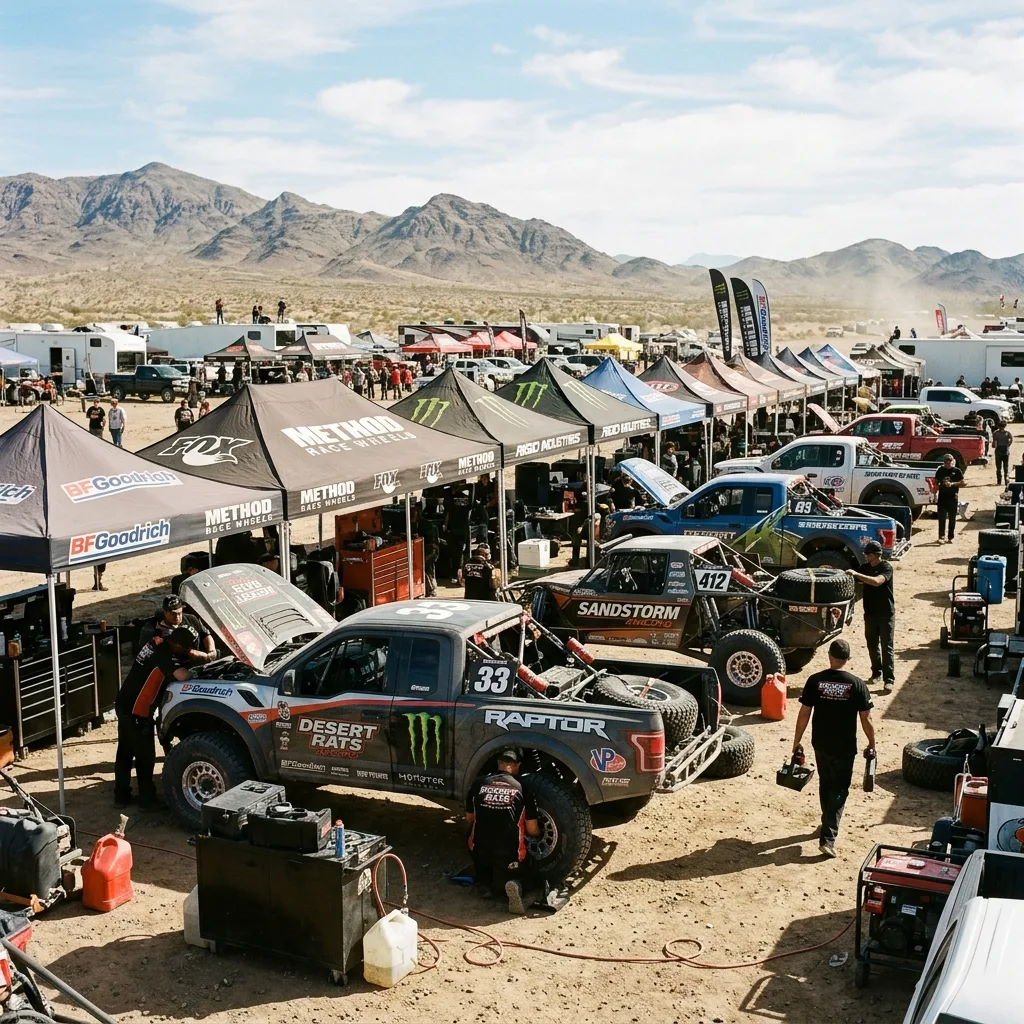
Race teams live and die on logistics. King of the Hammers, the Mint 400, Ultra4 rounds, Baja 1000 — every event has its own paddock, scrutineering process, and transit demands.
Most major desert and rock-racing events require a valid street registration to use the transit sections — the connecting public roads between staging areas, the post-tech routes, the move from a parking lot to the start line. Some events have written it into the rules: “Vehicles must be street-legal and registered for transit between staged sections.” A team trying to run an event with a “race-only” vehicle that cannot legally be on a public road has to trailer it the entire time, which doubles fuel cost and triples logistical complexity.
Montana plates solve this. A Montana-plated Ultra4 car, trophy truck, or pre-runner is street-legal everywhere. The plate is recognized in California, in Nevada, in Texas, in Mexico (with the appropriate FMM and Mexican insurance), in Tennessee, in Reno. The team doesn’t fight individual state inspection regimes. They run one registration that works in all 50.
Multiply by team size: most race teams have a primary vehicle, a backup, a chase truck, a tow rig, a support trailer, and sometimes a UTV pit support unit. Six vehicles. Six annual registrations and inspections in a strict state. Or one Montana LLC with all six vehicles permanently registered. The math isn’t close.
A growing percentage of the open-class trophy trucks and Ultra4 cars in the paddock wear Montana plates. It’s the registration that doesn’t get in the way of going racing.
The ZeroTaxTags Process: From Phone Call to Plate
Zero shop visits. Zero Montana road trips. Zero DMV lines. Here’s the timeline.
| Day 1: | Submit your MCO and supporting paperwork through our secure portal. We review for completeness and file your Montana LLC the same day. |
| Days 1–2: | Montana LLC formation complete — same business day in most cases, second business day at the latest. |
| Days 2–4: | Title transferred into the LLC name at the Montana county treasurer. |
| Days 4–7: | Permanent Montana plates shipped directly to your door within 3–5 business days of title completion. |
Total elapsed time: typically 3–4 weeks. Custom-VIN builds (tube chassis, kit cars) run 5–6 weeks. Insurance runs in parallel — Progressive, State Farm, Hagerty, and Grundy all write Montana-LLC-titled vehicles without issue.
Builder FAQs
I built a tube-chassis trophy truck from scratch. There is no factory VIN. Can Montana plate it?
Yes. Montana issues an assigned VIN through Form MV10B. The state inspects the vehicle, confirms it’s a complete and roadworthy motor vehicle, and assigns a Montana VIN that attaches to the title. After that it’s a normal Montana-titled vehicle.
I have a Factory Five Cobra replica. My home state won’t title it. Will Montana?
Yes. Forms MV1, MV20, and MV121 cover specially constructed and replica vehicles. The kit’s MSO plus donor drivetrain documentation plus a Level 1 VIN inspection produces a Montana title. Most kit cars are processed in 4 weeks.
I have a deleted DPF/EGR diesel. Texas Harris County won’t renew my registration. Does Montana check?
No. Montana has no emissions testing of any kind. No tailpipe sniff, no OBDII pull, no rolling road. Your engine configuration is invisible to Montana’s registration process.
I bought a demilitarized HMMWV at a GovPlanet auction. California won’t title it. Will Montana?
Yes. Montana respects the federal SF-97 demilitarization document and processes the title through the assigned-VIN route (MV10B) when no civilian VIN exists. Once titled, the Humvee is a registered motor vehicle in every state under the Full Faith and Credit Clause.
How long do Montana permanent plates last?
Permanent. They don’t expire. Cars and light trucks 11+ years old qualify. UTVs, ATVs, motorcycles, trailers, fifth-wheels, and boats qualify at any age. The plate stays on the vehicle for as long as the LLC owns it.
Can I run multiple vehicles under one Montana LLC?
Yes. One LLC holds as many vehicles as you want to put in it. Trophy truck, daily driver, two UTVs, a fifth-wheel, a kit car, a project Bronco, a Humvee — all under one LLC. The $200 LLC fee is one-time. The $120 annual maintenance is for the LLC, not per vehicle.
What about insurance?
Major carriers write Montana-LLC-titled vehicles routinely. Progressive, State Farm, Hagerty for collector and kit cars, Grundy for specialty builds. The policy lists you as the named insured driver and the LLC as the titled owner. Premiums are typically the same as or slightly less than equivalent personal-name policies because the LLC structure clarifies asset ownership.
I race UTVs. Can my whole fleet go on Montana plates?
Yes. Six RZRs, eight Can-Ams, a fleet of Mavericks — all permanent-plated under one Montana LLC. $749 per unit, $0/year after that. No inspection downtime. No state-by-state OHV classification mess.
Do I need to visit Montana?
No. The entire process is handled by mail and email. You sign documents at your kitchen table, get a local VIN inspection in your home state, scan the form back, and Montana issues the title and plates that ship to your home address.
Can I sell the vehicle later?
Yes. Two options: sell the vehicle out of the LLC (LLC signs the title to the buyer, who registers it in their state), or sell the LLC itself (with the vehicle included), which is how high-value collector vehicles often change hands. Either works cleanly.
Is this only for expensive builds?
No. We’ve registered $4,000 project Wranglers and $400,000 trophy trucks the same way. The math works at every price point because the savings start with avoiding inspection and emissions hassles, not just sales tax. A modified Tacoma worth $30,000 in Pennsylvania benefits the same as a $250,000 trophy truck in California.
Get Your Build Legal. Get Back to Driving.
You didn’t build the truck to argue with a guy in a polo shirt holding a tape measure. You built it to drive. To wheel. To race. To overland. To get out into actual dirt and use it the way it was designed to be used.
Montana respects that. Montana built its motor vehicle code around people who actually use their vehicles instead of around bureaucrats who want to see paperwork every January. No inspections. No emissions. No bumper-height tape measures. No CARB EO certifications. No referee inspections. No sales tax. No annual registration extortion.
Just plates. Real plates. Plates that work in every state under the Commerce Clause and Full Faith and Credit Clause of the U.S. Constitution. Plates on your trophy truck, your Cobra replica, your Cummins-swapped Bronco, your demilitarized Humvee, your overlanding Land Cruiser, your fleet of RZRs, your fifth-wheel, your project Tacoma. All under one LLC. All permanent. All correct.
This is what dirt legal looks like.
Ready to Get Your Build Dirt Legal?
Trophy trucks. Kit cars. Diesel-deleted dailies. Tube-chassis crawlers. UTVs. Humvees. Overland rigs. We plate them all through Montana — no inspections, no emissions, no sales tax, no nonsense.