25 min read
On this page
- + The auction is over. The bid was yours. Then reality hits.
- + What SF-97 actually is (and what it isn’t)
- + Civilian vs military surplus: two very different paths
- + State-by-state SF-97 acceptance
- + The five reasons DMVs reject your SF-97 vehicle title
- + The 2024 to 2025 federal crackdown
- + The four paths forward
- + Why Montana LLC works for SF-97 vehicles
- + Is this legal?
- + Who this is built for
- + Our process and timeline
- + Frequently asked questions
The auction is over. The bid was yours. Then reality hits.

The SF-97 vehicle title certificate sitting on your kitchen counter is not a title. You realize this about thirty seconds after the envelope arrives from your state surplus property office. The federal logo at the top looked official enough. The signature blocks looked legitimate. The serial number of the truck you just won at the GovPlanet auction is printed in the right place. But the longer you stare at the page, the more obvious it becomes that no state DMV has ever seen this form before, and the polite woman at the registration counter is going to look at it the same way she would look at a Monopoly deed.
You paid $115 for the privilege of receiving this piece of paper. You paid thousands more for the vehicle itself. And now you are googling phrases like “how do I title a government surplus truck” and getting forum threads that contradict each other, official guidance that contradicts what your state DMV told you on the phone, and YouTube videos where guys claim they registered their HMMWV in twenty minutes flat.
This is the moment almost every surplus buyer arrives at eventually. The auction was the easy part. Getting a legal, road-legal, insurable title in your name is where the real work starts, and where most first-time buyers waste the next six to twelve months learning expensive lessons.
This guide covers what the SF-97 actually is, why the GSA’s “accepted in all 50 states” claim is generously optimistic, which states will process it without drama and which will drain six months of your life, the federal crackdown that started in 2024, and the four workarounds — ranked honestly by speed, cost, and success rate.
Zero Tax Tags has been processing SF-97 vehicles into Montana LLC ownership for years. The good news is that once you understand the system, the path forward is short. The bad news is that almost no DMV employee in America understands the system, which is why this guide exists.
What SF-97 actually is (and what it isn’t)

Standard Form 97 is officially titled “The United States Government Certificate to Obtain Title to a Vehicle.” Read that title slowly. It is not a title. It is a certificate that you may use to obtain a title. Every word in the document name carries legal weight, and the difference between those two concepts is responsible for roughly half of all surplus-buyer frustration in the country.
The form is issued by the federal agency that previously owned the vehicle — most commonly the General Services Administration (GSA) for civilian fleet vehicles or the Department of Defense (DoD) for military surplus. It documents the chain of custody from the federal government to a new owner, so that a state titling authority has the federal paperwork it needs to issue an actual state title.
The SF-97 is only required when two conditions are both true. First, the vehicle will eventually be retitled by a state. Second, the buyer intends to operate the vehicle on public highways. If you bought a forklift or a tracked excavator that will never see asphalt, you do not need an SF-97 at all — a $25 bill of sale is enough. But the moment you put road tires on the vehicle, federal law requires that SF-97 to exist in the paper trail.
Here is where most buyers get confused. The SF-97 is not mailed directly to you. It is mailed to your State Agency for Surplus Property (SASP), which holds the form, processes internal records, and then forwards it to you. The chain of custody is GSA to SASP to buyer to DMV, and any break in that chain is grounds for rejection.
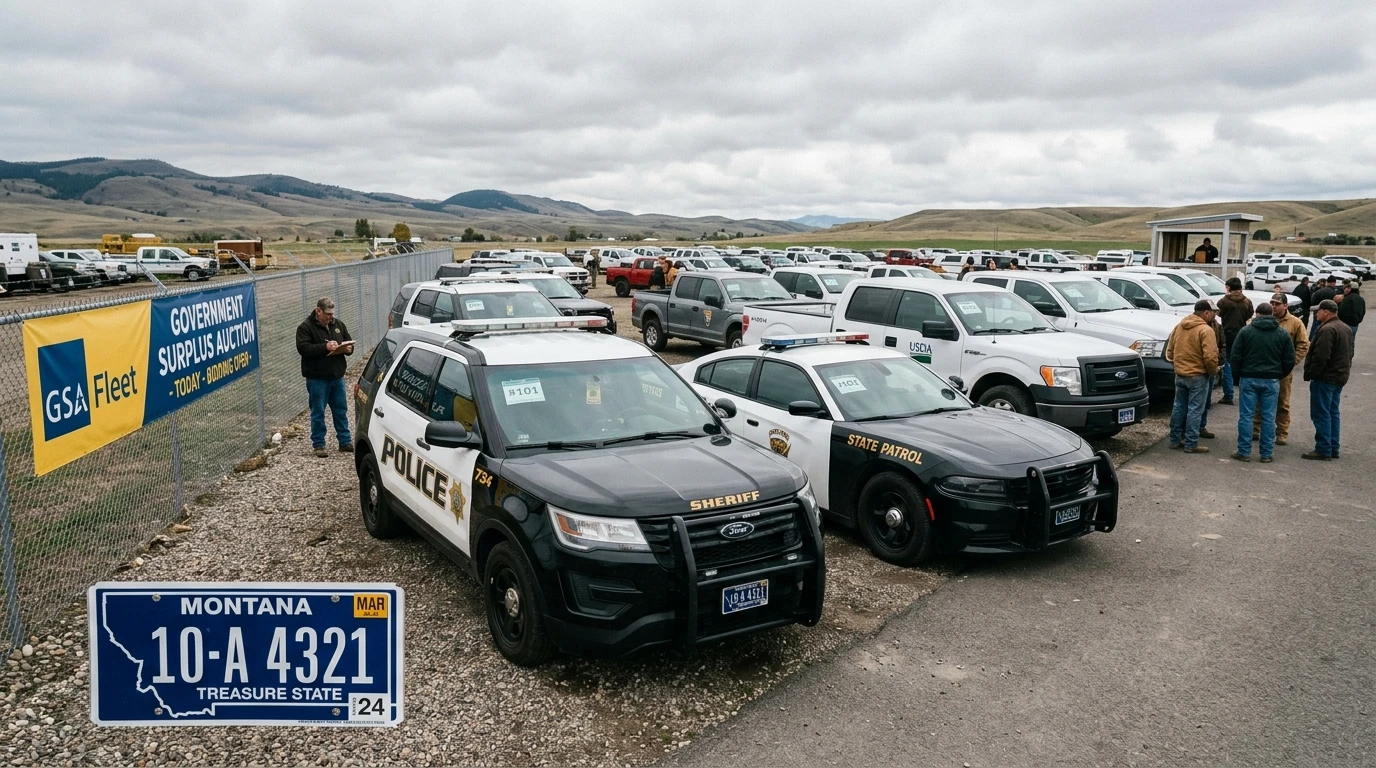
GovPlanet and Government Liquidation, the two largest surplus auction houses, charge $115 for the SF-97 processing fee. You can skip this fee and receive only a bill of sale, but a bill of sale alone is insufficient for titling in every state in the country.
Two more critical facts. First, the GSA will only issue SF-97s within a two-year window from the date of original transfer. Second, the GSA flatly refuses to issue SF-97s for vehicles classified as salvage or scrap. If the auction listing said “for parts only,” no SF-97 will ever be coming, no matter what the seller tells you.
Civilian vs military surplus: two very different paths
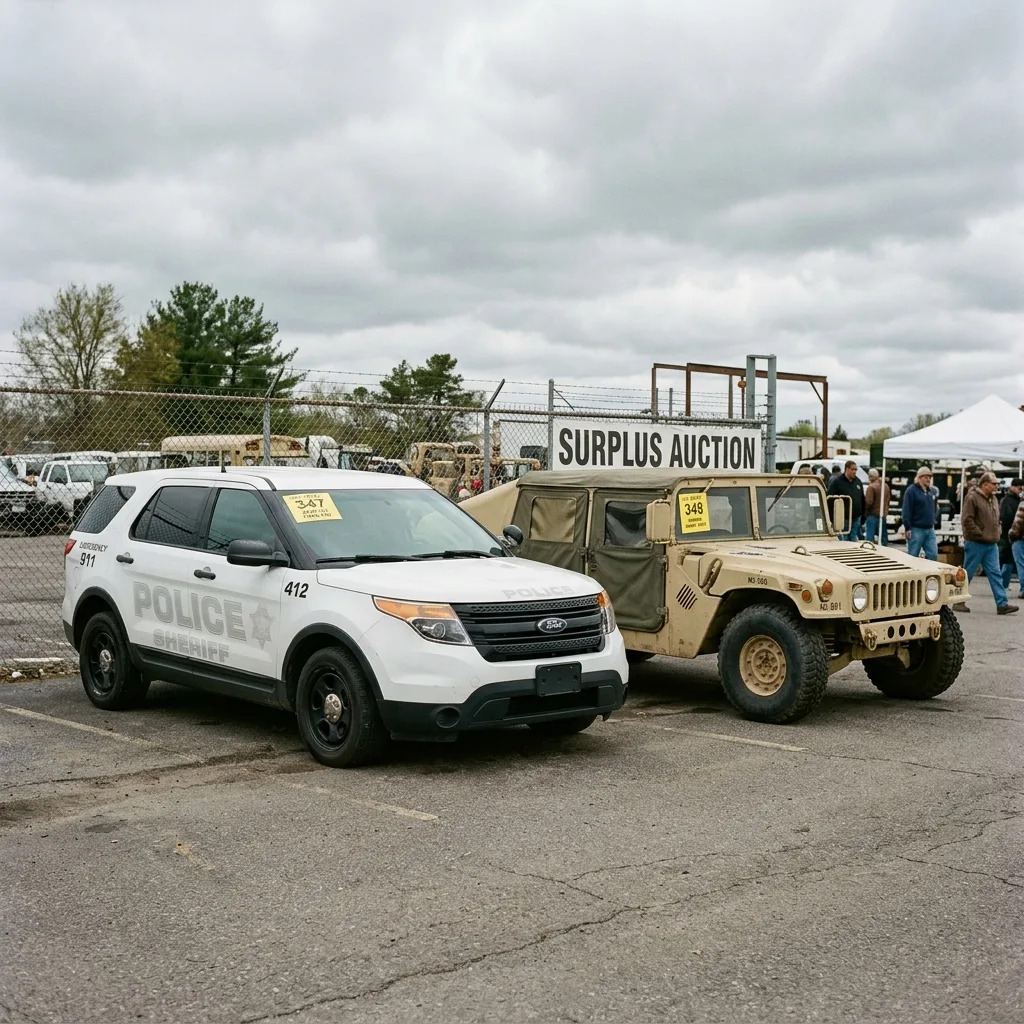
Surplus buyers tend to lump every federal vehicle into one mental bucket labeled “government surplus,” but the legal and regulatory treatment of civilian fleet vehicles is radically different from the treatment of military tactical vehicles. Confusing the two paths is one of the most common and most expensive mistakes a first-time buyer can make.
Civilian fleet surplus: the easier path
Civilian fleet vehicles include retired police interceptors (Ford Police Interceptor Utility, Dodge Charger Pursuit, Chevy Tahoe PPV), federal agency sedans and SUVs from the FBI, DEA, and US Marshals, GSA pool pickups, mail trucks, ambulances, bucket trucks, and dump trucks.
These vehicles started life as civilian-design platforms. They have standard 17-digit VINs. They were originally manufactured to meet DOT and EPA standards. The SF-97 paperwork for civilian fleet vehicles is the straightforward case: take it to the DMV, present your bill of sale, present the SF-97, pay the titling fees, and walk out with plates. In states where the system works, this can be a single-day process.
The risk profile on civilian fleet vehicles is also far lower. There is no End-User Certificate requirement. There are no export-control concerns. The vehicle goes from government to civilian use without ever crossing a federal regulatory tripwire.
Military surplus: the harder path
Military vehicles are an entirely different legal animal. The HMMWV (High Mobility Multipurpose Wheeled Vehicle), commonly called the Humvee, is the most popular military surplus on the civilian market. The category also includes M35 and M939 cargo trucks (the “deuce and a half” series), M-series tactical vehicles, military ambulances, fuel trucks, and specialty platforms.
These vehicles were never designed to meet DOT or EPA standards. They have non-standard military serial numbers rather than 17-digit civilian VINs. Some have export-controlled components, particularly the HMMWV, which is classified under the International Traffic in Arms Regulations (ITAR) framework. Military surplus comes with paperwork attached that civilian surplus never sees.
The first piece is the End-User Certificate (EUC). For HMMWVs and other ITAR-controlled tactical vehicles, the buyer must sign an EUC certifying that the vehicle will be used for civilian purposes only, that it will not be exported, and that controlled components will not be resold separately. The EUC adds 30 to 60 business days to the timeline before the SF-97 can even be issued.
The second issue is the VIN problem. State DMVs are programmed to expect 17-digit VINs that decode through standard databases. A military serial number does not. California requires CHP-issued REG 31 inspections that assign a brand-new 17-digit VIN. Michigan explicitly refuses to accept the word “Humvee” or “HMMWV” anywhere on titling paperwork.
Pro tip from the surplus community: When titling a military vehicle in any state, use the manufacturer designation rather than the military nickname. Write “M998” or “AM General UT” or “Utility Truck” on the paperwork instead of “HMMWV” or “Humvee.” DMV clerks who would have rejected a “Humvee” will routinely approve an “M998 utility truck” because the term does not trigger their training flags. This is not deception — those are the actual manufacturer designations.
State-by-state SF-97 acceptance
The General Services Administration’s official position is that the SF-97 is recognized in all fifty states. That position is technically defensible in the same way the federal government technically recognizes the right of any state to issue a hunting license — recognition and process are not the same thing. In reality, the SF-97 functions completely differently depending on which state’s DMV you walk into. The tier list below is built from years of buyer reports and our own internal data on clients who first tried their home state before coming to us.
Texas remains the gold standard. Texas DMV clerks are familiar with the SF-97 because the state hosts multiple GSA auction sites and has been processing surplus vehicles for decades. Georgia and South Carolina follow a similar pattern, with reasonable inspection requirements and clerks who recognize the form.
The hostile states are not hostile because of bad intent. They are hostile because their statutes layered modern safety, emissions, and VIN-tracking requirements on top of titling systems that never anticipated thousands of decommissioned military vehicles arriving in civilian garages. California’s REG 31 process can take months and costs hundreds in inspection fees.
Government Liquidation introduced a pre-titled Florida option specifically because they got tired of customer complaints about state rejections. Buyers can pay extra to receive a Florida-issued title instead of a raw SF-97. That option works for some buyers, but it does not solve the underlying problem of how the vehicle will be retitled in the buyer’s home state once that Florida title arrives.
The five reasons DMVs reject your SF-97 vehicle title
If you are reading this guide because your state DMV just rejected your SF-97 vehicle title paperwork, you are in extremely common company. We see the same five rejection reasons repeated across every state, every vehicle type, and every auction house. Knowing which one is hitting you is the first step toward fixing it.
1. Missing or improper signatures (about 40 percent of rejections)
The SF-97 has two signature blocks. The holding agency must sign as the transferor (the federal entity giving up custody) and the donee or purchaser must sign as the transferee. Both signatures must be present, dated, and legible. Photocopies are not accepted in most states. If the auction house sent you a partially signed form, you must request a corrected copy before you go anywhere near the DMV. Some buyers receive forms with the transferee block left intentionally blank for the buyer to fill in, but the transferor block missing a signature is grounds for instant rejection.
2. VIN issues (about 25 percent of rejections)
Military vehicles carry shorter serial numbers (often 8 to 12 digits) rather than the 17-digit VINs that civilian DMV systems require. When a DMV employee types the military serial into the standard NMVTIS database, nothing comes back. California’s solution is to issue a new 17-digit VIN through CHP inspection. Most other states either reject the paperwork or require additional verification documents. Even some civilian federal vehicles arrive with VINs that have been partially obscured by wear or fleet maintenance, triggering inspection requirements.
3. Improper odometer disclosure (about 15 percent of rejections)
Federal law requires odometer disclosure on the transfer of any vehicle under ten years old. Surplus auction paperwork sometimes lists odometer readings as “exempt” or “not certified” when the vehicle is actually within the disclosure window. State DMVs flag this immediately as a potential fraud indicator. The fix usually requires contacting the auction house and obtaining a corrected disclosure, which can take weeks.
4. DMV staff unfamiliarity (about 12 percent of rejections)
Many DMV agents have never processed an SF-97 in their entire career. Oklahoma surplus buyers report that tag agents routinely look at the form, frown, and ask their supervisor. The supervisor often looks at it, frowns, and asks the supervisor’s supervisor. By the time the form reaches someone who knows what to do with it, you have been at the DMV for three hours and your appointment slot has been given to someone else. This is not a paperwork problem. It is a training problem at the state level, and there is no fix you can apply from your side.
5. Lien issues (about 8 percent of rejections)
SF-97 vehicles cannot have any liens attached. Federal liens on tactical vehicles are particularly problematic because they may not be released until the EUC verification process completes, even if the buyer has fully paid for the vehicle. Civilian federal vehicles occasionally carry residual liens from the original manufacturer fleet financing arrangements. Any lien at all will stop the titling process cold.
The 2024 to 2025 federal crackdown
If you bought a military surplus vehicle in 2023 or earlier and titled it without trouble, the rules you operated under no longer exist. Starting in 2024, the federal government has issued a series of formal bulletins to every state DMV warning that certain categories of military surplus vehicles do not meet DOT or EPA standards for highway use. The bulletins do not have the force of law, but they come with the federal lever every state government respects: highway trust fund disbursements.
Critical update for 2024 and 2025: The federal government is now warning states that issuing road-use titles for non-DOT-compliant surplus vehicles may put their highway funds at risk. Colorado has already canceled existing HMMWV titles and reclassified those vehicles as Off-Highway Vehicles (OHV). Owners received new OHV-designated titles in the mail. Multiple states are reviewing previously issued titles and the trend is expected to spread. The window for casual SF-97 titling is closing in real time.
The Colorado example is the canary in the coal mine. Colorado owners who had legally titled HMMWVs on Colorado plates for years received notices in 2024 informing them their titles had been administratively canceled and replaced with OHV designations. The new OHV designation means the vehicle cannot be operated on public roads, highways, or interstates. Insurance policies tied to the original road-legal title became invalid overnight.
The federal bulletins specifically target military tactical vehicles, not civilian fleet surplus. Police interceptors and federal agency sedans are not in the crosshairs. But the bulletins reference broader DOT compliance standards in ways that could be applied to other categories of federal vehicles in future enforcement cycles.
The practical takeaway is that “I will figure out the paperwork later” is no longer viable. Vehicles routinely titled in 2023 are being rejected in 2026. The window for getting a permanent, stable, long-term title is closing. The Montana LLC path remains open because Montana built its registration system around vehicle ownership flexibility rather than rigid federal compliance, and Montana plates do not require renewal once issued, which locks in the legal status of the vehicle for as long as the LLC exists.
The four paths forward
Once you understand that the SF-97 alone is not going to walk you into your local DMV and out with plates, you are looking at four legitimate workarounds. Each has trade-offs. Three of them range from inconvenient to actively painful. One of them is built for exactly this situation. Here is the head-to-head.
Path 1: Montana LLC registration
Form a Montana LLC, transfer the SF-97 vehicle into the LLC’s ownership, and title the vehicle through a Montana county treasurer. Montana issues permanent plates that ship to your door. No state inspection. No emissions test. No smog check. The vehicle never has to enter your home state’s DMV system. This is the fastest legal route for most buyers and the option Zero Tax Tags built its entire service around.
Path 2: Bonded title
States like Texas, Florida, and Arizona allow you to post a surety bond equal to 1.5 times the vehicle’s appraised value. The bond remains in place for three to five years, after which a clean title is issued. The bond itself costs 1 to 3 percent of its face value annually. For a $50,000 surplus truck, you are looking at $75,000 in bond face value and $750 to $2,250 per year in premiums. Bonded titles work but get expensive on higher-value vehicles.
Path 3: Vermont title trick
Vermont has historically been willing to title vehicles for non-residents through a paperwork-only process. 2026 forum reports indicate Vermont is tightening its rules and military surplus is now being flagged for additional documentation. The Vermont path is becoming less reliable each year and we no longer recommend it as a primary strategy for SF-97 vehicles.
Path 4: Court-ordered quiet title
If you live in California or New York and want to title in your home state, you can hire an attorney to file a quiet title action. The court reviews your evidence of ownership and, if satisfied, issues an order directing the state DMV to issue a title. Legal fees start around $1,000 and can climb past $5,000. The process takes three to nine months on average — the most expensive and slowest of the four options.
Why Montana LLC works for SF-97 vehicles

Montana’s registration system was not designed with surplus military trucks in mind. It was designed for ranchers, outfitters, mining companies, and small businesses — owners who needed a system that worked the same way for a pickup truck, a horse trailer, a snowplow, and a sixty-thousand-pound logging skidder. The system Montana built happens to be perfectly suited for SF-97 vehicles, almost by accident.
Montana has no state vehicle inspection requirement — not for registration, not for annual renewal, not for anything. No headlight check, no horn test, no emissions program. Zero counties in the state require a smog test. Montana also accepts the SF-97 directly as proof of ownership for titling, as long as the chain of custody is documented and the LLC is the named transferee. For surplus buyers whose vehicles can’t pass a civilian inspection, those three facts change everything.
The mechanics are straightforward. We form a Montana LLC on your behalf, register it with the Montana Secretary of State, and obtain an EIN from the IRS. The LLC becomes the legal owner of the vehicle. We file the title application with the appropriate Montana county treasurer, pay the registration fees, and have permanent plates issued in the LLC’s name. The plates ship directly to your door. You are the manager and sole member of the LLC, with full control and full operating rights anywhere in the country.
That flexibility compounds fast. A military vehicle that would have failed inspection in your home state never has to be inspected. A police interceptor with worn emissions equipment never takes a smog test. A vehicle with a non-standard military serial number gets a Montana title because Montana’s county treasurers title by ownership chain, not by automated VIN database lookup. And the permanent plates never need renewal, which locks in the registration status for as long as the LLC stays in good standing.
One more advantage surplus buyers especially appreciate. Montana’s titling system handles vehicles by ownership chain, not by VIN database lookup. States that rely on automated NMVTIS lookups simply cannot title vehicles the database does not recognize. Montana can.
Is this legal?
Yes. Forming a Montana LLC and titling a vehicle through that LLC is fully legal under federal law and Montana state law. Montana statutes specifically authorize LLCs to own vehicles, register them through county treasurers, and operate them in interstate commerce on Montana plates. This is the same statutory framework that thousands of legitimate Montana businesses, ranchers, and outfitters use every day.
The leading legal precedent on the issue is Thomas v. Bridges, in which the Louisiana Supreme Court ruled in favor of an owner who had registered a vehicle through a Montana LLC. The court held that the LLC was a legitimate legal entity with full ownership rights, that Montana’s titling and registration were valid in interstate commerce, and that other states could not unilaterally invalidate the legal structure of a properly formed out-of-state business entity. The federal Commerce Clause supports the same conclusion: states cannot discriminate against out-of-state legal entities operating within their normal commercial purposes, including vehicle ownership.
The Montana LLC route is the same legal structure used by Fortune 500 companies that maintain corporate fleets across multiple states, by entertainment industry production companies that register specialty vehicles in jurisdictions where filming permits and operating rules are most favorable, and by the rental car industry, which routinely titles vehicles in states other than the ones where customers drive them. The legal foundation is solid, the precedent is on record, and the federal framework supports your right to operate the vehicle on Montana plates anywhere in the country.
Who this is built for
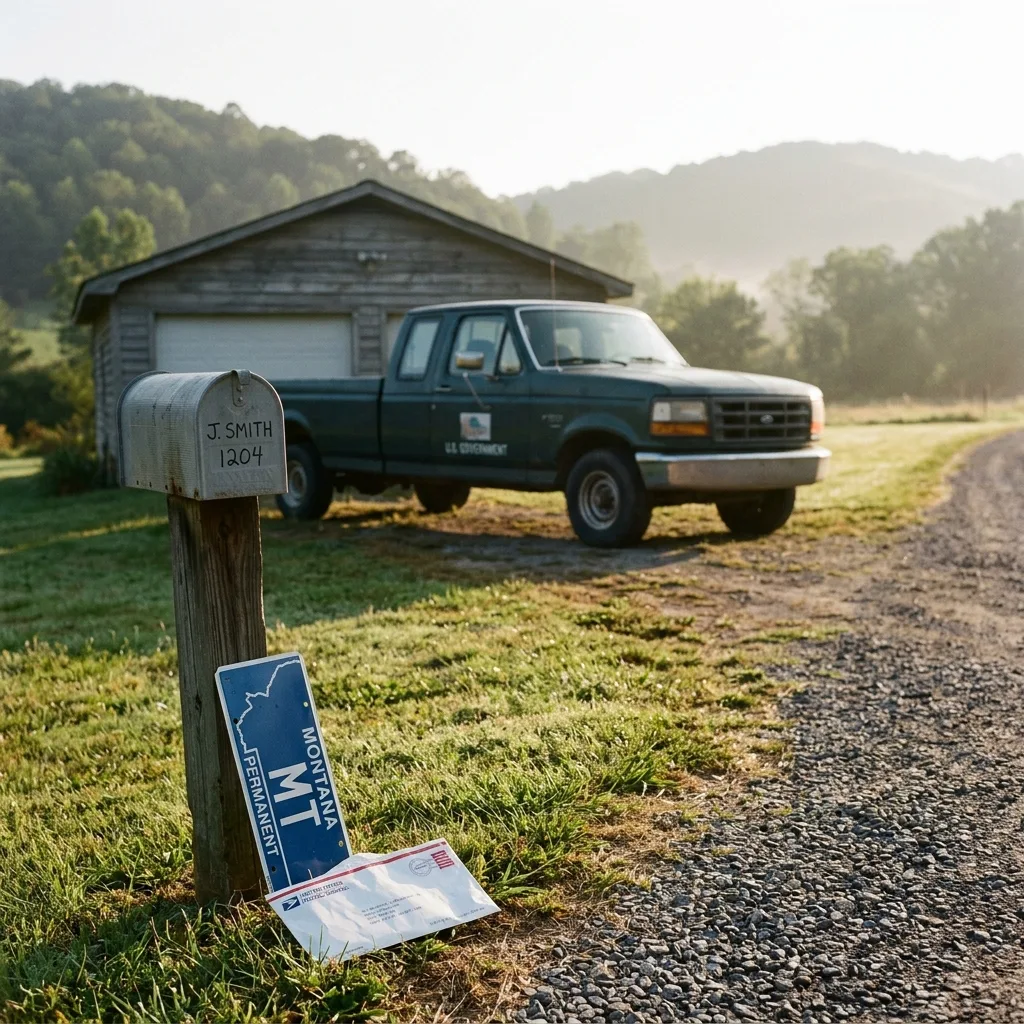
Zero Tax Tags built its SF-97 titling service around specific kinds of buyers. Here is who calls us.
Auction hunters who follow GovPlanet, Government Liquidation, and GSA Auctions weekly and buy two to ten surplus vehicles a year. They do not have time to fight their home state DMV on each one. They want a titling pipeline that works the same way every time, regardless of what state the next vehicle came from.
Military vehicle collectors with stables of HMMWVs, deuce-and-a-halves, and M-series trucks. They drive in parades, attend rallies, run interstate convoys for veterans’ events. They need plates that travel and a titling structure that holds up when they cross twelve state lines in a weekend.
Fleet buyers picking up decommissioned police interceptors and federal agency vehicles in batches. Their margin depends on how fast they can put a vehicle to work or list it. A 90-day state DMV process is not a friction problem for them — it is a cash flow problem. Seven days is not.
Government contractors who need vehicles titled to a legal entity that survives employee turnover and interstate project moves. The Montana LLC does that work. One entity, all vehicles, all states.
Ranchers and off-grid property owners who have real uses for surplus utility trucks, bucket trucks, and water trucks but need to drive them on public roads occasionally without going through inspection regimes designed for daily-driver passenger cars.
And first-time SF-97 buyers who opened that envelope and had no idea what happened next. We talk you through every step. You do not need to learn this system. That is what we are here for.
Our process and timeline
Most clients are surprised by how short the timeline is. The process for an SF-97 vehicle title moving through a Montana LLC runs like this:
| Day 1: | Submit your paperwork through our secure portal. We file your Montana LLC formation the same business day. Send us the SF-97, bill of sale, and any supplemental documentation from the auction house. |
| Days 1 to 2: | Montana LLC formation is complete in most cases on the same business day, second business day at the latest. The LLC is registered with the Montana Secretary of State and receives its EIN. |
| Days 2 to 4: | We transfer title into the LLC’s name at the Montana county treasurer. No inspection, no emissions test, no DMV line. The SF-97 chain of custody is documented and the LLC is recorded as the legal owner. |
| Days 4 to 7: | Permanent Montana plates are issued and shipped directly to your door, typically arriving within three to five business days of title completion. You are road-legal in your LLC’s name. |
The contrast with the alternatives is dramatic. A bonded title takes 30 to 90 days. A Vermont title (when it works) takes 30 to 60 days. A quiet title order takes 3 to 9 months. Even the friendliest state DMV process, in Texas, takes one to four weeks once you account for inspection scheduling, document corrections, and tag-agent appointments. Montana through Zero Tax Tags is one calendar week, end to end, with no DMV visits on your part.
Frequently asked questions
Can I use the Montana LLC route if my home state has already refused my SF-97?
Yes. Many of our clients come to us after one or two failed visits to their home state DMV. The prior rejection does not affect the Montana titling process. Montana evaluates the SF-97 and the ownership chain on its own terms, independent of what any other state has said. Once the Montana title and plates are issued, the vehicle is legally titled, regardless of what happened previously in your home state.
Does Montana LLC titling work for military HMMWVs and other tactical vehicles?
Yes. Montana titles both civilian fleet vehicles and military tactical vehicles through the same LLC framework. The HMMWV, M35, M939, and M-series families all process through the same path. We use the manufacturer designation (M998, AM General UT) on the paperwork rather than the military nickname, which keeps the process clean. If your vehicle requires an End-User Certificate from the DoD, you handle the EUC separately and then send us the completed SF-97 once it is issued.
How long after winning the auction do I have to title the vehicle?
The GSA’s two-year window for SF-97 issuance is the binding deadline. As long as you receive the SF-97 within two years of the federal transfer date, you can title the vehicle at any time after that. We recommend titling as soon as the SF-97 arrives in your hands to avoid any complications from changing state or federal rules.
Do I need an EUC for my surplus vehicle?
Only for export-controlled military tactical vehicles. The HMMWV requires an EUC. The M35 and M939 cargo trucks typically require EUCs. Civilian fleet vehicles, police interceptors, mail trucks, and most other federal civilian surplus do not require an EUC. The auction listing usually indicates whether an EUC is required, and the auction house will not release the vehicle for SF-97 issuance until the EUC is on file.
What happens if Colorado or my state cancels my SF-97 vehicle title later?
If you title through a Montana LLC, your title is Montana’s, not your home state’s. State title cancellations like the Colorado action in 2024 affect titles issued by that state. Montana plates issued to a Montana LLC are not subject to cancellation by another state’s DMV. This is one of the primary reasons buyers choose the Montana route after seeing the Colorado precedent.
Can I insure a Montana-titled SF-97 vehicle in my home state?
Yes. Insurance companies write commercial and personal policies on Montana-titled vehicles every day. You will typically work with a commercial fleet insurance carrier, an agency that specializes in collector vehicles, or a broker familiar with Montana-titled vehicles. We can provide insurance referrals as part of the onboarding process.
Do I have to drive the vehicle to Montana?
No. The vehicle never has to enter Montana for titling. The titling and registration process happens on paper through the county treasurer. Your plates are shipped to your home address. The vehicle stays wherever you store it.
What if I am buying multiple surplus vehicles?
One Montana LLC can hold multiple vehicles. Some of our fleet buyer clients title 10 or more vehicles under a single LLC. The LLC structure scales well and the per-vehicle cost drops on additional titlings under the same LLC. Contact us for fleet pricing.
Ready to Title Your SF-97 Vehicle the Right Way?
Auction hunters, military vehicle collectors, and fleet buyers use Zero Tax Tags to get SF-97 vehicles titled in seven days — without standing in a single DMV line or scheduling a single inspection appointment. The paperwork goes through us. The plates come to you.