24 min read
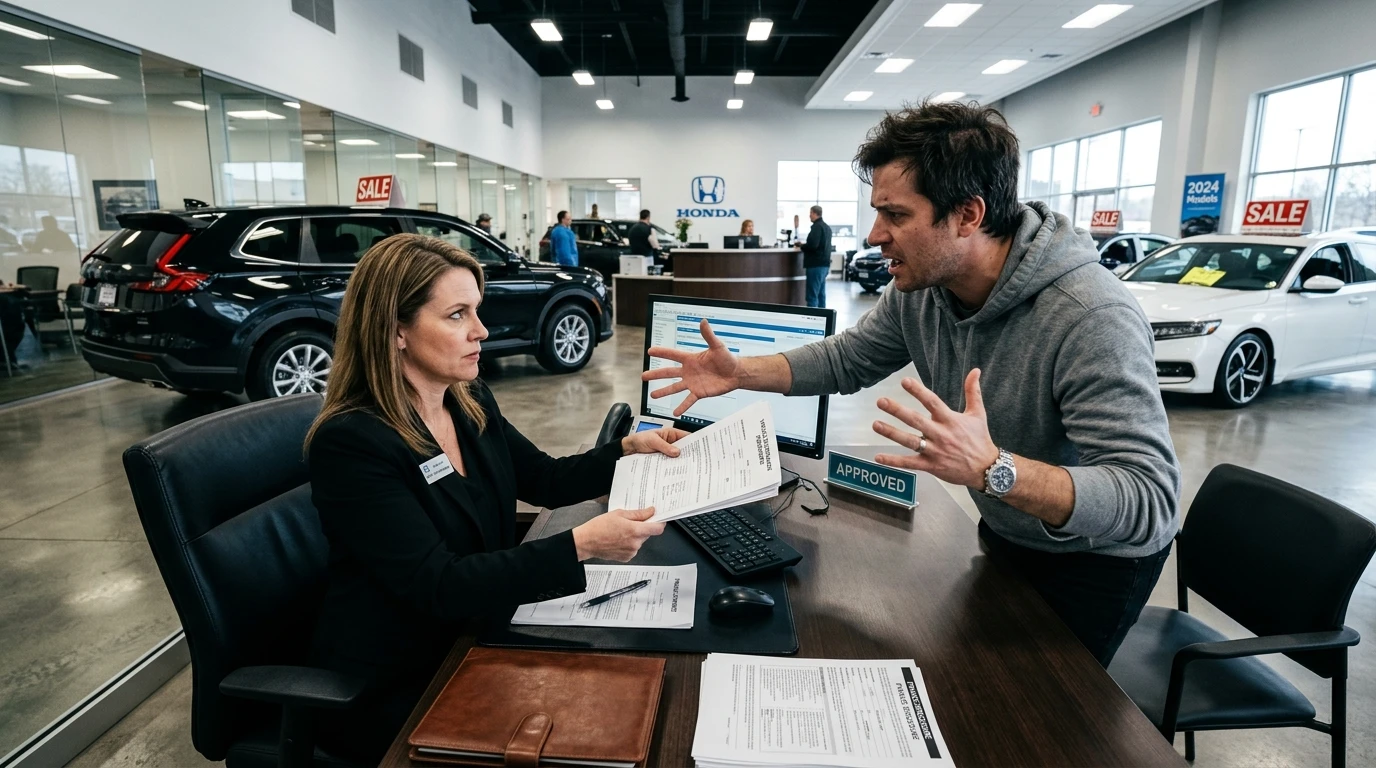
You finally pulled the trigger on a brand-new Polaris RZR Pro R, a Can-Am Maverick, or maybe a $90,000 trailer-towing pickup. You walked in with a cashier’s check, signed the bill of sale, and started thinking about your Montana LLC registration. Then you ask the finance manager one simple question. “Can I have the original Manufacturer’s Certificate of Origin?”
The room gets quiet. The finance manager smiles a little too widely. “Oh, we handle the registration here. You don’t need that.” When you push back, the smile fades. “That’s not how it works. The MCO stays with us.” And just like that, your carefully planned out-of-state Montana registration is on hold because someone behind a desk is holding what looks like a flimsy multi-part form hostage.
Welcome to the most misunderstood document in the entire vehicle ownership process. The certificate of origin is the single piece of paper that determines whether your Montana LLC registration goes through smoothly in 5 to 7 days or whether it stalls for weeks while you fight a dealership over a document they may not even have legal authority to hand you yet. Here is how the MCO system actually works.
On this page
What the MCO actually is and why it matters
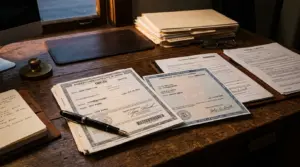
Think of the Manufacturer’s Certificate of Origin as the vehicle’s birth certificate. The factory issues it the moment a vehicle rolls off the assembly line and a VIN is stamped onto the frame. It is the foundational legal document that proves the vehicle exists, that it was built to specification, and that ownership has been initiated by the manufacturer. Without it, your shiny new toy is, in the eyes of every state DMV in the country, no more legitimate than a stolen kit-built dune buggy.
In some states the document is called an MSO (Manufacturer’s Statement of Origin) but the function is identical. The certificate of origin exists in exactly one original copy per vehicle. Manufacturers do not issue duplicates the way DMVs reissue lost titles. If the original is destroyed, lost in a flood, or stuck inside a dealership’s filing cabinet that nobody can find, you are looking at a months-long replacement process that may end in a Compliance Letter, a bonded title, or in some cases a court-ordered title.
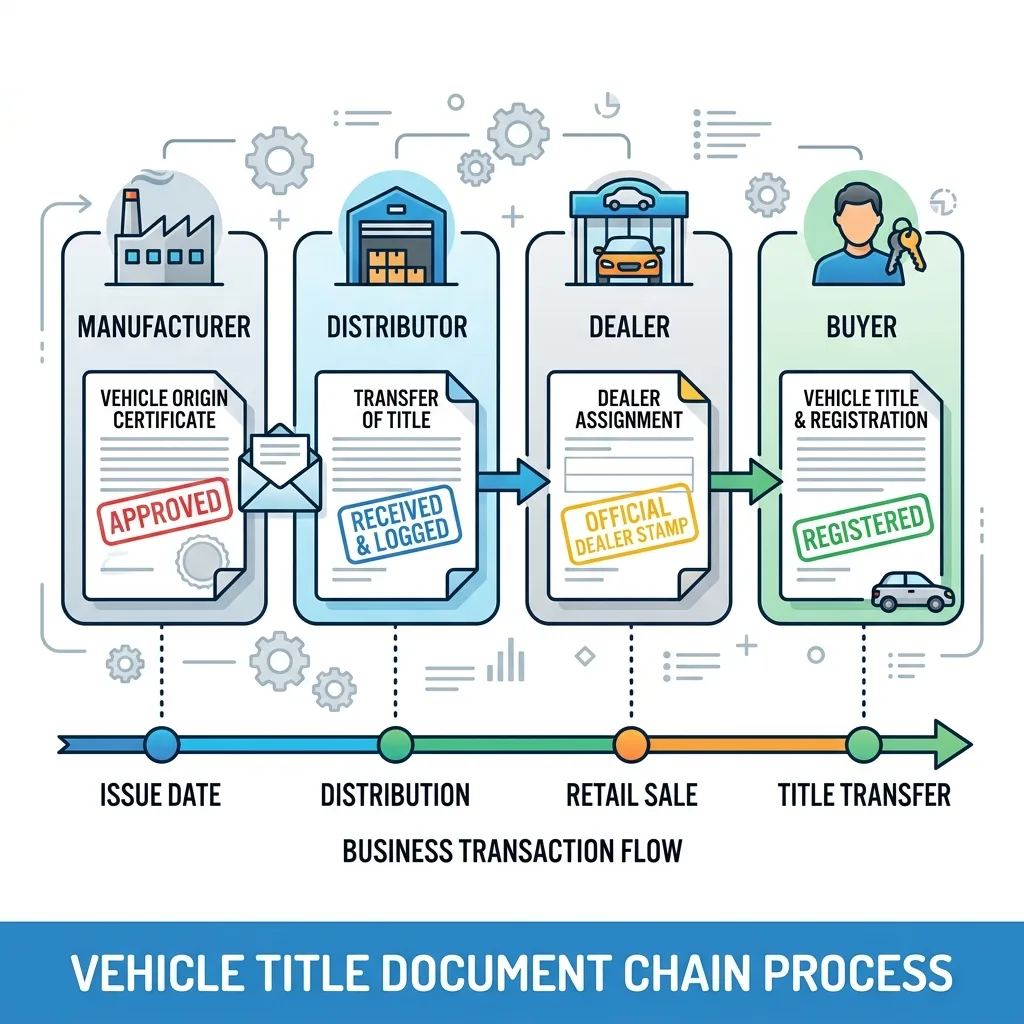
The MCO follows a strict chain of custody. Manufacturer issues it to a distributor or franchised dealer. Each link in the chain must complete the assignment block on the reverse side, signing and dating the transfer to the next party. Eventually, the franchised dealer sells the vehicle at retail and either gives the buyer the MCO, or in most modern transactions, sends it directly to the DMV with the application for title. The state surrenders the MCO and issues a Certificate of Title in its place. From that moment forward, the MCO ceases to be the relevant document. Many states physically destroy the surrendered MCO once title issuance is complete.
MCO vs. certificate of title
For Montana LLC registration purposes, the MCO is non-negotiable. Montana does not allow workarounds, alternate documentation, or affidavits to substitute for a complete and properly assigned certificate of origin when a brand-new vehicle is being titled to an LLC for the first time. An unsigned dealer assignment, a missing notary seal, or a chain that skips a wholesaler is a hard stop. The application gets rejected, the clock resets, and you wait.
Who legally holds the MCO at each stage

The custody question has a precise legal answer that depends entirely on where the vehicle is in its lifecycle. A buyer who walks into a dealership and demands the MCO at the moment of purchase may be technically wrong, technically right, or in some states, asking the dealer to commit a fineable offense. Knowing which scenario applies to you is the difference between getting your registration done in a week and fighting bureaucratic warfare for a month.
Stage 1: The manufacturer
The factory issues the MCO when the vehicle is built. Polaris in Roseau, Minnesota, GM at Wentzville, Ford at Kansas City, Can-Am at Valcourt, Quebec, Kawasaki at Lincoln, Nebraska. Each manufacturer prints the document on security paper with watermarks, anti-counterfeit features, and serialized control numbers. The MCO contains the VIN, year, make, model, body type, shipping weight, fuel type, and the original gross weight rating. It also identifies the first authorized recipient, usually a regional distributor or a franchised dealer.
Stage 2: Distributor or auction
For powersports, marine, and certain truck segments, vehicles often pass through a regional distributor before reaching the retail dealer. The distributor must complete the first assignment block on the reverse of the MCO, transferring legal custody to the dealer. Wholesale auctions function similarly, although a vehicle going through auction is often used and already titled, in which case the MCO is no longer in play. For new units sold dealer-to-dealer at auction, every assignment must be completed in proper order, signed, and often notarized depending on state.
Stage 3: The dealer
This is where 95% of MCO confusion happens. The franchised dealer holds the original MCO from the moment they take physical possession of the vehicle until the moment a retail buyer completes a purchase. During that window, the dealer is the legal custodian. They cannot sell, transfer, or assign the MCO to any party other than a buyer or to the DMV in connection with that buyer’s title application.
The Texas paradox
Texas reality check: In Texas, dealers are statutorily PENALIZED $500 to $2,000 per vehicle for handing the MCO directly to the retail buyer. Texas law requires the dealer to submit the MCO directly to the Texas Department of Motor Vehicles along with the title application. So when a Houston dealer says “we can’t give you the MCO,” they aren’t being difficult. They are avoiding a four-figure fine.
This same dynamic applies in modified form in Florida and several other states that mandate dealer-handled title applications. The lesson: when a dealer refuses to surrender the MCO directly, the first question to ask is not “why are you being difficult” but “what does state law require you to do with this document?”
Stage 4: The DMV
Whether the buyer hand-carries the MCO or the dealer submits it electronically through systems like Massachusetts ATLAS or Michigan eMCO, the destination is the same: the state DMV. The DMV verifies the chain of assignments, checks the VIN, confirms odometer disclosure, calculates taxes, and prints a Certificate of Title in the name of the new owner. The MCO is then either retained in state archives or destroyed. The vehicle’s identity now lives on the title.
Stage 5: If the vehicle is financed
Here is the misconception we hear most often. “My bank holds the MCO until I pay off the loan.” Wrong. The lender never holds the MCO. The dealer submits the MCO to the DMV with the buyer’s title application and the lienholder information. The DMV issues a Certificate of Title with the lien noted, and that title goes to the lender, not the buyer. When you pay off the loan, the lender releases the lien and either sends you the title or files a lien release with the DMV. The MCO is long gone, fulfilled its purpose, and most likely no longer exists.
Why dealers seem to be holding it hostage

Sometimes the dealer really is just following the law. Sometimes they have a legitimate operational reason. And sometimes they are stonewalling because their finance and insurance department makes money on the in-house registration package and a Montana LLC buyer threatens that revenue. Knowing which is which is critical.
Legitimate reasons a dealer holds the MCO
If you financed the vehicle through dealer-arranged financing, the dealer is contractually and legally obligated to handle the title application so the lien can be perfected. That process can take 30 to 60 days from purchase. During that entire window, the MCO is in dealer custody and you cannot have it. Period.
If you purchased in Texas, Florida, or another state that mandates dealer-handled title applications, the dealer must submit the MCO directly to the DMV. They cannot give it to you even if they want to. Asking them to break the law and absorb a $500 to $2,000 fine to make your life easier is not a reasonable request.
If the dealer participates in an electronic MCO program, like Massachusetts or Michigan, the document may not exist in physical form at all. eMCO systems transmit the data directly from manufacturer to dealer to DMV. There is nothing to hand you because there is no paper.
Illegitimate stonewalling
You paid cash, you live in a state where dealer-handled registration is optional, and the dealer still refuses to release the certificate of origin. This is the moment to push back. Most often the resistance comes from the F&I (finance and insurance) department, which sells the registration as a profit center. A typical dealer-arranged registration package costs $400 to $800 in fees on top of the actual state taxes and DMV charges. When you announce you are doing Montana LLC registration, you are removing that profit. Some dealers respond by suddenly discovering policies that don’t exist.
Three real-world MCO holdup cases
Case 1, the UTV buyer: A Phoenix client bought a Polaris RZR Pro R for $42,800 cash. The dealer initially insisted on handling Arizona registration, claiming Polaris policy required it. Polaris has no such policy. Once the client referenced the franchise agreement language and offered to call the regional Polaris representative, the MCO appeared in 11 minutes.
Case 2, the trailer buyer: A Texas buyer purchasing a $38,000 enclosed trailer was told “it’s all digital now, we can’t give you anything physical.” Trailers do not participate in eMCO programs. The dealer was simply protecting their fee revenue. After a written demand citing Texas Transportation Code, the dealer produced the original MCO within 48 hours.
Case 3, the motorcycle cash buyer: A California Harley buyer who paid in full was told “we don’t release MCOs to customers, only to DMVs.” The salesperson admitted later that the dealership made $620 on each in-house registration. After the buyer threatened to deal complaint paperwork with the California DMV’s New Motor Vehicle Board, the MCO was delivered.
Dealers stonewalling for revenue fold fast once you know the rules. Dealers protecting themselves from actual statutory penalties cannot fold, and they never will. Knowing which situation you are in determines whether to push back or accept the process.
Lenders and financed vehicles – the MCO they’re NOT holding

The financing misconception is so widespread that even some dealership employees believe it. Customers walk in months after purchase, demanding their MCO from the lender, who has no idea what they are talking about. To put this myth to rest forever, here is exactly what happens with a financed vehicle, in order, with the legal mechanism for each step.
What actually happens when you finance
You sign the retail installment contract at the dealership. The dealer assigns that contract to a lender like Capital One, Ally, Sheffield, FreedomRoad Financial, or a credit union. The dealer then completes the title application using the buyer’s name (or LLC name, in the case of Montana LLC registration) and notes the lienholder. The MCO is submitted to the DMV with the title application as a supporting document. The DMV issues the Certificate of Title with the lien notation, and that title is mailed to the lender. The MCO has now done its job and is either archived in DMV records or destroyed.
The lender holds the title, not the MCO. The buyer holds nothing physical. The vehicle is registered, plates are issued, and life goes on.
UCC Article 9 in plain English
Under the Uniform Commercial Code Article 9, a lender’s security interest in a vehicle is “perfected” not by physical possession of any document but by the official notation of the lien on the state-issued Certificate of Title. This is one of the reasons the MCO is irrelevant to the lender. The MCO is a manufacturer’s document; the title is a state document; only the state document carries the legal lien notation. A lender that physically held an MCO would have no enhanced security interest from doing so.
Paying off the loan
When you pay the loan in full, the lender files a lien release with your state DMV. The DMV either issues you a clean title (in some states) or simply updates the records so that the next title transfer flows clean. You never touch an MCO during this process. The MCO has been gone for years. The myth that “the bank gives you back your MCO when you pay off the loan” persists because people confuse the title with the MCO. They are different documents with different jobs.
Getting a duplicate MCO when the original is lost or never transferred

Sometimes the worst happens. The dealership goes out of business with your MCO in the safe. A house fire destroys your filing cabinet. A previous owner of a never-titled trailer or RV moved across the country with the document and lost it. Now you are sitting on a vehicle without the foundational document required to register it for the first time. What can you do?
Manufacturer duplicate process
Some manufacturers will issue a duplicate MCO if you can demonstrate clean ownership and there is no record of a prior title issuance for the vehicle. The general process is the same across most brands:
- Submit a written request directly to the manufacturer’s titling department, including the VIN, year, model, and proof of ownership (bill of sale, purchase agreement, or notarized statement)
- Wait 7 to 10 business days. The manufacturer checks their records to confirm no prior title has been issued against that VIN
- Receive either a duplicate MCO or a Compliance Letter, depending on the manufacturer’s policy and what your state DMV will accept
Manufacturer-specific quirks
What is a Compliance Letter
A Compliance Letter is a manufacturer-issued document that confirms the vehicle was built to specification and identifies the original purchaser/dealer record. It substitutes for a duplicate MCO at most state DMVs. Some states accept it without question. Others require an accompanying bonded title or a statement from a licensed inspector. Montana accepts Compliance Letters in limited circumstances and typically requires additional documentation if the chain of custody cannot be reconstructed.
Critical warning: Some manufacturers issue zero duplicates under any circumstances. If the original MCO is gone and the brand has a no-duplicate policy, your only paths forward are a bonded title (requires a surety bond worth typically 1.5x vehicle value, valid for 3 to 5 years) or a court-ordered title (requires litigation in your home state). Both add months and significant cost. Plan B and Plan C should be in place before you assume the duplicate path will work.
State-by-state rules that affect MCO handling
The certificate of origin is governed by 50 different sets of state rules, each with its own quirks. The same MCO might breeze through Montana DMV in 5 days and get rejected in California for a defect that California considers fatal. For Montana LLC registration, the source state rules matter only for getting the MCO in your hands. Once it is in your hands, only Montana’s rules matter.
Texas Export Only stamps
If you are buying a vehicle in Texas with the intent to export it (including for non-registration purposes), Texas requires the dealer to apply a 2-inch tall “Export Only” stamp in black ink on the face of the MCO. This is to prevent stolen-vehicle re-titling schemes. For Montana LLC registration, you are not exporting, so the stamp does not apply, but every MCO out of Texas should be inspected to ensure it does not have an erroneous Export Only stamp that would block Montana titling.
California’s MCO substitution rule
California is unique in that it accepts an MCO in lieu of a title for vehicles that have never been registered. If you buy a brand-new car or truck from a California dealer and the dealer hands you the MCO, you can register it in another state directly. Most other states either require a title or require the MCO to be submitted by the seller, but California’s rule provides flexibility that helps Montana LLC clients.
How Montana LLC registration intersects with MCO
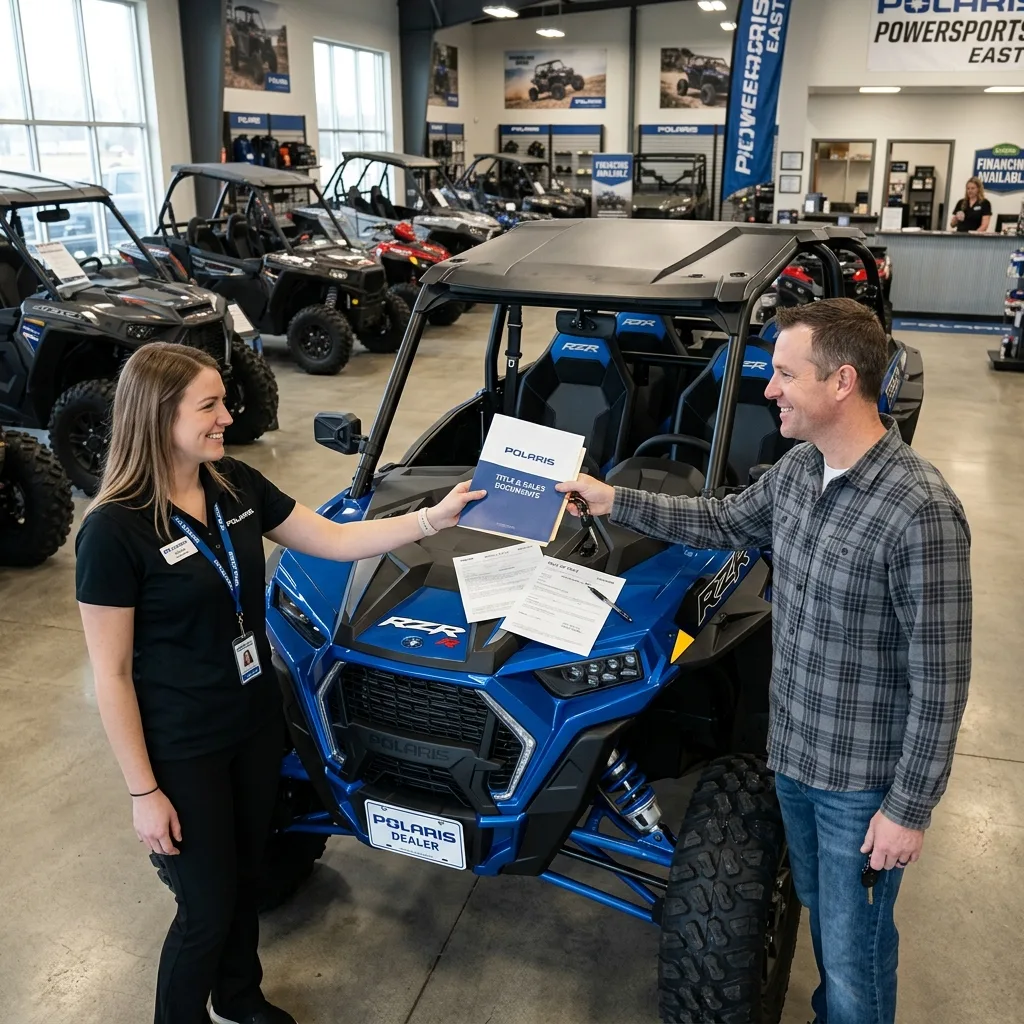
Montana DMV is famously efficient when paperwork is correct. It is famously unforgiving when paperwork is wrong. The state processes thousands of LLC vehicle registrations every month, and the staff has seen every possible defect a thousand times. Submitting a defective certificate of origin is the fastest way to turn a 5-day registration into a 3-week saga of resubmissions, calls back to dealerships, and chasing down notaries who have moved on.
What Montana checks on every MCO
- Manufacturer information block complete and matches VIN database
- Every assignment block on the reverse signed and dated by the correct party
- No skipped links in the chain (manufacturer to distributor to dealer must all be present where applicable)
- Odometer disclosure complete with miles or “exempt” notation for off-highway vehicles
- Notarization complete where required (for LLC purchasers, Montana usually requires the dealer’s signature to be notarized)
- VIN matches across MCO, bill of sale, and any associated documents
- No “Export Only” stamp from Texas or any other state
- Original document, no photocopies, no faxes, no scanned reproductions
The ZTT pre-submission review
At Zero Tax Tags, we review every certificate of origin before it ever crosses the Montana DMV counter. This pre-submission review catches the defects that cause rejections. We have caught broken chains, missing odometer disclosure, illegible notary stamps, VIN mismatches, expired notary commissions, and the wrong dealer signatory (the title clerk signed but did not have authority). Each of these would have caused Montana DMV to reject the application and add 2 to 3 weeks to the registration timeline.
Real client case: A Tennessee buyer purchased a $112,000 GMC Sierra 2500 Denali from a dealer in Nashville. The dealer’s F&I clerk signed the assignment block on the MCO but the notary section was blank. ZTT caught the defect on intake review and overnighted the document back to the dealership for proper notarization. Total fix time: 2 days. Without the review, the document would have gone to Montana, been rejected, mailed back to the buyer, mailed back to the dealer, notarized, mailed back to the buyer, and resubmitted to Montana. Total delay would have been 3 weeks minimum.
Our process and timeline
| Day 1: | Submit your MCO and supporting paperwork through our secure portal. We review for completeness and file your Montana LLC the same day. |
| Days 1–2: | Montana LLC formation complete — same business day in most cases, second business day at the latest. |
| Days 2–4: | Title transferred into the LLC name at the Montana county treasurer. |
| Days 4–7: | Permanent Montana plates shipped directly to your door within 3–5 business days of title completion. |
ZTT pricing for Montana LLC registration
MCO fraud red flags when buying used vehicles

Most Montana LLC registrations involve new vehicles purchased from authorized dealers, where the MCO chain is clean. But a meaningful portion involves “lightly used” vehicles, never-titled inventory units, dealer demos, and trailers that passed through three or four states before reaching the buyer. Each of those scenarios is a potential fraud vector. What follows is what to check before you wire money.
The “title in transit” scam
You buy a $65,000 enclosed gooseneck trailer from a private seller who says “my title is in the mail from the previous owner, I’ll send it once it arrives.” Six weeks later, no title appears. The seller has been ignoring your calls. The title was never coming because the chain of custody on the MCO was broken three transactions back, and no state DMV will ever issue a clean title against that VIN without bonded title litigation. You bought a $65,000 yard ornament.
Wholesale chain gap problem
Some used dealers buy inventory at wholesale auctions, take possession, and then sell to retail buyers without ever properly recording themselves in the assignment chain. The MCO shows a transfer from Distributor A to Dealer B, but the wholesale auction transfer to Dealer B is missing or undated. Montana DMV catches this every time and rejects the application. The buyer is left chasing a wholesale auction in a state they have never been to, trying to extract a missing assignment from a closed file.
What to check before wiring money
- Original MCO physically in the seller’s hands at time of inspection, not “in the mail” or “with my partner”
- Every assignment block on the back complete, signed, and dated in proper chronological order
- VIN match across the MCO, the vehicle frame stamp, and all other paperwork (registration card, bill of sale, prior insurance documents)
- No “Export Only” stamp if you intend to register domestically
- No signs of alteration: white-out, written-over signatures, suspicious erasures, mismatched ink colors
- Notary stamps current and not expired at the time the assignment was signed
The 60-second pre-purchase MCO inspection: Take a photo of both sides of the MCO before you sign anything. Read every assignment block out loud. Verify the VIN matches the frame stamp on the vehicle. If the seller resists a 60-second document review, walk away. Real sellers with legitimate paperwork have nothing to hide.
FAQ
Can a dealer legally refuse to give me the MCO?
Yes, in some circumstances. In Texas, dealers are required by law to submit the MCO to the DMV and are penalized for handing it to buyers. In Florida, similar dealer-handled processes apply. In states where the dealer is contractually responsible for handling registration (typically because of financing), they will hold the MCO until the title application is complete. In states where the dealer is not legally required to handle registration and you have paid in full, refusing the MCO is generally not legitimate.
What is the difference between MCO and title?
The MCO is the manufacturer-issued document that proves the vehicle exists and identifies its first owner. There is exactly one original MCO per vehicle, ever. The title is the state-issued ownership document that replaces the MCO once the vehicle is registered. Titles can be reissued, replaced, and transferred. MCOs cannot be reissued in most cases.
Does my lender hold the MCO?
No. The lender holds the title with the lien notation. The MCO was surrendered to the DMV when the vehicle was first registered and has either been archived in state records or destroyed. This is the single most common misconception about certificate of origin custody.
How do I get a duplicate MCO?
Contact the manufacturer’s titling department directly with the VIN, year, model, and proof of ownership. Some manufacturers (Polaris, Can-Am, many trailer brands) issue duplicates. Others (Ford, GM, Kawasaki, Yamaha) issue Compliance Letters that substitute for the MCO at most state DMVs. Processing time is typically 7 to 10 business days.
What if the manufacturer will not issue a duplicate?
You will need to pursue a bonded title (requires a surety bond worth typically 1.5x vehicle value) or a court-ordered title (requires litigation in your home state). Both add months and cost. ZTT can help guide you through these alternative paths if standard duplicate processes fail.
Can I register through Montana LLC if I don’t have the original MCO?
For brand-new vehicles, no. Montana requires a complete and properly assigned original MCO. If the original is unavailable, you must pursue a duplicate, Compliance Letter, bonded title, or court-ordered title before Montana registration is possible. ZTT reviews every case and recommends the fastest legal path.
How long does Montana LLC registration take with a clean MCO?
Typical timeline is 5 to 7 days from when ZTT receives the documents in our Montana office. Day 1 to 3 covers LLC formation; days 4 to 5 cover document review and DMV submission; days 6 to 10 cover title issuance, plate printing, and overnight delivery to your home address.
What makes ZTT different from other Montana registration services?
Pre-submission document review. Most services collect your documents and pass them through to Montana DMV without inspection. When the DMV finds a defect, the application is rejected and the timeline extends. ZTT reviews every certificate of origin, bill of sale, and supporting document before submission. We catch the defects that cause rejection and resolve them before they cost you weeks of delay.
Related reading
See how Montana LLC registration helps owners across high-tax states:
- Arizona VLT Problem: How to Stop Paying $1,000 Every Single Year
- Virginia Car Tax: Stop Paying the Highest Vehicle Tax in America
- Arkansas Vehicle Tax: The Natural State’s Hidden Wealth Extraction System
Ready to Register Your Vehicle the Right Way?
Don’t let an MCO defect cost you weeks of delay or thousands in penalties. ZTT reviews every document before Montana DMV ever sees it. Clean registration in 5 to 7 days.