34 min read

You found the perfect vehicle. Maybe it’s a specialized truck in Texas, a rare bike in Nevada, or a custom trailer in Georgia. The price was right, the dealer took your money, and they handed you a crisp, fancy piece of paper called a Certificate of Origin (CO) or Manufacturer’s Certificate of Origin (MCO).
You drove home feeling like a champion. Then, you walked into your local DMV.
That’s when the dream died. You were met with a blank stare, a demand for sales tax you thought you’d avoided, and a laundry list of inspections requiring you to physically move a vehicle that isn’t legally registered yet. The clerk slid your MCO across the counter, pointed at three forms you’d never heard of, and told you to come back next week. Your $80,000 truck is now an oversized lawn ornament because a stranger in a polyester shirt won’t accept the paperwork the dealer swore was complete.
If you are holding an out of state MCO and staring down the barrel of your home state’s bureaucracy, you are in the “Red Tape Zone.” Here is exactly what the DMV is going to ask for, why they make it so hard, and how to bypass the headache entirely through Montana LLC registration with Montana MVD. By the end of this guide you will know which forms each state demands, how much you’ll actually owe in tax, what a transit permit costs in your seller’s state, and exactly how a Montana LLC eliminates every single one of these obstacles for $899 in year one and $270 every year after.
On this page
- + The Dealer Won’t Register It For You
- + The VIN Inspection Gauntlet
- + State-Specific VIN Inspection Requirements
- + The Emissions Trap (California/Nevada)
- + Sales Tax Complications
- + Sales Tax Credit and Reciprocity
- + Strict Bill of Sale Requirements
- + Proof of Insurance (Right State)
- + Temporary Transit Permits
- + Transit Permit Deep Dive (State by State)
- + The Drive-It-Home Risk Calculator
- + State-Specific Variations
- + Common Rejections
- + 3 Real-World Case Studies
- + The Montana LLC Advantage
1. The Dealer Won’t Register It For You (And Why That’s Your Problem)
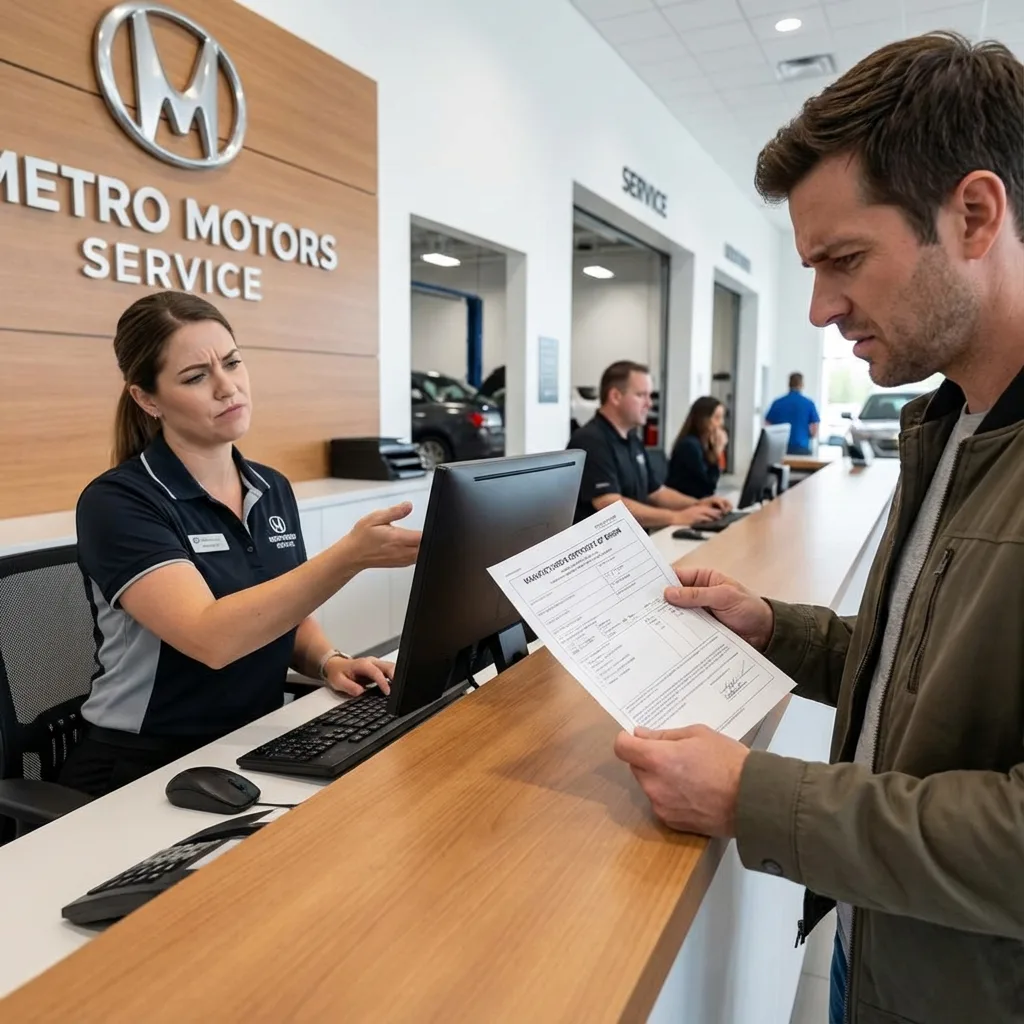
When you buy a car locally, the dealer has a direct line to the local DMV. They print the temporary tag, they file the title application, and you get your metal plates in the mail.
When you buy out of state, that convenience evaporates.
Most dealers are not equipped to handle registration in all 50 states. They don’t know the specific tax rates of your county in Ohio, nor do they have access to the California DMV database. Legally, many are only required to hand you the MCO and a Bill of Sale. Once you drive off the lot, the registration burden is 100% on you.
This leaves you holding an MCO, which is not a title. It is the vehicle’s “birth certificate.” To get a title, you have to convince your state to “naturalize” the vehicle. If you mess up the paperwork, the dealer is hundreds of miles away and has very little incentive to help you fix it.
Here’s what most buyers don’t understand about the legal relationship: the moment that MCO is signed over to you in the assignment block on the back, you become the responsible party for every form, every fee, and every inspection your home state can dream up. The selling dealer’s compliance officer is not going to spend three hours on the phone with the South Dakota Department of Revenue figuring out how to satisfy your home state’s title office. They closed the deal. They booked the commission. They moved on to the next customer who walked in the showroom door.
Even worse, many out-of-state dealers will refuse to issue a temporary registration that’s valid in your home state. A Texas dealer can sell you a one-trip transit permit good for 5 days from Texas to your home state border, but the moment you cross into Louisiana, Mississippi, Alabama, or Georgia on your way home, that permit may not be honored. You’re now driving an unregistered vehicle through three states that have never seen the paperwork. If you get pulled over for a broken taillight, you’ll learn very quickly which states recognize “in transit” tags and which ones treat them like fake plates.
And the worst-kept secret in the dealership industry? Many F&I (finance and insurance) departments deliberately stay vague about out-of-state registration because every minute they spend explaining your home state’s title process is a minute they aren’t selling extended warranties or paint protection packages. By the time you realize you’ve been handed a paperwork grenade, you’re already 800 miles down the road.
2. The VIN Inspection Gauntlet
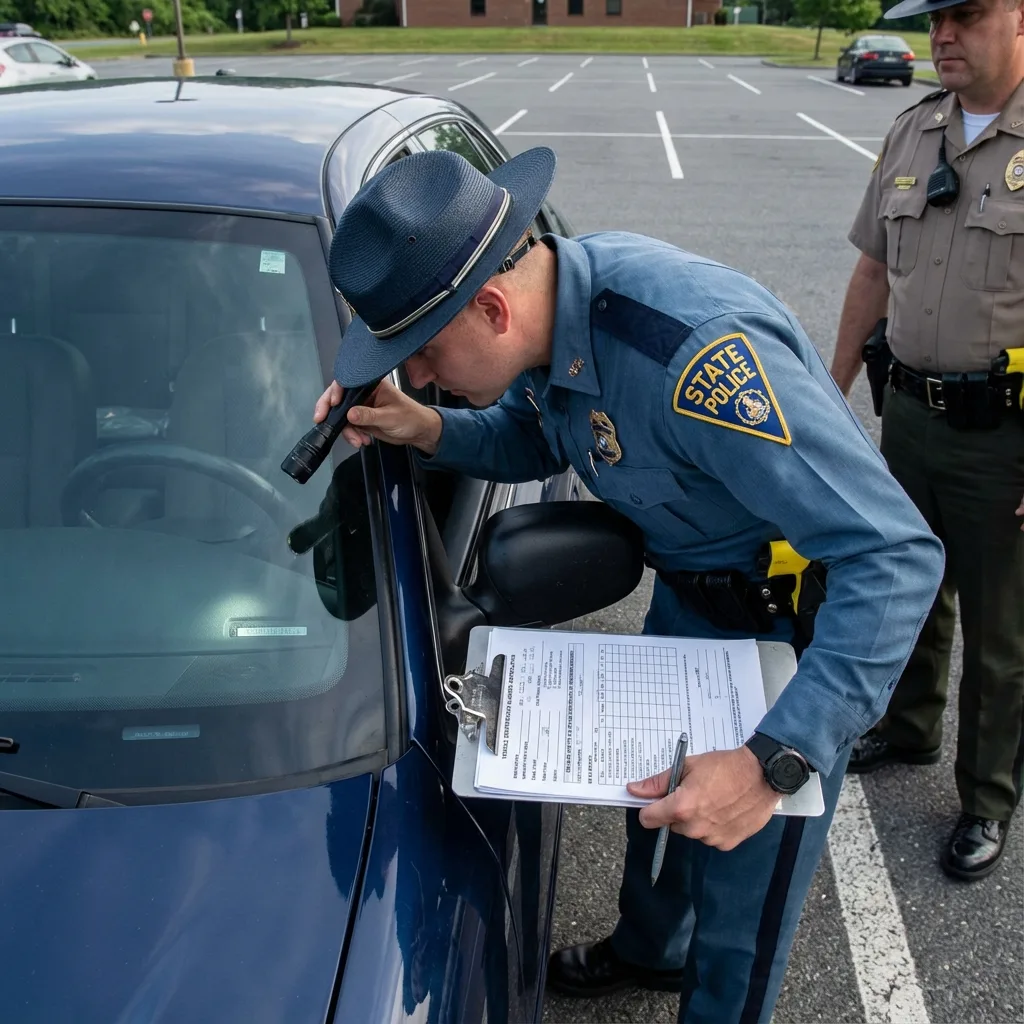
This is the most common hurdle for out of state MCO registrations. Because the vehicle has never been titled in your state (or anywhere else), your local DMV wants proof that the vehicle actually exists and isn’t a collection of stolen parts.
They will demand a VIN Verification or Physical Inspection.
Here is the catch-22: You cannot legally drive the vehicle to the inspection station because you don’t have plates. But you can’t get plates until you get the inspection.
- Florida: Requires the HSMV 82042 form. You usually have to drag the vehicle to a police station, a DMV office, or a tax collector’s office.
- California: You need a verification of the vehicle (REG 31) completed by an authorized DMV employee or peace officer.
- Texas: Requires a specific “Safety Inspection” (VI-30) at a state-certified station before you can even approach the tax office.
If you bought a trailer or an off-road vehicle, hauling it there is annoying. If you bought a car, you risk a ticket driving it there on an expired dealer temp tag (or no tag at all).
The deeper problem is that VIN inspections aren’t just about reading the dashboard plate. Inspectors are looking for the secondary VIN locations: the door jamb sticker, the engine block stamp, the firewall plate, the frame rail etching. On modern vehicles, the federal Motor Vehicle Theft Law Enforcement Act requires manufacturers to stamp the VIN on at least 14 different parts. If even one of those secondary VINs is missing, scratched, or doesn’t match the MCO, the inspector can flag the vehicle as suspicious. That triggers a Department of Public Safety review, which can take 30 to 90 days and may require a state-issued “rebuilt” or “salvage” notation on your eventual title, even though the truck is brand new.
For trailers and off-road equipment, the VIN inspection is often even worse. A boat trailer’s VIN tag is sometimes a sticker on the tongue that came off the first time you backed into your driveway. ATVs and side-by-sides have VINs in odd locations like under the seat or stamped into the frame near the rear axle, and inspectors who deal mostly with passenger cars sometimes can’t find them at all. We’ve seen Florida tax collector offices send buyers home twice because the inspector “couldn’t locate the VIN” on a Polaris RZR, when it was right there under the engine cover the whole time.
3. State-Specific VIN Inspection Requirements (The Detailed Breakdown)
Generic advice doesn’t help when you’re standing in line at the tax office with the wrong form. Here’s the real breakdown of who can perform a VIN inspection in the most common destination states, what it costs, and how long you’ll wait.
Florida’s HSMV 82042 is one of the more flexible options because almost any notary public can sign off on it. That sounds easy until you discover that many notaries refuse to perform VIN inspections because their E&O insurance doesn’t cover errors in vehicle identification. UPS Store notaries usually decline. Bank notaries usually decline. You end up calling around to mobile notaries who charge $40–$75 to come to your driveway with a flashlight and a clipboard.
California’s REG 31 is the worst of the bunch. The DMV will perform it for free, but you have to make an appointment, and in most metro areas the next available slot is six to eight weeks out. Many buyers end up driving the unregistered vehicle to a CHP office hoping a sympathetic officer will fill it out on the spot, a coin flip that frequently ends with “we don’t do those here, sorry.”
Texas’s safety inspection is conceptually simple but adds a hidden tax: even after the inspection station signs off, you still owe the state safety inspection fee, which gets bundled with your registration. For commercial vehicles and heavy trucks, the inspection is more involved and can run $40 to $200 depending on the vehicle class.
4. The Emissions Trap (The California/Nevada Scenario)
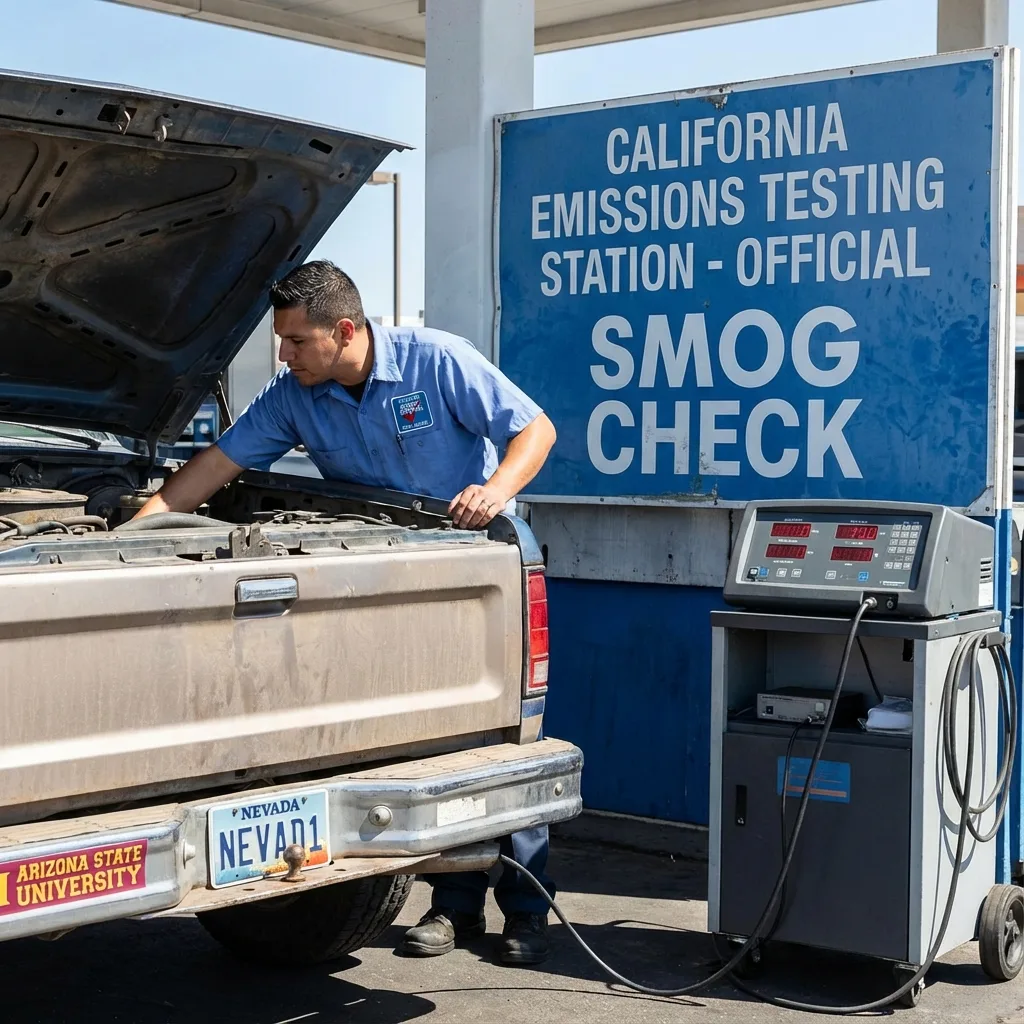
If you live in a CARB (California Air Resources Board) state and you bought a vehicle in a non-CARB state, you might be holding a very expensive paperweight.
Scenario: A California resident buys a new car in Nevada to save a few bucks or because stock was available.
California has a strict “7,500-mile rule.” If you are a California resident and you acquire a new vehicle (defined as having less than 7,500 miles) from another state, it must be 50-state certified.
Many vehicles sold in Nevada or Arizona are “49-state” vehicles. They meet federal standards but not California’s stricter smog laws. If you walk into the CA DMV with a Nevada MCO for a 49-state car with 500 miles on it, they will refuse to register it. There is no fix for this at the CA DMV level. You cannot just “pay a fine.” You essentially cannot register that car in California until it has 7,500 miles on it.
Even at 7,500 miles, you’re not in the clear. The vehicle then must pass a California smog test using California-spec equipment, and if your truck or SUV is configured with a “California Optional Equipment” delete (cat-back exhaust, tuner, intake) it will fail and you’ll spend thousands restoring it to OEM. Diesel trucks are particularly brutal: a 2024 Ford F-250 sold in Texas with the standard emissions configuration may not have the same DPF and SCR calibration California requires, and the dealer software update needed to bring it into compliance can cost $1,200 to $2,800.
The other 16 CARB-aligned states (including Colorado, New York, Oregon, Washington, Massachusetts, and Vermont) have their own variations of this rule. Colorado, for example, follows California’s standards for new vehicles starting with model year 2027 but has carve-outs for trucks above 14,000 lbs GVWR. New York applies CARB rules but has a more lenient “established residency” provision. The point is: if you’re moving from a non-CARB state to a CARB state and you bring a brand-new MCO with you, expect a smog headache.
Warning: This is why many California residents use Montana LLC registration to bypass California’s CARB restrictions entirely. Montana doesn’t enforce California’s emissions laws.
5. Sales Tax Complications (Home State Wants Their Cut)

This is the one that hurts your wallet the most. Many buyers assume that if they buy in a state with lower sales tax, they save money.
False.
Your home state DMV doesn’t care what you paid (or didn’t pay) to the dealer. They care about where the vehicle is domiciled.
- If you buy a car in Montana (0% tax) and bring it to Florida, Florida will demand their 6% sales tax (plus discretionary surtax) the moment you try to swap that MCO for a Florida title.
- If you paid 3% tax to the dealer in North Carolina and move it to a state with 8% tax, your home state will usually demand you pay the difference (the remaining 5%).
The DMV will ask for a Bill of Sale that clearly breaks down exactly how much tax was collected. If that number is zero, or lower than your home state’s rate, get your checkbook ready. You aren’t getting plates until the difference is paid.
What makes this worse is that your home state will frequently use the higher of the actual sale price or the “fair market value” as the taxable basis. So if you negotiated a great deal and paid $58,000 for a truck that NADA Clean Retail says is worth $72,000, the DMV may try to tax you on $72,000. You can challenge it, usually by providing a notarized Bill of Sale, the dealer’s invoice, the buyer’s order, and proof of any trade-in, but you have to know to challenge it. Most buyers just hand over the credit card and grumble.
6. Sales Tax Credit and Reciprocity (The “Difference Rule”)
Most states participate in some form of sales tax reciprocity, but the specifics are inconsistent and frequently misunderstood. Here’s how it really works.
The general rule is that if you paid sales tax on the vehicle in the state where you bought it, your home state will give you a credit against your home-state tax bill, but only up to the amount of tax your home state would have charged. If your home state’s rate is higher, you owe the difference. If your home state’s rate is lower, you get nothing back. The state that collected the tax keeps it.
Example 1 — The Classic Difference Rule: You buy a car in South Carolina and pay the SC infrastructure maintenance fee of $500 (the SC cap). You then move to Florida, where the rate is 6% plus discretionary county surtax. On a $50,000 truck, Florida wants $3,000 in state tax. Florida credits you $500 for what you paid SC, leaving you with $2,500 still owed to Florida. Plus the $75 county discretionary surtax. Plus title fees. Plus tag fees.
Example 2 — The Worst-Case Scenario: You buy in Tennessee and pay 7% state plus 2.75% local on the first $1,600 plus 9.25% on the rest. Then you move to California where the rate hits 7.25%–10.25% depending on the city. California will not refund you the difference even though you over-paid in Tennessee. You paid more total tax to Tennessee than California would have charged, but you don’t get the surplus back. This is why buying a vehicle in a high-tax state and immediately moving it to a lower-tax state is one of the worst possible scenarios.
Example 3 — The Total Loss: You buy in Montana (0% tax) and bring the vehicle to Texas (6.25% state). Texas gives you zero credit for tax paid in Montana because there was no tax paid. You owe the full 6.25% on the SPV (Standard Presumptive Value), which is whatever Texas’s appraisal database says the vehicle is worth, not necessarily what you paid.
States that do not grant reciprocity at all (so you may pay full tax twice if you mis-sequence the move) include Indiana for vehicles purchased less than 12 months before establishing residency, and certain commercial vehicle categories in California. Always confirm with the destination state’s department of revenue before assuming you’ll get a credit.
Important: The “credit” doesn’t apply if the tax you paid wasn’t a true sales tax. South Carolina’s $500 IMF, Oklahoma’s excise tax, and certain “use fees” are sometimes treated as registration fees by destination states, meaning zero credit. Always check the exact statute in your home state.
7. Strict Bill of Sale Requirements
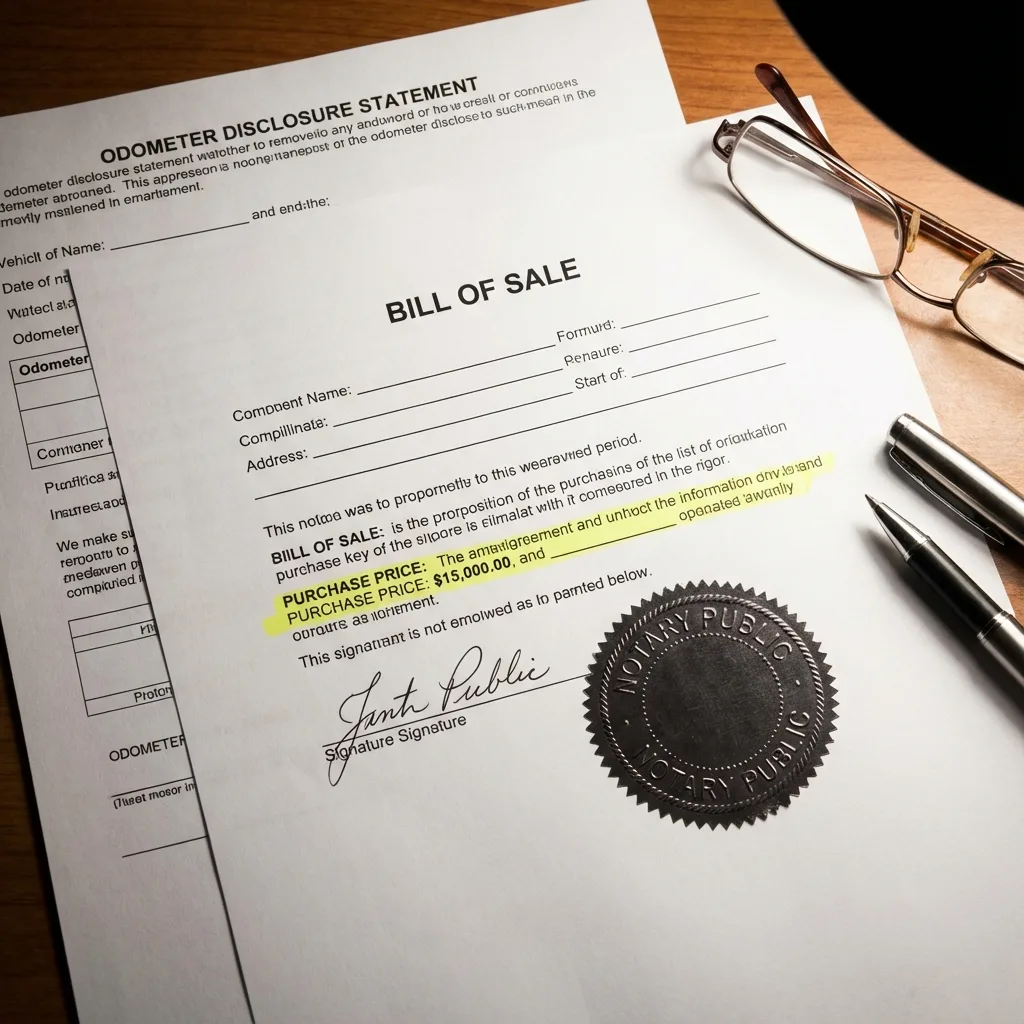
An MCO proves the vehicle exists, but a Bill of Sale proves you own it. When dealing with out-of-state transactions, a handwritten napkin won’t cut it.
DMVs are notoriously picky about the Bill of Sale when an MCO is involved. They typically require:
- Odometer Disclosure Statement: Federal law requires this for vehicles under a certain age. If it’s missing or not on the specific state form your DMV likes, you get rejected.
- Notarization: Some states require the seller’s signature to be notarized. If you bought from a dealer, this is usually fine. If it was a private party sale involving an un-titled vehicle (rare but happens with off-road toys), a missing stamp means a rejected application.
- Purchase Price Verification: If the price looks “too low,” the DMV may reject the Bill of Sale and charge you tax based on the “Book Value” (NADA/KBB) instead of what you actually paid.
The Federal Truth in Mileage Act (TIMA) requires the odometer disclosure to be on a “secure” form. For vehicles less than 20 years old (the federal exemption was extended in 2020), the statement must be physically attached to the title or on a separate state-approved secure odometer form. A handwritten note on the back of an invoice will not satisfy a competent title clerk. If the dealer used the wrong form, say, they used their own state’s odometer form which differs from yours, you may have to drive back across state lines to get a corrected disclosure.
Some destination states require a notarized Bill of Sale with very specific language. Pennsylvania requires Form MV-4ST. New York requires Form DTF-802 if no tax was paid at the dealer. Maryland requires Form VR-181. If your selling dealer doesn’t already have these forms in their stack, you’ll be running paperwork back and forth in the mail for weeks.
8. Proof of Insurance (From the Right State)
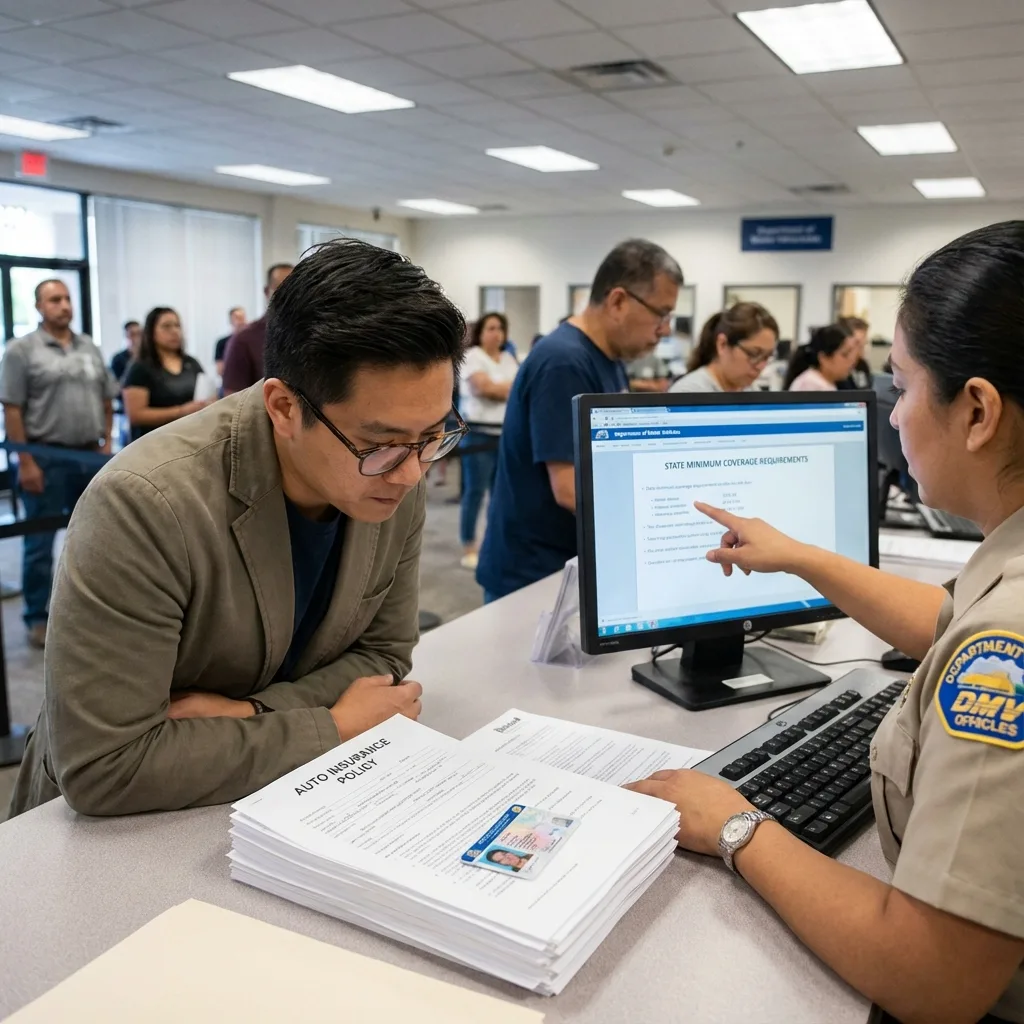
You have insurance. Great. But is it the right insurance?
Scenario: A New York resident buys a car in Pennsylvania.
New York is incredibly strict. You cannot register a vehicle in NY without an NY-specific insurance ID card with a barcode scannable by the DMV. A binder or a policy declaration page from a PA agent often won’t work.
When you walk into the DMV with an out of state MCO, they will scrutinize your insurance to ensure it meets the minimum liability standards of the state you are registering in, not the state you bought it in. If your policy hasn’t been updated to reflect the new jurisdiction, you’re walking out empty-handed.
The bigger insurance question, though, is what happens during the gap between when you bought the vehicle and when it’s registered. Many auto insurance policies include “newly acquired vehicle” coverage that extends your existing policy to a new vehicle for 14 to 30 days, but only if you call your agent within that window and only if the vehicle is being registered in the same state where your policy was written. If you bought a Texas truck on a Tuesday and you’re a Florida resident, your Florida policy may not extend coverage to the new vehicle while it’s still in Texas because the underwriting was based on Florida garaging.
If you’re driving a vehicle home with no plates or with an out-of-state transit permit, your liability coverage may be valid but your collision and comprehensive coverage may not. Some carriers explicitly exclude coverage for unregistered vehicles. If you total an unregistered F-350 in a single-vehicle accident on the way home from the dealer, you could be looking at a complete out-of-pocket loss on a $90,000 truck.
9. Temporary Transit Permits
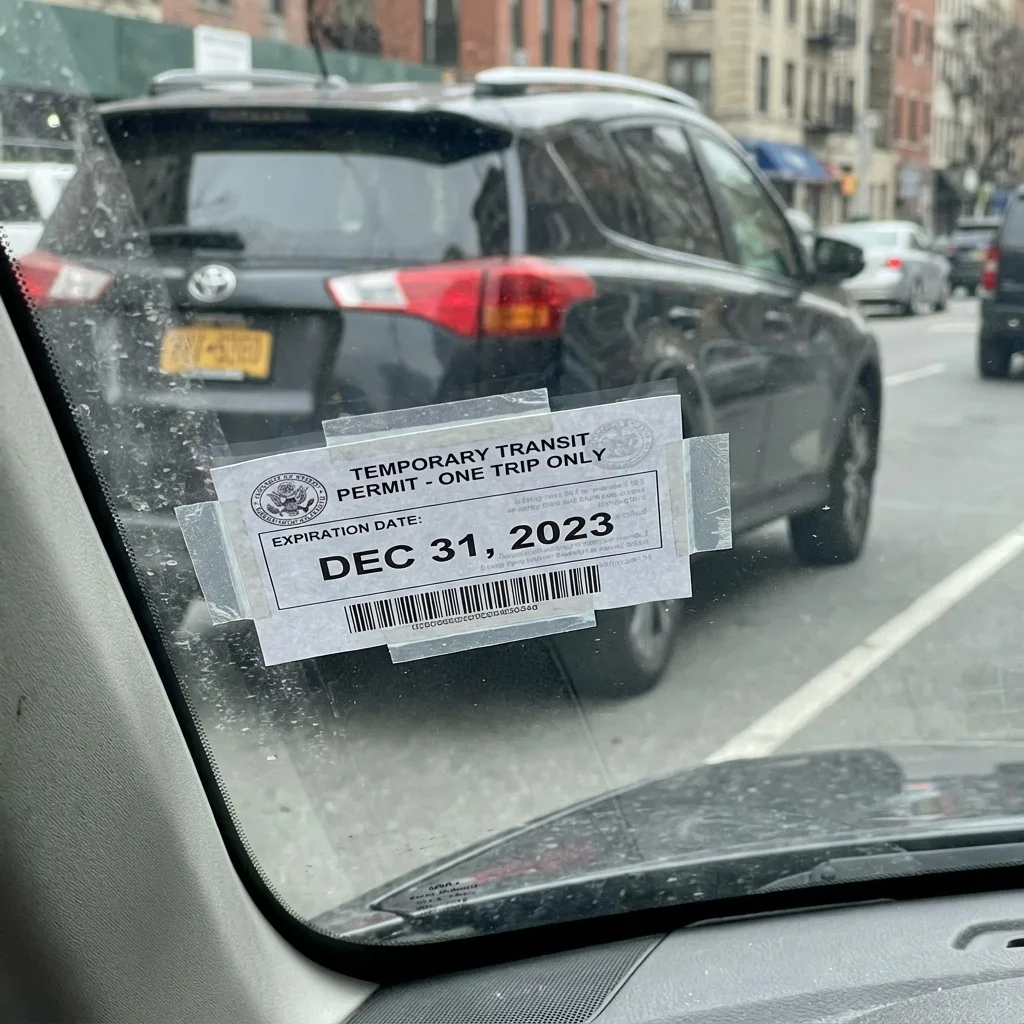
How do you legally get the vehicle from the seller to your home state?
If the dealer didn’t give you a temp tag (common with private sales or trailer/powersports MCOs), you are in a bind. You cannot drive a vehicle without plates.
You must apply for a Transit Permit or One-Trip Permit from the state where you purchased the vehicle. This allows you to drive the vehicle only to the border or your destination.
- These permits are often valid for only a few days.
- If you get pulled over in a third state along the way with an expired transit permit, expect an impound.
10. Transit Permit Deep Dive (State by State Rules)
Transit permits vary a lot from state to state. Some states issue a sticker on the windshield. Some issue a paper plate that gets taped in the rear window. A handful of states now offer fully electronic permits that print from a kiosk inside the dealership. And several states have wildly different rules about whether their transit permit is valid outside their state borders. Here’s the actual breakdown.
Texas and Oregon have moved fully electronic. You apply on the state’s website, pay the fee, and print a PDF that you tape inside your windshield. The state law enforcement database is updated in real time, so when an officer in Louisiana scans your plate (or runs the permit number through dispatch), the permit shows as valid.
Nevada is the trap state. Their “movement permit” is technically only valid for transporting the vehicle within Nevada, say, from a dealer in Las Vegas to a storage lot in Pahrump. The moment you cross into Arizona, California, or Utah, you are technically driving an unregistered vehicle. Most states have reciprocal courtesy on transit permits, but a Highway Patrol officer who’s having a bad day can absolutely write you a ticket and order an impound. Don’t bet your truck on goodwill.
Florida’s 30-day temp tag is the most generous, but you have to pay sales tax on the vehicle before they’ll issue it. So if you’re a Florida resident buying in Florida, you can get a 30-day tag right at the tax collector’s office. If you’re an out-of-state buyer trying to get the vehicle home through Florida from a dealer in Miami, the math is more complicated.
The bottom line: every transit permit has a clock on it, and every mile you drive past the expiration is a roadside lottery ticket. Insurance carriers know this. Your auto policy may have a “permitted use” exclusion that voids coverage if the vehicle isn’t legally registered for road use, even if you’re carrying a transit permit.
11. The “Drive-It-Home” Risk Calculator
Let’s say you decide to roll the dice. You bought the vehicle in another state, the dealer’s temp tag has already expired, your transit permit is gone, and you just want to get it the last 200 miles home so you can deal with your local DMV on Monday morning. What’s the actual risk?
The answer depends heavily on which state you’re in when the lights come on behind you.
Florida: A Florida law enforcement officer who pulls you over with no plate and no temp tag has discretion. The statute (FL §316.605) allows for fines from $116 to $250 for operating an unregistered vehicle. Most officers will write the ticket and let you proceed if you can show insurance and the MCO. Impound is rare unless they suspect the vehicle is stolen. But if the officer suspects you’re operating without insurance for the new vehicle, remember the gap-coverage problem, you could be looking at a mandatory tow and a 10-day impound at $35-$50 per day.
Texas: Texas Transportation Code §502.473 makes operating an unregistered vehicle a Class C misdemeanor with fines up to $200. Texas officers have wide discretion to impound, but the more common consequence is a “fix-it ticket” requiring you to register within 20 days and pay a small fine. The bigger Texas trap is the safety inspection requirement, if you’re driving an unregistered out-of-state vehicle and the officer sees no inspection sticker, it can compound the violations.
California: California Vehicle Code §4000(a) imposes fines starting at $200 for an unregistered vehicle, but the real pain is the cumulative effect: you can also be hit with §16028 (failure to provide proof of insurance, $796), §40225 (operating without registration after notice), and §22651(p) (impound authorization). A California stop with no plates can easily result in a tow and storage of $250 plus daily fees, plus a 30-day “title check” hold while the vehicle sits at an impound lot.
Ohio: Ohio Revised Code §4503.11 makes failure to register a minor misdemeanor with fines up to $150. Ohio officers rarely impound for first time registration issues if the vehicle has the MCO and a plausible “I just bought it” story. Cleveland and Cincinnati are stricter than rural counties.
The hidden cost most buyers ignore is the insurance question. Even if you avoid a ticket, an accident in an unregistered or improperly-permitted vehicle creates a chain reaction: your carrier may deny the claim, the other driver’s carrier may sue you personally, and your assets become exposed. A single at-fault accident in an unregistered $80,000 truck could end with a $200,000+ judgment that follows you for years.
Don’t roll the dice. The cost of a Montana LLC ($899 in year one) is less than a single impound fee, and you’ll have valid plates in your hand before the vehicle ever rolls a tire on a public road.
12. State-Specific Variations: The “Gotchas”
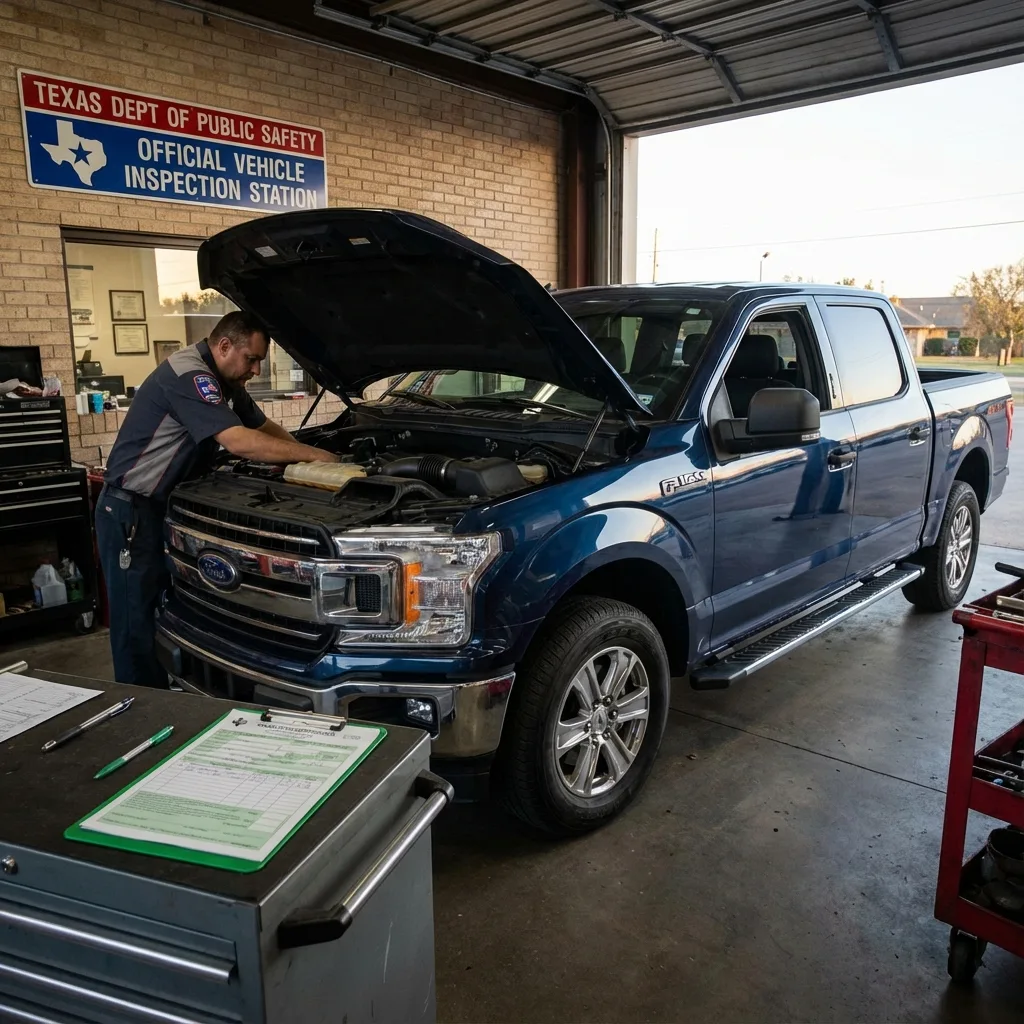
Every state handles out of state MCO registrations differently. Here is a quick look at the headaches in popular states:
- California: As mentioned, the 7,500-mile smog rule is the killer. Plus, you have 20 days to register before penalties kick in.
- Florida: High initial registration fees. If you are new to the state, the “New Wheels on the Road” fee is $225 on top of title and tag fees.
- Texas: You must pass a Texas vehicle safety inspection before you go to the county tax office. No inspection, no registration. This applies even if the car is brand new with an MCO.
- New York: Requires a specific “Sales Tax Clearance” (Form DTF-802 usually) claiming you paid tax, or you pay it right there. They are aggressive about out-of-state purchases.
- Pennsylvania: Requires a tracing of the VIN plate (pencil rubbing) or verification by a mechanic/notary.
The deeper layer of “gotchas” includes things most buyers never see coming. Florida’s “New Wheels on the Road” $225 fee applies even if your car is 15 years old, has 200,000 miles, and you’ve owned it the whole time, it’s triggered by your first Florida title, not by the age of the vehicle. New York’s DTF-802 has to be filed even when you paid full sales tax in another state, otherwise the DMV assumes you’re trying to dodge the tax. Pennsylvania’s VIN tracing is so antiquated that some PennDOT clerks have rejected digital VIN photos that other states accept routinely.
Less-discussed gotchas: Maryland charges a $50 “title fee” plus a 6% excise that’s applied to the higher of the sale price or the book value, and they audit aggressively when the price is more than 20% below book. Arizona charges a “VLT” (Vehicle License Tax) annually that’s calculated on a depreciated MSRP basis, so if your MCO shows a high MSRP your annual bill stays high for years. Virginia charges an annual personal property tax on vehicles that can run $1,000+ per year on luxury vehicles, regardless of whether you bought the vehicle in Virginia or somewhere else.
13. Common Rejections

Why do people fail when trying to register an out of state MCO themselves?
- Name Mismatch: The name on the MCO (assignment block) must match the name on the application exactly. If the dealer wrote “Jon Smith” but your license says “Jonathan Smith,” some DMVs will reject it.
- Alterations: If there is any cross-out, white-out, or scribbling on the MCO, the DMV will void it. You will have to go back to the manufacturer for a duplicate MCO, which can take weeks.
- Chain of Ownership: If the MCO was assigned from the Manufacturer → Dealer A → Dealer B → You, you need proof of all those transfers. If a link is missing, the chain is broken, and the DMV won’t title it.
Other underrated rejection triggers: missing the dealer’s federal employer identification number (FEIN) in the assignment block; the dealer using blue ink in one signature box and black in another (some states actually flag this); the lien holder section being filled out with placeholder language even though you paid cash; and the MCO being printed on the wrong side of the perforated form so the security features don’t align when scanned.
Replacement MCOs are a special kind of nightmare. If your original gets damaged, lost in the mail, or rejected for alterations, you have to request a duplicate from the manufacturer. Ford, Chevrolet, and Stellantis duplicate MCO requests typically take 4–8 weeks and require notarized affidavits explaining what happened to the original. Specialty manufacturers (Polaris, Can-Am, Triton trailers) can take 8–12 weeks and may require the dealer to make the request on your behalf, putting you at the mercy of a dealer who has no incentive to help anymore.
Pro Tip: Document everything. Keep copies of your purchase agreement, wire transfer confirmations, and any emails or texts with the dealer. This paperwork is critical if you need to file a complaint or lawsuit.
See how others have successfully handled MCO issues:
- How to Transfer a Certificate of Origin 2026: Step-by-Step Guide
- Dealer Won’t Release Your MCO 2026: How to Recover a Stuck Certificate of Origin
14. Three Real-World Case Studies
The theory is one thing. Here are three actual scenarios showing how the rules above play out for real buyers, and what the Montana LLC route would have looked like instead.
Case Study 1: The Ohio Resident and the Texas Silverado HD
Mike, a contractor in Dayton, Ohio, found a 2025 Chevrolet Silverado 3500HD Duramax at a Houston dealer for $12,000 less than any Ohio inventory. He flew down, signed the paperwork, paid in full, and the dealer issued him a 5-day Texas one-trip permit. Mike planned to drive the truck the 1,150 miles back to Ohio over a long weekend.
The trip went fine until day six. The transit permit had expired by the time Mike crossed into Ohio. He got pulled over in Cincinnati for a license plate light that was actually working, the officer just wanted a closer look at the plate-less truck. The officer wrote Mike a citation for operating an unregistered vehicle (Ohio Revised Code §4503.11) and instructed him to register within 20 days.
Mike took the Texas MCO, his bill of sale showing $0 Ohio tax paid, and the citation to his local Ohio BMV. There he learned: (1) Ohio requires a VIN inspection (BMV 4569) before titling, $5 fee; (2) Ohio wanted 5.75% sales tax plus 1% Montgomery County tax, totaling $4,748 on the $69,800 purchase price; (3) Ohio also wanted the title fee ($15), permanent license plate fee ($31), and the diesel-specific commercial registration since the truck was over 10,000 lbs GVWR ($550 annually); and (4) because the Texas permit had expired before he completed registration, an additional $150 penalty applied.
Total damage: $5,499 in tax and fees, plus the citation fine ($120), plus a missed work day to handle the BMV. Total time from purchase to plates in hand: 19 days.
Montana LLC alternative: Year 1 cost of $899 (Zero Tax Tags service plus LLC formation), no Ohio sales tax, no BMV visit, no VIN inspection, plates mailed to his door within 10 business days. Five-year savings: more than $4,500.
Case Study 2: The Florida Buyer and the Nevada Can-Am
Alicia, a recreational rider in Sarasota, Florida, bought a 2026 Can-Am Maverick X3 RS Turbo RR for $36,500 from a Nevada dealer who advertised “no sales tax” because she was an out-of-state buyer. The dealer handed her a Nevada MCO, a Bill of Sale showing $0 Nevada tax collected, and shipped the unit to her on a flatbed (avoiding any transit permit issue).
Alicia walked into her Sarasota County tax collector with the MCO, expecting a quick title transfer. She left in tears. The tax collector explained that Florida considers a Can-Am Maverick X3 a “low-speed vehicle” only under certain configurations; otherwise it’s classified as an off-highway vehicle (OHV) requiring a separate OHV registration plus title. To title it for road use (street legal in certain Florida counties), she needed: HSMV 82042 VIN inspection, proof of Florida liability insurance ($143 minimum), title fee ($85), and 6% Florida sales tax plus 1% Sarasota County discretionary surtax on the first $5,000 = $2,240.
The bigger surprise: because the MCO listed it as a “side-by-side ATV” rather than a low-speed vehicle, Florida required additional inspection at a designated DMV office (not a notary), pushing the timeline out three weeks. During the wait, Alicia couldn’t legally use the unit on any public road.
Total damage: $2,468 in fees and tax, plus three weeks of wasted time and a unit collecting dust.
Montana LLC alternative: Year 1 cost of $899, Montana issues OHV/UTV registration easily by mail, no sales tax (saved $2,240), no Florida inspection, no waiting. Plates and registration arrived in 8 business days. Net savings in year one alone: more than $1,600 even after factoring the LLC service.
Case Study 3: The California Resident and the Arizona F-250
David, a software engineer in San Diego who needed a tow vehicle for his travel trailer, found a 2025 Ford F-250 Super Duty at an Arizona dealer for $4,800 less than any California listing. The truck had 312 miles when he bought it, which the salesperson assured him was “fine because it’s federally compliant.” David paid Arizona’s 5.6% sales tax ($4,256) at the dealer and drove the truck home on a 90-day Arizona temporary registration.
Two days later David visited his San Diego DMV to swap the Arizona MCO for a California title. The clerk took one look at the MCO emissions sticker, a 49-state federal sticker, not the California “PZEV” or 50-state sticker, and shut him down. The truck had less than 7,500 miles, classifying it as “new” under California rules. California Vehicle Code §43151 prohibited registration without 50-state certification.
The clerk explained David’s options: (1) put 7,200 more miles on the truck before attempting to register it again; (2) sell the truck out of state at a likely loss; or (3) accept the truck would never be street legal in California. The dealer in Arizona refused to take the truck back. The Arizona sales tax was non-refundable. David’s $78,000 truck became an expensive driveway ornament for nine months while he racked up miles on weekend trips out to Arizona and Nevada just to bump the odometer.
Total damage: $4,256 Arizona sales tax (non-refundable), nine months of unusable truck, $1,200+ in fuel for “miles padding” trips, plus the eventual California registration costs once the truck hit 7,500 miles ($2,891 California sales tax credit-applied, $145 title and registration, $87 smog).
Montana LLC alternative: Year 1 cost of $899. Montana doesn’t enforce California’s CARB rules. The truck would have been registered to David’s Montana LLC within two weeks of purchase, fully legal to drive anywhere in the country. He would have saved the entire $4,256 Arizona sales tax (Arizona doesn’t charge sales tax on purchases by out-of-state LLCs that take delivery via title transfer), and he would have avoided the entire 7,500-mile waiting nightmare. Lifetime savings on this one truck: $7,500+.
The Pattern: In every case study, the buyer “saved” money on the purchase price by going out of state, only to have those savings, and more, eaten alive by sales tax, fees, inspection costs, registration penalties, and time. Every single one of these scenarios would have been cleanly solved by having the MCO routed to a Montana LLC instead of the buyer’s home-state DMV.
15. The Montana LLC Advantage (The Ultimate Fix)
If reading the above made you tired, there is a shortcut.
You can skip the local DMV, skip the inspections, and often skip the sales tax by using a Montana LLC.
Scenario: A Florida resident buys a UTV or luxury car in Montana (or anywhere else).
Instead of transferring that MCO to Florida (paying 6% tax, doing a VIN check, and paying high fees), you transfer the MCO to a Limited Liability Company (LLC) based in Montana.
- No Physical Presence: You do not need to live in Montana. The LLC lives there.
- No Sales Tax: Montana has 0% sales tax on vehicles.
- Easy MCO Handling: Montana is accustomed to handling MCOs from all over the country. They don’t require you to bring the vehicle to Montana for a VIN inspection.
- Permanent Plates: For older vehicles, Montana offers permanent registration. Pay once, and never visit the DMV again.
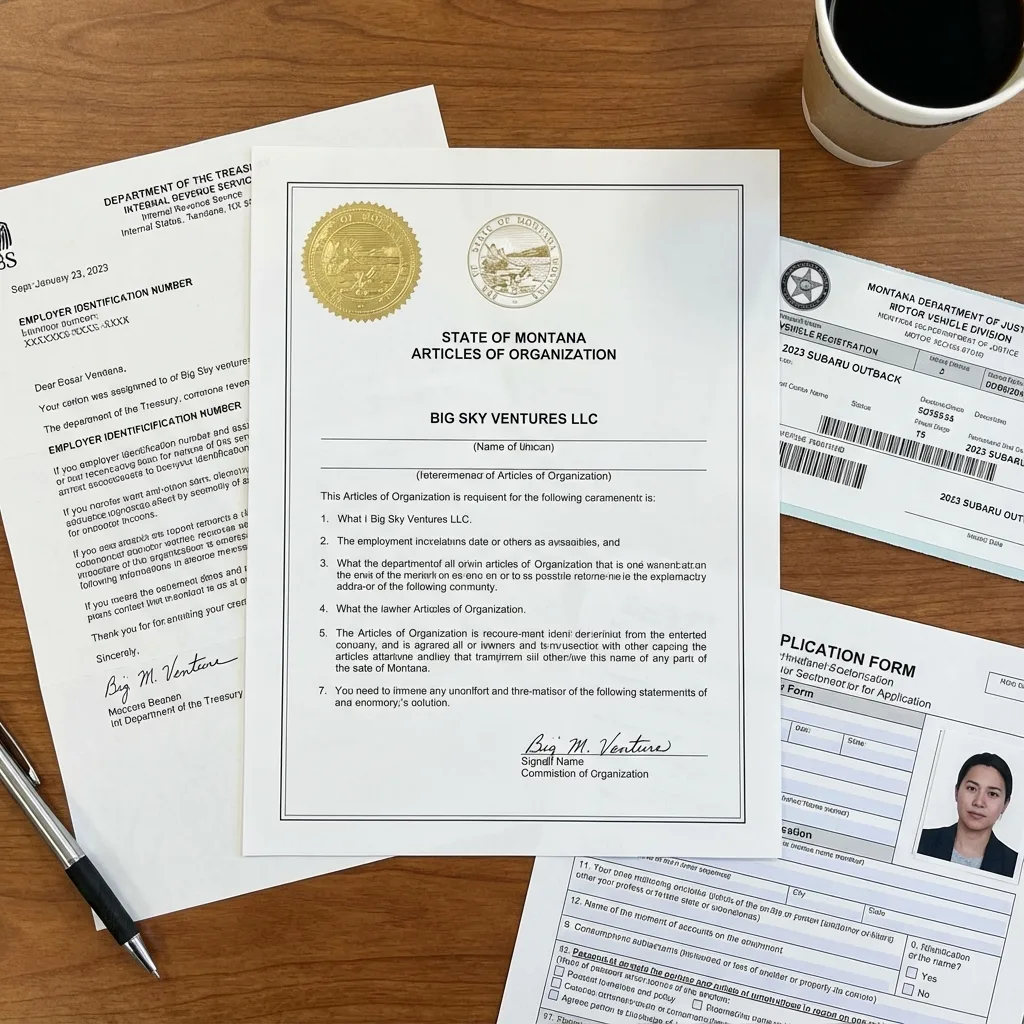
This is not a loophole; it is a legal asset-holding structure. Your LLC owns the vehicle, and you own the LLC. You get a legal title, registration, and license plate mailed to your door.
Here is exactly what Zero Tax Tags handles when you send us your out-of-state MCO:
- Form your Montana LLC with the Montana Secretary of State (Articles of Organization, EIN, registered agent)
- Receive your MCO at our Montana office
- Title the vehicle to your Montana LLC at the Montana MVD
- Register the vehicle and receive Montana plates
- Ship the plates, registration, and title directly to your address (anywhere in the country)
- Provide annual renewal service so you never have to think about it again
Pricing transparency:
- Year 1: $899 total ($699 for our service + $200 Montana LLC formation filing fee)
- Year 2 onward: $270 per year ($150 Montana registration renewal + $120 LLC annual filing maintenance)
- 5-year total: $1,979
Compare that to the $5,499 Mike paid in Ohio fees in case study #1, the $2,468 Alicia paid in Florida fees in case study #2, or the $4,256 David paid in Arizona sales tax (with no California registration) in case study #3. The Montana route pays for itself within the first year on virtually any vehicle over $25,000.
Example: A Texas resident with an Oklahoma trailer MCO can send it to Zero Tax Tags. We form a Montana LLC, title the trailer to the LLC, and the owner receives a license plate by mail. No Texas inspection. No 6.25% sales tax.
Zero Tax Tags: We Handle Out-of-State MCO Complications
An MCO should be a ticket to freedom, not an invitation for the state to audit your wallet and waste your time.
If you have an out of state MCO and the DMV is giving you the runaround, or if you simply want to avoid the taxes and inspections from day one, Zero Tax Tags is your solution. We deal with the bureaucracy so you can just drive.
Whether your MCO is for a luxury truck, a custom trailer, a powersports unit, an RV, or a one-off specialty build, we have routed thousands of out-of-state certificates through the Montana titling process. We know which Montana MVD office processes which form fastest. We know how to handle dealer-assignment errors that would cause a home-state DMV to reject the document. We know how to expedite duplicate MCO requests when an original is damaged or lost in transit.
And most importantly, we make the entire process painless. You ship us the MCO and the supporting paperwork; we handle every state-side filing and ship you back a Montana title, registration, and metal plate. No DMV lines. No VIN inspection appointments. No sales tax negotiation. No emissions test rejection.
Don’t let a piece of paper park your ride.
Ready to Skip the Out of State MCO Nightmare?
Vehicle owners across America have saved thousands by registering through Montana LLCs instead of fighting their home state’s bureaucracy. No VIN inspections, no emissions tests, no sales tax.