10 min read
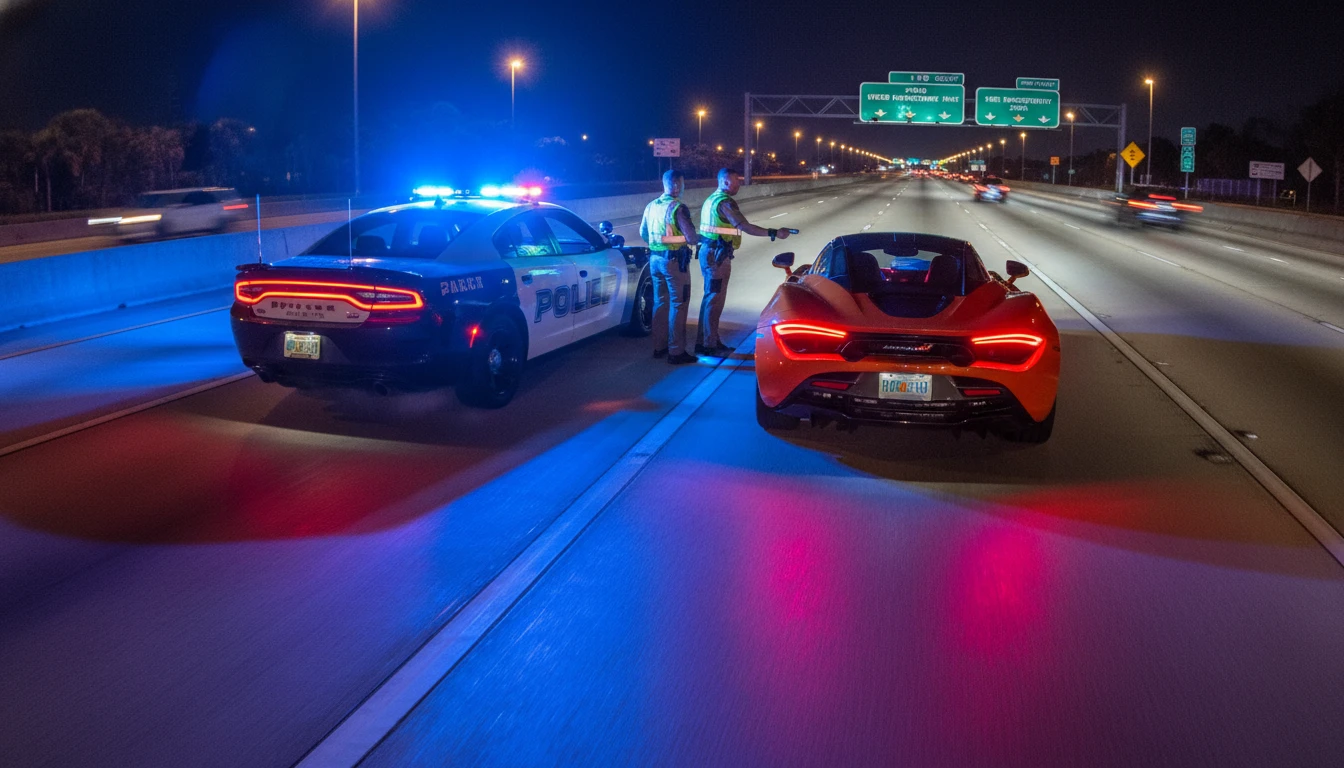
Key Takeaway: What was once a $250 fine is now a criminal misdemeanor with up to 30 days in jail on a first offense.
On this page
- + Part 1: The Law Itself
- + Part 2: Criminal Penalties
- + Part 3: Before vs. After July 1, 2025
- + Part 4: Enforcement Data & Trends
- + Part 5: Legislative Rationale
- + Part 6: Florida vs. Other States
- + Part 7: Practical Consequences
- + Part 8: Prosecution & Legal Defenses
- + Part 9: Montana Plates & This Law
- + Part 10: FAQ
- + Part 11: Financial Impact Analysis
- + Part 12: Conclusion
The Florida super speeder law changed everything on July 1, 2025. Florida’s House Bill 351 (HB 351) and Senate Bill 1782 (SB 1782) transformed extreme speeding from a civil traffic violation into a criminal offense.
The law creates a new classification called “Dangerous Excessive Speeding” under Florida Statute § 316.1929, imposing jail time, substantial fines, and mandatory license suspension for drivers caught exceeding 100 mph or driving 50+ mph over the posted speed limit.
Part 1: Understanding the Florida Super Speeder Law
Legal Definition of “Dangerous Excessive Speeding”
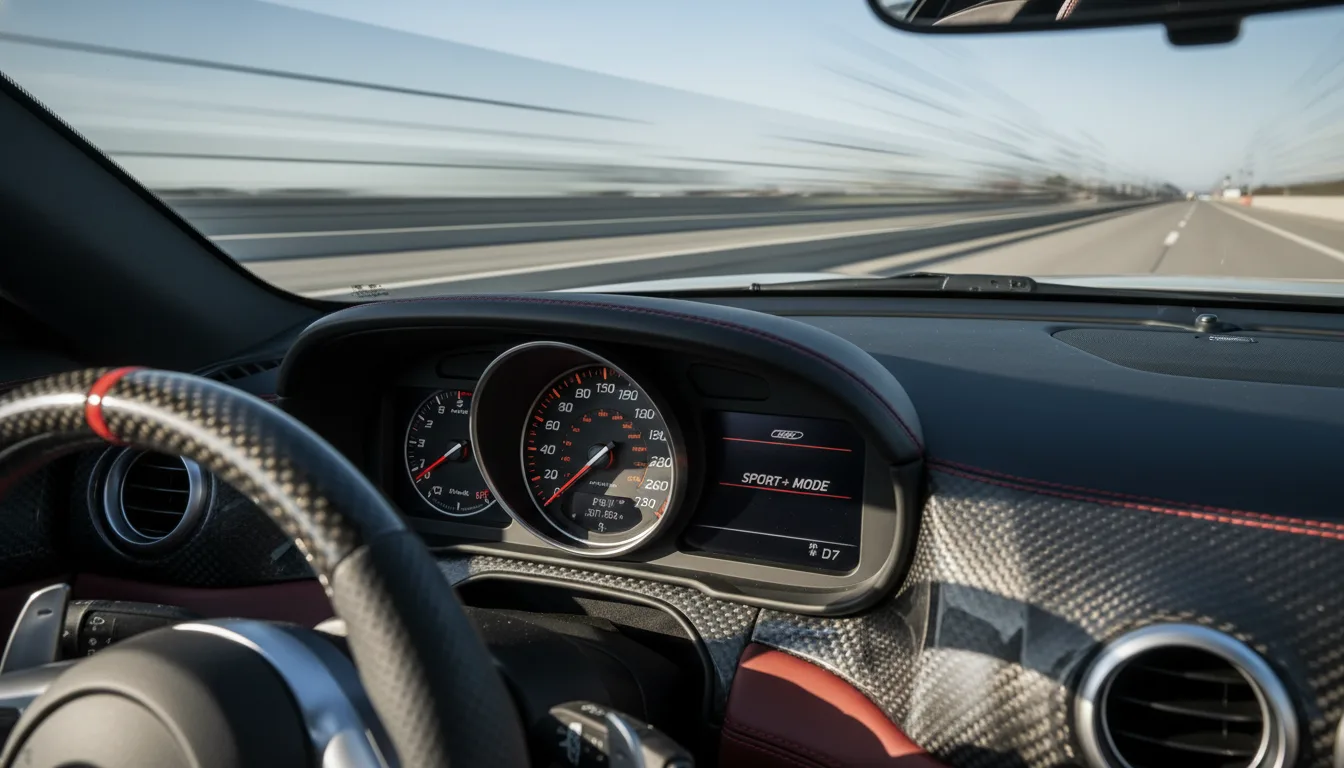
Florida Statute § 316.1929 creates a criminal offense when a driver meets either condition:
Condition A: Exceeds the speed limit by 50 miles per hour or more
Condition B: Operates a motor vehicle at 100 miles per hour or more in a manner that:
- Threatens the safety of other persons or property, OR
- Interferes with the operation of any vehicle
Critical distinction: Condition A requires NO evidence of dangerous driving behavior. Simply being 50 mph over the limit is automatic. Condition B (100+ mph) requires the manner of driving to pose risk—weaving, tailgating, aggressive lane changes.
What This Means in Practice
Condition A Examples (Automatic Criminal Charge):
- 70 mph zone, driving 120 mph = Criminal offense (50 mph over)
- 45 mph zone, driving 95 mph = Criminal offense (50 mph over)
- 30 mph residential street, driving 80 mph = Criminal offense (50 mph over)
Condition B Examples (100+ mph with aggressive conduct):
- 55 mph highway, driving 110 mph while weaving = Criminal offense
- 65 mph interstate, driving 105 mph while tailgating = Criminal offense
- 35 mph zone, driving 105 mph = Criminal offense (also Condition A)
Part 2: Criminal Penalties

First Offense
- Jail Time: Up to 30 days in custody
- Fine: $500
- Court Appearance: Mandatory (cannot simply mail in a payment)
- License Points: Six points added to driving record
- Classification: Second-degree misdemeanor
Second or Subsequent Offense (Within 5 Years)
- Jail Time: Up to 90 days in custody
- Fine: $1,000
- License Suspension: Minimum 180 days, maximum one year
- Court Appearance: Mandatory
- Classification: First-degree misdemeanor
Additional Consequences
The charge appears on:
- Criminal background checks
- Driving record
- Employment background screenings
- Court records (public)
Professional impacts:
- Insurance rate increases (potentially 20-40%)
- Employment disqualification (especially positions requiring clean driving record)
- Professional license implications (pilots, commercial drivers, etc.)
- Immigration implications for non-citizens
Part 3: Before vs. After July 1, 2025
This is a fundamental shift in how Florida treats speeding. The same conduct that got you a $250 ticket now gets you a criminal record and potential jail time.
Part 4: Enforcement Data & Trends
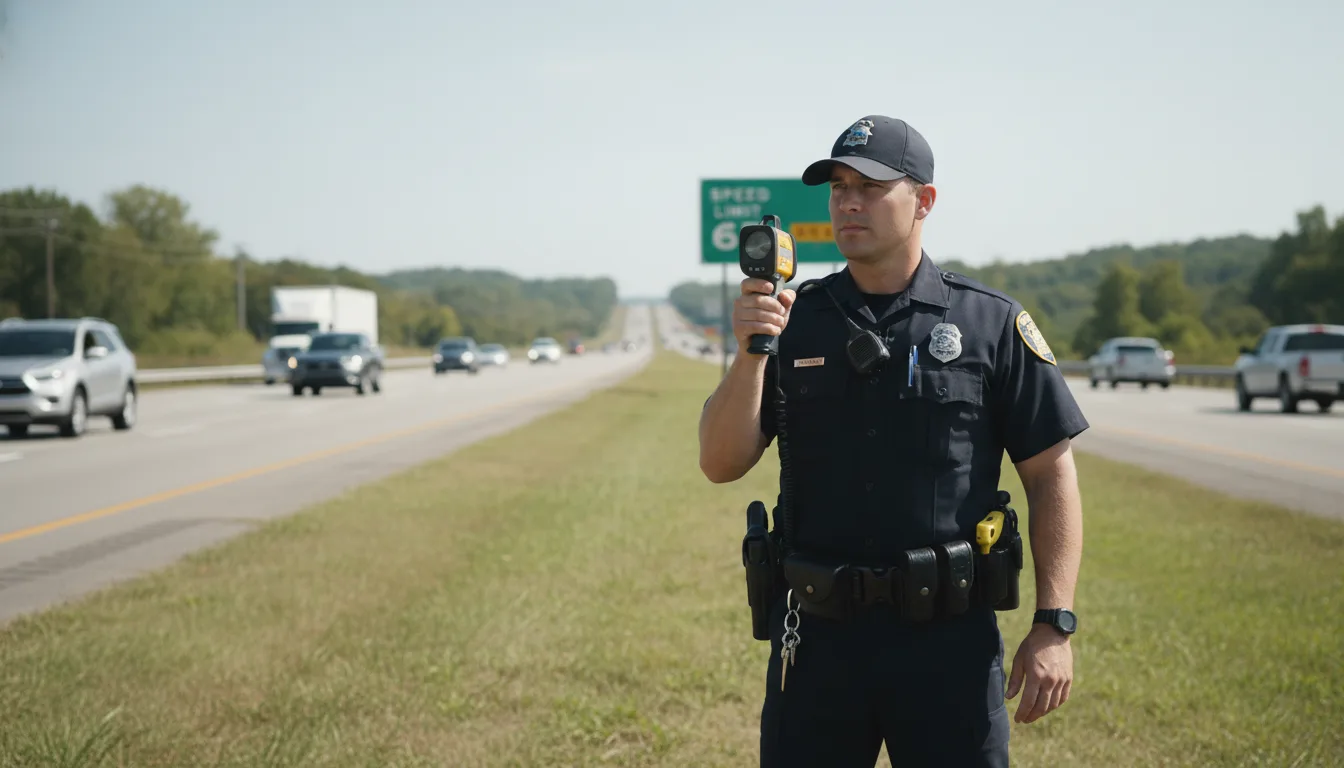
July 2025 (First Month)
- Orange County Sheriff’s Office: First violation cited at 12:02 AM, July 1 (driver doing 104 mph in 70 mph zone)
- Initial enforcement wave saw significant spike in arrests
- Public awareness was low initially, so violation rates were high
October 2025 (Three-Month Review)
Florida Highway Patrol Trooper Migdalisis Garcia reported:
“We did notice a high peak when the law first came into effect in July, where people didn’t really know or understood the serious consequences like jail time. Now that the word is getting around, now people are starting to slow down. We’re not seeing as many arrests, but they are still happening.”
Enforcement Intensity
- Orange County Sheriff’s Office reported 60+ arrests since July 1
- Statewide enforcement ramped up, especially during holiday weekends
- Pre-July 2025 data: Orange County was stopping 100+ drivers monthly for exceeding 100 mph
Part 5: Legislative Rationale & Public Safety
Why the Law Was Passed
Statistical background:
- Speed-related fatalities have risen since 2020
- During pandemic lockdowns, roads were emptier and drivers pushed higher speeds
- Some drivers recorded at 110, 120, even 130+ mph
- Nearly 3,000 plate violations recorded in 2023 alone
Orange County Sheriff John Mina: “If you get into a crash going over 100 mph, you’re not going to survive that. The people you strike aren’t going to survive that.”
Legislative intent:
- Close gap in law (reckless driving was hard to prove for pure speed)
- Create measurable, objective threshold (50 mph over or 100+ mph)
- Shift from civil fine to criminal consequences (deterrent effect)
- Mandatory court appearances to elevate seriousness
Part 6: Florida vs. Other States
Florida is one of the strictest states on speed-related criminal enforcement. Criminalization, jail time on first offense, no discretion at 50+ mph over, and mandatory court appearance set Florida apart.
Part 7: Practical Consequences for Florida Residents
Scenario 1: Businessman on I-95
- Driving 75 mph in 65 mph zone = Safe
- Driving 115 mph in 65 mph zone = Criminal charge (50 mph over)
- Penalty: 30 days jail, $500 fine, mandatory court appearance
- Real cost: Attorney fees ($1,500-3,000), lost work time, insurance increase
Scenario 2: Young Driver on I-4
- Driving 115 mph in 65 mph zone during light traffic
- First offense: 30 days jail, $500 fine
- Second offense (within 5 years): 90 days jail, $1,000 fine, 180-day license suspension
- Career impact: Cannot drive professionally for 6+ months
Scenario 3: Tourist on Florida Turnpike
- Out-of-state visitor unfamiliar with new law
- Driving 105 mph in 55 mph zone
- Stopped and arrested on the spot
- Must appear in Florida court (additional travel cost)
- Criminal record in Florida follows you nationally
Scenario 4: Delivery Driver/Commercial
- Delivery/rideshare driver hit with 50+ mph over violation
- Can’t work while in jail (even 30 days)
- Lost income from suspended license (if second offense)
- Job termination likely (most companies require clean driving records)
Part 8: Prosecution & Legal Defenses

How Cases Are Prosecuted
- Officer’s radar/laser reading – Primary evidence
- Traffic camera documentation – Secondary evidence
- Officer testimony regarding manner of driving (for Condition B)
- Mandatory court appearance – No pleading by mail
Potential Legal Defenses
Radar/Laser equipment calibration:
- Officers must calibrate equipment properly
- Improper calibration = unreliable speed reading
- Defense attorney can challenge methodology
Officer observation of “manner”:
- For Condition B (100+ mph), state must prove dangerous driving conduct
- If charge is Condition B and officer saw no weaving/tailgating, defense is stronger
Other defenses:
- Traffic camera malfunction
- Challenge to speed limit signage
- Emergency necessity (handled case-by-case)
Part 9: Montana Plates & This Law
Critical point: Speed laws are enforced based on the vehicle’s operation, not its registration jurisdiction.
A vehicle registered in Montana:
- Still subject to Florida speed limits (all posted signs)
- Still stopped by Florida law enforcement
- Still prosecuted under Florida Statute § 316.1929
- Gets no exemption based on Montana registration
Comparison to Plate Frame Law
- Plate frame law (Florida Statute 320.061): Applies only to Florida plates (registration-specific) — Montana plates ARE exempt
- Speed law (Florida Statute 316.1929): Applies to ALL vehicles operating in Florida (universal enforcement) — Montana plates are NOT exempt
A police officer who pulls over a 105 mph Montana-plated vehicle will:
- Check the Montana registration (valid)
- Still cite the driver for exceeding 100 mph under Florida law
- Still require mandatory court appearance in Florida
Montana plates provide zero advantage for speed law enforcement.
Part 10: FAQ – Florida’s Super Speeder Law
Q: If I’m driving 100 mph on an empty highway with no other cars, can I still be charged?
A: Yes, under Condition A (50+ mph over limit). However, Condition B (100+ mph) requires “manner that threatens safety”—but prosecutors are not likely to accept this distinction. The safest answer: don’t do it.
Q: What if I was driving 99 mph? Am I safe?
A: Not necessarily. If you’re 50+ mph over the posted limit, you’re charged automatically. In a 55 mph zone, 99 mph exceeds the threshold. The law has two separate triggers.
Q: Can I just pay the fine and avoid court?
A: No. The law mandates a court appearance. You cannot simply mail in a payment.
Q: Does this apply to all Florida roads?
A: Yes. Highway, interstate, county road, residential street—the law applies everywhere in Florida.
Q: What if I have a medical emergency?
A: You can argue necessity in court, but it’s not automatic. Call 911 instead—emergency services are better equipped to respond.
Q: Will this affect my job?
A: Potentially yes. The charge appears on background checks. Insurance companies will increase your rates 20-40%.
Q: What’s the difference between Condition A vs Condition B?
A: Condition A (50+ mph over): Automatic, no discretion. Condition B (100+ mph with manner issue): Requires proving dangerous conduct. Most 100+ mph cases are charged under Condition A if you were that far over the limit.
Q: What if I’m from out of state?
A: Ignorance of the law is not a defense. Out-of-state visitors are subject to the same penalties as residents.
Q: Is there a grace period above the speed limit?
A: No. Condition A triggers at exactly 50 mph over. In a 65 mph zone, 115 mph is the threshold.
Q: Can I fight this in court?
A: Yes. An attorney can challenge the speed measurement or negotiate. Court representation is essential—this is now a criminal matter.
Part 11: Financial Impact Analysis
Direct Costs (First Offense)
| Fine: | $500 |
| Attorney fees: | $1,500-$3,000 |
| Court costs: | $200-$500 |
| Total direct cost: | $2,200-$4,000 |
Indirect Costs (First Offense)
- Insurance rate increase: 20-40% for 3-5 years
- Example: $100/month becomes $120-$140/month
- Over 5 years: $1,200-$2,400 additional cost
- Lost work time (jail, court appearances)
- Lost productivity
Second Offense (Within 5 Years)
Total cost of second offense: $20,000-$50,000+
Including: $1,000 fine, $2,000-$4,000 attorney fees, lost wages during 90-day incarceration, 180-365 day license suspension (devastating for commercial drivers), and insurance impact (some insurers drop coverage entirely).
Part 12: Florida Super Speeder Law Conclusion
The Florida super speeder law represents a significant shift in how the state treats traffic law enforcement. By criminalizing extreme speeding—converting what was once a $250 civil violation into a criminal offense—Florida has created serious consequences for drivers exceeding 100 mph or driving 50+ mph over the limit.
Key Takeaways
- Jail time is now real. First offense = up to 30 days. Second offense = up to 90 days.
- No discretion at 50+ mph over. The speed itself is the crime.
- Criminal record follows you. Background checks, employment, insurance, travel—all affected.
- Montana plates provide no protection. Speed laws apply uniformly to all vehicles in Florida.
- Enforcement is active and ongoing. The initial peak has moderated as awareness increased.
- Court appearance is mandatory. You cannot simply pay and move on.
- Cost goes far beyond the fine. Attorney fees, insurance increases, and lost income can easily exceed $5,000-$20,000+.
For Florida residents and visitors: The safest approach is simple—obey speed limits strictly. The difference between 99 mph and 100 mph, or between the limit and 50+ over, is not worth the jail time, fines, criminal record, and lasting consequences.
Florida Statute § 316.1929 Summary
Speeding in Excess of 100 MPH / Dangerous Excessive Speeding
(1) Any person who operates a motor vehicle at 100 mph or greater commits a second-degree misdemeanor (first offense) or first-degree misdemeanor (subsequent offense).
(2) Any person who drives 50+ mph over the posted limit commits dangerous excessive speeding: First offense up to 30 days jail and/or $500 fine; Second offense within 5 years up to 90 days jail and/or $1,000 fine, plus mandatory 180-365 day license suspension.
(3) Mandatory court appearance required. Payment by mail not permitted.
Law effective date: July 1, 2025 | Status: Active and enforced statewide