21 min read

On this page
- + What Florida’s New Plate Law Actually Requires
- • Penalty Structure: The Three Tiers
- + What Remains Perfectly Legal Under the New Law
- • SB 488 April 2026: Frames Are Fine
- + How Montana Plates Operate in Florida
- • Florida Statute 320.37: The Nonresident Exemption
- • Montana Plate Compliance Checklist
- + The Financial Advantage of Montana Registration
- • RV and Motorhome Owners
- • Exotic Car and Collector Vehicle Owners
- + Real-World Scenarios: How This Works in Practice
- + Who Benefits Most from Montana Registration
- + The Zero Tax Tags Process
- + Timeline: From Application to Montana Plates
- + Frequently Asked Questions
Florida license plate law changed significantly on October 1, 2025, when House Bill 253 took effect. The legislation amended Florida Statute 320.061 and created a new statute, 320.262, establishing that plate obstruction — license plate covers, tints, sprays, coatings, and devices that interfere with legibility — moved from civil infraction territory into the criminal code.
For most Florida drivers, the law creates no issue whatsoever. A clean, unobscured plate — Florida-issued or out-of-state — is fully compliant. Standard decorative frames were subsequently clarified as legal by Senate Bill 488 in April 2026, provided they do not cover the plate’s alphanumeric number or the registration decal in the upper right corner.
For owners of high-value vehicles — boats, RVs, exotic cars, luxury trucks — the law update arrives in the same period when a growing number of Florida residents are discovering that Montana LLC vehicle registration not only delivers a fully legal, fully compliant plate solution under Florida Statute 320.37, but eliminates Florida’s 6% sales tax obligation on the purchase entirely. A $350,000 center console. A $1.2 million Class A diesel pusher. A $280,000 Ferrari. Each represents a potential $18,000 to $72,000 in avoided sales tax through proper Montana LLC registration.
This guide explains exactly what the new plate law requires, what it does not restrict, how Montana plates operate legally in Florida, and who benefits most from making the change.
What Florida’s New Plate Law Actually Requires

The Florida Department of Highway Safety and Motor Vehicles administers plate requirements under Chapter 320 of the Florida Statutes. HB 253 amended FS 320.061 and created FS 320.262 to specifically address plate visibility requirements.
The law prohibits any substance, reflective matter, coating, cover, or device that:
- Interferes with the legibility of the plate’s alphanumeric characters
- Reduces angular visibility (the ability to read the plate from the side)
- Reduces photo detectability (the ability for automated license plate readers to capture the plate)
- Covers the registration decal in the upper right corner
- Covers the state name at the bottom of the plate
The law’s stated intent was to address systematic plate evasion — primarily anti-photo devices used by drivers seeking to evade tolls, red light cameras, and speed enforcement systems. The Port Authority of New York and New Jersey reported losses exceeding $40 million annually from plate-obscuring devices. Florida legislators sought to address similar infrastructure revenue losses statewide.
The legislation is aimed at intentional evasion. Drivers with clean, unmodified plates — Florida or properly issued out-of-state — have nothing to navigate here.

Penalty Structure: The Three Tiers
The penalty structure under FS 320.262 is tiered based on intent and conduct:
Enforcement through early 2026 revealed significant geographic variation. Miami-Dade County issued 422 criminal citations in the four months following October 1, 2025. Identical frames drew enforcement in some counties and no action in adjacent jurisdictions. A federal constitutional challenge was filed alleging the statute is unconstitutionally vague, as it lacks objective measurements — distance thresholds, percentages — for defining what “interferes with angular visibility” actually means.
What Remains Perfectly Legal Under the New Law
The law is specific about what it targets. Several common plate practices remain entirely lawful:
- Standard decorative frames that do not cover the plate number or registration decal (explicitly protected by SB 488, April 2026)
- Valid out-of-state plates, including Montana, recognized under Florida Statute 320.37
- Dealer temporary tags displayed in proper window mount positions
- Trailer plates and fleet plates issued by other states for vehicles registered outside Florida
- Clean, unmodified Florida plates — the vast majority of vehicles on the road
SB 488 April 2026: Frames Are Fine
The original HB 253 language created significant confusion about license plate frames. Dealerships, car clubs, and individual drivers raised concerns about frames bearing dealer branding, university logos, or personal decorative text.
Senate Bill 488, signed in April 2026, provided the statutory clarification: standard decorative license plate frames are explicitly protected when they do not cover the alphanumeric plate number or the registration decal. The confusion created by enforcement inconsistency between October 2025 and April 2026 was the direct impetus for the legislative fix.
What About Dealer Frames, University Frames, and Car Club Plates?
With SB 488 in place, the practical guidance for Florida drivers is clear. A dealer frame displaying only the dealership’s name around the border of the plate — not covering any characters or the registration decal — is legal. A University of Florida or FSU alumni frame displaying university branding along the top and bottom borders without touching the plate number is legal. A Ferrari Club of America or Porsche Club of America member frame following the same rule is legal.
What remains prohibited: any frame, cover, or device that physically overlaps the alphanumeric plate characters, obscures the state name, or covers any portion of the registration decal. The test is straightforward — if a Florida Highway Patrol officer standing at the vehicle’s rear bumper, or a roadside automated plate reader, can read the full plate number and see the registration decal clearly, the installation is compliant.
Montana plates follow these same display rules when operated in Florida. A clean Montana plate properly mounted in the rear plate holder with no modifications satisfies every element of both HB 253 and Florida’s existing plate display requirements under FS 316.605. Montana plates do not use registration decals in the same format as Florida plates — they use a registration sticker applied to the plate itself — and this distinction does not create any compliance issue under Florida law.
The Federal Constitutional Challenge: What It Means for Drivers Now
A federal constitutional challenge to HB 253 was filed in early 2026, alleging the statute is unconstitutionally vague under the Due Process Clause. The challenge argues that terms like “angular visibility” and “photo detectability” lack objective, measurable standards — no percentage, distance, or angle is defined in the statute — making it impossible for drivers to know with certainty whether their particular installation is legal.
While this challenge works through the federal courts, the law remains in effect. Drivers cannot rely on the pending litigation as protection against enforcement. The practical takeaway for most drivers is the same regardless of how the challenge resolves: a clean, unmodified plate with no covers or tinted materials is clearly compliant under any reading of the statute. Montana plates properly mounted with no aftermarket modifications meet this standard without ambiguity.
How Montana Plates Operate in Florida

Montana LLC vehicle registration has been used by Florida residents for over two decades. The legal foundation is straightforward: a Montana LLC is a legal entity incorporated in Montana, governed by Montana law. When a Montana LLC purchases and registers a vehicle, the LLC — not its individual members — is the vehicle’s owner. Montana law governs registration of vehicles owned by Montana entities.
Florida Statute 320.37: The Nonresident Exemption
Florida Statute 320.37(1) provides: “Any nonresident of this state who is the owner of a vehicle which is properly registered or licensed in the state in which the owner resides shall not be required to register such vehicle in this state.”
This statute — combined with the Full Faith and Credit Clause of the U.S. Constitution (Article IV, §1) and 28 U.S.C. §1738 — means Florida explicitly recognizes and honors out-of-state vehicle registrations. Montana plates are not a workaround; they are a fully recognized form of vehicle registration under Florida law.
HB 253 does not target valid out-of-state plates. The law targets physical obstruction devices applied to plates, not the state of issuance. A clean Montana plate — properly issued, properly displayed — satisfies every requirement of the new law and of Florida’s existing plate display statutes.
Florida Statute 320.38 specifies when out-of-state exemptions may not apply — primarily for vehicles primarily garaged in Florida by Florida residents operating them in a Florida-registered business capacity. This is why proper LLC structure matters: the Montana LLC must be a legitimate legal entity, not a nominal shell with no operational substance.
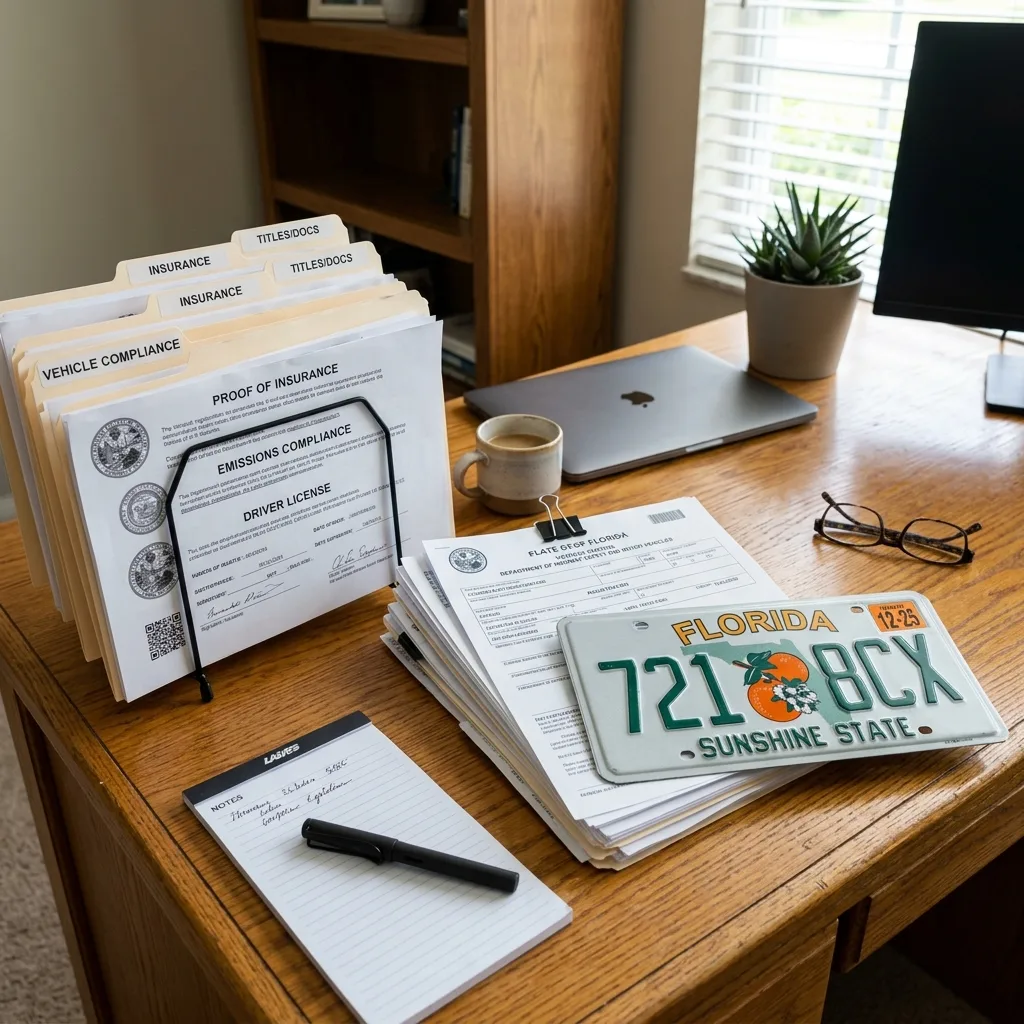
Montana Plate Compliance Checklist in Florida
Montana Registration Compliance — What’s Required
| ✓ | Legitimate Montana LLC with a Montana registered agent and active status in good standing |
| ✓ | Vehicle title in LLC name — the LLC is the legal owner, not the individual member |
| ✓ | Montana registration current — annual renewal (or one-time permanent registration for qualifying vehicles) |
| ✓ | Insurance in LLC name — policy lists the Montana LLC as the named insured |
| ✓ | Plate visibly mounted and unobscured — compliant with Florida’s plate display requirements under FS 316.605 |
| ✓ | Annual report filed with Montana — LLC remains in good standing with the Secretary of State |
The Financial Advantage of Montana Registration
The plate compliance discussion is one part of the Montana LLC story. The larger reason Florida residents with high-value vehicles choose Montana registration is financial: Florida’s 6% vehicle sales tax — with no cap for most vehicles — can be one of the largest single tax hits a vehicle buyer will ever face.
RV and Motorhome Owners

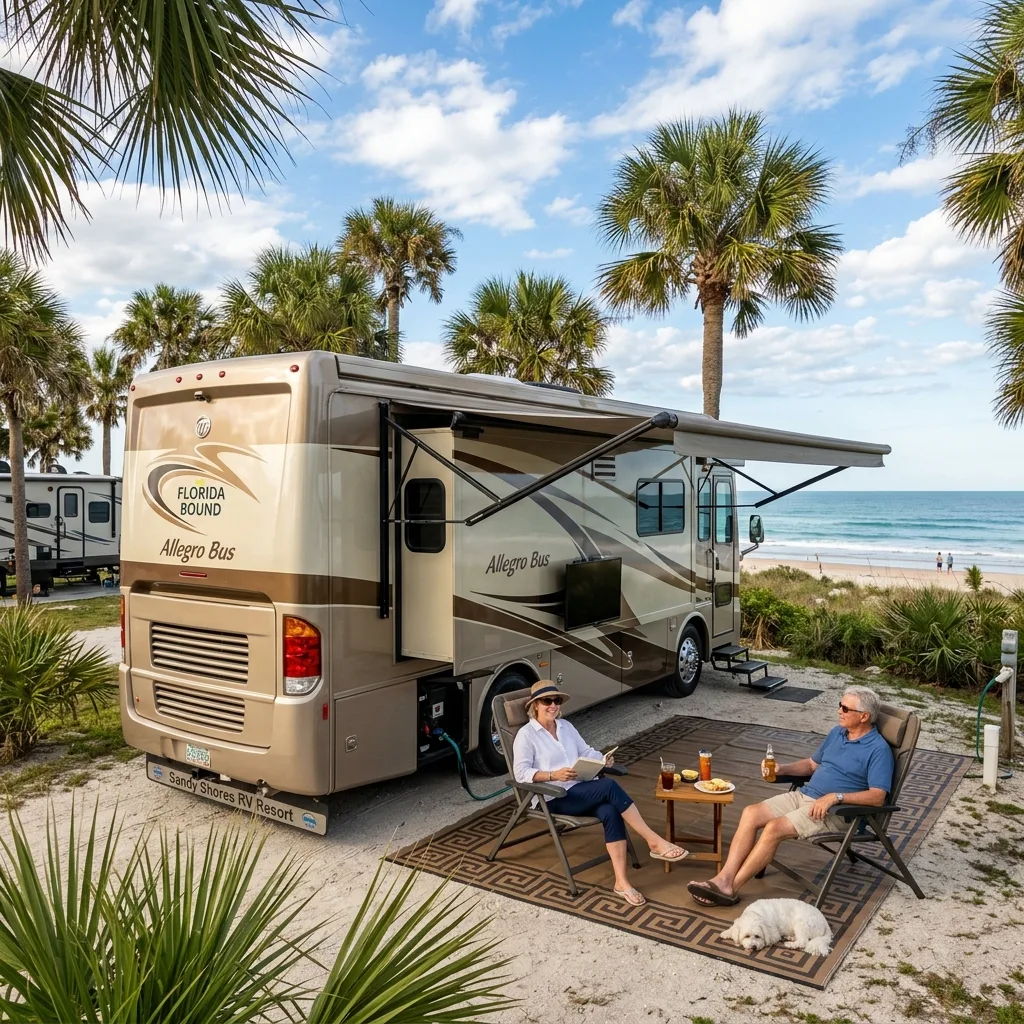
Florida is the dominant snowbird destination for retirees from the Northeast and Midwest. Tens of thousands of Part-year Floridians arrive each fall in Class A and Class C motorhomes — vehicles that, when purchased new, routinely carry price tags between $250,000 and $1.5 million. The RV industry reports that Florida-registered motorhomes account for a disproportionate share of all luxury RV registrations nationally.
For snowbirds who arrive in Florida each November and depart in April, the Montana LLC structure functions seamlessly. The vehicle is owned by a Montana LLC. The registration is Montana-issued. Florida Statute 320.37 is the operating authority. The owner can spend seven months per year in Florida without triggering Florida registration requirements.

Exotic Car and Collector Vehicle Owners

South Florida is home to one of the most concentrated exotic car markets in the United States. Miami, Boca Raton, Palm Beach, and Fort Lauderdale each support thriving exotic dealership ecosystems. Ferrari, Lamborghini, McLaren, Rolls-Royce, Porsche, and Bentley all maintain significant retail presences in the region.
A Lamborghini Huracán EVO at $240,000 carries a $14,400 Florida sales tax obligation. A Ferrari Roma at $280,000 carries $16,800. A Rolls-Royce Ghost at $380,000 triggers $22,800. Each of these purchases, routed through a Montana LLC, carries zero sales tax at the state level and Montana’s minimal registration fees.
For collectors maintaining multiple vehicles, the savings compound. A collector with four vehicles purchased over three years — a Porsche 911 GT3, a McLaren GT, a Ferrari SF90, and a Bentley Bentayga — might represent $75,000 to $100,000 in avoided sales tax through Montana LLC registration.
Montana also offers a permanent registration option for vehicles eleven years of age or older. A one-time fee of $200 to $412 (depending on vehicle value at time of purchase) eliminates annual renewal indefinitely. For collector vehicles held long-term, this represents an ongoing operational simplification that Florida’s annual tag renewal system simply cannot match.
Boat and Marine Vessel Owners
Florida is the undisputed boating capital of the United States — more registered recreational vessels than any other state by a significant margin. The state’s extensive coastline, the Keys, the Gulf Coast, and the Intracoastal Waterway system draw boat buyers from across the country. For those buyers, Florida’s vessel sales tax creates a specific financial calculus.
Florida Statute §212.05(1)(a) caps the vessel sales tax at $18,000 — meaning the maximum Florida sales tax on any single vessel purchase is $18,000, regardless of whether the vessel costs $300,000 or $3 million. For buyers of high-value sportfishing boats, center consoles, and express cruisers, this cap provides some certainty — but $18,000 is still $18,000 that Montana LLC registration eliminates entirely.
Montana LLCs can own and register marine vessels through Montana’s registration system, which honors the same nonresident exemption framework as vehicle registration. The vessel’s hull number is registered in Montana, and Florida’s FS 320.37-equivalent framework for watercraft applies. For buyers of vessels above $300,000 — where the Florida cap kicks in and Montana saves the maximum $18,000 — the ROI on Montana LLC formation is achieved on day one.
Real-World Scenarios: How This Works in Practice
Here is how Montana LLC registration plays out for different types of Florida vehicle owners.
The Naples Retiree with a Class A Diesel and a Center Console
A retired couple from Ohio relocates to Naples, Florida, spending October through May there each year and returning to their Ohio lake house in summer. They own a $620,000 Newmar King Aire diesel pusher and a $310,000 center console fishing boat. Both were purchased before moving and registered in Ohio. When they formally established Florida residency for tax purposes, they faced the question of whether to re-register both vehicles in Florida.
Their attorney advised them to establish Montana LLCs for both vehicles before triggering Florida registration. The RV transferred to a Montana LLC: no Florida sales tax, Montana annual registration of $282, permanent registration eligible in two years. The center console transferred to a separate Montana LLC: no Florida vessel tax (which would have been capped at $18,000 on $300,000 of purchase price), no annual renewal after permanent registration threshold. Combined savings at point of transfer: over $55,000. Their Montana plates remain fully compliant under Florida’s new plate law — clean, unobscured, properly displayed.
The Boca Raton Collector with Four Exotics
A Boca Raton-based entrepreneur maintains a four-car collection: a 2019 Ferrari 488 Pista, a 2021 Lamborghini Huracán Evo, a 2022 Porsche 911 GT3, and a 2024 McLaren 750S. Over the course of purchasing these four vehicles, he structured each purchase through a separate Montana LLC — one LLC per vehicle, which simplifies insurance, liability separation, and resale logistics.
Total Florida sales tax avoided across four purchases: approximately $62,000. Annual registration for each vehicle through Montana: $217 to $282, versus Florida’s annual renewal process. The 2019 Ferrari, now over eleven years old since its model year, qualified for Montana permanent registration at the $282 one-time fee, eliminating all future renewal obligations on that vehicle. Each Montana plate is properly displayed with no frame, in full compliance with HB 253 and FS 316.605.
The Sarasota Snowbird Arriving Each October
A retired physician maintains legal residency in Minnesota but spends October through April in Sarasota each year — a pattern established over fifteen years. She drives a $145,000 Cadillac Escalade and tows a $38,000 sport utility trailer. Both are owned by a Montana LLC established in 2018. When HB 253 took effect in October 2025, she arrived in Sarasota with clean Montana plates, no frames, no covers, no modifications — fully compliant with the new law from day one.
Her Montana LLC structure is straightforward: one LLC owns both vehicles, one registered agent in Billings handles the annual report, one insurance policy covers both under the LLC’s name. Total annual Montana cost: registered agent fee plus $217 registration per vehicle. She has never been required to register either vehicle in Florida, and nothing about HB 253 changed that framework.
The Fort Lauderdale Boat Dealer’s Personal Vessel
A Fort Lauderdale marine dealer purchases a $780,000 Viking 48 sportfishing yacht for personal use. Florida’s vessel sales tax is capped at $18,000 under FS §212.05 — but that is still $18,000 that Montana LLC registration eliminates entirely. The vessel is titled and registered in Montana through the dealer’s personal LLC, operated in Florida under the FS 320.37 nonresident framework. The Montana hull registration number is properly displayed on the vessel. No obstruction, no covers, full compliance — and $18,000 preserved at closing.
Who Benefits Most from Montana Registration
Montana LLC registration makes the most sense for Florida residents and snowbirds who fit one of these profiles:
| Day 1: | Submit your MCO and supporting paperwork through our secure portal. We review for completeness and file your Montana LLC the same day. |
| Days 1–2: | Montana LLC formation complete — same business day in most cases, second business day at the latest. |
| Days 2–4: | Title transferred into the LLC name at the Montana county treasurer. |
| Days 4–7: | Permanent Montana plates shipped directly to your door within 3–5 business days of title completion. |
It is worth noting what Montana LLC registration is not for. If you own a single daily driver valued under $40,000 and you spend the full year in Florida, the economics may not justify the LLC structure — the sales tax savings on a $35,000 vehicle are $2,100, and the annual LLC maintenance costs could approach that over time. Montana LLC registration is a genuine financial optimization tool for people buying high-value vehicles, maintaining collections, or operating under a dual-state or part-year residency framework. For those profiles, the math is compelling. For routine everyday vehicle ownership, it is simply not the right tool.
The sweet spot is any vehicle purchase over $75,000, any vessel purchase, any RV or motorhome purchase, or any scenario where an owner holds three or more vehicles of meaningful value. At those levels, the tax savings are substantial, the ongoing LLC costs are proportionally minor, and the operational simplification — particularly with permanent registration available for older vehicles — makes the structure advantageous in every dimension.
See how Montana LLC registration helps vehicle owners in other high-tax states:
- Arizona Vehicle License Tax: Stop Paying Every Year
- Virginia Vehicle Tax: The Highest in America
- Florida Vehicle Tax: Preserve Your Purchasing Power
The Zero Tax Tags Process
Zero Tax Tags handles every step of Montana LLC formation and vehicle registration. The process requires no travel to Montana and no in-person visits to any government office. Everything is done remotely.
| Day 1: | Submit your MCO and supporting paperwork through our secure portal. We review for completeness and file your Montana LLC the same day. |
| Days 1–2: | Montana LLC formation complete — same business day in most cases, second business day at the latest. |
| Days 2–4: | Title transferred into the LLC name at the Montana county treasurer. |
| Days 4–7: | Permanent Montana plates shipped directly to your door within 3–5 business days of title completion. |
Timeline: From Application to Montana Plates
| Day 1: | Submit your MCO and supporting paperwork through our secure portal. We review for completeness and file your Montana LLC the same day. |
| Days 1–2: | Montana LLC formation complete — same business day in most cases, second business day at the latest. |
| Days 2–4: | Title transferred into the LLC name at the Montana county treasurer. |
| Days 4–7: | Permanent Montana plates shipped directly to your door within 3–5 business days of title completion. |
Frequently Asked Questions
Can a Florida law enforcement officer stop me for having Montana plates?
Montana plates alone are not grounds for a traffic stop in Florida. Florida law enforcement officers may conduct stops based on observed traffic violations, equipment violations, or reasonable articulable suspicion of another offense. An out-of-state plate, by itself, is not a traffic violation. Hundreds of thousands of vehicles with out-of-state plates operate in Florida every year — particularly during snowbird season — without any enforcement issue.
Does HB 253 affect Montana-plated vehicles in Florida?
No. HB 253 targets physical obstruction of license plates — covers, tints, sprays, and devices applied to plates to reduce their visibility. It does not target the state of issuance. A Montana plate displayed properly and unobscured complies with every element of the new law and with Florida’s existing plate visibility requirements under FS 316.605.
What does it mean for the LLC to be “legitimate”?
A legitimate Montana LLC is one that has been properly formed with the Montana Secretary of State, maintains a Montana registered agent in active status, files its annual report, holds the vehicle in the LLC’s name on both the title and the registration, and is covered by an insurance policy issued in the LLC’s name. Zero Tax Tags handles the formation and maintenance of the LLC as part of our service.
Will my Montana registration expire?
Standard Montana vehicle registrations renew annually. However, vehicles that were 11 or more years old at the time of original registration in Montana qualify for permanent registration — a one-time fee that eliminates future renewals entirely. Zero Tax Tags evaluates permanent registration eligibility for every client’s vehicle.
Do I need Montana auto insurance?
Your auto insurance policy must list the Montana LLC as the named insured — not you personally. Several insurance carriers are experienced with Montana LLC-owned vehicles and offer appropriate coverage. Coverage amounts, deductibles, and terms are otherwise identical to standard personal auto policies. Zero Tax Tags connects clients with appropriate carriers as part of the onboarding process.
Is using Montana LLC registration legal for a Florida resident?
Yes. The Montana LLC is a separate legal entity. It is not a Florida resident — it is a Montana company. Florida Statute 320.37 exempts nonresidents from Florida registration requirements. The LLC, as the vehicle’s owner, is the nonresident. The LLC’s members can live anywhere. This structure has been used by Florida residents legally for over two decades and is recognized by Florida law enforcement, courts, and the DHSMV.
How does this work for a vehicle I haven’t purchased yet?
This is the optimal scenario. When you initiate Montana LLC registration before purchasing a vehicle, the purchase is made in the LLC’s name from the start. No Florida sales tax is collected because the buyer is a Montana LLC, not a Florida individual. The savings are immediate and clean.
Can I use one Montana LLC for multiple vehicles?
Yes. A single Montana LLC can own and register multiple vehicles. Some clients prefer one LLC per vehicle for liability separation — if one vehicle is involved in an incident, the other vehicles in separate LLCs are not exposed. Others use a single LLC for simplicity, particularly when the vehicles are used by the same household and insured under a single policy. Zero Tax Tags advises on the right structure for each client’s situation.
Does Montana LLC registration affect my Florida homestead exemption or state income tax status?
No. Vehicle registration is independent of Florida residency determinations for property tax or income tax purposes. Your vehicles’ registration state does not factor into Florida’s homestead exemption eligibility, which is based on property ownership and principal residence. Zero Tax Tags advises on vehicle registration specifically; for questions about Florida residency establishment, a Florida-licensed CPA or attorney is the appropriate resource.
What happens if I sell a vehicle that is registered in Montana?
When you sell a Montana-registered vehicle, the title transfer follows Montana procedures. The Montana LLC can sell the vehicle directly, or the LLC can be dissolved and the vehicle’s title transferred as part of the dissolution. For collector vehicles with strong appreciation, some clients find that maintaining the Montana LLC through a sale simplifies the transfer. Zero Tax Tags handles the title and LLC logistics for clients through the sale process.
I already paid Florida sales tax on a vehicle I own. Can I still benefit from Montana registration?
Transferring an existing Florida-registered vehicle to a Montana LLC after Florida sales tax has already been paid does not generate a refund of that tax. The benefit for existing vehicles is primarily operational: Montana’s lower annual registration fees, permanent registration availability for qualifying vehicles, and simplified compliance going forward. For new purchases from this point forward, Montana LLC registration captures the full sales tax savings at the point of purchase.
Ready to Register Your Vehicle in Montana?
Florida residents have used Montana LLC registration legally for decades. No sales tax. Permanent registration available. Plates delivered to your door. Zero Tax Tags handles everything.
More Florida Vehicle Tax Solutions
Florida Vehicle Tax 2026
The 6% Sales Tax That Hits You Before You Drive…
Florida UTV Street Legal 2026
The Registration Maze and Montana Plate Solution
Florida Super Speeder Law 2026
The Performance Driver’s Complete Legal G…
Florida License Plate Law 2026
How Montana Plates Deliver Full Compliance