

25 min read

On this page
- + SB 2258: Mississippi’s Partial Road Fix and Why It Falls Short
- + The $50 Trauma Fee and Mississippi’s True ATV Tax Rate
- + The Agricultural Exemption: Attractive on Paper, Dangerous in Practice
- + Mississippi’s Best ATV and UTV Trail Systems
- + Three Mississippi ATV and UTV Buyers Who Ran the Numbers
- + The Montana LLC Solution: How It Works
- + Is Montana LLC Registration Legal for Mississippi Residents?
- + Who This Is Built For
- + How Zero Tax Tags Handles Your Mississippi Registration
- + Frequently Asked Questions
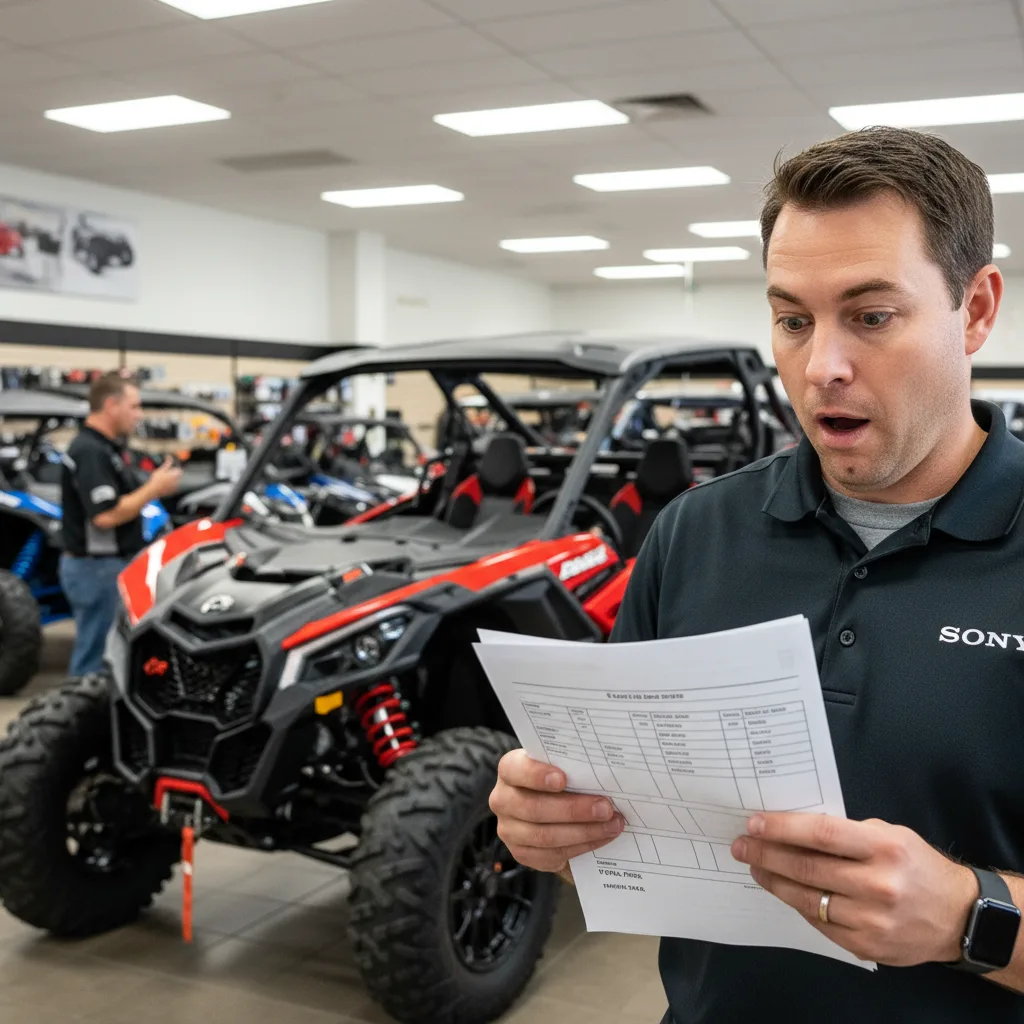
Mississippi ATV tax hit Tyler in Ridgeland like a slap across the dealership counter. He had just signed for a 2026 Can-Am Maverick X3 Turbo RR at $45,000 out the door, and the finance manager slid a tax worksheet across the desk: eight percent Hinds County combined rate plus a fifty-dollar ATV Trauma Care Fee. Three thousand six hundred and fifty dollars in tax. On a machine he planned to ride on weekends at Bethel and a few times a year in regional enduros. He stared at the number, then at the keys, then back at the number.
His salesman, sensing the hesitation, leaned in with the new pitch: Senate Bill 2258 had passed in July of 2025, and Mississippi ATVs and ROVs could finally hit certain county roads legally. “You can ride to the gas station now,” the guy said, smiling. What he did not mention was the fine print. SB 2258 only covers county rural, gravel, and paved roads with forty mile per hour speed limits or lower. It requires full motor vehicle licensing, an eight-dollar annual privilege tax, a five-dollar tag fee, mandatory liability insurance at the twenty-five/fifty/twenty-five minimums, and a DOT helmet for anyone under sixteen. State highways are still banned. Interstates are still banned. Any road over forty mph is still banned. And you still cannot tow anything.
Tyler did the math on his phone right there at the desk. The same Can-Am, titled and registered in Montana under a single-member LLC through Zero Tax Tags, would cost him $849 one-time. Permanent plate. No annual privilege tax. No mandatory insurance from Montana. No trauma fee. And reciprocity under Mississippi Code Section 27-19-143 means his Montana plate is honored across the state, not just on slow county roads. His net first-year savings: $2,801. He walked out, called us Monday morning, and had his Maverick titled in Montana inside seven days. This is the playbook every Mississippi ATV and UTV buyer should run through before they sign a tax worksheet they will regret.
SB 2258: Mississippi’s Partial Road Fix and Why It Falls Short
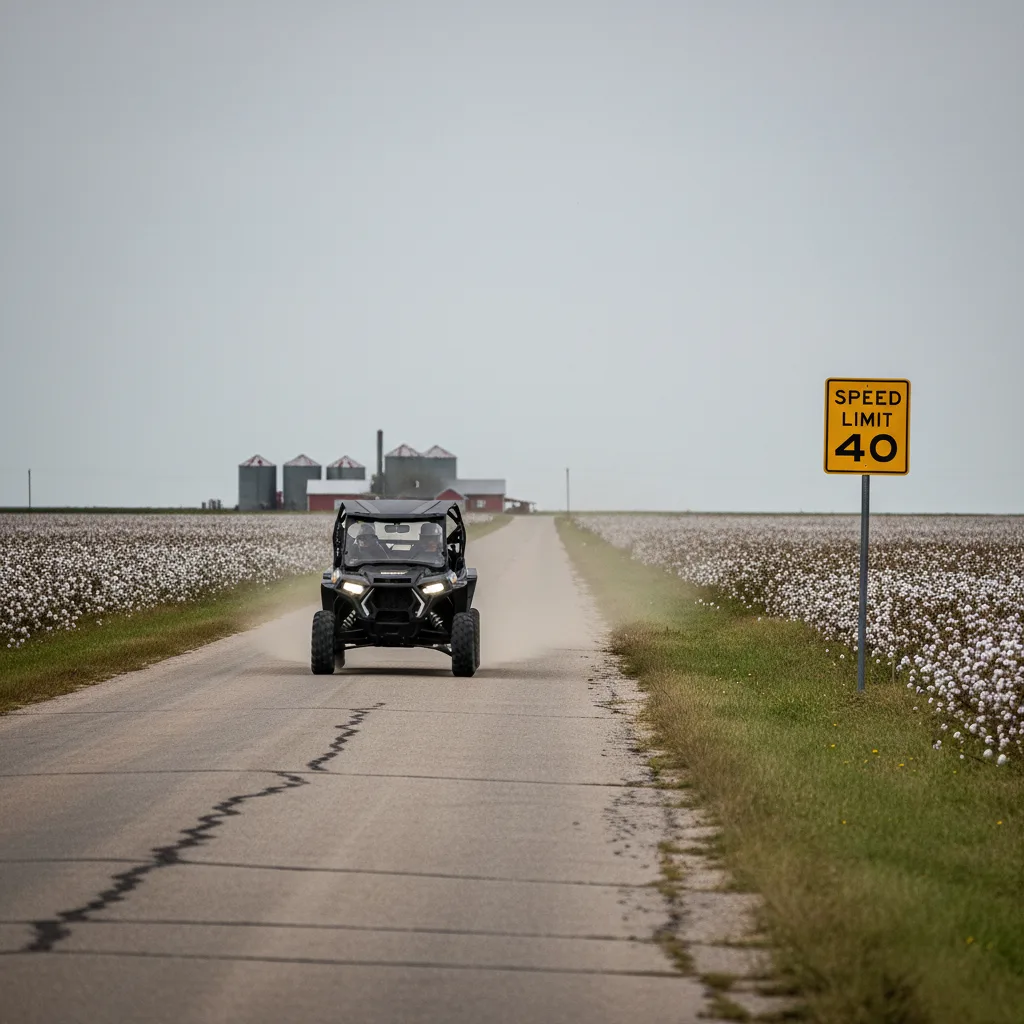
For decades, Mississippi ATV and UTV owners faced one of the strictest road-use regimes in the Southeast. Off-road vehicles, classified under MS Code Section 63-31-3 as “manufactured exclusively for off-road use,” were locked out of every public road in the state. You could not ride from your house to the trailhead. You could not legally cross a county road to reach the back forty. Trailering was the only option, and even then, a wrong turn off a private drive onto pavement could put you on the wrong side of the law.
Senate Bill 2258 changed part of that picture on July 1, 2025. Under the new statute, ATVs that are 55 inches wide or less and weigh 1,000 pounds or less, along with Recreational Off-Highway Vehicles (ROVs) that are 75 inches wide or less and weigh 3,500 pounds or less, can now be operated on county rural roads, gravel roads, and paved roads with posted speed limits of 40 mph or lower. That sounds generous until you actually try to plan a ride.
The catch is everything around the privilege. SB 2258 requires full motor vehicle licensing and tagging, an annual $8 privilege tax plus a $5 tag fee, mandatory liability insurance with minimum coverage of $25,000 per person, $50,000 per accident, and $25,000 in property damage, and a DOT-approved helmet for any operator or passenger under 16. Towing is prohibited entirely. State highways, U.S. highways, and the entire interstate system remain off-limits. Any road posted above 40 mph is still illegal territory.
The SB 2258 Trap: The bill gave ATV and UTV owners a narrow, expensive privilege wrapped in recurring fees and insurance premiums. To ride a quarter mile of pavement to a fishing hole, you now pay $13 per year in fees forever, carry liability insurance at $200 to $400 per year, and stay below 40 mph the entire way. Cross onto a road posted at 45 mph and you are operating illegally. Hop onto US-49 to get to DeSoto National Forest faster and you are operating illegally. The statute solved the smallest version of the problem.
Montana removes the SB 2258 arithmetic entirely. No $8 privilege tax, no $5 tag fee, no annual renewal, no insurance mandate from the state. Under interstate commerce reciprocity, a Montana plate is honored statewide — county roads, state highways, all of it — not just roads posted below 40 mph. You pay $849 once and the machine is plated for life.
The $50 Trauma Fee and Mississippi’s True ATV Tax Rate

Most Mississippi ATV and UTV buyers focus on the headline sales tax rate and miss the line item that adds insult to the bill. Every all-terrain vehicle and utility-terrain vehicle sold in Mississippi is hit with a $50 ATV Trauma Care Fee at the point of sale. The fee is mandatory. It applies regardless of where you live in the state, regardless of intended use, regardless of whether you ever ride on a public road. It funds the state trauma care system and it is non-negotiable.
Then comes the actual sales tax. Across most of Mississippi, the combined state and local rate is 7 percent. Gulfport and Harrison County, Biloxi, Hattiesburg and Forrest County, Tupelo and Lee County, Meridian and Lauderdale County all sit at the 7 percent base. The Jackson metro area, including Hinds County and surrounding suburbs, climbs to 8 percent because of local options layered on top of the state rate. Buyers in Ridgeland, Madison, Brandon, and the rest of the metro pay an extra full percentage point on every dollar of the purchase price.
The math gets ugly fast on machines that now routinely cross $25,000 and $45,000. Here is the side-by-side for the three vehicle tiers most Mississippi buyers face, including the Montana LLC alternative.
Look at the bottom row. A Jackson metro buyer of a top-tier UTV pays $3,650 in Mississippi tax and fees on day one. The Montana equivalent is $849 one-time, permanent plate, no renewal. The savings on that single transaction would buy you a new set of tires, a winch, a sound system, and a full year of fuel. The savings on a $25,000 UTV in Hattiesburg are roughly $951. The savings on a $15,000 ATV at the standard 7 percent rate are $351, and that grows every time you add another machine to the same LLC because subsequent vehicles only pay the service fee, not a second LLC formation.
The Mississippi sales tax also functions as a one-time wealth transfer at the worst possible moment. You just spent five figures on a recreational machine. The state takes another four-figure bite before you have even unboxed the helmet. Montana takes nothing. Montana has not had a vehicle sales tax since 1889. The state instead funds its government through other mechanisms, and for non-residents who title vehicles under a Montana LLC, the result is a clean, transparent, one-time registration cost.
Ag Exemption Reality Check: The 1.5 percent agricultural rate column looks attractive until you read the fine print. To claim the rate, you must file an affidavit at the point of sale stating the machine will be used exclusively for agricultural production. Hunting, recreation, trail riding, hauling firewood for the cabin, or any non-agricultural use voids the exemption retroactively. If the Mississippi Department of Revenue audits the purchase and finds dual use, you owe the full tax plus penalty and interest. Most farmers who hunt the same property they farm have walked into this trap.
The Agricultural Exemption: Attractive on Paper, Dangerous in Practice
Mississippi offers a preferential 1.5 percent sales tax rate on farm equipment, and ATVs and UTVs can qualify under the right conditions. On paper, this is the best deal in the state. A $15,000 ATV taxed at 1.5 percent comes out to $225, plus the $50 trauma fee, for a total of $275. A $25,000 UTV runs $375 plus the fee for $425. For a farmer running a legitimate row crop, cattle, poultry, or timber operation, those numbers are hard to beat on the surface.
Here is what the statute actually requires. The buyer must file an affidavit at the point of sale, signed under penalty of perjury, certifying that the machine will be used exclusively for agricultural production. Not primarily. Not mostly. Exclusively. The Mississippi Department of Revenue interprets that word literally. A side-by-side used to feed cattle, check fences, spray pastures, and pull a manure spreader qualifies. The same side-by-side used Saturday morning to ride to a deer stand on the same property does not.
The exposure is asymmetric. A farmer who claims the exemption and then uses the machine for hunting, recreation, family trail rides, or any non-ag purpose is technically liable for the difference between 1.5 percent and the full 7 or 8 percent rate, plus interest, plus penalty if the DOR finds it. Audits happen. Disgruntled employees report. Insurance claims after recreational accidents create paper trails. Aerial photography in eminent domain cases has shown ATVs at deer camps. The trap closes years after the original purchase.
Montana removes the dual-use problem entirely. A machine registered in Montana under an LLC has no exclusivity test, no affidavit to defend five years later, no retroactive penalty if your use pattern changes. You pay $849 once and the question of what the machine is for becomes irrelevant.
For a farmer comparing 1.5 percent ag to Montana, the math depends on the machine. On a $15,000 ATV, ag at $275 beats Montana at $749 by $474 if you can genuinely maintain exclusive ag use. On a $25,000 UTV, ag at $425 beats Montana at $849 by $424 under the same condition. But the moment the use pattern slips, the savings invert and you are looking at over $1,300 in back taxes and penalties on the $25,000 machine. Montana eliminates the variance. You know the cost, you know the obligation, and there is no audit risk five years out.
Mississippi’s Best ATV and UTV Trail Systems

Mississippi is a hunting state first, but its off-road culture runs deeper than most outsiders realize. The Delta produces some of the best mud riding in the South. The Piney Woods region in the southeast holds the largest concentration of public ATV trails on the Gulf Coast. The hill country up north blends hardwood ridges with creek bottoms perfect for utility riding. Between national forest systems and a handful of well-known private parks, a Mississippi rider can put a thousand miles a year on a machine without ever leaving the state.
Start with DeSoto National Forest in the southeast. The De Soto District contains Bethel OHV Trails, 43 miles of well-marked single track and forest road suitable for vehicles 50 inches wide or less. Bethel is the workhorse of Mississippi public riding. Tyler, our Ridgeland software developer, drives 90 minutes south most weekends to ride Bethel because the trail mix offers everything from tight wooded loops to faster open sections. The trails are maintained, the parking is organized, and the Forest Service keeps a close eye on the system.
A short drive away in the same DeSoto National Forest sits Rattlesnake Bay ATV Trail, 31.6 miles split across three loops of 2, 22, and 7.6 miles. The width limit is tighter at 48 inches, so this is primarily an ATV trail, though sport UTVs at the narrow end of the spec sheet qualify. Rattlesnake Bay charges a $10 per rider day-use fee and requires a spark arrestor on every machine. The 22-mile main loop is one of the longer continuous rides in Mississippi and runs through prime longleaf pine ecosystem.

The Chickasawhay District of DeSoto National Forest holds Little Tiger ATV/Motorcycle Trail, 12 miles of multiple loops with on-site camping available. Little Tiger also charges $10 per rider and the campground makes it a popular weekend destination for families running multiple machines. Further north in Tombigbee National Forest, the Chickasaw ATV/Motorcycle Trail offers another 12 miles of mixed pine and hardwood terrain with mud bogs, lake loops, and a 48-inch width limit. Chickasaw is the place to be for riders who want hardwood scenery and a bit of mud without driving all the way to the Coast.
The Delta District holds the Delta Multiple-Use Trails, a network of 19 trails ranging from 0.75 to 4.5 miles each. These are shorter, more varied loops cut through bottomland hardwood and former agricultural land. Delta riding is its own subculture in Mississippi. The terrain is flatter, wetter, and muddier than the Piney Woods, and the Delta trails reward machines built for traction and torque over speed.
Private parks fill in the gaps where public trails leave off. BMB Off-Road Park in Fulton, Itawamba County, covers 700 acres with 25 or more miles of marked trails. BMB caters to everything from beginner trails to serious enduro terrain and hosts regular events. Down in Mount Olive in Covington County, Burden’s Creek ATV Park sprawls across 400 acres of mud pits, water wheelies, deep ponds, creek crossings, and 200-year-old oaks. Burden’s Creek is open to all skill levels and has built a regional reputation for serious mud riding without the safety problems of unregulated land.
Private Parks Don’t Check Registration State: Every private off-road park in Mississippi cares about three things at the gate: liability waiver, helmet, and entry fee. Not one of them checks whether your plate is from Mississippi, Montana, Alabama, or Texas. A Montana-plated machine rides Bethel, Rattlesnake Bay, BMB, and Burden’s Creek with exactly the same access as a Mississippi-plated one. National forest trails don’t check either. Mississippi reciprocity under MS Code Section 27-19-143 covers the public roads to and from the trailhead.
Three Mississippi ATV and UTV Buyers Who Ran the Numbers
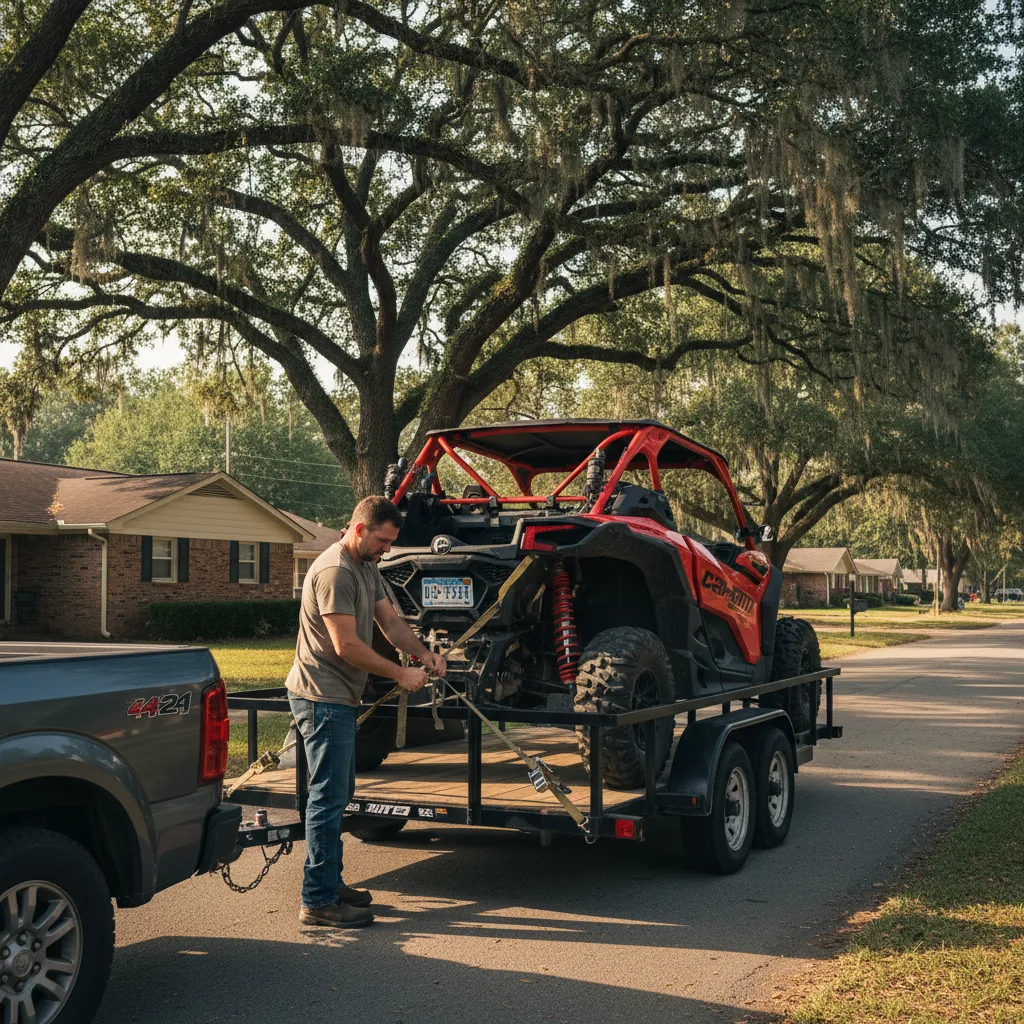
Tyler in Ridgeland, Madison County, is a 34-year-old software developer working remote for a fintech company in Charlotte. He bought his 2026 Can-Am Maverick X3 Turbo RR at a dealership in Pearl in late 2025 for $45,000 out the door. The Hinds County metro 8 percent rate combined with the $50 ATV Trauma Care Fee would have added $3,650 to the bill. Tyler’s machine is 68 inches wide, which puts it under the 75-inch ROV limit for SB 2258 but well over the 55-inch ATV limit, so the new statute would have applied to him.
Tyler runs through the SB 2258 cost on his own: $8 annual privilege tax plus $5 tag fee is $13 a year, but more importantly he has to maintain Mississippi liability insurance at the 25/50/25 minimum on a recreational machine he otherwise would not insure for road use. His agent quoted $340 per year. Over five years that is $1,765 in fees and premiums on top of the $3,650 he already paid at purchase. The Montana LLC alternative was $849 once. Tyler’s first-year savings landed at $2,801, and his five-year delta climbed past $4,500. He rides Bethel OHV most weekends and competes in two or three regional enduros a year. “I was going to pay almost four grand to register a toy,” he said. “The Montana thing took less time than my last passport renewal.”
Marcus runs a hunting guide service out of Hattiesburg, Forrest County. His 2026 Polaris Ranger XP 1000 Crew at $25,000 is his work machine. He runs deer and turkey clients on leased land in Forrest and Perry counties, hauls feed, drags out harvested game, and ferries gear into deep stand setups. At the Hattiesburg 7 percent rate plus the $50 trauma fee, his Mississippi bill would have come to $1,800. The Montana LLC was $849. Net savings: $951 on day one.
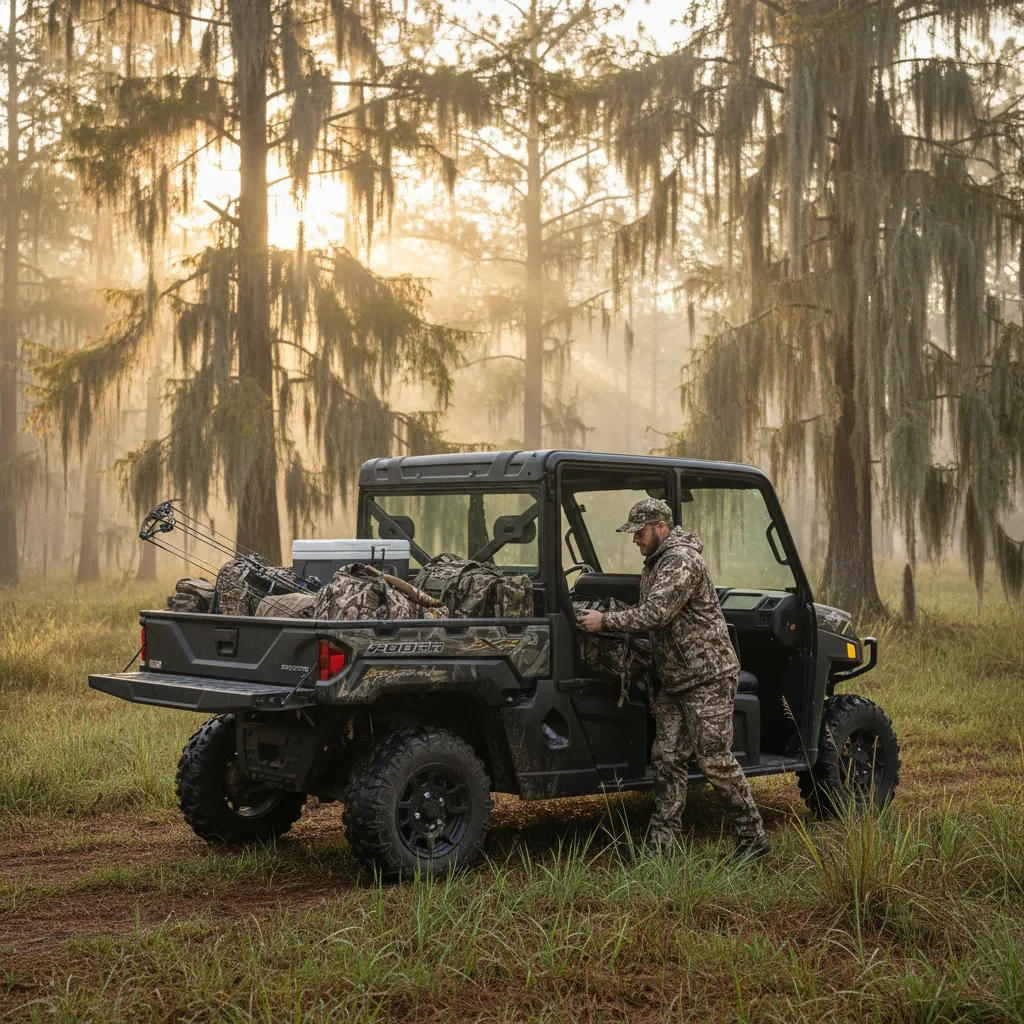
Marcus considered the agricultural exemption because he leases land that produces row crops in the off-season. His CPA shut it down in two sentences. “You guide hunts on the same machine. The day a client falls off, your insurance claim documents recreational use, and the DOR sees the affidavit you signed. You owe back tax, penalty, interest. Don’t even try it.” The Montana LLC removed the question entirely. Marcus also runs a second machine, a 2024 Polaris Sportsman 850, on the same LLC. The marginal cost on the second machine was just the service fee, no additional LLC formation. His combined Montana cost for both: $1,398. The Mississippi alternative on both would have been over $2,800 in pure tax and fees.
Dale in Columbus, Lowndes County, farms row crops and runs about 80 head of beef cattle on family land north of town. His 2026 Yamaha Grizzly 700 EPS at $15,000 was a working purchase: checking fences, pushing cattle, hauling supplemental feed in winter. Standard 7 percent rate plus the $50 fee comes to $1,100. The 1.5 percent ag rate plus the fee comes to $275. On paper, ag was the obvious play.
Then Dale’s son-in-law asked when he was going to use the new Grizzly to scout the back forty for the upcoming deer season. Dale stopped mid-conversation. He hunts whitetail every season on the same 600 acres he farms. He grew up doing it. His grandfather did it. The ag exemption requires exclusive agricultural use, and one documented hunting trip voids it retroactively. The Montana LLC at $749 is $474 more than ag would have been on paper, but it is $351 less than the standard 7 percent rate and it removes the entire audit exposure. Dale signed the Montana paperwork the same week. “I’m not going to lie on an affidavit and then sweat every season for five years,” he said. “Done is done.”
The Montana LLC Solution: How It Works
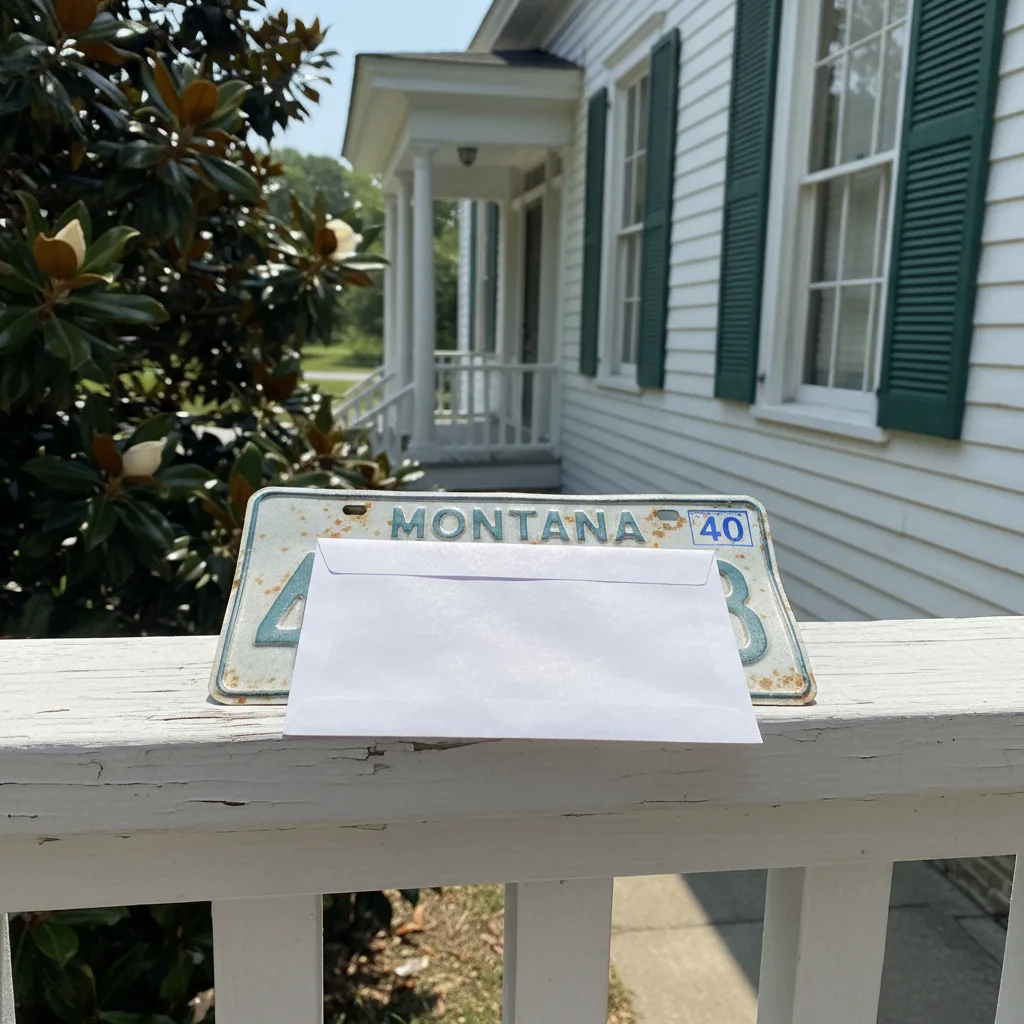
Zero Tax Tags forms a single-member Montana Limited Liability Company in your name. The LLC owns the ATV or UTV. Montana Department of Justice Motor Vehicle Division issues a title in the LLC’s name and a permanent off-highway plate. The plate has no expiration date and no renewal cycle for ATVs and UTVs registered as off-highway vehicles. You receive the title, the plate, and the LLC organizational documents by mail. Total time from start to plate in hand is seven calendar days in most cases.
Mississippi recognizes the Montana plate under the standard interstate reciprocity framework codified at MS Code Section 27-19-143. The same statute that allows an Alabama-titled vehicle to be operated in Mississippi, a Tennessee-titled vehicle to be operated in Mississippi, or any other out-of-state vehicle to cross state lines and remain compliant covers a Montana-titled vehicle. There is no separate Mississippi registration required. There is no annual Mississippi privilege tax. There is no Mississippi liability insurance mandate triggered by the registration. The vehicle is a Montana vehicle, lawfully present in Mississippi, operating under Montana’s regulatory framework.
The pricing structure rewards multi-vehicle households. The $200 LLC formation fee is a one-time cost. Once the LLC exists, every additional vehicle titled under the same LLC pays only the service fee: $549 for an ATV or $649 for a UTV. A family with three machines, an ATV and two UTVs, pays $200 once plus $549 plus $649 plus $649, for a total of $2,047. The Mississippi alternative on a $15,000 ATV, a $25,000 UTV, and a $35,000 UTV at the standard 7 percent rate plus $50 trauma fees each comes to roughly $5,700. Net household savings: over $3,600 on the registration round alone.
One LLC, Many Machines, One Plate Per Machine: The Montana LLC is the structural anchor. Every ATV, UTV, side-by-side, dirt bike, or other off-highway vehicle you own can ride under the same LLC. Permanent plates never renew. You pay $200 to form the LLC once and a per-vehicle service fee thereafter. Adding a fourth or fifth machine years later costs only the service fee. This is the cleanest fleet structure available to a private owner.
Is Montana LLC Registration Legal for Mississippi Residents?
This is the first question every prospective client asks, and the legal answer is settled. The Full Faith and Credit Clause of the U.S. Constitution (Article IV, Section 1) requires every state to recognize the public acts, records, and judicial proceedings of every other state. A title issued by the Montana Department of Justice is a public act. Mississippi must recognize it. The Commerce Clause (Article I, Section 8) protects the free movement of vehicles across state lines for interstate commerce, and federal law has consistently upheld the right of an LLC formed in one state to own property, including vehicles, used in another state.
The case law backs up the constitutional framework. In Thomas v. Bridges, courts upheld the right of a state-formed entity to own vehicles regardless of where the beneficial owner resides, as long as the LLC was validly formed and maintained. In the older but foundational Gregory v. Helvering decision, the U.S. Supreme Court established that taxpayers have an unqualified right to arrange their affairs to minimize tax liability through any legal means available. The court was explicit: “Any one may so arrange his affairs that his taxes shall be as low as possible; he is not bound to choose that pattern which will best pay the Treasury; there is not even a patriotic duty to increase one’s taxes.”
Mississippi’s reciprocity statute, MS Code § 27-19-143, is broad and unconditional for out-of-state titled vehicles. A Montana title, properly issued, with an active LLC behind it is exactly the kind of registration that statute was written to recognize.
The Structure That Works: Form a real Montana LLC with a Montana registered agent, title the vehicle in the LLC’s name, maintain the LLC’s annual reporting (handled by Zero Tax Tags as part of the service), and operate the vehicle under interstate reciprocity. Every element is documented, transparent, and consistent with both federal constitutional law and Mississippi’s own reciprocity statute. This is the same structure used by ranches, fleet operators, and high-net-worth owners across all fifty states.
simple. The Constitution protects interstate ownership. Mississippi statute recognizes out-of-state plates. Montana law authorizes the LLC and issues the title. Federal tax court precedent affirms your right to minimize tax through legal structuring. You are not bending a rule; you are using the rules exactly as written.
Who This Is Built For
Mississippi hunters are the largest single demographic of ATV and UTV owners in the state. With roughly 180,000 licensed deer hunters, the population putting a UTV to work in the woods every fall is enormous. The Montana LLC keeps registration cost flat and predictable — no ag exemption exposure, no SB 2258 compromise. Just a permanent plate that works across Mississippi’s borders into Alabama, Louisiana, Arkansas, and Tennessee.
Farmers with dual-use machines are the group most exposed to the ag-exemption trap. If you run any kind of operation where the same UTV that feeds cattle on Tuesday might run a deer drive on Saturday, the Montana LLC is the cleanest structural fix. You stop pretending the use is exclusive. You stop sweating an audit four years out. You pay $749 or $849 once and the question goes away forever.
Delta mud riders and recreational park frequenters get the same benefit. If you spend weekends at Burden’s Creek or BMB, your machine is purely recreational, and Mississippi tax on a $25,000 toy hurts more than it should. The Montana plate gives you the same access to every public and private park in the state plus reciprocity for the drive across state lines to ride elsewhere.
Contractors and property owners using UTVs commercially get an added benefit from the LLC structure — the vehicle is owned by a real business entity, which separates it from personal assets and makes the operating cost cleanly trackable.
Multi-machine households see the biggest absolute dollar savings. A family with three or four machines pays the $200 LLC fee once. Every machine after the first is just the service fee. A fleet of an ATV, two UTVs, and a dirt bike under one LLC costs less in registration than a single $45,000 UTV titled in Hinds County under Mississippi law. The numbers compound fast.
Travelers who ride across state lines pick up the cleanest reciprocity story. Mississippi sits at the intersection of four states with active off-road cultures: Alabama, Tennessee, Louisiana, and Arkansas. A Montana plate is honored across all of them under the same reciprocity framework. You do not need separate registrations, separate insurance documents, or separate compliance for every state you cross.
How Zero Tax Tags Handles Your Mississippi Registration

The Zero Tax Tags service is full-service from formation to plate delivery. You do not travel to Montana. You do not file paperwork yourself. You do not visit a notary, a DMV, or a registered agent. The process is built so that a Mississippi buyer can complete the entire registration from a dealership parking lot or a kitchen table.
Pricing is transparent and one-time. ATVs are $749 total: $549 service fee plus $200 one-time LLC formation. UTVs are $849 total: $649 service fee plus $200 LLC formation. The LLC formation is a one-shot cost; once the LLC exists, every additional machine titled under it pays only the service fee. The permanent off-highway plate that Montana issues for ATVs and UTVs does not expire and does not require renewal.
The timeline runs seven days from the moment you sign the engagement to the moment the plate arrives at your door. Here is exactly how it unfolds.
| Day 1: | You sign the Zero Tax Tags engagement letter and submit the bill of sale, VIN, and basic owner information. Your Montana LLC is filed with the Montana Secretary of State the same day. Articles of organization are submitted electronically and confirmation is typically returned within hours. |
| Days 1-2: | EIN is filed with the IRS for the new LLC, registered agent service is activated in Montana, and the LLC operating agreement is generated. All entity-level documents are completed and the entity is fully formed and operational. |
| Days 2-4: | Title application is submitted to Montana DMV. The existing title (or MCO for new vehicles) is processed and re-titled in the LLC’s name. Off-highway vehicle status is recorded. |
| Days 4-7: | Permanent off-highway plate is issued by Montana and shipped overnight to your Mississippi address. Title and LLC documentation arrive in the same package or shortly after. Ride. |
You provide a bill of sale, the VIN, and your basic personal information. We handle every filing, every fee, every piece of paperwork in Montana. The first time you do anything in person is when you bolt the plate to the machine.
Frequently Asked Questions
SB 2258 just made my ATV legal on county roads. Why do I still need Montana?
SB 2258 is a partial fix. It only covers county roads with speed limits of 40 mph or lower, requires an annual $13 in fees, mandatory liability insurance, and bans towing, state highways, and interstates. Montana gives you statewide reciprocity, no annual fee, no insurance mandate, no recurring registration, and one-time pricing. The two are not equivalent privileges.
Should I just take the 1.5% agricultural exemption instead?
Only if your use is genuinely and exclusively agricultural. The exemption requires an affidavit certifying exclusive ag use, and the Mississippi DOR interprets exclusive literally. One hunting trip, one trail ride, one non-ag use voids the exemption retroactively and exposes you to back tax, penalty, and interest. Most Mississippi farmers also hunt the same property. Montana removes the exposure entirely.
What is the $50 ATV Trauma Care Fee and can I avoid it?
The trauma fee is a mandatory $50 charge collected at the point of sale on every ATV and UTV sold in Mississippi. It funds the state trauma care system. You cannot avoid it on a Mississippi-purchased and Mississippi-registered machine. A Montana LLC registration sidesteps the entire Mississippi sales transaction structure, including the trauma fee, since the vehicle is titled to a Montana entity rather than a Mississippi resident.
Can I put multiple ATVs and UTVs under one Montana LLC?
Yes. The $200 LLC formation is a one-time cost. Every additional vehicle titled under the same LLC pays only the service fee ($549 for ATVs, $649 for UTVs). Families and fleet owners see the biggest absolute savings because the LLC overhead is spread across multiple machines.
How long does the whole Montana registration process take?
Seven days from engagement to permanent plate delivery in most cases. Day 1 is LLC formation. Days 1-2 cover EIN and entity setup. Days 2-4 cover Montana title transfer. Days 4-7 cover plate issuance and overnight shipping to Mississippi.
Can I use my Montana-plated machine on Mississippi WMAs and national forest trails?
Yes. Mississippi Wildlife Management Areas and National Forest trail systems do not restrict access based on plate state. They require the vehicle to be properly titled and registered somewhere, and the rider to follow trail rules (helmet, width limits, spark arrestor where required). A Montana plate satisfies the titled-and-registered requirement.
See how Montana LLC registration helps ATV and UTV owners in other Southern states:
- Georgia ATV and UTV Registration: Beat the Peach State’s Sales Tax
- Alabama ATV and UTV Registration: Skip the Heart of Dixie’s Tax Bill
- Tennessee ATV and UTV Registration: Volunteer State’s Hidden Tax Trap
- Louisiana ATV and UTV Registration: Pelican State’s Off-Road Tax Burden
Ready to Stop Overpaying Mississippi ATV and UTV Tax?
Mississippi ATV and UTV owners have saved thousands with Montana LLC registration. Permanent plate, no annual fees, no insurance mandate, statewide reciprocity. You’re next.