28 min read
On this page
- + Missouri Vehicle Tax: The Two-Bill System
- • Missouri Vehicle Tax by County
- • The Real 5-Year Cost
- • Why It Hurts More Than You Think
- + Who Missouri Vehicle Tax Hits Hardest
- + The Montana Solution
- + Is This Legal?
- + Four Missouri Owners Who Made the Switch
- + Who This Is Built For
- + How Zero Tax Tags Gets You Registered
- + Frequently Asked Questions

Missouri vehicle tax is one of the most aggressive two-stage tax systems in the United States, and most Show-Me State residents do not fully understand how punishing it is until the second bill arrives in the mail. Take David, an early-50s commercial contractor living in Chesterfield, a comfortable suburb of St. Louis County. In the spring of 2024, he walked into a dealership and drove home in a brand-new Ford F-350 Super Duty, configured exactly the way his crews needed it for the year ahead. Sticker price: $82,000. He understood there would be a sales tax. He budgeted for it. When the dealer rang up the combined St. Louis County rate and applied his trade-in credit, David wrote a check for $5,540 in sales tax and signed the paperwork. He thought the tax conversation was over.
Eleven months later, an envelope arrived from the St. Louis County Collector. Inside was a personal property tax bill for $2,873 on the F-350. He had filed his declaration of property in March, the way Missouri requires every vehicle owner to do. He paid the bill in December, the way Missouri requires every vehicle owner to do. Then it happened again the following December. And the December after that. The bill never stops. It just slowly decreases as the truck depreciates, year after year, while David keeps paying for the privilege of owning a vehicle he already paid sales tax on.
His neighbor across the cul-de-sac, who works in Kansas City, Kansas, paid 6.5% sales tax once on a similar truck and has never thought about vehicle taxes since. No annual property tax. No declaration form. No December bill. Just one payment at the dealer and a registration renewal. The state line is not a metaphor in Missouri. It is a financial fault line. Here is exactly what Missouri vehicle tax costs over five years, who it punishes most, and how a Montana LLC removes both bills permanently. Information sourced in part from the Missouri Department of Revenue.
Missouri Vehicle Tax: The Two-Bill System Nobody Warned You About

Missouri vehicle tax is not one tax. It is two separate, stacked taxes that most buyers never see described together in plain language. The dealer talks about the first one. Nobody at the dealer talks about the second one. By the time the second one arrives, you already own the vehicle, and you are locked into the cycle for as long as you keep it titled in Missouri.
Bill One: Sales Tax at Purchase
Missouri’s state sales tax rate is 4.225%. That number alone is misleadingly low and is the figure many residents quote when they think about vehicle taxation. The actual rate you pay depends on your local jurisdiction, because Missouri allows counties, cities, and special taxing districts to stack additional rates on top of the state base. The combined rates in the state’s largest markets look very different from the headline number:
- Kansas City combined rate: 9.975%
- St. Louis (City) combined rate: 9.679%
- Springfield combined rate: 8.1%
- Suburban St. Louis County varies by municipality, generally 8.738% to 9.738%
- Columbia and Boone County: roughly 7.975%
One feature genuinely works in the buyer’s favor at the dealer: Missouri allows a full, dollar-for-dollar trade-in credit. If you trade in a $30,000 truck on an $82,000 truck, you only pay sales tax on the $52,000 difference. There is no cap on the trade-in credit, and unlike some states it applies to private-party trades through the dealer paperwork as well. This is the one part of the Missouri vehicle tax system where the state is genuinely competitive. After this point, the friendliness ends.
Bill Two: The Annual Personal Property Tax That Lasts Forever
Missouri is one of a small handful of states that taxes vehicles as personal property every year, every single year, for as long as you own the vehicle and have it titled in the state. The legal authority for this is RSMo 137.115.9, which directs assessors to use the National Automobile Dealers Association average trade-in value as of January 1 each year as the basis for taxation.
The mechanics work like this. Each January 1, the county assessor takes the NADA trade-in value of every vehicle you own and applies a 33.33% assessment ratio. That assessed value is then multiplied by your county’s levy rate, expressed as a dollar amount per $100 of assessed value. The formula is:
Annual Personal Property Tax = (NADA Value × 0.3333) ÷ 100 × County Levy Rate
You are required to file a personal property declaration with your county assessor by April 1 each year. If you do not file, the county can apply a 10% penalty and assess you anyway based on records pulled from the Missouri Department of Revenue. The actual tax bill arrives in November and is due by December 31. If you do not pay, the county can refer the debt for collection, attach late penalties of up to 18% annually, and most importantly, they will report the unpaid status to the DOR, which means you will not be able to renew your license plates until the tax is paid in full.
That last point is the trap nobody warns you about. Missouri does not separate the two systems. The Department of Revenue and the county collectors are bonded together. Your annual plate renewal physically requires a paid receipt from the county collector showing zero personal property tax owed. Skip a year, and your truck becomes legally undriveable until you pay. There is also a small loophole worth mentioning briefly: vehicles classified as historic, generally meaning 25 years old or older and registered with historic plates, are taxed at a 5% assessment ratio instead of 33.33%. This applies to a narrow population and does not help anyone with a current truck, RV, or daily-driver luxury vehicle.
Missouri Vehicle Tax by County: Where the Bill Actually Lives

The state-level Missouri vehicle tax conversation is incomplete without understanding that the second half of the bill is set entirely at the county level. Two identical F-150s parked across a county line can have personal property tax bills that differ by hundreds of dollars per year. The levy rate per $100 of assessed value is the number that determines whether your annual bill is painful or punishing.
Jackson County is the most expensive metro in the state for personal property tax on vehicles, edging out St. Louis County by a small margin. The pattern is clear. If you live in either of the two large metro areas, you are paying roughly 3.5 to 3.7% of your vehicle’s market value in personal property tax every single year, in addition to the sales tax you already paid at purchase. On a luxury vehicle held for ten years, the cumulative personal property tax can easily exceed the original sales tax, sometimes by a factor of three or four.
The January 1 Trap
Here is the part that catches new arrivals to Missouri completely off-guard. Personal property tax is assessed based on what you own on January 1. There is no proration. If you bought your truck on December 28, 2024, you owe the full year of personal property tax for 2025 on that truck. If you sell the truck on January 2, 2025, you still owe the full year. The state does not care. The county does not care. Whatever was titled in your name on January 1 is your tax liability for the entire year.
The April 1 declaration deadline catches people too. Miss it and the assessor adds a 10% penalty and will assess you anyway based on DOR records. There is no scenario in which silence saves you money. Missouri vehicle tax compliance is mandatory and enforced through your license plate renewal.
The Real 5-Year Cost of Missouri Vehicle Tax

Single-year tax bills are easy to dismiss. They feel like an annoyance rather than a wealth-extraction system. The full picture only emerges when you stack five years of Missouri vehicle tax on top of the original sales tax and see the cumulative number. The tables below reflect realistic depreciation curves on the NADA values used by Missouri assessors. Annual property tax declines slowly as the vehicle ages, but it never goes to zero.
Scenario A: 2024 Ford F-350 Super Duty, $82,000 in Kansas City
Scenario B: 2024 Range Rover Sport, $95,000 in St. Louis County
Scenario C: 2024 Tesla Model Y, $55,000 in St. Louis (with EV Surcharge)
Scenario D: 2024 Class A Motorhome, $200,000 in Kansas City
Missouri taxes your vehicle at purchase. Then taxes it again every year until you sell it or it falls apart. There is no escape valve, no exemption for working vehicles, no cap on annual liability. The bill simply renews itself every December for as long as you own the vehicle.
Why Missouri Vehicle Tax Hurts More Than You Think
The dollar figures above are only part of the picture. Missouri vehicle tax also eats your time, creates administrative obligations, and can physically strand your vehicle. Three specific mechanics make it more punishing than any single number suggests.
The January 1 Trap and the April 1 Deadline
Most states with annual vehicle taxes prorate based on the month of registration. Missouri does not. Whatever you own on January 1 is your tax bill for the entire year. Buy a $90,000 truck on December 30 and you owe a full year of personal property tax on it. Sell it on January 5 and you still owe the full year. The state will not refund a dime.
Compounding this is the April 1 declaration deadline. You are required to file a personal property declaration with your county assessor every year, listing every vehicle you own as of January 1. If you forget, the county can apply a 10% penalty and assess you anyway based on Department of Revenue records. There is no benefit to waiting, no benefit to silence, and no scenario in which not filing reduces your tax. The system is designed to catch you no matter what you do.
The Plate-Renewal Hostage System
This is the part that makes Missouri vehicle tax structurally different from a simple property tax. Missouri does not just bill you and hope you pay. The state physically blocks your annual license plate renewal until you produce a paid receipt from your county collector showing zero personal property tax owed. The Department of Revenue and the county collectors share data, and the DMV will reject your renewal application if your county shows an unpaid balance.
This means the personal property tax is not optional in any practical sense. You cannot legally drive your vehicle in Missouri without renewed plates. Renewed plates require a paid tax receipt. A paid tax receipt requires writing the check. The system is closed-loop. It is one of the most efficient enforcement mechanisms in any state’s tax code, and it is the reason Missouri vehicle tax compliance approaches 100%, even among taxpayers who would absolutely prefer not to pay.
The EV Penalty That Keeps Climbing
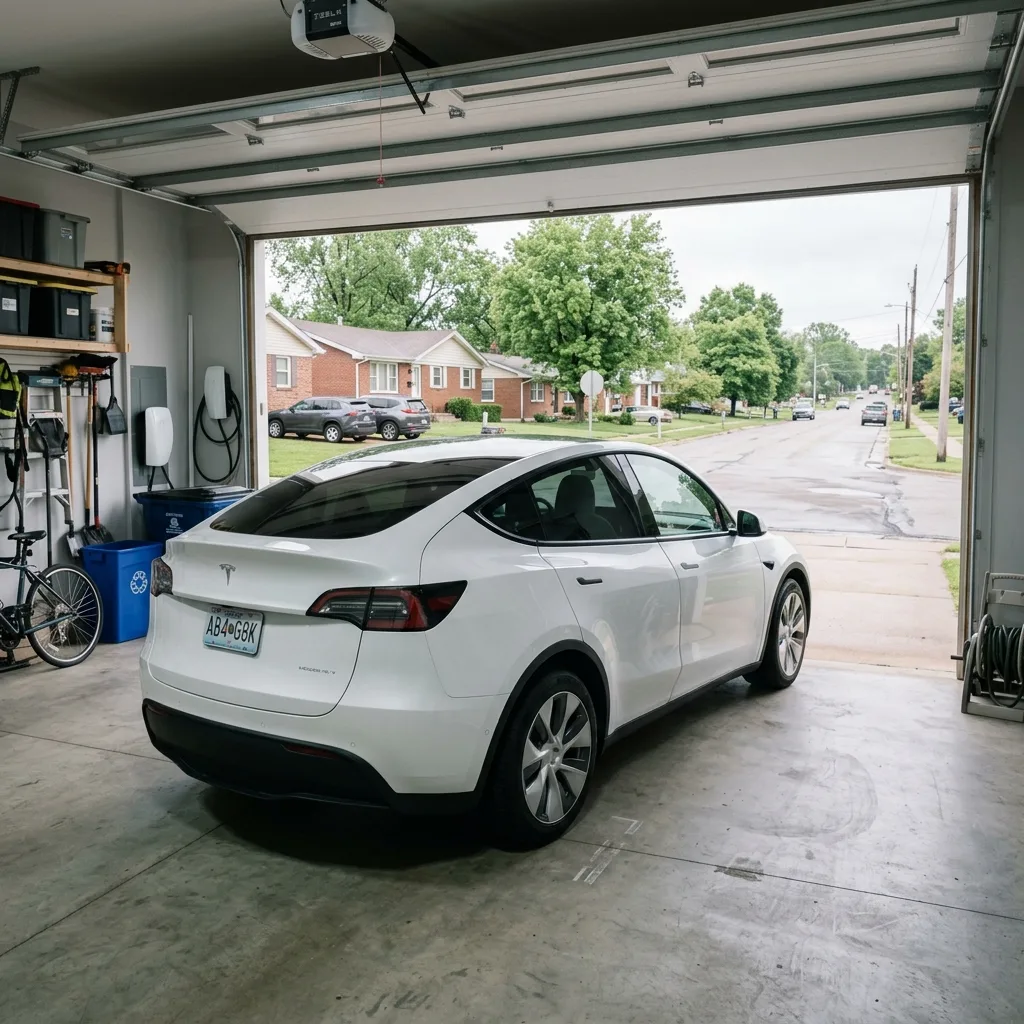
If you drive an electric vehicle in Missouri, the state charges an additional annual fee on top of the personal property tax. The current rate is $90 per year for a battery electric vehicle and $60 per year for a plug-in hybrid. These fees are scheduled to increase by 20% per year through 2027. By 2027, the BEV fee will be approximately $156 per year, and the PHEV fee will be approximately $104 per year.
The irony is hard to miss. Missouri hosts substantial electric vehicle manufacturing infrastructure. Ford manufactures components for the F-150 Lightning at facilities in the region. General Motors operates major truck and EV-relevant assembly capacity in Wentzville. Yet the state simultaneously punishes EV ownership with a stacked fee structure that grows every year. An EV owner in Missouri pays sales tax, annual personal property tax, and an escalating EV surcharge, while their gas-burning neighbor pays only the first two.
Who Missouri Vehicle Tax Hits Hardest
Missouri vehicle tax is regressive in some ways and progressive in others. The annual personal property tax scales with vehicle value, which means high-value vehicle owners take the largest absolute hit. But because the system is anchored to NADA value rather than income, it can also hit working contractors, retirees on fixed incomes, and middle-class families who happen to own a single expensive vehicle. Five groups carry the heaviest burden.
Group One: Suburban Professionals with Luxury Vehicles
St. Louis County and Jackson County are home to large populations of professionals, executives, and business owners driving vehicles in the $80,000 to $200,000 range. Range Rovers, Escalades, G-Wagons, Cayennes, performance trucks, and the upper trims of luxury SUVs are everyday sights in Clayton, Ladue, Town and Country, Leawood-adjacent suburbs, and Mission Hills-adjacent neighborhoods. Each of these vehicles generates between $2,800 and $7,000 in annual personal property tax in addition to the original sales tax. Over five years of ownership, the tax cost frequently exceeds the original sales tax by a factor of two.
Group Two: Working Contractors with Heavy-Duty Trucks
Kansas City and St. Louis are tradesman cities. HVAC contractors, electricians, framers, roofers, concrete crews, and service-industry operators across both metros operate fleets of F-250s, F-350s, Ram 2500s, and Silverado 2500s and 3500s. These trucks list at $70,000 to $100,000 in current model years. They are working tools, not luxury items. The tax system makes no distinction. A $90,000 F-350 used to haul concrete forms generates the same $3,000 annual bill as a $90,000 luxury SUV used for school drop-off.
Group Three: RV Owners in Lake of the Ozarks Country
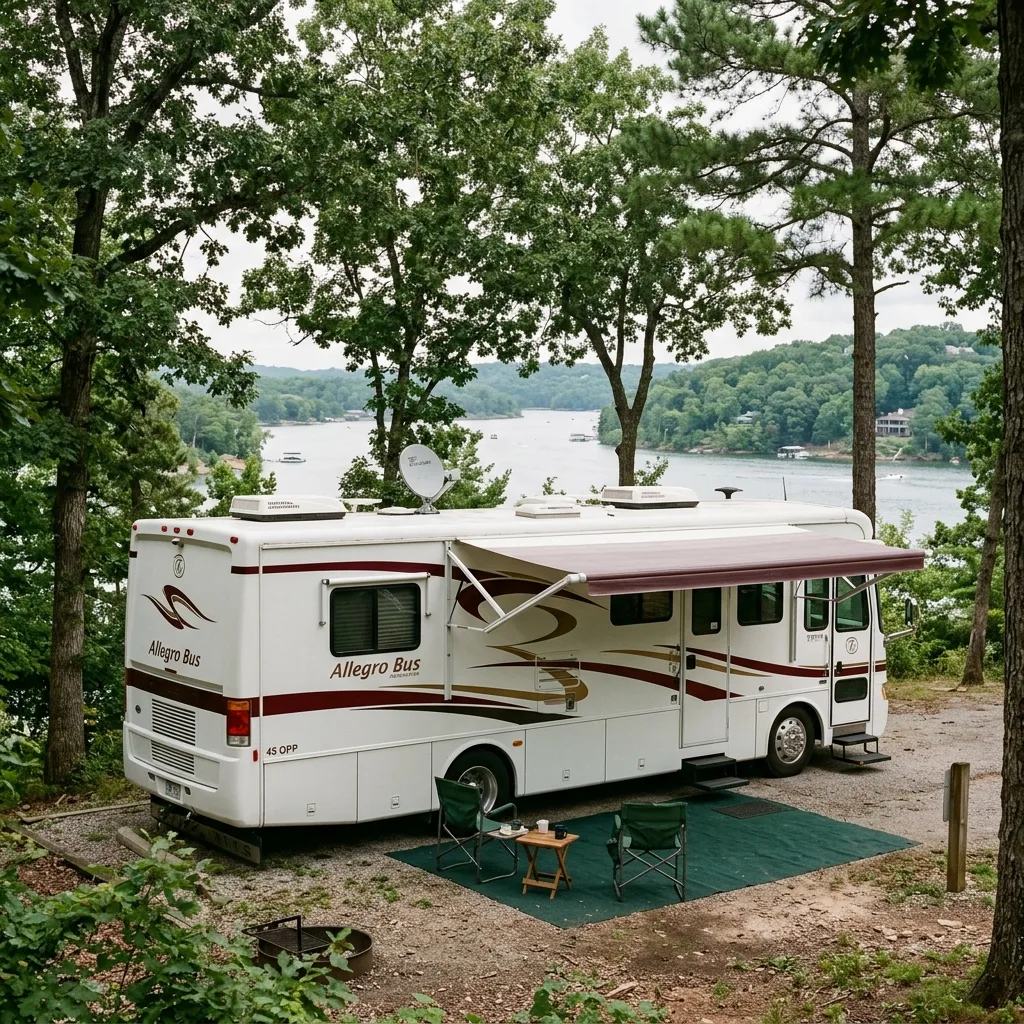
Missouri has one of the most established recreational vehicle communities in the central United States. The Lake of the Ozarks region, the Branson corridor, and the Mark Twain National Forest area attract RV owners from across the Midwest, and many of them title their motorhomes in Missouri because that is where they live. A $200,000 Class A motorhome titled in Jackson County generates approximately $7,300 in personal property tax in its first year of assessment, declining gradually as the rig depreciates. Over a typical ten-year ownership cycle, the RV personal property tax alone can exceed $50,000.
Group Four: EV Early Adopters Facing the Triple Hit
If you own a Tesla, Rivian, Lightning, Mustang Mach-E, or any other electric vehicle in Missouri, you face a three-stack tax structure. You paid sales tax at purchase. You pay personal property tax annually. You pay an EV surcharge that grows 20% per year through 2027. The combination is the most expensive vehicle tax structure for EV owners in any state in the central United States.
Group Five: The Kansas Border Irony
This one is the most psychologically difficult for the people it affects. If you live in Lee’s Summit, Blue Springs, Raymore, Belton, or any of the Kansas-border communities in eastern Jackson and Cass counties, you live within 15 to 25 miles of a state line where the entire vehicle tax system works completely differently. Kansas charges 6.5% sales tax once. There is no annual property tax on vehicles. Your colleague who lives in Overland Park or Lenexa or Olathe, Kansas, paid sales tax once and never thinks about vehicle taxes again. You file a declaration every April and write a check every December. The line on the map is six inches wide. The financial difference, over a decade of vehicle ownership, runs into tens of thousands of dollars.
The Montana Solution: How a Montana LLC Eliminates Both Bills
Montana has one of the most favorable vehicle tax structures in the country, and it has kept it that way for decades. Montana has no statewide sales tax. There is no sales tax on vehicles purchased or registered in Montana. Montana also has no annual personal property tax on vehicles. Registration is a flat, age-graduated fee that gets cheaper as the vehicle ages, and at year eleven the plate becomes permanent: paid once, never renewed again.
For a Missouri resident, the route into the Montana system is a Montana limited liability company. The LLC is a legal entity formed in Montana with a registered agent at a physical Montana address. The LLC takes title to your vehicle. The vehicle gets Montana plates. The Missouri vehicle tax system, both halves of it, no longer applies because the vehicle is no longer a Missouri-titled asset. There is no sales tax bill at the dealer. There is no annual personal property tax bill in December. There is no plate-renewal hostage problem because there is no Missouri tax for the DMV to wait on.
Year-by-Year Comparison: F-350 in Kansas City
The cumulative figure is what usually changes people’s minds. By the end of year five, the F-350 owner in Kansas City has saved $15,722 by titling the truck in a Montana LLC. That is not theoretical. That is real cash that stayed in the truck owner’s bank account instead of going to Jackson County. By year ten, with the Montana plate now permanent and zero ongoing renewal cost, the cumulative savings on a single truck approaches $25,000.
The Montana LLC structure has been used by ranchers, fleet operators, family offices, and individual vehicle owners for more than four decades. It is not aggressive tax planning. It is the orderly use of a state’s published vehicle registration laws to title an asset where the law makes the most economic sense.
Is This Legal?
Yes, unambiguously. Montana has explicitly allowed non-resident-owned LLCs to register vehicles since the 1980s. The structure is set out in Montana statute, administered by the Montana Secretary of State for the LLC formation and the Montana Motor Vehicle Division for the title and registration. There is no gray area at the state level. Montana wants the registration revenue and writes its laws accordingly.
The federal layer is equally clear. Under the Commerce Clause of the United States Constitution, a state cannot prohibit a properly formed out-of-state legal entity from owning property, including vehicles. Limited liability companies are recognized as legal persons in all fifty states. A Montana LLC is a Montana legal person, and that legal person can own and register its own assets in its home state. Thomas v. Bridges affirms that taxpayers are entitled to arrange their affairs to minimize tax liability through legal means.
The structure is identical to what large fleet operators have used for decades. Ranches register trucks, trailers, ATVs, and equipment in Montana LLCs. Family offices register collector vehicles, motorcoaches, and toys this way. Commercial fleet operators do the same. The legal architecture is not novel and is not exotic. The LLC is the legal owner of record, the title is in the LLC’s name, the plates are issued to the LLC, and the registration documents reflect Montana ownership. Insurance follows the same structure: the named insured is the LLC, with the operators listed as authorized drivers.
This is the same structure used every day by people who simply want their vehicle tax burden to match the orderly, predictable reality of a Montana registration rather than the open-ended annual bill of the Missouri system. Attorneys, registered agents, insurance companies, and DMV offices across the country understand the structure and handle it routinely.
Four Missouri Vehicle Owners Who Made the Switch
David, Chesterfield: The HVAC Contractor with the F-350
David is the contractor from the opening of this article. Early 50s, owns a commercial HVAC outfit headquartered in west St. Louis County. His work fleet includes the new $82,000 F-350 plus three older service trucks. The F-350 was the vehicle that pushed him over the edge. After paying $5,540 in sales tax at the dealer, the $2,873 personal property tax bill for year one arrived in November and made him do the math on the next ten years. The projection showed roughly $14,300 in cumulative tax over five years on the F-350 alone, before the rest of his fleet.
A colleague forwarded him a Zero Tax Tags link after a job-site conversation about exactly this problem. David ran the numbers, asked his accountant to confirm the LLC structure, and signed up. His five-year savings projection on the F-350 alone is $14,299. As he put it: this is practical, not flashy. The savings on one truck pay for two employees’ worth of materials in a slow quarter. He is now in the process of moving his other three trucks into the same Montana LLC.
Sarah, Clayton: The Attorney with the Range Rover

Sarah is a mid-40s attorney at a regional firm headquartered in Clayton. She bought a 2024 Range Rover Sport for $98,000 in a private-party transaction and titled it in St. Louis County. The combined sales tax at the 9.679% effective rate she paid through the title-and-tag office came to $9,484. Her year-one personal property tax bill, calculated against the $98,000 NADA value, came in at $3,440. Year two will be slightly lower. Year three slightly lower than that. The bill never goes to zero.
The realization that pushed Sarah over the line was not the dollar amount. It was the comparison. Her annual bar dues, professional liability insurance allocations, and continuing education requirements all added up to less than her annual vehicle property tax. She was paying more in personal property tax on a single SUV than the entire cost of maintaining her professional credentials. The Zero Tax Tags five-year cost for her Range Rover comes to $3,196. The Missouri five-year cost comes to over $24,000. The savings funded a significant portion of a kitchen remodel.
The Petersons, Lake of the Ozarks: The Class A Motorhome
Tom and Linda Peterson are a retired couple from Blue Springs, on the Jackson County side of the Kansas City metro. They spent forty years working and saving for the kind of retirement they have now: long stretches at the Lake of the Ozarks in their 2024 Tiffin Allegro Bus, a $215,000 Class A motorhome that sleeps six and tows a small SUV behind it for day trips. The Petersons knew there would be sales tax. They paid it: $21,446 at the Kansas City combined rate. What they did not fully understand was the annual personal property tax.
The first November bill from Jackson County came in at approximately $7,800. They paid it. The second one was lower but still over $7,000. They started running the math. Over a typical ten-year RV ownership cycle, they were looking at $50,000 to $60,000 in cumulative personal property tax on the rig alone. They found Zero Tax Tags through an RV forum recommendation. The Montana LLC structure for an RV over $150,000 runs $1,699 in year one with minimal renewals after that. Their projected ten-year savings approaches $75,000. As Tom put it: the lake is supposed to be the reward, not the bill.
Marcus, Lee’s Summit: The EV Owner Who Lives 15 Miles from Kansas

Marcus is a software engineer at a Kansas City fintech firm. He lives in Lee’s Summit, on the Jackson County side, and bought a 2024 Rivian R1T for $75,000. The truck is everything he wanted: capable, electric, well-built, premium. The taxes told a different story. Sales tax at the Kansas City rate: $7,481. Annual personal property tax in year one: approximately $2,750. Plus the $90 EV surcharge, which is scheduled to grow 20% per year through 2027.
His office is in downtown Kansas City. His commute takes him 15 miles east to home in Lee’s Summit, but a colleague who lives in Overland Park, Kansas, makes a similar commute in the opposite direction. That colleague paid 6.5% sales tax once on his EV and has not paid a vehicle tax since. No annual property tax in Kansas. No EV surcharge of the same structure. Marcus did the math and signed up with Zero Tax Tags. His five-year cost in the Montana LLC structure is $2,371. His five-year cost staying in Missouri would have been over $13,000. The state line, six inches wide on the map, made the entire difference until he stepped out of the system.
Who This Is Built For
The Montana LLC moves vehicle owners out of expensive titling jurisdictions into a state that simply does not charge the taxes Missouri charges. Some profiles benefit more than others. The math is at its most favorable for vehicles in the $30,000-and-up range.
- Luxury vehicle owners in St. Louis County and Jackson County: Range Rovers, Escalades, G-Wagons, Cayennes, RS-trim Audis, AMG Mercedes, M-trim BMWs, Cadillac Vs, Tesla Model S and X, and Rivian R1S/R1T owners who are paying $2,500 to $4,000 per year in personal property tax on a single vehicle.
- Heavy-duty work truck owners across both metros: F-250, F-350, F-450, Ram 2500, Ram 3500, Silverado HD, Sierra HD, and the related diesel platforms used for towing, hauling, and contracting work. New-model HD trucks are routinely titled at $80,000 to $120,000.
- RV and motorhome owners in any part of the state: Class A, Class B, Class C, fifth-wheel toy haulers, and high-end travel trailers. The ten-year exposure on a $150,000-plus rig makes this one of the highest-value Montana LLC use cases anywhere.
- EV owners statewide: Tesla, Rivian, Lightning, Mach-E, Lucid, R1S/R1T, EQS, EQE, iX, i7, and the rest of the current premium EV market. The combination of sales tax, annual property tax, and the escalating EV surcharge makes the Montana structure especially efficient for electrified vehicles.
- Collector and weekend vehicle owners: Air-cooled Porsches, vintage muscle cars, modern supercars used a few thousand miles a year, and trailered show cars. Paying $3,000-plus in annual personal property tax on a vehicle that gets driven on weekends makes no sense.
- Multi-vehicle households: The Montana LLC is paid for once and can hold multiple vehicles. A family with two luxury SUVs and an RV can move all three into the same LLC and pay one annual filing fee instead of three Missouri property tax bills.
For vehicles under $20,000, the math may be tighter and we recommend a free calculation before committing. For anything over $30,000, the math almost always favors the Montana structure in Missouri, regardless of which county you live in. The plate-renewal hostage problem alone, removed permanently, is worth a meaningful amount of administrative friction every year.
How Zero Tax Tags Gets You Registered
Zero Tax Tags is a full-service Montana LLC and vehicle registration provider. We form the LLC, serve as registered agent, transfer the title at the Montana county treasurer, and ship the permanent Montana plates directly to your door. You never need to set foot in Montana. The pricing is straightforward.
The 7-Day Timeline
| Day 1: | Submit your paperwork through our secure portal. We review for completeness and file your Montana LLC the same day. |
| Days 1–2: | Montana LLC formation complete — same business day in most cases, second business day at the latest. |
| Days 2–4: | Title transferred into the LLC name at the Montana county treasurer. |
| Days 4–7: | Permanent Montana plates shipped directly to your door within 3–5 business days of title completion. |
Frequently Asked Questions About Missouri Vehicle Tax and the Montana Solution
Will Missouri flag my Montana plates?
The vehicle is owned by a Montana LLC, titled in Montana, and registered in Montana. Montana plates on a Montana-titled vehicle are unremarkable. Out-of-state plates are common in every metro area in the country, including Kansas City and St. Louis. Montana plates specifically are recognizable to most law enforcement officers because they are a common registration state for fleet vehicles, RVs, and corporate-titled assets. The vehicle’s documentation matches the plate, the registration is current, and insurance is in the LLC’s name. There is nothing inconsistent about the picture.
Do I still need to file a Missouri personal property declaration?
The personal property declaration applies to property you own personally as of January 1. Once the vehicle is titled in a Montana LLC, you personally do not own the vehicle. The LLC owns the vehicle. There is no Missouri personal property tax obligation on a vehicle titled out of state to a separate legal entity. Your annual declaration to the county assessor will reflect what you actually own personally in Missouri as of January 1.
What happens to my plate renewal if my vehicle is on Montana plates?
The Missouri plate-renewal hostage problem disappears entirely. There is no Missouri plate to renew, because the vehicle is on Montana plates. The Department of Revenue is not waiting on a county collector receipt because the vehicle is not in the county collector’s database. The annual ritual of filing, paying, and waiting in line for renewal stickers ends.
Can I insure a Montana-plated vehicle while living in Missouri?
Yes. Major national insurance carriers issue policies on Montana-LLC-titled vehicles for owners living in any state. The named insured on the policy is the LLC, and you are listed as an authorized driver. Coverage levels, liability limits, comprehensive, and collision all work normally. Your insurance broker handles the structure routinely if they have any commercial or fleet experience, and we work with brokers across the country who understand the structure.
Does this work for leased vehicles?
The Montana LLC structure works best for vehicles you own outright or are financing in your own name. Lease structures are owned by the leasing company, which controls the title, and most leasing companies have specific rules about what state the vehicle can be titled in. If you are considering a vehicle and the Montana structure makes sense financially, the cleanest path is to purchase rather than lease, or to work with a lender who can title to the LLC from origination.
How much does Zero Tax Tags charge?
Year one is $899 total ($699 service + $200 LLC formation) for cars, trucks, and SUVs under $150,000 MSRP. For higher-value cars, trucks, and SUVs over $150K, the year-one cost is $1,724. For RVs and motorhomes over $150K it is $1,699. Annual renewals run $368 for vehicles 0–4 years old and $237 for vehicles 5–10 years old. Vehicles 11+ years old, motorcycles, ATVs, UTVs, trailers, and boats are $899 one-time with permanent plates and zero renewal cost forever.
Can I add multiple vehicles to one LLC?
Yes, and most clients do. The LLC formation cost is paid once. Additional vehicles added to the same LLC pay the per-vehicle service fee and registration cost without paying the $200 LLC formation fee again. A family with two SUVs and an RV can hold all three in a single LLC, which simplifies paperwork, insurance, and annual administration.
What about my RV — does the same structure apply?
The structure is especially well-suited to RVs because RV personal property tax bills in Missouri are some of the highest in the country relative to the asset’s actual annual use. A $200,000 motorhome that gets driven 4,000 miles a year still generates a full-value Missouri personal property tax assessment. Moving the RV into a Montana LLC eliminates that bill permanently. Many of our clients started with an RV and added their daily-driver vehicles afterward once they saw how the structure worked.
See How Montana LLC Registration Helps Owners in Other High-Tax States
Missouri is one of several states where the Montana LLC structure pays for itself in the first year and continues paying every year afterward. If you have friends or family dealing with similar vehicle tax problems in other states, the analysis works the same way:
- Arizona Vehicle Tax: The VLT Problem and How to Stop Paying $1,000 Every Year
- Virginia Car Tax: Stop Paying the Highest Vehicle Tax in America
- Idaho Vehicle Tax: How Gem State Owners Are Cutting Their Bills
- Tennessee Vehicle Tax: The Volunteer State’s Hidden Costs
- Indiana Vehicle Tax: Hoosier Excise Tax and the Montana Solution
Ready to Stop Paying Missouri Vehicle Tax Every Year?
Missouri vehicle owners have saved millions with Montana LLC registration. From Chesterfield to Lee’s Summit to the Lake of the Ozarks, smart owners are stepping out of the two-bill system permanently. You’re next.