26 min read
On this page
- + You won the auction. Now you need plates.
- + How we built this guide
- + The four tiers, at a glance
- + Tier 1: The states where it just works
- + Tier 2: Workable with the right paperwork
- + Tier 3: Extra steps and longer waits
- + Tier 4: Where SF-97 effectively goes to die
- + Colorado: the cautionary tale
- + The documents every state wants
- + Montana LLC: the one solution that works everywhere
- + Who this is built for
- + FAQs
You won the auction. Now you need plates.
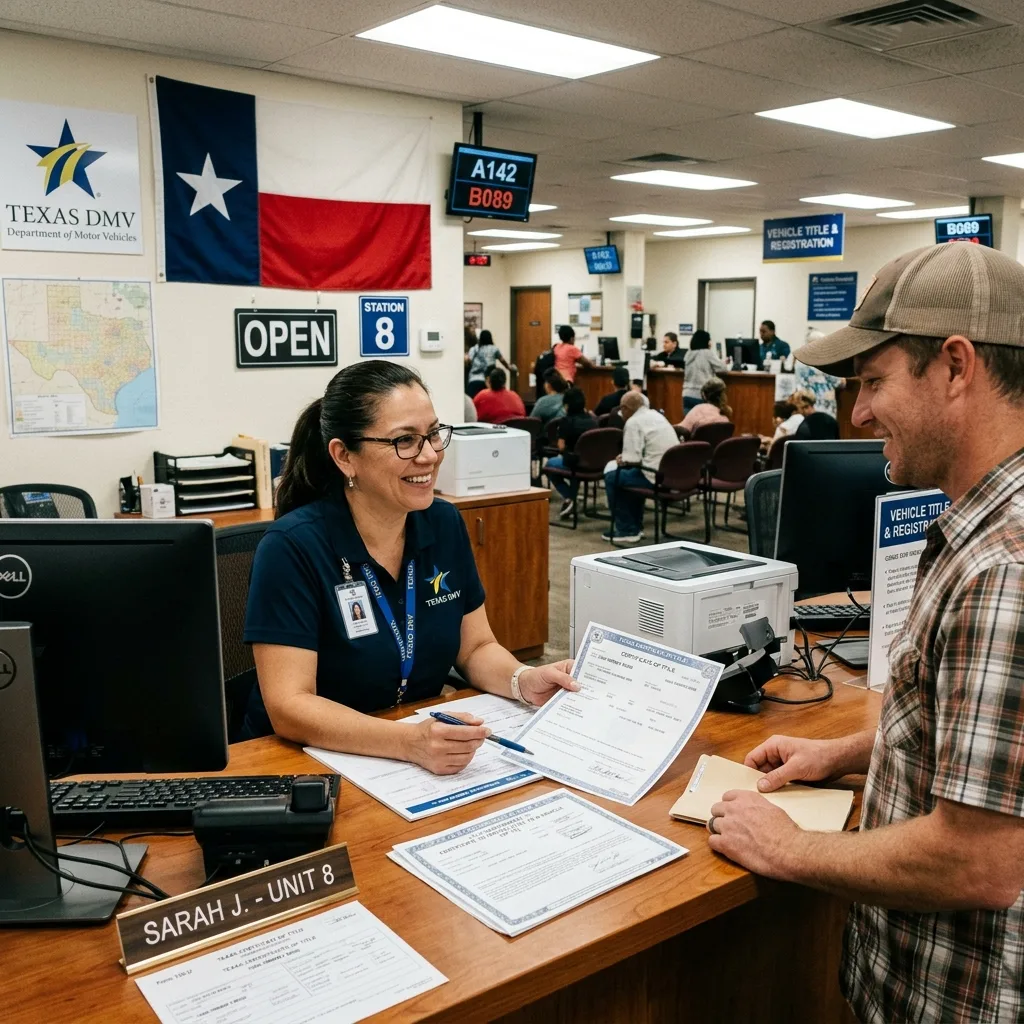
You won the auction. The hammer dropped, the wire went out, and that surplus HMMWV (or M35, or M1078) is yours. The federal paperwork lands a few weeks later: a clean SF-97 in your name, signed by a contracting officer, stamped with all the right seals.
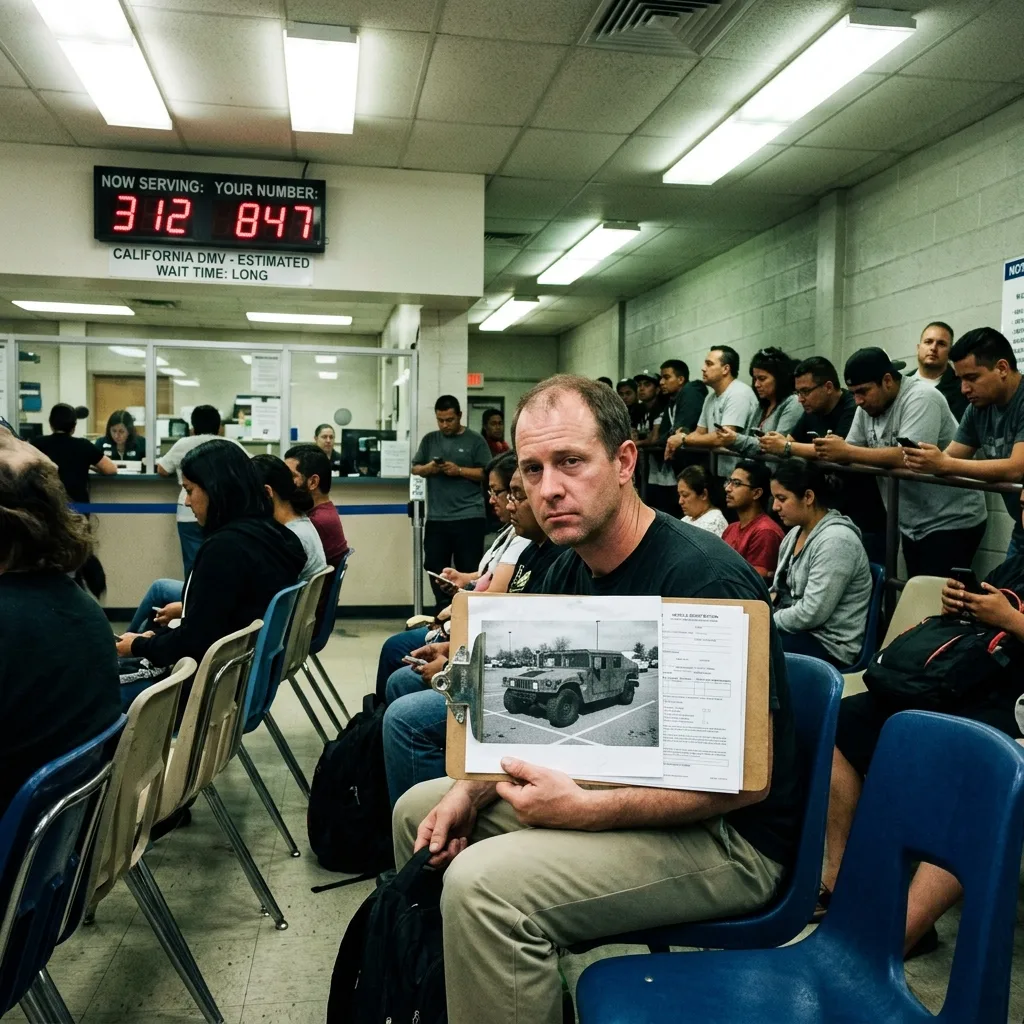
Then you walk into your local DMV. Depending on which side of which state line you live on, the next thirty minutes go one of two ways. The clerk reads the form, runs the VIN, processes a title, and hands you plates. Or the clerk looks at the SF-97 like it is a museum artifact, calls a supervisor, and politely sends you home with a list of forms you have never heard of.
This is the part nobody warned you about. SF-97 titling by state is not one process — it is fifty processes wearing the same federal letterhead. The Standard Form 97 (the U.S. Government Certificate to Obtain Title to a Vehicle) is the document the federal government issues when it sells you a former military or government-owned vehicle. The form itself is “accepted in all 50 states” on paper. The people who work the counters in those fifty states did not all get that memo.
Some states process an SF-97 the same way they process any other out-of-state title. Some require a stack of supplemental forms before they will open the file. Some require modifications before they will issue plates. And some have effectively decided, through policy or through unwritten counter culture, that they would rather not deal with a former military truck at all.
This guide breaks every state into one of four tiers, based on what buyers are experiencing in 2026: which states process the SF-97 routinely, which require workarounds, which demand months of extra steps, and which are essentially closed without a Montana LLC. Read this before you wire the money.
How we built this guide
The state-by-state breakdown is built from two primary sources, cross-referenced against current buyer reports from collector forums and government surplus auction communities.
The first source is the four-tier classification system at hmmwvregistration.com, which has tracked surplus titling outcomes since the late 2010s. Their most recent update (March 2026) re-ranks several states based on policy changes and DMV behavior shifts over the prior eighteen months. Tiers run from “no friction” (Tier 1) to “Montana LLC required” (Tier 4), and the categories cover the practical reality at the counter rather than the letter of the statute.
The second source is the crowdsourced state map maintained by the SteelSoldiers forum, the largest active community of military-vehicle owners in North America. The map (updated November 10, 2025) categorizes states as Friendly, Unfriendly, or Unknown/Variable based on member reports. Where the two sources disagree (Maine, for instance, is Tier 1 on one and Unfriendly on the other), we flag that disagreement so you can plan around it.
Both sources are field intelligence from people who actually walked through the door with the form, and that field intelligence is currently the most reliable data anyone has on SF-97 titling by state.
The four tiers, at a glance
Every state below falls into one of four brackets, sorted by how hard the state will make this.
The Tier 1 list is small but generous, and Montana sits at the center of it. Tier 2 is the largest and covers most of the South, Midwest, and Mountain West. Tier 3 is where policy and counter behavior diverge, and Tier 4 is where the math stops working for almost every retail buyer.
Tier 1: The states where it just works

Tier 1 is the easy bracket. Roughly ten states fall into it, and in each one the SF-97 is treated the way a federal title document was always meant to be treated: a clean conveyance, processed at the counter, with no special routing and no committee review. When buyers talk about SF-97 titling by state in friendly terms, these are the states they mean. The defining traits of a Tier 1 state are zero or near-zero sales tax, no statewide emissions program, and no mandatory annual safety inspection that a surplus diesel would fail.
The Tier 1 roster
Alaska. Delaware. Idaho. Montana. New Hampshire. North Dakota. South Dakota. Vermont. Wyoming. Maine sits in this tier per hmmwvregistration.com but appears as “unfriendly” on the SteelSoldiers crowdsourced map, so if you live in Maine, call your county office first and ask specifically about SF-97 processing before you bid.
Each has its own quirks. Delaware processes surplus titles through the New Castle office with no sales tax. Idaho and Wyoming have streamlined VIN inspections that fit a former military vehicle without modification. New Hampshire clerks have processed SF-97s for decades and know the form on sight. South Dakota is the long-time mail-in registration capital of the country.
Why Montana sits at the center
Montana is Tier 1 for residents, but Montana is also the only Tier 1 state that you do not have to live in to use. The legal mechanism is the Montana single-member LLC: a Montana entity owns the vehicle, the entity registers the vehicle in Montana, and the registration is valid in all fifty states under the federal vehicle code’s domicile-of-registration rules. There is no Montana sales tax. There is no Montana emissions program. The SF-97 is accepted at the county treasurer’s office without a database VIN lookup that trips up vehicles whose VINs predate the modern DOT system.
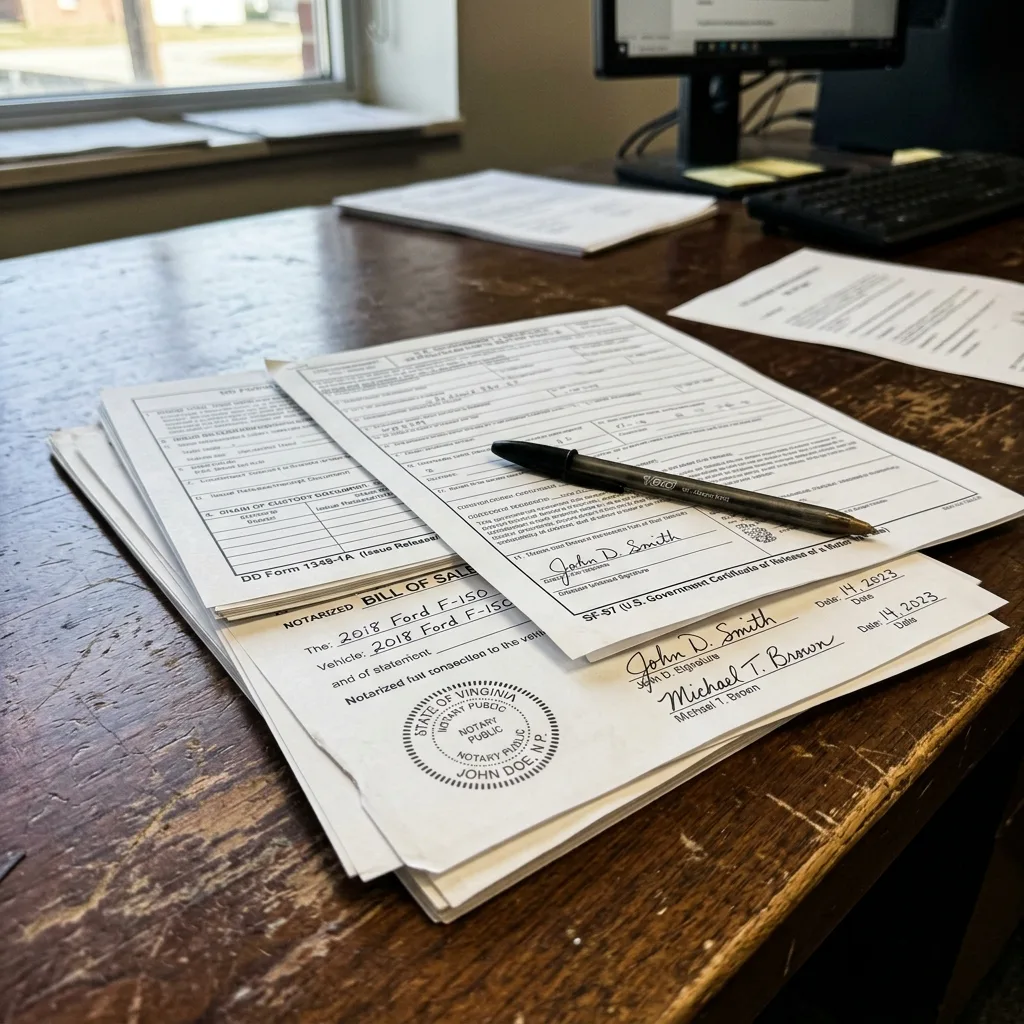
Even in Tier 1 states, you still need the universal document stack: the SF-97 itself, the DD Form 1348-1A (chain-of-custody from the DRMO), a notarized bill of sale, and the DEMIL code verification on the vehicle’s tag. Tier 1 means low friction. It does not mean no paperwork.
Tier 2: Workable with the right paperwork
Tier 2 is the largest bucket and the most varied. Twenty-five states fall in here, and it covers the broad middle of the SF-97 titling by state map: a clean SF-97 plus the right supplemental forms gets a title. The differences between states show up in which supplemental forms, how much sales tax, and how the local VIN inspector handles a vehicle that does not match the standard NHTSA VIN format.
Texas: the gold standard of Tier 2
If you are looking for the easiest state in this tier, it is Texas. Field reports put first-visit success at over ninety percent for buyers who walk in with the complete document stack. Texas DPS clerks are familiar with the SF-97 because the state hosts several large surplus dealers and gets a steady volume of these titles every month. Texas offers two paths: an SF-97 title at fifty dollars or a state certificate of title at one hundred fifty dollars. Both are road-legal. The state title is the cleaner path for buyers who plan to resell.
South Carolina: the $500 sales tax cap
South Carolina is the bargain of Tier 2. The state caps sales tax on any single vehicle at five hundred dollars, regardless of purchase price. For a surplus M35 cargo truck purchased at six thousand dollars, the cap is irrelevant; for a restored HMMWV slant-back purchased at thirty-five thousand dollars, the cap saves the buyer well over a thousand dollars compared to neighboring North Carolina or Georgia. The cap is statutory, not discretionary, and it applies to private and dealer transactions alike.
Georgia: the GovPlanet title workaround
Georgia is a working state but only with the right intake document. The Georgia Department of Revenue (DOR) does not accept a raw SF-97 as a transferable title; the state requires an intake title issued by GovPlanet (the largest licensed surplus auctioneer), which itself sits on top of the SF-97. From there, the buyer also needs a T-8 power of attorney, an MV-1 application, a T22B VIN inspection completed by the highway patrol, a T-128 missing license plate affidavit (notarized), a surety bond, and a serial plate request submitted to the GA DOR. It is a stack, but it is a deterministic stack. If you have all of it, you will get a Georgia title.
Missouri: the SF-97 dead end
Missouri is the state to know about before you bid. Missouri will not accept a raw SF-97 at all. The state requires a fully transferable title at the counter, and the SF-97 is not classified as one. The only paths for a Missouri buyer are an out-of-state intake title (Texas is the most common workaround) or a Montana LLC registration. Buyers who try to walk into a Missouri license office with an SF-97 and a bill of sale leave with neither plates nor a refund of their inspection fee.
Iowa: the bonded title path
Iowa’s situation is similar in feel to Missouri’s but with a cleaner workaround. Most Iowa counties will not transfer from a raw SF-97 either, but the state’s bonded title process is well-established and gets surplus owners to a usable title within a few weeks. A bonded title costs more than a routine transfer because the surety bond is priced on the vehicle’s stated value, but it is a known quantity. Several Iowa counties have processed enough of them that the line workers know the form.
Nebraska: the former military vehicle plate
Nebraska deserves a specific callout. State Senator Tom Brewer’s former military vehicle tag legislation created a specialty plate for vehicles with a verified military connection. Vehicles registered under that plate are exempt from weight restrictions that would otherwise apply to anything over 8,500 pounds GVWR. Most surplus tactical vehicles qualify on their face. The plate is a Nebraska resident benefit, and it is one of the few state-level policies in the country that was designed specifically for this category of vehicle.
Tier 2 quick-reference
Tier 3: Extra steps and longer waits
Tier 3 is the most frustrating bracket. About a dozen states fall here, and the defining trait is unpredictability. A neighbor in the same county can have a smooth experience while you sit on a six-week wait. Emissions testing is a common pinch point because most Tier 3 states have metro-area emissions programs but rural exemptions. Whether your address falls inside or outside the testing boundary is often the deciding factor.
Ohio: the office lottery
Ohio is the textbook hit-or-miss state. State policy permits SF-97 processing. Whether you get plates depends on which deputy registrar office you walk into. Some offices in central and southern Ohio process surplus titles routinely. Other offices in the northeast quadrant of the state route every SF-97 to a regional supervisor for review, and review can mean six to ten weeks. Buyers in Ohio have learned to call ahead, ask the office whether they have processed an SF-97 in the past twelve months, and route their paperwork to the office that says yes.
Oregon: the parade-only restriction
Oregon will register a former military vehicle. Oregon will not necessarily let you drive it on the highway. The state’s “parade only” classification restricts the registration to display use, parade use, and movement between storage and display. Daily driving is outside the scope of the plate. For a collector who wants to bring an M35 to the local Veterans Day parade once a year, Oregon’s classification is functional. For an owner who wants a daily hauler or a backcountry rig, it is not.
Michigan: the terminology trap
Michigan is a state where the words on your paperwork matter more than the truck in the parking lot. The state’s Secretary of State office has, in recent years, declined to register vehicles whose paperwork uses the terms “Humvee” or “HMMWV” — apparently treating those terms as evidence of an unregistered tactical platform. Buyers who instead submit paperwork describing the vehicle as an “M998” or as an “AM General Utility Truck” (the manufacturer designation) have had much better outcomes. The truck is the same. The form is the same. The name on the form changes the answer at the counter.
Pennsylvania: the PennDOT supplemental window
Pennsylvania has an unusually clean process for a Tier 3 state. PennDOT will accept supplemental paperwork directly from GovPlanet (the licensed surplus auctioneer), which means the buyer does not need to chase down the DRMO chain-of-custody documents themselves. Once the supplemental packet is in PennDOT’s hands, the title issues in three to six weeks. The state still requires safety inspection and lighting compliance, which puts most surplus diesels in the $1,500-$2,500 modification range.
Modification costs in Tier 3
Most Tier 3 states require enough safety modifications that the buyer should budget separately for them. The common line items: a turn signal and hazard kit at two hundred to six hundred dollars, a third brake light at roughly one hundred fifty dollars, civilian-style mirrors at one hundred to three hundred dollars, a functional speedometer assembly (variable depending on the vehicle), and DOT-compliant tires which run twelve hundred to two thousand dollars for a set of five on a HMMWV. Total Tier 3 modification budget typically lands between a thousand and twenty-five hundred dollars.
Tier 3 quick-reference
Tier 4: Where SF-97 effectively goes to die
Tier 4 is the closed bracket. Eight states fall here, and in each one the combination of sales tax, statewide annual emissions testing, mandatory multi-point safety inspections, and complex supplemental forms means that the typical retail buyer with a stock SF-97 vehicle cannot get plates. The math also stops making sense before the math gets a chance to start: the modification budget to make a stock HMMWV inspection-ready in California runs three thousand to eight thousand dollars, and that is before the buyer pays sales tax.
California: the documentary marathon
California deserves its own subsection because the document stack is unlike anything else in the country. A buyer titling a former tactical vehicle in California needs all of the following, with no substitutions:
- The SF-97 certificate itself, with the complete chain of bills of sale from DRMO to the current owner.
- REG 343 — the Application for Title or Registration — accompanied by a separate vehicle verification performed by an authorized inspector.
- REG 262 — the Vehicle/Vessel Transfer and Reassignment form — which includes the federally required odometer disclosure. (REG 262 is a controlled form that cannot be downloaded; it must be obtained from a DMV office.)
- A weight certificate for any commercial vehicle under 10,001 lbs unladen, or a REG 256 Statement of Facts for any vehicle 10,001 lbs and above or any vehicle entering the state’s Permanent Trailer Identification program.
- REG 4008 — the Declaration of Gross Vehicle Weight — for any commercial vehicle 6,001 lbs unladen and above. Most surplus tactical vehicles clear this threshold on their own.
- A current California smog certification (if the vehicle and its model year fall within the state’s smog requirements).
Military and tactical vehicles further get routed to the DMV Technical Compliance Section (mail code MS C271) for SF-97-1 review, which is a separate queue from routine title applications. The state’s use tax exemption — the only way a surplus buyer avoids California sales tax — applies only when the SF-97 specifically cites Government Code §201C or §481C. Tactical-class SF-97s usually do. Non-tactical surplus (sedans, vans, light pickups) usually do not.
End-to-end timeline for a California title on a surplus vehicle: thirty to sixty business days after the End-Use Certificate clears, plus a separate California Highway Patrol VIN inspection that frequently runs months out depending on regional CHP scheduling. For a buyer who needs the truck on the road this year, Montana is the only path that gets there before next December.
The rest of Tier 4
Connecticut, Hawaii, Illinois, Massachusetts, New Jersey, New York, and Rhode Island share California’s structural problem: high sales tax (six to ten percent and up), statewide annual emissions, twelve to twenty-one point safety inspections, and supplemental forms that vary by state. Specifics differ — Massachusetts wants a Type 4 vehicle classification petition, New York routes military VIN inspections through Albany, Illinois requires a county-level use tax filing — but the outcome is the same. A stock SF-97 vehicle does not get plates without thousands in modifications, and the wait is measured in seasons.
In Tier 4 states, the Montana LLC is not a tax-optimization play. It is the only realistic path to plates. Buyers in these states routinely pay more for the LLC service than the truck cost, because the alternative is not “harder” — the alternative is “the truck sits in a garage with no plates indefinitely.”
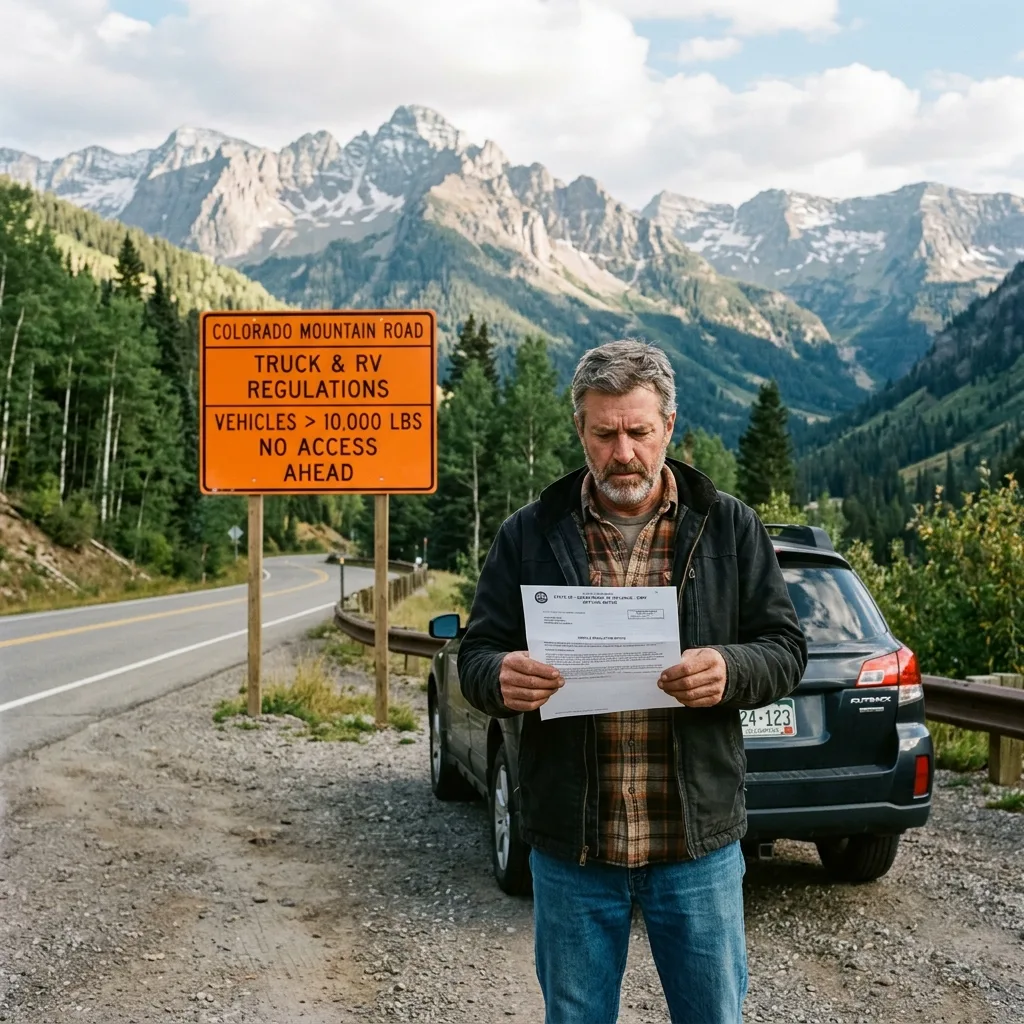
Colorado: the cautionary tale
Colorado is the most recent state to harden against surplus military vehicles, and it deserves its own section because the change happened in the open, in front of the legislature, in the past twelve months.
House Bill 25-1127 was introduced in the 2025 Colorado session. It would have authorized registration of surplus military vehicles for highway use under a specialty plate program with weight and emissions accommodations — the most owner-friendly legislation any state has considered in the past decade. On May 13, 2025 — one year ago today — the bill died in committee. No successor has been introduced in the 2026 session.
The deeper problem in Colorado is what happened in 2024. The Colorado Department of Revenue, Division of Motor Vehicles, administratively reclassified previously titled HMMWVs as off-highway vehicles (OHVs). Existing road-legal titles were revoked. Owners who had registered HMMWVs as on-road trucks — some for years — woke up to find their titles converted to OHV status, which permits trails and private land but not public highways. The reclassification was statewide and effectively retroactive.
For a Colorado resident who already owns a HMMWV, the road-legal status that existed at purchase no longer exists. For someone considering a purchase, there is currently no in-state path to a road-legal surplus tactical vehicle. The legislative remedy died on May 13, 2025, and the administrative posture has not softened in the year since.
The Montana LLC is the path that the Colorado situation actually solves. The Montana entity owns the vehicle, registers it in Montana, and the registration is recognized in Colorado the way every other out-of-state registration is recognized. The administrative reclassification at the Colorado DOR does not reach an entity domiciled in Helena.
The documents every state wants

Whatever tier you land in on the SF-97 titling by state map, there is a universal document stack that surplus buyers should walk in with. Show up missing any of these and even a Tier 1 state slows down. Show up missing them in a Tier 2 state and you go home with no title.
The universal stack
- SF-97 certificate. The federal document itself, with every signature block filled, every seal stamped, and every line of the chain of custody completed back to the originating DRMO sale.
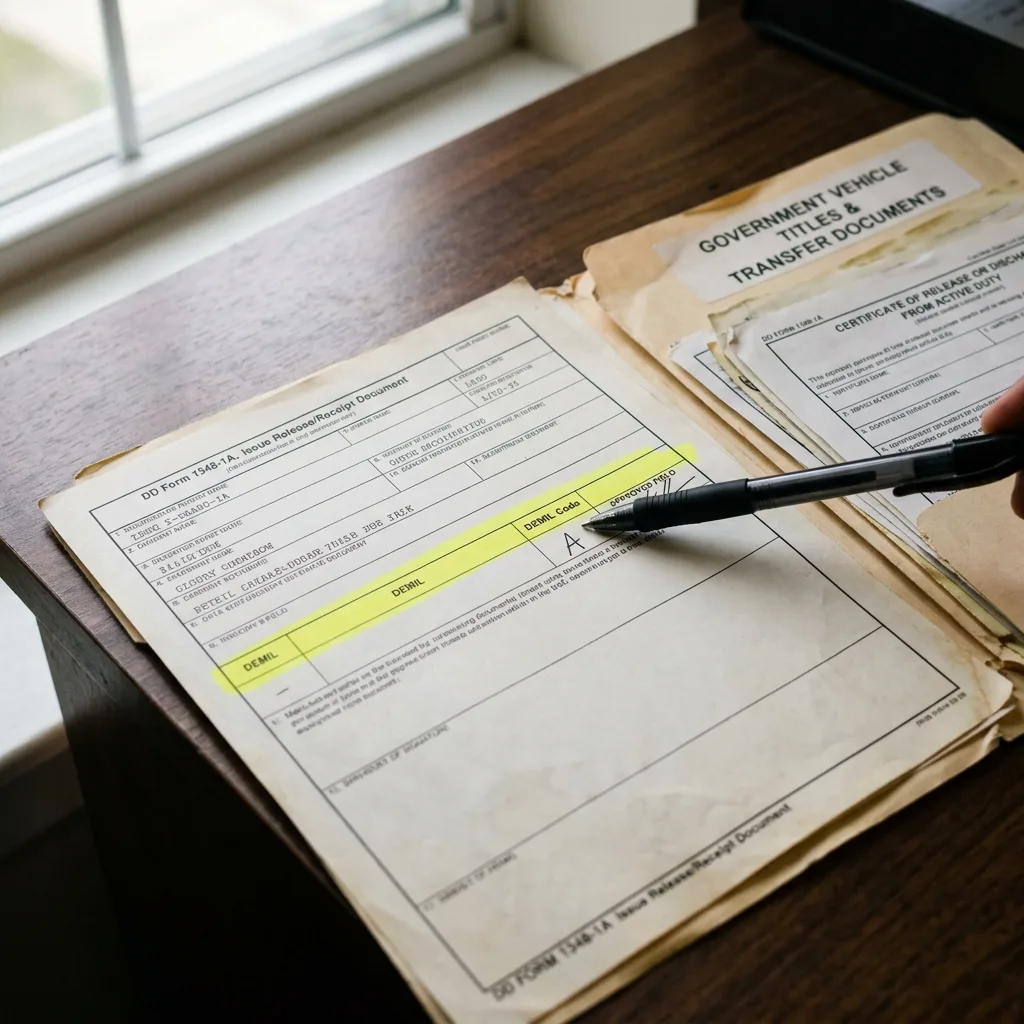
- DD Form 1348-1A. The Department of Defense single-line item issue/release/receipt document. This is the original chain-of-custody record for the vehicle and it shows the vehicle moving from DoD inventory into the hands of the surplus auctioneer. Many states request this even when they do not require it on paper; having it in hand often shortens a session at the counter from forty-five minutes to fifteen.
- Notarized bill of sale. Required in Florida, Ohio, Nevada, Kentucky, North Carolina, and increasingly common in other Tier 2 states. The notarization is non-negotiable; an unsigned or witness-only bill of sale will not substitute.
- VIN inspection form. State-specific. Some states require a sworn law enforcement inspection (Texas DPS, Georgia HP, Idaho ISP). Others accept a licensed dealer’s inspection. A few accept a state-employed inspector at a designated office. Know which one your state requires before you make the inspection appointment.
- DEMIL code verification. The demilitarization code on the vehicle’s data plate tells the DMV (and tells the federal seller) what level of destruction or sanitization the vehicle has undergone. Codes A or Q are fine — the vehicle is releasable to civilian title. Code F means the vehicle is disqualified from civilian titling and cannot be lawfully registered, even if the SF-97 made it into your hand.
Optional but helpful supporting docs
A weight certificate from a certified scale, photos of the data plate and VIN stamping, the original DRMO sale invoice, and any prior state titles in the chain. None are mandatory in every state. All shorten the visit when they appear in the file.
Equipment modifications most states will ask for: turn signals and hazards ($200-$600), a center high-mount stop lamp ($150 installed), civilian rearview and side mirrors ($100-$300), a functional speedometer (varies by vehicle), and DOT-compliant tires for a HMMWV ($1,200-$2,000 per set of five). Budget for these even in Tier 2 states.
Montana LLC: the one solution that works in every tier
This is where the four tiers collapse into one. A Montana LLC works in all of them. A Tier 4 buyer uses it because nothing else will. A Tier 3 buyer uses it to skip the office lottery and modification budget. A Tier 2 buyer uses it to avoid the supplemental form stack. A Tier 1 buyer might use it for tax savings and permanent plates.
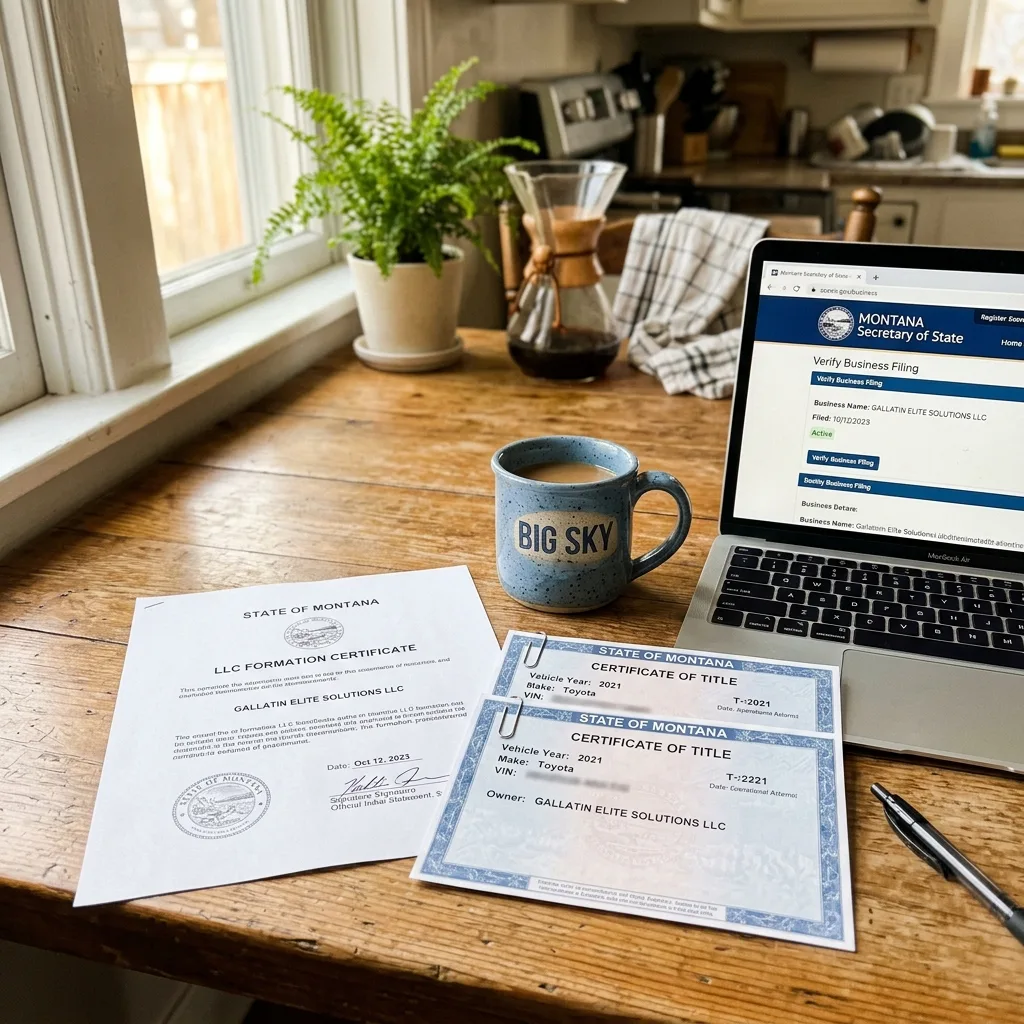
The mechanics are the same in every case. A Montana single-member LLC is formed with the Montana Secretary of State. The LLC takes title to the vehicle. The vehicle is registered to the LLC at a Montana address. The registration is valid under federal vehicle code rules in all fifty states. There is no Montana sales tax, no emissions testing, and no statewide safety inspection that a stock surplus vehicle would fail. The county treasurer processes the SF-97 as a routine intake title.
Our process at Zero Tax Tags handles the full pipeline. We form the LLC, prepare the registration documents, submit the SF-97, secure the title, mount the plates, and ship the registration packet back to you. You never set foot in Montana, never deal with the SF-97 yourself, and never have a conversation with a clerk who has not seen the form before.
The 7-day turnaround
| Day 1: | You contact Zero Tax Tags, send us your SF-97 and supporting documents, and we open the LLC formation with the Montana Secretary of State. |
| Days 1-2: | LLC filing is processed. Operating agreement is drafted in your name. Registration packet is prepared with the SF-97 attached. |
| Days 2-4: | Title and registration submitted at the Montana county treasurer’s office. Plates assigned. Permanent plate option selected where applicable. |
| Days 4-7: | Title is issued, plates are shipped to you, and the registration packet (with insurance binder if you elected our coverage referral) arrives at your door. |
That is the entire process. No DMV visits on your end. No supplemental form scavenger hunt. No modification budget. No conversation with a clerk about what an SF-97 actually is.
Who this is built for
The buyers who get the most out of Montana LLC registration for an SF-97 vehicle fall into a few clear groups.
If you’re in a Tier 4 state — California, Connecticut, Hawaii, Illinois, Massachusetts, New Jersey, New York, Rhode Island — Montana is not a tax optimization. It is the only realistic path to plates.
If you’re in Tier 3 and don’t want to gamble on Ohio’s office lottery, Michigan’s terminology trap, or Oregon’s parade-only restriction, Montana removes the structural risk that preparation alone can’t fix.
Fleet buyers running multiple vehicles do well here too. A single Montana LLC can register two, five, or a dozen vehicles, and the per-vehicle cost falls sharply after the first. Collectors, contractors, surplus dealers, and event producers use this structure routinely.
Collectors who cross state lines regularly — living in one state, garaging in a second, showing in a third — would otherwise navigate three separate regulatory regimes. Montana normalizes all of it under one jurisdiction.
And if you simply don’t want to spend forty hours on bureaucracy before the truck moves under its own power, Montana ends that calculation. The paperwork goes through us. You get plates.
FAQs
What if I’m in a Tier 4 state?
You are the buyer this guide was written for. In a Tier 4 state, the math on modifications, sales tax, emissions, and inspection delays makes a Montana LLC the only path that gets the vehicle on the road this year. Contact us before you take delivery so we can coordinate the LLC formation alongside the SF-97 receipt.
Does the Montana LLC work for all four tiers?
Yes. The Montana LLC is registered under federal vehicle code domicile rules, which apply identically across all fifty states. The four tiers describe how each state treats an SF-97 walking up to the counter. Montana sidesteps the counter entirely.
What is a DEMIL code and why does it matter?
DEMIL stands for demilitarization. The code, stamped on the vehicle’s data plate and recorded in the SF-97, indicates the level of destruction or sanitization the vehicle underwent before release from DoD inventory. Codes A and Q are fully releasable to civilian title. Code F is not — a Code F vehicle was not authorized for civilian release and cannot be lawfully titled regardless of how the SF-97 reached the buyer. Verify the DEMIL code before you bid, every time.
Can I still title in Texas if I already have a Montana LLC?
You can, but you usually do not need to. The Montana LLC registration is recognized in Texas for highway use, and most owners simply garage and operate the vehicle in Texas under the Montana plates. The reason to add a Texas title would be if you plan to resell the vehicle to a Texas buyer who wants a Texas title at the time of sale; in that case, a Texas-titled vehicle is more liquid in the Texas market.
What does “parade only” mean for Oregon buyers?
Oregon’s parade-only classification restricts the vehicle’s registration to display use, parade use, and movement between storage and display events. The vehicle is not authorized for daily driving on Oregon public roads under that classification. For collectors with a once-a-year-parade use case, the Oregon plate is fine. For everyone else, a Montana LLC keeps the vehicle available for normal highway use.
What happens if I bid on a vehicle without checking the DEMIL code first?
If the DEMIL code is A or Q, you are fine; the SF-97 will issue and the vehicle is titleable. If the DEMIL code is F, the SF-97 may still issue (DRMO documents sometimes lag classification), but no state DMV in the country will issue a civilian title against it. The vehicle becomes a non-titled parts source. Verify before you bid; do not verify after.
Is the Montana LLC actually legal in my state?
Yes. The Montana LLC’s vehicle registration is recognized in all fifty states under federal vehicle code rules governing entity-domiciled registration. The same code that recognizes a corporate fleet vehicle registered in Delaware or a leased vehicle titled in Ohio recognizes a Montana LLC vehicle. The only meaningful question is whether the LLC was formed properly and the registration filed correctly — both of which we handle as a full-service operation.
Ready to Take Your SF-97 the Easy Way?
Wherever your state lands in the four tiers, Montana works. Seven days, no DMV visits, no modification budget, no supplemental forms. We handle the full pipeline so your truck is on the road this month — not next year.