
27 min read
On this page
- + Opening Hook: The Jackson Counter
- + Understanding Wyoming Vehicle Tax: The Double-Fee System
- + The Year-of-Service Formula Explained
- + 5-Year Cost Tables: The Real Damage
- + EV Owners: The Triple Squeeze
- + The Teton County Trap
- + Four Wyoming Vehicle Owners
- • Jackson Tech Entrepreneur — BMW X5
- • Jackson Retiree — Tiffin Allegro Bus
- • Cheyenne Contractor — Ram 3500
- • Jackson EV Owner — Tesla Model Y
- + The Montana Solution
- + Is This Legal?
- + Who This Is Built For
- + The Zero Tax Tags Process
- + Timeline: From Day 1 to Day 7
- + Frequently Asked Questions
- + Take the Next Step
Wyoming vehicle tax hits in two places, and most buyers only see the first one coming. Picture this: a Jackson resident walks into the Teton County Treasurer’s office on a Tuesday morning, paperwork in hand for the new BMW X5 they just bought at a dealership in Salt Lake City. They expected to pay sales tax. They did not expect to pay it twice in different forms. The clerk slides a printout across the counter. The first line is the one-time county use tax — seven percent on a $75,000 vehicle, which works out to $5,250 before the engine has even broken in. That hurts. But then the clerk moves to the second column and explains, with the practiced calm of someone who delivers this news five times a day, that there is also an annual county registration fee. It is calculated using something called the Year-of-Service formula. On a brand-new $75,000 X5, that first-year fee is $1,350. The buyer asks if that includes the use tax they just paid. The clerk says no. That was separate. This is the recurring one.
This is the double tap. Wyoming has no personal property tax on vehicles — unlike Virginia or Kansas. It does not hit the worst combined rates you see in California or Massachusetts. But Wyoming has built a quietly punishing system where you pay a steep county use tax at the moment of purchase, then pay an annual percentage of the factory price for every year you own the vehicle — and in Teton County, those numbers climb fast enough to make even high-income owners look twice. The official numbers and the full county breakdown are published by the Teton County Treasurer, and the framework is identical across all 23 Wyoming counties. The use tax rate changes by county. The annual formula does not. We are going to walk through exactly how the math works, what it costs over five years on five real vehicles, and how Wyoming residents are legally cutting their bill by titling vehicles in a Montana LLC instead.
Understanding Wyoming Vehicle Tax: The Double-Fee System

The Wyoming vehicle tax system is built on two separate machines that run on different schedules. Most buyers think of car taxes as one thing. In Wyoming, you actually pay two distinct fees, and confusing them is how people end up surprised at the counter.
The first machine is the county use tax. This is a one-time charge paid when you bring a vehicle into Wyoming or buy one here. It is calculated as a percentage of the purchase price, and the rate depends on which county you register in — not where you bought the vehicle, but where you live. Teton County, home to Jackson and the Grand Teton skyline, charges 7 percent. That is the 4 percent state base, plus a 1 percent general purpose tax, plus a 2 percent specific purpose tax that funds local projects. Laramie County, where Cheyenne sits and where the state capitol stares back at you, charges 6 percent (4 percent state plus 2 percent local). Natrona County (Casper), Campbell County (Gillette), and Albany County (Laramie the city, not the county) all charge 5 percent — the 4 percent state plus a single 1 percent local addition. So before you have driven a mile in Wyoming, your county has already taken between 5 and 7 cents on every dollar of the vehicle’s price.
The second machine is the annual county registration fee, and this is where the system gets clever. Every Wyoming county uses the exact same formula — there is no county where this fee is cheaper or more expensive based on where you live. The rate is statewide. What varies is only how the county allocates the money internally between schools, roads, and the general fund. The formula takes your vehicle’s factory cost (essentially the original MSRP, not what you actually paid), multiplies it by a percentage that drops each year of ownership, then multiplies that result by 0.03. That last number — the 3 percent multiplier — is the part most owners never see coming, because the rate looks small until you put a high-MSRP vehicle into it.
On top of those two county fees, Wyoming adds a flat annual state registration fee: $30 for cars and passenger SUVs, $90 for trucks and motorhomes over 6,001 pounds. It is the smallest line on the bill. The two county fees are where the real damage lives. And in Teton County specifically, those two county fees combine into a sticker shock that drives high-end vehicle owners to look at out-of-state titling solutions — which is exactly the conversation we are about to have.
The Year-of-Service Formula Explained
The annual fee formula: Factory Cost × Year-of-Service Rate × 0.03. The trick is that the second number changes every year, and the first number is fixed at the original factory price even though your vehicle is depreciating in the real world. Wyoming does not care what your vehicle is worth today. The formula cares what it cost new. That means a five-year-old Range Rover with 80,000 miles is still being taxed against its sticker price, not its blue book value.
Take a $75,000 BMW X5. In Year 1, the Year-of-Service Rate is 60 percent. The math goes $75,000 × 0.60 × 0.03 = $1,350. In Year 2, the rate drops to 50 percent: $75,000 × 0.50 × 0.03 = $1,125. Year 3 is 40 percent ($900). Year 4 is 30 percent ($675). Year 5 is 20 percent ($450). Add those five years together and you have paid $4,500 in county registration fees alone — on top of the $5,250 one-time use tax you paid at purchase.
The full rate schedule, used identically in every Wyoming county:
House Bill 30, signed in early 2026 and taking effect July 1, 2026, extended the schedule to add the Year 7 (10 percent) and Year 8+ (5 percent) tiers. Before HB 30, older vehicles got stuck at the 15 percent rate forever. The new schedule gives some relief on older vehicles, but if you have just bought a new luxury vehicle, that relief is six years away. For Years 1 through 5, the fee structure is unchanged.
One small consolation: the county registration fee in Wyoming is structured as an ad valorem tax, which means it is deductible on your federal income tax return if you itemize. The use tax is a sales tax and is also deductible (within the broader SALT cap), though most filers find the standard deduction beats this calculation entirely. Treat the deduction as a partial offset, not a fix. If you are paying $1,350 in county registration in Year 1 and your federal marginal rate is 24 percent, you might recover $324 of that. You are still out of pocket $1,026 for that one fee.
5-Year Cost Tables: The Real Damage

Numbers in the abstract are easy to dismiss. Numbers attached to actual vehicles are harder to ignore. Here is the five-year out-of-pocket damage on five Wyoming vehicles — four registered in Teton County at the 7 percent use tax rate, plus the Ram 3500 in Laramie County at the 6 percent rate to show what the geographic variation looks like in the real world.
Read across the bottom row first. A Cadillac Escalade ESV in Jackson costs $12,890 in Wyoming taxes and fees over five years. The same vehicle titled in a Montana LLC costs $1,979 total for the entire five years. That is not a percentage discount. That is a $10,911 line item that disappears off the family budget. The motorhome row tells an even louder story — $49,200 versus $1,979, a savings of $47,221, which is enough to buy a second vehicle in cash.
The Ram 3500 row shows what county variation actually looks like. Cheyenne is in Laramie County at 6 percent. The truck owner there saves $1,170 on the use tax compared to what they would have paid in Teton (7 percent on $68,000 would have been $4,760 instead of $4,080). But the annual formula is identical regardless of county — so a Casper resident in Natrona County (5 percent) and a Jackson resident in Teton County (7 percent) pay the exact same $4,080 in five-year county registration on a $68,000 Ram. The use tax is where geography matters. The formula is statewide.
One more reality check on that motorhome. Even if you registered the $375,000 Tiffin Allegro Bus in Natrona County at the lowest 5 percent use tax rate, you would still owe $18,750 upfront before any annual fees. There is no Wyoming county where a $375,000 Class A motorhome is a small bill. The cheapest county costs you $18,750. The most expensive costs you $26,250. That is the gap people are crossing into Montana to avoid.
EV Owners: The Triple Squeeze
If you drive an electric vehicle in Wyoming, you do not get the same fee structure as a gasoline driver. You get a third bill stapled to the first two. Wyoming has charged a $200 annual surcharge on battery-electric vehicles since 2019, when the state legislature decided EV drivers were not paying their share of the gas tax that funds roads. Hybrid drivers paid nothing extra. Plug-in hybrid drivers paid nothing extra. Pure BEV drivers paid $200 a year on top of every other registration fee.
That changed in 2026. House Bill 145, passed by the Senate in March 2026 and taking effect July 1, 2026, cut the BEV surcharge in half to $100 per year. It also added a new $50 per year fee for plug-in hybrids that did not exist before. Regular non-plug-in hybrids — Toyota Highlander Hybrid, Honda CR-V Hybrid, Lexus RX 450h — still pay no surcharge. So the post-July 2026 EV map looks like this: full BEV $100/yr, PHEV $50/yr, regular hybrid $0.
The framing here matters. Wyoming’s HB 145 is described as “EV relief” because the surcharge dropped from $200 to $100 on full electrics. That is genuinely a 50 percent cut. But the EV surcharge is only one of three Wyoming costs on an electric vehicle. The use tax is still 7 percent in Teton County. The Year-of-Service formula still runs at full rate on the original MSRP. If you buy a $49,000 Tesla Model Y in Jackson under the new rules, your five-year Wyoming bill looks like this: $3,430 use tax, plus $2,940 in formula fees over five years, plus $150 in state fees, plus $500 in EV surcharges. Total: $7,020. The $100 cut to the EV surcharge saved you $500 over five years. The other $6,520 of the bill is untouched.
Honest disclosure: Montana also charges an annual EV fee — $130 per year for BEVs under 6,000 pounds, $70 per year for plug-in hybrids. We are not selling you zero-EV-fee paradise. The savings on an EV come from eliminating the Wyoming use tax (a one-time $3,430 hit on a Model Y) and the annual formula fee (another $2,940 over five years), not from dodging the EV surcharge itself. The Montana BEV fee is roughly equivalent to the new Wyoming surcharge. The use tax and formula are where the real money lives.
If you are buying an EV in Wyoming today, the math still favors Montana titling — just not for the reason most people first assume. You are not running from the surcharge. You are running from the 7 percent up-front use tax and the formula that taxes you on the factory MSRP for five straight years.
The Teton County Trap

Teton County is the most expensive place in Wyoming to register a vehicle. It is also, by a wide margin, the wealthiest county in the state — and by some measures, the wealthiest county in the United States by per-capita income. None of those facts are accidents. They are connected. The county uses tax revenue to fund public services in a place where the median home price clears seven figures, and the people most likely to buy a $200,000 vehicle are also the people most likely to live in or near Jackson Hole.
The mechanic of the trap is geographic. If you live in Casper, Natrona County charges you 5 percent at the counter. Cheyenne in Laramie County is 6 percent. Jackson in Teton County is 7 percent. On a $50,000 vehicle that two-point gap is $1,000. Annoying, not crushing. But the gap scales with the vehicle. On a $200,000 luxury SUV (think Range Rover SV, Mercedes-AMG G 63, Bentley Bentayga), the spread between Casper and Jackson is $4,000 in one-time use tax — and these are exactly the vehicles Jackson residents buy. On a $375,000 Tiffin Allegro Bus, the gap is $7,500. On a $500,000 Newmar King Aire Class A motorhome, the gap balloons to $10,000 between the cheapest and most expensive county.
The annual formula does not change by county. So in some sense, all that geographic variation is concentrated in the first year — the use tax is paid once, and after that everyone pays the same statewide annual percentage. But “once” is when you are most aware of the bill. A $26,250 use tax bill on a new motorhome lands as a single sheet of paper that gets stuck on the refrigerator. It is the moment people look at out-of-state titling for the first time.
Jackson Hole attracts exactly the demographic that should be looking. The town is filled with snowbirds who only live there four months a year, retirees with collections of vehicles they barely drive, business owners with luxury work trucks, RV travelers using Jackson as a base camp for Yellowstone and Grand Teton, and full-time wealthy residents who already own homes in Florida or Wyoming for tax reasons. Every one of those profiles has a structural reason to look at how they are titling their fleet. And every year, the county tax bill arrives and reminds them.
Four Wyoming Vehicle Owners
These four profiles are composites built on the exact math above. The numbers, vehicles, and county rules are all real.
Jackson Tech Entrepreneur — BMW X5
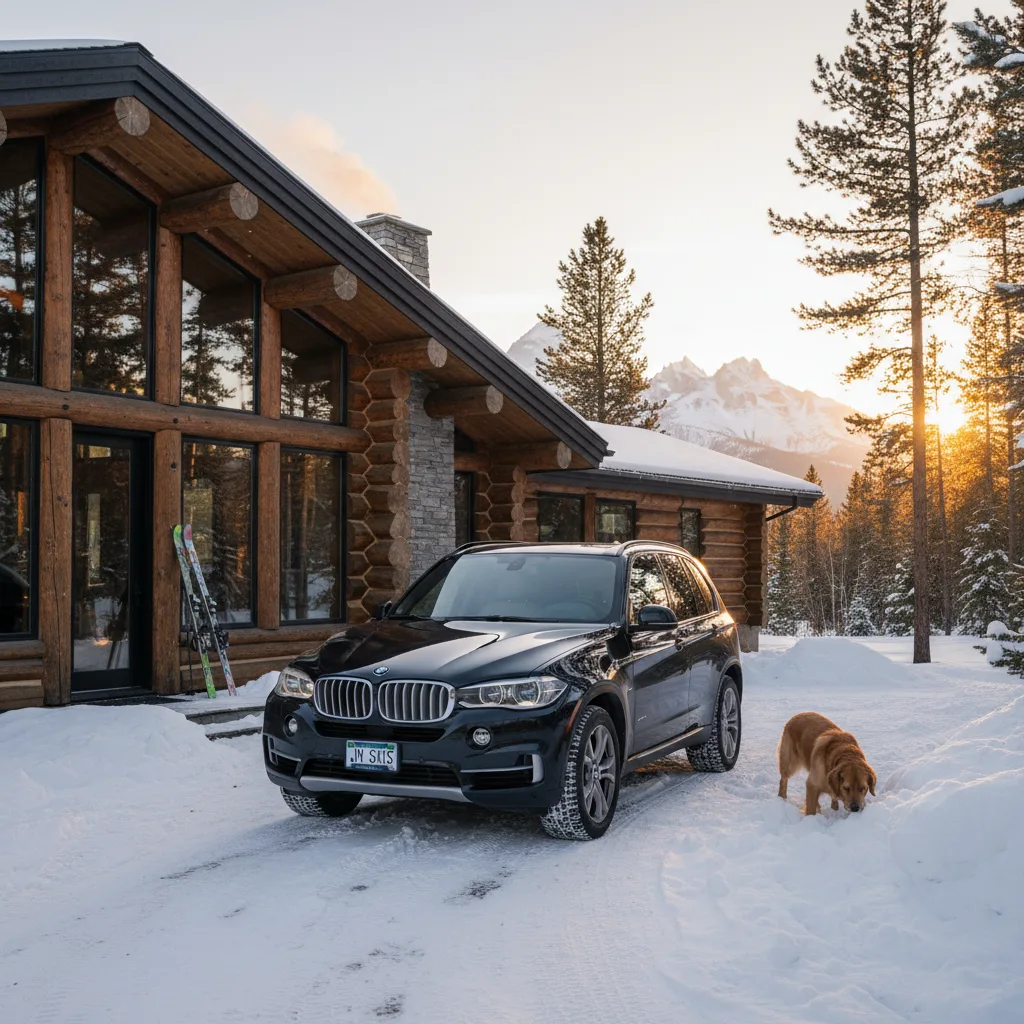
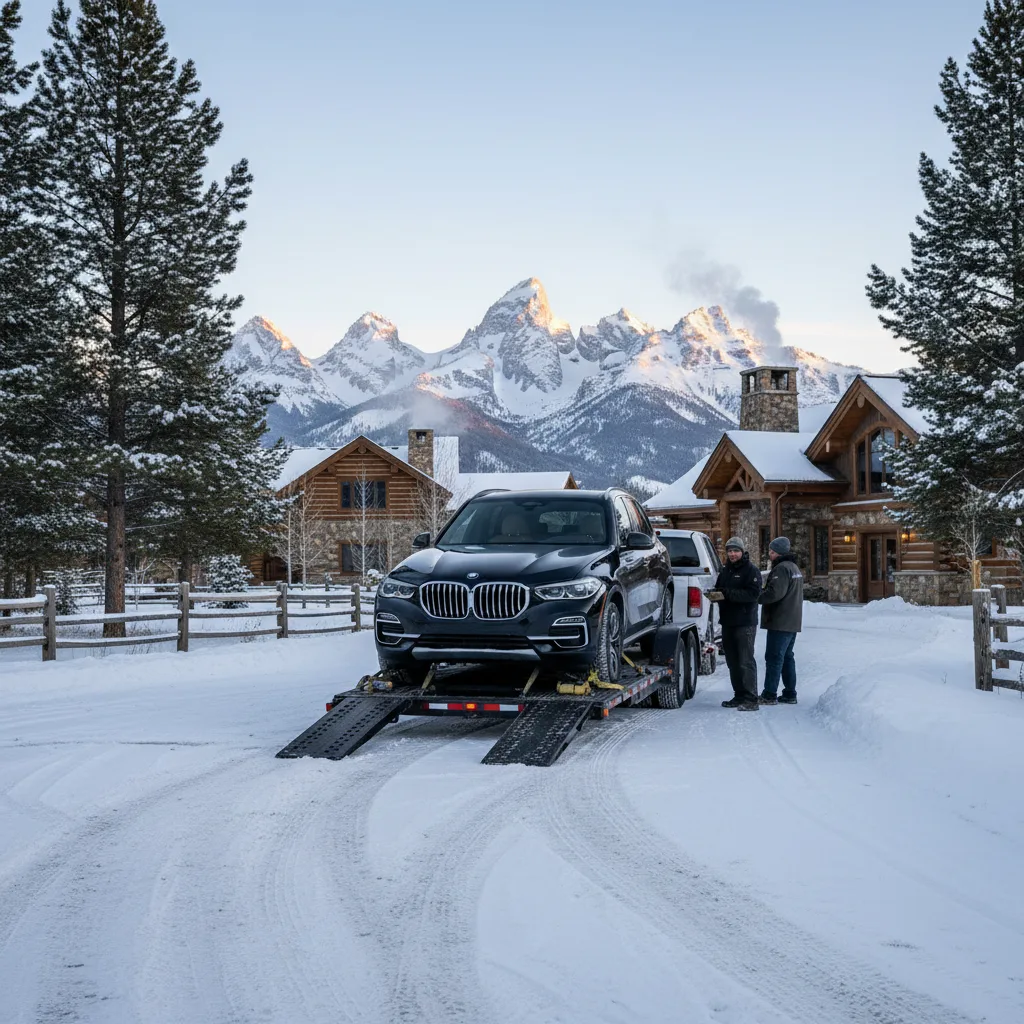
Mark runs a software consultancy from a home office in Jackson. He bought a new BMW X5 last spring, paid $75,000 plus delivery, and registered it in Teton County. The use tax at 7 percent was $5,250, paid on the spot. He was prepared for that — his accountant had warned him. What surprised him was the renewal notice that arrived twelve months later. Year 1 county registration: $1,350. Plus $30 state fee. Then a year later, $1,125 plus $30. Then $900, then $675, then $450. Five years of county registration adds $4,500 to his books, plus $150 in state fees. Total five-year Wyoming bill: $9,900.
Mark’s accountant ran the numbers on Montana LLC registration. Year 1 with Zero Tax Tags: $899 (the $699 service fee plus $200 LLC formation). Years 2 through 5: $270 per year ($150 registration plus $120 annual filing). Five-year Montana total: $1,979. Net savings: $7,921. Mark titled his next vehicle in the Montana LLC. He is keeping the X5 in Wyoming until trade-in because retitling a vehicle mid-cycle does not erase the use tax he already paid — but every vehicle from here forward goes through the LLC.
Jackson Retiree — Tiffin Allegro Bus
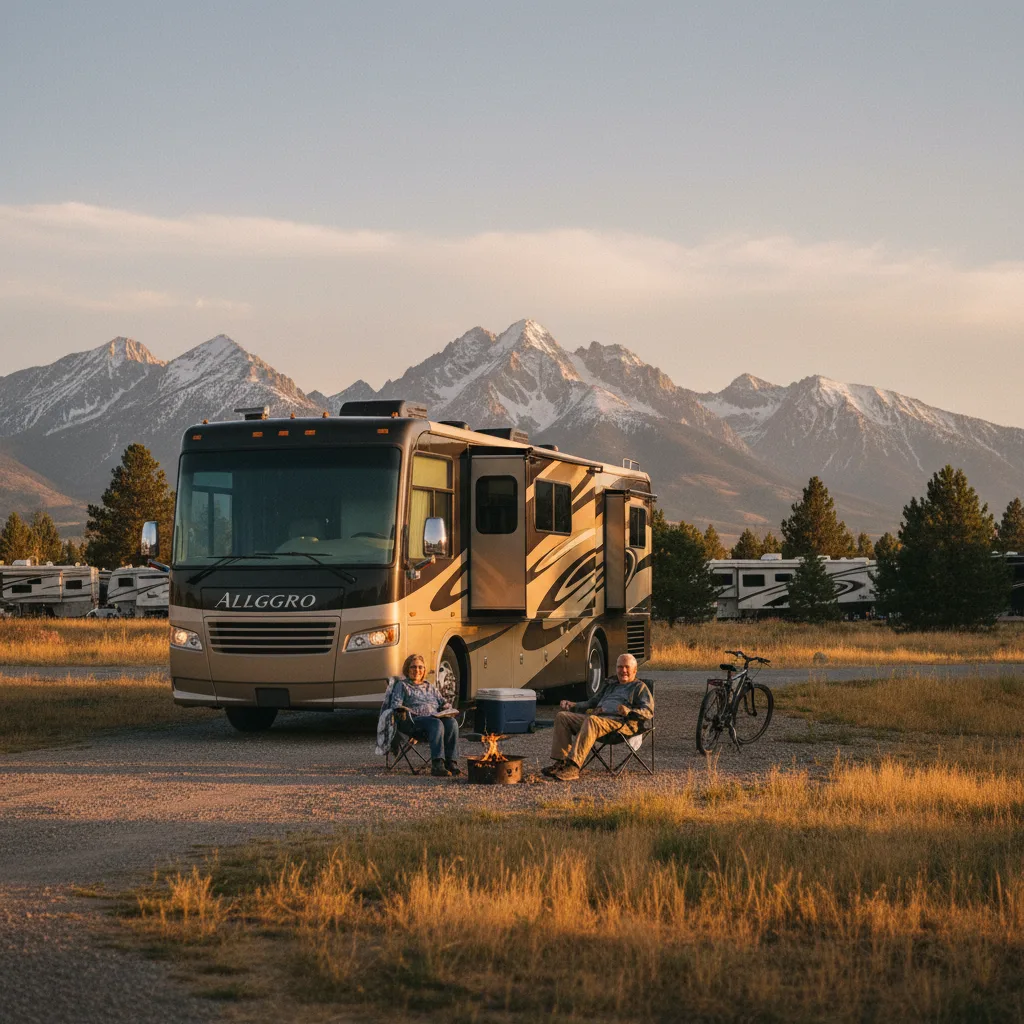
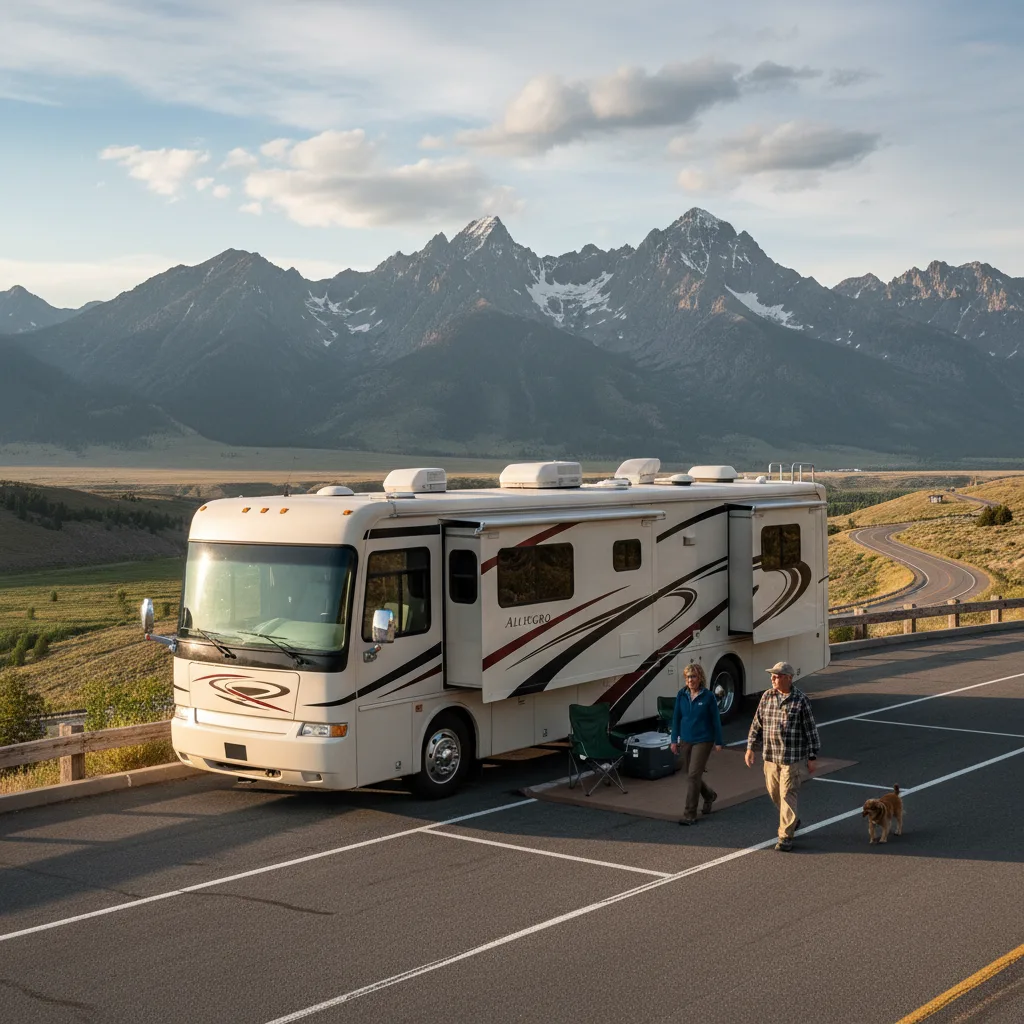
Linda and Don retired to Jackson five years ago. They sold their house in California, bought a smaller place near the Snake River, and earlier this year ordered a brand-new Tiffin Allegro Bus Class A motorhome. The sticker came to $375,000. They planned to spend half the year traveling — six months on the road, six months in Wyoming — and they wanted a coach that could handle Glacier, Yellowstone, the Pacific Northwest, and the desert Southwest.
Their use tax in Teton County at 7 percent was $26,250 on delivery. They paid it. Then they got the annual registration estimate. Year 1: $6,750. Year 2: $5,625. Year 3: $4,500. Year 4: $3,375. Year 5: $2,250. Five years of county registration on the motorhome: $22,500. Plus $90 per year state fee for the heavy-vehicle class, another $450 over five years. Total five-year Wyoming bill: $49,200.
The Montana LLC titled version costs $1,979 over the same five years. Net savings: $47,221. That is not “lower fees.” That is enough money to fund a year of fuel, campgrounds, and food on the road. Linda and Don set up the Montana LLC before delivery, took title in the LLC name, and drove the coach off the dealer lot with Montana plates. The Wyoming Treasurer never collected the $26,250.
Cheyenne Contractor — Ram 3500
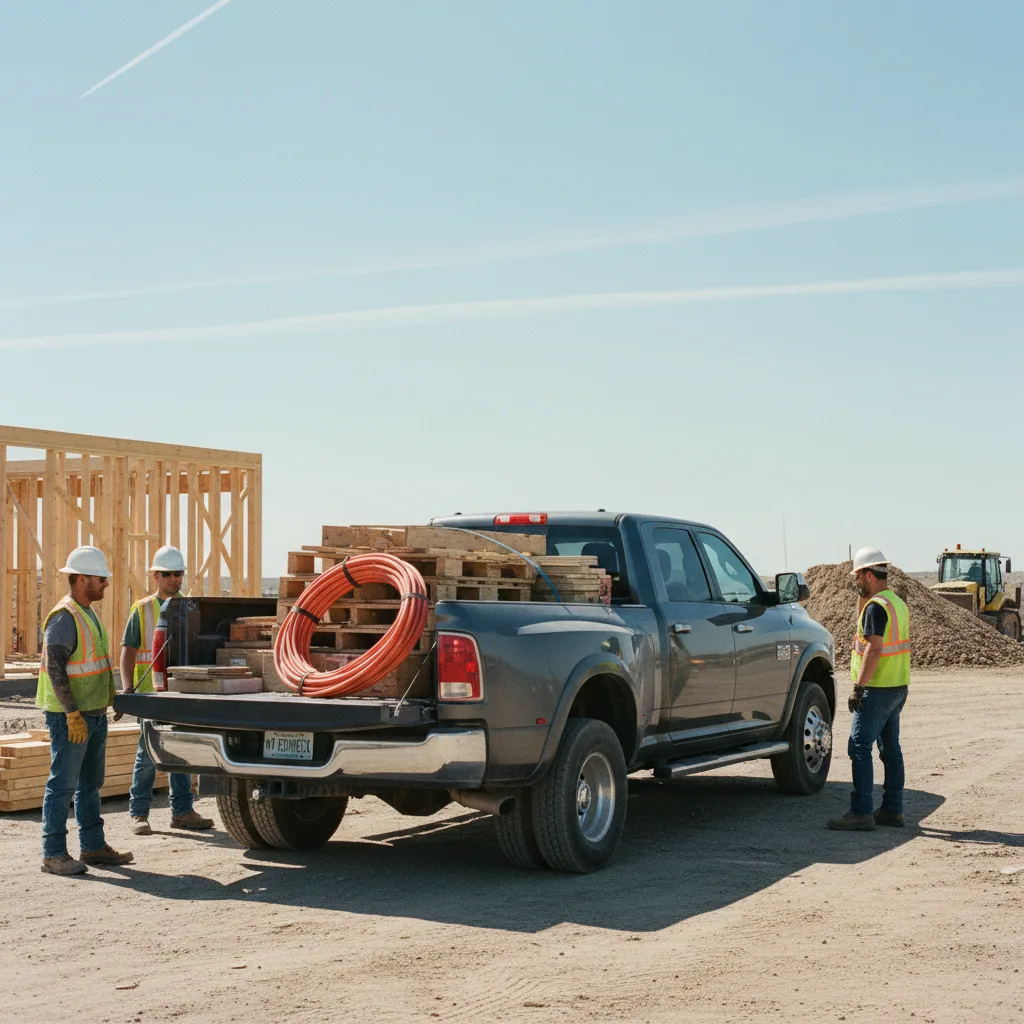
Carlos owns a construction company in Cheyenne. He bought a new Ram 3500 dually for $68,000 last year to pull a fifth-wheel trailer carrying skid steers and tools to jobsites across southeast Wyoming and northern Colorado. Laramie County charged him 6 percent use tax — $4,080 at the counter. The Year-of-Service formula then kicked in at the standard statewide rates. Year 1: $1,224. Year 2: $1,020. Year 3: $816. Year 4: $612. Year 5: $408. Five-year county registration total: $4,080. Plus $90 per year state fee because the truck is over 6,001 pounds — another $450 over five years. Total five-year Wyoming bill: $8,610.
The Ram is a work vehicle. It travels constantly. It already moves through three states regularly on jobsites. Titling it in a Montana LLC removed the use tax and the recurring formula fee. Five-year Montana cost: $1,979. Net savings: $6,631. For a business already running on tight margins, that is a real number — equivalent to a full month of equipment lease payments saved per year of ownership.
Jackson EV Owner — Tesla Model Y
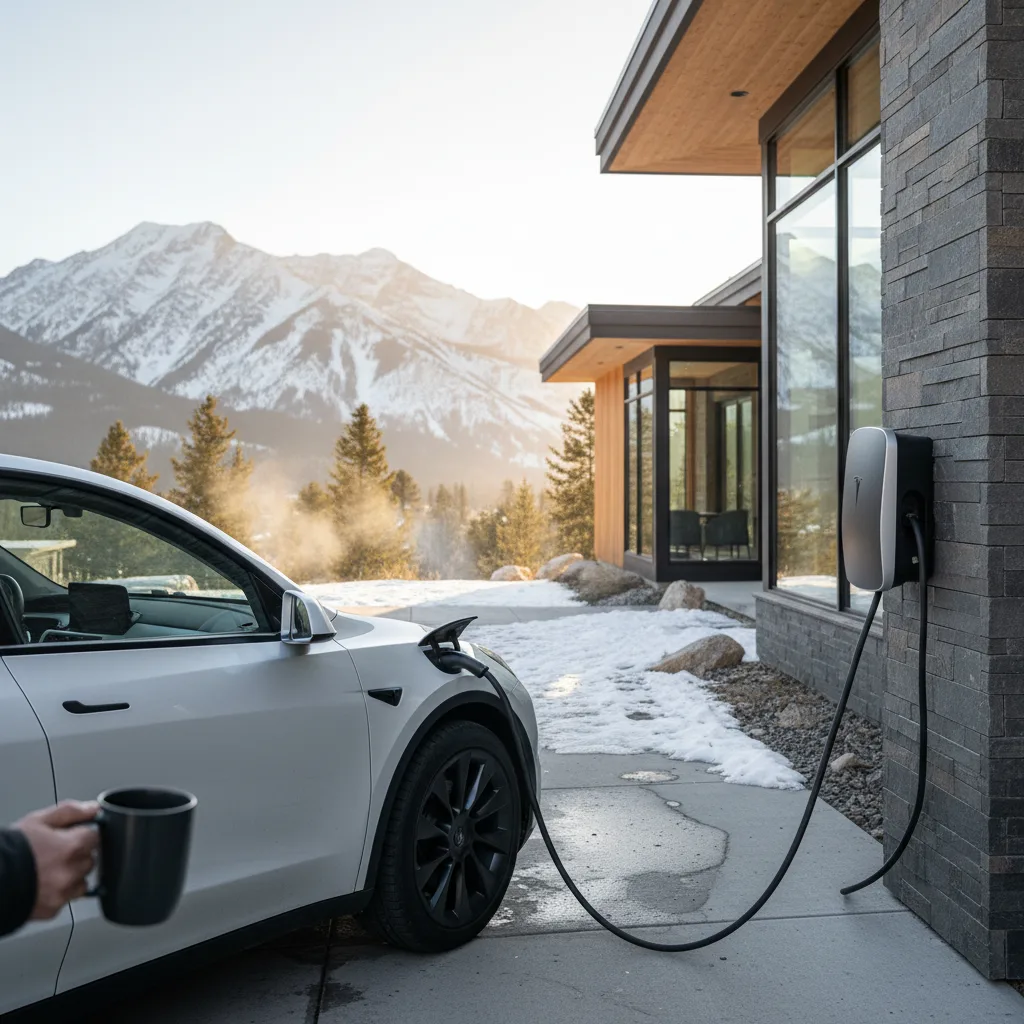
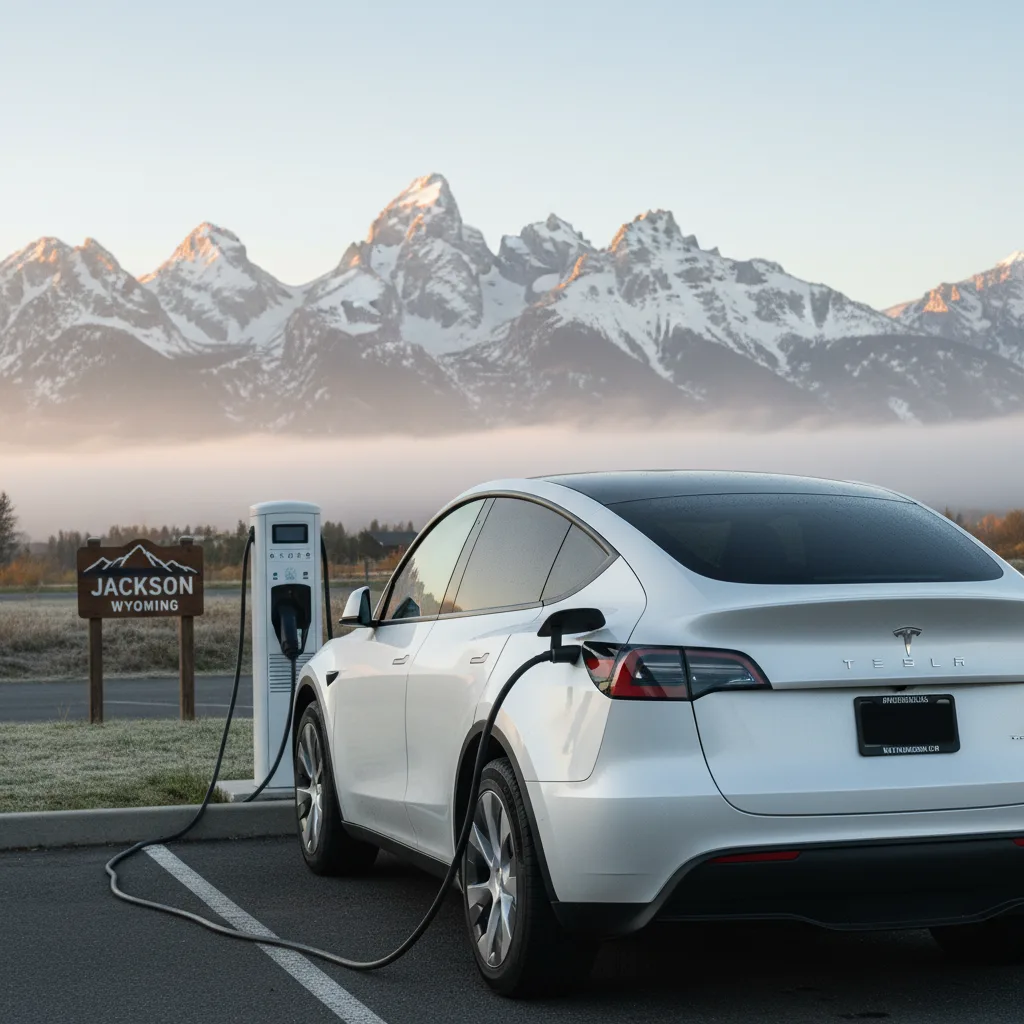
Sara is a wildlife biologist who lives in Jackson and drives a $49,000 Tesla Model Y for her work across Teton and Yellowstone country. She bought the Y assuming the only “EV tax” she would face was the surcharge. She did not realize how the use tax and the formula would interact with EV ownership.
Her actual numbers under post-July 2026 rules: $3,430 use tax (7 percent of $49,000), $2,940 in five-year county registration, $150 in state fees, and $500 in five-year EV surcharges (the new $100/yr rate). Total five-year Wyoming bill: $7,020. The Montana version on a BEV costs $899 in Year 1 plus $400 per year for Years 2 through 4 (that is the $270 service fee plus the $130 Montana BEV fee). Five-year Montana total: $2,499. Net savings: $4,521.
Sara’s takeaway was that the Montana BEV fee is roughly the same as Wyoming’s new EV surcharge — so the EV surcharge is essentially a wash. But the $3,430 use tax and the $2,940 formula bill are entirely eliminated. The EV savings come from eliminating the Wyoming use tax and the formula, not from dodging the EV surcharge. Sara titled her next EV — a Model X her partner ordered for the family — in the Montana LLC from day one.
The Montana Solution
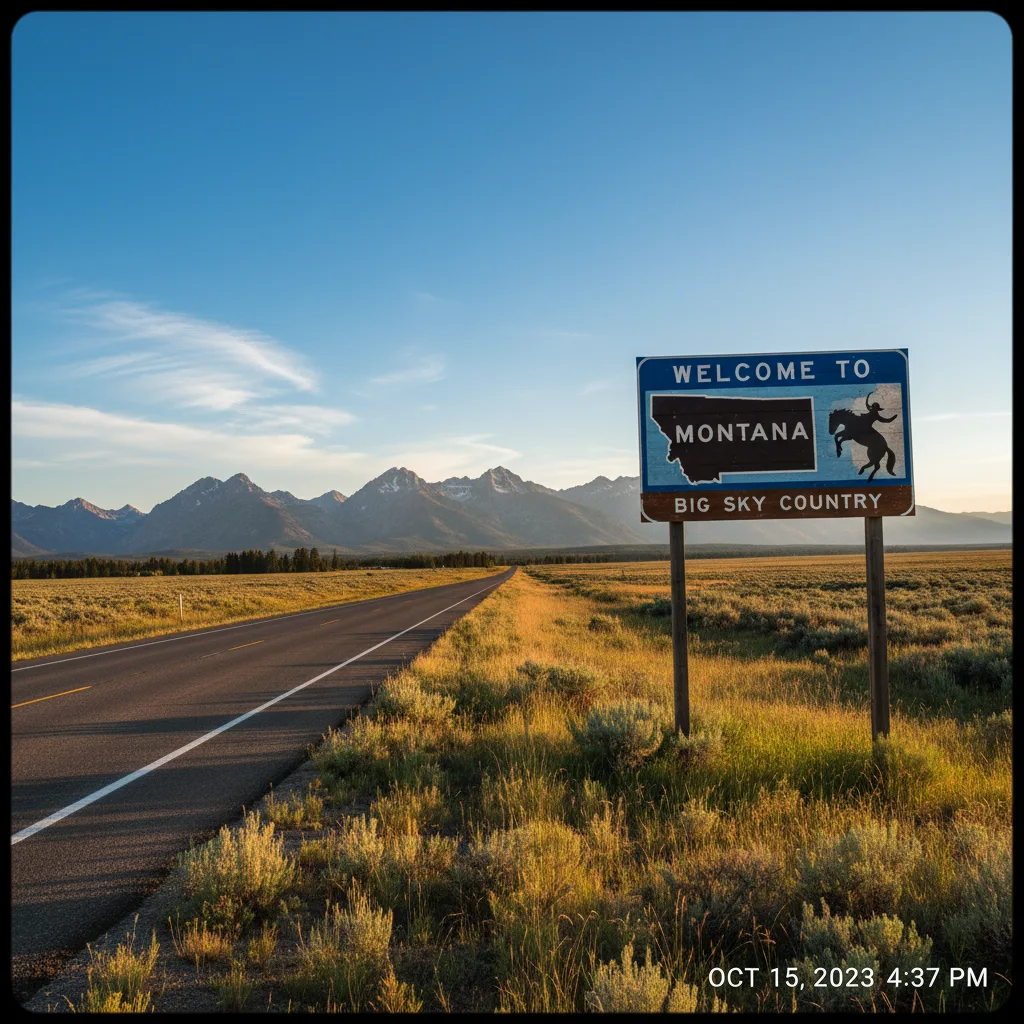
Montana is the only state in the Mountain West with no general sales tax. That one fact changes the math for vehicle owners in every surrounding state with a purchase tax. Wyoming charges between 5 and 7 percent at purchase. Montana charges zero. Montana also has a relatively low, flat registration structure for vehicles titled to in-state owners — no factory-cost-times-percentage formula, no Year-of-Service rates, no annual ad valorem hit.
For a Wyoming resident, it works like this. You do not become a Montana resident. You do not move. You do not change your driver’s license, your voter registration, or your kids’ schools. What you do is form a Montana limited liability company. The LLC is the legal owner of the vehicle. The vehicle is titled in the LLC name, registered in Montana, and issued Montana plates. You drive the vehicle in Wyoming and elsewhere as the LLC’s authorized user, in the same way a corporate fleet driver uses a company vehicle.
The numbers speak for themselves. The $375,000 Tiffin Allegro Bus that costs $49,200 over five years in Teton County costs $1,979 over five years through a Montana LLC. The BMW X5 that costs $9,900 in Jackson costs $1,979 in Montana. The Cadillac Escalade ESV at $12,890 in Jackson costs $1,979 in Montana. The Tesla Model Y, even after accounting for the $130/yr Montana BEV fee, costs $2,499 over five years versus $7,020 in Wyoming.
Zero Tax Tags handles the entire pipeline. We form your Montana LLC, file the registered agent paperwork, prepare the title transfer documents, walk the title through the Montana county treasurer, and ship your permanent Montana plates directly to your address. You do not visit Montana. You do not stand in a single line. The first year costs $899 total ($699 service fee plus $200 LLC formation filing). Every year after costs $270 ($150 registration plus $120 annual filing). Five-year total: $1,979 for everything.
Is This Legal?
Yes. Forming a Montana LLC to hold title to a vehicle is a standard legal structure used by tens of thousands of vehicle owners nationwide, including some of the largest RV and luxury vehicle collectors in the country. The structure has been tested in court and operates within well-established principles of interstate commerce and corporate law.
The legal logic is simple. A limited liability company is a legitimate legal entity recognized in all 50 states. An LLC formed in Montana under Montana law is entitled to own property — including vehicles — and to register that property in its state of organization. The federal commerce clause protects the right of an LLC to engage in interstate activity, which includes operating its vehicles in states other than Montana. Wyoming, like every other state, recognizes out-of-state LLCs and does not prohibit its residents from forming, owning, or transacting through them.
The landmark case Thomas v. Bridges affirmed that a Louisiana resident’s use of a Montana LLC to hold a motorhome was a legal tax minimization structure. The court drew the line between legitimate tax planning and tax evasion: tax planning is legal, and any taxpayer is allowed to organize their affairs to minimize taxes within the bounds of the law. Forming an LLC, titling a vehicle in the LLC, and registering that vehicle in the LLC’s home state is a textbook legal minimization. The IRS, the Tax Court, and multiple state-level rulings have repeatedly affirmed this principle.
Our clients include physicians, attorneys, retired airline executives, real estate investors, professional RV travelers, hobbyist collectors, contractors, and small business owners. They use the structure for one practical reason: it works. It is legal. It saves real money. And it protects the vehicle title inside an LLC that provides liability separation from personal assets — a feature collectors and business owners value independently of the tax savings.
Who This Is Built For
Montana LLC titling is not a universal solution. It is built for a specific buyer profile that shows up over and over in our intake calls. If you recognize yourself in any of these, the math almost certainly favors you:
- Teton County luxury vehicle owners who are looking at a 7 percent up-front use tax on a new vehicle purchase. On anything above $30,000, the first-year savings alone covers our entire setup cost.
- Class A motorhome and luxury fifth-wheel owners anywhere in Wyoming. The high MSRP combined with the use tax and formula creates the largest dollar savings in the entire vehicle category. Motorhomes above $200,000 are our most common single use case.
- Wyoming snowbirds and seasonal residents who spend half the year in Arizona, Florida, or Texas. The vehicle is already moving across state lines regularly, making out-of-state titling a natural fit operationally.
- EV owners who recognize the surcharge is a sideshow. If you have looked at HB 145 and concluded that the new $100/yr fee is the only Wyoming EV cost, run the numbers again. The use tax and the formula are doing most of the damage.
- Collectors with multiple high-value vehicles. Each vehicle that goes through the LLC structure compounds the annual savings. A four-vehicle collection saves four times the per-vehicle amount.
- Contractors and business owners with expensive work trucks. Heavy-duty trucks above $50,000 face both the use tax and the $90/yr state fee, plus the formula. The structure can be especially clean when the vehicle is already being used in a business context.
For vehicles under $20,000, the math gets thinner. The use tax savings are smaller in absolute terms, and the annual setup cost takes a larger share of the win. If your vehicle is under $20,000, call us first — we will run your specific numbers free and tell you honestly whether the structure pays back for you. Above $20,000, in Teton County, the math is almost always favorable from Day 1. Above $30,000 anywhere in Wyoming, the structure pays back in the first year alone.
The Zero Tax Tags Process
Our service is built around a simple promise: you do nothing except sign things. We handle Montana LLC formation, registered agent service, title transfer paperwork, plate procurement, and shipping. You never set foot in Montana.
The pipeline begins on our secure online portal, where you upload your vehicle title, your ID, and a short intake form. Our team reviews the paperwork the same business day for completeness. If anything is missing, we tell you within hours, not days. If everything is in order, your LLC is filed with the Montana Secretary of State that same day or the next morning — Montana’s online filing system is one of the fastest in the country.
Once the LLC is formed, we prepare and walk through the title transfer at the Montana county treasurer. Montana plates are then ordered and shipped via tracked carrier directly to your Wyoming address. You unbox them, mount them on the vehicle, and start driving on Montana registration.
The price is fixed and transparent. Year 1: $899 total. That includes $699 for our service fee (LLC formation, title preparation, registration filing, plate shipment, and full setup) plus the $200 Montana LLC formation filing fee paid to the state. Year 2 and every year after: $270 per year. That includes $150 for the Montana registration renewal and $120 for the Montana annual report filing required to keep your LLC in good standing. Five-year total: $1,979. There are no hidden fees, no per-mile assessments, and no factory-cost-based formulas waiting to surprise you in year three.
Timeline: From Day 1 to Day 7
Most clients are driving on Montana plates within one week of signing up. The pipeline runs faster than people expect because Montana’s filing systems are streamlined and we have walked this path thousands of times.
| Day 1: | Submit your paperwork through our secure portal. We review for completeness and file your Montana LLC the same day. |
| Days 1–2: | Montana LLC formation complete — same business day in most cases, second business day at the latest. |
| Days 2–4: | Title transferred into the LLC name at the Montana county treasurer. |
| Days 4–7: | Permanent Montana plates shipped directly to your door within 3–5 business days of title completion. |
From submission to plates on the bumper: about one week. No trips to Montana. No phone tag with the Wyoming county treasurer. No standing in line.
Frequently Asked Questions
Is Montana LLC registration legal for Wyoming residents?
Yes. Wyoming does not prohibit its residents from forming, owning, or transacting through out-of-state LLCs. The structure has been affirmed in Thomas v. Bridges as legitimate legal tax minimization, and the underlying principles — that LLCs are recognized in all 50 states and that the federal commerce clause protects interstate operation — are well established. This is the same structure used by thousands of luxury vehicle and RV owners nationwide.
How long does the process take?
About a week from submission to plates on the bumper. Day 1: LLC filed. Days 2 to 4: title transferred. Days 4 to 7: Montana plates shipped to your door. We have run this pipeline thousands of times and the steps are all sequential, automated, and predictable.
Will I still have to pay the Wyoming county use tax?
No, not when the vehicle is purchased in the name of the Montana LLC and titled in Montana from the start. The Wyoming use tax is triggered when a vehicle is registered to a Wyoming person or entity. If the LLC owns the vehicle and it is registered in Montana, the Wyoming county treasurer never collects the use tax. This is the largest single line item the structure eliminates. Note: if you already paid Wyoming use tax on a vehicle you now want to move to a Montana LLC, that paid tax is not refunded — the savings start on the next vehicle, or on the future annual formula fees for the current vehicle.
Does Montana charge EV fees?
Yes, and we disclose this openly. Montana charges $130 per year for battery-electric vehicles under 6,000 pounds, and $70 per year for plug-in hybrids. That is less than Wyoming’s historical $200/yr BEV fee but slightly more than the new $100/yr rate that takes effect July 2026. The savings for EV owners do not come from zero Montana EV fees. They come from eliminating the 7 percent Wyoming use tax (a $3,430 hit on a $49,000 Model Y) and the annual Year-of-Service formula fee (another $2,940 over five years on the same Model Y). The Montana BEV fee and the new Wyoming EV surcharge are roughly a wash. The use tax and the formula are where the real money lives.
Can I use my Montana-registered vehicle in Wyoming?
Yes. A Montana-titled vehicle drives on Montana plates and operates legally throughout the United States. The LLC is a recognized legal entity, and you, as an authorized user, operate the vehicle in the same way an employee operates a company-owned vehicle. There is no requirement that the vehicle be physically located in Montana most of the time.
What vehicles qualify for this structure?
Most cars, SUVs, light and heavy trucks, motorhomes, fifth-wheel trailers, sports cars, and luxury vehicles qualify. We work with everything from $30,000 commuter vehicles up through $500,000-plus Class A motorhomes and seven-figure collector cars. We also handle multi-vehicle setups for collectors and business owners. The structure works best on vehicles above $20,000 in Teton County and above $30,000 elsewhere in Wyoming. Call us for a free assessment if you are unsure whether your vehicle is a fit.
See how Montana LLC registration helps owners in other high-tax states:
- North Dakota Vehicle Tax: The 5% Day-One Hit
- Arkansas Vehicle Tax: The Natural State’s Hidden Wealth Extraction System
- New Hampshire Vehicle Registration: The MSRP Permit Fee Trap
Take the Next Step
The Wyoming vehicle tax system is built to look modest until you stack the line items together. The use tax. The Year-of-Service formula. The state fee. The EV surcharge. Each one alone is bearable. Combined, on a luxury vehicle in Teton County, they hit $50,000 over five years on a single motorhome and $10,000-plus on most other premium vehicles. The Montana LLC structure cuts that bill to $1,979 — for any vehicle, of any value, across the same five years.
If you are sitting in Jackson reading this on the morning your registration renewal arrived, or if you are about to take delivery of a new vehicle that is going to trigger the 7 percent Teton County use tax, the time to run your numbers is now. Every year you wait is another year of formula fees you do not need to pay.
Ready to Stop Paying Wyoming’s Double-Tax System?
Wyoming vehicle owners have saved millions with Montana LLC registration. You’re next.