
22 min read

On this page
- + The Manchester Town Clerk Shock
- + Understanding New Hampshire Vehicle Registration
- + The January 2026 Fee Hike
- + 5-Year Cost Tables
- + EV Owners: The $100 Surcharge on Top
- + The Used Car MSRP Trap
- + Case Studies
- • Manchester Software Engineer
- • Concord Retiree
- • Nashua Contractor
- • Portsmouth Engineer
- + The Montana Solution
- + Is This Legal?
- + Who This Is Built For
- + Our Process
- + 7-Day Timeline
- + FAQs
The Manchester Town Clerk Shock

New Hampshire vehicle registration looks like a bargain right up until the moment a town clerk hands you the printout. The Live Free or Die state has spent decades selling itself on the absence of sales tax and the absence of income tax. The bumper stickers tell a clean story. The registration counter tells a different one.
Consider a Manchester software engineer who walks into the Hillsborough County seat town clerk’s office on a Tuesday morning. He has just taken delivery of a brand new BMW X5 xDrive50e, $75,000 sticker. He has heard from coworkers that registration in New Hampshire is “cheap.” He brings his title paperwork, his insurance card, and a debit card he assumes will see a charge somewhere south of $200. The clerk taps for less than a minute and slides a printed slip across the counter. The total reads $1,436.
He reads it twice. He asks if the number is right. The clerk explains the math without sympathy, because she has explained it a thousand times. Eighteen mills on the original manufacturer’s list price. Sixty-six dollars to the state. Twenty dollars in admin. That’s what the first year looks like in the so-called tax-free state. And the bill arrives again next year. And the year after that.
This is the part nobody puts on the welcome sign. The municipal permit fee under New Hampshire DMV statute RSA 261:153 is not a small administrative charge. It is a wealth-extraction mechanism anchored to the original MSRP of your vehicle, and it does not care what you actually paid, what the truck is worth today, or how many miles are on the odometer. It cares about one number printed on a sticker years ago.
That MSRP-based formula is the trap. And in January 2026, the trap got tighter.
Understanding New Hampshire Vehicle Registration: The MSRP Permit Fee Explained

Most states tax vehicles in one of two ways. They charge a sales tax at purchase, or they charge an annual personal property tax based on current market value. New Hampshire does neither. New Hampshire charges a municipal permit fee under RSA 261:153, calculated in mills against the vehicle’s original manufacturer’s list price. A mill is one dollar per thousand dollars of MSRP. The rate declines as the vehicle ages on a fixed statutory schedule.
Here is the schedule every single municipality in the state uses, because it is set by state statute and no town has discretion to deviate:
The minimum is $5. The MSRP is rounded to the nearest $100 before the multiplication happens. After year five the rate locks at three mills forever, which sounds merciful until you remember that a $75,000 vehicle in year fifteen is still generating $225 in permit fees annually because the formula has no floor and no expiration. The state collects three mills on a 2008 Bentley until the day it is scrapped.
This is what makes New Hampshire vehicle registration uniquely punishing for buyers of any vehicle priced above the national average. There is no income tax, but there is also no relief valve. The fee follows the sticker price, not your situation.
The phrase “original manufacturer’s list price” is doing heavy lifting in RSA 261:153. It does not mean what you paid. It does not mean what the dealer marked it up to. It means the official sticker price the manufacturer published for that model year. Even if you bought it used at a deep discount, the permit fee uses the original MSRP.
The January 2026 Fee Hike: Chapter 141 Adds 35% on Top
If you registered a vehicle in New Hampshire before January 1, 2026, the bill you remember is not the bill you will get this year. The legislature passed Chapter 141 of the Laws of 2025, a 56-fee revision that raised motor vehicle charges across the board by roughly thirty-five percent. The package was designed to generate $31.5 million in additional Highway Fund revenue. Drivers are the ones writing the checks.
The state weight-based fees that sit on top of the municipal permit fee climbed as follows:
Title fees moved to a flat $35 for new titles, transfers, and duplicates. A pending bill in the 2026 legislative session, HB 1594, proposes weight-based EV fee tiers on top of the existing flat-rate EV surcharges. The arrow on the chart points one direction.
Layer the new state weight fees on top of the unchanged mill-based municipal permit fee, add the standard twenty dollars in town administrative charges, and the typical luxury vehicle registration in 2026 lands somewhere between $1,000 and $1,500 in year one alone. That is before you have driven a single mile.
5-Year Cost Tables: What This Actually Looks Like
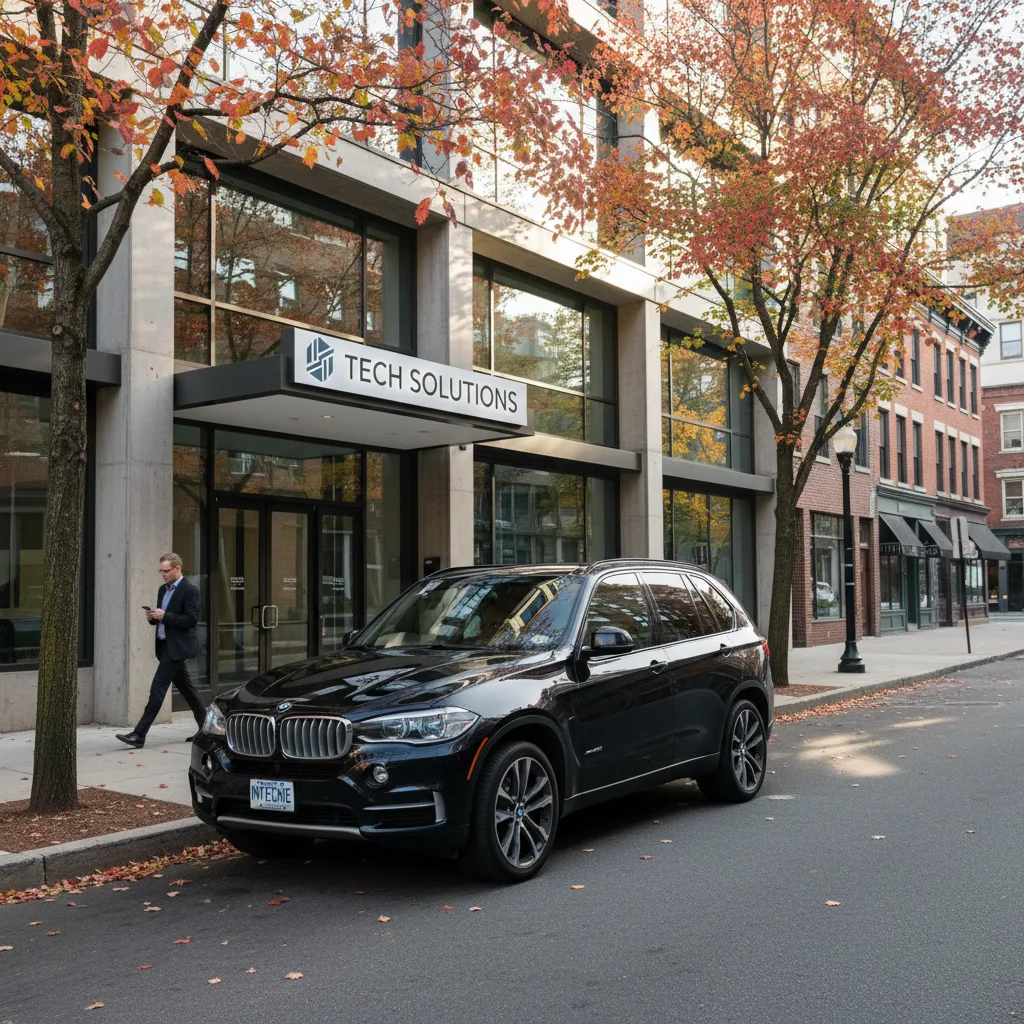
Abstract mill rates are easy to dismiss. Real five-year totals are not. Five representative vehicles, five years of New Hampshire vehicle registration costs, compared against a Montana LLC handled by Zero Tax Tags:
*Net savings after Montana LLC service fees ($899 year one, $270/yr after). **Tesla 5yr NH includes $500 BEV surcharge ($100/yr × 5). Montana BEV fee is $130/yr — Tesla savings come from avoiding MSRP-based permit fees in early years.
The pattern is consistent. The higher the MSRP, the wider the gap. A motorhome owner is looking at nearly seventeen thousand dollars in savings over five years. A contractor with a heavy-duty pickup saves close to three thousand. Even a relatively modest Tesla Model Y still saves more than the cost of a decent set of winter tires every five years.
EV Owners: The $100 Surcharge on Top
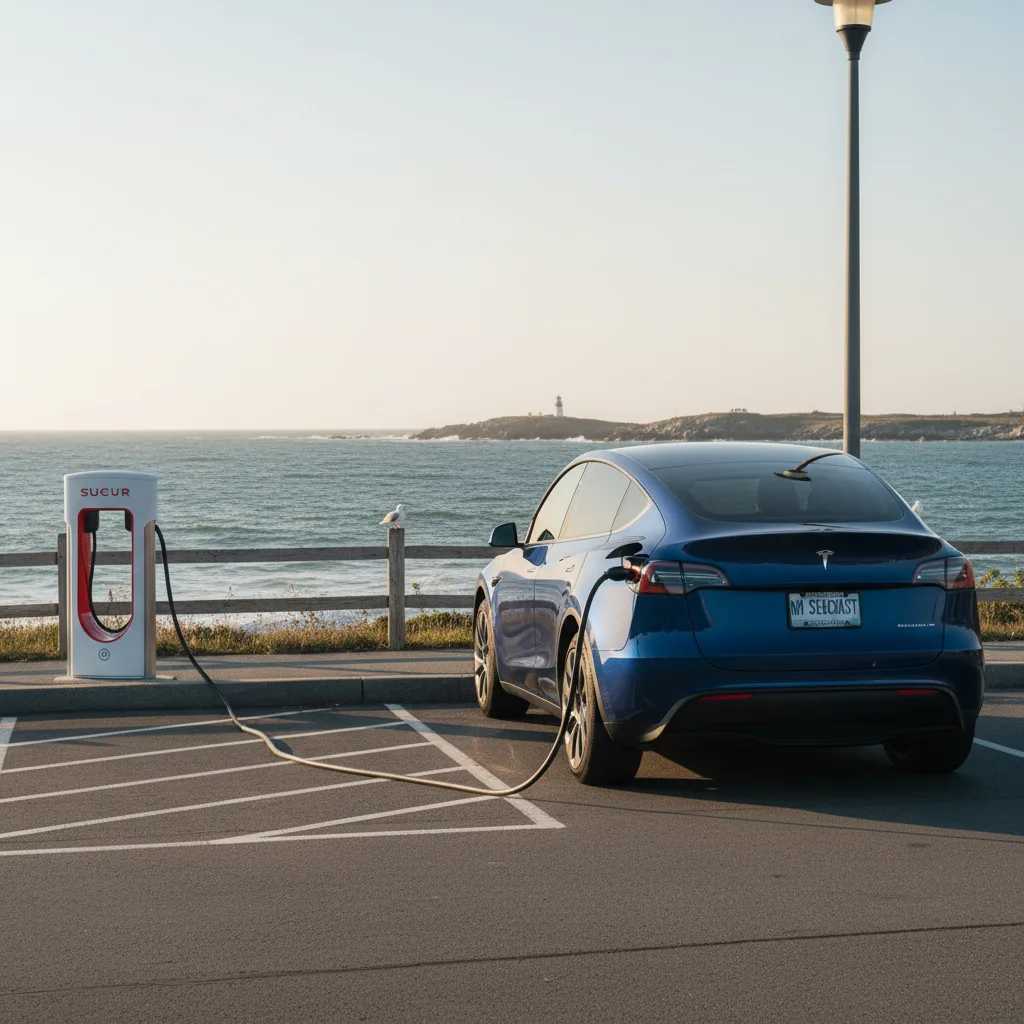
Electric vehicle owners get an extra envelope from Concord. Under RSA 261:141-c, effective January 1, 2026, battery electric vehicles pay an additional $100 per year and plug-in hybrids pay $50 per year. The legislature’s reasoning is that EV drivers do not buy taxed gasoline, so they need to pay a road-use surcharge another way. The surcharge stacks on top of the municipal permit fee, the state weight fee, and the administrative fees, with no offsetting credit anywhere.
For a Tesla Model Y at $49,000 MSRP, the year one bill in Portsmouth comes out to $1,068. Of that, $882 is the permit fee, $66 is the weight fee, $100 is the BEV surcharge, and $20 is town admin. The surcharge stacks on top of the permit fee in the early years when the MSRP mills are highest.
Montana also charges an EV fee, and we will not pretend otherwise. Montana’s BEV fee is $130 per year, and Montana’s PHEV fee is $70 per year. On the surface, Montana’s EV fee is actually thirty dollars higher than New Hampshire’s BEV fee. The savings for EV owners do not come from comparing flat EV surcharges. The savings come from avoiding the mill-rate permit fee that scales with MSRP.
The Tesla Model Y case study saves $1,371 over five years. That is real money but it is modest compared to the savings on heavier or more expensive vehicles. EV owners get the biggest payoff in years one through three when the eighteen, fifteen, and twelve mill rates hit hardest. By year five the permit fee has shrunk and the picture tightens. Be honest with yourself about where the savings come from before pulling the trigger.
For a higher-MSRP EV, the gap widens dramatically. A Rivian R1T at $90,000 MSRP, a Lucid Air at $110,000, or a Mercedes EQS at $125,000 all generate permit fees in the $1,500 to $2,250 range in year one alone, before the BEV surcharge is layered on. Those vehicles save thousands.
The Used Car MSRP Trap

Most New Hampshire residents assume they can dodge the permit fee by buying used. They are wrong, and the wrongness is expensive. The municipal permit fee is calculated against the original manufacturer’s list price of the vehicle’s model year, not against what you paid for it on the used lot.
Walk through the scenario. You spot a 2023 BMW X5 M50i on a used lot in Salem in 2026. The original MSRP was $86,000 when it left the factory. The dealer is asking $58,000 because the vehicle has 38,000 miles and three years of depreciation behind it. You congratulate yourself on a smart purchase. Then you go to register it.
The Salem town clerk applies the mill rate for a three-year-old vehicle, which is nine mills. But she applies it against the original $86,000 MSRP, not against your $58,000 purchase price. That is $774 in permit fees in the first year alone, plus the state weight fee and admin. The discount you negotiated at the dealership did not transfer to the registration counter. The town gets paid as if you bought the car new.
This is the quirk that catches the most New Hampshire residents off guard, because no other state in the country runs the formula this way. In Virginia, the personal property tax tracks current market value, so depreciation lowers the bill. In Arizona, the VLT is based on a depreciating value from the original MSRP. In New Hampshire, the schedule is fixed by age but the multiplicand is fixed by sticker. Buy a heavily depreciated luxury vehicle and you pay luxury permit fees on it forever.
The used-car loophole that residents of high-tax states use to escape big registration bills does not work in New Hampshire. The state has anchored the fee to the sticker price your vehicle wore on its first day of life, and that anchor never moves.
Four New Hampshire Case Studies
Manchester Software Engineer — BMW X5 ($75,000)
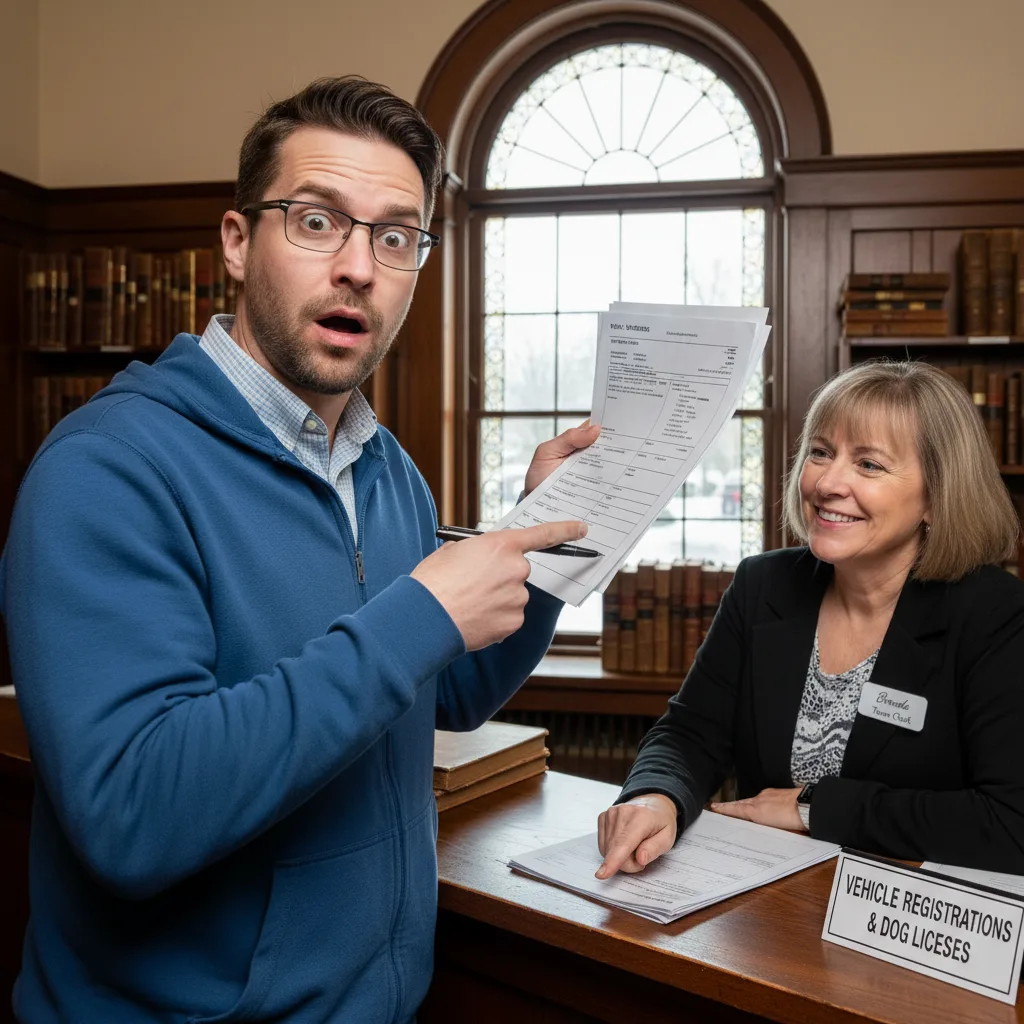
A thirty-four-year-old senior engineer at a Manchester fintech firm pulls down a comfortable salary, has paid off his student loans, and decides his reward is a 2026 BMW X5 xDrive50e. Sticker price $75,000. He registers in Manchester, Hillsborough County. Vehicle GVWR is 5,730 pounds, which puts him in the 5,001 to 8,000 pound state weight bracket at $66 per year.
The five-year math:
- Year 1, 18 mills: $1,350 + $66 + $20 = $1,436
- Year 2, 15 mills: $1,125 + $66 + $20 = $1,211
- Year 3, 12 mills: $900 + $66 + $20 = $986
- Year 4, 9 mills: $675 + $66 + $20 = $761
- Year 5, 6 mills: $450 + $66 + $20 = $536
Five-year New Hampshire total: $4,930. Five-year Montana total through Zero Tax Tags: $1,979. Net savings after our service fees: $2,951.
That is roughly the price of two ski-season passes at Loon and Cannon for a family of four, or the down payment on a second vehicle, or a meaningful contribution to a Roth IRA. The money is real. It just has to be redirected.
Concord Retiree — Tiffin Allegro Bus ($375,000)

A recently retired couple in Concord, Merrimack County, takes delivery of a 2025 Tiffin Allegro Bus 40-foot Class A diesel motorhome. Sticker $375,000. They plan to winter in Florida starting in November and return to New Hampshire for summer in the White Mountains. They register the motorhome in Concord because that is their legal residence. Vehicle GVWR is 36,000 pounds, so the state weight fee runs at $1.06 per 100 pounds, or $381.60 per year, rounded to $382.
Because they purchased a 2025 model in 2026, the vehicle counts as one year old for permit fee purposes, so they start at 15 mills rather than 18.
- Year 1, 15 mills: $5,625 + $382 + $20 = $6,027
- Year 2, 12 mills: $4,500 + $382 + $20 = $4,902
- Year 3, 9 mills: $3,375 + $382 + $20 = $3,777
- Year 4, 6 mills: $2,250 + $382 + $20 = $2,652
- Year 5, 3 mills: $1,125 + $382 + $20 = $1,527
Five-year New Hampshire total: $18,885. Five-year Montana total: $1,979. Net savings: $16,906.
Almost seventeen thousand dollars over five years. That number pays for fuel from Concord to Key Largo and back roughly twelve times. It pays for two seasons at a top-tier RV resort. For snowbirds who genuinely spend half the year out of New Hampshire anyway, paying Concord-rate permit fees on a 40-foot motorhome that sits in a Florida park six months out of twelve is mathematically absurd.
Nashua Contractor — Ram 3500 HD ($68,000)
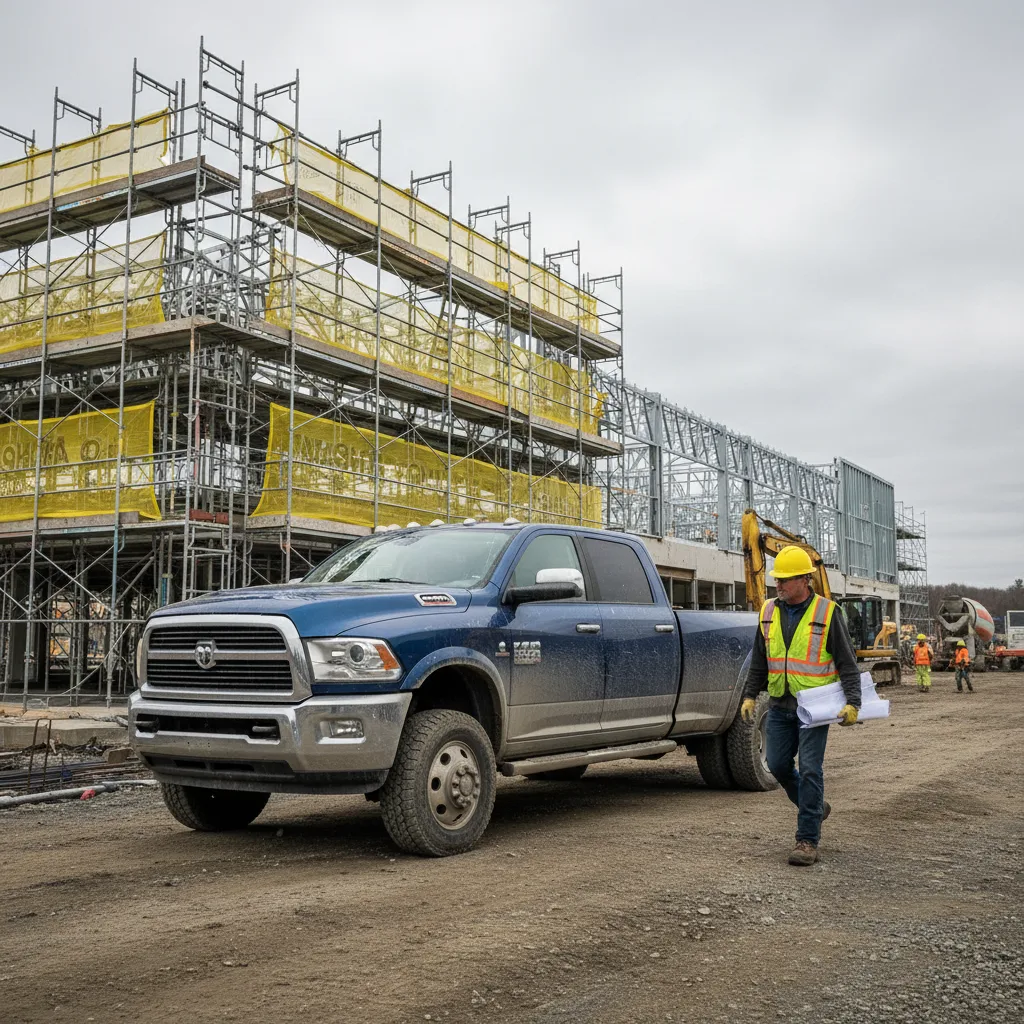
A Nashua general contractor runs a small framing crew across southern New Hampshire and northern Massachusetts. His daily driver and jobsite tow vehicle is a 2026 Ram 3500 Heavy Duty Limited dually. Sticker $68,000. GVWR 11,000 pounds, which puts him over the 8,000 pound threshold and into the per-100-pound state fee bracket at $1.06 per 100 pounds, or $117 per year.
- Year 1, 18 mills: $1,224 + $117 + $20 = $1,361
- Year 2, 15 mills: $1,020 + $117 + $20 = $1,157
- Year 3, 12 mills: $816 + $117 + $20 = $953
- Year 4, 9 mills: $612 + $117 + $20 = $749
- Year 5, 6 mills: $408 + $117 + $20 = $545
Five-year New Hampshire total: $4,765. Five-year Montana total: $1,979. Net savings: $2,786.
For a working tradesman who depends on the truck to generate income, the permit fee is pure overhead. Every dollar that goes to the town clerk is a dollar that does not go into tools, payroll, or retirement savings. The Ram is registered to the LLC, deducted as a business expense, and produces a clean line on a Schedule C.
Portsmouth Engineer — Tesla Model Y ($49,000)
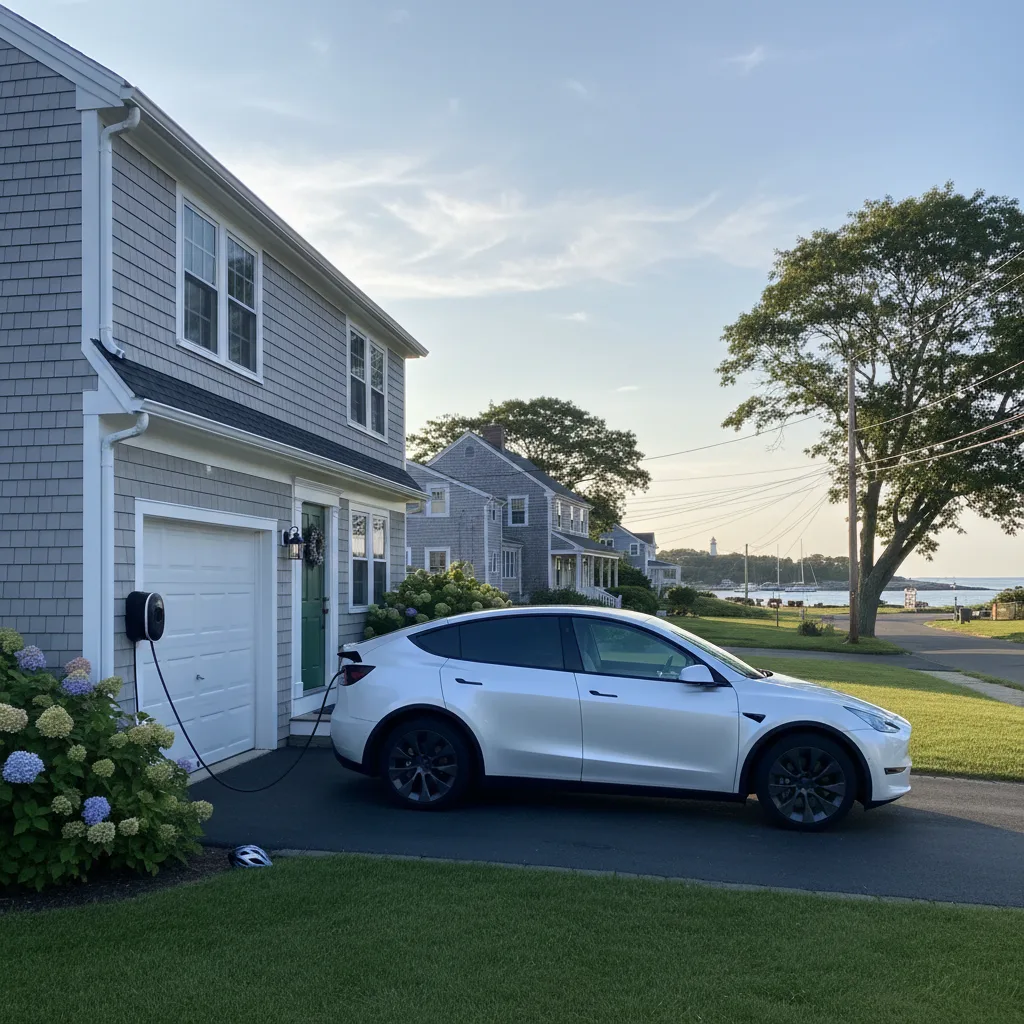
A Portsmouth mechanical engineer in his early forties takes delivery of a 2026 Tesla Model Y Long Range, $49,000 MSRP. He lives in Rockingham County, has a Level 2 charger in his garage, and commutes to work in Hampton. Vehicle GVWR 5,132 pounds, so the state weight fee is $66 per year, plus the new $100 BEV surcharge under RSA 261:141-c.
- Year 1, 18 mills: $882 + $66 + $100 + $20 = $1,068
- Year 2, 15 mills: $735 + $66 + $100 + $20 = $921
- Year 3, 12 mills: $588 + $66 + $100 + $20 = $774
- Year 4, 9 mills: $441 + $66 + $100 + $20 = $627
- Year 5, 6 mills: $294 + $66 + $100 + $20 = $480
Five-year New Hampshire total: $3,870. Five-year Montana total with BEV fee: $2,499. Net savings: $1,371.
The savings here are real but more modest than on heavier or pricier vehicles. The bulk of the benefit lands in years one through three, when the mill rate is at its harshest and the MSRP is highest in absolute dollars. By year five the gap has narrowed to roughly $80, since Montana’s annual fee is fixed and New Hampshire’s has dropped to 6 mills. For Tesla owners stepping up to a Model X or Model S Plaid the math compounds in our favor; for Model 3 owners at the lower trims, the case becomes more about convenience than dollar-stacking.
The Montana Solution: How the Math Changes
Montana has spent decades quietly building one of the most vehicle-friendly registration systems in the United States, and the legal architecture is straightforward. The state constitution explicitly prohibits a general sales tax. There is no annual personal property tax on vehicles. There is no MSRP-anchored permit fee that follows you down the years. There is no county-level surtax, no municipal mill rate, no separate luxury bracket.
What Montana has instead is a clean, transparent, flat annual registration fee. A passenger vehicle pays a fixed dollar amount based on age category and weight class. Once that fee is paid, the vehicle is registered. There is no second envelope from a town clerk in the spring.
To unlock Montana registration as a non-resident, you do what Hollywood studios, professional racing teams, and luxury motorhome buyers have done for forty years. You form a Montana limited liability company. The LLC is a Montana resident the moment its articles of organization are accepted by the Secretary of State. The LLC takes legal title to the vehicle. The LLC registers the vehicle in Montana. The plates come to your home address, wherever that home address happens to be.
The savings compound across vehicles. A household with two luxury SUVs and a Class A motorhome can be looking at $25,000 to $40,000 over five years compared to keeping everything on a Manchester permit-fee schedule. The legal structure is identical to what corporations use every day. The only difference is that you, the individual buyer, are now using a tool that has historically been reserved for institutional fleets.
Is This Legal?

Yes. The Montana LLC vehicle registration structure rests on three pillars of well-settled American law, and the framework has been in use for decades.
First, the United States Constitution. The Commerce Clause grants Congress authority over interstate commerce, and the courts have repeatedly held that legitimate business entities have the right to operate, own property, and register vehicles in any state where they are legally formed. A Montana LLC is a Montana resident for legal purposes. It can own real estate, hold bank accounts, hire contractors, and yes, title and register vehicles, on the same terms as any natural-born Montanan.
Second, Montana state law. Title 35 of the Montana Code Annotated lays out a complete and intentionally permissive LLC framework. Montana welcomes LLCs from out-of-state members. There is no residency requirement for LLC members or managers. The Secretary of State processes formations regardless of where the underlying human owners live. The legislature has made a deliberate policy choice to attract this business, and that policy choice is reflected in clean statutes and an efficient filing process.
Third, federal vehicle registration norms. Vehicles are registered to their legal owner. When the legal owner is a Montana LLC, the vehicle is registered in Montana. The plates that result are valid throughout the United States under the principle of interstate plate recognition that every state observes. Your registered Montana plate is recognized in every state, including New Hampshire.
The strategy used by Fortune 500 fleet managers, Hollywood production companies, and private aviation operators for half a century is the same strategy now available to individual New Hampshire buyers. Same Montana LLC structure, same Secretary of State filing, same registration counter, same plates.
Who This Is Built For

Montana LLC new hampshire vehicle registration is built for the New Hampshire residents who are paying the most into the mill-rate system and have the most to gain by stepping out of it. If you see yourself on this list, the math has already decided for you.
- Luxury vehicle buyers. Any sticker over $50,000 generates permit fees that justify the structure. Above $75,000, the savings are decisive. Above $100,000, the structure pays for itself in year one.
- Class A and Class C motorhome owners. The single highest-savings category. RVs combine massive MSRP figures with seasonal use patterns that make full-rate New Hampshire registration especially painful.
- Heavy-duty pickup owners. F-250, F-350, Ram 2500, Ram 3500, Silverado 2500HD, Sierra 3500HD. These trucks combine high MSRPs with high GVWRs, and the per-100-pound state fee adds insult to the permit fee injury.
- EV and PHEV buyers. Tesla, Rivian, Lucid, Mercedes EQ, Audi e-tron, Porsche Taycan. The BEV surcharge is just one more straw on the camel. Anything above $60,000 MSRP saves substantially.
- Collectors and weekend drivers. Porsche, Corvette, Mustang Shelby, BMW M, AMG, the entire enthusiast catalog. Why pay annual permit fees on a vehicle that comes out of the garage twelve weekends a year?
- Snowbirds. If you spend October through April in Florida, Arizona, or the Carolinas, you are paying New Hampshire permit fees while the vehicle is parked in another state for half the calendar year. Montana solves that.
- Small business owners and tradesmen. Contractors, landscapers, plumbers, electricians. The work truck registered through a business entity is the cleanest, most defensible Montana LLC use case in the playbook.
- Multi-vehicle households. Two cars, a truck, a boat trailer, an RV. The savings stack and the Montana LLC handles all of them under one entity.
Our Process: Zero Tax Tags Full Service
Zero Tax Tags handles the full Montana LLC vehicle registration pipeline end to end. You do not need to fly to Helena. You do not need to find a registered agent. You do not need to navigate the Montana Secretary of State portal or stand at a county treasurer’s counter. We do all of that for you. New Hampshire residents have used us across every county in the state, and the process is the same in Coos as it is in Cheshire.
Our pricing is transparent and complete:
That is the entire picture. There are no surprise fees, no upcharges, no separate registered agent invoices, and no membership tiers. Year one covers the LLC formation, the EIN, the operating agreement, the registered agent service, the title transfer, the Montana registration, and shipping of your plates. Year two onward is a single annual invoice that keeps the LLC in good standing and the registration current.
The 7-Day Timeline
From the moment you submit paperwork to the moment Montana plates arrive at your New Hampshire address, the entire process runs in a single week. Most clients are surprised at how short it is.
| Day 1: | You submit paperwork through our secure portal. We file your Montana LLC formation the same day with the Montana Secretary of State. |
| Days 1-2: | Montana LLC formation completes. EIN issued. Operating agreement finalized. |
| Days 2-4: | Vehicle title transferred into the LLC name at a Montana county treasurer’s office. |
| Days 4-7: | Permanent Montana plates shipped directly to your New Hampshire address. |
By the end of week one, the vehicle is legally registered in Montana, the LLC is in good standing, and you have permanent plates in hand. No appointments at the Manchester DMV, no waiting for a town clerk slot, no taking time off work to stand in line. The next step is annual filing maintenance, which we handle automatically.
Frequently Asked Questions
Does Montana plate recognition apply in New Hampshire?
Yes. Every U.S. state, including New Hampshire, recognizes plates issued by any other state. The principle of interstate plate recognition is foundational to the American highway system. A Montana plate is valid in every state in which you drive, and it remains valid whether you cross from Concord to Boston, Boston to Hartford, or anywhere else.
What about my New Hampshire driver’s license and insurance?
Your driver’s license stays exactly where it is. You remain a New Hampshire driver with a New Hampshire address on your license. The vehicle is owned by a Montana LLC and registered in Montana, but you, the human, are unchanged. Insurance is written on the vehicle with you as the named driver and the LLC as the named insured. Carriers do this every day across the country, and our team works with insurance partners who specialize in Montana LLC-owned vehicles.
Can I do this myself without a service like Zero Tax Tags?
Technically yes, in the same way you can technically file your own taxes, do your own roof repairs, or represent yourself in court. The Montana Secretary of State portal is publicly available. The county treasurer’s office accepts walk-ins. The challenge is the volume of moving parts: registered agent service, operating agreement drafting, EIN application with the IRS, title transfer paperwork, plate shipping logistics, annual renewals, and ongoing compliance filings. We do this hundreds of times per month and the unit economics favor outsourcing.
Is the municipal permit fee really the same in every town?
The mill rate is identical statewide because it is set by RSA 261:153, a state statute. What varies slightly is the small admin charge bundle that each town adds, typically $17 to $20 total. We use $20 in all our calculations as a representative figure. The permit fee itself is locked.
What happens if I sell the vehicle?
You sell it the same way you would sell any other vehicle. The LLC signs over the title to the buyer. If you want to put a replacement vehicle into the existing LLC, we handle the substitution and re-register the new vehicle on the same LLC. If you want to dissolve the LLC after selling and not replacing, we handle that as well.
Does this work for leased vehicles?
Generally no. Leased vehicles are owned by the leasing company, not by you, so you cannot transfer the title into a Montana LLC. The Montana LLC structure works for vehicles you own outright or are financing in your name. If you are about to lease a vehicle and the registration math looks ugly, talk to us before signing the lease; in many cases buying outright through the LLC structure works out cheaper than leasing.
What if my vehicle is financed?
Most major auto lenders will work with title placement in a single-member LLC, particularly when you, the human, sign as personal guarantor on the loan. We coordinate the title placement with your lender and walk through the documentation. The vast majority of finance deals we see go through cleanly.
How long does this stay in effect?
Indefinitely. The Montana LLC stays active as long as you keep the annual filing current. The vehicle registration renews annually in Montana, which is what our $270 per year covers. There is no expiration date and no escalating fee schedule. The structure works in year ten the same way it works in year one.
See how Montana LLC registration helps owners in other states:
- North Dakota Vehicle Tax: The 5% Day-One Hit
- Arizona Vehicle Tax: The VLT Problem
- Arkansas Vehicle Tax: The Hidden Wealth Extraction System
Ready to Stop Overpaying New Hampshire Permit Fees?
New Hampshire vehicle owners have saved millions with Montana LLC registration. The MSRP-based permit fee is not a fact of life. You’re next.