
21 min read

On this page
- + What Is Virginia’s Personal Property Tax?
- + How Virginia Calculates Your Car Tax
- + County Tax Rates Compared
- + Real 5-Year Costs by Vehicle Type
- + The PPTRA Relief Program: What It Actually Does
- + Who Gets Hit Hardest
- + Real Virginia Owner Stories
- + The Montana LLC Solution
- + Is This Legal?
- + Who Benefits Most
- + The Zero Tax Tags Process
- + Timeline: Day One to Done
- + Frequently Asked Questions
What Is Virginia’s Car Tax — and Why Do You Pay It Every Single Year?

Virginia car tax — officially the Personal Property Tax (PPT) — is one of the most significant recurring vehicle costs in the United States. Unlike most states that collect a one-time sales tax at the point of purchase, Virginia allows its counties and cities to levy an annual percentage-of-value tax on every vehicle you own, every year, with no end date and no maximum cap. According to the Virginia DMV, Virginia’s personal property tax is administered locally, meaning your tax rate and bill depend entirely on which county or city you call home.
The result is a tax landscape that varies dramatically across the state — from $3.70 per $100 of assessed value in Virginia Beach to $5.33 per $100 in the City of Alexandria — and that compounds year after year without ever truly going away. In Northern Virginia’s high-rate jurisdictions, a $150,000 vehicle generates between $6,500 and $8,000 in annual personal property tax. A $300,000 exotic car generates $15,000 to $16,000 per year. And unlike Nevada’s GST (which at least decreases on a statutory schedule), Virginia’s personal property tax is recalculated annually against your vehicle’s current assessed value — creating a dynamic bill that moves up and down with used car markets rather than following a predictable downward path.
The good news: a properly structured Montana LLC provides a legal, state-law-supported path to vehicle ownership that eliminates the Virginia personal property tax for qualifying owners. This guide explains exactly how Virginia’s car tax works, what it costs by vehicle type and jurisdiction, and how Montana LLC registration works as a real solution.
How Virginia Calculates Your Car Tax

Virginia’s personal property tax formula is straightforward on its face: multiply your vehicle’s assessed value by your locality’s tax rate per $100 of value. What makes it complicated is how the assessed value is determined and how it shifts year to year.
Assessed Value Method: Virginia uses the NADA Clean Loan Value (also called trade-in value) — not retail price, not private-party value, and not what you actually paid at the dealership. The NADA Clean Loan Value typically runs 60–75% of retail value for newer vehicles and can vary significantly from actual market conditions. During the 2021–2023 used vehicle price spike, many Virginia vehicle owners saw their assessed values — and their tax bills — jump dramatically even on aging vehicles, because NADA values reflected the inflated market. Conversely, some owners found their vehicles assessed above what they could actually sell them for — a “phantom value” situation that generated real tax bills on unrealized value.
The Annual Recalculation: Unlike Nevada’s statutory depreciation schedule (which decreases predictably to a 50% floor), Virginia recalculates each vehicle’s NADA value every January 1st. This means your tax bill can actually increase year over year if the used car market for your vehicle model strengthens — even as the vehicle ages. For collectible vehicles, limited-production models, or vehicles with strong residual values, this dynamic assessment can produce surprisingly large bills on older vehicles.
The 4.15% Sales and Use Tax: On top of the annual personal property tax, Virginia also collects a one-time 4.15% state sales and use tax (SUT) when you title a vehicle in Virginia. For a $150,000 vehicle, that is a $6,225 up-front charge before you ever pay your first annual personal property tax bill. The SUT is separate from the PPT and is collected by the Virginia DMV at titling.
Virginia County and City Tax Rates Compared
One of the most important facts about Virginia’s car tax is how dramatically it varies by location. Moving from one county to the next can mean thousands of dollars more or less in annual tax on the same vehicle.
Note: These are gross tax figures before any PPTRA (Personal Property Tax Relief Act) offset. The PPTRA reduces the effective bill for qualifying passenger vehicles, but does not eliminate it — and high-value vehicles receive proportionally less relief. See the PPTRA section below for details on how much relief you actually receive.
Real 5-Year Costs by Vehicle Type
The following table shows estimated 5-year personal property tax totals in Fairfax County ($4.57/$100) — one of the most common high-rate jurisdictions in Virginia. Because Virginia uses NADA values (which fluctuate with the market rather than following a fixed statutory schedule), these figures represent a reasonable estimate based on typical NADA depreciation for each vehicle class.
These figures assume average NADA depreciation and do not account for market spikes. During 2021–2023, many Virginia vehicle owners saw bills 20–40% higher than these estimates because used vehicle NADA values rose sharply. A $120,000 BMW M5 owner in Fairfax who bought in 2020 may have seen their Year 3 bill actually exceed their Year 1 bill due to the used car market surge — a unique Virginia experience that owners of property in more predictable depreciation-schedule states (like Nevada) never encounter.
The PPTRA Relief Program: What It Actually Does (and Doesn’t Do)
Virginia’s Personal Property Tax Relief Act (PPTRA) was created in 1998 to reduce the car tax burden on ordinary Virginians. It is real, and it does reduce tax bills for qualifying vehicles — but understanding its limits is essential for luxury and high-value vehicle owners who expect it to eliminate their liability.
How PPTRA Works: The state provides a fixed pool of PPTRA funds to each locality each year. The locality divides this pool among qualifying vehicles to offset a percentage of their personal property tax bill. For newer vehicles (0–3 years old), the relief typically covers 60–70% of the tax. For older vehicles, the relief percentage decreases. The relief is applied automatically at billing — you do not need to apply for it separately.
What PPTRA Covers: Passenger vehicles and light trucks under 7,500 lbs GVWR with an assessed value below the locality’s threshold. In most Northern Virginia jurisdictions, this means the relief phases out significantly for vehicles assessed above $25,000–$30,000. Vehicles assessed above this threshold receive proportional relief on the first portion but pay full rate on the balance.
What PPTRA Excludes:
- Heavy trucks and vehicles over 7,500 lbs GVWR (many full-size diesel pickups)
- Motorcycles and recreational vehicles (in many jurisdictions)
- Commercial vehicles or vehicles used primarily for business
- Vehicles assessed above the locality’s high-value threshold
The Real-World Impact on Luxury Owners: For a $150,000 vehicle in Fairfax County, the gross PPT is approximately $6,855. PPTRA relief on the first $25,000 of assessed value at the maximum relief percentage reduces the bill by roughly $1,100–$1,400. The remaining $125,000 of assessed value pays at full rate with no relief. The effective tax bill after PPTRA is still approximately $5,400–$5,700 annually. PPTRA helps owners of everyday vehicles — it does relatively little for owners of high-value vehicles where most of the assessed value falls above the relief threshold.
Who Gets Hit Hardest by Virginia’s Car Tax
Northern Virginia Professionals
Fairfax County, Arlington, and Alexandria are among the highest-income counties in the United States. The concentration of technology executives, federal contractors, law partners, and lobbyists who drive luxury vehicles in these jurisdictions is extremely high — and the combination of the highest tax rates in the state with the highest-value vehicles creates the largest per-owner tax exposure in Virginia. A law partner in Tysons Corner driving a $140,000 Porsche 911 and a $120,000 BMW M5 pays over $12,000 annually in personal property tax on two vehicles before any PPTRA offset.
Military Families on PCS Orders
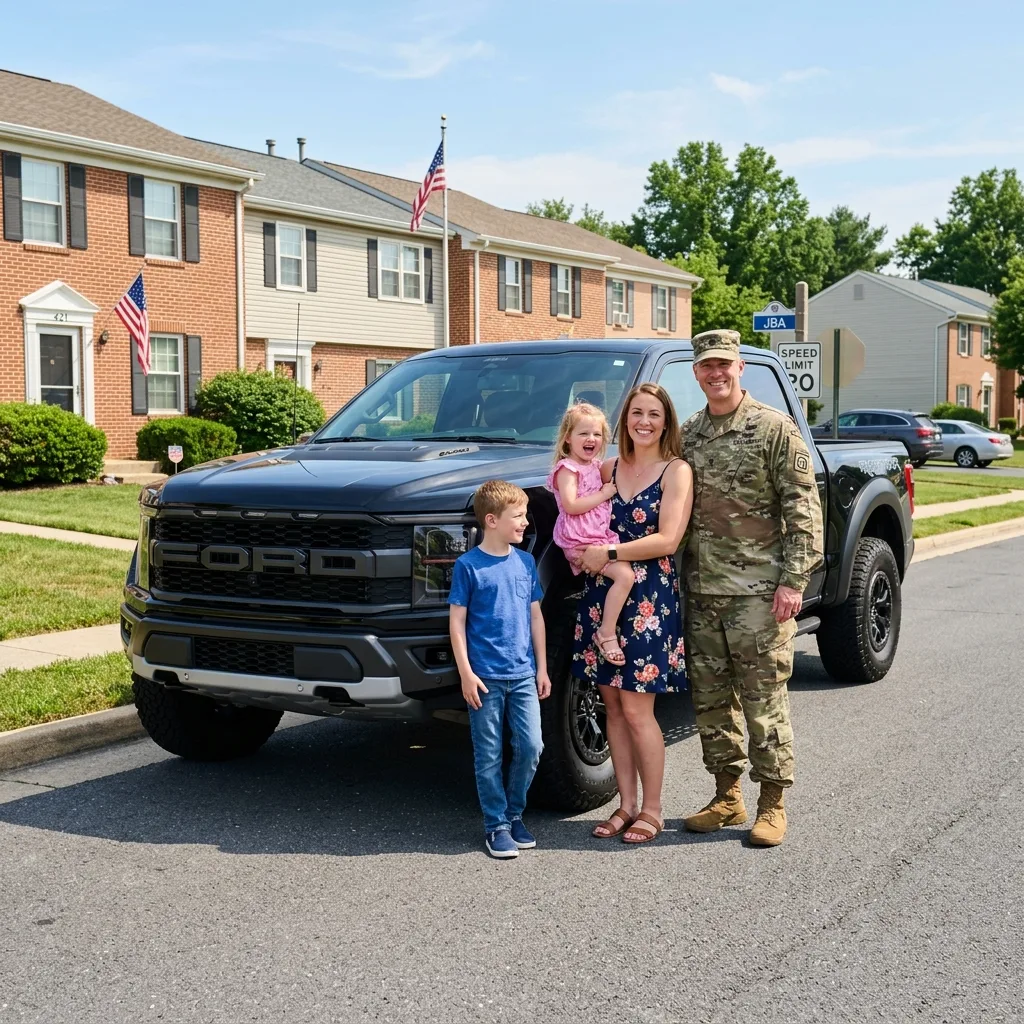
Virginia is home to some of the largest military installations in the country — Joint Base Myer-Henderson Hall, Fort Belvoir, Quantico, Naval Station Norfolk, and Joint Base Langley-Eustis, among others. Military families on Permanent Change of Station (PCS) orders to Virginia face the full personal property tax burden, often on relatively new vehicles purchased during a prior assignment in a lower-tax or no-PPT state. Federal law (the Servicemembers Civil Relief Act) provides some protections, but they are narrowly defined. Most military families stationed in Virginia pay the full local PPT rate unless they have maintained legal domicile in another state — which requires careful and ongoing documentation.
Loudoun County Horse Country and Equestrian Lifestyle
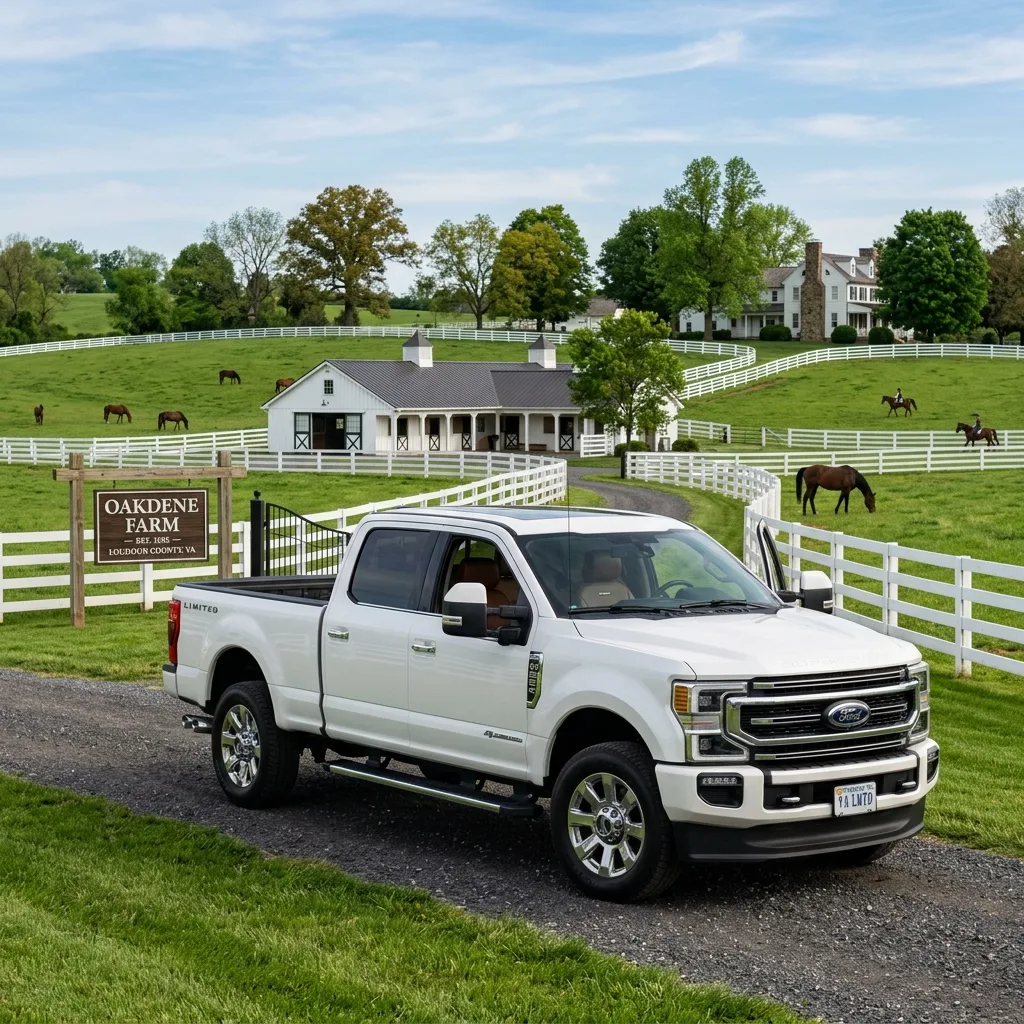
Loudoun County — Virginia’s “wine and horse” country west of Dulles — has an affluent population that drives high-value pickup trucks, horse trailers, and luxury SUVs as part of an active equestrian lifestyle. Heavy-duty trucks used for towing horse trailers may exceed 7,500 lbs GVWR, disqualifying them from PPTRA relief and making the full $4.20 per $100 rate apply without offset. A Ford F-350 Super Duty dually at $88,000 with a heavy-duty tow package frequently falls into this excluded category.
Full-Time RV and Motorhome Owners
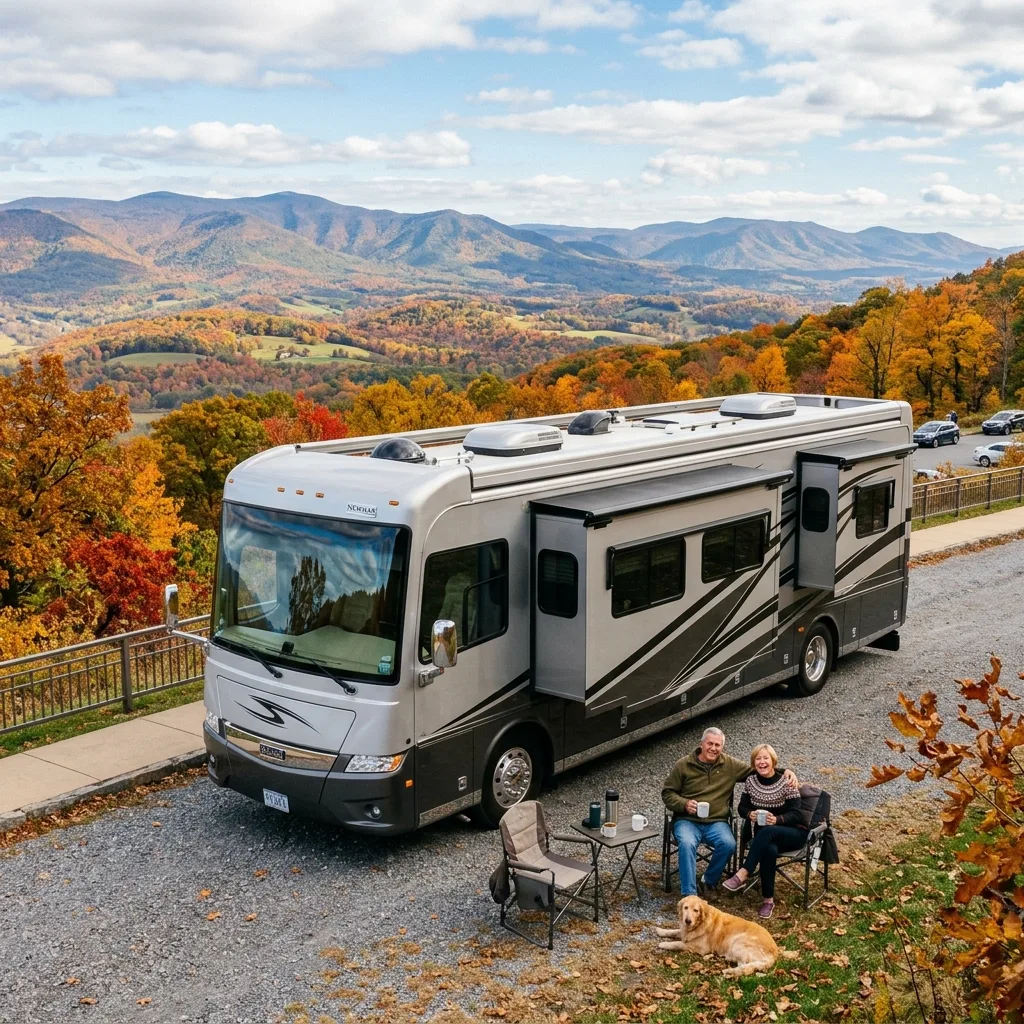
Class A diesel motorhomes, luxury fifth-wheels, and high-end campers carry MSRPs that can reach $500,000 or more. Virginia’s PPTRA typically excludes recreational vehicles from relief eligibility in most jurisdictions. A $350,000 Newmar motorhome registered in Fairfax County pays the full $4.57/$100 rate — approximately $16,000 in Year One, declining somewhat as NADA values depreciate but never disappearing entirely.
Car Collectors and Multi-Vehicle Households
Virginia’s PPT applies to every vehicle — there is no collector or historical vehicle exemption that fully eliminates the annual charge for actively used vehicles. A collector with four vehicles totaling $500,000 in assessed value pays over $22,000 annually in Fairfax County. Unlike states that offer historical vehicle flat-fee registration for vehicles driven limited miles per year, Virginia’s PPT continues regardless of annual mileage.
Real Virginia Vehicle Owner Stories

The McLean Technology Executive
A software company founder in McLean drove a Porsche 911 GT3 RS ($240,000) and a Tesla Model X Plaid ($120,000). His combined annual personal property tax in Fairfax County was approximately $16,400 — before PPTRA, which reduced it by roughly $2,200 on the Tesla (a qualifying passenger vehicle with significant assessed value below the threshold). Net annual car tax: approximately $14,500. After learning about Montana LLC registration from a colleague in the financial services industry, he restructured both vehicles through a single Montana LLC. His annual vehicle registration cost dropped to under $1,000 total, with no personal property tax, no annual NADA reassessment anxiety, and no 4.15% Virginia SUT on any future vehicle purchase through the LLC.
The Arlington Federal Contractor
A defense contractor based in Arlington drove a BMW M5 Competition ($120,000) and an Escalade ESV ($107,000) — daily drivers for a two-income household with children. Combined annual PPT in Arlington County at $4.70/$100: approximately $10,681. The PPTRA offset was marginal at these assessed values. He calculated that over 10 years of ownership across both vehicles, the total PPT exposure exceeded $80,000. Montana LLC registration eliminated the ongoing annual charge, and the savings from the first three years alone exceeded $25,000.
The Loudoun County Horse Property Owner
A veterinarian in Leesburg, Virginia owned a Ford F-350 Super Duty ($82,000) used for towing horse trailers, a Ram 1500 Laramie ($68,000) for daily driving, and a four-horse trailer ($95,000 assessed value, taxed as personal property). The F-350 exceeded 7,500 lbs GVWR, disqualifying it from PPTRA relief entirely. Combined annual PPT across all three assets was approximately $11,130. Montana LLC registration eliminated the personal property tax on both trucks, with the trailer registered under the same LLC at Montana rates.
The Norfolk Military Couple
A Navy commander and his spouse stationed at Naval Station Norfolk had maintained Washington State as their legal domicile for years — and therefore paid Washington’s one-time vehicle excise tax rather than Virginia’s annual PPT. When a PCS order to the Pentagon required a full Virginia residency establishment (necessary for their children’s school district), they suddenly faced Virginia PPT on two vehicles: a Chevy Silverado High Country ($72,000) and a new Jeep Grand Wagoneer ($85,000). Anticipated annual PPT in Fairfax County: approximately $7,168 combined. Montana LLC registration provided an alternative registration path consistent with their multi-state lifestyle and frequent relocation history.
The Montana LLC Solution: How It Works for Virginia Owners

Montana has no personal property tax on vehicles, no state sales tax, and offers permanent registration for vehicles 11 years old or older. For Virginia vehicle owners, this combination creates a significant financial opportunity when structured properly through a Montana LLC.
The Legal Foundation: Virginia Code § 46.2-656 provides an exemption from Virginia registration requirements for vehicles owned by nonresidents that are registered in their home state. A Montana LLC is a Montana entity — not a Virginia resident. Its vehicles are properly registered in Montana. Virginia’s personal property tax, which applies to vehicles belonging to Virginia residents (§ 58.1-3000 et seq.), does not reach vehicles owned by a nonresident Montana entity properly registered in Montana.
The Structure:
- Form a Montana LLC. Montana allows formation by anyone regardless of residency. The $35 formation fee plus $20 annual renewal is the total state cost. Zero Tax Tags handles formation and registered agent service.
- Transfer vehicle title to the LLC. The Montana LLC becomes the legal owner of the vehicle. For new purchases, the dealership titles the vehicle directly in the LLC’s name — the cleanest approach and one that also avoids Virginia’s 4.15% SUT.
- Register in Montana. Montana’s registration fees are based on vehicle age, not value. A new vehicle pays $217–$317 per year. A vehicle 11 years or older pays a one-time permanent registration fee of approximately $200–$412 — no annual renewal required thereafter.
- Drive with Montana plates. Montana plates are fully legal on Virginia roads and all 50 states. Nonresident vehicles are routinely driven in Virginia by commuters, travelers, and residents with multi-state lifestyles.
The Savings on a New Purchase: Buying a $150,000 vehicle through a Montana LLC instead of titling it in Virginia saves the 4.15% SUT ($6,225) at the point of purchase — before the annual PPT savings even begin. The combined first-year financial advantage of Montana LLC registration on a $150,000 vehicle in Fairfax County reaches approximately $13,000 ($6,225 SUT + ~$6,855 PPT avoided). The Montana LLC formation and registration cost: approximately $600–$900 total.
Is Montana LLC Vehicle Registration Legal?

Yes — Montana LLC vehicle registration is legal. The structure rests on clearly established law at both the federal and state level.
Montana law permits anyone to form an LLC without establishing Montana residency. This is settled commercial law, identical to the right of any person to form a Delaware corporation, a Wyoming LLC, or any other entity in any state where they choose to do business. Montana LLCs are genuine legal entities with real rights and obligations.
Montana vehicle registration law allows Montana entities to register vehicles in Montana. A Montana LLC’s vehicles are registerable in Montana. This is not a gap in the law or an unintended consequence — it is how Montana’s registration system is designed to function.
Virginia’s nonresident exemption under § 46.2-656 applies to vehicles registered in another state by nonresidents. A Montana LLC is a nonresident. Its vehicles are registered in Montana. The exemption applies on the plain text of the statute.
Under the U.S. Constitution’s Commerce Clause and Full Faith and Credit Clause, states cannot block legitimate out-of-state entity vehicle registrations. The vehicle is owned by the Montana LLC — a Montana entity — not the Virginia resident personally. Virginia’s personal property tax and registration rules apply to vehicles owned by Virginia residents; a Montana LLC is not a Virginia resident. Montana has the legal authority to register vehicles owned by Montana entities, a right backed by decades of federal court precedent. Zero Tax Tags forms genuine, properly maintained Montana LLCs with correct documentation, ongoing registered agent service, and annual compliance management — exactly the kind of legitimate entity federal law protects.
The legal foundation: A Montana LLC formed with a real registered agent, proper state filings, and correct title work is a genuine legal entity under Montana law. Federal constitutional protections ensure that Montana’s right to register vehicles owned by Montana entities cannot be overridden by another state’s tax preferences.
Who Benefits Most from Montana LLC Registration in Virginia
- Northern Virginia residents with high-value vehicles. The combination of the state’s highest tax rates and most expensive vehicle markets makes NoVa the single strongest use case in Virginia.
- New vehicle buyers. Titling a new purchase directly through a Montana LLC avoids Virginia’s 4.15% SUT at the outset, recovering the LLC cost before the first PPT bill even arrives.
- Multi-vehicle households. One Montana LLC can hold multiple vehicles. The ongoing compliance costs are shared, dramatically improving efficiency for families with two or more qualifying vehicles.
- RV and motorhome owners. High MSRPs, frequent PPTRA exclusion, and long ownership periods make motorhome owners one of the highest-return categories for Montana LLC registration.
- Car collectors. Multiple high-value vehicles, long-term ownership, and Virginia’s dynamic NADA reassessment (which can produce higher bills in strong used-car markets) make collectors strong candidates.
- Military families with frequent PCS orders. Establishing vehicle ownership through a Montana LLC provides registration continuity across assignments in different states, avoiding the full re-titling and tax exposure that comes with establishing Virginia residency.
- Business owners and professionals with business-use vehicles. Vehicles excluded from PPTRA relief (heavy trucks, commercial vehicles) pay full rate with no offset. Montana LLC registration eliminates this exposure.
- Buyers of luxury pickup trucks. As trucks routinely exceed $80,000–$90,000 at full trim, the PPT exposure on trucks that may be excluded from PPTRA relief has grown significantly.
The Zero Tax Tags Process
We handle every step of Montana LLC formation and vehicle registration so you can focus on driving, not paperwork.
Step 1: Free Consultation. We review your vehicle(s), your Virginia jurisdiction, and your ownership goals. We show you the exact savings based on your specific situation — no pressure, no obligation.
Step 2: LLC Formation. We prepare and file your Montana Articles of Organization with the Montana Secretary of State, establish registered agent service in Montana, and provide your LLC documentation. Formation is typically complete in 3–5 business days.
Step 3: Vehicle Title Transfer. For new purchases, we coordinate with the dealership to title the vehicle in the LLC’s name from day one — avoiding Virginia’s 4.15% SUT entirely. For existing vehicles, we guide you through the Virginia title transfer process step by step.
Step 4: Montana Registration. We file the registration application with the Montana Motor Vehicle Division. Montana plates and registration documents are issued and mailed to you, typically within 2–4 weeks of LLC formation.
Step 5: Ongoing Compliance. We handle annual LLC renewals ($20/year with the Montana Secretary of State) and any vehicle registration renewals. For vehicles that qualify for permanent registration (11 years old or older), no annual renewal is required after the one-time permanent registration fee is paid. We track all deadlines and notify you well in advance.
Timeline: From Decision to Montana Plates
| Day 1: | Submit your MCO and supporting paperwork through our secure portal. We review for completeness and file your Montana LLC the same day. |
| Days 1–2: | Montana LLC formation complete — same business day in most cases, second business day at the latest. |
| Days 2–4: | Title transferred into the LLC name at the Montana county treasurer. |
| Days 4–7: | Permanent Montana plates shipped directly to your door within 3–5 business days of title completion. |
Frequently Asked Questions About Virginia’s Car Tax and Montana LLC Registration

Q: Does Virginia’s personal property tax apply to cars I own but rarely drive?
A: Yes. Virginia’s personal property tax applies to all vehicles titled in Virginia as of January 1st of each tax year, regardless of how many miles you drive. A collector car driven to three shows per year pays the full annual PPT based on its NADA assessed value, just like a daily commuter vehicle. There is no mileage-based exemption or reduction.
Q: Why is Northern Virginia’s car tax so much higher than the rest of the state?
A: Virginia’s personal property tax is set locally by each county and city independently. Northern Virginia’s jurisdictions have historically set higher rates because the local governments have higher service costs — schools, transportation, and public safety in high-cost, high-density areas require larger budgets. The result is that the same $150,000 vehicle pays roughly $2,000–$3,000 more annually in Fairfax or Arlington than in Henrico or Chesterfield.
Q: My vehicle lost significant value — can I appeal my Virginia assessment?
A: Yes. Virginia localities are required to use NADA Clean Loan Value, but you can appeal if you believe the assessment is incorrect. You will need documentation of your vehicle’s actual condition and comparable sales. Appeals are decided by local assessors or boards of equalization. Winning an appeal reduces your bill for that year only — the assessment is redone annually. For many owners, the appeals process is time-consuming relative to the savings it produces.
Q: Does avoiding the Virginia SUT (sales tax) on new vehicles through a Montana LLC actually work?
A: Yes, for vehicles purchased and titled directly through the Montana LLC. Virginia’s 4.15% SUT is triggered by titling a vehicle in Virginia. When a Montana LLC purchases and titles a vehicle in Montana, no Virginia SUT is collected. This is the single largest one-time savings for owners of new high-value vehicles — a $6,225 savings on a $150,000 vehicle before any annual PPT savings are counted.
Q: How does the PPTRA actually calculate my relief amount?
A: Each locality receives a fixed PPTRA allotment from the state each year. The locality determines a “relief percentage” by dividing the total PPTRA funds by the total qualifying tax that would be owed by all eligible vehicles. The percentage changes year to year as the pool of funds and the total qualifying vehicle values fluctuate. For most Northern Virginia jurisdictions in recent years, the effective relief rate has been 50–70% on the first $25,000–$30,000 of assessed value, with no relief above that threshold. High-value vehicle owners effectively receive the minimum benefit from PPTRA.
Q: Can I use one Montana LLC for multiple vehicles, including both my personal car and my wife’s car?
A: Yes. One Montana LLC can hold title to multiple vehicles with no practical limit. Multi-vehicle households are one of the highest-efficiency use cases — the LLC formation and ongoing compliance costs are fixed regardless of how many vehicles the LLC owns. A two-vehicle household that would have paid $12,000 annually in Fairfax County PPT saves virtually all of that while paying minimal Montana LLC costs.
Q: What happens to my Virginia car tax liability for the current year if I transfer my vehicle to a Montana LLC mid-year?
A: Virginia assesses personal property tax based on vehicle ownership as of January 1st. If your vehicle was titled in Virginia as of January 1st, you owe Virginia PPT for that full year regardless of when during the year you transfer ownership to the LLC. The benefit begins in full for the following tax year. This is why many clients structure new vehicle purchases directly through the Montana LLC from day one, rather than transferring existing vehicles mid-year.
Q: Is the Montana LLC structure legally protected in Virginia?
A: Yes. The U.S. Constitution’s Commerce Clause and Full Faith and Credit Clause protect Montana’s right to register vehicles owned by Montana entities. Virginia’s personal property tax applies to vehicles owned by Virginia residents — the Montana LLC is not a Virginia resident. A properly formed, correctly documented Montana LLC with a real registered agent and active compliance maintenance is fully protected under federal law. Zero Tax Tags handles all ongoing compliance so the structure remains solid year after year.
See how Montana LLC registration helps vehicle owners in other high-tax states:
- Nevada Vehicle Tax 2026: How Montana LLC Eliminates the Annual GST
- Arizona VLT: Stop Paying $1,000+ Every Single Year
Ready to Stop Paying Virginia’s Car Tax?
Virginia vehicle owners in Fairfax, Arlington, and across the state have saved millions by eliminating the annual personal property tax through Montana LLC registration. A consultation takes 10 minutes and shows you exactly what you’d save on your specific vehicles.