
29 min read

On this page
- + What Rhode Island Abolished (and What It Kept)
- + The 7% Sales Tax: Rhode Island’s Remaining Vehicle Tax Trap
- + The NADA Private Party Trap
- + The Real Numbers: What You Actually Pay
- + New 2026 Fees: EVs and Registration Surcharges
- + Four Rhode Island Case Studies
- + The Montana Solution
- + Is This Legal?
- + Who Benefits Most
- + Our Process
- + Timeline
- + Who gets the most out of a Montana LLC
- + FAQs
Rhode Island Abolished the Excise Tax — Then Kept Everything Else
Rhode Island vehicle tax used to be a phrase that triggered genuine financial dread on the East Side of Providence. Picture the scene: it is early July, a manila envelope from the city tax assessor lands in the mailbox, and a Providence cardiologist opens it on his front porch to find a $4,800 motor vehicle excise tax bill on his three-year-old BMW X5 M Competition. He had already written a $5,600 sales tax check the day he bought the car. Now, every July, the city of Providence wanted another four-figure tribute, and would keep wanting it for as long as he owned the vehicle. Five years of excise tax on that one BMW: roughly $20,000 — on a tax that did not exist in any of the surrounding southern New England states at anywhere close to Providence’s $60-per-$1,000 rate.
Then, in 2023, Rhode Island did something genuinely remarkable for a New England state. It killed the excise tax.
The legislature phased it out across multiple fiscal years from FY2018 through FY2023, with most municipalities reaching full elimination by July 1, 2023. East Providence, the last holdout, completed its phase-out by July 1, 2024. To replace the roughly $220.6 million in annual municipal revenue the excise tax had been generating, the state stepped in with sales tax distributions to cities and towns. Rhode Island’s residents woke up one summer and discovered that the worst single recurring vehicle tax in the lower 48 — yes, worse than Virginia’s, worse than Connecticut’s mill rates, worse than any of the offenders in our usual rogues’ gallery — had simply been switched off. For an owner of a $100,000 vehicle in Providence, the savings ran $6,000 per year. For an owner of a $50,000 vehicle, $3,000 per year. The hated annual ritual of writing a check to your municipality for the privilege of owning a car you already paid sales tax on was over.
Rhode Island deserves credit for that. It is real progress. Most states have done nothing of the sort.
But the same legislature that abolished the excise tax kept the other half of the Rhode Island vehicle tax system fully in place: the 7% sales tax on every vehicle purchase. That tax, paid in a single brutal lump sum on the day you take delivery, still applies to every car, truck, SUV, motorhome, and trailer purchased by a Rhode Island resident. There is no cap. There is no luxury exemption going down. There is no break for residents of any particular city. And for buyers of expensive vehicles, a 7% one-time tax on a six-figure or seven-figure purchase still produces five and six-figure tax obligations the moment the deal closes.
The Rhode Island Division of Motor Vehicles still wants its money — they just take it once instead of every year. You can confirm this directly on the Rhode Island DMV sales tax page, where the rules are written out in matter-of-fact language that conceals just how expensive 7% becomes when applied to a $200,000 Ferrari, a $420,000 motorhome, or even a $90,000 used Land Rover. Add the new 2026 EV fees on top, the NADA trap that punishes private-party buyers, and the persistent registration surcharges, and the picture for any high-value vehicle buyer in Rhode Island is still not great. It is just front-loaded now.
Montana LLC registration eliminates that 7% upfront sales tax entirely, legally, and without ongoing annual property tax exposure. For anyone planning to buy a vehicle worth $75,000 or more, the math has never been cleaner. The excise tax is gone — but the case for Montana registration is still very much alive.

The 7% Sales Tax: Rhode Island’s Remaining Vehicle Tax Weapon

With the excise tax gone, the entire Rhode Island vehicle tax burden now sits on the front end of every purchase. Rhode Island levies a flat 7% sales and use tax on every vehicle transaction, applied uniformly across all 39 cities and towns. There are no local sales tax additions in Rhode Island — Providence pays the same 7% as Newport, Warwick, Cranston, Pawtucket, and the smallest village in Washington County. That uniformity is the only good thing about it.
Unlike the abolished excise tax, which scaled with the local mill rate so that Providence residents (at $60 per $1,000) suffered far worse than residents of small towns (at $9.10 per $1,000), the 7% sales tax hits everyone equally. A Bristol retiree buying a Mercedes EQS pays the same percentage as a Westerly contractor buying a fleet truck. The only thing that varies is the dollar amount, which scales linearly with vehicle price — and at the high end, that math goes ugly fast.
Buy a $200,000 Ferrari Roma in East Greenwich, and you owe $14,000 in sales tax due by the 20th of the month following purchase. Buy a $420,000 Newmar motorhome in Newport, and you owe $29,400 — the price of a decent used car — to the Rhode Island Division of Taxation. There is no installment plan. There is no cap. There is no reduction for vehicles you intend to keep for a long time, and no rebate for vehicles you trade in within a year. The 7% applies, the bill comes due, and you write the check.
Here is how Rhode Island’s vehicle sales tax compares to its New England and Northeast neighbors:
Rhode Island’s 7% is the highest flat vehicle sales tax rate in New England. Connecticut’s 6.35% looks lower until you factor in their luxury surcharge above $50,000, which can put high-end buyers ahead of Rhode Island briefly — but for most price points, Rhode Island still produces the largest single check at the dealer’s finance desk. Massachusetts at 6.25% is consistently lower. New York’s combined state-plus-local rate ranges widely depending on the county. And Montana, through a properly formed LLC, is zero. Always zero. There is no Montana vehicle sales tax, and there has never been one.
The 7% rate also applies regardless of whether you buy from a dealer or from a private seller — which is where Rhode Island’s most punishing trap, the NADA rule, comes in.
The NADA Trap: Why Buying Used in Rhode Island Costs More Than You Think
Most states tax used vehicles at the actual sale price. Rhode Island does not — at least, not always. For private-party purchases of vehicles seven years old or newer, the Rhode Island vehicle tax is calculated on the NADA Clean Retail book value OR the actual sale price, whichever is HIGHER. This single rule, buried in the DMV’s sales tax guidance, costs Rhode Island used-vehicle buyers thousands of dollars every year that they did not see coming.
Here is how the trap works in real life. Imagine a Cumberland resident finds a clean 2023 Porsche 911 Carrera GTS on a private listing — three years old, well documented, mid-mileage. The seller is asking $98,000, having owned it since new. The buyer negotiates, agrees to $98,000, gets the title, and heads down to the Cranston DMV expecting to pay 7% of $98,000 — which is $6,860. He even brings the cashier’s check.
The DMV clerk runs the VIN against NADA. NADA Clean Retail for that car: $118,500. Tax bill: $8,295. The buyer just walked into a $1,435 surprise — for the crime of buying used instead of new. He cannot argue. He cannot show maintenance records. He cannot point out that the asking price reflected real market conditions. NADA says $118,500, and the DMV collects on $118,500.
A second example, equally common: a Warwick teacher buys a 2022 Land Rover Defender 110 from a private seller for $64,000 — a fair price reflecting some minor curbing on the wheels and a recent transmission service. She pays cash, takes the keys, and shows up to register. NADA Clean Retail: $81,500. Sales tax: $5,705 instead of the $4,480 she budgeted for based on what she actually paid. An extra $1,225 owed in 30 days because the federal database disagreed with her checkbook.
For collector cars and Cars of Particular Interest — the category Rhode Island uses for genuinely valuable specialty vehicles — it gets worse. Rhode Island taxes those on the highest of NADA, Black Book, or purchase price. A buyer of a 1995 Porsche 993 Carrera 4S, paying $135,000 in a private transaction, may discover that Black Book values that exact car at $165,000 because air-cooled 911 prices have appreciated dramatically over the last decade. Tax: $11,550 instead of $9,450. Vehicles 30 years and older receive similar treatment, with the highest of NADA, CPI, or purchase price applying.
The vehicles eight to 29 years old get a small mercy: those are taxed on actual sale price only. But the late-model used market — exactly the segment where most enthusiasts and high-income buyers shop — falls squarely into the NADA trap.
Warning: For any vehicle 7 years old or newer bought from a private seller, Rhode Island will assess your sales tax on NADA Clean Retail — not what you paid. If you are buying a late-model used vehicle at any meaningful price, NADA adds hundreds to thousands to your tax bill automatically. There is no appeal process and no negotiation.
You cannot negotiate your way out of NADA. You cannot argue that the car has 80,000 miles or needs a new transmission or has hail damage. NADA says what it says, the DMV collects accordingly, and your wallet absorbs the difference. Rhode Island built this rule specifically to prevent buyers and sellers from agreeing to write down a sale price for tax purposes — and in doing so, the state penalized every honest private buyer who actually negotiated a real-world deal below book value.
Montana LLC purchases avoid this entire problem. When a Montana LLC buys a vehicle — new, used, dealer, private party, collector, classic, six years old, twenty-six years old — the sales tax is zero. NADA does not apply. Black Book does not apply. CPI does not apply. There is no use tax, no excise tax, no luxury surcharge. Whatever you negotiated is what you paid, and the title transfers to your Montana LLC at that figure.
The Real Cost of Buying a Vehicle in Rhode Island: Five-Year Tables
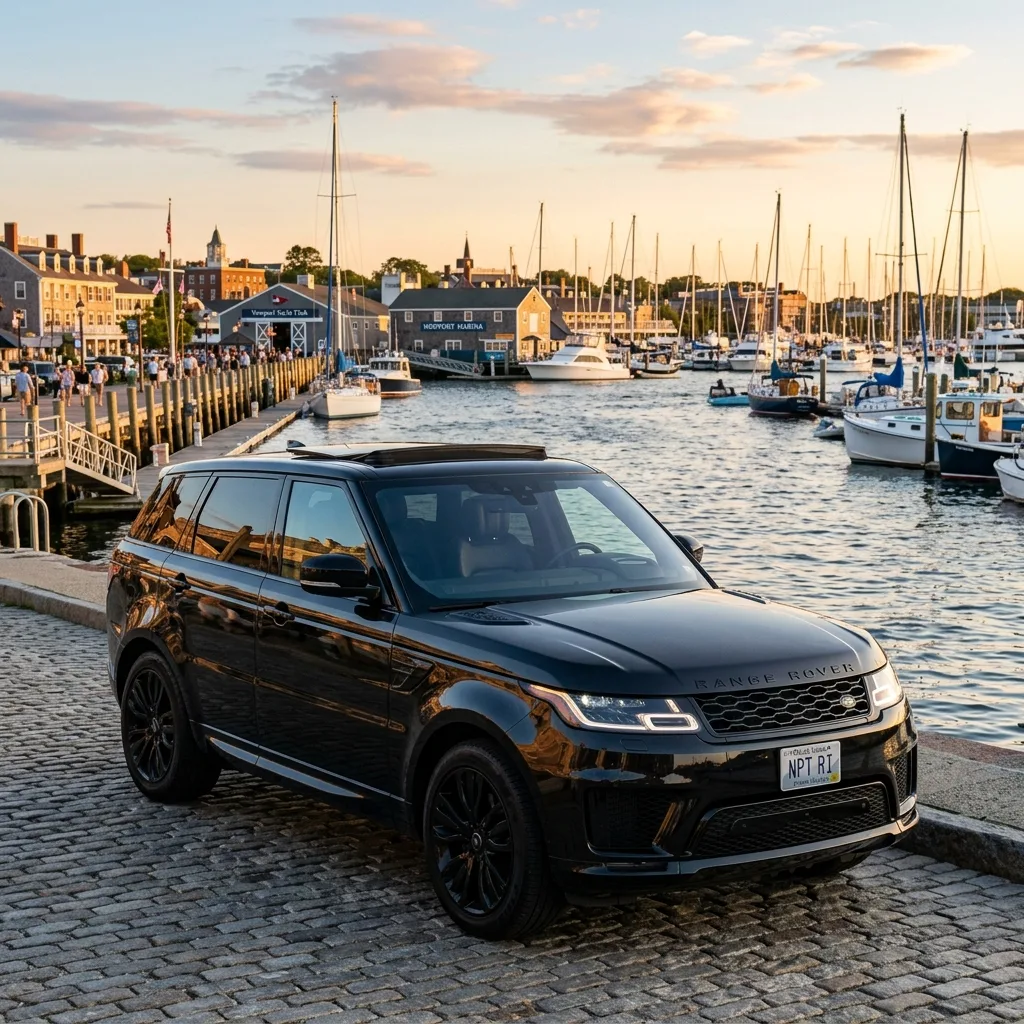
With the excise tax abolished, the entire financial comparison between staying in Rhode Island and registering through a Montana LLC now centers on two things: the 7% sales tax paid on day one, and ongoing registration costs over the life of ownership. The math is cleaner than it used to be, and at high vehicle values, it is also more lopsided than ever.
Scenario A: $110,000 BMW X5 M Competition (Warwick resident)
Scenario B: $195,000 Porsche 911 GT3 (East Side physician)
Scenario C: $420,000 Newmar King Aire Class A Diesel (Newport retiree)
Scenario D: $165,000 Ford F-450 Super Duty with Custom Commercial Upfit (Cranston contractor)
Where Montana LLC delivers the biggest returns: The savings are most dramatic at $75,000 and above, where Rhode Island’s 7% sales tax produces a bill that dwarfs the five-year Montana cost. At $150,000 and above, the structure pays for itself many times over on a single transaction.
Rhode Island’s New 2026 EV and Registration Surcharges
The same legislative session that finalized the excise tax phase-out also planted seeds for a new generation of vehicle fees. Effective January 1, 2026, Rhode Island layered three new annual surcharges onto its Rhode Island vehicle tax regime, targeting electric and hybrid vehicle owners specifically. The state framed these as “road use” fees compensating for lower fuel tax contributions from electrified vehicles. Whatever the framing, the effect is another annual bill for vehicle owners.
- $200 per year for battery electric vehicles (BEVs) — Tesla Model S, Model X, Model 3, Model Y, Rivian R1S, Rivian R1T, Lucid Air, Ford Mustang Mach-E, all fully electric vehicles
- $100 per year for plug-in hybrid electric vehicles (PHEVs) — Volvo XC90 Recharge, BMW X5 xDrive45e, Toyota RAV4 Prime, Jeep Wrangler 4xe, Range Rover P440e, etc.
- $50 per year for non-plug-in hybrid vehicles — Toyota RAV4 Hybrid, Honda CR-V Hybrid, Lexus RX 450h, Ford Maverick Hybrid, Toyota Highlander Hybrid, etc.
On top of that, Rhode Island raised its DOT registration surcharge across the board: two-year registrations went from $30 to $40, and annual registrations went from $15 to $20. And the state’s motor fuel tax climbed from 32 cents per gallon to 40 cents per gallon as of July 2025 — an 8-cent jump that hits every gas vehicle owner regardless of any other consideration.
For an EV buyer in Rhode Island, the new fee schedule produces an additional $1,000 over five years on top of the upfront 7% sales tax hit. A Tesla Model Y Long Range buyer at $54,000 pays $3,780 in sales tax at delivery, then $200 per year forever in EV fees. Five years: $4,780 in Rhode Island vehicle taxes alone, plus standard registration fees. A Rivian R1S buyer at $95,000 pays $6,650 in sales tax, plus the same $200/year EV fee — $7,650 over five years to drive a vehicle that the original federal EV incentives were designed to encourage.
PHEV buyers fare slightly better at $100/year, but the principle is the same: Rhode Island is taxing the very vehicles federal and state climate policy is supposed to be subsidizing. A 2024 Volvo XC90 Recharge buyer at $78,000 owes $5,460 in sales tax up front, then $500 over five years in PHEV fees, for $5,960 total before standard registration costs.
Montana LLC registration reduces most of this. Montana does charge its own annual EV fees — $130/year for BEVs under 6,000 lbs versus Rhode Island’s $200, and $70/year for PHEVs versus Rhode Island’s $100. Regular non-plug-in hybrids pay nothing in Montana versus Rhode Island’s $50/year. Montana-registered vehicles pay no Rhode Island sales tax, no Rhode Island EV surcharge, and no Rhode Island DOT surcharge, because they are not registered in Rhode Island. The net fee savings run $70/year for most BEV owners and $30/year for PHEV owners — stacked on top of the eliminated 7% sales tax, which is where the real money is.
Four Rhode Island Owners Who Did the Math
Case Study 1: The East Side Surgeon with the Porsche Collection

Dr. James R. of Providence’s East Side spent four years assembling a three-vehicle collection that would have made his accountant cry under the old excise tax — and which, under the surviving 7% sales tax, still produced a brutal cumulative bill. In 2022, he ordered a 2022 Porsche 911 GT3 from the local dealer at $185,000. In 2023, he added a 2023 Porsche Cayenne Turbo GT for $175,000. In 2024, he capped the collection with a 2024 Ferrari Roma at $235,000, sourced through an out-of-state Ferrari dealer that delivered to Providence.
The Rhode Island sales tax math, vehicle by vehicle:
- 911 GT3: 7% of $185,000 = $12,950
- Cayenne Turbo GT: 7% of $175,000 = $12,250
- Ferrari Roma: 7% of $235,000 = $16,450
- Total Rhode Island sales tax across three vehicles: $41,650
Dr. R. discussed the structure with his attorney before the Ferrari purchase. Each of his three vehicles was placed under a separate Montana LLC, with the existing two retitled and the Ferrari purchased directly through its dedicated LLC. Five-year Montana costs across all three (each at over $150K, so each at $2,804 over five years): approximately $8,412.
Net result: $32,062 retained instead of sent to the Rhode Island Division of Taxation. He used a portion of those savings to fund a year-long racing license at Lime Rock Park.
Case Study 2: The Newport Retiree Who Dodged a $29,400 Tax Bill

Carol and Jim S., retired from Connecticut and now spending seven months a year in Newport and the rest in Florida, decided in 2024 to upgrade from their aging Class A motorhome to a 2024 Newmar Dutch Star diesel pusher. Cash purchase, $420,000, delivered from a Newmar dealer in upstate New York. They had every intention of registering it in Rhode Island like they did with their previous coach — until their son-in-law, a tax attorney, ran the math.
Rhode Island sales tax exposure on the Dutch Star: $29,400, due within 20 days of purchase. There would be no payment plan and no exception for partial-year residents. The 7% would simply apply.
Carol and Jim formed a Montana LLC roughly six weeks before the delivery date. The LLC purchased the motorhome directly from the New York dealer. Montana title, Montana plates, Montana annual registration of approximately $282 per year. Rhode Island sales tax owed: $0. Five-year Montana cost: $2,779.
Savings versus what they would have paid as Rhode Island residents: $28,021. Carol’s response, in her own words: “We funded our entire first Alaska driving season with what we did not pay Rhode Island.”
Case Study 3: The Cranston PHEV Owner Who Got Double-Hit
Michelle L., a Cranston attorney with a long commute, bought a 2024 Volvo XC90 Recharge plug-in hybrid through her local Volvo dealer in late 2024. Sticker $78,000. Sales tax: $5,460 paid at the dealer’s finance office. She thought that was the end of it. Then her January 2026 registration renewal arrived in the mail, and there it was: a new $100 PHEV annual fee, courtesy of the 2026 surcharge schedule.
Five years out from her purchase, Michelle’s total Rhode Island vehicle tax exposure on this PHEV will be $5,460 in sales tax plus $500 in PHEV surcharges, plus standard registration fees — call it $5,960 in tax-related costs alone. The Montana alternative: $1,979 in service fees over five years, plus Montana’s $70/year PHEV surcharge ($350 over five years) — approximately $2,329 total. Net savings she missed out on: roughly $3,631.
Michelle did not retitle the Volvo (the title is in her name personally and the cost-benefit of moving it now would be marginal), but she did transfer her husband’s recently purchased $92,000 Range Rover Sport P440e PHEV to a Montana LLC immediately. Her quote: “I bought an EV to save money on fuel. Rhode Island found a new way to charge me anyway.”
Case Study 4: The Warwick Contractor Buying Private Party
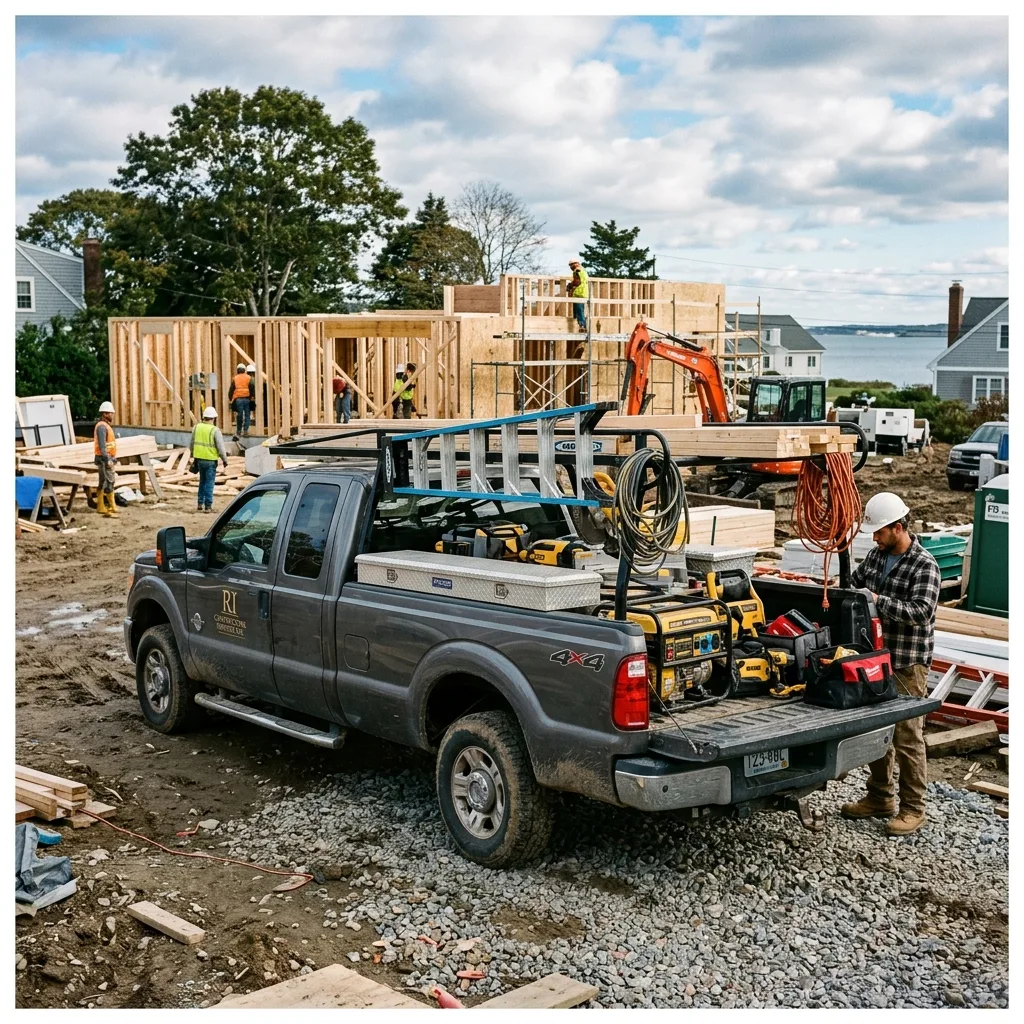
Mike D., a Warwick general contractor, bought a 2022 Ford F-250 Power Stroke from a private seller in 2024. Negotiated price: $58,000, reflecting some bed wear, a recent windshield replacement, and the seller’s need to sell quickly. Mike came to closing with a check for $58,000 plus what he assumed would be $4,060 in Rhode Island sales tax (7% of $58,000). He brought $62,500 in total to be safe.
The Cranston DMV ran the VIN. NADA Clean Retail: $72,400. Rhode Island sales tax: $5,068, calculated on the NADA value, not the price he paid. Mike’s surprise: $1,008. He paid it because he had to — the truck could not be registered without the tax check clearing.
For his next truck, Mike took a different route. In early 2026, he ordered a 2024 F-350 with custom upfit, total cost $88,000, delivered from a Maine dealer to a Montana LLC he formed specifically for the vehicle. Sales tax saved: $6,160. NADA trap avoided: not applicable, because Montana does not consult NADA on LLC purchases. He has since moved his trailer and one of his service vans into Montana LLCs as well, with each new acquisition saving him 7% off the top.
How Montana LLC Eliminates Rhode Island’s Vehicle Sales Tax

The Montana LLC structure is a legitimate use of the federal system, not a legal gray area: every state recognizes business entities formed in other states, and every state honors vehicle registrations completed in the state where a vehicle’s owner is domiciled. When a Montana LLC purchases and registers a vehicle, Montana law applies — and Montana has no vehicle sales tax, no annual property tax, and no excise tax. EV and PHEV owners pay Montana’s annual surcharge ($130/year for BEVs under 6,000 lbs, $70/year for PHEVs) — lower than Rhode Island’s equivalent fees. Standard registration runs approximately $217 to $282 per year.
Zero Tax Tags forms a single-member or multi-member Montana LLC for the vehicle owner. The LLC is a real Montana business entity with a Montana registered agent, an EIN, an operating agreement, and ongoing good standing. The vehicle is purchased by the LLC (or transferred to the LLC if previously owned). Title is issued in the LLC’s name. Montana plates are issued. The vehicle is now a Montana vehicle owned by a Montana entity, regardless of where the human behind the LLC happens to live.
Rhode Island’s response to this structure is governed by RI Gen. Laws § 31-3-4, which exempts properly registered nonresident vehicles from Rhode Island registration requirements. The vehicle is owned by a Montana entity and registered in Montana — it is, by definition, a nonresident vehicle. The state’s vehicle codes are written this way because Rhode Island, like every other state, depends on the same nonresident vehicle exemption to allow its own residents’ out-of-state second cars, parents’ visiting vehicles, college kids’ cars away at school, and so on. The legal door swings both ways.
The U.S. Constitution backs all of this through the Full Faith and Credit Clause (Article IV, §1), which requires every state to honor the public acts and records of every other state. Montana’s vehicle title, Montana’s vehicle registration, and Montana’s LLC formation are all entitled to recognition in Rhode Island. There is no provision under which Rhode Island can override Montana’s title and demand registration of the vehicle in its own jurisdiction.
A Montana LLC is not a workaround. It is a legally incorporated Montana business entity subject to Montana law. When a Montana LLC purchases and registers a vehicle, Montana’s rules apply — and Montana has no vehicle sales tax. Rhode Island law explicitly exempts nonresident-owned, properly registered out-of-state vehicles from Rhode Island registration requirements.
The complete cost picture: no Rhode Island sales tax at purchase, no Rhode Island excise tax (already abolished), no Rhode Island DOT surcharge, no NADA trap on private-party purchases. EV and PHEV owners pay Montana’s own annual surcharge instead of Rhode Island’s — at lower rates. Montana registration runs $217 to $282 per year. Vehicles 11 years old or older qualify for permanent registration in Montana — a one-time fee of approximately $200 to $412 that eliminates ongoing renewal obligations entirely.
Is This Legal in Rhode Island?
Yes. Three bodies of law say so, and they do not need each other — any one of them stands alone.
Montana’s statutes explicitly authorize any Montana LLC to own and register vehicles in Montana. Members do not have to be Montana residents. Vehicles do not have to sit in Montana for any minimum number of days. Montana collects the registration revenue and the LLC formation fees, and the legislature has shown no interest in changing the rules. Thousands of LLCs do this every year.
Rhode Island law reaches the same conclusion. RI Gen. Laws § 31-3-4 exempts any vehicle properly registered in its home state, owned by a nonresident, from Rhode Island registration requirements. The Montana LLC is a Montana entity. Its vehicles are titled and registered in Montana. Rhode Island classifies them as nonresident-owned vehicles. The exemption applies plainly.
The U.S. Constitution adds a third layer. Article IV, §1 — the Full Faith and Credit Clause — requires every state to honor the public acts and records of every other state. Montana’s vehicle registrations are public acts of Montana. Rhode Island is constitutionally required to honor them, the same way it must recognize a Texas driver’s license, a Wyoming corporation, or a New Hampshire marriage certificate.
For the structure to hold, three things must be in order: the LLC properly formed and maintained, with the registered agent active, annual report filed, and operating agreement on file; the vehicle titled in the LLC’s name, not the individual’s; and insurance in the LLC’s name, with members covered as appropriate. Zero Tax Tags handles all of this as part of the standard service.
Montana LLC registration works because the LLC is a genuine Montana business entity, not a shell. Zero Tax Tags forms every LLC as a fully compliant, properly maintained entity with a Montana registered agent and active good standing. The moment it becomes nominal paperwork without real structure, the legal foundation weakens — which is why we never cut corners on formation or maintenance.
Who Benefits Most from Montana Registration in Rhode Island

The Rhode Island vehicle tax picture, post-excise-tax-repeal, simplifies the question of who benefits from Montana LLC registration. The answer is no longer “anyone with a vehicle” (as it might have been in 2019 when Providence’s excise rate was extracting $4,000+ a year from luxury vehicle owners). It is now “anyone whose 7% sales tax bill plus EV fees plus NADA exposure exceeds the multi-year cost of running a Montana LLC.”
- Buyers of vehicles $75,000 and up — at this threshold, the 7% sales tax alone ($5,250 minimum) substantially exceeds the five-year Montana LLC cost ($1,979 for under-$150K vehicles).
- Buyers at $150,000 and up — economics here are unambiguous. $10,500 in Rhode Island sales tax versus $2,804 in five-year Montana costs (over-$150K pricing). The savings approach $7,000 minimum and grow rapidly with price.
- RV and motorhome buyers — typically the largest single-purchase savings of any vehicle category. A $420,000 Class A coach saves $28,021 over five years through Montana LLC registration.
- EV buyers — avoid both the 7% sales tax AND the new $200/year Rhode Island EV fee, plus the $40 DOT surcharge increase.
- PHEV and hybrid buyers — same logic as EVs, with $100/year and $50/year fees respectively.
- Luxury and collector car owners maintaining multiple vehicles — savings compound across each vehicle in a collection.
- Private party buyers of late-model vehicles — the NADA trap can add $1,000 to $5,000 to a tax bill on used vehicles. Montana LLC purchases avoid NADA entirely.
- Cars of Particular Interest buyers — collector and classic cars where Black Book or NADA values exceed purchase price.
- Part-year residents and snowbirds — those splitting time between Newport, Florida, Arizona, or other states find Montana registration logistically simpler than juggling state requirements.
A few situations where it does not make sense:
- Vehicles under $50,000 where total five-year savings may not meaningfully exceed Montana costs after factoring in the inconvenience of out-of-state plates.
- Buyers planning to sell within 12 months — the LLC structure is designed for multi-year ownership; short holds reduce the savings ratio.
- People with strong reasons to maintain Rhode Island registration — some commercial situations, certain insurance products, or specific personal circumstances where Rhode Island plates are genuinely required or strongly preferred.
The Zero Tax Tags Process

Zero Tax Tags handles every step from initial consultation through the moment your Montana plates arrive at your door. Our pricing is fixed, transparent, and structured to match the value of the vehicle being registered.
| Under $150K: | Year 1 setup is $899 (includes $699 service fee plus $200 LLC formation costs). Annual renewal in years 2 and beyond is $270 per year ($150 registration plus $120 annual filing). Five-year total: $1,979. |
| Over $150K: | Year 1 setup is $1,724 (reflecting Montana’s tiered registration fee on higher-value vehicles). Annual renewal is $270 per year. Five-year total: $2,804. |
| 11+ years old: | Permanent registration available — one-time fee of approximately $200 to $412 with no ongoing annual renewal. Particularly valuable for collector, classic, and long-hold vehicles. |
What is included in every package: Montana LLC formation, EIN issuance, operating agreement, registered agent service for the first year, vehicle title transfer, Montana plate issuance, and document delivery. What is required of you: providing vehicle details, identification documents, and signatures on a small set of forms.
Timeline: From Decision to Montana Plates
| Day 1: | Consultation call. We confirm your vehicle details, your situation, and whether Montana LLC registration is genuinely the right structure for you. If it is not, we will say so. |
| Day 2: | LLC formation filed with the Montana Secretary of State. The LLC name is reserved and the entity comes into existence. |
| Days 3–5: | EIN obtained from the IRS. LLC operating agreement finalized and executed. Registered agent service activated. |
| Days 5–7: | Title application prepared with the Montana Motor Vehicle Division. If purchase is occurring through the LLC, dealer or seller documents are coordinated. |
| Days 7–14: | Montana plates and registration documents are processed and shipped. Insurance can be reissued in the LLC’s name during this window. |
| Week 3: | Plates arrive. Mount them on the vehicle. You are now legally driving on Montana registration, paying $0 in Rhode Island sales tax and $0 in any RI vehicle surcharges. |
Who gets the most out of a Montana LLC
The Montana LLC structure delivers the strongest returns to Rhode Island vehicle owners whose purchases carry significant sales tax exposure. High-value purchases — luxury vehicles, exotic cars, Class A motorhomes, large sport-fishing boats — generate the largest Rhode Island tax bills, so the savings are most dramatic there. A $150,000 vehicle saves nearly $10,000 on day one. A $420,000 motorhome saves nearly $30,000.
Multi-vehicle households and collectors benefit particularly well because a single Montana LLC can hold any number of vehicles, boats, RVs, and trailers under one $270/year renewal. Snowbirds traveling between Rhode Island and Florida or the Carolinas, retirees with lake or mountain property in other states, and business owners whose vehicles cross state lines regularly all have ownership patterns that make the structure straightforward and compelling.
Call our team to walk through the math on your specific vehicle. We turn every inquiry into a real savings calculation.
Frequently Asked Questions
Rhode Island eliminated the excise tax — does Montana LLC still make sense?
Yes. The 7% sales tax is still charged on every purchase with no cap. A $200,000 vehicle produces a $14,000 sales tax bill. Montana LLC eliminates that sales tax entirely. The savings are strongest at $75,000 and above, and at $150,000 and above the structure pays for itself many times over on a single purchase. Contact our team and we will run the numbers on your specific vehicle.
Can I insure my vehicle with Montana plates while living in Rhode Island?
Yes. Multiple national carriers and several specialty Montana-LLC-friendly insurers provide proper coverage with the LLC as the named insured and the human members listed as covered drivers. We routinely connect clients to insurance providers who handle this structure as standard business.
Does Montana registration affect my Rhode Island driver’s license?
No. Your driver’s license is tied to your residency, not your vehicle’s registration. You remain a Rhode Island licensed driver. The vehicle is a Montana-registered vehicle owned by a Montana LLC. Those are separate categories of registration that do not interact.
What do Rhode Island police see when they run Montana plates?
They see a properly registered Montana vehicle, current registration, and an LLC owner of record. There is nothing unusual or alarming in the database. Tens of thousands of Montana LLC vehicles drive on roads in every other state every day. Traffic stops, where they happen, are routine and produce no issue.
Is the Montana LLC a one-time setup or ongoing?
Ongoing. The LLC must be maintained — annual report filed with Montana, registered agent kept current, operating agreement updated as needed. Zero Tax Tags handles all of this as part of the $270/year renewal package, so the ongoing burden on the client is essentially zero apart from forwarding any mail we send.
Can Montana LLC help me with Rhode Island’s new EV fees?
Partially, and meaningfully. Montana charges its own EV surcharges — $130/year for BEVs under 6,000 lbs versus Rhode Island’s $200, and $70/year for PHEVs versus Rhode Island’s $100. Regular non-plug-in hybrid owners pay nothing in Montana versus Rhode Island’s $50/year. You swap Rhode Island’s fees for Montana’s lower ones: $70/year in savings for most BEV owners, $30/year for PHEV owners. The DOT surcharge does not apply to Montana-registered vehicles. But the main savings are always the 7% sales tax — that is where the real money is.
What if Rhode Island questions my Montana registration?
The legal foundation is solid: RI Gen. Laws § 31-3-4 explicitly exempts properly registered nonresident vehicles, and the Full Faith and Credit Clause requires Rhode Island to recognize Montana titles. In the unlikely event of questions, the LLC formation documents, Montana title, and registration paperwork are the complete answer. We have experienced legal partners who handle inquiries when they arise — which is rarely.
Can I buy a new vehicle from a dealer through my Montana LLC?
Yes. Most dealers — including local Rhode Island dealers — are entirely comfortable selling to a Montana LLC. The LLC is the buyer of record on the bill of sale. No Rhode Island sales tax is collected at the dealer level because the buyer is a nonresident entity. The vehicle is delivered, titled in Montana, and registered in Montana. We coordinate this directly with dealerships when needed.
See how Montana LLC registration helps vehicle owners across high-tax states:
- Connecticut Vehicle Tax 2026: The Municipality Trap
- Massachusetts Excise Tax 2026: The $25-Per-$1,000 Trap
- Arizona Vehicle License Tax: Stop Paying $1,000+ Every Year
- Virginia Car Tax: Highest Vehicle Tax in America
Ready to Stop Paying Rhode Island’s 7% Vehicle Sales Tax?
Rhode Island eliminated the excise tax. Montana LLC eliminates the sales tax. Together, that’s the complete picture for smart vehicle buyers in the Ocean State.