25 min read
California vehicle tax is the silent wealth-extraction system that drains billions of dollars from California car owners every single year. If you have ever opened a registration renewal envelope from the California DMV and felt your stomach drop, you already know the truth: California does not just tax your vehicle once when you buy it. It taxes you again every twelve months for as long as you own it, on a depreciation schedule that punishes anyone who dares to drive something nicer than a base-trim sedan.
The Vehicle License Fee (VLF) alone costs California vehicle owners more than $3 billion annually. Stack that on top of the highest sales tax rates in the country, mandatory smog inspections, county add-on fees, transportation improvement fees, and the brand-new 2026 zero-emission vehicle surcharge, and the picture becomes painfully clear. The Golden State is golden for the tax collector, not for you.
This guide breaks down exactly how the California vehicle tax system works, why it punishes successful people disproportionately, and how thousands of California residents are now legally registering their vehicles in Montana to escape it entirely. We will walk through real case studies, real numbers, and the precise process Zero Tax Tags uses to set up a Montana LLC that owns your vehicle and pays zero California vehicle tax for as long as you own it.
On this page
- + The Renewal Envelope That Ruins Your Week
- + Understanding California Vehicle Tax: What Is the VLF
- + The Real 5-Year Cost of California Vehicle Tax
- + Why California’s System Is Uniquely Brutal
- + Who Gets Hit Hardest by California Vehicle Tax
- + The Montana Solution: How It Works
- + Is This Legal? An Honest Discussion
- + Who Benefits Most from Montana Registration
- + Our Process at Zero Tax Tags
- + Day-by-Day Timeline
- + Frequently Asked Questions
- + Conclusion: Stop Funding Sacramento
The Renewal Envelope That Ruins Your Week
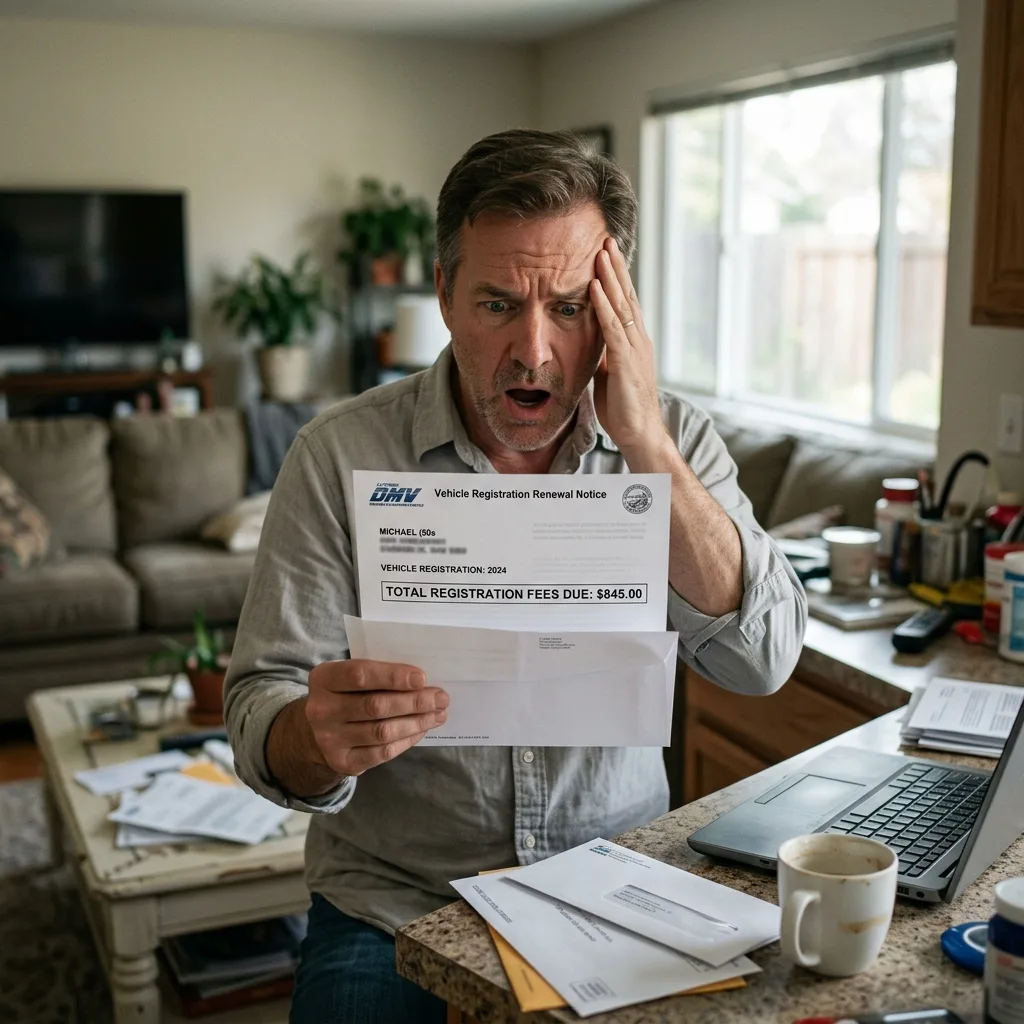
You walk to the mailbox on a Tuesday in May. Among the catalogs and credit card offers is an envelope with the unmistakable bear-and-banner logo of the California Department of Motor Vehicles. You already know what is inside, but you tear it open anyway, hoping that this year will somehow be different. It never is.
The number staring back at you is $904. Or $1,247. Or, if you bought that new Range Rover last year, somewhere north of $1,800. And this is just to keep your vehicle legal on California roads for another twelve months. You have not driven a single mile yet. You have not bought a gallon of gas. You have not paid a dime in tolls. This is just the price of admission, the cover charge to participate in the California driving experience.
For most California residents, this annual ritual has become so normalized that they barely question it. They mutter, write the check, and move on. But here is what they do not realize: the California vehicle tax they are paying is not a fixed cost. It is a calculated percentage of their vehicle’s depreciated value, designed to extract the maximum possible revenue from anyone who owns anything more valuable than a 1997 Camry. And it compounds. Year after year after year.
If you own a $80,000 SUV, you will pay roughly $4,000 in VLF alone over five years, on top of the $7,000 to $8,200 sales tax you already paid at purchase. If you own a $150,000 luxury vehicle, that five-year VLF burden climbs to $9,750. And if you live in Los Angeles County, where the combined sales tax rate is 10.25 percent, the upfront sales tax on that same $150,000 vehicle is a staggering $15,375.
Understanding California Vehicle Tax: What Is the VLF
The Vehicle License Fee, universally known as the VLF, is the centerpiece of the California vehicle tax system. It was created in 1935 as an in-lieu property tax, meaning Sacramento decided that since cities and counties could not impose property tax on vehicles directly, the state would do it for them and remit the proceeds. Today, the VLF is set at 0.65 percent of the vehicle’s market value, and that value is recalculated every single year using a state-mandated depreciation schedule.
Here is the cruel mathematical reality. The VLF starts at 100 percent of the vehicle’s purchase price in year one. The depreciation schedule then knocks the assessed value down each subsequent year, but the schedule is far slower than real-world depreciation. In year two, the assessed value drops to 90 percent of the original. Year three, 80 percent. Year four, 70 percent. The schedule continues for eleven years before the vehicle is finally considered fully depreciated for VLF purposes, at which point the fee bottoms out at $1.
That is eleven full years of paying the California Department of Motor Vehicles a percentage of what you originally paid for the car. For a $100,000 vehicle, that translates to roughly $5,200 in cumulative VLF over the life of the depreciation schedule. For a $200,000 vehicle, the lifetime VLF burden exceeds $10,400. And remember, this is in addition to the sales tax you already paid at purchase, the registration fee, the California Highway Patrol fee, the Transportation Improvement Fee, county-level surcharges, and the new 2026 zero-emission vehicle surcharge if you drive electric.
Let us break down a real California registration renewal for a $80,000 vehicle in 2026:
And that does not include the smog check fee of approximately $68 to $71 every two years for any vehicle from model year 2006 or newer. It does not include parking fees, tolls, gas tax (the highest in the nation at over 60 cents per gallon), or the privilege of waiting in line at your local DMV office.
The Real 5-Year Cost of California Vehicle Tax
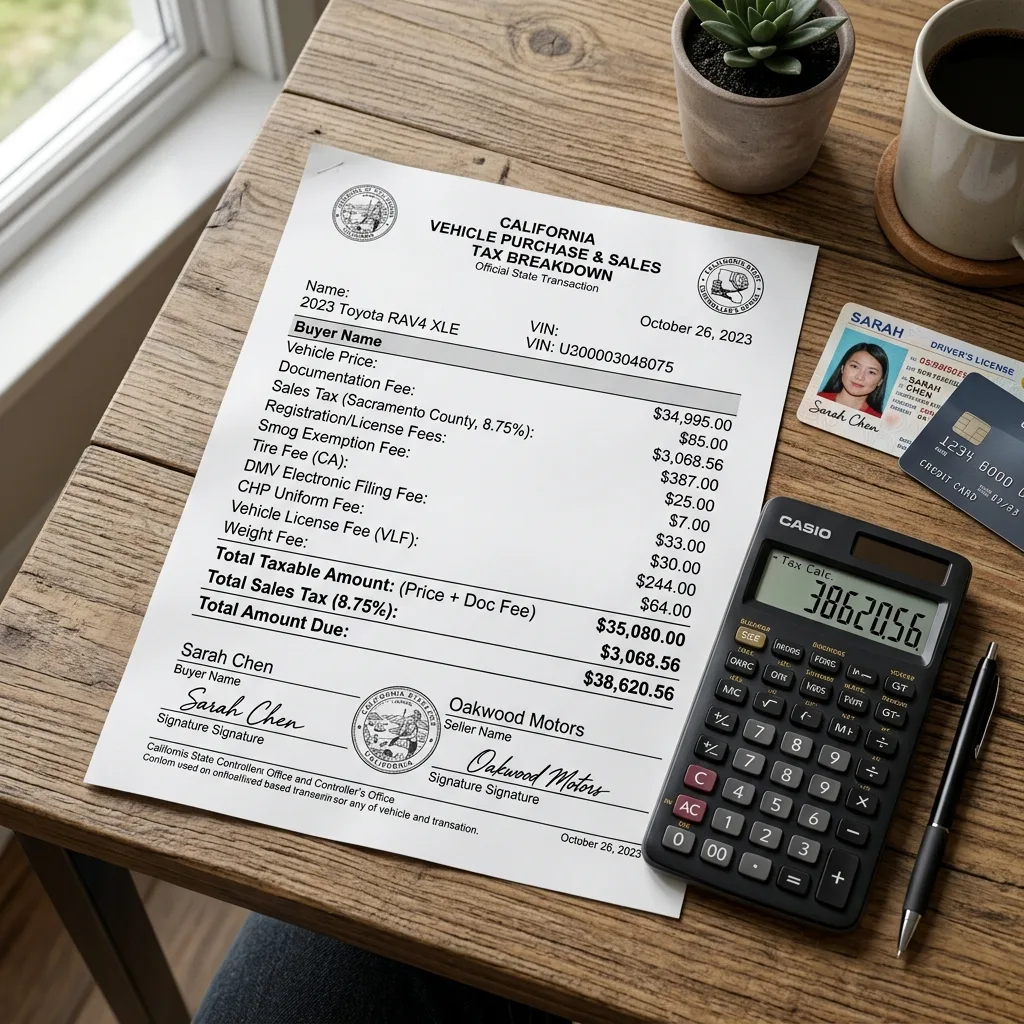
The annual numbers above are bad enough, but they tell only a fraction of the story. To truly understand what the California vehicle tax system costs you, we have to look at the full five-year ownership picture, which combines the upfront sales tax bomb with the ongoing VLF and registration grind.
Here is what owning various popular vehicles actually costs California residents over five years, including sales tax at purchase plus all annual registration costs:
Read those numbers again. A Class A motorhome owner in San Diego County will pay nearly $50,000 in California vehicle tax over five years. Fifty thousand dollars. That is the price of a brand-new pickup truck, paid to the California government for the privilege of owning a vehicle you already paid for in cash.
And keep in mind, these numbers assume you sell the vehicle after five years. If you keep it longer, the VLF keeps coming. Year six, year seven, year eight. The depreciation schedule is so slow that you continue paying meaningful VLF amounts for over a decade.
The brutal truth: California’s combined sales tax and VLF system extracts more lifetime tax from a vehicle owner than almost any other state in the union. A buyer in Texas pays a one-time 6.25 percent sales tax and minimal annual fees. A buyer in Montana pays zero sales tax and a flat registration fee. California stacks 10.25 percent sales tax on top of an annual 0.65 percent depreciation tax that lasts eleven years.
Why California’s System Is Uniquely Brutal
Plenty of states impose vehicle taxes. Virginia has its personal property tax. Arizona has its VLT. North Carolina has its highway use tax. But California has built something different, something more aggressive, more layered, and more difficult to escape than any other state’s system. The California vehicle tax regime is uniquely brutal for four interconnected reasons.
First, the sales tax stacking. California’s base state sales tax of 7.25 percent is already the highest in the nation. But cities and counties pile on. Los Angeles County hits 10.25 percent. Parts of Alameda and Santa Clara counties exceed 10.5 percent. San Francisco sits at 8.625 percent. San Diego is 7.75 percent. These rates apply to the full purchase price of the vehicle, with no cap. Buy a $300,000 McLaren in Los Angeles and you hand the state $30,750 before you ever turn the key.
Second, the VLF compounds annually on top of that. Most states either tax you upfront with sales tax or annually with property tax. California does both. You pay the sales tax bomb at purchase, and then you pay the VLF every year for eleven years on top of it.
Third, the use tax loophole is closed. California enforces aggressive use tax provisions designed to catch residents who try to buy vehicles out of state to avoid sales tax. If you buy a vehicle in Oregon (which has no sales tax) and bring it to California within twelve months, you owe the full California use tax equivalent to the sales tax you would have paid in California. The California Department of Tax and Fee Administration actively investigates these cases.
Fourth, the smog check regime adds friction and cost. Every vehicle from model year 2006 or newer requires a biennial smog inspection at $68 to $71 per visit. Older vehicles, modified vehicles, and certain emissions-equipped diesels face even more stringent requirements. Fail the smog check and you cannot renew registration. Cannot afford the repair? Tough.
Layer on top of all of this the new 2026 zero-emission vehicle surcharge of $100 per year, which California rolled out specifically to compensate for the gas tax revenue lost from EVs, and you have a system designed to extract maximum revenue from every possible angle. Drive electric? Pay the surcharge. Drive gas? Pay the gas tax. Drive a luxury vehicle? Pay the inflated VLF. Live in LA? Pay the 10.25 percent sales tax. There is no escape within California’s borders.
Who Gets Hit Hardest by California Vehicle Tax
The California vehicle tax system is regressive in the way that all percentage-based vehicle taxes are regressive: the more valuable your vehicle, the more you pay. But certain groups feel the pain in particularly acute ways. Let us look at four real-world case studies of California vehicle owners and what they discovered when they ran the numbers.
Case Study 1: The San Francisco Tech Executive
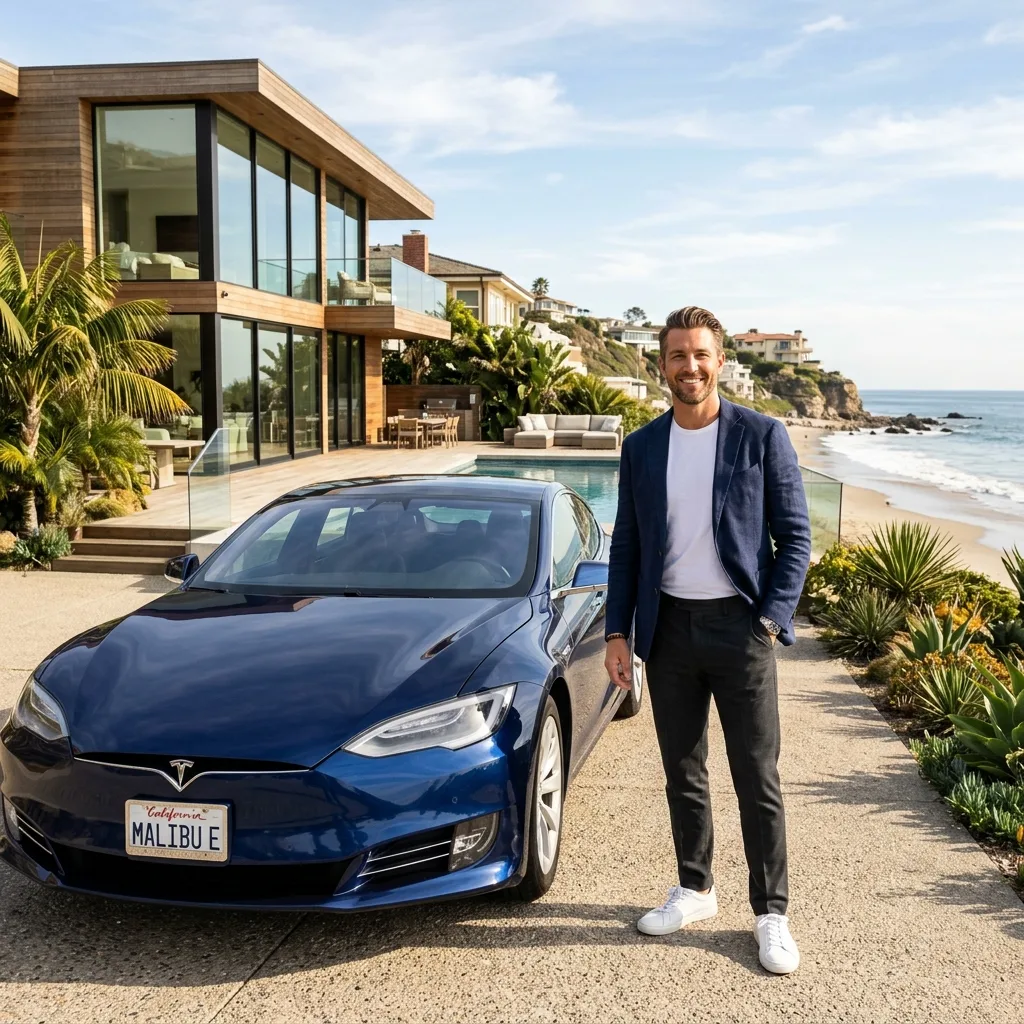
Marcus runs product engineering at a venture-backed startup in SoMa. After a successful Series C, he and his wife decided to upgrade their two-vehicle household. They picked up a Tesla Model S Plaid for $220,000 and a Rivian R1T fleet truck spec’d at $180,000 for adventure trips and ski runs to Tahoe. Combined purchase price: $400,000.
San Francisco’s combined sales tax rate of 8.625 percent meant Marcus and his wife handed the State of California $34,500 in sales tax at purchase. Their first-year VLF on the two vehicles totaled $2,600. Add registration fees, CHP fees, the new EV surcharge on both vehicles, and Transportation Improvement Fees, and their first-year total California vehicle tax burden exceeded $40,700.
When Marcus ran a five-year projection, the number hit him like a Plaid acceleration launch: $56,000+ in cumulative California vehicle tax. He called Zero Tax Tags the same week. Both vehicles were retitled to a Montana LLC. Total Montana setup cost for both vehicles using our luxury tier service: roughly $3,400 combined. Annual renewal cost: $736 total for two vehicles. Estimated five-year savings versus staying in California: more than $50,000.
Case Study 2: The Los Angeles Surgeon
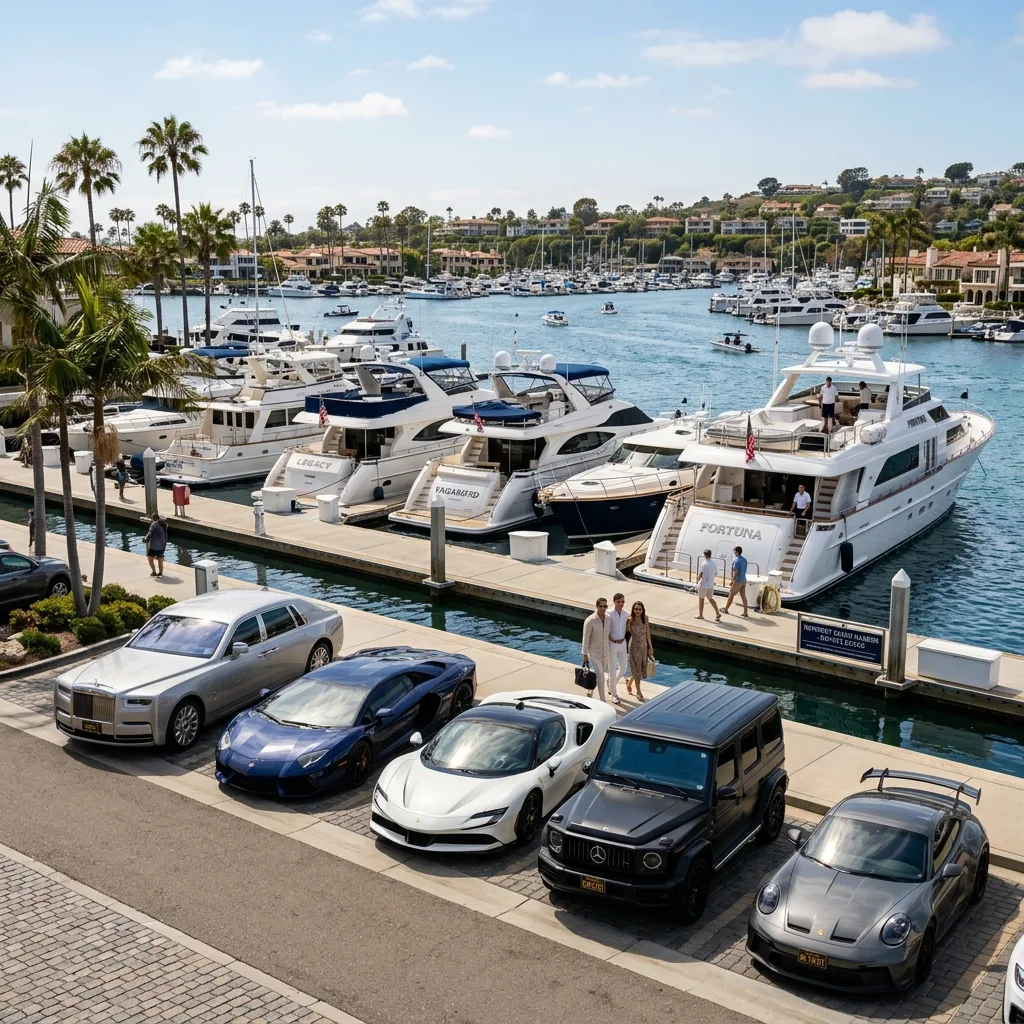
Dr. Lin is a cardiothoracic surgeon at a Beverly Hills hospital. Her two-car garage holds a Ferrari 488 GTB she picked up for $185,000 and a Bentley Bentayga family hauler at $95,000. She is in LA County, where the combined sales tax rate is 10.25 percent. The Ferrari alone cost her $18,963 in sales tax at purchase. The Bentley added another $9,738. Total upfront sales tax: $28,701.
Annual VLF on the two vehicles in year one came in at approximately $1,820. Add registration, CHP, TIF, and county fees, and her annual non-fuel California vehicle tax burden was nearly $2,400. Five-year projection: more than $53,000 in California vehicle tax between the two cars.
Dr. Lin retitled both vehicles to a Montana LLC through our luxury tier service. Year one cost: roughly $3,448 for both vehicles. Annual renewal: $736. The Ferrari is a weekend driver, primarily seen on Pacific Coast Highway and at track days at Buttonwillow. The Bentley handles school runs and grocery store duty. Both wear Montana plates. Total five-year California vehicle tax savings: more than $48,000.
Case Study 3: The Sacramento Valley Farmer
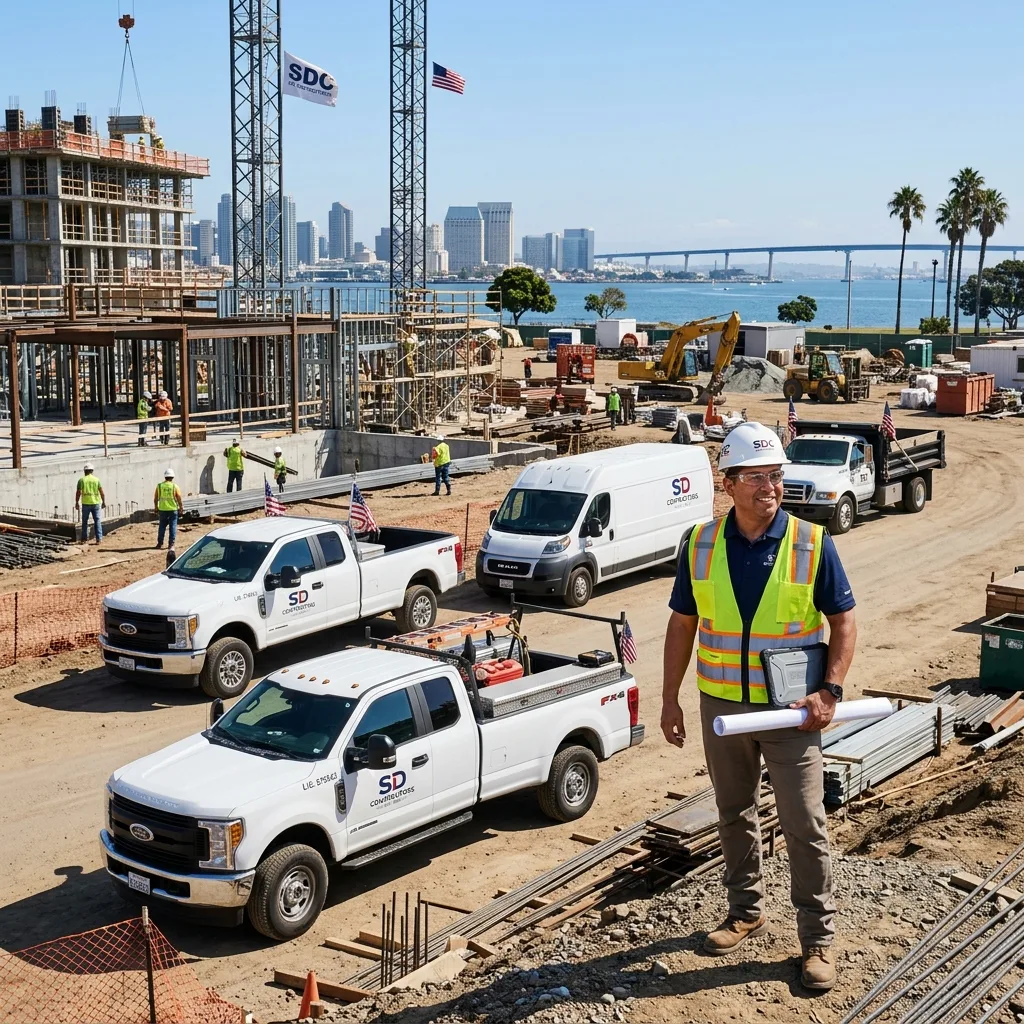
Jake operates a 1,800-acre almond and walnut operation in Sacramento Valley. His fleet includes three heavy-duty diesel trucks (a 2018 Ford F-450 dually, a 2016 Ram 3500 work truck, and a 2014 Chevy Silverado 3500), a 24-foot utility trailer, and a Polaris RZR ATV used for property inspection and irrigation work.
Jake’s pain points are different from the urban executives. His older diesel trucks face the most aggressive smog check requirements California imposes. Each truck needs a smog certification every two years, and his 2014 Silverado has failed twice in the last five years, requiring expensive emissions repairs. His three trucks together cost him approximately $1,650 in annual registration. The trailer adds another $90 per year. The ATV requires off-highway vehicle (OHV) registration at $54 every two years.
Jake retitled all three trucks, the trailer, and the ATV to a Montana LLC. The trailer and ATV qualified for permanent Montana registration, meaning a single one-time fee with zero annual renewal forever. The trucks moved to standard annual Montana renewal at far lower cost than California, and most importantly, no smog inspection is required by the state of Montana. Jake estimates his annual savings at $1,400 plus the elimination of smog-related repair anxiety.
Case Study 4: The San Diego Retiree Couple
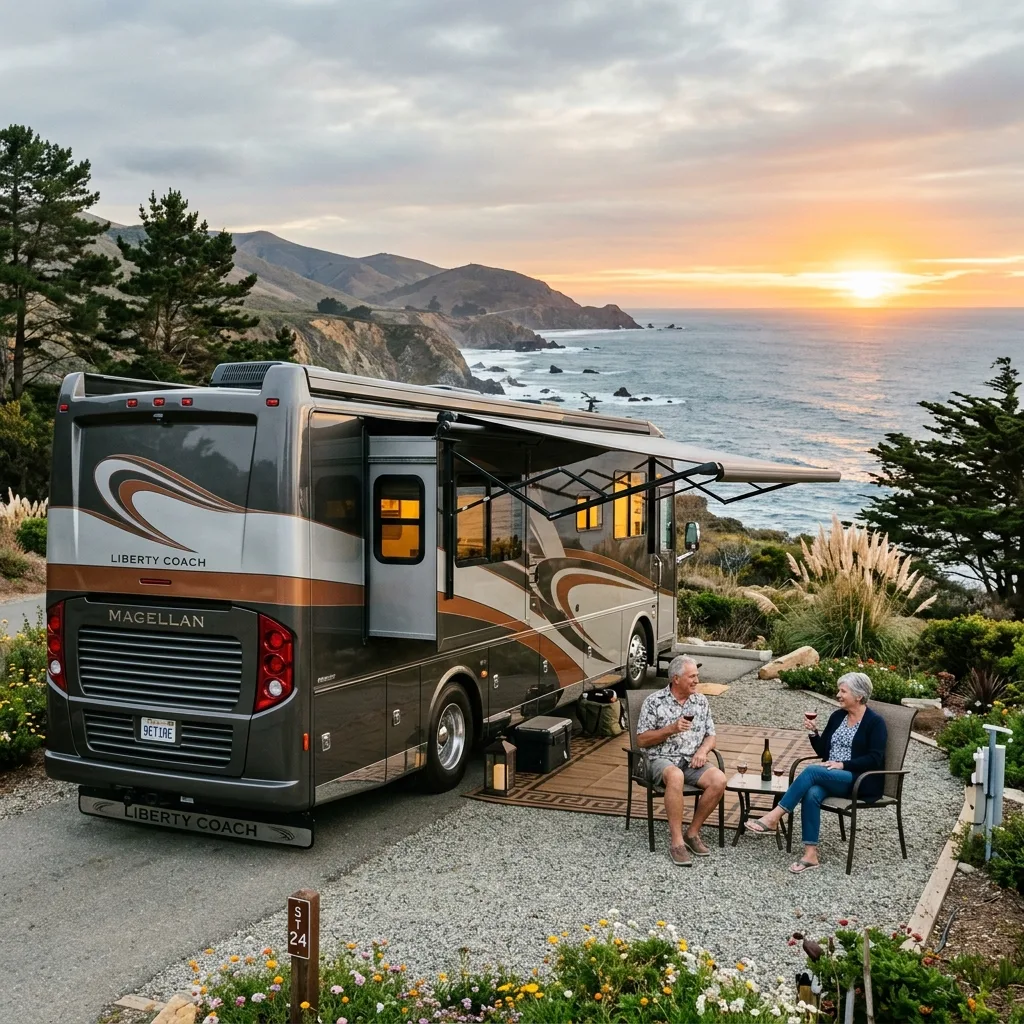
Bill and Carol retired from careers as a structural engineer and a school principal, respectively. They bought their dream Class A motorhome, a 45-foot diesel pusher with a sticker of $395,000, and a Jeep Wrangler tow vehicle for adventure days off the beaten path. They live in San Diego County, where the combined sales tax rate is 7.75 percent.
The motorhome alone hit them with $30,613 in sales tax at delivery. The Wrangler added another $3,488. Their first-year VLF on the motorhome was $2,568 by itself. They expect to keep the coach for ten to fifteen years and are projecting more than $45,000 in cumulative California vehicle tax over a ten-year ownership horizon.
Bill and Carol set up a Montana LLC through our RV-specialized service tier. The motorhome was registered with permanent Montana registration. The Jeep was registered annually under the same LLC. Total ten-year savings projection compared to California: well over $45,000. Bill calls it the best decision of their retirement, second only to selling the suburban house and buying the coach itself.
The Montana Solution: How It Works
Here is the core insight that the California vehicle tax system does not want you to understand: vehicles are taxed based on where they are registered, not where they are physically located. And the entity that owns the vehicle is what gets taxed, not the human who drives it. If a Montana limited liability company owns the vehicle and registers it in Montana, then Montana law governs the registration and Montana taxes apply.
Montana taxes are the inverse of California taxes. There is no state sales tax. There is no Vehicle License Fee. There is no annual depreciation-based property tax on vehicles. There is no smog inspection requirement. There is no county-level surcharge stacking. There is, in short, none of the structural apparatus that makes California ownership so expensive.
The mechanics of the Montana solution are straightforward. We form a Montana limited liability company on your behalf. The LLC has a Montana mailing address (provided by us as your registered agent). The LLC owns the vehicle, which means the title is in the name of the LLC. The LLC registers the vehicle with the Montana Motor Vehicle Division, paying the standard Montana registration fees, which are flat and dramatically lower than California’s percentage-based system.
Your vehicle now wears Montana plates. You drive it wherever you want. The LLC, not you personally, is the legal owner. You are a member of the LLC and have full use of the LLC’s property, which is the vehicle. This is identical to how rental car companies, fleet operators, dealerships, and corporations have registered vehicles for decades. It is a recognized, well-established legal structure.
For certain vehicle types, Montana goes one step further. Motorcycles, ATVs, UTVs, trailers, and boats are eligible for permanent registration regardless of age. That means a single one-time registration fee with zero annual renewal, zero VLF, zero anything, for as long as you own the vehicle. Regular passenger vehicles, trucks, and SUVs become eligible for permanent registration when they reach eleven years of age.
The bottom line: Montana has built a registration system that is friendly to vehicle owners. California has built one that is hostile to vehicle owners. Montana welcomes your business. California treats your wallet like a renewable resource.
Is This Legal? An Honest Discussion
This is the question every prospective client asks, and it deserves a careful, honest answer. The short version is yes. The longer version requires a clear understanding of how vehicle registration law actually works in the United States.
Vehicle registration is a function of ownership. The legal owner of the vehicle, as identified on the title, is the entity required to register it. If that entity is a person, registration generally happens in the state where the person is domiciled. If that entity is a corporation or LLC, registration happens in the state where the entity is organized and has its principal place of business. This is bedrock American property law and corporate law, going back centuries.
Montana LLCs are real legal entities. They file Articles of Organization with the Montana Secretary of State. They have a registered agent in Montana. They have an Employer Identification Number from the IRS. They can open bank accounts, sign contracts, sue and be sued, and yes, own property including vehicles. None of this is exotic or unusual. Montana has more than 100,000 active LLCs.
When a Montana LLC owns a vehicle, that vehicle is registered in Montana because Montana is where the LLC is organized. This is exactly how Hertz registers its rental fleet, how Penske registers its truck fleet, how every commercial vehicle leasing company in America operates. The Montana LLC structure is identical in legal substance to those commercial structures.
Now, what about the famous California “use tax” question? California’s use tax statute imposes a use tax equivalent to the sales tax on vehicles brought into California within twelve months of out-of-state purchase if the vehicle is used primarily in California. This statute applies to individual residents purchasing vehicles in their own name. It does not apply to vehicles owned by out-of-state corporate entities used in interstate commerce or for business purposes.
What this means in practice is that the Montana LLC structure must be set up properly. The LLC must be a legitimate, properly maintained legal entity. The vehicle must be titled to the LLC, not to you personally. Insurance must be in the LLC’s name. Registration documents must be kept current. This is exactly what Zero Tax Tags handles for you, and it is why working with experienced professionals matters.
Hundreds of thousands of vehicles are registered in Montana under LLC ownership. Many of them are owned by California residents who use them in California. The structure has been used for decades, including by celebrities, business executives, professional athletes, and ordinary working professionals who got tired of subsidizing Sacramento.
Who Benefits Most from Montana Registration
Not every California vehicle owner needs to take this step. If you drive a five-year-old Toyota Corolla worth $14,000, the math is not particularly compelling. Your VLF is modest, your annual costs are tolerable, and the savings would be marginal. Montana registration shines brightest for specific categories of California vehicle owners. Here is the honest breakdown.
Luxury vehicle owners. If your vehicle is worth $80,000 or more, the percentage-based VLF and the upfront sales tax bomb make California ownership painfully expensive. Owners of Range Rovers, Porsches, Mercedes S-Class, BMW 7-Series, Audi RS models, Lexus LX, and similar vehicles routinely save $1,500 to $4,000 per year in California vehicle tax through Montana registration.
Exotic and supercar collectors. If you own a Ferrari, Lamborghini, McLaren, Bentley, Rolls-Royce, or any other exotic over $150,000, the savings are dramatic. The 10.25 percent LA sales tax alone on a single $250,000 supercar is $25,625, and the annual VLF runs $1,625 in year one. Montana registration eliminates both. Collectors with multi-vehicle garages save five-figure amounts annually.
Electric vehicle owners. California’s new 2026 ZEV surcharge adds $100 per year on top of all other fees, and most EVs (Teslas, Rivians, Lucids) are luxury-tier vehicles with high VLF burdens. EV owners often see the largest percentage savings from Montana registration because they avoid the surcharge, the sales tax, and the inflated VLF in one move.
RV and motorhome owners. Class A and Class C motorhomes commonly cost $200,000 to $500,000+. The sales tax bomb at delivery alone can exceed $50,000 in high-tax counties. RVs are also typically used for travel across multiple states, which makes Montana registration particularly logical. RVs registered in Montana wear Montana plates and can travel anywhere in the country, including back to California, indefinitely.
Farmers, ranchers, and rural fleet operators. California’s smog check regime is brutal on older diesel trucks. Farmers running 2010-vintage Cummins-powered Rams, Power Stroke F-Series, or Duramax Silverados often face costly smog repairs and frequent failures. Montana has no smog inspection requirement, period. Plus the lower registration costs add up across multi-vehicle fleets.
Powersports and trailer owners. Anyone who owns motorcycles, ATVs, UTVs, side-by-sides, boats, jet skis, or trailers benefits enormously from Montana’s permanent registration option. One fee, paid once, no renewal ever. California charges these vehicles every year in perpetuity.
Snowbirds and second-home owners. Many California residents spend significant time in Arizona, Nevada, or Idaho. If your vehicle is genuinely used across multiple states, Montana registration through an LLC reflects the reality of multi-state usage and eliminates the awkwardness of California’s domiciled-resident rules.
Our Process at Zero Tax Tags
Zero Tax Tags has been helping vehicle owners escape predatory state tax regimes for years. Our process is engineered for simplicity. You handle two things: gather your vehicle documents and sign a few forms. We handle everything else, end to end, including the LLC formation, the title transfer paperwork, the Montana DMV submission, the registration, the plate issuance, and the registered agent service in Montana.
Here is exactly what is included in our service tiers, with transparent flat-fee pricing.
Annual renewal pricing is flat and predictable: approximately $270 per year. For vehicles eligible for permanent Montana registration (motorcycles, ATVs, UTVs, trailers, boats, and any standard vehicle that reaches eleven years of age), the registration is one-time only with no annual renewal at all.
Compare that to California. Five-year total California vehicle tax on a $80,000 SUV including the upfront sales tax: roughly $9,800. Five-year total cost through Zero Tax Tags for the same vehicle: $899 plus four annual renewals at $270, totaling $1,979. Net savings: more than $7,800 over five years on a single vehicle.
Day-by-Day Timeline
From the moment you call Zero Tax Tags to the day Montana plates arrive at your door, the process typically takes about fourteen calendar days. Here is what happens, day by day.
| Day 1: | Submit your MCO and supporting paperwork through our secure portal. We review for completeness and file your Montana LLC the same day. |
| Days 1–2: | Montana LLC formation complete — same business day in most cases, second business day at the latest. |
| Days 2–4: | Title transferred into the LLC name at the Montana county treasurer. |
| Days 4–7: | Permanent Montana plates shipped directly to your door within 3–5 business days of title completion. |
Throughout the process, you have a dedicated account specialist who answers questions, provides updates, and ensures every document is correct before submission. There is no waiting in DMV lines, no figuring out Montana’s forms, no chasing down paperwork. We do all of it.
Frequently Asked Questions
How much will I actually save with a Montana LLC?
The savings depend on your vehicle’s value and your county’s sales tax rate. A typical $80,000 vehicle owner in California saves $7,000 to $9,000 over five years. A $200,000 luxury vehicle owner in LA County saves $25,000 to $35,000. RV and motorhome owners often save $40,000 to $60,000 over a ten-year ownership horizon. We provide a custom savings projection during your initial consultation based on your specific vehicles and county.
Can I drive my Montana-registered vehicle in California?
Yes. Montana-registered vehicles can be driven anywhere in the United States, including throughout California. The vehicle is the property of a Montana LLC, and Montana LLCs operate vehicles across all fifty states every day, just like rental car companies and corporate fleets do.
What about insurance?
Your insurance gets updated to reflect the Montana LLC as the named insured, with you as a covered driver. Most major insurance carriers (Progressive, State Farm, Geico, Allstate, USAA, Liberty Mutual, and many specialty insurers) handle this routinely. We coordinate the insurance transition as part of our service so you experience zero gap in coverage.
Do I need to travel to Montana?
No. The entire process is handled remotely. Zero Tax Tags serves as your registered agent in Montana, files all paperwork on your behalf, and ships your plates directly to your home. You never set foot in Montana unless you want to vacation there (which we recommend, it is gorgeous).
What about smog checks?
Montana does not require smog inspections. Once your vehicle is registered in Montana, it is no longer subject to California’s biennial smog check requirement. This is a particular benefit for owners of older diesel trucks, modified vehicles, and classic cars.
Which vehicles qualify for permanent Montana registration?
Motorcycles, ATVs, UTVs, side-by-sides, snowmobiles, trailers, and boats qualify for permanent Montana registration regardless of age. Standard passenger vehicles, trucks, and SUVs become eligible for permanent registration once they reach eleven model years of age. Permanent registration means a single one-time fee with zero annual renewal, ever.
How do I handle vehicle inspections or smog tests if my vehicle is registered in Montana?
You do not need to. Montana has no smog or safety inspection requirement at the state level. Your registration renewal is purely administrative and is handled by us through your annual renewal service. There is no inspection to schedule, no test to pass, no facility to visit.
What does ongoing maintenance look like after the first year?
Very little is required from you. We send you a renewal reminder thirty days before your registration expires. You confirm the renewal and pay the flat annual fee (approximately $270 per year, or zero for vehicles on permanent Montana registration). We file the paperwork, renew the registration, and ship new tags directly to you. The entire annual renewal takes you about two minutes.
Conclusion: Stop Funding Sacramento
The California vehicle tax system is not going to get cheaper. Sacramento is not going to wake up one morning and decide to repeal the VLF, or scale back the sales tax, or eliminate the new ZEV surcharge. The political incentives all run the other way. California’s budget depends on extracting revenue from vehicle owners, and every legislative session brings new fees, new surcharges, and new ways to tap into the pool of money sitting in your driveway.
You have two choices. You can keep paying. You can keep writing checks to the DMV every year, keep watching your VLF compound for eleven straight years, keep handing over 7.25 to 10.5 percent of every new vehicle you ever buy. You can keep funding a system that views your wallet as a public utility.
Or you can do what thousands of California vehicle owners have already done. You can form a Montana LLC, register your vehicles in a state that does not have a vehicle tax, and keep that money in your own family’s hands. The math is not complicated. The legality is not in doubt. The process, handled by Zero Tax Tags, takes about two weeks.
The first vehicle you register in Montana is the one that proves the system works. The second one feels obvious. By the third one, you wonder why you ever did it any other way. Your friends notice. Your accountant notices. Most importantly, your bank account notices.
See how Montana LLC registration helps owners in other high-tax states:
- Arizona Vehicle Tax: How to Stop Paying $1,000 Every Single Year
- Virginia Vehicle Tax: Stop Paying the Highest Vehicle Tax in America
- Nevada Vehicle Tax: The 8.25% Hidden Cost Nobody Tells You About
Ready to Stop Overpaying California Taxes?
California vehicle owners have saved millions with Montana LLC registration. You’re next.
More California Vehicle Tax Solutions
Moving to California
avoid the DMV vehicle tax trap (2026 guide)
Failed Smog Check
How Montana Plates End the Emissions Nightmare
Firing the DMV
The Real Cost of Waiting in Line Instead of Dri…
California UTV Street Legal 2026
The CARB Trap and Montana’s Tax-Free Alte…
California Killed Your Diesel
Truck. Montana Brings It Back to Life.
California Registration Penalties
How to Escape the $2,000 Trap
California Vehicle Tax 2026
The VLF Trap and Why Smart Money Is Leaving
California ATV & UTV Registration 2026
Skip the 7.25% Tax with Montana LLC