22 min read
On this page
The envelope arrives like a jury summons. Pale blue, cold to the touch, California DMV seal, four words that ruin a perfectly good Tuesday: SMOG CERTIFICATION REQUIRED. For most people, that means a quick stop at Jiffy Lube. For you, staring down a failed smog check on a Stage 2 tuned MK5 Supra, a cammed third-gen Camaro, an air-cooled Porsche with long-tube headers, or an M3 with a JB4 piggyback behind the glovebox, it means dread.
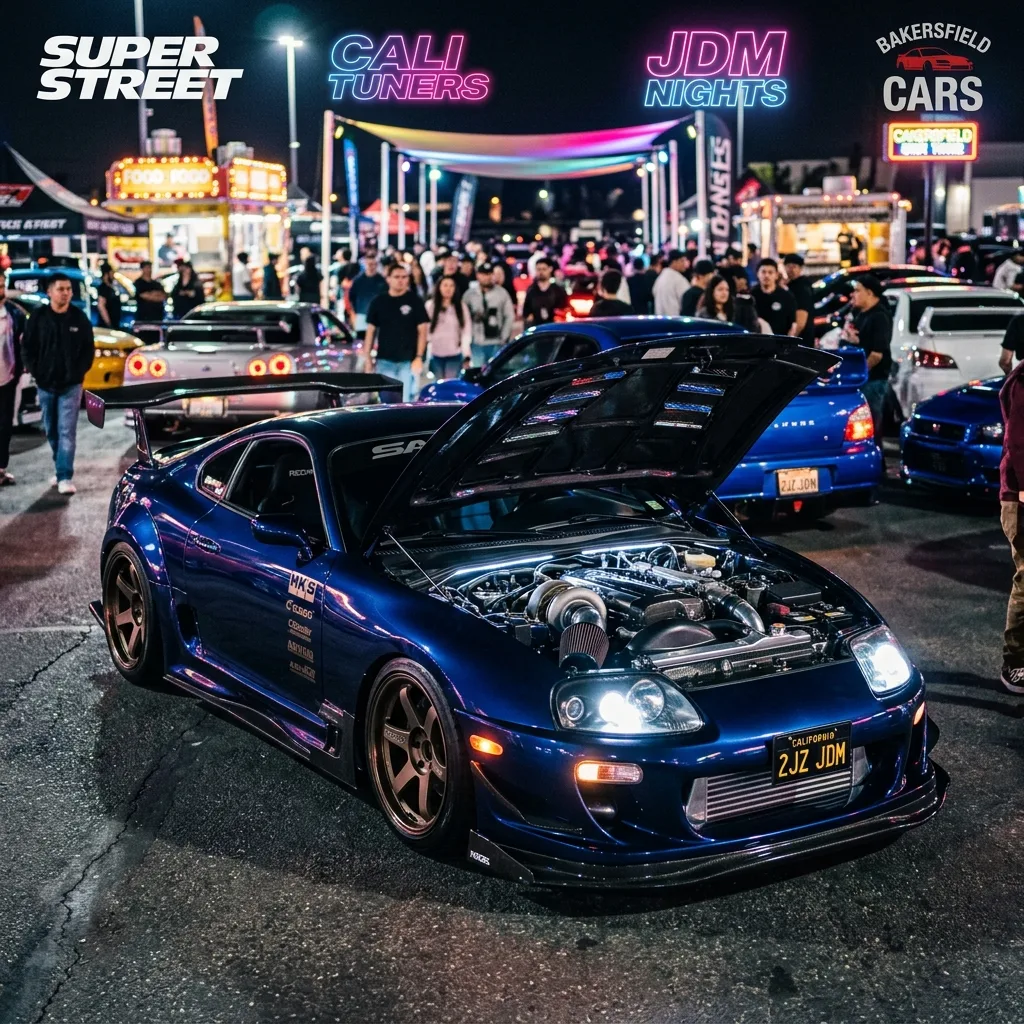
You run a checklist before you even open it. Do I still have the stock cats in the attic? Did the ECU monitors finish their drive cycle since the last battery disconnect? Is that intake CARB legal or just JDM-legal? Will the technician be the chill one, or the new guy with a clipboard who measures every exhaust hanger like he is auditing the Pentagon?
The brutal truth: California’s smog system is no longer a tailpipe test. It is a software audit, a parts inventory, and a visual inspection rolled into one inquisition where any deviation from factory original is grounds for a fail, even if your car emits cleaner air than the room you are standing in. A failed smog check today is rarely about pollution. It is about paperwork. And that paperwork is why ZeroTaxTags and a Montana LLC have become the lifeline for serious enthusiasts across California, from San Jose to San Diego.
The California smog machine: how CARB built a system designed to fail you
To understand why your car keeps failing, you have to understand who built the system. The California Air Resources Board is the most aggressive emissions regulator on the planet. Standards the EPA considers aggressive, CARB treats as a starting point. The practical effect on the enthusiast in the driveway is something most owners do not understand until the day they fail their first smog test on a part that does not even affect emissions.
The mechanism is the CARB Executive Order (EO). Every aftermarket part installed on a 1976 or newer California-registered vehicle must carry a CARB EO number proving the part has been tested and approved as not increasing emissions. Intakes, exhausts, tunes, headers, throttle bodies, even certain valve covers. Getting a CARB EO costs a manufacturer ten to fifty thousand dollars per part and takes six to eighteen months. Most aftermarket manufacturers, especially smaller specialty shops, simply do not bother. They sell the part with an “Off-Road Use Only” sticker, and the compliance burden falls on you.
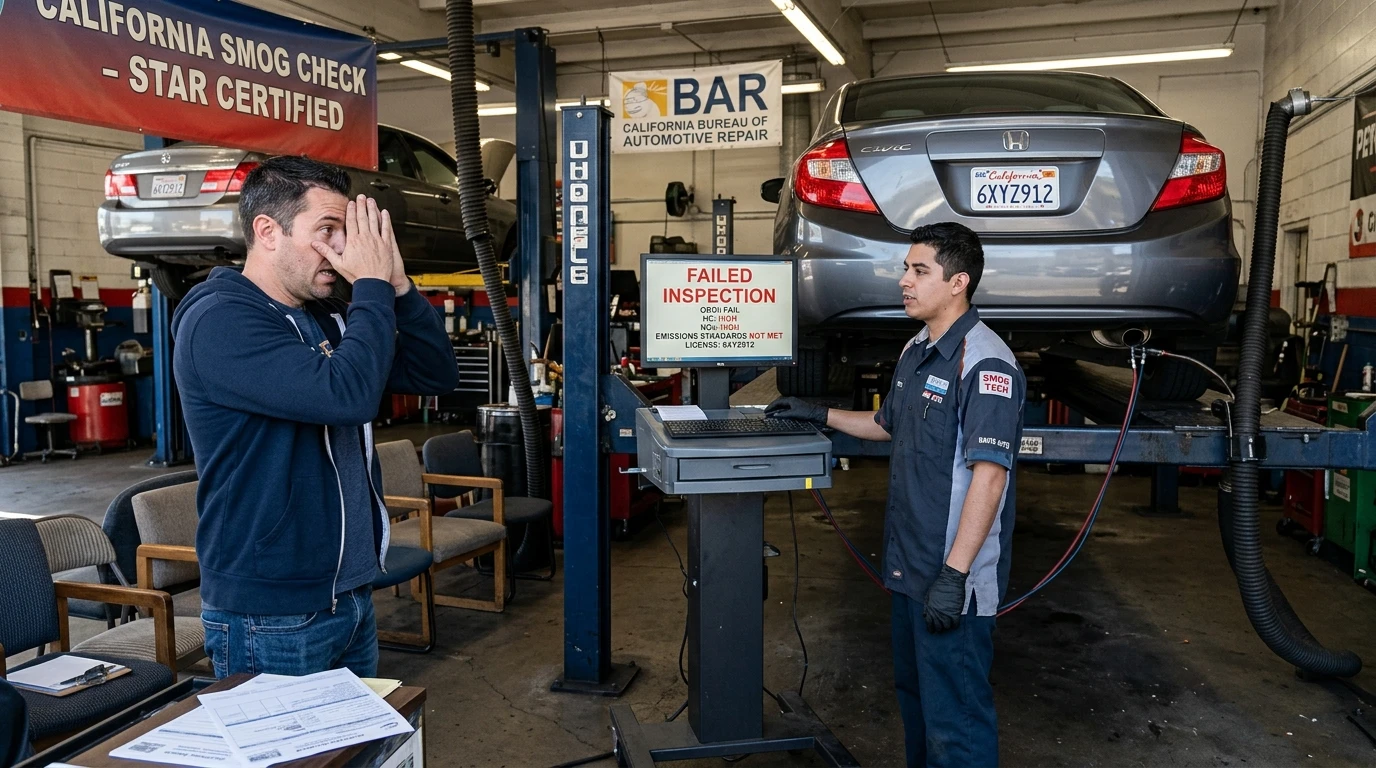
The visual inspection trap catches modified owners off guard. A smog technician must visually inspect every emissions-related component. If your cold air intake lacks a CARB EO sticker, the technician fails the vehicle, regardless of tailpipe numbers. The sticker is the entire game.
And then July 2021 happened. California Bureau of Automotive Repair stations began rolling out the ECU and CVN scan, short for Engine Control Unit calibration verification number scan. Modern smog stations now read the actual calibration ID burned into your ECU and compare it against a database of factory-approved calibrations. If your car has been tuned in any way, the calibration ID will not match. Automatic fail. A Stage 1 tune on a WRX. A JB4 on an M3. A Cobb Accessport flash on a GTI. A piggyback on a 911 Carrera. None of those pass a 2025 ECU scan. Even if your tune actually reduces emissions, even if your tailpipe numbers are spotless, the calibration ID is the kill switch.
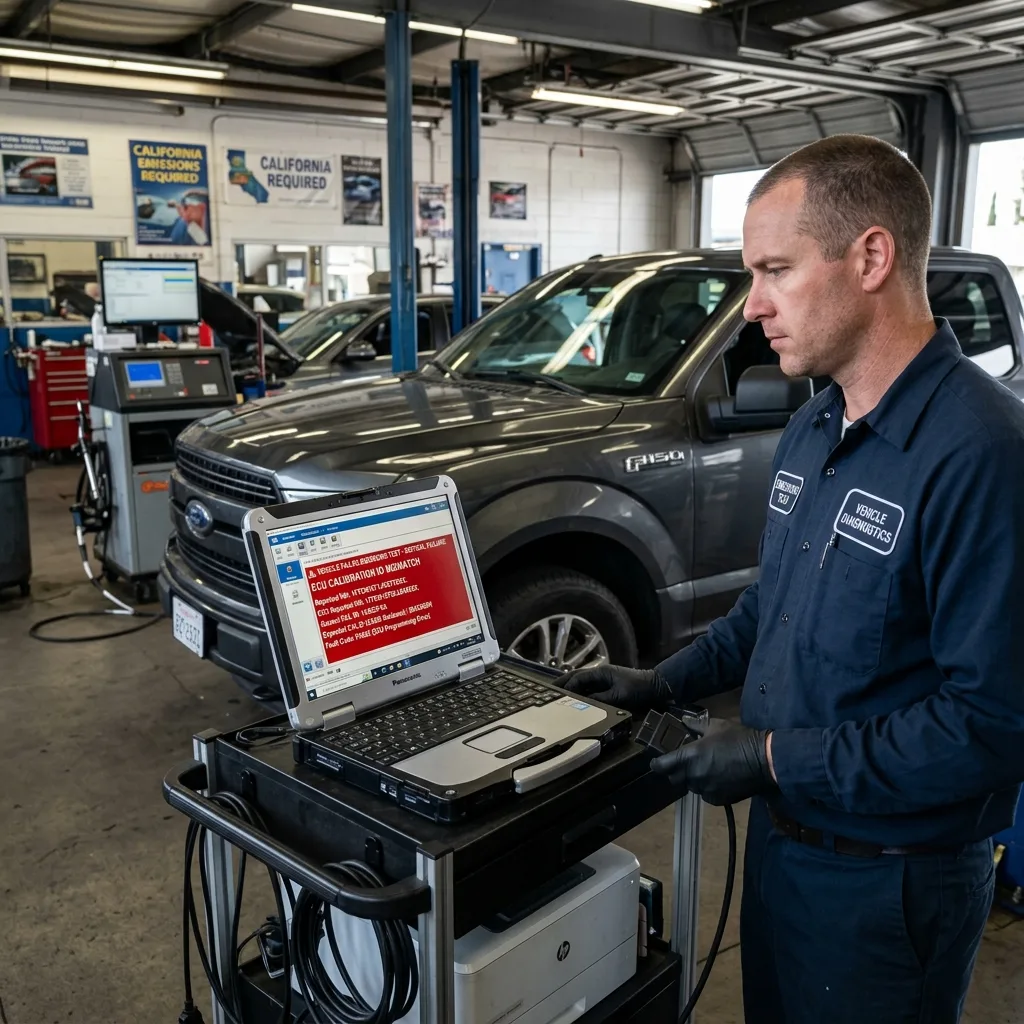
The workaround owners attempt is to flash back to stock before the inspection. Flashing to stock resets every OBD II readiness monitor, and you cannot pass smog with monitors that read “incomplete.” Resetting all the monitors requires a specific drive cycle covering city driving, highway driving, cold starts, and steady-state cruising — anywhere from 150 to 400 miles depending on the vehicle. As of October 1, 2025, California tightened the screw further. Every single monitor must be set. The previous allowance of one incomplete monitor is gone. Zero tolerance.
The failure rates tell the story better than any rant. The Bureau of Automotive Repair publishes data showing exactly how vehicles of different ages perform.
The modified-vehicle failure rate is not officially tracked separately, but mechanics in the Bay Area routinely report that ninety percent of tuned cars walking through their door fail the visual or the ECU scan on first attempt.
The financial sting of fixing a failure is its own special torture. A California-compliant catalytic converter runs between $1,200 and $3,000 per cat for popular V6 and V8 engines — many vehicles need two of them. A federal-only cat from a national parts retailer? $400 to $1,500. Same emissions reduction, different sticker. The difference is pure CARB tax.
The referee nightmare: why the Bureau of Automotive Repair is not your friend
When you fail at a regular Smog Check station, the technician has limited authority. They cannot override the equipment or grant exceptions. What they can do is refer you to the State Smog Referee program, a network of inspection stations operated through the Bureau of Automotive Repair (BAR) and select community college automotive programs.
On paper, the Referee program sounds like salvation. The Referee can review modified vehicles, evaluate swap documentation, certify Specially Constructed Vehicles, and grant exceptions. In practice, the experience is usually closer to standing in a DMV line with a title written in Spanish and a clerk who speaks only Mandarin.
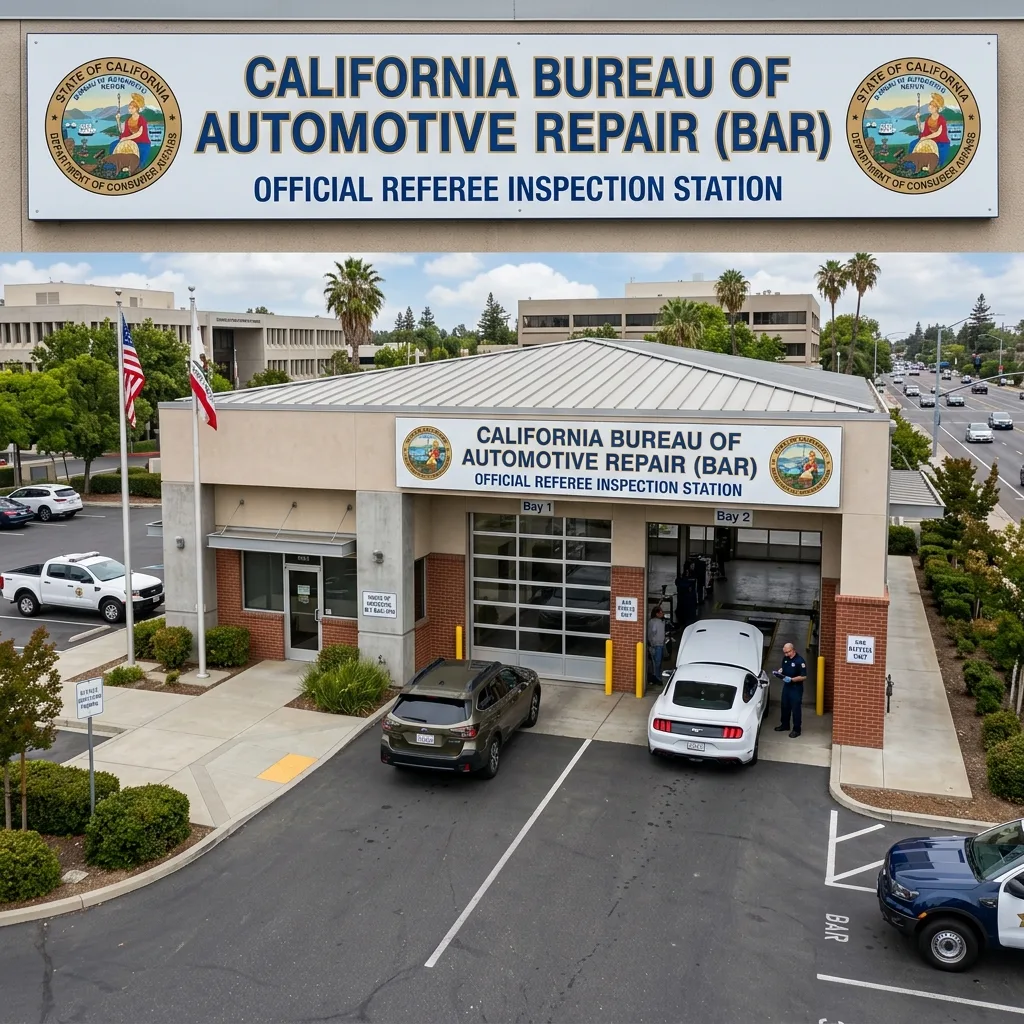
The fee runs $8 to $50, but appointments are scheduled two to six weeks out — longer in major metro areas. You will need stacks of documentation: parts receipts, EO numbers for every aftermarket component, photographs, and engineering certifications for engine swaps. The outcome is not guaranteed. Owners have driven three counties to an appointment six weeks out and been turned away because a single bolt did not match documentation.
The Catch-22 is the real horror. If the Referee determines your vehicle cannot be made compliant, that determination becomes part of your DMV record. The car can be flagged as un-registerable in California. Your only legal options become restoring to factory spec at enormous expense, selling out of state, or having it destroyed. There is a reason most modified-car shops in California refuse to even mention the Referee program.
Then there is the dream that never came true. Enthusiasts cheered for SB 712 and SB 1392, the bills known collectively as Leno’s Law, named for Jay Leno’s advocacy for classic and modified vehicle owners. The proposals would have expanded the smog exemption from the current 1976-and-earlier cutoff to a rolling 30 or 35-year exemption. Both bills stalled in committee. Neither moved to a floor vote. CARB lobbied aggressively against expansion, citing emission models that independent analysts later showed assumed worst-case scenarios for vehicles that almost never get driven. There is no rolling exemption coming.
The geography trap: why you can’t just drive across the county line
One of the first questions enthusiasts ask is whether they can simply register the car in a friendlier state. The answer is more complicated than the questioner hopes.
California has the strictest emissions standards in the world. Within California, even tighter sub-jurisdictions exist, including the South Coast Air Quality Management District (Los Angeles and Orange Counties) and the Bay Area Air Quality Management District (nine counties in Northern California). These districts coordinate directly with CARB on enforcement priorities.
California Vehicle Code creates a residency presumption for vehicles owned by California residents — but when a Montana LLC holds title, the vehicle’s owner is a Montana entity, not a California resident. That distinction matters. What enforcement targets is something simpler: people who slap out-of-state plates on a car with no legitimate out-of-state structure at all — no LLC, no real registration, just a fake address. License plate readers photograph millions of vehicles daily, and the CHP issues citations to drivers running fraudulent out-of-state plates with no underlying legal entity to back them up.
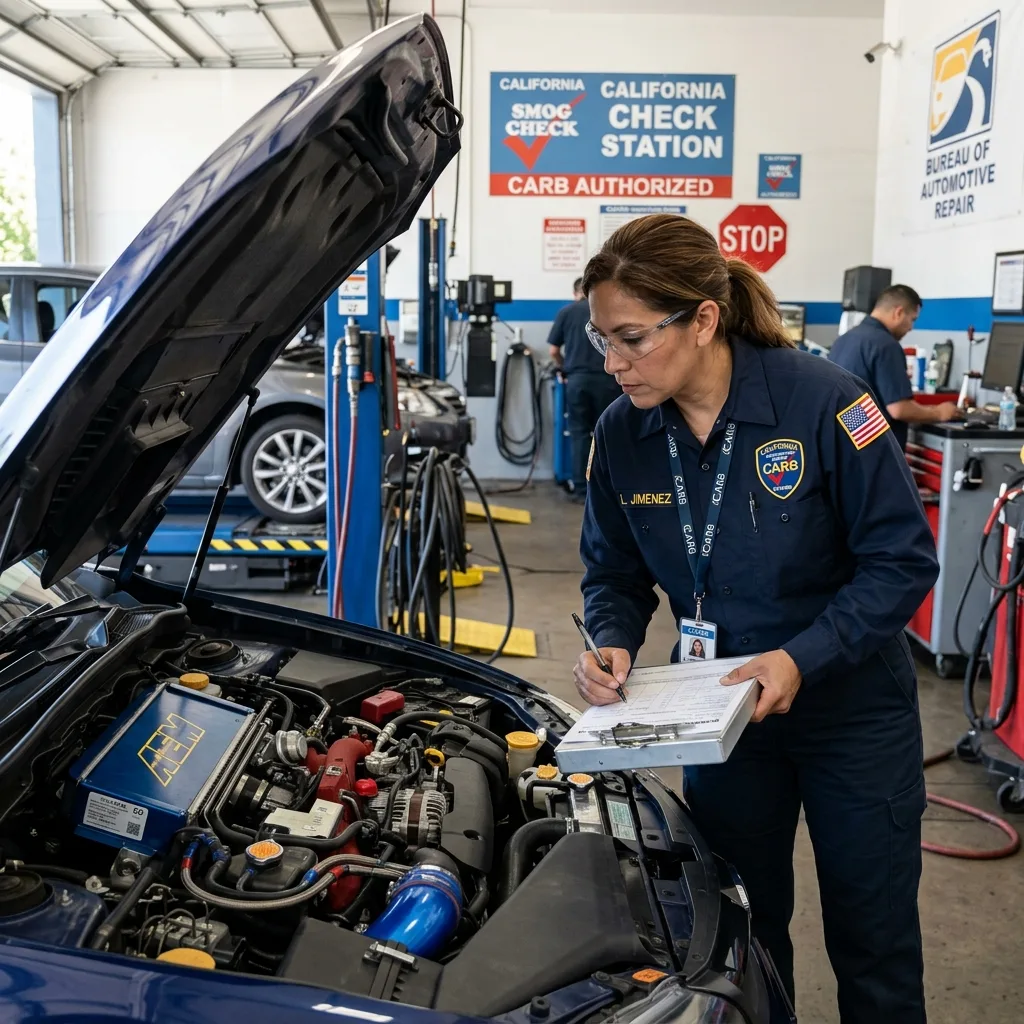
The geography shapes which enthusiast communities get hit hardest. The San Jose JDM scene — Honda, Toyota, Subaru, Nissan tuners — has produced more failed smog stories per capita than anywhere else in the state. Newport Beach and Huntington Beach host the SoCal tuner crowd: Porsche owners running track-prep cars, a thriving stance scene where most vehicles fall outside CARB compliance the moment the suspension drops. The Central Valley has its diesel truck crisis, where Cummins-swapped Fords and DPF-deleted Duramaxes face the gauntlet every registration cycle. Bay Area vintage collectors in Marin, Napa, and Sonoma get hammered for visual non-compliance even on stock 1970s and 1980s European cars.
There is no California county where the smog problem is solved. The trap is statewide, and the only way out is to genuinely register the vehicle out of state with a real legal connection. That is what Montana LLC registration, properly done, is designed to do.
The garage queen tragedy: cars loved too much to drive
There is a quiet tragedy playing out in garages across California. People are not driving the cars they love, because the next smog inspection is coming up and they know one trip down the wrong stretch of road might be the last legal mile that car ever sees.
We talk to owners every week who have a beautiful, running modified car parked for 18, 24, sometimes 36 months because registration is suspended pending compliance. Six-figure builds. A widebody E46 M3 with a stroker motor and CSL rework. A first-gen NSX with a supercharger kit. A Foxbody with a Coyote swap. Cars owners spent ten years assembling, sitting unused because California has effectively criminalized their existence on its streets.

Then there is the dedicated track car. The car that has not turned a wheel on a public road in three years, lives on a trailer, goes from garage to Buttonwillow to Willow Springs to Sonoma and home, never touching public asphalt. California still expects an annual smog cert. Planned Non-Operation status costs money, requires forms, and still does not free the car from future smog obligations the moment registration reactivates.
Collectors live a cruel version of this. We work with a client in Marin County who owns five cars. A 2015 Tesla, exempt. A 2010 Fit, passes easily. A 1999 BMW M3 with cams and a chip, fails the ECU scan automatically. A 1989 Porsche 944 Turbo S with chipset and headers, fails both visual and ECU scan. A 1970 Plymouth Cuda, exempt because pre-1976. Three of five are legal to drive. The Cuda, ironically, is the most-driven of the bunch because California gave the Hemi a permanent pass while taking the German engineering hostage.
The Montana solution: why a Big Sky plate is the permanent answer
Montana has no general sales tax, no smog inspection, no annual emissions testing of any kind, and a permanent vehicle plate program for any vehicle 11 years old or older. Permanent. Pay once, never renew. The plate stays on the bumper for the life of the vehicle — no expiration sticker, no biennial inspection, no paperwork.
The legal mechanism is simple. You form a Montana LLC, the LLC owns the vehicle, the vehicle gets registered in Montana under the LLC’s name, and Montana issues plates. No inspection. No emissions test. No aftermarket parts review. No ECU calibration scan. Montana does not care. Montana never has cared.

The permanent plate is the killer feature. For any vehicle 11 years old or older, Montana issues permanent registration: pay the fees once, the plate is yours forever. For newer vehicles, registration runs annually at a fraction of California’s costs, with no smog ever required. This is exactly why Montana has been the destination for high-end RVs, exotics, and modified vehicles for decades.
Pricing through ZeroTaxTags is straightforward. Year one is $899 total: $699 for full-service formation, registration, plates, and admin setup, plus $200 for the Montana LLC formation filing. Year two and after is $270 per year — $150 for your Montana registered agent and $120 for the annual LLC renewal. No annual smog fee, no Vehicle License Fee.
Run the math. Most modified-car owners easily spend $800 or more per year chasing California compliance — cat replacements, ECU flashes, dyno tuning, inspection-day parts swaps, smog station visits, Referee fees. Montana pays for itself before the end of year two, and every year after that you save money outright while driving your car the way you built it.
The Vehicle License Fee elimination is its own line item. California’s VLF is 0.65 percent of depreciated vehicle value, annually. On a $45,000 Supra, that is roughly $290 year one. On a $180,000 911 GT3, it is over $1,000 per year. Across five years on a high-value vehicle, the VLF savings alone often dwarf the entire ZeroTaxTags fee.
Is it legal? Montana LLC registration in 2026
This is the section everyone wants to read first. The short version: Montana LLC registration is fully legal under federal law and Montana state law. Whether it is legal for a particular California resident depends on the facts — and the facts are everything.
Federal law has long permitted multi-state vehicle registration. The U.S. Constitution’s Commerce Clause and decades of court precedent confirm that states cannot bar their residents from owning property registered in another state, and they cannot interfere with another state’s authority to issue vehicle registrations to entities formed under that state’s laws. Montana has the right to issue plates to LLCs formed in Montana. That right is not in dispute.
Start with who owns the vehicle. When you register through ZeroTaxTags, the vehicle is owned 100% by a Montana LLC — not by you personally. That LLC is formed under Montana law, maintains a registered agent at a Montana address, files annual reports with the Montana Secretary of State, and is a Montana entity in every legal sense. It has Montana residency at all times, by definition.
California Vehicle Code Section 4000.4 creates a residency presumption for vehicles owned by California residents. The owner of your vehicle, once the Montana LLC is in place, is the LLC — a Montana entity, not a California resident. The statute is written around individual ownership. When a Montana LLC holds title, the ownership analysis is different from the start.
What matters legally is whether the LLC is real. A genuine Montana LLC — properly formed, with a real registered agent, vehicle correctly titled in the LLC’s name, and legitimate Montana state filings — is operating exactly as Montana law intends. That is solid ground. The enforcement actions you hear about target something else entirely: sham structures with no real Montana substance.
So who does this work for, legally and safely?
- Collectors — the growing Montana classic car community, vintage rallies in Bozeman and Whitefish, enthusiasts who want their vehicle owned by a properly formed Montana entity.
- People with genuine multi-state lifestyles — snowbirds who spend significant time outside California, remote workers who legitimately split residency, retirees with homes in multiple states.
- Track and race cars that genuinely do not operate on California public roads — the vehicle never leaves a trailer when in California, never touches public asphalt, and is used exclusively at private racing facilities and out-of-state circuits.
- People actually relocating out of California — Montana registration as part of an exit strategy, the vehicle moving with the owner to its new home state.
- Vehicles purchased for use outside California — motorhomes that live their lives in Montana and the Mountain West, exotic cars stored at out-of-state collections, recreational vehicles that genuinely do not enter California for extended periods.
The March 2026 Bay Area prosecutions were not about Montana LLC registration. They were about fraud — LLCs that existed only on paper, with commercial mail drops as addresses and owners who had never been to Montana and never operated the vehicles there. Those are sham structures. That is a different thing entirely from a legitimately formed Montana LLC owning a vehicle through a properly maintained entity. ZeroTaxTags only forms genuine LLCs with real Montana registered agents and correct title work.
3 real case studies of California owners who made the switch
Case study 1: Marcus, the San Jose software engineer
Marcus is 34, a senior software engineer at a Mountain View tech company, and the proud owner of a 2019 Toyota Supra GR with a Bootmod3 Stage 2 tune, Injen intake, Magnaflow cat-back, and Brembo big brakes. About 480 horsepower on 91 octane.
The ECU and CVN scan automatically failed his calibration ID. The fix path: remove the upgraded injectors, reinstall the originals (the Stage 2 software needed the bigger injectors to run), flash to a stock calibration, and complete a 300-mile drive cycle. Total estimated cost: roughly $2,800 and two weekends of his life.
Marcus has a college friend whose family owns a cabin outside Whitefish, Montana, where he has stayed four times in three years. He formed a Montana LLC through ZeroTaxTags for $899 all-in, registered the Supra, and now drives it on Montana plates. Annual savings versus the CARB compliance route exceed $3,200 in year one and grow from there.
Case study 2: Jennifer, the Newport Beach track day enthusiast
Jennifer is 42, a litigation partner at a major Orange County firm, and the owner of a fully prepped Porsche 911 GT3 RS with roll cage, fixed-back buckets, harnesses, race ECU map, and slick wheels. The car has not driven on a public road in over three years. It trailers to Buttonwillow, Thunderhill, Willow Springs, and Spring Mountain.
When registration came due in 2024, California still expected a current smog certification. Her options were Planned Non-Operation, with its own fees and complications, or trying to smog a track car with every emissions system deleted or remapped. Neither appealed to a partner who bills $1,200 an hour.
She formed a Montana LLC through ZeroTaxTags and registered the GT3 RS with documentation showing exclusive track use. Annual savings on California VLF alone, on a $180,000 vehicle, exceed $1,200 per year.
Case study 3: Robert, the Marin County vintage car collector
Robert is 58, retired from commercial real estate, with a small collection: a 1979 BMW 2002 with period-correct Webers, a 1986 Porsche 930 Turbo with a chip tune, and a stock 1991 Honda NSX. The NSX passes smog without issue. The other two are a different story.
The 2002 fails visual inspection because Webers lack CARB Executive Order documentation — California does not grandfather period-correct mods. The 930 fails the CVN scan on its chip tune. Both are too new for the pre-1976 exemption.
Robert’s family has long-standing ties to Bozeman, where his daughter attended Montana State. He formed a Montana LLC and registered the 2002 and the 930. The NSX, which passes California smog easily, stays California-registered. He matched each car to the registration that fits its actual life pattern.
The ZeroTaxTags process: from smog hell to Montana plates in 10 days
Getting from initial contact to plates in the mailbox takes about 10 days.
| Day 1: | You contact ZeroTaxTags through the website. We have a brief consultation to confirm the vehicle, the owner’s circumstances, and Montana eligibility. You submit the application along with vehicle title or MCO and current photos. |
| Day 2–3: | Montana LLC is formed with the Montana Secretary of State. Operating agreement drafted. EIN obtained from the IRS. Registered agent assigned at the Montana address. |
| Day 4–6: | Vehicle title transferred into the LLC name. Registration paperwork filed with Montana Department of Justice Motor Vehicle Division. Permanent plate or annual plate fees paid based on vehicle age. |
| Day 7–10: | Plates and registration documents mailed via tracked overnight shipping. New title typically arrives within 30 days separately. You install plates and you are road legal under Montana registration. |
| Ongoing: | $270 per year covers your registered agent and annual LLC renewal. ZeroTaxTags handles all paperwork, deadlines, and Montana-side compliance for the life of the LLC. |
What you need to provide: the vehicle title or MCO if the vehicle is new, current photos of the vehicle including VIN, payment of the $899 first-year fee, and a brief intake form documenting your basis for Montana registration. Everything else — the Montana paperwork, the Secretary of State filings, the registered agent service, the plate ordering, the title transfer — is handled on our end.
California vs. Montana: the side-by-side reality
Here is what California asks of you versus what Montana asks. Only one of them lets you drive your car the way you built it.
Who this is not for
Frequently asked questions
Does my modified car automatically fail California smog?
If your car has an ECU tune, it almost certainly fails the calibration verification scan that California rolled out in July 2021. If it has aftermarket emissions-related parts without CARB Executive Order documentation, it fails the visual inspection. Tailpipe numbers no longer save modified cars. The system has become an audit of software and stickers, and modified vehicles fail at dramatically higher rates than the stock fleet.
Can I flash my ECU back to stock just for the smog test?
You can try, but it is harder than it sounds. Flashing to stock resets all OBD II readiness monitors, and California requires every monitor to be set as of October 1, 2025 — no incomplete monitors allowed. Setting the monitors requires a specific drive cycle that can take 300 miles or more. If you have upgraded supporting hardware like larger injectors or a different fuel pump, the stock software may not even run correctly on the modified hardware, meaning you have to revert hardware too.
What is the CARB Smog Referee program and does it actually help?
The Referee program, run by the California Bureau of Automotive Repair, exists to handle vehicles the standard smog system cannot evaluate. Fees are $8 to $50, appointments are typically 2 to 6 weeks out. The Referee can certify Specially Constructed Vehicles, evaluate engine swaps with proper documentation, and review modified vehicles. There is no guarantee of a favorable outcome, and a negative determination can flag your vehicle as un-registerable in California — which is a problem you cannot easily walk back from.
Is Montana LLC registration legal for California residents?
Yes. Federal law allows multi-state vehicle registration, and Montana has the right to issue plates to LLCs formed in Montana. The key legal point: the vehicle is owned by the Montana LLC, not by the individual personally. The LLC is a Montana entity with Montana residency. California’s registration presumption rules target vehicles owned by California residents — the LLC is not one. What prosecutors go after is a different thing: sham LLCs with no real Montana substance, commercial mail drops instead of genuine registered agents, and vehicles that have never crossed a state line. A properly formed Montana LLC is in a completely different category.
What happened to Leno’s Law?
SB 712 and SB 1392 both stalled in committee. They would have expanded California’s smog exemption to a rolling 30 or 35-year cutoff. CARB lobbied hard against the bills, citing emissions models that independent analysts later showed assumed worst-case scenarios for vehicles that almost never get driven. Neither bill reached a floor vote. The 1976 cutoff remains the law.
What is the difference between a Montana LLC and just lying about my address?
Everything. A Montana LLC is a real legal entity formed under Montana state law, with its own EIN, its own registered agent, its own annual filings, and the legal authority to own property including vehicles. The vehicle is owned by the LLC, not by you personally. Lying about a personal residence address on a registration application is registration fraud — a felony in every state. ZeroTaxTags forms real entities with real legal status, never fake addresses or sham filings.
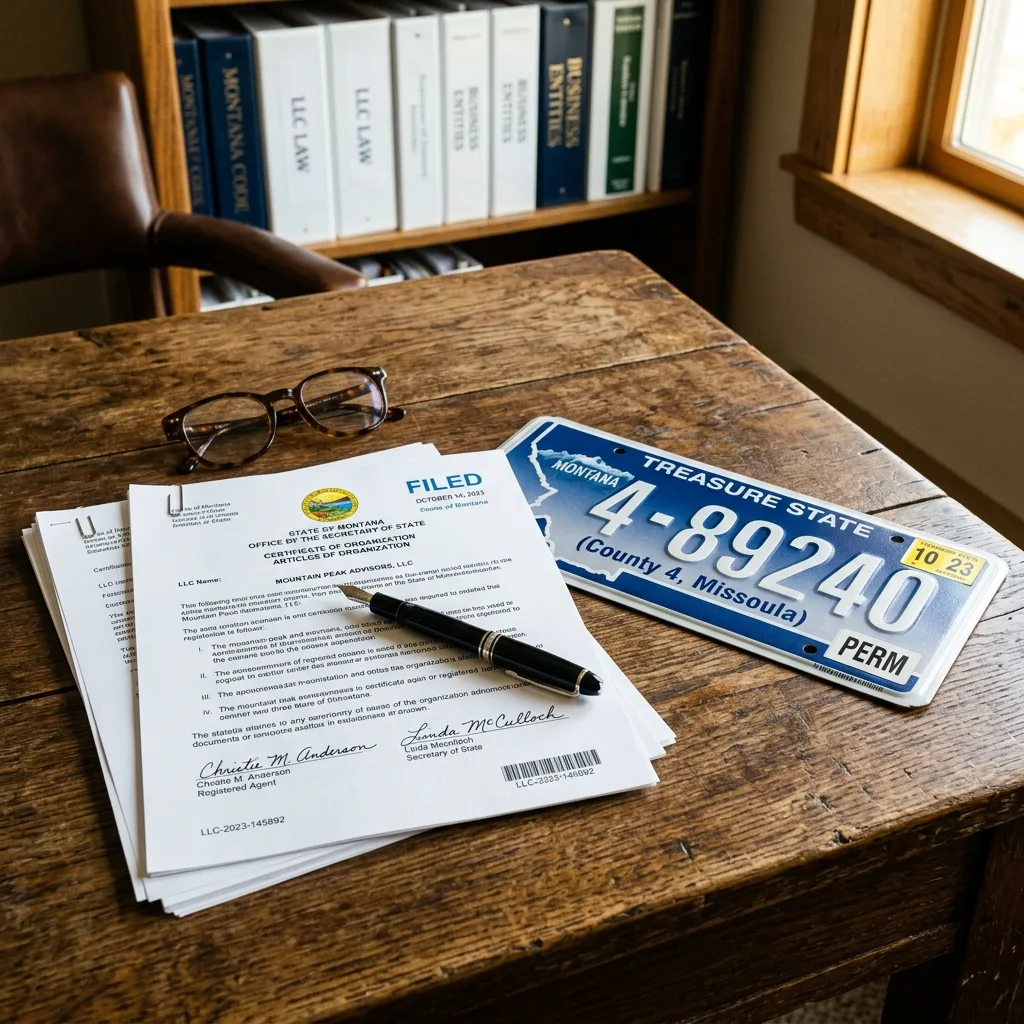
See how Montana LLC registration helps owners in other high-tax states:
- Arizona VLT Problem: How to Stop Paying $1,000 Every Single Year
- Virginia Car Tax: Stop Paying the Highest Vehicle Tax in America
- Nevada 8.25% Car Tax: The Hidden Cost Nobody Tells You About
Ready to fire your smog inspector?
California enthusiasts have escaped the CARB nightmare for decades with Montana LLC registration. If your circumstances qualify, the path is fast, legal, and permanent. Stop chasing compliance. Start driving the car you built.