22 min read
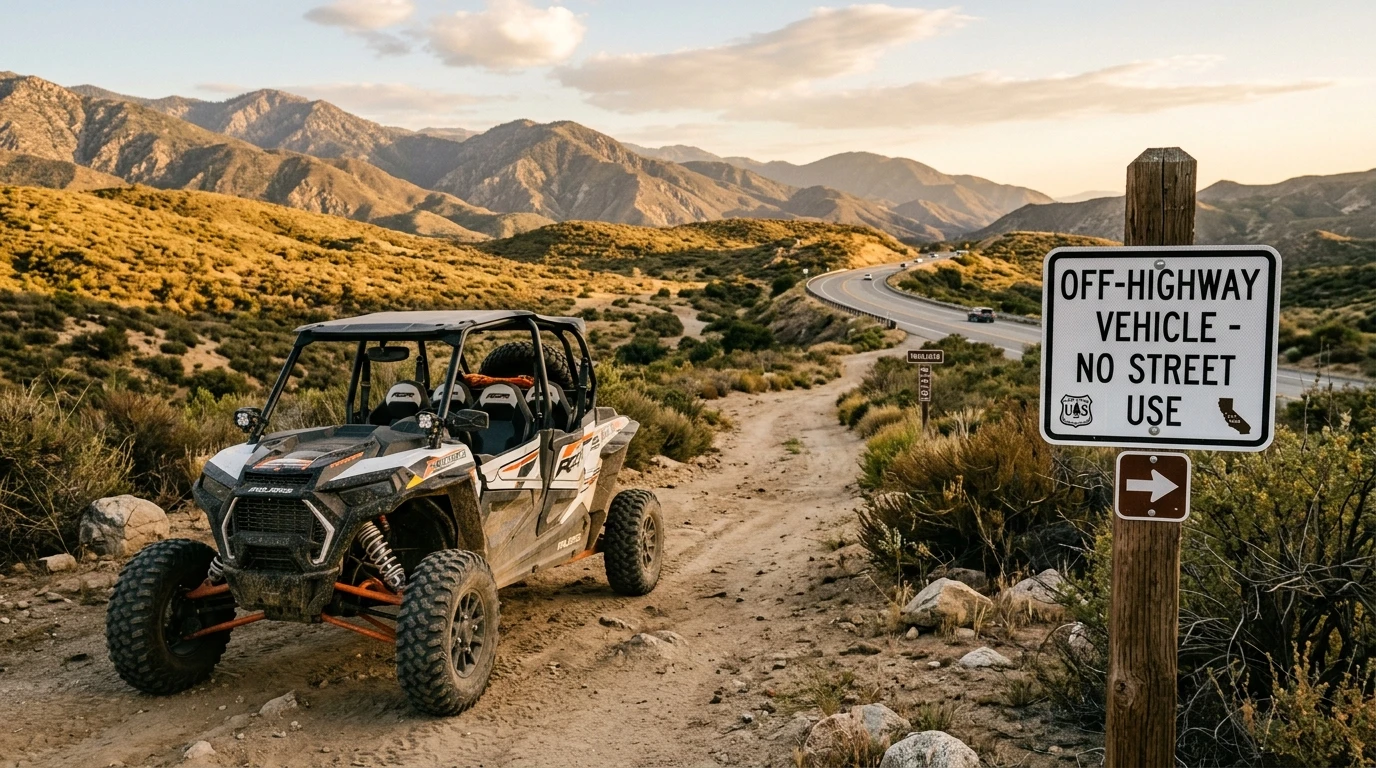
California UTV street legal registration is, for the vast majority of side-by-side owners, an outright impossibility. Despite what aftermarket kit sellers and a handful of optimistic forum threads suggest, the State of California has constructed a regulatory wall around recreational utility task vehicles so high and so reinforced with overlapping state codes, federal standards, and California Air Resources Board edicts that no Polaris RZR Pro XP, no Can-Am Maverick X3, no Honda Talon, and no Yamaha YXZ ever rolls off a dealer lot wearing a real California license plate. The state has effectively decided that machines designed for dirt, dunes, and decomposed granite have no place on the asphalt that connects them.
This post lays out exactly how California’s three-color sticker system works, why CARB certification kills any pathway to street registration, what the published fines look like when enforcement officers catch a non-compliant rig, and what a properly structured Montana LLC registration actually solves—and what it does not—for California residents who are done bleeding money to a system designed to extract it.
On this page
- + The Jessica Chen Problem
- + California’s OHV Sticker System
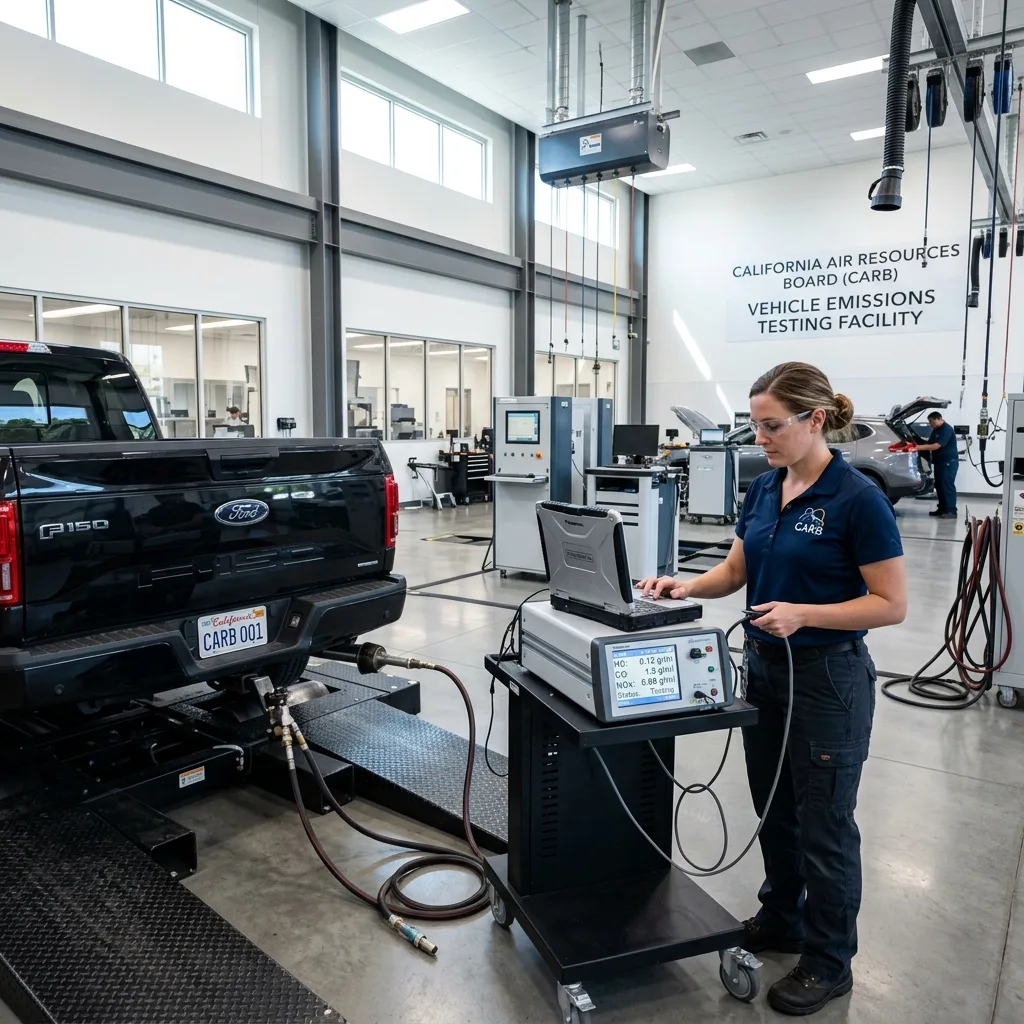
- + The CARB Stranglehold
- + Specific Models and Their California Fate
- + Why Street Legal Conversion Is a Myth
- + The Real Cost of California’s System
- + The Trailer Burden
- + The Montana Solution
- + Case Studies
- + Who Benefits and Who Doesn’t
- + The Zero Tax Tags Process
- + Frequently Asked Questions
The Jessica Chen Problem
Jessica Chen is thirty-eight, a software product manager in Rancho Santa Margarita, and at 7:42 on a Saturday morning in early April, she is standing in her driveway staring at a brand-new Polaris RZR Pro XP Turbo Ultimate that she paid $28,500 for. Storm gray, carbon fiber accents, Walker Evans Velocity shocks, seven-inch Ride Command display. Her husband Daniel test-drove it three weeks ago at a desert demo day in Ocotillo Wells. The financing was approved Tuesday. Delivery was Friday. And now, on Saturday, she has a problem she did not anticipate.
Jessica and Daniel reserved a campsite in the Cleveland National Forest for the long weekend. The trailhead, the actual access point to the OHV-designated dirt where she is allowed to ride, is one mile from her campsite — down a paved Forest Service road. She had assumed, in the way any reasonable adult might assume, that she could ride her brand-new $28,500 vehicle from her campsite to the dirt. It seemed obvious. The vehicle has headlights, turn signals, brake lights, and a horn that the dealer installed. It is also completely illegal to operate on that paved Forest Service road for any sustained distance.
She calls CARB first: the Polaris RZR Pro XP carries a green sticker for off-highway use. Off-highway means off-highway. The DMV runs the VIN and tells her the vehicle is registered as an OHV under California Vehicle Code Division 16.5, which by definition prohibits street-legal registration, and the OHV flag is now permanent. The dealer admits this is the most common complaint they receive after delivery, and that there is no legal pathway to make her vehicle street-legal in California. He suggests she look into a small trailer.
Jessica loads the trailer.
California’s OHV Sticker System: Three Colors, Three Verdicts
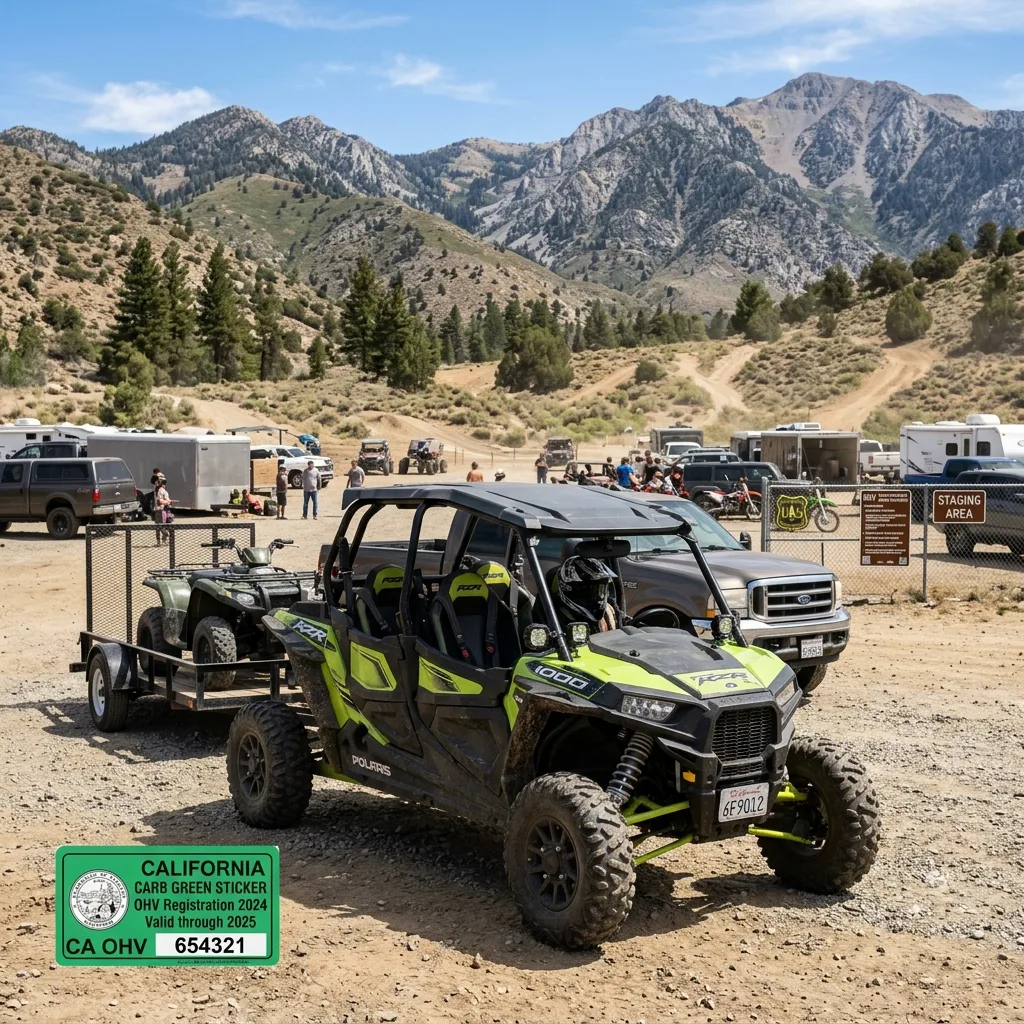
To understand why california utv street legal conversions are essentially impossible, you have to understand the gatekeeping system the state uses to decide where your machine can go. California operates a three-color sticker regime administered by the DMV and CARB, and the sticker on your fender determines, with no flexibility, what dirt you can roll on and what season you can roll on it.
The green sticker is the gold standard. CARB has tested the vehicle’s emissions, the vehicle meets California’s off-road exhaust standards, and it is approved for year-round use on every public OHV land in the state. Green sticker machines can run Hungry Valley, Pismo, Truckhaven, and Hollister with no seasonal or area restrictions. Manufacturers must engineer evaporative emissions controls, catalyst formulations, and ECU calibrations specifically to clear this bar.
The red sticker is the historical compromise. For decades, California allowed non-compliant UTVs and dirt bikes to operate on OHV lands during cooler months only, typically October through April. As of January 1, 2025, California stopped issuing new red stickers entirely, but vehicles that already held red sticker registration before that cutoff were grandfathered for year-round use. A 2021 Yamaha YXZ1000R with a legitimate pre-2025 red sticker can now ride year-round.
The tan sticker is the funeral notice. Beginning model year 2022, any UTV that does not meet CARB green sticker emissions standards receives a tan sticker, which authorizes closed-course competition only. Tan sticker machines cannot legally enter public OHV lands — not Glamis, not Pismo, not Johnson Valley. For a recreational rider, a tan sticker is a death sentence on resale and a permanent obstacle to ordinary weekend use.
Notice what is missing from this table: any column where a recreational UTV can legally drive on a public street. There is no street column with a yes in it, because no permutation of the California sticker system permits sustained operation of a recreational UTV on a paved public road. Every cell that matters for street legality reads no.
The CARB Stranglehold: Why Conversion Is Engineered Out
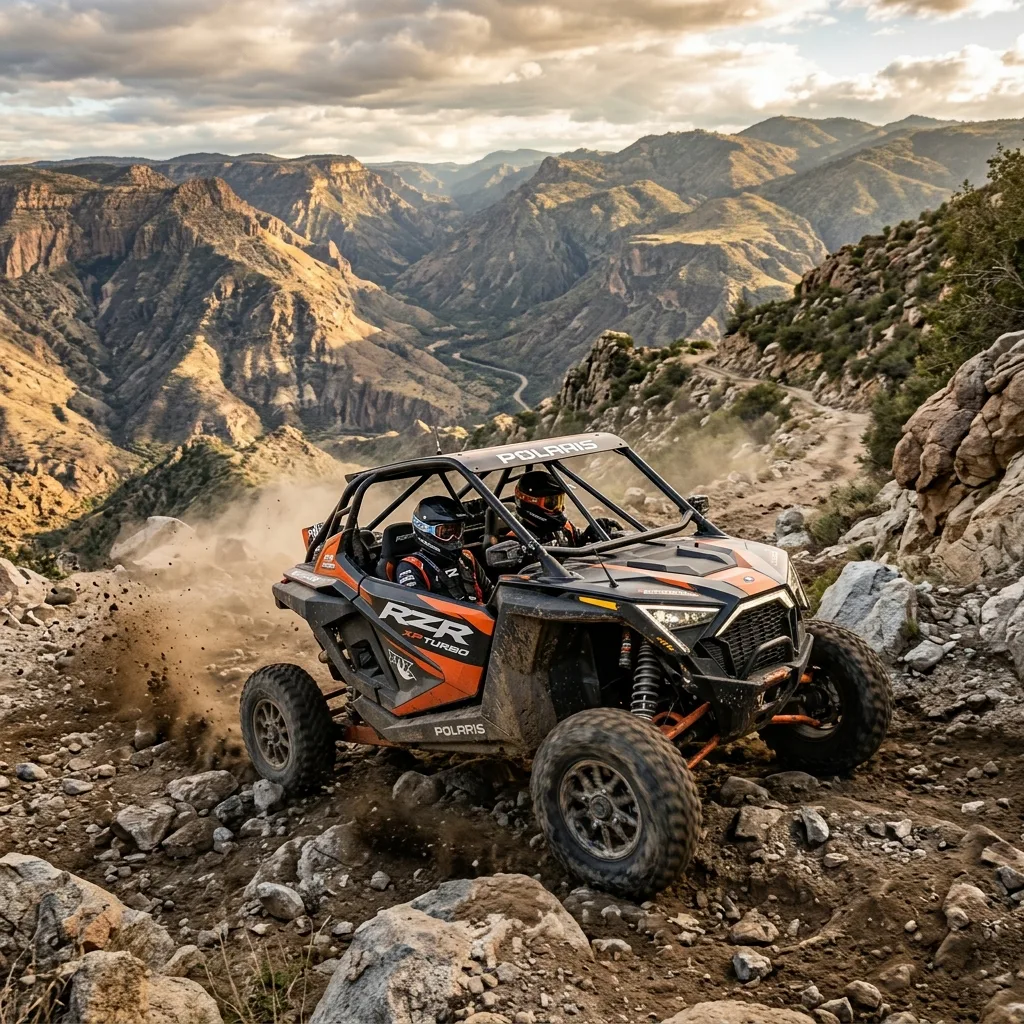
A Polaris RZR Pro XP cannot become california utv street legal through any aftermarket process because California’s barriers operate at a level no consumer can overcome. CARB certification is a manufacturer-level certification, not a vehicle-level one. When Polaris submits a model for approval, the certification belongs to that engineered configuration — engine, ECU, exhaust, evaporative hardware — not to the VIN. You cannot bolt aftermarket parts on and inherit a manufacturer’s CARB approval. The certification is administrative as much as physical.
Layered on top is the Federal Motor Vehicle Safety Standard problem. Federal regulations require highway vehicles to meet crashworthiness standards including crumple zones and roof crush resistance. Recreational UTVs defeat these by design. The roll cage that protects you down a granite slope is a tubular space frame engineered to deform predictably under off-road loads. Highway standards demand the opposite. The two engineering goals are mutually exclusive.
Then there is California Vehicle Code Division 16.5 § 38025: an OHV may cross a public highway only at a perpendicular angle, and only to get from one OHV-legal area to another. You cannot ride along, parallel to, or at any other angle on a public highway. This is the legal framework that turns Jessica Chen’s paved Forest Service road into an impassable barrier.
The dual registration ban completes the trap. Once a vehicle is registered as an OHV under Division 16.5, the California DMV will not issue street-legal registration for that VIN. The OHV designation is permanent within the California system. You would have to deregister the vehicle from California entirely and retitle it in another state — exactly the structure that makes Montana LLC registration valuable.
The Yamaha YXZ1000R was the closest thing in the recreational UTV market to a manual-transmission sports car for the dirt: a five-speed sequential gearbox, a 998cc inline triple, a chassis tuned for desert racing. Yamaha announced the discontinuation for the 2026 model year, with no replacement. CARB certification costs for low-volume variants made the YXZ economically unviable. If you have a green sticker YXZ, you own a small piece of a discontinued chapter.
Specific Models and Their California Fate
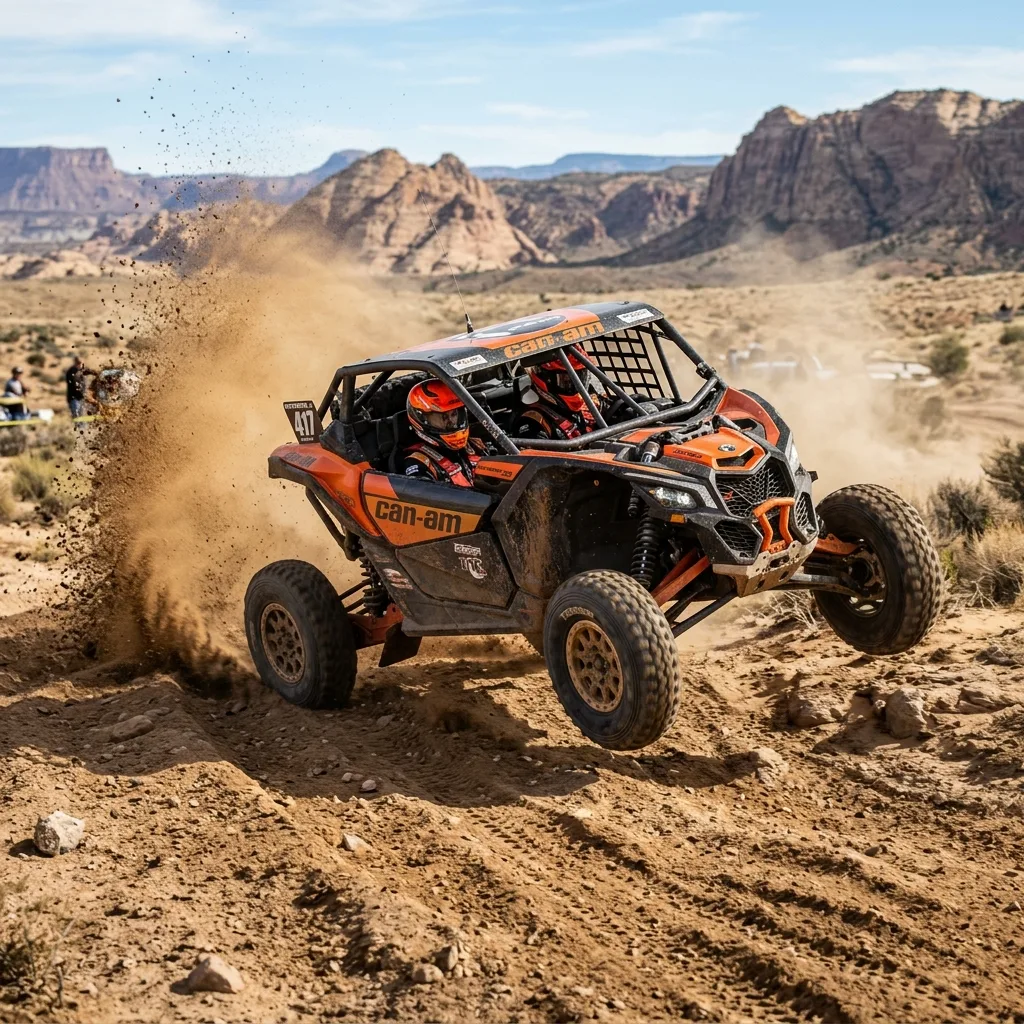
Different machines face different California fates depending on how manufacturers approached CARB compliance. Buyers wandering into a California powersports dealer often have no idea which model is which until the F&I office hands them paperwork that says, in effect, you cannot ride this where you thought you could.
Polaris is the most fragmented for California compliance. Certain RZR variants are engineered specifically to clear CARB green sticker — identified by a “B” in the ninth position of the model number, indicating the modified ECU calibration and evaporative emissions hardware. The rest of the Polaris RZR lineup, including most Pro XP and Turbo R configurations sold in 49-state trim, lands on whatever sticker their emissions configuration earns, often tan. Ask explicitly whether the unit on the floor is the California-compliant variant before any deposit changes hands.
Can-Am has navigated CARB more aggressively at the top. The Maverick R, with the 240-horsepower turbocharged triple and Smart-Shox active suspension, has achieved CARB certification and is eligible for green sticker registration. The Maverick X3, particularly in higher-output Turbo RR and X RS variants, has a more complicated California footprint that varies by model year.
Honda’s Talon 1000R holds CARB green sticker compliance in most configurations. The Talon X variant is generally green sticker compliant. Yamaha’s YXZ1000R has been discontinued — existing red and green sticker units retain grandfathered status, but no 2026 YXZ exists. Kawasaki’s Teryx KRX 1000 has historically held green sticker certification, but verify specific trims before purchase.
Every recreational UTV sold in California, including the ones that cleared CARB’s hardest emissions hurdle, lands in the same column for street legality: no. The sticker decides which dirt you can ride. The vehicle code decides the asphalt question, and the answer there never changes.
Why the Street Legal Conversion Kit Is a Myth
Search “UTV street legal kit California” and you will find dozens of e-commerce listings promising headlight assemblies, mirror kits, DOT-rated tires, license plate brackets, and signal flashers that supposedly transform your off-road machine into a street-legal vehicle. Kits sell for $400 to $1,800. Almost all of them work in some other state. None of them work in California.
These kits add the visible features that make a vehicle look street-legal: headlights, brake lights, turn signals, mirrors, a horn, DOT-approved tires. These additions matter in Arizona, Utah, Idaho, and Texas, where state vehicle codes allow UTVs to obtain street-legal registration if they carry required equipment. In those states, the bolt-on kit is the bridge between off-road and on-road registration.
California is not those states. California’s barriers do not live in the equipment list — they live in the engine certification and vehicle classification system. Adding a turn signal does not change CARB emissions classification. Adding a windshield does not modify the FMVSS exclusion. Adding a license plate bracket does not unlock the DMV’s OHV designation flag. The kit solves a hardware problem when California is operating a paperwork blockade.
Some California dealers still sell these kits, and not always dishonestly — they are useful for owners who register the vehicle in another state or ride out of state regularly. The fraud, when it occurs, is when a salesperson tells a California buyer the kit will let them register for street use in California. That claim is not true.
A quieter version appears with private-party imports. Buyers purchase a UTV in another state, install a street-legal kit, register it there, then bring it back to California hoping the state will recognize the out-of-state registration. California will not. The state operates a residency presumption: California residents must register vehicles operated primarily in the state with California, which will reclassify a recreational UTV to OHV regardless of originating state. The only legitimate path California recognizes is a properly structured business entity that owns and operates the vehicle. That is exactly what a Montana LLC provides.
Buyer warning: If a dealer or aftermarket shop tells you a kit will make your recreational UTV legal on California public streets, leave the conversation. The claim is false. California Vehicle Code Division 16.5 § 38025 prohibits sustained operation of an OHV on any public highway regardless of equipment installed.
The Real Cost of California’s UTV System
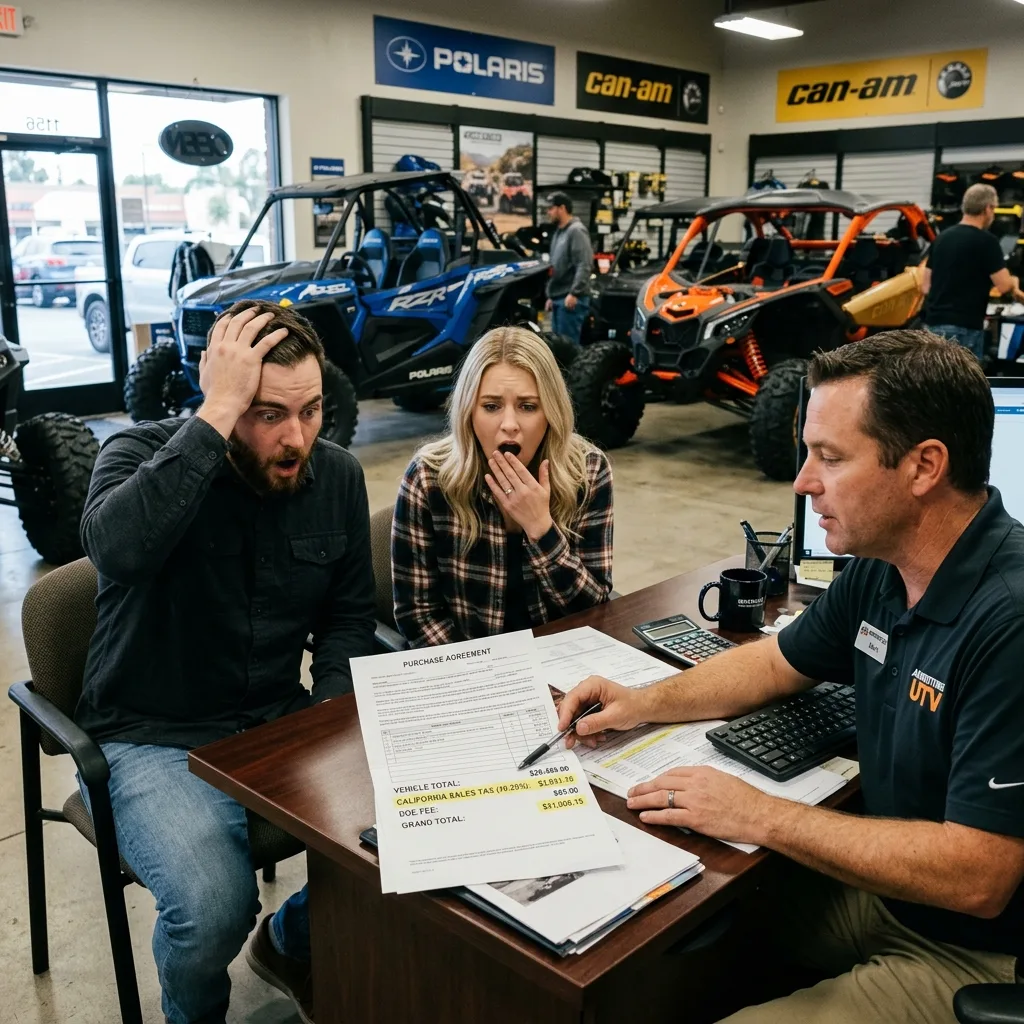
The conversation about california utv street legal registration almost always starts with a regulatory problem and ends with a financial one. California collects sales tax on the purchase, OHV registration fees, renewal cycles, stickers, and in some counties property tax assessments on personal property. None of these costs are visible at the dealership. All of them appear on bank statements over the years that follow.
Start with sales tax. California’s statewide base rate is 7.25 percent, but county and city district taxes push the actual rate to between 8.25 and 10.75 percent depending on the buyer’s address. Los Angeles County sits at approximately 10.25 percent. Orange and San Diego Counties run 7.75 to 9.25 percent. On a Polaris RZR Pro XP Turbo Ultimate priced at $28,500, a Los Angeles County buyer pays $2,921 in sales tax at delivery.
Registration fees add more. California OHV registration runs roughly $54 every two years, bundled with state OHV trust fund contributions, county fees, and sticker fees. Renewals continue indefinitely, and California has steadily increased OHV-related fees as part of broader transportation funding.
On a single $28,500 UTV, the cost difference between California direct purchase and Montana LLC purchase exceeds a thousand dollars over five years, widening on more expensive machines. On a $40,000 build, the spread approaches $3,000. On a fleet of three machines, it crosses $9,000.
And the fines. A first-offense ticket for operating a non-street-legal UTV on a public road runs $250 to $1,000. Repeat offense within twelve months can climb to $2,000. Vehicle impoundment adds $500 to $1,500 in towing and storage. CARB can issue separate citations for non-compliant emissions equipment, $500 to $2,000. Every weekend, somewhere on the access road to a popular OHV area, someone gets caught.
The Trailer Burden: California’s Hidden Tax on Time
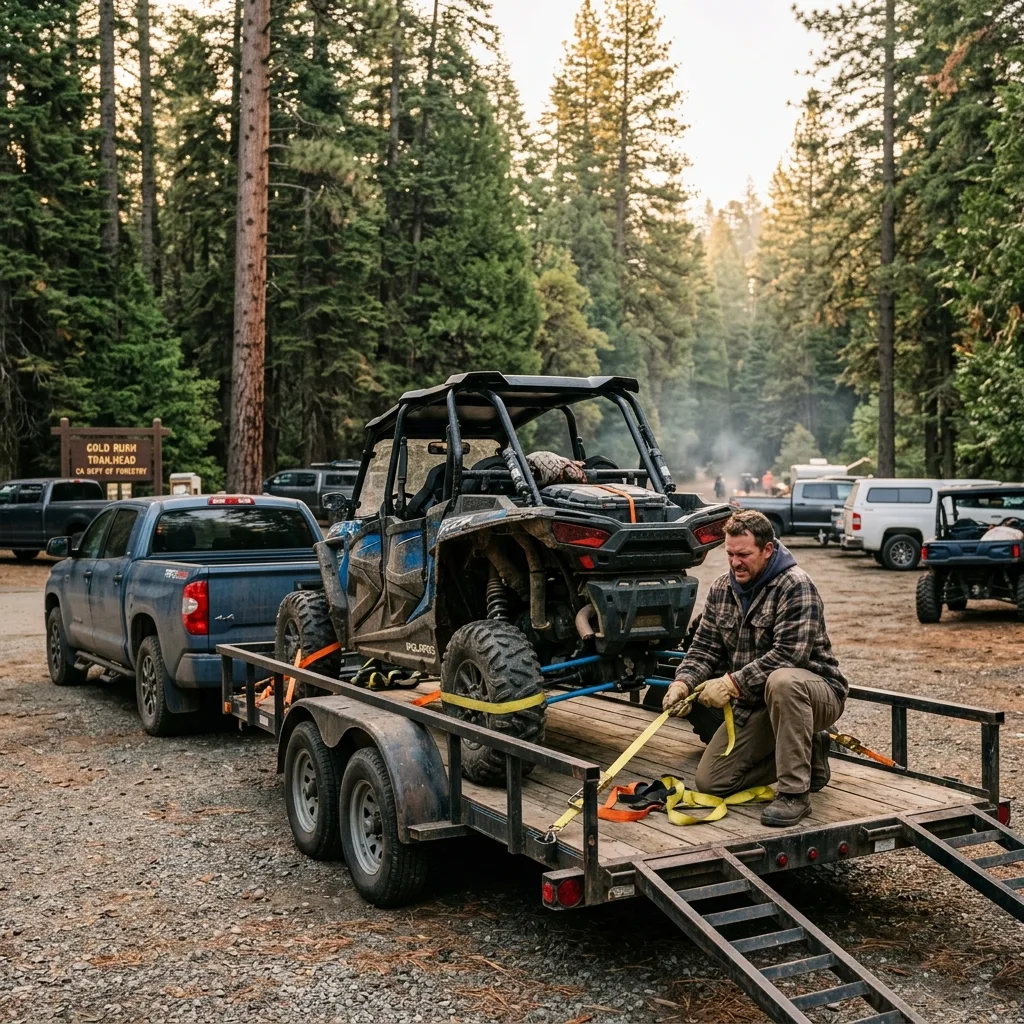
Beyond the published fees and visible taxes, California UTV ownership carries a hidden burden no spreadsheet captures: the trailer. Because no recreational UTV in California can roll under its own power from a residence to a riding area, every ride begins and ends with a loading and unloading ritual. Surveys of regular California UTV owners suggest the average machine is loaded and unloaded somewhere between forty and fifty times per year. Each cycle takes fifteen to forty minutes depending on conditions, weather, helpers, and how cold the ratchet straps are.
The trailer is its own ecosystem of cost. A used twenty-foot enclosed trailer runs $7,000 to $14,000. An open utility trailer costs $2,500 to $5,000. Tires wear. Bearings need repacking. Lights fail. The deck rots in coastal humidity. The trailer occupies a midsize parking spot at your residence in perpetuity.
Then there is the tow vehicle. Pulling a loaded UTV trailer requires a half-ton truck at minimum, with three-quarter-ton or one-ton typical for bigger trailers. Fuel for a four hundred mile round trip runs $150 to $250 per weekend. Tire, brake, and engine wear compounds across years.
And the ratchet strap problem. Every tie-down loads the chassis through the same points. Over hundreds of cycles, suspension wears, subframe paint distorts, and powder coating erodes around tie-down brackets. By year five, the underside of a heavily-trailered UTV looks materially different from one that rolls from garage to trail under its own wheels.
The Montana Solution: What It Actually Provides
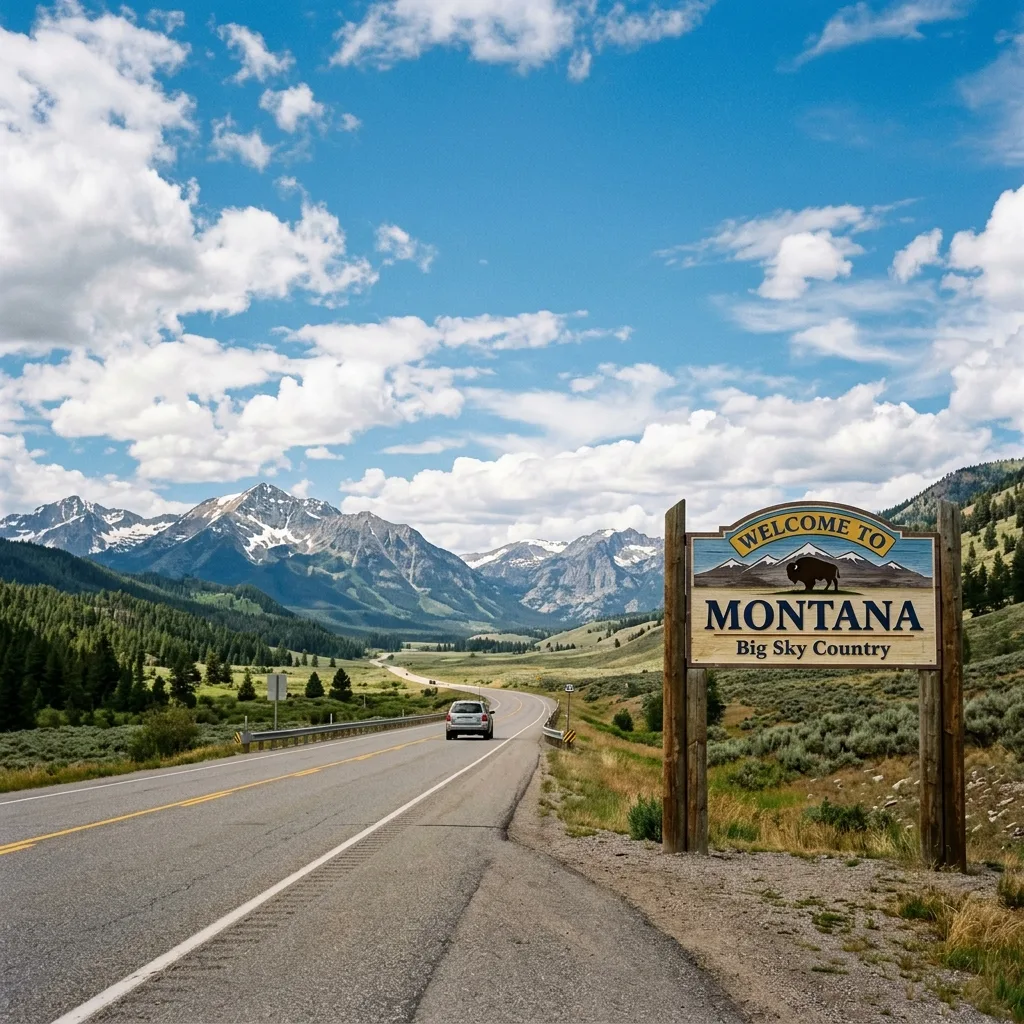
Montana is one of five states with no general sales tax. A Montana LLC formed to own and register a UTV pays zero sales tax at purchase, pays a one-time registration fee of approximately $80 to $130, and receives Montana plates valid in Montana and recognized in roughly forty other states with reciprocal Montana registration.
For a California UTV owner, Montana LLC registration eliminates California sales tax — $2,921 on a $28,500 RZR. It eliminates California OHV renewal cycles. It provides a Montana street-legal title valid in Montana and recognized in Nevada, Arizona, Utah, Idaho, Wyoming, and other UTV-friendly western states. It gives multi-state riders, snowbirds, and collectors a clean structure for owning high-value off-road equipment.
Montana registration eliminates California’s sales tax hit, removes your UTV from California’s annual OHV renewal cycle, and delivers a Montana title recognized for road use in Nevada, Arizona, Utah, Idaho, Wyoming, and every other UTV-friendly western state. California Vehicle Code Division 16.5 § 38025 applies to OHV operation on California public roads regardless of registration state — but the moment you cross into Arizona, Nevada, or Utah, your Montana-registered UTV rolls under its own power to the trailhead.
Montana registration gives California riders a tax-efficient ownership structure for a vehicle they were going to trailer to a riding area regardless. If you were already trailering, you might as well not be paying $2,921 in California sales tax. Riders who travel out of state gain the additional benefit of road access in those destinations. Glamis is in California, but Pahrump, Sand Hollow, and Moab are not. The Maverick X3 with Montana plates rolls under its own power from a hotel parking lot to the trailhead in any of these places.
For California OHV land use, the Montana plate works alongside the sticker system. California OHV parks accept out-of-state registered vehicles. The vehicle still needs the appropriate CARB sticker to access public OHV lands. Montana registration handles title and tax structure. The CARB sticker handles dirt access. The two systems coexist on OHV grounds.
Case Studies: Three California Riders, Three Outcomes
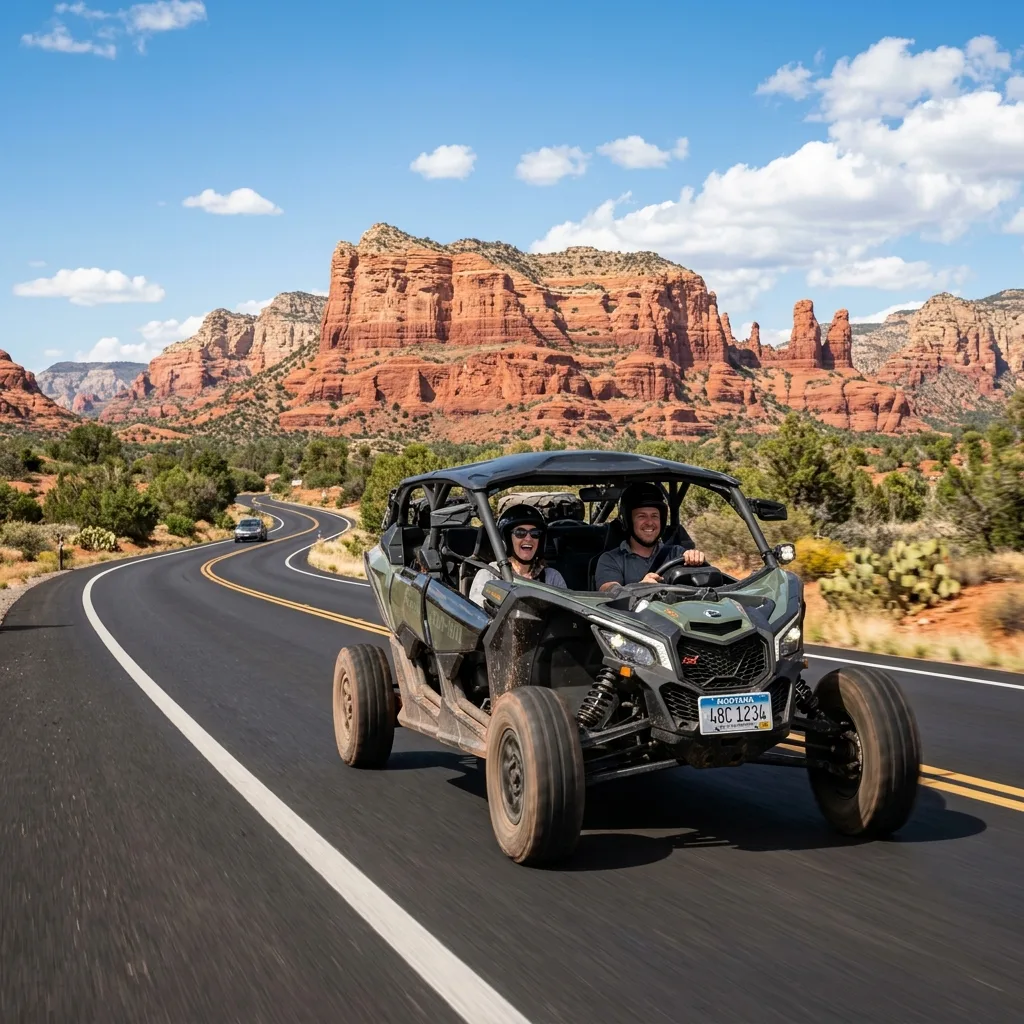
Three California riders, three different vehicles, three different riding patterns. All of them better off than they would have been writing a sales tax check to Sacramento.
Mike and Sarah Delgado, San Diego, Can-Am Maverick X3 Turbo RR. The Delgados live in Carmel Mountain Ranch and ride twice a month, splitting time between Ocotillo Wells in Imperial County and weekend trips to Lake Havasu and Quartzsite in western Arizona. Their Maverick X3 cost $34,000 out the door at a San Diego dealer. Through a Montana LLC, they paid zero sales tax — saving $3,485 that would otherwise have gone to San Diego County. The Montana plate lets them legally drive from their Lake Havasu rental to the trailhead, eliminating the offload step that used to cost them an hour of their Saturday morning. For Ocotillo, they still trailer — California’s Vehicle Code applies to road use on California highways regardless of registration state. The Montana plate delivers its full value in Arizona, where they ride without a trailer at all.
Kevin Park, Temecula, Polaris RZR fleet. Three Polaris RZRs in his garage: a Pro XP Ultimate at $28,500, a Turbo R at $32,000, and a Pro R at $42,500. Riding them in California meant about $9,012 in cumulative sales tax at Riverside County’s 8.75 percent rate. Kevin set up a Montana LLC for all three vehicles and saved $8,700-plus. His riding pattern leans heavily toward Nevada (Logandale, Sand Mountain) and Utah (Sand Hollow, Coral Pink), all of which honor Montana registration on public roads. Kevin almost never trailers in those out-of-state destinations. He still trailers in California, and he is at peace with this.
Dana Whitfield, Fresno, Yamaha YXZ1000R. Dana bought her YXZ1000R for $21,500 in late 2025, before Yamaha announced the discontinuation. The YXZ was a special machine to her, the only manual-transmission UTV in the modern market. Her concern was the long-tail cost of California registration on a now-orphaned model. She moved the YXZ to a Montana LLC for $749 — $549 service fee plus $200 for the LLC. Paid no sales tax. Because Montana issues a permanent plate for ATVs and UTVs, her ongoing cost after that is zero. No annual renewal. No sticker cycle. Her YXZ stays grandfathered, legally registered in Montana, ready for her four desert trips a year.
Who Benefits and Who Doesn’t
Montana LLC registration is not the right call for every California UTV owner. It works dramatically better for some riding profiles than others.
Who benefits
Multi-state riders benefit most. If you regularly drive your UTV across state lines into Nevada, Arizona, Utah, Idaho, Wyoming, or Montana, the Montana plate transforms ownership. You ride from hotel to trailhead under your own power and connect riding areas without trailering.
Collectors with multiple vehicles benefit at scale. A single Montana LLC can hold multiple UTVs, dirt bikes, motorcycles, and RVs. Cumulative California sales tax avoided across three to five vehicles can be tens of thousands.
Buyers of higher-priced UTVs benefit in absolute dollars. A $42,000 Polaris Pro R generates more tax savings than a $14,000 entry-level machine. Break-even makes clear sense around $20,000 and strengthens steadily above that.
Snowbirds benefit from registration durability. If you split your year between California and Arizona, Idaho, or Nevada, Montana registration travels cleanly. No California OHV renewals to track.
Who doesn’t fit
Riders who only ride in California and need a California street plate. The California street plate for a recreational UTV does not exist. Not from us. Not from anyone. No legal structure achieves it.
Competition-only riders running tan sticker machines. If your UTV is a closed-course race vehicle you trailer to events, road registration is irrelevant. Montana saves sales tax, but the road-use value proposition is beside the point.
Buyers of low-priced used UTVs. On a $6,000 used side-by-side, LLC structural costs may not pencil out against sales tax savings. We tell people directly when the break-even doesn’t work.
The Zero Tax Tags Process and Timeline
The process Zero Tax Tags uses for a California UTV buyer is structured to handle the entire registration on the client’s behalf, with minimal involvement from the buyer beyond document signatures and dealership coordination. The timeline is typically 7 to 14 business days from initial contact to plates in hand, depending on dealer responsiveness and Montana courthouse processing times.
| Day 1: | Submit your MCO and supporting paperwork through our secure portal. We review for completeness and file your Montana LLC the same day. |
| Days 1–2: | Montana LLC formation complete — same business day in most cases, second business day at the latest. |
| Days 2–4: | Title transferred into the LLC name at the Montana county treasurer. |
| Days 4–7: | Permanent Montana plates shipped directly to your door within 3–5 business days of title completion. |
Pricing for ATVs and UTVs is straightforward. The total cost is $749: $549 for the Zero Tax Tags service and $200 for the Montana LLC formation. After that, nothing. Montana issues a permanent plate for off-highway vehicles — no annual renewal, no registration cycle, no ongoing fees. Compared to the $2,921 in California sales tax alone on a $28,500 RZR, the structure pays for itself before you ever turn a wheel.
Frequently Asked Questions
Is Montana LLC registration legal for California residents?
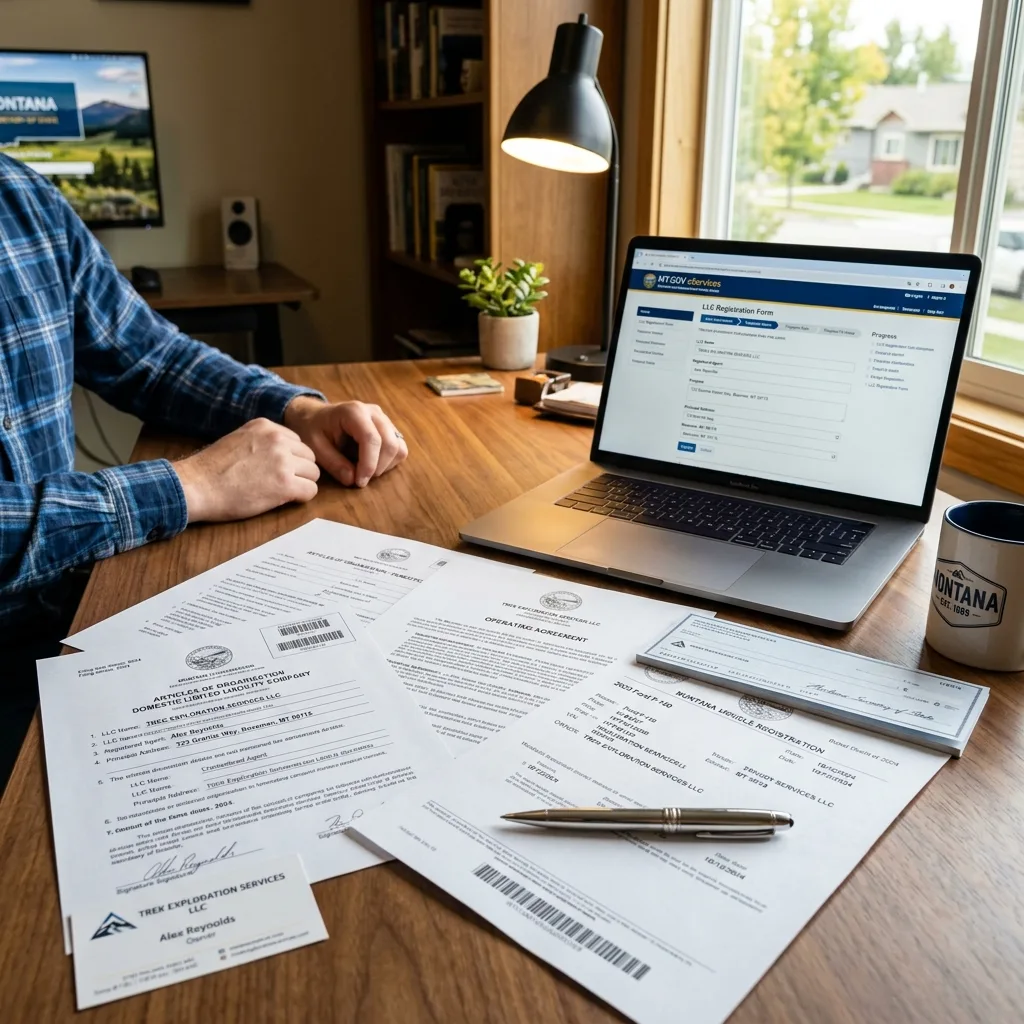
Yes. Forming a Montana LLC is lawful, and Montana permits non-resident members. Legal questions arise downstream, around how the vehicle is operated and state-by-state use tax exposure. Properly structured Montana LLCs have been the basis of ownership for tens of thousands of high-value vehicles. Zero Tax Tags structures every LLC for the client’s realistic operating profile.
Can I ride my Montana-plated UTV on California public roads?
No. California Vehicle Code Division 16.5 § 38025 prohibits sustained operation of a recreational off-highway vehicle on a California public highway, regardless of which state issued the registration. The Montana plate does not change the California vehicle code. Anyone telling you otherwise is misleading you. The Montana plate is for use in Montana and the roughly forty other states with reciprocal recognition that permit UTV road use, not in California.
Does the Montana plate work at California OHV parks?
Yes. California’s public OHV system accepts vehicles registered in any state. The vehicle still needs the appropriate CARB sticker (typically green, with red grandfathered) to access OHV lands. Montana plate handles title and tax. CARB sticker handles dirt access.
How much do I save on a $30,000 UTV?
At Los Angeles County’s 10.25 percent, savings on a $30,000 UTV is $3,075 in sales tax alone. At a 7.75 percent county rate, savings are $2,325. Montana also issues a permanent plate for ATVs and UTVs — no annual renewal fee, ever.
Do I need insurance for the Montana-registered UTV?
Yes. Liability insurance is recommended regardless of registration jurisdiction. We coordinate with insurance providers familiar with Montana LLC-titled vehicles. Pricing is comparable to a California-registered policy.
How long does the entire process take?
Typically 7 to 14 business days from signed agreement to plates in hand. Dealer responsiveness is the most common variable.
What vehicles qualify for the Montana LLC structure?
Recreational UTVs, side-by-sides, dirt bikes, ATVs, motorcycles, sports cars, RVs, motorhomes, travel trailers, fifth wheels, classic cars, exotic cars, daily drivers, work trucks — virtually any titled vehicle. Economics work best on higher-value vehicles where dollar savings exceed LLC structural costs.
Internal Resources
Montana LLC registration also helps owners in other states dealing with aggressive vehicle taxation:
Ready to Stop Overpaying California Taxes on Your UTV?
California UTV owners have saved millions with Montana LLC registration. Join them.
More California Vehicle Tax Solutions
Moving to California
avoid the DMV vehicle tax trap (2026 guide)
Failed Smog Check
How Montana Plates End the Emissions Nightmare
Firing the DMV
The Real Cost of Waiting in Line Instead of Dri…
California UTV Street Legal 2026
The CARB Trap and Montana’s Tax-Free Alte…
California Killed Your Diesel
Truck. Montana Brings It Back to Life.
California Registration Penalties
How to Escape the $2,000 Trap
California Vehicle Tax 2026
The VLF Trap and Why Smart Money Is Leaving
California ATV & UTV Registration 2026
Skip the 7.25% Tax with Montana LLC