32 min read

On this page
- + Connecticut Vehicle Tax: A Two-Part System
- + The 7.75% Luxury Surcharge
- + The Municipality Trap
- + Connecticut Just Changed How It Calculates Value
- + What Connecticut Vehicle Tax Costs Over 5 Years
- + Who Connecticut Vehicle Tax Hits Hardest
- + The Montana Solution
- + Is Montana LLC Registration Legal?
- + Four Connecticut Owners Who Made the Switch
- + Who Benefits Most
- + How Zero Tax Tags Gets You Registered
- + Frequently Asked Questions
The October mail arrives the way it always does in Connecticut. Two envelopes. The first is from the Town of Greenwich, addressed to a homeowner on Round Hill Road who keeps a $130,000 Range Rover in the heated three-car garage. The second is from the City of Bridgeport, addressed to a tradesman on the East End who works out of a $58,000 Ford F-250. Both envelopes contain a Motor Vehicle Property Tax Assessment for the same grand list date: October 1. Both vehicles are roughly comparable in real-world value once you adjust for trim and age. Both owners are about to pay the state of Connecticut for the privilege of owning a car they already bought, already insured, and already paid sales tax on years ago.
The Greenwich owner’s bill comes to about $1,100 for the year. The Bridgeport owner’s bill, on a less expensive truck, comes to almost $1,800. Same state. Same DMV. Same registration. Different zip code, dramatically different penalty.
Connecticut vehicle tax is one of the most punitive, location-dependent, and quietly compounding tax structures in the entire United States, and most residents do not understand how badly they are being squeezed until they sit down with a calculator and run the math across a five or ten year ownership window. The Connecticut DMV handles registration, but the actual tax bill is set by 169 different municipalities, each with its own mill rate, its own grace periods, its own collector, and its own appetite for revenue. When you buy a $95,000 SUV in Connecticut and register it in the wrong town, you do not just pay sales tax once at the dealership. You pay an annual property tax to your town for as long as you own that vehicle, on top of registration fees, on top of inspection requirements, on top of the 7.75 percent luxury surcharge that already took a bite at the moment of purchase.
This article walks through the entire Connecticut vehicle tax system in plain English, with the actual numbers, the actual mill rates, and the actual five-year ownership cost for typical Connecticut vehicles. Then it shows you exactly how Montana LLC registration legally eliminates almost all of it, what Zero Tax Tags charges to handle the entire process, and why thousands of Connecticut residents have already made the switch.
Connecticut Vehicle Tax: A Two-Part System Designed to Extract Maximum Revenue

To understand why Connecticut vehicle tax hits so hard, you have to understand that Connecticut does not run a single vehicle tax. It runs two of them, layered on top of each other, and the second one never stops billing you.
The first layer is the state sales and use tax, charged once at the time of purchase. Connecticut applies a 6.35 percent sales tax to vehicles sold for less than $50,000. The moment your vehicle crosses the $50,000 threshold, even by one dollar, the rate jumps to 7.75 percent and is applied to the full purchase price, not just the amount above $50,000. This is the so-called luxury surcharge, and it applies to a much larger share of the market than the word luxury suggests, because $50,000 in 2026 buys a fairly ordinary midsize SUV.
The second layer is the Motor Vehicle Property Tax, the one that arrives in your mailbox every July with a supplemental bill in January for any vehicle you registered after October 1. This is the layer most out-of-state buyers do not even realize exists until they relocate to Connecticut and receive their first assessment. Unlike most states, where vehicle tax ends at the moment you drive off the lot, Connecticut treats your car the same way it treats your house: as taxable real property that has to be revalued every single year by your municipality.
That means a Connecticut resident pays the state once at purchase, then pays the town every year afterward, forever, until the vehicle is scrapped, sold out of state, or hits the very narrow definition of a tax-exempt classic. The annual bill is calculated using a formula that takes the manufacturer’s suggested retail price, applies a depreciation schedule, multiplies by an assessment ratio of 70 percent, and then multiplies by a mill rate that depends entirely on which town signed your voter registration card.
The result is a system that punishes long-term ownership, punishes high-value vehicles, and creates radically different outcomes based on geography. Two identical Cadillac Escalades, parked in two driveways less than 30 miles apart, can carry annual property tax bills that differ by more than $1,500 a year. That is the Connecticut vehicle tax in a sentence: same car, same state, wildly different bill.
The Connecticut Department of Revenue Services collects sales tax once. Your municipality collects property tax forever. The longer you own the vehicle, the more the second tax dominates the equation, and the more the location of your driveway determines your total cost of ownership.
The 7.75% Luxury Surcharge: Connecticut’s Penalty for Success

The Connecticut luxury surcharge sounds like something that should only apply to Lamborghinis and yachts. It does not. The threshold sits at $50,000, and that number has not been meaningfully adjusted for inflation. In 2026, $50,000 is the sticker on a base-trim Cadillac XT5, a moderately equipped Toyota Sequoia, a Ford F-150 Lariat with a few options, or any pickup that a contractor might actually want to drive to a jobsite. The luxury surcharge is no longer a tax on luxury. It is a tax on anyone who wants a useful vehicle.
The mechanics of the surcharge are deliberately punishing. When the rate jumps from 6.35 percent to 7.75 percent at the $50,000 mark, the higher rate applies to the full purchase price, not just the amount above $50,000. There is no graduated structure, no exemption for the first $49,999, and no proration. A buyer who negotiates a $49,999 selling price pays $3,175 in sales tax. A buyer who pays one dollar more, at $50,001, pays $3,875. That single dollar in negotiating room costs $700 in tax. There is no tax planner in the country who would design a system this way unless the goal was specifically to extract more revenue from the upper-middle and upper segments of the market.
The numbers escalate quickly as the price climbs. A $75,000 truck triggers $5,813 in Connecticut sales tax. A $100,000 SUV costs $7,750 at the dealer window. A $140,000 sports car generates $10,850. A $200,000 exotic crosses $15,500. None of those numbers include trade-in offsets, because Connecticut’s trade-in deduction does not eliminate the luxury surcharge component for higher-priced vehicles in the way many buyers assume. By the time the dealer hands you the keys, the state has already taken a meaningful chunk out of the equity you just put into the car.
The surcharge applies to private-party sales as well. Buying a used Porsche from a neighbor for $62,000 does not insulate you from the luxury rate. The state assesses sales and use tax on the higher of the actual sale price or the NADA average retail value, and the 7.75 percent rate kicks in the moment that figure clears $50,000. Connecticut does not care whether you bought from a dealer, a private seller, or an out-of-state collector who shipped the car across state lines. If the title transfers to a Connecticut resident, the surcharge applies.
The luxury surcharge is also stacked on top of the trade-in calculation in ways that disadvantage Connecticut buyers compared to neighboring states. New York and Massachusetts both allow more favorable trade-in treatment in their effective tax rate at the higher tiers. A Connecticut resident who trades in a $40,000 vehicle on a $90,000 purchase still pays the 7.75 percent rate on the net taxable amount, and the marginal value of that trade-in is muted by the higher rate. Cross the border to register the same purchase legally elsewhere, and the math changes immediately.
The Municipality Trap: How Your Zip Code Determines Your Annual Tax Bill

Here is the part of the connecticut vehicle tax system that most residents never fully process until they relocate within the state and watch their bill move by hundreds of dollars overnight. Connecticut does not assess vehicle property tax at the state level. Each of the 169 municipalities sets its own mill rate, and that mill rate gets multiplied against 70 percent of your vehicle’s depreciated value to produce the annual bill. The same Cadillac Escalade can cost three or four times more to own annually depending on which town the driveway sits in.
A mill rate of one mill represents one dollar of tax per thousand dollars of assessed value. Greenwich, the wealthiest town in Connecticut by median home value, sets one of the lowest motor vehicle mill rates in the entire state at 12.041 mills for the 2025 to 2026 grand list year. Bridgeport, just 30 miles down Interstate 95, sets the highest among major cities at 43.45 mills. The rate in Bridgeport is more than three and a half times higher than the rate in Greenwich. The vehicle does not change. The owner does not change. Only the geography changes, and the bill changes by thousands of dollars over the life of the car.
The mill rate spread among Connecticut’s most populous towns and cities tells the entire story.
Notice how the bill on a single $95,000 SUV swings from $720 in Greenwich to $2,600 in Bridgeport. That is a $1,880 difference in a single year on a vehicle that depreciates the same way regardless of which side of the Saugatuck River it parks on. Multiply that across a five-year ownership window and the spread becomes massive. A Bridgeport owner pays roughly $9,000 more in property tax over five years than a Greenwich owner driving the same vehicle.
The 2025 legislative session changed the calculation slightly with a new statewide cap. Previously, motor vehicle mill rates were capped at a flat 32.46 mills regardless of how high a town’s regular real estate mill rate climbed. Under the new law, each municipality’s motor vehicle mill rate is capped at the lowest mill rate that town charges on real property. For most towns this changes very little. For a few outliers, like Hartford where the real estate mill rate is 68.95, the practical effect is that the motor vehicle rate stays held back at the historical 32.46 figure, while in cities like Bridgeport the new framework allowed the rate to climb past the old cap to its current 43.45.
The bill arrives on July 1 each year for vehicles on the prior October 1 grand list. Most municipalities offer a grace period through August 1, after which interest begins accruing at a punishing 1.5 percent per month, which compounds to 18 percent annually. Miss the bill long enough and the town reports the delinquency to the DMV, which then places a hold on your registration renewal. You cannot legally renew your plates in Connecticut until the local property tax is settled in full, plus interest, plus any collection fees the municipality has tacked on. A supplemental bill follows on January 1 for any vehicle that was registered between October 2 and the following July, prorated for the months of ownership.
The Connecticut DMV registration hold is the enforcement teeth behind every municipal tax collector in the state. You cannot drive a legally plated vehicle in Connecticut if your town says you owe property tax. The state and the municipalities are linked at the database level, and the moment a delinquency posts, your registration freezes.
Connecticut Just Changed How It Calculates Your Vehicle’s Value

One of the most consequential changes to connecticut vehicle tax in two decades quietly went into effect with the October 1, 2024 grand list. Before that date, Connecticut municipalities used the National Automobile Dealers Association average retail value as the base figure for assessment. After that date, they switched to a depreciation schedule based on the manufacturer’s suggested retail price at the time of original sale. The change was sold as a simplification and a uniformity measure. In practice, it locked in higher assessed values for newer vehicles and removed the slight downward pressure that the old NADA-based system had during periods of softening used car prices.
The new schedule depreciates a vehicle as follows. In year one, the vehicle is assessed at 90 percent of its original MSRP. In year two, the figure drops to 80 percent. Year three is 70 percent. Year four is 60 percent. Year five is 50 percent. The schedule continues downward in 5 percent annual increments until it eventually plateaus at a minimum value floor. The 70 percent assessment ratio still applies on top of these figures, meaning the actual taxable value is 70 percent of the depreciated MSRP figure.
Take a $95,000 luxury SUV with an MSRP of $95,000. In year one, the depreciated value is $85,500. The assessed value at 70 percent is $59,850. Multiply by Stamford’s 23.27 mill rate and the year-one bill comes to $1,393. The same vehicle in year three has a depreciated value of $66,500, an assessed value of $46,550, and a Stamford bill of $1,083. By year five, depreciated value is $47,500, assessed is $33,250, and the Stamford bill drops to $774. The total five-year property tax burden in Stamford on this single vehicle is roughly $5,100. In Bridgeport, the same five-year sequence comes in north of $9,500.
The shift from NADA retail to MSRP-based depreciation matters in particular for buyers of niche vehicles, exotics, and high-end trucks where the used market often diverges sharply from the original sticker. Under the old system, a Porsche 911 GT3 that traded in the secondary market for less than its original MSRP could potentially see a meaningful reduction in assessed value during used market downturns. Under the new system, the assessment is locked to the original sticker and depreciates only on the schedule, regardless of what the actual resale market is doing. Hard-to-value vehicles no longer get the benefit of soft market data.
The other quiet effect of the change is that Connecticut residents who buy heavily optioned vehicles now pay a property tax penalty on every option box they check. Adding a $12,000 performance package, $3,500 in interior upgrades, or a $4,000 wheel and tire option does not just push you over the $50,000 luxury surcharge threshold at purchase. It also embeds itself in the MSRP figure that drives the next decade of property tax bills. The depreciation curve treats a $95,000 vehicle and a $115,000 vehicle exactly the same on a percentage basis, which means the more you spec, the more the town extracts annually.
What Connecticut Vehicle Tax Actually Costs Over 5 Years

Sales tax in isolation is painful but understandable. Property tax in isolation is annoying but small. The reason connecticut vehicle tax is so much worse than residents intuitively grasp is that the two layers compound on top of each other across years of ownership. A buyer who focuses on the sticker price and the dealer’s tax line completely misses the second tax that arrives every July for as long as they keep the vehicle.
The table below shows total five-year ownership tax burden for four representative Connecticut vehicles, assuming a Fairfield-area mill rate roughly in the middle of the spread. The Montana column reflects the Zero Tax Tags pricing schedule, including initial setup and annual renewals over the same five-year window. Savings are calculated as the difference between the two columns.
The Connecticut property tax credit on the income tax return is sometimes raised as a partial offset. In practice, it caps at $300 per year and is only available to households below an income threshold of $109,500 for single filers and $130,500 for joint filers. Anyone wealthy enough to be buying a $95,000 SUV, a $140,000 sports car, or a $180,000 motorhome is, by the definitions Connecticut itself uses, ineligible for the credit. The very people most heavily taxed by the property tax system are explicitly disqualified from receiving any meaningful relief through it.
Stretch the analysis to ten years and the numbers diverge even more dramatically, because Montana costs flatten while Connecticut keeps charging. After year ten, the Connecticut owner of the $95,000 SUV has paid roughly $18,000 in cumulative state and local vehicle taxes. The Montana-registered owner of the same vehicle has paid roughly $4,200, including the original setup fee and ten years of renewals. Once the vehicle crosses the eleven-year mark, the Montana owner pays nothing further, ever, because Montana issues permanent registration on vehicles aged eleven years and older.
Who Connecticut Vehicle Tax Hits Hardest

The Connecticut vehicle tax structure is not equally painful for everyone. Some categories of owners feel the squeeze far more than others, and these are the residents who tend to seek out alternative registration structures earliest.
The first group is luxury vehicle owners in mid-rate municipalities. Anyone driving a $90,000 to $150,000 vehicle in Stamford, Norwalk, Fairfield, or West Hartford is paying somewhere between $1,400 and $2,400 a year in property tax in year one alone. Compounded across a typical four to seven year ownership window, the property tax burden often exceeds what many of those owners pay in optional insurance coverage on the same vehicle. The vehicle is being taxed harder than it is being protected.
The second group is RV owners and weekend road-trippers. Connecticut treats Class A and Class C motorhomes as motor vehicles for property tax purposes. A $200,000 motorhome that gets driven six weekends a year still receives a property tax assessment for every single one of those years. There is no proration based on usage, no reduction for storage, and no exemption for vehicles temporarily registered out of state. If the title sits with a Connecticut resident at a Connecticut address, the tax applies. RV owners frequently find themselves paying $2,000 or more per year in Connecticut motor vehicle property tax on a unit that is parked under cover for nine months out of twelve.
The third group is small fleet operators. Construction contractors, landscapers, plumbers, electricians, and tradespeople who run two or three trucks under their own name pay the property tax on each vehicle individually. There is no fleet discount and no commercial concession in the property tax assessment. A landscaping outfit running a $58,000 dump truck, a $48,000 pickup, and a $42,000 trailer-towing F-150 in New Haven is looking at roughly $3,000 a year in combined motor vehicle property tax, on top of the original sales tax that hit each purchase.
The fourth group is collectors. Connecticut technically offers a classic vehicle exemption that allows vehicles 20 years old or older, in original condition, to be assessed at a flat minimum of $500 regardless of actual market value. The catch is that the exemption requires both the age threshold and the original condition test. A 2001 Porsche 911 that has been mechanically refreshed and shod with modern tires often fails the original condition test in the eyes of an assessor. A 1998 BMW M3 in factory configuration may qualify. The exemption is narrower in practice than the statute suggests, and it does nothing for the modern halo cars that dominate today’s collections.
The fifth group is dual-state residents and snowbirds. Connecticut taxes vehicles based on the October 1 grand list and your address of record. A Florida snowbird who keeps a Connecticut summer home and registers a vehicle at the Connecticut address is fully on the hook for property tax even though the vehicle spends six months of the year garaged in Naples or Vero Beach. The assessor does not care where the car physically sits. The assessor cares where the registration says.
The Montana Solution: Legal Vehicle Tax Elimination

Montana is the only state in the country that combines three policy decisions that, taken together, create a uniquely favorable environment for vehicle registration. Montana imposes no general sales tax. Montana imposes no annual personal property tax on vehicles. Montana issues permanent registration for vehicles eleven years and older, eliminating any further state fees for the rest of the vehicle’s life. None of these are loopholes or oversights. All three are deliberate, longstanding features of Montana law.
The mechanism most commonly used to access these benefits as a non-resident is a Montana-domiciled limited liability company. A Montana LLC is a real legal entity, registered with the Montana Secretary of State, with its own EIN, its own registered agent, and its own legal address inside Montana. The LLC owns the vehicle. The LLC registers the vehicle at the Montana county treasurer’s office. The vehicle receives Montana plates, a Montana title, and a Montana registration document. From the perspective of every state DMV in the country, the vehicle is owned by a Montana entity and registered in Montana, which is exactly what the registration documents say.
The economics flow naturally from the structure. Because Montana imposes no general sales tax, the LLC pays nothing at the time of purchase. Whether the vehicle is bought new from a dealer, used from a private party, or imported as a collector vehicle, the Montana sale or use tax line is zero. Compare that to the 7.75 percent Connecticut surcharge on a $100,000 SUV and the savings on a single vehicle is $7,750 before the calendar even rolls to a second year.
The annual carrying cost is similarly low. Montana registration fees are modest and depend on the vehicle’s age. For vehicles under five years old, the fee is higher than for older vehicles, but still vastly lower than typical Connecticut property tax bills. For vehicles five to ten years old, the fee drops further. Once a vehicle hits eleven years old, Montana issues permanent registration. There is no annual renewal, no fee, no inspection cycle, no surprise bill in the mail. Permanent means permanent.
The Montana LLC structure also handles multi-vehicle ownership efficiently. A single LLC, formed once and maintained with one annual filing, can hold any number of vehicles under its ownership umbrella. A collector with seven cars, a contractor with four trucks, or a family with three SUVs and a motorhome can structure all of those vehicles under one entity. The LLC formation fee is paid one time. The annual filing fee is paid one time. Every additional vehicle added to the LLC pays only its own registration. There is no per-vehicle entity multiplier.
Motorcycles, ATVs, UTVs, trailers, and boats receive even more favorable treatment. Montana issues permanent registration on these categories regardless of age. A new motorcycle, a new ATV, or a new utility trailer registered through a Montana LLC pays a one-time fee and then never sees a renewal again. For Connecticut residents who own toy collections, weekend equipment, or trailers that move infrequently, this is a transformative shift in carrying cost.
The Montana LLC structure is not a workaround or a gray-area maneuver. It is straightforward use of statutory provisions that exist precisely because the Montana legislature wants to encourage entity formation and vehicle registration in the state. Tens of thousands of vehicles have been registered this way for decades.
Is Montana LLC Vehicle Registration Legal?

Yes. Montana LLC vehicle registration is fully legal under both Montana law and federal law. The LLC is a real legal entity recognized in all fifty states. The LLC owns the vehicle. The LLC registers the vehicle in the state where the LLC is domiciled. Every step of the process is documented, recorded, and publicly verifiable. There is nothing hidden, nothing off the books, and nothing that contradicts the plain language of any statute.
The legal foundation rests on three simple pillars. First, the United States Supreme Court has repeatedly affirmed the right of citizens to organize their affairs to minimize taxation, provided they do so within the bounds of the law. The court’s foundational holding in Gregory v. Helvering remains good law. Tax planning is not tax evasion. Choosing to form a Montana LLC and have that LLC own and register a vehicle is a textbook example of legitimate tax planning.
Second, Montana statute expressly permits any LLC, regardless of where its members reside, to register vehicles in Montana. The LLC need only have a Montana address, which is provided by the registered agent. The Montana Department of Justice Motor Vehicle Division processes these registrations every day, in volume, with full institutional knowledge that many of the LLCs are owned by non-residents.
Third, every state’s DMV recognizes vehicles titled and registered in other states. The Driver License Compact and decades of interstate motor vehicle reciprocity mean that a vehicle bearing a valid Montana registration plate is a legally registered vehicle in all fifty states. There is no statutory requirement in any state that a vehicle physically located in that state must be registered in that state if it is owned by an out-of-state legal entity.
Connecticut residents have been registering vehicles through Montana LLCs for years. The structure is well-established, the legal precedent is settled, and the practical experience is overwhelmingly positive. Zero Tax Tags has handled thousands of these registrations across all fifty states, and the workflow is mature, documented, and reliable.
Four Connecticut Vehicle Owners Who Made the Switch
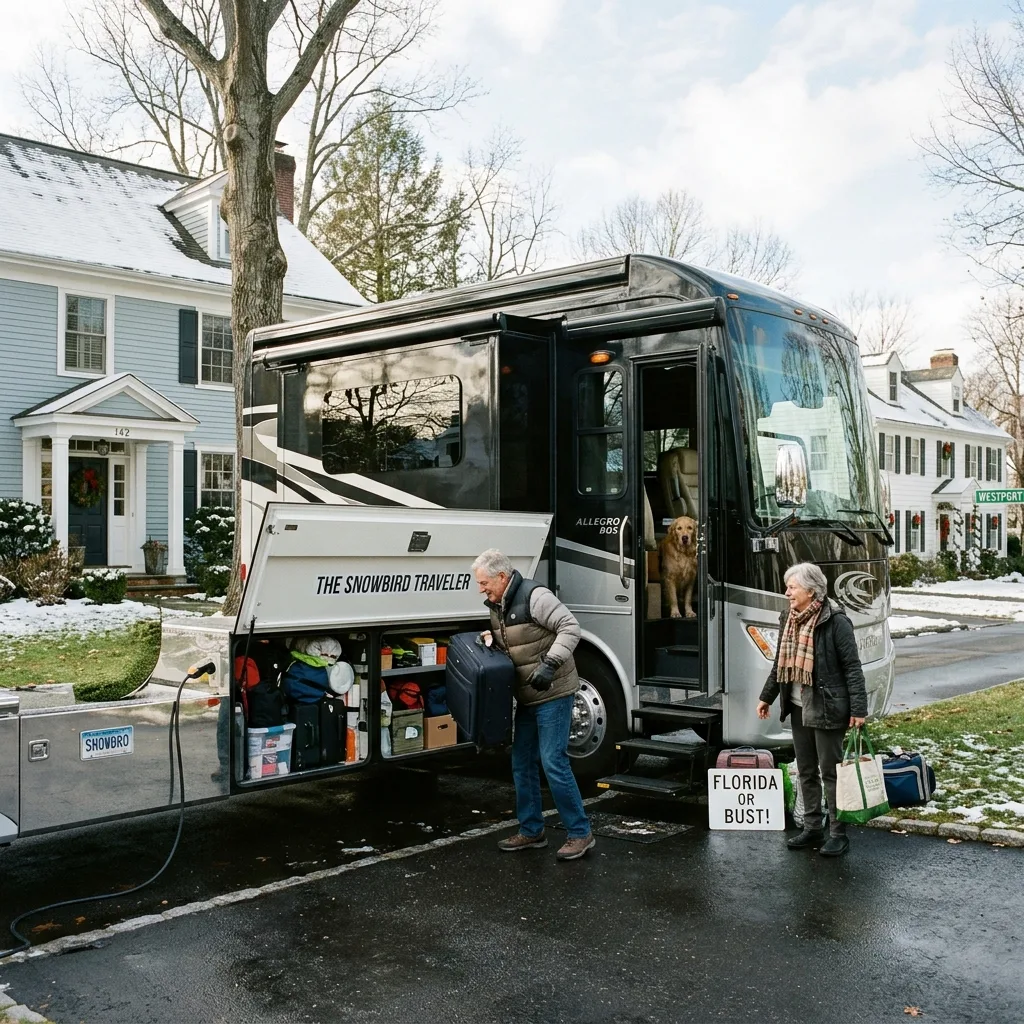
The following four case studies are composites drawn from typical client profiles in the Connecticut market. Names and identifying details are abstracted, but the vehicle types, towns, and dollar figures reflect actual market conditions and Zero Tax Tags pricing.
The Greenwich Hedge Fund Manager
A Greenwich-based portfolio manager owns a Ferrari 488 GTB acquired new for $260,000 and a Porsche Cayenne GTS acquired for $120,000. Combined Connecticut sales tax at the moment of purchase, both at the 7.75 percent luxury rate, came to $29,450. The Ferrari, parked in a heated garage and used roughly twenty weekends a year, generates an annual Greenwich property tax bill of roughly $1,970 in year one. The Cayenne, used as a daily driver, generates a year-one bill of roughly $911. Combined annual property tax in year one is just under $2,900, and even in tax-friendly Greenwich the five-year property tax burden across the two vehicles approaches $11,500. Total Connecticut tax exposure across both vehicles over five years exceeds $40,000.
By forming a single Montana LLC and registering both vehicles through it, the same owner pays roughly $2,623 in year one for both vehicles combined, including LLC formation and both registrations. Annual renewals across years two through five run a few hundred dollars per vehicle, totaling well under $5,000 across the full five-year window for both cars together. Aggregate Montana cost across five years for both vehicles: under $7,000. Aggregate Connecticut cost: north of $40,000. Net savings: more than $33,000 over five years.
The Westport RV Snowbird
A retired couple in Westport owns a $185,000 Class A motorhome that they take out for six to eight weeks of travel each summer and store under cover the rest of the year. Connecticut sales tax at purchase: $14,338 at the 7.75 percent rate. Year-one property tax on the Westport mill rate of 18.86: assessed value of $116,550 multiplied by 18.86 mills equals $2,198. Across five years, the depreciation curve drops the bill modestly, but the cumulative property tax still totals approximately $9,000. Add the upfront sales tax and the five-year Connecticut total reaches roughly $23,300.
The Montana LLC alternative for an RV in this price range runs $1,699 in year one, including LLC formation, with annual renewals of roughly $368 in years one through four and $237 thereafter. Five-year Montana total: approximately $3,171. Net savings against the Connecticut path: roughly $20,000 over five years. The motorhome receives Montana plates, the same coach travels exactly the same routes the couple has driven for years, and the annual property tax bill from Westport simply stops arriving.
The Hartford Contractor
A general contractor based in Hartford runs three Ford F-450 work trucks at $72,000 each. Total fleet acquisition cost: $216,000. Combined Connecticut sales tax at 7.75 percent: $16,744. Annual property tax per truck in Hartford at the capped 32.46 mill rate: $72,000 multiplied by 90 percent depreciation, by 70 percent assessment ratio, by 32.46 mills, equals $1,473 per truck per year in year one, or $4,419 across the fleet. Across five years the property tax burden across the three trucks runs over $15,000. Combined five-year Connecticut tax cost across the fleet exceeds $32,000.
The Montana LLC alternative consolidates all three trucks under a single entity. LLC formation fee paid once. Sales tax on all three trucks: zero. Annual registration on each truck under the Zero Tax Tags pricing model averages out to a few hundred dollars per vehicle per year. Across five years, the total Montana cost for all three trucks combined comes to roughly $5,500. Net savings: north of $26,000 over five years on a fleet that simply continues operating exactly as before, with the same drivers, the same routes, and the same insurance.
The Fairfield Classic Car Collector
A Fairfield-based collector owns six vehicles. The collection includes a 1998 BMW M3 in factory configuration, which qualifies for Connecticut’s $500 minimum classic assessment. It also includes a 2001 Porsche 911, which on paper meets the 20-year age threshold but has been refreshed mechanically over the years, putting its qualification for the original condition exemption in serious doubt. The crown jewel is a brand-new 2025 Porsche 911 GT3 acquired at $230,000.
The GT3 alone triggered $17,825 in Connecticut sales tax at the 7.75 percent rate. Its year-one Fairfield property tax bill at the 28.39 mill rate runs $4,114, and across five years the property tax on this single car exceeds $14,000. Across all six vehicles in the collection, factoring in the BMW’s classic exemption, the Porsche’s contested status, and the modern halo car’s full assessment, the collector’s five-year Connecticut tax exposure approaches $50,000 if we include both upfront sales tax on recent acquisitions and ongoing property tax across the holdings.
Restructuring the collection under a single Montana LLC consolidates all six vehicles under one entity. Sales tax on the GT3 had it been originally Montana-titled: zero. Combined annual carrying cost across all six vehicles averages a few thousand dollars per year, declining as the older vehicles roll past the eleven-year mark and convert to permanent registration. Five-year Montana total across the entire collection: under $11,000. Net savings: more than $35,000 over five years, with the additional benefit that the older vehicles eventually graduate to permanent registration and stop generating any annual fees at all.
Who Benefits Most from Montana LLC Registration

The Montana LLC structure is most economically powerful for certain categories of Connecticut vehicle owners. The list below covers the highest-value matches.
- Owners of any single vehicle valued above $50,000, where the 7.75 percent luxury surcharge alone produces savings of $3,875 or more in year one.
- Multi-vehicle households where consolidating registrations under a single LLC eliminates per-vehicle property tax bills across the full collection.
- Owners of motorhomes, fifth-wheels, and travel trailers where the combination of high purchase price and limited annual usage makes Connecticut property tax especially punishing on a per-mile basis.
- Collectors of modern halo cars, exotics, and limited-production vehicles where MSRP-based depreciation creates large recurring property tax bills that bear no relationship to actual usage.
- Small contractor and tradesperson fleets running two or more work trucks where each individual vehicle generates its own annual property tax assessment.
- Owners of motorcycles, ATVs, UTVs, side-by-sides, snowmobiles, trailers, and boats, all of which receive permanent Montana registration with no annual renewal cycle.
- Snowbirds and dual-state residents whose vehicles spend significant time outside Connecticut but are still subject to full assessment based on October 1 registration address.
- Buyers of brand-new high-MSRP vehicles where the depreciation schedule locks in elevated property tax assessments for years to come.
- Residents of high-mill-rate municipalities like Bridgeport, New Haven, Hartford, Waterbury, and other cities where the annual property tax bill compounds quickly across ownership years.
- Anyone buying a vehicle that they expect to keep for more than three years, where the cumulative property tax begins to dwarf the original sales tax.
How Zero Tax Tags Gets You Registered

Zero Tax Tags handles the entire Montana LLC formation and vehicle registration process from end to end. The client provides basic information about themselves and the vehicle. Zero Tax Tags handles every other step, including LLC formation with the Montana Secretary of State, EIN issuance with the IRS, registered agent service inside Montana, vehicle title transfer, county treasurer registration, plate issuance, and physical document delivery. The plates and registration documents arrive at whatever address the client specifies, ready to be installed on the vehicle.
The pricing structure is transparent and predictable.
The $899 year-one figure for vehicles under $150,000 includes $699 for the registration service itself plus $200 for the one-time Montana LLC formation. The LLC formation fee is paid only once. Every additional vehicle added to the same LLC during the same calendar year, or in subsequent years, is processed at the per-vehicle service rate without paying the LLC formation fee again. A client who registers three vehicles through one LLC pays the $200 formation fee only on the first vehicle.
| Day 1: | Submit your MCO and supporting paperwork through our secure portal. We review for completeness and file your Montana LLC the same day. |
| Days 1–2: | Montana LLC formation complete — same business day in most cases, second business day at the latest. |
| Days 2–4: | Title transferred into the LLC name at the Montana county treasurer. |
| Days 4–7: | Permanent Montana plates shipped directly to your door within 3–5 business days of title completion. |
The full process typically completes inside three weeks. Many clients receive their plates faster, depending on Montana DMV processing times during peak weeks. The client never has to travel to Montana, never has to interact with the Montana DMV directly, and never has to manage paperwork beyond signing the documents that Zero Tax Tags prepares.
Frequently Asked Questions

How much does the Montana LLC cost in the first year?
The first-year package for cars, trucks, and SUVs valued under $150,000 costs $899 total. That figure breaks down as $699 for the Zero Tax Tags registration service and $200 for the one-time Montana LLC formation. Vehicles valued above $150,000 carry a first-year cost of $1,724. RVs valued above $150,000 are $1,699. The LLC formation fee is paid only once for the life of the entity.
Can I register multiple vehicles under the same LLC?
Yes. A single Montana LLC can hold any number of vehicles under its ownership. The $200 LLC formation fee is paid one time, and every additional vehicle added to the LLC pays only its own per-vehicle registration. Families with multiple cars, collectors with several vehicles, and small fleet operators all benefit from consolidating under a single LLC.
What happens after the vehicle turns eleven years old?
Montana issues permanent registration on cars, trucks, and SUVs once they reach eleven years of age. Permanent means there is no annual renewal, no annual fee, and no recurring paperwork for the rest of the vehicle’s life. Motorcycles, ATVs, UTVs, snowmobiles, trailers, and boats receive permanent registration immediately, regardless of age.
Do I have to travel to Montana?
No. The entire process is handled remotely by Zero Tax Tags. The client signs documents electronically or by mail, and the plates are shipped to the address the client specifies. There is no travel requirement at any point in the process.
What about Connecticut emissions and inspection requirements?
Connecticut’s emissions program applies to vehicles registered in Connecticut. A vehicle registered to a Montana LLC carries Montana plates and is on Montana’s registration framework, which has its own rules for vehicle compliance. Most clients find that the Montana approach simplifies their compliance picture rather than complicating it.
How does the LLC handle insurance?
Insurance is structured to name the LLC as the registered owner of the vehicle. Zero Tax Tags works with insurance partners experienced in Montana LLC vehicle policies, and most major carriers will write policies with the LLC as the named insured. Clients typically continue with the same insurance company they have used for years; only the named owner on the policy changes.
What if I sell the vehicle later?
Selling a vehicle out of a Montana LLC is straightforward. The LLC executes the title transfer to the new buyer, just as any individual seller would. The Montana title is widely recognized and accepted in private and dealer transactions across all fifty states. Many buyers actually prefer Montana titles because of the clean tax history.
Does the Montana LLC need to file taxes?
The Montana LLC files an annual report with the Montana Secretary of State, which Zero Tax Tags handles as part of the renewal service. Single-member LLCs are typically treated as disregarded entities for federal tax purposes, meaning the LLC itself does not file a separate federal income tax return. Zero Tax Tags maintains the Montana state filing and registered agent service for the life of the entity.
See how Montana LLC registration helps owners in other high-tax states:
- Vermont Vehicle Tax: The P&U Tax Trap and Annual Inspections
- Maryland Vehicle Tax: The 6.75% Excise Trap
- Minnesota Vehicle Tax: MVST and Tab Fees
- Ohio Vehicle Tax: The Rust Belt Shakedown
- Virginia Car Tax: The Highest Vehicle Tax in America
Ready to Stop Overpaying Connecticut Vehicle Tax?
Connecticut vehicle owners have saved millions through Montana LLC registration. Your zip code shouldn’t determine how much you pay to own a car. You’re next.