
23 min read
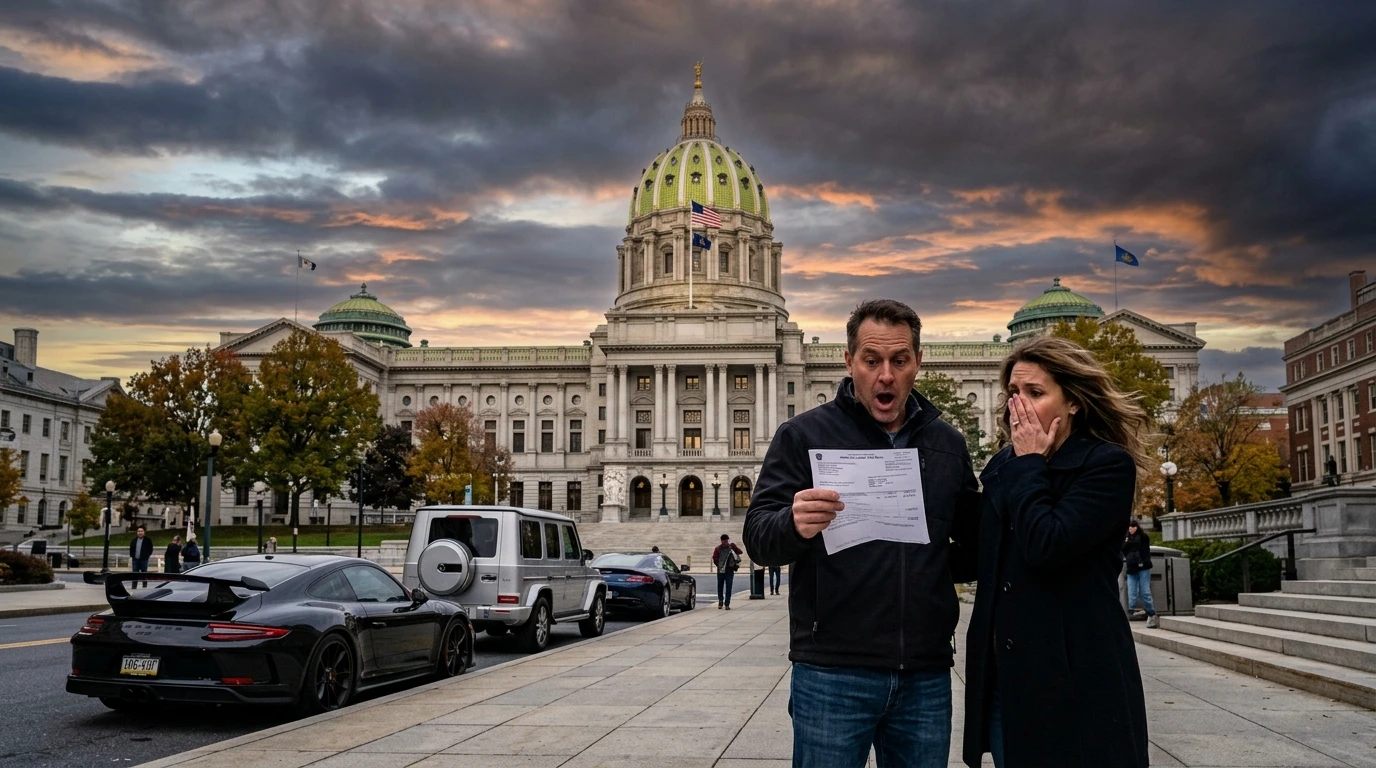
Pennsylvania vehicle tax is a three-tiered system most buyers never see coming until they’re staring at a five-figure bill in the dealership finance office. The Commonwealth charges 6% on the full purchase price of every vehicle, but Philadelphia residents pay 8%, and Allegheny County (Pittsburgh) pays 7%. Stack on a $58 title fee, mandatory annual safety inspections, emissions testing in 25 counties, and a Motor Vehicle Understated Value Program that lets the Commonwealth override your reported sale price, and you have one of the most aggressive vehicle tax systems east of the Mississippi.
Robert “Rob” Gallagher, 48, an attorney at a Center City Philadelphia firm, learned this last spring. He walked into a Bucks County dealership and signed for a $118,000 BMW M8 Competition Gran Coupe. He’d done his homework: 6% Pennsylvania vehicle tax, $7,080 budgeted, ready to write the check. The finance manager slid the paperwork across the desk. The number at the bottom was $9,440.
Rob lived on Rittenhouse Square. Philadelphia adds a 2% city sales tax on top of the 6% state rate, for a combined 8%. On a $118,000 BMW, that extra 2% was $2,360. His friends in Chester County paid 6% and laughed it off. Rob paid the Philadelphia premium. He could have moved his garaging address ten miles west and saved enough to lease a Tesla Model 3 for two years.
Rob’s $2,360 surprise is just the start. This article breaks down why, and how a Montana LLC registration eliminates Pennsylvania’s 6%, 7%, and 8% rates entirely. You can find official rate information at the Pennsylvania Department of Revenue.
On this page
- + Understanding Pennsylvania Vehicle Tax: The 6%, 7%, and 8% Problem
- + County-by-County Rate Breakdown
- + The Real Five-Year Cost
- + Pennsylvania’s Hidden Tax Traps
- + Who Pennsylvania Punishes Most
- + Three Real Case Studies
- + The Montana Solution
- + Is This Legal?
- + Who Benefits Most
- + Our Process
- + Who This Is Built For
- + Frequently Asked Questions
Understanding Pennsylvania vehicle tax: the 6%, 7%, and 8% problem
Pennsylvania vehicle tax looks simple at first glance: 6% on the purchase price of every motor vehicle titled in the Commonwealth. Six percent. That is what every dealer quotes when you walk on the lot. Six percent of $50,000 is $3,000. Painful, but easy math.
Except it is not the whole story. Pennsylvania runs a three-tier system that has nothing to do with the kind of car you buy and everything to do with your zip code.
The three-tier system
Tier one is everyone outside the two metro exceptions: Lancaster, Erie, Harrisburg, the Lehigh Valley, and 65 other counties pay 6% flat. That covers the majority of the Commonwealth’s population.
Tier two is Allegheny County. Pittsburgh, Mt. Lebanon, Fox Chapel, Sewickley, Cranberry Township: 7% total. Six percent to the Commonwealth, one percent to the county. On a $50,000 SUV, that extra 1% adds $500 you would not pay twenty miles east in Westmoreland County.
Tier three is Philadelphia. The 2% city sales tax on top of the 6% state rate produces an 8% combined rate, the highest in the Commonwealth and among the highest in the Northeast. On a $100,000 vehicle, a Philadelphia address costs $2,000 more than a Bucks County address fifteen minutes up I-95. The premium is purely geographic.
The stacking layers
Here is what actually gets piled on every Pennsylvania vehicle purchase:
The MVUVP trap
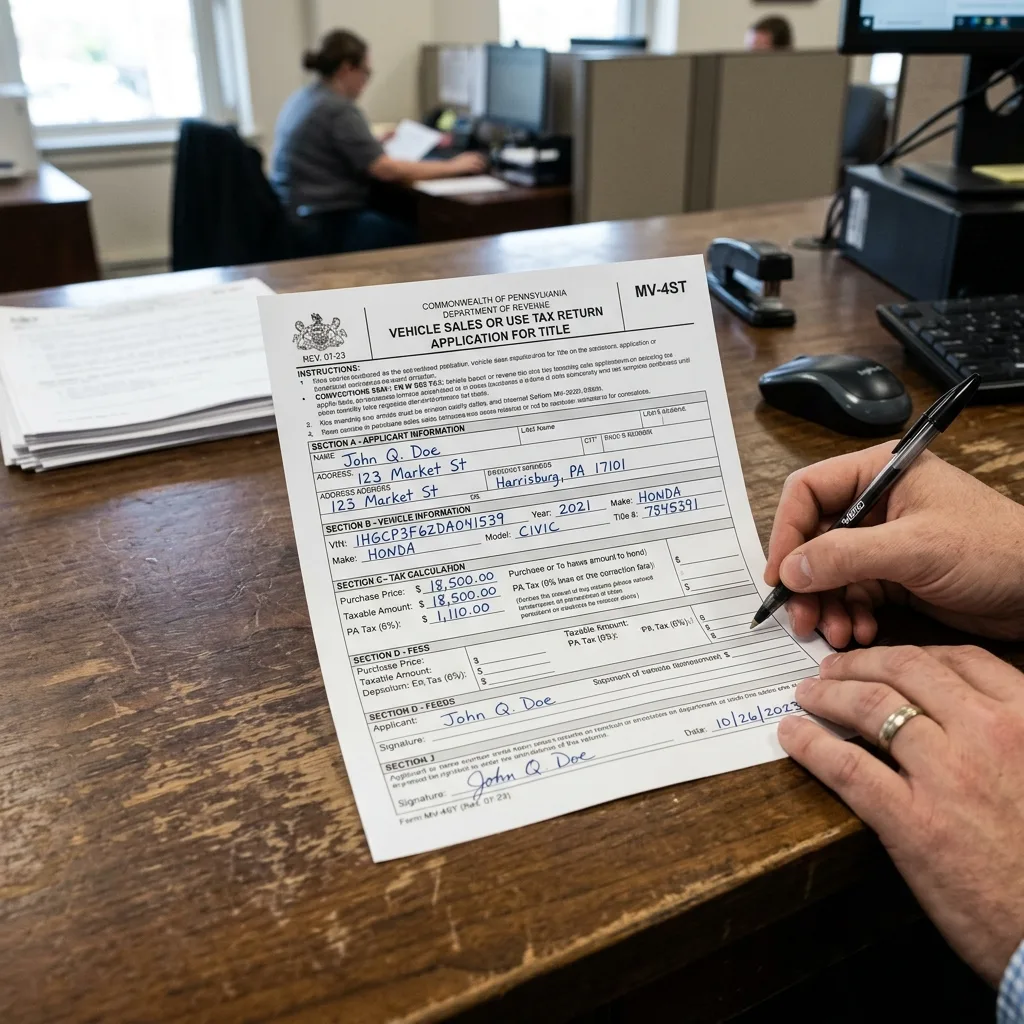
Pennsylvania’s Motor Vehicle Understated Value Program (MVUVP) is a quiet override switch most buyers have never heard of. When you buy a used car and report the sale price to PennDOT, the Commonwealth runs that number through an automated system that cross-references NADA values, comparable sales in your zip code, and a confidential algorithm. If it flags your price as too low, you get a Notice of Reassessment: the Commonwealth believes your vehicle was worth more than you paid, and you owe additional sales tax on the difference.
You can fight it with photos, repair estimates, and mechanical inspection reports. But the burden of proof is on you. A 2018 Tesla Model S purchased from a friend for $22,000 because the battery had degraded? If the system pegs fair market value at $35,000, you may owe tax on the $13,000 gap: $780 at 6%, $1,040 in Philadelphia at 8%. Pennsylvania vehicle tax is not just your rate times what you paid. It is your rate times what the Commonwealth decides the car was worth.
Trade-in credit (and its limits)
Pennsylvania offers a trade-in credit with no dollar cap at licensed dealerships. Trade in a $40,000 vehicle against a $90,000 purchase and your taxable basis drops to $50,000. At 8% in Philadelphia, that saves $3,200. Private-party sales do not qualify for trade-in credit. If you sell your car on Facebook Marketplace for $30,000 and use the cash to buy a $60,000 truck from another private seller, you owe your full rate on $60,000. Dealer rebates and manufacturer incentives do reduce the taxable base. Family transfers and gifts are exempt with Form MV-13ST, but only between qualifying relatives.
County-by-county rate breakdown
The geography of Pennsylvania vehicle tax punishes you for living in the wrong zip code. Here is exactly where the lines are drawn:
Major metro comparison
Here is what the same $100,000 vehicle costs in sales tax across Pennsylvania’s three largest metro markets:
The geography premium: A Rittenhouse Square address vs. a Wayne or Bryn Mawr address (just 12 miles apart) costs you 2% on every vehicle purchase. On Rob Gallagher’s $118,000 BMW M8, that’s $2,360. On a $200,000 Bentley Continental, it’s $4,000. On a $300,000 Rolls-Royce Cullinan, it’s $6,000. Pennsylvania doesn’t tax wealth. It taxes zip codes.
The real five-year cost

The sales tax is only the opening payment. Pennsylvania vehicle tax compounds across five years through annual registration, mandatory inspections, emissions testing where applicable, and the capital cost of an upfront tax bill. Here is what five Pennsylvania vehicle profiles actually cost over five years, compared with a Montana LLC registration:
Pennsylvania calculations include sales tax (6%, 7%, or 8%), $58 title fee, $39 to $162 annual registration, $5 annual Fee for Local Use, $58 to $130 annual inspection (safety plus emissions), and documentation. Montana LLC calculations use $899 Year 1 plus $368 per year for cars under $150,000, $1,724 Year 1 plus $368 per year for cars over $150,000, and $1,699 Year 1 plus $368 per year for RVs over $150,000. Montana LLC structures eliminate Pennsylvania sales tax, registration, inspections, and the Fee for Local Use entirely.
The math gets exponential: A Pittsburgh resident with a $220,000 Class A RV saves $12,502 over five years. That’s not a tax break. That’s a kid’s first year at Penn State paid for, with money left over for the textbooks.
Pennsylvania’s hidden tax traps
Pennsylvania vehicle tax has three traps the brochure never mentions. The Commonwealth’s code is written so that even prepared buyers walk into a transaction expecting one number and walk out paying another.

Trap 1: The MVUVP “market value trap”
The Motor Vehicle Understated Value Program is Pennsylvania’s quiet override switch. When you submit your title application with a reported sale price, PennDOT cross-references it against NADA values, comparable sales in your zip code, and a confidential algorithm. If your price triggers the system, the Commonwealth sends a Notice of Reassessment: they believe the car was worth more than you paid and you owe additional sales tax on the gap.
You can fight it with photos, repair estimates, and mechanical inspection reports. But the burden of proof is on you, not the Commonwealth. A 2018 Tesla Model S bought from a friend for $22,000 because the battery had degraded? If the system says fair market value is $35,000, you may owe tax on the $13,000 difference: $780 at 6%, $1,040 at Philadelphia’s 8%. Many private-party buyers never knew their bargain came with a built-in tax audit.
Trap 2: Annual inspection double-trap
Pennsylvania mandates annual safety inspections in all 67 counties. Every year. No exemption for vehicle age, mileage, or garage queen status. Cost runs $15 to $20 per inspection, not counting any repairs the inspector flags.
On top of that, 25 counties require annual emissions testing, covering the entire Philadelphia metro (Bucks, Chester, Delaware, Montgomery, Philadelphia), the Pittsburgh area (Allegheny, Beaver, Washington, and others), and the Lehigh Valley. In those counties, your annual inspection cost runs $30 to $50 in fees alone. Miss your inspection sticker and you face a $100 to $250 fine plus possible towing. Pennsylvania vehicle tax does not end at the dealership. It comes due every twelve months.
Trap 3: The 30-day rule for new residents
Move to Pennsylvania from another state and you have 30 days to register your vehicles with PennDOT. The trap: if you purchased your vehicle within 30 days before establishing Pennsylvania residency, the Commonwealth treats the purchase as if it were made by a Pennsylvania resident, and use tax applies on the full price, with credit only for sales tax already paid to your prior state if that state has a reciprocal agreement.
A New Yorker who buys a $90,000 Audi Q8 in Manhattan three weeks before closing on a Philadelphia condo can walk in expecting to keep their New York registration and instead find Pennsylvania assessing 8% use tax, minus a partial credit for what New York already collected. The credit math gets messy when rates differ. Many new arrivals write checks they never budgeted for.
Who Pennsylvania punishes most
Pennsylvania vehicle tax is not evenly distributed pain. Some buyers absorb it as a rounding error. Others lose tens of thousands of dollars over a decade. Four profiles get hit hardest:
Profile 1: The Philadelphia luxury buyer
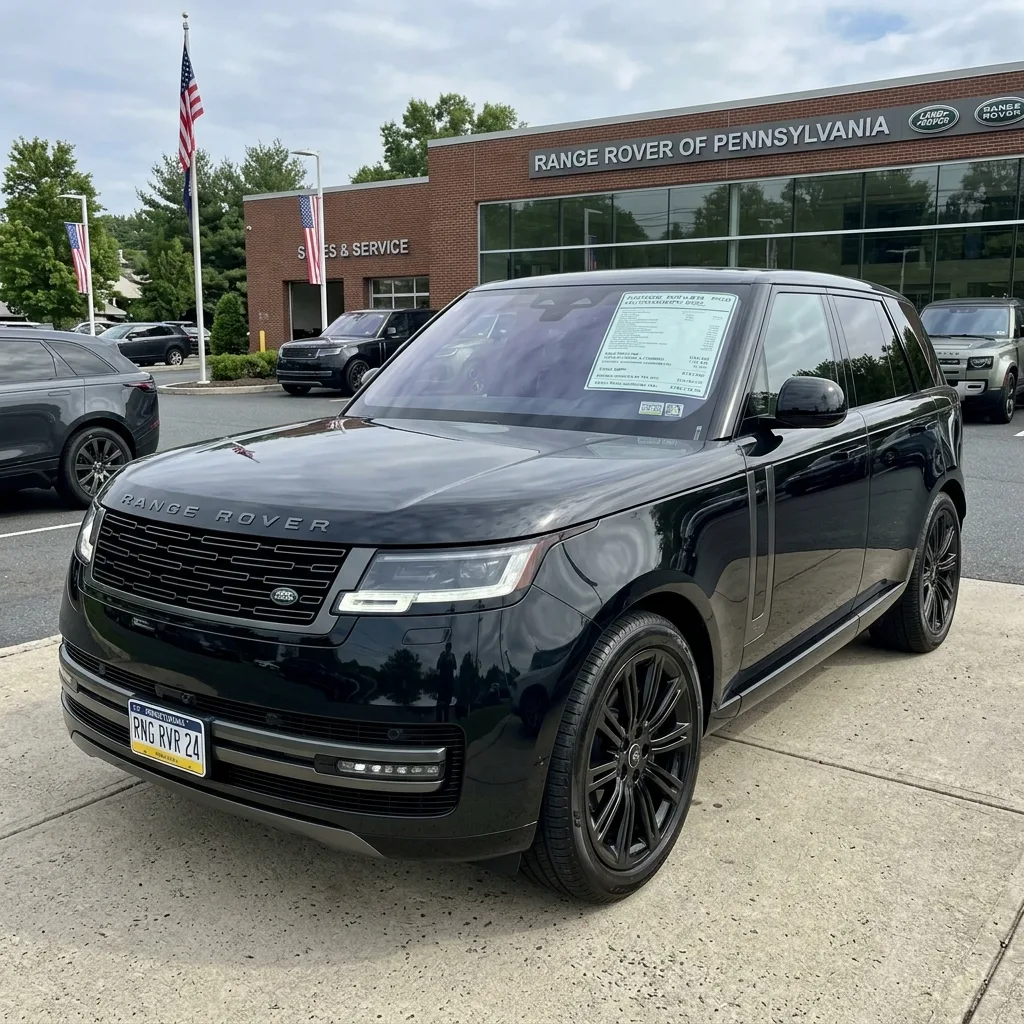
Philadelphia’s 8% combined rate is the most punishing in the Commonwealth. If you live anywhere within the city limits, from Society Hill to Chestnut Hill, every dollar over $50,000 in vehicle price hurts more than it should. A $150,000 Mercedes G-Wagon costs $12,000 in Philadelphia sales tax. The same vehicle, titled to a Bryn Mawr address fifteen minutes away, costs $9,000. That $3,000 Philadelphia premium is pure geography.
For luxury buyers who upgrade every three to four years, the 2% premium compounds. Three luxury upgrades over ten years at an average $130,000 each adds $7,800 in pure Philadelphia surcharge, on top of the $23,400 in state-level sales tax. Philadelphia luxury buyers pay more in vehicle tax than residents of 47 other states would pay on the same cars.
Profile 2: The Pittsburgh Allegheny County buyer
Allegheny County’s 7% rate adds 1% to every vehicle purchase compared to Westmoreland, Butler, Washington, or Beaver County. On a $90,000 SUV, that is $900. On a $200,000 RV, it is $2,000. County neighbors literally next door in Cranberry Township (Butler County) or Murrysville (Westmoreland County) pay 6% flat at the same dealer for the same vehicle.
Profile 3: The RV and motorcoach owner
Pennsylvania does not exempt RVs or motorcoaches from sales tax. Class A diesel pushers running $300,000 to $700,000, fifth-wheel toy haulers at $80,000 to $150,000, and Class B Sprinter conversions at $150,000 to $250,000 all pay full sales tax on the full purchase price. A $400,000 Newmar Dutch Star bought by a Philadelphia resident generates $32,000 in sales tax. A Pittsburgh buyer pays $28,000. A Lancaster buyer pays $24,000. RV owners get hit especially hard because they typically drive across state lines for months at a stretch, yet Pennsylvania charges full freight as if the rig never left Center City.
Profile 4: The frequent upgrader and enthusiast
Pennsylvania residents who cycle through vehicles every 18 to 36 months pay sales tax on every purchase. Trade-in credit helps at the dealer, but enthusiasts who buy and sell privately on Bring a Trailer, Hemmings, or Cars and Bids get full sales tax on each purchase with no offsetting credit. A collector who buys a $90,000 Porsche GT3, sells it privately 18 months later, then buys a $120,000 BMW M5 has paid $5,400 on the Porsche and $7,200 on the M5: $12,600 in sales tax with no offset. Over a decade, a frequent upgrader can easily clear $50,000 to $100,000 in cumulative Pennsylvania vehicle tax.
Three real case studies
Here are three Pennsylvania vehicle owners showing how the tax actually plays out, and what each saved with a Montana LLC registration.
Case 1: Rob Gallagher, Center City Philadelphia attorney
Rob Gallagher is the 48-year-old Center City attorney from our opening. His $118,000 BMW M8 Competition Gran Coupe, registered to his Rittenhouse Square address, generated a $9,440 Philadelphia sales tax bill at 8%. He’d budgeted $7,080. The $2,360 surprise stung. The five-year carrying cost stings worse.
Over five years in Philadelphia, Rob’s BMW will cost $9,440 in sales tax, $290 in registration fees, $25 in Fee for Local Use, $58 title fee, and roughly $300 in safety and emissions inspections (Philadelphia is an emissions county). Total five-year tax burden: $9,728.
Through a Montana LLC, Year 1 would have been $899, Years 2 through 5 at $368 each, for a five-year total of $2,371. Total savings: $7,357. Rob’s wife drives a $95,000 Audi Q7 also titled to Philadelphia. Their combined household sales tax on just these two vehicles is $17,040 over a five-year cycle. A Montana LLC structure for both cuts that to roughly $4,742. Twelve thousand dollars back in the family’s pocket.
Case 2: Sarah Chen, Malvern Main Line collector
Sarah Chen, 55, is a managing partner at a King of Prussia consulting firm living in Malvern, Chester County, where the rate is 6%. She is a rotating collector who buys, drives 18 to 24 months, and trades up. Over the past two years: a $115,000 Porsche 911 Turbo S, a $135,000 Range Rover SV Autobiography, and a $100,000 Lexus LX 600. Total purchase price: $350,000. Total Pennsylvania sales tax paid: $21,000.
Sarah traded at licensed dealers and captured partial trade-in credits, but her trade-in values lagged purchase prices by $10,000 to $15,000 each cycle. Two years of Sarah’s enthusiast habit cost $21,000 in sales tax, about $10,500 per year to the Commonwealth.
She set up a Montana LLC last quarter and titled her current Lexus through it. Year 1: $899. Ongoing: $368 per year. When she trades the Lexus next year, the new vehicle goes directly into the LLC. No 6% sales tax, no trade-in credit paperwork. Projected savings over the next two years, assuming her pattern holds: $21,000.
Case 3: Mike Donovan, Pittsburgh RV owner
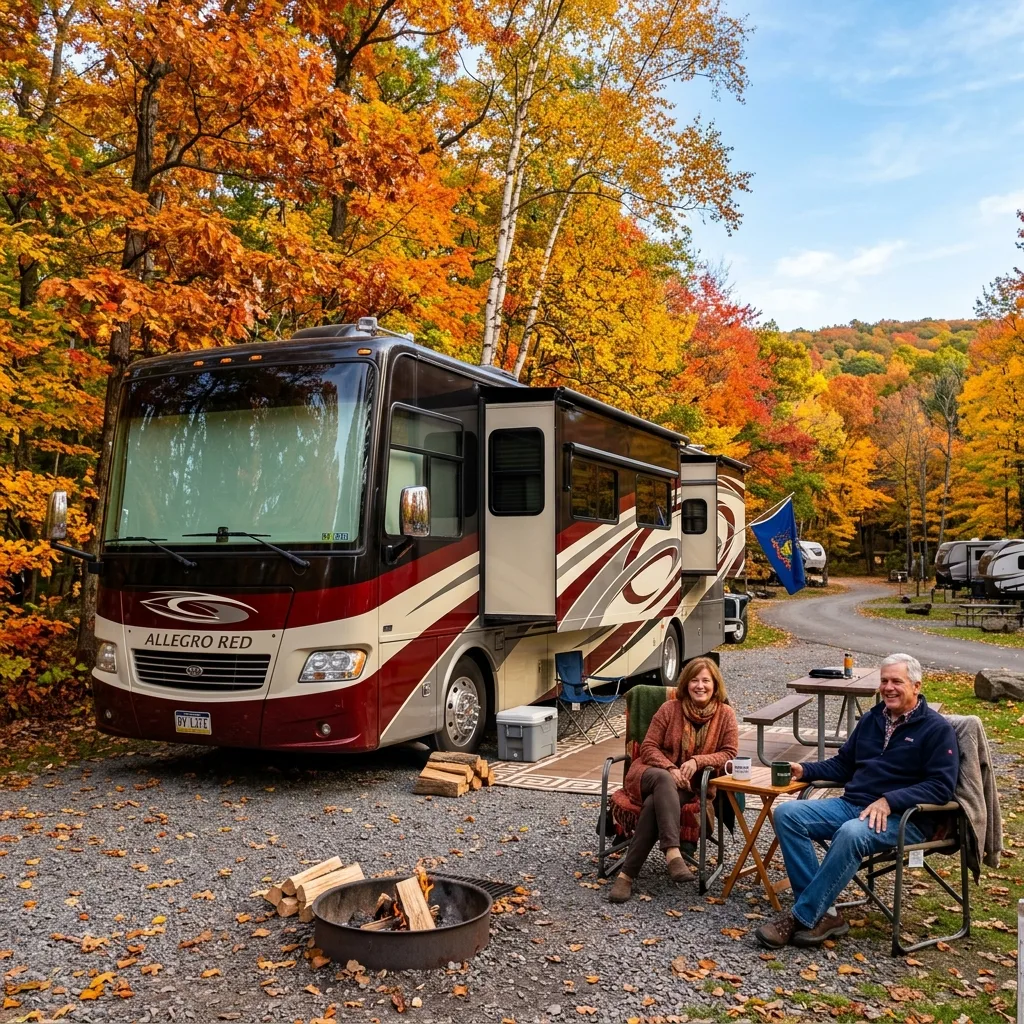
Mike Donovan, 62, is a recently retired structural engineer from Mt. Lebanon in Allegheny County. He rewarded himself with a $195,000 Tiffin Allegro Bus, a 45-foot Class A diesel pusher with every available option. His Pittsburgh dealer handed him the paperwork. Allegheny County combined rate: 7%. Sales tax on $195,000: $13,650. He had budgeted $11,700 (the 6% rate he’d read about). The Allegheny County add-on cost him an unbudgeted $1,950.
Annual costs stack up from there: $162 registration, $50 for emissions and safety inspection (Allegheny is an emissions county), $5 Fee for Local Use. Five-year recurring cost: $1,085. Five-year total Pennsylvania burden: $14,793.
Mike found Zero Tax Tags through a fellow owner at a Newmar rally and registered a Montana LLC for the Tiffin. Year 1: $1,699. Year 2 forward: $368 per year. Five-year Montana cost: $3,171. Five-year savings versus Pittsburgh: $11,622. Mike used the savings to fuel an entire summer’s national park tour.
The Montana solution
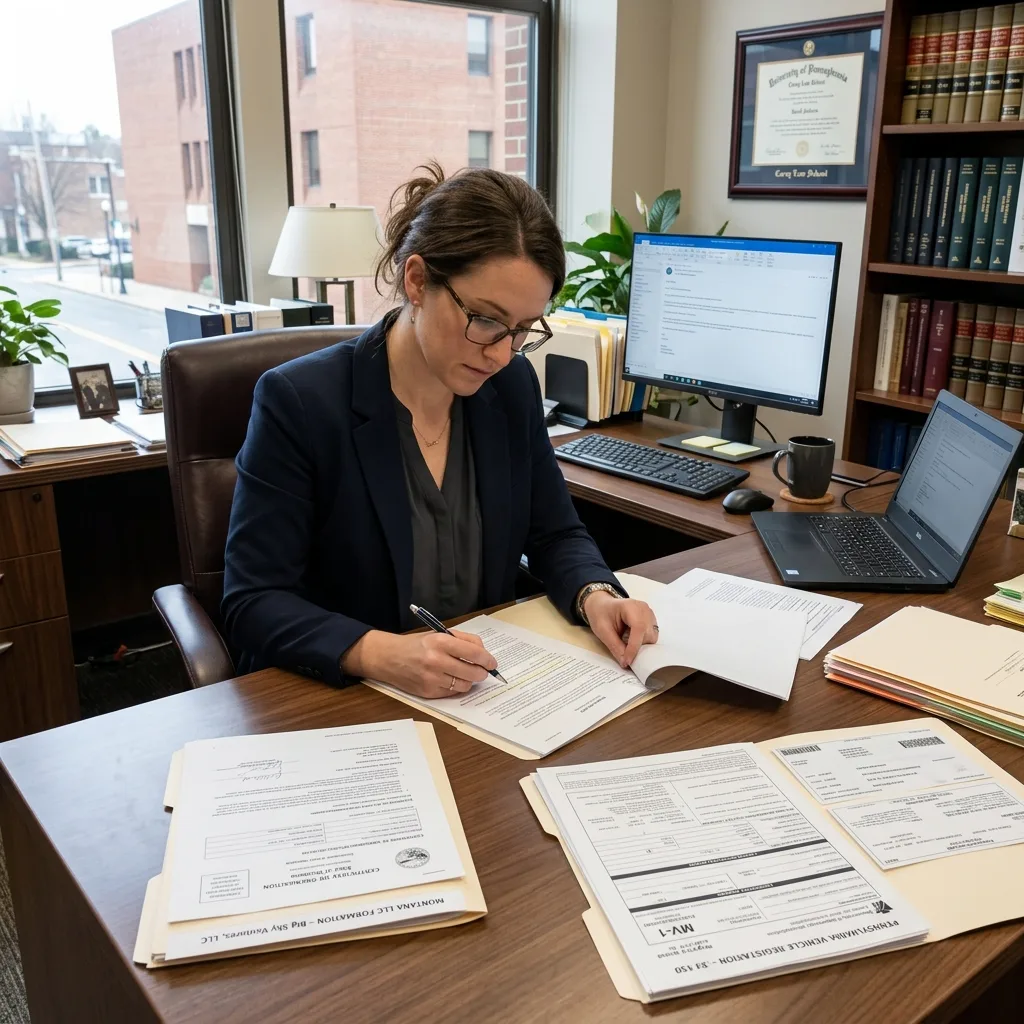
Montana is the one state in America that charges no sales tax on motor vehicles. Zero. Not 6%. Not 7%. Not 8%. Zero. Buy a $200,000 truck, a $1.2 million Ferrari, or a $400,000 Class A motorcoach in Montana, and the sales tax line on the title application reads $0.00. This is not a loophole. It is Montana state law, on the books for decades.
Montana also charges no property tax on personal vehicles, no annual emissions testing, and no annual safety inspections. Permanent registration plates are available for vehicles older than eleven model years, replacing all future registration cycles with a one-time fee. The state does charge modest registration fees and a small EV fee for electric and plug-in hybrid vehicles, but the total annual cost runs a fraction of what Pennsylvania residents pay.
How the LLC structure works
You cannot just drive to Helena on Tuesday and register your car in Montana. To use Montana’s tax structure, the vehicle must be owned by a Montana entity. The standard structure is a Montana Limited Liability Company. The LLC is a legitimate Montana business, registered with the Montana Secretary of State, with a Montana registered agent, a Montana mailing address, and Montana titles. The LLC owns the vehicle. The LLC registers the vehicle in Montana. The vehicle wears Montana plates.
You, the human, are the manager of the LLC. You can drive the vehicle anywhere in the United States, including back home in Pennsylvania. Driving an out-of-state-registered vehicle owned by a legitimate business entity is legal under Pennsylvania law and federal interstate commerce protections. The registration follows the owner. The owner is the LLC. The LLC is a Montana resident.
What Montana eliminates for Pennsylvania residents: 6%, 7%, or 8% sales tax. Annual safety inspections. Annual emissions tests. Fee for Local Use. MVUVP audits. Plate transfer fees. The administrative burden of Pennsylvania’s vehicle bureaucracy.

Is this legal?
Yes. Montana LLC vehicle registration is legal when properly structured. The arrangement has been in continuous use for over four decades. Hundreds of thousands of vehicles, from collector Ferraris to retirement-grade RVs to working pickup trucks, are titled to Montana LLCs and driven across all 50 states without issue.
A Montana LLC is a legal Montana entity. Montana law permits LLCs to own and register vehicles. The Montana Department of Justice issues titles and registrations to LLC-owned vehicles like any other Montana resident’s vehicle. Once titled and registered in Montana, the vehicle is a Montana vehicle. Federal interstate commerce protections permit out-of-state-registered vehicles to be driven in any state.
The formalities matter
The structure works only when you respect the formalities. Your Montana LLC must be real: registered with the Montana Secretary of State, current on annual report filings, holding a Montana mailing address through a registered agent, and properly titled as the vehicle’s owner. You must not represent yourself as the personal owner of the vehicle on insurance, in tax filings, or in any other state’s records. The LLC owns the car. You manage the LLC. That distinction is everything.
A few states have challenged loosely structured Montana LLCs. California, Massachusetts, and Minnesota have at various times pursued residents caught with paper-thin arrangements: no operating agreement, no separate insurance, daily-driver use, no documentation tying the vehicle to LLC business. Pennsylvania has not mounted a sustained challenge to Montana LLC vehicle registrations. There is no Pennsylvania Department of Revenue task force hunting Montana plates on the streets of Philadelphia or Pittsburgh.
Pennsylvania’s posture
Pennsylvania law focuses on residency triggers and use tax on vehicles brought into the state for permanent garaging. A vehicle owned by a Montana LLC is owned by a Montana entity, not a Pennsylvania resident. As long as the structure is real, the vehicle is properly insured, and you are not misrepresenting ownership to Pennsylvania authorities, you are operating within the law.
Zero Tax Tags structures every Montana LLC with the formalities that make the arrangement legitimate: operating agreements, registered agent, annual reports, proper insurance. The work that a properly structured LLC requires is what separates a real business entity from a paper shell.
Who benefits most
Montana LLC vehicle registration delivers the biggest financial wins for these seven Pennsylvania resident profiles:
- Philadelphia luxury buyers ($75K+ vehicles). The 8% combined Philadelphia rate makes every six-figure vehicle a five-figure tax problem. Even a $90,000 vehicle generates $7,200 in city sales tax that disappears under a Montana LLC.
- Allegheny County residents purchasing $50K+ vehicles. The 7% Pittsburgh-area rate means every dollar over $50,000 triggers more than $3,500 in immediate sales tax that Montana eliminates.
- RV and motorcoach owners statewide. Class A diesel pushers, fifth-wheels, and Class B Sprinters routinely run $150,000 to $700,000. Pennsylvania’s full-rate sales tax on these vehicles is a six-figure problem over an ownership lifecycle.
- Frequent upgraders and car enthusiasts. Buyers who cycle through three or more vehicles in five years pay sales tax three or more times. Montana LLC structure pays itself off after the second purchase for most enthusiasts.
- Collectors with multi-vehicle garages. Owners with three to ten vehicles totaling $500,000+ in fleet value face cumulative Pennsylvania sales tax burdens of $30,000 to $80,000. A multi-vehicle Montana LLC consolidates that into a fraction of the cost.
- New PA residents within the 30-day window. Anyone moving into Pennsylvania with a recently purchased high-value vehicle faces immediate use tax exposure. A Montana LLC restructure before the 30-day clock runs out can eliminate that tax entirely.
- Snowbirds and part-time PA residents. Pennsylvania residents who spend half the year in Florida, Arizona, or the Carolinas should not be paying full Philadelphia or Pittsburgh sales tax on vehicles that spend six months in another state.
Our process
Zero Tax Tags is a full-service Montana LLC vehicle registration provider. We handle the entire process from LLC formation through title work through plate delivery, and we maintain the LLC’s compliance every year after that.
Pricing
Timeline
Your timeline, day by day:
| Day 1: | Submit your MCO and supporting paperwork through our secure portal. We review for completeness and file your Montana LLC the same day. |
| Days 1–2: | Montana LLC formation complete — same business day in most cases, second business day at the latest. |
| Days 2–4: | Title transferred into the LLC name at the Montana county treasurer. |
| Days 4–7: | Permanent Montana plates shipped directly to your door within 3–5 business days of title completion. |
Who This Is Built For
The Montana LLC is built for Pennsylvania vehicle owners who are done writing large checks to the Department of Revenue for the privilege of driving a vehicle they already own. The savings are most powerful for the following profiles.
Anyone purchasing a vehicle worth $25,000 or more. Pennsylvania’s 6% sales tax on a $40,000 purchase is $2,400 out the door. On a $100,000 vehicle it is $6,000. Montana eliminates that entirely, and the ZTT setup pays for itself before you finish your first year of ownership.
Philadelphia, Pittsburgh, and Main Line professionals. If your typical vehicle sits in the $55,000 to $130,000 range, you are handing Pennsylvania between $3,300 and $7,800 in sales tax at the dealership. That is real money that should stay in your account.
RV owners and retirees who travel. A $185,000 motorhome generates $11,100 in Pennsylvania sales tax. Campers, fifth wheels, and travel trailers all qualify for Montana permanent plates — one-time fee, no annual renewal. RV owners who move seasonally between states are among our highest-savings clients.
Business owners with multiple vehicles. One LLC holds your entire fleet. The $200 LLC formation fee is paid once. A contractor running three $70,000 trucks saves over $12,600 in Pennsylvania sales tax across that fleet alone.
Collectors and enthusiasts. Classic cars, exotics, and project vehicles all qualify. Multi-vehicle households see the savings compound across every registration cycle.
For vehicles under $20,000, call us before assuming the numbers don’t work. We’ll run your specific calculation free of charge. For anyone buying above that threshold, they almost always do.
Frequently asked questions
1. Do I really not have to pay any Pennsylvania sales tax on my vehicle?
Correct. When the vehicle is owned by a Montana LLC and titled in Montana, Pennsylvania does not assess sales tax on the purchase. There is no Pennsylvania title transaction. The vehicle is a Montana vehicle owned by a Montana entity. Pennsylvania sales tax applies to Pennsylvania titling events. Montana titling events trigger no Pennsylvania tax.
2. Is this legal in Pennsylvania?
Yes. Montana LLCs are legitimate legal entities. Pennsylvania law permits out-of-state-registered vehicles to be operated in the Commonwealth. As long as the LLC is properly structured and properly insured, and you do not misrepresent the ownership in any state filing, you are operating within the law.
3. Will the Pennsylvania State Police pull me over for Montana plates?
No. Montana plates on Pennsylvania roads are common: RVs, snowbirds, business vehicles, fleet vehicles. Pennsylvania State Police have no probable cause to stop a vehicle simply because it bears Montana registration.
4. What about the annual safety and emissions inspections?
You do not need them. Montana-registered vehicles follow Montana law, not Pennsylvania law. Montana requires neither annual safety inspections nor emissions testing. No more $30 annual inspection trips.
5. Can I insure a vehicle owned by a Montana LLC?
Yes. Most major insurance carriers (USAA, GEICO, State Farm, Progressive, Allstate, Liberty Mutual, and others) write policies on LLC-owned vehicles. The policy is in the LLC’s name, with you as a named driver. We help you connect with insurance providers familiar with this structure.
6. What if I sell the vehicle later?
The LLC sells the vehicle. The Montana title transfers to the buyer. There is no Pennsylvania titling event, so no Pennsylvania sales tax is owed on your end. The buyer handles their own state’s titling and tax obligations.
7. How much does the entire Montana LLC structure cost?
For cars under $150,000, Year 1 is $899 with $368 per year ongoing. Cars over $150,000 are $1,724 Year 1 with $368 per year. RVs over $150,000 are $1,699 Year 1 with $368 per year. Motorcycles, ATVs, UTVs, trailers, and boats are a one-time $749 with permanent plates.
8. What happens if Pennsylvania changes the law?
Pennsylvania has not seriously moved against Montana LLC vehicle registrations in over four decades. Federal interstate commerce protections substantially limit what any individual state can do to regulate out-of-state registered vehicles. If Pennsylvania ever mounted an organized challenge, we would communicate with all clients immediately and adjust strategies as needed. The structure is sound and proven.
See how Montana LLC registration helps owners in other high-tax states:
- Florida Vehicle Tax: The 6% Tax With No Cap
- New York Vehicle Tax: 8.875% With No Cap
- Virginia Car Tax: Stop Paying the Highest Vehicle Tax in America
Ready to stop overpaying Pennsylvania vehicle tax?
Pennsylvania vehicle owners have saved millions with Montana LLC registration. You’re next.