
25 min read
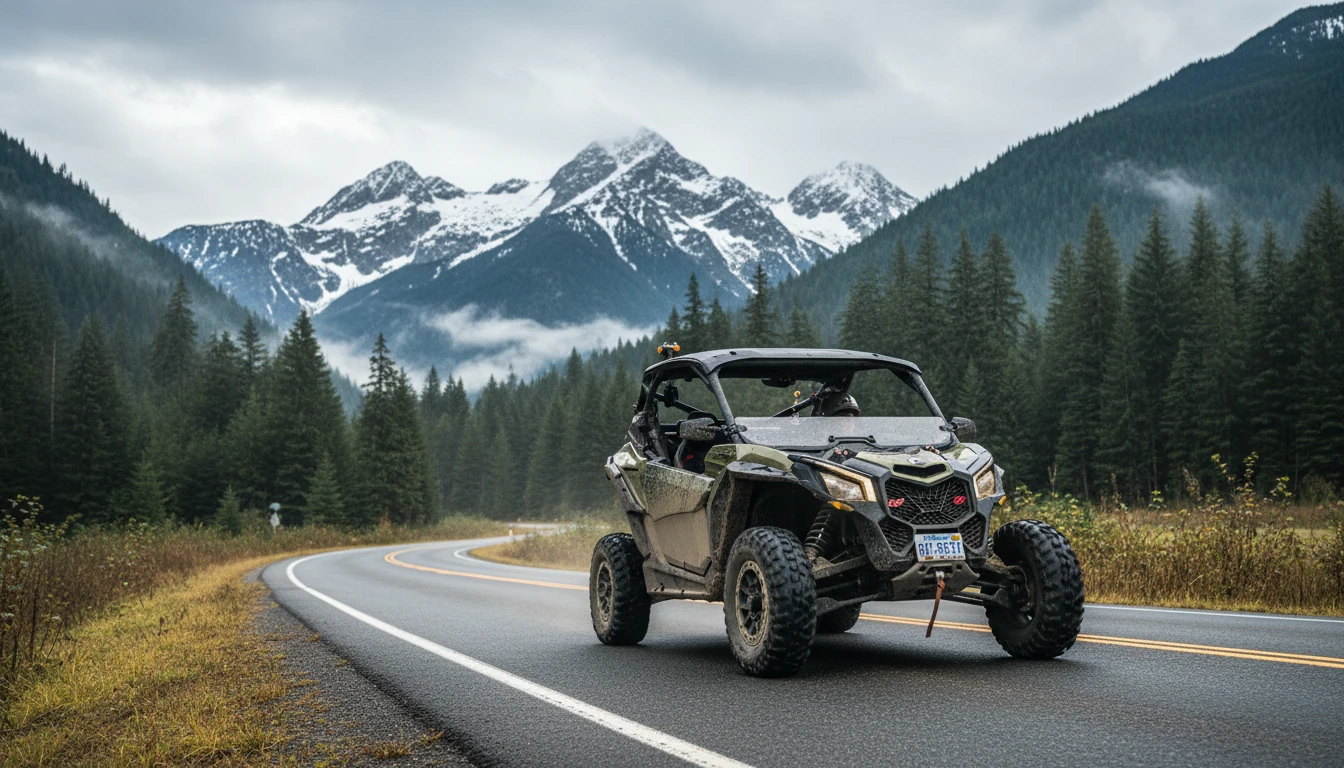
Washington ATV UTV registration sits at the intersection of two problems most other states don’t have to solve at the same time. Washington has some of the best off-highway terrain in the Pacific Northwest. The rain-soaked single-track of Tahuya. The dry hills above Yakima. Reiter Foothills less than ninety minutes from downtown Seattle. It also has some of the most confusing street legal rules in the country: a county-by-county patchwork where Okanogan County says yes to road use, King County says absolutely not, and most buyers find out the difference after they’ve already written the check.
Layered on top of that is a sales tax structure that runs from 6.5% at the state base up to 10.4% once you stack King County, Pierce County, or City of Tacoma local rates on top. A $25,000 side-by-side bought in Seattle takes a $2,600 haircut before it ever sees a trailhead. A $45,000 Can-Am Maverick? $4,680 in sales tax alone. Then the annual WATV registration fee. Then the Discover Pass. Then you find out you can’t legally drive it on your own street.
Montana LLC vehicle registration cuts through both problems at once. Skip the Washington sales tax entirely. Skip the county-by-county street legal puzzle. One permanent Montana plate, no annual renewal, recognized on federal land nationwide. This guide covers exactly what Washington charges, where you can and can’t ride, and how four real Washington buyers are saving thousands every year by registering through a Montana LLC.
On this page
What Washington Actually Charges for ATVs and UTVs
Washington’s sales tax doesn’t operate as a single number. It’s a stack. The state base is 6.5%. On top of that, every county and most cities add their own local rate. The combined rate is what you actually pay at the dealer, and in the Puget Sound corridor and Tacoma it climbs to the highest figures in the state.
The combined rates across Washington’s major population centers as of 2026:
Apply those rates to actual vehicles — the mid-range UTV market starts around $15,000 and the premium side-by-sides routinely cross $40,000. Purchase-day tax bills:
Sales tax is the headline number, but it isn’t the only cost. Once you’ve paid it, Washington still asks for an annual fee through its WATV (Wheeled All Terrain Vehicle) system. The rates are governed by RCW 46.17.350:
- On-road WATV classification: $30 per year
- Off-road only ORV classification: $18 per year
- Dealer compliance inspection: up to $50 (one-time, required for on-road WATV titling)
Then comes the Discover Pass. Washington’s state-managed recreation lands — state forests, state parks, DNR-administered OHV areas — require the Discover Pass for vehicle access. As of October 2025, that pass costs $45 per year, a step up from the previous $30. The pass is per-vehicle and is needed regardless of where the vehicle is registered, so this one cost is unavoidable if you’re riding state forest trails like Tahuya or Capitol.
One footnote worth mentioning: ATVs and UTVs are exempt from the Regional Transit Authority (RTA) vehicle tax that hits cars and trucks in King, Pierce, and Snohomish counties. Sound Transit’s RTA tab can add $200 to $600 a year to a passenger vehicle. Your side-by-side dodges that one already. That’s a small win and worth knowing about. It’s also why this article focuses on what Montana actually changes: the much larger sales tax at purchase, not RTA.
Washington’s County-by-County WATV Patchwork
Most states either let you ride ATVs on public roads or they don’t. Washington went a third direction: it lets each county decide, and then it told the counties they could only approve roads with posted speed limits at or below 35 mph. The result is a patchwork that exists because nobody ever finished the job.
The relevant statutes are RCW 46.09.455 (general WATV operation), RCW 46.09.457 (county and city authority to permit), and RCW 46.09.470 (equipment requirements). In plain English:
- You buy a WATV-eligible ATV or UTV.
- You take it to a dealer for a compliance inspection — up to $50 — to verify equipment.
- You title and register it through DOL with either WATV (on-road) or ORV (off-road only) status.
- You then need to check whether your specific county or city has passed an ordinance opening roads to WATV use.
- Even in approved counties, you can only ride on roads with a 35 mph speed limit or below.
County-level access as of 2026:
To get the WATV on-road designation in the first place, your vehicle has to meet a specific equipment list under RCW 46.09.470:
- Headlights (DOT-compliant)
- Taillights
- Turn signals (left and right)
- Brake light
- Horn (audible at 200 feet)
- Two side mirrors
- Spark arrestor
- Muffler limited to 86 decibels
- Seatbelts for UTVs / side-by-sides with cabin enclosures
- DOT-approved tires and a 17-digit VIN
Even if your machine meets every requirement on that list, the moment you cross into a county that hasn’t passed a WATV ordinance, none of it matters. You’re back to trailers, ramps, and federal land access.
It’s worth digging a layer deeper into what “county-approved roads ≤35 mph” actually means in practice, because the gap between rural and metro Washington is more than just a yes-or-no on the map. In Okanogan County — the broadest WATV adoption in the state — approved routes include numerous county-maintained roads through the Methow Valley, the Okanogan Highlands, and connector roads linking towns like Twisp, Winthrop, Conconully, Tonasket, and Republic-adjacent corridors. These are county roads, not state highways: think Twin Lakes Road, Salmon Creek Road, sections of East Chewuch Road, and many of the unnumbered rural connectors between forest land and small communities. State Route 20 and US-97 — the major arteries — are off limits to WATV use regardless of speed, because they’re state highways, not county roads. The same general framework holds in Ferry and Stevens counties: county-maintained gravel and paved roads with posted limits at or below 35 mph are eligible, state highways and arterials are not, and any segment that crosses a city limit only stays open if that specific city has also adopted a WATV ordinance.
Equipment inspection is the other half of the puzzle. To title a vehicle as on-road WATV, the dealer or a state-approved inspector verifies the equipment list against the machine: working DOT-spec headlights and taillights, functional turn signals on both sides, an audible horn, mirrors mounted to give a useful field of view, a working brake light, a spark arrestor on the exhaust, and a muffler measured at or under 86 decibels at a defined RPM. UTVs with enclosed cabins need functional seatbelts; open-cockpit ATVs are exempt from the seatbelt requirement but still need every other item. The dealer issues a compliance certificate, which goes to DOL with the title application. In urban King and Pierce counties, that paperwork is essentially decorative — there are no roads to use it on — so a buyer in Bellevue is paying for inspection, registration, and titling that primarily exist to make the vehicle “street legal” in a county where no streets are actually open to it. That gap is exactly the wedge Montana addresses.
The county-by-county system was supposed to be a compromise between rural counties that wanted access and urban counties that didn’t. What it actually produced is a Washington-resident buyer who can ride legally on a gravel road in Republic but gets ticketed for the same machine on the same kind of gravel road in Issaquah. It is what it is.
This is where Montana LLC registration changes the picture. A Montana plate doesn’t override any state’s road rules — it can’t make King County permit WATV use any more than a California plate could. What it does is bypass the entire Washington titling pipeline and the sales tax that comes with it. Then for federal land use across the country, Montana plates are recognized at face value: BLM tracts, national forest OHV routes, designated open areas. The local-roads question becomes irrelevant if you trailer to the trailhead anyway, which is exactly what most King and Pierce County riders are already doing.
Washington’s OHV Trail Network
Washington’s terrain variety is the reason people put up with the registration mess in the first place. Within a four-hour drive of Seattle you can ride dense rainforest single-track, alpine meadows, semi-arid hill country, and high desert.
Tahuya State Forest (Kitsap and Mason Counties)
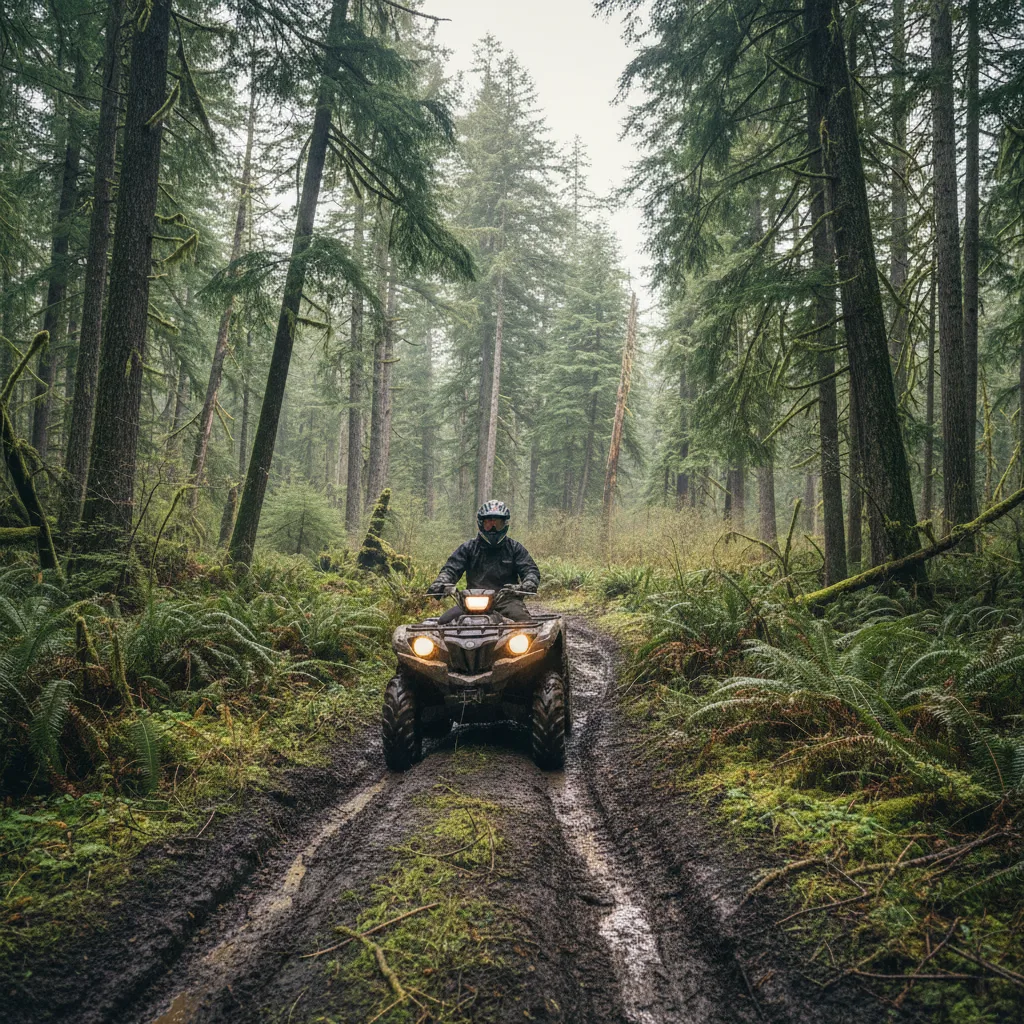
Over 130 miles of trail, almost all of it built for ATVs, dirt bikes, and side-by-sides. Tahuya is the closest serious OHV destination to Seattle and the Bremerton area, located near Belfair on the Kitsap Peninsula and reachable from Seattle via the Bremerton or Bainbridge ferry in roughly two hours door-to-door — or about 90 minutes from Tacoma by way of the Narrows Bridge and Highway 3. The forest is classic western Washington: tight two-track winding through second-growth fir and cedar, wet most of the year, with gluey clay-and-loam mud through fall and spring, exposed cedar roots that turn into ice rinks when soaked, fallen alder and hemlock across trails after every windstorm, and stream crossings that range from shin-deep in August to bumper-deep by November. The trail system uses a difficulty classification borrowed from the ski world: green-circle (more difficult), blue-square, black-diamond, and double-black-diamond loops, with the state DNR mapping each segment against terrain, gradient, and width restrictions for 50-inch versus full-width vehicles. Tahuya also offers developed OHV camping at Howell Lake and Camp Spillman, which makes it one of the only Puget Sound OHV destinations where you can ride Friday afternoon through Sunday evening without leaving the forest. State forest land, so the $45/yr Discover Pass is required for vehicle parking.
Reiter Foothills Forest (Snohomish County)
The closest OHV riding to Seattle and the I-5 corridor — roughly 50 miles east of downtown on US-2, sitting just outside Gold Bar at the base of the Cascades and within a clean 75-minute drive on a weekday morning. Reiter is the technical, rocky end of the Washington trail spectrum: granite outcroppings, off-camber root sections, sharp elevation changes that climb from around 600 feet at the staging area up past 2,200 feet on the upper trails, and water crossings that include the Reiter Creek tributaries and seasonal runoff cuts. On a wet weekend it becomes one of the muddier rides in the state and the parking lots regularly fill before 9am on summer Saturdays — the small lot at the main staging area routinely turns away vehicles by mid-morning, with overflow parking along forest service spurs becoming standard practice. DNR-managed and Discover-Pass-required. Riders who don’t enjoy crowds tend to ride Reiter midweek or push 90 minutes further to Walker Valley near Mount Vernon.
Seasonal Conditions Across the State
Washington’s OHV calendar is dictated by weather more than most western states. The wet window runs roughly October through May west of the Cascades — Tahuya, Reiter, and Capitol deliver heavy mud through fall, standing water through winter, and slick clay through spring melt. The reliable summer window in low-elevation western Washington is short, roughly mid-June through late September. East of the crest the math flips: Teanaway, Ahtanum, and Wenas are dry and ridable from late spring through mid-fall, but anything above 3,000 feet closes under snow from November well into May. Plan the season around the geography, not the calendar.
Capitol State Forest (Thurston County)
One of the most accessible OHV areas in the state, just outside Olympia. Mixed terrain ranging from green-circle beginner loops to genuinely tough black-diamond climbs. Excellent for families and for buyers easing into a new side-by-side. Discover Pass required.
Teanaway Community Forest (Kittitas County)
Cross the Cascade crest east on I-90 and the climate flips entirely. Teanaway, near Cle Elum, is dry by comparison: ponderosa pine, open meadows, packed-clay forest roads. Less mud, more dust. A mix of designated ATV trails and Forest Service roads, with the bonus of being a reasonable day trip from either Seattle or Yakima.
Liberty ORV Area (Kittitas County)
A purpose-built OHV area near the old Liberty ghost town, north of Cle Elum. Maintained trails, beginner to intermediate terrain, and a historical setting that’s worth the trip on its own. Mostly DNR-managed.
Ahtanum State Forest (Yakima County)
150-plus square miles in the hills southwest of Yakima. Semi-arid, big sky, and one of the better destinations in Washington for multi-day OHV camping. The terrain rewards bigger machines — the climbs and the distances between water sources are real. Discover Pass for state-managed sections.
Wenas Wildlife Area and Blewett/Peshastin
The Wenas area east of the Cascade crest is dry grassland and shrub steppe — sparse traffic, big views, low elevation. The Blewett and Peshastin area near Wenatchee mixes Forest Service roads with old mining-era cuts and is a longtime favorite of central Washington riders.
One important access distinction: state-managed land (State Forests and DNR areas) requires the Discover Pass. Federal land (National Forests like Wenatchee-Okanogan, BLM tracts, and similar) generally does not require the Discover Pass — it has its own fee structure, often free for designated OHV use or covered by a much cheaper Northwest Forest Pass. A Montana-plated vehicle accesses federal trails identically to a Washington-plated one.
Four Washington Buyers Who Switched to Montana
The math gets concrete fast once you put it next to real purchases. Four Zero Tax Tags clients across the state, each with a different machine and a different reason for moving the registration north.
Case Study 1: Kevin, Software Developer, Bellevue
Kevin works in Bellevue and rides Reiter Foothills on most weekends. He’d been renting and demoing UTVs for two seasons before he pulled the trigger on a 2025 Polaris RZR Pro XP Ultimate at $38,000 MSRP. At King County’s combined rate of 10.4%, that’s $3,952 in Washington sales tax the moment the dealer wrote up the bill of sale. Then the WATV process: $30 per year on-road registration, $45 Discover Pass annually, plus a dealer inspection fee. And the kicker — none of that buys him the right to ride a single Bellevue or King County street. He’d be trailering every weekend anyway.
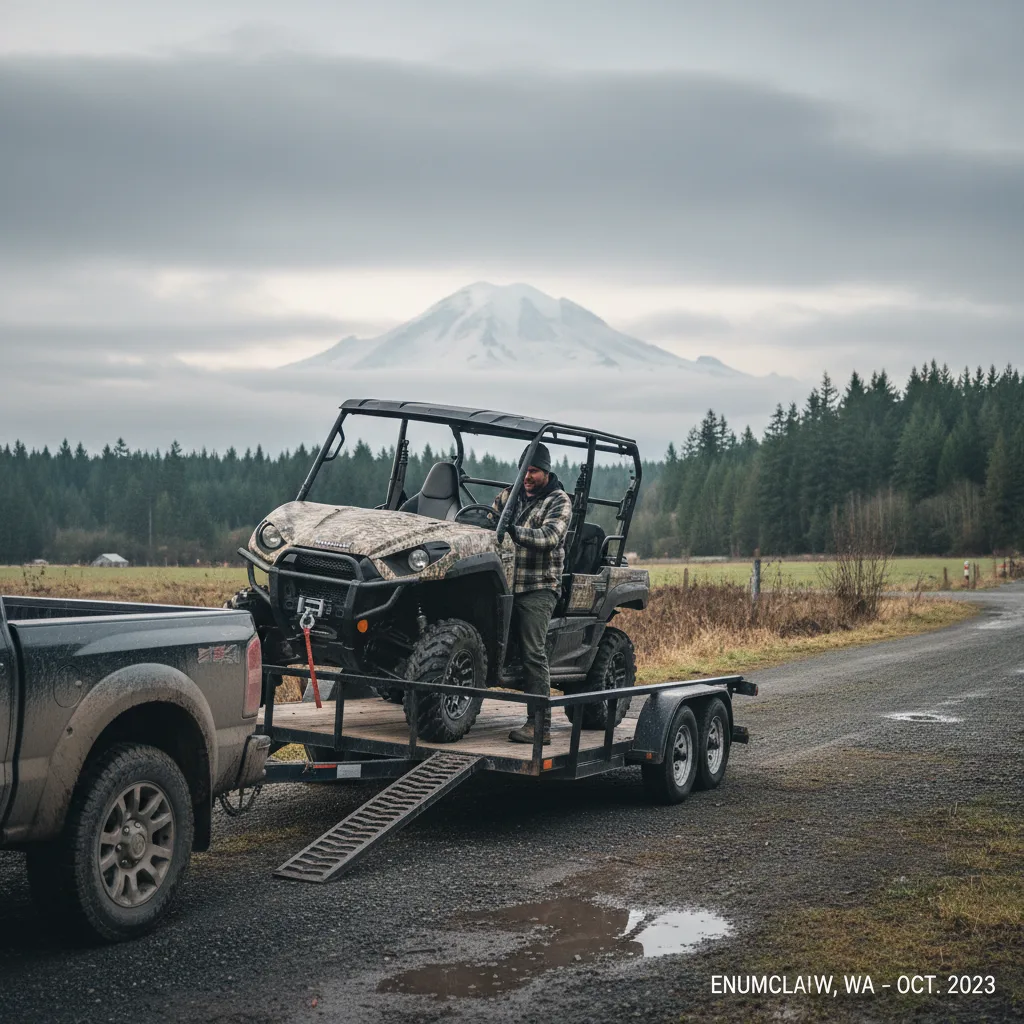
Through Zero Tax Tags, Kevin’s UTV registered through a Montana LLC. UTV service starts at $649 plus $200 for the LLC formation — $849 total, one-time. Permanent Montana plate. He still buys a Discover Pass for state forest weekends, but he kept the entire $3,952 sales tax bill. Net first-year position: $3,103 saved, and the Montana plate doesn’t renew for the life of the vehicle.
Case Study 2: The Carlson Family, Spokane Valley
The Carlsons run a wheat and cattle operation in Spokane Valley with frontage that backs onto rolling pasture and timber. They use ATVs and a UTV for actual ranch work: checking fences, moving cattle, packing tools to remote sections of the property. Three machines: two ATVs in the $17,000 range and one $17,000 UTV. At Spokane’s combined rate of 8.9%, the math is grim:
- ATV #1, $17,000 × 8.9% = $1,513
- ATV #2, $17,000 × 8.9% = $1,513
- UTV, $17,000 × 8.9% = $1,513
- Combined sales tax bill: $4,539
Plus $18–$30 per machine per year going forward. The Carlsons happen to live near Okanogan and Ferry Counties, which do permit limited WATV road use, but they spend most of their riding time on their own property and on federal land east of the Cascades. They didn’t need Washington plates for road use; they needed registration that didn’t drain $4,500 from a working farm budget.
Three Montana LLC registrations under one umbrella entity: two ATVs at $549 each ($1,098), one UTV at $649, plus $200 one-time LLC formation. Total out the door: $1,947. After: zero per year, forever. First-year net: $2,592 saved, with an annual ongoing savings stack that compounds every year the machines stay in service.
Case Study 3: Diana, Teacher in Tacoma
Diana teaches middle school in Tacoma and rides Capitol State Forest and Teanaway on weekends. She bought a 2024 Can-Am Defender HD9 for $18,500. Pierce County combined rate: 10.4%. The tax bill: $1,924. Plus $30/yr on-road WATV registration (though Pierce doesn’t approve any roads for WATV use, so on-road status mostly gives her access to a few small unincorporated pockets and an expensive piece of paper), plus the $45/yr Discover Pass.
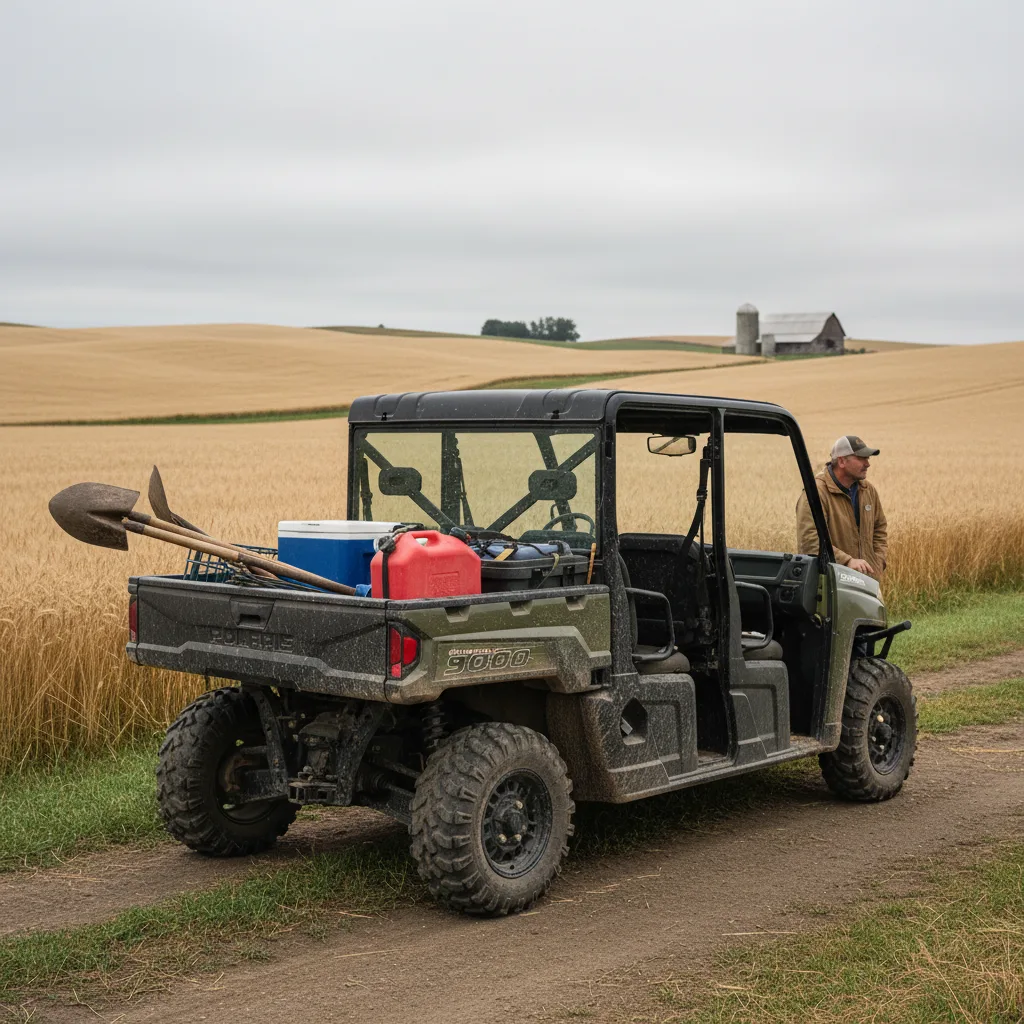
Diana doesn’t need road use. Her Defender goes on a trailer behind her Tundra every Friday afternoon, comes off at Capitol or Teanaway, comes back. Montana LLC made sense the moment she ran the numbers: $649 UTV service plus $200 LLC formation, $849 total. Permanent plate. Net first-year: $1,075 saved versus the Washington path, and the savings widen every year she doesn’t pay annual fees.
Case Study 4: Brandon, Outfitter in Chelan County
Brandon runs a small guiding operation in the Wenatchee area, leading clients on hunting and fishing trips into the Cascades. His daily rig is a 2024 Honda FourTrax Foreman Rubicon 520 at $10,500 MSRP. Chelan County’s combined rate is 8.7%, so the Washington bill would be $914 in sales tax plus annual WATV registration. Chelan is one of the counties that permits limited WATV road use, so Brandon could have legally driven the Honda on certain rural roads. But “could have legally” and “wants to spend that money” are different things.
Montana LLC path: ATV starts at $549 plus $200 LLC, $749 total, one-time. Net first-year: $165 in immediate savings on a vehicle near the lower end of the threshold, plus zero annual fees going forward. Brandon’s logic: even at a smaller vehicle price, the permanent plate solves the paperwork problem and the savings stack across his entire small fleet over time.
Four buyers, four counties, four very different machines. Total combined Washington sales tax they avoided in year one: roughly $11,329. Combined cost through Montana LLC: under $4,500. Every one of these is a real-money outcome.
How Montana LLC Registration Works
Montana doesn’t run a Washington-style WATV stack. There’s no county-by-county road approval scheme, no annual on-road fee that pretends to authorize something most counties haven’t actually permitted, and no sales tax on out-of-state buyers titling vehicles through an in-state entity. Instead, off-highway vehicles get a permanent plate. One plate, attached to the LLC, valid for as long as the LLC exists.
- Step 1 — Form a Montana LLC. The LLC is a real business entity registered with the Montana Secretary of State. Zero Tax Tags files the paperwork, secures a Montana registered agent, and gets the entity certificate of formation. This is a one-time $200 cost.
- Step 2 — Title the vehicle in the LLC’s name. The vehicle becomes an asset of the Montana entity. Title work goes through a Montana county treasurer.
- Step 3 — Get the permanent plate. Off-highway vehicles in Montana receive a permanent plate after the one-time titling. No annual renewal. No annual fee.
The pricing structure for Washington buyers:
Compare that against five years of Washington costs on the same Kevin/Bellevue example. A $38,000 RZR Pro XP Ultimate, King County 10.4% combined rate, presented as a clean side-by-side:
Five-year savings on a King County $38,000 UTV land at roughly $3,478. And that gap grows every additional year the vehicle stays in service. A buyer who keeps their UTV ten years sees the gap widen further with each annual cycle of Washington fees they don’t pay — at year ten the Washington-path total is closer to $4,700 while the Montana-path total has stayed flat after the initial one-time fee.
A Note on Electric UTVs
Electric side-by-sides have become genuinely common in Washington — the Polaris Xpedition’s hybrid and full-electric variants, the Ranger XP Kinetic, the Ranger EV, and a growing lineup from Kawasaki are showing up at trailheads and on ranches across the state. Washington’s eco-conscious buyer demographic leaned into electric OHVs earlier than most states. The good news: Montana registration treats electric off-highway vehicles identically to gas-powered ones. No separate state EV surcharge applies to off-highway permanent plates. Montana does charge a flat annual EV fee for on-road registered passenger vehicles — that’s its own thing — but it does not apply to off-highway permanent plates for ATVs, UTVs, or side-by-sides. A $32,000 Ranger XP Kinetic registers on the same $849 path as its gas-powered sibling, with no green-vehicle penalty baked in.
Is This Legal?
Yes. Montana LLC vehicle registration is a structure built on a few load-bearing legal principles, and each of them has been settled law for a long time.

The first is the federal commerce clause. U.S. citizens and residents have the constitutional right to own businesses across state lines. A Washington resident has every legal right to form and own an LLC in Montana, just as they could form one in Delaware, Wyoming, or Nevada. This is foundational corporate law, and it predates the modern off-highway vehicle market by more than a century.
The second is that the LLC is a real legal entity. Montana doesn’t issue shell registrations; it issues legitimate certificates of formation, requires a registered agent in the state, and recognizes the LLC as a separate legal person under Montana code. The vehicle is titled to that entity. Ownership is real, the entity exists, the title is genuine. It’s not a paper fiction — it’s a Montana business that happens to own a UTV.
The third is the doctrine of legal tax minimization, repeatedly affirmed by U.S. courts. The classic statement comes from Judge Learned Hand: “Anyone may so arrange his affairs that his taxes shall be as low as possible; he is not bound to choose that pattern which will best pay the Treasury.” Cases like Thomas v. Bridges and a long line of similar decisions have consistently held that structuring a transaction to lawfully minimize tax exposure is the buyer’s right, not an evasion of duty.
Montana itself recognizes and welcomes out-of-state owners. The state’s permanent off-highway plate system is open to LLC ownership by design. There is no residency test for forming a Montana LLC, and there is no statute prohibiting non-residents from owning Montana-titled vehicles.
Our clients include riders who use their vehicles on federal lands across the West, on private property and out-of-state recreation areas, and on multi-state trips where consistent plate recognition matters. The Montana plate travels with them. It’s the same legal structure used by everyone from retirees with high-end motorhomes to working ranchers with utility ATVs.
Who This Is Built For
Montana LLC registration makes sense for more Washington buyers than most people assume.
King County, Pierce County, and Snohomish County buyers. Combined rates of 10% to 10.4% on a UTV purchase mean a sales tax bill in the thousands before you’ve ridden a foot. These three counties also don’t permit WATV road use, which removes the one upside Washington’s registration would have given you. There’s no scenario where King County math doesn’t favor Montana.
Anyone buying a UTV at $15,000 or above. The breakeven point is where Washington sales tax exceeds the one-time Montana service fee. At a combined rate around 8.5%, that crossover hits well below $10,000 for a UTV; at 10.4% it kicks in even faster. Once you’re above $15K, Montana wins by a wide margin and the gap only widens.
Multi-vehicle families and ranch operators. The Carlson example earlier is the template. Two ATVs and a UTV under one LLC means one $200 LLC formation amortized across three machines. The cost-per-vehicle drops fast.
Buyers frustrated by the WATV county patchwork. If your county doesn’t permit road use, the Washington WATV system is a paperwork stack with limited upside. Montana skips it. You’re already trailering anyway.
Eastern Washington buyers in Okanogan, Ferry, or Chelan. Even if you live in a county that permits WATV road use, the Washington sales tax is identical to what a Seattle buyer pays in percentage terms (and your local rate is 8.7% to 8.9%, not nothing). Montana eliminates that purchase tax and gives you a permanent plate. The road-use question you’ve already solved through your county ordinance; you keep using your local roads as you always have.
Buyers under $10,000? Call us and we’ll walk through the breakeven. For most vehicles above that threshold, Montana wins on year-one math and wins by more every subsequent year. Below it, there are still scenarios where Montana makes sense — multi-vehicle setups, long ownership horizons, simplicity of permanent plates — but the gap is narrower and worth a direct conversation.
The Zero Tax Tags Process
Start to finish, the typical Washington buyer is holding Montana plates inside a week:
| Day 1: | Submit your paperwork through our secure portal. We file the Montana LLC the same day. You receive a confirmation with your case number and tracking link. |
| Days 1–2: | Montana LLC formation completes. Certificate of formation issued, registered agent in place, EIN filed where applicable. |
| Days 2–4: | Title transfer processed at the Montana county treasurer. Vehicle officially becomes an asset of the LLC. Permanent plate ordered. |
| Days 4–7: | Permanent Montana plates ship to your door. Title and registration documents arrive in the same package. You’re done. |
That’s it. Renewal letters, DOL trips, dealer compliance inspections, the WATV-versus-ORV election — none of it follows you. The plate stays on the vehicle and the LLC stays in good standing through a small annual filing we handle as part of the ongoing service relationship.
FAQs
Does Montana registration let me ride on King County roads?
No. County road access is governed by Washington’s WATV statutes (RCW 46.09.455 et seq.) and by each county’s ordinances. King County doesn’t permit WATV road use regardless of where the vehicle is registered. Montana gives you a permanent plate for federal land use and saves you the purchase tax. It doesn’t rewrite local road rules. If your county doesn’t allow WATV, the trailer is staying in the picture either way — and that’s fine, because most riders in King, Pierce, and Snohomish are already trailering to Reiter or Capitol regardless.
Do I still need a Discover Pass?
For Washington State Forests, State Parks, and DNR-managed OHV areas, yes. The Discover Pass is a per-vehicle fee that applies regardless of registration state. For federal land — national forests like Wenatchee-Okanogan, Gifford Pinchot, Mt. Baker-Snoqualmie, BLM tracts — Discover Pass is not required. Many federal OHV areas use a Northwest Forest Pass at a lower cost or are free for designated trail access.
What about the RTA tax exemption? Aren’t ATVs already exempt?
Correct. ATVs and UTVs are exempt from the Sound Transit Regional Transit Authority vehicle tax that applies to cars and trucks in King, Pierce, and Snohomish counties. Montana doesn’t change that — you weren’t paying RTA on your off-highway vehicle to begin with. What Montana eliminates is the much larger sales tax at purchase, which is the line item that actually moves the financial needle.
How long does Montana registration take?
About a week from initial paperwork to plates in hand. LLC files Day 1, title transfers Days 2 to 4, plates ship by end of Day 7 in nearly all cases.
What does it cost?
ATV service starts at $549. UTV/side-by-side service starts at $649. Add $200 for the LLC formation. After that, $0 per year. There’s a small annual LLC maintenance filing fee that’s typically rolled into an optional service plan — far less than what Washington charges in annual WATV fees.
Can I do this if I bought the vehicle from a Washington dealer last month?
Often yes, depending on how the dealer titled it and what’s been filed with the WA DOL so far. The cleanest path is to involve us before the dealer paperwork is finalized, but we routinely transfer vehicles that have been recently purchased. Send us your situation and we’ll tell you what’s possible.
What happens if I move out of Washington later?
The Montana plate stays with the vehicle. The LLC stays in Montana. You don’t re-register every time you change addresses or cross state lines, which is one of the cleanest practical benefits of the structure.
Do I have to drive to Montana?
No. We handle the entire process remotely. Title work is processed through a Montana county treasurer, the plates are shipped to your Washington address, and you never have to leave the Puget Sound region.
Ready to Stop Overpaying Washington Taxes?
Washington ATV and UTV buyers are paying up to 10.4% in sales tax before they ever hit a trail. Montana LLC changes that from day one.