
24 min read

On this page
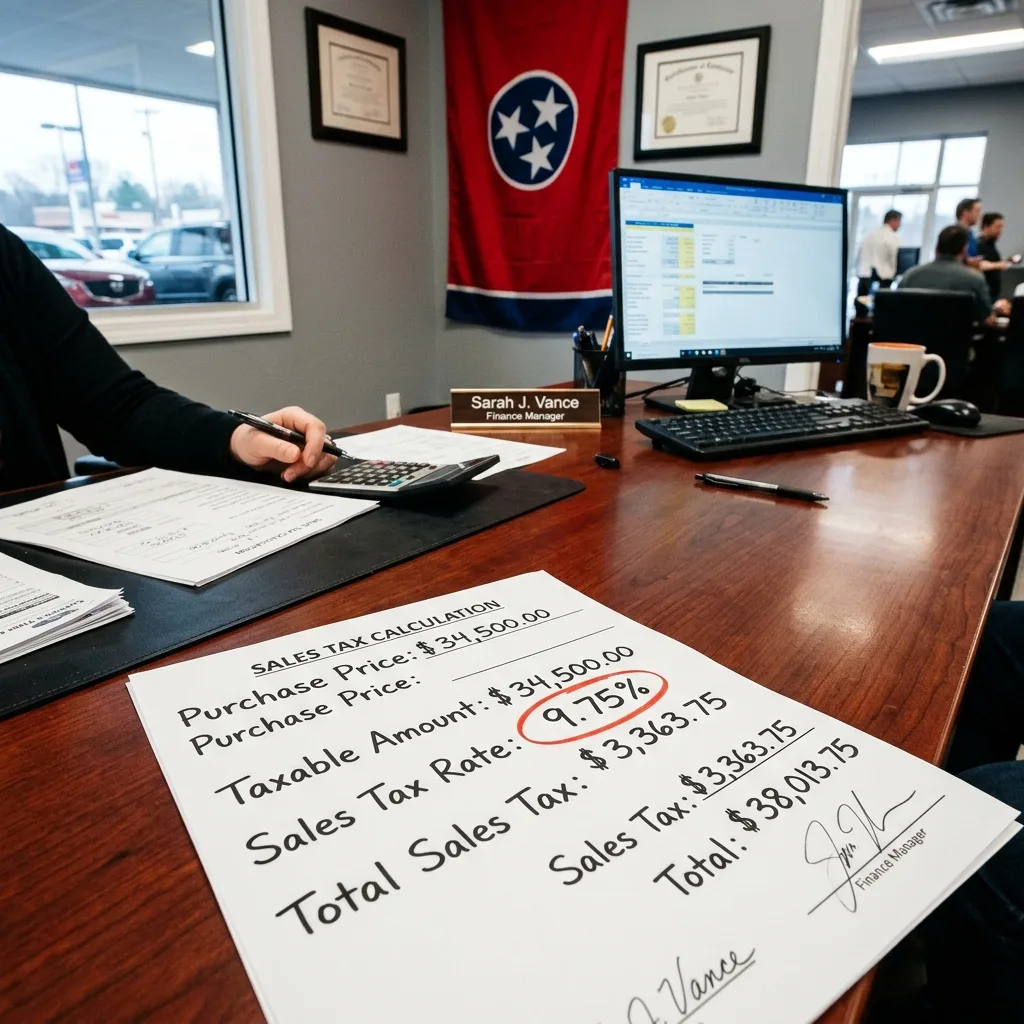
Tennessee vehicle tax hits you on the day of purchase, and it hits hard. You sit in the glass-walled finance office at a Brentwood Land Rover dealership. The Discovery you have been eyeing for six months is parked twenty feet away with your name on the sales ticket. The finance manager slides a tablet across the desk. You scroll past the price, past the destination charge, past the doc fee. Then you see it.
State sales tax: $4,550. Local tax: $88. Title and processing: $17.50. Plus the registration fee, plus the wheel tax, plus the temporary tag.
You ask the finance manager to double-check. He smiles the smile finance managers reserve for buyers who thought Tennessee was a low-tax state. “Seven percent,” he says. “Full purchase price. No cap.” You moved here from California three years ago because friends told you Tennessee had no income tax. They were not lying. The state simply moved the pain to consumption taxes instead, and vehicles are where the bill comes due in one lump.
You stare at the screen. That $4,638 is more than two car payments. It is your daughter’s first semester of community college tuition. It is a week in Aspen. And in twenty minutes it will be wired to the Tennessee Department of Revenue and gone forever.
What if you did not have to pay any of it? Not by cheating, not by cutting corners. By using a structure thousands of Tennessee owners already use, one that Montana wrote into law and federal courts have repeatedly upheld. Read on.
Tennessee Vehicle Tax: The 7% Sales Tax with No Ceiling
Tennessee runs its vehicle sales tax through the Tennessee Department of Revenue. Two components, and only one has a cap.
The state portion is 7% of the full purchase price. There is no ceiling. There is no luxury exemption. There is no high-value haircut. Buy a $30,000 Honda Pilot, the state takes $2,100. Buy a $300,000 Bentley Flying Spur, the state takes $21,000. The percentage never changes and the dollar figure never stops climbing.
The local portion is where Tennessee shows a flicker of mercy. Counties and cities add their own sales tax on top, with rates ranging from 2.25% to 2.75%. But on motor vehicles, the local tax is capped at the first $1,600 of purchase price. There is also a “single article” surtax of 2.75% on the bracket from $1,601 to $3,200. Run the math at the maximum local rate and your local tax tops out at $44 plus another $44 for a grand total of $88 per vehicle. That is the only good news in this entire section.
So when you buy a $65,000 Land Rover Discovery in Davidson County, the math is brutal in its simplicity. State tax: $65,000 × 7% = $4,550. Local tax: $88 maximum. Total sales tax due at closing: $4,638. Trade-in credit deducts off the state base, which softens the blow if you are trading up, but it does nothing for first-time buyers or anyone bringing cash.
The formula: State tax = Purchase price × 7% (full amount, no cap). Local tax = $88 maximum per vehicle. There is no luxury rate, no high-value cap, and no relief for buyers who pay cash.
The Real Cost of Tennessee Vehicle Tax

The headline 7% rate sounds modest until you see it stacked next to a Montana LLC over five years. Tennessee’s sales tax is front-loaded, meaning you pay almost everything on Day One. That gives the state an enormous lump-sum advantage and gives you a single moment of maximum pain. Spread that pain across five years of ownership and add the annual wheel taxes and EV fees, and you start to see the actual lifetime cost of being a Tennessee vehicle owner.
Here is the five-year cost of registering a vehicle in Tennessee versus running it through a Montana LLC with Zero Tax Tags. The Tennessee numbers include sales tax, registration, and wheel tax. The Montana column reflects the Year 1 setup plus four years of standard renewal at $368 per year for newer vehicles, or $237 per year if the vehicle is 5–10 years old at the time of registration.
Look at the luxury SUV row. Buy an $85,000 Range Rover Sport in Nashville and over five years you hand the state $6,346. Run the same vehicle through a Montana LLC and you spend $2,371 over the same period. The difference is $3,975. Buy a $185,000 Tiffin or Newmar motorcoach and the gap explodes to $10,155 over five years.
That $4,638 tax you paid on Day 1? You already paid more than two years of Montana renewals. And you have not even left the dealership parking lot yet.
The five-year view makes the case obvious, but the ten-year view is where Tennessee owners start to feel physically ill. Keep that $85,000 Range Rover for ten years and you have paid Tennessee $6,520 in sales tax, registration, and wheel tax cumulatively. The same vehicle in Montana? Roughly $3,841. The Montana LLC structure does not just save you money on Day One. It saves you money every single year you own the vehicle.
Stop and think about what that $5,338 actually represents on a $75,000 truck. That is a fully paid family vacation to Maui for four people, including airfare, a beachfront condo for ten nights, and a luxury catamaran charter on the Na Pali coast. It is a complete kitchen remodel: new cabinets, quartz counters, and a built-in induction range with a few thousand left over for the backsplash. It is two full semesters of in-state tuition at the University of Tennessee Knoxville, with books and a meal plan included. It is a Roth IRA contribution maxed out for the year for both spouses with a meaningful surplus to invest in a brokerage account.
Now think about it compounding. That same $5,338, dropped into an S&P 500 index fund averaging 8% annual returns over twenty years, becomes roughly $24,880. The check you are writing to the Tennessee Department of Revenue is not just $5,338. It is $24,880 of future wealth quietly transferred from your retirement account to the state’s general fund. Multiply that across every vehicle you will buy over the next thirty years and the lifetime cost of being a Tennessee vehicle owner approaches a six-figure sum that nobody warned you about when you crossed the state line.
County Wheel Tax: Tennessee’s Hidden Annual Hit
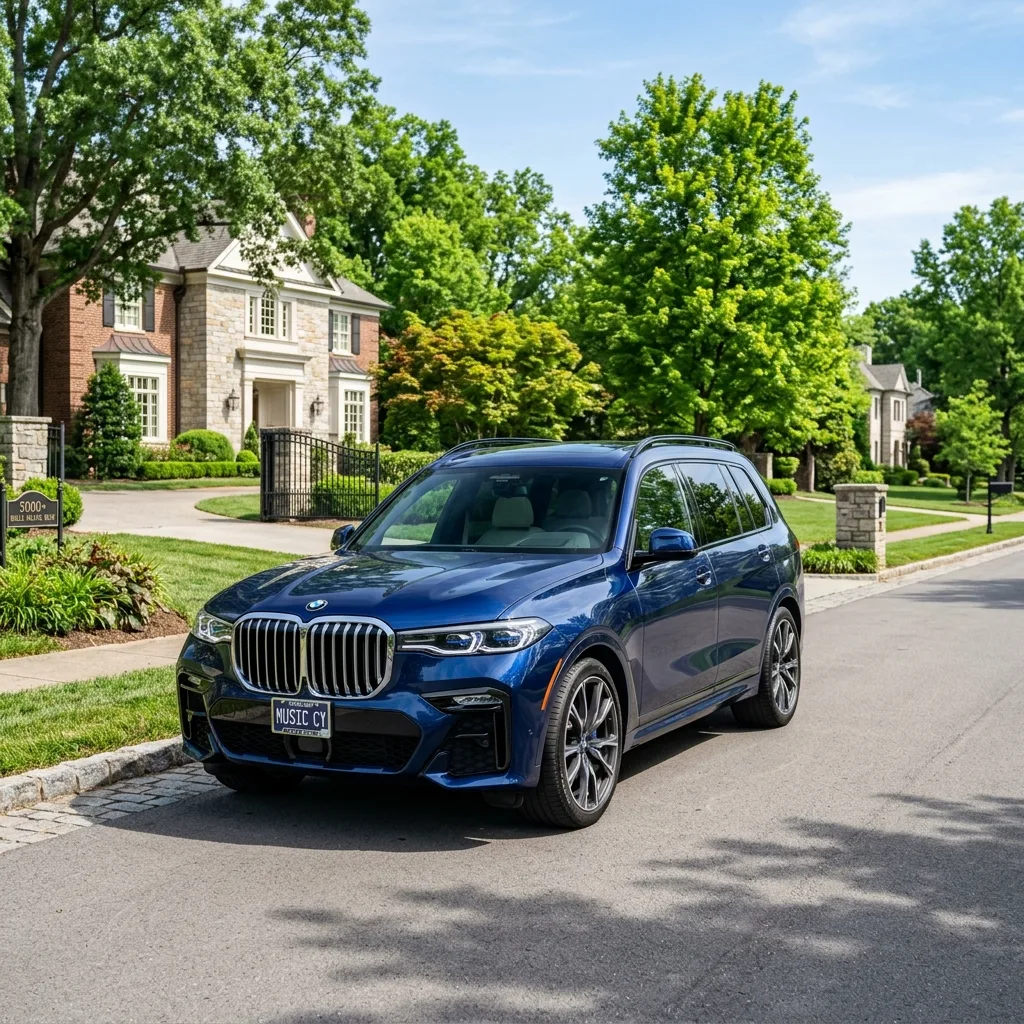
Tennessee likes to pretend the sales tax is the whole story. It is not. Almost every county in the state layers an annual wheel tax on top of the base $26.50 state registration fee. Some are modest. Some are punitive. All of them stack year after year, and none of them buy you anything beyond the privilege of keeping your registration current.
None of these numbers look terrible by themselves. The problem is multi-vehicle households, which is most of Tennessee. A Memphis family with three vehicles in Shelby County pays $154.50 every year just to keep them registered. A Murfreesboro family with three vehicles pays $237 annually. A Hendersonville household with four vehicles pays $306 annually for the privilege of having license plates that already exist on the cars.
Montana approaches this differently. Vehicles eleven years old or older qualify for permanent plates with no annual renewal at all. One-time fee, lifetime registration, done. Newer vehicles renew annually but you pay no property tax, no wheel tax, and no surcharge. Multi-vehicle households see the savings compound every single year.
Consider a contractor who lives in Rutherford County but works job sites across Davidson County daily. He runs a Ford F-250 work truck registered at his Murfreesboro home address, which costs him $79.00 annually thanks to Rutherford’s $52.50 wheel tax. His second truck, an F-350 dually used exclusively for hauling materials, sits parked at a leased shop in Nashville. To register that truck against the shop’s Davidson County address, he pays another $51.50. That is $130.50 every year just in registration and wheel taxes across two trucks, before he buys a single gallon of diesel or pays a single insurance premium. Add a wife’s SUV at the home address and the household is north of $209 annually before plates even hit the bumper. Through a single Montana LLC, all three vehicles renew once with no county fees layered on top.
Tennessee’s EV Surcharge: Paying More for Going Green
If you bought a Tesla, a Rivian, a Lucid, or any other battery electric vehicle in Tennessee, the state has a special line item just for you. Battery electric vehicles pay $200 per year in 2024 through 2026, rising to $274 per year starting in 2027. Plug-in hybrids pay $100 annually. Standard hybrids also pay $100 annually. Tennessee is one of a handful of states that taxes hybrids the same as PHEVs, even though hybrids never plug in and burn just as much fuel as a comparable conventional vehicle.
These fees stack on top of base registration and wheel tax. A Nashville EV owner pays $26.50 base registration, plus $25 Davidson County wheel tax, plus the $200 EV surcharge. That comes to $251.50 every single year, just to keep the vehicle registered. By 2027 the same Nashville EV owner will pay $325.50 annually. None of this includes the sales tax already paid on Day One.
Stretch that out across a decade of EV ownership in Tennessee and you are looking at roughly $2,515 in registration and EV fees alone, before the 2027 increase kicks in. With the increase, ten-year cost climbs toward $3,000 just for state-level annual fees. And the state has openly discussed raising EV fees again in future legislative sessions to “make up for lost gas tax revenue,” which is regulatory code for “we plan to charge you more.”
Tennessee charges $200/yr for a BEV, rising to $274 in 2027. Montana charges $130/yr for most passenger EVs — $70 less per year, with the gap widening every time Tennessee raises the rate.
Montana does have an annual EV registration fee — $130/yr for BEVs under 6,000 lbs (most passenger EVs), $70/yr for PHEVs. But Tennessee charges $200/yr for BEVs and $100/yr for both PHEVs and regular non-plug-in hybrids. Montana charges regular hybrids nothing extra. If you drive a hybrid that never plugs in, Tennessee still bills you $100 a year as though you do. Montana does not. And the 2027 Tennessee increase to $274/yr for BEVs will push that annual gap to $144 per vehicle, compounding across every EV in your household or fleet.
Who Tennessee Vehicle Tax Hits Hardest

Tennessee’s vehicle tax structure is regressive in the way most consumption taxes are regressive, but it has a unique cruelty for the upper-middle and high-income buyer. Nashville tech professionals migrating from California or Texas arrive expecting the no-income-tax dividend to apply broadly. Then they finance an $80,000 SUV and watch $5,600 evaporate before they even leave the lot. The math gets uglier the higher up you go. A Brentwood healthcare executive buying a $130,000 G-Wagon hands the state $9,100 on Day One.
Memphis business owners feel it differently. Commercial vehicle purchases generally do not enjoy the same trade-in flexibility a private buyer gets, especially for fleet expansion. A small contractor adding three Ford F-250 work trucks at $72,000 apiece pays $15,120 in state sales tax across the fleet. That is real money that could have gone toward employees, equipment, or actual business growth.
Country music executives, songwriters, and entertainers are quietly some of the largest car collectors in the United States, and Nashville and Williamson County are home to a remarkable concentration of them. Build a five-car garage of $100,000-plus vehicles and Tennessee’s no-cap policy pulls $35,000 in sales tax out of your account before the keys even hit your hand.
Music Row is its own ecosystem of label executives, A&R heads, publishing executives, and producers who routinely refresh personal vehicles every two to three years as their compensation packages climb. A senior label VP rotating from a $90,000 Mercedes GLE into a $145,000 Range Rover Autobiography hands Tennessee $10,150 in sales tax on the upgrade alone. Multiply that across a fifteen-year career and the cumulative tax burden on routine vehicle rotation tops $50,000 in state revenue from one executive who never even moved out of their Belle Meade zip code.
Touring artists carry an even heavier load. A working country headliner typically owns a personal daily-driver SUV, a spouse’s vehicle, a tour bus that ranges from $500,000 for a used Prevost to $2 million for a new custom build, and frequently a chase vehicle, a pickup for property errands, and a project car or two. The 7% sales tax on a single $1.2 million Prevost H3-45 conversion comes to $84,000. That is not a typo. Eighty-four thousand dollars in Tennessee sales tax on a single vehicle purchase, payable to the Department of Revenue before the bus ever pulls onto I-65 toward the first show date. Specialty vehicles, vintage Broncos, restored Defenders, classic Mustangs, and one-off builds add another layer of taxable transactions that nobody at the dealership volunteers to mention up front.
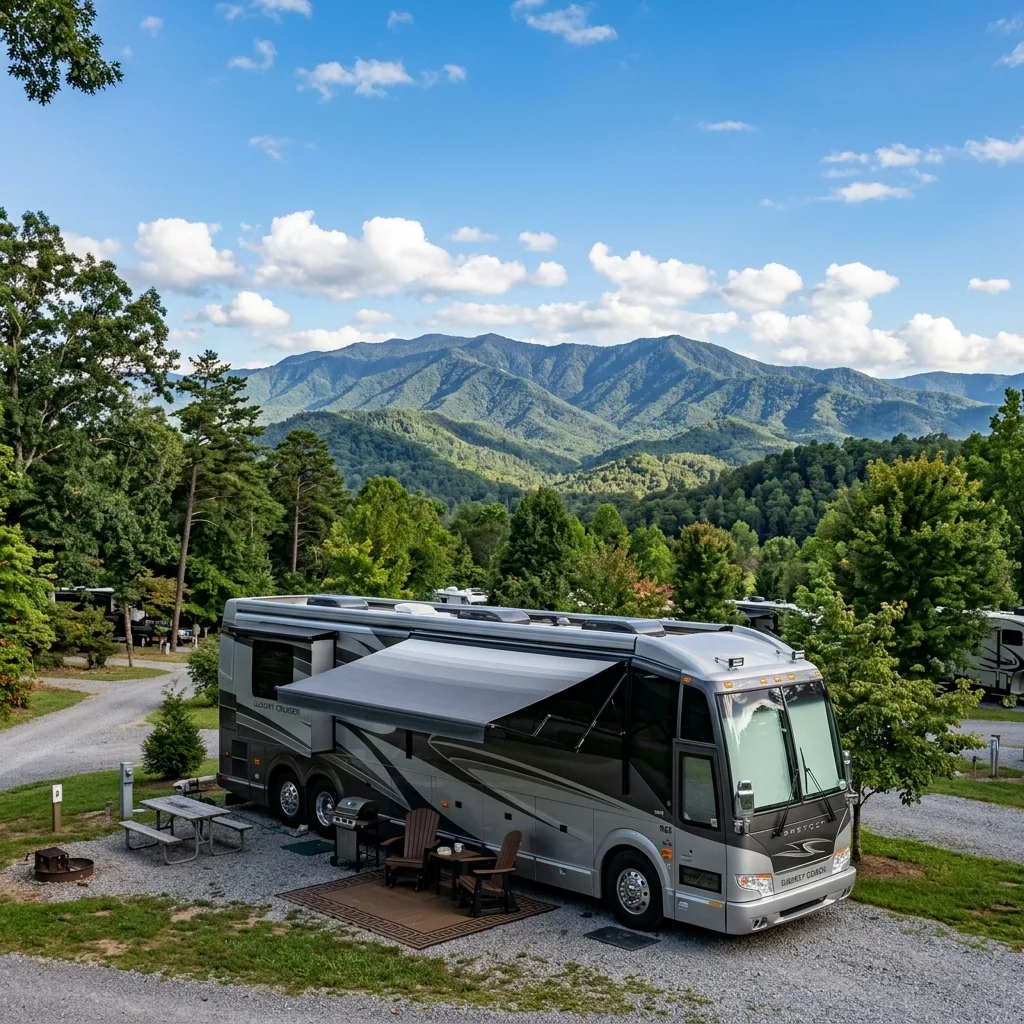
RV owners and Smokies-bound retirees take the heaviest single hit. A $185,000 motorcoach generates over $13,000 in Tennessee sales tax. EV early adopters get hit twice, paying full sales tax on the purchase plus the annual $200 surcharge. And multi-vehicle families in Murfreesboro, Hendersonville, or Knox County pay wheel taxes that add up faster than anyone expects.
The Montana Solution: Legal Vehicle Tax Elimination
Montana has no state sales tax on vehicles. No county property tax on vehicles. No annual ad valorem tax. There has been no vehicle sales tax in Montana since the state joined the union in 1889, and the legislature has rejected every attempt to introduce one.
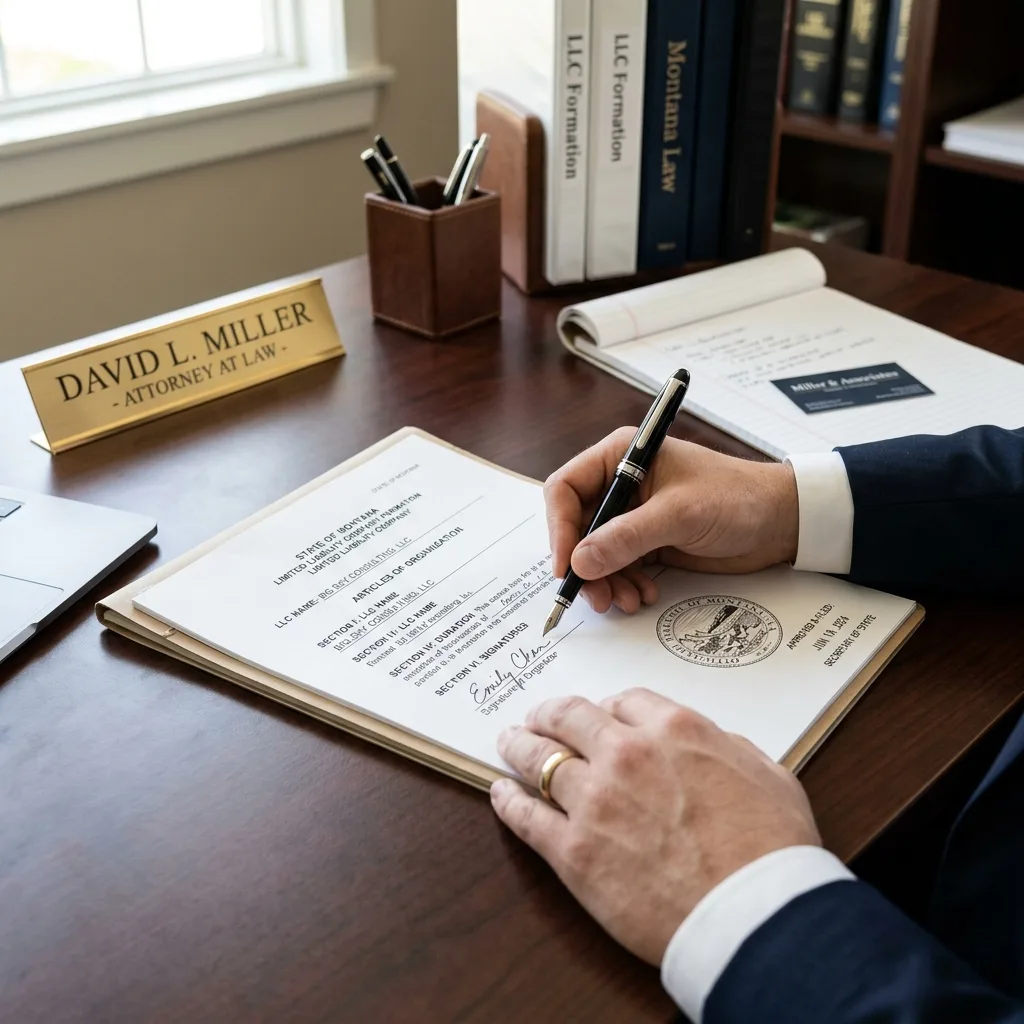
You form a Montana limited liability company. The LLC purchases or takes title to your vehicle. Montana issues plates to the LLC, not to you personally. Because the LLC is a legitimate Montana entity, Montana law applies to the registration. Tennessee has no claim on a Montana entity’s vehicle.
Montana has no sales tax on vehicles. Zero. That $4,638 you were about to hand Tennessee? Gone.
Run a $65,000 vehicle through both jurisdictions across a decade and the gap is staggering.
Zero Tax Tags handles every part of the process for you. We form the Montana LLC, serve as your registered agent, file with the Montana DMV, transfer title, and ship Montana plates directly to your door in Tennessee. You never travel to Montana. You never visit a county treasurer. You never stand in a DMV line. We process everything remotely from our Bozeman office and deliver finished plates to your address.
Is Montana LLC Vehicle Registration Actually Legal?

Yes. Montana LLC vehicle registration has been a permitted, codified, and regularly used structure for decades under Montana state law. The state explicitly recognizes LLCs as legitimate vehicle owners. The Montana Secretary of State maintains an efficient LLC formation process that has produced hundreds of thousands of legitimate Montana entities, including those that hold vehicles, real estate, intellectual property, and operating businesses.
The federal commerce clause of the United States Constitution protects your right to form and operate an LLC across state lines. The Supreme Court has repeatedly affirmed that interstate commerce includes the right to organize business entities in jurisdictions of your choosing. This is the same principle that allows Delaware corporations to be headquartered in California, Wyoming LLCs to hold real estate in Florida, and Montana LLCs to hold vehicles owned by Tennessee residents.
The Louisiana Supreme Court addressed the legitimacy of legal tax minimization through LLC structures directly in Thomas v. Bridges (2014). The court explicitly affirmed that a taxpayer’s right to organize affairs to lawfully minimize tax liability “cannot be doubted” and is a fundamental right protected by both state and federal law. The case involved a Montana LLC vehicle registration nearly identical to the structure Zero Tax Tags creates for Tennessee clients. The court ruled in favor of the taxpayer.
Thousands of Tennessee vehicle owners use this structure. The question is not whether it is legal. It is. The question is whether your vehicle qualifies for the math to work.
The structure must be done correctly. The LLC has to be legitimately formed and properly maintained with a registered agent. Title and registration must run through the LLC. Insurance must reflect the LLC ownership. This is exactly what Zero Tax Tags handles for you. We do this for thousands of clients across all fifty states, and we have done it without incident for years.
Four Tennessee Owners Who Made the Switch

Marcus, Nashville — $82,000 Porsche Cayenne S
Marcus runs business development at a healthcare technology firm in Brentwood. He moved to Nashville from Austin in 2022 expecting the no-income-tax setup to make wealth-building easier. His first big purchase as a Tennessee resident was a 2024 Porsche Cayenne S in Frozen Berry Metallic. Tennessee sales tax came in at $5,828, which is $5,740 in state tax plus the maximum $88 local. His annual renewal added $51.50.
A colleague in his department had registered a Range Rover through a Montana LLC the year before and casually mentioned it during a team offsite. Marcus called Zero Tax Tags the following Monday. His Year 1 cost through ZTT was $899 total, including the LLC formation fee. Year 1 net savings: $4,929.
“I thought the no-income-tax thing meant Tennessee was cheap for wealthy people. Then I bought a car. The dealership finance manager handed me the tax line on a tablet and I literally laughed at the screen because I was sure it was a typo. It was not a typo.”
Donna, Memphis — Tesla Model Y + Silverado Fleet
Donna owns a small commercial real estate brokerage in East Memphis. Her household has two vehicles, both in her name and both used for business: a 2024 Tesla Model Y at $58,000 and a 2023 Chevy Silverado 1500 at $42,000. The Tesla generated $4,148 in Tennessee sales tax, a $200 annual EV surcharge, plus $25 Shelby County wheel tax. First-year EV total: $4,373. The Silverado added another $2,940 in sales tax and $51.50 in annual fees. Her two-vehicle first-year tax burden topped $7,313.
Donna registered both vehicles through a single Montana LLC with Zero Tax Tags. Year 1 cost: $1,099, which is the standard $899 plus $200 for adding the second vehicle to the same LLC. Net Year 1 savings on two vehicles: over $6,200.
“Nobody told me there was a $200 annual fee just for driving electric in Tennessee. I bought the Tesla because I wanted to save on fuel. Then I found out the state had decided to tax me for that.”
Ray, Knoxville — $210,000 Tiffin Allegro Bus
Ray retired from a residential construction business in 2023 and immediately bought the motorcoach his wife had been pointing at for six years: a $210,000 Tiffin Allegro Bus, fully optioned, slate exterior, leather interior. The Tennessee sales tax bill came to $14,788, which is $14,700 state plus the $88 local cap. Knox County wheel tax added another $36 annually.
Ray’s accountant suggested he look into Montana registration before signing the paperwork. He called Zero Tax Tags from the dealership parking lot. RV registration through ZTT for a luxury motorcoach over $150,000 ran $1,699 in Year 1. Ray saved $13,089 on Day One.
“I almost wrote that check for $14,788. Thirty minutes on the phone with Zero Tax Tags and I didn’t have to. That money is going to Florida every winter with us instead of to the state of Tennessee.”
Brittany, Franklin — $108,000 BMW M5 Competition
Brittany works as an attorney at a mid-size firm in Cool Springs. Williamson County, where she lives, runs one of the higher-income demographics in the state and a correspondingly elevated wheel tax of $25.75. She bought a 2024 BMW M5 Competition in Brands Hatch Grey at $108,000. Tennessee sales tax: $7,648, which is $7,560 state plus $88 local. Annual fees: $52.25.
Brittany’s senior partner had registered his Aston Martin DB11 through a Montana LLC three years earlier and walked her through the structure over a Friday lunch. She was registered through Zero Tax Tags within two weeks. Year 1 ZTT cost: $899. Net savings: $6,749.
“The math is almost embarrassingly good once someone shows it to you. I could not stop running it through my head on the drive back to the office. Six thousand seven hundred dollars is six thousand seven hundred dollars.”
Who This Is Built For

The Montana LLC structure is engineered for specific Tennessee vehicle owner profiles, and the math is most powerful for the following groups.
Anyone purchasing a vehicle worth $25,000 or more. The first-year savings cross the breakeven line almost immediately at this price point, and the savings compound from there.
Nashville and Brentwood tech and healthcare professionals. If your typical vehicle purchase sits in the $60,000 to $130,000 band, you are paying between $4,200 and $9,100 in sales tax per vehicle. The Montana structure pays for itself before you finish your first oil change.
RV owners and snowbird retirees. Motorcoaches generate the largest absolute dollar savings of any vehicle category. A $200,000 RV alone saves over $13,000 in Year 1.
Business owners with multiple vehicles. One LLC holds every vehicle you own. The $200 LLC fee is paid once. Adding additional vehicles to an existing LLC costs $200 per vehicle in Year 1 instead of full thousands in sales tax each.
EV owners. If you bought a Tesla, Rivian, or Lucid, you are already paying the $200 annual surcharge on top of everything else — rising to $274 in 2027. Montana charges $130/yr for battery electric vehicles, saving you $70/yr today and $144/yr after 2027.
Collectors with garages full of high-value vehicles. The per-vehicle savings stack. A six-car collection of $100,000 vehicles saves over $40,000 in Year 1 sales tax alone.
Contractors and tradespeople with truck fleets. Heavy-duty diesel trucks routinely cross $70,000 and beyond. Three trucks at $72,000 each generate $15,120 in Tennessee sales tax. Through ZTT under one LLC: $1,299 total.
The only vehicles where we suggest you give us a call before assuming the math works are those under $20,000. The savings are still there, but the per-vehicle margin is tighter. Call us anyway. We will run your specific numbers free and tell you whether it makes sense for your situation.
How Zero Tax Tags Gets You Registered

Zero Tax Tags runs a fully managed service. We handle LLC formation, registered agent representation, Montana DMV filing, title transfer, and plate delivery to your Tennessee address. You provide documents through our secure online portal. We do everything else.
Pricing is transparent and there are no hidden fees.
Cars, trucks, SUVs, and RVs under $150,000 MSRP: Year 1 = $699 service fee + $200 LLC formation = $899 total.
Vehicles over $150,000 MSRP (cars, trucks, SUVs): Year 1 = $1,724 total.
RVs over $150,000 MSRP: Year 1 = $1,699 total.
Annual renewal for vehicles 0–4 years old: $268 Montana state fee + $100 ZTT filing = $368 per year.
Annual renewal for vehicles 5–10 years old: $137 Montana state fee + $100 ZTT filing = $237 per year.
Vehicles 11 years or older: Permanent Montana plate, one-time $899 setup, never renew again.
Motorcycles, ATVs, UTVs, trailers, fifth wheels, and boats: Permanent plate, one-time fee only, no annual renewal.
One LLC holds all of your vehicles. The $200 LLC formation fee is paid once. Each additional vehicle on the same LLC pays only the service portion ($699 standard or $1,524/$1,499 for over-$150K vehicles).
| Day 1: | Submit your MCO and supporting paperwork through our secure portal. We review for completeness and file your Montana LLC the same day. |
| Days 1–2: | Montana LLC formation complete — same business day in most cases, second business day at the latest. |
| Days 2–4: | Title transferred into the LLC name at the Montana county treasurer. |
| Days 4–7: | Permanent Montana plates shipped directly to your door within 3–5 business days of title completion. |
Frequently Asked Questions
Will Tennessee flag my Montana plates?
Your vehicle is owned by a Montana LLC, which is a legitimate Montana entity with valid Montana plates. Tennessee has no jurisdiction over the registration of a Montana entity’s property. Thousands of Tennessee residents drive Montana-plated vehicles registered through Zero Tax Tags every day without issue. The plates display standard Montana issue, the registration runs out of the LLC’s Bozeman address of record, and law enforcement runs queries against the Montana DMV database where everything returns clean and current. You are not hiding anything; you are simply driving a vehicle owned by an out-of-state entity, which happens millions of times a day across America with rental fleets, corporate vehicles, and leased equipment.
Do I need to visit Montana to register?
No. The entire process is handled remotely through our Bozeman office. You upload your documents through our secure portal and we file with the Montana Secretary of State, the county treasurer, and the Montana DMV on your behalf. Plates ship directly to your Tennessee address.
What happens when I sell the vehicle?
The LLC sells the vehicle. The buyer purchases from the LLC, which transfers title cleanly the same way any other entity would transfer a vehicle. The Montana LLC remains in place and can hold your next vehicle, eliminating the $200 formation fee for future purchases.
Can I insure a Montana-plated vehicle in Tennessee?
Yes. Major carriers including Geico, Progressive, State Farm, USAA, and Allstate all insure Montana-titled vehicles for owners residing in other states. The policy lists the LLC as the named insured and the operator as an additional driver. We provide guidance on insurance setup as part of the process. The garaging address on the policy reflects where the vehicle physically sits in Tennessee, which is what determines your premium rate, so you are not getting any artificial Montana discount and your insurer is fully informed of the operating environment. Most clients find their existing carrier moves the policy over without raising rates, and we have a list of agents who handle hundreds of these structures and can quote competitively if your current carrier balks.
Does this work for financed vehicles?
Yes, in most cases. The lender must agree to lien an LLC-owned vehicle, which is standard practice for many credit unions and specialty auto lenders. We help you navigate the lender approval process and have established relationships with financing partners experienced with LLC-titled vehicles.
How much does Zero Tax Tags charge?
Year 1 for standard vehicles under $150,000 MSRP is $899 total ($699 service + $200 LLC formation). Annual renewal is $368 for vehicles under five years old or $237 for vehicles five to ten years old. Vehicles eleven years or older qualify for permanent plates with no annual renewal.
Can I register multiple Tennessee vehicles under one LLC?
Yes, and most multi-vehicle clients do exactly this. A single Montana LLC can hold every vehicle you own. The $200 LLC formation fee is paid once. Additional vehicles on the same LLC pay only the service portion of the setup fee, which compounds your savings significantly across a fleet, family, or collection. There is no statutory cap on how many vehicles a single Montana LLC can title; we have clients running ten-vehicle collections, contractors with eight-truck fleets, and RV owners holding a motorcoach plus three towed vehicles all under one entity. Annual renewals are also consolidated, meaning you receive one set of paperwork from us each year covering every vehicle on the LLC rather than juggling separate Tennessee renewals across multiple county clerk offices and renewal cycles.
What if Tennessee changes its sales tax law?
The Montana LLC structure does not depend on Tennessee tax law. It depends on Montana law, which has been stable for over a century. Even if Tennessee modified its sales tax, your Montana LLC continues to register your vehicles in Montana under Montana law. The structure is durable and well-tested across multiple legislative cycles in dozens of states.
See how Montana LLC helps owners in other high-tax states:
- Arizona VLT: How to Stop Paying $1,000 Every Single Year
- Nevada Vehicle Tax: The Two-Tax Trap Nobody Warns You About
- Louisiana Vehicle Tax: The Highest Sales Tax in America
- Washington Vehicle Tax: The RTA Trap and Luxury Surcharge
Ready to Stop Overpaying Tennessee Vehicle Tax?
Tennessee vehicle owners have saved millions with Montana LLC registration. You’re next.