24 min read
On this page
- + Marcus Opens His Tabs Renewal
- + What Is Washington Vehicle Tax?
- + The Sales Tax Stack
- + The 2026 Luxury Tax: Washington’s New Weapon
- + The RTA Trap: A Tax That Hits Every Year
- + 5-Year Cost Comparison Tables
- + Real Stories: Who Gets Crushed
- + The Montana Solution
- + Is This Legal?
- + Who Benefits Most
- + Our Process and Timeline
- + Who This Is Built For
- + FAQs
Marcus Opens His Tabs Renewal
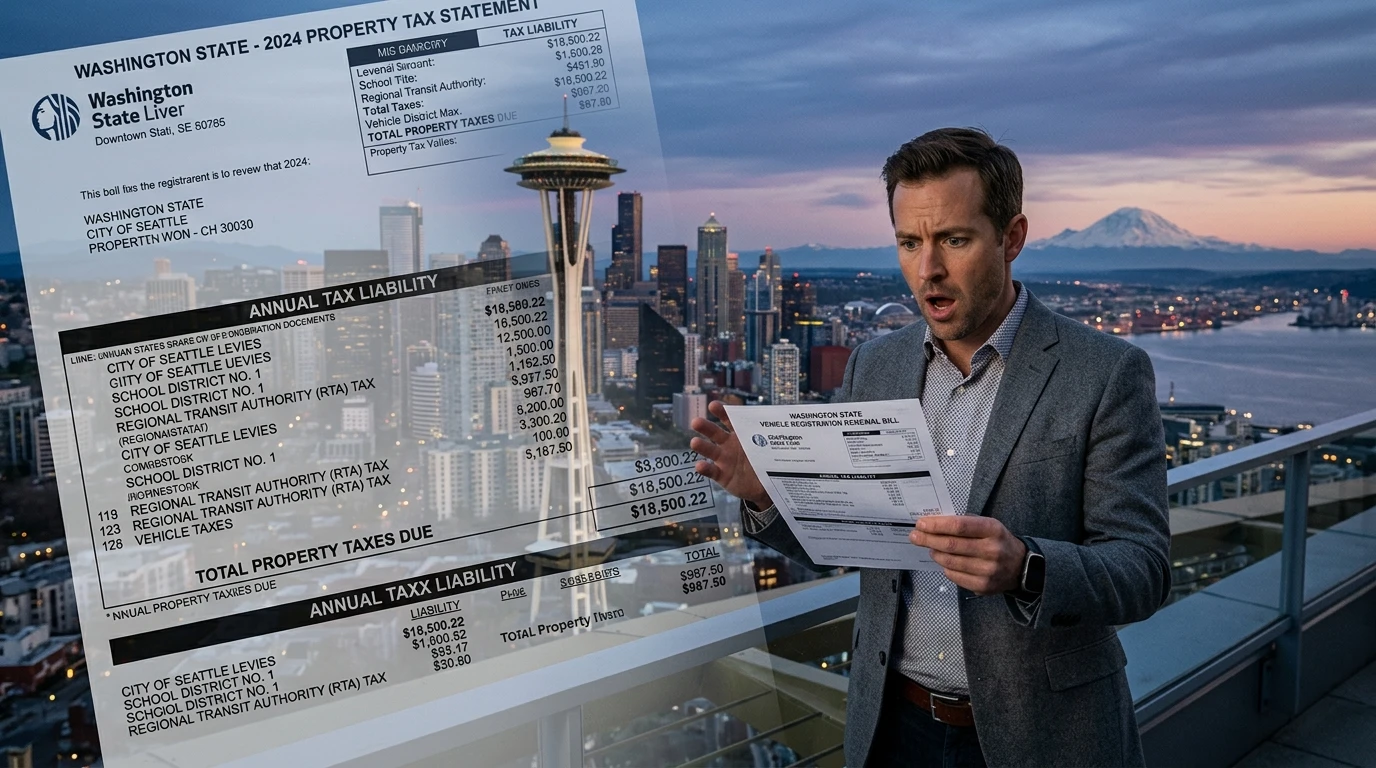
Marcus is a software engineer at a large Seattle tech firm. He bought his $108,000 BMW X5 in November, financed through the dealership in Bellevue, and drove it home thinking the worst part of car ownership was behind him. He had already paid $11,394 in sales tax at signing. He figured the next big bill was insurance.
Then his Washington tabs renewal arrived in the mail.
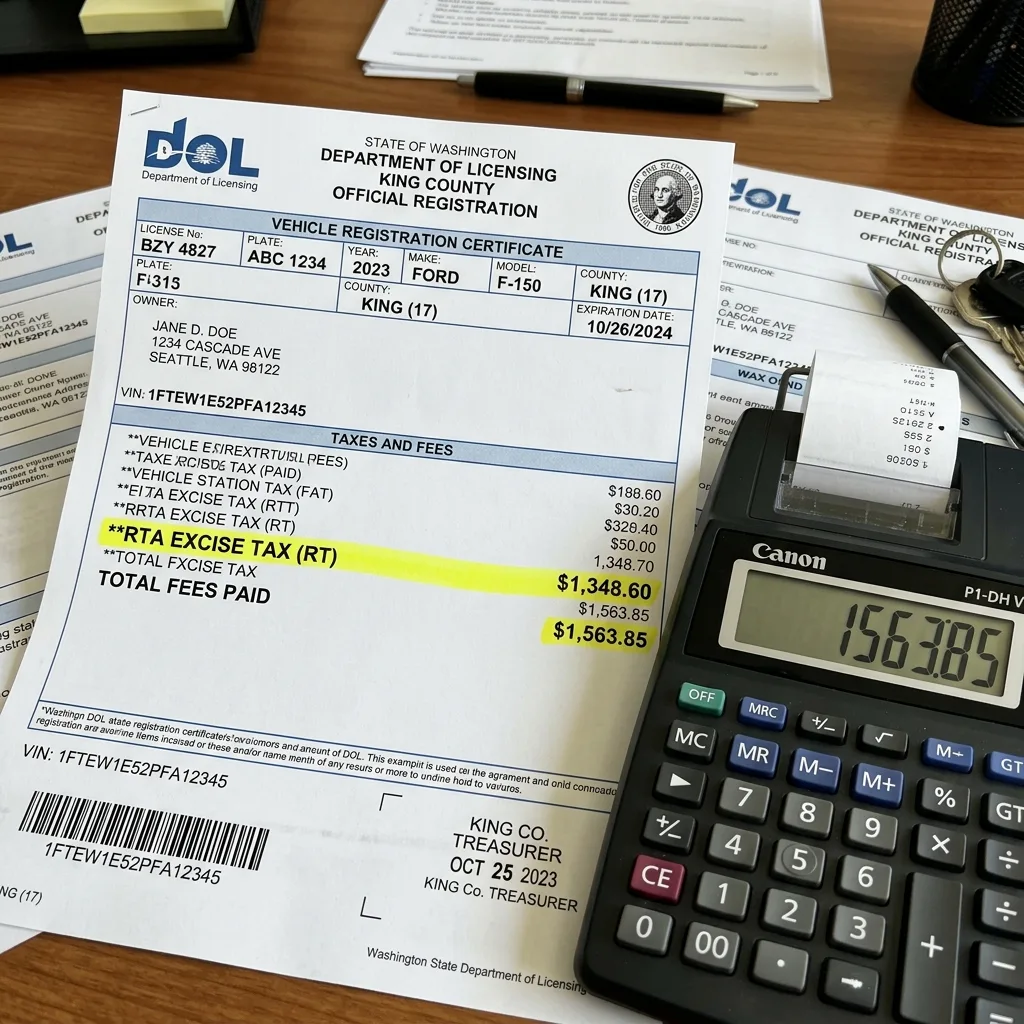
He expected $200. Maybe $250. He stared at the line items: Regional Transit Authority excise tax of $1,218. Base registration and weight fees of $130. Filing fees, service charges, the works. Total due: $1,348. And that was just year one. The same RTA bill was coming again next year, and the year after, indexed off the price he paid for the car when it was new.
“I already paid eleven grand in sales tax when I bought the thing. Now they want another fourteen hundred just to keep driving it? And next year I owe them again? What am I even paying for at this point?”
— Marcus, Bellevue software engineer, November 2026
Then Marcus did the worst kind of math. He looked up the new washington vehicle tax rules effective January 1, 2026. If he had bought the same BMW one month later, he would have owed an additional $640 in luxury surcharge on top of everything else. He learned that the RTA tax follows him as long as the car is registered in King, Pierce, or Snohomish County. He learned that even with depreciation built in, his five-year RTA total would clear $3,200. Combined with sales tax, registration, and EV-adjacent fees on his next vehicle, Washington was about to extract close to $20,000 in pure tax from him on a single car.
Marcus is not unusual. He is the median Seattle-area new-car buyer. And what happened to him happens every single day across King County, Pierce County, and Snohomish County. This article is for him, and for everyone who has stared at a Washington tabs renewal and wondered if there is a legal way out.
There is. It involves Montana, an LLC, and a working knowledge of why Washington’s tax system is structured the way it is.
What Is Washington Vehicle Tax?
The phrase washington vehicle tax is a catch-all that hides a layered system of three separate taxes. Most buyers do not understand the structure until they have already been hit by all three. The state has built it that way deliberately, and the Washington Department of Licensing publishes the components in different places so the total is rarely visible in one number.
Layer one is sales tax at purchase. Washington charges 6.5% state sales tax plus a 0.5% Motor Vehicle Sales Tax surcharge that took effect January 1, 2026, raised from the previous 0.3%. Local jurisdictions stack their own rates on top. In Seattle the combined rate is 10.55%. In Bellevue it is 10.2%. In Tacoma it is 10.4%. That is what the buyer signs for at the dealership.
Layer two is the new 2026 luxury surcharge. Effective January 1, 2026, Washington imposes an 8% surcharge on the portion of any vehicle’s price above $100,000. The threshold rises 2% per year starting July 1, 2026. Trade-in credit does not reduce the luxury tax base. This layer alone can add thousands or tens of thousands to a single transaction.
Layer three is the annual Regional Transit Authority excise tax, known to locals simply as the RTA. It applies only to vehicles registered in the Sound Transit district, which covers most of King, Pierce, and Snohomish Counties. The rate is 1.1% of the vehicle’s depreciated Manufacturer’s Suggested Retail Price. The depreciation schedule was written in 1999 and is famously generous to the state, meaning the taxable value drops slowly while you keep paying.
Stacked together, these three layers turn Washington into one of the most expensive states in the country to register a moderately priced or expensive vehicle. The pain is concentrated at purchase, with annual reinforcement each January when tabs come due. RCW 82.08 governs sales tax. RCW 82.44 governs the MVET. RCW 81.104.160 governs the Sound Transit add-on. None of them are going away.
The Sales Tax Stack
Look at a Seattle vehicle purchase contract and you will see one line that reads “Sales Tax 10.55%.” That number is the result of three things stacked on top of each other. The state takes 6.5%. The Motor Vehicle Sales Tax adds another 0.5%, up from 0.3% as of January 1, 2026. The remaining 3.55% is local — King County’s Regional Transit Authority sales-tax portion plus Seattle’s own sales-tax pie. None of those layers are negotiable, and none vary by dealer.
The 0.2-point MVST hike that took effect this January was quietly tucked into the 2025 transportation budget. On a $50,000 vehicle, it raised the sales-tax bill by $100. On a $200,000 vehicle, it added $400. Multiply that across the more than 250,000 new-car transactions Washington records each year, and the increase generates roughly $80 million in additional state revenue annually. Buyers barely noticed because dealerships rolled it into the same line item that has always been there.
The county-by-county variance matters. A buyer who lives in Spokane and registers there pays 9.1%. A buyer who crosses the Cascades to Bellevue pays 10.2%. The same $80,000 SUV costs $880 less to register, in sales tax alone, in Spokane than in Seattle. Some buyers try to game this, but Washington’s use-tax provisions in RCW 82.12 reach back and collect the difference if you bring the vehicle to your King County address inside the lookback window.
Trade-in credit does reduce the sales-tax base for a like-kind vehicle, which is the one piece of mercy in Washington’s system. Bring in a $30,000 truck on trade and the sales tax base on your new $80,000 truck drops to $50,000. That credit, however, evaporates the moment you cross the $100,000 line because it does not apply to the new luxury surcharge. We will get to that in a moment.
The 2026 Luxury Tax: Washington’s New Weapon
On January 1, 2026, Washington introduced something the state had never had before: a true luxury surcharge on vehicle purchases. The mechanic is simple. Any vehicle priced above $100,000 incurs an additional 8% tax on the portion above the threshold. This is on top of regular sales tax, on top of MVST, and on top of any annual RTA obligation. The threshold rises 2% each year starting July 1, 2026, which means by 2030 it will be approximately $108,000.
The numbers compound quickly. A $120,000 BMW X5 incurs an extra $1,600 in luxury surcharge alone (8% of $20,000). A $150,000 Porsche Cayenne Turbo GT incurs $4,000. A $200,000 Range Rover Autobiography incurs $8,000. A $350,000 Lamborghini Urus incurs $20,000 in luxury tax by itself, before sales tax, before registration, before anything else.
Combine the layers and the effective tax rate on a $200,000 Range Rover purchased in Seattle reaches above 14.5% on the full transaction. Add a year of RTA at $2,030, plus base registration of $130, plus a few small fees, and your first 12 months of ownership extract over $31,000 in pure tax from a single transaction. That is the cost of one mid-trim Toyota Camry vanishing into the Washington Department of Revenue every year you own the car.
The luxury tax is structural and permanent. Trade-in credit does not reduce it. Manufacturer rebates do not reduce it. Negotiating a lower out-the-door price reduces it slightly, but the surcharge sits on top of every dollar above $100,000 and there is no exemption for collectible cars, business use, or out-of-state delivery. If you take title at a Washington dealership, you owe it.
The legislative justification is the usual one. Washington has no income tax, so the state must generate revenue from consumption. Luxury vehicles are a politically easy target. The reality is that the threshold catches a lot of buyers who would not consider themselves luxury consumers — Tesla Model X Plaid, GMC Yukon Denali Ultimate, Ford F-150 Raptor R, Toyota Sequoia Capstone — all of which cross $100,000 in normal trim configurations.
The RTA Trap: A Tax That Hits Every Year
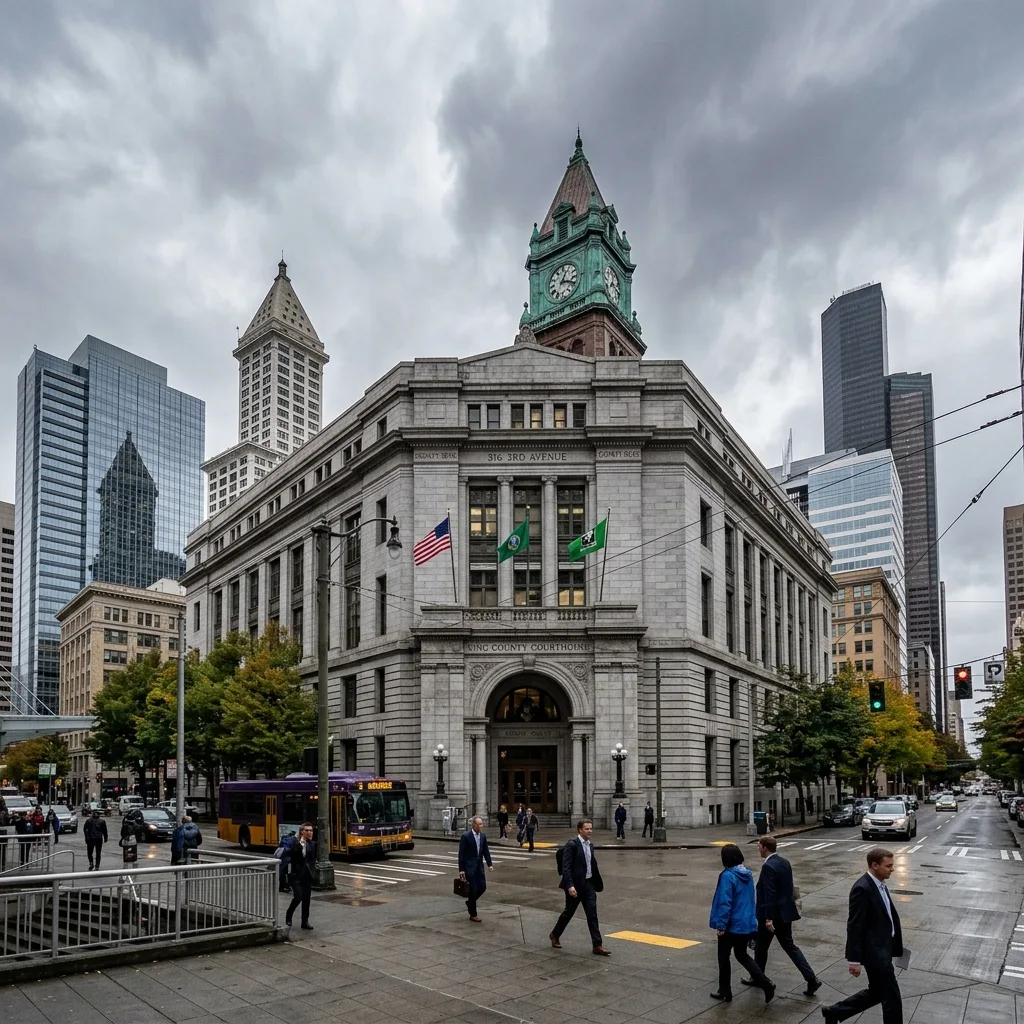
In November 2016, voters in the three-county Sound Transit district approved Sound Transit 3, a $54 billion light-rail expansion package. Buried inside ST3 was an increase to the Motor Vehicle Excise Tax, raising the rate from 0.3% to 1.1%. The voters who approved it were thinking about train lines. What they actually authorized was a recurring tax that hits every car, truck, and SUV in King, Pierce, and Snohomish Counties for as long as the bonds are outstanding.
The rate of 1.1% does not sound bad in isolation. The trick is in the depreciation schedule. By statute the RTA uses a 1999-vintage MSRP depreciation table, not market value. That means a 2026 Tesla Model Y is taxed in year one at 92% of what it cost new. In year two it is taxed at 69.6%. In year three it is taxed at 54%. The schedule is friendlier than nothing, but it is far less generous than the actual depreciation curve of any real vehicle, especially EVs.
Three things make the RTA more painful than the headline rate. First, the tax base is MSRP — the sticker price the manufacturer published when the car was new, regardless of whether anyone ever paid that figure. Buy a $120,000 BMW for $108,000 after dealer discount and you still pay RTA on $120,000. Second, the tax follows the vehicle, not the owner. Buy a used Tesla and you inherit the same MSRP-based bill the original buyer was paying. Third, RTA is not deductible against Washington state taxes (Washington has no income tax) and is only partially deductible federally if you itemize.
One bright spot exists. The Sound Transit 3 bonds are scheduled to be partially retired in 2028. At that point the rate is supposed to drop from 1.1% to 0.8%. Whether the legislature actually allows that to happen is another question. The MVET is a reliable revenue source, and reliable revenue sources rarely shrink on schedule. Also worth noting: counties outside the Sound Transit district — Spokane, Yakima, Kitsap, the entire eastern half of the state — pay zero RTA. That fact alone has driven a steady migration of high-end vehicles to garage addresses in Spokane Valley and beyond, even when the actual driver still works in Seattle.
5-Year Cost Comparison Tables
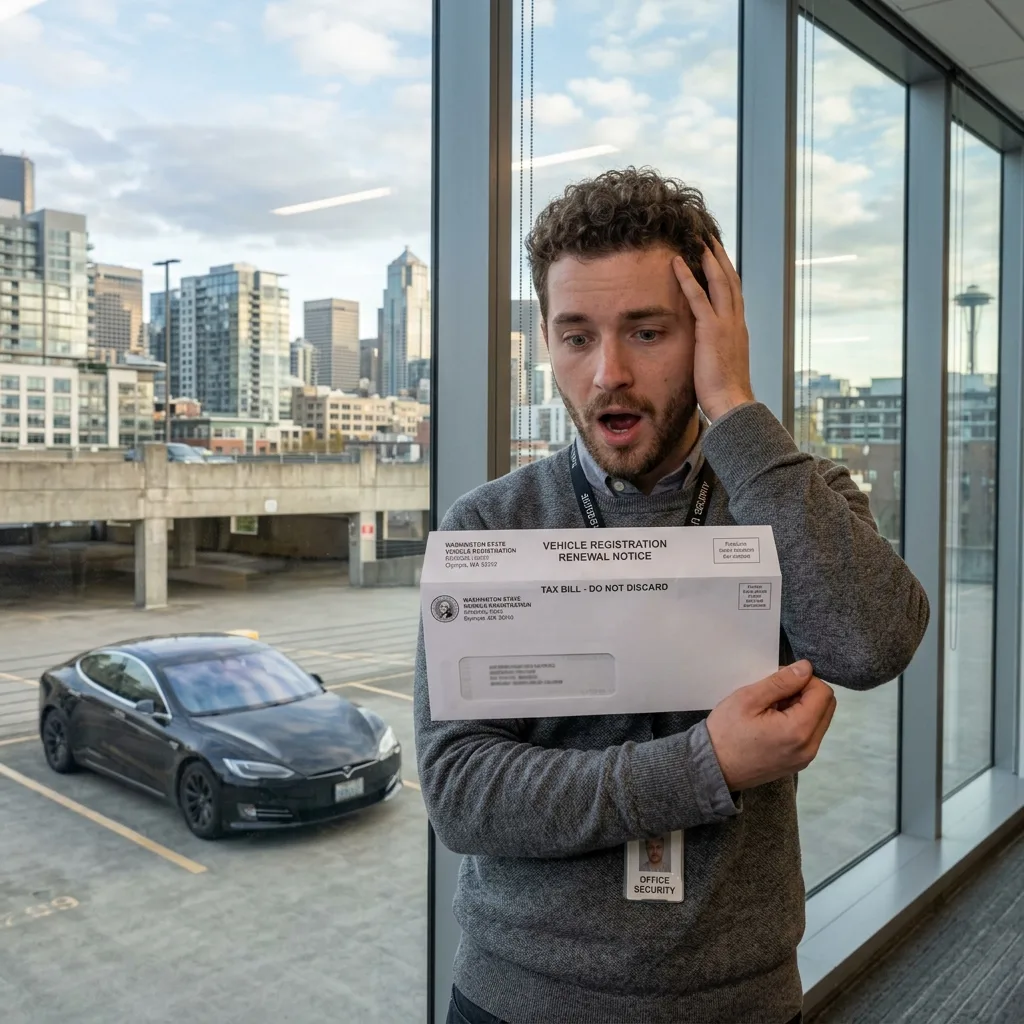
Numbers in isolation are abstract. Side by side, they are infuriating. Below is a honest five-year total cost comparison for five typical Washington vehicle profiles, comparing what you would pay under the standard Washington tax stack against what you would pay registered through a Montana LLC. The Washington totals include sales tax at purchase, the new luxury surcharge where applicable, five years of base registration and weight fees, and five years of RTA in the Puget Sound counties.
The Range Rover line is the one that tends to stop people cold. Buying a $200,000 vehicle in Seattle and keeping it for five years means handing the state of Washington more than $35,000. The same five-year ownership period through Montana costs around $3,196, total. The difference — $32,116 — buys a second car. Or a year of college. Or a kitchen renovation. Or, if you are inclined, six round-trip business-class tickets to Tokyo. Washington kept that money and used it to build a light-rail line that opens four years late.
Even on the modest end of the chart, a Spokane RV buyer who never pays RTA still saves $3,543 over five years. Multiply that by the typical RV owner’s habit of upgrading every six to eight years and the lifetime savings clear $20,000 with ease.
Real Stories: Who Gets Crushed

Marcus, the Bellevue software engineer from the opening, is the cleanest case. His $108,000 BMW X5 generated a sales-tax bill of $11,394 on day one. His RTA in year one was $1,218. By year five, he will have paid more than $14,500 in cumulative RTA on top of the original sales tax, with his vehicle still well shy of being paid off. Had he closed the deal one month later, the new luxury surcharge would have added $640 to year one and tied his total tax exposure to a moving target as the threshold dropped lower in real terms each year. Marcus found a Montana LLC structure through ZTT in his second renewal cycle and saved roughly $9,800 over the remaining four years of his ownership window.
Jennifer is a top-producing real-estate broker in Seattle. She bought a $95,000 Tesla Model S Plaid in early 2026, partly because clients judged her car as a proxy for her sales numbers and partly because she actually loved the way it drove. Her sales tax came in at $10,023 on the day of delivery. Then she discovered the Washington electric-vehicle annual fee schedule: $150 base EV fee plus $75 charging-station surcharge, totaling $225 per year for the privilege of driving the cleanest car in the lot. Add her year-one RTA of $874 on top of the EV fees and her base registration and Jennifer was looking at $1,300+ per year in recurring vehicle taxes, every January, indefinitely. Her listings did not pay her in tax dollars, so she opened a Montana LLC and reduced her ongoing annual cost by more than $1,000.
Dave and Linda are the most relatable case. Both retired from Boeing in their early sixties. They bought a $180,000 Newmar Dutch Star motorhome to spend winters in Arizona and summers in the San Juans. Their Tacoma sales tax of 10.4% generated an $18,720 bill at delivery. Their first-year RTA, because Tacoma is in Pierce County and inside the Sound Transit district, came in at $1,825. They were spending six months a year outside Washington but paying full Washington taxes on a vehicle that genuinely lived a multi-state life. After the second tabs renewal, Dave did the math and called ZTT. The motorhome now lives on Montana plates. The first-year cost through Montana was $1,699, with annual renewals of $368 thereafter. Five-year savings against what Tacoma was extracting: north of $19,000.
Three different households. Three different vehicles. Three completely different relationships with the road. The one thing they had in common: Washington’s tax stack treated all of them the same — like ATMs that could be dialed in for an annual withdrawal.
The Montana Solution
Montana has no general sales tax. None at the state level, none at the county level, and none added on for vehicles. Montana also has no annual ad valorem property tax on vehicles, no RTA-equivalent excise, and no luxury surcharge. The state does charge a registration fee, an LLC filing fee, and a small annual report fee. That is the entire structure.
The Montana LLC strategy works because Montana state law allows a properly formed limited-liability company to register vehicles in the LLC’s name without requiring the members to be Montana residents. Once the LLC owns the vehicle, the LLC registers it at the Montana DMV. Plates are issued in Montana, and they belong to the LLC, not to the individual. The LLC is the legal owner. The individual is a member of the LLC.
The mechanics are not exotic. We form a Montana LLC for you (typically 24 to 48 hours from document submission). We then transfer the vehicle title into the LLC and register it at the Montana DMV. Plates are mailed to your physical address. You receive a Montana registration card, two Montana plates, and a Montana title held in the LLC’s name. From that point forward, the vehicle is a Montana-registered vehicle owned by a Montana entity.
Annual maintenance is light. Montana requires an annual report filing for the LLC ($20) and renewal of the registration. ZTT handles both. Total annual cost ranges from $225 to $368 for most cars and trucks, with permanent plates available for trailers, motorcycles, and certain other vehicle classes. Compare that to the $1,300+ per year Marcus was paying on his BMW or the $1,825 Dave’s motorhome was costing in Tacoma, and the math becomes hard to argue with.
Insurance still works the way insurance always works. The vehicle is insured wherever it is primarily driven, with the LLC listed as the named insured and the member as the operator. Reputable insurers — Progressive, Hagerty, State Farm — write these policies routinely. The Montana plate has nothing to do with insurance jurisdiction.
Is This Legal?
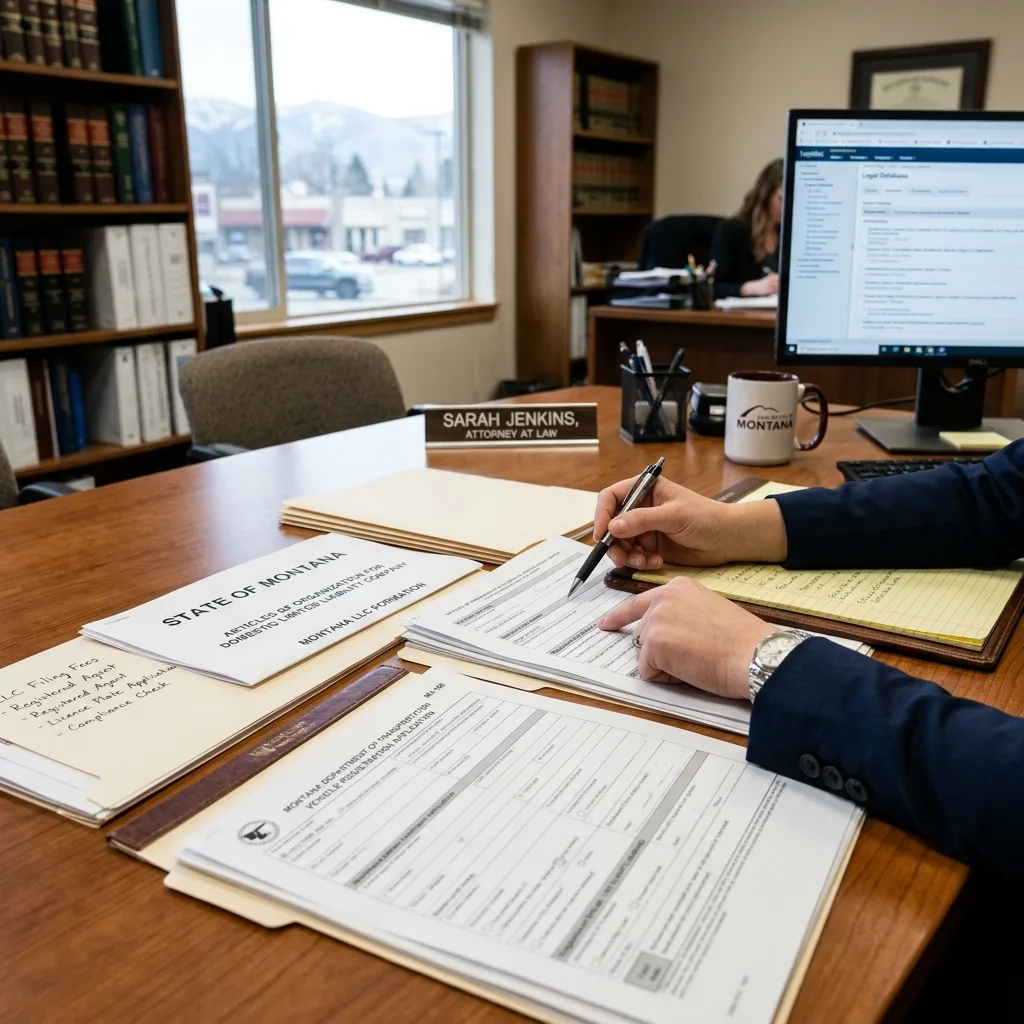
Yes, with caveats that matter. Montana statutes explicitly permit non-resident ownership of Montana LLCs. Federal commerce-clause precedent protects the right of a multi-state business entity to register its assets in the state of its formation. Montana plates are issued legally to the LLC, not fraudulently. So far, so clean.
The framework is straightforward. Your Montana LLC is a legally formed business entity under Montana law. Montana allows non-residents to own and operate LLCs, and Montana plates are issued to the LLC as the registered owner. The federal commerce clause protects a legitimately formed multi-state business from being treated as a simple tax dodge. Courts at multiple levels have upheld LLC-based vehicle registration as a legal form of tax minimization — the Louisiana Supreme Court in Thomas v. Bridges put it plainly: the legal right to decrease what would otherwise be your taxes by means the law permits “cannot be doubted.”
Our clients include RV owners who drive through five or six states on any given trip, collectors who attend shows in Oregon, California, and Idaho, contractors whose trucks cross state lines as part of daily operations, and tech professionals who spend extended time in other states for work. The LLC owns the vehicle. The vehicle is registered in Montana. That is accurate, it is documented, and it is how the structure has worked for thousands of clients over many years.
Montana LLC vehicle registration is legal tax minimization — the same category as maximizing retirement contributions, using a home office deduction, or structuring a real estate investment through an LLC. The mechanism is different; the principle is identical.
Zero Tax Tags has been forming Montana LLCs and registering vehicles for clients nationwide since the structure became mainstream. We handle the formation, the title work, the registration, the plates, and the annual renewals. Thousands of clients across the country use our service. We stand behind the structure and behind every client we serve.
Who Benefits Most

Not every Washington vehicle owner benefits from this structure. The math works when the savings exceed the setup and maintenance fees by enough to be worth the paperwork. In practice, that means the following profiles get the most out of it:
- Seattle, Bellevue, and Tacoma residents buying luxury vehicles over $100,000. These buyers face the worst version of the Washington tax stack — local sales tax above 10%, the new luxury surcharge, and full RTA exposure. Five-year savings often exceed $20,000.
- Tech workers with company-car allowances or executive compensation packages that include vehicles. When the company budget covers a new car every three or four years, every refresh triggers another full sales-tax hit. Holding the vehicle in an LLC makes that recurring tax disappear.
- EV owners frustrated by the $225 annual fee. Battery-electric vehicles in Washington face $150 base plus $75 charging-station surcharge. Hybrids face $105 in similar fees. None of those apply to Montana-registered vehicles.
- RV owners and snowbirds with real multi-state travel patterns. The fact pattern is built in. The vehicle goes to Arizona, Texas, Florida, or Montana. Ownership through a Montana LLC matches the actual use.
- Collectors of classic cars and motorcycles. Permanent plates exist in Montana for trailers ($699 once), motorcycles ($599 once), and certain collector vehicles. Pay once, drive forever.
- Business owners with fleets. One Montana LLC can hold multiple vehicles. Maintenance scales economically across a fleet — the LLC fees are flat, only the registration adds per vehicle.
Our Process and Timeline
The process is faster than most clients expect. From the day you submit your documents to the day Montana plates arrive at your door is typically two weeks. ZTT handles every step. You sign a few forms, pay the setup fee, and wait for the mail.
| Day 1: | Submit your MCO and supporting paperwork through our secure portal. We review for completeness and file your Montana LLC the same day. |
| Days 1–2: | Montana LLC formation complete — same business day in most cases, second business day at the latest. |
| Days 2–4: | Title transferred into the LLC name at the Montana county treasurer. |
| Days 4–7: | Permanent Montana plates shipped directly to your door within 3–5 business days of title completion. |
Pricing is straightforward. Year one for a standard car, truck, or SUV is $899, which includes our $699 service fee and $200 in Montana state filing fees. Year two and beyond is approximately $225 per year for vehicles under approximately $65,000, and approximately $368 per year for vehicles above that price point. Vehicles above $150,000 pay a one-time $1,724 first-year fee that includes Montana’s luxury vehicle fee, with regular annual renewals thereafter. Trailers and fifth wheels pay $699 once, ever. Motorcycles pay $599 once, ever. RVs typically run $1,699 first year and $368 annually thereafter.
Who This Is Built For
The Montana LLC is built for Washington residents who are done paying some of the highest vehicle taxes in the country. If you got hit with a five-figure sales tax bill at the dealership, or you are staring at an RTA excise notice that reads like a second mortgage payment, this structure was designed specifically for your situation.
Our clients include tech professionals in Seattle and Bellevue who bought $80,000 to $200,000 vehicles and want to stop the annual RTA billing. RV owners who drive the country half the year and see no reason to pay Washington’s 10.4% rate on a $300,000 motorhome. Contractors with expensive trucks who use their vehicles across state lines as a normal part of doing business. EV owners watching their annual Washington EV fee stack on top of sales tax on top of RTA. Collectors with two or more high-value vehicles paying excise on all of them every single year.
If your vehicle is worth less than $20,000 and was purchased used a few years back, the Year 1 setup cost takes longer to recover — though if you are planning your next vehicle purchase anyway, setting up the LLC now means you buy the next one right from the start. We will calculate your specific break-even for free before you commit to anything.
Financing? We work with lienholders regularly. Existing vehicle already registered in Washington? We will show you the transition math. Buying in the next few weeks? Our process runs 8 to 14 days from intake to Montana plates. Whatever your situation, we have handled it before.
FAQs
1. Does Montana LLC registration eliminate the RTA excise tax?
Yes. The RTA only applies to vehicles registered in the Sound Transit district of Washington. A vehicle registered in Montana to a Montana LLC is not subject to RTA, which means no annual excise bill of $812 to $2,030 depending on vehicle MSRP. This is the largest single recurring savings most clients see.
2. Does the new 2026 luxury tax apply if I register in Montana?
No. Washington’s 8% luxury surcharge attaches to vehicles purchased and registered in Washington. A vehicle titled in a Montana LLC and registered in Montana is outside that tax’s reach. On a $200,000 vehicle, that single line item alone saves $8,000 at purchase, with the threshold continuing to drop in real value each year as it indexes upward by 2%.
3. What if I am in Spokane (no RTA) — is it still worth it?
Yes, often. Spokane buyers skip the RTA but still face 9.1% sales tax at purchase. On a $65,000 RV that is $5,914 in sales tax. Through Montana, the same RV costs about $1,699 first year and $368 annually thereafter, for a five-year savings of roughly $3,500. The math is tighter than for a Seattle buyer, but it still works for vehicles above $40,000 or so.
4. Do I still pay Washington sales tax at the dealership if I use a Montana LLC?
If you take delivery in Washington as the LLC’s representative, the dealership will typically collect Washington sales tax unless you complete an out-of-state delivery. The cleanest path is to have the LLC purchase the vehicle directly and arrange Montana delivery or out-of-state delivery, which avoids the Washington sales-tax trigger entirely. We coordinate this with your dealer when timing permits.
5. Is a Montana LLC legally valid in Washington?
Yes. A Montana LLC is a legally formed business entity recognized in all 50 states under full faith and credit principles. Montana has no state income tax, no sales tax, and has issued LLC-registered vehicle plates to buyers across the country for decades. The structure works because Montana law governs the LLC, and a Montana-titled vehicle is a Montana-registered vehicle — the same as any out-of-state plate you see on the road every day. We ensure every client’s LLC is properly formed, actively maintained, and in good standing with the Montana Secretary of State at all times.
6. How does this work with my lender or lease?
Most lenders accommodate LLC titling once they understand the structure, particularly for high-value vehicles where the borrower is a strong credit risk. We have worked with dozens of lenders and can walk through the process with your dealership’s finance department. Leased vehicles typically cannot be transferred to an LLC, but purchases — cash, financed, or dealer-financed — generally work well. If your lender has questions, we can provide documentation and answer them directly.
7. Can I use a Montana LLC for my Tesla or other EV?
Yes. Montana does charge an annual EV fee ($130 for battery-electric vehicles under 6,000 pounds and $70 for plug-in hybrids), but those numbers are still substantially lower than Washington’s $225 EV fee combined with sales tax and RTA. Tesla, Rivian, Lucid, and Porsche Taycan owners are some of our most common Washington clients precisely because the savings are large and the EV fee differential is small.
8. How much does it cost to set up and maintain?
Year one is $899 for a standard car, truck, or SUV ($699 service plus $200 LLC formation). Annual renewals are approximately $225 to $368 depending on vehicle value. Larger and more expensive vehicles have higher annual costs. Trailers and motorcycles use permanent-plate pricing — $699 and $599 respectively, paid once. RVs are $1,699 first year and $368 annually. Total five-year cost for a typical luxury vehicle is between $1,800 and $3,200 — usually one-fifth to one-tenth of what Washington would extract over the same period.
Ready to Stop Overpaying Washington Taxes?
Washington vehicle owners have saved millions with Montana LLC registration. The RTA bleed, the new 2026 luxury surcharge, and the 10.55% Seattle sales tax all stop the day your plates change. You’re next.