21 min read
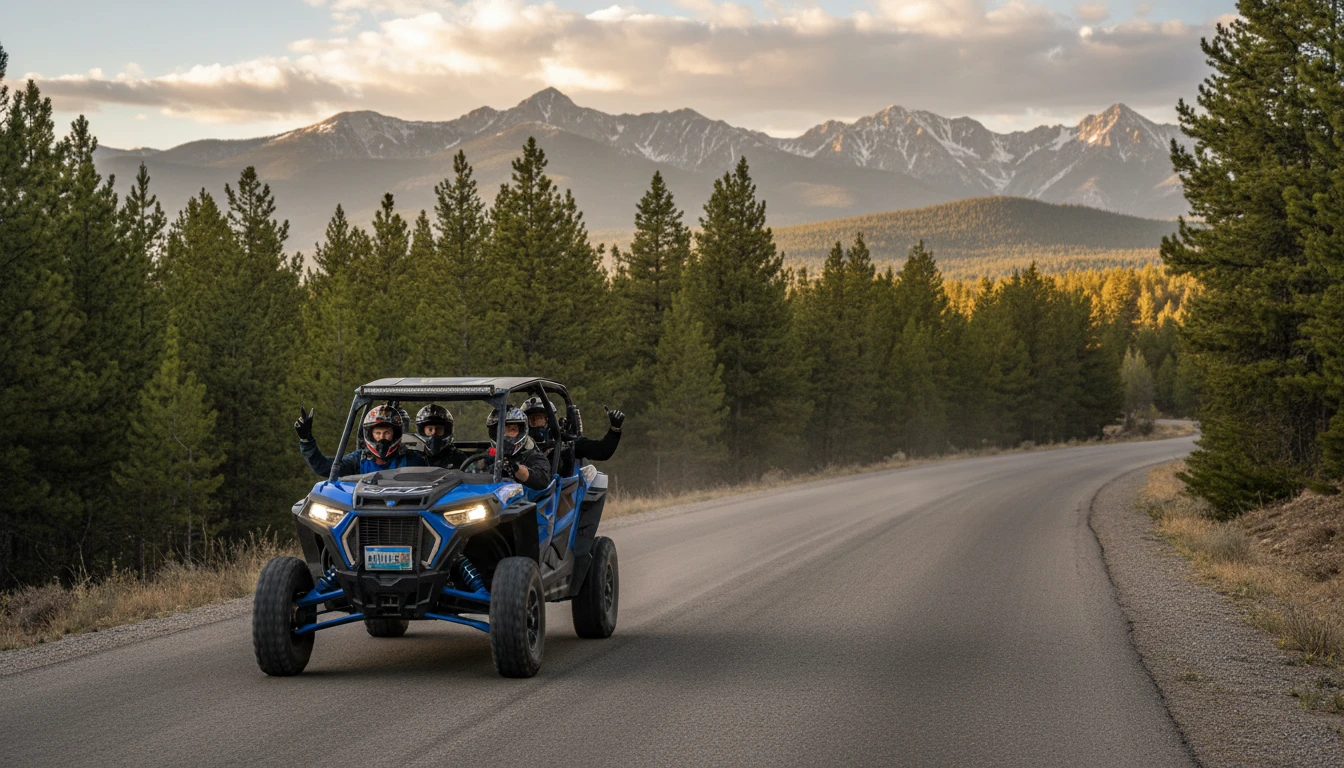
Utah lets you register a UTV street-legal. But you still pay 6.85 to 7.68 percent sales tax upfront and roughly $35 plus per year forever. On a $45,000 Can-Am X3, that is over $3,300 in sales tax alone before you have driven a mile. Then annual fees stack every year after.
Other states across the western U.S. are similar. Montana is different. $749 one-time. No sales tax. No annual renewal. Permanent plate. One filing, one shipment to your door, and you are done with the registration treadmill for the life of the machine.
On this page
Utah’s OHV Registration System
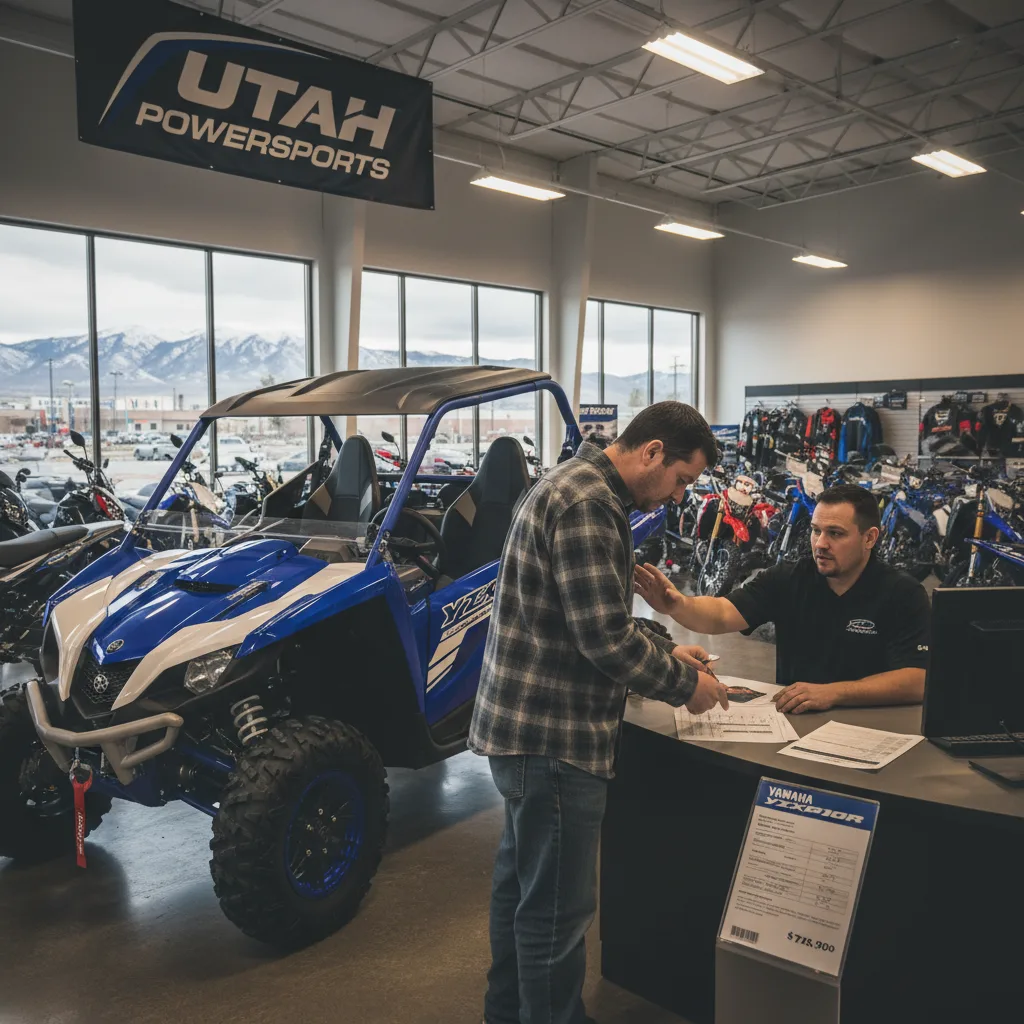
Utah is one of the better states for UTV riders. The terrain is genuinely good, the trail access is broad, and Utah actually lets you street-register a UTV — unlike Texas, Illinois, or most of the southeast. That matters. It means your machine can legally cross paved roads, pull off the trail and into a small-town gas station, and connect trail systems through public right-of-way.
Utah’s permissive attitude costs something, though. Every dollar of access comes through the registration counter, and the counter has gotten more expensive every year.
Sales Tax: 6.85 to 7.68 Percent Combined
Utah treats ATVs and UTVs as personal property taxed at the standard retail sales tax rate. There is no separate, lower OHV tax rate. Whatever combined state, county, and city rate applies in the county of purchase or registration is the rate you pay.
- Grand County (Moab area): 6.85% combined
- Salt Lake City and Provo: 7.35% combined
- Washington County (St. George area) and some cities: up to 7.68% combined
- Tax is due at the moment of purchase or first Utah registration. There is no installment option.
Street-Legal Equipment Requirements (Utah Code 41-6a-1509)
To get a street-legal plate on a UTV in Utah, the vehicle must be equipped to the same general standard as a passenger car. The Utah statute is specific, and inspection stations enforce it line by line.
- Dual headlamps, dual tail lamps, license plate light, and red reflectors
- Dual stop lamps and front and rear turn signals
- Horn or audible warning device
- Muffler and emissions control equipment intact
- Left and right rearview mirrors
- Windshield, or DOT-approved eye protection for operators without a windshield
- Illuminated speedometer
- Seat belts for each occupant
- Seat height between 20 and 40 inches
- Tires with minimum 2/32 inch tread depth and maximum 44 inch overall height
- Utah ATV safety inspection certificate required for first-time street-legal registration
Annual Fees
- OHV registration sticker: approximately $35 per year
- DMV registration fees (street-legal): an additional $35 to $45 per year depending on county and vehicle age
- Total annual carrying cost for a street-legal UTV: approximately $70 to $80 per year
- Registration expires annually. You must renew every year. There is no permanent-plate path for OHVs in Utah.
The OHV Education Requirement
Utah requires every OHV operator to complete an OHV education certificate before riding on public lands. Riders under 18 take the Youth Certificate course. Riders 18 and older take the Adult Certificate. Non-residents must obtain a $35 per year non-resident OHV permit on top of the education requirement.
HB 180 (2023): The License Plate Requirement
HB 180 added a new layer in 2023. All off-highway vehicles, excluding motorcycles and snowmobiles, must now display a Utah license plate in addition to the existing OHV sticker. What used to be a single decal on the side of the machine is now a plate and a decal, and both have to be current. Utah’s OHV registration system is now the most administratively heavy in the Mountain West.
On a $45,000 Can-Am X3 MAX Turbo RR, Utah’s 7.35% combined sales tax is $3,308 due at purchase before you have unloaded the trailer.
Utah does have an agricultural exemption. But “exclusively agricultural use” is narrowly interpreted. Recreational use or mixed use does not qualify. And even if your operation qualifies for the exemption, you still need annual OHV registration to ride on public lands. The exemption only addresses sales tax at purchase, not the annual sticker.
Where Utahns Actually Ride: Best OHV Areas by Region
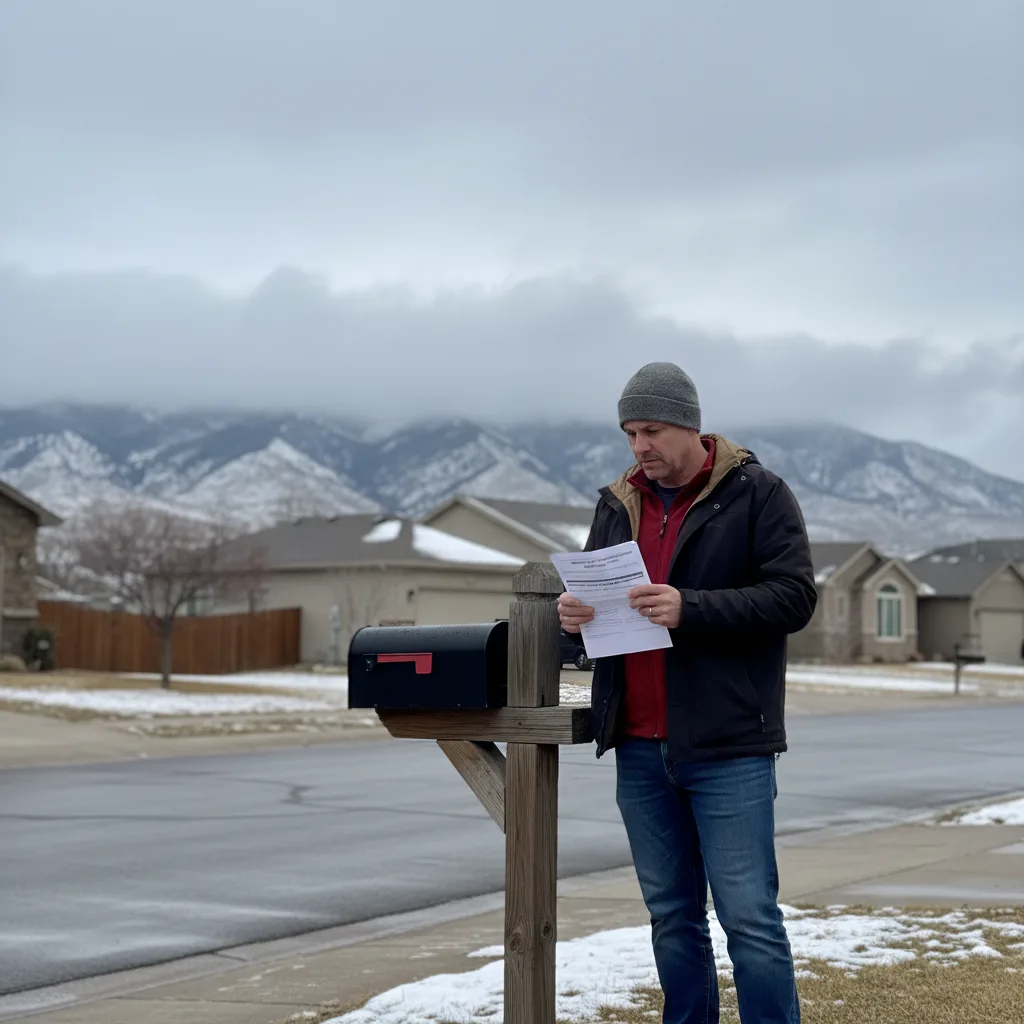
Utah’s OHV terrain is hard to match. Slickrock in Moab, 1,500-mile trail networks in the central mountains, rose-colored sand dunes in the southwest — the variety pulls riders from every state in the country. What follows is the regional breakdown.
Moab and Grand County
Sand Flats Recreation Area sits 2.5 miles east of Moab and covers 9,000 acres with roughly 40 miles of 4×4 trails. It is the most famous technical OHV destination in Utah and arguably in the country. Day use is $10 for a 7-day pass and camping runs $15 to $80 per night depending on the site.
- Hell’s Revenge — 6.5 miles, extreme difficulty, with steep slickrock ledges and exposure. Two to three hours to complete. Not for stock vehicles. A spotter is recommended for first-timers.
- Fins and Things — Steep slickrock fins, challenging terrain, and several optional obstacle lines. Bring a spotter. Sun exposure is brutal in summer.
- Porcupine Rim — 14.4 miles total. The first 8.6 miles are open to 4×4 and ATV; the trail becomes singletrack beyond and is closed to UTVs.
White Rim Road and Trail in Canyonlands National Park is a 100-mile loop around the Island in the Sky district. It is 4×4 only — no ATVs or UTVs allowed. A permit is required and books out four to six months in advance. Worth noting as a counterpoint to the Moab OHV reputation: the most famous Moab “trail” of all is actually closed to UTVs entirely.
Central Utah and the Paiute ATV Trail
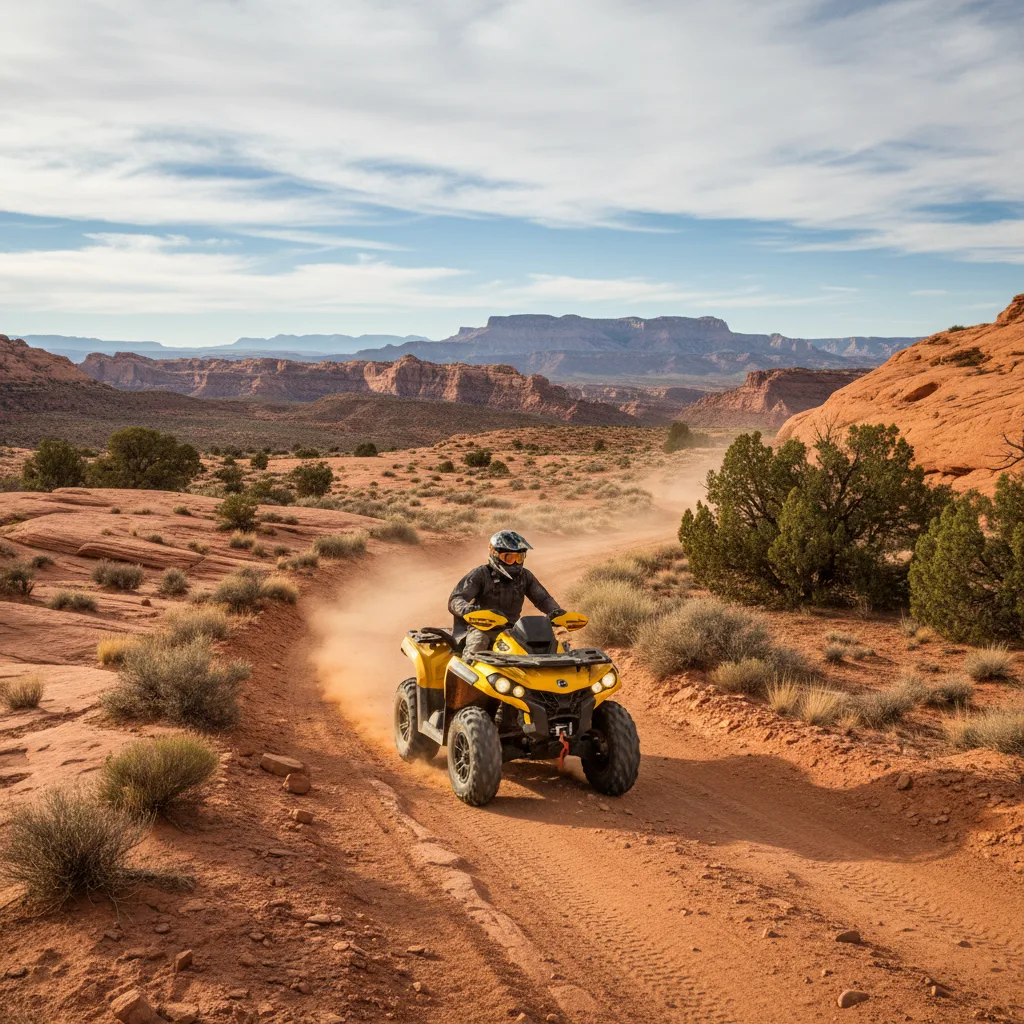
The Paiute Trail system gets less attention than Moab, which is a mistake. It is one of the only systems in the country where a full-width UTV can ride for days without doubling back.
- Over 1,500 miles of interconnected trails in central Utah
- Main loop is approximately 275 miles, rated one of the top 5 trails in the U.S. by ATV Illustrated Magazine
- Spans five counties: Sevier, Millard, Piute, Beaver, and Garfield
- Basecamp is Marysvale, UT — 2.5 hours from Salt Lake City, 2 hours from St. George, and 4 hours from Las Vegas
- Trail width 8 to 12 feet — full-size UTVs (60 inches and wider) fit throughout the system
- Elevation 4,000 to 11,000+ feet; alpine forest, high meadows, and red rock country all on one ride
- Riding season late July through October for the high country; lower sections accessible May to June
- Passes directly through small towns including Marysvale, Koosharem, and Monroe, where ATVs are permitted on designated streets
- Adjacent to Capitol Reef National Park, Bryce Canyon National Park, and Fishlake National Forest
Southwest Utah
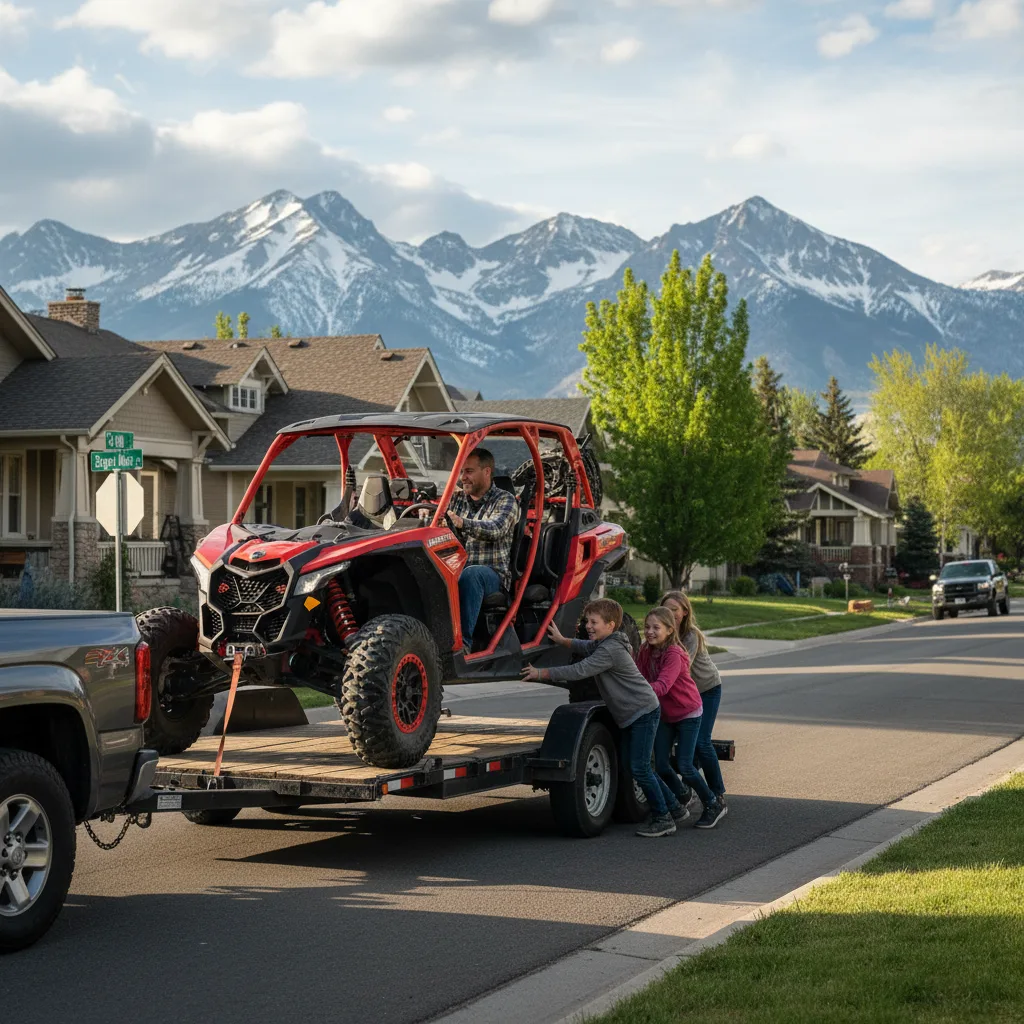
Sand Hollow State Park in Washington County, near Hurricane, covers 15,000 acres of OHV riding adjacent to Sand Mountain. Red rock sand dunes meet open desert. The park combines water recreation on the reservoir with serious riding terrain, which makes it a family-friendly destination as well as a serious-rider stop. Camping is available on-site, and Zion National Park is 35 minutes north.
Coral Pink Sand Dunes State Park in Kane County sits 30 minutes from Kanab. The park covers 5,000-plus acres of rose-colored dunes plus surrounding BLM land that was expanded in March 2024. The dunes themselves move up to 50 feet per year. The park is open year-round, sits near Zion’s east entrance, and can be combined with Sand Hollow for a southwest Utah OHV weekend.
Northern Utah
Little Sahara Recreation Area in Juab County, about 28 miles west of Nephi and 200 miles south of Salt Lake City, covers 60,000 acres of sagebrush, juniper hills, and moving sand dunes. Sand Mountain inside the park is a 700-foot hill climb that draws serious sand riders from every western state. The recreation area has 255-plus campsites across four campgrounds, hosts roughly 300,000 visitors a year, and gets packed on Easter, Memorial Day, and Labor Day weekends. Camping runs $18 per vehicle per night, and an annual pass is $120.
Stansbury Mountains and Stansbury Island in Tooele County, about 90 minutes west of Salt Lake City, are BLM land with no fees and no permits. The area offers wide-open ridge and valley tracks, beginner-friendly terrain, and 360-degree views of the Great Salt Lake, the Bonneville Salt Flats, and Skull Valley. Pronghorn antelope are common. It is rarely crowded, even on holiday weekends.
Utah OHV education certificate is required on all public lands. Out-of-state riders need a $35 per year non-resident permit. That $35 lands on both sides of the comparison whether you register in Utah or Montana, so it is excluded from the savings calculation below.
The Real 5-Year Cost of Utah ATV Registration
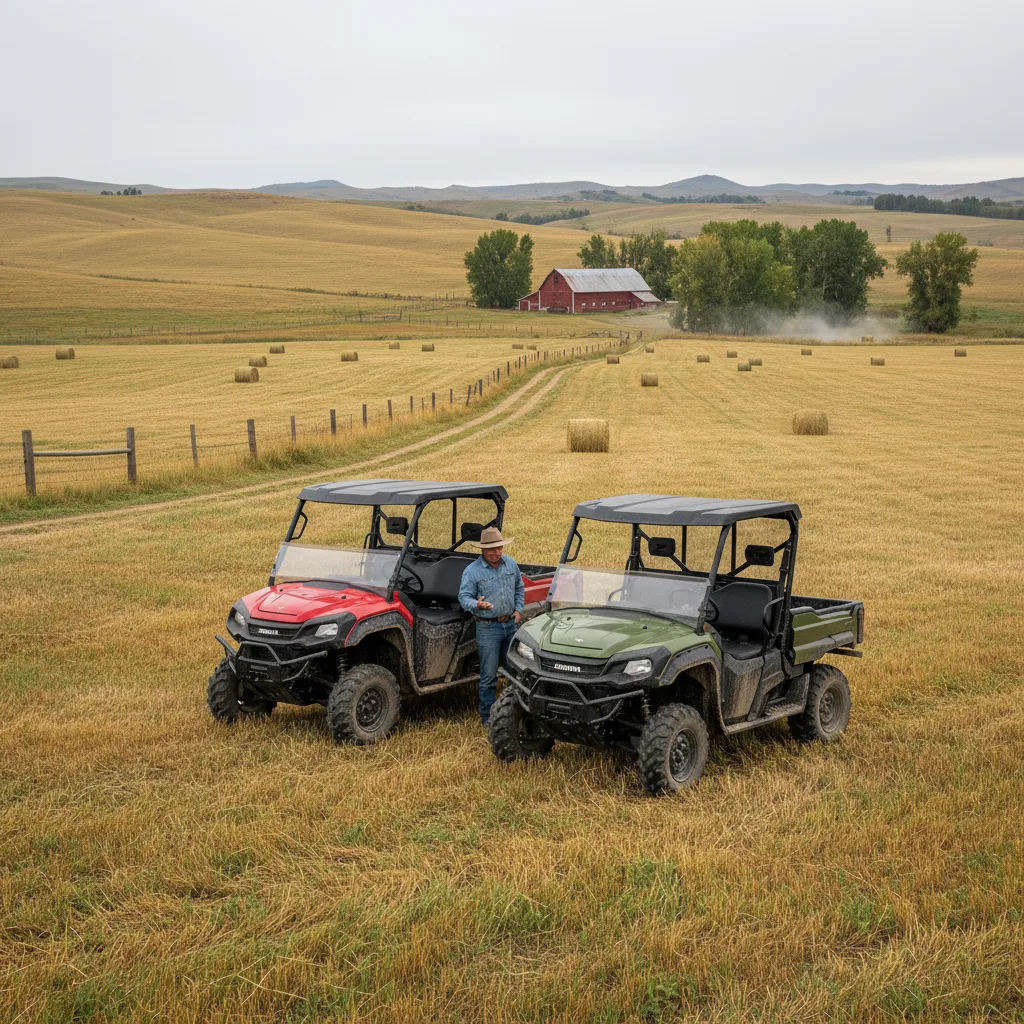
The math is straightforward but the numbers add up quickly. Utah sales tax at the most common 7.35 percent combined rate, plus annual OHV sticker around $35, plus DMV renewal fees around $40 for the street-legal plate, equals roughly $75 per year in ongoing carrying cost after purchase. Over five years of ownership, the picture looks like this.
Notes on the Math
- The $35 per year non-resident OHV permit applies only to out-of-state riders on Utah public lands. It is not relevant to Utah residents who buy here, so it is not included in the table.
- The $75 per year annual estimate combines OHV sticker (about $35) plus DMV renewal fees (about $40 for street-legal registration). A basic non-street-legal OHV sticker alone is about $35 per year.
- Montana’s plate is permanent. Zero annual fees. Zero renewal paperwork. The savings number above is for five years; at year ten the gap doubles, and at year fifteen it triples.
- These savings compound the longer you keep the machine. UTV owners are not like car owners — many ride the same machine for ten to fifteen years.
- In Grand County (Moab), the tax rate is 6.85 percent, so the savings are slightly different. A $45K machine purchased in Moab incurs $3,082 in sales tax. Montana still saves $2,708 over five years on that same machine.
The Montana LLC Solution
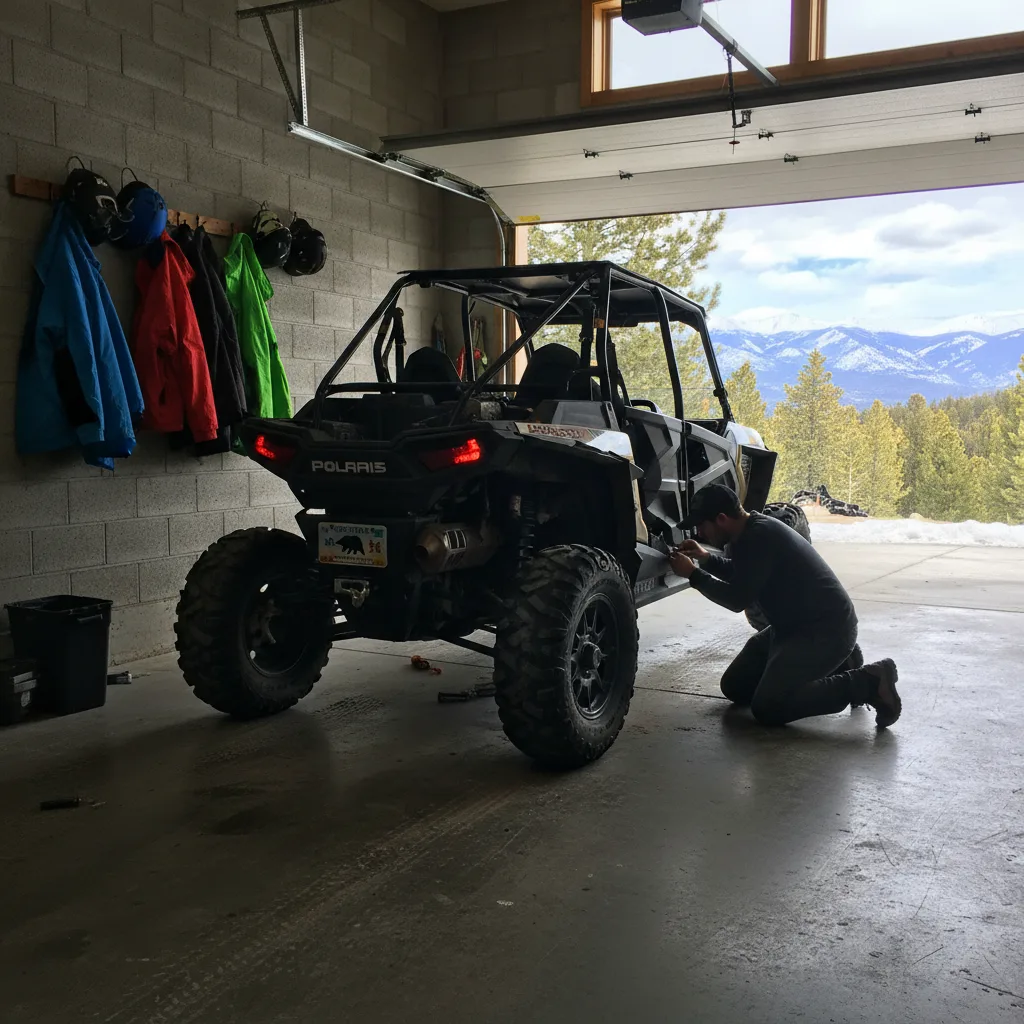
The structure is simple. There is no loophole, no gray area, no creative interpretation. Montana law and Utah law each say what they say, and together they produce the outcome.
Step 1: A Montana LLC Owns the UTV
You form a single-purpose Montana limited liability company. You are the sole member and manager. The LLC’s operating agreement names you. The LLC has an EIN from the IRS, a Montana registered agent, and a Montana mailing address. It is a real legal entity that exists on the Montana Secretary of State’s records. The LLC purchases the UTV from the dealer (or holds title after transfer from you).
Step 2: Montana Has 0% Sales Tax
Statewide. Not on cars. Not on UTVs. Not on ATVs. Not on RVs. Not on boats. Not on anything. Montana has no state sales tax, no county sales tax, and no city sales tax on vehicles. The Montana LLC pays zero at the moment of purchase or title transfer.
Step 3: Montana Issues a Permanent Plate
Montana’s light vehicle permanent registration provision allows certain vehicles to be registered permanently. You pay the registration fee once. The plate is good for the life of the vehicle. There is no annual renewal, no annual fee, no annual sticker, and no annual paperwork — ever.
Step 4: Utah Reciprocity (Code 41-1a-211)
Utah Code 41-1a-211 recognizes valid out-of-state vehicle registration. Your Montana plate is valid Montana registration. Utah honors it under the same statute that honors a Colorado plate, an Arizona plate, or a Nevada plate. The reciprocity is not an exception — it is the rule.
Step 5: You Drive It
Public roads, forest roads, county roads, designated OHV trails — the Montana plate is the registration. Where Utah requires an OHV decal for public-land access, you still get the OHV sticker; that is a separate operator-access question and applies to all riders. But the registration itself is permanent and Montana-issued.
What It Costs
- $749 total, one-time. Breakdown: $549 service fee plus $200 Montana LLC formation fee.
- $0 per year. No renewal fee. No annual report fee for a single-purpose LLC structured the way we set it up.
- 5-year total: $749. 10-year total: $749. Lifetime: $749.
No inspection requirement. No annual safety certificate. No annual renewal paperwork. No equipment checklist from Utah DMV. Just a permanent plate, shipped to your door.
Utah’s street-legal path is one of the better ones in the country. The state at least allows it, which puts it ahead of Texas, Illinois, and most of the southeast. But the path still requires an equipment inspection, an annual renewal cycle, and full sales tax paid at purchase. Montana skips all three.
Case Studies
Four real client profiles. Each one shows the math in context — what the buyer was facing in Utah and what Montana actually delivered.
Case Study 1: The Moab IT Director — $45K Can-Am X3 MAX Turbo RR

Salt Lake City resident. Serious weekend rider. Treats Moab as his second home — Sand Flats 8 times a year, Hell’s Revenge, Fins and Things, the full rotation. He bought the X3 MAX in Salt Lake City at 7.35 percent combined tax. $3,308 in sales tax plus approximately $375 in annual fees over 5 years equals $3,683 Utah 5-year total.
Montana route: $749 total. Saves $2,934 over 5 years. Permanent plate. He also skips the equipment inspection and the annual renewal trip to the DMV. He rides the same trails with the same machine on the same days. He just keeps $2,934 in his pocket.
Case Study 2: The Sevier County Rancher — $35K Can-Am Defender MAX
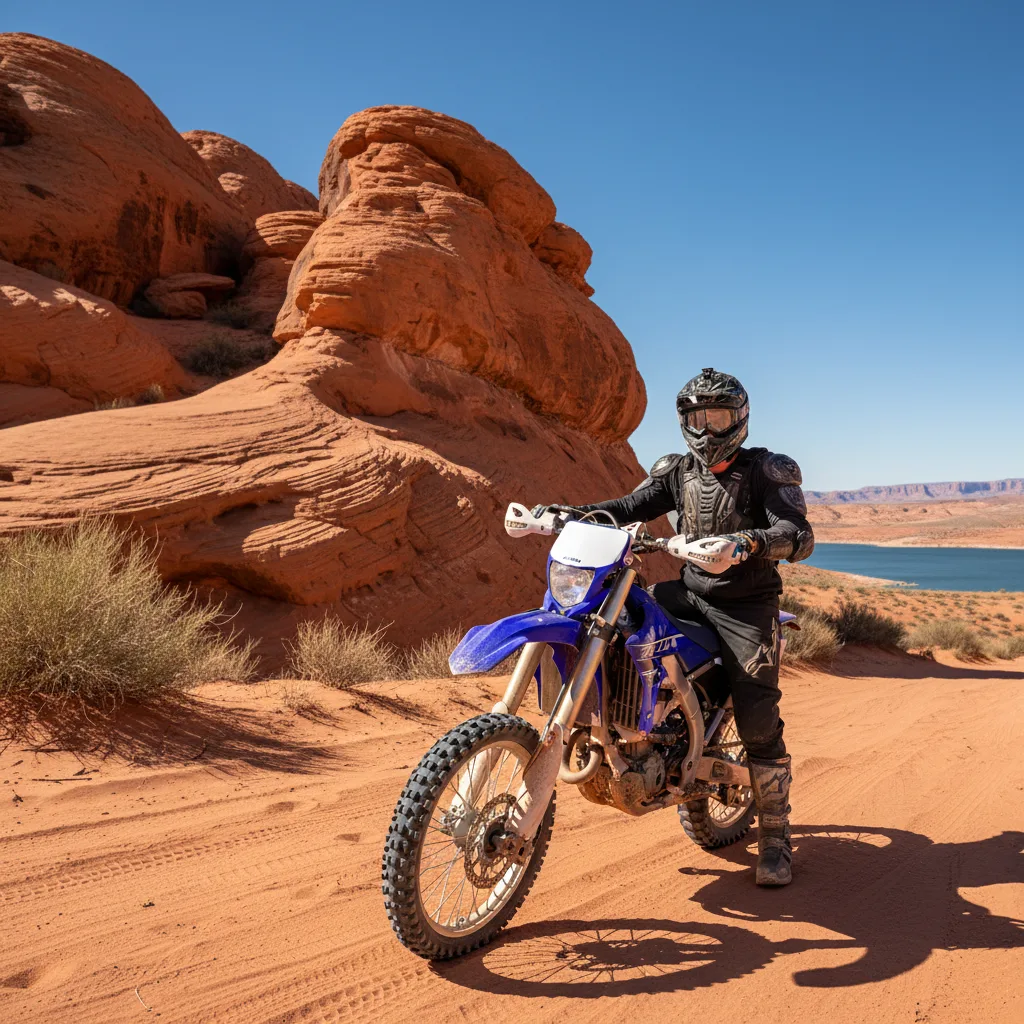
Central Utah ranch operation in the Richfield area. Uses the Defender MAX for daily ranch work — fence checking, moving cattle, hauling feed and tools across his property. He bought it locally at 7.35 percent. $2,573 in sales tax plus $375 over 5 years equals $2,948 Utah total.
The Paiute Trail runs directly through his county. He rides it seasonally for fun once the cattle work slows down in the fall. On public lands he needs the OHV sticker either way, so that cost washes out of the comparison.
Montana route: $749 total. Saves $2,199 over 5 years. No inspection. No annual renewal. He uses the machine exactly the same way. The LLC is a permanent fixture in his operation for future machines too — and on a working ranch, the next machine is always coming.
Case Study 3: The St. George Family — $25K Polaris Ranger XP
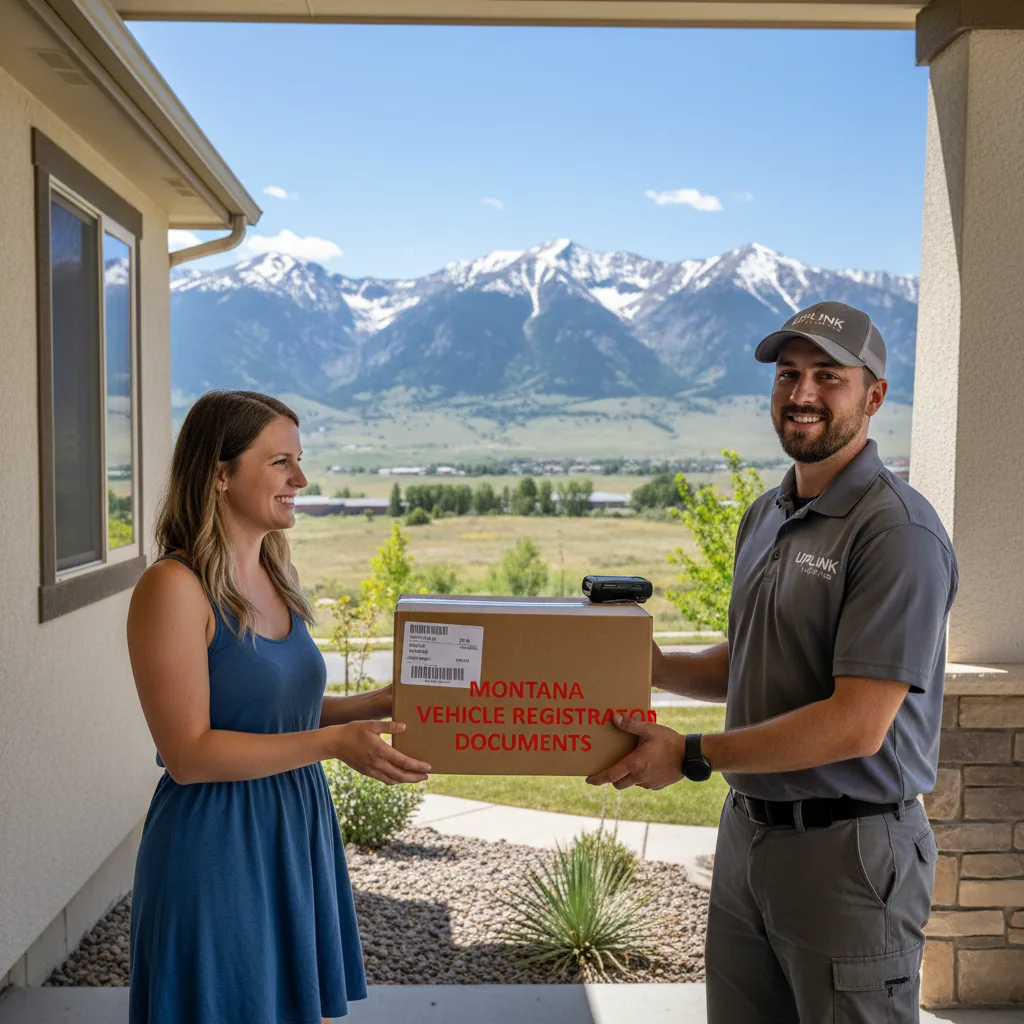
Washington County. Family with teenagers. Weekends at Sand Hollow, occasional runs to Coral Pink Sand Dunes. St. George combined tax rate 7.35 percent. $1,838 in sales tax plus $375 over 5 years equals $2,213 Utah total.
Montana route: $749 total. Saves $1,464 over 5 years. But the better story is the LLC is reusable. The next machine the family buys, in three years or seven years, goes under the same entity. For a family that upgrades every five to seven years, the LLC pays for itself on the first machine and costs nearly nothing on the second.
Case Study 4: The Provo Tech Worker — $15K Polaris Trail 450
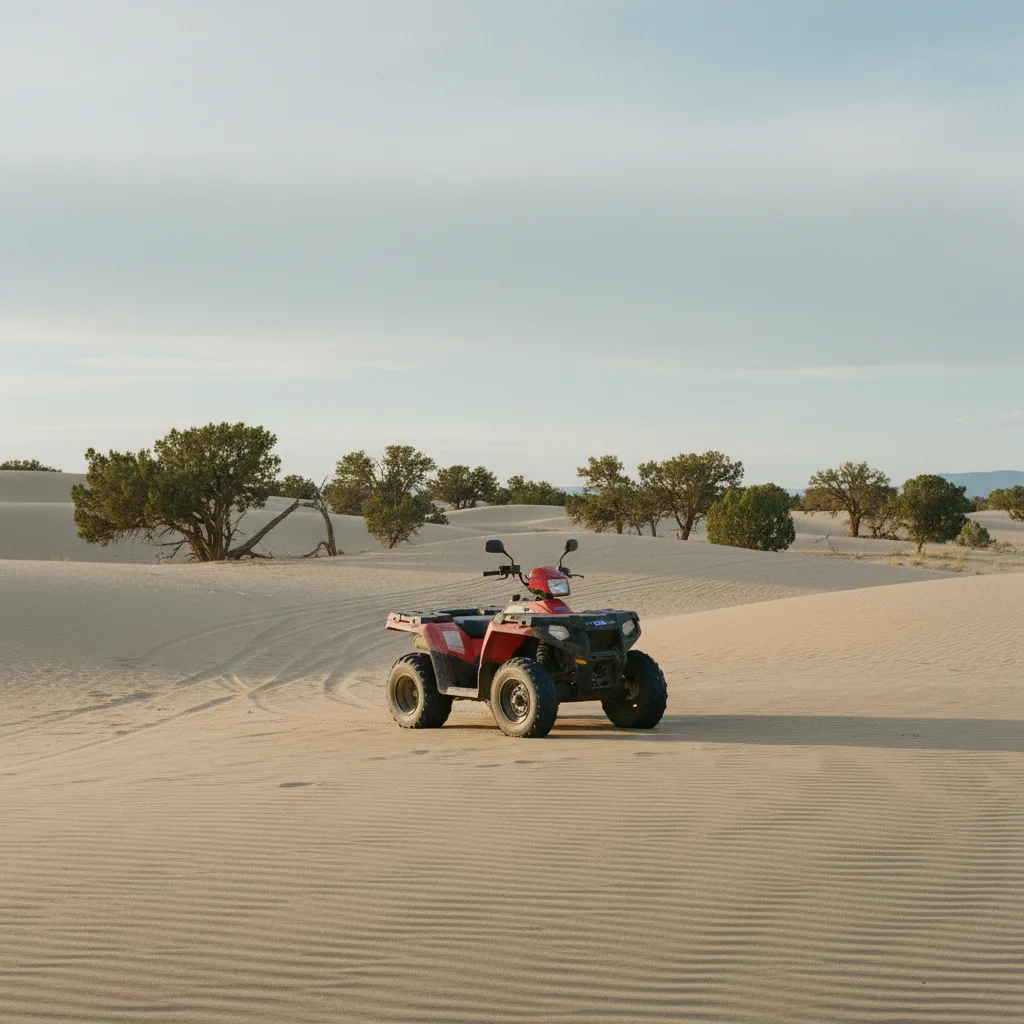
Entry-level buyer. Figured Montana only makes sense on expensive machines and almost talked himself out of the call.
Utah purchase at 7.35 percent. $1,103 in sales tax plus $375 over 5 years equals $1,478 Utah total.
Montana route: $749. Saves $729 over 5 years. Still positive even at the entry level. And the permanent plate means he never has to deal with annual renewal again — one less thing on his calendar, indefinitely.
Is This Legal?

Yes. Two statutes make this work, and they have been on the books for decades.
Montana Law: LLCs Can Own and Title Vehicles
Montana law allows limited liability companies to own vehicles, title them in Montana, and receive Montana registration with permanent plates. Montana has zero sales tax statewide. The LLC is a real legal entity — it files Articles of Organization with the Montana Secretary of State, has its own EIN from the IRS, has a registered agent with a Montana address, and has an operating agreement that governs its operation. None of this is a fiction.
Utah Code 41-1a-211: Reciprocity
Utah Code 41-1a-211 recognizes valid out-of-state vehicle registration. Your Montana plate is valid Montana registration. Utah’s reciprocity statute applies to it exactly as it applies to any out-of-state plate — Colorado, Wyoming, Idaho, Nevada, Arizona. The Montana plate is treated like any other out-of-state plate because that is what it is.
Thomas v. Bridges and Case Law
The Montana LLC structure has been examined in court. Thomas v. Bridges and related cases confirm that legitimate Montana LLC ownership of vehicles is exactly that — legitimate ownership. The structure holds when the LLC is real. We set up real entities: real filings, real operating agreements, real EINs, real registered agents.
You are not misrepresenting where you live. The Montana LLC is the purchaser of the vehicle. The purchase happens in Montana, where Montana law governs the transaction and the title. You then operate the vehicle in Utah under Utah’s own reciprocity statute — the same statute Utah uses to honor every other out-of-state plate that crosses the border.
Who This Is Built For
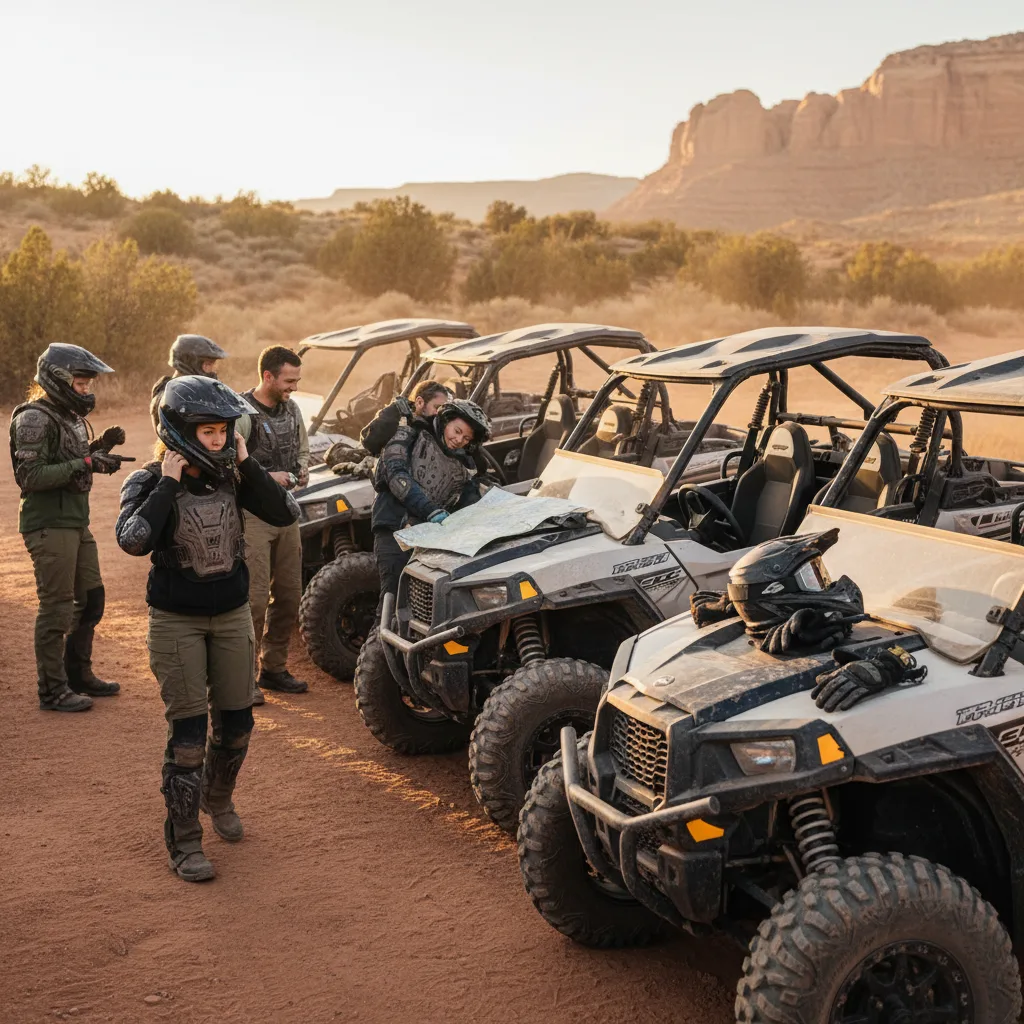
The Montana LLC structure works best for a specific kind of buyer. If you fit one of these profiles, the math works on day one and keeps working every year after.
- Moab regulars buying $25K-plus machines — The tax hit on a mid-range or premium UTV exceeds the cost of the Montana route immediately. Every dollar past $749 in tax is pure savings.
- Ranch and ag operators in central and southern Utah who use UTVs for work and recreation. The Defender, Ranger, and Pioneer crowd. Permanent plate eliminates the annual administrative tail.
- Anyone buying a new machine who has not closed the paperwork yet — The cleanest moment to do this is before the Utah dealer collects sales tax. Call us before you sign.
- Families who plan to upgrade in 5 to 7 years — The LLC is reusable. Cost amortizes over every future machine the entity titles. By the third machine, the structure has effectively paid for itself many times over.
- St. George and Washington County buyers hit with the 7.35 to 7.68 percent combined rate. Among the highest in Utah. Among the biggest savings on the Montana route.
- Out-of-state visitors who ride Utah regularly and want permanent plates without annual renewal complexity in multiple states. One LLC, one plate, ride anywhere.
- Anyone who owns multiple machines — One LLC can cover multiple vehicles. The structure scales. Two UTVs and an ATV under one entity is the same setup cost as one machine.
- Collectors and serious enthusiasts who buy premium machines and keep them long term. The longer you own the machine, the more the permanent plate pays for itself in avoided renewals.
For machines under $15,000, call us for a free break-even calculation. Above that threshold, the math consistently works. Below it, it depends on how long you plan to own the machine and whether you have future machines in mind.
Our Process
The $749 covers everything end to end. You sign once. We handle the rest.
- Montana LLC formation with the Montana Secretary of State
- Operating agreement drafted and executed
- EIN obtained from the IRS
- Registered agent service in Montana for the life of the LLC
- Title transfer at the Montana county treasurer’s office
- Permanent plate issuance
- Plate and documents shipped to your door anywhere in Utah
- Glovebox document package — registration, LLC documentation, and quick-reference materials in case anyone ever asks
No surprise fees. No add-ons. No annual renewal billing. The $549 service fee and the $200 LLC formation fee are the total cost, payable once.
Timeline: Day 1 to Permanent Plates
The whole process takes about a week. No long delays, no waiting periods, no multi-month registration cycles.
| Day 1: | Submit paperwork through our secure portal. LLC filed same day with the Montana Secretary of State. |
| Days 1-2: | Montana LLC formation complete. Operating agreement executed. EIN obtained from the IRS. |
| Days 2-4: | Title transferred at the Montana county treasurer’s office. Permanent registration recorded. |
| Days 4-7: | Permanent plates shipped to your door anywhere in Utah. Glovebox document package included. |
About a week. No DMV lines. No equipment inspection appointment. The plate arrives at your address and you bolt it on.
FAQs
Do I still need the Utah non-resident OHV permit?
If you are a non-Utah resident riding on Utah public lands, yes — the $35 per year non-resident OHV permit is an operator-and-access requirement, not a registration requirement. If you are a Utah resident, the standard Utah OHV sticker requirement for public-land access still applies. The Montana plate does not replace the OHV decal for public-land access. They answer different questions: the plate is your vehicle registration, the OHV decal is your public-land access permit. Most riders need both regardless of how the vehicle is titled.
Can I get a street-legal plate with Montana registration in Utah?
Your Montana plate is street-legal registration. Utah reciprocity under Code 41-1a-211 recognizes it. You do not need a separate Utah street-legal sticker, and you do not need to put your machine through the Utah equipment inspection. The Montana plate is treated like any other out-of-state plate.
Does Utah require the OHV education certificate for Montana-plated vehicles?
Utah’s OHV education requirements apply to operators, not to the registration origin. If you are riding on Utah public lands, comply with Utah’s operator requirements just like any other rider. The education certificate is about the person on the machine, not about where the machine is titled.
How long does the process take?
About a week from start to permanent plates at your door. Day 1 paperwork, Days 1-2 LLC formation, Days 2-4 title transfer, Days 4-7 plates shipped.
What happens at renewal?
Nothing. Permanent plate. No annual renewal, no annual fee, no annual paperwork. You bolt the plate on once and you are done.
Can I retitle a UTV I already bought in Utah?
Yes. Same process, same price. The sales tax you already paid in Utah cannot be reclaimed — that money is gone. But many clients retitle existing machines anyway to eliminate future annual renewal costs and to lock in the permanent-plate structure for the rest of the machine’s life. If you plan to own the machine another five to ten years, the math still works.
Is the LLC reusable for future vehicles?
Yes. Same LLC, next machine. The $749 setup is a one-time sunk cost. Every future machine the LLC titles costs significantly less — you are only paying the title transfer and registration on the new vehicle, not setting up a new entity. Many of our clients have two, three, even four machines under the same LLC.
What about insurance?
Insurance is straightforward — you insure the LLC as the owner. Most major carriers handle Montana LLC vehicle policies without issue. We can refer you to carriers who do this routinely if you need a starting point.
See how Montana LLC registration helps off-road and vehicle owners in other states:
- Texas ATV & UTV Registration 2026: The Sales Tax Trap and the Street-Legal Loophole
- Arizona Vehicle Tax: How to Stop Paying $1,000 Every Year
- Nevada Vehicle Tax: The Hidden 8.25% Cost
Utah Has the Terrain. Montana Has the Plate.
Utah is home to the Paiute Trail, Moab, Little Sahara, and some of the best OHV riding on earth. You do not need to pay 7.35% in sales tax and $75/year in renewal fees to access any of it. Montana LLC registration is $749 once. Permanent plate. About a week to your door.