
24 min read

On this page
- + Minnesota’s Double Tax Problem: MVST and the Annual Tab Fee Trap
- + The Real Cost of Minnesota Vehicle Tax: 5-Year Numbers
- + It Got Worse: Minnesota’s 2023 Tab Fee Law Change
- + Minnesota Just Doubled Its EV Surcharge
- + Minnesota Vehicle Tax Traps Most Owners Never See Coming
- + Who Minnesota Vehicle Tax Hits Hardest
- + The Montana Solution: Legal Vehicle Tax Elimination
- + Is Montana LLC Vehicle Registration Actually Legal?
- + Four Minnesota Vehicle Owners Who Made the Switch
- + Who Benefits Most from Montana LLC Registration
- + How Zero Tax Tags Gets You Registered
- + Frequently Asked Questions
It’s January in Minneapolis. The wind chill outside your kitchen window reads minus eighteen. You’re standing at the counter with a mug of coffee, sorting through the mail that’s been piling up since the holidays, when you find the envelope from the Minnesota Department of Public Safety. You already know what it is before you open it. You bought the new Tahoe last March, the $65,000 one with the heated second row your spouse insisted on, and you’ve been bracing for this moment ever since the dealer warned you that “the tab fees in Minnesota are no joke.”
You open it anyway. $1,033. That’s the number staring back at you. One thousand and thirty-three dollars to keep the truck legally registered for another twelve months. Your jaw tightens. You already paid Minnesota $4,469 in Motor Vehicle Sales Tax when you signed the dealer paperwork last spring. That was supposed to be the bill. That was the price of admission. And now, eight months later, the state wants another four-figure check just to leave the same plates on the same truck.
Here’s what nobody told you when you signed the loan documents. You’ll get this exact same envelope next January. And the January after that. And the one after that. Minnesota’s tab fee depreciates so slowly under the new law that by year five your bill will still read $965. Over five years, that one Tahoe will have cost you $9,584 in vehicle taxes alone, and you’ll have nothing to show for it except the privilege of paying it again the following year.
What if you didn’t have to pay this?
Minnesota’s Double Tax Problem: MVST and the Annual Tab Fee Trap
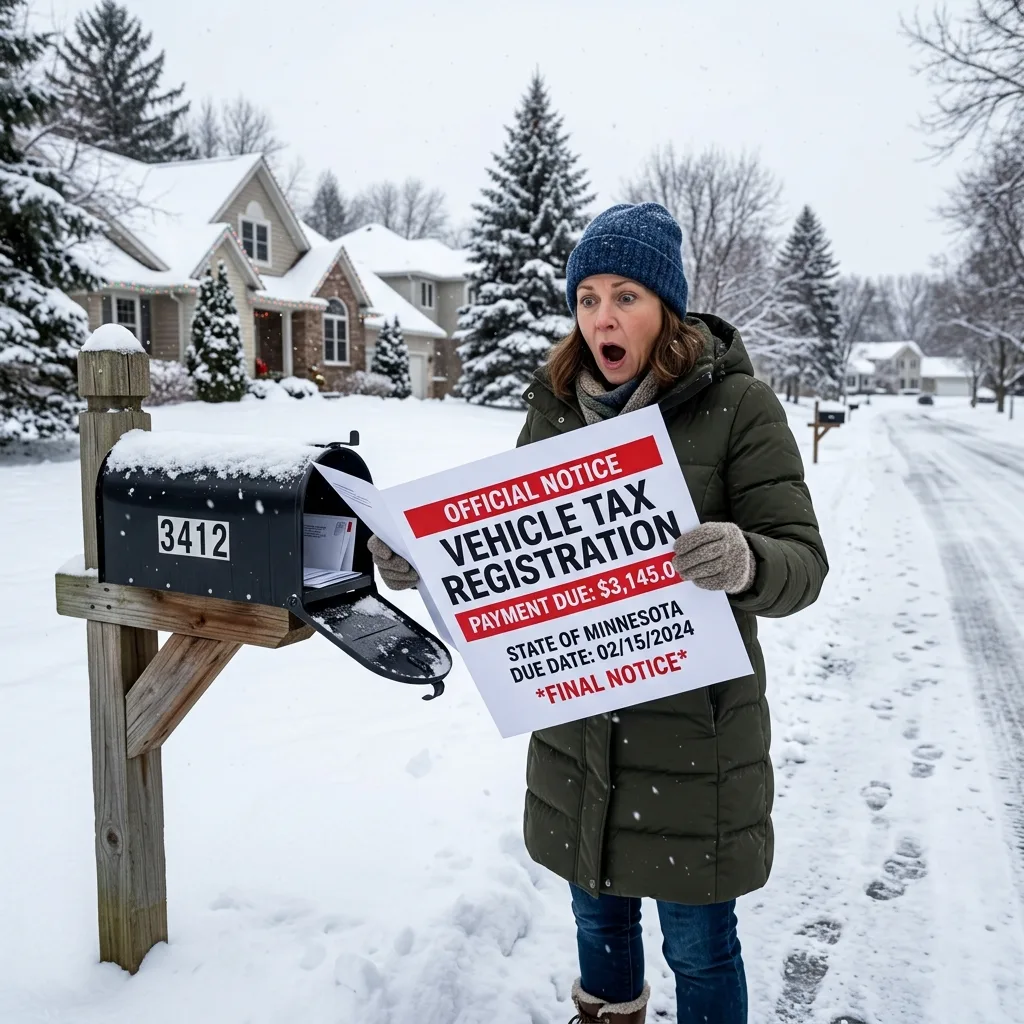
Minnesota vehicle tax is structured as a two-front assault on your wallet, and most owners don’t realize they’ve been hit twice until the second invoice arrives. The first front is the Motor Vehicle Sales Tax, which Minnesota residents know as MVST. The rate is 6.875% of the purchase price, applied at the moment you transfer title at the DMV, and it’s administered by the Minnesota Driver and Vehicle Services division of the Department of Public Safety. On a $65,000 SUV that’s $4,469 written into the financing or peeled off your savings. On a $180,000 motorhome it’s $12,375. The MVST is what most buyers think of when they think about Minnesota vehicle tax. It is not the whole story.
The second front is the annual tab fee, formally known in state code as the registration tax, and it’s calculated using a formula that ties your tax bill directly to the value of your vehicle every year you own it. The formula reads $10 base plus 1.575% of the manufacturer’s suggested retail price, multiplied by a depreciation factor. That depreciation factor sounds like a discount, but read on, because the 2023 legislature made sure it isn’t.
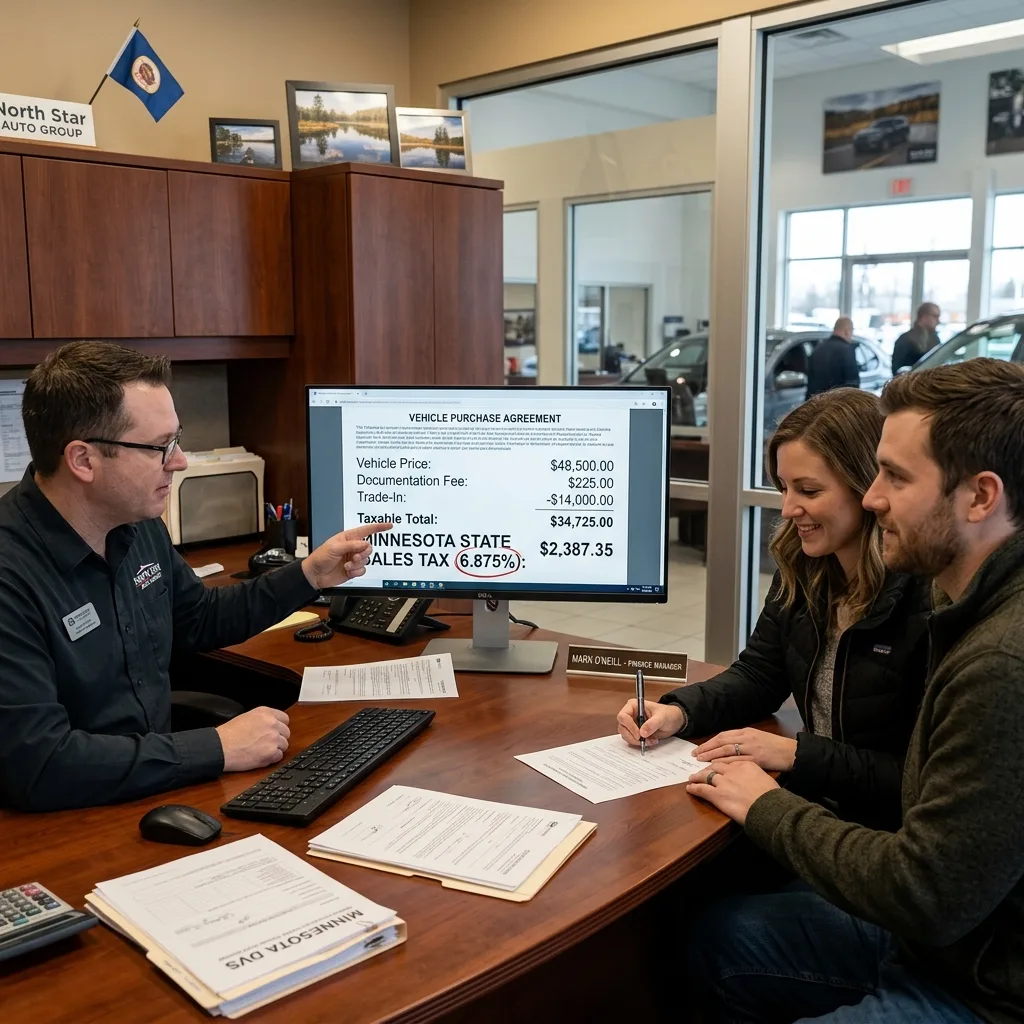
Minnesota Tab Fee Formula: $10 + (1.575% × MSRP × depreciation factor). On a $65,000 SUV in year one that works out to $1,033. In year five it’s still $965. The formula doesn’t sunset. It applies as long as you own the vehicle.
This is what makes Minnesota structurally different from a state like Oregon, which charges no sales tax and a flat registration fee, or Montana, which charges nothing tied to vehicle value at all. In Minnesota, the value-based tax never expires. It’s not a one-time hit at purchase. It’s a recurring subscription billed annually, indexed to MSRP, and the state has been quietly adjusting the math to make sure that subscription stays expensive longer.
The 2023 law change is the part that should anger you most. Lawmakers in St. Paul didn’t raise the headline percentage. They didn’t have to. Instead, they slowed the depreciation schedule itself, so that vehicles now hold their assessed value much longer for tax purposes. The net effect is roughly a 20% increase in lifetime tab fees for the typical new vehicle owner, accomplished without a single ribbon-cutting headline about a “tax hike.”
Most states charge you once. Minnesota charges you at purchase, then charges you again every single year after that. The MVST was never the bill. It was the down payment.
The Real Cost of Minnesota Vehicle Tax: What You Actually Pay Over 5 Years
Numbers cut through narrative, so let’s put real ones on the page. The table below assumes you live in Hennepin County, which captures the largest concentration of Minnesota vehicle owners, and adds the $20 annual county wheel tax to your state-level burden. The MVST column shows the one-time 6.875% sales tax at purchase. The tab fee column aggregates five years of annual registration tax at the post-2023 depreciation curve. The Montana LLC column shows what you’d pay through Zero Tax Tags over the same period for the same vehicle.
If you’ve never seen the comparison side by side, you should brace yourself before you scroll. The savings on a single luxury SUV are larger than what most people spend on a family vacation. The savings on a luxury motorhome cross five figures.
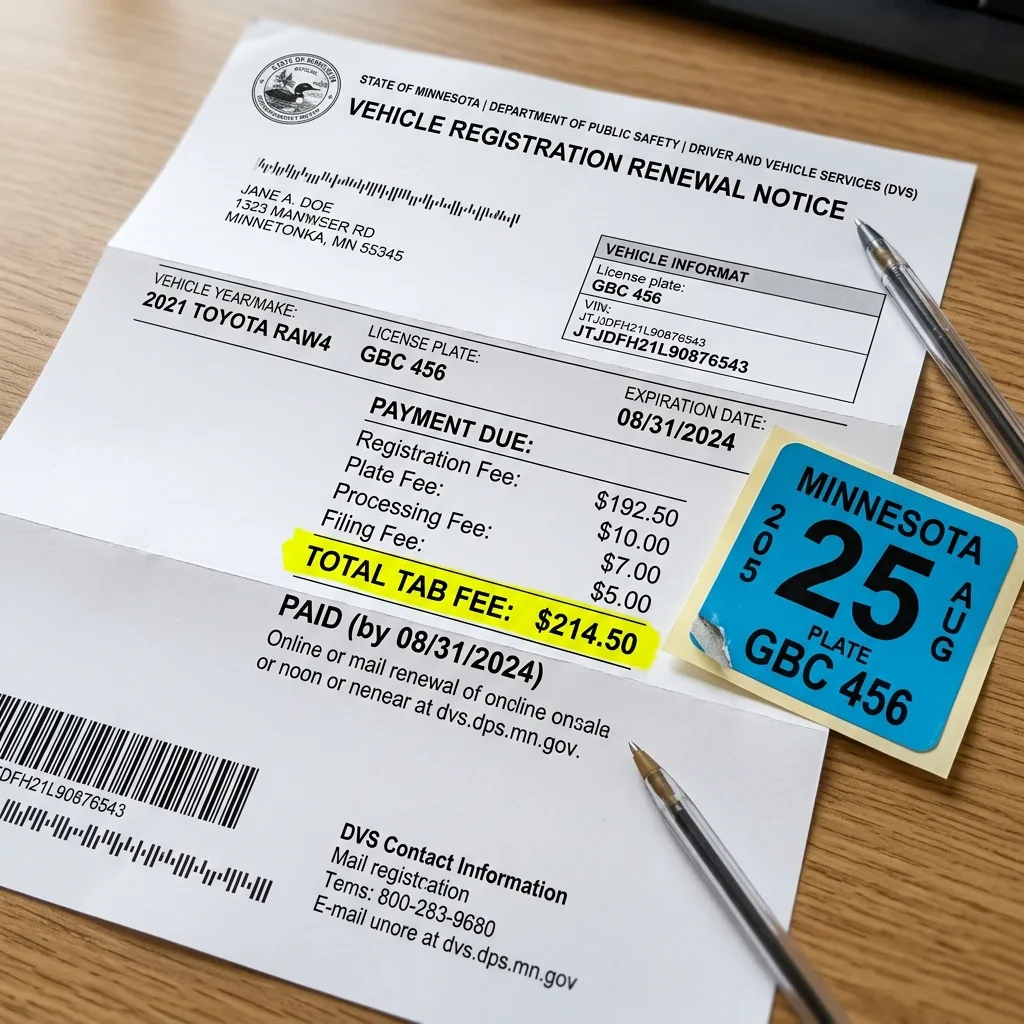
These figures use Hennepin County wheel taxes for consistency, but the picture barely changes if you live in Ramsey County, Olmsted County, or St. Louis County. The state-level tab fee dwarfs the county add-on. What you see above is the cost of being a Minnesota vehicle owner today, not the cost of being unlucky.
Now look at what jumps off the page. On the $95,000 luxury SUV, you save $11,606 in five years by simply changing where the title is registered. That isn’t a coupon. That isn’t a marketing promotion. That’s the structural difference between a state that taxes vehicles aggressively and a state that doesn’t.
That $1,033 you paid this year for your SUV? You’ll pay it again next year. And the year after. Tab fees don’t stop until you sell the vehicle, and even then the next owner picks up where you left off.
It Got Worse: Minnesota’s 2023 Tab Fee Law Change

Here is the part of the story your dealer didn’t mention and your insurance agent doesn’t follow closely enough to warn you about. In 2023, the Minnesota legislature quietly modified the depreciation schedule used to calculate annual tab fees. They didn’t touch the headline rate. They didn’t issue a press release celebrating a “vehicle tax increase.” They simply slowed the math, the way a hotel changes the resort fee while leaving the nightly rate alone.
Before 2023, your vehicle’s assessed value for tab-fee purposes dropped meaningfully each year. By year five, your effective tab fee was roughly 70-75% of what it had been when the vehicle was new. That curve gave owners a real reason to hold a vehicle: the recurring tax burden flattened out as the truck or SUV aged. After 2023, the curve was flattened. Your $65,000 SUV in year five still pays $965 against a year-one bill of $1,033. The drop is roughly 7% over five years, not 30%. Run that across thousands of vehicles in a single zip code and you’re looking at a substantial revenue increase, achieved without a single legislator having to defend a rate hike.
The aggregate effect, calculated across the typical service life of a passenger vehicle, is roughly a 20% increase in total tab fees compared to the pre-2023 schedule. If your previous vehicle cost you $4,200 in lifetime tab fees, your new one will cost roughly $5,000 for the same MSRP, all else equal. Same percentage. Same formula. Different reality.
Contrast this with Montana. In Montana, your registration cost is set at the time the LLC takes title to the vehicle, and it does not grow because the legislature voted to slow depreciation. There is no annual revaluation. There is no recurring percentage of MSRP. There is no political incentive to harvest more revenue from existing owners by adjusting the depreciation curve. Your registration is what it is, and stays that way.
Minnesota’s legislature just made sure you’d pay more, longer. The 2023 law didn’t raise the rate. It just slowed the clock on how fast your tax burden drops, which is a more sophisticated way of doing the same thing.
Minnesota Just Doubled Its EV Surcharge — And Added One for Hybrids
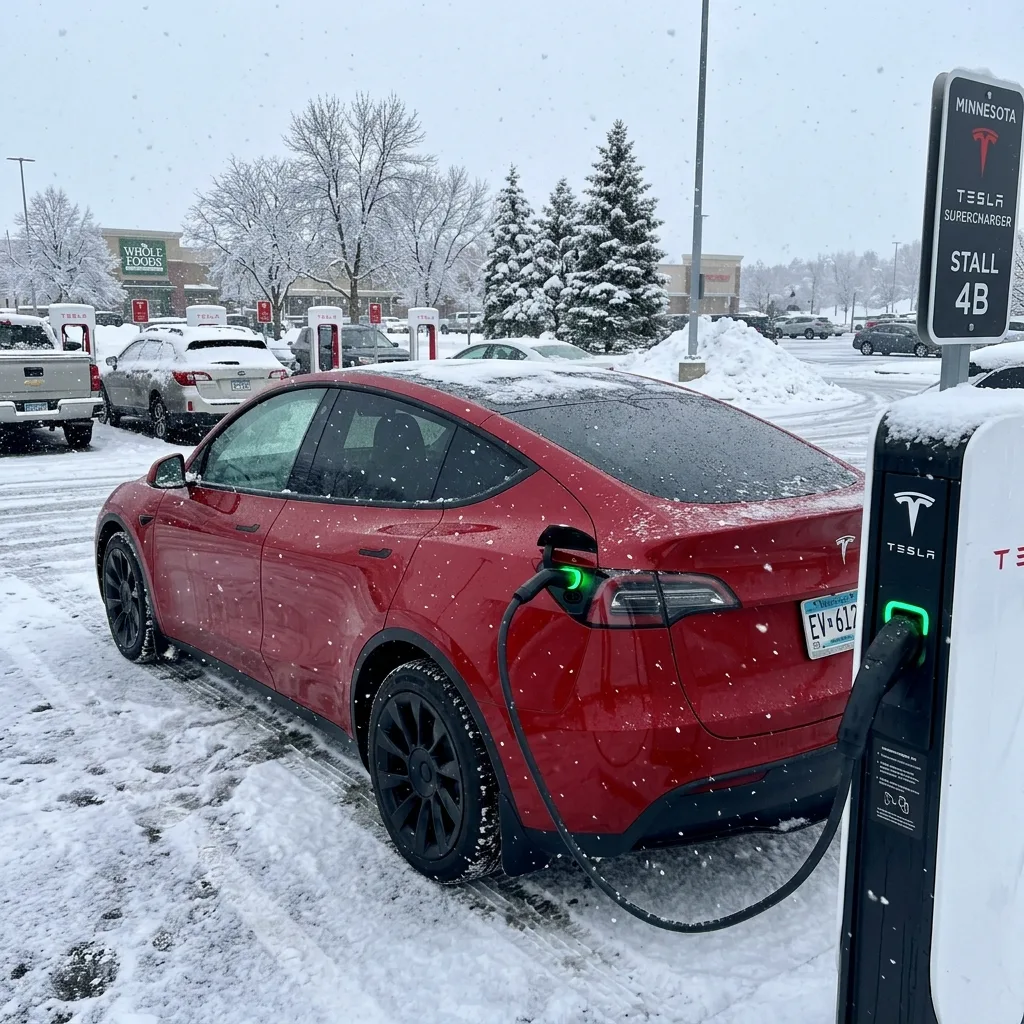
If you bought an electric vehicle in Minnesota expecting to be rewarded for it, the state has news. As of January 2026, the EV surcharge is no longer a flat $75. It is now 0.5% of MSRP per year, with a $150 minimum, billed alongside your regular tab fee. Plug-in hybrids didn’t escape either. PHEV owners now pay 0.25% of MSRP per year, a tax that didn’t exist in this form before. Both surcharges scale with the price of the vehicle, which means the more you spent on going electric, the more the state collects from you each year for the privilege.
Run the numbers on a Tesla Model Y at $52,000 MSRP. Your EV surcharge alone is 0.5% × $52,000 = $260 per year. That stacks on top of a regular tab fee of roughly $829, for a combined annual registration cost of $1,089. The previous flat-rate version of this surcharge was $75. You are now paying more than three times that, every year, for as long as you keep the car. On a $95,000 EV luxury SUV, the surcharge alone runs $475 per year, before tab fees, before wheel taxes, before MVST. The state created an entirely new line item, doubled it on rollout, and tied it to MSRP so it scales with your purchase decision.
Montana’s EV surcharge for a vehicle registered through your Montana LLC is zero. There is no equivalent. Drive an electric vehicle, drive a hybrid, drive a diesel, drive whatever you want. The Montana registration cost doesn’t change based on the powertrain.
Minnesota is now charging you extra for driving an electric vehicle. The state that prides itself on environmental leadership is billing EV owners $150 to $500-plus per year for the privilege of using less gasoline.
Minnesota Vehicle Tax Traps Most Owners Never See Coming

The headline rate is one thing. The fine print is where Minnesota separates dollars from owners who thought they were buying smart. There are three traps that catch even experienced buyers off guard, and each one is worth understanding before you sign your next purchase agreement.
Trap one: the private sale trade-in trap. Minnesota allows you to deduct the value of a trade-in from the taxable base of MVST, but only when the trade happens at a licensed dealer. If you sell your existing vehicle privately and use the proceeds to buy your next one privately, you get zero MVST relief. The full purchase price is taxable at 6.875%. So the buyer who tries to skip the dealer’s negotiation room and trade vehicles directly with another private party ends up paying the same tax on the full purchase amount that the dealer customer pays only on the difference. The structure pushes you toward dealer transactions whether or not the dealer offers you the best price for your trade.
Trap two: the out-of-state purchase trap. Buy a car in Oregon, where there is no sales tax. Buy one in Wisconsin or Iowa or anywhere else. The moment you bring it to Minnesota and try to register it, the state assesses 6.875% MVST on the purchase price. There is no escape route through geography. There is no credit if the other state charged you a different sales tax (in some cases there is a partial credit, but for a low-tax state like Oregon you simply pay the full Minnesota rate on the full purchase). The “I bought it out of state” workaround that some buyers imagine doesn’t exist.
That deal you found in another state? Minnesota wants its 6.875% regardless of where you bought the car. There is no border discount.
Trap three: county wheel taxes stacked on top. Hennepin, Ramsey, and Olmsted counties each charge $20 per year per vehicle on top of the state tab fee. St. Louis County (Duluth) bills $10 to $20 depending on the vehicle. These add-ons sound trivial, but they are symbolically important: they exist on top of an already aggressive state tax structure, and they exist because Minnesota’s funding model assumes you’ll keep absorbing every additional layer they bolt on. Montana charges zero county wheel tax for any vehicle registered through a Montana LLC.
Who Minnesota Vehicle Tax Hits Hardest

Not every Minnesota vehicle owner feels the bite equally. The system is regressive in some respects and aggressively progressive in others, depending on where you sit. Luxury SUV owners, particularly those running an Escalade, Range Rover, or loaded Audi Q7, take the most direct hit because the tab fee scales with MSRP and large luxury vehicles tend to hold sticker value the longest. A $95,000 SUV in year five is still generating a $1,410 tab fee under the post-2023 schedule, plus its share of wheel tax, plus whatever insurance and registration overhead the state attaches.
RV owners and snowbirds are next on the casualty list. A Class A motorhome with a $180,000 MSRP triggers a $12,375 MVST hit at purchase and a $2,845 first-year tab fee, despite the fact that many owners actively use the RV outside Minnesota for half the year. You’re paying Minnesota tax on a vehicle that’s parked at a campground in Florida from October through April. EV adopters, who thought they were getting environmental credit, are now paying the new MSRP-based surcharge on top of regular tab fees, with the bill running $260 to $475 annually depending on the vehicle. Classic car collectors with multiple titled vehicles in a heated garage are paying recurring tab fees on cars that may only see road time during the three months of summer that resemble normal driving conditions.
Business fleet owners feel it across multiple invoices simultaneously. If you run a small construction firm with three F-250s, you’re paying tab fees of roughly $1,143 each, every year, against trucks that are working assets and depreciating in real-world value far faster than the post-2023 schedule acknowledges. And the Twin Cities professional with a two-car household, a daily driver and a weekend SUV, is quietly paying $2,000-plus annually in combined tab fees and wheel taxes, on top of the original MVST hits at purchase.
The Montana Solution: Legal Vehicle Tax Elimination

Montana’s vehicle tax structure is the photographic negative of Minnesota’s. There is no state sales tax on any retail transaction, including vehicles. There is no annual personal property tax on vehicles. There is no value-based registration fee tied to MSRP. There is no county wheel tax stacked on top. Montana does charge a modest annual EV registration fee ($130/yr for BEVs under 6,000 lbs), but none of the other Minnesota surcharges exist on a Montana invoice.
The mechanism is straightforward. You form a Montana limited liability company. The LLC takes title to your vehicle. The vehicle is registered to the LLC at the LLC’s Montana address, which is provided through a registered agent. The Montana DMV issues plates in the LLC’s name, and those plates are valid in all 50 states under the standard interstate registration framework. You receive Montana plates, a Montana title, and a Montana registration card. You do not pay Minnesota MVST. You do not pay Minnesota tab fees. You do not pay county wheel tax. You do not pay the EV surcharge.
Montana has had no vehicle personal property tax since 1947. Montana charges no sales tax. There is no annual registration fee tied to vehicle value. These are Montana state laws, not loopholes, and they have been on the books for generations.
What does the math actually look like, year by year, on a representative vehicle? Take that $65,000 SUV again, the one we’ve been tracking through the article.
By year five, you’ve kept $7,207 you would otherwise have surrendered. That’s a transmission rebuild, a private school semester, a serious upgrade to your home heating system, an emergency fund. It’s not money the state was using to repair the bridges you cross every day. It’s money the state was using because it could.
Is Montana LLC Vehicle Registration Actually Legal?
Yes. This is the question that comes up first in every consultation, and the answer is the most important thing you can carry away from this article. Montana has explicitly allowed limited liability companies to title and register vehicles for decades. The structure is recognized in Montana state law, the LLC is a real legal entity with a real address and a real registered agent, and the vehicle plates issued under that registration are valid for interstate operation under the same framework that covers any out-of-state vehicle visiting Minnesota. The Federal Highway Administration recognizes this structure. The IRS recognizes this structure. The 49 other state DMVs recognize the validity of Montana plates as a matter of basic interstate commerce.
The legitimacy depends on doing it correctly. Your LLC must be properly formed under Montana law. Your registered agent must be a real Montana entity with a real Montana address. Your annual filings must be kept current. The vehicle title must be transferred cleanly to the LLC, and the LLC must function as an actual entity rather than a name on a sticker. When all of that is in order, you are operating within the same legal framework that thousands of Montana-titled vehicles operate within every day, including commercial fleets, rental fleets, and individual owners who happen to live elsewhere.
That’s why thousands of Minnesota vehicle owners have made the switch. Cardiologists with luxury SUVs they drive to second homes. RV snowbirds who spend half the year on the road. Business owners who operate fleets across state lines. Classic car collectors whose vehicles travel to shows and auctions. The structure exists for them, and when implemented correctly, it withstands the scrutiny it is designed to withstand.
Four Minnesota Vehicle Owners Who Made the Switch

Dr. Mehta, Minneapolis cardiologist. Six years into a successful practice, Dr. Mehta took delivery of an Audi Q7 with an MSRP of $95,000. She wrote the dealer a check for $6,531 in MVST at signing and assumed that was the end of it. The first tab fee renewal arrived twelve months later for $1,507. She paid it. The second arrived for $1,494. That’s when she did the math. “I was paying more in annual tab fees than my partner was paying in property tax on his lake cabin,” she told us. After registering the Q7 through her new Montana LLC, her year-one cost dropped from $8,058 (MVST plus tab fee plus wheel tax) to $899. Her five-year savings on this single vehicle: $11,606. She’s now considering moving her husband’s truck onto the same LLC.

Eric, Rochester medical device engineer. Eric runs a side consulting business and operates two F-150s as company vehicles, each with an MSRP of $72,000. Combined MVST at purchase: $9,900. Combined annual tab fees: $2,286. He’d been writing the tab fee checks every January for three years before a colleague mentioned the Montana LLC structure over coffee. Both trucks moved onto a single Montana LLC, with the $200 LLC formation fee paid once for both vehicles. His five-year savings across the fleet: roughly $16,500. “I was about to add a third truck. Now I know that one is also going on the same LLC the day I take delivery.”

Frank, Duluth RV snowbird. Frank and his wife retired to Duluth with the explicit intention of getting out of Duluth as much as humanly possible. They bought a $180,000 Class A motorhome to spend October through April in Florida and Texas, then summer in Minnesota’s Boundary Waters region. The MVST hit at purchase was $12,375. The first-year tab fee was $2,845. By year three, Frank had run the numbers and discovered that registering the motorhome through a Montana LLC saved him $23,092 over five years. The unit now wears Montana plates. “We winter in Florida with Montana plates, summer in Minnesota with Montana plates, and the only state I’m writing checks to is Montana for $368 a year. It feels like a clerical error. It isn’t.”
Aisha, Twin Cities EV adopter. Aisha bought a $72,000 Tesla Model X in 2024 expecting Minnesota to reward her for the switch. Year one she paid $4,950 in MVST, $1,134 in tab fee, and $360 in EV surcharge under the old rate, for a year-one total of $6,444. Then January 2026 arrived. The new MSRP-based EV surcharge would have nearly doubled her surcharge alone. Instead, she moved the Tesla onto a Montana LLC. Year-one cost under Montana: $899. Annual cost thereafter: $368, regardless of whether the Minnesota legislature decides to triple the EV surcharge next session. “I was the climate-conscious buyer they said they wanted. Then they billed me for it. Now I’m Montana-plated, and they bill me for nothing.”
Who Benefits Most from Montana LLC Registration
- Luxury SUV and truck owners. Vehicles with MSRPs of $50,000 and up generate the most aggressive tab fees under the post-2023 schedule. Five-year savings routinely exceed $7,000 on a single vehicle, and scale linearly with sticker price.
- RV and motorhome owners. A $150,000-plus Class A or Class C motorhome triggers a five-figure MVST hit at purchase and four-figure annual tab fees thereafter. The Montana LLC structure can save these owners $20,000-plus over five years on a single coach.
- Snowbirds. If you spend three or more months a year outside Minnesota, the case for Montana registration is mathematical, not rhetorical. You’re already paying Minnesota tax on a vehicle the state barely sees.
- EV and PHEV owners. The January 2026 surcharge increase means electric vehicle owners now pay the highest combined annual registration costs in the state. Montana eliminates the surcharge entirely.
- Classic car collectors. Multi-vehicle garages compound Minnesota’s tab fee structure. One Montana LLC covers every vehicle in your collection, with the $200 LLC formation fee paid once.
- Small business fleet owners. Three or more business vehicles? Each one is generating its own annual tab fee. Consolidating them under a single Montana LLC turns recurring four-figure invoices into a one-time fixed cost plus modest annual filing fees.
- Owners of vehicles 11+ years old. Montana registration on a vehicle 11 years old or older is permanent. One filing, one fee, no renewal forever. Compare to Minnesota’s $20 minimum tab fee that recurs every year for the life of the vehicle.
- Buyers shopping out-of-state purchases. If you’re buying in Oregon, Wisconsin, or any other state, the Montana LLC structure routes the purchase through Montana directly, avoiding Minnesota’s 6.875% out-of-state use tax.
How Zero Tax Tags Gets You Registered
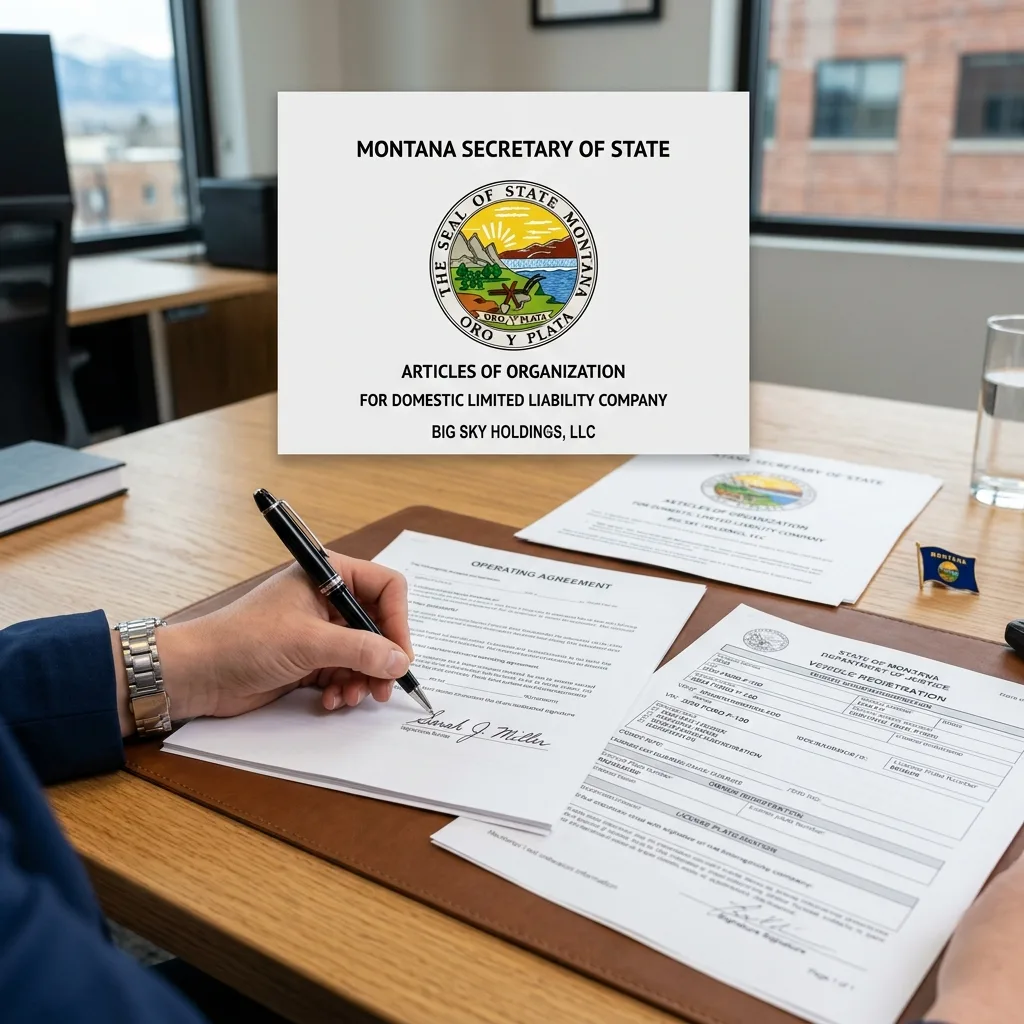
Zero Tax Tags handles the entire process from beginning to end. You don’t form the LLC yourself. You don’t fly to Helena. You don’t appear in person at the Montana DMV. You don’t deal with title transfers or registered agent selection or the annual filing calendar. We handle every step, and you take delivery of Montana plates at your Minneapolis, St. Paul, Rochester, Duluth, or anywhere-else address.
The pricing is structured to be predictable and transparent, so you can run your own math before you commit to anything.
- Cars, trucks, SUVs, and RVs under $150k MSRP: Year 1 = $899 ($699 service fee + $200 LLC formation, paid once)
- Cars, trucks, SUVs over $150k MSRP: add $825 luxury vehicle fee, so Year 1 = $1,724
- RVs over $150k MSRP: add $800 luxury fee, so Year 1 = $1,699
- Annual renewal (vehicle 0-4 years old): $368/year ($268 state fee + $100 ZTT filing)
- Annual renewal (vehicle 5-10 years old): $237/year
- Vehicles 11+ years old: PERMANENT registration. One-time $899 total. Never renew. Ever.
- Motorcycles, ATVs, UTVs, trailers, boats: ALL permanently registered. One-time fee, no renewal.
- One LLC holds all your vehicles. The $200 LLC formation is paid once, not per vehicle.
- 5-year total (new vehicle under $150k): $899 + ($368 × 4) = $2,371
- 5-year total (luxury vehicle over $150k): $1,724 + ($368 × 4) = $3,196
| Day 1: | Submit your MCO and supporting paperwork through our secure portal. We review for completeness and file your Montana LLC the same day. |
| Days 1–2: | Montana LLC formation complete — same business day in most cases, second business day at the latest. |
| Days 2–4: | Title transferred into the LLC name at the Montana county treasurer. |
| Days 4–7: | Permanent Montana plates shipped directly to your door within 3–5 business days of title completion. |
Frequently Asked Questions
Do I need to visit Montana?
No. Zero Tax Tags handles every step remotely. Your registered agent in Montana provides the address, your LLC paperwork is filed electronically, and your title and plates are issued by mail. You will never need to set foot in Montana for any part of this process. Most clients complete the entire setup without ever speaking to anyone in Helena.
What happens when I sell the vehicle?
The Montana LLC sells the vehicle the same way any titled owner would. The buyer receives a clean Montana title at closing. There is no Minnesota tax obligation triggered by the sale, because the vehicle was never titled in Minnesota. If the buyer is a Minnesota resident, they will owe Minnesota’s standard MVST when they register the vehicle in their own name in Minnesota, which is exactly what they would owe on any other private-party purchase.
Can I insure a Montana-plated vehicle in Minnesota?
Yes. Major insurers including Progressive, State Farm, GEICO, USAA, and Allstate routinely write policies on Montana-titled vehicles garaged at Minnesota addresses. Your insurance agent will need to know the LLC is the named insured on the policy and that the vehicle is titled to the LLC. This is a standard arrangement for these carriers, not an exotic request.
How much does Zero Tax Tags charge?
Year 1 for a vehicle under $150,000 MSRP is $899, which includes the $699 service fee and the one-time $200 LLC formation. Annual renewal in years 2-5 is $368 per year ($268 state filing plus $100 Zero Tax Tags annual service). Five-year total: $2,371. Vehicles over $150,000 MSRP carry an additional luxury fee. Vehicles 11 years old or older are permanently registered for a one-time $899 fee with no annual renewal ever required.
Can I register multiple vehicles under one LLC?
Yes, and this is one of the most powerful aspects of the structure for households or fleet owners. The $200 LLC formation fee is paid once. Every additional vehicle moved onto the LLC simply needs the per-vehicle service fee for the registration filing. A household with three vehicles, or a small business with five trucks, can consolidate all of them under a single Montana LLC and benefit from the same legal structure across the entire fleet.
What about the EV surcharge — does Montana have any equivalent?
No. Montana does charge a $130/yr annual fee for battery electric vehicles under 6,000 lbs and $70/yr for PHEVs — but no road usage charge, no MSRP-based fee, and no tax on gas or diesel vehicles. The overall registration cost is far lower than Minnesota’s combined fees for high-value vehicles. This is a structural advantage that Minnesota’s January 2026 surcharge increase has made significantly more valuable for EV owners specifically.
See how Montana LLC registration helps owners in other high-tax states:
- Ohio Vehicle Tax: The Rust Belt Shakedown and How to Beat It
- Arizona VLT: How to Stop Paying $1,000 Every Single Year
- Virginia Car Tax: Stop Paying the Highest Vehicle Tax in America
- North Carolina Vehicle Tax: The Tag Tax Trap
- Arkansas Vehicle Tax: The Hidden Wealth Extraction System
Ready to Stop Overpaying Minnesota Vehicle Tax?
Minnesota vehicle owners have saved millions with Montana LLC registration. You’re next.