30 min read

On this page
- + What Makes Colorado Vehicle Tax Different: The Double Hit
- + The Specific Ownership Tax: Colorado’s Annual Wealth Drain
- + The Sales Tax Avalanche: Colorado’s Home Rule Problem
- + The Real Cost: Five-Year Tables
- + The EV Trap: Colorado’s Green Tax Problem
- + Four Colorado Owners Who Ran the Numbers
- + The Montana LLC Solution
- + Is This Legal?
- + Who Benefits Most from Montana Registration in Colorado
- + The Zero Tax Tags Process
- + Timeline: From Decision to Montana Plates
- + Who gets the most out of a Montana LLC
- + Frequently Asked Questions
It was the second week of January, and Marcus was sitting at the kitchen island in his Cherry Creek townhouse, scrolling through the mail before his morning standup. The envelope from the Colorado Department of Revenue had the unmistakable weight of bad news. Inside was the registration renewal for his 2024 Porsche Cayenne Turbo GT, the one he had configured online during a particularly good RSU vesting quarter and picked up from Porsche of Denver eleven months earlier. He had paid the 9.15% Denver sales tax at delivery without flinching — that was just the cost of buying the car. What he had not properly absorbed, until that envelope landed in his mailbox, was that Colorado was going to charge him again. And again. And again every single year for the next decade.
Colorado vehicle tax is not one tax. It is a layered system that hits buyers at purchase with combined state, county, city, and special district sales tax that can exceed 10% in mountain towns, and then comes back every January to collect a Specific Ownership Tax — an annual property tax on the vehicle itself — calculated on a frozen percentage of original MSRP rather than current market value. For a $185,000 Porsche Cayenne Turbo GT registered in Denver, that means roughly $16,927 in upfront sales tax and another $9,684 in SOT over the first five years before a single registration fee, surcharge, or document fee is added. By year five, the cumulative cost of simply owning that vehicle in Colorado approaches $30,000 in tax alone — money that buys nothing, builds no equity, and exists solely because the title sits on Colorado paperwork. Marcus did the math that morning while his coffee went cold, and by the end of the week he was on a call with us, asking the same question every Colorado high-value vehicle owner eventually asks: is there a legal way out? There is. It is called a Montana LLC, and Denver’s smart money has been using it for decades.
For official program details, see the Colorado Division of Motor Vehicles.
Understanding Colorado Vehicle Tax: What Makes It Different — The Double Hit

Most states tax vehicles in one of two ways. They either hit you hard at purchase with a sales tax and then largely leave you alone, or they take a smaller bite at purchase and then assess a modest annual fee. Colorado does both, simultaneously, and at rates that are competitive with the worst tax states in the country. The colorado vehicle tax structure is not an accident of bureaucracy. It is the deliberate design of a state government and a patchwork of municipalities that have each carved out their own slice of the vehicle ownership pie.
The first hit comes at the dealership, the moment you sign the buyer’s order. Colorado’s base state sales tax is 2.9%, which sounds reasonable until you realize that almost no Colorado resident ever pays only 2.9%. Every county adds its own percentage. Every Home Rule city adds another layer. Special districts — RTD, cultural facilities, scientific facilities, mass transit, stadium, you name it — pile on top. By the time the dealership prints your paperwork, the combined rate has typically ballooned to somewhere between 7.5% and 10.35%, depending on which set of municipal lines your vehicle will be garaged inside.
The second hit, the one most buyers do not see coming, arrives every year for the rest of the time you own the vehicle. It is called the Specific Ownership Tax, or SOT, and it is technically a property tax. Colorado classifies vehicles as personal property and taxes them annually based on a depreciation schedule applied to a fixed percentage of the original Manufacturer’s Suggested Retail Price. The percentage is 85% of MSRP, locked in at the year of manufacture, and it never adjusts downward to reflect market value. If you buy a three-year-old SUV that has lost 35% of its real-world value, Colorado does not care. Your SOT is calculated as if the vehicle is still worth 85% of its original sticker.
That combination — a sales tax that rivals the highest in the nation plus an annual property tax on a frozen MSRP percentage — is what makes Colorado uniquely punishing for owners of mid-priced and luxury vehicles. Texas hits you once at purchase and walks away. Florida charges a flat $225 new-resident fee and forgets about you. Virginia is awful, but at least Virginia bases its property tax on actual depreciated value. Colorado will charge you 9.15% in Denver to buy a $150,000 Range Rover, then come back every January and bill you another $2,677 the first year, $1,913 the second, $1,530 the third. The math compounds quickly, and by the time most owners realize what is happening, they have already paid out a deposit on their next vehicle and started the cycle over.
The defining feature of Colorado vehicle tax is that there is no escape velocity. You cannot pay the sales tax once and be done. You cannot drive long enough to age out of the system in any meaningful way. The SOT bottoms out at 0.45% of adjusted MSRP from year five through year nine, then drops to a $3 flat fee starting in year ten. For most owners of vehicles worth more than $75,000, the annual SOT during years one through four alone exceeds the entire cost of moving the title to Montana for ten years.
This is why Denver’s tax-aware professional class — the tech directors, the hedge fund partners, the orthopedic surgeons, the developers, the founders who exited a decade ago — have quietly been registering high-value vehicles through Montana LLCs for years. They are not breaking any rule. They are using a structure that Colorado statute itself contemplates and that the United States Constitution requires Colorado to honor. We will get to all of that. First, the SOT itself.
The Specific Ownership Tax: Colorado’s Annual Wealth Drain
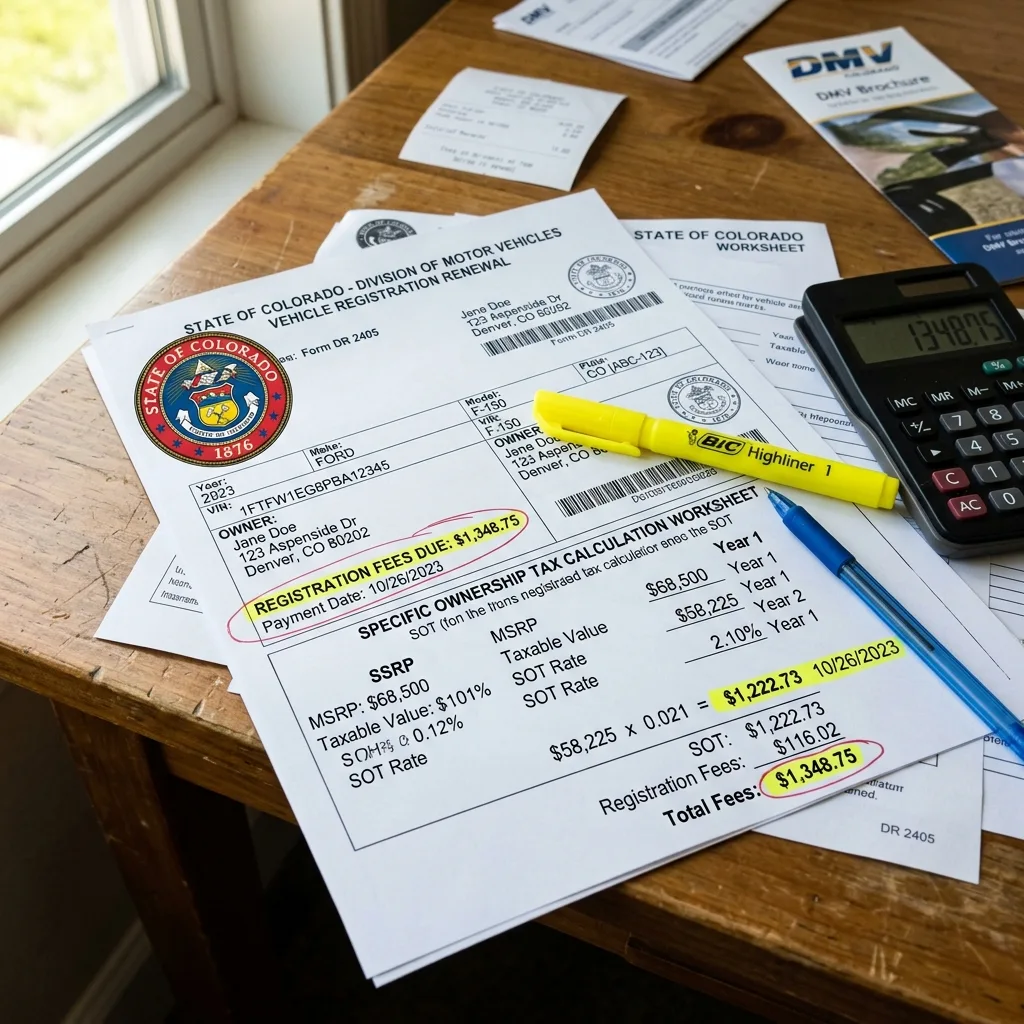
The Specific Ownership Tax is the part of colorado vehicle tax that catches most buyers off guard, and it is also the part that does the most cumulative damage. To understand why, you have to understand the formula. The SOT is calculated as a percentage of what Colorado calls the “taxable value” of the vehicle, which is defined by statute as 85% of the original Manufacturer’s Suggested Retail Price. That 85% figure is set the year the vehicle is manufactured, and it does not move. It does not adjust for actual sale price, trade-in value, or real-world depreciation. Colorado assigns that taxable value at manufacture and never revisits it — every SOT bill the vehicle ever generates draws from the same frozen number.
Once that taxable value is set, Colorado applies a declining percentage based on age:
To make this concrete, consider a $150,000 Range Rover Sport purchased new and registered in Denver. The MSRP is $150,000. The taxable value, locked in at year one, is 85% of that, or $127,500. Colorado will use that $127,500 figure for the entire life of the vehicle. Not market value. Not what someone would pay you for it on Bring a Trailer five years from now. $127,500. Forever.
$7,841 in five years. That figure does not include the registration fees, the Road Safety Surcharge, the Bridge Safety Surcharge, the documentation fee, or any of the other line items that the County Clerk’s office attaches to the renewal. It is purely the SOT — the property tax assessed on the privilege of owning that vehicle while it is titled in Colorado. The same vehicle registered through a Montana LLC pays zero SOT — Montana has no SOT, and Colorado’s nonresident exemption removes properly structured Montana-titled vehicles from Colorado’s tax rolls entirely.
What makes the SOT particularly aggravating is that the formula penalizes original buyers most heavily. If you bought the Range Rover used at year three for $85,000, Colorado does not care that you only paid $85,000. Your SOT is still calculated on $127,500. The frozen-MSRP design means used buyers pay tax on phantom value they never received and will never recover. It is a wealth tax on vehicles that pretends to be a fee.
A note on terminology: Colorado collects SOT through the County Clerk’s office at registration and renewal. It often shows up on your bill bundled with registration fees, which is why most owners do not realize how much of their annual renewal is property tax versus actual fees. Pull a renewal notice from any Colorado luxury owner and the SOT line will dwarf everything else combined.
The Sales Tax Avalanche: Colorado’s Home Rule Problem

If the SOT is a slow leak, Colorado’s vehicle sales tax is the burst pipe. The state imposes a 2.9% rate at the top, but Colorado is a Home Rule state, which means cities and counties have constitutional authority to set and collect their own sales taxes independent of state oversight. The result is a patchwork of overlapping jurisdictions where the combined rate depends entirely on the address where your vehicle is garaged. Two buyers writing checks for identical Audi RS6 Avants on the same Friday afternoon can owe sales tax bills $4,000 apart based on which side of a city line their houses sit on.
The components stack like layers of a punitive cake. State of Colorado: 2.9%. County (Denver, Boulder, Pitkin, Larimer, etc.): typically 0.5% to 2.0%. City (Home Rule municipalities like Denver, Boulder, Aspen, Colorado Springs): 3.0% to 4.5% or more. Special districts (RTD, Cultural Facilities District, Scientific and Cultural Facilities District, mass transit, football stadium, baseball stadium, regional transportation): another 0.1% to 1.4% depending on overlapping boundaries. By the time all of those pieces are summed, the combined rate paid at the dealership is what the buyer actually owes.
Aspen’s 10.35% combined rate is competitive with the worst sales tax jurisdictions in the United States. For an Aspen second-home owner picking up a $245,000 Ferrari Roma, the sales tax line alone is $25,357. That figure is roughly thirteen times the entire five-year cost of operating the same vehicle through a Montana LLC. It is not a typo. The math is that lopsided.
What makes the Home Rule sales tax especially galling is that there is no relief mechanism. Trade-in credit applies, but only on the trade portion. Buying out of state and registering in Colorado does not avoid the tax — Colorado will assess the difference at registration as a “use tax.” Moving from Lakewood to Denver mid-year does not refund anything. The sales tax is a one-time, non-recoverable, non-refundable hit that scales linearly with vehicle price, and the state has zero interest in giving any of it back.
One small piece of good news: Colorado eliminated the sales tax service fee on January 1, 2026. That fee, which previously allowed retailers to retain a small percentage of collected sales tax, has been removed. Buyers will not see this on their bills directly, but the cost to the state had been hovering around $30 million annually, and removing it tightens enforcement. None of which helps the buyer paying 9.15% in Denver, but it tells you which direction Colorado is moving on tax policy.
The Real Cost: Five-Year Tables
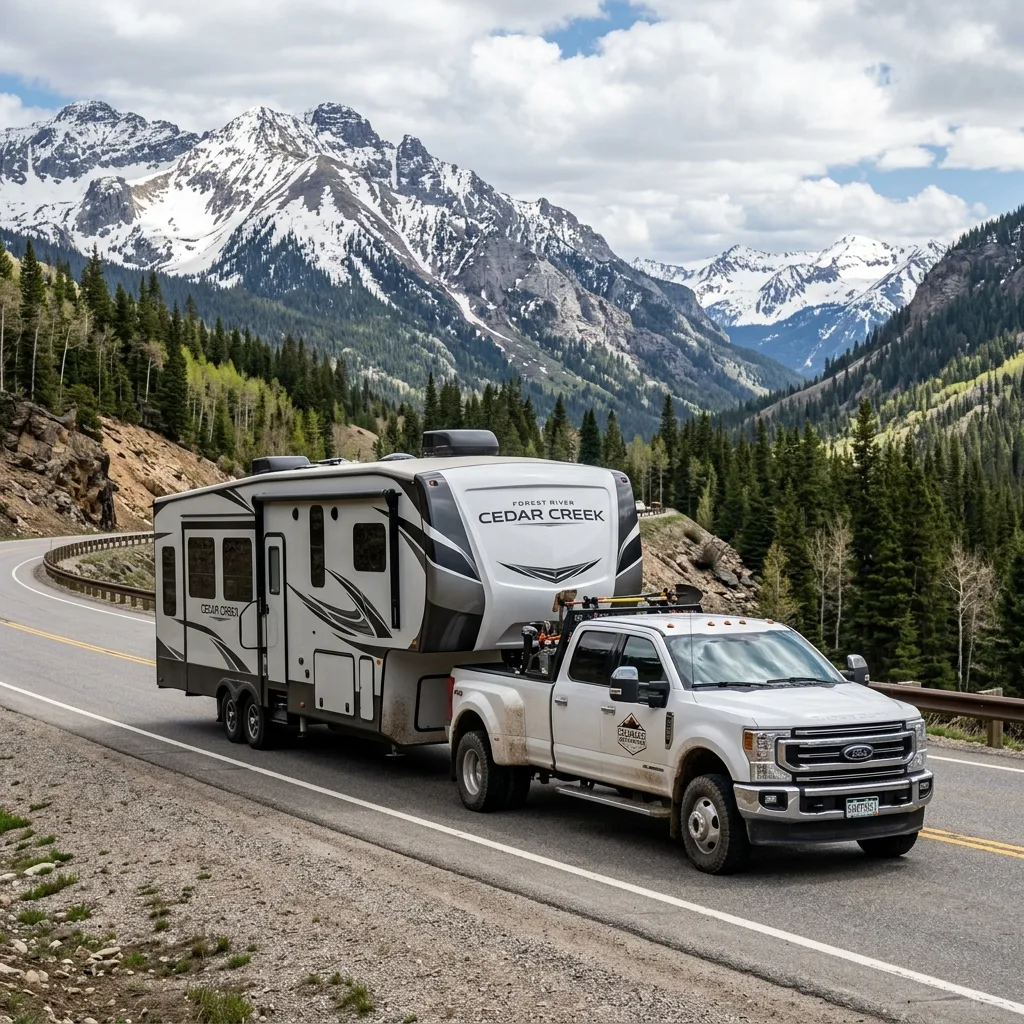
Tax math is abstract until you put it next to specific vehicles. Three full five-year models at $110K, $165K, and $220K price points. Each assumes Denver’s 9.15% combined sales tax, SOT on 85% of MSRP per Colorado’s depreciation schedule, and roughly $632 annually in registration plus surcharges. Montana totals use Zero Tax Tags pricing: $899 year one for vehicles under $150K (or $1,724 over $150K), then $270 per year.
Scenario A: $110,000 vehicle — BMW M5 Competition or Porsche 911 Carrera S
Scenario B: $165,000 vehicle — Range Rover Sport Autobiography or Mercedes-AMG GLE 63
Scenario C: $220,000 vehicle in Aspen — Bentley Continental GT or Porsche Turbo S
Montana LLC registration delivers the strongest savings on vehicles valued above $75,000, where the one-time service cost is recovered within the first year of avoided SOT and sales tax. Most Zero Tax Tags Colorado clients are in the $100K–$300K vehicle range, where the savings are decisive and the math closes fast.
The EV Trap: Colorado’s Green Tax Problem
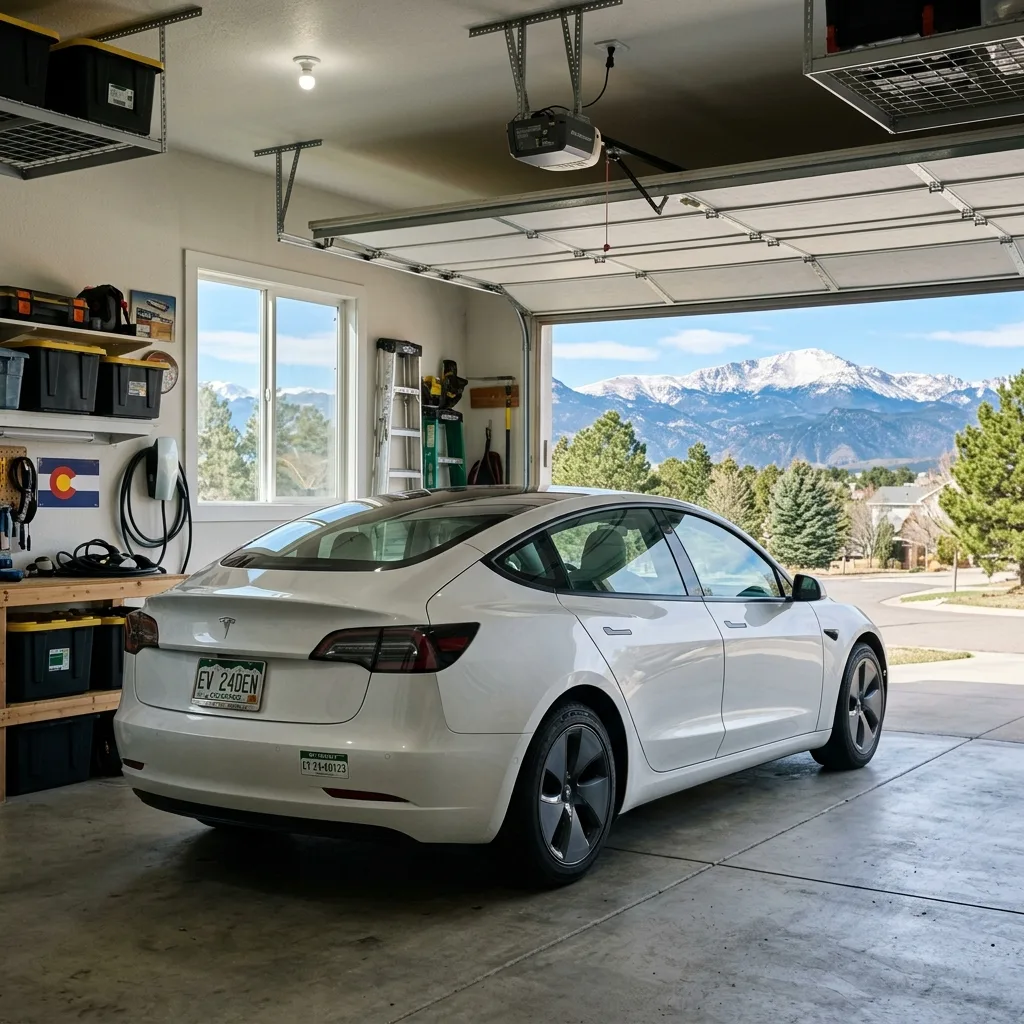
Colorado has marketed itself for years as one of the most aggressive EV-friendly states in the country, and on paper the incentives looked compelling. The state offered a $5,000 EV tax credit through 2024, layered on top of the federal $7,500 incentive, plus rebates for charging infrastructure and various utility incentives. EV buyers responded. Tesla, Rivian, Lucid, and Porsche Taycan registrations in metro Denver climbed steadily through the early 2020s. What those buyers learned, sometimes painfully, is that Colorado giveth a credit and Colorado taketh away considerably more.
The first problem is that the state EV credit collapsed. The $5,000 incentive available in 2024 dropped to $3,500 in 2025 and is now $750 for tax year 2026. The federal incentive remains, but the federal rules tightened around income caps and battery sourcing requirements, and many buyers of higher-end EVs no longer qualify federally either. So the carrot has shrunk. The stick, however, has gotten bigger.
Colorado introduced new EV-specific surcharges intended to recover the gas tax revenue that EV drivers do not pay. The surcharge for battery-only EVs (BEVs) is $16 in fiscal year 2025-26 and is scheduled to climb every year, reaching $96 annually by FY 2031-32. That $96 is layered on top of the regular registration fee, the SOT, the Road Safety Surcharge, the Bridge Safety Surcharge, and any local fees. Plug-in hybrids (PHEVs) get hit with their own $11 annual surcharge that will also escalate. Colorado published the schedule openly, so any buyer can see what the trajectory looks like.
For a $120,000 Lucid Air Touring buyer in Denver, the math now looks like this. Sales tax at 9.15%: $10,980. Year-one SOT on $102,000 adjusted MSRP: $2,142. Registration plus surcharges plus the $16 BEV surcharge: about $648. State EV credit clawback: minus $750. Net year-one cost of being a Colorado EV owner: roughly $13,020 in tax and fees. Over five years, factoring in declining SOT and escalating BEV surcharges, that buyer will pay over $20,000 in colorado vehicle tax and fees. The “green” in green vehicle started to mean something else.
The PHEV double-whammy is even more pointed. Take a Boulder buyer of an $88,000 BMW X5 xDrive45e. They pay 8.96% sales tax ($7,885), they pay annual SOT on the full $74,800 adjusted MSRP, they pay regular registration, they pay the $11 PHEV surcharge that will escalate, and they get only the $750 reduced state credit. The PHEV does not exempt them from anything. It just adds a new line item to the renewal bill.
For EV buyers above the $75K threshold, Montana LLC registration still makes strong financial sense — but the EV comparison is more nuanced than for ICE vehicles. Montana charges its own annual EV fees: $130/year for BEVs under 6,000 lbs (most passenger EVs), $70/year for PHEVs. Colorado’s current $16/year BEV surcharge is actually lower than Montana’s, though Colorado’s schedule escalates to $96/year by FY2031 and keeps climbing. The real advantage for EV buyers is the same as for everyone else: no Colorado sales tax and no SOT. On a $120,000 Lucid Air, Denver’s 9.15% sales tax alone is $10,980 up front. Montana’s $130/year EV fee over five years is $650. Eliminated sales tax and SOT dwarf that figure by a factor of ten or more.
Four Colorado Owners Who Ran the Numbers
The four cases below are composites drawn from actual Zero Tax Tags clients in Colorado over the past four years. Names have been changed and details lightly anonymized, but the vehicle prices, the cities, the tax math, and the savings are real.
Case Study 1: The Cherry Creek Tech Director — $185K Porsche Cayenne Turbo GT
Marcus, the tech director from the opening, was a senior engineering manager at a Denver-based SaaS company. His RSU vesting schedule had loaded up over a strong product cycle, and in early 2024 he configured a Cayenne Turbo GT in Carmine Red with the full Burmester sound and ceramic brake package. Out the door at Porsche of Denver: $185,200, on which he paid 9.15% Denver sales tax of $16,946. He shrugged that off as the cost of admission.
The first SOT renewal arrived in January 2025. Adjusted MSRP: $157,420. Year-one SOT at 2.10%: $3,306. Registration, surcharges, and county fees: $674. Total renewal bill: $3,980. Marcus sat on it for two weeks before paying. By the time the year-two notice arrived in January 2026 with a year-two SOT bill of $2,361 plus fees, Marcus had already done the five-year projection. Total Colorado tax and fees over five years: approximately $29,400. He moved the title to a Montana LLC at the year-two renewal cycle. The arithmetic on the rollover (paying his Montana service fee, processing the title transfer, and walking away from year-two-onward Colorado SOT) penciled positive in seventeen months. By year five, he is up roughly $14,000 versus continuing to renew in Colorado.
Case Study 2: The Aspen Vacation Home Owner — $245K Ferrari Roma
Caroline owns a primary residence in Manhattan and a vacation home in Aspen. She bought a 2025 Ferrari Roma in Verde British, took delivery in Maranello, and shipped it to her Aspen garage where it spends roughly four months a year. The Aspen address triggered Aspen’s 10.35% combined sales tax — $25,358 on the $245,000 acquisition. Year-one SOT on the adjusted $208,250 taxable value, at 2.10%: $4,373. Registration and fees: another $675. Annual cost of letting Ferrari sit in her Aspen garage during ski season: nearly $5,050 every January after that initial $25K hit.
Caroline structured the Ferrari through a Montana LLC at purchase. Total first-year cost: $1,724 (over-$150K tier service fee). Annual renewal: $270. Five-year cumulative cost: $2,804. Net savings versus the Aspen path: $34,618 over five years. The Montana plates do not affect her ability to drive the vehicle anywhere — Aspen, Vail, Telluride, the Million Dollar Highway. Colorado’s nonresident statute explicitly contemplates this scenario.
Case Study 3: The Boulder PHEV Double-Whammy — $88K BMW X5 xDrive45e
James and his wife Priya bought a 2025 BMW X5 xDrive45e in Boulder, drawn by the PHEV’s combination of all-wheel-drive performance and the prospect of charging it overnight from their solar array. The total out-the-door price was $88,400. Boulder’s 8.96% combined sales tax took $7,921. The state EV credit dropped them $750 (down from the $5,000 they would have received the year before). Year-one SOT at 2.10% of $75,140 adjusted: $1,578. Annual registration plus the $11 PHEV surcharge plus other fees: $678. The five-year SOT total alone, before any of the surcharge escalations, runs to $4,510. Their five-year colorado vehicle tax exposure on a “green” $88K SUV: just over $14,400.
James ran the numbers and decided to keep this vehicle in Colorado — with an $88K vehicle, the breakeven on Montana registration is closer to year three, and Priya prefers to avoid any ambiguity in her interactions with state agencies. But for the second vehicle they were planning (an $135K Lucid Gravity later in 2026), James has already put us on calendar. That vehicle will register in Montana from day one.
Case Study 4: The Fort Collins Contractor Fleet — Three F-350s at $85K each
Hector runs a custom homebuilding company in Fort Collins, with three Ford F-350 Platinum tow rigs servicing job sites from Loveland to Estes Park. Each truck sits at $85,000 fully optioned. Combined sales tax at Fort Collins’s 8.30%: $7,055 per truck × 3 = $21,165 in one-time sales tax. Year-one SOT per truck: $1,517 × 3 = $4,551 per year, declining on the standard schedule. Five-year SOT exposure across the fleet: roughly $13,020. Five-year total colorado vehicle tax and fee exposure on his three trucks: approximately $44,000.
Hector structured all three F-350s through a single Montana LLC at his last fleet refresh cycle. Year-one cost (under-$150K tier × 3 vehicles): $2,697. Annual renewal across all three: $810. Five-year cumulative cost for the entire fleet: $5,937. Net savings versus continuing to register in Fort Collins: roughly $38,000 over five years, recovered every cycle when he refreshes the fleet. The Montana LLC structure also gave him cleaner separation between the trucks and his personal assets — a side benefit his accountant had been recommending for years anyway.
The Montana LLC Solution

The Montana LLC strategy has been around since the 1970s. Colorado statute, Montana statute, and the U.S. Constitution all accommodate it — that is not a loophole that might get closed. It is a settled structure. Here is how it actually works and why it kills both taxes at once.
A Limited Liability Company is a legal person under the laws of every U.S. state. When a Montana LLC owns a vehicle, the vehicle is the property of a Montana entity, registered in Montana, titled in Montana, and subject to Montana’s tax structure. Montana imposes no state sales tax on vehicle purchases — period. Zero. There is no equivalent in Montana to Colorado’s 9.15% Denver combined rate or Aspen’s 10.35%. When the vehicle is acquired in the name of the Montana LLC, the purchase happens free of sales tax at the state level. There is no use tax in Montana that triggers later. The vehicle is registered, plates are issued, and the title sits in the LLC’s name in Helena.
Once the title and registration are in Montana, the vehicle is a Montana-registered vehicle wherever it physically goes. When that vehicle is driven in Colorado, parked in a Cherry Creek garage, or stored at an Aspen ski chalet, it is doing so as a properly registered out-of-state vehicle owned by a nonresident entity. Colorado statute, specifically C.R.S. § 42-3-102, exempts vehicles owned by nonresidents that are not required to be registered in Colorado. The Full Faith and Credit Clause of the United States Constitution (Article IV, Section 1) requires Colorado to honor the Montana title.
That is the legal backbone. Here is the practical effect. A Cherry Creek tech director with a Montana-titled Cayenne Turbo GT pays $0 in colorado vehicle tax — no Denver sales tax, no January SOT, no Road Safety or Bridge Safety surcharges, no documentation charges. The Montana LLC pays Montana’s modest annual registration fee (we handle this for you) and that is the entire annual cost.
The structure has to be done correctly to hold up — Colorado, like Virginia and California and Massachusetts, runs data analytics teams that scan registration records, look for repeated address mismatches, and flag obvious abuses. The Montana LLC strategy works specifically because the structure is real and maintained:
- The LLC must be properly formed in Montana, with articles of organization filed with the Montana Secretary of State.
- The LLC must have a registered agent with a physical Montana address. Zero Tax Tags provides this.
- The LLC must file annual reports with Montana to remain in good standing. We handle this in your annual renewal.
- The vehicle title must be issued in the LLC’s name, not in your personal name.
- The LLC must operate as a real entity. That means we file and maintain it as one.
What separates a robust Montana LLC structure from a sketchy DIY attempt is exactly this maintenance. Plates alone do not protect you. Neither does the title. What holds up under scrutiny is the structural integrity of the LLC itself. We have been doing this for years and we know what that looks like in practice.
Is This Legal?
The legal foundation has three parts.
Montana law is where it starts. Montana imposes no state sales tax on vehicle purchases, allows LLCs to own vehicles, and issues titles directly to LLCs — no residency requirement, no hidden trap. MCA § 61-3-303 explicitly accommodates LLC ownership. Montana has been openly welcoming to out-of-state LLC vehicle registration for decades.
Colorado’s own nonresident statute does the second piece of work. C.R.S. § 42-3-102 exempts vehicles owned by nonresidents that are not required to be registered in Colorado. The statute does not discriminate by ownership form. A Montana LLC is a nonresident entity under Colorado law. The strategy was not drafted into the statute, but it fits the plain text.
The third layer is the U.S. Constitution. Article IV, Section 1 — the Full Faith and Credit Clause — requires Colorado to honor a title issued by Montana. Colorado cannot refuse to recognize the Montana title and demand re-registration simply because it would rather collect the sales tax. That constitutional obligation is what makes the structure durable over time, and it is why properly structured Montana LLCs have survived every challenge Colorado has attempted.
The constitutional framework is what makes this structure durable. Montana’s statutory authorization of LLC vehicle ownership, Colorado’s nonresident statute (C.R.S. § 42-3-102), and the Full Faith and Credit Clause of the U.S. Constitution combine to protect every properly formed Montana LLC. Colorado must honor a title issued by Montana — that is not discretionary. The Commerce Clause additionally prevents Colorado from discriminating against out-of-state entities operating lawfully under their home state’s laws. Zero Tax Tags has maintained properly structured Montana LLCs through every inquiry, and the constitutional protection holds.
Every Montana LLC Zero Tax Tags forms comes with a real Montana registered agent, actual annual filings with the Montana Secretary of State, a properly executed operating agreement, and the vehicle title in the LLC’s name. The structure is genuine, legally solid, and fully protected under federal constitutional law from day one.
Who Benefits Most from Montana Registration in Colorado
The Montana LLC structure delivers the strongest results for a specific profile of Colorado owner. Below is who benefits most.
Strong fit:
- Denver and Boulder tech professionals with equity comp who are buying $100K+ vehicles. The savings recover the LLC cost in months.
- Aspen, Vail, Telluride, and Steamboat second-home owners with mountain-garaged vehicles in the $150K+ range. The 10.35% Aspen sales tax alone often justifies the structure on a single purchase.
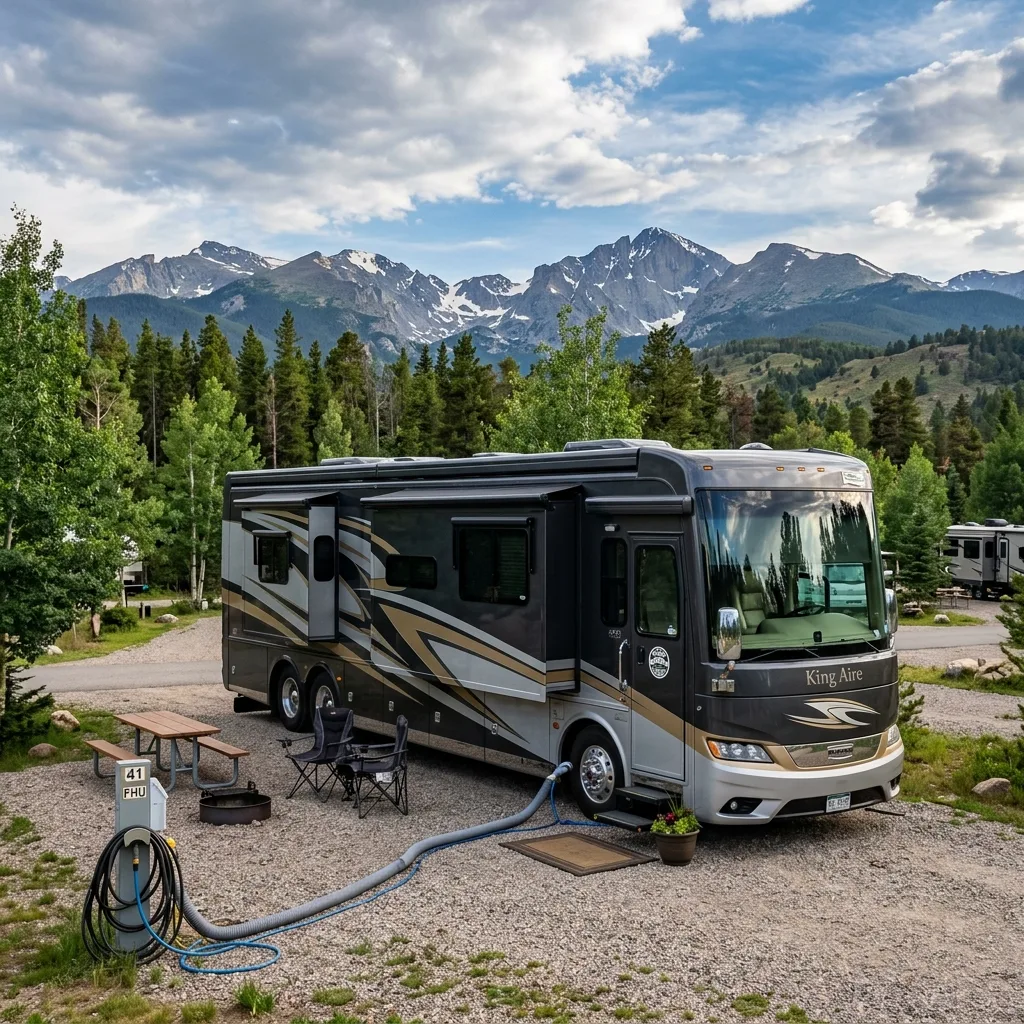
- RV owners — Class A motorcoaches, Airstream travel trailers, expedition rigs — that travel between Colorado and adjacent national parks. RVs are particularly punished by SOT because their MSRPs are high and depreciation curves are long.
- EV buyers on $100K+ Lucids, Rivian R1S, Porsche Taycan Turbo, Tesla Model X Plaid. The state credit collapse plus the new BEV surcharge schedule makes Colorado increasingly hostile to high-value EVs.
- Contractors and small-business owners with multi-vehicle fleets. The compounding SOT across three or four trucks builds a five-figure annual liability that Montana erases.
- Collectors with 1980s-2000s exotics, air-cooled Porsches, vintage Mercedes, restored muscle cars. SOT calculated on original MSRP punishes appreciating classics most aggressively.
- Anyone planning to hold the vehicle three or more years.
The Zero Tax Tags Process
We are a full-service Montana LLC and vehicle registration firm. We do not sell DIY kits. We do not point you toward a registered agent and wave goodbye. We form the LLC, register the vehicle, maintain the entity, file the annual reports, renew the registration, and answer your questions every year for as long as the vehicle is in our care. Here is the pricing and what you get.
Year one includes:
- Montana LLC formation with the Secretary of State
- EIN application with the IRS
- Operating Agreement drafted in your name
- Registered agent service with a physical Montana address
- Vehicle title transfer or initial titling in the LLC’s name
- Montana plates and registration delivered to your door
- Insurance coordination guidance — we know which carriers handle Montana LLC vehicles cleanly
- Direct access to your account manager for questions
Annual renewal includes:
- Montana annual report filed with the Secretary of State
- Vehicle registration renewal
- New plate stickers mailed to you
- Continued registered agent service
- Document retention so you always have copies
For vehicles 11 years old or older, Montana offers permanent registration. We file the permanent registration once, you receive permanent plates, and there is no annual renewal cost from us. The one-time fee ranges from approximately $200 to $412 depending on vehicle classification. Collectors with vintage and classic vehicles often consolidate their entire collection under a single Montana LLC with permanent plates.
Timeline: From Decision to Montana Plates
The process runs two to three weeks from start to plates. Here is how it looks.
| Day 1: | Submit your MCO and supporting paperwork through our secure portal. We review for completeness and file your Montana LLC the same day. |
| Days 1–2: | Montana LLC formation complete — same business day in most cases, second business day at the latest. |
| Days 2–4: | Title transferred into the LLC name at the Montana county treasurer. |
| Days 4–7: | Permanent Montana plates shipped directly to your door within 3–5 business days of title completion. |
Who gets the most out of a Montana LLC
The Montana LLC delivers the strongest returns to Colorado vehicle owners whose purchases carry significant tax exposure. High-value vehicles — luxury SUVs, exotic cars, performance trucks, Class A motorhomes — generate the largest SOT and sales tax bills, so the savings are most dramatic there. A $150,000 SUV can save $12,000 or more. An $80,000 specialty truck saves $6,400. Once the LLC is established, adding a second vehicle costs only the Montana registration fee — the LLC itself is already in place.
Snowbirds with second homes in other states, retirees who travel extensively by RV, business owners with multi-state operations, and collectors who store or show vehicles outside Colorado all see the structure perform exactly as designed. Call our team and we will run the math on your specific vehicle — no obligation, takes five minutes.
Frequently Asked Questions

Does a Montana LLC really avoid Colorado SOT?
Yes. SOT is assessed on vehicles registered in Colorado. A vehicle owned by a Montana LLC and titled in Montana is not registered in Colorado, so no SOT applies. Colorado’s nonresident exemption (C.R.S. § 42-3-102) explicitly excludes nonresident-owned vehicles not required to be registered in Colorado.
What if my vehicle is primarily garaged in Colorado?
Colorado’s statute focuses on whether the vehicle is required to be registered in Colorado, which turns on the residency of the owner. The owner here is a Montana LLC. The LLC is a Montana resident. The vehicle being parked in Colorado does not change the residency of its owner. Tens of thousands of vehicles owned by out-of-state corporations are parked in Colorado at any moment — fleet rentals, corporate vehicles, leased vehicles, RVs in storage. The garaging address does not control the registration obligation.
What makes a Montana LLC legally solid in Colorado?
Three things: a genuine Montana LLC with a real registered agent and actual annual filings with the Montana Secretary of State; the vehicle title held by the LLC, not the individual; and real LLC documentation including an operating agreement and EIN. Zero Tax Tags provides all three as a complete service. The constitutional protection — Commerce Clause plus Full Faith and Credit Clause — applies to every properly structured Montana LLC, and Colorado must honor it.
Can I buy from a Colorado dealer through my Montana LLC?
Yes. Colorado dealers handle out-of-state buyers routinely. The transaction structures as a sale to a Montana entity, the dealer collects no Colorado sales tax, and the title goes directly to the LLC. We coordinate with most Front Range and mountain-resort dealers regularly. You sign as the LLC’s authorized member.
Does this work for fleet vehicles or contractor trucks?
Yes. Fleet structuring under a single Montana LLC is one of the most common setups we run. Multiple vehicles can sit under one LLC, sharing the same registered agent and annual report cycle. The savings compound across the fleet, and the legal posture is identical to a single-vehicle structure.
What about my Colorado driver’s license?
Your driver’s license stays Colorado. There is no requirement that the driver of a Montana-registered vehicle hold a Montana license. Your license, your insurance, your home — all stay where they are. Only the vehicle’s title and registration move to Montana.
Is the Montana LLC structure constitutionally protected?
Yes. The legal foundation rests on three pillars: Montana’s statutory authorization of LLC vehicle ownership, Colorado’s nonresident statute (C.R.S. § 42-3-102), and the Full Faith and Credit Clause of the U.S. Constitution. Montana’s authority to register vehicles owned by Montana entities is protected by federal constitutional law — the same framework that makes interstate business operations possible across every state in the country. Zero Tax Tags builds every structure on that foundation.
What happens if I sell the vehicle?
The Montana LLC sells the vehicle. You can sell privately, trade in, or wholesale. The proceeds flow to the LLC, which can distribute them to you. There is no Colorado sales tax recapture on the sale because Colorado never collected sales tax to begin with. The structure unwinds cleanly, or it can hold the next vehicle when you replace it.
See how Montana LLC registration helps owners in other high-tax states:
- Virginia Car Tax: Stop Paying the Highest Vehicle Tax in America
- Arizona VLT: How to Stop Paying $1,000+ Every Single Year
- Arkansas Vehicle Tax: The Natural State’s Hidden Wealth Extraction System
- North Carolina Vehicle Tax: The Tag Tax Trap
Ready to Stop Paying Colorado’s Annual SOT?
Colorado’s double-punch tax system — sales tax plus annual SOT — costs high-value vehicle owners $20,000–$35,000 over five years. Montana LLC eliminates both.