27 min read
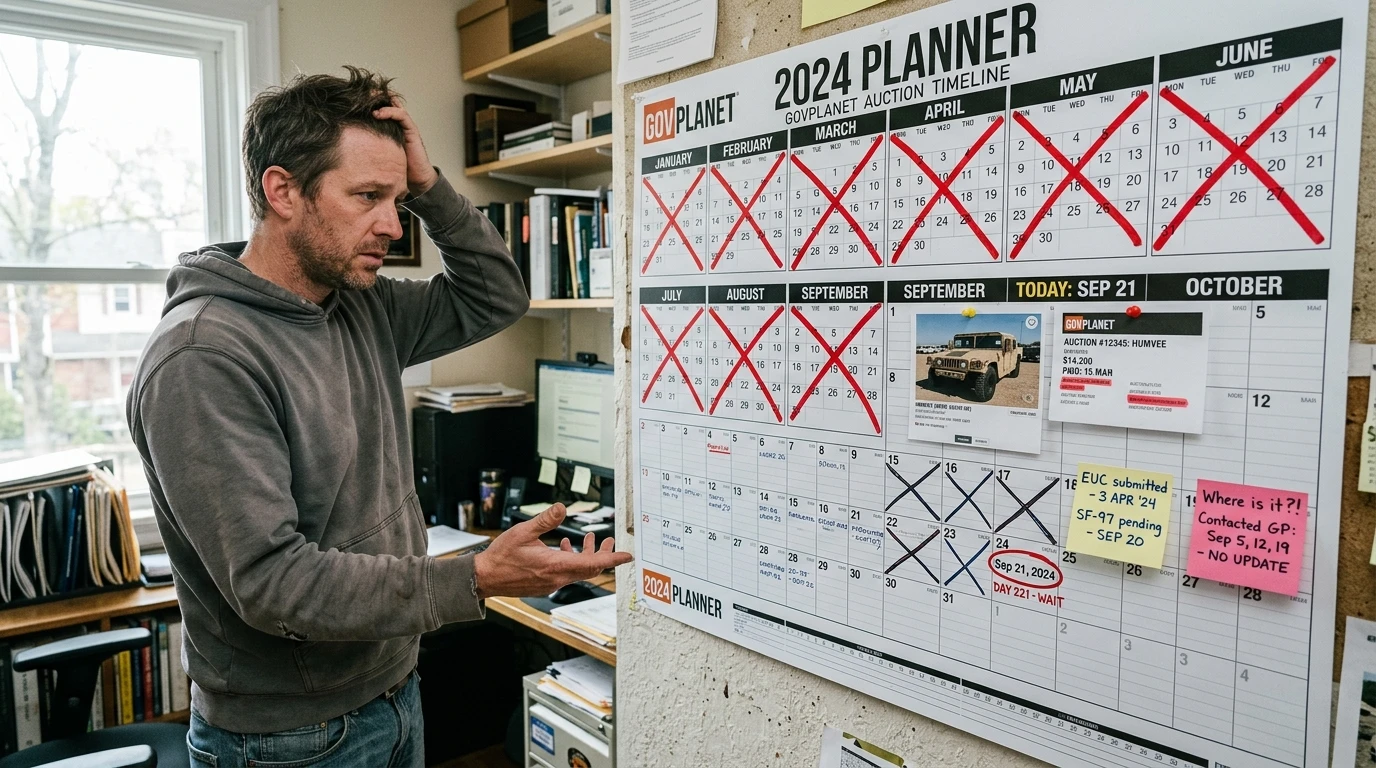
The SF-97 timeline is the single most underestimated part of buying a military surplus vehicle, and almost nobody walks into their first GovPlanet auction with a realistic understanding of how long it actually takes to put plates on a federally-released Humvee. A buyer wins a beautifully photographed HMMWV at GovPlanet on a Tuesday afternoon. The price is right, the photos look clean, the receipt hits their email by the end of the day. They wire the payment, they tell their neighbor a vehicle is coming, and they pencil in six to eight weeks on the calendar for plates.
Eight months later, that same buyer is still calling GovPlanet every Friday asking the same question. The vehicle is sitting on a flatbed in their driveway. The neighbor stopped asking. The plates have not arrived. The SF-97 timeline ate them alive, and they did not see it coming because nobody at the auction warned them.
This guide walks the entire process stage by stage, from auction win to legal plates, with the honest numbers from real buyers, real forums, and real depot data. We will be clear about one thing up front: Montana LLC registration cannot speed up the federal portion of this process. The End User Certificate review and the SF-97 issuance happen inside the Department of Defense and the Defense Logistics Agency, and nothing outside that system makes them move faster. What Montana can do is take the final stage of the journey, the one that wrecks California buyers and New York buyers and anyone in a state with a Technical Compliance Section, and compress it from six to ten months down to seven days. That is the value, and that is what we will prove.
On this page
- + The Complete SF-97 Timeline at a Glance
- + Stage 1 – Auction to Payment
- + Stage 2 – EUC: The Wait Nobody Warns You About
- + Stage 3 – Pickup Window: The 10-Day Scramble
- + Stage 4 – SF-97 Issuance: The Second Wait
- + Stage 5 – State DMV: Where Timelines Collapse
- + The Montana LLC Intervention
- + How to Compress the Total Timeline
- + Who This Is Built For
- + The Zero Tax Tags Process
- + Pricing
- + Is This Legal?
- + FAQs
The Complete SF-97 Timeline at a Glance

The SF-97 timeline is not one timeline. It is five stacked timelines, and every single one of them has an official version and a real-world version. The official version is what Defense Logistics Agency publications quote. The real-world version is what buyers actually live through. The gap between the two is where the eight-month deliveries come from.
Most buyers focus on the auction itself because that is the exciting part. The reality is that the auction is the shortest stage of the entire process. The first form a DEMIL Code Q or F buyer fills out is the End User Certificate (EUC) application through GovPlanet, and from that moment forward, time stretches in ways most consumer purchases never do.
Read that bottom row again. The Montana LLC route does not replace the EUC or the SF-97 wait, because nothing replaces those. It replaces the final stage, which for a California resident is the longest stage of the entire process. Federal time is fixed. State time is not.
Stage 1 – Auction to Payment (Days 1 to 3)
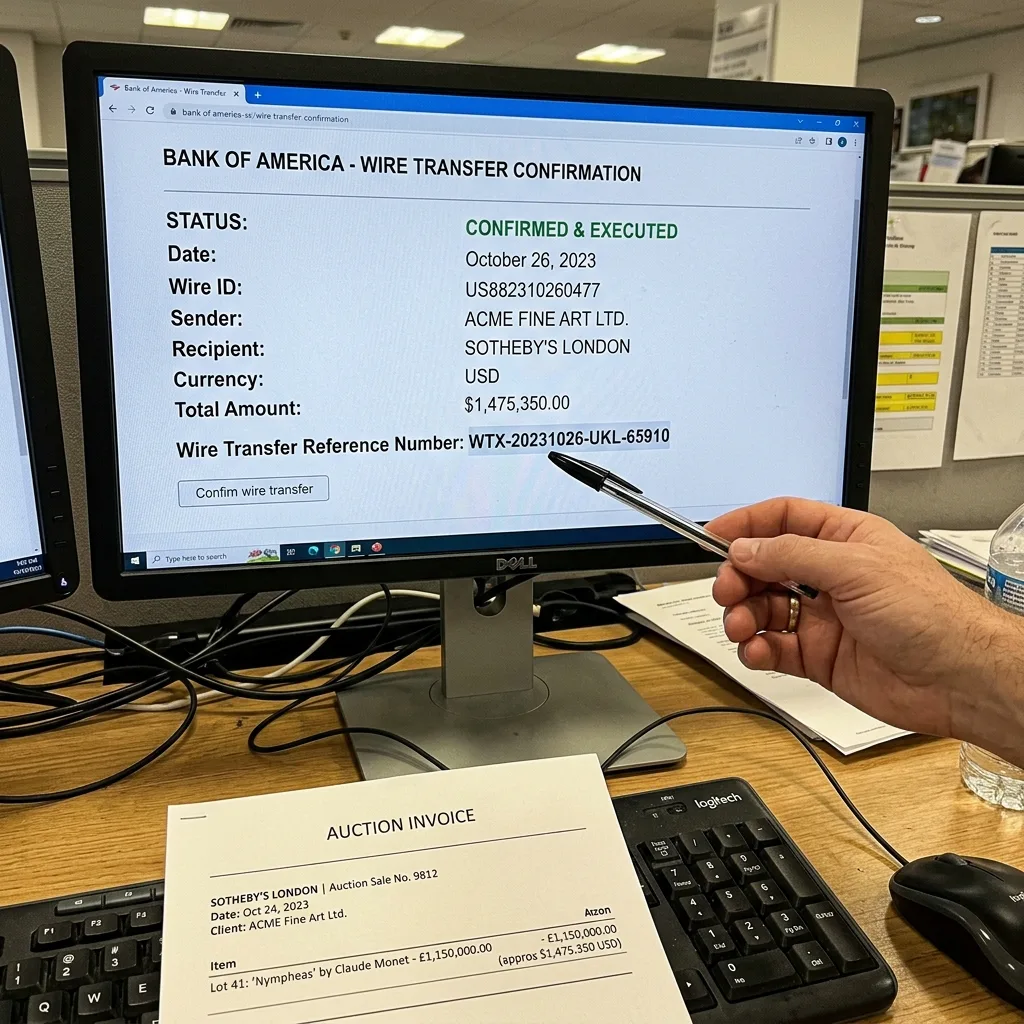
The first three days of the SF-97 timeline are the fastest, the most exciting, and the easiest to underestimate. GovPlanet, IronPlanet, and GSA Auctions all run on tight payment windows. Most auctions require payment within two to three business days of the closing hammer, and missing that window can void the win and forfeit deposits. Wire transfer is the standard method for vehicles over a few thousand dollars, and the receipt of payment is the moment the rest of the timeline starts ticking.
The other piece of the first stage that catches new buyers off guard is the buyer’s premium. GovPlanet typically charges a ten to fifteen percent premium on top of the winning bid, sometimes higher depending on the lot category. A 12,000 dollar HMMWV bid can easily land at 13,500 to 14,000 dollars after the premium. Sales tax in the buyer’s home state, where applicable, layers on top of that, although Montana LLC ownership eliminates that final layer of tax for residents of high-tax states.
The most important tactical decision in this entire stage happens before the bid is ever placed. Every GovPlanet listing displays a DEMIL code, and that code dictates whether the vehicle is subject to End User Certificate review. DEMIL Code B and C vehicles are standard decommissioned equipment with no controlled components, and they skip the EUC stage entirely. DEMIL Code Q and F vehicles include most HMMWVs, anything with armor mounts, vehicles with weapon brackets, and other equipment with Trade Security Controls. Those vehicles require an EUC, and the moment payment clears, the federal clock starts ticking with no way to speed it up.
Tactical tip: Read the DEMIL code on every listing before bidding. If it shows Q or F, plan for two to seven months of federal processing before the vehicle ever moves. If it shows B or C, the timeline is dramatically shorter and you can usually take delivery in five to thirty days.
Buyers who understand this distinction make smarter bids and set realistic expectations from the start. Buyers who do not understand it tend to spend the next eight months wondering what happened.
Stage 2 – EUC: The Wait Nobody Warns You About

The End User Certificate, formally known as DLA Form 1822, is a Trade Security Controls document that certifies the buyer will not export the vehicle or transfer it to a prohibited end user. The purpose is straightforward in policy terms. The execution is where things slow down. The buyer completes the form inside their GovPlanet account, GovPlanet routes the application to the Defense Logistics Agency Trade Security Controls office, and TSC reviews each application against a series of compliance databases.
The official quoted timeline is up to sixty business days. That works out to twelve calendar weeks, or right around three months. In the real world, the data tells a different story. One forum buyer submitted on May 21, 2021 and received approval on August 5, 2021, a 2.5 month wait that lined up almost perfectly with the official maximum. A buyer using the handle 1904Ford documented a wait of more than seven months for a similar HMMWV purchase. First-time buyers consistently report longer waits than repeat buyers, because their applications go through additional verification steps that established buyers no longer trigger.
The most famous EUC delay in recent memory was a Defense Logistics Agency administrative error in which roughly three hundred buyers had their SF-97s and supporting paperwork accidentally routed to a single address in Florida. That single mistake caused nine-month delays for everyone in the batch. The affected buyers spent months calling GovPlanet, then DLA, then their congressional representatives, only to discover that an envelope had been misaddressed and the paperwork was sitting in the wrong state.
The service branch matters too. HMMWVs released through the United States Marine Corps tend to be the slowest. Air Force releases are typically the fastest. Army and Navy fall somewhere in between. None of this is published, but it is consistent across every buyer forum and every long-time surplus dealer.
The EUC is a federal security review. No service, lawyer, or payment can accelerate it. The only thing buyers control during this stage is how productively they use the waiting time.
The good news during the EUC wait is that there are no storage fees. The vehicle sits at the depot on the government’s dime, which means buyers do not lose money while DLA processes paperwork. The smart move during this stage is to use the months productively: arrange flatbed transport quotes in advance, photograph and document the original GovPlanet listing, and most importantly, set up the Montana LLC now so it is ready the moment the SF-97 eventually arrives.
Stage 3 – Pickup Window: The 10-Day Scramble
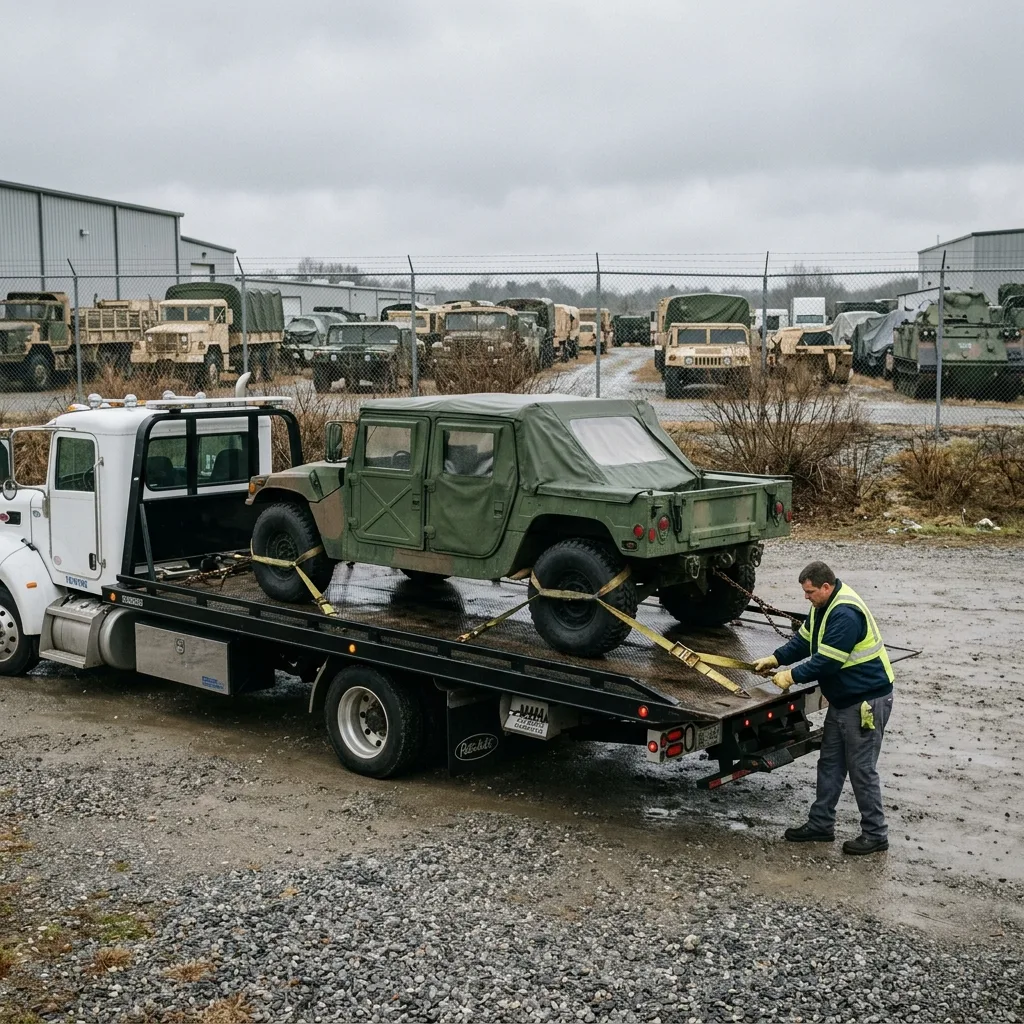
The moment EUC approval comes through, the clock changes character. For months, time has been slow and forgiving. Suddenly, it is fast and unforgiving. Buyers have ten business days from EUC approval to schedule pickup before storage fees begin accruing, and those fees can run anywhere from a few dollars a day to substantially more depending on the depot. A buyer who took six months to receive EUC approval and then takes another month to arrange transport can watch storage fees stack into the four-figure range.
Government depots run on government hours. Most facilities are open from roughly eight in the morning to three in the afternoon on weekdays only. No weekends. No evenings. No exceptions for buyers driving in from out of state. The depot personnel are typically courteous and helpful within those windows, but the windows are non-negotiable, and a flatbed driver arriving at 3:15 will be turned away.
Most military surplus vehicles are non-runners. They have been sitting on a lot for months or years, the batteries are dead, the fluids are old, and sometimes the engines have been deliberately disabled. This means flatbed transport is almost always required. A typical flatbed move for a HMMWV runs between 500 and 1,500 dollars depending on distance, vehicle weight, and depot location. Long hauls from remote depots in the Midwest or the desert Southwest can take five to ten business days from booking to delivery.
The tactical move that separates experienced surplus buyers from new ones is arranging transport before EUC approval lands. Smart buyers line up two or three flatbed quotes during the EUC wait, get the driver on standby, and book the actual pickup within hours of EUC approval. This compresses the ten-day window to a comfortable buffer instead of a panic.
At the depot itself, the buyer or their representative needs to do a few specific things that pay off later. Photograph the data plate from multiple angles. Photograph every visible serial number on the vehicle. Note whether the serial number on the vehicle matches the serial number on the GovPlanet listing exactly. Discrepancies between the stamped data plate and the auction listing are common, and they become enormous problems at the state DMV level if not documented at pickup. This is also the moment to confirm the vehicle cannot legally be driven on public roads until it is titled and registered, which means even a running surplus vehicle leaves the depot on a flatbed.
Stage 4 – SF-97 Issuance: The Second Wait

Most buyers assume that once they have physical custody of the vehicle, the title is right behind it. This is the second great misconception of the SF-97 timeline. The vehicle goes home on a flatbed, and the SF-97 stays in the federal pipeline for weeks or months longer. The SF-97 is the Certificate of Release of a Motor Vehicle, and it is the government’s transfer document. Without it, no state in the country will issue a title.
The official process: GovPlanet initiates the SF-97 request at the moment of pickup confirmation. The request routes back through the originating military service branch, which prepares the actual SF-97 form. The branch then routes the paperwork back to GovPlanet, which forwards it to the buyer. The official quoted timeline is thirty business days, which is right around six calendar weeks.
The real-world numbers are wider. Best case scenarios from active forums run four to six weeks. Six months is documented multiple times. The nine-month outliers from the DLA address error mentioned in the EUC section also apply here, because the SF-97 was the actual paperwork that went to the wrong Florida address. One forum buyer documented a wait of more than seventy business days, which is more than fourteen weeks, with no response from DLA and no resolution in sight at the time of the post.
The most common cause of delay in this stage is simple and frustrating: the paperwork sits on a desk at the military service branch. There is no centralized SF-97 processing center. Each branch handles its own releases, and each branch has its own priorities, staffing levels, and backlog. The Marine Corps tends to be the slowest, again. The Air Force tends to be the fastest, again. Army and Navy vary by base.
Email GovPlanet and you will wait forever. Call them. Ask: “Has a batch come in for my vehicle’s service branch recently?” This actually gets answers. Email tickets go into queues; phone calls go to humans.
The phone strategy that works: call GovPlanet roughly every two to three weeks during the SF-97 wait. Ask specifically about batch status for the originating service branch. Reference the lot number from the original auction. Be polite, be persistent, and treat every call as a check-in rather than a complaint. Buyers who follow this rhythm consistently report shorter waits than buyers who fire off angry emails and assume someone is reading them.
When the SF-97 finally arrives, it comes by certified mail. This is not a detail to skim over. Certified mail requires a signature on delivery, and missed deliveries get routed to the local post office for pickup within a limited window. A buyer who misses certified mail delivery and forgets to retrieve it from the post office can find their SF-97 returned to sender, restarting weeks of paperwork. The moment the SF-97 lands, the next stage begins immediately.
Stage 5 – State DMV: Where Timelines Collapse
The federal portion of the SF-97 timeline is the same for every buyer. The state portion is where the timeline either ends quickly or stretches into a second federal-length wait. The variable here is not the buyer, it is the buyer’s state of residence and the procedures of that state’s DMV. The differences are dramatic.
California is the hardest state for a surplus vehicle title. The state DMV routes most military surplus submissions to the Technical Compliance Section at headquarters, where the file is reviewed for VIN format, weight class, emissions classification, and documentation completeness. The TCS approval rate on first submission for surplus vehicles is roughly fifty percent. Submissions that get rejected on the first pass require resubmission with corrected paperwork, and each round adds weeks or months. Total California timeline from SF-97 in hand to plates on the vehicle: six to ten months in the typical case.
New York, Pennsylvania, and Illinois all run similar suspension or hold processes for federally-released vehicles. They are not as slow as California, but they routinely produce three to six month timelines, and Pennsylvania occasionally flags HMMWV serial numbers as potential stolen-VIN matches because the format breaks the standard 17-character VIN database structure.
Texas and Florida are dramatically friendlier. Both states accept SF-97 paperwork directly, process the title within their normal turnaround windows, and typically issue plates within four to six weeks. Texas is one of the most reliable states for direct surplus titling in the country.
Montana is in a different category entirely. The Montana county treasurer accepts the SF-97 serial number as written, without running it through a national VIN verification database that would reject the format. There is no Technical Compliance Section. There is no emissions test, no inspection, no weight reclassification dance. The title transfers in days, not months. For a California buyer who has already waited six months for EUC and another four months for the SF-97, the choice between handing the paperwork to California TCS and waiting another six to ten months, versus handing it to Zero Tax Tags and waiting seven days, is not really a choice. It is math.
The Montana LLC Intervention – What We Can Actually Control
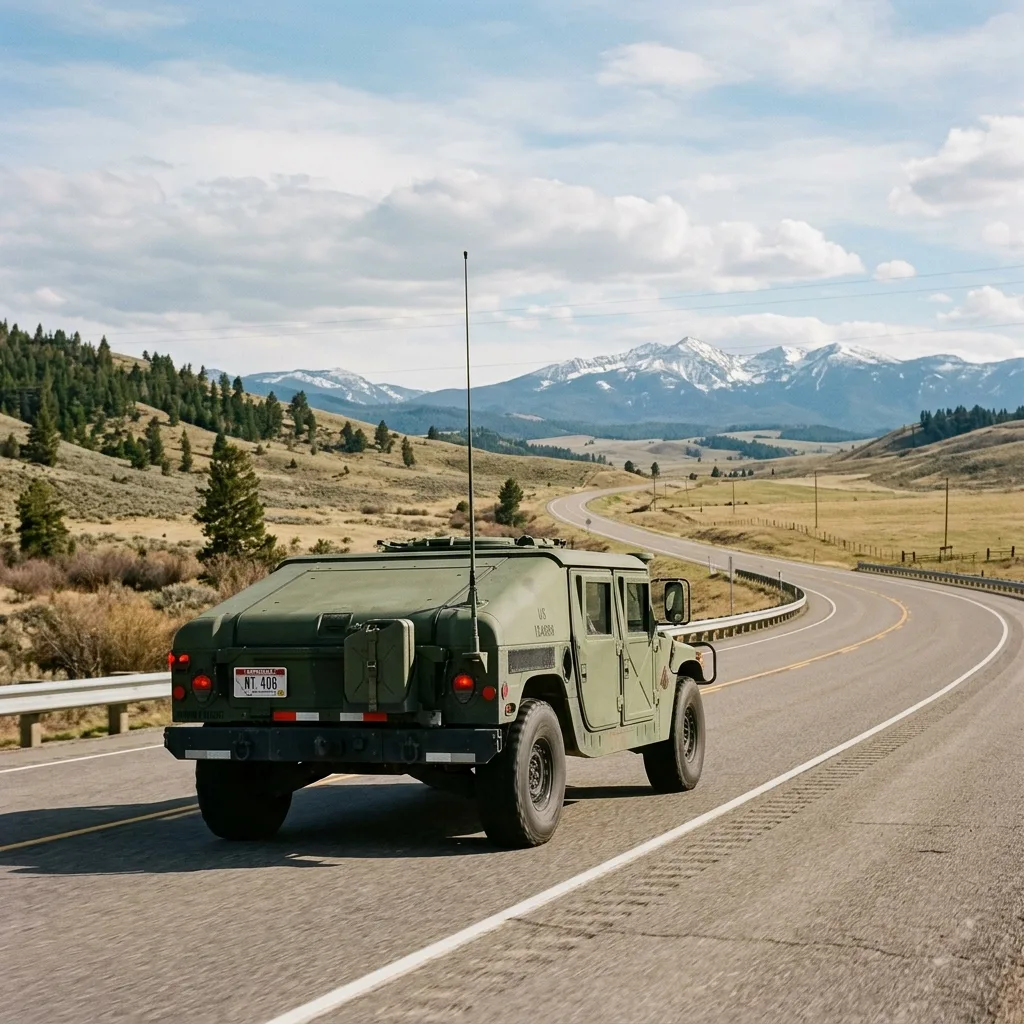
This is the section where we say something most marketing copy will not say honestly. Montana LLC registration does not speed up the EUC. It does not speed up the SF-97. Those are federal processes that happen inside DLA, inside the service branches, and inside the Trade Security Controls office, and absolutely nothing outside that system makes them move faster. No premium service, no expedited filing, no legal pressure changes the timeline by a single day. Anyone who tells you otherwise is selling fiction.
What Montana controls is everything that happens after the SF-97 lands in the mailbox. That is where the value lives, and that is where the entire game is won.
Run the math one more time. A typical California buyer with a DEMIL Q HMMWV waits roughly four to six months for EUC approval, then another six weeks to four months for the SF-97 to actually arrive. That is anywhere from five to ten months of federal waiting, and there is no shortcut. The day the SF-97 lands in the mailbox, the buyer has a choice. Hand the paperwork to the California DMV and wait another six to ten months for TCS to clear it, with a fifty percent chance of a rejection forcing resubmission. Or hand the paperwork to Zero Tax Tags and have permanent Montana plates shipping in seven days.
Montana accepts the SF-97 serial as written. There is no national database check that would reject a non-standard military VIN. There is no emissions test, because Montana does not require emissions testing on registered vehicles. There is no annual safety inspection. The plates are permanent, meaning they do not require annual renewal once they are issued. There are no annual registration fees on the LLC’s vehicles after year one for permanent plate qualifying vehicles. The Montana LLC annual filing fee is currently zero dollars.
The moment your SF-97 lands in your mailbox, your timeline is in your hands. Submit it to Zero Tax Tags and we handle everything from there. Day 1: LLC and paperwork. Days 2-4: title at the county treasurer. Days 4-7: permanent Montana plates shipped to your door.
Zero Tax Tags handles the entire post-SF-97 stage. We form the Montana LLC on day one if it is not already in place. We file the title transfer at the Montana county treasurer that we work with regularly, with no surprises and no resubmissions. We arrange plate issuance and shipment. The buyer never visits Montana, never deals with the county treasurer directly, and never waits in a state DMV line.
How to Compress the Total Timeline

The total SF-97 timeline can be thought of in two columns: things the buyer cannot control, and things the buyer absolutely can control. The buyers who get their plates fastest are not the ones with the most luck. They are the ones who treat every controllable variable as a job to do, and they line up every step in advance so that the moment a federal gate opens, they are already through it.
Things outside the buyer’s control: EUC approval speed, SF-97 batch processing at the originating service branch, DLA administrative errors, certified mail delivery scheduling. None of these respond to pressure, payment, or polite requests.
Things inside the buyer’s control: research, preparation, follow-up cadence, and choosing the right titling path for their situation. Here is the order of operations that compresses the total journey:
- Read the DEMIL code before bidding. Know whether you are about to commit to a two-to-seven month federal wait or a five-to-thirty day standard process.
- Submit the EUC application the same day payment clears. Every day of delay on the application is a day added to the back end of the timeline.
- Set up your Montana LLC during the EUC wait. Do not wait until the SF-97 arrives. Form the LLC, get the paperwork in place, and have it ready as a finished tool.
- Get flatbed transport quotes during the EUC wait. Talk to two or three transporters, get them on standby for a pickup window that will be defined by EUC approval.
- Call GovPlanet every two to three weeks during EUC. Phone, not email. Ask about batch status by service branch.
- The day EUC approves, schedule pickup immediately. Use the ten-day window as a buffer, not a deadline.
- At pickup, photograph everything. Data plate, serial numbers, GVWR plates, any markings. Note discrepancies vs. the GovPlanet listing in writing.
- After pickup, call GovPlanet to confirm the SF-97 request is in the queue. Get a confirmation that the paperwork is moving.
- During the SF-97 wait, call every two to three weeks. Same cadence as the EUC wait. Same phone-not-email approach. Ask about batch status by service branch.
- The day the SF-97 arrives, submit it to Zero Tax Tags. Same day. Not next week. Same day. From there, seven days to permanent plates.
Buyers who follow this list consistently shave months off the total experience. They are not getting faster service from DLA. They are simply removing every other source of delay from the equation, so when the federal paperwork finally moves, they are ready to move with it.
Who This Is Built For
The Montana LLC route through the SF-97 timeline is the right answer for specific kinds of buyers in specific kinds of situations. Here are the people who benefit the most from compressing the final stage to seven days.
- California residents. A six-to-ten month TCS process after already waiting six months for the federal paperwork is the worst-case scenario in the country. California buyers who route through Montana skip the worst stage of the timeline entirely.
- New York, Pennsylvania, and Illinois residents. Three-to-six month state processes are still slow enough that Montana’s seven-day window is a real upgrade — and Pennsylvania buyers avoid the false stolen-VIN flag that military serial formats occasionally trigger.
- Anyone on a deadline. Active duty PCS orders, deployment windows, committed event dates — the federal wait is fixed, but the state stage no longer has to add six months. It can be seven days.
- DEMIL Code Q or F buyers who know the EUC wait is coming. Five to ten months of federal waiting is long enough. Line up the fastest possible state-side path now so the moment the SF-97 lands, the rest takes a week.
- Fleet collectors. One Montana LLC holds multiple vehicles. Two HMMWVs, a deuce-and-a-half, and a trailer can all register under the same LLC — one setup instead of four separate state DMV fights.
- Buyers who hit the VIN mismatch wall. Military serial numbers do not match the 17-character VIN format state databases expect. For a full breakdown of why this happens and how Montana solves it, see our companion guide on this exact problem.
The Zero Tax Tags Process

Once the SF-97 arrives in the mailbox, the Zero Tax Tags process is straightforward, fast, and built specifically for military surplus paperwork. Here is exactly what we need from the buyer and exactly what happens once we have it.
Documents we need:
- SF-97 (Certificate of Release of a Motor Vehicle), original or certified copy
- Bill of sale from GovPlanet, IronPlanet, or GSA Auctions
- DD Form 1348-1A if applicable (issue release receipt)
- Photo of the data plate showing the serial number, GVWR, and year
- Buyer identification for the Montana LLC member or members
| Day 1: | Submit SF-97 and supporting documents through our secure portal. We review and file your Montana LLC the same day. |
| Days 1-2: | Montana LLC formation complete. Operating agreement, EIN, and registered agent assigned. |
| Days 2-4: | Title transferred at Montana county treasurer. SF-97 serial accepted as written. |
| Days 4-7: | Permanent Montana plates shipped to your door. |
That is the entire post-SF-97 stage. No state DMV appointments. No emissions testing. No weight reclassification fights. No technical compliance reviews. The buyer submits documents on day one and unboxes permanent plates by the end of the week.
Pricing
The pricing for the Zero Tax Tags service is structured for clarity, with no annual surprises and no recurring registration costs for permanent plate qualifying vehicles.
For a permanent plate qualifying vehicle, the price is paid once. There is no annual renewal, no emissions retest, no recurring registration fee, and no annual LLC filing fee at the current rate. The total lifetime cost of the entire titling solution is 899 dollars.
Is This Legal?
The Montana LLC vehicle registration model is fully legal under United States commerce clause principles and Montana state LLC statutes. A Montana LLC is a Montana legal entity. A Montana legal entity that owns property in Montana is a Montana resident for vehicle registration purposes. Montana sets the rules for vehicle registration in Montana, and Montana’s rules do not exclude out-of-state members from forming and operating an LLC that owns vehicles.
The principle that protects this structure has been recognized in cases such as Thomas v. Bridges, where courts have addressed the question of cross-state corporate vehicle ownership and confirmed that a properly formed business entity is treated as a resident of the state where it is incorporated for the purposes of titling property the entity owns.
Montana accepts the SF-97 as a primary title document for federally-released military vehicles. This is not an exploit, not a workaround, and not a loophole. It is Montana statute. The state has chosen to make its vehicle titling process accessible, fast, and friendly to commercial entities, and Montana benefits from the LLC formation fees and the registration fees that come from that policy. The relationship is mutual, the transaction is documented, and the title that Montana issues is a valid title that any state in the country recognizes for the purposes of vehicle identification.
This is the correct, legal, fully documented path for buyers who do not want to spend an additional six to ten months on a state DMV process after already spending six to ten months on the federal paperwork. It is the path that surplus vehicle dealers, collectors, and seasoned buyers have been using for decades, and it is the path that Zero Tax Tags has refined into a seven-day delivery window.
Frequently Asked Questions
Does Montana LLC speed up the EUC or the SF-97?
No. Those are federal processes inside the Defense Logistics Agency and the originating military service branches. Nothing outside that system changes their timelines. What Montana LLC registration does is control everything that happens after the SF-97 arrives. The state stage drops from weeks or months to seven days, which is where the time savings actually live.
What is a DEMIL code and does my vehicle require an EUC?
DEMIL stands for Demilitarization, and the code on a GovPlanet listing indicates the level of Trade Security Controls applied to the vehicle. DEMIL Code B and C vehicles are standard surplus with no controlled components and skip the EUC requirement. DEMIL Code Q and F vehicles include most HMMWVs and anything with armor mounts or weapon brackets, and they require an EUC before pickup. Read the code on the listing before bidding.
Can I pick up my HMMWV before the SF-97 arrives?
Yes. Pickup happens after EUC approval and is the trigger that starts the SF-97 process. The vehicle goes home on a flatbed and waits at the buyer’s location while the SF-97 paperwork moves through the service branch and back through GovPlanet. The vehicle cannot legally be driven on public roads during this time, but it can be worked on, stored, and prepared for eventual registration.
What if GovPlanet loses my SF-97 request?
This happens, although it is rare. The single most famous example was the DLA address error that routed roughly three hundred SF-97s to the wrong address in Florida, causing nine-month delays for everyone in the batch. The fix is consistent phone follow-up with GovPlanet. Call every two to three weeks, ask about batch status, reference the lot number, and escalate to a supervisor if the paperwork has been quiet for more than ninety days.
Can I set up my Montana LLC before I have the SF-97?
Yes, and this is the recommended approach. The Montana LLC formation is a multi-day process on its own, and setting it up during the EUC wait means it is ready as a finished tool the moment the SF-97 lands. Zero Tax Tags can form the LLC in advance and hold it ready for the title transfer the same day the federal paperwork arrives.
What if my SF-97 has a VIN mismatch with the vehicle data plate?
Serial discrepancies between the SF-97 paperwork and the actual data plate on the vehicle are common and are one of the biggest reasons state DMVs reject surplus titles. Montana accepts the SF-97 serial as written, which means most mismatches that would break a California or New York title submission are processed cleanly through the Montana county treasurer. For a deeper dive into this exact problem, see the companion guide.
How long does Zero Tax Tags take from SF-97 receipt to plates?
Seven days, end to end. Day one: SF-97 submission and Montana LLC filing. Days one to two: LLC formation complete. Days two to four: title transferred at the Montana county treasurer. Days four to seven: permanent Montana plates shipped to the buyer’s door.
Can I drive my HMMWV while waiting for plates?
No. A federally-released military vehicle cannot legally operate on public roads until it has been titled and registered with a valid state license plate. This means the vehicle moves from the depot on a flatbed, sits at the buyer’s location during the SF-97 wait, and stays off public roads until the Montana plates arrive on day seven of the Zero Tax Tags process.
Related guides in the SF-97 series:
- SF-97 VIN Mismatch: Why Your Military Vehicle’s Serial Number Breaks DMV Systems
- HMMWV Titling Guide: How to Register Your Surplus Humvee with an SF-97
Ready to Turn Your SF-97 Into Permanent Plates in 7 Days?
The federal wait is over. The state wait does not have to be. Zero Tax Tags handles your Montana LLC, your title transfer, and your permanent plates – start to finish, seven days from SF-97 in hand to plates at your door.