23 min read

On this page
- + What is Arizona’s vehicle emissions testing mandate?
- + The real cost of Arizona emissions testing
- + What happens when you fail Arizona emissions?
- + The diesel truck and modification trap
- + The snowbird problem
- + How Montana registration eliminates the trap
- + Is Montana LLC registration actually legal?
- + Three Arizona case studies
- + How Zero Tax Tags registers your vehicle
- + Frequently asked questions
Picture David, a software engineer in Chandler. He just got the renewal notice for his 2018 Ram 1500. The truck runs perfectly. The check engine light blinked on once last month after he filled up at a gas station that probably had moisture in the tank. He cleared the code with a $30 scanner from the auto parts store. The engine is fine. The fuel system is fine. The catalytic converters are fine.
None of that matters. He drove to the VEIP testing station in Mesa, paid his $17, plugged into the OBD-II port, and watched the technician shake his head. The system showed his evaporative emissions monitor as “not ready.” Not failed. Not broken. Just “not ready” because he had cleared a code and not driven enough cycles for the system to fully re-test itself.
The diagnosis was simple. The fix was not. The shop he visited told him he needed a new EVAP charcoal canister, a new purge valve, and a smoke test to find the leak that probably did not exist. Estimate: $1,247. For a truck that drives perfectly fine.
You read about Arizona’s Vehicle License Tax. You knew the state would charge you roughly $1,000 a year just for the privilege of having tags. Nobody warned you about VEIP. Nobody told you that every two years, a $17 test could trigger a $3,000 repair bill, deny your registration renewal, and leave you driving on expired tags hoping you don’t get pulled over.
This is the second tax. The one that doesn’t show up on your registration card. The one that quietly transfers thousands of dollars from Arizona vehicle owners to repair shops, parts manufacturers, and the regulatory apparatus that requires it all.
What if you could skip all of this entirely?
What is Arizona’s vehicle emissions testing mandate?
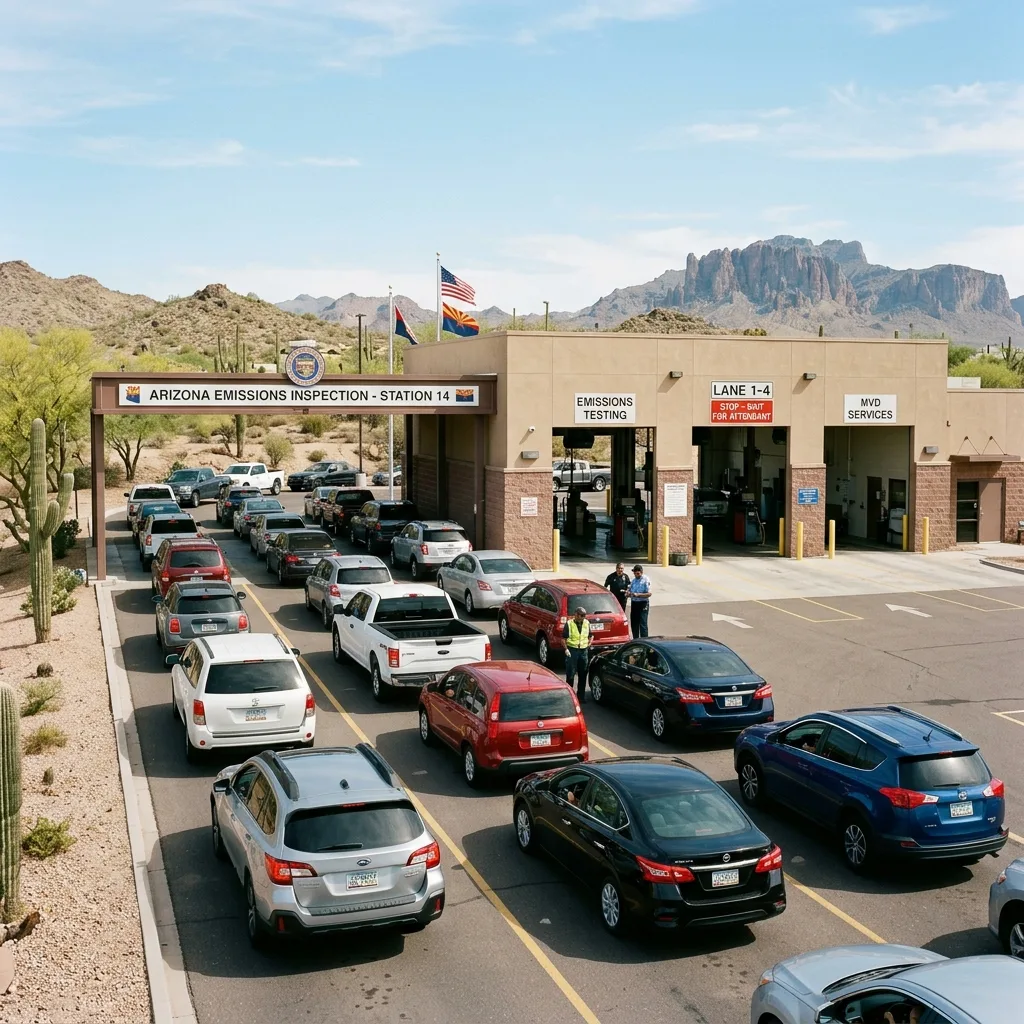
The official name is the Vehicle Emissions Inspection Program. It is administered by the Arizona Department of Environmental Quality (ADEQ) and operated by a private contractor called Gordon-Darby, who recently received a fresh four-year contract that includes a remote sensing pilot program. Translation: the cameras are coming next.
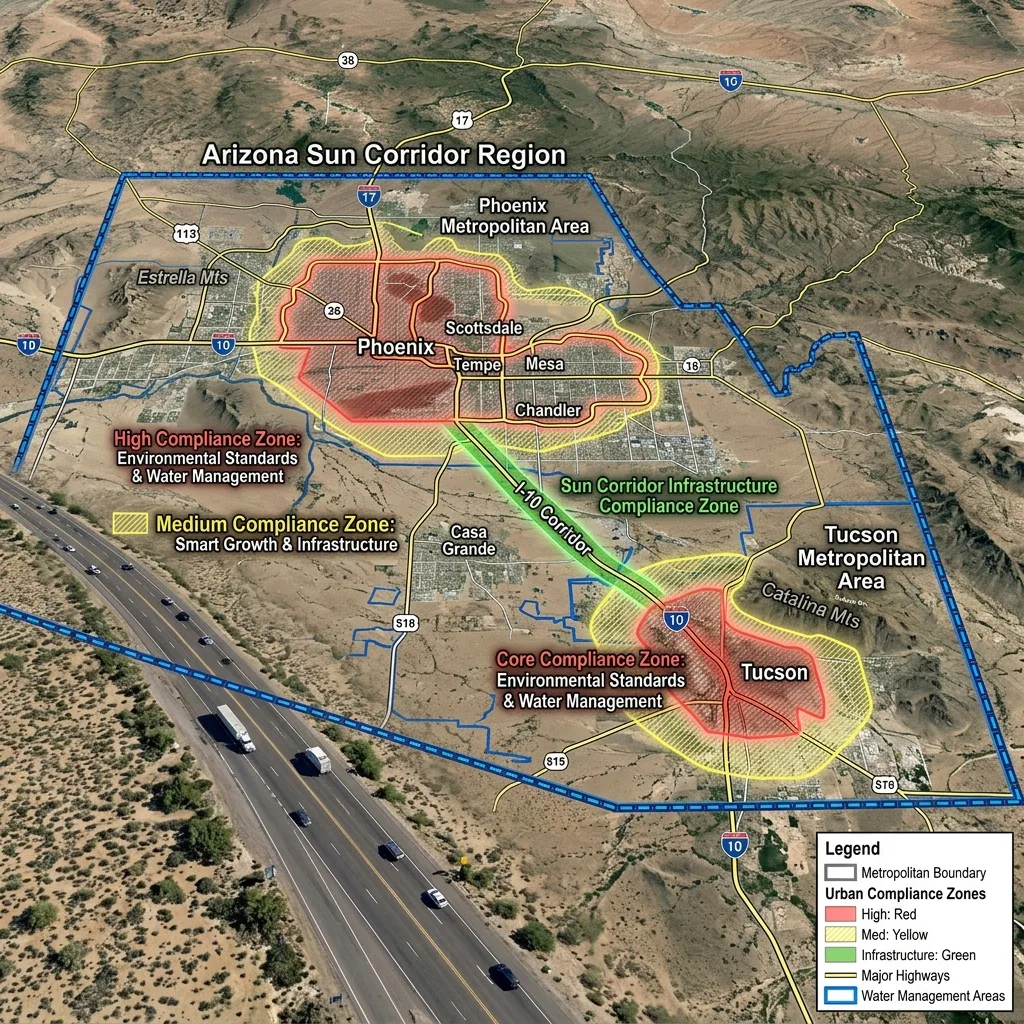
VEIP applies in two areas. The Phoenix metro region, which covers all of Maricopa County, and the Tucson metro region, which covers the populated portions of Pima County. Together, these zones contain roughly 75% of the state’s population and nearly all of its registered vehicles. If you live, work, or operate a business in either zone, you are subject to VEIP.
The exemptions are narrow. Vehicles built in 1966 or earlier are exempt. Vehicles in their first five model years are exempt, which in 2026 means model years 2022 and newer skip testing. Pure electric vehicles are exempt. Plug-in hybrids are not. Conventional hybrids are not. Diesel-electric hybrids are not. Anything with a gasoline tank gets tested.
For 1981 and newer vehicles in Phoenix, testing is required every two years. For 1967 to 1980 vehicles, or anything over 8,500 pounds, testing is annual. Tucson is slightly more lenient on older vehicles but still requires biennial testing for 1996 and newer.
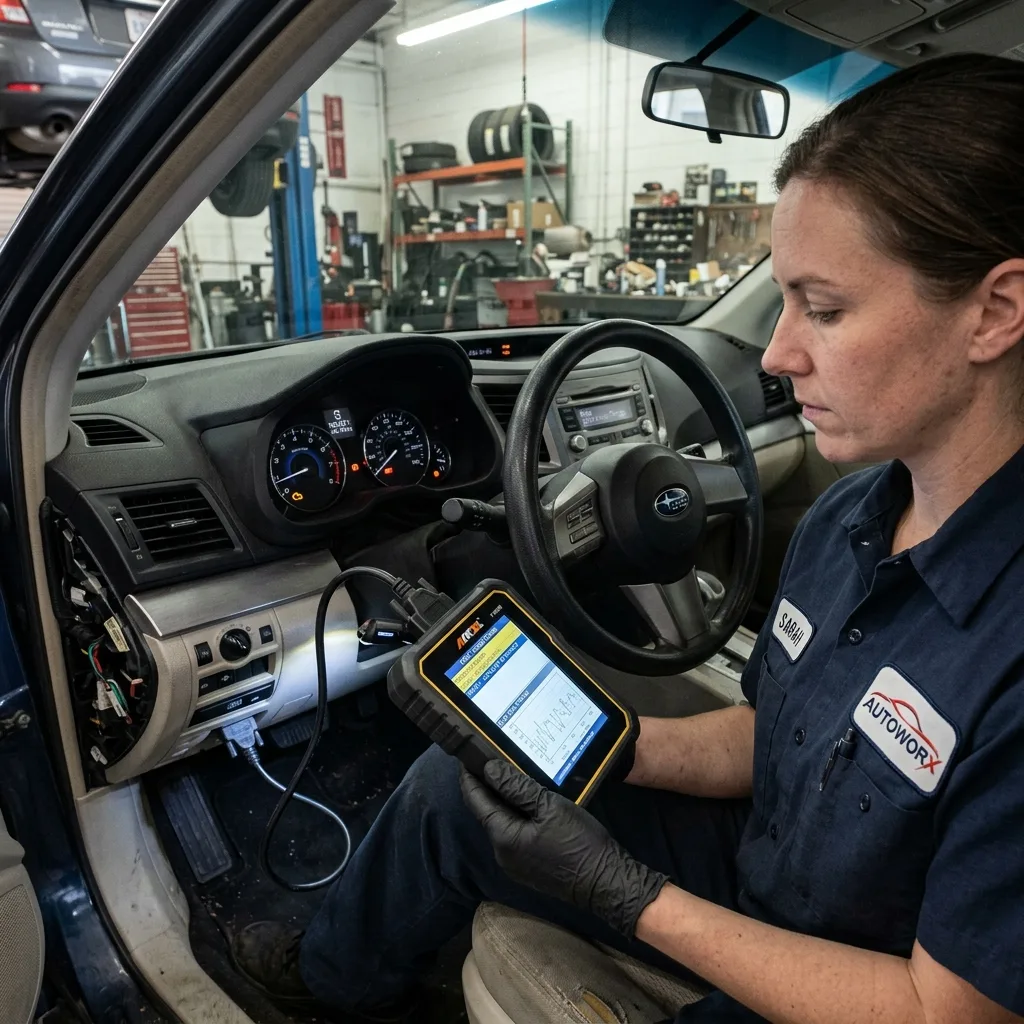
The test itself depends on your vehicle’s age. Anything 1996 or newer gets an OBD-II test, which means the technician plugs into your computer and reads the engine control module. The tailpipe is irrelevant. If your computer reports a failure, you fail. If your check engine light is on, you fail. If your readiness monitors are incomplete, you cannot even take the test.
ADEQ interprets coverage broadly. Your vehicle is registered in Yavapai County but you commute to a job in Phoenix? You’re covered. You live in Casa Grande but operate a business in Maricopa? You’re covered. You winter in Scottsdale and your “permanent” residence is technically in Idaho? ADEQ has a department that disagrees with you.
If your check engine light is on, you will fail. Period. It does not matter why the light is on. It does not matter if your mechanic told you it was nothing. The OBD-II test reads the same code your scanner reads, and Arizona’s system says no.
The real cost of Arizona emissions testing
The test fee itself is almost insulting in how cheap it is. Seventeen dollars in Phoenix for a passenger vehicle or light truck under 8,501 pounds. Twelve dollars and twenty-five cents in Tucson. Twenty-five dollars for heavy-duty diesel vehicles. The state is not getting rich on the test. It is using the test as a gateway to the repair industry that the test enables.
What an OBD-II failure actually costs you A catalytic converter failure on a modern V6 or V8 will run between $1,500 and $3,500 depending on whether you can use an aftermarket part or whether the OEM part is required. On performance vehicles or anything European, the OEM part is usually required, and the price escalates accordingly. A failed oxygen sensor is $200 to $400 installed. An evaporative emissions leak, which is the most common failure, runs $300 to $800 depending on whether the issue is the gas cap, the purge valve, the canister, or a hairline crack somewhere in the vapor lines.
The EGR valve, when it fails, costs $400 to $900. The PCV system, $150 to $400. A failed knock sensor on a V8 can hit $1,200 because of labor access. Mass airflow sensors are $250 to $600. The list extends in every direction, and every single item on it can be the difference between passing your inspection and not.
Then there is the cascade. Failure means no registration renewal. No renewal means no legal driving. No legal driving but you still drive to work means traffic stops, $350 fines, and in some Maricopa jurisdictions, the threat of impoundment for repeat expired-registration violations. The $17 test does not stay a $17 test. It becomes the inflection point of a spending decision that ranges from $300 to $5,000 depending on what your computer decided was wrong that morning.
Arizona’s $17 test can trigger a $3,000 repair bill. And it happens every two years. Over a decade of ownership, the average modern vehicle owner in Maricopa County will spend more on emissions-related repairs than they spent on the original purchase price of the catalytic converter, oxygen sensors, and EVAP system combined.
What happens when you fail Arizona emissions?
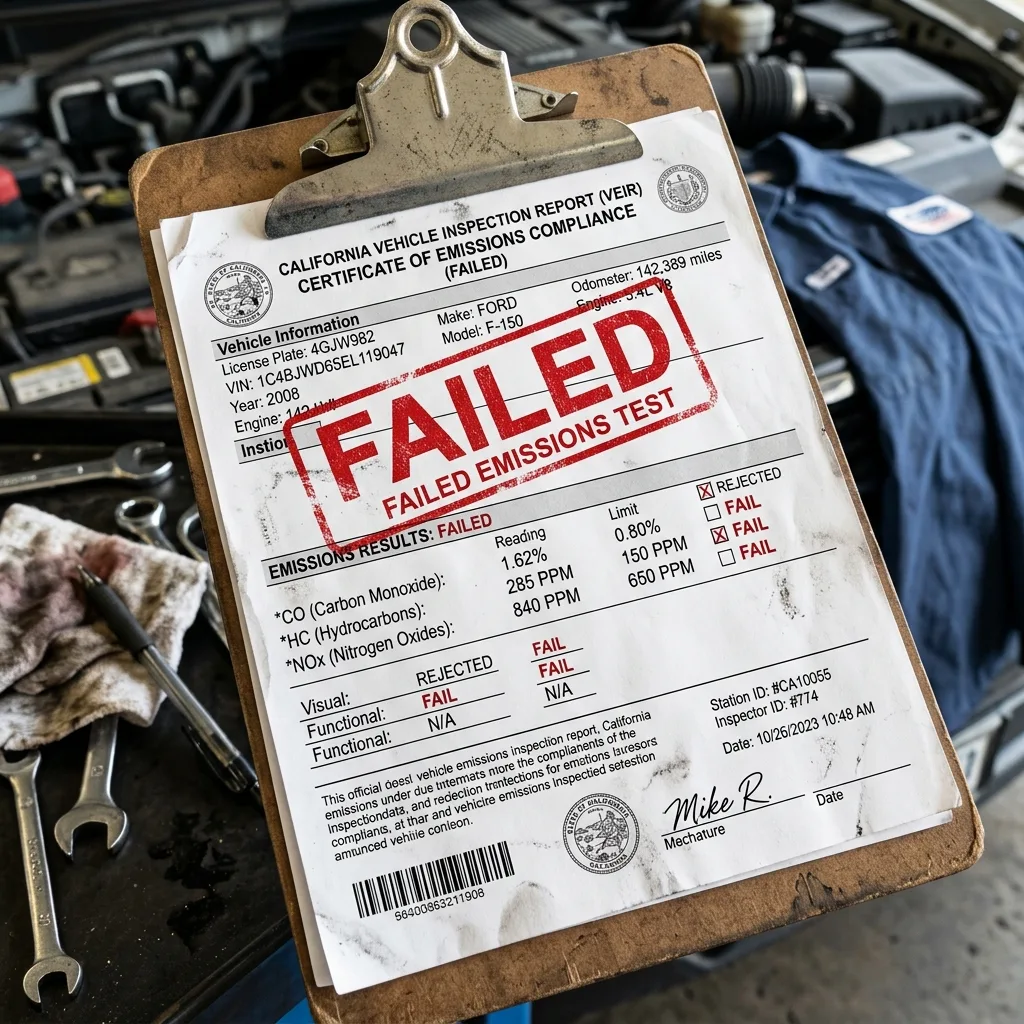
The moment your vehicle fails, the consequences begin. The Arizona MVD will not renew your registration without a passing emissions certificate. Your existing tags expire on schedule. Your vehicle becomes legally undriveable on Arizona roads, regardless of whether you drove it in just fine the day before.
You get a 60-day repair window in some cases, during which a temporary registration may be issued so you can drive to a repair shop and back. That window is not extended for parts shortages, shop scheduling delays, or whatever else life throws at you. It is 60 days from the failure, and the clock does not stop.
Arizona offers a Voluntary Vehicle Repair Program for low-income residents who qualify based on household income limits. The cap is set near 200% of the federal poverty line, which means a family of four earning more than roughly $62,000 a year does not qualify. If you are reading this article because you own a luxury vehicle or a high-end diesel truck, you are not getting state assistance.
The waiver process exists, but it is engineered to feel hostile. After two failed attempts, you can apply for a waiver if you have spent at least twice the cost of meeting the emissions standard on documented repairs and the vehicle still fails. Receipts, paperwork, an appointment with a referee station, and proof that the repairs were performed by an ADEQ-recognized facility. Most owners give up before they finish the application.
Without a waiver and without a fix, your vehicle sits. Driving on expired tags in Arizona is a civil traffic violation that starts at $310 and climbs with surcharges to over $350 once court fees are added. A second offense within two years can elevate to a misdemeanor. Some jurisdictions impound on the spot. Tow fees, storage fees, and the impound release fee will add another $400 to $800 to the experience.
The diesel truck and modification trap
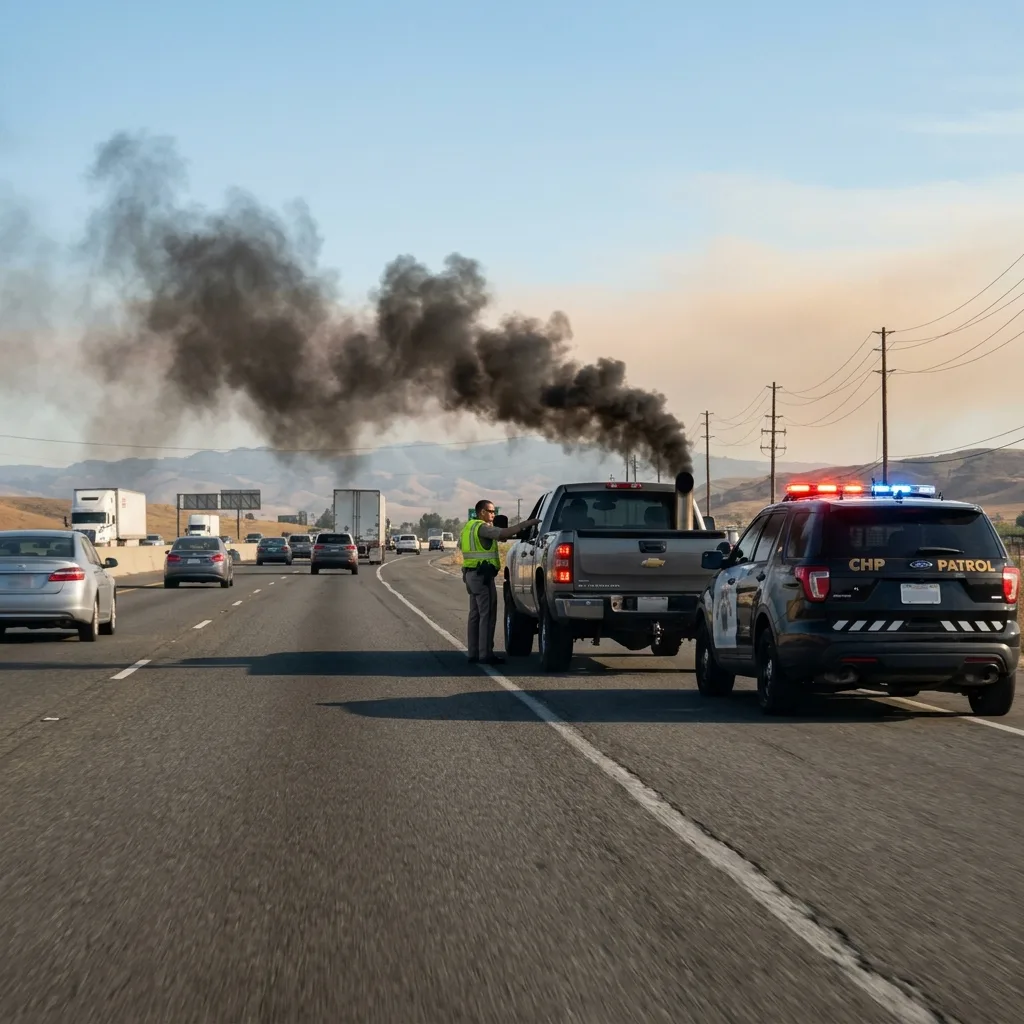
If you own a diesel pickup, you live in a different and harsher version of this story. Diesel vehicles in Maricopa County face annual opacity testing rather than the biennial schedule that applies to gasoline vehicles. The cost is $25 instead of $17. The standard is enforced under Maricopa County Rule 300, which sets visible emissions thresholds and gives ADEQ inspectors broad discretion to fail a vehicle that puts out visible smoke under load.
Heavy-duty diesel vehicles over 8,501 pounds also face the loaded test, which puts the truck on a dynamometer and forces the engine to work hard while inspectors watch the exhaust. A modified engine with a tune that delivers more power than stock will produce more soot under load. Soot is opacity. Opacity is failure.
The modifications that make a diesel truck actually enjoyable to own in 2026 are exactly the modifications that guarantee an opacity failure. EGR delete kits, which improve reliability and prevent the soot buildup that destroys intake manifolds, are emissions tampering under federal law and a guaranteed failure under Arizona inspection. DEF system deletes, which save the average diesel owner $2,000 a year in DEF fluid and the recurring expense of failed sensors and pumps, are also illegal modifications that Arizona will catch on its computer scan and visual inspection.
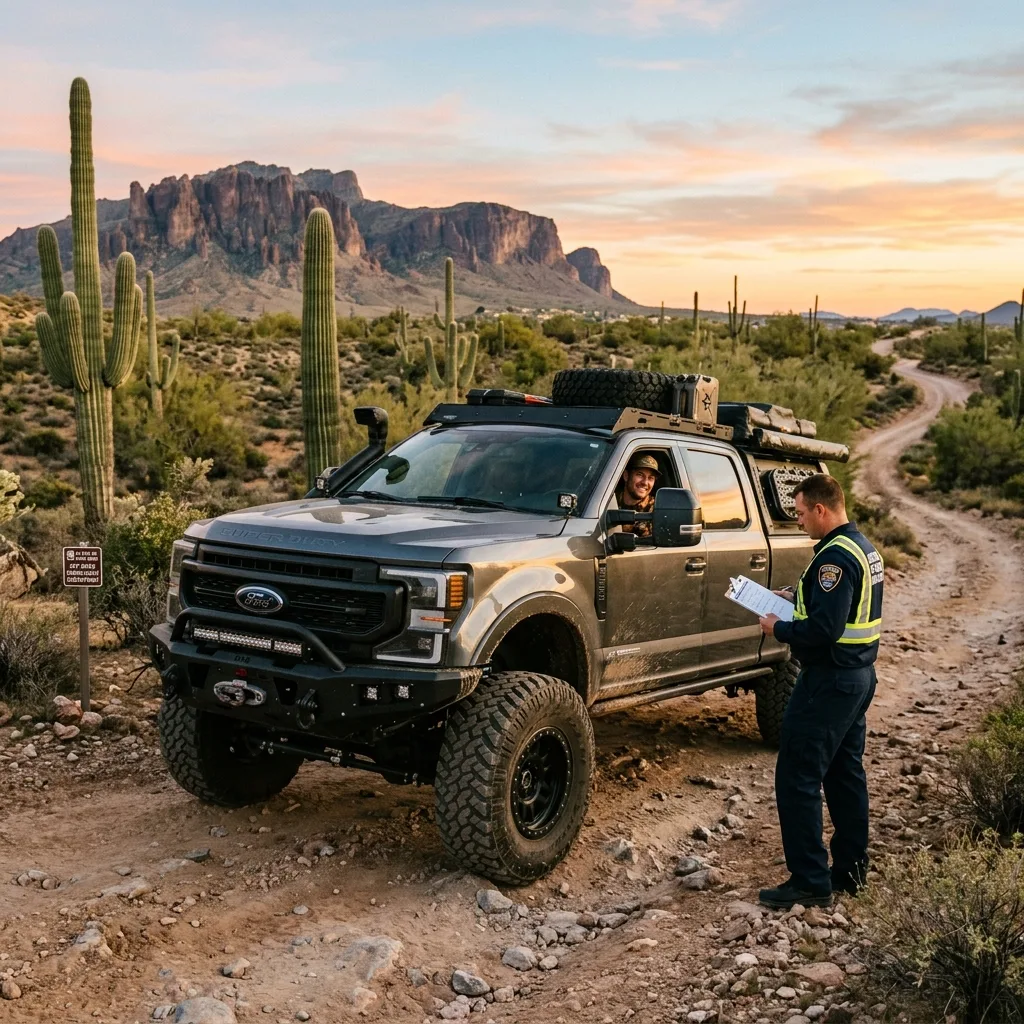
Aftermarket exhaust systems live in a similar gray zone. Cat-back systems that retain the catalytic converter and meet noise standards are usually fine. Straight pipes are not. Cutouts are illegal. Bypass systems that allow the operator to redirect exhaust around the catalytic converter are flatly banned on Arizona highways and will get you cited under both ADEQ and Department of Public Safety statutes.
Lift kits exist in their own category. Arizona does not set an explicit suspension or body lift maximum, which surprises a lot of truck owners. The state cap is 13 feet 6 inches from ground to highest point, which is the standard commercial vehicle clearance number, and almost no consumer truck reaches that even with a 12-inch lift and 40-inch tires. So the lift itself is legal. The problem is that the kind of owner who installs a 6-inch lift, 37-inch tires, and a roof basket has usually also done a tune, a delete, and a 5-inch exhaust. And every one of those mods will fail emissions.
Arizona DPS knows this. Lifted, modified, loud trucks are a target on the highway. Every traffic stop creates an opportunity for an officer to note that your vehicle has visible smoke, an aftermarket exhaust, or a missing emissions component. ADEQ does not have to find you. The traffic enforcement system will find you on its own.
If your diesel has an EGR delete or aftermarket tune, Arizona will catch it. And then you have a $3,000 problem and a registration block. Reinstalling deleted emissions components costs more than the original delete, and the OEM parts are often back-ordered for months.
The snowbird problem: part-time Arizona, full-time VEIP
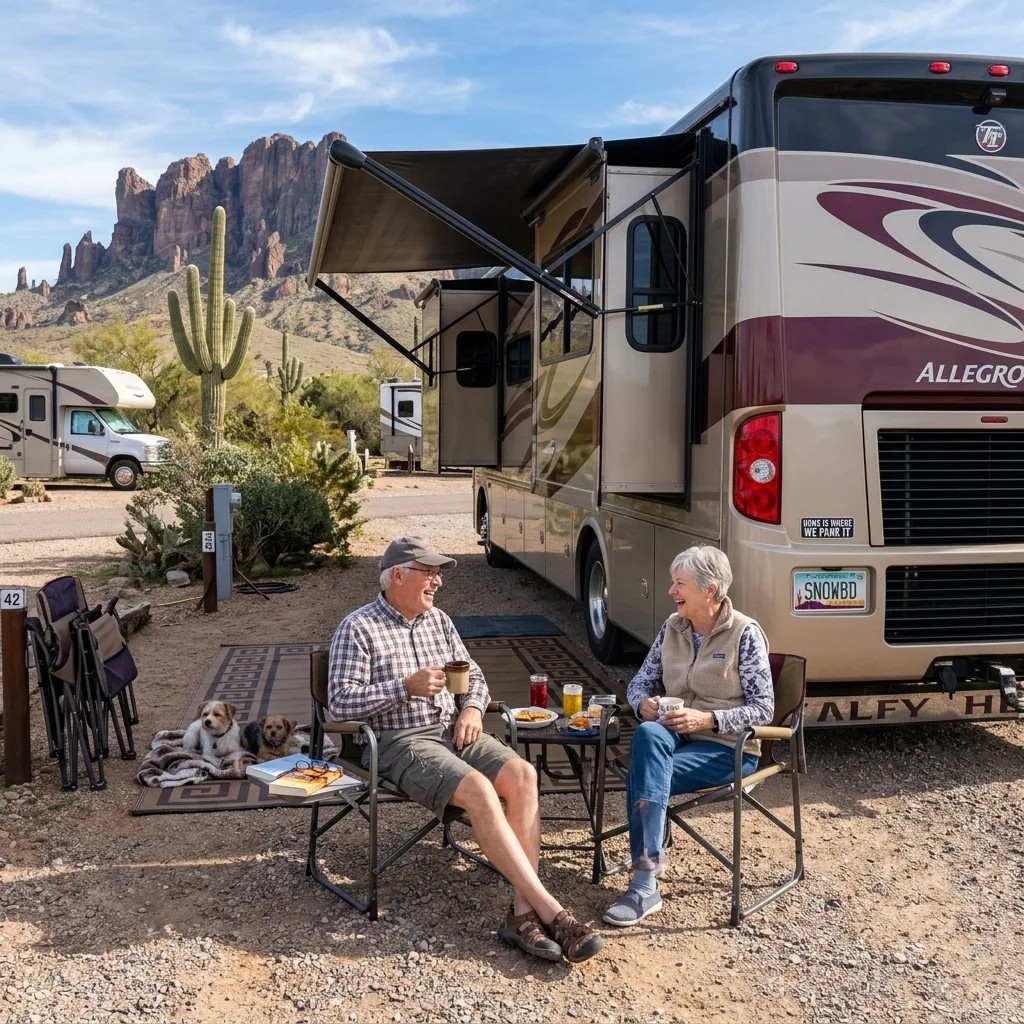
If you winter in Scottsdale and summer in Minnesota, you might assume you are exempt from VEIP because your “real” residence is somewhere else. ADEQ disagrees with you. Arizona requires registration within 15 days of establishing residency. The state’s definition of residency includes part-time use that exceeds the 90-day threshold, and “use” is interpreted to include operating a business, working remotely from an Arizona address, or maintaining a vehicle that is primarily kept in Arizona.
The 90-day out-of-state exemption that snowbirds love to cite is real, but it is also narrow. It applies to vehicles that genuinely spend the majority of the year somewhere else and are not used as the primary daily driver during the Arizona stay. It does not apply if you bought the vehicle to use during your Arizona stays. It does not apply if you operate a business out of your Arizona address. It does not apply if your kids drive it while they’re attending ASU.
RV owners face the harshest version of this problem. A diesel Class A motorhome over 8,501 pounds does not qualify for the standard biennial schedule. It is annual opacity testing, every year, $25 a pop, with the additional risk that motorhome diesel engines that have sat for months in the off-season often produce more visible smoke during the first few miles of operation. Arizona inspectors will fail the test. The owner then has to either drive the rig hard to clear it out, schedule a second test, and pay the fee again, or pay a shop to clean and inspect a system that was working fine when it was parked.
The 90-day out-of-state exemption does not protect you if you’re operating a business in Maricopa County, working remotely from an Arizona address, or using the vehicle as a primary driver during your Arizona stays. ADEQ reviews these cases individually and does not extend benefit of the doubt.
How Montana registration eliminates Arizona’s emissions trap

Montana has zero vehicle emissions inspection requirements. Not for gasoline. Not for diesel. Not for modified vehicles. Not for high-mileage vehicles. Not for anything. The state has chosen, repeatedly and explicitly, not to operate an inspection program. Your Montana-registered vehicle never sees a tailpipe probe, an OBD-II reader, or an opacity meter.
A Montana LLC, formed under § 35-8 MCA, can hold title to vehicles. Once the LLC owns the vehicle, the vehicle is registered in Montana under the LLC’s name and address. Montana statute § 61-3-303 MCA explicitly authorizes registration based on the owner’s domicile, and an LLC’s domicile is the state where it was formed. No Montana residency is required for the LLC’s members. No Montana residency is required for the LLC itself beyond a Montana registered agent and a Montana address, both of which a registration service provides.
The Montana DMV does not ask about your OBD-II codes. It does not ask whether your diesel has DEF. It does not ask about your lift kit, your exhaust, your tune, your tires, or your tint. It asks for a title, a fee, and a VIN. You get plates and a registration card. Two years later, you renew the registration online. There is no inspection at any point in the process.
Montana has no vehicle emissions testing. Zero. Not for gasoline, not for diesel, not for modified vehicles. The state simply does not operate an inspection program of any kind. Registration renewal in Montana is a payment, not a test.
The Montana LLC structure works for vehicle owners who have legitimate multi-state use, who travel, who use their vehicles in Montana periodically, who have business reasons for their LLC structure, or who maintain secondary residences. Snowbirds, RV owners, collectors, and anyone with a genuine multi-state footprint are the natural fit. The LLC is a real legal entity that owns the vehicle — not a filing trick, not a workaround, but a legitimate ownership structure recognized under federal law.
If you are a snowbird who actually spends summers in Montana or anywhere outside Arizona, this works. If you have an RV that travels, this works. If you have a track car that gets trailered to events out of state, this works. If you have a business that operates across state lines, this works. If you commute the same 12 miles between your Phoenix house and your Phoenix office every day for the next ten years, this is not for you.
Is Montana LLC registration actually legal for Arizona owners?
Montana has explicitly allowed this structure for decades. The relevant statutes have been on the books since the 1990s, and the state collects substantial revenue from out-of-state LLC vehicle registrations. The Montana Department of Justice does not consider this a loophole. It considers it a feature.
The LLC must be a real legal entity. A Montana registered agent is required. An annual report filing is required, currently $20. The LLC must hold title to the vehicle in its own name, not in your personal name. The LLC’s bank accounts, if it has them, should not be commingled with your personal finances. These are not difficult requirements. They are the same requirements that any LLC anywhere in the United States must meet.
The Montana LLC structure is legal under federal law. The vehicle is owned by a Montana entity. Arizona’s vehicle registration requirements apply to vehicles owned by Arizona residents; the Montana LLC is not an Arizona resident. Montana has explicitly authorized non-resident LLC vehicle registrations since the 1990s, and the Montana Department of Justice treats it as a feature of the state’s registration system, not a loophole to be closed.
If you live in Phoenix full-time, drive to work in Phoenix, and the vehicle never leaves Arizona, Montana registration is not for you. If you travel, have multi-state use, or have legitimate business reasons, talk to us. We turn down customers who don’t fit the structure, because we’d rather lose the fee than create a problem for you.
Three Arizona vehicle owners who escaped the VEIP trap

Dr. Marcus Holloway, Scottsdale cardiologist. Marcus drives a 2022 Ram 2500 Cummins with a Banks Power tune, a 5-inch turbo-back exhaust, and a DPF/DEF delete that he had installed at a shop in Texas before he relocated to Arizona for the cardiology fellowship at Mayo Clinic. The truck makes 580 horsepower, gets 22 mpg on the highway, and runs cooler and cleaner than it did stock. It also fails Arizona opacity testing on a smell test, never mind a dyno run.
The first VEIP appointment told him what he already knew. To pass, he needed to reinstall the DEF system, the DPF, the EGR cooler, and the original exhaust. The shop estimate came to $4,200 in parts and labor, and that was if the OEM components were available, which they were not for several months. Marcus formed a Montana LLC through Zero Tax Tags, transferred title, got Montana plates, and uses the truck for the trips between Scottsdale and his family’s ranch in southwest Colorado. “I save the $4,200 in repairs, I save another $1,200 a year I would have spent on DEF and emissions-component failures, and the truck does what it was built to do,” he told us.
Jennifer Crowe, Tempe car collector. Jennifer owns a 1978 Porsche 911 SC. The car is gorgeous, runs perfectly, and is exactly the wrong age for Arizona’s emissions program. Pre-1981 vehicles in Maricopa County face annual testing, not biennial, and the early fuel-injected 911 emissions controls are notoriously difficult to keep within spec on an aging vehicle that gets driven only on weekends. Three years in a row, the car required a few hundred dollars of work to pass. Last year, it failed twice.
She moved the registration to Montana and uses the car for track days at Inde Motorsports Ranch and longer drives that take her into California, Nevada, and Utah. The car still gets its own annual maintenance schedule, but it is no longer hostage to a state inspection regime built around modern OBD-II logic that the Porsche’s analog systems were not designed to satisfy. “I love that car. The state had me ready to sell it just to escape the inspection cycle. Now I drive it the way it was meant to be driven.”
Ron and Patty Becker, Phoenix-based RV owners. Ron retired from a construction firm. Patty retired from teaching. They bought a 2021 Tiffin Allegro Bus 45 OPP, a $385,000 diesel pusher with a Cummins ISL 9, and they planned to spend their retirement traveling. What they did not plan for was annual heavy-diesel opacity testing in Maricopa County. The first year, the rig failed because it had been parked for four months. The second year, it failed because of a clogged DPF that needed a forced regeneration the rig could not complete on a short drive. Each failure meant scheduling, paying again, and trying to clear the system in the meantime.
They moved to a Montana LLC structure. The Allegro now wears Montana plates, registers permanently because of its age category, and never sees an inspection station again. They spend half the year traveling, half the year in their Phoenix house, and the rig is parked in their RV storage facility in Buckeye when it is not on the road. “We bought this thing to use, not to fight with the state about whether it can sit in our driveway.”
How Zero Tax Tags registers your vehicle in Montana
We do the entire process for you. You never travel to Montana. You never visit a Montana DMV. You never fill out a Montana state form. We handle LLC formation, registered agent service, title transfer, registration filing, and plate delivery, and we keep the LLC compliant year after year so you never get a surprise letter from the Montana Secretary of State.
Pricing is simple. Cars, trucks, SUVs, and RVs under $150,000 MSRP are $899 in year one. That breaks down to $699 for our service plus $200 for the LLC formation, paid once. Vehicles over $150,000 add an $825 luxury fee, bringing year-one total to $1,724.
Annual renewals depend on the vehicle’s age. A vehicle 0 to 4 years old runs $268 in Montana state registration plus $100 in our annual filing, totaling $368 per year. A vehicle 5 to 10 years old runs $137 plus $100, totaling $237 per year. Vehicles 11 years and older register permanently in Montana. One payment, never renew. Motorcycles, ATVs, UTVs, trailers, and boats are also permanent registrations regardless of age. One LLC holds all your vehicles. The $200 LLC fee is a one-time charge, not per vehicle.
Total five-year cost on a new car under $150,000 works out to $899 in year one plus $368 times four renewal years, or $2,371. Compare that to the typical Maricopa County vehicle owner, who pays $1,000 a year in VLT, $17 every two years for emissions testing, and an unpredictable but real expense for emissions-related repairs that averages $400 to $1,500 a year across the fleet. The math pencils on the first year for any owner who values their time, and it pencils far harder on years two through five.
| Day 1: | Submit your MCO and supporting paperwork through our secure portal. We review for completeness and file your Montana LLC the same day. |
| Days 1–2: | Montana LLC formation complete — same business day in most cases, second business day at the latest. |
| Days 2–4: | Title transferred into the LLC name at the Montana county treasurer. |
| Days 4–7: | Permanent Montana plates shipped directly to your door within 3–5 business days of title completion. |
Frequently asked questions
Will Arizona flag my Montana plates for emissions?
Montana plates are not flagged for emissions inspection because the inspection program does not apply to out-of-state-registered vehicles. ADEQ enforces VEIP against vehicles that are required to register in Arizona, not against vehicles legitimately registered elsewhere. Arizona’s interest is in residency status and registration compliance, not in whether your Montana-plated vehicle has passed Montana’s emissions test, which does not exist.
Can I fail Arizona emissions testing with a Montana-plated vehicle?
You cannot. Arizona testing stations are not authorized to test vehicles with out-of-state plates because the testing program is part of the registration cycle, and Montana-plated vehicles are not in Arizona’s registration cycle. They have no fail mechanism for your vehicle because there is no test scheduled, no registration to deny, and no record to update. If a station tried to charge you for a test, they would have nothing to do with the result.
Do I need to visit Montana to register there?
You do not. Montana allows registration through a registered agent and a paper or digital submission process, both of which Zero Tax Tags handles for you. The state has built its registration system specifically to accommodate non-resident LLC registrations. Your involvement is signing documents and receiving plates in the mail.
Does Montana registration work for diesel trucks with EGR deletes?
Yes. Montana does not inspect emissions equipment, opacity, or engine modifications at registration. The Montana DMV does not ask whether your truck has a delete, a tune, or any other aftermarket modification. Federal Clean Air Act tampering rules still apply to the vehicle itself regardless of where it is registered, but Arizona’s state-level inspection regime does not, and that is what triggers the registration-block consequences.
What if I move to Arizona permanently? Do I have to re-register?
If your circumstances shift to full-time Arizona residence with no multi-state vehicle use, the Montana LLC structure can be wound down for that vehicle. The LLC itself can continue to hold other assets, and Zero Tax Tags helps with the transition. Most clients find that their life continues to include multi-state activity — travel, a second property, business travel — and the Montana structure stays relevant throughout. Call us and we’ll walk through your specific situation.
How much does Zero Tax Tags charge?
Year one is $899 for cars, trucks, SUVs, and RVs under $150,000 MSRP. That covers our service fee plus the one-time LLC formation. Vehicles over $150,000 add an $825 luxury fee. Annual renewals run $368 per year for vehicles 0 to 4 years old, $237 per year for vehicles 5 to 10 years old, and zero for vehicles 11 years and older, motorcycles, ATVs, UTVs, trailers, and boats, all of which register permanently with one payment.
Can I register multiple vehicles under one Montana LLC?
Yes, and most of our clients do. The $200 LLC fee is one-time, regardless of how many vehicles the LLC holds. A car, an RV, a UTV, and a couple of motorcycles can all live under the same LLC structure. Annual renewal fees apply per vehicle, but the underlying entity is the same, which simplifies record-keeping and reduces the cost-per-vehicle as your fleet grows.
Is the Montana LLC structure legal for Arizona residents?
Yes. The Montana LLC structure is legal under federal law. Montana has authorized non-resident LLC vehicle registrations for decades, and the vehicle is owned by the Montana LLC — a legitimate legal entity, not a shell. We structure every LLC to meet Montana’s requirements: a real registered agent, proper articles of organization, and title held in the LLC’s name. That is the foundation of a sound, durable ownership structure.
See how Montana registration helps owners escape vehicle regulations in other states:
- Arizona VLT: How to Stop Paying $1,000 Every Single Year
- California Registration Penalties: How to Escape the $2,000 Trap
- Texas Vehicle Tax 2026: The 6.25% MVST and SPV Trap
Ready to Escape Arizona’s Emissions Trap?
Arizona vehicle owners don’t have to submit to VEIP, repair mandates, or registration blocks. Montana LLC registration is your legal exit, and we handle the entire process for you.