26 min read
On this page
- + What Florida law actually says about UTVs
- + The LSV loophole and why it fails most UTVs
- + County road rules: the patchwork problem
- + The real-world pain points
- + Why Polaris and Can-Am owners get hit hardest
- + Three Florida UTV owner case studies
- + SB 356: hope on the horizon?
- + The Montana LLC solution for UTVs
- + What Montana registration actually gives you
- + Is this legal?
- + Our Zero Tax Tags process
- + Frequently asked questions
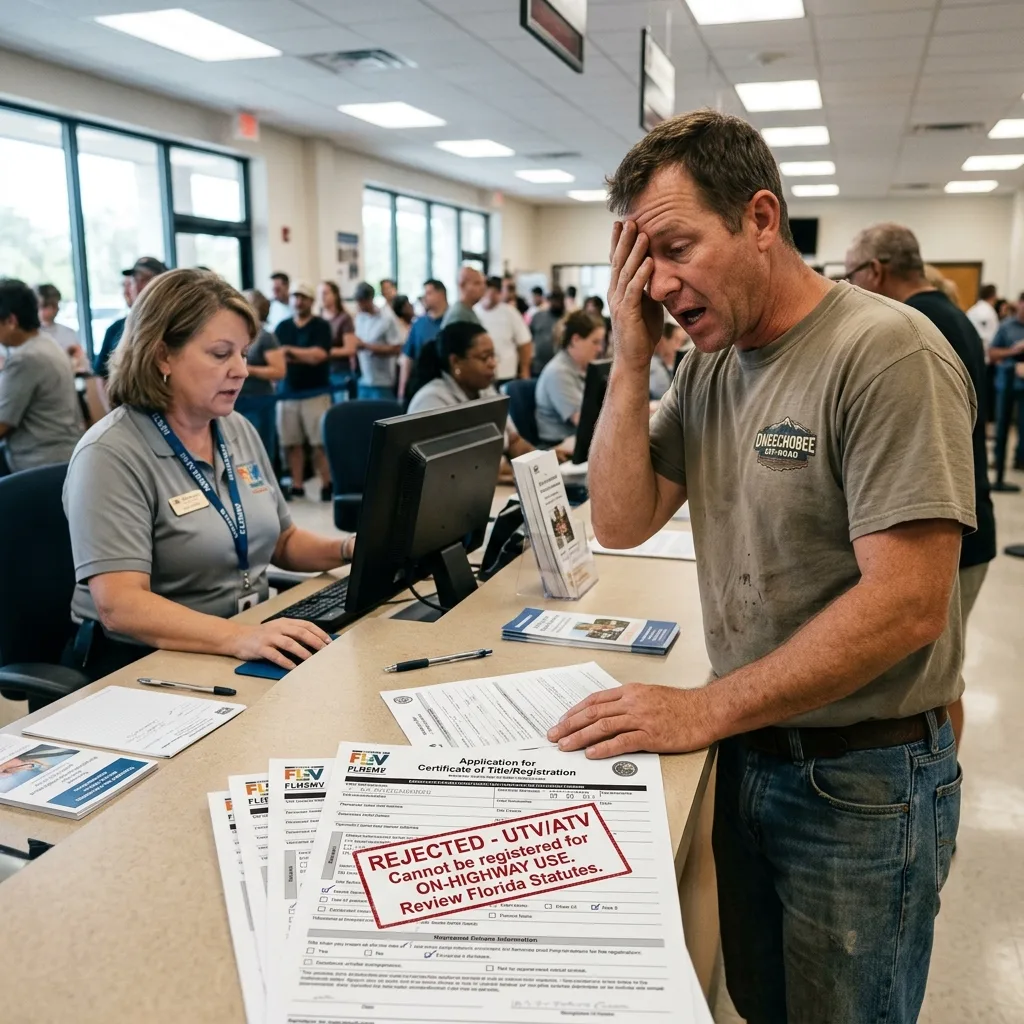
It was a humid Tuesday morning in March when Mike walked into the Marion County tax collector’s office in Ocala carrying a manila envelope full of paperwork, a pen, and the kind of hopeful optimism that only a brand-new Polaris RZR Pro R owner can muster. He had just dropped $34,500 on the machine, plus another $1,800 on a custom enclosed trailer, and he wanted to do this the right way. Title it. Plate it. Register it. Ride it legally on the quarter-mile of public road that connected his rural property to the trail system he had been visiting for fifteen years.
The clerk listened to him politely. Then she slid the HSMV 82040 form back across the counter and explained that Florida does not, in fact, register UTVs for road use. Not his RZR. Not anyone’s RZR. Not for love, money, or 34,500 dollars in receipts. Florida UTV street legal registration is, for unmodified factory side-by-sides, essentially a legal fiction. The state issues an off-highway title only. The plate he wanted? That plate does not exist in Florida.
This is the conversation thousands of Florida UTV owners are having every year, and the answer is almost always the same. If you want to legally cross a public road in your Polaris, your Can-Am, your Yamaha YXZ, or your Honda Talon, Florida law has one path and it is narrow, expensive, and largely inaccessible to factory high-performance machines. There is, however, a second path. It runs through Helena, Montana, and it has been opening doors for Florida UTV owners for years.
For the official statute language and the form itself, the Florida Department of Highway Safety and Motor Vehicles publishes the relevant materials, but the legal interpretation is where the real story lives.
What Florida law actually says about UTVs and the road
The statute that controls everything is Florida Statute 316.2074, and it is short, blunt, and unambiguous. UTVs and ATVs are classified as Off-Highway Vehicles, or OHVs, and they are prohibited from operating on public roads in the state of Florida by default. Not “discouraged.” Not “regulated.” Prohibited. The default position of Florida law is that your side-by-side belongs on private property, on designated OHV trails, or on a trailer.
The HSMV 82040 form, the document Mike walked into the tax collector’s office with, is the application Florida uses to title a UTV as an off-road vehicle. It produces a title certificate that proves you own the machine. It does not, and cannot, produce a license plate, a registration sticker, or any document that authorizes you to drive the UTV on a public road. Florida UTV street legal status is not granted by the off-road title. It is a separate legal universe with its own requirements, and the gap between the two is where the entire problem lives.
There are exactly two narrow exceptions written into the statute and the surrounding regulatory framework. The first is the unpaved county road exception. The second is the Low Speed Vehicle conversion path. Both have walls around them. Both leave the vast majority of Florida UTV owners with no legal way to use their machines the way they actually want to use them.
The hard truth: An unmodified factory UTV in Florida cannot legally cross a paved public road. Not your driveway connector. Not the road between your house and the trailhead. Not the strip of asphalt between your beach community and the beach itself. Statute 316.2074 says no, and absent a county exemption or a full LSV conversion, no means no.
Florida State Senator Tom Wright, sponsor of recent UTV-related legislation, has publicly acknowledged that “hundreds, if not thousands” of unplated UTVs are operating illegally on Florida streets every weekend. The senator was not exaggerating to drum up support for his bill. Drive through any rural Florida county on a Saturday afternoon and you will see them. Owners have made a calculated bet that local enforcement will look the other way, and most of the time they are right. Until they are not.
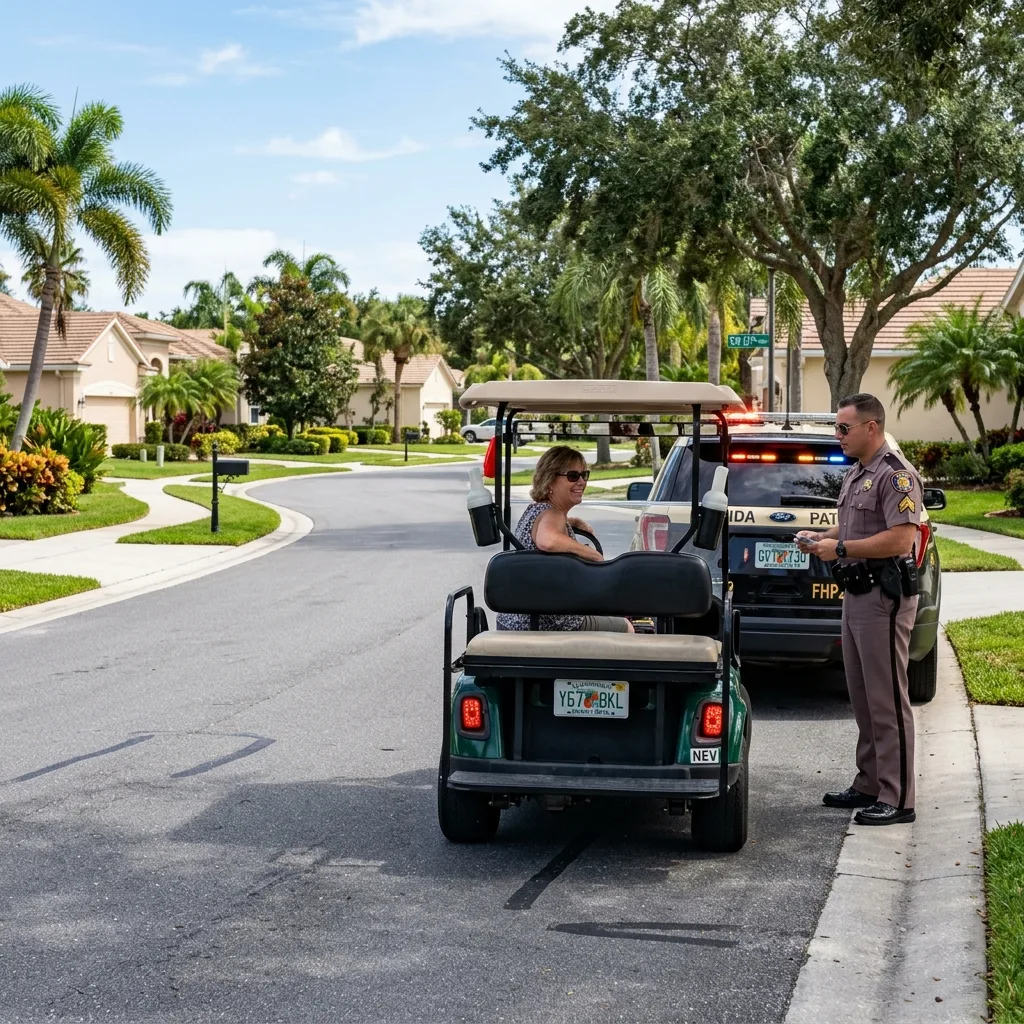
The “until they are not” moment usually involves an accident, an insurance claim, or a routine traffic stop with a deputy who writes the ticket without hesitation. The operator ends up with fines, possible impoundment, and an insurance carrier hunting for any reason to deny the claim.
The LSV loophole and why it fails most factory UTVs
The Low Speed Vehicle conversion is the only path Florida law provides for converting a UTV-class vehicle into something legally drivable on a public road. On paper it looks reasonable. In practice it is a maze of mechanical, electrical, and structural requirements that the average factory UTV cannot meet without thousands of dollars in modifications and, in many cases, structural changes that void the manufacturer’s warranty.
To qualify as a Low Speed Vehicle in Florida, your UTV must have all of the following equipment, properly installed and operational:
- Headlights visible from at least 500 feet
- Functional brake lights
- Front and rear turn signals
- Side and rearview mirrors
- A working horn
- Three-point seat belts for every occupant position
- DOT-approved tires
- A shatter-resistant windshield
- A 17-character VIN that conforms to federal motor vehicle standards
That last requirement is the one that quietly kills most conversions. Many factory UTVs ship with a 17-character VIN, but the federal NHTSA standards for Low Speed Vehicles are stricter than the off-highway VIN format used by Polaris, Can-Am, Honda, Yamaha, and Kawasaki for their sport UTVs. Even when you bolt on every light, every signal, every mirror, the manufacturer never certified the chassis as an LSV-compliant platform, and Florida tax collectors are increasingly trained to spot this discrepancy and reject the application.
For the lucky owners whose UTVs do clear the VIN hurdle, equipment costs run $1,800 to $2,500 in parts plus $500 to $1,500 in labor. A turn signal kit alone runs $300 to $500. A DOT windshield assembly runs $600 to $1,000. Three-point seat belts run $200 to $400 per seat. Even after all that spending, you have a vehicle legally limited to roads posted at 35 mph or less.
That last detail is the kicker. A converted LSV in Florida cannot operate on any road posted above 35 mph. It can cross such a road at a 90-degree angle, but it cannot drive on it. So you have spent $2,500 to $4,000 modifying a $30,000 machine, voided your warranty, and ended up with a vehicle that still cannot legally take you to most of the places you wanted to go.
County road rules: the patchwork problem nobody warns you about
The second exception in Florida statute is the unpaved county road provision. On paper, it sounds reasonable. UTVs may operate on unpaved county-maintained roads with a speed limit of 35 mph or less, provided the county has affirmatively authorized such use. The catch is buried in that final phrase. The county has to actually pass an ordinance permitting it. And there is no statewide registry of which counties have done so.
Florida has 67 counties and a fragmented patchwork of UTV ordinances among them. Some cover specific roads or zones. Some were passed years ago and amended in ways the county website no longer reflects. There is no centralized database and no statewide map, so confirming whether any given road is authorized for OHV traffic falls entirely on the owner.
The result is exactly what you would expect. A UTV owner in Suwannee County might be operating perfectly legally on the dirt road behind his property while another owner in neighboring Lafayette County, doing the exact same thing on a structurally identical road, is committing a misdemeanor. Cross a county line on the same trail system and your legal status flips. The patchwork is so confusing that even the deputies who enforce the rules sometimes get it wrong, and the burden of proving that you were operating legally falls on you, not on the citing officer.
This is also where the unpaved limitation matters. Even in counties that have adopted UTV-friendly ordinances, the authorization typically extends only to unpaved roads. The moment you hit a paved surface, even a paved driveway connector or a 30-foot section of paved bridge crossing, you are back in violation of statute 316.2074. Most Florida counties that authorize UTV road use do so for genuinely rural areas where the entire road network is dirt or gravel. For the suburban or semi-rural Florida UTV owner whose property fronts a paved county road, the unpaved exception is functionally useless.
What this means for you: Before riding on any Florida county road, you need to verify three things in writing. One, that the county has adopted a UTV ordinance. Two, that the specific road you want to use is included in that ordinance. Three, that the road is unpaved and posted at 35 mph or less. Get all three wrong and you have a citation. Get one wrong and you may still have a citation. The county clerk’s office is the only authoritative source, and even they sometimes disagree with the sheriff’s deputies who write the tickets.
The real-world pain points Florida UTV owners face every weekend
The legal patchwork has a concrete cost. Here is what it actually feels like to the Floridian who just wants to use the machine he bought.

The HOA crossing problem. Thousands of Florida UTV owners live in planned communities where the homes back up to wooded acreage, conservation easements, or private trail networks. The community’s interior roads are HOA-controlled, often posted at 25 mph, and frequently allow golf carts. But to get from the HOA road to the trail, the UTV has to cross 50 feet of public county road. Without LSV plates or county authorization, that 50-foot crossing is illegal. The owner either trailers the UTV across, which is absurd, or rides it across and prays nobody is watching.
The beach access problem. Coastal Florida communities, particularly along the Gulf Coast and the Panhandle, have UTV owners who use their machines for beach hauling, fishing, and family transport on sand-permitted beaches. Many of these beach access points are reached by a short drive on a public road, sometimes only a quarter mile. That short drive is illegal under state law. Naples, Marco Island, Sanibel, and Anna Maria Island all have UTV owners trapped by exactly this problem.
The trail access problem. Florida has hundreds of miles of OHV-designated trails on public conservation lands and in private trail systems like Hard Rock Off-Road Park near Ocala. The trails themselves are legal. The roads connecting them are often not. UTV owners who want to ride trail-to-trail without trailering have no legal way to do so unless every connecting road happens to fall under a county UTV ordinance.
The transport problem. Even owners who never intend to drive their UTV on a public road run into title and registration trouble when they try to insure the machine, transport it across state lines, or sell it to a buyer who lives in a state with stricter documentation requirements. A Florida off-road title is recognized as a title, but it is not always recognized as a registration, and the difference matters when you are dealing with insurance carriers, lenders, and out-of-state buyers.
Why Polaris RZR and Can-Am Maverick owners get hit hardest
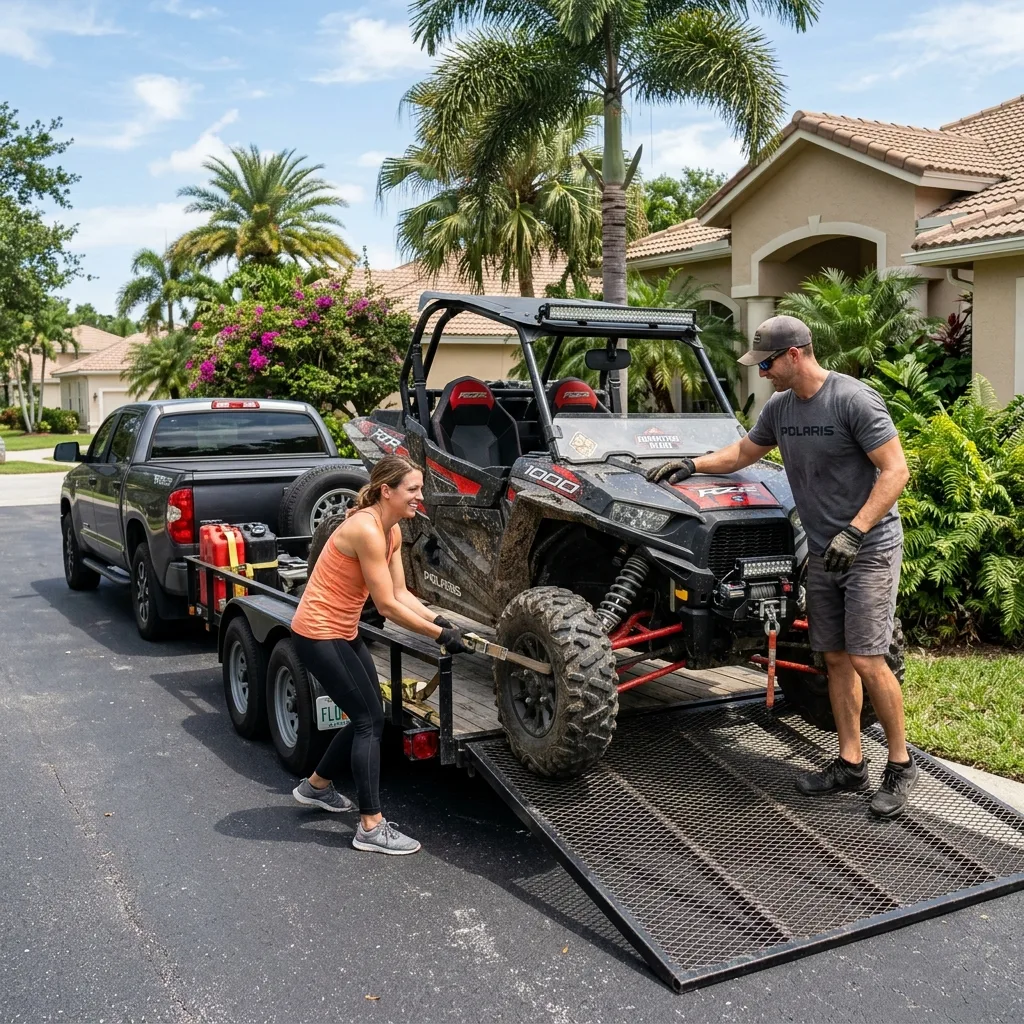
The owners with the most expensive machines are the ones with the fewest legal options. The Polaris RZR Pro R, the flagship of the high-performance sport UTV market, carries an MSRP of roughly $28,000 to $35,000 depending on trim. It produces 225 horsepower. It is 64 inches wide. It is, by every objective measure, the most capable factory side-by-side ever sold. It is also functionally impossible to make street legal in Florida without spending thousands of dollars and accepting compromises that defeat the purpose of owning the machine.
The Can-Am Maverick X3, the RZR’s primary competitor, faces the same situation. MSRP of roughly $21,600 to $32,000. Up to 200 horsepower. Also 64 inches wide. Also designed from the ground up as a closed-course performance machine that was never intended to be a street vehicle. Neither factory configuration includes DOT-compliant headlights, turn signals, mirrors, or windshields. Neither chassis carries the federal LSV certification. Both come with off-highway VINs that Florida tax collectors are increasingly trained to flag.
The irony is brutal. The owner of a $30,000 sport UTV has fewer legal options than the owner of a $5,000 utility UTV from a less aggressive brand. Some smaller utility-style machines from Kubota and John Deere ship with factory road equipment and are easier to convert to LSV status. The performance machines, the ones people actually want to own and ride, are precisely the ones that the Florida regulatory framework was designed to keep off the road.
Three Florida UTV owner case studies
Case 1: The Ocala horse farm owner
Karen owns 80 acres of rolling pasture northwest of Ocala, broken in half by a paved county road that the state took over from the county fifteen years ago and repaved. The pasture on the east side of the road is where the horses live. The pasture on the west side, with the hay barn and the equipment shed, is where the work happens. Multiple times every day, Karen needs to move tools, feed, fencing, or a wounded animal from one side to the other. Her 2024 Polaris Ranger XP 1000, a workhorse utility UTV that she bought specifically for the farm, is the perfect tool for the job. The 50-foot strip of asphalt between her two gates is the legal problem.
Karen tried the LSV conversion route. Her Polaris dealer quoted her $3,200 for parts and installation, and warned her that the LSV title application would likely be rejected because the Ranger’s VIN format is registered to NHTSA as off-highway. She tried to lobby Marion County for an ordinance that would allow agricultural UTV crossings on the road. The county attorney told her that state law preempted any local ordinance for state-maintained roads, and that the road in front of her property was, since the state takeover, no longer a county road at all. She has been trailering her UTV across her own property for two years.
Case 2: The Naples retiree
Don and Linda retired to a gated community in Naples in 2022. Their grandchildren visit every Easter, every July Fourth, and every Christmas, and the highlight of every visit is taking the UTV down to the family beach access point a half mile from their home. Don bought a Polaris RZR Trail S for the purpose. The community allows golf carts on its interior roads. The county allows golf carts on the public road that connects the community to the beach access. Neither allows UTVs. Don’s RZR sits in his garage 350 days a year, used only when he can find a friend with a trailer who is willing to haul it the half mile to the beach access.
Don has spent more time on the phone with the Collier County tax collector and the Florida HSMV than he has spent in his own UTV. Every conversation ends the same way. Convert it to an LSV, accept the modifications and the $3,000-plus cost, and you can use it on the 25 mph community road and the 30 mph county connector. He has decided not to do the conversion, partly because of the cost and partly because the LSV conversion would require him to give up the things he liked about the RZR in the first place.
Case 3: The Orlando outdoor recreation couple
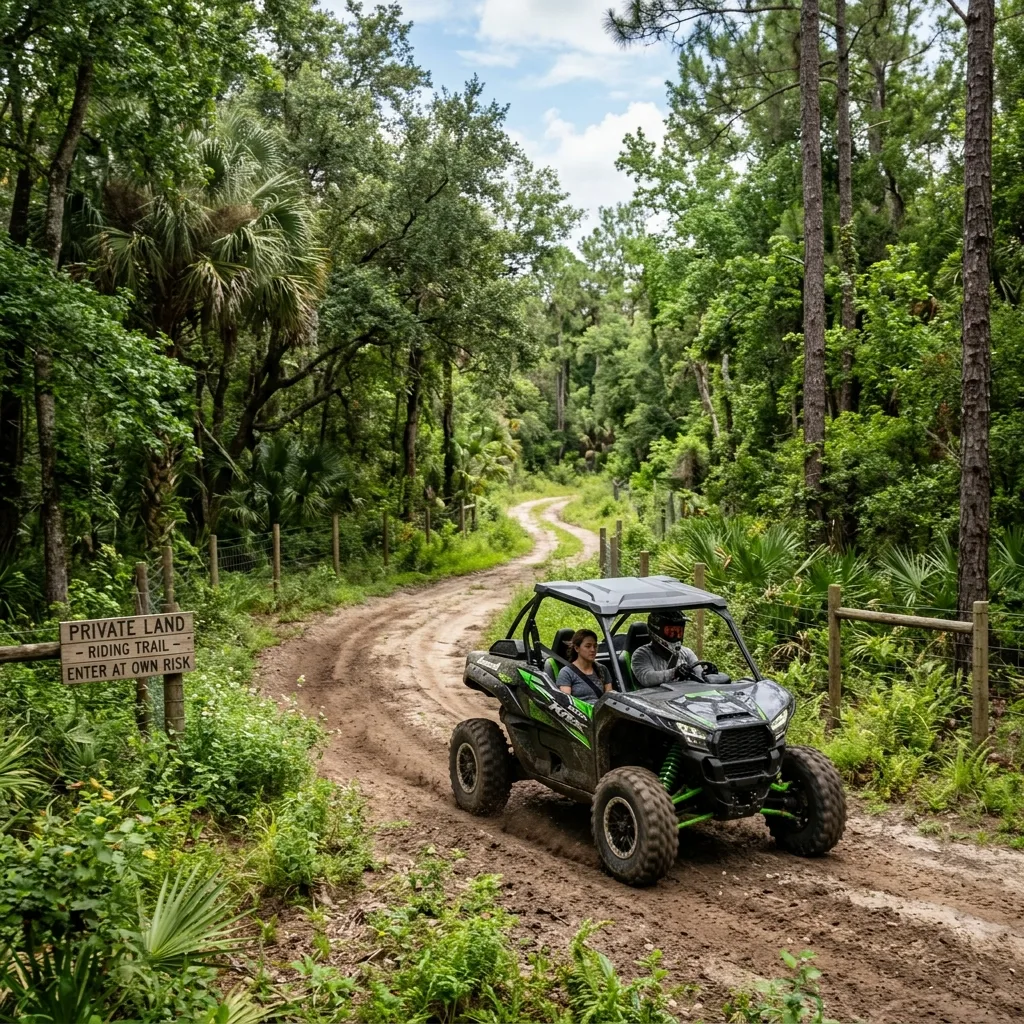
Marcus and Janelle live in suburban Orlando and spend nearly every weekend at one of central Florida’s OHV trail systems. They own a 2024 Can-Am Maverick X3 X RS Turbo RR, a $32,000 machine that is, by any reasonable definition, the kind of vehicle that exists for exactly this purpose. They trailer it to the trailhead, ride for a day or two, and trailer it home. The trailer was an additional $4,000. The truck was an additional $58,000. The total cost of being a Florida UTV recreation couple, when you include the support equipment that exists solely to compensate for the legal restrictions on the actual UTV, runs north of $100,000.
What Marcus and Janelle want, more than anything, is the ability to ride the Maverick from the parking lot to the trailhead at parks where there is a short connecting road. They want to ride it from the campground to the day-use area at OHV-friendly state forests. They want to be able to operate the machine in the way that owners in Texas, Arizona, Tennessee, and most of the rest of the country can take for granted. Florida law does not let them. They have started asking what other states do. The answer they keep finding leads them to Helena.
SB 356: hope on the horizon, or the same old story?
Florida Senate Bill 356, introduced in the 2026 legislative session by Senator Tom Wright, would have changed the conversation. As written, SB 356 would allow properly equipped UTVs measuring 70 inches wide or less to operate on paved two-lane roads with posted speed limits of 55 mph or below. The bill specifies the same equipment requirements as the existing LSV statute, but eliminates the LSV conversion process and the road-class restrictions that make LSV status nearly useless for most Florida UTV owners.
If SB 356 passes, the rules change overnight. A Polaris RZR Pro R or a Can-Am Maverick X3, both 64 inches wide, would qualify if equipped to the bill’s standards. Owners could ride trail-to-trail on paved county roads. Beach access communities could legally connect their interior roads to public beach access points. Rural property owners could cross paved roads between sections of their own land without violating state law.
The bill, as of this writing, has not passed. It cleared committee in the Senate but stalled before a floor vote, and the companion bill in the Florida House never made it out of committee at all. Senator Wright has signaled that he will reintroduce the legislation in the 2027 session, but the political headwinds are significant. Insurance industry lobbyists have raised concerns about claim exposure. Law enforcement associations have expressed concerns about traffic enforcement. Some county governments have lobbied against the bill on the grounds that it would override local control.
Reality check: Even if SB 356 passes in 2027, the implementation timeline would push enforcement and compliance into 2028 at the earliest. UTV owners who buy today and wait for legislative relief are looking at two to three more years of the same restrictions, with no guarantee the bill ever becomes law. The problem is now. The legislative solution, if it ever arrives, is years away.
The Montana LLC solution for Florida UTV owners
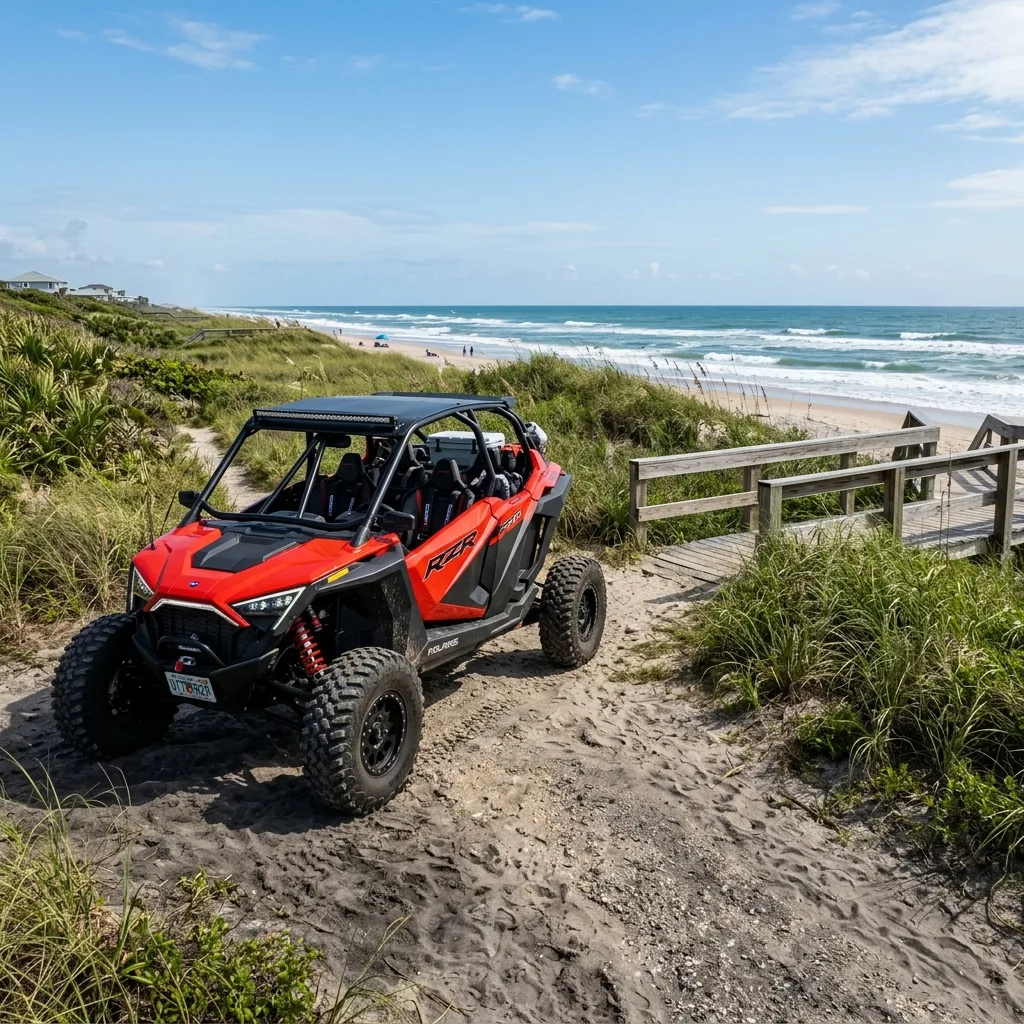
Montana approaches vehicle titling and registration from a different position than Florida. There is no safety inspection requirement for UTVs in Montana. There is no LSV conversion process to navigate. There is no county-by-county patchwork of authorizing ordinances. Montana issues a title and a license plate based on proof of ownership and a properly formed legal entity to hold the vehicle. That entity, for non-residents, is typically a Montana LLC.
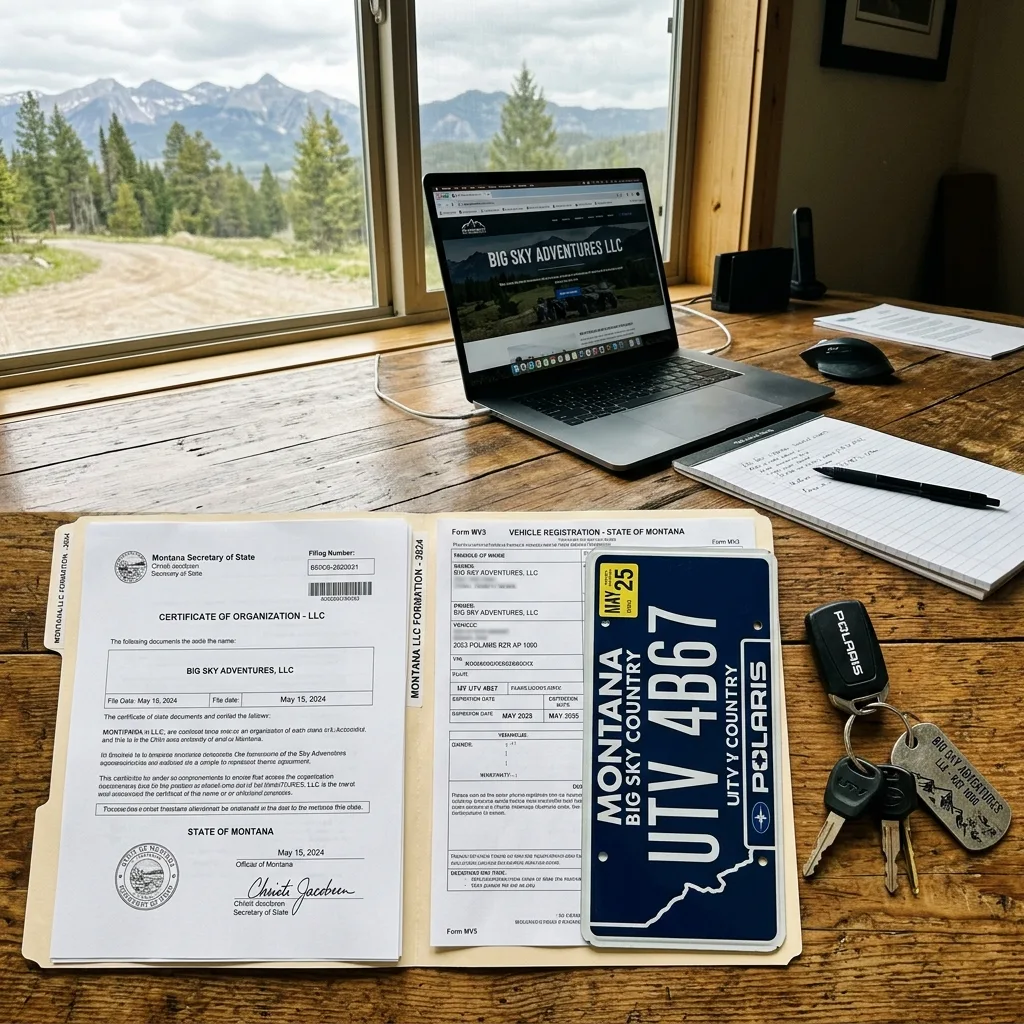
The mechanics are simple. You form a single-member Montana LLC. The LLC takes ownership of the UTV. The LLC then applies for Montana title and registration in the LLC’s name. Montana issues the title and the plate. The plate is valid Montana registration, recognized under the federal full faith and credit framework that governs vehicle registrations across state lines. Other states recognize the Montana plate as valid Montana registration, the same way they recognize a Florida plate as valid Florida registration.
For Florida UTV owners, the Montana LLC structure produces a real license plate rather than an off-highway title, eliminates the LSV conversion cost, and gives insurance carriers, lenders, and out-of-state buyers an ownership document they can actually work with. Under Montana law, LLCs may opt for permanent registration, so the plate never expires and there are no annual renewal fees from year two forward.
The total cost through Zero Tax Tags is $899 in year one, which includes the LLC formation, the Montana state filing fees, and the title and registration work. Year two and beyond run $270 per year, broken down as $150 for the registered agent service that maintains the LLC’s good standing in Montana plus $120 for the annual LLC filing. Compare that to the $2,500 to $5,000 LSV conversion path that may not even result in a usable plate, and the math is uncomplicated.
What Montana registration actually gives you for your UTV
When Montana issues your title and plate, here is what you are actually holding.
A Montana title is a state-issued certificate naming your LLC as the legal owner of the UTV. Every U.S. state recognizes it, every major insurance carrier works with it, every legitimate lender accepts it. When you sell, it transfers clean. When you finance, it is the document the lender wants.
A Montana license plate is an actual metal plate that bolts to the rear of your machine and identifies it as a registered Montana motor vehicle. Not an off-highway sticker, not a temporary tag — a real plate recognized as valid registration in every state.
Montana law lets LLCs elect permanent registration. The plate is good for the life of the LLC’s ownership of the vehicle. No annual renewal sticker, no annual renewal trip to the tax collector. The LLC files its annual report with Montana to stay in good standing, but the vehicle registration itself does not expire. For owners coming from Florida’s $100 to $200 annual renewal cycle, that compounds into real savings.
Montana has no safety inspection requirement for UTVs. No equipment certification, no DOT compliance audit. The machine is registered as the manufacturer built it.
What you get: A real Montana title, a real Montana plate, permanent registration option, no safety inspection, no annual renewal fees from year two forward, and a legal ownership structure that is recognized everywhere your UTV might travel. All for less than half the cost of a Florida LSV conversion that may not even succeed.
Is this legal? Montana plates and Florida UTV registration
Short answer: yes. The Montana LLC structure is fully legal under Montana law. The LLC is a real legal entity, properly formed and maintained, that genuinely owns the vehicle. Montana issues the title and the plate to the LLC according to its own statutes. Federal law, under the full faith and credit clause, requires every other state to recognize a sister state’s vehicle registration. None of this is in dispute.
Where the conversation gets nuanced is in how the registered UTV is used. Montana plates do not change Florida traffic law. If Florida statute 316.2074 prohibits a UTV from operating on a paved public road, that prohibition applies regardless of which state issued the plate. A Montana-plated UTV operating on a paved Florida public road outside the LSV framework is, technically, in the same legal posture as a Florida-titled UTV doing the same thing.
What Montana plates do change is the categorization of the vehicle for ownership, transport, and insurance purposes. A Montana-plated UTV is a registered motor vehicle. It can be insured as such. It can be transported on a trailer interstate without the off-highway documentation hassles that follow Florida-titled UTVs. It can be used freely on private property, on OHV-designated trails, and in any context where a registered motor vehicle is permitted. For owners whose primary use cases are private property work, trail riding, transport, and the gray-area county roads where local enforcement is permissive, the Montana plate makes a real difference in how the machine is treated.
The Montana LLC solves the title, ownership, registration, transport, and insurance problems that Florida’s regulatory framework creates. For owners who want to drive UTVs on paved Florida public roads, that is a Florida road-use law — it applies to all plates equally, not just Montana — and the solution there is the pending LSV legislation. The Montana registration delivers everything outside that one specific use case.
Our Zero Tax Tags process for Florida UTV owners
From first contact to Montana plates in hand is typically three business days. We handle every step.
| Day 1: | You submit your UTV details, including the VIN, year, make, model, and a copy of your existing title or manufacturer’s certificate of origin. We file your Montana LLC formation paperwork with the Montana Secretary of State. The LLC name, the registered agent, and the operating agreement are all handled. |
| Day 2: | Montana issues the LLC formation certificate and EIN. We prepare the Montana title application, the registration paperwork, and the permanent plate election form. Your existing title or MCO is reassigned to the LLC, and the package is filed with the Montana county treasurer’s office. |
| Day 3: | Montana issues the title and the plate. Both ship to your Florida address via expedited mail. You get the title certificate, the registration card, and the metal plate ready to bolt to your machine. |
| Year 2+: | We handle the annual LLC filing with the Montana Secretary of State and continue to serve as your registered agent. Your permanent registration never expires. There is no annual visit to a tax collector, no renewal sticker to apply, no inspection to schedule. The entire annual cost is $270. |
Frequently asked questions about Florida UTV street legal Montana registration
Will Florida law enforcement recognize my Montana UTV plate?
Yes. Federal full faith and credit law requires every state to recognize a sister state’s vehicle registration. A Montana plate is a Montana plate, and Florida deputies are trained to recognize out-of-state plates as valid registration. The Montana plate does not, however, override Florida’s substantive traffic laws regarding where UTVs may be operated.
Do I need to visit Montana to set this up?
No. The entire process is handled remotely. We file the LLC paperwork, prepare the title and registration documents, and ship the plate and paperwork to your Florida address. You never need to set foot in Montana.
Can I insure my UTV with Montana plates?
Yes. Most major insurance carriers will write a UTV policy on a Montana-plated vehicle owned by a Montana LLC. The cleaner ownership documentation actually makes the underwriting easier than insuring a Florida off-highway-titled UTV in many cases.
What happens if I sell the UTV?
The Montana title transfers to the new owner just like any other state title. If the new owner is in another state, they take the Montana title to their home state DMV and convert it to local registration. If the new owner wants to keep the Montana LLC structure, the LLC ownership can transfer with the vehicle.
Will this work for my Polaris RZR or Can-Am Maverick?
Yes. Montana does not distinguish between utility UTVs and high-performance sport UTVs the way Florida does. Any UTV with a valid VIN and proof of ownership can be titled and plated in Montana through the LLC structure.
Do I have to pay Montana sales tax on the UTV?
No. Montana has no general sales tax. The LLC takes ownership of the vehicle, and there is no sales tax assessment at the time of titling.
Is the LLC just a paperwork shell, or a real legal entity?
It is a real legal entity. The LLC is filed with the Montana Secretary of State, has its own EIN, has a registered agent, and files annual reports to remain in good standing. Montana law treats it as a real entity, and that is precisely why it can hold title to vehicles.
What if SB 356 passes and Florida changes its UTV laws?
If Florida liberalizes UTV street use, your Montana-plated UTV is unaffected. You can continue to operate under Montana registration, or you can choose to convert to Florida registration if the new framework is more favorable. The Montana LLC gives you optionality, not a one-way commitment.
Can I transfer my existing Florida off-highway title to Montana?
Yes. A Florida off-highway title is valid proof of ownership. We assign it to the LLC and submit it to Montana along with the title application. Montana issues a new Montana title in the LLC’s name, and the Florida off-highway title is canceled in the process.
Ready to Stop Fighting Florida’s UTV Registration Maze?
Florida UTV owners have been using the Montana LLC solution for years to get real plates, real titles, and real ownership documents for their machines. Year one is $899. Year two and beyond is $270. No safety inspection. No LSV conversion. No county-by-county research. Just a Montana plate in your hand in three business days.
More Florida Vehicle Tax Solutions
Florida Vehicle Tax 2026
The 6% Sales Tax That Hits You Before You Drive…
Florida UTV Street Legal 2026
The Registration Maze and Montana Plate Solution
Florida Super Speeder Law 2026
The Performance Driver’s Complete Legal G…
Florida License Plate Law 2026
How Montana Plates Deliver Full Compliance