33 min read
On this page
- + Trailer COs vs. Vehicle COs: Same Paper, Different Rules
- + The “Homemade” Trailer CO Myth
- + Boat MSOs vs. Trailer MSOs
- + USCG Documentation vs. State Titling
- + Utility vs. Travel vs. Horse Trailers
- + GVW Issues Affecting Registration
- + State-by-State Trailer Titling Thresholds
- + Horse Trailers and Living Quarter Classification
- + Enclosed, Flatbed, Gooseneck, and Fifth-Wheel Differences
- + The Montana LLC Strategy for High-Value Trailers
- + Montana LLC Math on $80K, $150K, and $60K Trailers
- + 3 Real-World Case Studies
- + Common Rejections
The DMV is a special kind of purgatory, but at least with cars, the rules are generally consistent. You have a title, you pay your taxes, you get a plate. But when you roll up to the window with paperwork for a trailer CO, a boat, or, heaven forbid, both at the same time, you are entering a world of hurt that the average car owner never experiences.
Trailers and boats exist in a bureaucratic gray area where weight ratings, federal maritime law, agricultural exemptions, and state-specific loopholes collide. One of the most critical documents in this process is the Manufacturer’s Certificate of Origin (MCO) or Manufacturer’s Statement of Origin (MSO). These terms are interchangeable and refer to the unit’s “birth certificate,” the single piece of paper that proves it was legally produced and never previously titled.
But transferring an MSO for a boat or a trailer is not the same as transferring one for a Honda Civic. The dealer staff who handle car deliveries are typically experts at the process. Trailer dealers, marine dealers, and especially private sellers who sold a unit they bought from a dealer 12 months ago without titling it, are usually clueless about how to fill the paperwork out properly. From Gross Vehicle Weight pitfalls to the black hole of “homemade” titles, this guide breaks down everything you need to know about navigating the CO transfer process for the toys, tools, and equipment that don’t have engines or wheels of their own.
Whether you bought a $4,000 utility trailer at Tractor Supply, a $95,000 Sundowner aluminum horse trailer with full living quarters, or a $200,000 enclosed race hauler, the same set of paperwork landmines applies. Knowing where they are buried before you sign anything is the difference between driving home with plates and waiting six months for a bonded title to clear.
Trailer COs vs. Vehicle COs: Same Paper, Different Rules
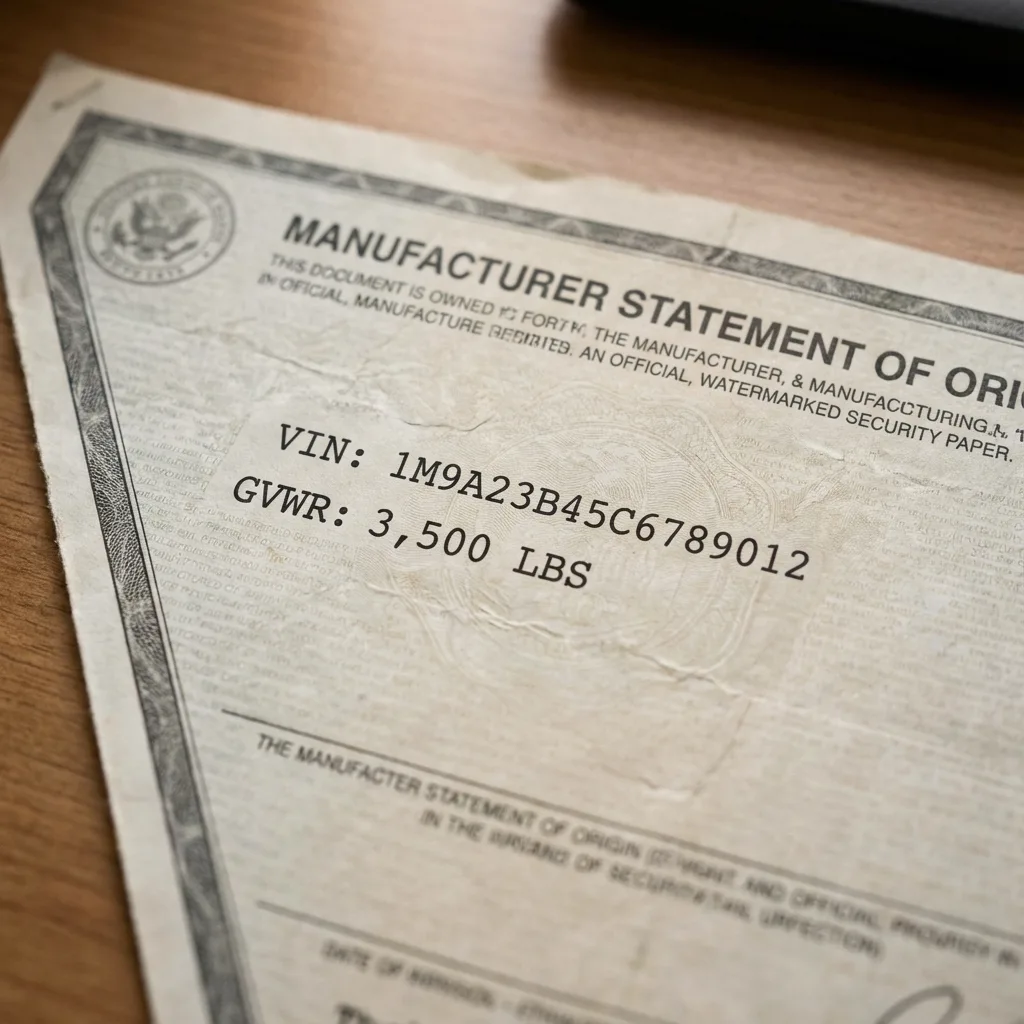
At first glance, a trailer CO (MSO) looks exactly like a car MSO. It is on watermarked security paper, it lists a VIN, a year, a manufacturer, and the original dealer assignment. However, the data on that paper carries different weight (literally) at the DMV counter. With a standard passenger vehicle, the MSO is a direct ticket to a title. With a trailer, the MSO is often just the opening bid in a long negotiation that may also involve a state trooper, a county assessor, and a notary.
The reason is that trailers occupy a regulatory niche somewhere between consumer goods and commercial equipment. A 5×8 utility trailer hauling lawn clippings is governed by the same statutory framework as a 53-foot dry van pulling cross-country freight. The DMV clerk has to figure out which side of that line your unit falls on, and the MSO is their primary tool.
The Weight Factor
For cars, the DMV rarely questions the classification. A car is a car. For trailers, the MSO must clearly state the Gross Vehicle Weight Rating (GVWR) and the Unladen (Empty) Weight. Both numbers matter, and they trigger different fee tiers in different states.
- Light Duty: In many states, if the MSO shows a GVWR under 3,000 lbs, you might not even get a title. You will just get a registration card and a small plate based on the bill of sale. Texas, for example, does not title trailers under 4,000 lbs.
- Medium Duty: The 3,000 to 10,000 lb range is the sweet spot for most personal-use trailers. You title, register, and pay a modest annual fee.
- Heavy Duty: If the MSO lists a GVWR over 10,000 lbs, you may accidentally wander into commercial registration territory, which means safety inspections, federal DOT numbers if used in commerce, and significantly higher annual fees.
The “Vehicle” Definition
An MSO for a car proves it meets federal safety standards (FMVSS). An MSO for a trailer proves it meets basic construction standards, but it does not guarantee it is road-legal in every state without an inspection. If you bought a trailer kit online, the MSO might be for “parts” rather than a “vehicle,” which is a distinction that can stop your registration dead in its tracks. Some kit manufacturers issue an MSO only after the kit is fully assembled and inspected at an authorized facility, which means your DIY assembly in your driveway invalidates the original document.
The Reassignment Stack
Most state MSO forms have three reassignment slots on the back. Each slot is for a transfer between dealers, brokers, or a dealer-to-buyer hand-off. Once you fill all three, the MSO is “full” and the next transfer requires an entirely separate reassignment supplement. If your trailer has been sitting on a dealer’s lot for years and was traded between three locations, you might already be on the last available slot when you walk in to buy it. The dealer needs to file for a duplicate MSO from the manufacturer before they can sell it to you, which can take 4 to 8 weeks.
The “Homemade” Trailer CO Myth
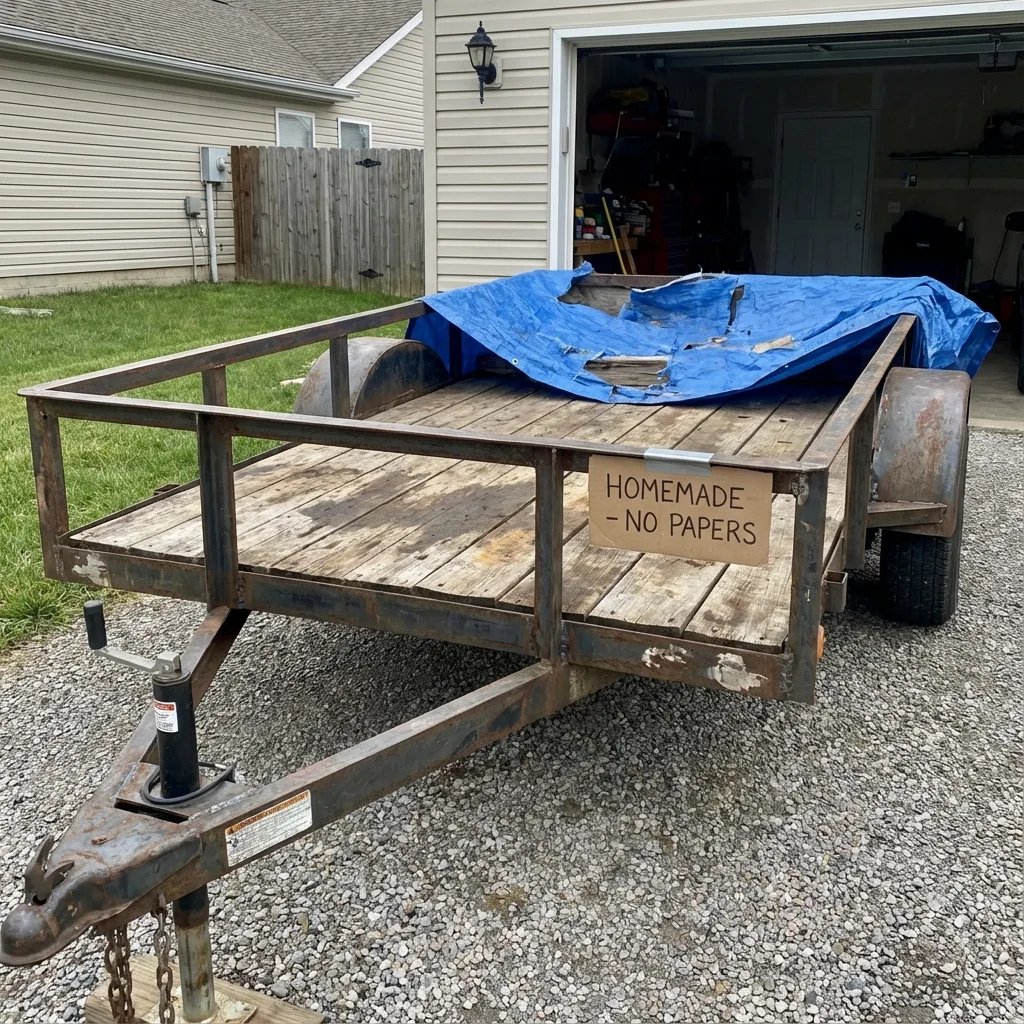
Let’s rip the Band-Aid off: There is no such thing as a Manufacturer’s Certificate of Origin for a homemade trailer.
We see this constantly. A guy welds some scrap steel into a utility trailer, buys an axle from Tractor Supply, bolts on lights from a kit, and then asks, “How do I write an MSO for this?”
You don’t. You are not a manufacturer. You do not have a Manufacturer’s Identification Code (MIC) registered with the NHTSA. You cannot issue an MSO. The federal government issues MICs only to companies that demonstrate compliance with FMVSS 108 (lighting), FMVSS 121 (air brake systems where applicable), FMVSS 119 (tires), and other relevant federal standards. Issuing your own MSO without that registration is not just unenforceable, it is technically a federal violation.
The “Homebuilt” Process
If you built the trailer, you do not transfer a CO. Instead, you apply for a unique VIN assignment through your state’s DMV. The exact process varies but typically involves:
- Police Inspection: An officer verifies the components are not stolen and matches the receipts you brought from Tractor Supply, Northern Tool, or your local welding shop.
- Safety Inspection: A state inspector ensures the welds will not snap on the highway, the lights are wired correctly, and the brakes (if required by GVWR) function.
- VIN Assignment: The state issues a VIN plate that you must rivet to the frame in a permanent, tamper-evident location.
- Title Application: Now you can apply for a title using the assigned VIN, the inspection paperwork, and a sworn affidavit of construction.
The process can take 30 to 90 days depending on inspection backlogs, and the result is a title that says “HOMEMADE” or “ASSEMBLED” in the body type field. Some buyers will pay less for a homemade titled trailer because banks will not finance them and insurance companies sometimes refuse to cover them at full replacement value.
Real Scenario: The “Homemade” Trailer Needs a Bonded Title
The Situation: You buy a flatbed trailer on Craigslist. The seller says, “I built it myself,” and hands you a Bill of Sale written on a napkin. No VIN, no title, no MSO.
The Problem: You go to the DMV, and they ask for the previous registration. You don’t have it. They ask for the MSO. You don’t have it.
The Fix: You likely need a Bonded Title. This involves buying a surety bond (typically 1.5x the value of the trailer) that protects the state if it turns out the trailer was actually stolen. You essentially pay an insurance company to guarantee your ownership claim. After three to five years, the bond is released and the title becomes a regular title.
Boat MSOs vs. Trailer MSOs
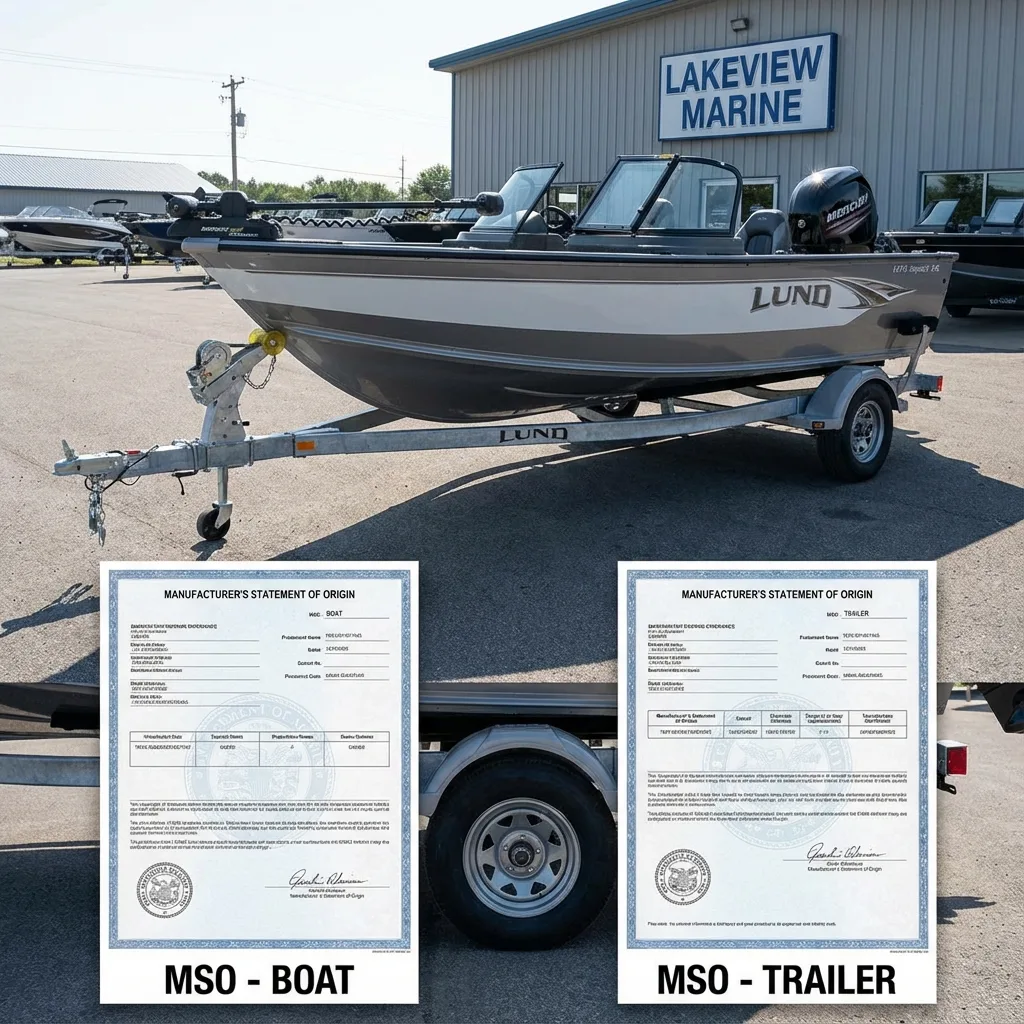
If you buy a new boat package, you are actually buying two distinct assets: the Vessel (Boat) and the Vehicle (Trailer). Many first time boat buyers do not realize this until they show up at the DMV and the clerk asks for two separate sets of paperwork.
- The Boat MSO: Lists the Hull Identification Number (HIN). This 12-character code acts like a VIN but for watercraft, and it is governed by US Coast Guard regulations rather than NHTSA.
- The Trailer MSO: Lists the VIN (17 digits, usually). This is governed by NHTSA and the state DMV just like any car or truck.
The Trap: Dealerships will often staple these together when you take delivery. If you lose one, you can lose the chain of title for both. The DMV handles the trailer, but in many states, a separate agency such as the Department of Natural Resources, Parks and Wildlife, or the Game and Fish Commission handles the boat. You cannot use the trailer MSO to register the boat, or vice versa. They are legally divorced the moment they leave the factory and you may need to make two separate trips to two separate offices to complete the registration.
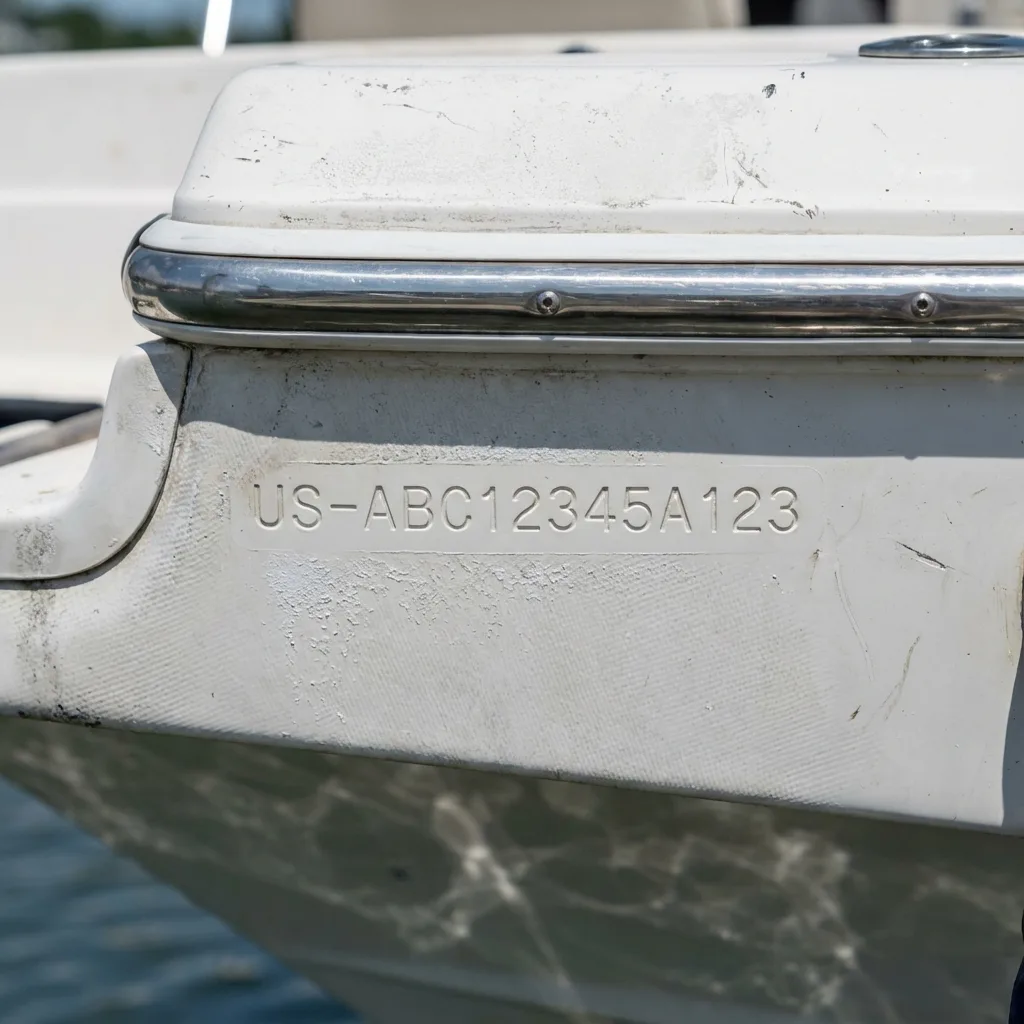
Boat manufacturers must also obtain a MIC from the US Coast Guard to issue valid HINs. If you buy a boat from a small, boutique builder who did not file their paperwork with the USCG, that MSO might be worthless at the DMV. The HIN itself encodes the manufacturer, the production sequence, and the year of certification. If any of those characters are missing, smudged, or do not match the certificate, you have a problem.
For high-end center consoles, sport-fishers, and offshore yachts, the boat may also have a separate builder’s certificate required by international maritime law. This document is needed if you ever plan to take the vessel into foreign waters or to sell it internationally. It is not the same as the MSO and is often overlooked at the time of purchase.
USCG Documentation vs. State Titling
When transferring ownership of a boat, you have a choice that you do not have with cars: Federal vs. State. This is a feature of US maritime law dating back to the late 1700s, and it can save you tax money or cost you a lot of headaches depending on how you use it.
State Titling
Most small boats operate under state titles. You take the MSO to the local agency, pay sales tax, and get a state title and registration numbers (e.g., TX 1234 AB) to stick on the bow. Renewals are typically annual or biennial, and fees range from $20 to several hundred dollars depending on length and value.
USCG Documentation
For larger vessels (usually 5 net tons or more, which works out to roughly 25 feet of length), you can opt for US Coast Guard Documentation. This is a federal form of registration administered by the National Vessel Documentation Center (NVDC) in West Virginia.
- The MSO Role: You send the MSO directly to the NVDC, not the state DMV. The NVDC issues a Certificate of Documentation that has a unique federal documentation number.
- The Benefit: A documented vessel typically does not display state numbers on the bow (though some states still require a registration sticker on the windshield or hull). It makes financing easier, allows for clean preferred ship mortgages, and smooths international travel through customs.
- The Exemption: In states like Texas, USCG documented vessels are exempt from state titling, though they still require registration with the state agency for use of state waters.
- The Renewal: USCG documentation is renewed annually, but the renewal process is now free of charge as of 2022 (it used to be $26 per year).
The Strategic Choice
Owners of vessels worth $250,000 or more almost always choose USCG documentation because it provides cleaner asset tracking, simplifies bank financing, and is required for any vessel that will operate commercially or charter for hire. Owners of smaller weekend boats stick with state titling because it is simpler and there is no benefit to the federal route for a 22-foot bowrider that will never leave the local lake.
Real Scenario: Boat with Hull Number but No MSO
The Situation: You bought a 1990s Bass Tracker. It has a HIN stamped on the transom, but the seller lost the title and the MSO decades ago.
The Problem: The state requires a chain of ownership. You cannot just show up with the boat and a story.
The Fix:
1. Check USCG Abstracts: See if the boat was ever federally documented. If so, the chain of title is there.
2. Bonded Title or MCO Replacement: If it was never documented, you may need to contact the manufacturer for a duplicate MSO (if they still exist) or proceed with a bonded title process for the vessel through your state Game and Fish or Parks department.
Utility vs. Travel vs. Horse Trailers
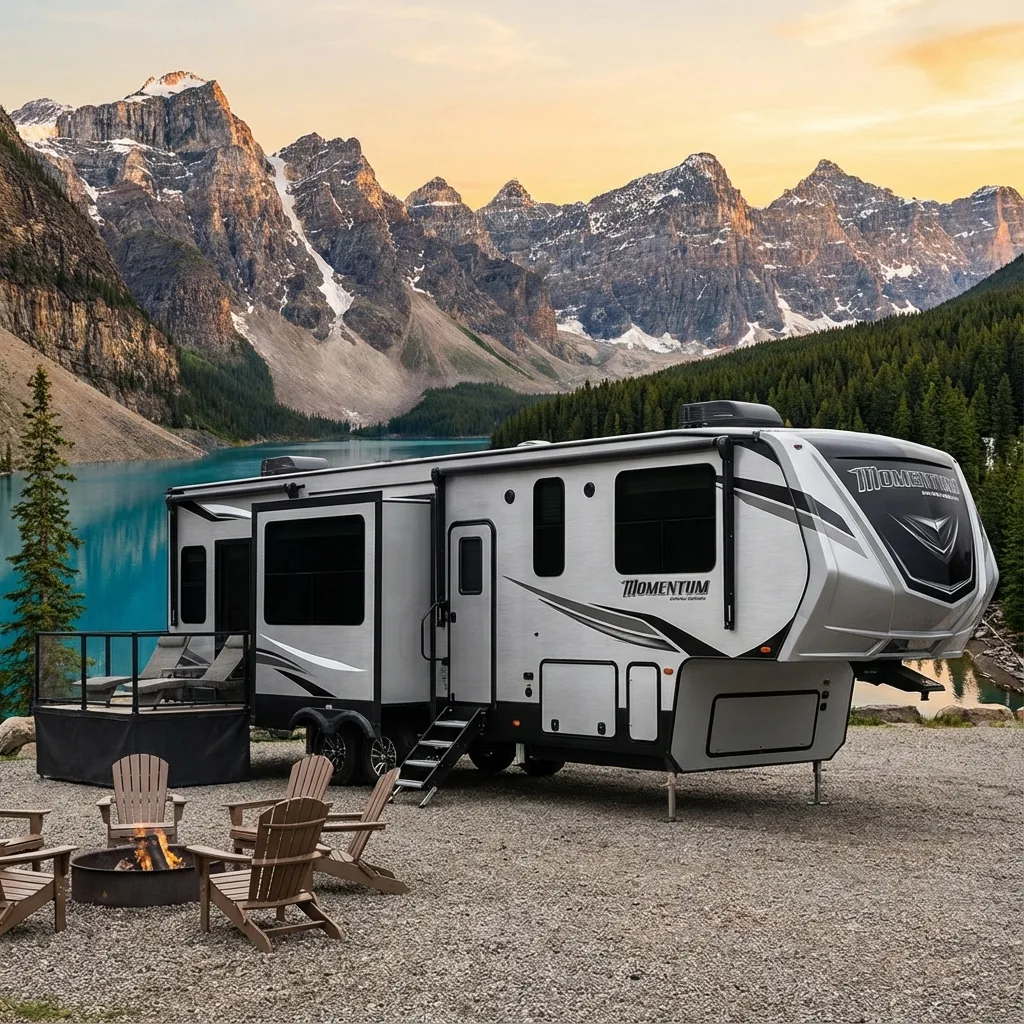
The taxman draws sharp lines between trailer types. The MSO will specify the body type, and this single field dictates your insurance, registration costs, and whether you need a special license to tow it.
Utility Trailers
The MSO usually lists these as “UT” or “Utility.” These are often the easiest to register. In states like Maine, you can register these via mail for cheap without ever visiting a DMV, provided they are for personal use. Vermont and New Hampshire offer similar mail-in or one-time fee structures for small utility trailers. The fee schedule is usually a single small charge in the $30 to $100 range, with no annual ad valorem property tax.
Travel Trailers (RVs)
The MSO will list “Travel Trailer,” “Camper,” or “RV.” These trailers are the most expensive to register in most states because they are considered luxury items.
- The Difference: The transfer fees and annual taxes (ad valorem) can be astronomical compared to a utility trailer of the same weight. South Carolina, for example, charges roughly 10.5% assessment ratio multiplied by the millage rate, which can result in $2,000+ annual property tax bills on a $90,000 fifth-wheel.
- Surplus Military Trailers: Sometimes people convert military trailers (M101, M105, or M1102 chassis) into campers. The MSO or SF97 government release form for these usually says “Cargo,” which is great for cheap registration until you try to insure it as an RV. The insurance company will demand a body type change, which can trigger a reassessment by the state.
- Self-Built Conversions: The growing trend of converting cargo trailers into “stealth campers” creates a unique paperwork issue. The MSO says “Cargo,” but the use is “Recreational.” Some states will let you change the body type for a fee; others will not.
Horse and Livestock Trailers
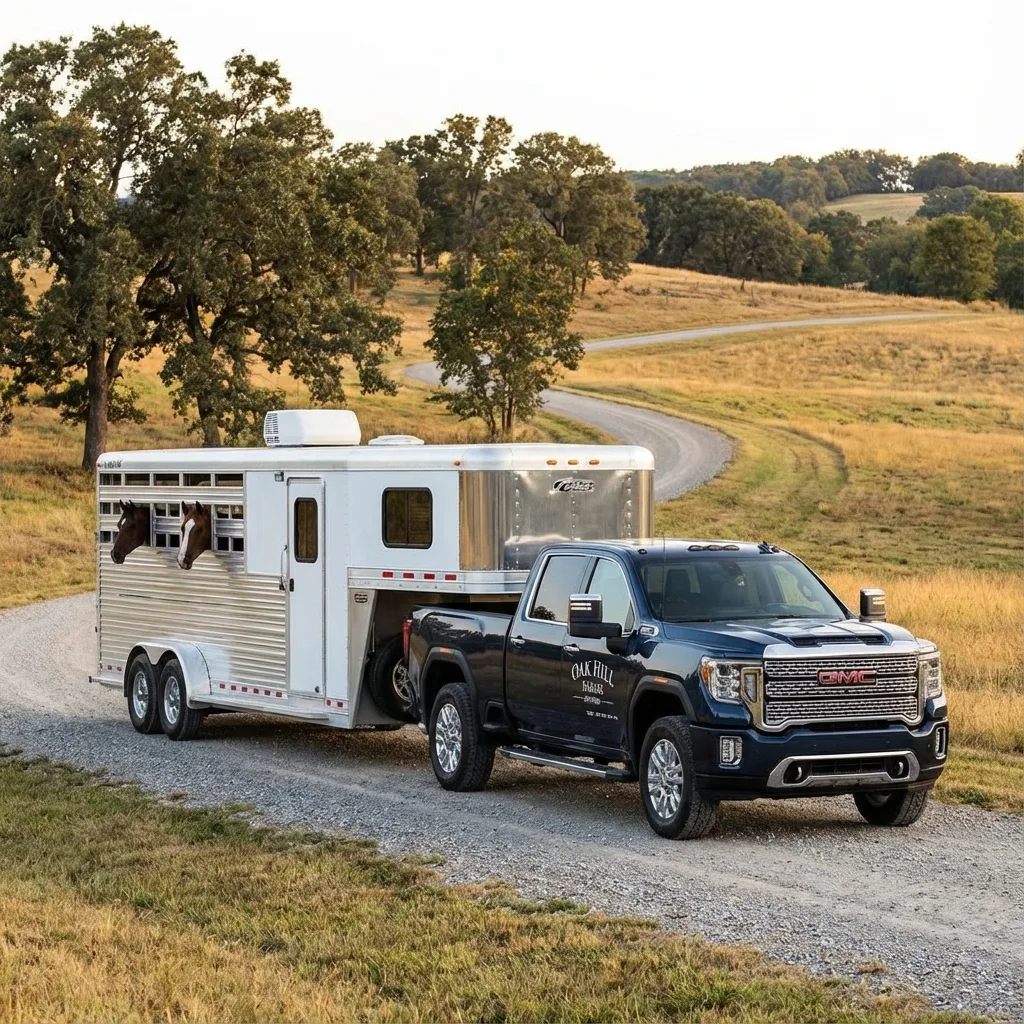
These often fall under agricultural exemptions if you have a farm tax ID. However, if the MSO says “Livestock” and you are pulling it with a non-commercial SUV to a rodeo or barrel race rather than a working ranch, you might face scrutiny regarding commercial driver’s license (CDL) requirements depending on the weight. Texas, Oklahoma, and Florida all have nuanced agricultural use rules that depend on whether the trailer crosses state lines, whether it carries goods for compensation, and whether the owner files a Schedule F farm income tax return.
Some horse trailers also include living quarters with full kitchens, bathrooms, and bedrooms, which puts them in a hybrid classification that we cover in detail in a later section.
GVW Issues Affecting Registration
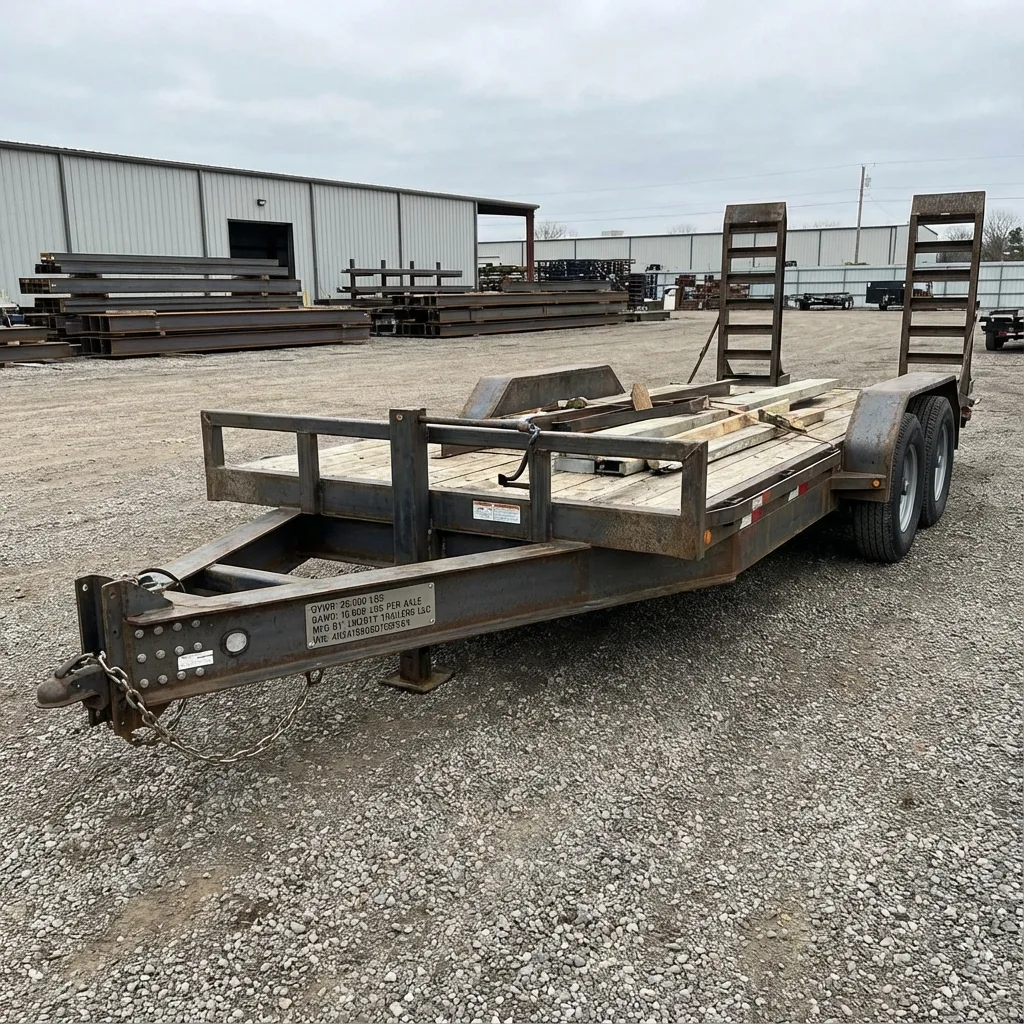
The Gross Vehicle Weight (GVW) listed on the MSO is the most dangerous number on the page. It is also one of the most commonly fudged. Many manufacturers print one number on the MSO and a slightly different number on the certification placard riveted to the trailer tongue. When those two numbers do not match, the state will use whichever number generates the most revenue.
If you transfer a trailer CO that lists a GVWR of 10,001 lbs or more, you have just entered the danger zone.
- Commercial Territory: Many states flag trailers over 10,000 lbs as commercial equipment, requiring annual safety inspections, brake certifications, and reflective tape compliance.
- Class A License: If your truck and trailer combined GVWR exceeds 26,001 lbs, and the trailer alone is over 10,000 lbs, you may need a Commercial Driver’s License (CDL) Class A in some states. Personal-use exemptions exist but vary widely.
- Federal DOT Number: If you cross state lines for any commercial purpose with a combined GVWR over 10,001 lbs, the FMCSA may require a USDOT number, even for “private carrier” operations.
The MSO Trap: Some manufacturers rate trailers at exactly 9,990 lbs to keep them just under the CDL and commercial radar. If your MSO says 10,000 lbs, you might be forced to stop at weigh stations, carry commercial insurance, or run a tag axle that you do not need. Always check the GVW on the MSO before you sign the check, and ask the dealer to confirm in writing that the trailer is rated under 10,000 lbs if that is what you are paying for.
Equally important is the tongue weight rating. A trailer with a 14,000 lb GVWR but only an 1,800 lb tongue weight may exceed the towing capacity of a half-ton truck even if the truck’s published “max trailer weight” looks impressive. The MSO does not always list tongue weight, but the manufacturer’s data plate should.
State-by-State Trailer Titling Thresholds
Every state handles trailer titling differently. Some states title every trailer regardless of weight. Others issue only registration cards for small units and never give you an actual title document. This is critical because if your state does not issue a title, you cannot use that trailer as collateral for a loan, you cannot easily prove ownership in a sale, and you may have problems registering it in another state if you ever move.
If you live in a state that does not title trailers under a certain weight (Texas under 4,000 lbs, for example), and you sell that trailer to a buyer in a state that requires a title for all trailers (like Georgia), the buyer may face a months-long bonded title process even though everything was perfectly legal in your state. This mismatch is a leading cause of stalled sales on craigslist and Facebook Marketplace.
Inspection-Required States
States like Texas and North Carolina require annual safety inspections on most titled trailers, which means lights, brakes (over a certain weight), tires, and chains all get checked. Failing inspection means no plate sticker, no plate sticker means a citation if you tow on public roads.
Permanent Plate States
Several states offer permanent or “lifetime” registration on certain trailer classes. Arizona and Colorado offer permanent registration over 10,000 to 16,000 lbs GVWR. Maine offers cheap one-time registration on small trailers. The undisputed king of permanent trailer plates, however, is Montana, which is the cornerstone of the strategy we discuss in the next section.
Horse Trailers and Living Quarter Classification
Horse trailers with living quarters (LQ) sit in one of the strangest classification gray zones in the entire trailer industry. The base unit is built to haul horses, but the front 8 to 16 feet contains a fully built-out apartment with a queen bed, shower, kitchen, dinette, satellite TV, and air conditioning. Some Lakota, Bloomer, and Platinum models cost more than a starter house.
The classification problem comes down to a single question: is this a horse trailer with a sleeping area, or is it an RV that happens to have horse stalls in the back?
The State-by-State Mess
Different states answer that question differently:
- Texas: Generally treats LQ horse trailers as horse trailers, with light-touch registration and no RV-style luxury fees.
- California: If the unit has a propane stove, refrigerator, water tank, and sleeping facility, it can be reclassified as a “house car” or trailer coach, which triggers higher registration fees and an entirely different inspection regime.
- Florida: Will accept the manufacturer’s body type designation on the MSO, so what the factory calls it usually sticks.
- Colorado: Often classifies LQ trailers as RVs, which triggers ownership tax based on the manufacturer’s suggested retail price.
- Oklahoma: Treats them as horse trailers regardless of LQ content.
The classification matters because RV registration in some states comes with annual property tax (ad valorem) that scales with the value of the unit, while horse trailer registration is usually a flat fee or a simple weight-based fee. On a $95,000 LQ trailer, the difference between RV and horse trailer registration can exceed $1,500 per year.
Weight as a Trigger
Most LQ horse trailers tip the scales at 12,000 to 18,000 lbs loaded. That puts them squarely in the GVWR over-10,000-lb commercial flag zone, which can trigger CDL requirements, mandatory weigh-station stops in some states, and federal DOT registration if used for any compensated transport (such as hauling a friend’s horse to a barrel race for gas money).
The Montana Advantage on LQ Trailers
Montana titles LQ horse trailers as trailers, period. There is no luxury surtax, no annual ad valorem assessment, no RV reclassification scheme. The trailer goes on a permanent plate and you never deal with it again. For a $95,000 Sundowner with full LQ, this means a one-time registration fee in the low hundreds and zero annual costs forever after, compared to thousands per year in California or several hundred per year plus ongoing property tax in Colorado.
Enclosed, Flatbed, Gooseneck, and Fifth-Wheel Differences
Beyond use case, the actual physical configuration of the trailer creates yet another layer of paperwork variation. The MSO body type code dictates how the trailer is taxed, registered, and inspected.
Enclosed Cargo Trailers
The MSO body type is usually “EN” or “Cargo.” These run from a $3,000 5×8 single axle up to $200,000 stacker trailers used to haul race cars. The classification at the DMV is typically “cargo” or “utility enclosed,” which gets the cheapest registration tier. The rub is when an enclosed cargo trailer is converted into a living quarters or office on wheels, the body type does not change automatically and the insurance carrier may demand a body type update.
Flatbed Trailers
The MSO body type is usually “FB” or “Flatbed.” These are the workhorses of the construction, agricultural, and equipment-hauling world. They are usually titled and registered without much fuss because the use case is well understood. Where they get complicated is when a flatbed exceeds 102 inches in width or 53 feet in length, at which point oversize permits and dedicated commercial registration become required.
Gooseneck Trailers
The MSO body type is usually “GN” or “Gooseneck.” These attach via a ball mounted in the bed of a pickup truck, and they typically range from 14,000 to 30,000 lbs GVWR. The tow vehicle requirement automatically pushes most goosenecks past the 10,000 lb commercial flag, so registration is usually heavy-duty even for personal use. PJ, Big Tex, and Diamond C are the dominant manufacturers, and each issues its MSOs with slightly different body type codes that some state DMV computers do not recognize without a manual override.
Fifth-Wheel Trailers
The MSO body type is usually “FW” or “Fifth-Wheel,” and these split into two completely different categories: commercial fifth-wheels (semi-trailers) and recreational fifth-wheels (RVs). The same hitch design, totally different registration rules. Recreational fifth-wheel RVs from Grand Design, Forest River, and Jayco get RV registration with all the luxury fees that entails. Commercial fifth-wheel semi-trailers get heavy commercial registration with IFTA, IRP, and DOT compliance. Mistaking one for the other on the MSO transfer paperwork can cause months of delay.
The Montana LLC Strategy for High-Value Trailers
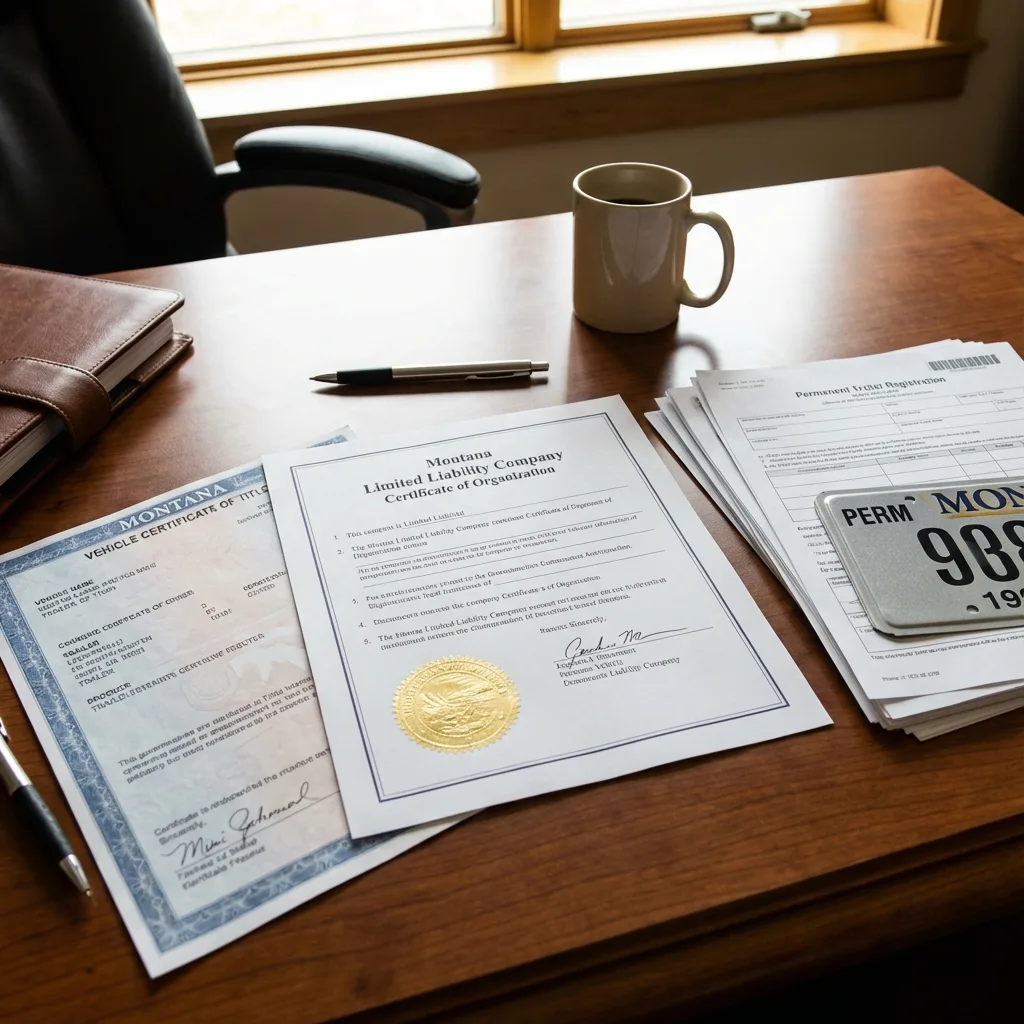
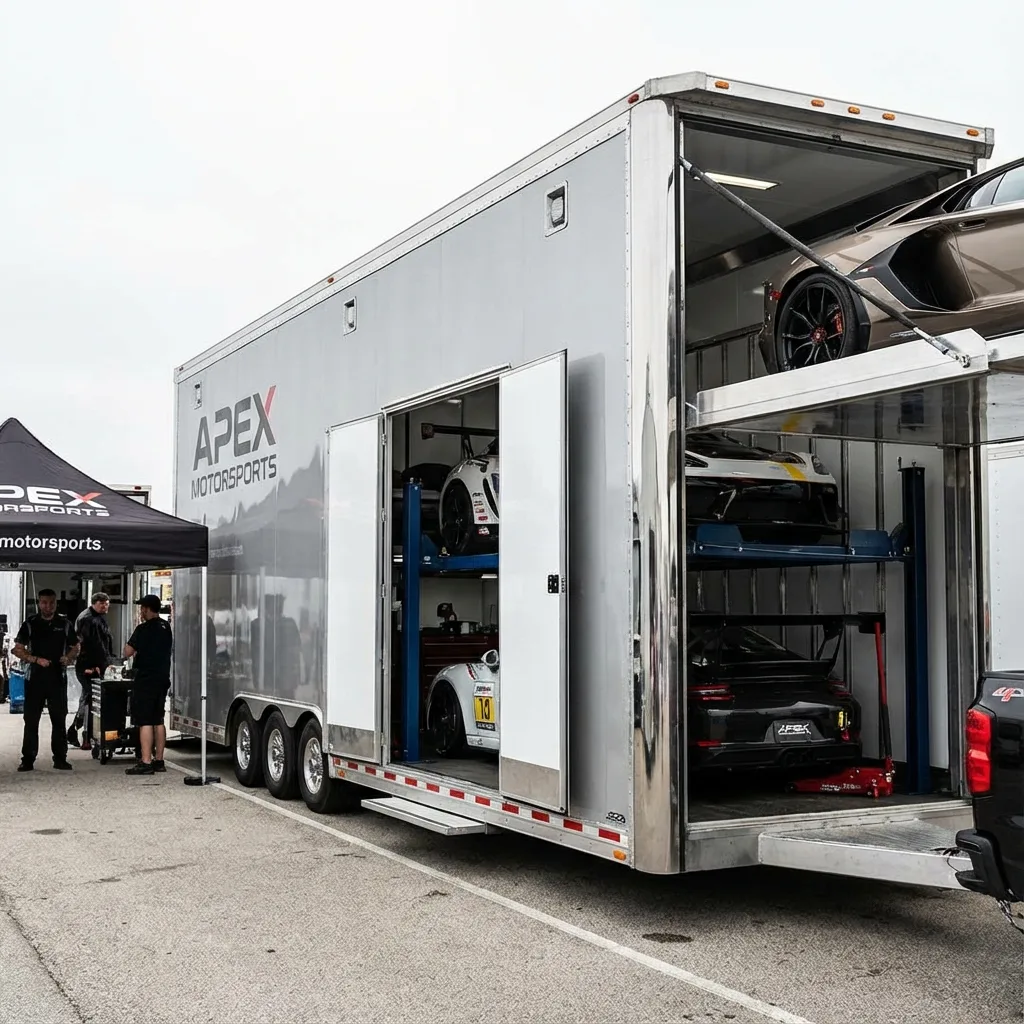
If you are buying a high value boat trailer, a massive fifth-wheel RV, or a stacker trailer for your race cars, the MSO transfer is the moment you get hit with sales tax. In states like California, New York, or Tennessee with combined state-and-local rates, that can be 8% to 10% of the purchase price. On a $100,000 trailer, you are looking at $8,000 to $10,000 of sales tax, and that is before annual registration, ad valorem, and property tax in jurisdictions that pile those on top.
The Solution: Transfer the MSO to a Montana LLC.
- Zero Sales Tax: Montana has 0% sales tax on vehicles and trailers. Period. No local option, no special district, no carve-out. Zero.
- Permanent Plates: Montana offers permanent registration for trailers over 6,000 lbs GVWR. You pay once, and you never renew it again.
- Asset Protection: The trailer is owned by the company, not you personally. This insulates the asset from personal liability and simplifies estate planning.
- No Inspection: Montana does not require safety inspections on trailers, which simplifies the registration even further.
This is entirely legal. You form an LLC in Montana, the LLC buys the trailer (or boat), and the MSO is signed over to the LLC. The title is issued in the LLC’s name. Because the LLC is a Montana resident, the trailer is registered in Montana. Because Montana has no sales tax and offers permanent plates on most trailer classes, you save thousands at purchase and never pay annual fees.
The Zero Tax Tags pricing for this is straightforward: Year 1 is $899 total, which covers the $200 LLC formation fee plus our $699 service fee that handles the MSO transfer, registration, and permanent plate. Year 2 onward is just $270 per year ($150 Montana LLC registered agent and annual report filing, plus $120 service maintenance). On a $90,000 trailer purchased in California, the first-year savings alone usually exceed $7,500 net of our service fee, and you continue saving every year on registration that you would have paid in your home state.
Montana LLC Math on $80K, $150K, and $60K Trailers
Abstract savings claims are easy to ignore. Real numbers on real trailers are harder to dismiss. Here are three concrete scenarios that we see every week at Zero Tax Tags.
Scenario 1: $80,000 Featherlite Aluminum Horse Trailer (Buyer in California)
5-year savings: $6,731. That is the cost of a decent saddle, a good vet retainer, or a year of feed.
Scenario 2: $150,000 Enclosed Race Hauler (Buyer in New York)
5-year savings: $14,034. That covers an entire racing season’s tire bill.
Scenario 3: $60,000 Gooseneck Livestock Trailer (Buyer in Tennessee)
5-year savings: $4,461. Even with Tennessee’s relatively low annual fees, the upfront sales tax savings alone make Montana the obvious choice.
3 Real-World Case Studies
The numbers above are clean, but the actual paperwork war stories are messier. Here are three real situations we have helped resolve in the past year (names changed, amounts and details preserved).
Case Study 1: The Florida Sundowner That Never Saw a Title
A buyer in Naples, Florida purchased a brand-new $95,000 Sundowner aluminum horse trailer with a full living quarters package. The dealer took her trade-in, processed the financing, and handed her the keys. She drove home thrilled and immediately moved on with her life.
Eight months later, when she went to renew her DMV records, she discovered she had no title for the trailer. The dealer never filed the MSO transfer with Florida DMV. The MSO was sitting in a folder in the dealer’s back office, and the dealer had since gone out of business.
By the time she contacted us, the manufacturer was charging $400 for a duplicate MSO and Florida DMV was demanding proof that the original sales tax was paid (which it had been, the buyer had the bill of sale showing $7,837 in tax). The buyer faced potential bonded title costs of around $1,400 plus another $7,837 in sales tax that the state could double-collect since the original payment was tied to a dealer that no longer existed.
Our solution: We obtained the duplicate MSO from Sundowner directly, established the chain of title through the closed dealer’s bankruptcy filings, and then transferred the title into a newly formed Montana LLC. The buyer paid no double sales tax, the trailer received a permanent Montana plate, and her annual ongoing cost dropped to $270.
Case Study 2: The California Buyer with the Texas Race Hauler
An amateur racing team in Sacramento purchased a $185,000 enclosed race hauler from a dealer in Houston. The team paid 8.25% Texas sales tax at delivery (about $15,263), then drove the rig home to California, only to discover that California demanded another 1.5% to “true up” California’s higher tax rate, plus $700 in registration fees.
The team’s accountant called us in a panic. The team had three race weekends scheduled in the next 60 days and they could not legally tow the trailer in California without registration. We advised them to register the trailer to a Montana LLC instead and request a refund of the Texas tax through Texas DMV’s nonresident purchase exemption (a process that took 90 days but recovered $14,200 of the original Texas tax).
Net result: the team paid Montana’s permanent plate fee plus our $899 first-year service charge, recovered $14,200 from Texas, and avoided the California 1.5% true-up plus $700 annual registration. The 5-year savings versus California registration exceeded $17,000.
Case Study 3: The Texas Builder Who Thought He Had an MSO
A Houston-area welder built a 40-foot triple-axle flatbed in his shop using a combination of new I-beam steel, two used Dexter axles he bought at an auction, and a salvage tongue from a wrecked trailer. He proudly hauled it to the Harris County tax office with a homemade “MSO” he had typed up himself, complete with a homemade VIN (“HOM2024TX001”).
The clerk laughed, then informed him that he was not a registered manufacturer with the NHTSA, that he could not issue an MSO, and that his trailer would require a state-issued VIN, a police inspection, a state safety inspection, a sworn affidavit of construction with receipts for every major component, and a bonded title because two of the components (the salvage tongue and one axle) lacked clean ownership documentation.
He came to Zero Tax Tags after spending three months trying to navigate the bonded title process himself. We coordinated the police and safety inspections, prepared the affidavit of construction with all 47 component receipts, secured the surety bond, and then transferred the resulting Texas title into a Montana LLC for permanent plating. He saved no sales tax (he had built the trailer himself with already-taxed materials), but he gained permanent registration and avoided Texas’s annual safety inspection requirement going forward.
Common Rejections

You have waited in line for three hours. You finally get to the counter. The clerk looks at your boat or trailer CO and slides it back to you. “Next!”
Here is why your MSO transfer got rejected, with the most common scenarios we see at Zero Tax Tags:
1. The “Skipped” Title
The MSO was signed by the manufacturer to a dealer. The dealer sold it to Guy A. Guy A never titled it (to save taxes) and sold it to You.
The Rejection: The DMV sees a break in the chain. The MSO is signed to the dealer, but you are holding it. Unless the dealer reassigned it directly to you on the back, this is a dead document. You cannot “skip” owners. Some states allow a single skip with a notarized affidavit and proof of all sales tax paid; most do not.
2. Notarization Missing
Many states require the MSO assignment to be notarized. If the dealer signed it but did not stamp it, you are out of luck. Each reassignment block typically requires its own notary stamp, not a single one at the bottom.
3. VIN/HIN Typos
Trailer VINs are often hand-stamped or printed on cheap stickers. If the MSO says “1M9…” and the trailer frame looks like “1M8…”, the inspector will fail you. Common transposition errors include 0 and O, 5 and S, B and 8, and the letter I (which is never used in modern VINs but sometimes appears in older trailer VINs from the 1980s).
4. Erasures or White-Out
Never use white-out on an MSO. It voids the document immediately. If a mistake is made, you usually need a specific affidavit of correction or a duplicate MSO from the factory. Lining out a mistake with a single line and initialing it is sometimes acceptable, but it depends on the state.
5. Missing Federal Odometer Disclosure
Even though trailers do not have odometers, federal law (49 CFR 580) requires an odometer disclosure on every vehicle title transfer for vehicles model year 2011 or newer that are less than 20 years old. Many trailer dealers skip this because “trailers don’t have odometers,” and many state DMVs reject the transfer because the disclosure box is blank. The fix is usually a notation of “Exempt – No Odometer” in the disclosure block.
6. GVWR Mismatch Between MSO and Placard
If the MSO says 7,000 lbs GVWR but the certification placard on the trailer tongue says 7,500 lbs, the DMV will sometimes refuse to register the trailer until the manufacturer issues a corrected MSO. This happens most often with imported Chinese-made utility trailers and with low-volume custom builders.
7. Body Type Code Not in DMV System
Some specialty manufacturers use body type codes that are not in your state DMV’s computer system. The clerk types in “EQ” for “equipment hauler” and the system rejects it because the dropdown only has “FB,” “EN,” “DT,” and “UT.” Resolving this requires a supervisor override and usually a phone call to the manufacturer to confirm the equivalent standard code.
8. Lien Recorded Against Wrong VIN
The bank financing the trailer recorded its lien against a slightly wrong VIN (one digit off). The MSO comes through with the correct VIN, but the lien filing references a non-existent unit. The DMV cannot transfer title until the lien filing is corrected, which requires the bank to refile, which can take 2 to 6 weeks.
9. Manufacturer Out of Business
Several smaller trailer manufacturers (especially boutique horse trailer builders and DIY trailer kit companies) have gone out of business in the past 5 years. If you need a duplicate MSO from a defunct company, you may need to contact the manufacturer’s bankruptcy trustee, the company’s surety bond holder, or your state DMV’s title bureau for a special workaround procedure.
10. State of Manufacture vs. State of Sale Mismatch
A trailer manufactured in Indiana sold by a dealer in Tennessee to a buyer in Florida triggers three sets of paperwork rules. The Indiana MSO format is different from the Tennessee dealer reassignment requirements, which are different from Florida’s title application format. If any one of those three jurisdictions requires something the others do not, you have a paperwork chain failure.
See how we help with other MCO/CO transfer issues:
- How to Transfer a Certificate of Origin (Step-by-Step Legal Guide 2026)
- Blank MCO 2026: What to Do When Your Certificate of Origin Is Incomplete or Botched
- Title Transfer with Lienholder 2026: The Financed Freedom Ride and Bank Navigation Guide
Conclusion
Transferring a Certificate of Origin for a boat or trailer is not just “car paperwork but smaller.” It involves a unique web of weight ratings, hull numbers, federal vs. state jurisdiction, agricultural exemptions, and body type classifications that can trip up even experienced buyers. Whether you are trying to title a military surplus trailer for off-road use, register a $95,000 LQ horse trailer without paying RV-tier ad valorem taxes, or avoid paying $13,000 in sales tax on a new race hauler, the paperwork matters and the strategy matters even more.
The single most reliable way to protect yourself from this entire mess is to never let the MSO leave the dealer’s hands without a clear plan for where it is going. If your plan is to register in Montana through an LLC, the MSO should be assigned directly from the dealer to your Montana LLC, with no intermediate stops in your home state’s tax system. If your plan is to register at home, every line on the back of the MSO needs to be filled in correctly the first time, with notarization where required and odometer disclosure even though there is no odometer.
Don’t let a missing signature, a GVWR technicality, or a defunct manufacturer turn your new toy into a lawn ornament.
Zero Tax Tags specializes in untangling the mess the DMV creates. From Montana LLCs for tax-free RV registration to obtaining titles for trailers that have lost their way, we handle the bureaucracy so you can handle the road (or the water). Year 1 with us is $899 all-in. Year 2 onward is $270 per year. There is no cheaper way to register a high value trailer in this country, and there is no faster way to escape the trailer CO nightmare.
Ready to Register Your Trailer or Boat?
Stop fighting with the DMV. We handle trailer and boat CO transfers, Montana LLC formations, and permanent registration. Year 1: $899 total. Year 2+: $270/year.