24 min read
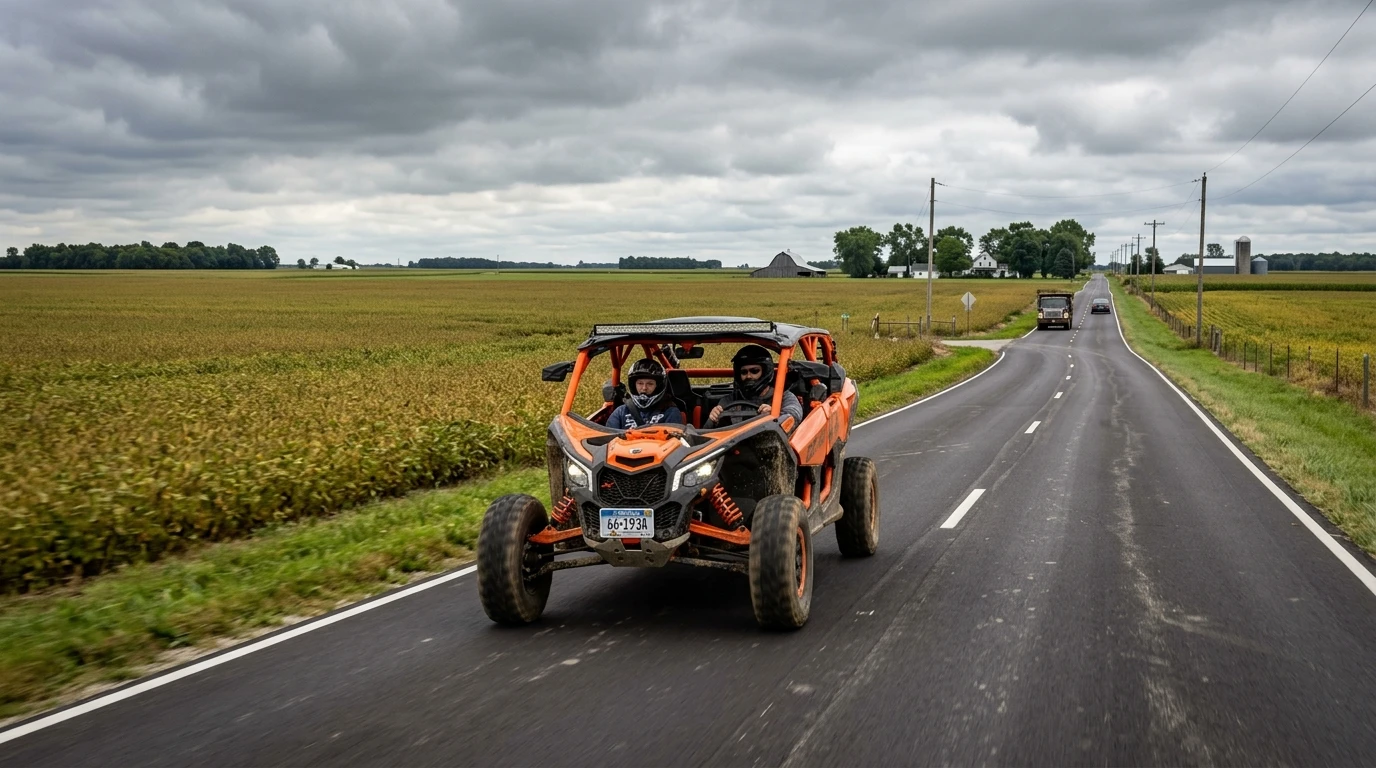
A software engineer from Indianapolis walked into a Carmel powersports dealer last spring with a clear goal: a Can-Am Maverick X3 MAX Turbo RR. The four-seat turbo side-by-side. Sticker price, $45,000.
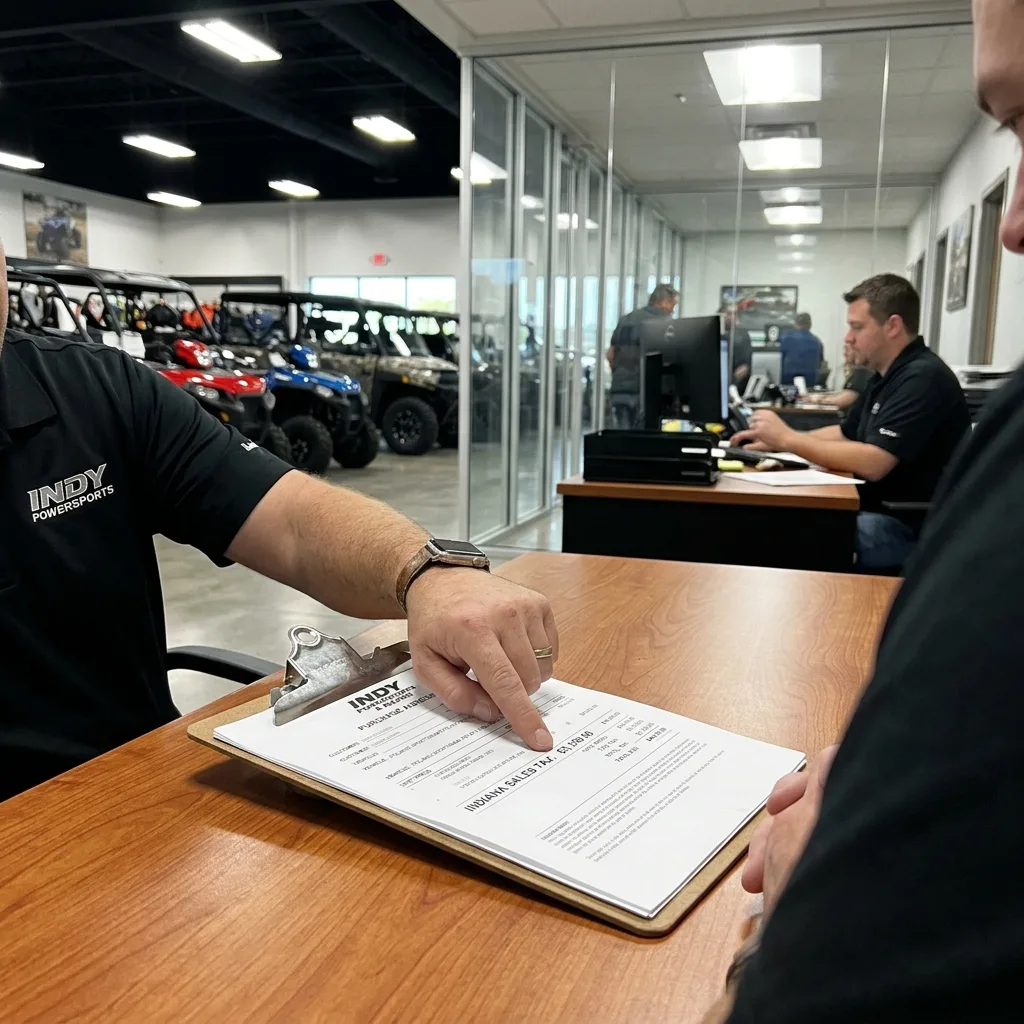
Then the finance manager slid the receipt across the desk. At the bottom, printed in plain black ink: Indiana sales tax: $3,150.00. Seven percent, flat, no negotiation. Not a registration fee. Indiana’s statewide tax on the privilege of owning a recreational machine he could not legally ride on any road in Hamilton County, where he lived.
His county, like most of the Indianapolis metro, has no local ordinance allowing ATVs or UTVs on public roads. So every time he wants to use the machine he paid $48,150 for, he loads it onto a trailer, hitches it to his truck, and drives 90 minutes south to Interlake Off-Road State Recreation Area. The $3,150 he paid in tax did not buy him road access. It did not buy him a permanent plate. It bought him three years of registration, after which he gets to pay again.
This is the Indiana ATV and UTV ownership trap. Pay 7% flat to the state, wrestle with a county-by-county patchwork of road laws that gets updated every quarter, and renew your registration every three years for the privilege of trailering to the same handful of legal riding areas. Meanwhile, owners with Montana plates ride the same trails on a one-time fee, zero sales tax, and a permanent plate that never expires.
On this page
- + Indiana ATV/UTV Registration: What Indiana Charges
- + The Road Ban: IC 14-16-1 and Indiana’s County Patchwork
- + What 7% Indiana Sales Tax Actually Costs
- + The Ag Exemption Trap: What Indiana Farm Buyers Get Wrong
- + Where Indiana ATV and UTV Riders Actually Ride
- + The Montana Solution: Permanent Plate, One Price, Forever
- + Is Montana LLC Registration Legal?
- + Four Indiana ATV and UTV Owners Who Made the Switch
- + Who Benefits Most
- + How Zero Tax Tags Works
- + Who This Is Built For
- + Frequently Asked Questions
Indiana ATV/UTV Registration: What Indiana Charges
Indiana charges three separate, recurring costs to own and ride an off-road vehicle legally inside the state. None are optional. None go away. And unlike a Montana LLC permanent plate, none are a one-time fee.
The biggest is the 7% statewide sales tax, applied at purchase whether you buy from a dealer in Lafayette, a private seller off Facebook Marketplace in Evansville, or a friend selling his garage-kept Polaris RZR in Fort Wayne. No county add-on, no city tax, no special district. Seven percent flat, every Indiana ZIP code. The BMV requires the tax within 45 days of purchase, with a $15 late fee if you miss the window. On a $35,000 Polaris Ranger XP 1000, that is $2,450 due before you ever drop a trail decal on the side panel.
Then there is registration. Indiana issues ORV registration in three-year increments at $30 per cycle. Every off-road vehicle purchased after December 31, 2003 has to be registered, and every machine purchased after December 31, 2009 has to be titled. The BMV issues two decals per machine, one for each side of the forward half, and you renew every 36 months. Indiana does not offer a permanent plate option. Montana does.
The third cost depends on where you ride. Interlake and Redbird, the two flagship state-managed riding areas, charge $15 per day or $95 per year per vehicle. Out-of-state riders pay $20 for an annual trail permit at any DNR-permitted location.
That table makes the point better than any paragraph can. There is no county loophole in Indiana, no lower-tax jurisdiction worth the drive. You pay 7% in Marion County, you pay 7% in Crawford County, and you pay 7% in Steuben County. The only exit from Indiana sales tax math is to register the machine somewhere that does not charge it. Montana’s constitution prohibits a general sales tax. The Montana LLC permanent plate is a one-time fee, never renews, and replaces all three Indiana recurring costs with a single payment.
The Road Ban: IC 14-16-1 and Indiana’s County Patchwork
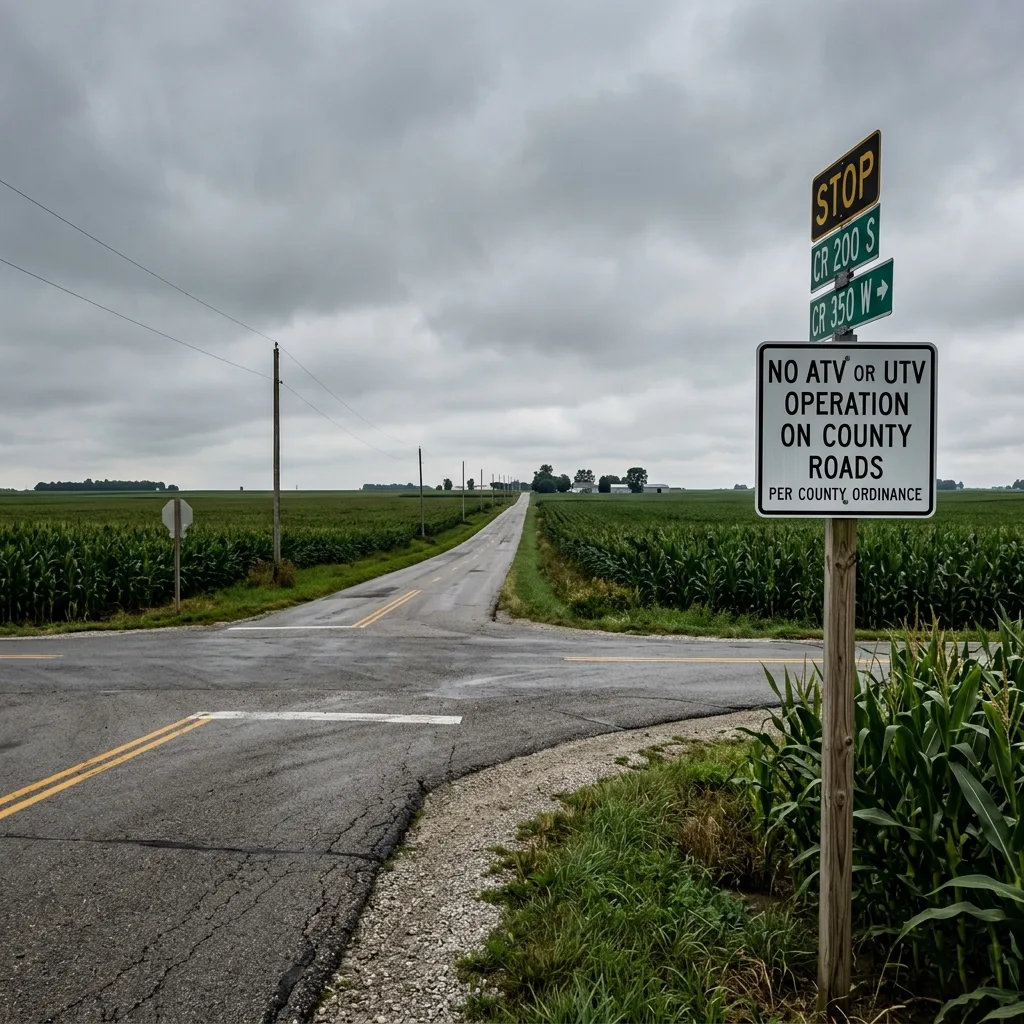
Most Indiana buyers do not find out until after the dealer hands them the keys that the machine they just bought cannot legally be ridden on the road in front of their house. Indiana Code 14-16-1 establishes a statewide default ban on off-road vehicles using public highways. ATVs and UTVs are prohibited on state highways, limited-access highways, and freeways, full stop — no exception for a quick hop between properties, no exception for crossing a divided lane to get to the trail on the other side.
At the state level, there are three narrow carve-outs. The right-of-way adjacent to non-limited-access state highways. A 90-degree road crossing at a full stop. Farm or forestry movement between job sites. That is the complete list. Everything else, including the casual neighborhood ride that ATV culture is basically built on, is illegal by default unless your specific county passed a local ordinance overriding the ban.
Indiana Code 14-16-1: Off-road vehicles are prohibited on public highways of this state. A person may not operate an off-road vehicle on a public highway, except as expressly authorized by this article or by local ordinance. Violation is a Class C infraction with escalating fines for repeat offenses.
About 30 counties have passed local ordinances permitting ATVs and UTVs on county roads. The list includes Cass, Dubois, Gibson, Harrison, Dearborn, Decatur, Fountain, Greene, and roughly two dozen others. Each county sets its own rules — some require a windshield, some require a slow-moving vehicle triangle, some restrict riding to daylight hours, some require a specific permit on top of state registration. The Indiana DNR maintains a county-by-county map updated quarterly, with the most recent revision dated October 1, 2025. Live in a permitted county and your neighbor is one county over? The rules can change at the township line.
This is the source of most of the frustration Hoosier riders talk about. A family in Dubois County can ride their Polaris General to the neighbor’s pond. A family in Hamilton County, less than two hours north, cannot ride the same machine 50 feet down the gravel road to their own back pasture. Indiana collected the same 7% sales tax from both of them. Only one can use the machine without a trailer.
Kids under 14 face additional restrictions, including adult supervision requirements regardless of where they ride. Anyone under 18 has to wear a DOT-approved helmet, even on private land. These rules apply whether the machine has Indiana plates or out-of-state registration.
A Montana permanent plate does not change Hamilton County road law. Road rules are local. But Montana plates are recognized by Indiana DNR for trail and recreation area access, which is where the vast majority of Hoosier riding actually happens anyway. Out-of-state registration is explicitly accepted at Interlake, Redbird, Badlands, and every other ORV destination in the state. The plate goes on once, never renews, and travels with the machine to every trail system in the country.
What 7% Indiana Sales Tax Actually Costs
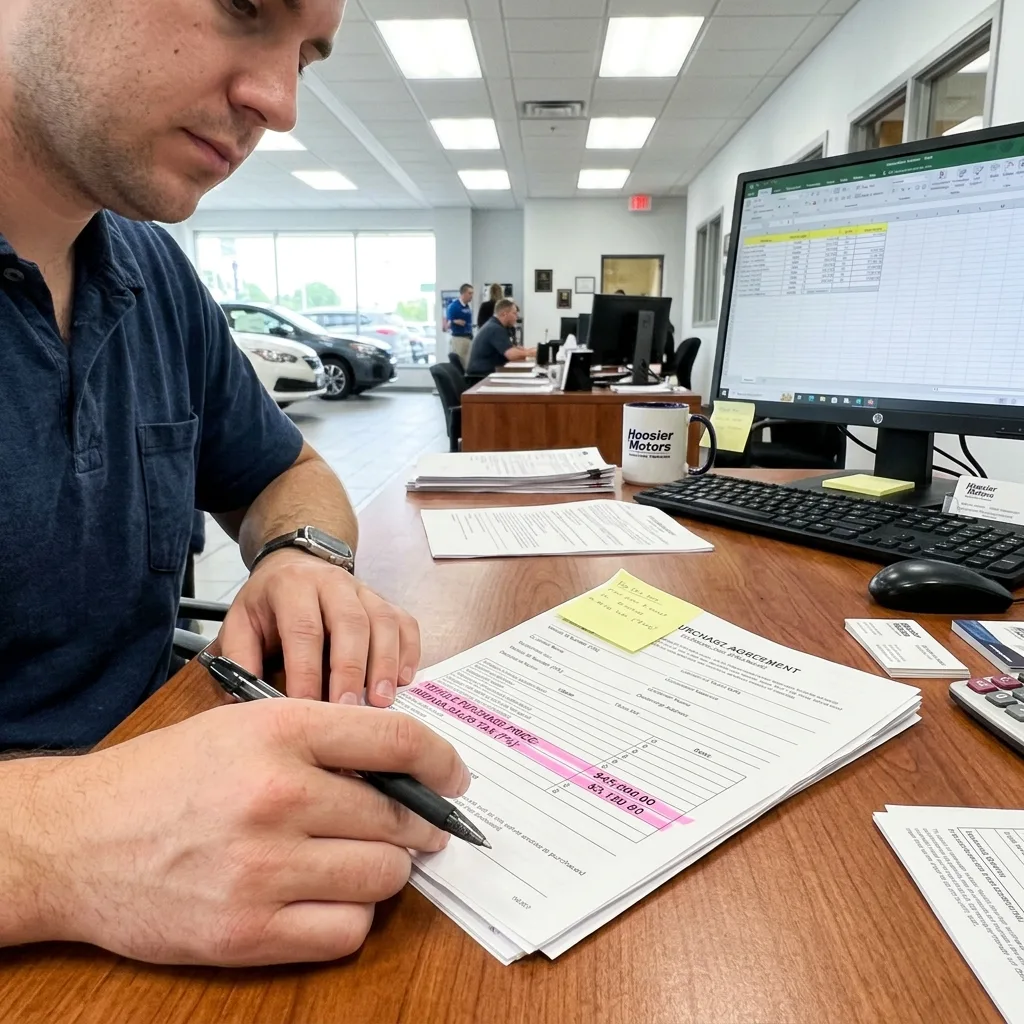
Sales tax math is brutal because it scales. Seven percent sounds reasonable until you apply it to a $45,000 turbo UTV. The table below shows what Indiana actually collects across the most common ATV and UTV purchase brackets, alongside the Montana LLC alternative: a permanent plate, one-time fee, never renews.
That table is only day one. The full five-year cost is worse, because Indiana keeps charging after the initial sale. Three-year registration renewals run $30 per cycle. Annual trail decals at Interlake or Redbird run $95 per machine. Out-of-state permits cost $20 a year. A Montana permanent plate has none of these.
The math is not subtle. On a single $45,000 machine, the Montana LLC permanent plate saves roughly $2,736 over five years. The gap keeps widening after that, because the permanent plate never renews while Indiana bills again at the 36-month mark. Owners with two or three machines on the same LLC pull further ahead still, since the LLC formation is paid only once and each additional machine just adds the service fee.
The Ag Exemption Trap: What Indiana Farm Buyers Get Wrong
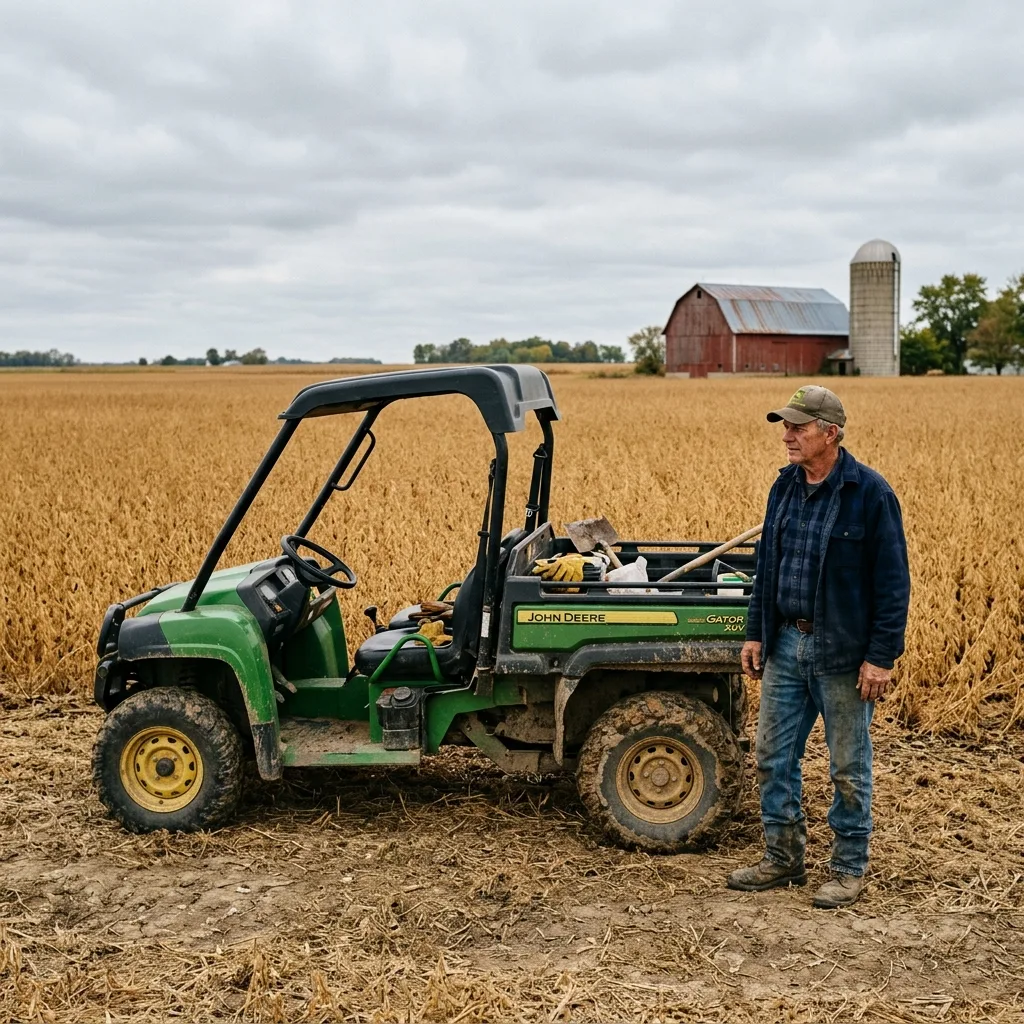
Every Indiana farm buyer hears the same rumor at some point. There is an agricultural exemption. The state lets farmers off the hook. You walk into the BMV with a Schedule F and they hand you a free plate. This is half true in the most damaging way possible, because the rumor describes the registration exemption while completely ignoring the sales tax.
Indiana does provide an exemption from registration and titling for off-road vehicles used exclusively for agricultural purposes. The keyword is exclusively. Not mostly. Not primarily. Not 90% of the time. Exclusively. A John Deere Gator that pulls a feed cart Monday through Friday and goes deer hunting on Saturday morning does not qualify. A Polaris Ranger that hauls fence posts during the week and takes the kids on a trail ride Sunday afternoon does not qualify. A Kubota RTV used to check cattle 364 days a year and ridden once at Badlands on a Father’s Day trip does not qualify. One non-farm use breaks the exemption retroactively.
That is the first trap. The second, and larger, is that the agricultural exemption covers only registration. It has no effect on sales tax. A cattle farmer in Vigo County buying a $20,000 John Deere Gator XUV560 for genuinely exclusive farm use still owes $1,400 in Indiana sales tax. The dealer collects it at the point of sale. The state keeps it. The exemption that the farmer thinks saves him money saves him exactly $30 over three years, while the sales tax bill stays untouched.
Consider the case of a fifth-generation cattle operation outside Terre Haute. The owner buys a new Gator for ranch work, files the BMV ST-108E form, skips registration, and figures he is done. Two years later, his teenage son takes the Gator to a friend’s property for an afternoon of trail riding. A neighbor mentions it at the co-op. The Department of Revenue audits, rules the exclusive-use requirement broken, and assesses back fees plus the $1,400 sales tax that was always owed anyway. The bill arrives a year later, with interest.
The Indiana farm exemption is a registration discount, not a sales tax shield. Every farm purchase still pays 7% at the point of sale. The exclusive-use requirement is strict, retroactive, and easy to break. One hunting trip, one trail ride, one favor to a neighbor can void the exemption years after the fact.
Montana eliminates both traps at once. Zero sales tax on the purchase, period. The LLC is a real business entity that does not require exclusive-use justification. The farmer can use it for cattle work, for trail riding, for hunting, for hauling kids to the pond. Whatever ownership of an off-road machine actually looks like in rural Indiana. The plate is permanent, one-time, and never renews. The $1,400 the Gator would have cost at the BMV becomes zero, and the registration cycle disappears with it.
Where Indiana ATV and UTV Riders Actually Ride
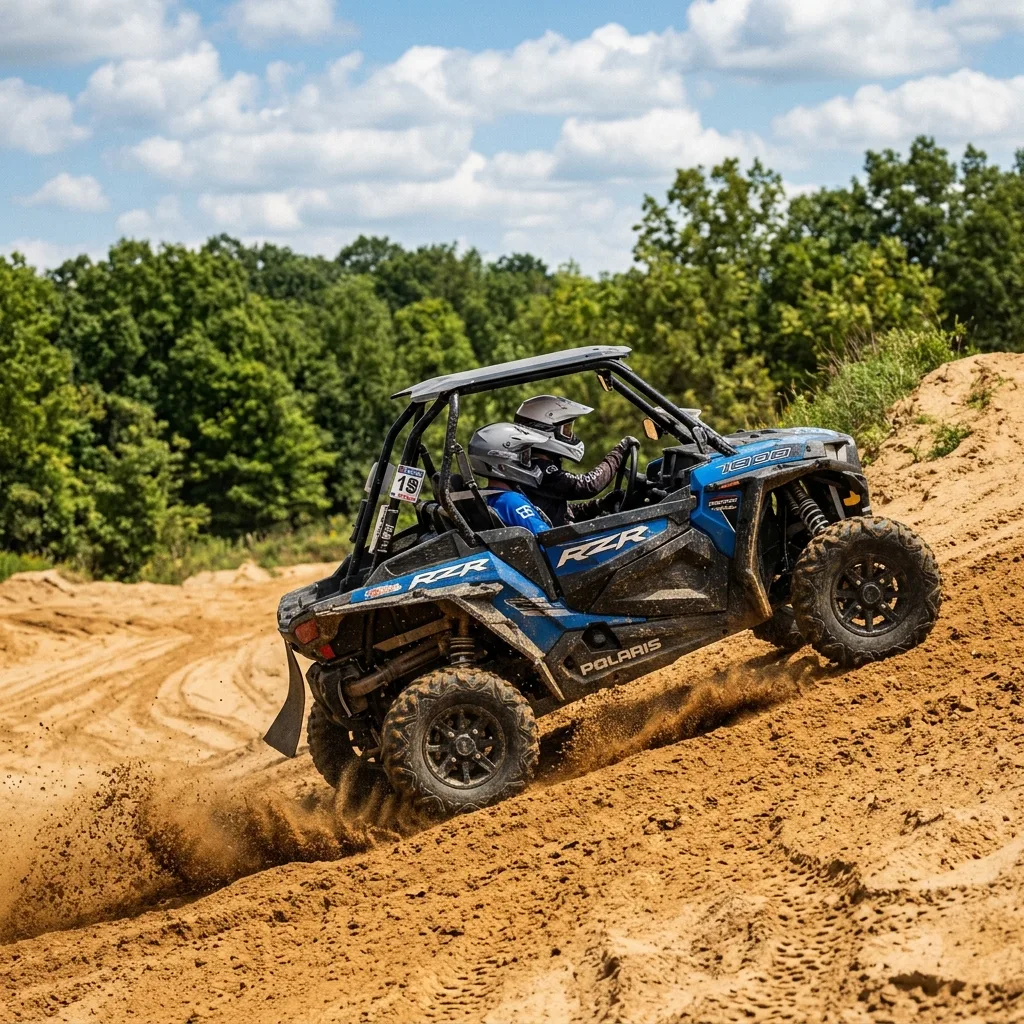
Because of the statewide road ban, Hoosier ATV and UTV ownership is built around destinations, not driveways. The legal riding map concentrates in a handful of dedicated state recreation areas, private parks, and reclaimed industrial land. Every one of those locations accepts out-of-state registration.
The two flagship DNR-managed destinations are Interlake and Redbird. Interlake Off-Road State Recreation Area covers roughly 3,500 acres straddling Pike and Warrick counties in southwestern Indiana, built on a former surface coal mining operation. Sand and gravel pits, wooded technical trails, steep climbs, open dirt sections that work for everything from a Honda 250 to a Polaris RZR Pro R. Day passes run $15, annual passes $95 per vehicle. Redbird Off-Road State Recreation Area in Greene County is a similar setup across 1,400 acres at the same price.
Badlands Off Road Park in Attica, Fountain County, is the private heavyweight. Spread across 1,400-plus acres near the small towns of Kramer and Odell, Badlands covers terrain that no public park in the Midwest can match: sand dunes, wooded trails, mud pits, rock crawls, a dedicated MX track for bikes and quads, and the Rock Quarry and SUV Park for UTVs and full-size 4x4s. Alcohol-free, family-friendly, all skill levels, camping and lodging on site.
Beyond those three, Haspin Acres covers 750 acres of private land in Laurel, Franklin County. Lawrence County Recreation Park offers 400 acres of public riding near Springville. Stonycreek Mine OHV area near Terre Haute sits on a reclaimed strip mine, free for public use with a $25 out-of-state permit for non-residents, and serves up rocky hills, gravel, and technical climbs that strip mine terrain produces naturally.
Two destinations worth knowing to avoid: Indiana Dunes National Park, despite the sand-dune geography that looks like it was made for ATV use, completely prohibits ORVs. Riding there earns federal citations. Hoosier National Forest, 200,000-plus acres of southern Indiana woodland, also bans ATV and UTV operation across its entire footprint. Federal designation overrides whatever the county would otherwise allow.
A Hoosier rider’s week looks like this: machine in the garage Monday through Friday, trailer loaded Saturday morning, 30 minutes to three hours each way, a day of riding, drive home. A Montana LLC permanent plate works at every Indiana destination, at every Ohio, Kentucky, Illinois, and Michigan destination within a weekend’s drive, and at every western park where serious ownership eventually leads.
The Montana Solution: Permanent Plate, One Price, Forever

Montana solves the Indiana ATV and UTV problem at the structural level. The Montana Constitution prohibits a general sales tax. When a Montana LLC purchases and titles an off-road vehicle in the state, the sales tax line on the receipt reads zero. Not reduced. Not deferred. Zero.
The second piece is the permanent plate. Montana issues a permanent off-road plate that does not renew, does not expire, and does not need an annual decal. Once it goes on the machine, the registration cycle is over for the life of that vehicle. Indiana renews every three years. Montana renews never.
The mechanism is a real Montana limited liability company. Zero Tax Tags forms the LLC, lists it at our Montana registered agent address, files articles of organization with the Montana Secretary of State, obtains the federal EIN, and uses the LLC as the owner of record on the vehicle title. The LLC is yours, you are the member, and the vehicle is your asset held inside it. The Montana county treasurer processes the title transfer, issues the permanent plate, and ships it directly to your Indiana address.
Pricing is flat. An ATV permanent plate runs $749 total ($549 service fee plus $200 LLC formation). A UTV permanent plate runs $849 total ($649 service fee plus the same $200 LLC formation). Both are one-time fees. Both include the permanent plate. Neither renews. For owners with multiple machines, the second vehicle on the same LLC runs $549 (ATV) or $649 (UTV), reusing the existing LLC entirely. Three UTVs on one LLC: $849 for the first, $649 each for the second and third, all permanent, all done.
Sample savings on a $45,000 Can-Am X3 MAX Turbo RR:
Indiana 7% sales tax: $3,150 plus three-year registration renewals plus annual trail decals.
Montana LLC permanent plate: $849 total, one time, never renews.
First-year savings: roughly $2,300. Five-year savings: roughly $2,700. Ten-year savings: over $3,000, and growing every renewal cycle Indiana would have charged.
This is not a gray-area scheme or a temporary loophole. It is the operating model used by RV owners, exotic car collectors, and recreational machine owners across all 50 states for more than two decades. The legal foundation is settled, the process is transparent, and the savings grow for as long as you own the machine.
Is Montana LLC Registration Legal?

The legal foundation is more settled than most first-time buyers expect. A Montana limited liability company is a real business entity formed under Montana state law, the same statute that governs millions of legitimate businesses in tourism, ranching, and manufacturing. When the LLC purchases and titles a vehicle, it owns that vehicle the same way any business owns its equipment. The federal commerce clause protects the right of business entities to conduct interstate commerce, including holding titled property across state lines.
Tax courts have addressed the question directly. The most cited case is Thomas v. Bridges, where the court affirmed that legal tax minimization through lawful business structures is a recognized right, not a violation. The line is clear: registering a vehicle in a state with favorable tax law is permissible when the business entity is real, the vehicle is genuinely owned by that entity, and the registration documents are honest. Zero Tax Tags satisfies all three conditions.
Indiana has no jurisdiction over a vehicle owned by a Montana LLC, registered in Montana, plated in Montana, and titled in Montana. Indiana’s 7% sales tax applies to purchases made by Indiana residents. A Montana LLC is not an Indiana resident. The transaction is between the seller, the LLC, and the Montana title office.
The structure has been used by RV and exotic car owners for decades. It is well litigated and operationally simple. Zero Tax Tags handles the paperwork. You sign three documents. The plate arrives in a week.
Four Indiana ATV and UTV Owners Who Made the Switch
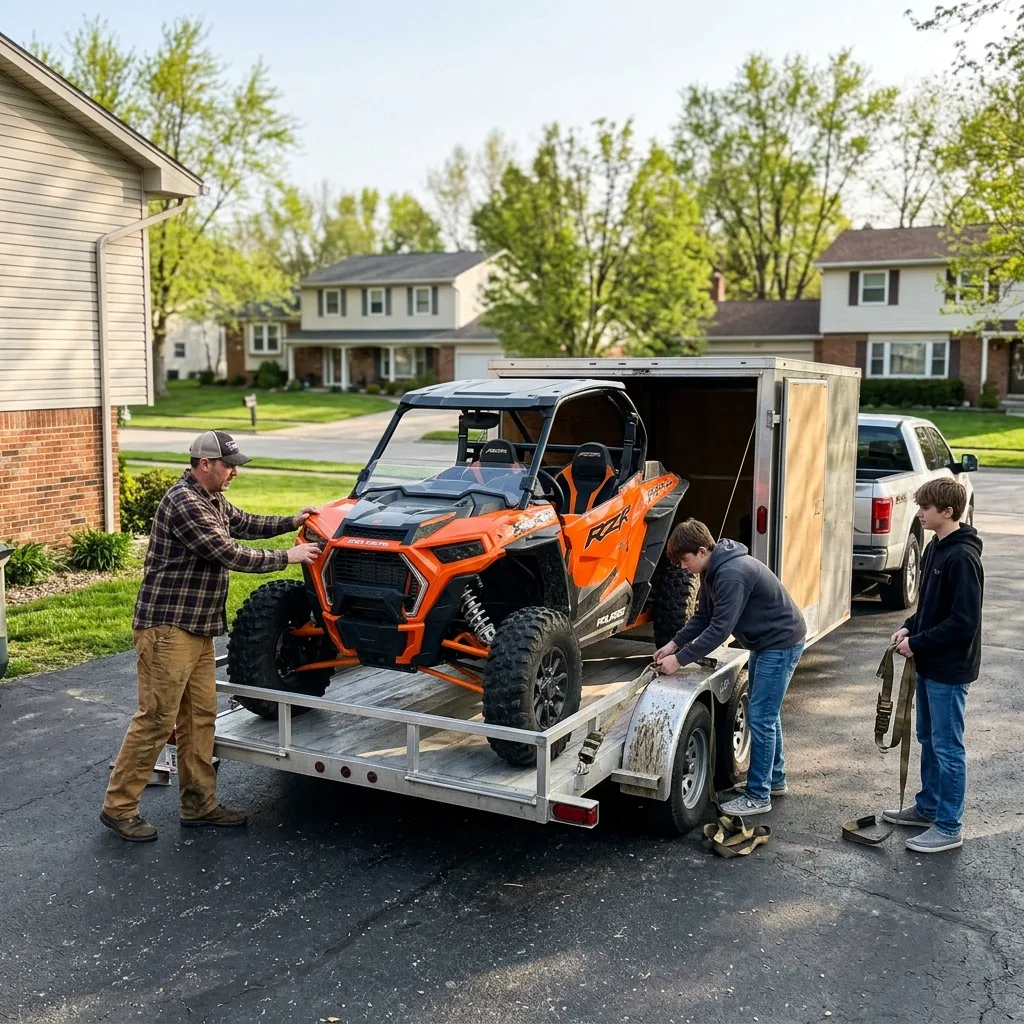
The Indianapolis Software Engineer
The Hamilton County buyer from the opening of this article eventually made the switch. After realizing his $45,000 Can-Am X3 MAX Turbo RR meant another three-year registration cycle, another $95 annual trail decal, and a $3,150 sales tax bill he could not unwind, he looked at the math for his next machine. He bought a second Maverick a year later, this time through a Montana LLC formed at the time of purchase. Savings on the second machine alone: $3,150 in avoided sales tax, plus no future registration renewals. He runs both machines on the same LLC, rides out of Interlake monthly, and trailers to Badlands twice a year.
The Terre Haute Cattle Farmer
A fifth-generation cattle producer outside Terre Haute bought a $20,000 John Deere Gator XUV560 for ranch work. He filed the agricultural exemption, skipped registration, and figured he was done. Two years later, the Department of Revenue caught up with him, ruled the exclusive-use requirement broken after a documented hunting trip, and assessed back fees plus the $1,400 sales tax that had been owed all along. He paid the bill. Then he bought a Polaris Ranger for his second farm location through a Montana LLC. The Ranger cost him $849 total for the permanent plate and zero in sales tax. He has not paid a registration renewal on it since.
The Fort Wayne Weekend Warrior
An IT director from Fort Wayne ordered a $55,000 Polaris RZR Pro R Turbo — what he describes as a midlife crisis with three rear seats. He rides Badlands roughly once a month from April through October, trailering the four hours each way with his teenage sons. Through a Montana LLC, the machine title cleared in seven days, the permanent plate arrived in his Allen County mailbox, and the $3,850 sales tax that would have hit him at the Fort Wayne dealer never appeared on the receipt. His five-year ownership cost dropped to roughly $849 plus out-of-state DNR permits at the parks he frequents.
The Bloomington Collector
A retired physician in Bloomington owns three machines: a Yamaha YXZ1000R for technical trail work, a Polaris Ranger XP for the property, and a Honda Talon for guests. He formed a Montana LLC for the first machine at $849. The second cost him $649 added to the same LLC, the third another $649. All three sit on permanent Montana plates that never renew. Across the three vehicles, he avoided roughly $5,250 in combined Indiana sales tax, and his recurring registration cost going forward is zero.
Who Benefits Most

For UTV buyers at $25,000 and above, the math works on day one. Indiana’s 7% takes $1,750 on a $25,000 Can-Am Defender. Montana’s permanent plate costs $849 total. Break-even is immediate. And the permanent plate never renews while Indiana keeps billing every 36 months, so the advantage keeps compounding.
Farm buyers tend to discover the Montana path after the ag exemption disappoints them. Once they realize the exemption never touched sales tax, the LLC structure makes immediate sense — and it fits how most farm operations already handle equipment anyway. Running a machine through a business entity rather than personally is familiar territory for anyone who has dealt with farm liability and asset protection.
Multi-machine owners get the strongest numbers. The LLC formation costs $200 and gets reused for every machine you add. A family with a UTV for the adults and ATVs for two kids puts all three under one LLC at progressively lower cost per machine. Each plate is permanent. None of them renew. Ever.
County road riders in non-permitted counties have already accepted that trailering is just the life. The Montana plate does not change the road ban, but it ends the renewal cycle and the annual decal cost. That is real money freed up for fuel and park entry fees.
And for anyone riding out-of-state regularly: Montana plates work equally well at parks in Ohio, Michigan, Illinois, Kentucky, and Wisconsin. The out-of-state DNR permit at Indiana locations runs $20, versus the $95 annual decal an Indiana-registered machine carries. That gap adds up fast for riders who put serious miles on their trailers.
How Zero Tax Tags Works
The full process takes seven days from paperwork submission to permanent plate in hand. Nothing requires a trip to Montana, a residency change, or any in-person appointment. Everything happens through our secure portal, email, and standard mail.
Pricing is flat and includes everything. ATV permanent plate: $749 total ($549 service + $200 LLC formation). UTV permanent plate: $849 total ($649 service + $200 LLC formation). Both are one-time fees. Neither renews. Both include LLC formation, registered agent service for the first year, title processing, and the permanent Montana plate shipped to your Indiana address.
What is included in the service fee: full Montana LLC formation with the Secretary of State, federal EIN issuance, registered agent service, Montana title transfer at the county treasurer, the permanent Montana plate, and shipping to your door. Ongoing registered agent service after year one is a separate flat annual fee, far below what Indiana renewal cycles would have cost.
| Day 1: | Submit paperwork through our secure portal. Montana LLC filed same day. |
| Days 1-2: | Montana LLC formation complete, same business day in most cases, second business day at latest. |
| Days 2-4: | Title transferred into the LLC name at the Montana county treasurer. |
| Days 4-7: | Permanent Montana plates shipped directly to your door. |
Once the plate arrives, registration is done. No annual renewal notice, no three-year cycle reminder, no decal sticker showing up the following spring. The Montana permanent plate stays on the machine for as long as you own it.
Who This Is Built For
Zero Tax Tags was built for the Hoosier weekend warrior who loads the trailer every Saturday morning and drives 90 minutes to Interlake. For the Hamilton County family that has already accepted trailering as just how it works and wants to stop paying renewal fees on top of that reality. For the collector with two or four machines in the pole barn who would rather form one LLC and add plates as he buys. For the cattle operation that finally got the news that the ag exemption stops at registration.
The IT director in Fort Wayne who treats his RZR Pro R like a second job. The retired physician in Bloomington with a fleet of three machines. The buyer in Evansville who saw the $3,150 line on the receipt and thought there has to be a smarter way to do this.
Most ATV and UTV purchases above $15,000 pencil out cleanly with a Montana permanent plate. Machines below that threshold can still work, especially with multiple vehicles on the same LLC, but the break-even gets tighter on a single small-displacement ATV. If you are evaluating a $10,000 or $12,000 machine, call us. We will run the math on your specific purchase price and trail use. No obligation, no pressure if the numbers do not work in your favor.
Frequently Asked Questions
Do I need to be a Montana resident?
No. The Montana LLC is the owner of the vehicle. You do not need to live in Montana, visit Montana, or change anything about your Indiana residency. Your driver’s license stays Indiana. Your home address stays Indiana. The LLC owns the machine and holds the Montana title and the permanent plate.
Is this the same as registering as a dealer?
No. A dealer registration requires inventory, a physical location, and ongoing state reporting. A Montana LLC is a private limited liability company that owns a specific vehicle as a private asset. No dealer activity, no inventory, no commercial trade. It is the same structure used to own a rental property or an investment vehicle.
How long does the whole process take?
Seven days door to door. The LLC files on Day 1, the title transfers at the Montana county treasurer during days 2 through 4, and the permanent plate ships during days 4 through 7. Most clients have plates in hand within a single week.
Can I ride in Indiana with Montana plates?
Yes. Indiana DNR recognizes out-of-state registration at every state-managed riding area, including Interlake, Redbird, and the public access points at Stonycreek. Private parks like Badlands and Haspin Acres accept Montana plates without issue. The DNR may require a $20 out-of-state trail permit at certain locations, which is far less than the Indiana annual decal cost.
Does the Indiana ag exemption cover sales tax?
No. The agricultural exemption covers only registration and titling, and only for vehicles used exclusively for farming. It has no effect on the 7% sales tax. Farm buyers still owe the full sales tax on every off-road vehicle purchased in Indiana. The Montana LLC route eliminates that sales tax entirely.
What if I already paid Indiana sales tax on my current machine?
You can still benefit going forward. The Montana LLC permanent plate eliminates all future registration renewals, decal fees, and three-year cycle costs on your existing machine. More importantly, the same LLC handles any future purchase, so the next ATV or UTV you buy is sales-tax free from day one. Many Indiana clients started with a machine they already paid sales tax on, then added subsequent machines through the LLC at $549 to $649 each, permanent.
What happens after Year 1?
Nothing, in terms of the plate. The Montana plate is permanent and never renews. Year 2, Year 5, Year 10 cost zero in registration. The only ongoing cost is the Montana LLC annual filing fee and registered agent service, a small flat item that Zero Tax Tags handles for a fraction of what Indiana renewal cycles would have cost.
Ready to Stop Overpaying Indiana Taxes?
Indiana ATV and UTV owners have saved millions with Montana LLC registration. You are next.